Carmel City Zoning Code
Appendix B
Range Line Road Overlay District Visual Guide
B.01 Intent
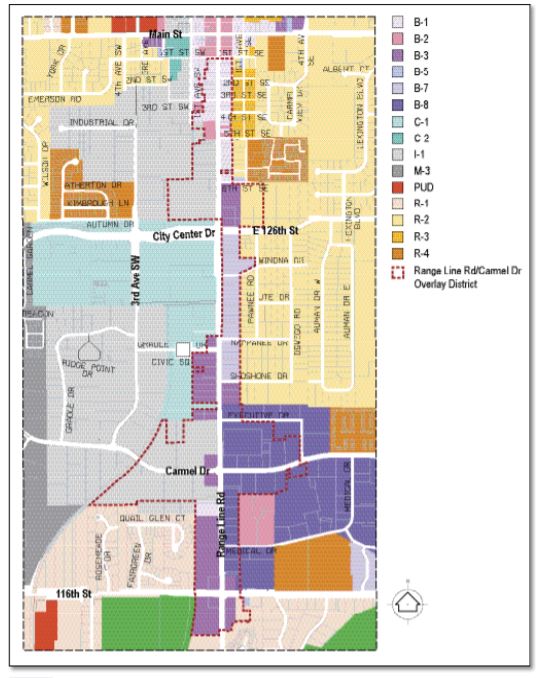
The intent of the Range Line Road Overlay District is to create an uptown business district that allows for a range of uses and activities; with mixed uses in multistory buildings; is pedestrian-oriented and supportive of multiple modes of transportation; and with buildings and streetscapes that are attractively and safely designed in order to enhance the overall livability of the City.
The City’s intent in establishing the Range Line Road Overlay District is to provide a consistent urban design treatment throughout the Range Line Road Overlay District; provide additional opportunities for real estate investment and
re-investment by mandating a higher intensity of development; minimize urban sprawl; minimize the community’s infrastructure costs through efficient re-use of land; and provide controls for architecture and landscape design to establish continuity of design between projects and to improve the physical relationship between new buildings and the overall community.
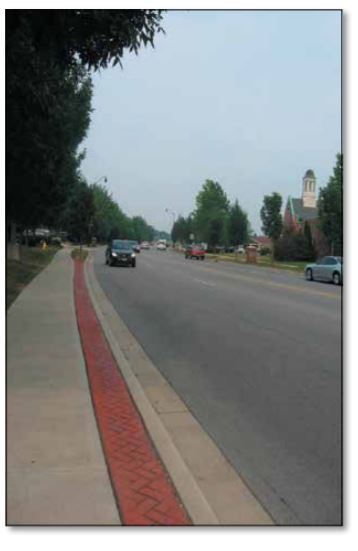
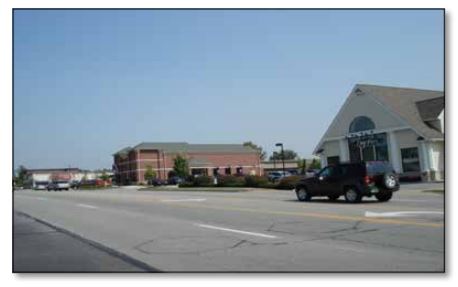
The Range Line Road Overlay District strives to establish a district characterized by urban forms, a variety of high-quality materials; and site designs which accommodate pedestrians and cyclists as well as vehicles. This document will provide a visual architectural summary of the quality, design, and level of detail expected by the Range Line Road Overlay District, through examples of existing sites and structures.
B.02 Design Guidelines:
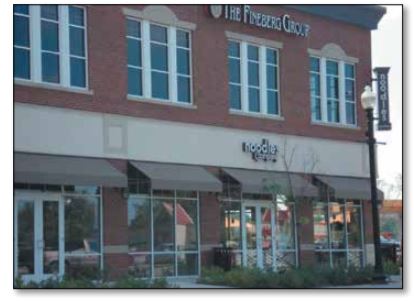
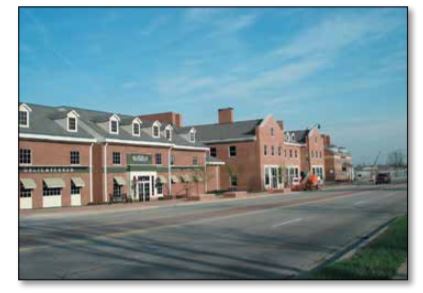
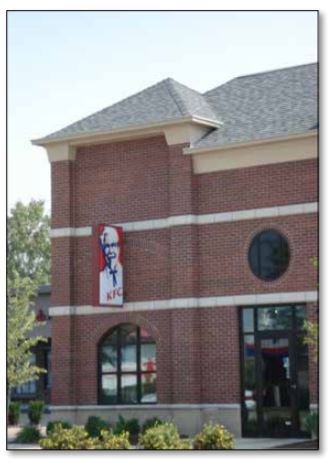
- Principle buildings shall be finished on the front and sides with brick, stone, stucco, or similarly detailed pre-cast concrete, and trimmed in metal, stone, precast concrete, wood, stucco or brick.
- Rear facades of buildings may vary, however, the material colors and composition must be coordinated with the front and side facades. Materials that have been used in the Range Line Road Overlay District include painted, split-face block and similar masonry materials with texture and color complimentary to the primary facade.
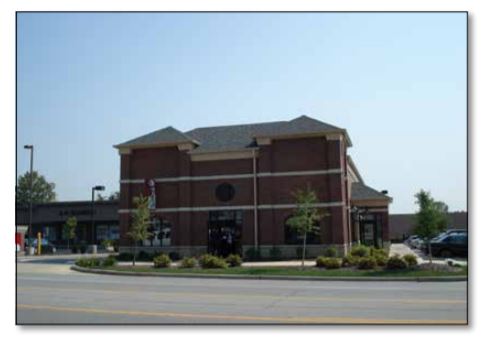
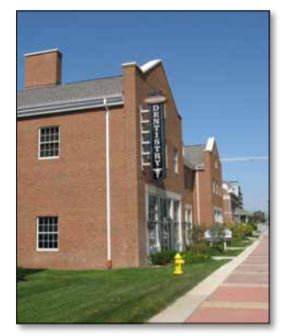
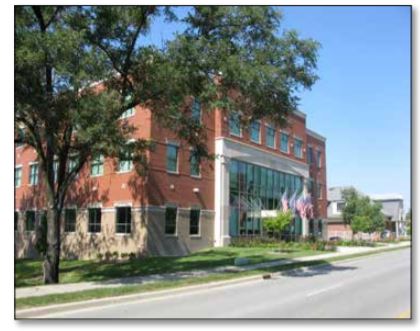
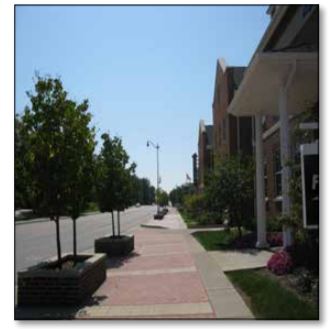
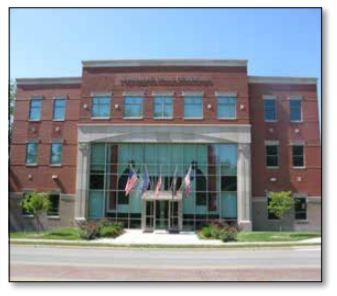
- Ground and upper floors shall have transparent glass; ground floors must incorporate the transparent glass as asignificant component.
- Windows, storefronts, bays, and entryways, detailed with brick coursing, lintels, and pilasters, shall provide visual relief for the facades.
- Windows on upper floors should align with windows and doors on lower floors, to provide for a coordinated composition.
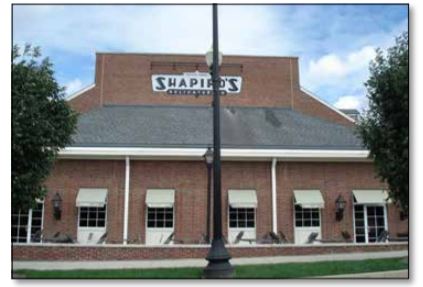
- Awnings are permitted if they complement a building’s style, materials, colors, and details, and do not conceal architectural features. They shall be designed as an integral part of the facade, and shall not be made of metal or aluminum.
- Pedestrian-scale storefronts are encouraged. Entries should be oriented along the public street front of the building. Glass storefronts are encouraged, however, buildings shall not be constructed entirely of glass and metal curtain walls.
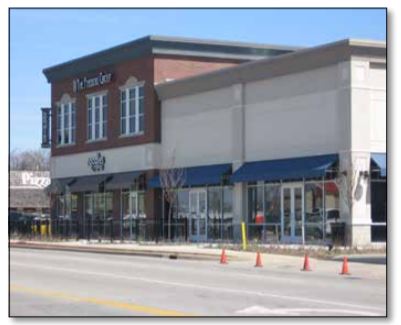
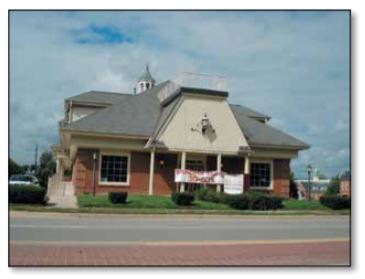
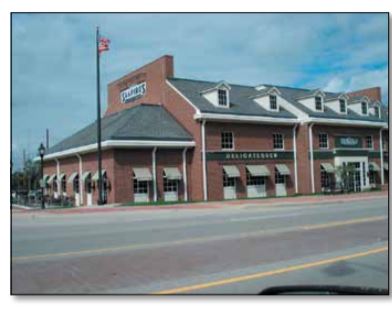
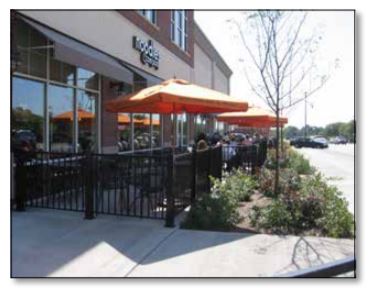
- Buildings in the Range Line Road Overlay District shall have two occupiable floors. The second floor and higher floors of the building shall be at least 50% of the first floor footprint, and shall be oriented to the front of the building such that its front line is equal to that of the first floor.
- The minimum height of buildings is 26 feet. The maximum height is 35 feet, or three stories, whichever is greater, if adjacent to a single-family residential district. If the project is not adjacent to a single-family district, the maximum height is 55 feet, or five stories, whichever is greater