
Chino Hills City Zoning Code
CHAPTER 16
02 - GENERAL PROVISIONS AND DEFINITIONS
16.02.010 - Authority for this Development Code.
This Development Code is adopted pursuant to Article XI, Section 7, of the Constitution of the State of California and in compliance with the requirements of Title 7 of the Government Code, Planning and Zoning Law, for the purpose of promoting the health, safety, and general welfare.
(Ord. 68, § 9.01.010, 1995)
16.02.020 - Short title.
This Development Code shall be known as the "Chino Hills Development Code."
(Ord. 68 § 9.01.020, 1995)
16.02.030 - Purpose.
The purposes of this Development Code are:
A.
To implement the Chino Hills General Plan;
B.
To classify, segregate, restrict, designate, regulate, and encourage the best type, location, and use of buildings, structures, and land;
C.
To limit the intensity, height, number of stories, and size of buildings and other structures hereafter designed, erected, or altered;
D.
To regulate and determine the size of yards and other open spaces;
E.
To regulate and limit the intensity of development;
F.
To facilitate adequate provisions for community facilities, such as transportation, water, sewage, schools, and parks; and
G.
To provide the economic and social advantages resulting from an orderly use of land and its resources.
(Ord. 68 § 9.01.030, 1995)
16.02.040 - Relationship to General Plan.
This Development Code is intended to provide the legislative framework to enhance and implement the goals, policies, plans, principles, and standards of the Chino Hills General Plan.
(Ord. 68 § 9.01.040, 1995)
16.02.050 - Relationship to the California Environmental Quality Act.
When projects are determined to be subject to the provisions of the California Environmental Quality Act (CEQA), applications shall be reviewed in accordance with the provisions of this Development Code, the California Environmental Quality Act, the CEQA guidelines, and any environmental guidelines adopted by the City of Chino Hills.
(Ord. 68 § 9.01.050, 1995)
16.02.060 - Relationship to other regulations.
A.
The provisions of this Development Code shall not be interpreted to repeal, amend, modify, alter, or change any other code that is not specifically repealed, amended, modified, altered, or changed.
B.
Nothing in this Development Code shall be interpreted to authorize the use of a lot or parcel in any way that is in violation of any other applicable statute, code, or regulation. Using any building or real property for a purpose prohibited by federal law, state law, or this code is a misdemeanor.
C.
When provisions of various adopted codes are different, the more restrictive provisions shall apply, except as those provisions may be superseded by resolution or ordinance.
D.
The rights granted by any permit, license, or other approval under any ordinance repealed by this Development Code shall be continued, but in the future, to the extent permitted by law, such rights shall be exercised in accordance with the provisions of this Development Code.
(Ord. 68 § 9.01.060, 1995)
(Ord. No. 275, § 4, 9-23-2014)
16.02.070 - Effect of Development Code.
No person shall use any premises except as specifically permitted by and subject to the regulations and conditions of this Development Code. Except as otherwise provided in this title, wherever this Development Code prohibits the use of premises for a particular purpose, those premises and any improvements on those premises shall not be used for that purpose, and no structure or improvement shall be constructed, altered, or moved onto the premises which is designed, arranged, or intended to be occupied or used for that purpose.
(Ord. 68 § 9.01.070, 1995)
16.02.080 - Terminology used in the Development Code.
For the purposes of carrying out the intent of this Development Code, and unless the context clearly indicates another meaning, the following words, phrases, and terms shall have the meaning ascribed to them as follows:
A.
References in the masculine and feminine genders are interchangeable.
B.
Unless the context clearly indicates to the contrary, words in the present and future are interchangeable, and words in the singular and plural are interchangeable.
C.
Unless the context clearly indicates to the contrary, the following conjunctions shall be interpreted as follows:
1.
"And" indicates that all connected items or provisions apply.
2.
"Or" indicates that the connected items or provisions may apply singularly or in any combination.
3.
"Either/or" indicates that the connected items or provisions shall apply singularly but not in combination.
D.
Unless the context clearly indicates to the contrary, other words and phrases shall be construed as set forth in this chapter.
E.
The word "City" means the City of Chino Hills.
F.
The word "Council" means the City of Chino Hills City Council, the governing body of the City.
G.
The word "county" means the County of San Bernardino.
H.
The word "Director" means the Director of Community Development of the City of Chino Hills.
I.
The word "Planning Commission" means the City of Chino Hills Planning Commission.
J.
The word "shall" is mandatory and not discretionary. The word "may" is permissive and discretionary.
K.
The word "state" means the State of California.
L.
The word "use" shall include arrange, design, construct, alter, convert, rent, lease, occupy, or intend to utilize.
M.
The words "Development Code" or "code" shall be Title 16 of the Municipal Code of the City of Chino Hills.
(Ord. 68 § 9.01.080, 1995)
16.02.090 - Minimum requirements of this Development Code.
The provisions of this Development Code shall be interpreted and applied as the minimum requirements and the maximum potential limits for the protection of the public health, safety, comfort, convenience, and general welfare.
(Ord. 68 § 9.01.090, 1995)
16.02.100 - Reference to any portion of this Development Code.
Wherever reference is made to any provision of this Development Code, or to any other law or ordinance, the reference shall apply to that law or ordinance and any amendments or additions made thereto.
(Ord. 68 § 9.01.100, 1995)
16.02.110 - Violations of the Development Code.
Unless a violation of this Development Code is designated as an infraction, any violation of any provision in this title is declared to be a misdemeanor subjecting the violator to punishment in accordance with Section 1.36.010 et seq. of the Municipal Code.
(Ord. 68 § 9.01.120, 1995)
16.02.120 - General.
For general terminology used throughout the Development Code, refer to Section 16.02.080 of this chapter. For terminology used in the Development Code but not defined in this chapter or in Section 16.02.080, the definitions used in the California Building Code or accepted dictionaries of the English language shall govern.
(Ord. 68 § 9.200.010, 1995)
(Ord. No. 225, § 3A, 6-9-2009)
16.02.130 - "A" definitions and illustrations.
"Abandoned" means the cessation of the use of a property by the owner with the intention neither of transferring rights to the property to another owner nor of resuming the use of the property.
"Abutting land" means a parcel of land having a common boundary with another parcel of land, including parcels which have no common boundary other than a common corner.
"Accelerated erosion" means erosion of the soil, caused by human activity, which is greater than that which would normally occur under natural conditions. Causes of accelerated erosion may include, but not be limited to, diversion and/or concentration of drainage flows, the removal of plant cover, any land disturbing activity, or the creation of new drainage courses which are not prepared to accommodate flows without erosion.
"Accessory building or structure" means a building or structure detached from, on the same lot as, and customarily incidental and subordinate to the principal building.
"Accessory dwelling unit" means a second dwelling unit within a residential or mixed-use property with complete independent living facilities (including a living area; sleeping area; a full kitchen with a stove, a refrigerator, and a sink; and bathroom facilities consisting of a bath/shower, toilet, and sink) for one (1) or more persons and that is located on the same lot as a primary dwelling unit. An accessory dwelling unit may be detached from, attached to, or contained entirely within the primary dwelling unit.
"Accessory efficiency dwelling unit" means a second dwelling unit within a residential or mixed-use property with independent living facilities (including a combined living and sleeping area; bathroom facilities consisting of a bath/shower, toilet and sink; and a full or partial kitchen) and that is located on the same lot as a primary dwelling unit. (As used in this section, a partial kitchen shall consist of a sink and refrigeration facility.) An accessory efficiency dwelling unit may be detached from, attached to, or contained entirely within the primary dwelling unit. An accessory efficiency dwelling unit shall be for occupancy by not more than two (2) persons. An efficiency dwelling unit, as defined herein, shall be considered an accessory dwelling unit.
"Accessory use" means a use of a portion of land or building that is customarily and clearly incidental and subordinate to the principal use of the land or building and is located on the same lot with such principal use. Accessory uses typically are very small in proportion to the principal use.
"Active open space" means any parcel or area of land or water which is set aside, dedicated, designated, or reserved for public or private use or enjoyment, or for the use and enjoyment of owners and occupants of land adjoining or neighboring such open space, and which contains recreational facilities such as pools and swimming areas, courts and other game areas, playing fields and equipment, or other required facilities for various active activities.
"Addition" means any construction that is attached to an existing building or facility and which increases the size or capacity of a building or facility in terms of site coverage, height, length, width, or gross floor area.
"Adjoining" means a lot or parcel of land which shares all or part of a common lot line with another lot or parcel of land. (See Figure 200-1 [at the end of this chapter])
"Adult business" shall have the same meaning as that term is defined in Chapter 16.46 of this Development Code.
"Agent" means any person showing written verification that he or she is acting for, and with the knowledge and consent of, a property owner.
"Agriculture" means the use of land for the production of food and fiber, including the growing of crops and/or the grazing of animals on natural prime or improved pasture land.
"Alcoholic beverage off-site sales" means the sale of packaged alcoholic beverages for consumption at an off-site location.
"Alcoholic beverage on-site sales" means the sale of alcoholic beverages, including beer, wine, and other alcoholic beverages, for consumption at the point of sale. "Sales to persons over the legal drinking age exclusively," as used in Appendix A to this Code, refers to any facility which restricts entry to persons of legal drinking age, as established by state law. On-site sales may also include incidental off-site sales subject to Alcoholic Beverage Control requirements for such licenses.
"Alley" means a narrow service way, either public or private, that provides a permanently reserved but secondary means of public access. Alleys are not intended for general traffic circulation, but for services and delivery access. Alleys typically are located along rear property lines.
"Alteration" means any change or rearrangement in the supporting members of an existing building, such as bearing walls, columns, beams, girders, or interior partitions, as well as any change in doors or windows, or any enlargement to or diminution of a building or structure, whether horizontally or vertically, or the moving of a building or structure from one (1) location to another.
"Ambient noise" means the all-encompassing noise level associated with a given environment, being a composite of sounds from all sources, excluding alleged offensive noises, at the location and approximate time at which a comparison with alleged offensive noises is to be made.
"Amenity" means a natural or man-made feature which enhances a particular property.
"Animal," unless otherwise stated for a specific situation, means and includes birds, fish, mammals, and reptiles.
"Animal shelter" shall be defined as established in Section 6.03.010 of this Municipal Code.
"Antenna" means any antenna used to receive and/or transmit radio or television signals from orbiting communication satellites.
"Apartment" is one (1) or more rooms with private bath and kitchen facilities comprising an independent, self-contained dwelling unit in a building containing three (3) or more dwelling units for rent. See also "dwelling unit."
"Apartment building" means a structure containing three (3) or more apartment units which is intended for rental purposes.
"Applicant" means a person who requests in writing the approval of a lease, permit, license, certificate, or other entitlement from public agencies.
"Application" means the form, information, and fees submitted by an applicant for purposes of requesting an entitlement from a public agency.
"Appurtenance structure" shall mean an unoccupied tower, spire, cupola, or other similar structure that is attached to a structure or building.
"Arbor" means a raised structure that is intended to walk under and is part of a fence and may be plantable.
"Architectural projection" shall mean cornices, eaves, porte cochere, roof overhangs, architectural roof screening, or similar features.
"Assisted living facility" means a combination of housing, supportive services, personalized assistance, and health care, designed to respond to the individual needs of those who need help with activities of daily living. A facility with central dining, recreational, and other facilities, with separate bedrooms and/or living quarters. Individual bedrooms and/or living quarters shall not include a kitchen.
"Assembly use" means a permanent meeting facility for organizations operating on a membership basis for the promotion of the interests of the members, including facilities for business associations; civic, social, and fraternal organizations; labor unions and similar organizations; political organizations; religious organizations; professional membership organizations; and other membership organizations.
"Athletic, fitness, health facility" means a facility solely dedicated to exercising and fitness. Examples are fitness centers, boot camps, spin classes, pilates, yoga, karate studios, and other similar uses.
"Audio/television recording studio" means a facility in which video and audio productions take place, either for the recording of live television/audio, or for the acquisition of raw footage for post-production.
"Automobile accessory sales" shall mean a business selling automobile accessories and parts, not including installation.
"Automobile paint/body shop" shall mean a shop that specializes in bodywork repair. May include paintwork repairs to scratches, scuffs and dents, as well as repairs to the bodies of vehicles damaged by collisions.
"Automobile dealer" shall mean a facility that sells or leases automobiles, trucks, motorcycles, or recreation vehicles, both new and used, including the repairing of same.
"Automobile rental" shall mean a business that rents automobiles or recreation vehicles to consumers on a temporary basis.
"Automobile tire sales/installation" shall mean a business that exclusively sells tires and installs tires on vehicles, fully contained within a building.
"Awning" means a secondary covering attached to the exterior wall without support from the ground; awnings are typically used to shield a window, door, or storefront from the sun or rain.
(Ord. 68 § 9.200.020, 1995; Ord. 106 § 6, 1998; Ord. 182 § 3(A), 2005; Ord. No. 225, § 3B, 6-9-2009; Ord. No. 292, § 9, 11-24-2015; Ord. No. 336, § 6, 1-22-2019; Ord. No. 343, § 5(Exh. A), 11-26-2019; Ord. No. 364, § 5, 2-9-2021)
16.02.140 - "B" definitions and illustrations.
"Balcony" means a structure with a walking surface at least thirty (30) inches above adjacent grade which extends from a building without support from the ground. See also "deck" and "platform."
"Barbeque structure" means an appliance or structure used to roast or broil food over or before a source of heat. The appliance or structure may include additional features (e.g. stovetop burners, small refrigerators, etc.).
"Basement" shall have the same meaning as that term is defined in the California Building Code, incorporated by reference and amended in Title 15 of this Code.
"Bay window" means a group of windows projecting from a room in a floor-level recess.
"Bed and breakfast" means a house, or portion of a house, where rooms and meals are provided for short-term stays. The operator of the bed and breakfast shall live on the premises or adjacent premises.
"Bedroom" means any habitable room used for sleeping purposes other than a living room, family room, or den.
"Boarding house" shall mean a dwelling, building, or accessory building rented to three (3) or more individuals under concurrent, separate rental agreements or leases, either written or oral or implied, whether or not an owner, agent, or rental manager is in residence. Meals may be provided to boarders in connection with the renting of sleeping rooms or common kitchen facilities may be provided. This definition does not include any of the following:
•
Hotel;
•
Motel;
•
Emergency shelter;
•
Transitional housing;
•
Single-room occupancy residential hotel;
•
Small family day care home;
•
Supportive housing;
•
Skilled nursing facility;
•
Group home;
•
A residential facility as defined in the California Community Care Facilities Act (Health & Safety Code § 1500 et seq.) that serves six (6) or fewer persons;
•
Housing for persons protected under the Fair Housing Act (42 USC § 3604(f)) or the California Fair Housing Act (Gov't Code § 12920 et seq.);
•
Alcoholism or drug abuse recovery or treatment facility that serves six (6) or fewer persons (as defined in Health & Safety Code § 11834.23(b));
•
Employee housing providing accommodations for six (6) or fewer employees (as defined in Health & Safety Code § 17021.5);
•
Residential care facility for the elderly that serves six (6) or fewer persons (Health & Safety Code § 1569.85);
•
Intermediate care facility.
Any other use or arrangement expressly excluded from the definition of "boarding house" or "rooming house" pursuant to state or federal law, including household arrangements protected by City of Santa Barbara v. Adamson (1980) 27 Cal.3d 123.
"Body" or "hearing body" means the individual or group duly authorized by this Development Code to grant changes to, relief from, or special consideration under the Development Code.
"Brewery, distillery, winery" means an establishment that brews, or produces beer, wine, or other alcoholic beverages in large quantities primarily for off-site sales and consumption.
"Building" shall have the same meaning as that term is according to the defined in the California Building Code, incorporated by reference and amended in Title 15 of this Code.
"Building height" means the vertical dimension of a building or any other type of structure measured from the grade plane (as defined in Section 16.02.190) to the highest point of the structure (as defined in Section 16.02.310), including mechanical equipment (as defined in Section 16.02.250), architectural projection(s) (as defined in Section 16.02.130), architectural roof screening, and appurtenance structure(s) (as defined in Section 16.02.130).
"Building coverage" means the percentage of the footprint which is covered by all the buildings on a lot, as seen from a plan view.
"Building pad" means the area of a lot designed for the construction of buildings and structures.
(Ord. 68 § 9.200.030, 1995; Ord. 166 § 3, 2004; Ord. 194 § 3 (part), 2007; Ord. No. 225, §§ 3A, 3C, 6-9-2009; Ord. No. 299, § 5, 6-14-2016; Ord. No. 336, § 7, 1-22-2019; Ord. No. 343, § 5(Exh. A), 11-26-2019; Ord. No. 386, § 5(Exh. A), 7-12-2022)
16.02.150 - "C" definitions and illustrations.
"Caretaker's residence" means a dwelling unit accessory to the principal use on a site which is intended for occupancy by a caretaker, security guard, worker, or similar person generally requiring residence on the site.
"Car wash" means a structure containing a facility for washing automobiles; automatic, semiautomatic, or self-wash application.
"Carport" means a roofed structure providing space for the parking or storage of motor vehicles and open on at least one (1) side. A three-sided building with an opening on the fourth which is not provided with a closable door is a carport.
"Catering service" means an establishment that prepares and delivers food for consumption off the premises, for example, for banquets or luncheons. A catering establishment may contain kitchen facilities and may also provide dining supplies such as place settings, tablecloths, and beverage dispensers.
Centerline. The "centerline" of a street, as referred to in this Development Code, means the right-of-way centerline as established by the County Engineer of the county, by the City Engineer of the City, or by the State Division of Highways of the state; in any case in which the foregoing definition is not applicable, the Planning Commission shall designate the centerline.
"Certificate of occupancy" shall have the same meaning as that term is defined in the latest edition of the California Building Code incorporated by reference and amended in Title 15 of this Code.
"Christmas tree sales facility" means a retail sales operation, generally conducted wholly out-of-doors, that offers for sale, on a temporary, limited basis, Christmas trees and related holiday items such as wreaths and Christmas tree stands. The allowable sales period is defined in Chapter 16.40 of this Code.
"Clinic" means an organized outpatient health facility for patients who remain less than twenty-four (24) hours. Clinics provide direct medical, surgical, dental, optometric, podiatric, or psychological advice, services, or treatment. Clinics may also provide diagnostic or therapeutic services to patients in the home as an incident to care provided at the clinic.
"Club" means a group of people organized for a common purpose to pursue common goals, interests, or activities and usually characterized by certain membership qualifications, payment of dues, regular meetings, a constitution, and by-laws.
"Commercial drive-thru" means a type of service provided for customers to purchase products without leaving their vehicle, which may include fast food restaurants, banks, pharmacy, and other similar businesses.
"Commercial outdoor dining patio area" means a paved area that is contiguous and accessory to a food service establishment that is used for consumption of food and beverage.
"Commercial recycling facilities" means a for-profit recycling facility. See also "recycling facilities."
"Commercial use" means an activity that includes the buying and selling of commodities and services.
"Common area" means land in a residential development held in common and/or single ownership which is not reserved for the exclusive use or benefit of an individual tenant or owner.
"Common open space" means land within or related to a development, not individually owned or dedicated for public use, which is designed and intended for the common use or enjoyment of the owners of the development and which may include such complementary structures and improvements as are approved as necessary and appropriate.
"Community care facility" means any facility, place, or building which is maintained and operated to provide nonmedical residential care, day treatment, adult day care, or foster family agency services for children, adults, or children and adults, including, but not limited to, physically handicapped, mentally impaired, incompetent persons, and abused or neglected children; and which includes residential facilities, adult day care facilities, day treatment facilities, foster family homes, small family homes, social rehabilitation facilities, community treatment facilities, and social day care facilities.
"Conditional use permit" means an approval that is required for a conditional use to be carried out in a particular zoning district.
"Conditional use" means a use permitted on a particular site and within a zoning district only upon a finding that such use in a specified location will comply with all the conditions and standards for the location or operation of such use as specified in the Development Code and authorized by the Planning Commission.
"Condominium" shall have the same meaning as that term is defined in California Civil Code Section 4125(b).
"Conforming" means fully meeting the requirements of the City of Chino Hills Building Regulations and all property development regulations and requirements prescribed for the applicable zoning district. See also "nonconforming land," "nonconforming structure," and "nonconforming use."
"Congregate residence" means housing, often for senior citizens, arranged in a group setting that includes independent living and sleeping accommodations in conjunction with shared dining and recreational facilities.
"Conservation land" means an area of land set aside for the preservation, restoration, creation, and/or enhancement of a stream, wetland, or other natural habitat area.
"Construction trailer" means a trailer, the use of which is incidental to new construction on a site, including but not limited to temporary office space for the direction of on-site construction activities.
"Convalescent facility" means a state-licensed facility that provides long-term nursing, dietary, and other medical services, except surgery or primary treatments customarily provided in a hospital, to convalescents or invalids.
"Cottage food operation" shall have the same meaning as that term is defined in California Health and Safety Code § 113758.
"Corner lot" means a lot or parcel of land abutting upon two (2) or more streets at their intersection, or upon two (2) parts of the same street forming an interior angle of less than one hundred thirty-five (135) degrees. (See Figure 200-1 [at the end of this chapter])
"Countertop" means an elevated horizontal working surface, especially one (1) intended to be used in the preparation or consumption of food and beverages.
"Court" means any open space, unobstructed from ground to sky other than a yard that is on the same lot and bounded on two (2) sides by the walls of a building.
"Covered parking" means a parking space(s) that is within a garage or carport or under the overhanging portion of a building.
"Cul-de-sac lot" means a lot located at any position on the circular portion of a cul-de-sac street.
(Ord. 68 § 9.200.040, 1995; Ord. 106 § 7, 1998; Ord. 194 § 3 (part), 2007; Ord. No. 225, § 3A, 6-9-2009; Ord. No. 262, § 3(a), 4-23-2013; Ord. No. 299, § 6, 6-14-2016; Ord. No. 292, § 10, 11-24-2015; Ord. No. 336, § 8, 1-22-2019; Ord. No. 343, § 5(Exh. A), 11-26-2019)
16.02.160 - "D" definitions and illustrations.
"Day care center, commercial" means any facility in a non-residential zone that provides non-medical care, on less than a twenty-four (24) hour basis, to persons who are in need of care, supervision, or assistance essential for sustaining the activities of daily living or for the protection of the individual. Such facility shall not include accommodations for overnight sleeping.
Day Care Home, Large Family. "Large family day care home" means a residential home that provides care, protection, and supervision, in the provider's own home, for periods of less than twenty-four (24) hours per day, to seven (7) to fourteen (14) children, inclusive, including children under the age of ten (10) years who reside at the home.
Day Care Home, Small Family. "Small family day care home" means a residential home that provides care, protection, and supervision, in the provider's own home, for periods of less than twenty-four (24) hours per day, to eight (8) or fewer children, including children under the age of ten (10) years who reside at the home.
"Decibel (db)" means a unit used to express the intensity of a sound wave.
"Deck" means a structure at least thirty (30) inches above adjacent grade which is supported from the ground. Where permitted within a required setback, a deck shall not exceed a maximum height of thirty (30) inches above adjacent grade. See also "second story deck," "balcony," and "platform."
"Dedication" means the release by an owner or developer of private real property rights for public use.
"Demolish" means to remove more than seventy-five (75) percent of the exterior walls of an existing building or structure, as measured by the linear length of the walls.
"Density" means the number of permanent residential dwelling units per gross acre of land.
"Detached building" means a building that does not have a building wall of four (4) feet or more in length in common with another building.
"Developed land" means any land which grading, construction or improvements have occurred for landscaping, infrastructure, and buildings. This also includes manufactured open space, but excludes areas retained as undisturbed natural open space within a project's boundaries.
"Developer" means the individual or organization who is responsible for the planning, design, and construction of an applicable development project. A developer may be responsible for implementing the provisions of this Development Code as determined by the property owner.
"Development standards" means requirements in this Development Code that govern building and development, including, but not limited to, lot area, height limits, frontage, landscaping, and floor area ratio.
"Driveway" means a private roadway or accessway providing vehicular access to a parking space, parking lot, garage, dwelling, or other structure.
"Duplex dwelling" means a detached building that is designed for occupation as the residence of two (2) households living independently from each other.
"Dwelling" shall have the same meaning as that term is defined in the latest edition of the California Building Code incorporated by reference and amended in Title 15 of this Code.
"Dwelling unit" means any mobilehome or building, or portion of a building, including a manufactured home or portion of such manufactured home, which contains the following: sleeping and eating areas, sanitation as required by the California Building Code incorporated by reference and amended in Title 15 of this Code, and one (1) kitchen area. For the purposes of this definition, a kitchen area intended solely for use by the domestic employees of the household shall not be counted in determining the number of dwelling units. See also "kitchen."
(Ord. 68 § 9.200.050, 1995; Ord. 142 § 5, 2001; Ord. 163 § 3(A), 2004; Ord. No. 225, § 3A, 6-9-2009; Ord. No. 255, § 3(a), (b), 8-28-2012; Ord. No. 285, § 5, 6-9-2015; Ord. No. 321, §§ 5, 6, 11-28-2017; Ord. No. 336, § 9, 1-22-2019; Ord. No. 343, § 5(Exh. A), 11-26-2019; Ord. No. 365, § 6(Exh. A), 5-11-2021)
16.02.170 - "E" definitions and illustrations.
"Easement" means a grant of one (1) or more of the property rights by the property owner to and/or for the use of the public, a corporation, or another person or entity.
"Elevation" means:
1.
A scale drawing of the front, rear, or side of a building or structure;
2.
Height above mean sea level.
"Emergency shelter" shall have the same meaning as that term is defined in Health and Safety Code § 50801, which currently is defined to mean housing with minimal supportive services for homeless persons that is limited to occupancy of six (6) months or less by a homeless person. No individual or household may be denied emergency shelter because of an inability to pay.
"Employee" means any person employed by a firm, person(s), business, educational institution, nonprofit agency or corporation, government agency, or other entity.
"Employer" means any person(s), firm, business, educational institution, government agency, nonprofit agency or corporation, or other entity which employs persons at a single worksite, and may be either a property owner or tenant of an applicable development project.
"Enclosed parking structure" means a building or structure used for the parking of motor vehicles, having exterior enclosure walls which have less than twenty-five (25) percent of the total wall area open to the atmosphere at each level on at least two (2) sides of the structure.
"Enhance" and/or "enhanced treatment" means any substantial addition to the minimum City requirement, standard, intent, or guideline that increases, intensifies, and improves.
"Entertainment ancillary to primary use" means an establishment which includes entertainment ancillary to the primary use, such as billiards, darts, arcades, or other similar entertainment activities. The entertainment section cannot exceed five hundred (500) sq. ft. or ten (10) percent of the total tenant space (excludes kitchen, bathroom, and service areas) of the primary use, whichever is less.
"Entertainment center—indoor" means an establishment providing indoor amusement and entertainment services as primary uses for a fee or admission charge, including, without limitation, movie theaters, laser tag, bowling, skating, electronic game arcades, go-kart racing or other similar indoor activities.
"Entertainment center—outdoor" means an establishment providing outdoor amusement and entertainment services as primary uses for a fee or admission charge, including, without limitation, miniature golf, skating, go-kart racing, paintball parks, airsoft parks or other similar outdoor activities.
"Equestrian facility" means a structure or area the use of which is devoted to activities involving horses, mules, donkeys, ponies, or similar barnyard animals.
"Exterior property line" shall mean the property line adjacent to public or private access ways.
(Ord. 68 § 9.200.060, 1995; Ord. 112 § 19, 1998; Ord. No. 262, § 3(b), 4-23-2013; Ord. No. 343, § 5(Exh. A), 11-26-2019; Ord. No. 362, § 10, 9-22-2020; Ord. No. 406, § 5(Exh. A), 2-27-2024)
16.02.180 - "F" definitions and illustrations.
"Facade" means a building's exterior wall which is exposed to public view.
"Facility(s)" means the total of all buildings, structures and grounds that encompass a worksite, at either single or multiple locations, which comprises or is associated with an applicable development project.
"Farm" means an area or parcels of land used for the production of food and fiber, especially the growing of crops, for wholesale or retail sale.
"Fast-food restaurant" means a restaurant that supplies food and beverages primarily in disposable containers, and which is characterized by high automobile accessibility, self-service, and short stays by customers.
"Fence" means a solid or open barrier above ground intended to enclose or mark a boundary.
"Fence post" means a vertical post that supports and is incorporated into a fence. Fence posts may be a maximum of four (4) inches above the height of the fence and shall be no wider than six (6) inches. Fence posts shall be spaced at least six (6) feet on center.
"Finish grade" means the ground level surface after completion of grading and/or construction.
"Fire authority" means that person or agency designated by the City as the person or agency responsible for providing firefighting and other emergency response services to the City.
"Fire pit" means any permanent or portable structure or appliance intended to contain fire, excluding a barbecue or pizza oven. Fire pits shall be non-wood burning.
"Fireplace" means any permanent or portable structure or appliance intended to contain fire, excluding a barbecue or pizza oven. Fireplaces shall be non-wood burning.
"Flag lot" means a lot having access to a street by means of a private driveway access easement, or parcel of land not meeting the requirements of this Development Code for lot width but having a dimension of at least twenty (20) feet at its narrowest point. (See Figure 200-1 [at the end of this chapter])
"Flood." For the definition of "flood" and related terms, the definitions contained in the Chino Hills Municipal Code shall apply.
"Floor area ratio" means the total gross floor area of all buildings on a lot divided by the lot area.
"Front lot line" means the line separating the narrowest street frontage of the lot from the street right-of-way.
"Front yard" means the open space extending across the full width of the front of the lot, the depth of which is the horizontal distance between the front lot line and the front setback line. (See Figure 200-2 [at the end of this chapter])
"Fuel station" means any building, land area, or other premises, or portion of such building, used for retail dispensing or sales of fuel, excluding electric vehicle charging stations as defined in the Building Code; and may include as an accessory use, the sales of snack foods, tobacco, drinks, newspapers, and similar convenience goods.
(Ord. 68 § 9.200.070, 1995; Ord. No. 336, § 10, 1-22-2019; Ord. No. 343, § 5(Exh. A), 11-26-2019; Ord. No. 365, § 6(Exh. A), 5-11-2021)
16.02.190 - "G" definitions and illustrations.
Garage, Private. As defined in the latest edition of the California Building Code, incorporated by reference and amended in Title 15 of this Code.
Garage, Public. As defined in the latest edition of the California Building Code, incorporated by reference and amended in Title 15 of this Code.
"Garage" means an enclosed building, or structure, or part of such deck, building or structure, used or intended to be used for the parking and storage of vehicles which is not a carport. See also, "carport."
"Gate" means a moveable barrier that provides access through a fence or wall.
"General plan" means the general plan of the City of Chino Hills, adopted pursuant to the State of California Government Code Section 65301 et seq. and adopted by the City Council.
"General office" means administrative office only, in which professional or consulting services are provided, such as in the fields of law, architecture, design, insurance, engineering, accounting, real estate, financial planning and similar professions.
"General retail" means a business, institution, or cooperative that sells goods to consumers. This includes restaurants, small storefront stores to large department stores.
"Generator" means a device that converts mechanical energy into electrical energy by the combustion of fossil fuels and is intended for use in emergency situations where electrical power to the structure is interrupted.
"Golf course" means an area of land laid out for playing golf as a commercial venture or within a private community. May include the sale of food, beverages and associated merchandise.
"Government offices" means the working location of any department, commission, independent agency, or instrumentality of the United States, of a state, county, incorporated or unincorporated municipality, township, authority, district, or other governmental unit.
"Grade" and all related terms shall be defined according to the definition contained in the California Building Code, incorporated by reference and amended in Title 15 of this Code.
"Grade plane" means a horizontal reference plane for a structure as a whole, passing through the average of the finished grade elevations around the perimeter of a structure, as determined by the length-weighted formula below. All walls of six (6) feet or greater in length shall be included in this calculation.
Σ [(e1 + e2) / 2 × L]
P
Where:
Σ is the sum of the calculation in the numerator [(e1 + e2) / 2 × L] for all segments.
e1 is the elevation of the finished ground level at the beginning point of a horizontal segment, taken at a point six-feet away perpendicular from the foundation or at the property line, whichever is closer.
e2 is the elevation of the finished ground level at the end point of a horizontal segment, taken at a point six-feet away perpendicular from the foundation or at the property line, whichever is closer.
L is the length of the segment.
P is the total horizontal length of all segments.
"Gross acreage" means the total land area within a defined boundary (i.e., before the exclusion of areas including, but not limited to, slopes, public rights-of-way, public parks, public school sites, and sites for other public facilities).
"Gross floor area" means the total horizontal area of a building, in square feet, including the exterior walls of all floors.
"Group home" means any residential care facility for six (6) or fewer persons which is licensed by the state, as further described in Health and Safety Code § 1566.3.
"Guest house" means living quarters with interior access to a bathroom located on the same lot as, but without interior access to, the primary dwelling unit and intended for temporary occupancy by family members, guests, or persons employed on the premises. A guest house shall not contain a kitchen facility or any plumbing fixtures, except for bathroom fixtures (including a shower/bath, sink, and toilet) located within a single room. The floor area of a guest house shall not exceed four hundred fifty (450) square feet or twenty (20) percent of the primary dwelling unit, whichever is less.
"Guest parking" means parking spaces provided with a residential unit for intermittent use by visitors.
"Guest room" means any room which is used or designed to provide transient occupancy and sleeping accommodations for one (1) or more paying guests. Guest rooms occur in hotels, motels, time-shares, bed and breakfasts, private clubs, lodges, fraternal organizations, and other transient occupancy facilities.
(Ord. 68 § 9.200.080, 1995; Ord. No. 225, §§ 3A, 3D, 6-9-2009; Ord. No. 255, § 3(c), 8-28-2012; Ord. No. 321, § 7, 11-28-2017; Ord. No. 336, § 11, 1-22-2019; Ord. No. 343, § 5(Exh. A), 11-26-2019; Ord. No. 365, § 6(Exh. A), 5-11-2021; Ord. No. 386, § 5(Exh. A), 7-12-2022)
16.02.200 - "H" definitions and illustrations.
"Halloween pumpkin sales facility" means a retail sales operation, generally conducted wholly out-of-doors, that offers for sale on a temporary, limited basis pumpkins and related holiday items. The allowable sales period is defined in Chapter 16.36.60 of this Code.
"Hazardous fire area" means any land that is covered with grass, grain, brush, or forest, whether privately or publicly owned, and which is so situated or inaccessible that a fire originating upon such land would present an abnormally difficult job of suppression or would result in great and unusual damage through fire and resulting erosion. Hazardous fire areas are identified on fire hazard overlay maps maintained by the City.
"Hazardous waste facility" shall have the same meaning as that term is defined in the state Health and Safety Code, Section 25117.1.
"Hedge" means a boundary or barrier of plant material formed by a dense row of vegetation that encloses, divides or protects an area.
"Highest adjacent grade" means the highest elevation of the ground surface next to the proposed structure and/or wall.
"Home improvement center" means a retail service engaged in providing retail sale, rental, service, or repair and installation of home improvement products including building materials; paint and wallpaper; carpeting and floor covering; decorating materials; heating, air conditioning, electrical, plumbing, and mechanical equipment; roofing; yard and garden supplies; home appliances; and similar home improvement products.
"Home occupation" means business activity generated from a dwelling unit, or buildings accessory to a dwelling unit which is incidental and secondary to the residential use of the dwelling unit, is carried out by a person/persons residing in any dwelling unit on the property, and does not change the character of the dwelling. If more than one business is operating from a dwelling unit, a separate Home Occupation Permit and Business License may be required.
"Hospital" means a health care institution providing organized patient treatment with medical doctors, nursing staff and medical equipment, which provides twenty-four (24) hour in-patient care, including, but not limited to, the basic following services: surgical, anesthesiology, laboratory, radiology, in-patient pharmacy, dietary services, but does not include a twenty-four (24) hour emergency room that has the capacity to receive ambulance services.
"Hospital with emergency services" shall have the same meaning as hospital except that it includes a twenty-four (24) hour emergency room that has the capacity to receive ambulance services.
"Hotel" means a building or group of buildings containing six (6) or more guest rooms offering transient lodging accommodations to the general public and incidental services that are customarily provided by a hotel, for the convenience of hotel guests, such as food service, recreational facilities, and retail services; and public banquet, reception, and meeting rooms. The incidental services that may be provided by a hotel shall be limited to the services permitted under an approved plan.
(Ord. 68 § 9.200.090, 1995; Ord. 194 § 3 (part), 2007; Ord. No. 293, § 5, 11-24-2015; Ord. No. 343, § 5(Exh. A), 11-26-2019; Ord. No. 365, § 6(Exh. A), 5-11-2021; Ord. No. 386, § 5(Exh. A), 7-12-2022)
16.02.210 - "I" definitions and illustrations.
"Impervious surface" means any surface, including concrete, asphalt, paving blocks, bricks, waterproof plastic, or other materials, which cover the soil with a surface impervious to water.
"Improvement" means the addition of one (1) or more features, structures, or utilities on a parcel of land.
"Infrastructure" means basic facilities and services needed to sustain development.
"Interior lot" means a lot other than a corner lot. (See Figure 200-1 [at the end of this chapter])
"Interior property line" shall mean the property line dividing two (2) properties not adjacent to public or private access ways.
(Ord. 68 § 9.200.100, 1995; Ord. No. 343, § 5(Exh. A), 11-26-2019; Ord. No. 406, § 5(Exh. A), 2-27-2024)
16.02.220 - "J" definitions and illustrations.
"Junior accessory dwelling unit" means a unit that is no more than five hundred (500) square feet of interior livable space in size and contained entirely within a single-family residence or its attached garage. A junior accessory dwelling unit must be provided with exterior access independent from the primary dwelling unit. A junior accessory dwelling unit may include separate sanitation facilities or may share sanitation facilities with the existing structure. A junior accessory dwelling unit must provide an efficiency kitchen, which includes a cooking facility with appliances, kitchen sink, and food preparation counter and storage cabinets that are of reasonable size in relation to the unit.
(Ord. No. 364, § 6, 2-9-2021; Ord. No. 429, § 4, 1-13-2026)
16.02.230 - "K" definitions and illustrations.
"Kennel (commercial)" shall be defined as established in Section 6.08.010 of this Municipal Code.
"Key lot" means the first interior lot to the rear of a reversed corner lot which is not separated therefrom by an alley.
"Kitchen," in a dwelling unit, means any room or portion of a room which contains the following combination of facilities of sufficient size for the preparation of meals for the household: (a) one (1) or more sinks, (b) a stove, and (c) utilities and location(s) for a refrigerator. See also "stove."
(Ord. 68 § 9.200.120, 1995; Ord. No. 343, § 5(Exh. A), 11-26-2019)
16.02.240 - "L" definitions and illustrations.
"Land use decision" means all decisions listed in Table 100-1.
"Landscaping" means areas devoted to, or developed and maintained predominately with, native or exotic plant materials including lawn, ground cover, trees, shrubs, and other plant materials. Landscaping may also include small amounts of accessory decorative outdoor landscape elements such as pools, fountains, and paved or decorated surfaces, all of which are suitably designed, selected, installed, and maintained to enhance a site.
"Legislative act" means all decisions of the City Council involving legislative action, including, but not limited to, general plan amendments, planned developments and amendments to the Development Code.
"Live/work dwelling" means a dwelling unit consisting of both a commercial/office and residential component that is occupied by the same individual. The live/work dwelling unit is intended to be the primary dwelling and primary place of work for the occupant.
"Live entertainment" means an in person performance by a musician, comedian, actor, or any other entertainer.
"Loading space" means an off-street space or berth which is on the same lot as the building(s) it services; abuts a street, alley, or other appropriate means of access; and is used for the temporary parking of a commercial vehicle that is being loaded or unloaded with merchandise, materials, or people.
"Lot" means land which abuts at least one (1) public street or any numbered or otherwise designated parcel of land which is shown on: (1) a recorded tract map, (2) a record of survey map recorded pursuant to an approved division of land, or (3) a parcel map.
"Lot frontage" means the length of the defined front lot line measured at the street right-of-way line.
"Lot depth" means the average linear measurement between the front and rear lot lines when measured at ninety (90) degree angles from the front lot line.
"Lot line" means the lines bounding a lot as defined in this section.
"Lot merger" means the joining of two (2) or more contiguous parcels of land under one (1) ownership into one (1) parcel pursuant to the Subdivision Map Act.
"Lot width" means the average linear distance between side lot lines when measured parallel to the front lot line.
"Low Barrier Navigation Center" shall have the same meaning as defined by Government Code § 65660, which currently is defined as meaning "a housing first, low-barrier, service-enriched shelter focused on moving people into permanent housing that provides temporary living facilities while case managers connect individuals experiencing homelessness to income, public benefits, health services, shelter, and housing".
"Lowest adjacent grade" means the lowest elevation of the ground surface next to the proposed structure and/or wall.
(Ord. 68 § 9.200.130, 1995; Ord. 112 § 20, 1998; Ord. No. 343, § 5(Exh. A), 11-26-2019; Ord. No. 365, § 6(Exh. A), 5-11-2021; Ord. No. 383, § 5(Exh. A), 5-25-2022)
16.02.250 - "M" definitions and illustrations.
"Manufactured home" shall have the same meaning as that term is defined in California Health and Safety Code Section 18007.
"Manufacturing" means a facility that engages in the manufacturing of finished products or parts, predominantly from previously prepared materials, including processing, fabrication, assembly, treatment, and packaging of such products, and incidental processing of extracted or raw materials.
"Map Act" means the Subdivision Map Act of the State of California.
"Marijuana" shall have the same meaning as the term "cannabis" as defined in California Health and Safety Code Section 11018.
"Masonry" means construction composed of shaped or molded units, usually small enough to be handled by one (1) person and composed of stone, ceramic brick or tile, concrete, glass, adobe, or the like; sometimes used to designate cast-in-place concrete.
"Massage establishment" means and includes any massage establishment, parlor, or any room, place or institution where massage is given or administered by a massage practitioner or massage therapist for compensation.
"Massage practitioner" means a person who is currently certified as a massage practitioner by the CAMTC and who administers massage for compensation.
"Massage therapist" means a person who is currently certified as a massage therapist by the CAMTC, and who administers massage for compensation.
"Mechanical equipment" means any type of equipment, device or machine located on the exterior of a structure which operates a system or amenity on the property. Examples include but are not limited to heating, cooling, and venting (HVAC), plumbing, pool/spa pumps/filters, whole house fans and energy storage systems. This definition excludes generators and similar equipment.
"Medical clinic" means a health care institution specializing in treating patients with medical conditions that may require twenty-four (24) hour care on an ongoing basis but no longer require intensive care or extensive diagnostic procedures. Can also include a medical walk-in facility, urgent care and outpatient surgical center. These facilities may not include emergency ambulance services as standard business operations.
"Medical laboratory" means an establishment where clinical pathology and diagnostic tests are carried out on clinical specimens to obtain information about the health of a patient to aid in diagnosis, treatment and prevention of disease. These establishments do not include in-patient services.
"Medical laboratory (collection only)" means an establishment that is intended for in-patient services that provides medical or dental laboratory services that includes diagnostic imaging or testing services that are performed on site but require diagnostic evaluations typically at another location.
"Medical laboratory (testing and research)" means a facility where diagnostic testing and research is performed on bio-material, generally blood, body fluids, tissues and cells, to obtain information about the health of a being to aid in diagnosis, treatment, and prevention of disease. May also be referred to as pathology laboratory.
"Medical marijuana collective" means a collective, cooperative, association, dispensary or similar entity that cultivates, distributes, dispenses, stores, exchanges, processes, delivers, makes available or gives away marijuana in the City for medical purposes to qualified patients, or primary caregivers of qualified patients pursuant to Health and Safety Code Section 11362.5 (adopted as Proposition 215, the "Compassionate Use Act of 1996") or any state regulations adopted in furtherance thereof, including Health and Safety Code Section 11362.7 et seq., (adopted as the "Medical Marijuana Program Act"). Medical marijuana collective shall not include the following uses, so long as such uses comply with this Code, the California Health and Safety Code Section 11362.5, et seq., and other applicable law:
a.
A clinic licensed pursuant to Chapter 1 of Division 2 of the Health and Safety Code.
b.
A health care facility licensed pursuant to Chapter 2 of Division 2 of the Health and Safety Code.
c.
A residential care facility for persons with chronic life-threatening illness licensed pursuant to Chapter 3.01 of Division 2 of the Health and Safety Code.
d.
A residential care facility for the elderly licensed pursuant to Chapter 3.2 of Division 2 of the Health and Safety Code.
e.
A hospice or a home health agency, licensed pursuant to Chapter 8 of Division 2 of the Health and Safety Code.
"Medical marijuana cultivation" shall mean the planting, growing, harvesting, drying, or processing of marijuana plants or any part thereof.
"Medical office" means office space used to provide diagnosis and outpatient treatment for medical, dental, optical, chiropractic, physical therapy, psychiatric care or similar therapeutic services.
"Micro-brewery, distillery, winery" means a business that produces less than fifteen thousand (15,000) barrels (typical industry standard barrel is thirty-one (31) gallons, and approximately seven thousand fifty-six (7,056) cubic inches) per year and may include food sales.
"Mixed use" means the development in a compact urban form of a structure or site with both residential and commercial uses integrated with each other relative to architecture, landscape, common areas, and access.
"Mobilehome" shall have the same meaning as that term is defined in California Health and Safety Code Section 18008.
"Mobilehome park or subdivision" means a parcel (or contiguous parcels) of land divided into two (2) or more mobilehome lots for sale or rent.
"Motel" means an establishment otherwise defined as a hotel with at least twenty-five (25) percent of all rooms having direct access to the parking areas without the necessity of persons passing through the main lobby of the building.
"Motor vehicle" means a machine capable of self-propulsion, with or without human guidance, whether for the performance of work or as a mode of transportation.
"Multifamily," where referenced in this Code to determine applicable development standards and requirements, shall apply to all uses in the zoning districts that permit multifamily dwellings, regardless of the type of housing (i.e., attached or detached), and to similar developments in a PUD, where the PUD does not contain a specific standard.
"Multifamily dwelling" means a building, or portion of a building, used and/or designed as a residence with three (3) or more separate living quarters (e.g., apartments, condominiums, or townhomes), or any residential structure located within a tract mapped for condominium purposes.
(Ord. 68 § 9.200.140, 1995; Ord. 112 § 22, 1998; Ord. 124 § 2, 2000; Ord. 165 § 5, 2004; Ord. No. 225, § 3E, 6-9-2009; Ord. No. 275, § 5, 9-23-2014; Ord. No. 284, § 10, 5-12-2015; Ord. No. 285, § 6, 6-9-2015; Ord. No. 307, § 3, 2-28-2017; Ord. No. 336, § 12, 1-22-2019; Ord. No. 343, § 5(Exh. A), 11-26-2019; Ord. No. 365, § 6(Exh. A), 5-11-2021; Ord. No. 386, § 5(Exh. A), 7-12-2022; Ord. No. 418, § 4(Exh. A), 6-24-2025)
16.02.260 - "N" definitions and illustrations.
"Net acreage" means that portion of gross acreage exclusive of public streets and all public lands and rights-of-way. The area within the lot lines of a lot exclusive of any dedications for slopes, public rights-of-way, public parks, public school sites, and sites for other public facilities.
"Net lot area or size" means the area within a lot exclusive of any dedications for public rights-of-way, public parks, and public school sites.
"Noise" means any sound that is undesirable because it is annoying, interferes with speech or hearing, or is intense enough to damage hearing.
"Noncommercial sign" means any sign which does not advertise a commercial enterprise. This shall include signs advertising political parties or candidates, ballot measures, or expressions of opinion.
"Nonconforming land" means a parcel—the size, dimensions, or use of which was lawful prior to the adoption of, revision of, or amendment to this Development Code—but which fails by reason of such adoption, revision, or amendment, to conform to the present requirements of this Development Code.
"Nonconforming structure" means a structure or building—the size, dimensions, or location of which was lawful prior to the adoption of, revision of, or amendment to this Development Code—but which fails by reason of such adoption, revision, or amendment, to conform to the present requirements of this Development Code.
"Nonconforming use" means a use or activity which was lawful prior to the adoption of, revision of, or amendment to this Development Code, but which fails, by reason of such adoption, revision, or amendment, to conform to the present requirements of this Development Code.
"Nurseries/horticulture, retail" means a use within a designated commercial or business park zone pursuant to Appendix A Land Use Matrix, to sell plants, trees and other landscape material, including the sale of those items on premises not associated with a home improvement center.
"Nursery/horticulture, wholesale" means a use within a designated agriculture-ranch zone pursuant to Appendix A Land Use Matrix, to sell plants, trees and other landscape materials in bulk primarily to retailers.
(Ord. 68 § 9.200.150, 1995; Ord. No. 343, § 5(Exh. A), 11-26-2019; Ord. No. 362, § 10, 9-22-2020)
16.02.270 - "O" definitions and illustrations.
"Off-street parking space" means a permanent parking space for a motor vehicle which is to City standards and not located on a dedicated street right-of-way.
"Oil exploration, drilling, and production" means an operation for oil production, drilling of oil wells and oil exploration limited in areas with minimum lot sizes of forty (40) acres. Oil operations may also include a field office and oil storage tanks within the oil production area.
"On-street parking space" means a designated area for parking a motor vehicle which is located on a dedicated street right-of-way.
"Open space" means any parcel or area of land or water set aside, dedicated, designated, or reserved for public or private use or enjoyment.
"Overlay zoning district" means a zoning district established by ordinance which may be applied to properties only when combined with a base zoning district.
"Owner of property" means the owner of record of any parcel of real property.
"Owner's authorized agent" means any person authorized to act for the owner of a property by virtue of a notarized statement of authorization, or a proof of contract to purchase that includes the right to act as an authorized agent.
(Ord. 68 § 9.200.160, 1995; Ord. No. 343, § 5(Exh. A), 11-26-2019; Ord. No. 365, § 6(Exh. A), 5-11-2021)
16.02.280 - "P" definitions and illustrations.
"Parcel" means an area of land, the boundaries of which have been legally established in conformance with the state Subdivision Map Act.
"Parcel map" means a map that is made for the purpose of showing the design and improvement of a proposed subdivision of four (4) or fewer lots and the existing conditions in and around it, and which need not be based upon an accurate or detailed final survey of the property.
"Passive open space" means any parcel or area of land or water which is essentially unimproved and set aside, dedicated, designated, or reserved for nonstructured recreational activities in order to preserve the natural and aesthetic qualities of the area.
"Parking space" means a permanent area for the parking of one (1) vehicle which meets the minimum dimensions, access, and surfacing requirements established by this Code.
Parking Space, Covered. "Covered parking space" means a parking space(s) within a garage, carport, or parking structure.
Patio Cover, Open. "Open patio" means any one-story patio cover structure not exceeding twelve (12) feet in height. An open patio shall not be enclosed on any side, except that it may share a maximum of one common wall with the primary structure. Open patios may have up to four posts or more as deemed necessary by the Building Official, with widths no wider than one (1) foot in diameter. Patio covers may be detached or attached to other buildings provided they are consistent with applicable sections of the Development Code and Building Code.
Patio, Enclosed. "Enclosed patio" means any one-story structure not exceeding twelve (12) feet in height that is partially open to the surrounding environment. Enclosure walls may have any configuration. Openings may be enclosed with insect screening or translucent plastic that is readily removable or transparent plastic not more than 0.125 inch in thickness. Patio covers may be detached or attached to other buildings provided they are consistent with applicable sections of the Development Code and Building Code.
"Permit" means written governmental permission issued by an authorized official, empowering the holder of such permit to do some act not forbidden by law, but not allowed without such authorization.
"Permitted use" means any use allowed in a zoning district by right and subject to the restrictions applicable to that zoning district.
"Personal services" means services that provide personal hygiene care such as hair salon services, micro-blading, electrolysis, waxing, manicure and pedicure, facials and other similar uses. This also includes a tattoo studio, laser hair removal, piercings and other similar uses.
"Pervious surface" means any porous covering of the soil which allows water to pass through. See also "impervious surface."
"Pizza oven" means an enclosed chamber or compartment used to heat, bake, roast, or otherwise cook food.
"Phase" means any independent and contiguous part or portion of a project which is developed as a unit in the same time period.
"Pilaster" means a vertical column incorporated into a wall or fence. Pilasters shall be a maximum of sixteen (16) inches in width and shall be spaced at least eight (8) feet on center.
"Planning Commission" means the Planning Commission of the City of Chino Hills, established pursuant to the provisions of Section 65101 of the Government Code.
"Platform" means a structure less than thirty (30) inches above grade which extends outward from a building (typically a home), and which has a walking surface. Platforms do not require a building permit. See also "balcony" and "deck."
"Playground equipment" means a structure, feature, or collection of structures and/or features primarily intended for recreational use by children (e.g. slides, swing sets, climbing apparatus, etc.).
"Pool equipment" means a collection of machines that operate together to recirculate water in a pool and/or spa to perform several functions. The primary function of pool equipment is the filtration of pool water. Secondary functions may include the heating of pool water, chemically sanitizing pool water, or injecting air into spa water.
"Porch" means a covered pedestrian entrance to a building which is located on the first floor level.
"Porte-cochere" means a roofed structure covering a driveway, open on at least two (2) sides, and attached to a primary building for which vehicles pass through for the purpose of offloading passenger(s) or cargo. A porte-cochere is not intended for parking, and such is not included when calculating the property's required parking.
"Preexisting use" means the use of a lot or structure prior to the enactment of specific Development Code provisions.
"Premises" means a lot or building site, or a specified portion of a lot or building site, that meets the requirements needed for the location, maintenance, and operation of a use on the property.
"Primary dwelling unit" means the first unit to be constructed on the property prior to the addition of a second unit or a dependent housing unit and shall comply with all applicable development standards set forth in this Development Code.
"Principal building/structure" means the primary or predominant building or structure on a lot.
"Principal/primary use" means a use that fulfills a primary function of a household, establishment, institution, or other entity.
"Private institution" means an institution classified as private that is controlled and managed by a non-governmental organization.
"Private game courts" means an area, either open or covered, marked for athletic games such as badminton, tennis, racquetball, or other similar activities intended for private non-commercial use.
"Private open space" means open space, fenced or otherwise, which is reserved for the exclusive use of by the occupants of specified dwelling units.
"Private park" means open spaces and/or recreation facilities (either indoor or outdoor) intended for the private use of a residential community and included in the approved site plan and/or tract map for the residential development. Parcels used for private parks and recreation facilities must be designated lettered lots or otherwise designated for park or recreation use only.
"Private parking area" means an area, other than a street, designed or used primarily for private parking of vehicles and not open to general public use.
"Private stable" means a building or portion of a building used to shelter and feed horses or ponies which are used exclusively by the occupants of the property on which the stable is situated.
"Private swimming pool" means a water-filled enclosure, permanently constructed or portable, designed, used, and maintained as an accessory use for swimming or aquatic recreation, and intended for private non-commercial use.
"Private or public utility" means any closely regulated agency which, under public franchise or ownership, or under certificate of convenience and necessity, provides the public with electricity, gas, heat, steam, communication, rail transportation, water, sewage collection, or other similar service.
"Professional school" means a school for instructing and training adults in a variety of specialized programs, including, but not limited to, computers and electronics training, drama, driver education, language, or music. Includes professional, vocational, and trade schools of a nonindustrial nature (e.g., culinary, cosmetology, arts and media, accounting and finance, health and dental including nursing, legal, psychology, and technology).
"Project" means the entire parcel of real property, including all structures thereon, all or part of which undergoes or is proposed to undergo construction, demolition, or a change in ownership status.
"Public institution" means a building, or area housing offices, and/or support facilities, for any seat of federal, state, county, city or district agency providing services to the general public.
"Public game courts" means an area, either open or covered, marked for athletic games such as badminton, tennis, racquetball, basketball or other similar activities operated as a commercial venture.
"Public open space" means open space owned and maintained by a public agency for the use and enjoyment of the general public.
"Public park" means open spaces and/or recreation facilities (either indoor or outdoor) intended for public recreational use, which is operated and maintained by a government agency.
"Public parking area" means an area, other than a private parking area or street, used for the parking of vehicles and available for general public use, either free or for a fee.
"Public swimming pool" means a water-filled enclosure, permanently constructed and, designed, used, and maintained for public swimming or aquatic recreation, and operated as a commercial venture.
"Public stable" means a stable other than a private stable.
(Ord. 68 § 9.200.170, 1995; Ord. 142 § 6, 2001; Ord. 166 § 3 (part), 2004; Ord. 182 § 3(B), 2005; Ord. No. 336, § 13, 1-22-2019; Ord. No. 343, § 5(Exh. A), 11-26-2019; Ord. No. 362, § 10, 9-22-2020; Ord. No. 365, § 6(Exh. A), 5-11-2021)
16.02.290 - "Q" definitions and illustrations.
"Quasi-public" means a use owned or operated by a nonprofit, religious, or charitable institution and providing educational, cultural, recreational, religious, or similar types of public programs.
(Ord. 68 § 9.200.180, 1995; Ord. No. 343, § 5(Exh. A), 11-26-2019)
16.02.300 - "R" definitions and illustrations.
"Radio/television broadcasting studio" means a studio that transmits over the airwaves radio/television productions.
"Rear lot line" means the lot line opposite and most distant from the front lot line; or in the case of an irregularly shaped lot, a straight line not less than ten (10) feet long within the lot and most nearly parallel to, and at the maximum distance from, the front lot line.
"Rear yard" means the open space extending across the full width of the rear of lot, the depth of which is the horizontal distance between the rear lot line and the rear setback line. (See Figure 200-2 [at the end of this chapter])
"Rebuild" means to undertake construction within and/or on an existing building that has a valid construction permit.
"Recreational vehicle" means a vehicular portable structure without permanent foundation which can be towed, hauled, or driven; which is primarily designed as a temporary living accommodation for recreational, camping, and travel use; and which may include, but is not limited to, travel trailers, truck campers, camping trailers, boats, and self-propelled motor homes.
"Recreational vehicle park" means an area used or intended to be used for camping in recreational vehicles.
"Recycling facilities" means any center for the collection of recyclable materials. A recycling facility does not include storage containers on commercial property which are used solely for the recycling of material generated by that business. Recycling facilities include donation centers, reverse vending machines, small collection recycling facilities, mobile recycling units, and large collection recycling facilities. See Section 16.12.090 for additional requirements.
"Regional" means a geographical area beyond the boundaries of the City of Chino Hills.
"Religious institution" means an assemblage of people for worship, or an institution facilitating worship, including personal counseling and religious instruction, and the building or buildings where such activities take place, not including daily school, day care, or other additional uses.
"Replacement cost" means the actual cost to replace or reconstruct a damaged structure, facility, or feature, as determined by the appraisal of a qualified and approved appraiser.
"Restaurant" means an establishment where food and drink is prepared, served, and consumed primarily within the principal building. This includes sit down, fast-food and take-out type restaurants.
"Reversed corner lot" means a corner lot in which the rear lot line abuts the side lot line of the nearest lot to its rear. (See Figure 200-1 [at the end of this chapter])
"Reverse vending machine" means a machine that dispenses money to consumers in exchange for glass bottles, aluminum cans, and other recyclable containers.
"Reviewing authority" means each of the authorities designated in Table 100-1 to make a land use decision.
"Riding and hiking trails" means a trail or way designed for or used by equestrians, pedestrians, and/or cyclists using nonmotorized bicycles.
"Right-of-way" means a defined area of land, either public or private, on which a right of passage has been recorded.
"Riparian habitat" means an environment associated with freshwater watercourses, including perennial and intermittent streams, lakes, and other bodies of fresh water, and characterized by plants and animals which are dependent upon the availability of water in the resource.
"Room" means an area of a building fully enclosed by walls, windows, doors, a roof, and a floor.
"Roof mounted equipment" means any mechanical equipment, appliance, device, ducting, or similar features located on the roof of a structure.
"Roof overhang" means the lower part of a roof which extends beyond the facade of a lower wall.
(Ord. 68 § 9.200.190, 1995; Ord. 112 § 21, 1998; Ord. No. 292, § 11, 11-24-2015; Ord. No. 336, § 14, 1-22-2019; Ord. No. 343, § 5(Exh. A), 11-26-2019; Ord. No. 362, § 10, 9-22-2020)
16.02.310 - "S" definitions and illustrations.
"Salvage" means the recovery of waste materials.
"Satellite antenna" means any antenna used to receive and/or transmit radio or television signals from orbiting communication satellites.
"Screening" means a method of visually shielding or obscuring one (1) abutting or nearby structure or use from another by fencing, walls, berms, or densely planted vegetation.
"School/education institution (K—12 grades) means any institution of learning for minors, whether public or private, offering instruction in those courses of study required by the California Education Code and/or which is maintained pursuant to standards set by the Board of Education of the State of California. This definition includes pre-kindergarten, kindergarten, elementary school, middle or junior high school, senior high school, or any special institution of education under the jurisdiction of the California Department of Education. For the purposes of this section, "school" does not include a vocational or professional school of higher education, including a community or junior college, college, or university.
"Second story deck" means a structure projecting from a building (typically a home) more than thirty (30) inches above adjacent grade, not to exceed second story floor level, which is supported from the ground.
"Self-storage" means a structure containing separate storage spaces of three hundred (300) square feet or less which are designed to be leased or rented individually.
"Setback" means the distance from a defined point or line governing the placement of buildings, structures, parking, or uses on a lot.
"Setback line" means a line within a lot, parallel to and measured from a corresponding lot line, forming the boundary of a required yard and governing the placement of buildings, structures, parking, or uses on a lot.
"Shopping center" means a group of three (3) or more commercial establishments planned, constructed, and managed as a total entity including: customer and employee parking provided on site; provision for goods delivery separated from customer access; aesthetic design considerations; and protection from the elements.
"Side lot line" means any lot lines other than the front or rear lot lines.
"Side yard" means the space between the side lot line and the side yard setback line, extending from the front setback line to the rear setback line. (See Figure 200-2 [at the end of this chapter])
"Sidewalk" means a paved surface or leveled area used as a pedestrian walkway which parallels and is usually separated from the street.
"Signs" are defined as established in Chapter 16.38 of this Development Code.
Single-Family. "Single-family" means the occupants of the dwelling unit live and function together as a household regardless of whether they are related. Where used in this Code to determine appropriate development standards and requirements, "single family" shall refer only to development in the RA, RR, and RS districts, and to similar developments in a PUD, where the PUD does not contain a specific standard.
"Single-family detached residential development" means all developments of any kind of single-family detached dwelling units, regardless of whether such development product is of subdivisions, condominiums, stock cooperatives or any other designation.
"Single-family detached dwelling" means a detached building containing no more than one (1) dwelling unit, which, regardless of form of ownership, is designed and/or used to house not more than one (1) household including all domestic employees of such family.
"Single-room occupancy (SRO) residential hotels" means any building containing five (5) or more guestrooms or units intended for or designed to be used, rented, and occupied, for sleeping purposes by residents, which is also the primary residence of those residents. The individual units shall lack either cooking facilities or individual sanitary facilities or both. However, for purposes of this definition, a SRO does not include residential care homes, senior housing projects, rooming and boarding houses, hotels and motels, bed and breakfast lodging, extended care facilities or hospitals.
"Site" means any lot or parcel of land, or combination of contiguous lots or parcels of land, used or intended for a particular use or group of uses.
"Sit-down restaurant" means an establishment where food and drink is prepared, served, and consumed primarily within the principal building.
"Site plan" means a plan drawn to scale, showing uses and structures proposed for a property as required by the applicable regulations, including lot lines, streets, grades, building sites, reserved open space, and other specific development proposals.
"Skilled nursing facility" means a facility licensed by the California State Department of Health Services. These facilities house one (1) or more individuals in a single room with bathroom facilities and provide intensive medical and nursing care, including twenty-four-hour availability of licensed nursing personnel. Residents are often convalescing from serious illness or surgery and require continuous observation and medical supervision, or will reside in the facility as a long-term resident.
"Slope" means the degree of deviation of a surface from the horizontal, usually expressed in percent or degrees.
"Spa" means a water-filled enclosure, permanently constructed or portable, having a depth of more than twenty-four (24) inches below the level of the surrounding land and no larger than one hundred (100) square feet, or an above-surface enclosure, having a depth of more than twenty-four (24) inches and no larger than one hundred (100) square feet, designed, used, and maintained as an accessory use for swimming and/or bathing.
"Specific plan," is adopted pursuant to Government Code Section 65450 et seq. and means a legal tool for detailed design and implementation of a defined portion of the area covered by a general plan. A specific plan may include all detailed regulations, conditions, programs, and/or proposed legislation which may be necessary or convenient for the systematic implementation of any general plan element(s).
"Stairway" means one (1) or more flights of stairs, either interior or exterior, with the necessary landings and platforms connecting them, to form a continuous and uninterrupted passage from one (1) level to another.
"Stairway landing" means a flat area at the top and bottom of a stairway and/or the intermediate platform on a flight of stairs.
"Stock cooperative" means a corporation that holds title to improved real property, either in fee simple or for a term of years. All or substantially all of the shareholders have a right of exclusive occupancy in a portion of the property, and the right of occupancy is transferable only concurrently with the transfer of the corporate stock.
"Story" and all related terms shall be defined according to the definition contained in the California Building Code, incorporated by reference and amended in Title 15 of this Code.
"Stove" means and includes any type of built-in or installed appliance utilizing gas or electric heat for the external heating and cooking of food. A stove may include a range top and an oven in a single unit or in separate units; the presence of either a built-in or installed range top or oven shall qualify as a stove. For the purposes of this definition, the following are not considered to be stoves: (a) microwave ovens, and (b) hot plates, toaster ovens, or other countertop devices utilizing one hundred twenty-volt current. See also "dwelling unit" and "kitchen" as defined in this Development Code.
"Street" means a publicly accessible vehicular right-of-way, other than an alley, which affords a primary means of access to abutting property.
"Streetscape" means that portion of a lot's net area and improvements which is exposed to view from the street.
"Structure" means a combination of materials which is assembled for use, occupancy, or ornamentation, whether installed on, above, or below the surface of land or water. Includes, but is not limited to, any building, road, pipe, flume, conduit, siphon, aqueduct, telephone line, or electrical power transmission and distribution area.
"Subdivision" means the division of a tract of land into defined lots, either improved or unimproved, which can be separately conveyed by sale or lease, and which can be altered or developed. "Subdivision" includes a condominium project as defined in Section 4125 of the California Civil Code and a community apartment project as defined in Section 4105 of California Civil Code.
"Supermarket" means a retail store of at least fifteen thousand (15,000) square feet in size selling a full range of food products for household use, including groceries, produce, dairy products, meats, and related items. The sale of food products shall be the primary use, in terms of floor area devoted to display space; the sale of alcoholic beverages (for off-site consumption only) is permitted, so long as it is incidental to the sale of groceries and food.
"Supporting uses" means uses of land or buildings which are important, but not necessarily essential, to the primary use.
"Supportive housing" shall have the same meaning as that term is defined in Health and Safety Code § 50675.14, subdivision (b)(2), which currently is defined to mean: "housing with no limit on length of stay, that is occupied by the target population, and that is linked to on-site or off-site services that assist the supportive housing resident in retaining the housing, improving his or her health status, and maximizing his or her ability to live and, when possible, work in the community.
"Swimming pool or other similar recreational water facility (private)" means a water-filled enclosure, permanently constructed or portable, designed, used, and maintained as an accessory use for swimming or aquatic recreation, and intended for private non-commercial use.
"Swimming pool or other similar recreational water facility (public)" means a water-filled enclosure, permanently constructed or portable, designed, used, and maintained for public swimming or aquatic recreation, and operated as a commercial venture, excluding such facilities owned by governmental entities.
(Ord. 68 § 9.200.200, 1995; Ord. 112 § 23, 1998; Ord. 165 § 7, 2004; Ord. No. 225, § 3A, 6-9-2009; Ord. No. 262, §§ 3(c), (d), 4-23-2013; Ord. No. 336, § 15, 1-22-2019; Ord. No. 343, § 5(Exh. A), 11-26-2019)
16.02.320 - "T" definitions and illustrations.
"Target population" means persons with low incomes who have one (1) or more disabilities, including mental illness, HIV or AIDS, substance abuse, or other chronic health condition, or individuals eligible for services provided pursuant to the Lanterman Developmental Disabilities Services Act (Division 4.5 (commencing with Section 4500) of the Welfare and Institutions Code) and may include, among other populations, adults, emancipated minors, families with children, elderly persons, young adults aging out of the foster care system, individuals exiting from institutional settings, veterans, and homeless people.
"Temporary sign" means any sign designed and/or manufactured to be displayed for a period of one (1) year or less. These signs will typically be made of fabric or canvas, or of wood or a similar material.
"Temporary structure" means a structure without any foundation or footings which will be removed when the designated time period, activity, or use for which the temporary structure was erected has ceased.
"Temporary use" means a use established for a fixed period of time with the intent to discontinue such use upon the expiration of the time period.
"Tenant" means the lessee of facility space at an applicable development project who also serves as an employer.
"Through lot" means a lot that fronts upon two (2) streets that do not intersect at the boundaries of the lot. (See Figure 200-1 [at the end of this chapter])
"Townhouse" means a single-family attached dwelling organized in a row of at least three (3) such units in which each unit has its own front and rear access to the outside, no unit is located over another unit, and each unit is separated from any other unit by one (1) or more common and fire-resistant walls.
"Tract" means an area, parcel, site, piece of land, or property which is the subject of a development application.
"Tract house" means a dwelling in a comprehensively designed residential development that contains lots and houses similar in size and appearance.
"Trailer" means a structure standing on wheels which can be towed or hauled by another vehicle and which is used for short-term human occupation; carrying of materials, goods, or objects; or as a temporary office.
"Transitional housing" shall mean: "buildings configured as rental housing developments, but operated under program requirements that call for the termination of assistance and recirculation of the assisted unit to another eligible program recipient at some predetermined future point in time, which shall be no less than six (6) months. (See Health and Safety Code § 50675.2, subdivision (h).)
"Tutoring/music instruction" means a business or service that provides assistance to one (1) or more people in certain subjects or skills.
(Ord. 68 § 9.200.210, 1995; Ord. 166 § 3 (part), 2004; Ord. No. 262, § 3(e), 4-23-2013; Ord. No. 273, § 3(a), 7-22-2014; Ord. No. 343, § 5(Exh. A), 11-26-2019)
16.02.330 - "U" definitions and illustrations.
"Ultimate right-of-way" means the defined future right-of-way shown on an adopted precise plan of highway alignment, or the street rights-of-way shown within the boundary of a recorded tract map, a recorded parcel map, or other recorded permit. The latest adopted or recorded document in the above case shall take precedence. If none of these exist, the ultimate right-of-way shall be considered the right-of-way required by the roadway classification as shown on the Circulation System Master Plan of the general plan.
"Underground or subterranean parking" means parking areas located below grade, used solely for parking purposes.
"Undeveloped land" means land in its natural state without any infrastructure, buildings, or other improvements.
"Use" means the purpose for which land or a building is used, arranged, designed, or intended, or for which the land or building is or may be occupied or maintained.
"Utility services" means establishments engaged in the generation, transmission, and/or distribution of electricity, gas, or steam, including water and irrigation systems, and sanitary systems used for the collection and disposal of garbage, sewage, and other wastes by means of destroying or processing materials.
(Ord. 68 § 9.200.220, 1995; Ord. No. 343, § 5(Exh. A), 11-26-2019)
16.02.340 - "V" definitions and illustrations.
"Variance" means permission to depart from the provisions of this Development Code when, due to special circumstances applicable to the property, strict application of the requirements deprives such property of privileges enjoyed by other property in the vicinity which is under identical zoning (see Chapters 16.70 and 16.72).
"Vehicle overhang" means the allowed two-foot portion of a parked vehicle which extends over a curb and/or planted area.
"Vehicle/recreational storage" means an outdoor storage facility for vehicles and recreation vehicles such as RV's, boats, trailers, and similar vessels.
"Vested right" means a right which has been legally established and cannot be revoked by subsequent conditions or changes in law without due process of law.
"Vesting parcel map" means a parcel map which meets the requirements of Section 66452 of the California Government Code and which confers a vested right to develop in compliance with the standards described in Section 66474.2 of the same code.
"Veterinarian" means a licensed doctor who operates and/or is employed in a medical facility licensed by the State Department of Public Health for treating household pets, excluding species of equine. The use may include the overnight care of household pets.
"Veterinary hospital (large animal)" means a medical facility where a state licensed veterinarian operates and medically treats large animals. This may include surgical procedures and overnight care. Large animals are further defined in the Chino Hills Municipal Code section 16.33.020.
"Veterinary hospital (small animal)" means a facility which is regularly used for the medical treatment of small animals by a licensed veterinary practitioner. This may include surgical procedures and the overnight care of household pets but may not include boarding services.
(Ord. 68 § 9.200.230, 1995; Ord. No. 343, § 5(Exh. A), 11-26-2019)
16.02.350 - "W" definitions and illustrations.
"Wall" means a substantial solid barrier intended to enclose, separate, or surround, and typically four (4) inches or more in thickness.
"Walk-up restaurant" means any establishment where food and/or beverages are sold to the consumer and provision is made for the serving and consumption of food or beverages outside the confines of the main building, but not usually in it.
"Warehouse" means a facility where raw materials or manufactured goods are stored before their export or distribution for sale.
"Water feature" means one (1) or more items consisting of fountains, pools, ponds, cascades, waterfalls, and streams.
"Wholesale" means a sale of commodities or goods to others for resale and not normally to the ultimate consumer.
"Window" means an opening which is in a wall of a building, designed to allow light and/or ventilation into the building, enclosed by casement or sash, and containing glass or other similar transparent or semitransparent material.
"Wireless facilities" See Section 16.44.020 in the Chino Hills Municipal Code for definitions.
(Ord. 68 § 9.200.240, 1995; Ord. No. 336, § 16, 1-22-2019; Ord. No. 343, § 5(Exh. A), 11-26-2019; Ord. No. 365, § 6(Exh. A), 5-11-2021)
16.02.360 - "X" definitions and illustrations.
"Xeriscape" means landscaping characterized by the use of vegetation that is drought-resistant or low-water-use in character.
(Ord. 68 § 9.200.250, 1995; Ord. No. 343, § 5(Exh. A), 11-26-2019)
16.02.370 - "Y" definitions and illustrations.
"Yard" means an open space on a developed lot that, except as otherwise provided in this Development Code, is unoccupied or unobstructed from the ground upwards; and, when a yard dimension is given, it represents the minimum horizontal distance between the lot line from which the distance must be measured and a line parallel to the lot line. (See Figure 200-2 [at the end of this chapter])
(Ord. 68 § 9.200.260, 1995; Ord. No. 343, § 5(Exh. A), 11-26-2019)
16.02.380 - "Z" definitions and illustrations.
"Zoning district" means a specifically delineated area or district within a municipality in which regulations and requirements uniformly govern the use, placement, spacing, and size of land and buildings. Also known as zone district.
"Zoning map" means the map or maps which are a part of the Development Code and delineate the boundaries of zoning districts.
(Ord. 68 § 9.200.270, 1995; Ord. No. 343, § 5(Exh. A), 11-26-2019)
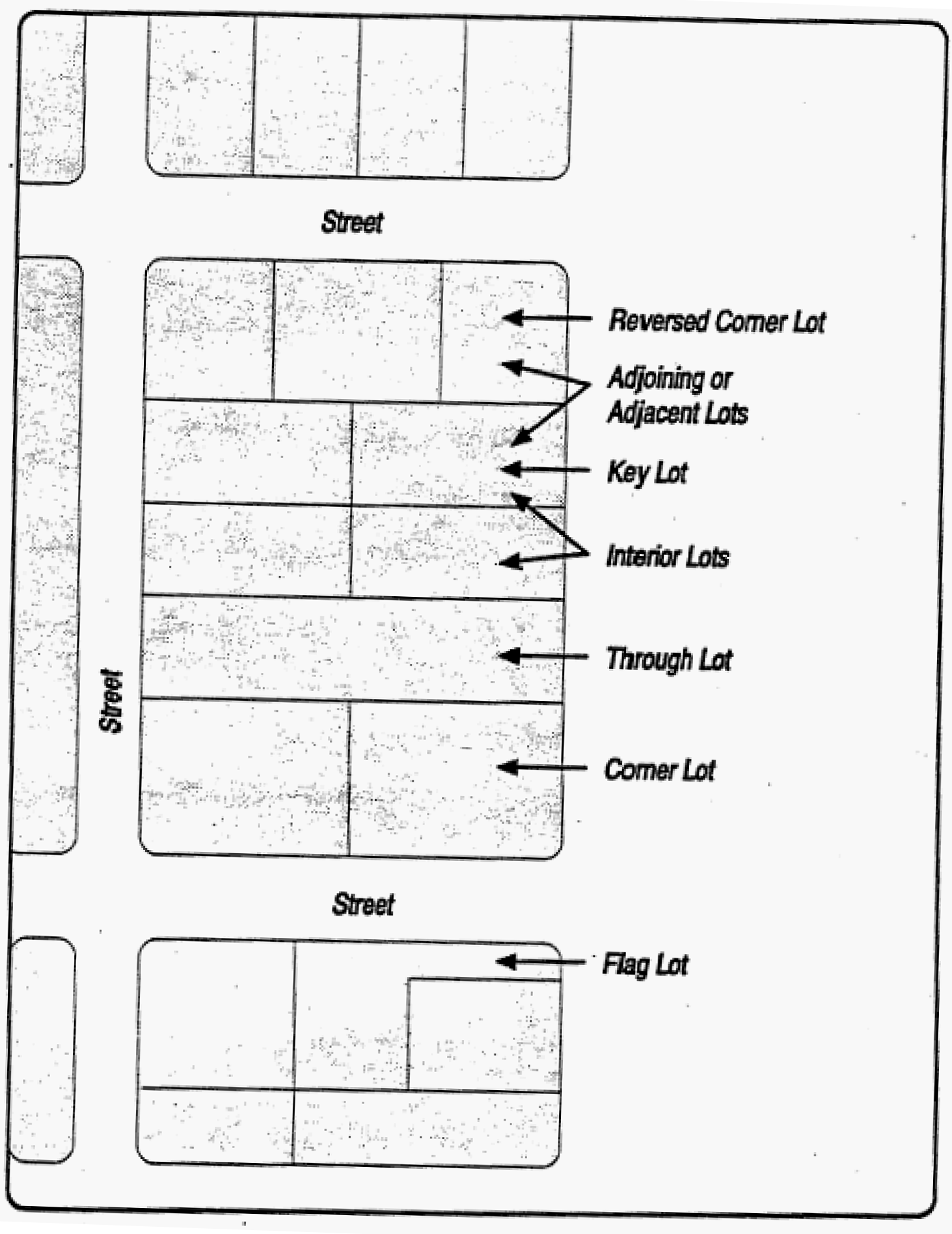
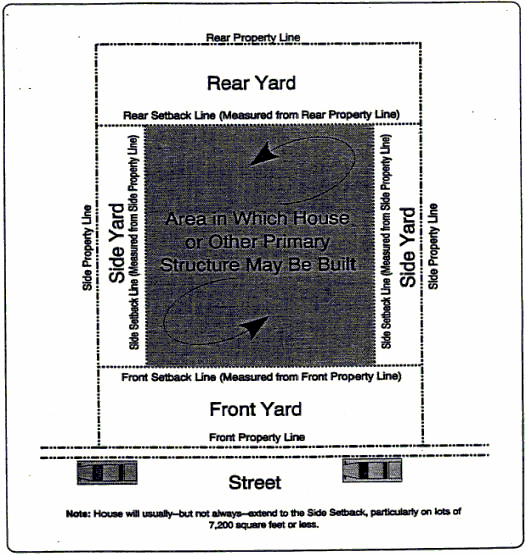
Figure 200-2. Illustration of Required Front, Side, and Rear Yards

