
Chino Hills City Zoning Code
CHAPTER 16
08 - GENERAL DESIGN REGULATIONS
16.08.010 - Intent and purpose.
The City of Chino Hills derives much of its character from its hillside setting and its diverse topographic forms. The City's General Plan emphasizes preservation and enhancement of the natural features which contribute to the scenic qualities. The general hillside design regulations contained in this chapter are to be used in conjunction with the grading regulations contained in Chapter 16.50 and in the City's Landscape Manual. The purpose of these regulations is to protect and enhance the unique visual resources of Chino Hills. This chapter was completed with the best information available, but is not inclusive, and may be modified as appropriate with new information.
(Ord. 121 § 2 (part), 1999)
16.08.020 - Applicability.
A.
General Provisions. The provisions of this chapter shall apply to all hillside areas within the City, except as specifically exempted in subsection C of this section. For the purposes of this chapter, "hillside area" means all properties in the City which have a natural slope of fifteen (15) percent on any existing or proposed parcel that is proposed for development. The provisions of this chapter shall apply to the following development projects:
1.
Approval of a Tentative Tract Map or parcel map pursuant to the Division of Land Uses proceeding in Appendix D of this Code;
2.
Approval of a preliminary development plan pursuant to Chapter 16.74 of this Code;
3.
Approval of a final development plan pursuant to Chapter 16.74 of this Code;
4.
Approval of grading permits pursuant to Chapter 16.50 of this Code;
5.
Submittal of architectural plans for the issuance of building permits; and
6.
Applications for approval of General Plan amendments, Development Code and Zoning Map amendments, specific plans, Conditional Use Permits, Variances, Site Plans, and Temporary Use Permits.
B.
Interpretation. The provisions of this chapter shall be in addition to the applicable standards set forth in Chapter 16.50 of this Development Code and in the City's Landscape Manual. Further, whenever any provision contained elsewhere in this Development Code differs from those in this chapter, the more restrictive provision shall apply, subject to the reasonable interpretation of the City.
C.
Exemptions. The following are exempt from the provisions of this chapter:
1.
Previously-Approved Projects. Any pre-existing approval of a development project application, including projects within a Planned Development, projects with approved Tentative Tract Maps, and projects with recorded final maps are exempt;
2.
Modifications to Existing Structures. Any modification of an existing structure shall be exempt from the provisions of this chapter, subject to approval of the City, including projects involving the maintenance of oil wells, utilities, water reservoirs, and roads;
3.
Fences. Fences may be permitted, subject to approval of the City;
4.
Projects undertaken in open space areas, including multi-purpose trails and projects involving maintenance, subject to approval of the City;
5.
Road Construction Projects. Grading and construction of a roadway identified in the Circulation Element of the Chino Hills General Plan or other roadway as determined necessary by the City to protect the public health, safety, and welfare may encroach into a designated ridgeline or knoll, subject to the approval of the reviewing authority for the project;
6.
Roadways, providing they are designed to minimize the impact on the ridgeline;
7.
Grading for geotechnical purposes;
8.
Water reservoirs.
(Ord. 121 § 2 (part), 1999)
16.08.030 - Important visual resources defined.
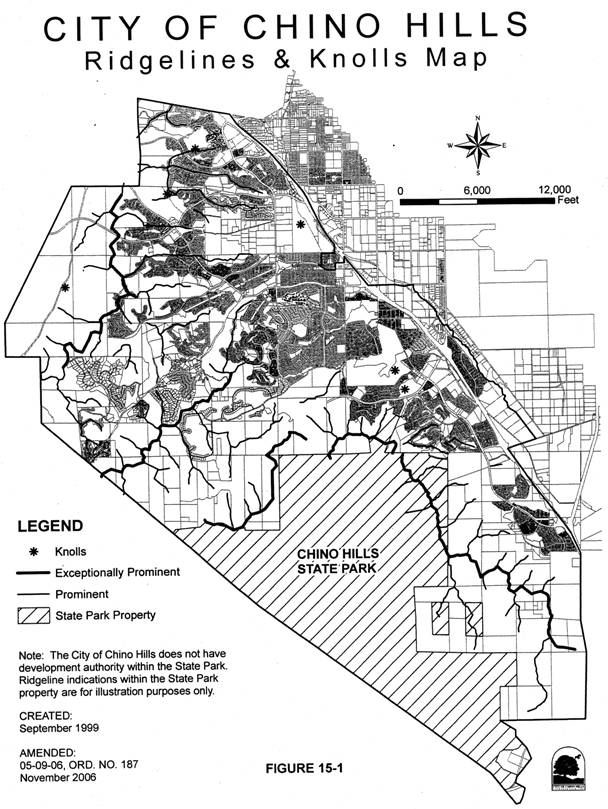
Figure 15-1 highlights the important visual resources in Chino Hills. These resources generally are visible at important gateways into the City, from its major transportation corridors/thoroughfares (SR 71, SR 142, arterials, and collector streets). The resources shown on Figure 15-1 are not considered to be more important than other viewpoints, but rather they are the locations from which a large number of people will visually interpret the City. In many cases, the major transportation corridors/thoroughfares provide the only access to significant views. The important visual resources are defined as follows:
A.
Exceptionally Prominent Ridgelines. Ridgelines that, by virtue of their scale, mass, and visual presence form the limits of the most exceptional viewsheds of the City, and are typically four hundred (400) feet above their associated primary view point(s). Those that provide the City with its distinct image and serve as the City's most recognizable skyline backdrop when viewed from the following transportation corridors/thoroughfares:
1.
Chino Valley Freeway (SR 71);
2.
Carbon Canyon Road (SR 142);
3.
Butterfield Ranch Road;
4.
Soquel Canyon Parkway;
5.
Chino Hills Parkway;
6.
Peyton Drive;
7.
Woodview Road;
8.
Eucalyptus Avenue;
9.
Tonner Canyon Road; and
10.
Grand Avenue.
B.
Prominent Ridgelines. Ridgelines that form the limits of significant viewsheds and provide a natural backdrop when viewed from primary view point(s). Although they vary considerably in scale, width, scope, length, alignment, accessibility, and relationship to adjacent land uses, they are typically two hundred (200) feet above their associated primary view point(s).
C.
Prominent Knolls. A highly visible hill or hilltop which provides a point of orientation or reference for the observer. It is generally a feature of significance within an area, rather than one of community-wide importance.
D.
Associated Primary View Point. A specifically designated location from which a specific ridgeline may be viewed. Primary view points for any given ridgeline are selected as points from which large numbers of people are likely to be able to view the ridgeline.
(Ord. 121 § 2 (part), 1999)
16.08.040 - Ridgeline protection requirements.
A.
Areas Where Development is Prohibited.
1.
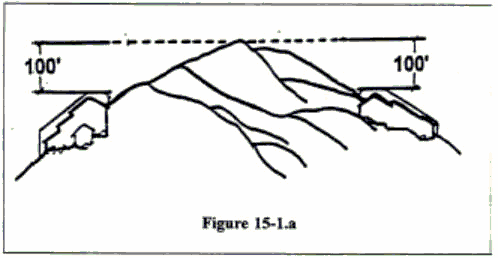
Exceptionally Prominent Ridgelines. (Fig. 15-1.a) The exceptionally prominent ridgelines identified on Figure 15-1 shall not be developed. A minimum separation of one hundred (100) vertical feet shall be provided from the crest of the ridgeline to the area where development is to be allowed (the "crest" is defined as the top of the ridgeline). The exceptionally prominent ridgelines shall be retained in a natural, undisturbed condition. No construction activity, except grading for geotechnical purposes or roadways, shall be allowed to occur within one hundred (100) vertical feet of the crest of any exceptionally prominent ridgeline.
2.
Prominent Ridgelines. (Fig. 15-1.b) The prominent ridgelines identified on Figure 15-1 shall not be developed. No construction activity, except grading for geotechnical purposes or roadways, shall be allowed to occur within one hundred (100) feet of both sides of the crest of a prominent ridgeline (the crest is defined as the top of the ridgeline). In addition to this one hundred (100) foot horizontal setback on both sides of the ridgeline, no construction activity, except grading for geotechnical purposes or roadways, or the building envelope, shall be allowed to occur within thirty-five (35) vertical feet from the crest of the ridgeline.
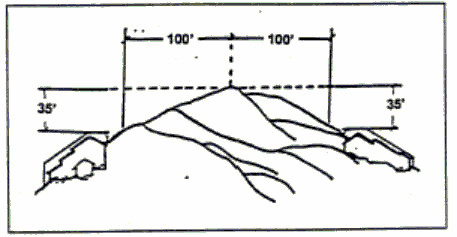
Figure 15-1.b
3.
Prominent Knolls. The prominent knolls identified on Figure 15-1 shall not be developed. No construction activity, except grading for geotechnical purposes and roadways, shall be allowed to occur within one hundred (100) horizontal feet of the crest of the prominent knoll and thirty-five (35) vertical feet from the crest.
(Ord. 121 § 2 (part), 1999)
16.08.050 - Hillside adaptive development standards.
A.
Chino Hills' ridgelines, knolls, and the unique character of its hillside areas, are integral to the creation of the City's rural and aesthetic character, and are subject to the following requirements in these areas:
1.
As set forth in Section 16.08.040(A)(1), the exceptionally prominent ridgelines mapped in Figure 15-1 shall not be developed. They shall be retained in their natural, undisturbed condition;
2.
As set forth in Section 16.08.040(A)(2), the prominent ridgelines mapped in Figure 15-1 shall not be developed. They shall be retained in their natural, undisturbed condition;
3.
As set forth in Section 16.08.040(A)(3), the prominent knolls mapped in Figure 15-1 shall not be developed. They shall be retained in their natural undisturbed condition;
4.
All lands within six hundred (600) feet of the centerline of Carbon Canyon Road;
5.
The Canon Lane area, including:
a.
Tract 1913,
b.
Tract 1945;
6.
The Sleepy Hollow area, including:
a.
Tract 1868,
b.
Tract 2037,
c.
Tract 2211,
d.
Tract 2358,
e.
The "Carbon Canyon Tract,"
f.
The "Sleepy Hollow Tract."
B.
Development in areas referenced in subsection (A)(4) of this section shall conform to the following hillside adaptive development standards.
1.
Projects shall incorporate clustering, variable setbacks, multiple orientations, and other Site Planning techniques to avoid the appearance of a solid line of development.
2.
All buildings shall be hillside adaptive, meaning that the basic structure shall conform to the natural topography. The Development Code requirement of a fifteen (15) foot usable rear yard may be waived by the Community Development Director on a case-by-case basis.
3.
Development shall not be terraced to accommodate flat-pad construction in areas where the line slope of the existing, natural terrain exceeds fifteen (15) percent.
4.
Retaining walls, a maximum of thirty-six (36) inches above the natural or rough grade, may be used to create usable yard space in the side and rear yard. Retaining walls in the exposed side and downhill portions of a lot shall be screened with appropriate landscaping materials (i.e., fire resistive, erosion-controlling, or decorative).
5.
Local and restricted local street standards shall be utilized where safety and circulation considerations permit. Elimination of sidewalks, use of common driveways, slope encroachments into the right-of-way, flexible centerline gradients, and other techniques to minimize landform alteration should be considered.
6.
The building envelope for all structures shall be as follows:
a.
Downhill Lots. A ten (10) foot minimum front setback; twelve (12) foot height at setback extending up and towards the rear of the lot at forty-five (45) degrees to twenty-five (25) feet total height; thirty (30) foot height limit over sloping portions measured from finish grade; and fifteen (15) foot minimum rear setback. Figure 15-2 illustrates the building envelope for downhill lots.
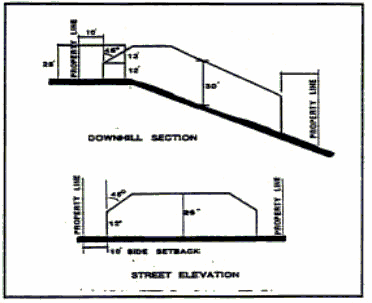
Figure 15-2.
b.
Uphill Lots. A ten (10) foot minimum front setback; twelve (12) foot height at setback extending up and towards the rear of the lot at forty-five (45) degrees to a maximum height of thirty-five (35) feet measured from finish grade; and fifteen (15) foot minimum rear setback.
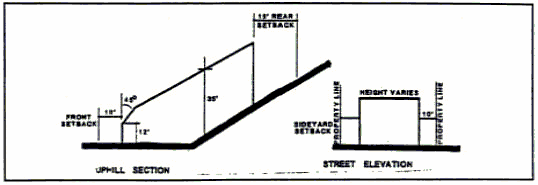
Figure 15-3.
c.
Cross Slope Lots. Similar requirements as for uphill and downhill lots, except that height at front setback may be averaged across frontage inside the side yard setbacks.
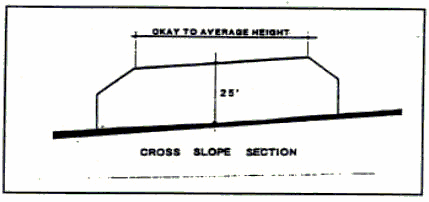
Figure 15-4.
d.
Side Yard Exception. A zero setback is permitted where dwellings on contiguous lots are attached.
e.
Exceptions. Where attached clustered housing is being developed, building height limitations may be increased. For uphill and downhill lots, the maximum height is twelve (12) feet at the setback, extending up and towards the rear of the lot at forty-five (45) degrees to twenty-eight (28) feet of total height, with a thirty-five (35) foot height limit over sloping portions measured from finish grade.
f.
Facade Treatment. Where attached clustered housing is being developed, the facade extending up or down the slope shall not appear as a single, rigid vertical element but shall include variations in roof lines and elevations, using variable architectural detail to soften large vertical surfaces.
7.
Figures 15-5 through 15-16 illustrate the intent of these hillside adaptive standards.
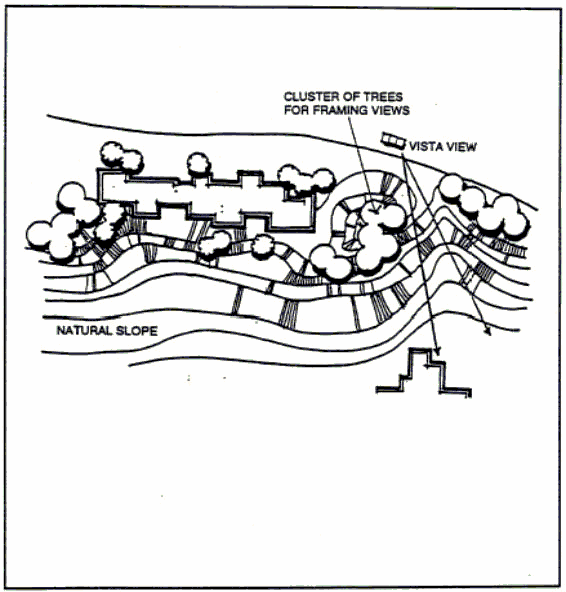
Figure 15-5. Landscape Edge Treatment
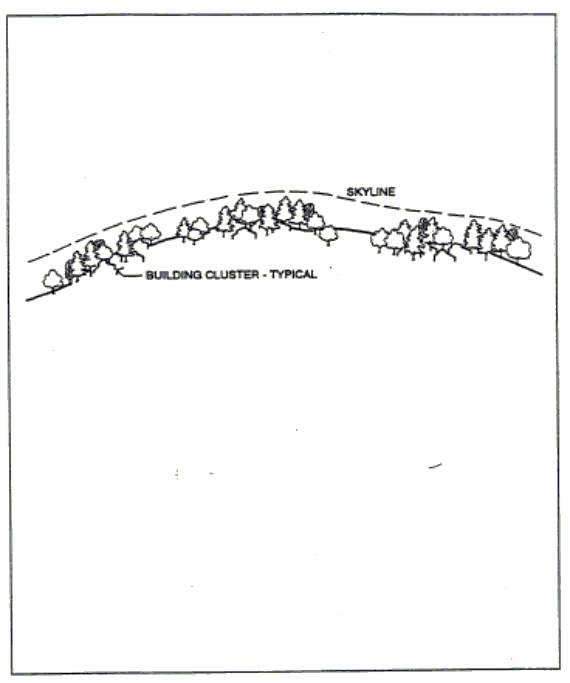
Figure 15-6. Skyline Planting
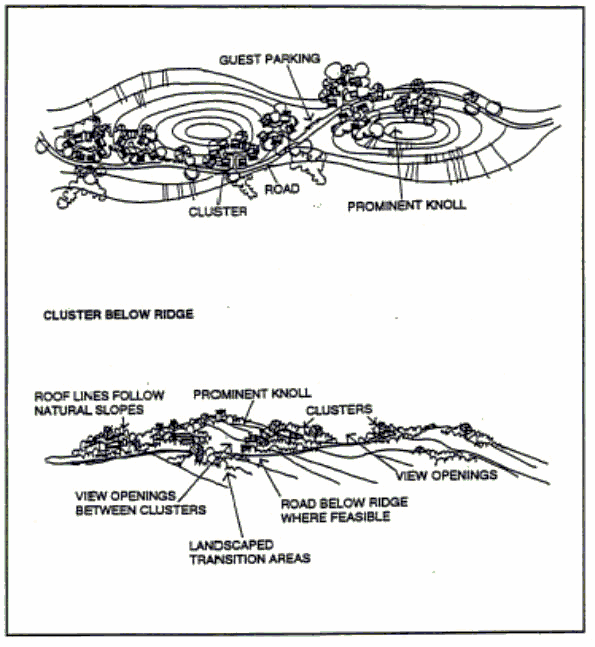
Figure 15-7 Site Design
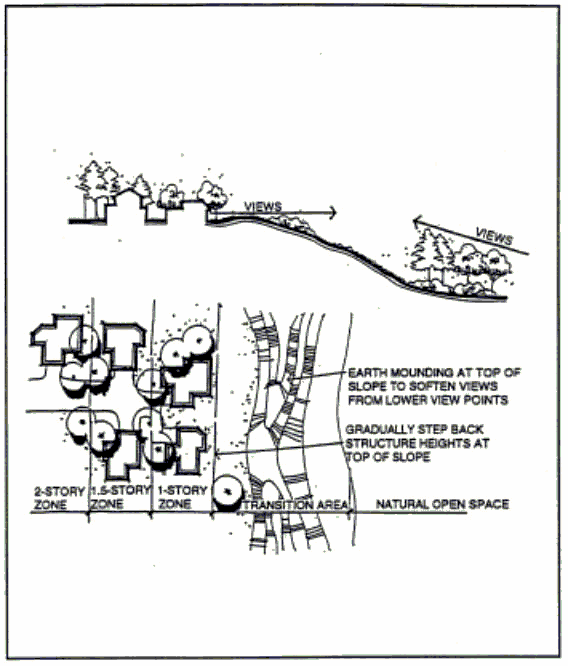
Figure 15-8 Landscape Transition
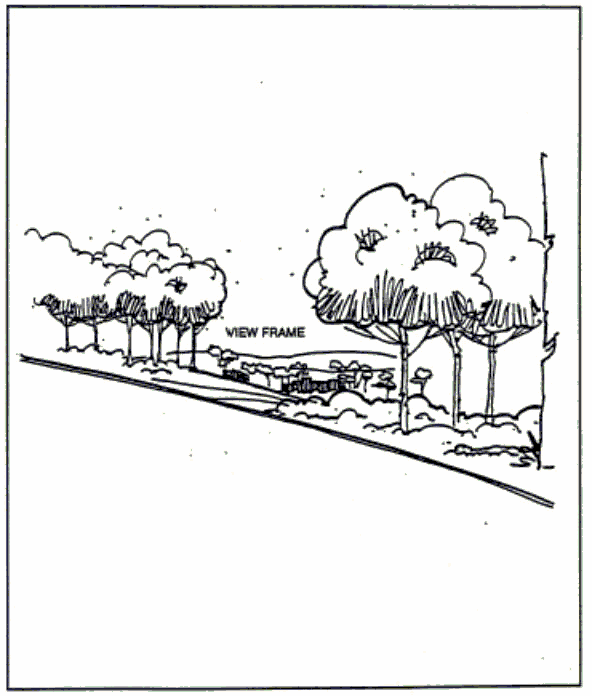
Figure 15-9 Landscape View Framing
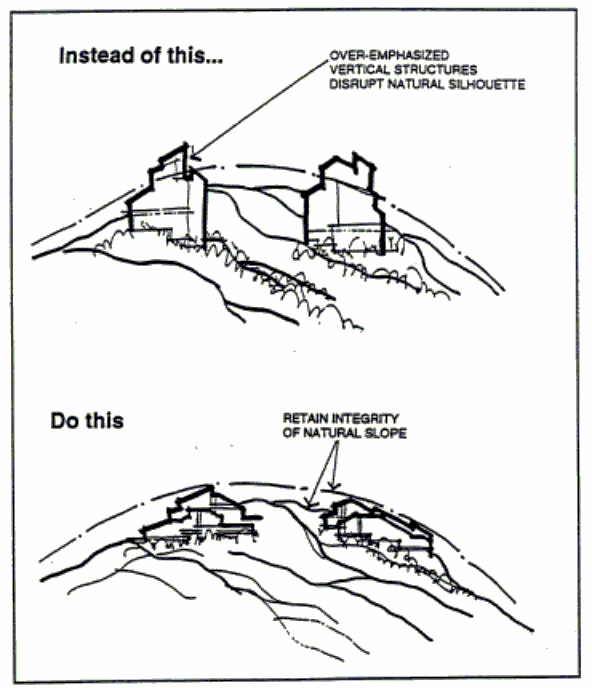
Figure 15-10 Ridgeline Architecture
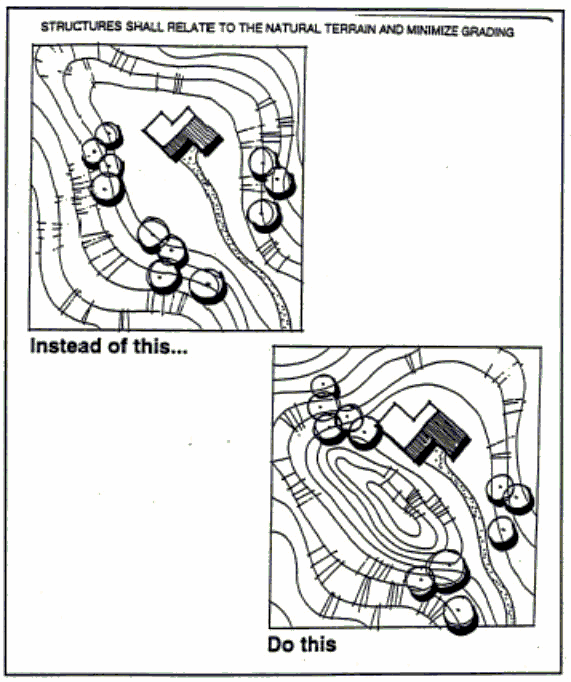
Figure 15-11 Siting Structures
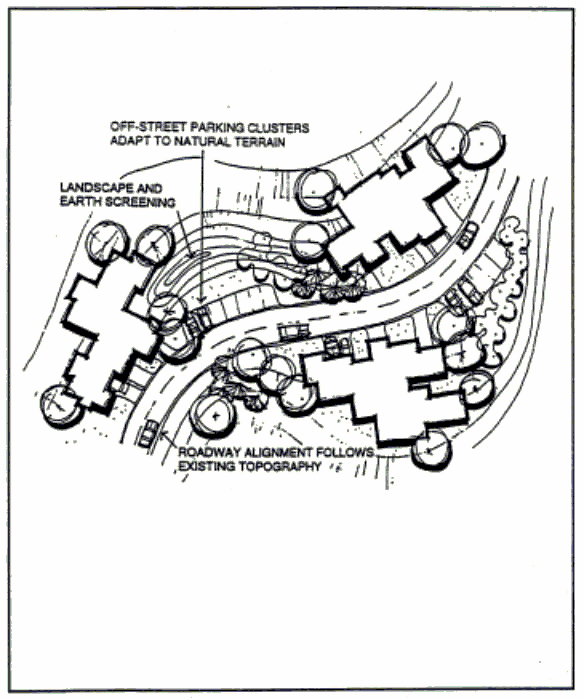
Figure 15-12 Ridgeline Roadway
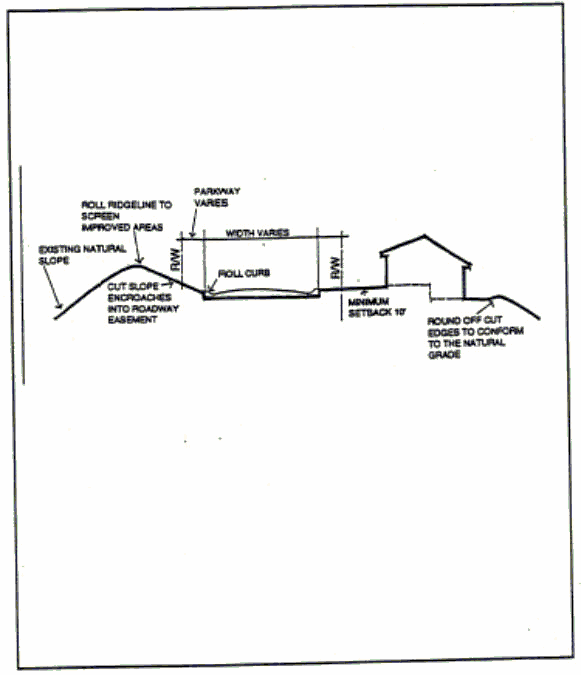
Figure 15-13 Roadway Grading
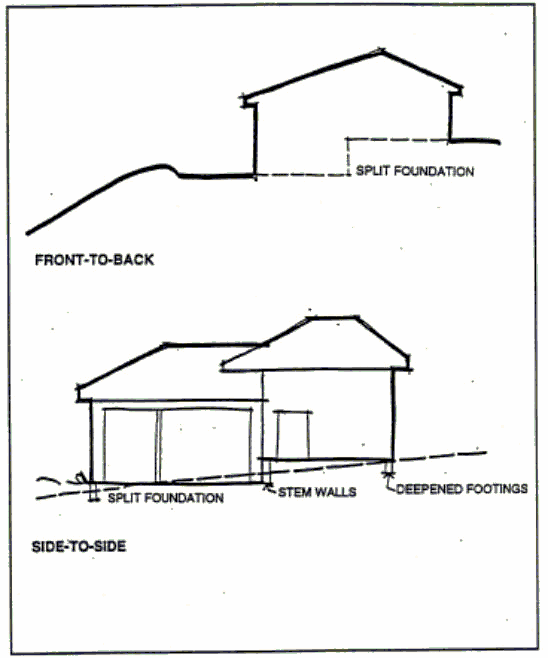
Figure 15-14 Architecture/Grading
(Ord. 121 § 2 (part), 1999)
16.08.060 - Architectural guidelines for hillside development.
The following architectural guidelines shall apply to all structures and development located in the areas defined in Section 16.08.050 of this chapter.
A.
The form, mass, and profile of the individual buildings and architectural features shall be designed to blend with the natural terrain and preserve the character and profile of the ridgeline or knoll. Some techniques which should be considered include:
1.
Split pads, stepped footings, and grade separations to permit dwellings to cascade down or step up the natural slope;
2.
Detaching parts of a dwelling such as the garage;
3.
Low profiles or flat rooflines oriented in the same direction as the natural slope;
4.
Figures 15-15 and 15-16 illustrate these techniques.
B.
Building materials and color schemes shall blend with the natural landscape. Treated wood or material of a wood-like appearance, having the necessary fire retardant characteristics (consistent with the requirements of the applicable fire overlay zone), are encouraged for exterior surfaces. Where exterior stucco is used, it shall have a final coat of integrated color in a muted earth tone. Contrast color accents shall be kept to a minimum, particularly on the view side. Roof colors shall also be earth tones.
(Ord. 121 § 2 (part), 1999)
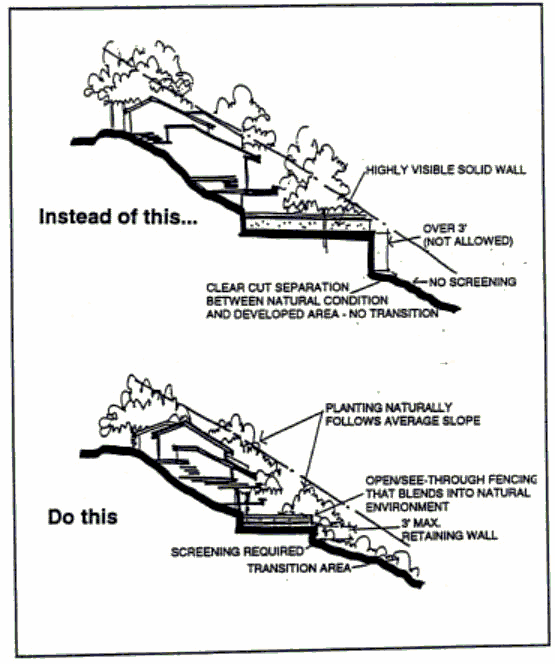
Figure 15-15 Hillside Adaptive Architecture
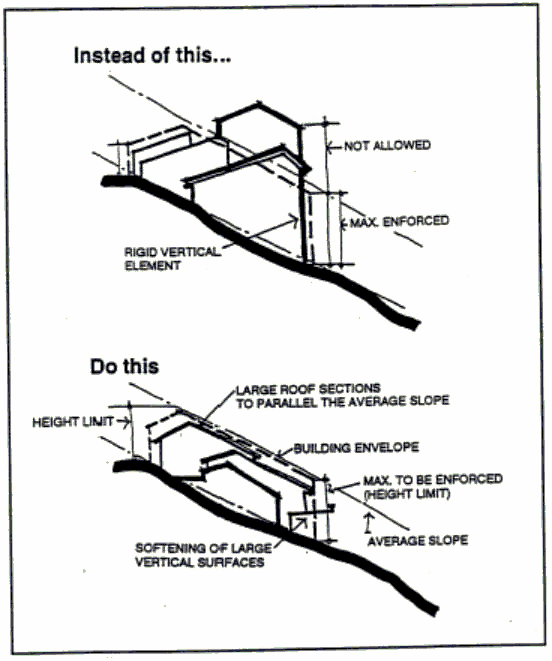
Figure 15-16 Downhill Sections Architecture
16.08.070 - Open space requirements.
A.
In order to preserve important open space areas and maintain the desired rural character of Chino Hills, a portion of each project is required to be set aside as open space. Table 15-1, below, defines the amount of land which is required to be set aside as open space; the area to be set aside as open space varies based on the slope of the land.
B.
In the following table, natural open space may, at the discretion of the City, be either land which is unchanged from its natural state or land which is shaped and/or planted to recreate natural conditions.
Table 15-1.
Required Open Space Areas
C.
Lands set aside as open space shall be shown as lettered lots for open space uses only, and shall be either offered for dedication to the City or retained in ownership by a homeowners association or similar entity.
(Ord. 121 § 2 (part), 1999)
16.08.080 - Economic hardship relief process.
A.
Economic Hardship Relief Petition—Application Required. An application is required to initiate an economic hardship relief petition per the provisions of Section 16.58.020 (Application Procedures) of the Development Code. Any applicant of a development project proposing to develop a site within the hillside areas of the City shall, after a final decision has been made by the City on the development project, and prior to filing a legal action against the City based upon the application of this chapter, file a petition seeking relief from the general hillside design regulations of this chapter on the basis that the denial of the development project application has created a substantial economic hardship, depriving the applicant of all reasonable use of the property.
B.
Affected Property Interest. The economic hardship relief petition shall provide information sufficient for the City to determine whether the petitioner possesses a protectable interest in the property under the Fifth Amendment to the United States Constitution. The Community Development Director and the City Attorney shall determine whether the petition includes sufficient information to make such a determination.
C.
Economic Hardship Standard. For purposes of this chapter, a substantial economic hardship shall be defined as a denial of all reasonable use of the property. Upon a finding that the denial of the development project application has resulted in a denial of all reasonable use of the property, the City Council may provide the petitioner with relief from the general hillside design regulations of this chapter.
D.
Application of the Economic Hardship Standard. In applying the economic hardship standard identified in subsection C above, the City Council shall, among other items, consider the following information or evidence:
1.
The petition itself and the information included as part of the application;
2.
Any evidence presented at the public hearing on the petition, any other information provided by staff, and/or any other information requested by staff or the City Council to aid in assessing the claimed "economic hardship";
3.
Any estimates from contractors, architects, real estate analysts, qualified developers, or other competent and qualified real estate professionals concerning the feasibility or lack of feasibility of construction or development on the property as of the date of the action taken by the City on the development project application itself and/or the date that the application for the petition was accepted as complete;
4.
Any evidence or testimony concerning the appraised value of the property both considering and disregarding the general hillside design regulations of this chapter; and
5.
Any evidence or testimony concerning the value or benefit to the petitioner resulting from a potential alternative layout and design of the proposed development of the property, including the use of clustering techniques.
E.
Time Limits for Action.
1.
Filing of the Notice of Petition and Petition. No later than ten (10) calendar days from the date that the City took action on the development project application, the applicant shall file a notice of petition in writing with the City Clerk. Within one hundred twenty (120) days of filing a notice of petition, the applicant shall file a hardship relief petition with the City Clerk.
a.
Information to be Submitted with Hardship Relief Petition. The hardship relief petition is to be submitted on a form prepared by the Community Development Director, and it is to be accompanied, at a minimum, by the established fee and the following information:
i.
Name of petitioner;
ii.
Name and address of the current owner of the property, form of ownership (whether sole proprietorship, not-for-profit corporation, partnership, joint venture or other), and if owned by a corporation, partnership, or joint venture, the name and address of all principal shareholders or partners;
iii.
The current owner's financial investment in the property, including the price paid and other terms of the sale of the property, the date of purchase, and the name of the party from whom purchased, including the relationship, if any, between the petitioner and the party from whom the property was acquired;
iv.
The nature of the protectable interest claimed to be affected, such as, but in no way limited to, fee simple ownership or leasehold interest;
v.
The terms (including sales price of the property or leasehold interest) of any previous purchase or sale of a full or partial interest in the property for a period of three years prior to the date that a final decision was made by the City on the development project application;
vi.
All appraisals of the property prepared for any purpose, including financing, offering for sale, or ad valorem taxation, within the three years prior to the date that a final decision was made by the City on the development project application;
vii.
The assessed value of and the ad valorem taxes on the property for the previous three years;
viii.
All information concerning current mortgages or other loans secured by the property, including name of the mortgagee or lender, current interest rate, remaining loan balance and term of the loan and other significant provisions, including, but in no way limited to, right of purchasers to assume the loan;
ix.
All listings of the property for sale or rent, price asked and offers received, if any, within the previous three years;
x.
All studies commissioned by the petitioner or agents of the petitioner within the previous three years concerning the feasibility of developing or using the property;
xi.
For income-producing property, itemized income and expense statements from the property for the previous three years; and
xii.
Information from a title policy or other reputable source showing all recorded liens or encumbrances affecting the property.
b.
Failure to Submit Information. In the event that any of the information required to be submitted by the petitioner is not reasonably available, the petitioner shall file a written statement along with the application, describing the reasons why such information is unavailable and including a statement that the required information cannot be obtained.
c.
Burden of Proof. The petitioner shall have the burden of proving that the denial of the development project application creates a substantial economic hardship as defined in subsection C of this section.
d.
Preliminary Determination of Substantial Economic Hardship.
i.
Review of Petition for Completeness. Not later than thirty (30) days after submittal of an application petitioning for economic hardship relief from the general hillside design regulations of this chapter, the Community Development Director shall notify the applicant, in writing, if the petition is not complete and if the petitioner has failed to submit sufficient evidence to allow staff to make a preliminary determination, as set forth in subsection B of this section, that the petitioner possesses a protectable interest in the property.
ii.
Preliminary Staff Determination of Substantial Economic Hardship. Not later than thirty (30) days after an application has been accepted as complete, the Community Development Director shall make a preliminary staff determination whether the applicant has made a prima facie case that the subject property has suffered a serious diminution of value or a denial of all reasonable use that amounts to a substantial economic hardship. After this preliminary staff determination has been made, the petition shall be scheduled for the next available City Council meeting following completion of the required legal notice. At a minimum, the same type of legal notice shall be provided for the petition as was provided for the public hearings held by the City on the development project application.
2.
City Council Determination. The City Council shall take action to approve or deny a petition for economic hardship relief within sixty (60) days after the preliminary staff determination has been made on the claim of substantial economic hardship.
F.
City Council Action. The City Council shall hold a public hearing on the petition at which time the Council shall review and consider the evidence and testimony regarding the factors identified below. At the conclusion of the public hearing, the City Council shall determine whether the applicant has been denied all reasonable use of the property. The City Council shall consider the following factors in making its determination:
1.
Factors to Consider.
a.
Whether the petitioner has complied with the requirements for presenting the information to be submitted with the economic hardship relief petition;
b.
Whether the petitioner has a protectable interest in the property;
c.
The appraised value of the property considering the general hillside design regulations;
d.
The appraised value of the property disregarding the general hillside design regulations;
e.
The appraised value of, or the benefit accruing from, opportunities to cluster development on the property;
f.
Whether it was feasible to undertake construction on, or development of, the property as of the date that action was taken on the development project application itself and/or the date when the petition was accepted by the City as complete, or in the reasonably near future thereafter;
g.
Whether the denial of the petition for economic hardship relief would create a substantial economic hardship as defined in subsection C of this section.
2.
Required Findings. In acting to grant or deny the petition for economic hardship relief, the City Council shall make written findings citing the reasons for its decision. In accordance with Chapter 1.24 and Section 2.04.130(c) of the Chino Hills Municipal Code, within thirty (30) calendar days following the rendering of City Council's decision on the petition, a copy of the decision and the findings associated with that decision shall be mailed to the petitioner at the address shown on the application.
3.
Economic Hardship Relief Provisions. If the City Council determines that the hardship relief petition should be approved, the City Council may adopt any incentive reasonably necessary to offset any substantial economic hardship as defined in subsection C of this section and may condition such incentives upon approval of a specific development plan for the property. The types of incentives that the City Council may consider include, but are not limited to, the following:
a.
A waiver of City fees for processing of the development project application;
b.
Acquisition of all or a portion of the property at its appraised value;
c.
Clustering of development on the hillside property;
d.
Financial assistance for developing property elsewhere in the City, not in the hillside area; and/or
e.
Relief from the requirements of Section 16.08.040 of this chapter that would otherwise apply to the petitioner's property and relief from the setback requirements of the Chino Hills Development Code, including, but in no way limited to, those set forth in Chapter 16.06 (General Development Standards), Chapter 16.10 (Residential Districts), and Chapter 16.20 (Planned Development).
(Ord. 121 § 2 (part), 1999)
16.08.090 - Geotechnical remediation.
Geotechnical Investigation/Exploratory Excavations—Permit Required.
1.
The following considerations shall be provided to eliminate and prevent accelerated erosion and re-establish vegetative growth compatible with the area:
a.
Identify areas that will be disturbed by access and exploratory activity.
b.
Show preservative measures for existing streams and drainage courses in the natural condition in order to retain their ability to accommodate runoff.
c.
Clearly show all appropriate measures that will detain and filter runoff.
d.
Show effective planting with hydroseed mix and/or mulching for all disturbed areas.
2.
Additional measures, beyond those specified in any soil erosion and sediment control plan, may be required by the Building Official as deemed necessary to control erosion after project completion.
(Ord. 121 § 2 (part), 1999)

