
Chino Hills City Zoning Code
CHAPTER 16
50 - GRADING REGULATIONS
16.50.010 - Purpose.
Chino Hills derives its identity and character from its hillside setting and diverse topographic forms. The City's General Plan emphasizes the preservation and enhancement of the natural features which contribute to the scenic qualities of the area. The grading standards and guidelines contained in this chapter are established to preserve the hillside character of the community.
(Ord. 68 § 9.91.010, 1995)
16.50.020 - Scope of regulations.
Where the words "shall" or "will" are used in this chapter, the stated standards shall be mandatory. Where the words "should," "could," or similar language is used, the provisions shall be considered guidelines only, unless required by the Community Development Director, Planning Commission, or City Council through a discretionary approval process.
(Ord. 68 § 9.91.020, 1995)
16.50.030 - Grading guidelines applicable to all projects.
The grading standards listed in this section and illustrated in Figures 93-1 through 93-9 shall be required of all development projects, as approved by the Director of Community Development.
A.
The overall shape, height, and grade of any cut or fill slope shall be designed to simulate the existing natural contours and scale of the natural terrain of the site.
B.
The angle of the graded slope shall be gradually adjusted to the angle of the natural terrain.
C.
Sharp, angular forms shall be rounded and smoothed to blend with the natural terrain.
D.
Graded slopes shall be landscaped.
E.
Natural drainage courses shall be preserved whenever practicable, consistent with the need to minimize flood and erosion hazards. Stream banks shall be stabilized with landscaping, rock, or other materials that harmonize with the natural setting and contain flows and control erosion.
F.
During construction, measures shall be taken to control runoff from construction sites consistent with National Pollution Discharge Elimination Systems (NPDES) requirements imposed by the State Regional Water Quality Control Board and Chapter 16.54 of this Code.
G.
Grading shall be phased so that prompt revegetation or construction can control erosion. Where possible, only those areas which will later be resurfaced, landscaped, or built on should be disturbed. Resurfacing of parking lots and roadways shall take place as soon as practicable and not at the completion of construction.
H.
Grading operations should be planned to avoid the rainy season. Grading during the rainy season shall comply with the requirements of Chapter 16.54 of this Code.
I.
Grading plans shall show the location of any abandoned oil wells, including wells not covered by structures. Prior to issuance of grading permits, the project proponent shall develop, in consultation with the State Department of Conservation, Division of Oil and Gas, an abandonment process which meets current state abandonment standards, and shall submit evidence to the Building Official of state approval of the process.
(Ord. 68 § 9.91.030, 1995)
16.50.040 - Grading guidelines for all projects.
Within the framework of the standards listed in Section 16.50.030, the City has developed guidelines to illustrate more desirable approaches to grading. These guidelines are intended to provide more specific direction on the intent of the grading standards. These guidelines are not requirements, but are provided to illustrate preferred approaches to grading; application of these standards shall be determined during the approval process for each project, including the issuance of grading permits.
A.
The toe and crest of any slope in excess of ten (10) feet vertical height should be rounded with vertical curves of radii no less than five feet and designed in proportion to the total height of the slope.
B.
Where cut or fill slopes over five feet in vertical height exceed one hundred (100) feet in horizontal length, the contours of the slope should be curved in a continuous, undulating fashion with varying radii to reflect the natural terrain.
C.
A manufactured slope bank should not exceed thirty (30) feet in vertical height unless no feasible alternative exists or unless grading can be significantly reduced by increasing slope height. However, the use of an alternative design is strongly recommended as the desirable approach in reducing grading and slope height. Any bank exceeding twenty-five (25) feet in height, regardless of length, should have variable gradients, unless the City requires a maximum 2:1 slope gradient due to onsite soil conditions.
D.
The provisions of subsection A and B above generally do not apply to side yard slopes (that is, slopes between residential lots) except where the side yard slope is highly visible.
(Ord. 68 § 9.91.040, 1995)
16.50.050 - Landscaping adjacent to open space areas.
The transition zone between development and the natural terrain shall be landscaped to accomplish the following general functions as required:
A.
Screening or edge treatment, i.e., berming and planting to buffer and soften the land use transition. Planting shall be consistent with the character established for the area in which the project is located;
B.
Erosion Control. See approved planting lists, especially ground covers, in this Development Code and the City of Chino Hills Landscape Manual;
C.
Fuel modification, per the standards of the City of Chino Hills and the Fire Authority;
D.
Skyline Enhancement. Plantings shall generally replicate the natural form of the ridgeline.
(Ord. 68 § 9.91.050, 1995)
16.50.060 - Grading on prominent knolls and ridgelines and Carbon Canyon area.
Grading in the vicinity of prominent knolls and ridgelines, and in the Carbon Canyon area (as defined in Section 16.08.050(A)(2) shall conform to the standards contained in Chapter 16.08 of this Code.
(Ord. 68 § 9.91.060, 1995)
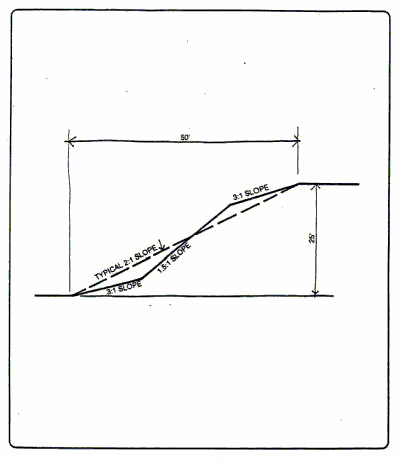
Figure 91-1. Vary Slopes.
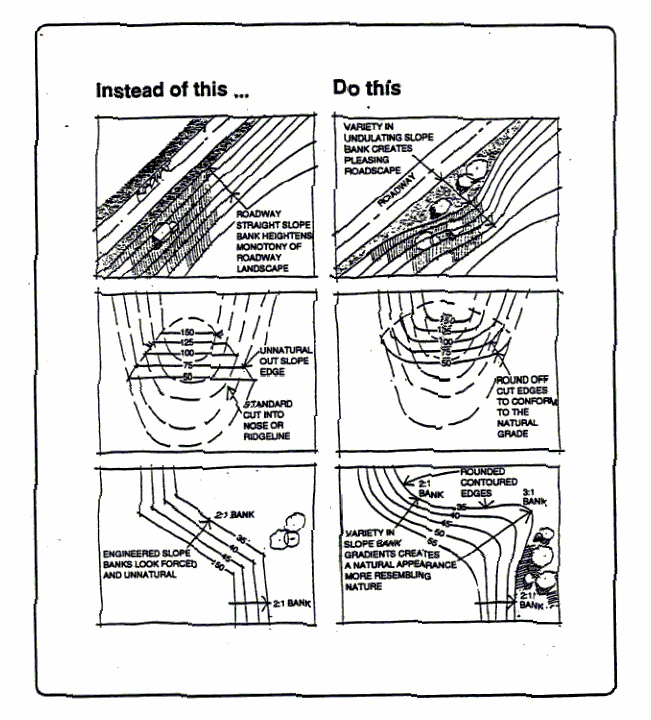
Figure 91-2. Grading Techniques
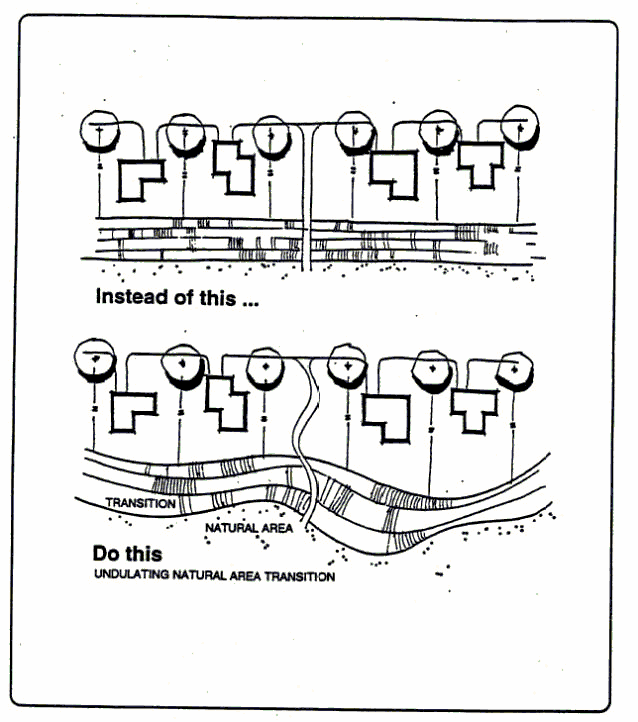
Figure 91-3. Transition Slope Grading
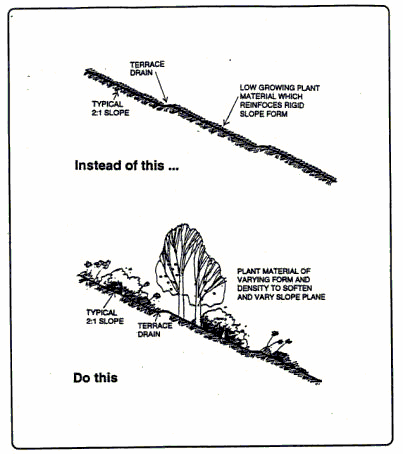
Figure 91-4. Landscape to Obscure Slopes
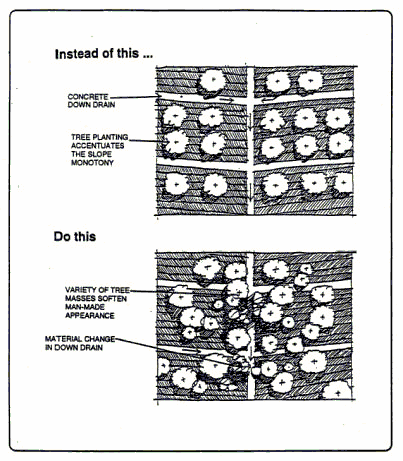
Figure 91-5. Screening of Drainage Structures
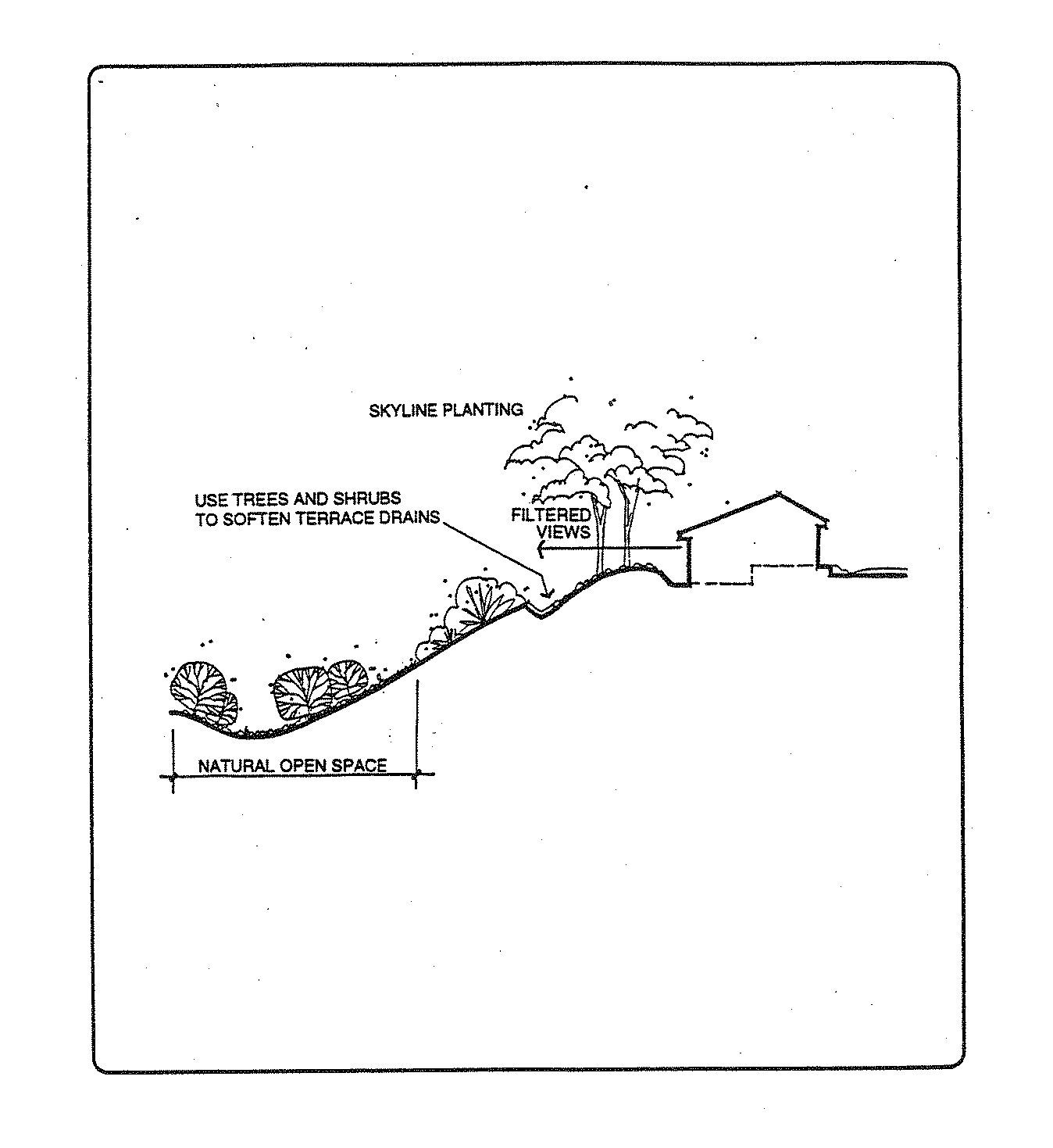
Figure 91-6. Landscape Transition
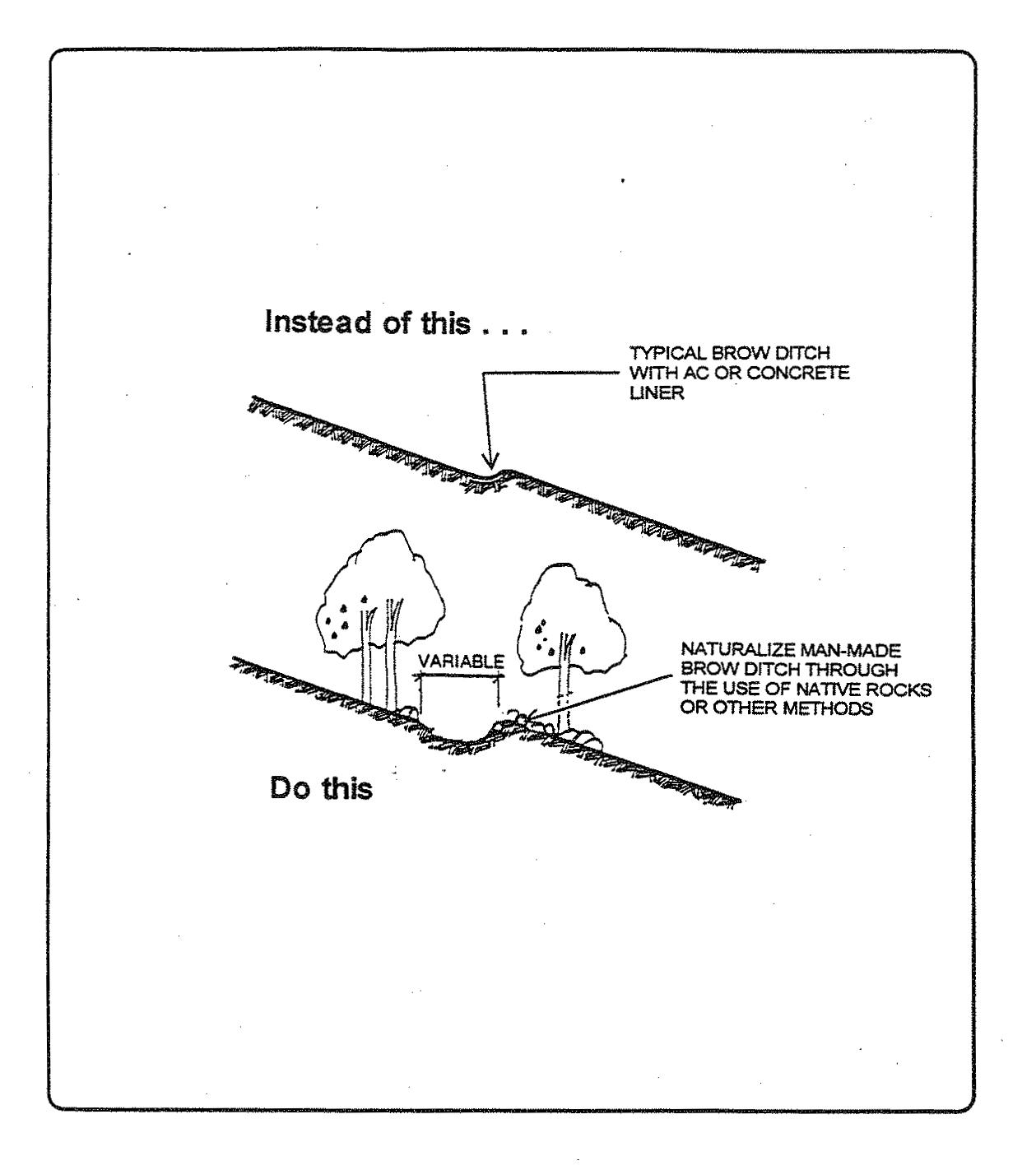
Figure 91-7. Naturalize Brow Ditches
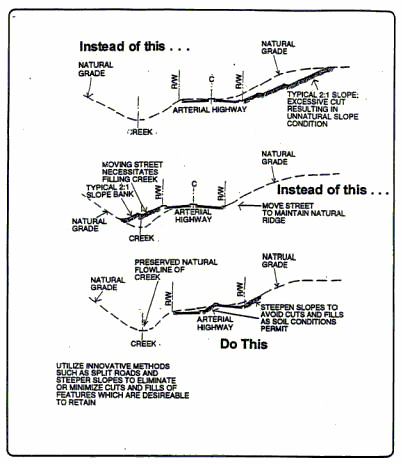
Figure 91-8. Highway Treatment Along Creeks
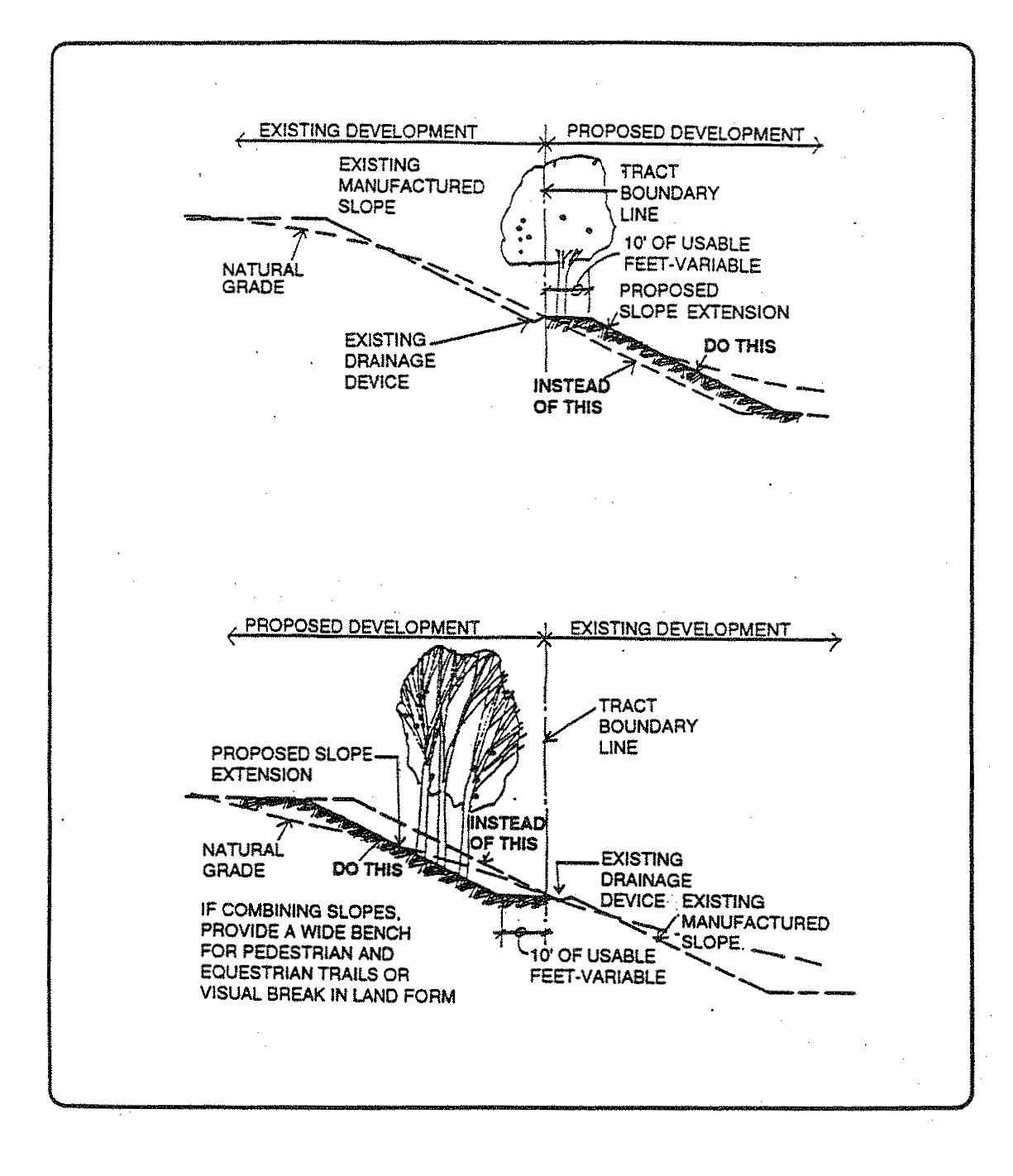
Figure 91-9. Combine Slopes

