
Cincinnati City Zoning Code
CHAPTER 1419
ADDITIONAL DEVELOPMENT REGULATIONS
§ 1419-01.- Applicability.
Uses that are permitted, permitted with limitations, or require approval of a conditional use in individual zoning districts must comply with the regulations of this chapter.
(Ordained by Ord. No. 15-2004, eff. Feb. 13, 2004)
§ 1419-03. - Amateur Radio and Satellite Antennas.
The intent of these regulations is only to locate such antennas and equipment where they are least visible from public rights-of-way in the vicinity, while not burdening adjacent property owners with adverse visual impacts. The intent is not to discriminate against dish antennas in favor of other communications facilities. Installation of this equipment and antennas is governed by the following:
(a)
Amateur Radio Antennas. An amateur radio antenna may only be installed on a lot in any district if it complies with the following criteria:
(1)
Location: Only allowed in the rear yard.
(2)
Maximum Height: 15 feet above the district height limit, provided that additional height may be authorized with a conditional use approval.
(3)
Surface Materials and Finishes: Highly reflective surfaces are not permitted.
(b)
Parabolic Antennas. A parabolic or satellite antenna less than two feet in diameter may be installed in any district. An antenna greater than two feet in diameter may be installed if it complies with the following criteria:
(1)
Setbacks. Parabolic antennas must be located in a rear yard a minimum distance from all property lines equivalent to two times the height of the antenna. The distance is determined from the base support of the antenna to the nearest point on a property line.
(2)
Maximum Height: 12 feet
(Ordained by Ord. No. 15-2004, eff. Feb. 13, 2004)
§ 1419-05. - Animal Service Facilities.
Animal Service Facilities shall be established and maintained subject to the following regulations:
(a)
The facility shall principally be situated within a fully enclosed structure. The structure for the animal service facility must be provided with appropriate mechanical ventilation with continual filtration of all exhaust air and sanitation mechanisms to prevent odor and unsanitary facilities for the animals.
(b)
There may be no openings in the walls or roof of any portion of the structures used for an animal service facility unless such openings are stationary windows or required means of egress.
(c)
Conditional Use approval required when the total interior area of any animal service facility exceeds 5,000 square feet in area or the total exterior area devoted to animals exceeds 2,500 square feet.
(d)
Exterior exercise areas, yards, pens or storage areas may be conditionally approved in CC-A, CG-A, ML and MG districts.
(1)
Such uses shall not be located within a required setback and shall not be less than 50 feet from a residential district.
(2)
Such uses shall provide a 100% opaque six feet tall minimum barrier to screen animals from adjacent residential district. Noise reduction attributes to the barrier may also be required.
(e)
The animal service facility must be constructed and operated according to any other reasonable conditions that the Zoning Administrator may apply to provide for the welfare of animals housed in the facility and to mitigate impacts on neighboring properties.
(f)
Livery Facilities, Breeding Facilities, Pet Stores and Other Exotic Species Facilities and Animal Testing Laboratories shall comply with all state and local licensing and regulatory requirements.
(Ordained by Ord. No. 15-2004, eff. Feb. 13, 2004; Emer. Ord. No. 141-2015, § 23, eff. July 1, 2015; a. Ord. No. 251-2019, § 23, eff. July 26, 2019)
§ 1419-07. - Automated Teller Machines.
Automated teller machines (ATM) must be located, developed and operated in compliance with the following standards:
(a)
Drive-Through Facilities. See § 1419-13, Drive-in and Drive-through facilities.
(b)
User Comfort. Where ATMs are located on the exterior of a building, weather protection must be provided in the form of an awning or shallow portico.
(c)
Security. ATM facilities must have adequate lighting for security purposes.
(d)
Litter. ATM facilities must include at least one trash receptacle.
(Ordained by Ord. No. 15-2004, eff. Feb. 13, 2004)
§ 1419-09. - Bed and Breakfast Homes and Inns.
Bed and breakfast homes and bed and breakfast inns must be located, developed and operated in compliance with the following:
(a)
Number of Rooms. No more than three rooms for rent may be allowed in a bed and breakfast home and no more than five rooms for rent in a bed and breakfast inn.
(b)
Appearance. In all residential districts, the exterior appearance of a structure housing a bed and breakfast home may not be altered from its residential character.
(c)
Business License Required. A current business license must be obtained and posted in compliance with Chapter 855, Rooming Houses, of the Municipal Code.
(d)
Limitation on Services Provided. Meals and rental of bedrooms are limited to registered guests. Separate or additional kitchens for guests are prohibited.
(e)
Parking. One parking space for every guest room, in addition to the requirements for the dwelling itself, as prescribed in Chapter 1425, Parking and Loading.
(f)
Signs. The requirements of Chapter 1427, Signs, apply.
(Ordained by Ord. No. 15-2004, eff. Feb. 13, 2004)
§ 1419-11. - Car Wash.
Car washes must be located, developed and operated in compliance with the following:
(a)
Location. Permitted on arterial streets only.
(b)
Setbacks. No building or structure may be located within 20 feet of any street lot line.
(c)
Queue Area. Each facility must provide sufficient queue area in advance of the car wash area to accommodate two vehicles in advance of a self-service bay and six vehicles in advance of an automatic service bay.
(d)
Litter. One permanent trash receptacle per wash bay is required.
(e)
Noise. Sound baffles to absorb noise must be installed at all facilities creating noise levels above 70 decibels at the property line.
(Ordained by Ord. No. 15-2004, eff. Feb. 13, 2004)
§ 1419-12. - Community Learning Centers.
A public or private school may operate as a community learning center provided that it is be located, developed, and operated in compliance with the following:
(a)
School Use Required. A community learning center may be comprised of one or more principal uses and accessory uses provided that the uses are integrated with a public or private school use.
(b)
Additional Uses Permitted. The following principal and accessory uses may comprise a community learning center:
i.
Any use permitted in the underlying zoning district.
ii.
Any use determined by the Zoning Administrator to be customary and incidental to a community learning center.
iii.
If not permitted in the underlying zoning district, the following conditional uses upon receiving approval by the Zoning Hearing Examiner:
Government facilities and offices; offices; medical services and clinics; personal instructional services; day care centers; community service facilities; cultural institutions; park and recreation facilities; recreational facilities, indoor or small size; and community gardens.
(c)
Contiguous Campus. The uses comprising a community learning center may be housed in one or more structures located on:
i.
the same lot as the required public or private school use; or
ii.
one or more lots that are adjacent to lot on which the required public or private school use is located, including adjacent lots separated only by a street.
(d)
No Independent Uses. No use comprising a community learning center may operate independently of the required public or private school use. No principal or accessory use established in connection with a community learning center shall be deemed a legal nonconforming use permitted to operate if the required public or private school use is abandoned.
(e)
Additional Development Regulations. Each use comprising a community learning center must comply with all other development regulations applicable to the use.
(Ordained by Ord. No. 127-2018, § 4, eff. July 6, 2018)
§ 1419-13. - Drive-In and Drive-Through Service Facilities.
Drive-in and drive-through service facilities must be located, developed and operated in compliance with the following:
(a)
Queue Area. Each facility must provide sufficient queue area of at least 20 feet per vehicle in advance of the service point to accommodate at least three vehicles per service point or at least six vehicles per establishment, whichever is greater. The queue area may not interfere with other on-site circulation and parking facilities.
(b)
Litter. At least one permanent trash receptacle must be installed.
(c)
Menu Boards. Menu boards must be located at least 50 feet from any residential district boundary. Speaker noise levels may not be audible on any abutting residential property.
(d)
Pedestrian Walkways. Pedestrian walkways must have clear visibility and be emphasized by enhanced paving or markings when they intersect the drive-in or drive-through aisles.
(e)
Screening. All service areas, trash storage areas and ground- or roof-mounted mechanical equipment must be screened from ground-level view and from adjacent properties or public rights-of-way, as prescribed in § 1421-35, Refuse Storage Areas.
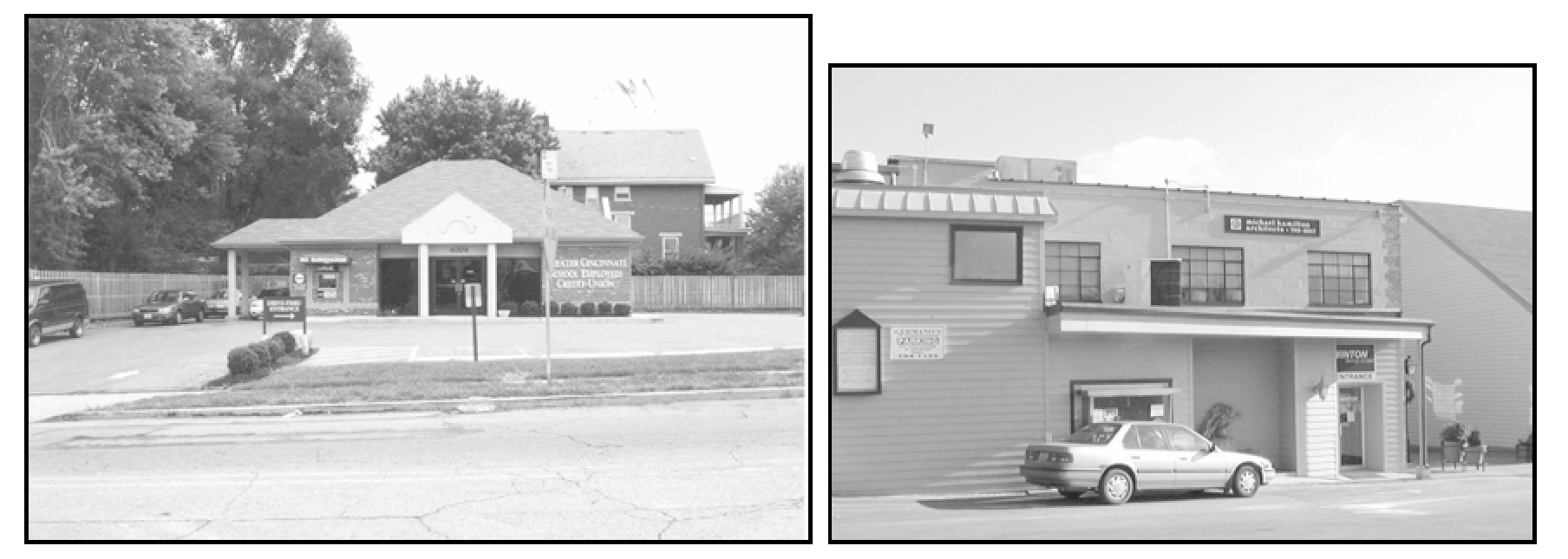
Figure 1419-13 Drive-In and Drive-Through Example
(Ordained by Ord. No. 15-2004, eff. Feb. 13, 2004)
§ 1419-15. - Fuel Sales.
Fuel sales must be located, developed and operated in compliance with the following:
(a)
Fuel Dispensing Units. Fuel dispensing units must be located at least 15 feet from any property line.
(b)
Canopy. A canopy covering the fuel dispensing area must be located at least five feet from all property lines.
(c)
Lighting. All exterior light sources, including canopy, perimeter and flood, must be stationary and shielded or recessed within the roof canopy to ensure that all light is directed away from adjacent properties and public rights-of-way. Lighting may not be of a high intensity so as to cause a traffic hazard or adversely affect adjacent properties. All lighting must comply with the requirements of § 1421-39, Exterior Lighting.
(d)
Litter. At least one permanent trash receptacle must be installed at each pump island.
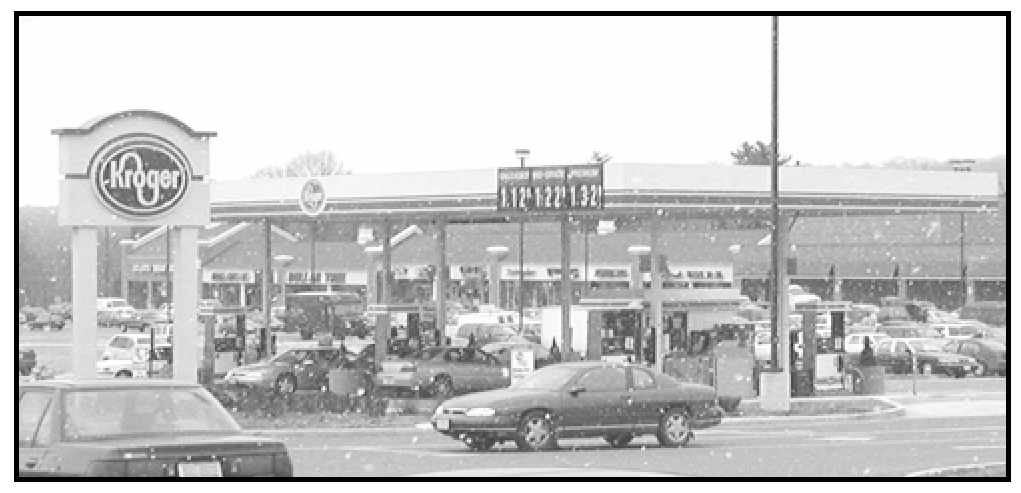
Figure 1419-15 Fuel Sales Example
(Ordained by Ord. No. 15-2004, eff. Feb. 13, 2004)
§ 1419-16. - Garden supply stores and nurseries.
Garden Supply Stores and Nurseries are permitted in identified zoning districts subject to the following regulations:
(a)
In the MA district, conditional use approval required when the Garden Supply Store is greater than 5,000 square feet.
(b)
Outdoor Storage must be screened with a privacy screen six feet in height.
(Ordained by Ord. No. 251-2019, § 24, eff. July 26, 2019)
§ 1419-17. - Home Occupations.
Home occupations are permitted in residential districts, subject to the following regulations:
(a)
Purpose. The purpose of home occupation regulations is to permit residents an opportunity to use their homes as a place of livelihood. While permitting such uses in homes, it is important to protect adjacent residential areas from any adverse impacts caused by activities associated with the home occupation. The limitations in this section are designed to assure compatibility between the home occupation and neighboring properties, while retaining the residential character of the building in which the home occupation is conducted.
(b)
Permitted Home Occupation Uses. Home occupations may not include retail sales and are limited to personal services that can be performed on the premises in oral, written, fine-arts, manual-crafts, home-crafts or graphic-arts forms as well as limited business and professional office activities or other occupations determined by the Zoning Administrator.
(c)
Conditions and Limitations. All permitted home occupations are subject to all of the following conditions and limitations:
(1)
The home occupation including accessory storage is conducted entirely within the dwelling unit or within an accessory building.
(2)
The gross floor area exclusively devoted to the home occupation including accessory storage may not exceed twenty-five percent of the habitable gross floor area of the dwelling unit or 500 square feet, whichever is less.
(3)
Only those persons residing on the premises may be employed, commissioned or engaged in the home occupation.
(4)
Merchandise, supplies or stock in trade may not be sold or displayed on the premises.
(5)
The exterior appearance of the building may not be altered for the purpose of accommodating the home occupation in a manner that is inconsistent with the residential character of the building.
(6)
Materials used in the home occupation may not be stored outside of the principal building or accessory building.
(7)
Goods and materials that serve to identify the home occupation may not be displayed so as to be visible from outside the building.
(8)
A home occupation may not produce noise, odors, vibrations, glare, fumes or electrical interference above those levels normally expected in a residential neighborhood.
(9)
Hazardous or toxic materials may not be used or stored on-site in quantities that could have a potentially significant environmental impact on the property or on the surrounding community. A hazardous or toxic material is one which is subject to the reporting provisions of Section 313 of Subtitle B of the Environmental Planning and Community Right-to-Know Act of 1986, 42 U.S.C. Section 11023.
(10)
The home occupation may not generate vehicular or pedestrian traffic in greater volume than that normally expected in the residential district in which the home occupation is located.
(Ordained by Ord. No. 15-2004, eff. Feb. 13, 2004; a. Ord. No. 0346-2007, § 10, eff. Oct. 13, 2007; Emer. Ord. No. 141-2015, § 24, eff. July 1, 2015)
§ 1419-19. - Intensive High-Impact Industrial Uses.
Any intensive high-impact industrial use required to obtain a permit from the Ohio Environmental Protection Agency (OEPA) or any local agency operating under the delegated authority of the OEPA must obtain the permit prior to obtaining zoning approval.
(Ordained by Ord. No. 15-2004, eff. Feb. 13, 2004)
§ 1419-21. - Limited or Full Service Restaurants and Drinking Establishments.
Outdoor areas of limited or full service restaurants and drinking establishments must be located, developed and operated in compliance with the following:
(a)
Residential District Boundary Line. For the purposes of this section the term residential district boundary line shall mean the district boundary line of the SF-20, SF-10, SF-6, SF-4, SF-2, RMX, RM-2.0, RM-1.2, and RM-0.7 districts.
(b)
Location. Outdoor areas on any public sidewalk or alley requires a revocable street privilege. Any outdoor area located within 100 feet of a residential district boundary line may not exceed fifty percent of the indoor area accessible to the public. Additional outdoor area requires conditional use approval pursuant to the procedures and criteria of Chapter 1445, Variances, Special Exceptions and Conditional Uses.
(c)
Barriers. Decorative walls or fencing must enclose an outdoor area.
(d)
Entertainment. Within 500 feet of a residential district boundary line, entertainment, including the use of audio/visual equipment or amplified sound is prohibited unless conditional use approval is obtained pursuant to the procedures and criteria of Chapter 1445, Variances, Special Exceptions and Conditional Uses.
(e)
Fixtures. Furniture and fixtures provided for use in an outdoor area may consist only of movable tables, chairs, umbrellas, planters, lights and heaters. Lighting fixtures may be permanently affixed onto the exterior of the building. All movable furniture and fixtures must be removed during the off-season.
(f)
Hours of Operation. Within 100 feet of a residential district boundary line the use of outdoor areas is prohibited between Midnight and 7 AM on Friday and Saturday and 10 PM and 7 AM on all other days, unless conditional use approval is obtained pursuant to the procedures and criteria of Chapter 1445, Variances, Special Exceptions and Conditional Uses. In all other locations, the use of outdoor areas shall be prohibited after 2 AM.
(g)
Breweries and Wineries. Beer and wine production accessory to a limited or full service restaurant is limited to an area that may not exceed 10,000 sq. ft and may not produce any objectionable odor, dust or fumes.
(h)
Required Buffer Yards. Where any side or rear yard of the permitted use abuts a residential district boundary line, a 10 foot buffer area ensuring visual and sonic separation shall be provided pursuant to Chapter 1423-03, Landscaping Plan.
(i)
Parking Requirements for Outdoor Areas. Off-street parking spaces must be made permanently available to the use served. For parking requirements for outdoor areas of eating and drinking establishments see § 1425-19-A: Off-street Parking and Loading Requirements.
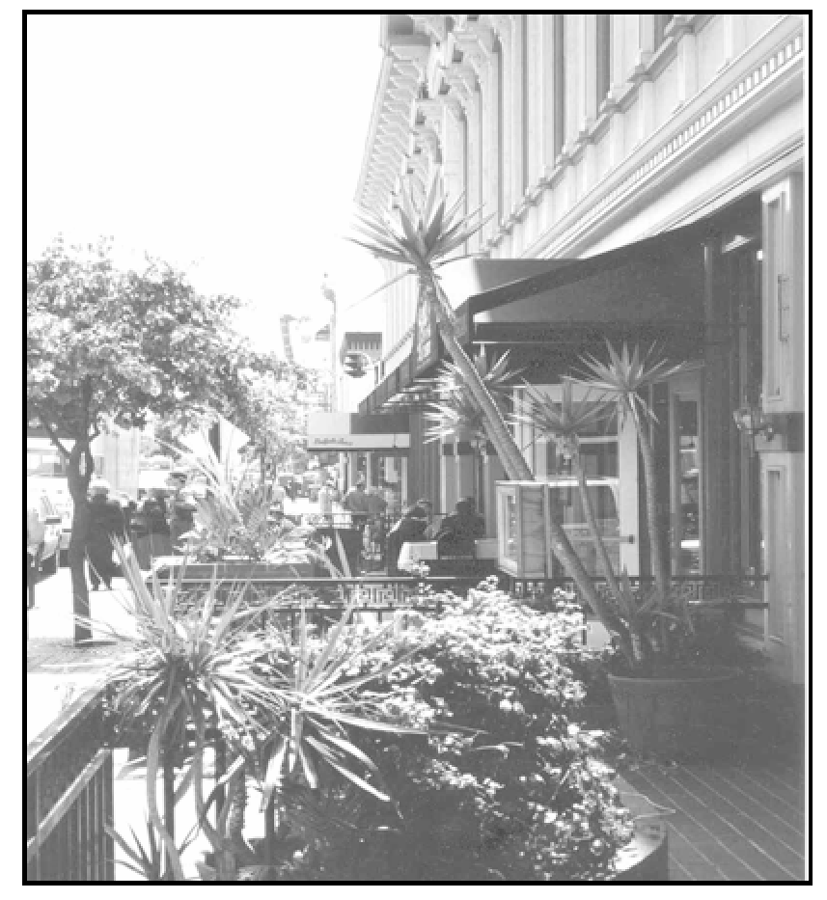
Figure 1419-19(h) Outdoor Eating Area Example
(j)
Outdoor areas within Outdoor Refreshment Areas established pursuant to Chapter 838 are permitted with the following conditions:
(1)
The hours of operation of the outdoor area may not exceed the hours of operation of the Outdoor Refreshment Area in which it is located unless conditional use approval is obtained pursuant to the procedures and criteria of Chapter 1445, Variances, Special Exceptions and Conditional Uses; and
(2)
Section 1419-21(a)—(c) and (e)—(h) do not apply to Outdoor Refreshment Areas.
(Ordained by Ord. No. 15-2004, eff. Feb. 13, 2004; Ord. No. 284-2006, § 1, eff. Nov. 4, 2006; a. Ord. No. 0055-2008, § 1, eff. March 13, 2008; a. Emer. Ord. No. 199-2024, § 2, eff. 7-1-2024)
§ 1419-23. - Loft Dwelling Units.
In commercial and manufacturing districts the owner of the loft dwelling unit has the duty to provide a statement of disclosure to all buyers and tenants acknowledging the commercial and manufacturing character of the district and acceptance of the potential for uses in the area to result in certain off-site impacts at higher levels than would be expected in residential areas. Occupancy of these units is at the risk of the owner/occupant. Loft dwelling units must be located, developed and operated in compliance with the following:
(a)
A loft dwelling unit established on the first floor requires conditional use approval pursuant to the procedures and criteria of Chapter 1445, Variances, Special Exceptions and Conditional Uses.
(b)
One loft dwelling unit may be permitted for each 1,000 square feet of interior floor area excluding the first floor or basement. No unit may be less than 500 square feet in floor area.
(c)
A loft dwelling unit may contain a studio, gallery, office, business or other use as permitted by the applicable zoning district regulations.
(Ordained by Ord. No. 15-2004, eff. Feb. 13, 2004; a. Ord. No. 95-2006, § 1, eff. May 18, 2006)
§ 1419-24. - Portable Storage Containers.
(a)
Location. Portable storage containers must be located on a paved surface and be setback a minimum of ten feet from the front lot line.
(b)
Maximum Size. The maximum size for a portable storage container is 8 feet by 16 feet with a maximum height of 8 feet 6 inches.
(c)
Time Limitation. Portable storage containers are permitted for a total of 30 days within a calendar year.
(d)
Number Permitted. Two portable storage containers may be placed on a lot at the same time.
(Ordained by Ord. No. 414-2008, § 22, eff. Jan. 4, 2009)
§ 1419-25. - Sexually Oriented Businesses.
Sexually oriented businesses must be located, developed and operated in compliance with the following:
(a)
License. These establishments are licensed by the city in compliance with the provisions of Chapter 899, Sexually Oriented Businesses and Employees, of the Municipal Code.
(b)
Location.
(1)
The minimum distance from a residential district boundary is 1,000 feet.
(2)
The minimum distance from every other licensed sexually oriented businesses is 1,000 feet.
(3)
The minimum distance from schools, public or private; religious assembly; public library; parks and recreation facilities; hotel; motel; child day care center; or any place licensed for the sale of beer or intoxicating liquor for consumption on the premises is 1,000 feet.
(c)
Approval. The Zoning Administrator must only consider the proximity standards specified in (b) above in determining whether to approve a sexually oriented business. The determination must be made without a public hearing being held and must be made within ten days of the receipt of a complete application for a Certificate of Compliance. No person, other than an applicant who has been denied a Certificate of Compliance, may appeal a decision of the Zoning Administrator on an application for a Certification of Compliance for a sexually oriented business to the Zoning Board of Appeals. Any appeal to the Zoning Board of Appeals must be heard and determined within 30 days of the filing of the notice of appeal. Further appeal is to a court of competent jurisdiction as provided by law. Unless the solicitor obtains an injunctive order restraining the opening and operation of a sexually oriented business, an applicant may open and operate a sexually oriented business 30 days after the filing of a notice of appeal to a court of competent jurisdiction pending final resolution of the appeal.
(Ordained by Ord. No. 15-2004, eff. Feb. 13, 2004; Emer. Ord. No. 141-2015, § 25, eff. July 1, 2015)
§ 1419-27. - Vehicle Repairs.
Vehicle repairs must be located, developed and operated in compliance with the following:
(a)
Location. The repair area must be located within an enclosed structure.
(b)
Hazardous Materials. All automotive fluids must be recycled or removed according to local, state and federal standards.
(c)
Outdoor Storage. Any space for the storage of vehicles awaiting repair must be screened on all sides and completely enclosed within an eight-foot screen fence which is protected by a guardrail or other barriers approved by the Zoning Administrator. Electrical, barbed and razor wire fences are an accessory conditional use pursuant to § 1421-33. Vehicles may not be stored on the lot for more than 60 days.
(d)
Indoor Storage. Used or discarded automotive parts or equipment or permanently disabled or junked vehicles must be stored inside a building.
(e)
Building Openings. There may not be any openings in side walls, rear walls or roofs within 50 feet of a residential district, unless the openings are stationary windows or required fire exits.
(Ordained by Ord. No. 15-2004, eff. Feb. 13, 2004; Emer. Ord. No. 141-2015, § 26, eff. July 1, 2015)
§ 1419-29. - Vending Machines and Pay Telephones.
(a)
Location of Vending Machines and Pay Telephones in Residential Districts. Vending machines or pay telephones may not be located outside any building or accessory building used for residential purposes in a Residential District.
(b)
Location of Vending Machines in O, C, UM, DD, M, RF and IR Districts. Vending machines may not be located:
(1)
Within any required landscaping or bufferyard.
(2)
So as to obstruct or interfere with pedestrian travel.
(3)
Within five feet from a crosswalk, display window, building entrance, fire hydrant or other emergency facility.
(4)
With more than three machines at any location.
(5)
Closer than 100 feet to another group of vending machines.
(c)
Appearance: Vending machines must be maintained in good operating condition and be free from rust and adornments such as graffiti, stickers and posters.
(Ordained by Ord. No. 15-2004, eff. Feb. 13, 2004; a. Ord. No. 0221-2007, § 4, eff. July 6, 2007)
§ 1419-31. - Waste Collection and Waste Transfer.
All storage, separation and processing activities for waste collection and waste transfer uses must comply with the following:
(a)
Location, Waste Collection. Waste collection uses must be at least 100 feet from a residential district.
(b)
Location, Waste Transfer. Waste transfer uses must be at least 250 feet from a residential district.
(c)
Enclosures or Screening. All waste collection and waste transfer uses must be conducted within an enclosed building or enclosed by a screen fence. The enclosures must be located outside any required front yard, street side yard, required parking or landscape areas or any other area required by the Cincinnati Zoning Code to be maintained unencumbered according to any other applicable public safety laws.
(d)
Hours of Operation. The site must be staffed during all hours of operation and a sign be posted indicating the hours of operation and warning of the penalties for illegal dumping.
(Ordained by Ord. No. 15-2004, eff. Feb. 13, 2004)
§ 1419-33. - Wireless Communications Facilities.
Wireless communication towers and antennas greater than 20 feet in height must conform to the following:
(a)
Conditional Use Approval Required. Approval of a conditional use is required, pursuant to Chapter 1445, Variances, Special Exceptions and Conditional Uses. In determining whether approval of an application for a wireless communication tower or antenna greater than 20 feet in height as a conditional use is in the public interest, the Zoning Hearing Examiner has the duty to evaluate whether technically suitable space is available on commercially reasonable terms on an existing tower or structure within the geographic area to be served. To enable this determination, the applicant is required to submit with the permit application a list of the location of every tower, building or structure that could support the proposed antenna so as to allow it to serve its intended function. The applicant must demonstrate that a technically suitable location is not available on commercially reasonable terms on an existing tower, building or structure. If another communication tower is technically suitable, the applicant must show that it has offered to allow the owner to co-locate an antenna on another tower within the city owned by the applicant on reciprocal terms and the offer was not accepted or that other tower is presumed to be reasonably available. Consideration of these factors is in addition to the standards enumerated in Chapter 1445, Variances, Special Exceptions and Conditional Uses, and in this section. The failure of an applicant to offer to other wireless communication service providers on reciprocal term rights to install wireless communication antennas on wireless communication towers within the city controlled by the applicant is cause to deny approval of an application for a wireless communication tower as a conditional use.
(b)
Wireless Communication Network Plan Required. Any person licensed by the Federal Communications Commission to provide wireless communication services within the City of Cincinnati who has installed or intends to install a wireless communication antenna within the city is required to file its wireless communication network plan with the Director of Buildings and Inspections. A provider must file an amended plan with the director any time there is a change in company name, ownership, location of facilities or operations. The director must send a copy of each amended plan to every person who has filed a plan and to every community organization affected by the amendments to the plan.
(c)
Minimum Site Area. Monopole towers in an SF or RF-R district must be located on a site larger than three acres.
(d)
Required Setbacks. Poles, towers, equipment structures and antennas placement must meet the minimum yard standards for all setbacks as set forth in the applicable district regulations of the Cincinnati Zoning Code. Further, a wireless communication tower should be at least 110 percent of its height distant from any existing residential structure in any residential district.
(e)
Design Compatibility. Apart from the tower or monopole structure, the facility appurtenances must be aesthetically and architecturally compatible with the architecture of the surrounding environment.
(f)
Screening Required. Screen fencing must be provided for aesthetic and public safety reasons and a fence at least six feet in height must be erected completely around any communication tower and any related support facilities. Barbed and razor wire fencing is prohibited in residential districts.
(g)
Landscaping. A Type B planted buffer yard is required along residential district boundaries and adjacent to residential uses, as prescribed in Schedule 1423-13-B. Buffer yards must meet the standards of Chapter 1423, Landscaping and Buffer Yards. Buffer yard planting may be located in a required setback area.
(h)
Obsolete Facility. The owner or operator must agree to remove an obsolete facility within 12 months of ceasing its active use for wireless communications.
(i)
Outdoor Storage. Outdoor storage of any supplies, vehicles or equipment related to the use of the facility is prohibited in a residential district.
(j)
Lighting. An antenna or a tower may not be illuminated and lighting fixtures or signs may not be attached to the antenna or tower, except as required by law or to protect the safety of the general public.
(k)
Certification. The applicant must provide written certification from a registered engineer that the antenna and tower are to be constructed in compliance with all applicable federal, state and local regulations pertaining to the construction.
(l)
Tower Height. A tower must be a monopole unless the tower is more than 200 feet high.
(m)
Limitations on Authority to Deny.
(i)
The Zoning Hearing Examiner may not deny an application for a wireless communication antenna as a conditional use if the denial would unreasonably discriminate among providers of functionally equivalent services or prohibit or have the effect of prohibiting the provision of personal wireless services.
(ii)
The Zoning Hearing Examiner may not deny an application for a wireless communication antenna as a conditional use on the basis of the environmental effects of radio frequency emissions to the extent that such facilities comply with the Federal Communication Commission's regulations concerning such emissions.
(iii)
The Zoning Hearing Examiner may not deny an application for a conditional use for the collocation of new transmission equipment, the removal of transmission equipment, or the replacement of transmission equipment on an existing wireless communications tower, antenna or any base station that does not substantially change the physical dimensions of such communications tower, antenna, or base station.
(Ordained by Ord. No. 15-2004, eff. Feb. 13, 2004; a. Emer. Ord. No. 169-2012, § 1, eff. May 23, 2012)
§ 1419-35. - Commercial Services for Multi-Family Developments.
Eating and drinking establishments, commissaries, residential concierge services, self-service laundries and automated teller machines are permitted as accessory uses to multi-family developments with 200 or more dwelling units in two or more buildings, provided that:
(a)
Floor Area. The total floor area of such uses is not more than 5,000 square feet;
(b)
Location. T he building or buildings containing such uses and the associated parking and loading areas may be no less than 300 feet from the property line of any abutting property.
(c)
Displays and Signs. The display of goods or services outside of the building in which such uses are located is prohibited and advertising pertaining to such uses may not be visible from the exterior of the building, except for one non-illuminated or indirectly-illuminated identification sign erected as a ground or wall sign not exceeding eight square feet.
(Ordained by Ord. No. 15-2004, eff. Feb. 13, 2004)
§ 1419-37. - Commercial Services for Multi-Family Buildings.
Eating and drinking establishments, commissaries, residential concierge services, self-service laundries, automated teller machines and barber and beauty shops are permitted as accessory uses to multi-family developments in a single building with 100 or more dwelling units, provided that:
(a)
Floor Area. The accessory uses may not exceed in the aggregate, five percent of the total floor area of the building.
(b)
Commissaries. Commissaries may not exceed a maximum floor area of 500 square feet for the first 100 dwelling units and an additional five square feet for each dwelling unit over 100 up to a maximum floor area of 750 square feet.
(c)
Interior Access. Access to the accessory uses is from the interior of the building.
(d)
Loading. The loading and unloading of trucks and service vehicles is conducted inside a building or, if outside a building, any loading or unloading of trucks and any area used or designed to be used primarily by trucks and service vehicles may be no less than 50 feet from the nearest lot line located in or abutting an SF, RMX or RM-2.0 District.
(e)
Displays and Signs. The display of goods or services outside of the building is prohibited and advertising pertaining to such uses may not be visible from the exterior of the building, except that:
(1)
One identification sign as a non-illuminated or indirect illuminated wall sign is permitted not exceeding eight square feet in area, but there may only be one such wall sign, irrespective of the number of accessory uses in the building.
(2)
One non-illuminated or indirectly illuminated identification sign erected as a ground sign is permitted for each street frontage. Each sign face may not exceed 12 square feet.
§ 1419-38. - Composting facilities.
Composting activities using more than 500 square feet of land for the entire composting activity constitutes a "Composting Facility." Composting activities under 500 square feet of land constitute Accessory Composting and requirements are stipulated in Chapter 1422. Composting Facilities are subject to the following restrictions:
(a)
Licensure. Composting Facilities are regulated by the Ohio Environmental Protection Agency Division of Materials and Waste Management (DMWM). No Composting Facility may be established or operated without an approved license pursuant to applicable Ohio law.
(b)
Location within Zoning Districts. Composting Facilities, when constituting between 500 and 1,000 square feet of area may be approved within any zoning district provided they meet the requirements of this section and are granted a license per §1419-38(a). Composting Facilities greater than 1,000 square feet of area shall be considered a Waste Transfer Facility as defined in §1401-01-W1 and may be located only where such uses are permitted.
(c)
Enclosure and Screening. The entire area containing the Composting Facility shall be enclosed in a minimum of six-foot tall screen fence or structure. Additional height and screening measures, including landscaping and mounding, may be required proportionate to the height and nature of the Composting Facility.
(d)
Enclosure Location Upon Property. The entire area containing the composting activity shall be at least 100 feet from any abutting property used for residential purposes, unless granted approval of a lesser setback by the Ohio EPA. When proposed within a 100-year floodplain, the facility shall demonstrate best management practices for flooding.
(Ordained by Ord. No. 251-2019, § 25, eff. July 26, 2019)
§ 1419-39. - Farming.
Farming is permitted in the Manufacturing Agricultural District subject to the following regulations:
1.
A minimum of 20,000 feet of contiguous land under the same ownership with no more than one single-family dwelling on the property is required in order to use the property for farming purposes.
2.
Buildings or structures for livestock must be setback a minimum 50 feet from each property line.
3.
Buildings or structures for storage and greenhouses must be setback a minimum of 20 feet from each property line.
(Ordained by Ord. No. 0060-2008, § 12, eff. March 13, 2008)
§ 1419-40. - Public Vehicle Operations and Service.
Public vehicle operations and service must be located, developed and operated in compliance with the following:
(a)
"Public vehicle" shall have the same meaning as in Title VIII, Section 850-1-P3 of the Cincinnati Municipal Code, or its successor provision.
(b)
Off-Street Parking. Off-street parking shall be provided for all public vehicles and employee vehicles as set forth in Schedule 1425-19-A: Off-Street Parking and Loading Requirements and shall be allowed only in designated off-street spaces. Vehicles must be operational and licensed or registered in accordance with all applicable laws and regulations. Any storage or repairs must be indoors.
(c)
Operations. Operations shall be limited to the fleet owned or leased by the operator of the facility. Dispatching shall be made by radio or other telecommunications: loud speakers shall be prohibited.
(d)
Vehicle Repairs. All servicing shall be performed only on licensed public vehicles in accordance with Section 1419-27 (a), (b), (d) and (e) Vehicle Repairs.
(e)
Screening. All outdoor parking must comply with Chapter 1425: Parking and Loading Regulations.
(Ordained by Ord. No. 173-2008, § 1, eff. June 29, 2008; Ord. No. 176-2025, § 2, eff. June 11, 2025)
§ 1419-41. - Community Gardens.
Community Gardens must comply with the following regulations:
(a)
On-site sales. On-site sales of community garden products are prohibited.
(b)
Displays and Signs. Signs are limited to one non-illuminated identification sign erected as a ground or wall sign not exceeding four square feet in total area and a height of six feet from the ground.
(c)
Fencing.
(1)
The maximum height of a perimeter fence or wall or any combination thereof located along any front lot line, corner side lot line or corner rear lot line must not exceed four feet in residential districts and six feet in all other districts and must not exceed an opacity of 50 percent. Along any interior side or rear lot line, the maximum height may not exceed six feet and may be 100 percent opaque.
(2)
Electrical, barbed and razor wire fences are prohibited.
(d)
Hours of Operation. Use of community gardens is prohibited between the hours of 10:00 p.m. to 7:00 a.m.
(e)
Outdoor Storage.
(1)
Tools and supplies shall be stored indoors or removed from the property daily.
(2)
Bulk supplies and water tanks must be stored at the center or rear of the site in a neat and orderly fashion and must not create visual blight or offensive odors.
(3)
Pesticides and fertilizers must only be stored on the property in a locked storage structure and must comply with any other applicable requirements for hazardous materials.
(f)
Maintenance of Site.
(1)
The property owner of the site on which a community garden is located is responsible for all maintenance requirements.
(2)
The site must be designed and maintained to prevent any chemical, pesticide, fertilizer, or other garden waste from draining onto adjacent property.
(3)
Cultivated areas must be prevented from encroaching onto adjacent properties.
(4)
The property must be maintained free of high grass, weeds or other debris.
(5)
Dead plant growth must be composted or removed from the site not later than December 1 st of each year.
(g)
Equipment. Use of commercial or industrial farm equipment is prohibited.
(h)
Refuse Storage.
(1)
Refuse storage must be located:
i.
A minimum distance of three feet from rear and side lot lines; and
ii.
A maximum distance of 25 feet from the rear lot line; and
iii.
A minimum distance of 10 feet from the front lot line.
(2)
In the case of corner lots refuse storage must be located:
i.
A minimum distance of three feet from the rear and interior side lot lines; and
ii.
A maximum distance of 25 feet from the rear lot line; and
iii.
A minimum distance of 10 feet from the street side lot line and front lot line.
(3)
All refuse storage areas must be screened from ground-level view and from adjacent properties or public rights-of-way.
(i)
Composting.
(1)
Composting must be only of materials generated on-site.
(2)
A maximum area of 200 square feet may be used for composting.
(3)
Compost material must be enclosed in a screen fence or structure.
(4)
Compost enclosures must be located:
i.
A minimum distance of three feet from rear and side lot lines; and
ii.
A maximum distance of 25 feet from the rear lot line; and
iii.
A minimum distance of 10 feet from the front lot line.
(5)
In the case of corner lots compost enclosures must be located:
i.
A minimum distance of three feet from the rear and interior side lot lines; and
ii.
A maximum distance of 25 feet from the rear lot line; and
iii.
A minimum distance of 10 feet from the street side lot line and front lot line.
(6)
Compost enclosures must be located to prevent runoff of water that has come in contact with the compost from flowing onto adjacent property, into natural or human-made storm channels or the public right-of-way.
(7)
Compost enclosures must be maintained in a manner that protects adjacent properties from adverse environmental, health and safety impacts such as noise, odors and attraction of rodents or other pests.
(j)
Structures.
(1)
Structures, except for fences, must be located:
i.
A minimum distance of three feet from rear and side lot lines; and
ii.
A maximum distance of 25 feet from the rear lot line; and
iii.
A minimum distance of 10 feet from the front lot line.
(2)
In the case of corner lots, structures, except for fences, must be located:
i.
A minimum distance of three feet from the rear and interior side lot lines; and
ii.
A maximum distance of 25 feet from the rear lot line; and
iii.
A minimum distance of 10 feet from the street side lot line and front lot line.
(3)
Maximum size: 800 square feet for all structures other than fences and walls.
(4)
Maximum number of Structures: Two.
(5)
Maximum Height: 15 feet.
(Ordained by Ord. No. 036-2010, § 1, eff. March 18, 2010)

