
Cincinnati City Zoning Code
CHAPTER 1423
LANDSCAPING AND BUFFER YARDS
§ 1423-01.- Purpose.
The purposes of the landscaping and buffer yard regulations are to:
(a)
Promote attractive development and preserve the appearance and character of the surrounding area through the use of landscaping.
(b)
Eliminate or minimize conflicts between potentially incompatible, but otherwise permitted land uses on adjoining lots through buffering, which may include a combination of setbacks and visual buffers or barriers.
(c)
Prescribe standards for the development and maintenance of planting, fences and walls.
(d)
Provide provisions that apply to all development where specific landscaping is required under the Cincinnati Zoning Code.
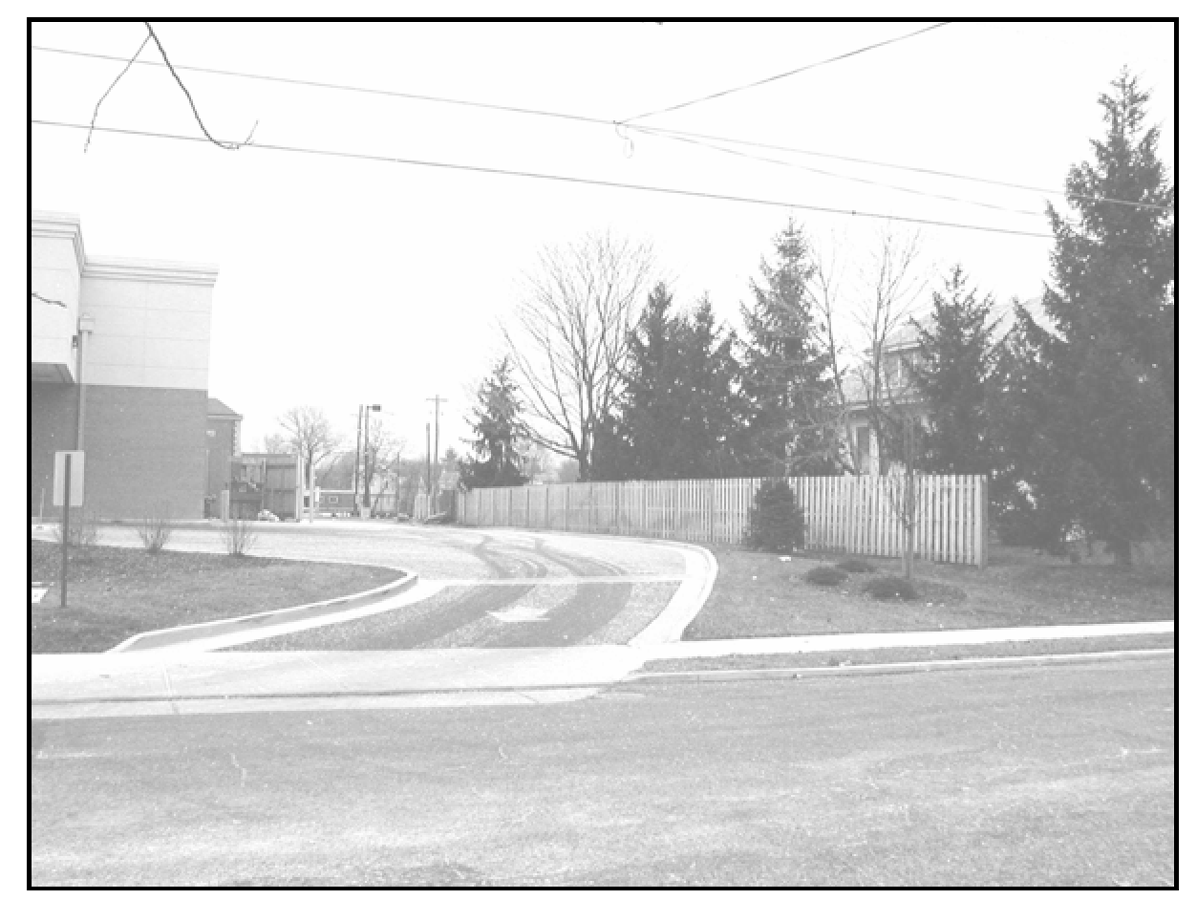
Figure 1423-01 Example of Buffering Between Commercial and Residential Uses
(Ordained by Ord. No. 15-2004, eff. Feb. 13, 2004)
§ 1423-03. - Landscaping Plan.
When landscaping is required, a landscaping plan must be submitted in conjunction with other application materials, as provided in Chapter 1441: Application Procedures, Fees, Permits and Certificates.
(a)
Components of Plan. A landscaping plan must include a site plan, drawn to scale with a north arrow that is equal to standard architectural or engineering quality and indicates the following:
(1)
The species and size of all existing trees greater than one and one-half inch caliper, showing those that are proposed for removal and those proposed for retention.
(2)
All proposed plant materials clearly labeled and drawn to size at maturity.
(3)
Adjacent land uses.
(4)
Plant list, indicating common names, scientific names and varieties, quantities, planting sizes and types and plant spacing for hedges and screens for all plant materials proposed.
(5)
Description of the proposed method of protecting existing trees during construction.
(6)
Irrigation system, if any.
(b)
Required Materials. All plant materials must be suitable for Cincinnati's soils and climatic conditions and the plant's slope exposure. Plant materials for plant unit mix options are defined in Schedule 1423-13-B.
(1)
Plant material should be distributed so as to provide a relatively uniform planting. Where the planting is along a street and some visibility into the development is desired, the plant material may be arranged to provide view corridors.
(2)
Ground cover must be installed appropriate to the surface conditions of the area. Grass is the default landscaping material, although in parking lots and on steep slopes, other ground covers able to withstand the physical conditions are appropriate.
(3)
The landscaped planting areas should be entirely pervious except for fence or wall structures and walks that provide pedestrian access. No more than 25 percent of the required area may consist of impervious materials such as gravel, stones, or paving.
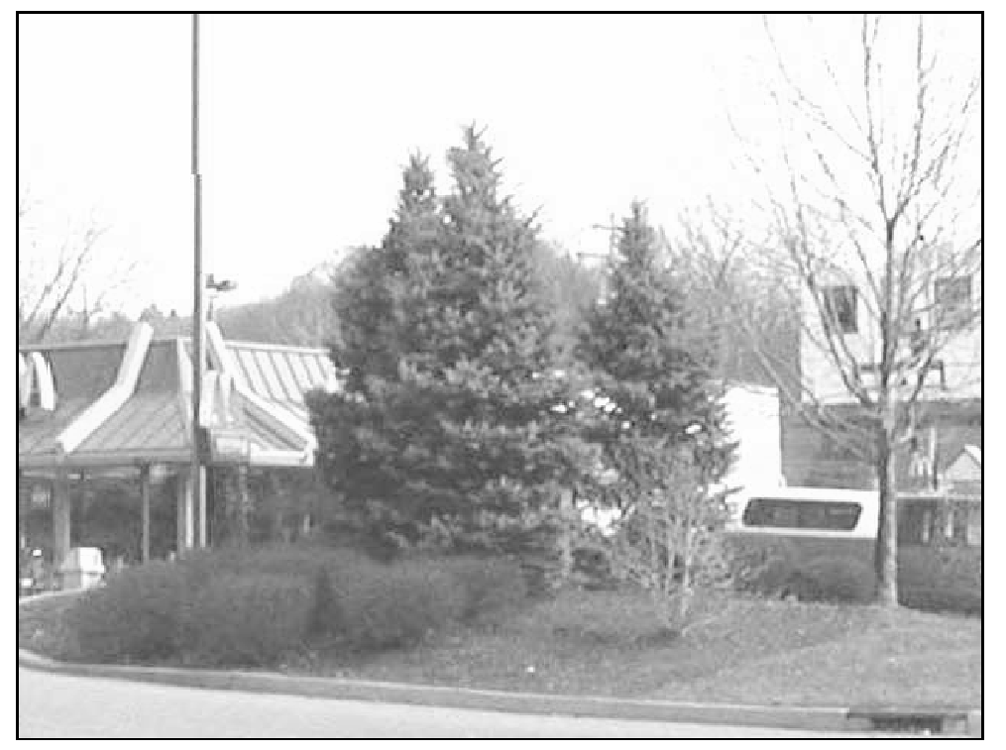
Figure 1423-03 Example of Different Landscaping Materials
(Ordained by Ord. No. 15-2004, eff. Feb. 13, 2004)
§ 1423-05. - Landscaping Maintenance.
All plantings shown on the approved plan must be permanently maintained in good growing condition and replaced with new plant materials when necessary to ensure continued compliance with applicable landscaping requirements.
(Ordained by Ord. No. 15-2004, eff. Feb. 13, 2004)
§ 1423-07. - Delayed Landscaping Installations.
Evidence of completion of required landscaping must be supplied to the Director of Buildings and Inspections and submitted prior to issuance of an occupancy permit for new construction. There may be cases where landscaping cannot be completed prior to building occupancy due to weather or other conditions. In these instances, the city will require surety to be provided in the amount of 120 percent of the estimated cost of the landscaping to be provided. The form of the surety must be approved by the City Solicitor's Office.
(Ordained by Ord. No. 15-2004, eff. Feb. 13, 2004)
§ 1423-09. - Buffer Yards.
Buffer yards are intended to eliminate or minimize conflicts between potentially incompatible, but otherwise permitted land uses on adjoining lots. Buffering may include a combination of setbacks and visual buffers or barriers. Schedule 1423-13-A prescribes the minimum buffer yard requirements and Schedule 1423-13-B defines types of buffer yards required for specific situations.
(Ordained by Ord. No. 15-2004, eff. Feb. 13, 2004)
§ 1423-11. - Applicability of Buffer Yard Standards.
The buffer yard standards of this chapter where required by § 1423-13 apply to:
(a)
Development of Vacant Land. All new development on vacant land.
(b)
Redevelopment. Redevelopment or expansion of existing site ground coverage, which includes buildings, accessory uses or structures, parking and outdoor storage areas by more than 30 percent, not including single-family dwellings.
(c)
Change in Use. Any change in use that increases development intensity and results in increased traffic, processes, noise, water or air pollution, etc. For the purposes of this section, a change in use includes: from a residential use to a commercial use; from a commercial use to a manufacturing use; and in some cases from a manufacturing use to a commercial use.
(Ordained by Ord. No. 15-2004, eff. Feb. 13, 2004)
§ 1423-13. - Required Buffer Yards.
Buffer yards are required between certain zone districts with the type of yard depending on the adjoining zoning district. Schedule 1423-13-A prescribes the required buffer yards between adjoining districts.
(a)
Buffer Yard Plan. A buffer yard plan must be submitted in conjunction with other application materials, as provided in Chapter 1441, Application Procedures, Fees, Permits and Certificates. The buffer yard plan must incorporate a landscaping plan. The buffer yard plan must show the location of all buffer yards on the project site, location of utility easements, roads, emergency access, walkways and existing and proposed structures on the site.
(b)
Location. Required buffer yards of Schedule 1423-13-A must be developed along the perimeter of the lot and extend inward from the property line of the development site. Buffer yards may not be located within any dedicated public or private street right-of-way.

Figure 1423-13 Location of Buffer Yard
Schedule 1423-13-A: Required Buffer Yards
1 See Schedule 1423-13-B
Buffer Yard Standards. Schedule 1423-13-B below prescribes the minimum width, screening and landscaping. Buffer Yards B, C and D provide the applicant with a choice of two options.
Buffer Yard Standards - Schedule 1423-13-B
* Height of Installation
Uses Permitted in Buffer Yards. Buffer yards may be used as required yards, open space or driveways. Accessory structures and surface parking are not permitted in a buffer yard.
FIGURE 1423: A—E
The following illustrations represent examples of landscaping and buffer yards.
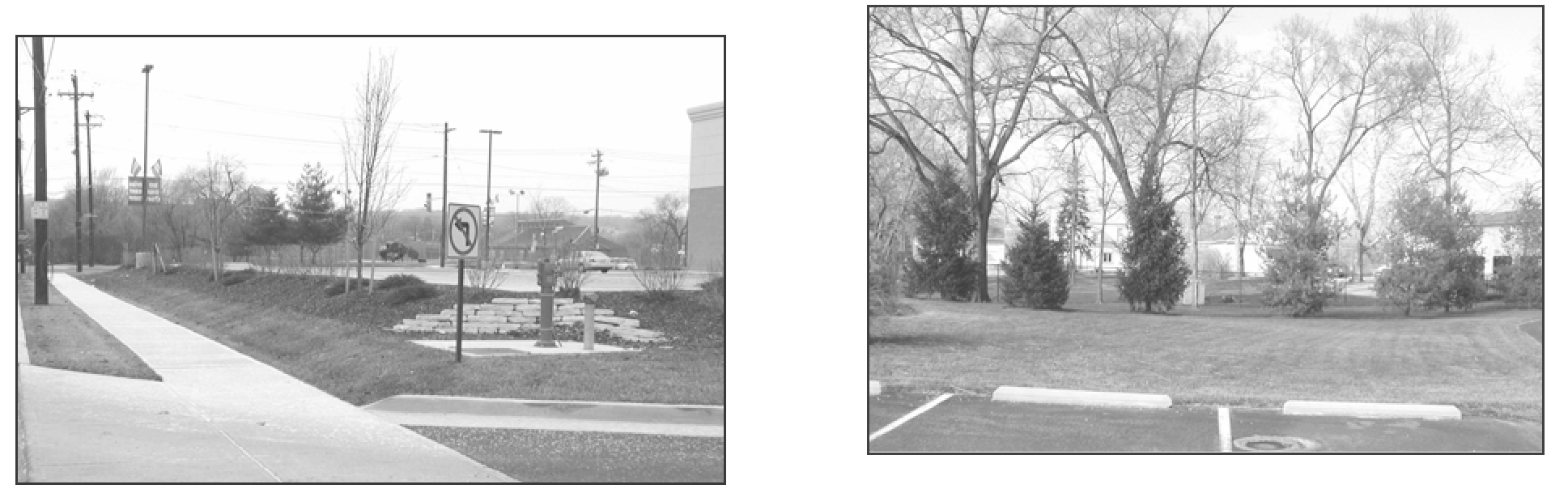
Figures 1423 A, B
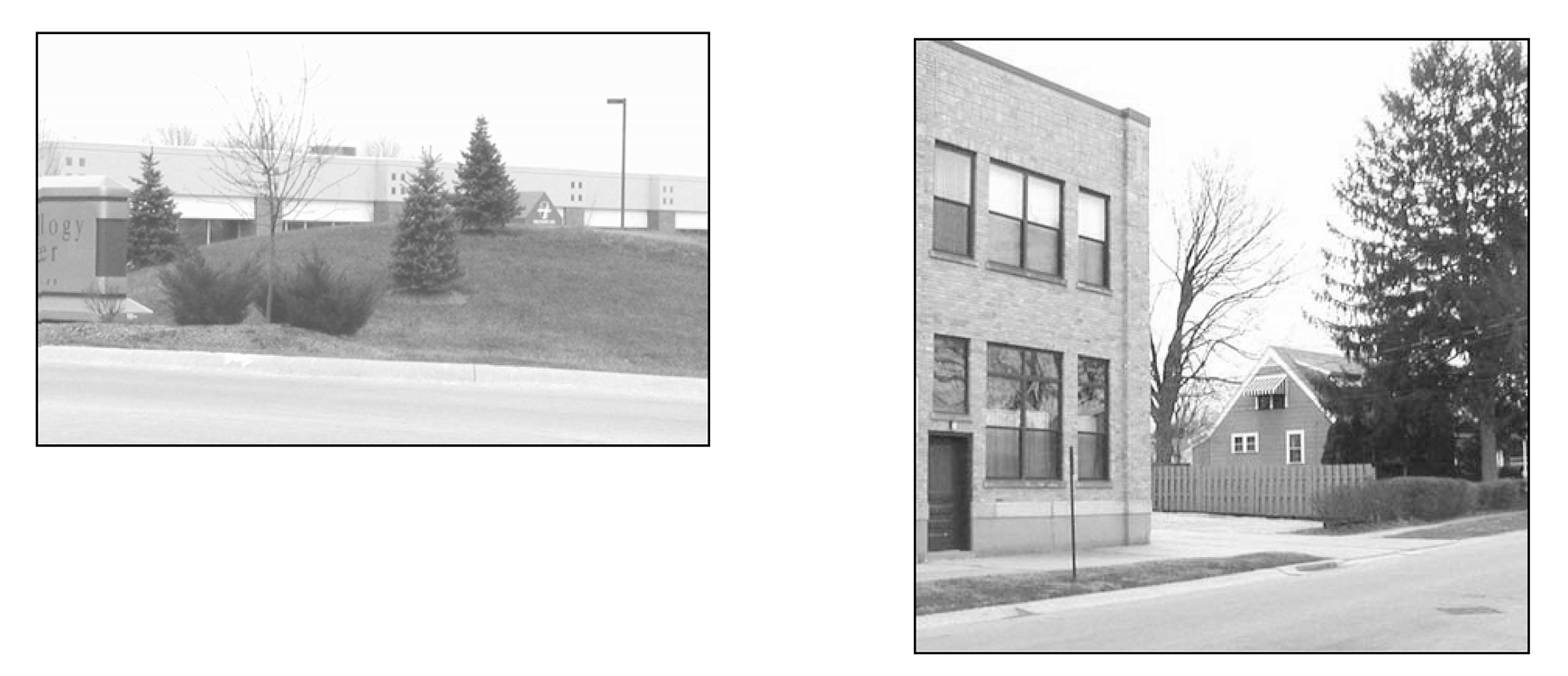
Figures 1423 C, D
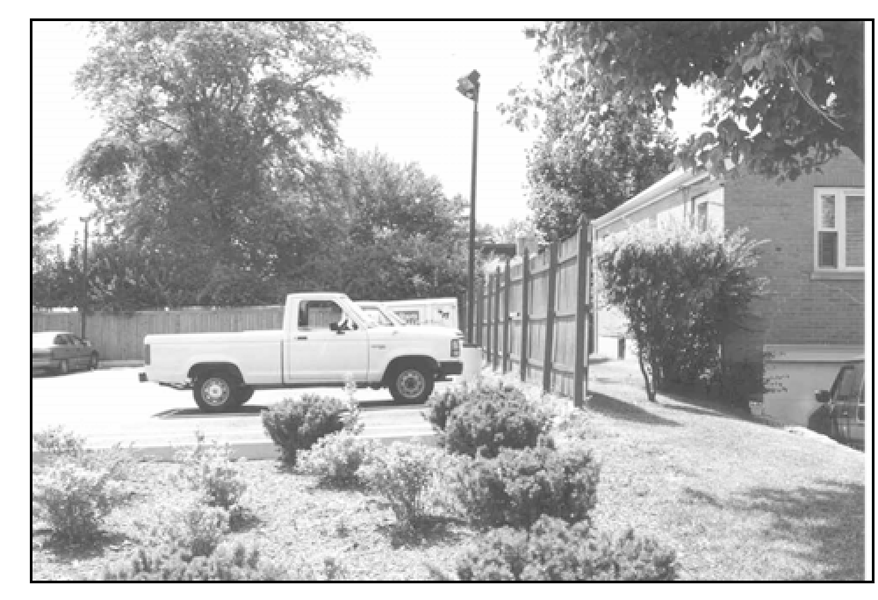
Figure 1423 E
(Ordained by Ord. No. 15-2004, eff. Feb. 13, 2004; a. Ord. No. 0221-2007, § 6, eff. July 6, 2007; a. Ord. No. 257-2007, § 3, eff. Aug. 27, 2007)

