
Cupertino City Zoning Code
CHAPTER 19
100: ACCESSORY BUILDINGS/STRUCTURES
19.100.010 Applicability of Regulations.
The regulations established by this chapter shall be applicable in each district established by this title.
(Ord. 2085, § 2 (part), 2011; Ord. 1601, Exh. A (part), 1992)
19.100.020 Accessory Uses and Facilities.
- Accessory uses and facilities shall be permitted in any district where incidental to and associated with a permitted use and authorized conditional use therein, subject to the provisions of the section.
- Accessory uses and facilities:
- Shall be subordinate to the primary activity of the principal use or principal facility, respectively;
- Shall contribute to the comfort, convenience, efficiency or necessity of the occupants, or the activities of a principal use, or the function of a principal structure;
- Shall be located on the same site as the principal use or structure served.
- Accessory uses and facilities include, but are not limited to, the following list of examples, provided that each accessory use or facility shall comply with all provisions of this title:
- Residential garages, and parking facilities, together with access and circulation elements necessary thereto;
- Customer, visitor and employee parking facilities, and off-street loading facilities, together with access and related elements necessary thereto;
- Facilities for storage incidental to a principal use;
- Recreational uses and facilities for the use and convenience of occupants or employees, or guests thereof, of a principal use or facility;
- Newsstands, gift shops, drugstores, and eating and drinking facilities, or similar services intended solely for the convenience of occupants or employees, or guests thereof, of a principal use or facility;
- Building management offices, when located within the principal facility and limited to the management thereof;
- Refreshment and service facilities in parks, playgrounds, and in permitted public or private recreation facilities or schools;
- The operation of service facilities and equipment in connection with schools, hospitals and similar institutions or uses, when located on the site of the principal use.
- No use or facility permitted as an accessory use or facility pursuant to this chapter shall be construed to be permitted as a principal use or facility unless specifically authorized as permitted or conditional use in the district in which it shall be located. Operation, occupancy and continuance of allowable accessory uses and facilities shall be conditioned upon continued occupancy or use of the principal use or facility being served.
(Ord. 2085, § 2 (part), 2011; Ord. 1601, Exh. A (part), 1992)
19.100.030 Site Development Regulations.
- General Regulations. Except as otherwise provided in this section, accessory buildings shall at all times be located in conformance with requirements for principal buildings, and shall not be located in any required front, sides, or rear yard setback area.
- Residential and Agricultural Zones. In residential and agricultural zoning districts, accessory buildings and structures may be located in a required interior yard, subject to the restrictions in Table 19.100.030.
Appendix A: Detached Accessory Buildings and Structures Example
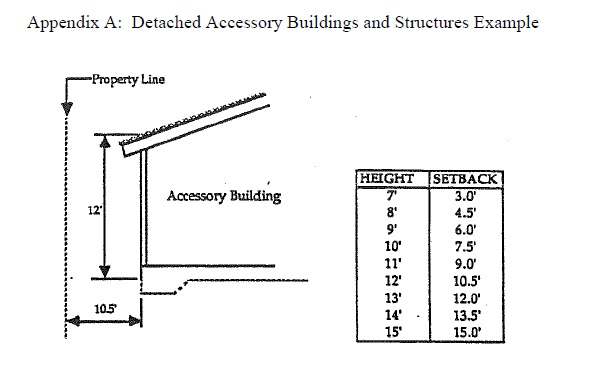
Table 19.100.030: Site Development Regulations
| 1. Accessory buildings and structures (including decks and patios) which are attached to principal dwellings | |
a. Ground level paving, landscape features, and open recreational facilities | Excluded from lot coverage regulations |
b. Attached accessory buildings/structures | Must meet all site development regulations, including setbacks, height and lot coverage regulations applicable to principal dwellings in the applicable zone, unless a separate setback standard is provided in subsection (d) through (g) below. |
c. Attachment to principal dwelling | Must be structurally integrated with the principal dwelling. |
d. Unenclosed Patio Covers | Setback from rear property line = 10 feet |
e. Attached Recreational Structures with a floor or a step height greater than 18 inches above any point of the adjoining finished grade | Setback from any property line = 10 feet |
f. First-floor decks and patios, other than described in (e) above | Setback from any property line = 3 feet |
g. Second story decks and patios | As set forth in each of the individual chapters.If not identified in that zoning ordinance:Minimum side yard setback = 15 feetMinimum rear yard setback = 20 feetEncroachment into required front yard setback = 3 feet maximum |
| 2. Detached Accessory Buildings/ Structures in R-1, RHS, A, A-1, R-2, R-3, R-4, and TH Zoning Districts | |
a. In R-1, RHS, R-2, A and A-1 zones: | |
i. Area of Accessory Buildings/Structures, not including garage space |
|
ii. Basements in Accessory Buildings/Structures | Shall count as floor area. |
iii. Basement lightwells in Accessory Buildings/Structures | Shall conform to Section 19.28.070 |
iv. Accessory Buildings/Structures with living space | Shall conform to Chapter 19.112 |
b. Maximum lot coverage | 30% of the usable rear yard area |
c. Minimum setback from principal dwelling | 5 feet (measured between the eaves) |
d. Minimum Setback (except for detached recreational buildings/structures in 2(j)) | |
i. Front | 20 feet in residential zones30 feet in agricultural zones |
ii. Rear | 3 feet |
iii. Side | Interior side - 3 feetStreet side on corner lot - 15 feetStreet side on corner lot adjacent to key lot - 20 feet |
e. For interior lots abutting only one street, in R-2 and R-3 zones | No detached accessory building or structure, except a detached garage, may occupy the front 50% of the lot area. |
f. Small, portable storage buildings less than 6 feet in height, not attached to a building, permanent foundation or pad |
|
g. Maximum Height | 20 feet (limited to one story) |
h. Maximum Wall Plane Height |
|
i. Walls less than five feet from a property line |
|
j. Detached recreational buildings/structures with a floor or step height greater than eighteen inches above any point at the adjoining finished grade | Setback from any property line = 10 feet other than affixed play structures in 2(k) below. |
k. Affixed play structures, such as a swing or climbing apparatus | Allowed in setback area defined in 2(j) above provided that:
|
(Ord. 2085, § 2 (part), 2011; Ord. 24-2261, § 1 (part), 2024; Ord. 25-2277, Exh. A (part), 2025)

