Decorah City Zoning Code
CHAPTER 17
136 - TELECOMMUNICATION TOWERS
Sections:
17.136.010 - Statement of purpose and intent.
A.
Establish standards for the siting of telecommunications towers and antennas.
B.
Encourage the use of existing structures as an alternative to new tower construction.
C.
Encourage the joint use of towers.
D.
Encourage the design and construction of towers and antennae which minimize adverse visual impacts.
E.
Ensure compliance of all telecommunications facilities with federal, state and local regulations.
F.
Ensure the provision of wireless service within the corporate boundaries and for the benefit of the residents and visitors to the city of Decorah.
G.
Protect the public health, safety and general welfare of the community, public and private property and community aesthetics.
(Ord. 1098 § 1 (part), 2007)
17.136.020 - Definitions.
As used in this chapter:
"Accessory equipment structure" means a building or cabinet-like structure located adjacent to or in the immediate vicinity of a wireless telecommunications tower or antenna to house equipment customarily incidental to the receiving or transmitting of wireless broadcast, cellular telephone calls, voice messaging and paging services.
"Antenna" means equipment used for transmitting or receiving radio frequency signals which is attached to a tower, building or other structure, usually consisting of a series of directional panels, microwave or satellite dishes, or correctional "whip" antennas.
"Antenna support structure" means any building, pole, telescoping mast, tower, tripod or any other structure which supports an antenna.
"Base transceiver station" means equipment that provides the link between wireless communications and land based public telephone switching networks including radio frequency receivers, back-up power amplifiers and signal processing hardware typically contained in a small building or cabinet.
"Co-location" means the location of wireless telecommunications equipment from more than one provider on a common tower, building or structure.
"Commercial receiving and/or transmitting antenna" means any antenna erected to transfer information for commercial use.
"Mast" means the portion of the outside antenna system to which the antenna is attached and the support or extension required to elevate the antenna to a height deemed necessary for adequate operation.
"Personal wireless services" means licensed commercial wireless communication services including cellular, personal communication services (PCS), enhanced specialized mobilized radio (EMR), paging and similar services.
"Public property" means land, buildings or other structures owned or operated by the city of Decorah.
"Telecommunication tower" means a mast, pole, monopole, guyed tower, lattice tower, freestanding tower or other structure designed and primarily used to support antennas. A ground or building mounted mast greater than ten feet tall and six inches in diameter supporting one or more antenna, dishes, arrays, etc., shall be considered a telecommunication tower.
(Ord. 1098 § 1 (part), 2007)
17.136.030 - Existing towers or antennas.
Antennas, towers and accessory structures for which a building permit or special use permit has been properly issued prior to the effective date of the ordinance codified in this chapter are, after the effective date hereof, declared to be nonconforming uses subject to the provisions of this chapter.
(Ord. 1098 § 1 (part), 2007)
17.136.040 - Interpretation and applicability.
A.
This chapter shall be interpreted consistent with the provisions of the Federal Communications Act of 1934 as amended by the Telecommunications Act of 1996.
B.
This chapter shall apply to all persons, partnerships, limited liability companies, limited liability partnerships, corporations and other entities seeking to locate, site, place, modify or construct wireless communications facilities within the corporate boundaries of the city.
C.
This chapter reserves to the city all authority contained in the state law and existing city ordinances regarding land use and regulation which has not been preempted by the federal government.
D.
This chapter does not apply to the use or location of private residential citizen band radio towers, amateur radio towers, television antennas or public safety communication facilities owned or operated by the city of Decorah or other public entities.
(Ord. 1098 § 1 (part), 2007)
17.136.050 - General permit conditions and height limitations.
A.
Towers in Industrial (M-1, M-2 and M-3) and Agricultural (A-1) Zoning Districts.
1.
In all industrial and agricultural zoning districts towers supporting commercial antennas and conforming to all applicable provisions of the zoning ordinance shall be allowed as a permitted use.
2.
The maximum height of any tower, the construction of which is permitted by this section, including all antennas and other attachments, shall not exceed two hundred fifty feet in height.
3.
Towers shall be set back from all property lines no less than twenty-five percent of the tower height, with a minimum setback of twenty feet. Towers shall be set back from all property lines abutting property zoned or used for residential purposes or adjacent to the Upper Iowa River no less than fifty percent of the total tower height. For towers that are not self-collapsing, the setback shall be equivalent to the height of the tower.
4.
Equipment buildings, shelters or cabinets shall comply with the principal building setbacks for the industrial zoning district in which it is located.
B.
Towers in Commercial Zoning Districts (C-1, C-2, C-3, C-4, C-5).
1.
Towers supporting commercial antennas are prohibited in the central business (C-3); the general retail and service business districts (C-2); the shopping center commercial district (C-4); and the office park commercial district (C-5).
2.
Towers supporting commercial antennas and conforming to all applicable provisions of the zoning ordinance shall be allowed in the highway commercial (C-1) with a special permit.
3.
The maximum height of any tower, the construction of which is permitted by this section, including all antennas and other attachments, shall not exceed one hundred fifty feet in height.
4.
Towers shall be set back from all property lines no less than twenty-five percent of the tower height, with a minimum setback of twenty feet. Towers shall be set back from all property lines abutting property zoned or used for residential purposes or adjacent to the Upper Iowa River no less than fifty percent of the total tower height. For towers that are not self-collapsing, the setback shall be equivalent to the height of the tower.
5.
Equipment buildings, shelters or cabinets shall comply with the principal building setbacks for the commercial zoning district in which it is located.
C.
Towers in Residential Zoning Districts. The construction of commercial towers and antennas in a residential zoning district is prohibited except as follows:
1.
Towers supporting commercial antennas and conforming to all applicable provisions of the zoning ordinance shall be allowed by way of a special permit and only in the following locations:
a.
Church sites, when camouflaged as steeples or bell towers. Antennas and all other associated structures shall also be camouflaged.
b.
Park sites, when compatible with the nature of the park.
c.
Government, school, utility and institutional sites.
2.
No tower supporting commercial antennas, the construction of which is permitted with a special permit, shall exceed one hundred fifty feet in height.
3.
Towers supporting commercial antennas shall be set back from all property lines abutting property zoned or used for residential purposes or adjacent to the Upper Iowa River no less than fifty percent of the tower height. Towers shall be set back from all property lines abutting nonresidential property no less than twenty-five percent of the total tower height. For towers that are not self-collapsing, the setback shall be equivalent to the height of the tower.
4.
Equipment buildings, shelters or cabinets shall comply with the accessory building setbacks for the residential zoning district in which it is located.
(Ord. 1098 § 1 (part), 2007)
17.136.060 - City-owned and operated towers.
City government owned and operated towers supporting receive and/or transmit antennas for all public safety and government service purposes shall be a permitted use in all zoning districts subject to the following requirements:
A.
Such towers shall conform to the accessory structure setback for the zoning district in which they are located. Guy wires shall be set back no less than one foot from property lines.
B.
Such towers shall be installed in accordance with the instructions furnished by the manufacturer of the tower model. Antennas mounted on a tower may be modified and changed at any time so long as the published allowable load on the tower is not exceeded and the structure of the tower remains in accordance with the manufacturer's specifications.
C.
Such towers shall be exempt from the co-location and visual compatibility requirements.
(Ord. 1098 § 1 (part), 2007)
17.136.070 - Co-location requirements.
A.
A proposal for a new commercial wireless telecommunication tower which conforms to the provisions of this chapter shall not be approved unless the city finds that the telecommunication equipment planned for the proposed tower cannot be accommodated on an existing or approved tower or building within a one mile search radius from the point of the proposed tower for towers in excess of one hundred feet in height, within a one-half mile search radius for towers of eighty to one hundred feet in height and within one-quarter mile search radius for towers eighty feet and lower in height due to one or more of the following reasons:
1.
The planned equipment would exceed the structural capacity of the existing or approved tower or building, as documented by a qualified and licensed professional engineer, and the existing or approved tower cannot be reinforced, modified or replaced to accommodate planned or equivalent equipment at a reasonable cost.
2.
The planned equipment would cause interference materially impacting the feasibility of other existing or planned equipment at the tower or building, as documented by a qualified and licensed professional engineer, approved by the city and the interference cannot be prevented at a reasonable cost.
3.
Existing or approved towers and buildings within the search radius cannot accommodate the planned equipment at a height necessary to function reasonably as documented by a qualified and licensed professional engineer approved by the city.
4.
Other unforeseen reasons that make it infeasible to locate the planned telecommunication equipment upon an existing or approved tower or building.
B.
It shall be the responsibility of the applicant to provide, at no cost to the city, an inventory of available structures in the subject area to the city.
C.
Any proposed commercial wireless telecommunication service tower shall be designed structurally, electrically, and in all respects, to accommodate both the applicant's antennas and comparable antennas for at least two additional uses if the tower is over one hundred feet in height or at least one additional use if the tower is sixty to one hundred feet in height. Towers must be designed to allow for future rearrangement of antennas upon the tower and to accept antennas mounted at varying heights.
D.
The applicant is encouraged to allow the city access to the tower for city government owned and operated receive and/or transmit antennas for all public safety and service purposes to enhance communications for such purposes, provided that any attached communication equipment does not interfere with applicant's equipment.
E.
As a condition of approval, the applicant shall make available unutilized space for co-location of other telecommunication facilities, including space for these entities providing similar competing services. A good faith effort in achieving co-location shall be required of the host entity.
F.
Requests for utilization of facility space shall be made to the city administrator. Co-location will not be required in cases where the addition of the new service or facilities would cause quality of service impairment to the existing facility or if it becomes necessary for the host to go off line for a significant period of time.
G.
The host is entitled to reasonable compensation from any co-locator for the use of its facility. Such compensation would include reimbursement for the cost of constructing the facility as it relates to any co-locator as well as a proportionate share of any rents paid by the host.
H.
The failure of any applicant to make a good faith effort to allow for co-location shall constitute a breach of its agreement with the city. In the event of such a breach, the city shall provide at least sixty days prior written notice to allow a cure of such breach. In the event the said breach is not cured within said period, the city shall be authorized to disassemble the subject tower at the applicant's cost.
(Ord. 1098 § 1 (part), 2007)
17.136.080 - Telecommunication facilities—General location standards.
All telecommunication facilities except those exempt facilities shall be located so as to minimize their visibility and the number of distinct facilities present. To this end all of the following measures shall be implemented for all telecommunication facilities, except those exempt facilities:
A.
No telecommunication facility shall be installed at a location where special painting or lighting will be required by FAA regulations unless technical evidence acceptable to the city is submitted showing that this is the only technically feasible location for the facility;
B.
No commercial telecommunication facility shall be installed on an exposed ridgeline, a public trail, public park or other outdoor recreation area, or on property designated as floodplain or park or open space, unless it blends with the surrounding existing natural and man-made environment in such a manner as to be effectively unnoticeable and a finding is made that no other location is technically feasible; and
C.
No commercial telecommunication facility that is readily visible from off-site shall be installed on a site that is not already developed with telecommunication facilities or other public or quasi-public uses unless it blends with the surrounding existing natural and man-made environment in such a manner so as to be effectively unnoticeable or technical evidence acceptable to the city is submitted showing a clear need for the facility and the unfeasibility of co-locating it on one of the existing sites.
(Ord. 1098 § 1 (part), 2007)
17.136.090 - Commercial telecommunication facilities—Vegetation protection and facility screening.
All telecommunication facilities shall be installed in such a manner so as to maintain and enhance existing native vegetation and to install suitable landscaping to screen the facility, where necessary. To this end all of the following measures shall be implemented for all telecommunication facilities:
A.
A landscape plan shall be submitted with project application submittal indicating all existing vegetation, identifying landscaping that is to be retained on the site, any additional vegetation that is needed to satisfactorily screen the facility from adjacent land uses and public view areas and the type of vegetation to be restored in all areas that will be disturbed; and
B.
Existing trees and other screening vegetation in the vicinity of the facility and along the access roads and power/telecommunication line routes involved shall be protected from damage, both during the construction period and thereafter. To this end, the following measures shall be implemented:
1.
All areas disturbed during project construction other than the access road and parking areas shall be replanted with vegetation compatible with the vegetation in the surrounding area (e.g., ornamental shrubs or natural brush, depending upon the circumstances) according to the approved landscape plan.
2.
Any existing trees or significant vegetation on the facilities site or along the affected access area that die shall be replaced with native trees and vegetation of a similar size and species.
3.
No actions shall be taken subsequent to project completion with respect to the vegetation present that would increase the visibility of the facility itself or the access road and power/telecommunication lines serving it.
(Ord. 1098 § 1 (part), 2007)
17.136.100 - Commercial telecommunication facilities—Visual compatibility.
All telecommunication facilities shall be constructed and sited so as to minimize the visual effect of such facilities on the surrounding area. To that end the following measures shall be implemented for all telecommunication facilities:
A.
Facility structures and equipment shall be located, designed and screened to blend with the existing natural or built surroundings so as to reduce visual impacts to the extent feasible considering the technological requirements of the proposed telecommunication service and the need to be compatible with neighboring residences and the character of the community;
B.
The facility shall be designed to blend with any existing supporting structure and shall not substantially alter the character of the structure or local area;
C.
Following assembly and installation of the facility, all waste and debris shall be removed and disposed of in a lawful manner; and
D.
A visual analysis, which may include photo montage, field mockup, or other techniques shall be prepared and submitted by or on behalf of the applicant in conjunction with an application for a permit or building permit, which identifies the potential visual impacts, at design capacity, of the proposed facility. Consideration shall be given to views from public areas as well as from private residences. The analysis shall assess the cumulative impacts of the proposed facility and other existing and foreseeable telecommunication facilities in the area and shall identify and include feasible mitigation measures consistent with the technological requirements of the proposed telecommunication service. All costs for the visual analysis and applicable administrative costs shall be borne by the applicant.
(Ord. 1098 § 1 (part), 2007)
17.136.110 - Antennas mounted on roofs, walls, existing towers and appropriate structures.
A.
The placement of commercial wireless telecommunication antennas on roofs, walls and existing towers and other structures may be approved by the zoning administrator subject to the following provisions:
1.
The antenna must meet the requirements set forth in this chapter;
2.
The existing structure upon which placement of an antenna is proposed must be conforming to all applicable provisions of the zoning ordinance;
3.
A site and building plan as required by the city must be submitted; and
4.
A report prepared by a qualified and licensed professional engineer indicating the existing structure or tower's suitability to accept the antenna and the proposed method of affixing the antenna to the structure is submitted and approved by the city. Complete details of all fixtures and couplings and the precise point of attachment shall be indicated.
B.
The placement of commercial wireless telecommunication antennas on roofs, walls and existing towers and other appropriate structures that are subject to an existing special permit shall be permitted subject to the following provisions:
1.
The existing structure must be in full compliance with such conditions of the special permit.
2.
If the existing structure upon which the antenna is to be placed is subject to an existing special permit, the zoning administrator shall review the proposal for installation of the additional antenna to determine if such installation is in compliance with the existing structure's special permit. If it is determined that installation of the additional antenna will not comply with the provisions of the existing special permit, an amendment to the existing special permit will be required.
(Ord. 1098 § 1 (part), 2007)
17.136.120 - Construction requirements.
A.
Towers and antennas shall be designed to blend into the surrounding environment through the use of color and camouflaging treatment except in cases where the color is dictated by federal or state authorities. Materials employed shall not be unnecessarily bright, shiny or reflective and shall be of a color or type which blend with the surroundings to the greatest extent possible.
B.
Towers shall not be illuminated by artificial means and shall not display strobe lights unless such lighting is specifically required by federal or state authorities. When incorporated into the design of the tower, light fixtures, such as street lights, are permitted.
C.
The use of any portion of a tower for signs other than warning or equipment information signs is prohibited.
D.
Sufficient anti-climbing measures must be incorporated into the facility, as needed, to reduce potential for trespass and injury.
E.
All towers, masts and booms shall be made of noncombustible material, and all hardware, such as brackets, turnbuckles, clips and similar type equipment subject to rust or corrosion must be protected either by galvanizing or sheradizing after forming.
(Ord. 1098 § 1 (part), 2007)
17.136.130 - Abandoned or unused towers or portions of towers.
Abandoned or unused towers or portions of towers shall be removed as follows:
A.
All abandoned or unused towers and associated facilities shall be removed within twelve months of the cessation of operations at the site unless a time extension is approved by the zoning administrator. In the event that the tower is not removed within twelve months of the cessation of operations at a site, the tower and associated facilities may be removed by the city and the cost of removal assessed against the property owner.
B.
Unused portions of towers above a manufactured connection shall be removed within six months of the time of antenna relocation. The replacement of portions of a tower previously removed requires the issuance of a new application and/or request for variance if applicable.
(Ord. 1098 § 1 (part), 2007)
17.136.140 - Measurement of tower height.
The height of a tower shall be determined by measuring the vertical distance from the tower's point of contact with the ground or rooftop structure to the highest point of the tower, including all antennas or other attachments. When towers are mounted upon other structures, the combined height of the structure and the tower must meet the height restrictions set forth herein for the particular zoning district.
(Ord. 1098 § 1 (part), 2007)
17.136.150 - Process.
A.
It is unlawful for any person, firm or corporation to erect, construct and place, place or re-erect, replace or repair any tower without first making application for a permit. Upon review of the requested building permit application, it shall be determined by the zoning administrator if a special permit and/or site plan review is required.
B.
If a special permit is not required, but the tower is to be located in a commercial or industrial zoning district, site plan review shall be required.
C.
The applicant shall provide, at the time of application, sufficient information to indicate that the construction, installation and maintenance of the antenna and tower will not create a safety hazard or damage to the property of other persons. The applicant shall be responsible for all costs associated with a review as determined by the city of all structural requirements associated with the proposed tower. The design and installation of all towers shall comply with the manufacturer's specifications and with ANS/TIA/EIA standards (American National Standards/Telecommunication Industry Ass'n/Electronic Industrial Ass'n). Plans shall be approved and stamped by a professional engineer registered in the state of Iowa.
D.
In addition to the application fee established by the city council for such permits, the city may choose to engage a consulting professional engineer to review any or all submittals association with the application. The fees for such a review are to be reimbursed to the city by the applicant as a part of the total application fee.
E.
Adjustment or replacement of the elements of an antenna already affixed to a tower or antenna shall not require a permit, provided that the replacement does not reduce the safety factor.
(Ord. 1098 § 1 (part), 2007)
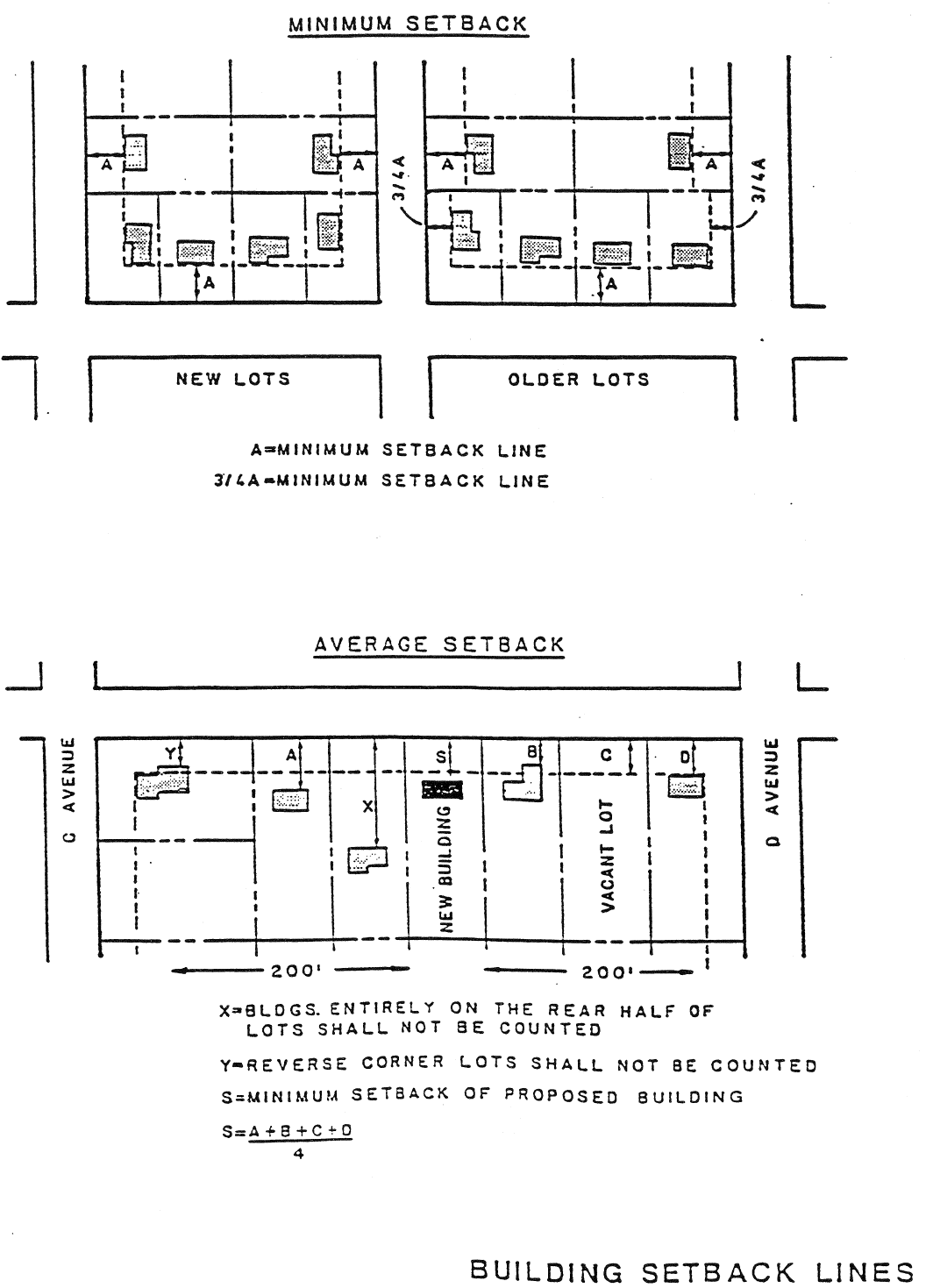
Editor's note— Attachment E was deleted by § 2 of Ord. No. 1300, adopted September 19, 2022.