
Excelsior City Zoning Code
ARTICLE 14
- MEASUREMENTS
Sec. 14-1.- Specific measurements defined.
(a)
Building coverage. Building coverage is measure as the area of the lot that is occupied by principal buildings and accessory buildings in excess of 120 square feet. Building coverage shall be calculated by adding the areas computed from the outside dimension of buildings. which is calculated by adding the areas computed from the outside dimension of buildings.
(b)
Building height.
(1)
Building height is the vertical distance measured from the lowest grade to the highest point of the building excluding chimneys and other building accessories as specified in subsection 14-1(b).
(2)
The lowest grade shall mean the lowest point of elevation of the existing grade (or finished grade, if the finished grade is lower than the existing grade) within the area between the building and the property line, or when the property line is more than seven feet from the building, between the building or proposed building and a line seven feet from the building.
(3)
Grade shall not be modified as a means of achieving increased building height.
(4)
Exceptions. The building height limits established for each zoning district shall not apply to the following list:
a.
Belfries.
b.
Chimneys or flues.
c.
Church spires.
d.
Cooling towers.
e.
Cupolas and domes which do not contain usable space.
f.
Elevator bulkheads.
g.
Flagpoles (except that no flagpole shall exceed a height of 25 feet on all residentially zoned parcels and 40 feet on all non-residentially zoned parcels).
h.
Monuments.
i.
Poles, towers, and other structures for essential services.
j.
Necessary mechanical and electrical appurtenances, and roof equipment.
k.
Wind energy conversion system towers as regulated by article 28 of this Appendix E.
(c)
Caliper. The diameter of the trunk of a tree measured in inches at a point measured 12 inches above the ground.
(d)
Diameter at breast height (DBH). The diameter of the trunk of a tree measured in inches at a point 4.5 feet above ground level. This point of measurement is used for mature and established trees.
(e)
Lot area per dwelling unit. Lot area per dwelling unit is a measure of residential density. It governs the amount of lot area required for each dwelling unit on the subject lot. To determine the number of dwelling units allowed on a lot, defined the lot area by the minimum lot-area-per-unit requirement, and round any fraction result down to a whole number.
(f)
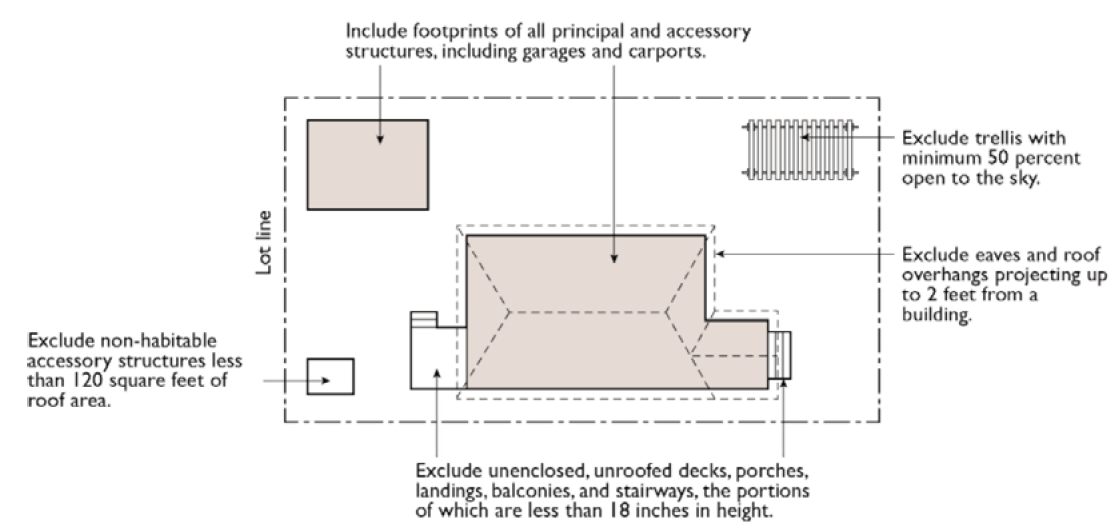
Lot coverage/impervious surface coverage. The area of a lot occupied by buildings, accessory structures in excess of 120 square feet, parking areas and all paved surfaces. Buildings shall be measured at the outer edge of the foundation line. Lot coverage shall not include projections for bay windows, permeable walkways (e.g. flagstone), swimming pools, fences, walls, and open-patterned decks and stairways that are installed over a permeable surface.
Figure 14-2: Lot Coverage
(g)
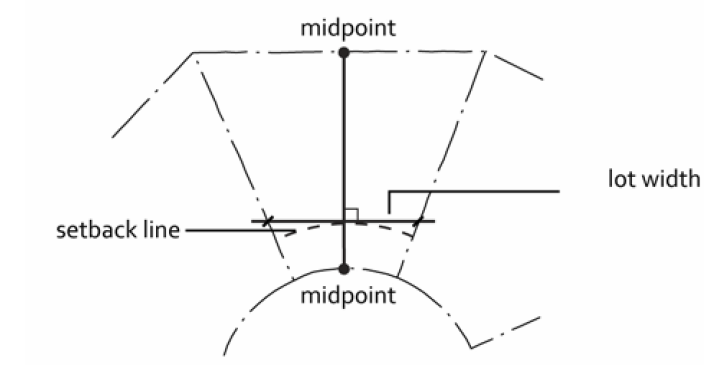
Lot width. Lot width is measured as the horizontal distance between the side lot lines of a lot measured along the required street setback line. See Figure 14-3. On a lot with a radial front (street) lot line, lot width is measured as indicated in Figure 14-4.
Figure 14-3: Lot Width Measurement
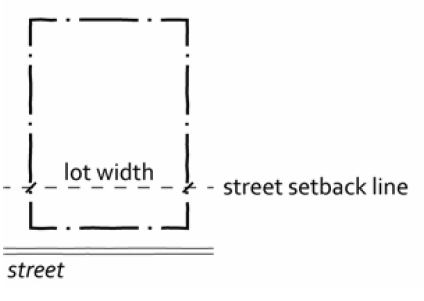
Figure 14-4: Lot Width Measurement (cul-de-sac)
(h)
Projections.
(1)
Projections over property lines. Structures may not extend beyond a property line or into the public right-of-way, except when allowed with a temporary encroachment permit.
(2)
Projections into required setbacks. Building features may extend into required setback areas as shown in Table 14.1, subject to the requirements of the building code.
Table 14.1
Projections into Required Setback
Notes:
[1]
Prohibited in front yards.
[2]
Prohibited in front and side yards.
[3]
Limited to the height of the ground floor level of the principal structure.
[4]
May be located in required yards with no restrictions.
[5]
Window wells only.
[6]
Side yard setbacks of the greatest distance shall be placed on the side of the lot with the closest neighboring principal structure to the shared property line unless both adjacent property owners' consent in writing to a different arrangement.
[7]
No more than three flags may be displayed outside of a building.
(3)
Covered porches. Covered porches on structures existing as of April 1, 2009, no more than one story, projecting not more than six feet into the required front or rear yard of a single or two family dwelling provided that the total depth of the porch shall not exceed eight feet. The covered porch may extend the width of the dwelling or beyond the dwelling, provided it complies with the existing principal dwelling side yard setbacks. The covered porch shall be no closer than ten feet from the front or rear lot line and shall comply with the following design standards:
a.
The exterior materials of the covered porch are consistent or complementary in color, texture and quality with those visible materials at the front of the dwelling.
b.
The exterior appearance including design, architectural style, roof type and pitch shall be complementary with the structure.
c.
The base of the covered porch is enclosed and its appearance is consistent with the base of the structure.
d.
Roof eaves shall be allowed beyond the encroachment limits as specified in subsection 17-6(6)a.3. [this appendix] for front and side yards but shall be consistent with the existing house eaves.
e.
At least 65 percent of each covered porch façade is not enclosed by windows, screens, doors, or nontransparent material. The exposed covered porch façade constitutes the area from the floor area of the porch to the porch ceiling.
(i)
Triangular lots. In the case of triangular lots, where the rear lot line is a single vertex, the rear yard setback points of reference shall be determined by measuring the length of the setback distance from the vertex along the side lot lines. The rear setback line shall be determined by traversing the lot and connecting these points of reference.
(Ord. No. 557, § 2, 4-17-2017; Ord. No. 578, § 1, 4-24-2018; Ord. No. 594, § 1, 5-20-2019; Ord. No. 597, §§ 1, 2, 1-21-2020; Ord. No. 619, § 3, 12-21-2020; Ord. No. 664, § 2, 2-20-2024)

