
Flowery Branch City Zoning Code
ARTICLE 2
- DEFINITIONS AND INTERPRETATIONS2
Editor's note—Ord. No. 348-16, § 1 (Exh. A), adopted July 19, 2018, repealed former Art. 2, §§ 2.1—2.7, and enacted a new Art. 2 as set out herein. Former Art. 2 pertained to similar subject matter and derived from Ord. No. 348-11, §§ 1—6, 11-18-2010; Ord. No. 348-13, § 1, 8-18-2011; Ord. No. 514, § 1, 6-24-2015; Ord. No. 545, § 1, 3-15-2018.
Sec. 2.1.- Use Definitions.
A
Accessory dwelling unit, attached: A second dwelling unit that is added to the structure of an existing site-built, single-family dwelling, for use as a complete, independent living facility for a single household, with provision within the attached accessory dwelling for cooking, eating, sanitation and sleeping. Such a dwelling is considered an accessory use to the principal dwelling but must meet the setback and lot coverage requirements of the primary structure.
Accessory dwelling unit, detached: A second dwelling unit that is added to an existing accessory structure (e.g., residential space above a detached garage), or as a new freestanding accessory building, for use as a complete, independent living facility for a single household, with provision within the accessory apartment for cooking, eating, sanitation and sleeping. Such a dwelling is considered an accessory use to the principal dwelling but must meet the setback and lot coverage requirements of the primary structure. Includes the term garage apartment.
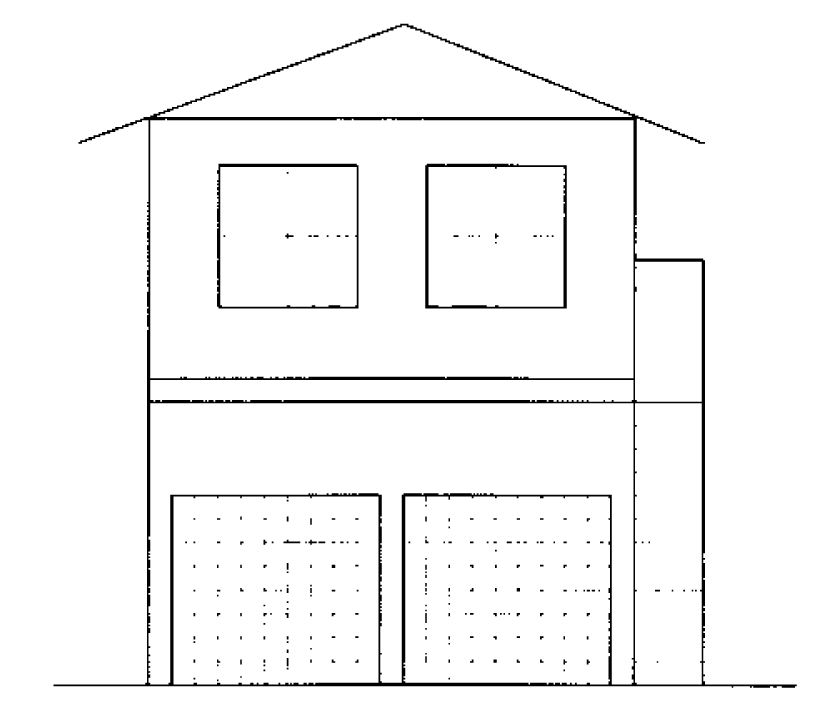
Accessory Apartment, Detached
(Above Garage Shown)
Active recreational facilities: Equipment and areas prepared for active use for recreational and leisure purposes, including, but not limited to: playground equipment (swing sets and climbing structures); courts for basketball, volleyball, and tennis; leveled, striped fields for football, soccer, or multiple purposes; community picnic pavilions (including covered facilities with grills and/or fire rings); community buildings for recreational events, and golf courses, excluding clubhouses, developed areas and accessory uses. Trails and bikeways through open spaces shall not be considered active recreational facilities.
Adult business: See Adult Entertainment of the Code of Ordinances of the City of Flowery Branch (Ordinance No. 360, as amended).
Agricultural facility: Includes, but is not limited to, any land, building, structure, pond, impoundment, appurtenance, machinery, or equipment which is used for the commercial production or processing of crops, livestock, animals, poultry, honeybees, honeybee products, livestock products, poultry products, timber, forest products, or products which are used in commercial aquaculture. Such term does not include any farm labor camp or facilities for migrant farm workers. (Georgia Code Section 41-1-7)
Agricultural operation: Those practices involving the establishment, cultivation, or harvesting of products of the field or orchard; the preparation and planting of pasture land; farm ponds; dairy operations; livestock and poultry management practices; the construction of farm buildings; the plowing, tilling, or preparation of soil at an agricultural facility; the planting, growing, fertilizing, harvesting, or otherwise maintaining of crops; the application of pesticides, herbicides, or other chemicals, compounds, or substances to crops, weeds, or soil in connection with the production of crops, timber, livestock, animals, or poultry; the breeding, hatching, raising, producing, feeding, keeping of livestock, hogs, equines, chickens, turkeys, poultry or other fowl normally raised for food, mules, cattle, sheep, goats, dogs, rabbits, or similar farm animals for commercial purposes, but not the regular slaughtering, or processing of such animals; The production and keeping of honeybees, the production of honeybee products; The production, of eggs or egg products; the manufacturing of feed for poultry or livestock; the rotation of crops, including without limitation timber production; Commercial aquaculture; and the application of existing, changed, or new technology, practices, processes, or procedures to any agricultural operation. (based on Georgia Code Sections 1-3-3 and 41-1-7). Agricultural operation does not include a roadside stand or agricultural processing.
Agricultural processing: Activities distinguished from the raising, cultivating, harvesting of food and fiber products (i.e., agriculture) because they go beyond the basic production cycle and involve significant manufacturing or processing operations so that the naturally grown or raised product is changed for consumer use, or where some physical, chemical, or similar change of an agricultural product occurs. Such activities include but are not limited to: cotton ginning, grist mills, milling of flour, feed, or grain, packaging of fresh or dried foods and fibers for wholesale or retail sale, slaughterhouses, refineries, wineries, canneries, and milk processing plants. Agricultural processing is considered a manufacturing use.
Aircraft landing area: Any landing area, runway, or other facility designed, used, or intended to be used for the taking off or landing of aircraft (airplanes, helicopters, gliders, ultralights, and any contrivance now known or hereafter invented for use in or designed for navigation of or flight in air) and which may include, aircraft storage, tie-down areas, hangars, and other necessary buildings and appurtenances. This term includes private use heliports. This use may be a principal or accessory use.
Amusement park: A commercially operated park operating outdoors where there are various devices for entertainment, including rides, booths for the conduct of games or sale of items, and buildings for shows and entertainment.
Animal hospital: An establishment designed or used for the care, observation, or treatment of domestic or farm animals. This definition includes veterinary clinics.
Animal shelter: Any premises designed or operated for impounding and caring for stray, homeless, abandoned, or unwanted animals (usually primarily cats and dogs), or that are otherwise subject to impoundment. An animal shelter is usually intended to provide only temporary kenneling of such animals until a permanent home if found.
Antenna: Any exterior apparatus designed for telephone, radio, or television communications or data transmission through the sending and/or receiving of electromagnetic waves. See also wireless telecommunication facilities.
Antique shop: A retail establishment primarily engaged in the offering of products with value derived because of their age or historic significance.
Apartment building: A building designed for or occupied exclusively by three (3) or more families with separate housekeeping facilities for each family for rent or lease. An apartment building is considered a multi-family residential use.
Arcade, amusement: A place or facility where pinball or electronic games are played for amusement. Amusement arcades are indoor commercial recreation facilities.
Art gallery: An establishment engaged in the sale, loan, or display of art books, paintings, sculpture, or other works of art. This use does not include libraries and museums. An art gallery is an enclosed retail trade establishment unless operated by a public entity in which case it is considered a public use.
Assisted living facility: Residences for the frail elderly that provide rooms, meals, personal care, and supervision of self-administered medication. They may provide other services incidental to the above. For purposes of this ordinance, assisted living facilities are considered institutionalized residential living and care facilities.
Auction house or auction yard: Any building, structure, enclosure, or place where goods or livestock are sold by auction (i.e., through bid in competition with others).
Automated teller machine: A mechanized consumer banking device offered by a bank, whether outside or in an access-controlled facility operated by walk-up customers only and not accessible to customers in vehicles.
Automobile sales: A premises designed or used for storage and display for sale, rental, or lease of cars, trucks, tractors, trailers, campers, recreational vehicles, golf carts, motorcycles, and agricultural implements, all of which are complete and operable.
Automobile service establishment: Top and body, paint, automotive glass, transmission, and tire repair shops, and oil change and lubrication facilities.
Automobile sales and service establishment: A premise that includes both automobile sales and automobile services, as defined in this ordinance.
B
Bank or financial establishment: A business that accepts money for deposit into accounts from the general public or other financial institutions, and which may include personal or business loans, wire transfers and safe deposit boxes. Such uses include but are not limited to banks, savings and loan institutions and credit unions, and security and commodity exchanges.
Barn: A building or structure accessory to agriculture or single-family residential use which is used for the storage of grain, hay, and other farm products, or the sheltering of livestock, or the storage of farm equipment produced, housed, or used on the premises.
Batching plant: A plant for the manufacture or mixing of asphalt, concrete, cement, or concrete or cement products, including any apparatus incidental to such manufacturing and mixing.
Bed and breakfast inn: A facility where overnight accommodations not exceeding six rooms are provided to transients for compensation, with or without a morning meal, and which may include afternoon and/or evening meal for guests, and where the operators of the facility live on the premises. A bed and breakfast inn does not include retail uses, public bar, conference center, or special event facilities.
Big box commercial retail building: A retail business involving the sale of services or merchandise on an individual lot of record where an individual tenant occupies more than 60,000 square feet.
Boarding house: See rooming house.
Borrow site: A site used for the extraction of earthen materials such as sand, gravel, rock, dirt, etc., where the material is removed from the site.
Botanical garden: A private facility, either nonprofit or operated for a fee, for the demonstration and observation of the cultivation of flowers, fruits, vegetables, or ornamental plants.
Brewery: An industrial use that brews ales, beers, and/or similar beverages on site.
Brew pub: means an eating establishment in which beer or malt beverages are manufactured or brewed for retail consumption on the premises and solely in draft form.
Brewery or distillery: means an establishment for the manufacture of malt beverages or distilled spirits where such products are not sold for consumption on the premises.
Broadcasting studio: A building or structure operated as a radio or television broadcasting studio or station with local broadcast capability or intended for satellite distribution of programs, and usually including satellite dishes, microwave dishes, and/or other types of communications equipment.
Building materials sales: An establishment offering lumber or other construction materials used in buildings for sale to contractors or the general public. When operated in whole or part outside the confines of a building, a building materials sales establishment is an open-air business.
Building sales establishment: A lot on which the principal use is the sale of manufactured homes and/or modular buildings. This use is an open-air business.
Bulk storage: The storage of chemicals, petroleum products, or similar materials in above ground or below-ground storage containers designed for wholesale distribution or mass consumption. This includes fuel oil distributors with storage of products.
Business service establishment: A business activity engaged in support functions to establishments operating for a profit and individuals and institutions on a fee or contract basis, including but not limited to: advertising agencies, photocopying, blueprinting and duplication services, mailing agencies, commercial art and graphic design; personnel supply services and employment agencies, computer and data processing services, detective, protective, and security system services, accounting, auditing, and bookkeeping services, publications and business consulting firms, food catering, interior decorating, and locksmiths.
C
Camp or campground: Any place established or maintained for two or more individual spaces or sites for temporary living quarters in cabins, structures, or tents for recreation or vacation purposes for a fee.
Carport: A roofed, accessory building or structure, open on two or more sides, made of aluminum, wood, or any combination thereof, including such materials on movable frames, for the shade and shelter of private passenger vehicles or other motorized or non-motorized equipment such as tractors and boats.
Car wash: The use of a site for washing and cleaning of passenger vehicles, other vehicles, or other light duty equipment.
Caretaker's residence: A dwelling unit within a principal building or any freestanding building or structure that is accessory to an institutional, commercial, or industrial use, and located on the same lot there with, which is used for occupancy as a dwelling by an owner, security agent, or caretaker.
Carnival: Any use which constitutes a traveling or transportable group or aggregation of rides, shows, gaming booths, and concessions, and where the public either pays admission or participation fees. A carnival is a temporary use.
Catering service: An establishment that serves and supplies food to be consumed off-premises. A catering service is a business service establishment.
Cemetery: The use of property as a burial place.
Church: A building or structure, or groups of buildings or structures that by design and construction are primarily intended for conducting organized religious services. Associated accessory uses include but are not limited to: residence for pastor, minister, priest, or rabbi, schools, meeting halls, indoor recreational facilities, day care, and kitchens. This term includes synagogues, temples, and other places of worship.
Christmas tree sales facility: A facility conducted on a temporary basis during holiday season, generally conducted wholly outdoors but which may involve a tent or other temporary structure, that offers for sale Christmas trees and incidental holiday items such as wreaths and Christmas tree stands. Such facility is a temporary open-air business establishment.
Clinic: An institution or professional office, other than a hospital or nursing home, where persons are counseled, examined, and/or treated by one or more health professionals providing any form of healing or medical health service. Persons providing these services may offer any combination of counseling, diagnostic, therapeutic or preventative treatment, instruction, or services, and which may include medical, physical, psychological, or mental services and facilities for primarily ambulatory persons.
Club or lodge, nonprofit: A building or premises, used for the assembly of members of associations or organizations of an educational, fraternal, or social character, not operated or maintained for profit. The term shall not include casinos, nightclubs, bottle clubs, or other establishments operated or maintained for profit.
Club, private: Buildings and facilities owned or operated by a corporation, association, person, or persons, and used for assembly of members for a social, educational, or recreational purpose, to which membership is required and where use of premises is restricted to members and their guests. The definition "private club" shall also include a "bona fide private club" as that term is defined in Georgia Code Section 3-7-1.
Co-generation facility: An installation that harnesses energy that normally would be wasted to generate electricity, usually through the burning of waste, and which may use, distribute through connection, or sell the energy converted from such process.
College or university: An educational use that provides training beyond and in addition to that training received in the 12th grade (i.e., undergraduate and graduate), and which has students regularly attending classes, and which confers associate, bachelor, master, or doctoral degrees.
Commercial recreational facility, indoor: A use that takes place within an enclosed building that involves the provision of sports and leisure activities to the general public for a fee, including but not limited to the following: assembly halls, amusement arcades, auditoriums, billiard halls and pool rooms, bowling alleys, dance halls, ice and roller skating rinks, and fully-enclosed theaters.
Commercial recreational facility, outdoor: A use of land and/or buildings that involves the provision of sports and leisure activities to the general public for a fee, including but not limited to the following: amusement parks, stadiums, amphitheaters, fairgrounds, drive-in theaters, golf driving ranges, miniature golf courses, batting cages, race tracks for animals or motor-driven vehicles, unenclosed firearms shooting ranges and turkey shoots, fishing ponds, equestrian centers and horse and pony riding rinks, botanical and zoological gardens, zoos for exotic animals or wildlife, recreational vehicle parks, and ultra-light flight parks. A golf course and private club that is built as part of a single-family residential subdivision and that operates in a quasi-public manner is not considered to be an outdoor commercial recreational facility.
Community recreation: A private recreational facility for use solely by the residents and guests of a particular residential development, including indoor facilities such as community meeting rooms and outdoor facilities such as swimming pools, tennis courts, and playgrounds. These facilities are usually proposed, planned, and provided in association with a development and are located within the boundaries of such development.
Composting facility: A facility where compost or organic matter that is derived primarily from off-site is processed by composting and/or processed for commercial purposes. Activities of a composting facility may include management, collection, transportation, staging, composting, curing, storage, marketing, or use of compost.
Condominium: A form of ownership as defined by state law in which common elements are jointly owned.
Condominium building: A building containing one (1) or more individually owned units or building spaces and related, jointly-owned, common areas as defined by laws of the State of Georgia. When a building on property under condominium ownership contains only one dwelling unit, that building is considered a detached, single-family residential condominium building. When a building on property under condominium ownership contains two or more dwelling units, that building is considered an attached, multi-family residential condominium building.
Conservation area: Any land set aside for conservation of the land in its natural state.
Conservation areas, primary: Any property qualifying as conservation use property under Georgia Code Section 48-5-7.4; and any steep slopes, floodplains, wetlands, water bodies, upland buffers around wetlands and water bodies, critical wildlife habitat, and sites of historic, cultural, or archaeological significance, located outside of building envelopes and areas established for building purposes.
Conservation areas, secondary: Prime farmland, natural meadows, mature woodlands, farm fields, localized aquifer recharge areas, and lands containing scenic views and sites, located outside of building envelopes and areas established for building purposes.
Conservation subdivision: A subdivision where open space is the central organizing element of the subdivision design and that identifies and permanently protects all primary and all or some of the secondary conservation areas within the boundaries of the subdivision.
Construction field office: A manufactured home, travel trailer, truck trailer, and/or other structure used temporarily as an office in conjunction with a construction project. A construction field office is a temporary use.
Construction yard: An area on or immediately adjacent to a construction site used on a temporary basis for the parking and storage of equipment used in a construction project, and the storage and preparation of materials and other items used in the construction project. Such yards may include one or more construction field offices.
Continuing care retirement community: An institutional residential living facility providing multiple, comprehensive services to older adults. Such facility normally contains a combination of independent living units, assisted living, and skilled nursing care units.
Contractor's establishment: An establishment engaged in the provision of construction activities, including but not limited to, plumbing, electrical work, building, grading, paving, roofing, carpentry, and other such activities, including the storage of material and the overnight parking of commercial vehicles. This use includes landscaping companies.
Convenience store: A retail store that sells convenience goods, such as prepackaged food items and a limited line of groceries. Convenience stores may or may not sell gasoline, diesel, and kerosene but do not include automotive services. A convenience store is an enclosed retail trade establishment.
Cooperative building: A building containing one or more dwelling units under cooperative ownership. Cooperative residential buildings are considered multi-family dwellings.
Cottage industry: A use or activity which is accessory to a single-family residence or a commercial establishment that produces one or more goods on the premises through hand-made workmanship craft for retail sale. Such goods-producing activities include but are not limited to candle-making, glass blowing, pottery making, weaving, woodworking and the production by hand and small tools of furniture, sculpting, and other similar or associated activities.
Crisis center: A facility or portion thereof and premises that are used for the purposes of emergency shelter, crisis intervention, including counseling, referral, hotline response, and similar human social service functions. Said facility may include meal preparation, distribution, or service for residents of the center as well as nonresidents, merchandise distribution, or shelter, including boarding, lodging, or residential care. This term includes domestic violence and centers, homeless shelters, and halfway houses.
Custom order shop: A business establishment that offers merchandise, but which maintains no merchandise inventory on site other than display items (which are not visible from the exterior of the building).
D
Day care center: Any place operated by a person, society, agency, corporation, institution or group, and licensed or registered by the State of Georgia as a group day care home or day care center, wherein are received for pay for group supervision and care, for fewer than twenty-four (24) hours per day, seven (7) or more children under eighteen (18) years of age.
Distribution center: A use where goods are received and/or stored for delivery to the ultimate customer at remote locations.
Dormitory: A building intended or used principally for sleeping accommodations where such building is related (an accessory use) to an educational, civic, or religious institution, not operated for commercial purposes.
Drive-through: An accessory use where a good is sold to customers in vehicles.
Driving range: An area equipped with distance markers, clubs, balls, and tees for practicing golf drives, chipping, and putting, and which may include a snack bar and pro shop. A driving range is an outdoor commercial recreation facility.
Dry cleaning plant: A building, portion of a building, or premises used or intended to be used for cleaning fabrics, textiles, wearing apparel, or articles of any sort by immersion or agitation, or by immersions only, in volatile solvents included, but not limited to, solvents of the petroleum distillate type, and/or the chlorinated hydrocarbon type, and the processes incidental thereto.
Dwelling: A building, or portion thereof, designed, arranged or used for permanent living, and/or sleeping quarters.
Dwelling, residential multi-unit: A building other than a duplex, designed for or occupied exclusively by three (3) or more families or households with separate housekeeping facilities for each family or household. Apartment houses and residential condominium buildings containing two (2) or more units are considered residential multi-units.
Dwelling, single-family attached townhome or townhouse: A single-family dwelling unit constructed in a group of three (3) or more attached units in which each unit extends from foundation to roof and with a yard or public way on at least two (2) sides. Each unit is separated from any other unit by one (1) or more vertical common fire-resistance-rated walls. A townhouse shall have at least two (2) stories.
Dwelling, single-family detached, condominium: A residential building designed for occupancy by one family only, where more than one dwelling is located on a single lot and the land is owned in common.
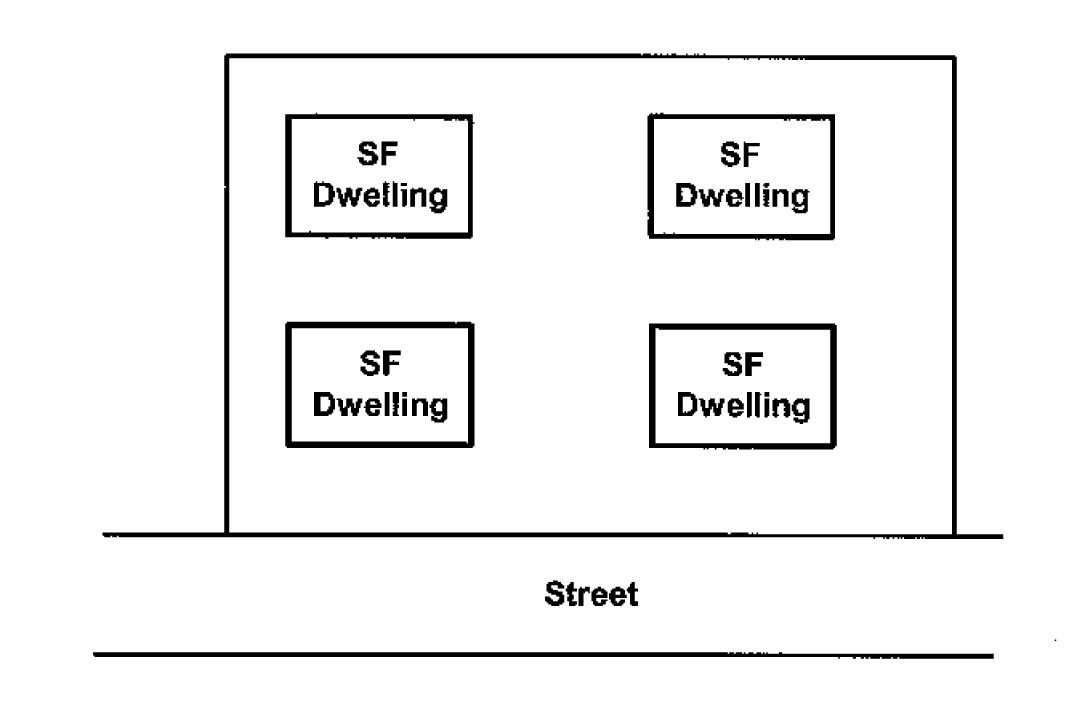
Dwelling, Single-Family Detached
Condominium
Dwelling, single-family detached, fee-simple: A building designed, arranged to be occupied or used by one (1) family only and where each dwelling is located on its own lot in fee-simple title. This definition specifically includes an "industrialized building, residential" as defined when occupied by one family on a lot in fee-simple title.
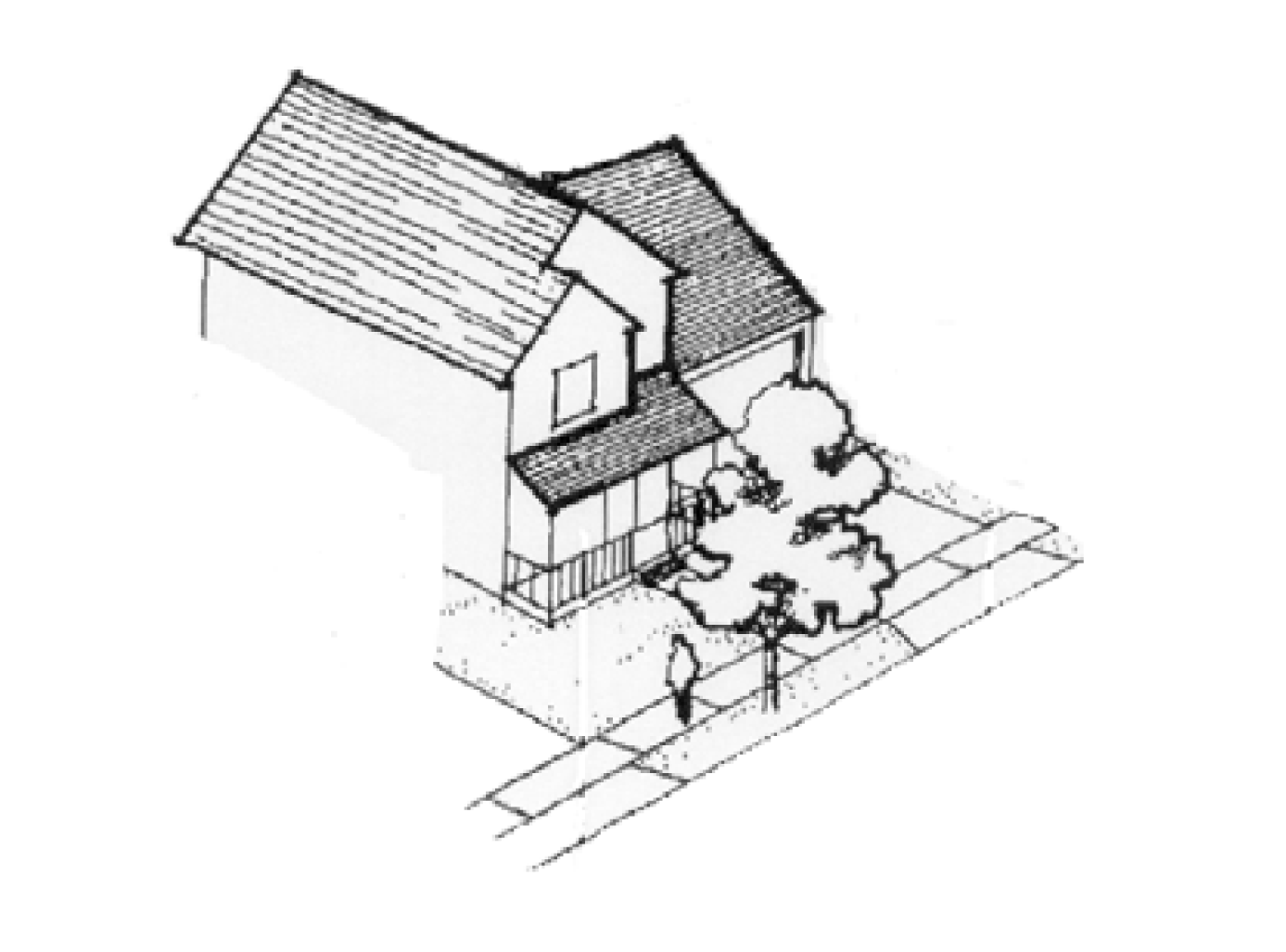
Dwelling, three-family (triplex): A building containing three (3) and only three (3) dwelling units.
Dwelling, two-family (duplex): A building containing two (2) and only two (2) dwelling units.
Dwelling unit: A building, or portion thereof, designed, arranged or used for living quarters for one (1) or more persons living as a single housekeeping unit with cooking facilities, but not including units in hotels or other structures designed for transient residence.
E
Exterminator: An establishment engaged in pest control for businesses, institutions, residences, or industries.
Extraction: Removal or recovery by any means whatsoever of sand, gravel, soil, rock, minerals, mineral substances or organic substances other than vegetation, from water or land on or beneath the surface thereof, exposed or submerged. This term includes gravel pits, mines, quarries, and similar operations, but not "borrow site" as defined herein.
F
Fallout shelter: An accessory building or underground facility designed for the protection of life from radioactive fallout. A fallout shelter may be an accessory use to a dwelling or other principal use.
Fairgrounds: An area of land including, but not limited to: agricultural-related office buildings, animal shows and judging, carnivals, circuses, community meeting or recreational buildings and uses, concerts, food booths and stands, games, rides, rodeos, sales and auctions. Fairgrounds are considered outdoor commercial recreation facilities unless publicly owned, in which case they are public uses.
Family: An individual, or 2 or more persons related by blood, marriage, adoption or guardianship, or a group of not more than 4 unrelated persons, occupying a single dwelling unit; provided, however, that domestic servants employed on the premises may be housed on the premises without being counted as a separate family or families. The term "family" does not include any organization or institutional group.
Family day care home: A private residence in which is operated by any person who receives therein (for pay) for supervision and care for fewer than twenty-four (24) hours per day, three (3) to not more than six (6) children under eighteen (18) years of age who are not residents in the same private residence. For purposes of this ordinance, a family day care home may be operated as a home occupation, subject to the requirements of this ordinance.
Farm winery tasting room means a licensed outlet for the promotion of a farm winery's wine by providing samples of such wine to the public and for the sale of such wine at retail for consumption on the premises and for sale in closed packages for consumption off the premises. Samples of wine can be given free of charge or for a fee.
Fee simple: A form of ownership where the owner is entitled to the entire property with unconditional power of disposition during his or her life and which descends to his or her heirs and legal representatives upon his or her death intestate.
Fence: An enclosure or barrier, composed of wood, masonry, stone, wire, iron, or other approved materials or combination of materials used as a boundary, means of protection, privacy screening, or confinement, including brick or concrete walls but not including hedges, shrubs, trees, or other natural growth.
Fence, barbed wire: One or more strands of wire or other material having intermittent sharp points of wire or metal that may puncture, cut, tear, or snag persons, clothing, or animals, including vertical supports.
Fence, chain-link: An open mesh fence made entirely of wire woven in squares of approximately 1.5 inches with vertical supports, usually spaced at an interval of six (6) feet, usually at a height of three (3) or more feet.
Fence, solid: A fence, including entrance and exit gates where access openings appear, through which no visual images can be seen.
Flea market: The use of land, structures or buildings for the sale of produce or goods, usually second-hand or cut-rate. A flea market is an open-air business.
Food processing plant: A manufacturing establishment producing or processing foods for human or animal consumption and certain related products or by-products, including but not limited to the following products: sugar, dairy, fruit and vegetable (including canning, preserving and processing), grain mill products and by-products, meat, poultry and seafood (including by-product processing but not including the slaughtering of animals), and miscellaneous foot preparation from raw products. This is a manufacturing use.
Forestry: An operation on a tract or parcel of land involving the growing, conserving, and managing of forests and forest lands (includes the term "silviculture"). Forestry operations or practices include the raising and harvesting of timber, pulp woods and other forestry products for commercial purposes. Incidental uses to forestry include the erection of accessory structures and improvements normally associated with timber production, including but not limited to storage buildings, the construction of roads, insect and disease control, fire protection, and may include the temporary operation of a sawmill and/or chipper to process the timber cut from the parcel or parcels. This term does not include the cutting of timber associated with approved land development. This definition does not include processing of timber into finished or semi-finished products or other than temporary storage of logs.
Funeral home: A building used for human funeral services. Such building contains a chapel and may include space and facilities for embalming and the performance of other services used in the preparation of the dead for burial or cremation, the performance of autopsies and other surgical procedures, the indoor storage of caskets, funeral urns, and other related funeral supplies, and the indoor or outdoor storage of funeral vehicles.
G
Garage: A building, or part thereof, used or designed to be used for the parking and storage of vehicles. A garage in the customary sense is distinguished from a carport in that it is fully enclosed. It may be attached to a single-family dwelling or may be an accessory building. In such context a garage is an accessory use to a single-family dwelling.
Gas tank sales: The retail sale of bulk storage tanks for flammable and combustible liquids, compressed gases or liquefied petroleum (LP) gas. Gas tank sales are considered open air business uses.
Group Development Project: A shopping center or other development with multiple buildings arranged as a group, no less than twenty acres in size, which is subdivided into lots but not in the customary manner so as to meet zoning requirements for lot size, lot width, lot frontage, building setbacks, lot coverage, and other dimensional requirements customarily related to buildings and lot line configurations. A primary purpose of a group development project is to permit the subdivision of a shopping center or other development so that each building may be located on its own fee-simple lot that does not necessarily meet all zoning requirements, but where the shopping center or other development meets applicable zoning requirements as a whole (i.e., all land area included in the development).
Group home: A single household of more than two unrelated persons, whether or not they are developmentally disabled, under the supervision of a resident manager.
Growler: A retail establishment that sells beer in a bottle made of glass or other material customary to the industry that is sealed on the premises.
Greenhouse: A building designed or used for growing or propagating plants, with walls or roof usually designed to transmit light. Greenhouses can be principal or accessory uses of a commercial nature or they can be private, such as one on a farm or as an accessory structure to residential use.
Guest house: A lodging unit for temporary guests in a building accessory to a detached, single-family dwelling unit, and which is not rented or otherwise used or occupied as a separate dwelling. A guest house is an accessory use to a detached, single-family dwelling.
H
Hazardous waste materials: Any materials defined or customarily defined as hazardous waste by the Environmental Protection Division of the Georgia Department of Natural Resources; generally, any refuse or discarded material or combination of refuse or discarded materials in solid, semisolid, liquid or gaseous form which cannot be handled by routine waste management techniques because they pose a substantial present or potential hazard to human health or other living organisms because of their chemical, biological or physical properties.
Health spa: An establishment which for profit or gain provides as one of its primary purposes, services or facilities which are purported to assist patrons improve their physical condition or appearance through change in weight, weight control, treatment, dieting, or exercise. The term includes establishments designated as "reducing salons," "exercise gyms," "health studios," "health clubs," and other terms of similar import. Not included within this definition are facilities operated by nonprofit organizations, facilities wholly owned and operated by a licensed physician at which such physician is engaged in the practice of medicine, or any establishment operated by a health care facility, hospital, intermediate care facility, or skilled nursing care facility.
Home occupation: Any use, occupation or activity conducted entirely within or on the same lot as a dwelling by a resident or residents thereof, which is clearly incidental and secondary to the use of the dwelling for residence purposes and does not change the character thereof.
Hospital: An institution licensed by the state and providing primary health services and medical or surgical care to persons, primarily in-patients, suffering from illness, disease, injury, deformity or other abnormal physical or mental conditions, and including as an integral part of the institution, such related facilities as laboratories, outpatient facilities, or training facilities.
Hotel: A commercial lodging service with one or more buildings devoted to the temporary shelter for the traveling public, and where entry to individual guest rooms is via a central lobby. A hotel may include as accessory uses the following: full dining, public bar, retail uses, and special event or conference center facilities.
I
Incinerator: A facility with equipment that uses a thermal combustion process to destroy or alter the character or composition of medical waste, sludge, soil, or municipal solid waste, not including animal or human remains.
Industrial use: An activity or structure in which the primary purpose involves manufacturing, assembly, fabrication, and processing, bulk handling of products, warehousing, heavy trucking, power generation facilities, etc. Such use may also include such activities as research and technological processes.
Industrialized building: Any structure or component thereof which is designed and constructed in compliance with the state minimum standards codes and is wholly or in substantial part made, fabricated, formed, or assembled in manufacturing facilities for installation or assembly and installation on a building site and has been manufactured in such a manner that all parts or processes cannot be inspected at the installation site without disassembly, damage to, or destruction thereof. An industrialized building bears an insignia of approval issued by the Commissioner of the Georgia Department of Community Affairs. All industrialized buildings bearing an insignia of approval issued by the Commissioner of the Georgia Department of Community Affairs pursuant to applicable state law shall be deemed to comply with state minimum standards codes and all ordinances and regulations enacted by any local government which are applicable to the manufacture or installation of such buildings.
Industrialized building, residential: Any dwelling unit designed and constructed in compliance with the Georgia State Minimum Standard One and Two Family Dwelling Code which is wholly or in substantial part, made, fabricated, formed, or assembled in a manufacturing facility and cannot be inspected at the installation site without disassembly, damage to, or destruction thereof. Any such structure shall not contain a permanent metal chassis and shall be affixed to a permanent load-bearing foundation. The term shall not include manufactured homes as defined by the National Manufactured Housing Construction and Safety Standards Act of 1974, 42 U.S.C. Section 32 5401, et seq. A residential industrialized building bears an insignia of approval issued by the Commissioner of the Georgia Department of Community Affairs. For purposes of this ordinance, a detached residential industrialized building for one family shall be considered the same as a detached, single-family dwelling and permitted under the same zoning districts as a detached, single-family dwelling. All residential industrialized buildings bearing an insignia of approval issued by the Commissioner of the Georgia Department of Community Affairs pursuant to applicable state law shall be deemed to comply with state minimum standards codes and all ordinances and regulations enacted by any local government which are applicable to the manufacture or installation of such buildings. This ordinance shall not be construed to exclude detached, single-family residential industrialized buildings from being sited in a residential district solely because the building is a residential industrialized building.
Institutional residential living and care facilities: An umbrella term that encompasses the following uses: assisted living facility, intermediate care home, nursing home, skilled nursing care facility, continuing care retirement facility, and personal care home.
Intermediate care home: A facility which admits residents on medical referral; it maintains the services and facilities for institutional care and has a satisfactory agreement with a physician and dentist who will provide continuing supervision including emergencies; it complies with rules and regulations of the Georgia Department of Human Resources. The term "intermediate care" means the provision of food, including special diets when required, shelter, laundry and personal care services, such as help with dressing, getting in and out of bed, bathing, feeding, medications and similar assistance, such services being under appropriate licensed supervision. Intermediate care does not normally include providing care for bed patients except on an emergency or temporary basis.
J
Junk: Scrap or waste material of any kind or nature collected for resale, disposal, or storage, or by accumulation.
K
Kennel: Any facility used for the purpose of commercial boarding or sale of domestic animals or pets such as but not limited to dogs and cats, and any other customarily incidental treatment of the animals such as grooming, cleaning, selling of pet supplies, or otherwise.
Kitchen: Any room or part of a room designed, built, used, or intended to be used for cooking, the preparation of food, or dishwashing. The presence of a range, oven, or dishwasher, or utility connections suitable for serving a range or oven, shall normally be considered as establishing a kitchen.
L
Laboratory: A building or group of buildings in which are located facilities for scientific research, investigation, testing, or experimentation, but not facilities for the manufacture or sale of products except as incidental to the main purpose of the laboratory.
Landfill, construction and demolition: A disposal facility accepting waste building materials and rubble resulting from construction, remodeling, repair and demolition operations on pavements, houses, commercial buildings, and other structures. Such wastes include, but are not limited to, wood, bricks, metal, concrete, wall board, paper, cardboard, inert waste landfill material and other inert wastes which have a low potential for groundwater contamination.
Landfill, inert waste: A disposal facility accepting only wastes that will not or are not likely to cause production of leachate of environmental concern. Such wastes are limited to earth and earth-like products, concrete, cured asphalt, rock, bricks, yard trimmings, stumps, limbs, and leaves, and specifically excluding industrial and demolition waste.
Landfill, sanitary: The burial of non-hazardous waste where such waste is covered on a daily basis, as distinguished from a construction and demolition landfill.
Landscaping company: A business engaged in the provision of landscaping services and/or the wholesale or retail sale of landscaping products including but not limited to sod, trees, landscaping timbers, and earth covering materials. The processing of wood into timbers, mulch, and/or chips is considered an incidental use of a landscaping company whose primary purpose is the wholesale or retail sale of landscaping products.
Laundromat: A facility where patrons wash, dry, or dry clean clothing or other fabrics in machines operated by the patron. A laundromat is considered a personal service establishment.
Live-work unit: Buildings or spaces within buildings that are used jointly for commercial and residential purposes where the two uses are physically connected in one unit and residential use of the space is accessory to the primary use as a place of work. This term is distinguished from a home occupation and from a mixed-use building. Live-work units may have larger work spaces than permitted by home occupation, and live/work units design the floor space for both living and working areas. Live-work units are distinguished between mixed-use buildings in that a mixed-use building has residential and nonresidential uses in the same building, but the residential and nonresidential spaces are not necessarily connected or used by the same person.
Livestock: Cattle, horses, pigs, sheep, goats, llamas, emus, ostriches, donkeys, mules, goats, sheep, chickens, ducks, geese, and other fowl, rabbits, minks, foxes and other fur or hide-bearing animals, customarily bred or raised in captivity, whether kept for pleasure, utility, or sale.
Lodging service: A facility that offers temporary (15 days or less in one room) shelter accommodations, or place for such shelter, open to the public for a fee, including "hotel" and "motel" as defined. "Bed and breakfast inn" is defined separately.
Logging yard: Areas where logs of wood are stored on a regular basis before transfer by truck or railroad.
Lumber yard: A facility where wood materials such as lumber, plywood, panels or other wood products are processed and sold for retail sale or wholesale. Such use may involve performing millwork, planing, cutting, and/or other customizing processes.
M
Manufactured home: A structure, transportable in one or more sections, which, in the traveling mode,
is eight (8) body feet or more in width or forty (40) body feet or more in length,
when erected on site, is three hundred twenty (320) or more square feet in floor area,
and which is built on a permanent chassis and designed to be used as a dwelling with
or without a permanent foundation when connected to the required utilities, and includes
the plumbing, heating, air-conditioning, and electrical systems contained therein;
or a structure that otherwise comes within the definition of a "manufactured home"
under the National Manufactured Housing Construction and Safety Standards Act of 1974,
as amended (42 U.S.C. 5401-5445).
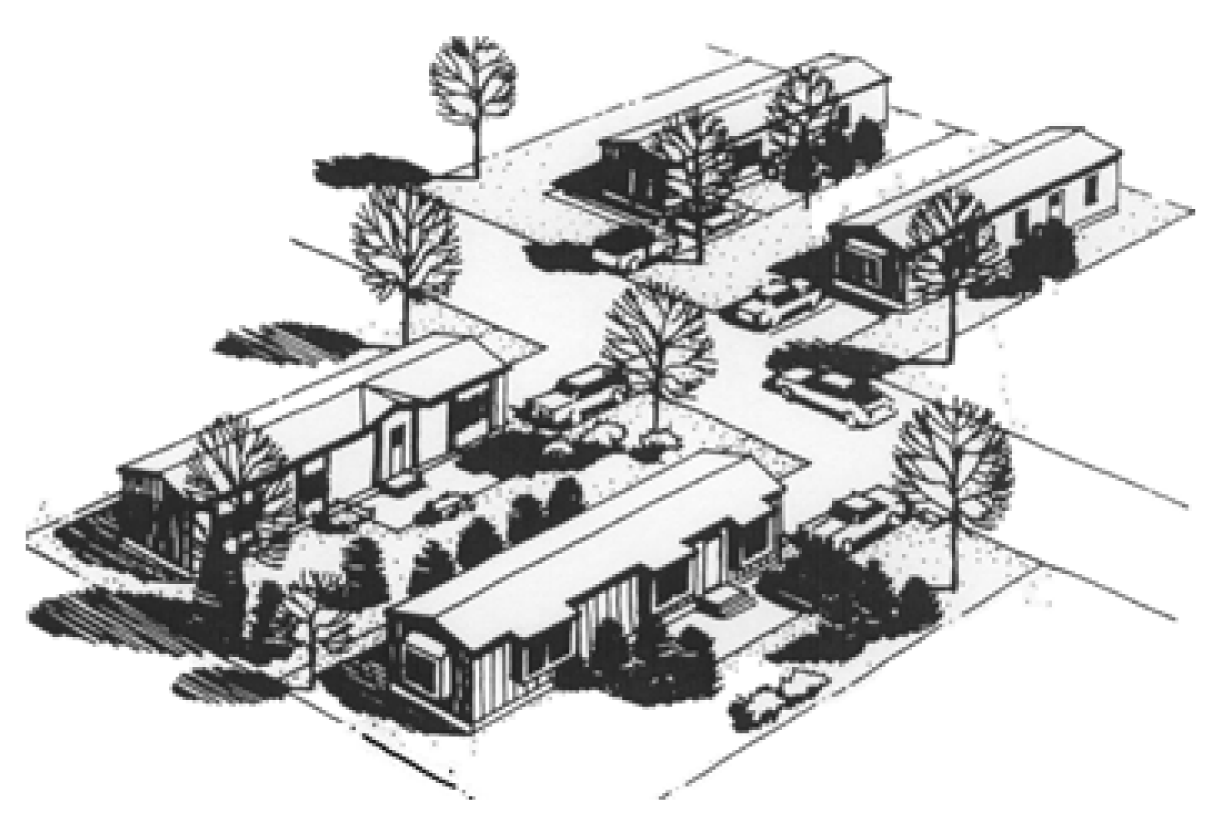
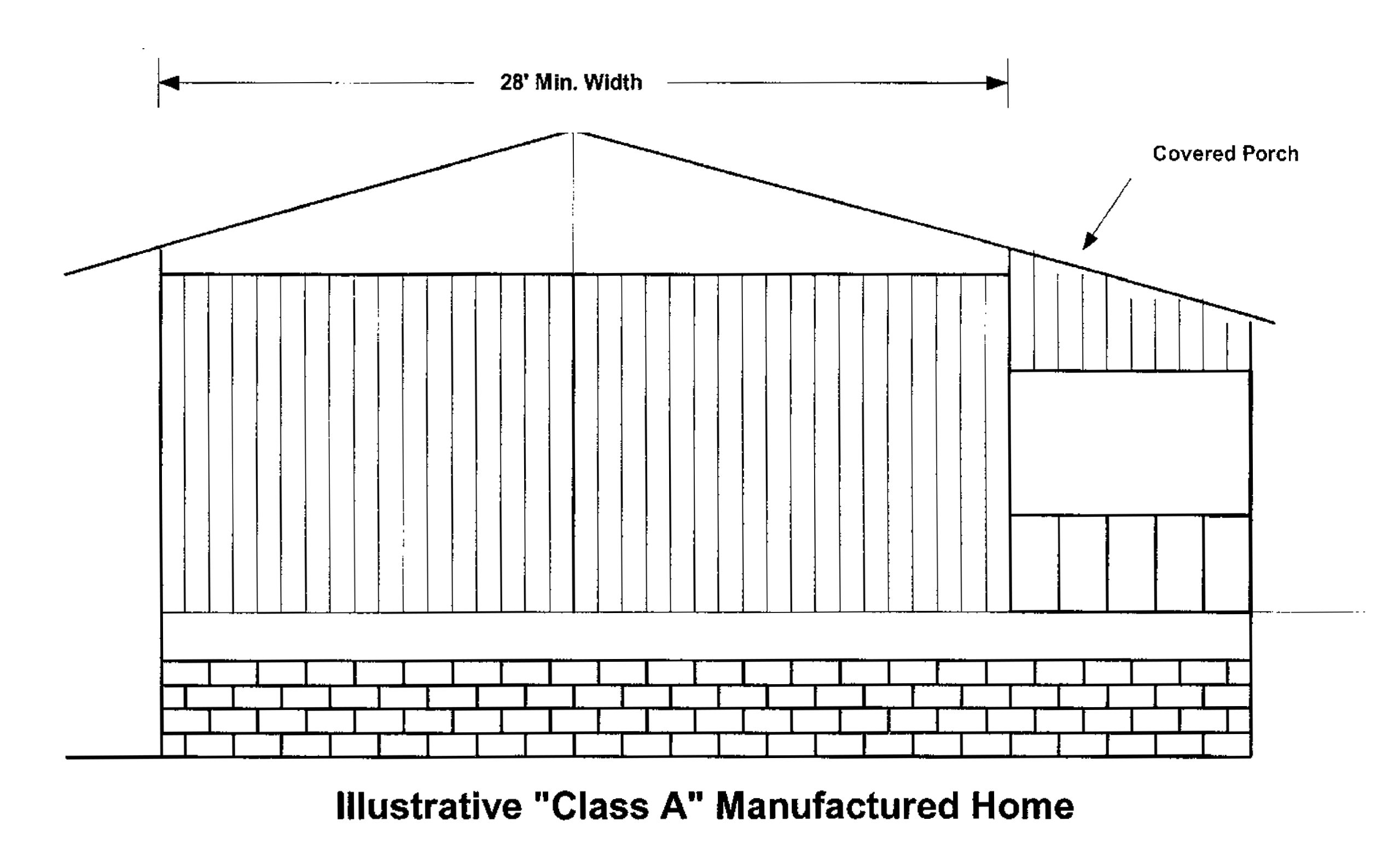
Manufactured home, class "A": A dwelling unit meeting the definition of "manufactured home" and which meets the following development standards:
(a)
Minimum width of at least twenty-eight (28) feet.
(b)
The roof has a minimum 3:12 roof pitch which means having a pitch equal to at least three inches of vertical height for every twelve inches of horizontal run. The roof has a surface of wood shakes, asphalt composition, wood shingles, concrete, fiberglass tiles, slate, built-up gravel materials, standing seam (non-corrugated) tin or steel or other materials approved by the Building Inspector. The roof overhang must be at least one (1) foot when measured from the vertical side.
(c)
The exterior siding materials consist of wood, masonry, hardboard, stucco, masonite, vinyl lap, or other materials of like appearance comparable in composition, appearance, and durability to the exterior siding commonly used in site-built dwellings.
(d)
The wheels and towing devices are removed and the home is attached to a permanent foundation that meets all applicable building code requirements.
(e)
Skirting. The entire perimeter area between the bottom of the structure and the ground of the manufactured home is skirted or underpinned with brick, masonry, finished concrete or siding of like or similar character to the manufactured home that completely encloses the perimeter of the undercarriage except for proper ventilation and access openings.
(f)
Includes a landing installed at each outside doorway. The minimum size of the landing is four feet by six feet (excluding steps) at each doorway. The structure includes steps which lead to ground level, and both landing and steps meet applicable building code requirements.
_____
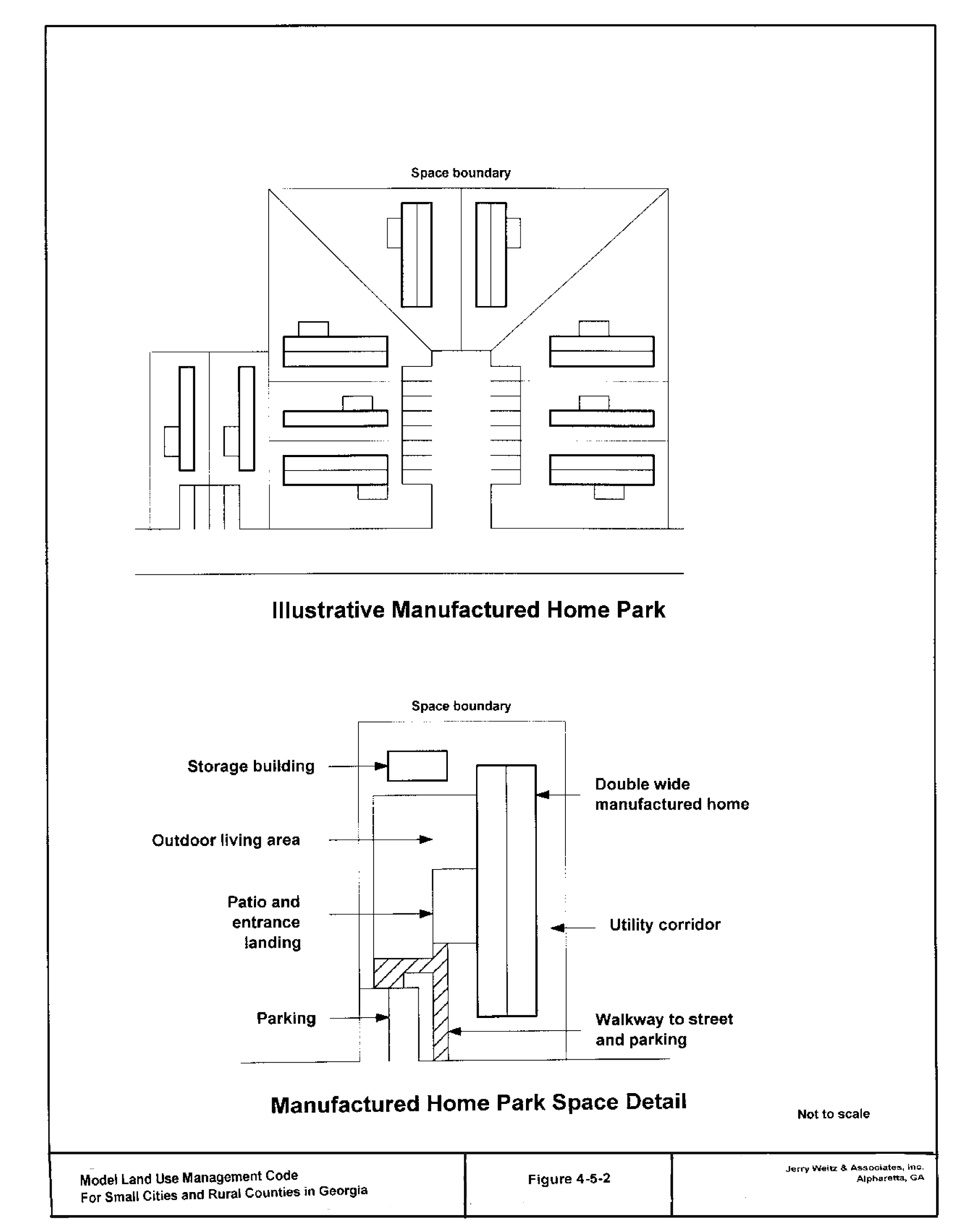
Manufactured home park: A parcel of land or any portion thereof under which has been designed, planned, or improved for the placement of two or more manufactured homes for residential use, including land, buildings, and facilities used by the occupants of manufactured homes on such property. Also referred to as "land lease communities."
Manufactured home space: A parcel of land within a manufactured home park which is reserved or leased for
the placement of an individual manufactured home and accessory structures for the
exclusive use of its occupants.
_____
Manufacturing, processing, assembling: The mechanical or chemical transformation of materials or substances into new products. The land uses engaged in these activities are usually described as plants, factories or mills and characteristically use power-driven machines and materials handling equipment. Establishments engaged in assembling component parts of manufactured products are also considered under this definition if the new product is neither a fixed structure nor other fixed improvement. Also included is the blending of materials such as lubricating oils, plastic resins, or liquors.
Marina: A facility for the mooring, berthing, storing, or securing of watercraft, and which may include boat sales, boat fuel sales, boat construction, boat repair, marine equipment sales, boat and jet ski rental, and other uses clearly incidental to watercraft activities.
Materials recovery facility: A solid waste handling facility that provides for the extraction from solid waste of recoverable material, materials suitable for use as a fuel or soil amendment, or any combination of such materials. (Georgia Code 12-8-22)
Micro-brewery: means an establishment where malt beverages are made, produced, or bottled and malt beverages are sold to individuals on the brewer's licensed premises for personal use on and off premises under the terms and conditions of state law and this code.
Micro-distillery: means an establishment where distilled spirits are made, produced, bottled, distilled, rectified, or blended with other distilled spirits and distilled spirits are sold on the distiller's licensed premises for personal use on an off premises under the terms and conditions of state law and this code.
Mining: All or any part of the process involved in the mining of aggregates and/or minerals by removing overburden and mining directly from the mineral deposits, open pit mining or minerals naturally exposed, mining by auger methods, dredging, and quarrying, underground mining, and surface work incidental to such activities. See also the term, "extraction."
Mixed-use Residential Over Business (MU-ROB): A development type or land use in which commercial retail uses are located on the ground floor of a building and residential dwelling units are located on one or more upper floors, integrated within the same structure.
A.
Purpose and intent. The Mixed-Use Residential Over Business (MU-ROB) is established to allow and regulate vertically integrated mixed-use development within the Old Town Character Area while preserving the intent of the CBD zoning district.
The MU-ROB is intended to:
1.
Activate CBD streets through ground-floor commercial uses;
2.
Encourage residential development above business uses;
3.
Support a compact, walkable downtown environment;
4.
Provide housing opportunities in close proximity to employment, services, and civic spaces;
5.
Ensure coordinated, high-quality urban design through master planning; and
6.
Mitigate potential land use conflicts through tailored development and design standards.
B.
Applicability.
1.
MU-ROB developments shall be permitted only on properties located within the Central Business District zoning classification and only upon approval of a Conditional Use Permit by the City Council.
2.
MU-ROB developments shall require approval of a Master Development Plan (MDP).
3.
Where the standards of the MU-ROB use shall be in harmony with the CBD district, design standards of site development, landscape, architecture and open space.
C.
Permitted uses.
1.
Ground-Floor Uses: MU-ROB Uses, are permitted on the ground floor by right, provided they are oriented to a public street, plaza, or pedestrian way:
a)
Retail stores and shops;
b)
Restaurants, cafés, and food service establishments (excluding drive-throughs);
c)
Professional and administrative offices;
d)
Financial institutions without drive-through facilities;
e)
Galleries, studios, and artisan uses with on-site retail;
f)
Civic, cultural, and community facilities;
g)
Ground-floor residential dwelling units are prohibited along primary CBD street frontages unless specifically approved as part of the Master Development Plan.
2.
Floors Above Business Uses (Overlay Allowance): The following uses are permitted above the business uses:
a)
Multifamily residential dwelling units;
b)
Live-work units;
c)
Residential amenity spaces accessory to dwelling units.
3.
Conditional Uses: The following uses may be approved as part of the Conditional Use Permit for the MU-ROB:
a)
Hotels or boutique lodging;
b)
Entertainment and assembly uses;
c)
Structured parking as a principal use on ground-floor or upper-floor;
d)
Childcare centers.
D.
Prohibited Uses: In addition to uses prohibited in the CBD district, the following uses are in an MU-ROB development:
1.
Standalone single-use residential buildings;
2.
Auto-oriented uses and vehicle-dependent services;
3.
Outdoor storage as a principal use;
4.
Heavy industrial or warehousing uses;
5.
Tattoo, Micro-blading and Piercing Shops;
6.
Massage Parler.
E.
Master Development Plan (MDP). MU-ROB developments within the CBD shall require approval of a Master Development Plan demonstrating coordinated development of the site.
The MDP shall include:
1.
Site and Building Layout:
a)
Building footprints, heights, and massing;
b)
Relationship of buildings to streets and public spaces.
2.
Land Use Mix:
a)
Location and square footage of ground-floor nonresidential uses;
b)
Number and type of residential units.
3.
Circulation:
a)
Pedestrian, bicycle, and vehicular circulation;
b)
Connectivity to surrounding blocks and streets.
4.
Parking Strategy:
a)
On-street, shared, and structured parking;
b)
Parking reductions or shared parking calculations, if applicable.
5.
Open Space and Public Realm:
a)
Plazas, courtyards, rooftop spaces, or pedestrian passages;
b)
Streetscape improvements consistent with CBD standards.
6.
Phasing:
a)
Development phases, if applicable.
F.
Development Standards.
1.
Building Height:
a)
Minimum height: Two (2) stories.
b)
Maximum height: As allowed in the Table 9.2 district or as modified through the approved Master Development Plan.
2.
Residential Density:
a)
Residential density shall not be subject to maximum dwelling unit limits, provided that:
i.
All residential units are located above ground-floor nonresidential uses (or as modified through the approved Master Development Plan); and
ii.
Adequate infrastructure and services are demonstrated.
3.
Building Placement:
a)
Buildings shall be located at or near the front property line to frame public streets.
b)
Ground-floor façades shall maintain a continuous street wall along primary Old Town Character Area streets.
4.
Ground-Floor Design Standards:
a)
Ground-floor commercial space shall have a minimum floor-to-ceiling height suitable for retail or restaurant use.
b)
A minimum percentage of transparent glazing shall be required along street-facing façades.
c)
Primary entrances shall face public streets or plazas.
5.
Residential Compatibility:
a)
Residential entries shall be clearly defined and secured.
b)
Noise, lighting, loading, and refuse areas shall be designed to minimize impacts on residential units.
c)
Separate access for residential and nonresidential uses is encouraged but not required.
G.
Parking and Loading.
1.
Parking reductions may be approved due to shared parking, proximity to transit, or on-street parking availability.
2.
Shared parking between residential and commercial uses is encouraged.
3.
Loading areas shall be located to minimize conflicts with pedestrians and public spaces.
H.
Administration and Approval.
1.
Approval of the MU-ROB shall require:
a)
Mayor and City Council approval; and
b)
Approval of the Master Development Plan.
2.
Minor modifications to an approved MDP may be approved administratively.
a)
A minor modification to an approved Master Development Plan (MDP) is a change that does not materially alter the approved development concept or increase overall impacts, and remains consistent with the intent, conditions, and key parameters of the approved MDP.
i.
Modest shifts in building siting/footprints that still meet required setbacks and do not change the overall site organization.
ii.
Minor façade/material/design refinements consistent with the approved architectural approach.
iii.
Adjustments to internal circulation/drive aisles, sidewalk alignments, or landscaping that maintain connectivity and required standards.
iv.
Minor parking layout changes that do not reduce required parking (or do so only where already allowed).
v.
Utility/stormwater plan refinements that do not change the approved approach or worsen off-site impacts.
vi.
Phasing or construction sequencing adjustments that don't change final buildout or required public improvements.
3.
Major modifications shall require Planning and Community Development review and City Council approval.
a)
A major modification is any change that materially alters the approved MDP, including changes that affect the approved land use mix, intensity, external impacts, required public improvements, or conditions of approval, or that otherwise represents a substantial deviation from what City Council approved.
i.
Change in use mix (e.g., adding/removing a conditional use component, shifting commercial/residential in a meaningful way).
ii.
Increase in development intensity (e.g., more dwelling units, more nonresidential floor area, taller buildings, greater massing) beyond what the MDP approved.
iii.
Changes that reduce required open space/public realm commitments or substantially redesign them.
iv.
Material changes to access points, circulation concept, or connectivity to surrounding streets/blocks.
v.
Parking strategy changes that increase impacts (e.g., meaningful reduction in parking without an approved basis, major relocation of structured parking affecting streetscape).
Mobile home: A structure, transportable in one or more sections, which, in the traveling mode, is eight (8) body feet or more in width or forty (40) body feet or more in length, when erected on site, is three hundred twenty (320) or more square feet in floor area, and which is built on a permanent chassis and designed to be used as a dwelling with or without a permanent foundation when connected to the required utilities, and includes the plumbing, heating, air-conditioning, and electrical systems contained therein; and which has not been inspected and approved as meeting the requirements of the National Manufactured Housing Construction and Safety Standards Act of 1974, as amended (42 U.S.C. 5401-5445).
Model home: A principal residential building, temporarily open to viewing by prospective homebuyers, on property containing or proposed to contain a residential subdivision, and which may also be used temporarily as real estate sales office for lots in the residential subdivision.
Modular home: [Deleted, Ord. 348-11]
Motel: A commercial lodging service with one or more buildings devoted to the temporary shelter for the traveling public, and where entry to individual guest rooms is via the exterior of the building rather than through a central lobby.
Museum: A building having public significance by reason of its architecture or former use or occupancy, or a building serving as a repository for a collection of natural, scientific, literary curiosities or objects of interest, or works of art, and arranged, intended, and designed to be viewed by members of the public with or without an admission fee, and which may include as an accessory use the sale of goods to the public as gifts or for their own use.
N
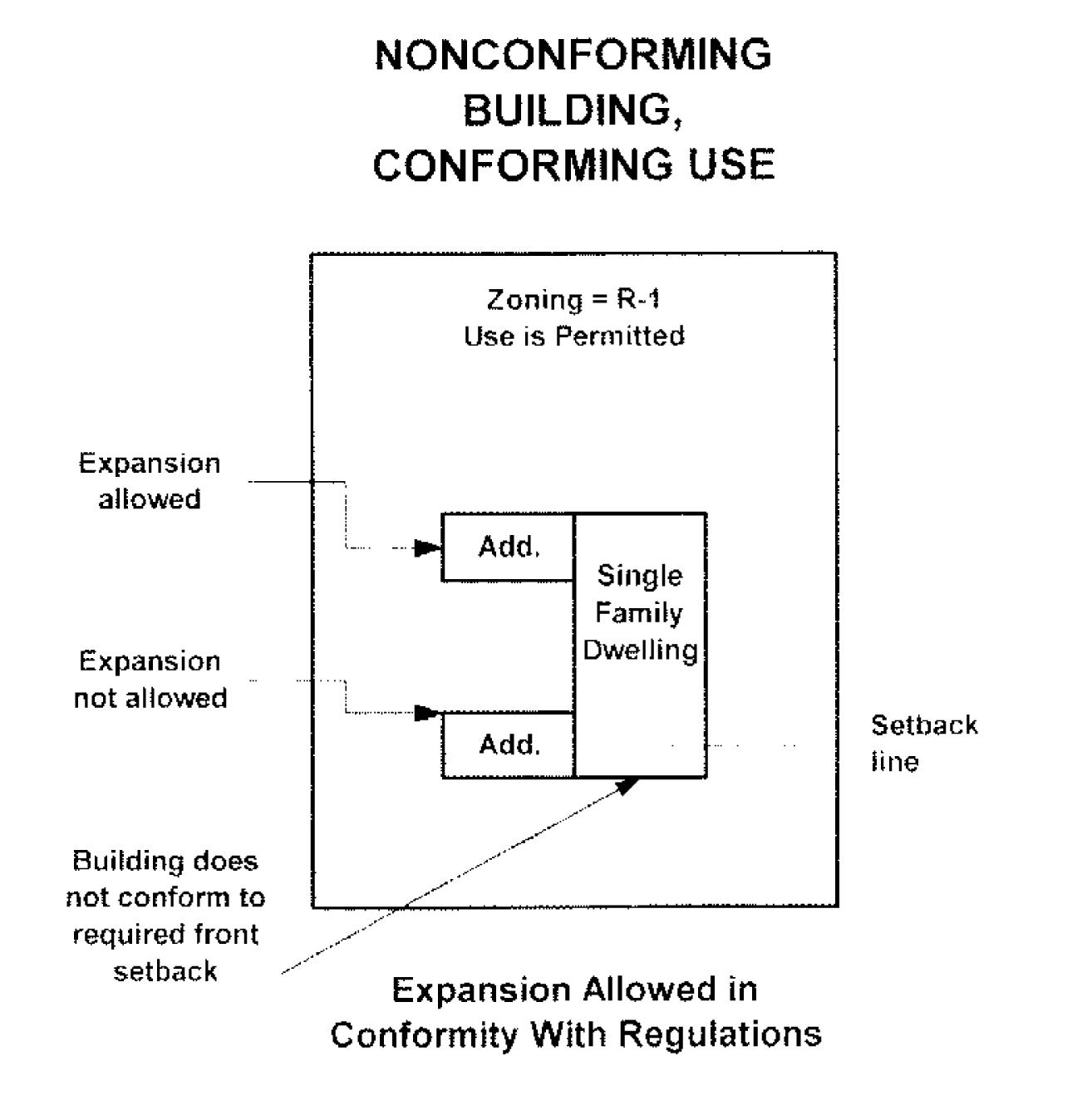
Nonconforming building or structure: A building or structure that does not meet one or more height, setback, building coverage, or other dimensional requirements for the land use district in which said building or structure is located; or a building or structure occupied by a use subject to the specific use provisions of this Ordinance, and which does not meet one or more height, setback, building coverage, or other such dimensional requirements for said specific use.
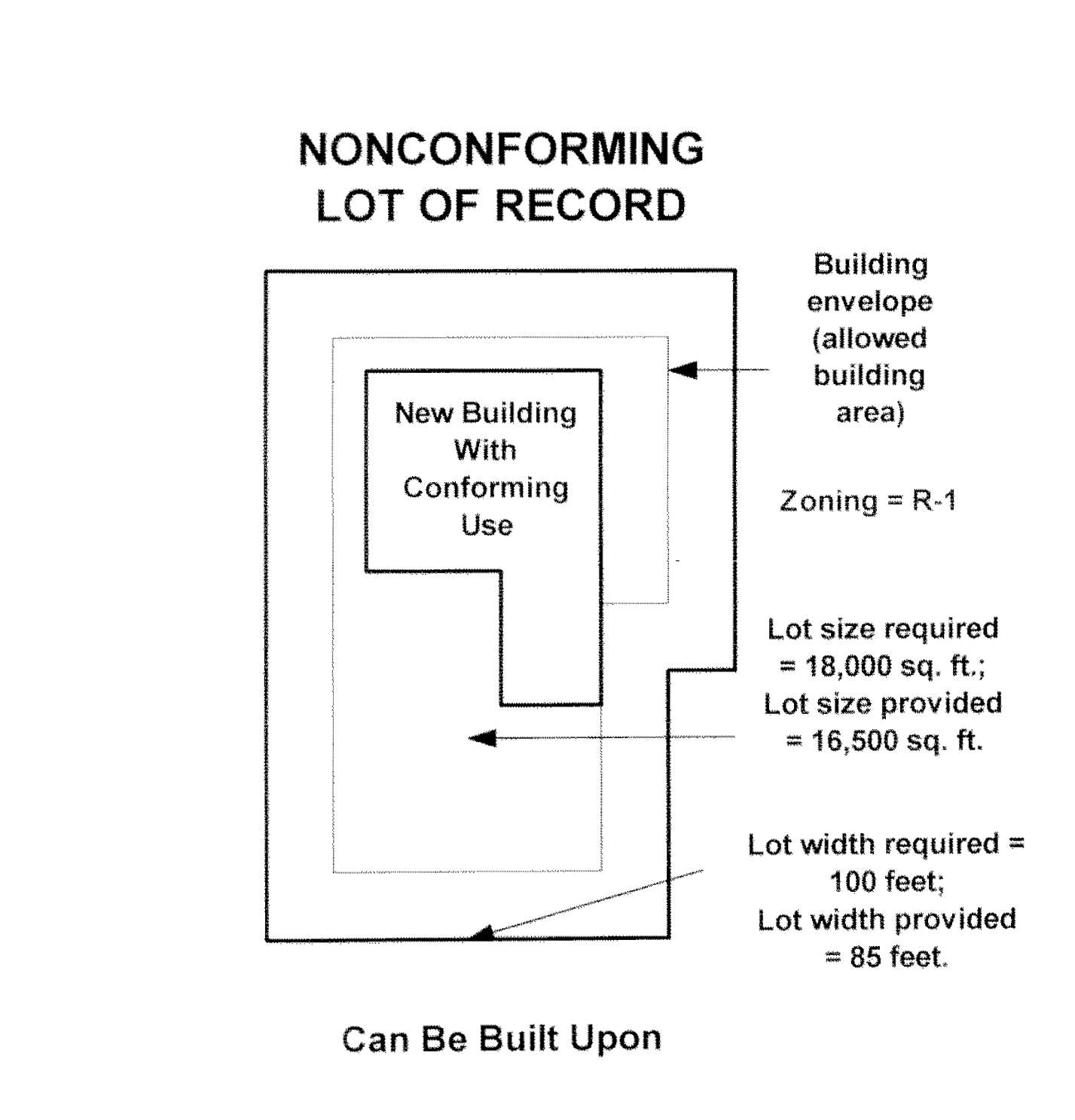
Nonconforming lot of record: A lot of record which legally existed prior to the adoption of this Ordinance but which, due to the adoption of this Ordinance, does not conform to the minimum access, frontage, lot size, lot width, or other lot requirements of the land use district in which the lot is located as established by this Ordinance; or a lot of record lawfully established after the effective date of this Ordinance which, due to an amendment to this Ordinance, does not conform to the minimum access, frontage, lot size, lot width, or other lot requirements of the zoning district in which the lot is located.
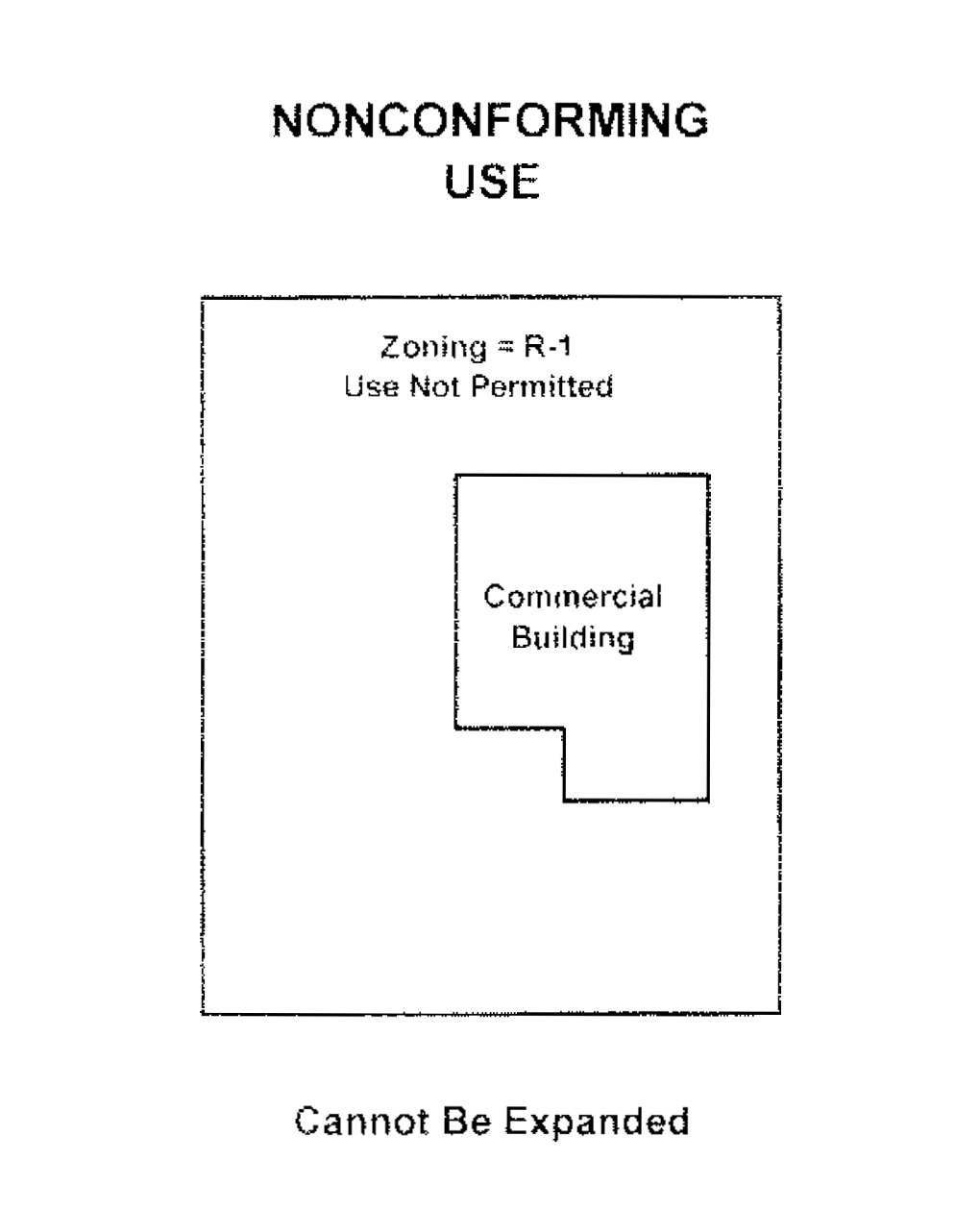
Nonconforming use: A use or activity that: was lawfully established prior to the adoption of this Ordinance, but which, by reason of such adoption or amendment, is no longer a use or activity permitted by right in the zoning district in which said use or activity is located as established in this Ordinance; or a use or activity that was lawfully established prior to the amendment of this Ordinance, but which, by reason of such amendment, is no longer a use or activity permitted by right in the zoning district in which said use or activity is located as established in this Ordinance or an amendment thereto.
Nursery or kindergarten school: Any building used routinely for the daytime care or education of preschool age children and including all normal accessory and play areas. For purpose of this ordinance, a nursery or kindergarten school is considered to be a day care center.
Nursing home: A facility which admits patients on medical referral only and for whom arrangements have been made for continuous medical supervision; it maintains the services and facilities for skilled nursing care, rehabilitative nursing care, and has a satisfactory agreement with a physician and dentist who will be available for any medical and/or dental emergency and who will be responsible for the general medical and dental supervision of the home; it complies with rules and regulations of the Georgia Department of Human Resources. A nursing home is an institutionalized residential living facility for purposes of this Ordinance.
O
Office: A building or portion thereof wherein services are performed involving predominantly administrative, professional or clerical operations and not involving retail sales or other sales of any kind on the premises.
Office/warehouse: A building that combines office and warehouse or storage functions, where the majority of the area of the building is devoted to warehouse or storage functions, and which does not involve retail sales.
Open air business: Any commercial establishment with the principal use of displaying products in an area exposed to open air on three or more sides, including but not limited to rock yards, nurseries and garden supply stores, lumber and building materials yards, flea markets, statuaries and monument sales establishments, liquid petroleum dealers and tank sales. A produce stand is not considered to be an open air business.
Orchard: An establishment which cares for and harvests fruit- or nut-bearing trees, bushes, or vines.
P
Package store: A retail establishment that sells beer, wine, and/or liquor in sealed containers for off-site consumption.
Parking lot, off-site: A parcel of land or portion thereof principally used for the parking or storage of motor vehicles whether or not a fee is paid for parking, not located on the same site as the destination of the motor vehicle operator.
Parking structure: A structure or portion thereof composed of one or more levels or floors used exclusively for the parking or storage of motor vehicles. A parking structure may be totally below grade (as in an underground parking garage) or either partially or totally above grade with those levels being either open or enclosed.
Passive recreation: Recreational activities and places that generally do not require a developed site. This generally includes such activities as hiking, horseback riding, and picnicking, provided that such activities occur in a manner that is consistent with existing natural conditions.
Pawn shop: A type of used merchandise store in which merchandise is offered as collateral for obtaining loans and wherein such merchandise is offered for sale in recompense for default of loan repayment. A pawn shop is an enclosed retail trade establishment when operated wholly within a building.
Personal care home: Any dwelling, whether operated for profit or not, which undertakes through its ownership or management to provide or arrange for the provision of housing, food service, and one or more personal services for two or more adults who are not related to the owner or administrator by blood or marriage. Personal care tasks include assistance with bathing, toileting, grooming, shaving, dental care, dressing, and eating. This use is an institutionalized residential living facility for purposes of this Ordinance.
Personal service establishment: A facility engaged in the provision of services for a fee to persons and their apparel, including but not limited to barber and beauty shops, coin-operated and full service laundries and dry cleaners, photographic studios, shoe repair and shoeshine shops, tanning studios, and travel agencies.
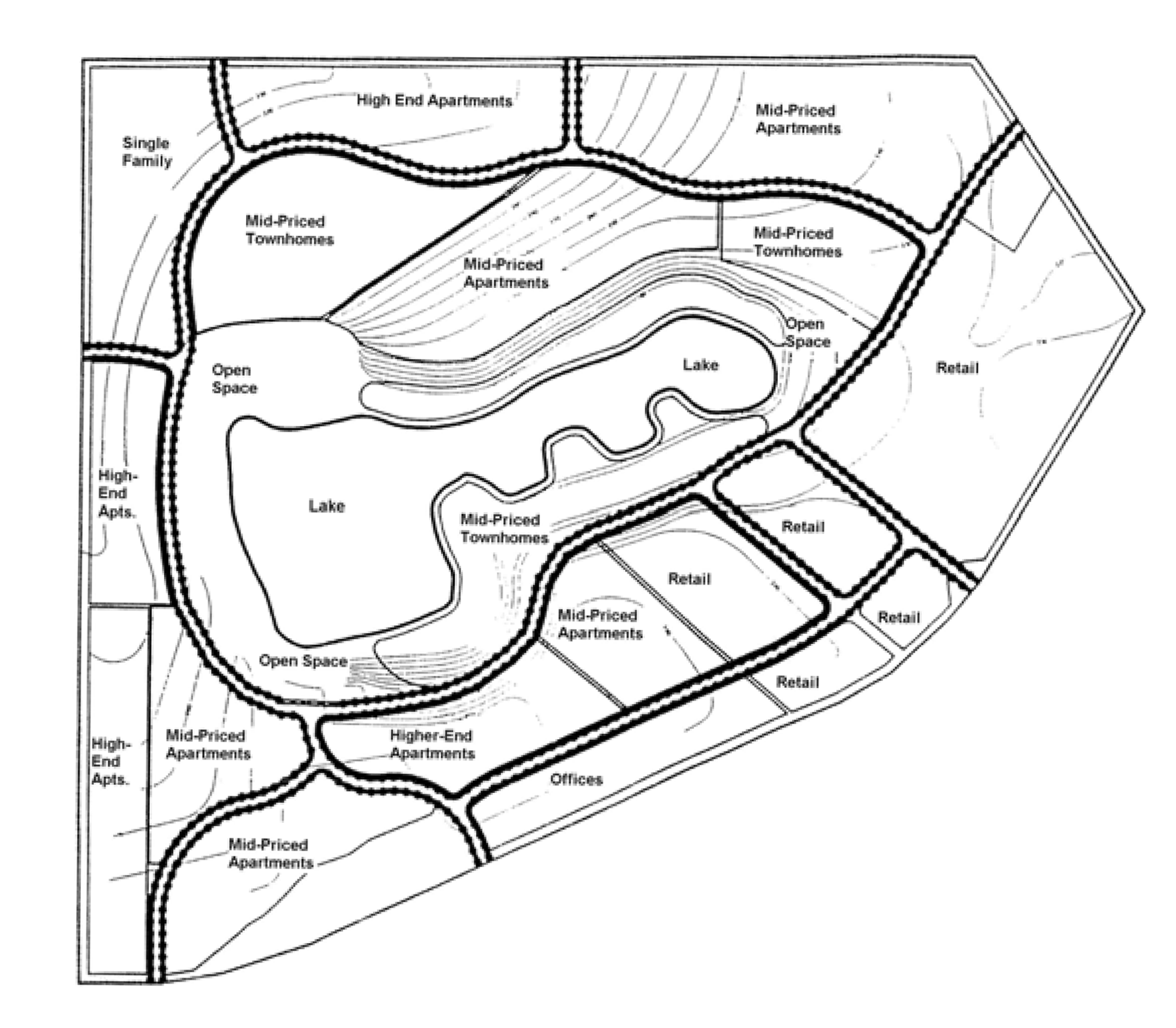
Planned unit development: A form of development characterized by a unified site design for a number of housing units, clustered buildings, common open space, and a mix of building types and land uses.
_____
_____
Power plant, private: A facility, distinguished from a public use, that converts one or more energy sources, including but not limited to water power, fossil fuels, nuclear power, or solar power, into electrical energy or steam, the primary function of which is the provision of electricity to the use on the site the facility is located, or off-site.
Public use: Any building, structure, or use owned and/or operated by the federal government, state of Georgia, a County, a municipality, or any authority, agency, board, or commission of the above governments, that is necessary to serve a public purpose, such as but not limited to the following: government administrative buildings, post offices, police and fire stations, libraries and museums, public health facilities, public works camps, parks and community centers, public roads and streets, airports, water and sanitary sewerage intake, collection, pumping, treatment, and storage facilities, emergency medical facilities, and jails and correctional facilities.
R
Rail yard: An area of land, a portion of which is covered by a system of railroad tracks, that provides for switching, storing, moving, repairing, and weighing of railroad cars, trains, engines, locomotives, and similar stock designed to roll on a track.
Railroad freight terminal: A facility for freight pick-up or distribution by railroad.
Recreational vehicle: A vehicular type unit primarily designed as temporary living quarters for recreational, camping or travel use, which either has its own motive power or is mounted or drawn by another vehicle. This term includes motorized homes, motorized campers, pick-up campers, travel trailers, camping trailers, and tent trailers, among others.
Recreational vehicle park: Any lot of land upon which two or more recreational vehicle sites are located, established or maintained for occupancy on a temporary basis by recreational vehicles as temporary living quarters by campers, vacationers or travelers. This definition also includes developed campgrounds, governed by a set of public or private management rules, that accommodate recreational vehicles on camping spaces for paying guests and which may include park-owned recreational vehicle(s) for rent. A recreational vehicle park is distinguished from a campground in that all or some of the camping sites provide recreational vehicle utility connection assemblies to enable the camping unit to connect with water, sewage disposal, electric power, and/or other utilities and services.
Recovered materials: Those materials which have known use, reuse, or recycling potential; can be feasibly used, reused, or recycled; and have been diverted or removed from the solid waste stream for sale, use, reuse, or recycling, whether or not requiring subsequent separation and processing. (Georgia Code Section 12-8-22)
Recovered materials processing facility: A facility engaged solely in the storage, processing, and resale or reuse of recovered materials. Such term shall not include a solid waste handling facility; provided, however, any solid waste generated by such facility shall be subject to all applicable laws and regulations relating to such solid waste. (Georgia Code Section 12-8-22)
Recycling center: Any facility utilized for the purpose of collecting, sorting and processing materials to be recycled, including but not limited to, plastics, glass, paper and aluminum materials.
Relocated residential structure: A detached, site-built single-family dwelling (i.e., excluding a manufactured home, mobile home, modular home, or industrialized building) that is moved (or disassembled into more than one structure and moved) to another site, whether temporarily or permanently.
Restaurant: Any establishment in which the principal business is the sale of foods and beverages to customers in a ready-to-consume state, and in which customers are served their food and/or beverages by a restaurant employee at the same table or counter at which the items are consumed, or customers are served their food and/or beverages by means of a cafeteria-type operation where the food or beverages are consumed within the restaurant building. This term includes bars, taverns, pubs, and sidewalk cafes.
Restaurant, drive-through: Any establishment in which the principal business is the sale of foods and beverages to customers in a ready-to-consume state and in which the principal or accessory method of operation of all or any portion of the business is to allow food or beverages to be served directly to the customer in a motor vehicle either in a parked state or in vehicle aisles, without the need for the customer to exit the motor vehicle.
Retail trade establishment, enclosed: Any business offering goods and products for sale to the public, which may include the incidental repair of such goods and products, that operates entirely within a structure containing a roof and walls on all sides, except for outdoor display during business hours and accessory storage in enclosed, subordinate buildings. These include but are not limited to the following: convenience stores including the sale of gasoline, hardware, paint, glass and wallpaper stores, grocery and miscellaneous food stores including retail bakeries, apparel, shoe, and accessory clothing stores, furniture, upholstery, floor covering, household appliance and home furnishing stores, musical instrument stores, radio, television, and computer stores, record, tape, compact disc and DVD stores, eating and drinking places not involving drive-in or drive-through facilities, drug stores, apothecaries and proprietary stores, liquor stores and bottle shops, used merchandise stores and pawn shops, sporting goods stores and bicycle shops, art and stationery stores, hobby, toy, and game shops, jewelry, gift, novelty, souvenir shops, camera and photographic supply stores, luggage and leather goods stores, sewing, needlework, and piece goods stores, catalogue and mail order stores, news stands, florists, tobacco shops, automotive parts stores not involving repair, video rental and sales stores (except adult businesses as defined), and watch and clock sales and repair shops.
Retreat center: A facility used for professional, educational, or religious meetings, conferences, or seminars and which may provide meals in a single building, lodging, and recreation for participants during the period of the retreat or program only. Such center may not be utilized for the general public for meals or overnight accommodations. Housing is usually in lodges, dormitories, sleeping cabins or other such temporary quarters, which do not contain kitchens.
Riding academy or equestrian center: An establishment where horses are kept for riding or are kept for competition or educational purposes incidental to a club, association, ranch, educational institution or similar establishment but which does not involve commercial sales and is not open to the general public for a fee.
Riding stable: An establishment where horses or other animals that can be ridden by humans are kept for riding and which offers the general public rides for a fee. A riding stable is an outdoor commercial recreation facility.
Roadside stand: A use offering either farm-grown, prepared food products such as fruits, vegetables, canned foods, or similar agricultural products for sale on the premises within a temporary structure on the premises with no space for customers within the structure itself, or without using such temporary structure.
Rooming house: A residential building in which three or more rooms are rented but are not open to the public or overnight guests. Includes the term boarding house.
S
Salvage yard: A place of business primarily engaged in the storage, sale, dismantling or other processing of uses or waste materials which are not usually intended for reuse in their original forms. Typical uses include paper and metal salvage yards, used tire storage yards, or retail and/or wholesale sales of used automobile parts and supplies. This term includes junk yards.
Sawmill: A facility where logs or partially processed wood are sawn, split, shaved, stripped, chipped, or otherwise processed to produce wood products. This term does not apply to the temporary processing of timber for use on the same lot by the owner or occupant of that lot.
School for the arts: An educational use not operated by the Hall County Board of Education that offers or provides instruction to more than two students at a time in dance, singing, music, painting, sculpting, fine arts, or martial arts.
School, private, elementary, middle, or high: An educational use for students in grades one through twelve or for only certain ranges of grades one through twelve, not operated by the Hall County Board of Education, which has a curriculum at least equal to a public school with regard to the branches of learning and study required to be taught in the public schools of the state of Georgia.
School, professional: An educational use not operated by the Hall County Board of Education and having a curriculum devoted primarily to business or professions, including but not limited to barbers and beauticians, dentists, and real estate agents and brokers.
School, special: An educational use not operated by the Hall County Board of Education that provides special education to more than two students at a time, including but not limited to the training of gifted, learning disabled, and mentally or physically handicapped persons.
School, trade: An educational use not operated by the Hall County Board of Education and having a curriculum devoted primarily to industry, trade, or other vocational-technical instruction.
Self-service storage facility: A structure, building or group of buildings divided into separate compartments, spaces, or stalls, which may be of different sizes and which may or may not be climate controlled, and which are leased or rented on an individual basis to businesses and residents for temporary storage needs, but where no commercial transactions or activities take place other than the rental of the storage units. Also referred to as mini-warehouses.
Semi-public use: Any building, structure, or use, owned and/or operated by private utilities or private companies for a public purpose, or that is reasonably necessary for the furnishing of adequate service by such utilities, such as but not limited to the following: underground and overhead gas, electric, steam, or water distribution or transmission lines or systems, including incidental wires, cables, and poles but not towers. Includes utility company substations as defined herein.
Service and fuel filling station: Any building, structure or land use for the retail sale of motor vehicle fuel, oil accessories and which may include the servicing of motor vehicles, except that major repairs, body repairs and painting of motor vehicles shall not be considered servicing of motor vehicles. Such uses are automobile service establishments.
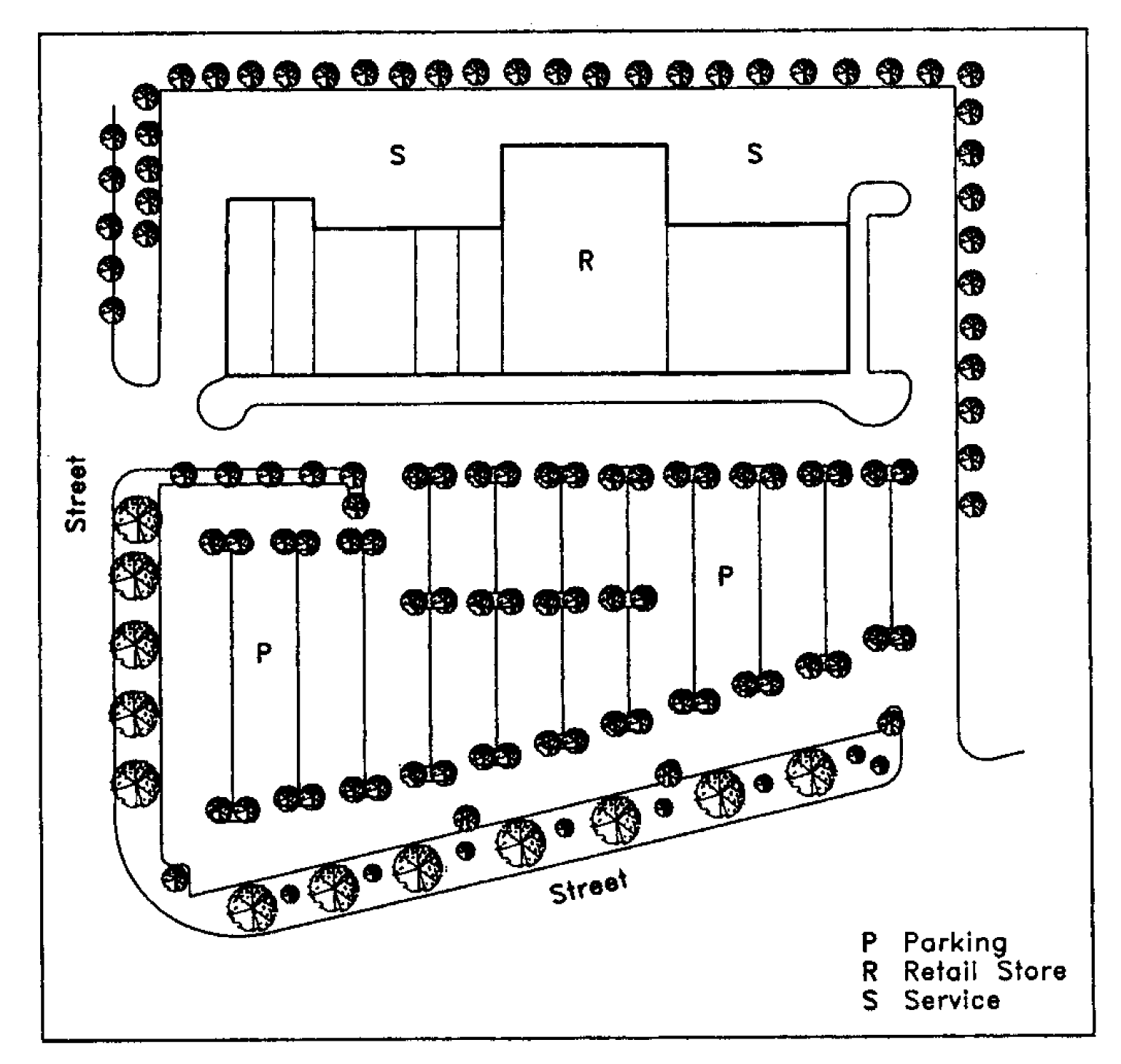
Shopping center: A group of commercial establishments, planned, developed, owned and managed as a unit, with off-street parking provided on the property and related in its location, size and type of shops to the trade area which the unit serves. For purposes of use regulations, shopping centers are considered enclosed retail trade establishments.
Showroom: A principal or accessory use where wholesale or retail goods are displayed.
Silviculture: The scientific management of forest trees; the ongoing growing, cultivation and reforestation of trees. Silviculture is included in the term "forestry."
Skilled nursing care facility: A facility which admits residents on medical referral; it maintains the services and facilities for skilled nursing care and has a satisfactory agreement with a physician and dentist who will provide continuing supervision including emergencies; it complies with rules and regulations of the Georgia Department of Human Resources. For purposes of this Ordinance, this use is an institutionalized residential living facility.
Slaughterhouse: A facility for the slaughtering and processing of animals and the refining of their byproducts.
Solid waste handling: The storage, collection, transportation, treatment, utilization, processing, or disposal of solid waste or any combination of such activities. (Georgia Code Section 12-8-22)
Solid waste handling facility: Any facility the primary purpose of which is the storage, collection, transportation, treatment, utilization, processing, or disposal, or any combination thereof, of solid waste. (Georgia Code Section 12-8-22)
Solid waste transfer facility: A fixed facility where solid waste from collection vehicles is consolidated and temporarily stored for subsequent transport to a permanent disposal site.
Special event facility: A facility or assembly hall available for lease by private parties for special events including but not limited to weddings, birthdays, reunions, anniversaries, and the like.
T
Taxi-cab or limousine service: Any place used to dispatch motor vehicles with drivers for hire.
Taxidermy: A business engaged in preparing, stuffing, and mounting of the skins of animals.
Temporary use: A use or structure is in place for only a short period of time.
Therapeutic camp: A child-caring institution which provides a variety of outdoor activities taking place in a wilderness or camp environment that are designed to improve the emotional and behavioral adjustment of the residents participating in the activities; it is regulated by the Georgia Department of Human Resources.
Tow service: An establishment that dispatches towing vehicles and which provides for the storage of vehicles for a period not exceeding 60 days but does not include disposal, disassembly, salvage, or accessory storage of inoperable vehicles. This term is distinguished from "wrecked motor vehicle compound" and "salvage yard" as defined herein.
Tower, amateur radio: A freestanding or building-mounted structure, including any base, tower or pole, antenna, and appurtenances, intended for airway communication purposes by a person holding a valid amateur radio (HAM) license issued by the Federal Communications Commission.
Townhouse: One (1) of a group of three or more single-family, attached dwelling units under fee simple ownership. (see also figure next page)
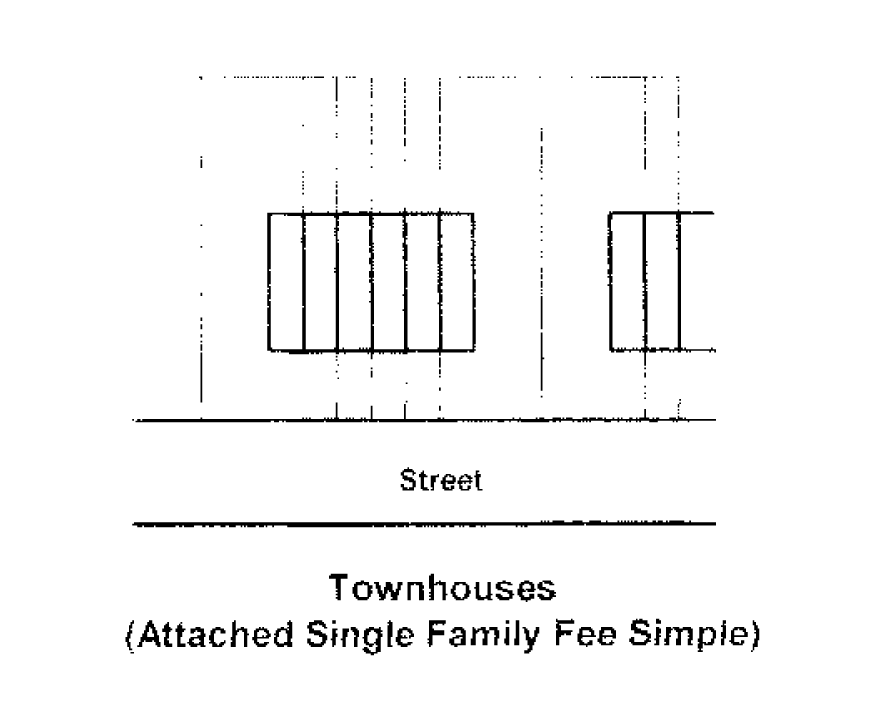
_____
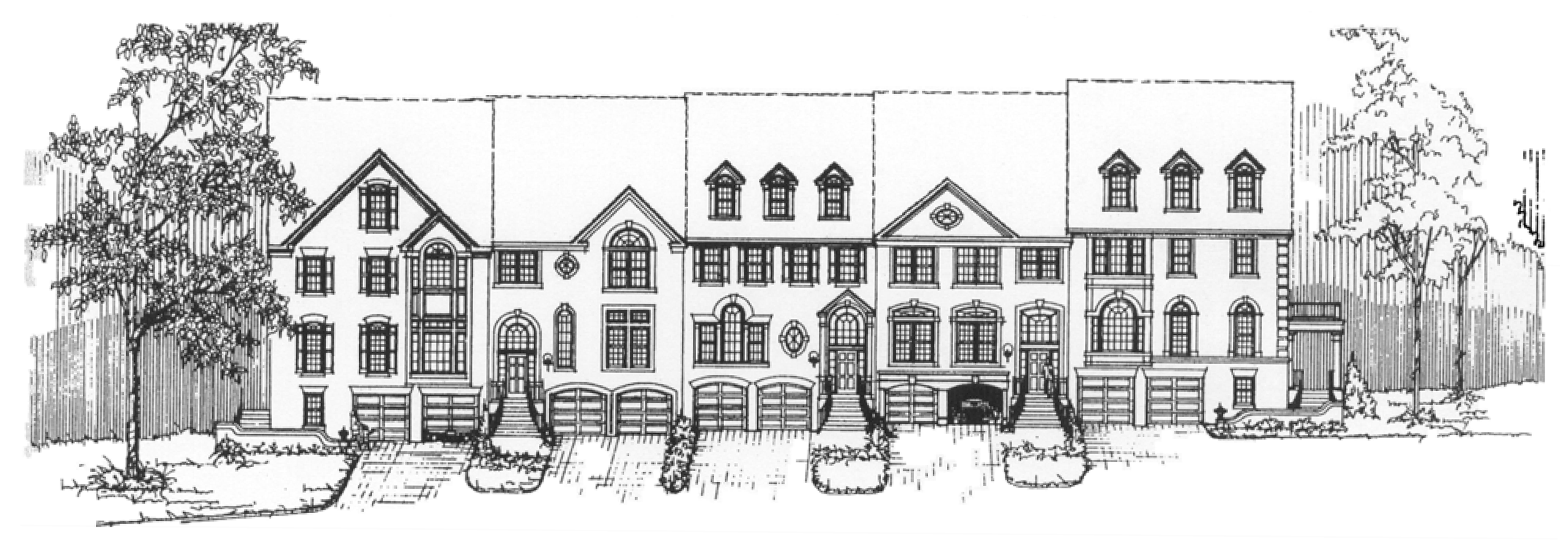
_____
Truck stop: An establishment engaged primarily in the fueling, servicing, repair, or parking of tractor trucks or similar heavy commercial vehicles, and which may include the sale of accessories and equipment for such vehicles. A truck stop may also include overnight accommodations, showers, or restaurant facilities primarily for the use of truck drivers.
Truck terminal: A facility or premise for the receipt, transfer, short-term storage, and dispatching of goods transported by truck.
U
Use, accessory: A use of land subordinate to the principal building or use on a lot for purposes incidental and related to the principal building or use and located on the same lot therewith.
Use, conditional: A use that would not be appropriate generally or without restriction throughout the particular zoning district and is not automatically permitted by right within a zoning district, but which, if controlled as to number, area, location or relation to the neighborhood, may be found to be compatible and approved by the Governing Body within a particular zoning district as provided in certain instances by this Ordinance. An approved conditional use runs with the property.
Use, permitted: A use by right which is specifically authorized in a particular zoning district, or permitted by right in a particular overlay district if established.
Used: The word "used" as applied to any land, building or structure shall be construed to include the words "intended, arranged, or designed to be used or occupied."
Utility company: A private business providing electricity, natural gas, telephone or other services under the regulation of Georgia Public Services Commission. This use includes equipment and vehicle storage.
Utility company substation: A facility used for the transmission or distribution of services provided by a utility company, such as an electrical transformer station, telephone junction box, cable box, television box, or natural gas regulator station.
V
Vehicle emission testing facility: A building or structure used for testing vehicles for compliance with air quality standards.
W
Warehouse: A use involving the storage of products, supplies, and equipment, and which typically involve truck or rail transportation to and from the site.
Wastewater treatment plant: A facility or group of units used for the treatment of industrial or domestic wastewater for sewer systems and for the reduction and handling of solids and gasses removed from such waste, whether or not such facility is discharging into state waters (includes spray fields).
Wholesale trade establishment: An establishment engaged in the selling or distribution of merchandise to retailers, to industrial, commercial, institutional or professional business users, or to other wholesalers.
Wireless telecommunication equipment: Any equipment used to provide wireless telecommunication service, but which is not affixed to or contained within a wireless telecommunication facility, but is instead affixed to or mounted on an existing building or structure that is used for some other purpose. Wireless telecommunication equipment also includes a ground mounted base station used as an accessory structure that is connected to an antenna mounted on or affixed to an existing building.
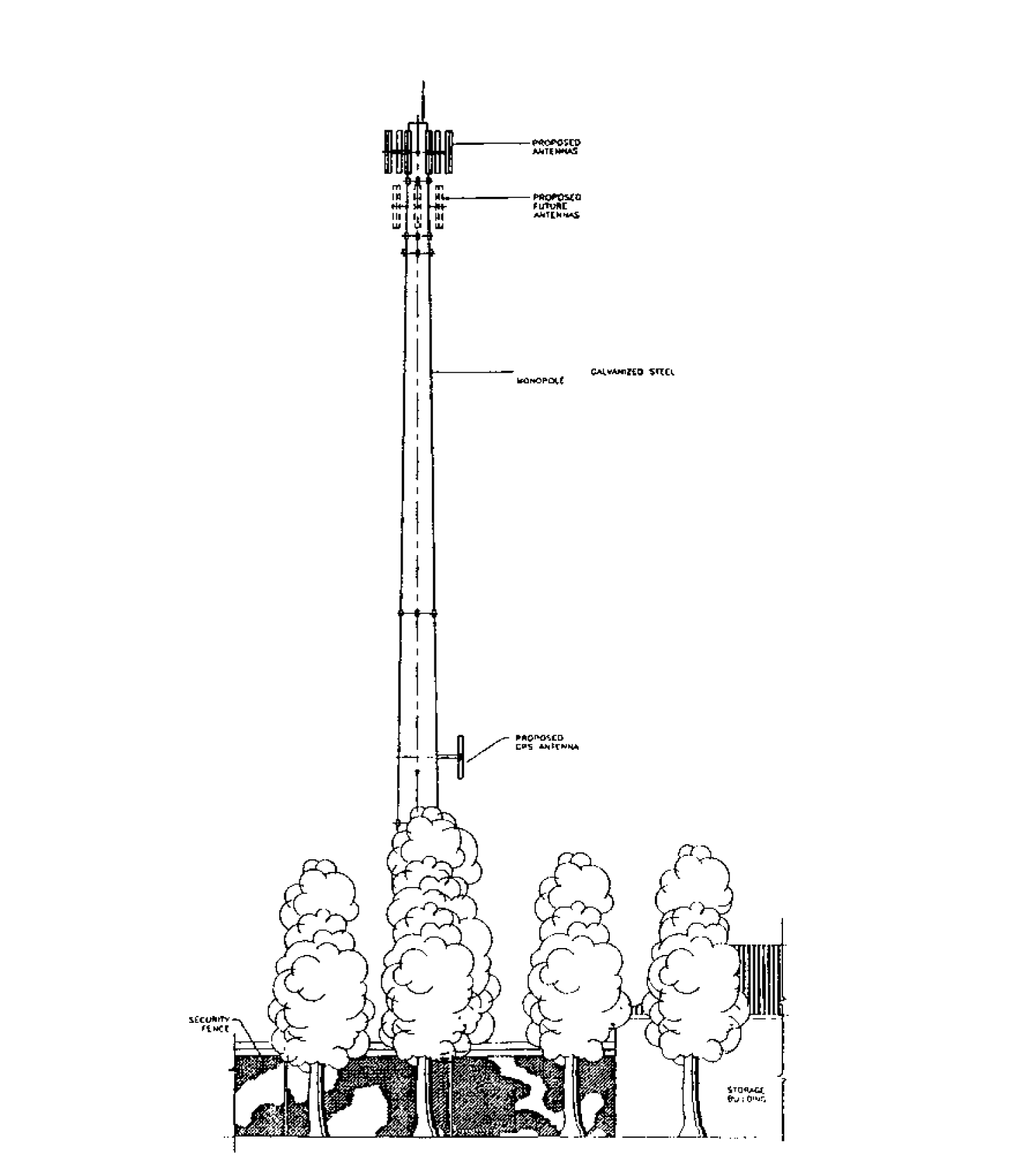
Wireless telecommunication facility: Any freestanding facility, building, pole, tower, or structure used to provide wireless telecommunication services, and which consists of, without limitation, antennae, equipment and storage and other accessory structures used to provide wireless telecommunication services.
Wrecked motor vehicle compound: An area used to store disabled or impounded motor vehicles until such time as their disposition (either by junk, salvage, repair, etc.) has been determined by an insurance company, the owner of the vehicle, or his or her legal representative.
Y
Yard sale: The temporary sale of home furniture, appliances, clothing and/or domestic items owned by an occupant of a residential dwelling and taking place on the premises on which such occupant resides, whether in the yard or in a carport or garage. Yard sales which do not take place on the premises where such occupant resides are considered open-air businesses, except that this shall not be construed to prevent the sale of such items by another family or household in connection with an event where such items are sold by the occupant of a residence on the premises where the yard sale occurs. This term includes garage sales.
Z
Zero lot line: The location of a building on a lot in such a manner that one or more building sides have no (zero) front, side or rear building setback (or yard requirements) and rests directly on a front, side, or rear lot line. A zero lot line development is one where houses in the development on a common street frontage are shifted to one side of their lot.
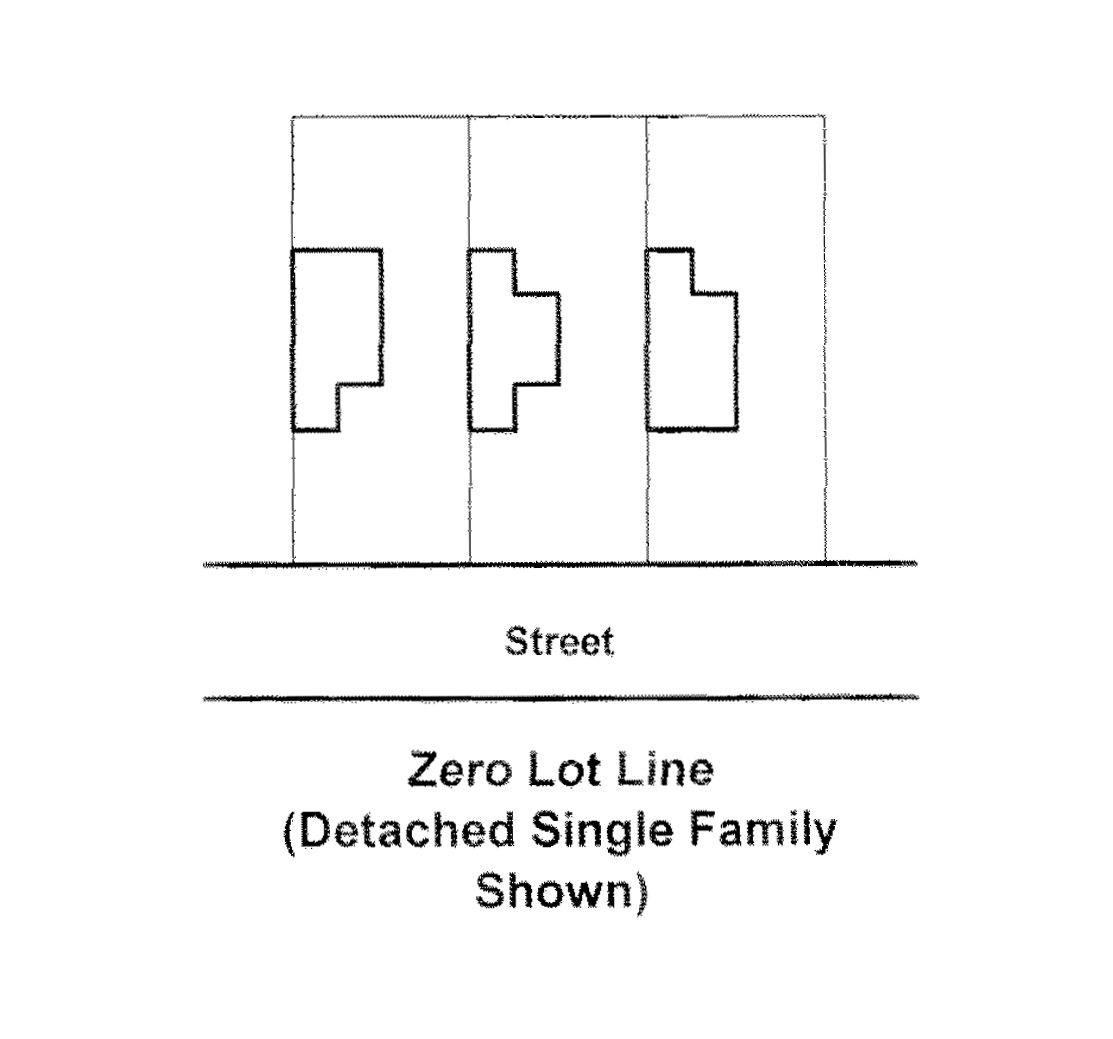
(Ord. No. 348-16, § 1 (Exh. A), 7-19-2018; Ord. No. 717, § 1, 7-18-2024; Ord. No. 733, § 1(Exh. A), 3-20-2025; Ord. No. 734, § 1(Exh. A), 3-6-2025; Ord. No. 751, § 1, 8-21-2025; Ord. No. 786, § 1(Exh. A), 6-4-2026)
Sec. 2.2. - Design-Related Definitions.
Alternative tower structure: Clock towers, bell towers, church steeples, water towers, light/power poles, electric transmission towers, man-made trees (without accessory buildings/structures), and similar natural or man-made alternative-design mounting structures that camouflage or conceal the presence of antennas or towers.
Arcade: A covered passage contiguous to a street or plaza with shops on one or both sides, accessible to the public. Generally, the facade overlaps the sidewalk while the shop front remains set back. The sidewalk is fully covered with an overhang.
Architectural appearance, exterior: The architectural character and general composition of the exterior of a structure, including but not limited to the kind, color, and texture of the building material and the type, design, and character of all windows, doors, light fixtures, signs, and appurtenant elements.
Architectural features: Ornamental or decorative features attached to or protruding from an exterior wall or roof, including cornices, eaves, belt courses, sills, lintels, bay windows, chimneys, and decorative ornaments.
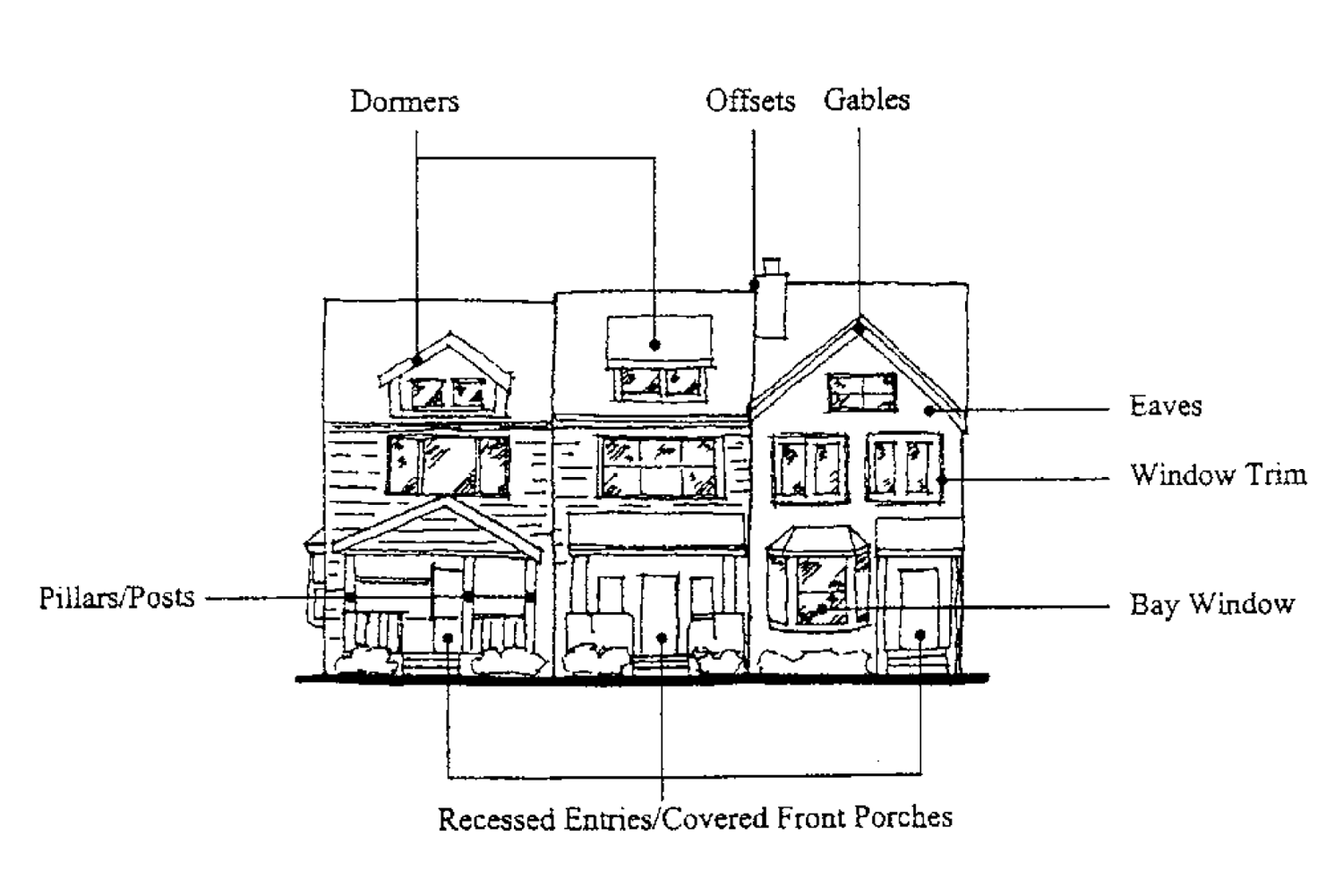
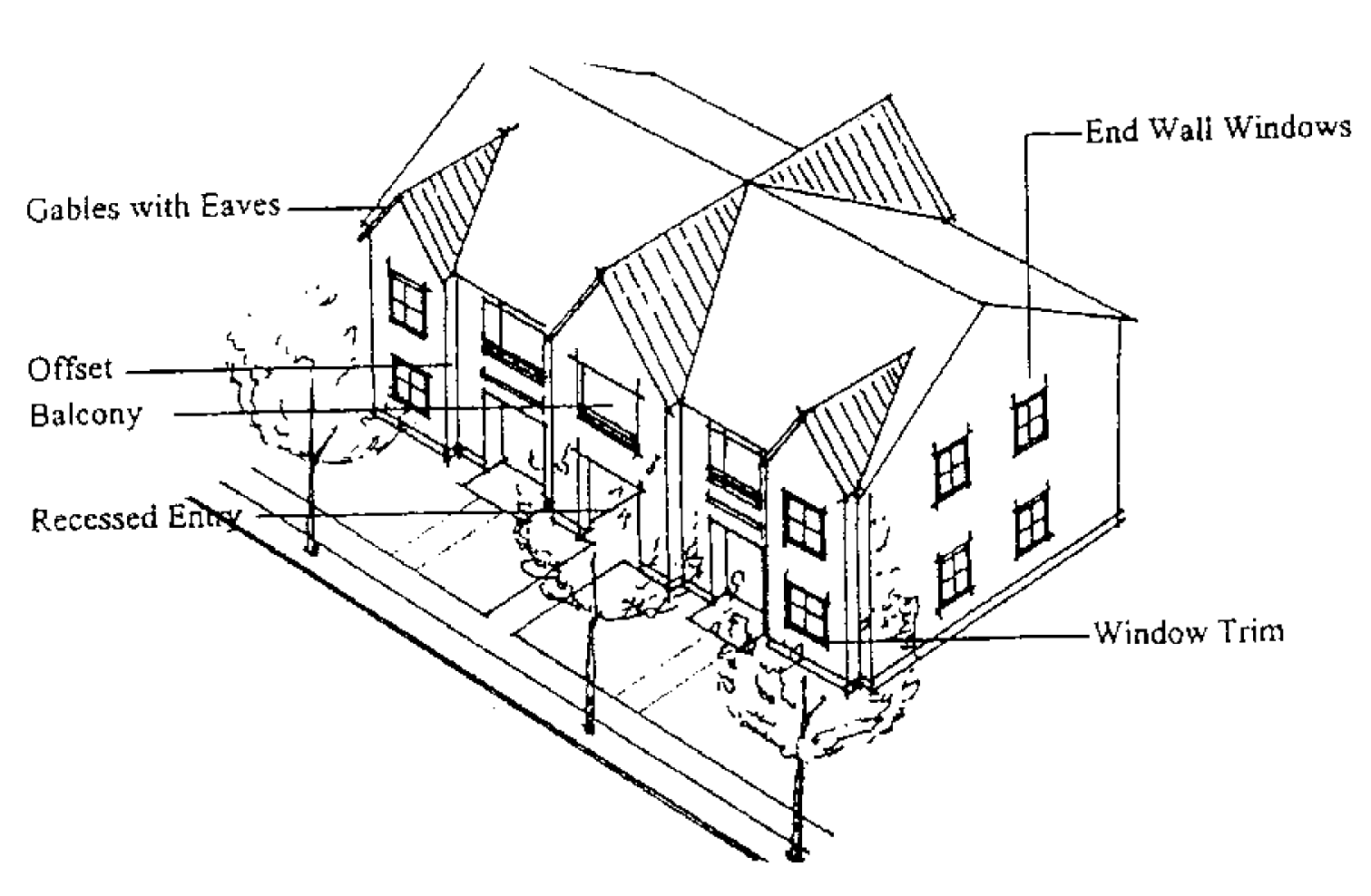
Architectural recesses: Portions of a building wall at street level which are set back from the street line so as to create articulation of the building wall and/or to provide space for windows or doors.
Attractive: Having qualities that arouse satisfaction and pleasure in numerous, but not necessarily all, observers.
Awning: A roof-like cover, often made of fabric or metal, designed and intended for protection from the weather or as a decorative embellishment, and which projects from a wall or roof of a structure over a window, walk, or door.
Awning, internally illuminated: A fixed awning covered with a translucent membrane that is, in whole or part, illuminated by light passing through the membrane from within the structure.
Balustrade: A railing consisting of a handrail or balusters.
Build-to line: An alignment establishing a certain distance from the property line (street right-of-way line) along which the building is required to be built.
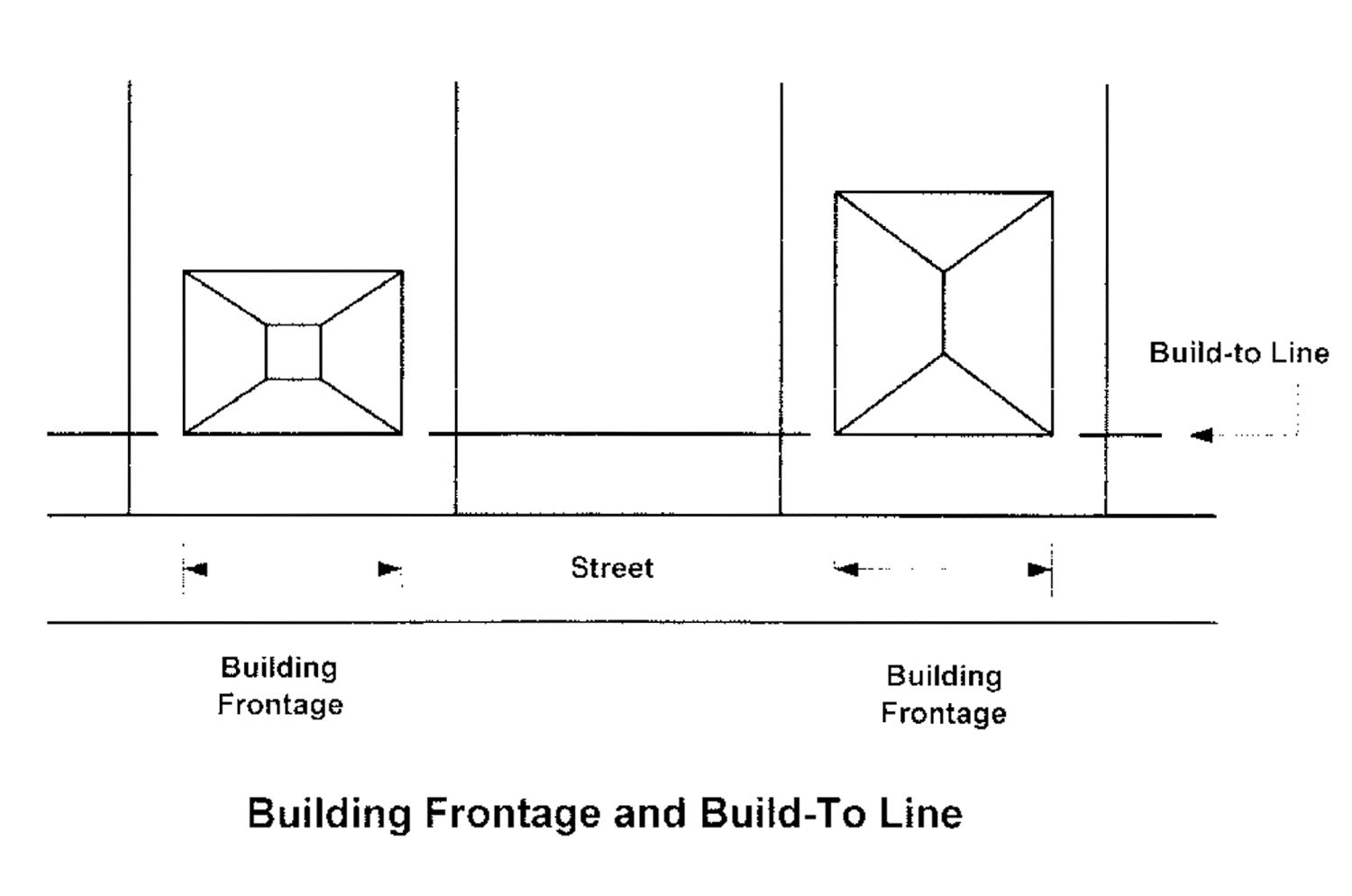
Building frontage: The length of any side of a building which fronts on a public street, measured in a straight line parallel with the abutting street.
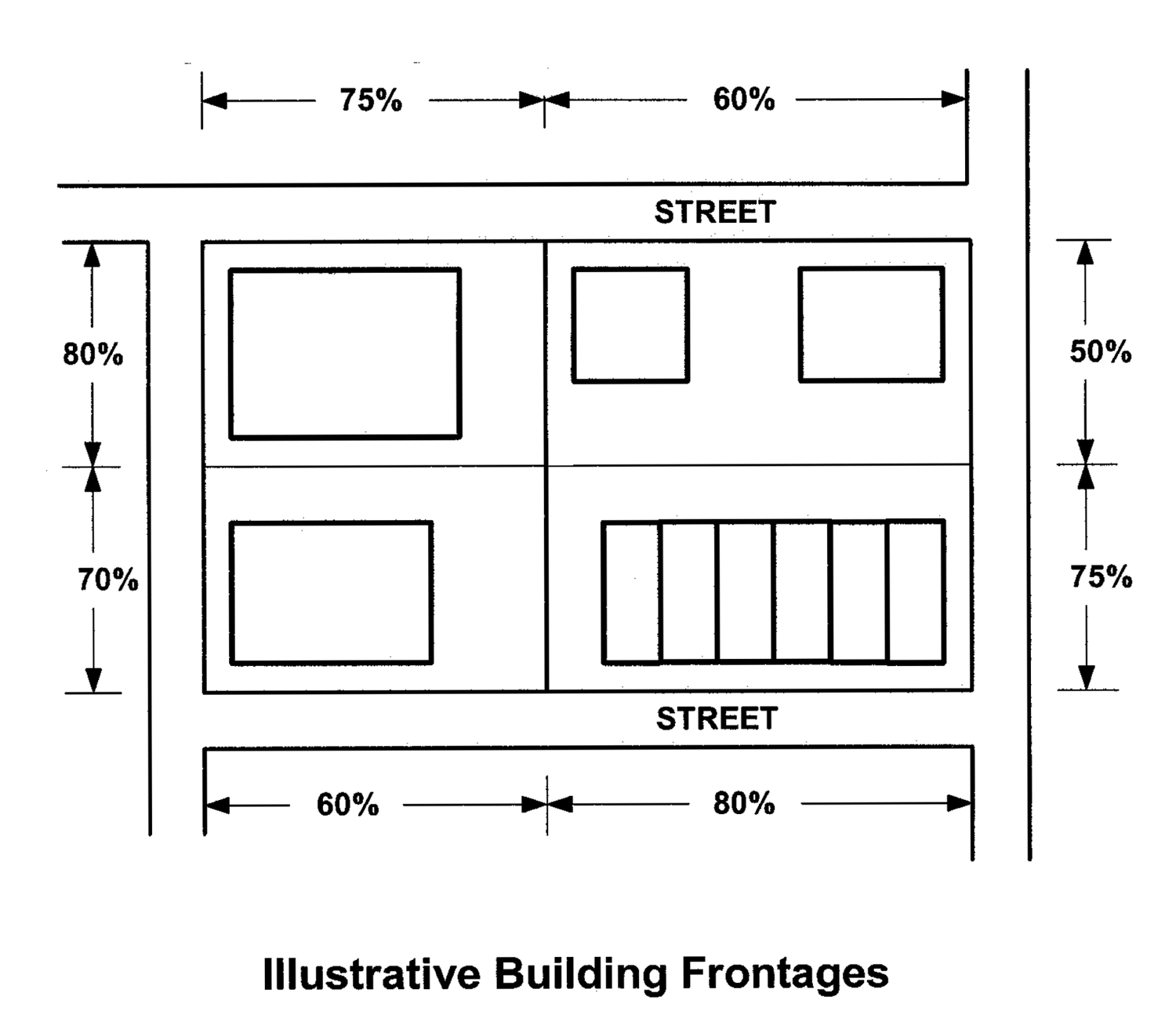
Canopy: A roof-like structure, supported by a building and/or columns, poles, or braces extending from the ground, including an awning, that projects from the wall of a building over a sidewalk, driveway, entry, window, or similar area, or which may be freestanding.
Character: Special physical characteristics of an area or structure that set it apart from its surroundings and contribute to its individuality.
Cornice: Any horizontal member, structural or non-structural, of any building, projecting outward from the exterior walls at the roof line.
Court: An open, uncovered area partly or wholly enclosed by buildings or walls and used primarily for supplying access, light, air, and/or open space to abutting buildings.
Density: The number of families, individuals, dwelling units or housing structures per unit of land. Gross density is determined by dividing the number of families, individuals, dwelling units or housing structures by the gross area of the land (i.e., all land within the boundaries of the particular area excluding nothing). Net density is determined by subtracting from the gross area the following conditions identified on the land:
•
Fifty (50) percent of any land identified as a wetland; and
•
Fifty (50) percent of any land identified waters of the state including the buffer zones; and
•
Fifty (50) percent of any land identified as a flood hazard boundary; and
•
Fifty (50) percent of any land within an electricity transmission easement or right-of-way; and
•
Fifty (50) percent of any land within a gas transmission easement or right-of-way. The result of this calculation is the net acreage. The net acreage is divided into the number of units to determine the net density.
Design guideline: A standard of appropriate activity that will preserve or enhance the architectural character and site design and function of a building, structure, or development.
Detail: A small feature or element that gives character to a building.
Dormer: A window projecting from a roof.
Eave: The projecting lower edges of a roof overhanging the wall of a building.
Eave line: The extension of a roof line beyond the vertical wall of a building.
Elevation drawing: An architectural drawing of a building or building facade, intended to illustrate its design, characteristics and major features (see example below).
_____
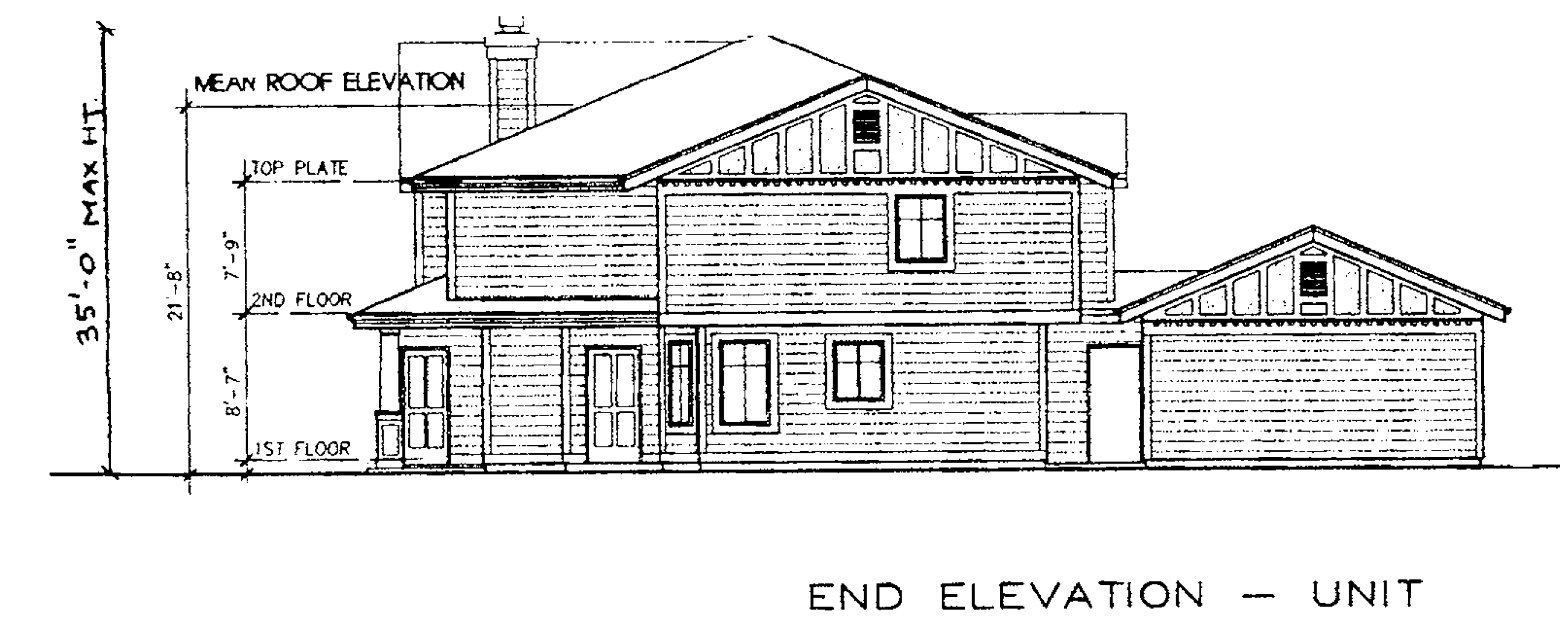
_____
Facade: The face (exterior elevation) of a building, especially the face parallel to or most nearly parallel to a public street.
Facade, front: Any facade with a main public entrance which faces one of the primary streets.
Facade, rear: Any facade without a public entry that does not face a public road.
Facade, side: Any facade without a public entry but facing a public street.
Fenestration: The organization of windows on a building wall.
Footprint: The horizontal area as seen in plan, measured from the outside of all exterior walls and supporting columns. It includes garages, covered carports, and accessory structures.
Gable: The triangular upper portion of an end wall, underneath a peaked roof.
Green: An open space available for unstructured recreation, its landscaping consisting of grassy areas and trees.
Harmony: A quality that represents an attractive arrangement and agreement of parts of a composition, as in architectural elements.
Lighting, neon outline: Outline lighting formed in whole or part with neon.
Lighting, outline: An arrangement of lighting that outlines or calls attention to certain features of a building, such as its shape or the decoration of a window.
Lighting, pedestrian-scale: Light standards or placements no greater than 15 feet in height located along walkways.
Marquee: A roofed structure attached to and supported by a building and projecting over public or private sidewalks or rights-of-way.
Massing: The overall visual impact of a structure's volume; a combination of height and width and the relationship of the heights and widths of the building's components.
Modularity: Design composition comprised of a rhythmic organization of parts.
Modulation: A measured setback or offset.
Opaque: Impenetrable to view, or so obscuring to view that features, buildings, structures, and uses become visually indistinguishable.
Parapet: That portion of a wall which extends above the roof line.
Pedestrian-scale development: Development designed with an emphasis primarily on the street sidewalk and on pedestrian access to the site and building, rather than auto access and parking areas. The building is generally placed close to the street and the main entrance is oriented to the street sidewalk. There are generally windows or display cases along building facades which face the street.
_____
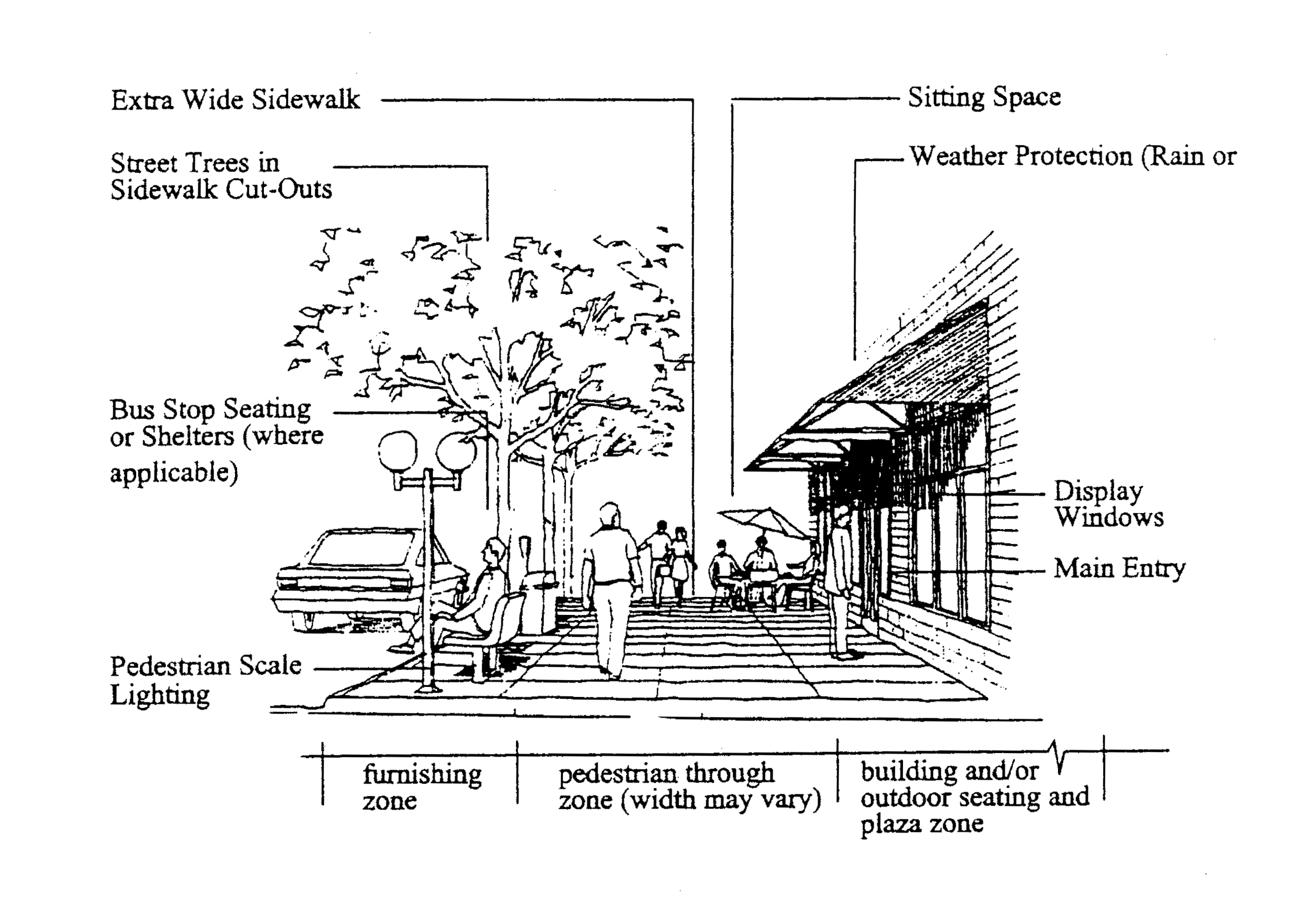
_____
Plaza: An open area adjacent to a civic or commercial building that functions as a gathering place and may incorporate a variety of non-permanent activities, such as vendors and display stands.
Porch: A projection from a building wall which is covered but enclosed on no more than one side by a vertical wall.
Portico: An exterior appendage to a building, normally at the entry, usually roofed.
Proportion: Balanced relationship of parts of a building, signs and other structures, and landscape to each other and to the whole.
Retail display window: A window or opening in the exterior wall of any portion of a building used for business purposes, through which merchandise, services, or businesses are displayed or advertised and visible from the ground or sidewalk level.
Roof: The cover of a building, including the eaves and similar projections.
Roof, flat: A roof having no pitch or a pitch of not more than 2:12.
Roof, pitched: A shed, gabled, or hipped roof having a slope or pitch of at least one foot rise for each four feet of horizontal distance.
Shop front: A business or retail use where the facade is aligned directly on the frontage line with the entrance at grade; typical of sidewalk retail. Shop fronts often have awnings.
Square: An area for passive recreational use, usually bounded by streets.
Stoop: An exterior floor, typically but not necessarily constructed of concrete and/or masonry, with a finished floor elevation at least six inches higher than the adjacent ground level, and utilized primarily as an access platform to a building.
Street furniture: Those features associated with a street that are intended to enhance the street's physical character and use by pedestrians, such as benches, trash receptacles, planting containers, pedestrian lighting, kiosks, etc.
Street hardware: Objects other than buildings or street furniture that are part of the streetscape. Examples are: non-pedestrian street light fixtures, utility poles, traffic lights and their fixtures, fire hydrants, etc.
Streetscape: An area that may either abut or be contained within a public or private street right-of-way or access way that may contain sidewalks, street furniture, trees and landscaping, and similar features. Streetscape also includes the visual image of a street, including the combination of buildings, parking, signs, and hardscapes.
_____
_____
Traditional neighborhood development: An approach to land-use planning, urban design, and development that promotes the building of neighborhoods with a mix of uses and housing types, architectural variety, one or more central public gathering places, interconnected streets (and sometimes alleys), and edges defined by greenbelts or boulevards. The basic goal is the integration of residences with work, shopping, recreation, and transit all within walking distance.
Trash enclosure: An accessory use of a site where trash and/or recyclable material containers, or any other type of waste or refuse container is stored.
Undergrounding: The placement of utility lines below ground, with the removal of above-ground poles, wires and structures as applicable.
(Ord. No. 348-16, § 1 (Exh. A), 7-19-2018; Ord. No. 735, § 1(Exh. A), 4-3-2025)
Sec. 2.3. - Miscellaneous Definitions.
Abandon: To stop the use of property or the occupancy of a building for twelve (12) months or more.
Abandonment: A condition where the use of property has stopped or the building has been vacant for twelve (12) months or more.
Abutting: Having property lines in common, or having property separated by only an alley. Separation by a street right-of-way is not considered abutting.
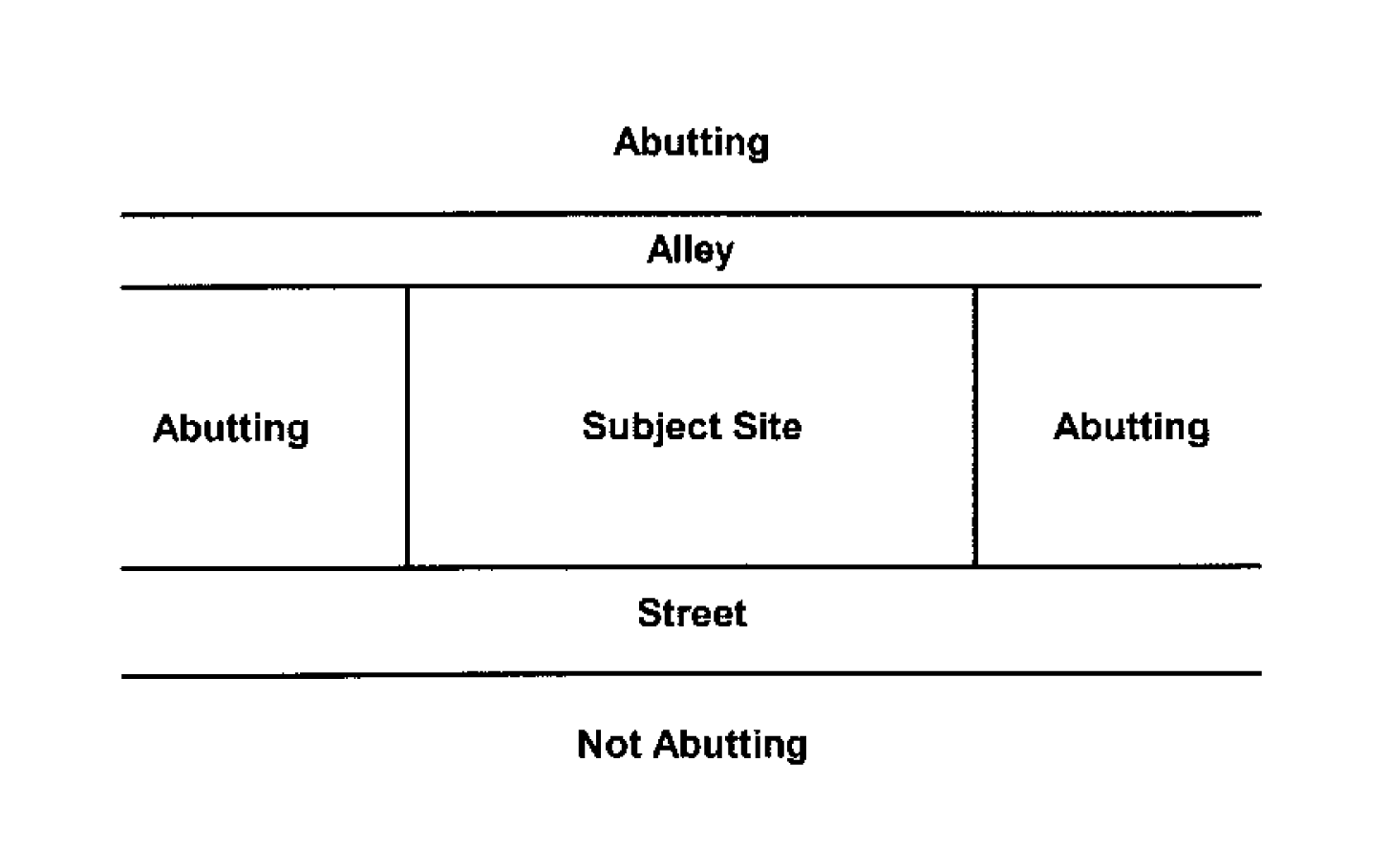
Access: A way or means of approach to provide physical entrance to a property.
Alley: A public or private thoroughfare, narrower than a street, which affords a secondary means of access to abutting property at the rear of buildings.
Annexation: The process by which a parcel of land is transferred from the jurisdiction of unincorporated Hall County to the jurisdiction of the City of Flowery Branch.
Appeal: A request for a review of the Zoning Administrator's interpretation of any provision of this Ordinance, or a request for a review of an action taken by an administrative official in the application or enforcement of this Ordinance.
Applicant: A property owner or their authorized representative who has petitioned the City for approval of an application under the terms of this Ordinance.
Basement: That portion of a building having its lowest floor subgrade (below ground level) on two or more sides.
Berm: An earthen mound or embankment, usually less than three feet if designed to provide visual interest only, and usually six feet or more in height if intended to screen views or reduce noise.
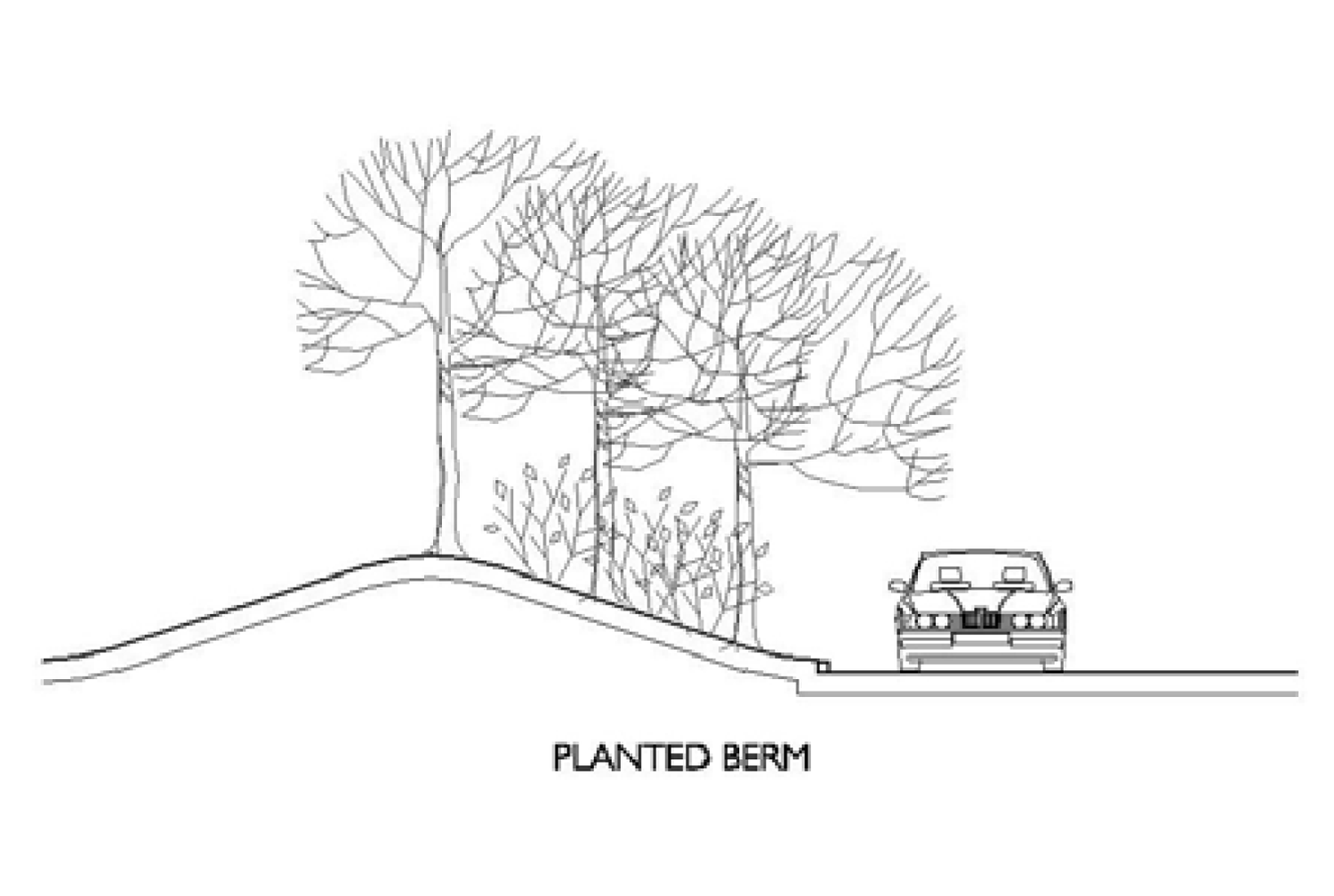
Buffer: A strip of land located between a side or rear property line and a building, structure, or use, intended to separate and obstruct the view of the site on which the buffer is located from an abutting property. A buffer is usually intended to provide screening, as defined and as may be required by this Ordinance. (see illustration)
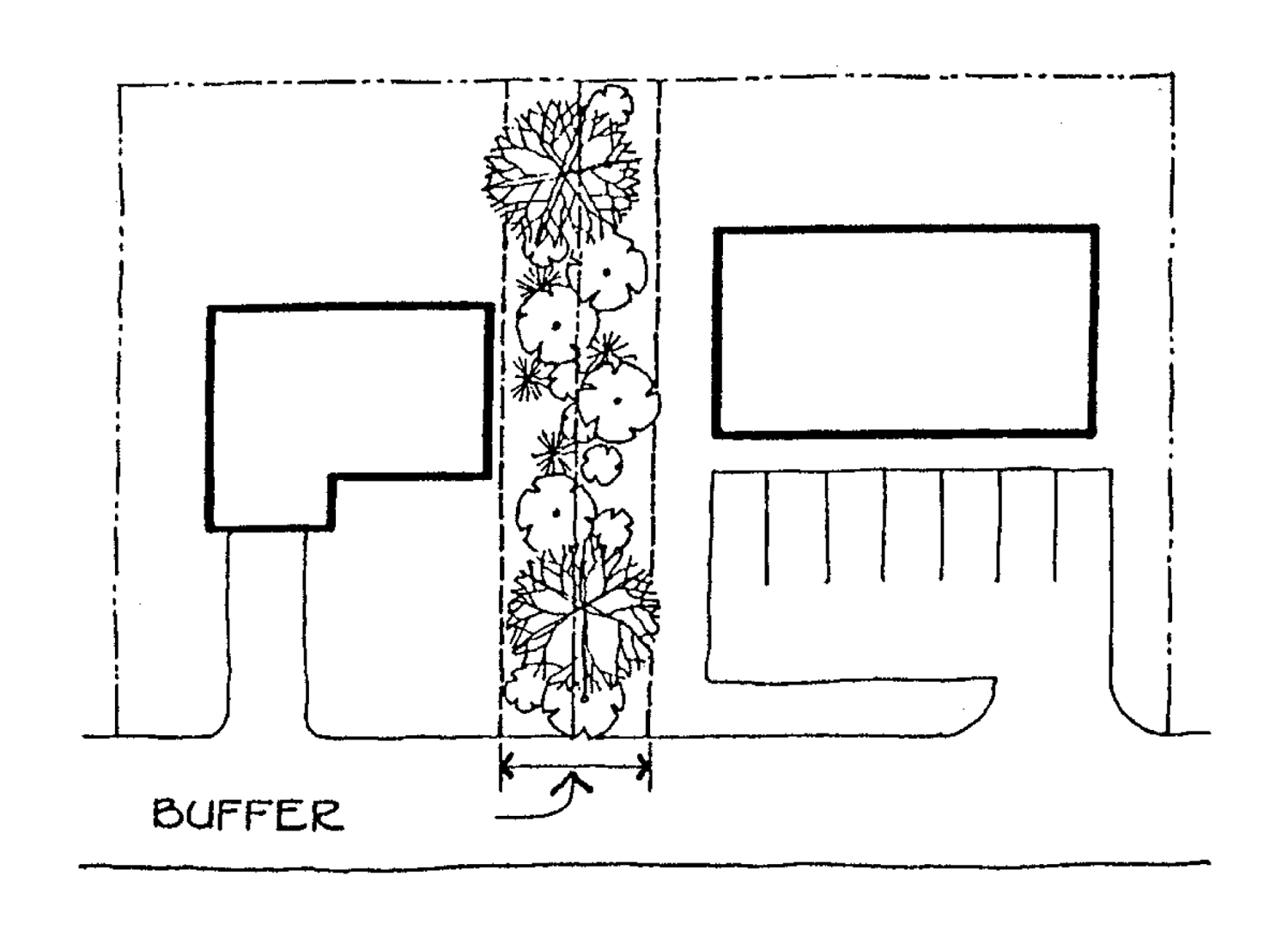
Buffer, natural undisturbed: A buffer that contains a natural area consisting of trees and/or other vegetation, undisturbed except for approved access and utility crossings, and replanted where sparsely vegetated.
Building: Any structure having a roof supported by columns or walls and intended for the shelter, housing, or enclosure of any individual, animal, process, equipment, goods, or materials of any kind.
(1)
Building, accessory: A building subordinate to the main (principal) building on a lot and used for purposes incidental to the main or principal building and located on the same lot therewith.
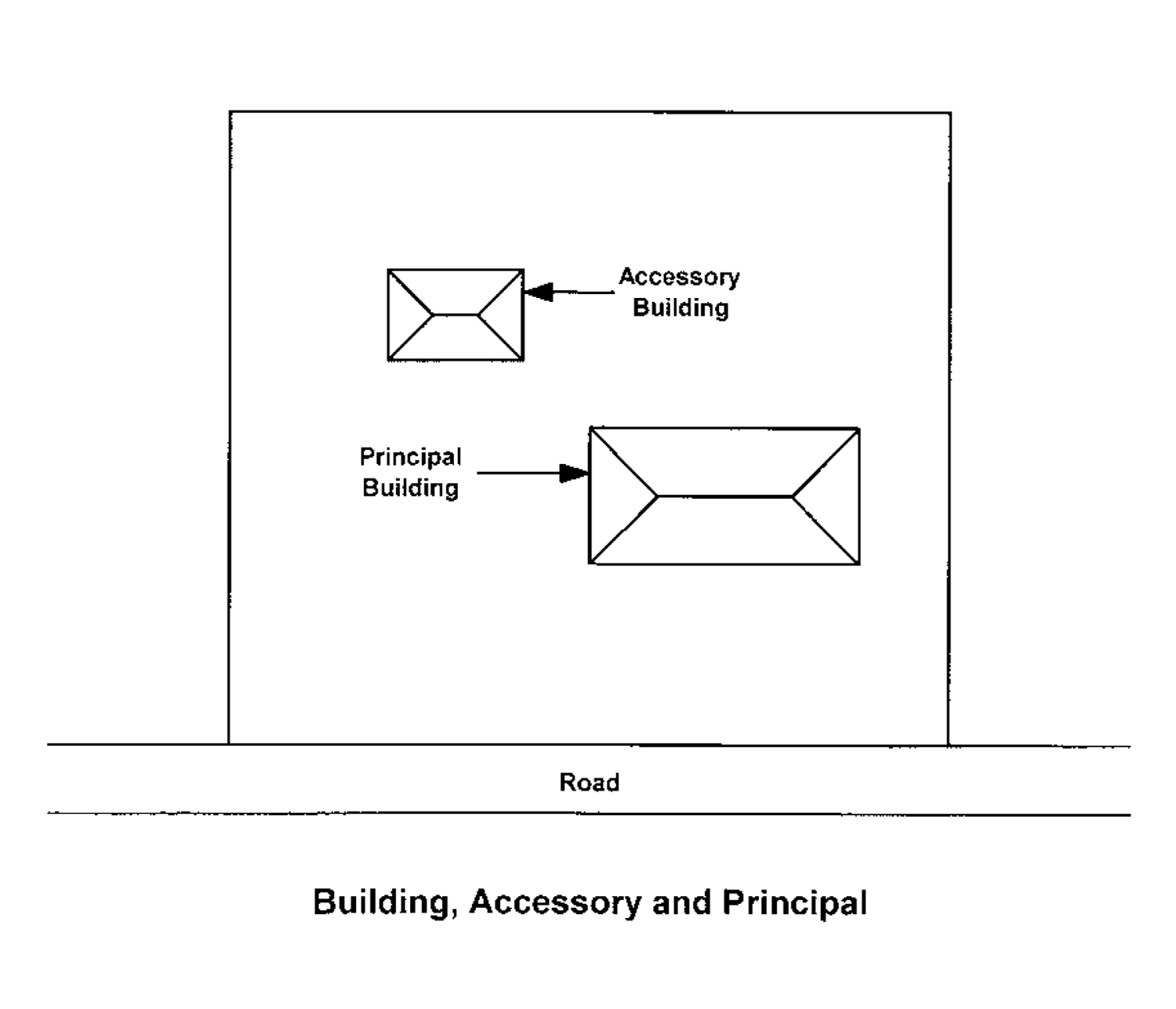
(2)
Building, principal: A building in which is conducted the main or primary use of the lot on which said building is situated. In any residential land use district, any structure containing a dwelling unit shall be defined to be the principal building on the lot on which same is situated, except for detached accessory apartments.
Building height: The vertical distance measured to the highest point of a building from the average finished grade across those sides of a building that face a street.
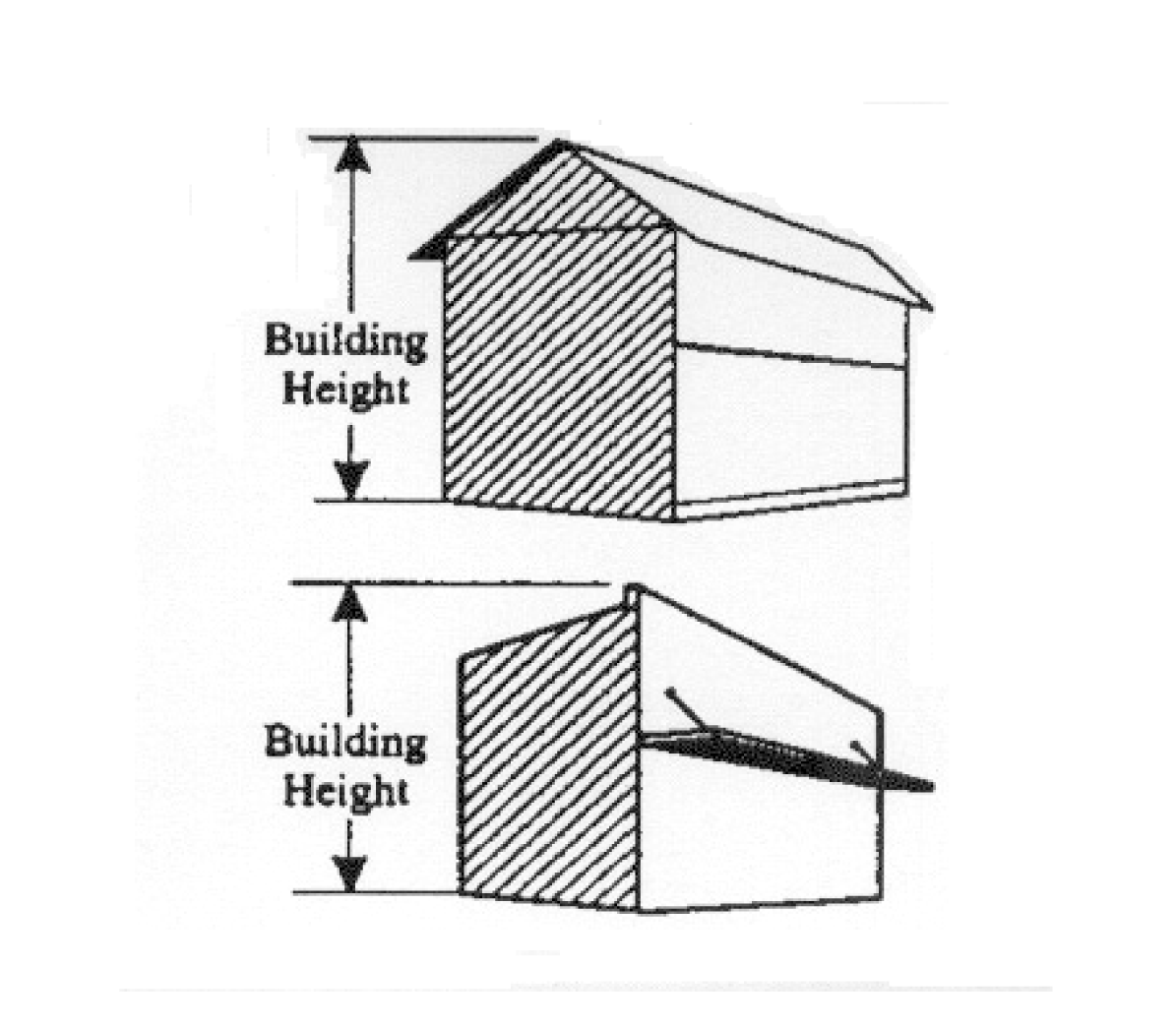
Building Inspector: The city's official responsible for implementing and enforcing the applicable building codes of the city.
Building setback line: A line establishing the minimum allowable distance between the front wall of a principal building (excluding roof overhangs of 36 inches or less) and the road right-of-way line or a side or rear building wall and a side or rear property line when measured perpendicularly thereto. For purposes of this Ordinance, a minimum required building setback line and minimum required yard shall be considered the same.
(1)
Front building setback: The minimum allowable distance between the right-of-way line of any abutting road and any part of a principal building on a lot (excluding roof overhangs of 36 inches or less). The front setback distance is applied along the full length of the right-of-way line and is parallel to it.
(2)
Rear building setback: The minimum allowable distance between a rear lot line and any part of a principal building on a lot (excluding roof overhangs of 36 inches or less). The rear building setback extends along the full length of the rear lot line.
(3)
Side building setback: The minimum allowable distance between a side lot line and any part of a principal building on a lot (excluding roof overhangs of 36 inches or less). The side building setback extends along the side lot line between the front building setback and a rear building setback (if any).
Caliper: The diameter of a tree (usually nursery stock) measured at a point 6 inches above the ground or top of root ball for up to and including 4-inch caliper trees, and at a point 12 inches above the ground or top of root ball for larger sizes.
Certificate of occupancy: A document issued by the Building Inspector indicating that the building and use or reuse of a particular building or land is in conformity with all applicable codes and regulations, and that such building or land may be occupied for the purpose stated therein.
City Engineer: The city's official responsible for implementing and enforcing the applicable engineering requirements of the development regulations and those other engineering requirements of the city, which may be provided by a private firm on a contract basis.
Common area: Land within a development, not individually owned or dedicated to the public, and designed for the common usage of the development. These areas include green open spaces and yards and may include pedestrian walkways and complimentary structures and improvements for the enjoyment of residents of the development. Maintenance of such areas is the responsibility of a private association, not the public.
Comprehensive plan: Any plan by a county or municipality covering such county or municipality or any plan by a regional development center covering the center's region proposed or prepared pursuant to the minimum standards and procedures for preparation of comprehensive plans and for implementation of comprehensive plans, established by the Department of Community Affairs. (Georgia Code Section 50-8-2)
Concept plan: A document submitted with an application for a rezoning or other type of application upon which the applicant has shown the intended development and its design.
Condition of approval: A requirement adopted by the Governing Body at the time of approval of a change in zoning district or approval of a conditional use or variance; placing greater or additional requirements or restrictions on the property than provided in this Ordinance in order to reduce an adverse impact of the request and to further protect the public health, safety, or general welfare.
Conditional use: A use which is not automatically permitted by right, but which may be permitted within a zoning district (approved through a public hearing process by the Governing Body, subject to meeting specific requirements of this Ordinance.
Conservation easement: A nonpossessory interest of a holder in real property imposing limitations or affirmative obligations, the purposes of which include retaining or protecting natural, scenic, or open-space values of real property; assuring its availability for agricultural, forest, recreational, or open-space use; protecting natural resources; maintaining or enhancing air or water quality; or preserving the historical, architectural, archeological, or cultural aspects of real property. (Georgia Code Section 44-10-2)
Critical root zone: The land area circular in shape and centered on the trunk of a tree, the radius of which circle is determined by the farthest extent of the drip line from the trunk.
_____
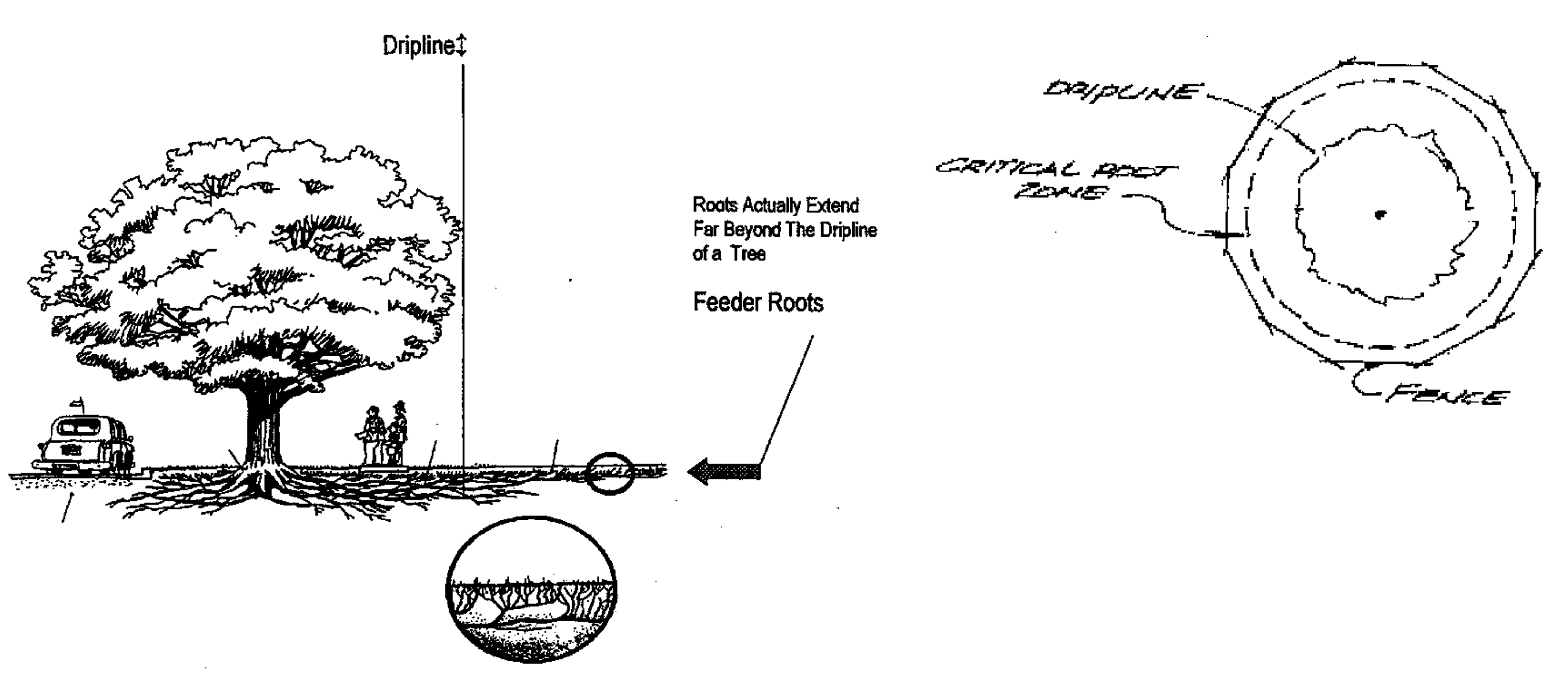
_____
Curb cut: The providing of vehicular ingress and/or egress between property and an abutting road; the physical improvement designed to provide such ingress/egress.
Deceleration lane: An added roadway lane, of a specified distance and width and which may include a taper, as approved by the Zoning Administrator, that permits vehicles to slow down and leave the main vehicle stream.
Deciduous: A plant with foliage that is shed annually (e.g., weeping willow; maple).
Density: The quantity of building per unit of lot area; for example, the number of dwellings per lot area (gross square foot or per acre).
Development: Any man-made change to improved or unimproved real estate, including, but not limited to, buildings or other structures, mining, dredging, filling, grading, paving, excavating, drilling operations, or permanent storage of materials; any land-disturbing activity which alters the elevation of the land, removes significant vegetation, or causes structures of any kind to be erected or removed.
Development permit: An official authorization issued by the Zoning Administrator in accordance with this ordinance to proceed with land disturbance and grading, as set forth in this ordinance.
Diameter Breast Height (DBH): The diameter of a tree trunk (usually a mature tree) measured at a height of 4½ feet above the ground. If a tree splits into multiple trunks below 4½ feet, the trunk is measured at its most narrow point beneath the split.
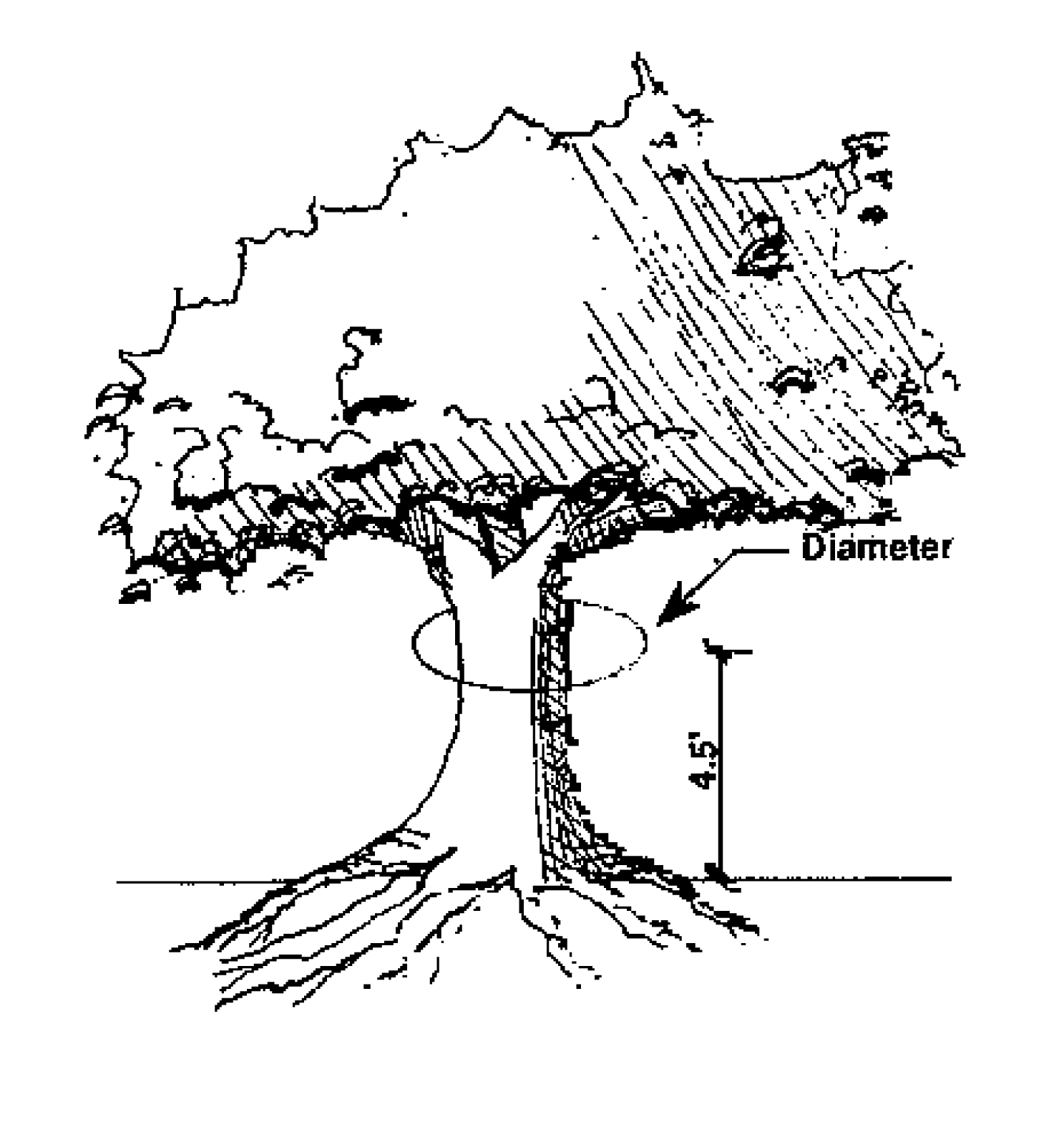
Discontinuance: A lapse in the activity or operation of a nonconforming use for a period of six (6) months but less than twelve (12) months. Discontinuance for twelve (12) months or more shall be considered "abandonment."
Drip line: A perimeter formed by the points farthest away from the trunk of a tree where precipitation falling from the branches of that tree lands on the ground.
Dumpster: A container designed to hold refuse that has a hooking connection that permits it to be raised and dumped into a sanitation truck for disposal, or a container (excluding temporary placements) designed to hold refuse that is loaded onto a truck.
Environmental Health Department: The Hall County Environmental Health Department.
Evergreen: A plant or tree with foliage that persists and remains green year-round (e.g., pine; magnolia).
Floor area: The sum of the gross horizontal areas of each floor of the principal building, and any accessory buildings, measured from the exterior walls or from the center line of party walls. The term does not include any area used exclusively for the surface parking of motor vehicles or for building or equipment access, such as stairs, elevator shafts, and maintenance crawl space.
Floor-area ratio (FAR): The total floor area of the building or buildings on a lot or parcel divided by the gross area of the lot or parcel.
_____
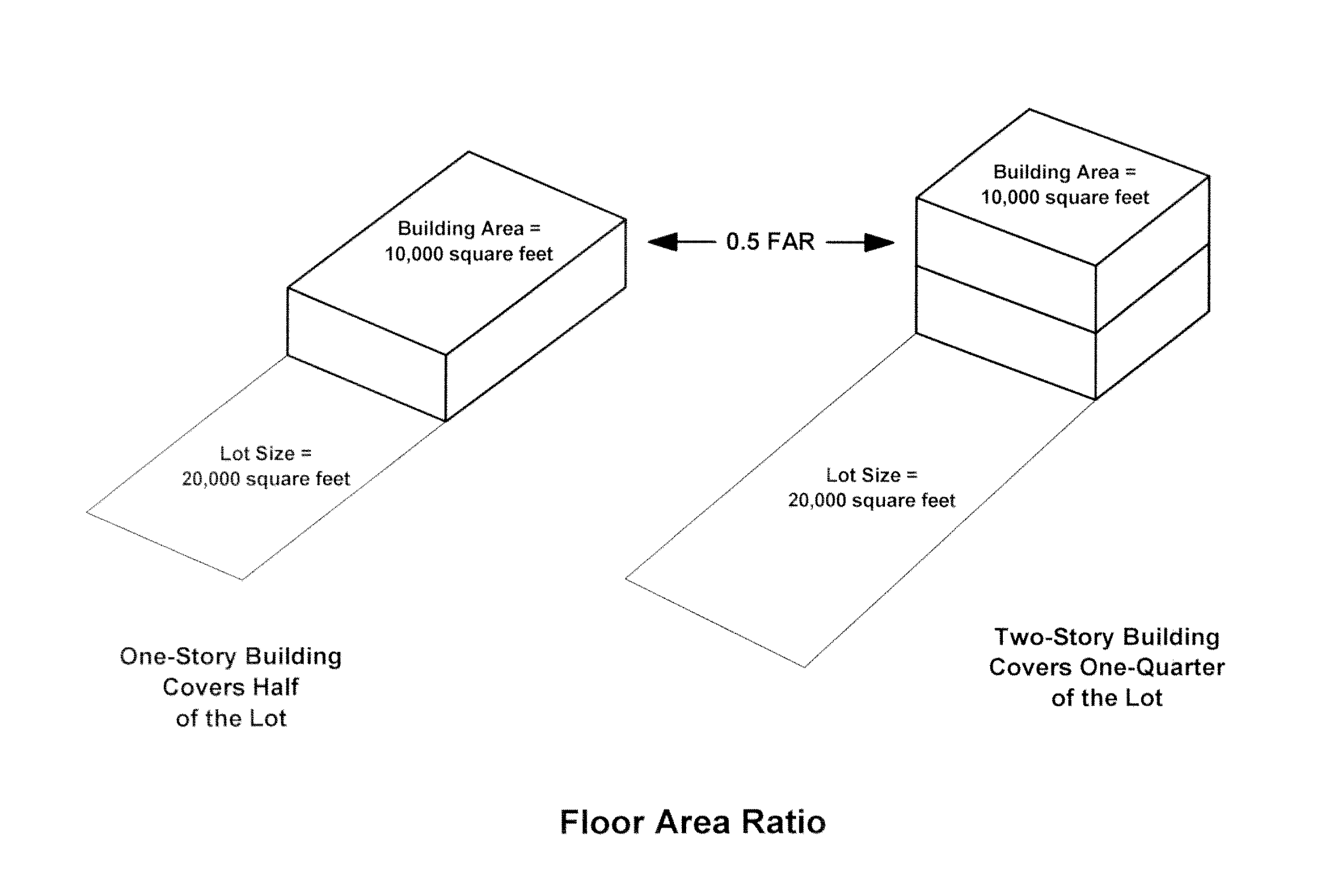
_____
Frontage or road frontage: The width in linear feet of a lot where its front lot line abuts the right-of-way of any road from which access may be directly gained.
Governing Body: The Flowery Branch, Georgia, Mayor and City Council.
Grade, natural: The existing grade or elevation of the ground surface that exists or existed prior to man-made alterations, such as grading, grubbing, filling, or excavating.
Grading: Altering the shape or topography of ground surfaces to a predetermined condition; this includes stripping, cutting, filling, stockpiling and shaping, or any combination thereof, and shall include the land in its cut or filled condition. (see also land-disturbing activity)
Household pet: Any animal other than livestock or wild animals, which is kept for pleasure and not sale, which is an animal of a species customarily bred and raised to live in the habitat of residential dwellings or on the premises thereof and is dependent upon residents of the dwelling for food and shelter. Household pets include but are not limited to dogs, cats, rodents, common cage birds, aquarium-kept fish, and small amphibians and reptiles.
Impervious surface: Any hard-surfaced, man-made area that does not readily absorb water, including but not limited to building roofs, parking and driveway areas, graveled areas, sidewalks, and paved recreation areas.
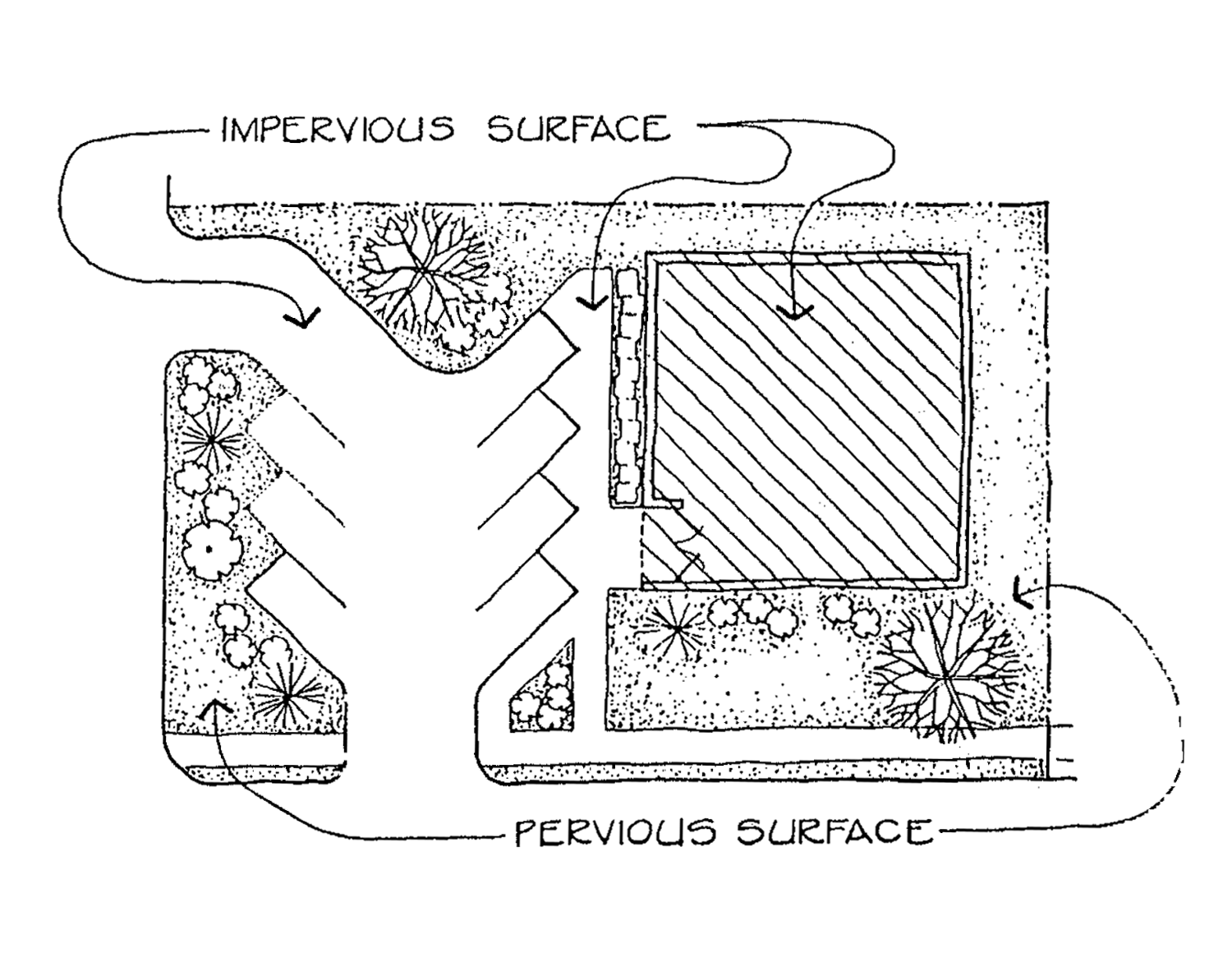
Improvements: The physical addition and changes to land that may be necessary to produce usable, desirable and acceptable lots or building sites.
Landscape strip: A area of landscaping of specified width.
Landscaping: The modification of the landscape for an aesthetic or functional purpose. The area within the boundaries of an individual lot that includes the preservation of existing vegetation and the continued maintenance thereof, as well as, the installation of trees, shrubs, ground covers, grass, and flowers. Landscaping areas may also include decorative rock, bark, mulch and other similar approved materials in addition to vegetation and live plant material.
Land-disturbing activity: Any activity which may result in soil erosion from water or wind and the movement of sediments into state water or onto lands within the state, including, but not limited to, clearing, dredging, grading, excavating, transporting, and filling of land but not including agricultural practices. (Georgia Code Section 12-7-3)
Land trust: A private, nonprofit conservation organization formed to protect natural resources, such as productive farm or forest land, natural areas, historic structures, and recreational areas. Land trusts purchase and accept donations of conservation easements. They educate the public about the need to conserve land and some provide land-use and estate planning services to local governments and individual citizens.
Lot: A parcel of land occupied or capable of being occupied by a use, building or group of buildings devoted to a common use, together with the customary accessories and open spaces belonging to the same. The word "lot" includes the word "plot" or "parcel."
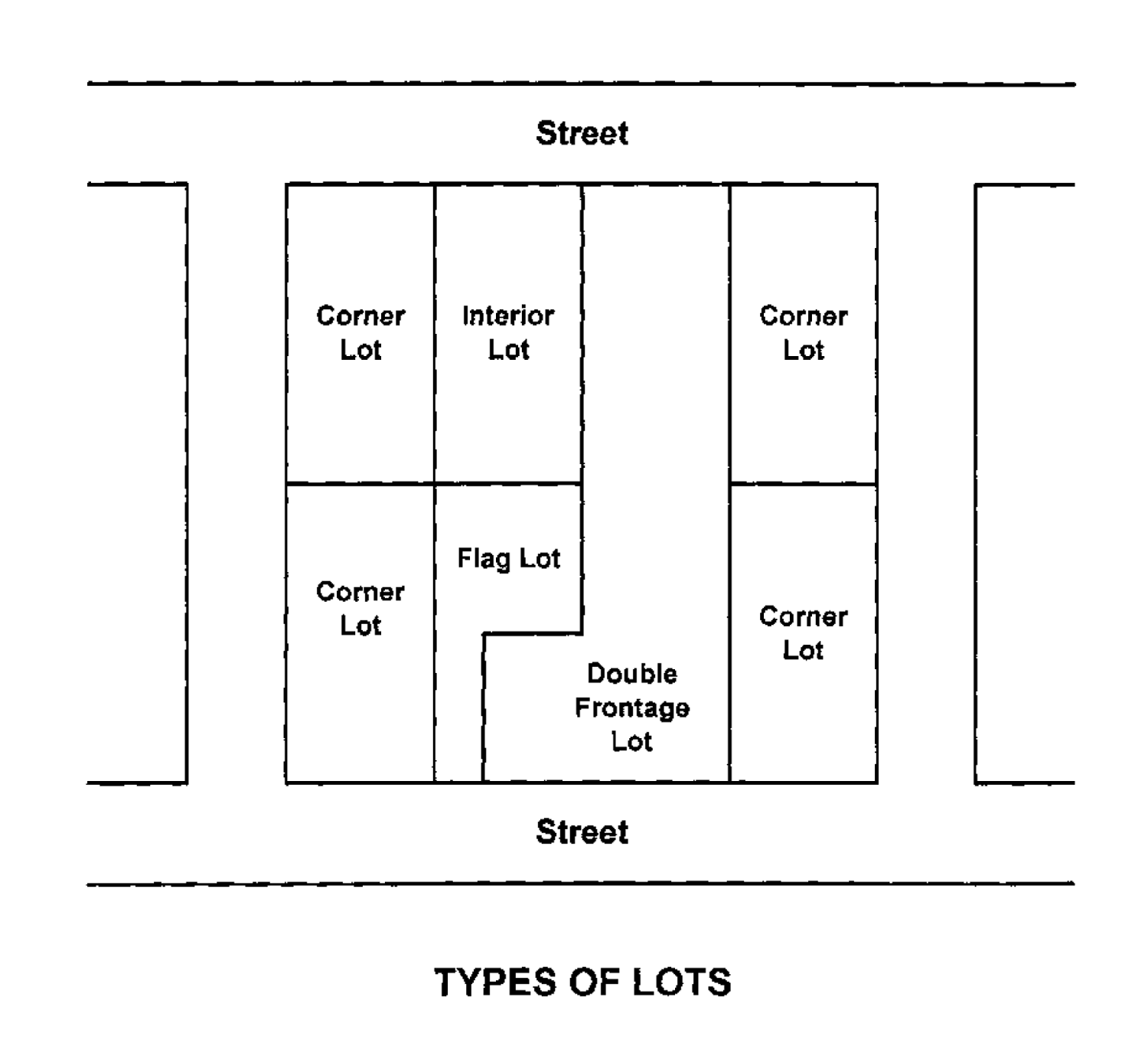
Lot, corner: A lot abutting upon two or more streets at their intersection.
Lot, double frontage: Any lot, other than a corner lot, which has frontage on two (2) streets.
Lot, flag: A tract or lot of land of uneven dimensions in which the portion fronting on a street is less than the required minimum width required for construction of a building or structure on that lot. Also called a panhandle lot.
Lot, interior: A lot having frontage on only one street.
Lot area, minimum: Minimum lot area means the smallest permitted total horizontal area within the lot lines of a lot, exclusive of street right-of-ways but inclusive of easements.
Lot coverage: The part or percent of a lot occupied by buildings and structures, including accessory buildings and structures, but not including unenclosed parking or loading areas.
Lot of record: A lot which is part of a subdivision, a plat of which has been recorded in the records of the Clerk of Superior Court of Hall County prior to the enactment of a zoning ordinance on September 30, 1972; or a parcel of land, the deed of which has been lawfully recorded in the same office as of the effective date of this zoning ordinance; or any lot lawfully established by plat after the effective date of this ordinance.
Metes and bounds: A system of describing and identifying land by a series of lines around the perimeter of an area; "metes" means bearings and distances and "bounds" refers to physical monuments.
Nuisance: Anything that causes hurt, inconvenience, or damage to another and the fact that the act done may otherwise be lawful shall not keep it from being a nuisance. The inconvenience complained of shall not be fanciful, or such as would affect only one of fastidious taste, but it shall be such as would affect an ordinary, reasonable man. (Georgia Code Section 41-1-1)
Nuisance, public: A nuisance which damages all persons who come within the sphere of its operation, though it may vary in its effects on individuals. A private nuisance is one limited in its injurious effects to one or a few individuals. (Georgia Code Section 41-1-1)
Occupied: The word "occupied" as applied to any land or building shall be construed to include the words "intended, arranged or designed to be used or occupied."
Open space, landscaped: That portion of a given lot, not covered by buildings, parking, access and service areas, that is designed to enhance privacy and the amenity of the development by providing landscaping features, screening and buffering for the benefit of the occupants or those in neighboring areas, or a general appearance of openness. Landscaped open space may include, but need not be limited to, grass lawns, decorative planting, berms, walls and fences, sidewalks/walkways, ornamental objects such as fountains, statues and other similar natural and man-made objects, wooded areas, and water courses, any or all of which are designed and arranged to produce an aesthetically pleasing effect within and exterior to the development.
Outdoor storage: The keeping of any goods, junk, material, merchandise or commercial vehicles in the same outdoor place for more than twenty-four hours.
Overlay zone: A defined geographic area that encompasses one or more underlying zoning districts and that imposes additional requirements above those required by the underlying zoning district. An overlay zone can be coterminous with existing zoning districts or contain only parts of one or more such districts.
Parking space: A space identified and set aside for the temporary parking of an automobile or other motor vehicle.
Recreation, passive: Recreational activities and places that generally do not require a developed site. This generally includes such activities as hiking, horseback riding, and picnicking, provided that such activities occur in a manner that is consistent with existing natural conditions.
Retaining wall: A wall or similar structure used at a grade change to hold soil on the up-hillside from slumping, sliding, or falling.
Rezoning: An amendment to the Official Zoning Map, or an amendment to an overlay zone boundary, that changes the zoning district or overlay zone of one or more properties specified in an application.
Screening: A method of visually shielding or obscuring one abutting or nearby building, structure, or use from another by fencing, walls, berms, densely planted vegetation, or some combination thereof, according to specifications of this Ordinance.
Shrub: A woody plant, smaller than a tree, consisting of several small stems from the ground or small branches near the ground, and generally obtaining a height less than eight (8) feet; a shrub may be deciduous or evergreen.
Sight visibility triangle: The areas at the corners of an intersection of roads, or at the intersection of a road and driveway, which may vary based on type of road, that are to be kept free of shrubs, ground covers, berms, fences, structures, or other materials or items over two and one-half (two and ½) and twelve (12) feet in height as measured from the ground.
_____
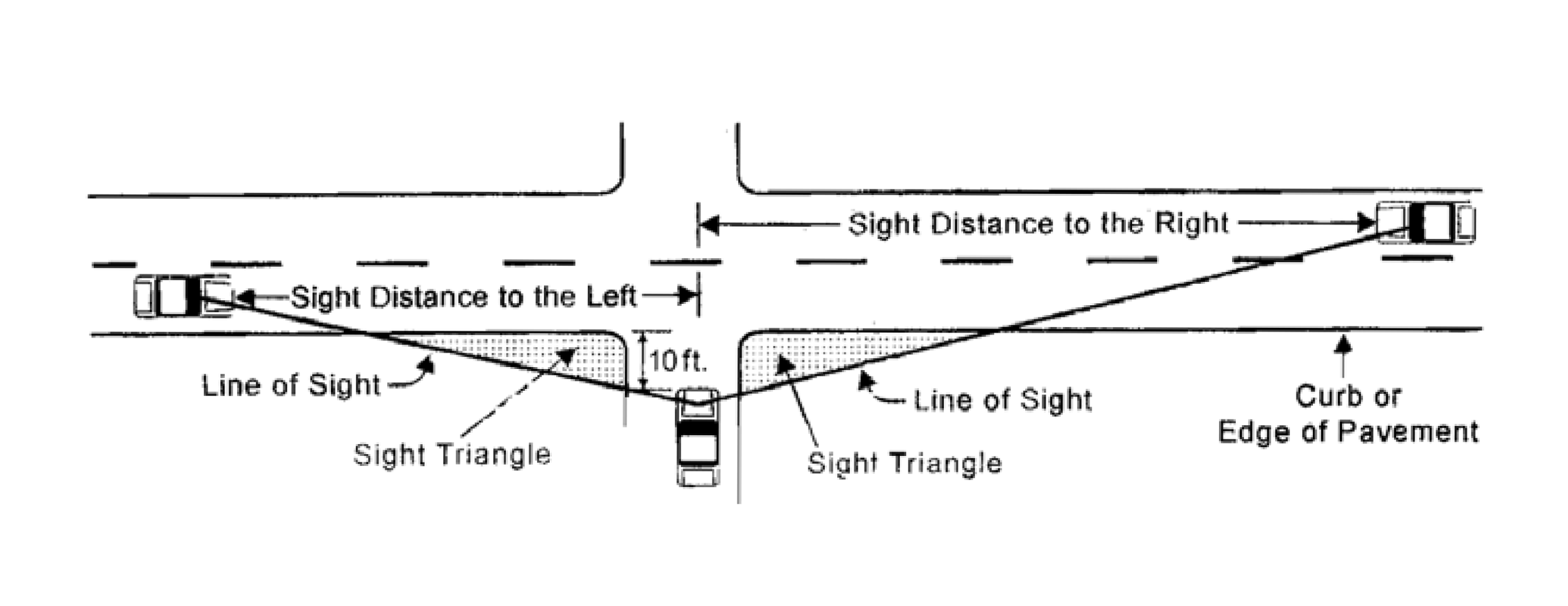
_____
Slope: An inclined earth surface, the inclination of which is expressed as the ratio of horizontal distance to vertical distance. In these regulations, slopes are generally expressed as a percentage; percentage of slope refers to a given rise in elevation over a given run in distance. A fifty (50) percent slope, for example, refers to a 100-foot rise in elevation over a distance of 200 feet. A fifty (50) percent slope is expressed in engineering terms as a 2:1 slope.
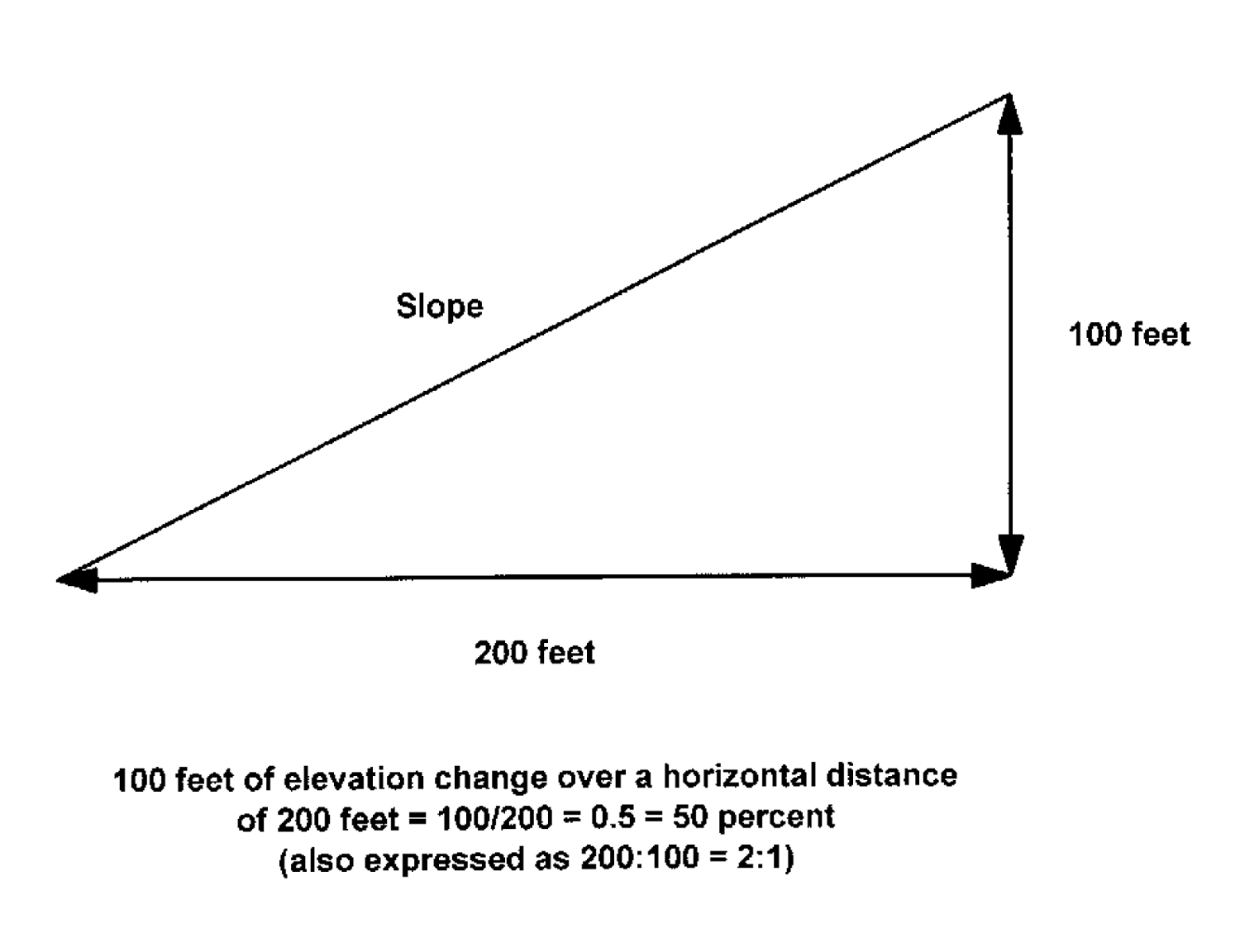
State waters: Includes any and all rivers, streams, creeks, branches, lakes, reservoirs, ponds, drainage systems, springs, wells, and other bodies of surface or subsurface water, natural or artificial, lying within or forming a part of the boundaries of the state, which are not entirely confined and retained completely upon the property of a single individual, partnership, or corporation. (Georgia Code Section 12-7-3)
Street: A dedicated and accepted public right-of-way, or a private street approved by the city, which affords the principal means of access for motor vehicles to abutting properties.
Street, major: An existing or proposed street or highway designated in the comprehensive plan as an arterial or collector street.
Story: That portion of a building compromised between a floor and the floor or roof next above. The first floor of a two (2) or multi-story building shall be deemed the story that has no floor immediately below it and that is designed for living quarters or for human occupancy. Those stories above the first floor shall be numbered consecutively.
Structure: Anything built, constructed or erected, or established or composed of parts joined together in some definite manner, the use of which requires location on the ground or which is attached to something having permanent location on the ground. For purposes of this ordinance, swimming pools, tennis courts, signs, dog houses, and outdoor fenced animal runs are considered structures. Tents, vehicles, trailers, and play equipment attached to the ground in some permanent or temporary way shall be considered structures. A structure may or may not be easily moved from a given location on the ground. Walls and fences are considered structures but are subject to setback regulations for walls and fences rather than principal or accessory building setback regulations. Driveways and parking lots are not considered structures.
Substantial accordance: Strong, yet not precise, conformity such that an ordinary person would conclude that all essential elements are met.
Tower, amateur radio: A freestanding or building-mounted structure, including any base, tower or pole, antenna, and appurtenances, intended for airway communication purposes by a person holding a valid amateur radio (HAM) license issued by the Federal Communications Commission.
Tree: Any self-supporting, woody perennial plant usually having a single trunk diameter of three (3) inches or more which normally attains a mature height of a minimum of fifteen (15) feet.

Tree, flowering ornamental: A tree that produces seasonal flowers and blossoms and is used primarily for aesthetic or ornamental purposes (e.g., flowering dogwood; eastern redbud).
Tree, hardwood: Any leaf-bearing (not needle-bearing) tree that is not coniferous (cone bearing). This definition is based on the colloquialism, and does not necessarily reflect any true qualities of the tree.
Tree, shade: A broadleaf tree having an average height at maturity of at least 20 feet and having a broad spread relative to its height (excluding trees with pyramidal, conical, or columnar crowns) and a dense canopy, so as to provide shade to structures or parking areas in the summer months.
Variance: A grant of relief from the requirements of this Ordinance which permits construction or use in a matter otherwise prohibited by this Ordinance, which may be approved in individual cases upon application and applied to specific property where compliance would result in a particular hardship upon the owner, as distinguished from a mere inconvenience or a desire to make a profit. A variance is a minimal relaxation or modification of the strict terms of the regulations of this Ordinance which are dimensional in nature as applied to specific property.
Variance, administrative: A variance which is authorized to be approved by the Zoning Administrator under the terms of this ordinance.
Wetlands: Those areas that are inundated or saturated by surface or groundwater at a frequency and duration sufficient to support, and that under normal circumstances do support, a prevalence of vegetation typically adapted for life in saturated soil conditions.
Yard: A space on the same lot with a principal building, open unoccupied and unobstructed by buildings or structures from ground to sky except where encroachments and accessory buildings or structures are expressly permitted. See also terms under "building setback."
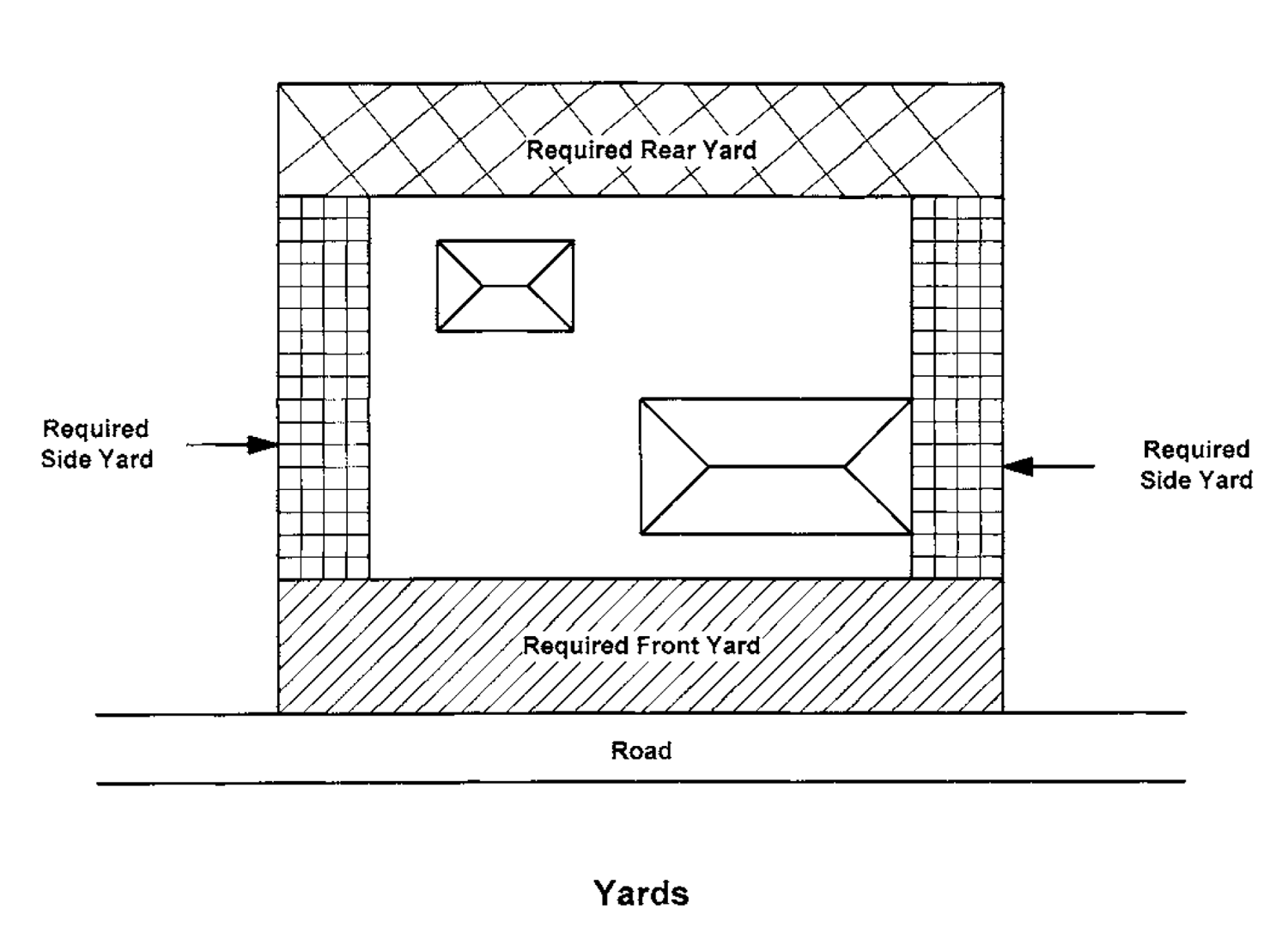
(1)
Yard, front: An open, unoccupied space on the same lot with a principal building, extending the full width of the lot, and situated between the street right-of-way and the front line of the building projected to the side lines of the lot. For corner and double frontage lots, front yard requirements apply to all road frontages.
(2)
Yard, rear: An open, unoccupied space on the same lot with a principal building, extending the full width of the lot and situated between the rear line of the lot and the rear line of the building projected to the side lines of the lot.
(3)
Yard, side: An open, unoccupied space on the same lot with the principal building, situated between the building and the side line of the lot and extending from the rear line of the front yard to the front line of the rear yard.
Zoning Administrator: The Manager of Planning and Community Development of the City of Flowery Branch (or any similar position as it may be retitled), or authorized designee.
Zoning map: The official zoning map or maps of the City of Flowery Branch, Georgia.
(Ord. No. 348-16, § 1 (Exh. A), 7-19-2018)
Sec. 2.4. - Responsibility for Interpretation.
The Zoning Administrator shall be responsible for the interpretation of the requirements, standards, definitions, or any other provision of this zoning ordinance, unless that authority is provided to another administrative official within a specific Article. Interpretations of the Zoning Administrator or other administrative officer may be appealed under the provisions of this zoning ordinance.
(Ord. No. 348-16, § 1 (Exh. A), 7-19-2018)
Sec. 2.5 - Interpretations.
In the interpretation and application of this Ordinance all provisions shall be considered as minimum requirements. Where the literal interpretation is clear to the Zoning Administrator, it shall be construed literally. Where the Article, Section, or Subsection has a statement of purpose and intent, the Zoning Administrator shall consider said purpose and intent in making the interpretation. The Zoning Administrator shall make interpretations in a way that are liberally construed in favor of the City.
(Ord. No. 348-16, § 1 (Exh. A), 7-19-2018)
Sec. 2.6. - Use of Figures.
Figures associated with defined terms or regulatory paragraphs in this Ordinance are provided for illustration only and do not limit or change the meaning of the term as defined or the requirements of the regulation as written.
(Ord. No. 348-16, § 1 (Exh. A), 7-19-2018)
Sec. 2.7. - Use of Words and Phrases.
For the purpose of this Ordinance, the following shall apply to the use of words and phrases:
(a)
If a term is not defined in this ordinance the Zoning Administrator shall use the common definition of said term as presented in the New Oxford American Dictionary, 3rd Edition or later.
(b)
Words used in the present tense include the future tense. Words used in the singular tense include the plural tense, and words used in the plural tense include the singular tense.
(c)
The masculine person "he" or "his" also means "her" or "hers."
(d)
The word "person" is intended to include any individual, partnership, firm, association, joint venture, public or private corporation, trust, estate, commission, board, public or private institution, utility, cooperative, state agency, county, municipality or other political subdivision of this State, any interstate body or any other legal entity.
(e)
The words "shall" and "must" are always mandatory and not discretionary, while the word "may" is permissive.
(f)
Where a term is defined in this Article, it shall be construed to have meaning and application throughout this Ordinance, unless the context clearly indicates otherwise.
(g)
Where a term is defined in any Article other than this Article, it is generally the intent that such definition applies only within the Article it appears, since it is positioned in the Article to which it most readily refers; provided, however, that this provision shall not prevent the Zoning Administrator from interpreting that defined term as applying outside the strict context of the Article in which it appears, and to that end, all definitions, regardless of location within this Ordinance, apply equally to the use of such terms throughout the Ordinance.
(h)
For purposes of this Ordinance, the following features shall be considered an attachment: enclosed garages, screen porches, and enclosed breezeways. The following shall not be considered an attachment: carports, decks, trellises, and unenclosed breezeways. In all other instances, the Zoning Administrator shall make the determination of whether or not a proposed building, structure, or portion thereof is an attachment to a principal building or whether it is an accessory structure.
(Ord. No. 348-16, § 1 (Exh. A), 7-19-2018)

