
Flowery Branch City Zoning Code
ARTICLE 22
- LOADING
Sec. 22.1.- Off-Street Loading Required.
On the same lot with every building, structure or part thereof, erected or occupied for manufacturing, storage, warehouse, truck freight terminal, department store, wholesale store, grocery supermarket, hotel, hospital, mortuary, dry cleaning plant, retail business, or other uses similarly involving the receipt or distribution of vehicles, materials or merchandise, there shall be provided and maintained adequate space for the standing, loading, and unloading of such materials to avoid undue interference with public use of streets, alleys, and private or public parking areas.
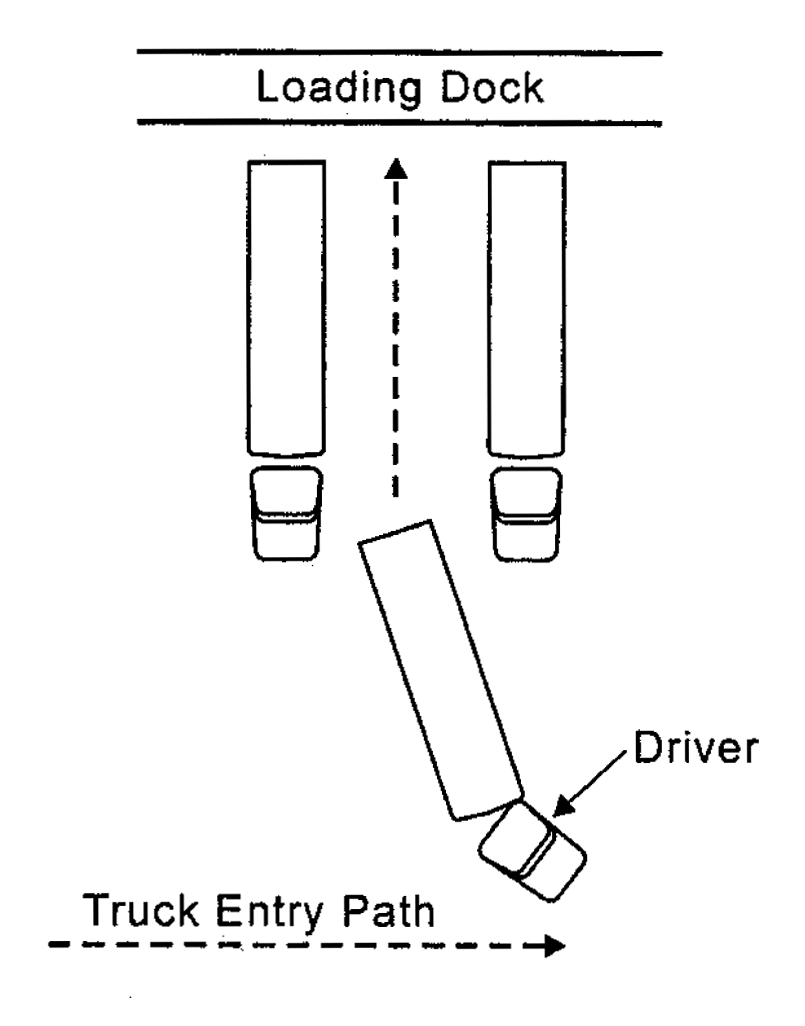
Source: Stover, Vergil G., and Frank J. Koepke. 2002. Transportation and Land Development (2 nd Ed.). Washington, DC: Institute of Transportation Engineers. Figure 10-5, p. 10-9.
_____
Sec. 22.2. - Loading Area Specifications.
Unless otherwise approved by the Zoning Administrator, loading spaces shall be a minimum
of fourteen (14) feet wide, forty (40) feet long, with fourteen (14) feet of height
clearance. When the development requires loading and unloading by full-size tractor-trailers,
loading spaces shall be sixty (60) feet long with a sixty-three (63) foot apron, for
a total approach zone of 155 feet.
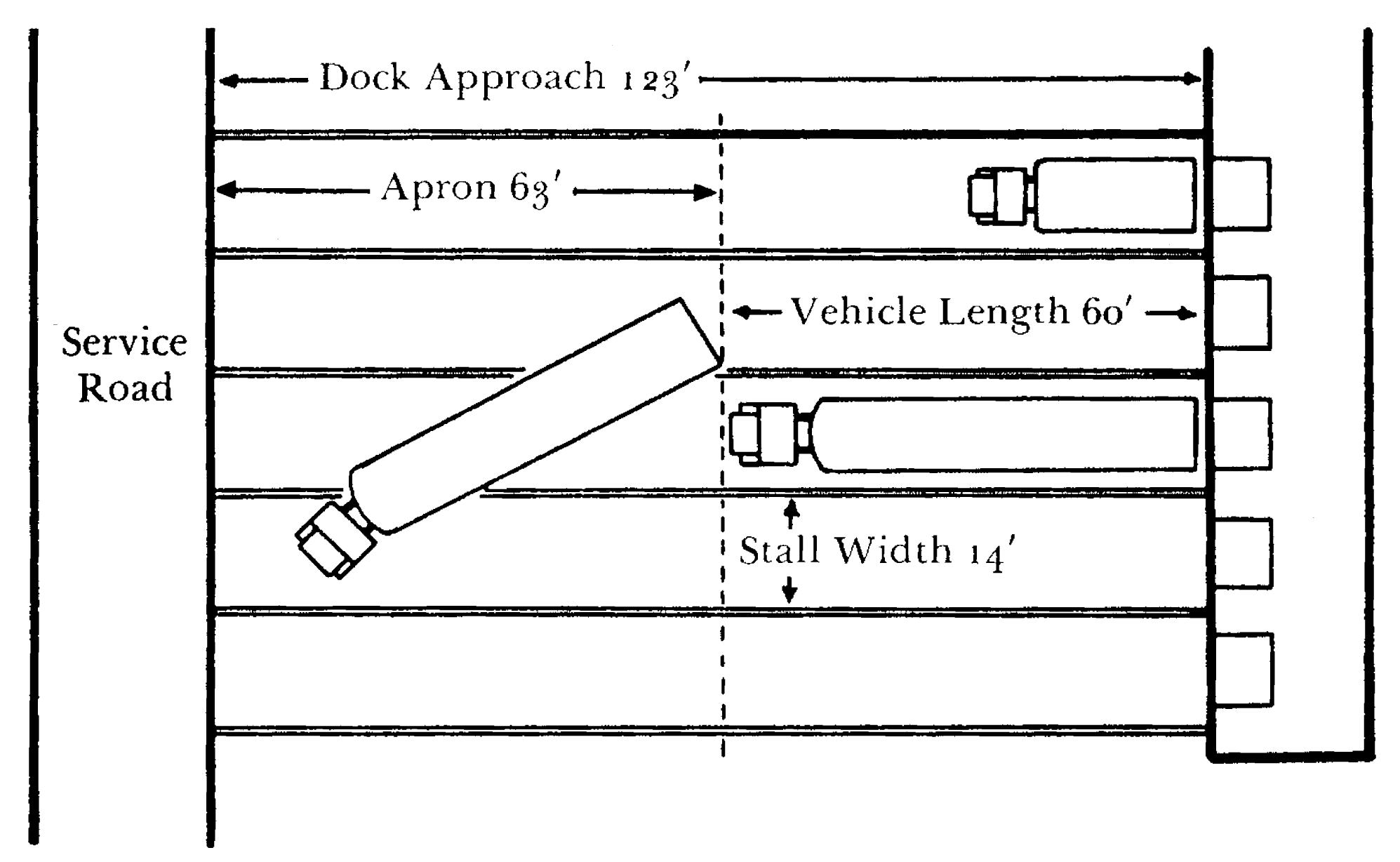
Source: De Chiara, Joseph, and Lee E. Koppelman. 1984. Time-Saver Standards for Site Planning. Figure 6.188, p. 652. New York: McGraw-Hill.
Sec. 22.3. - Loading Area Locations.
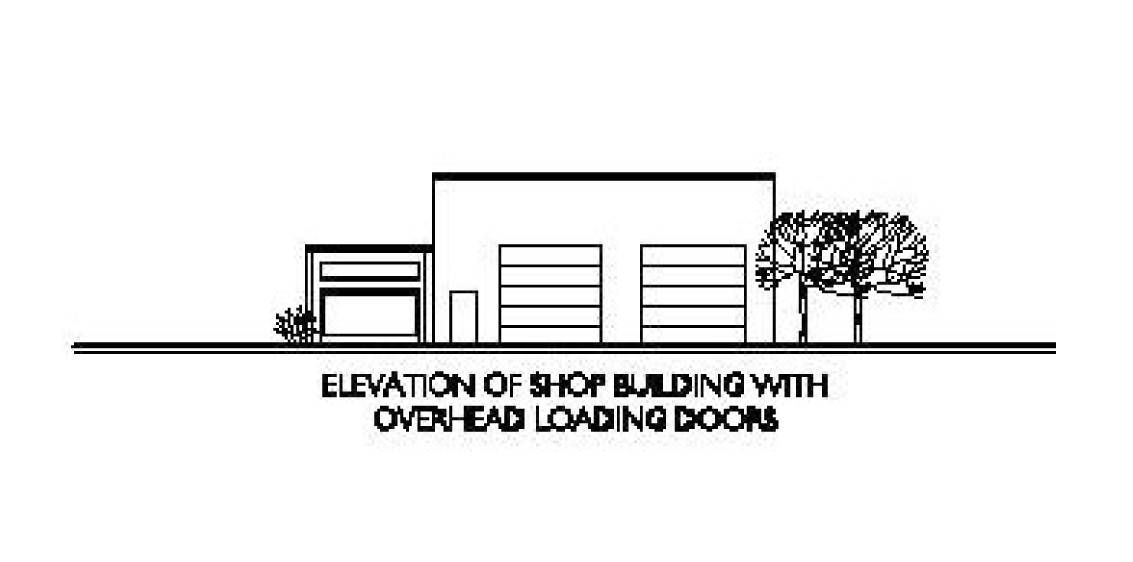
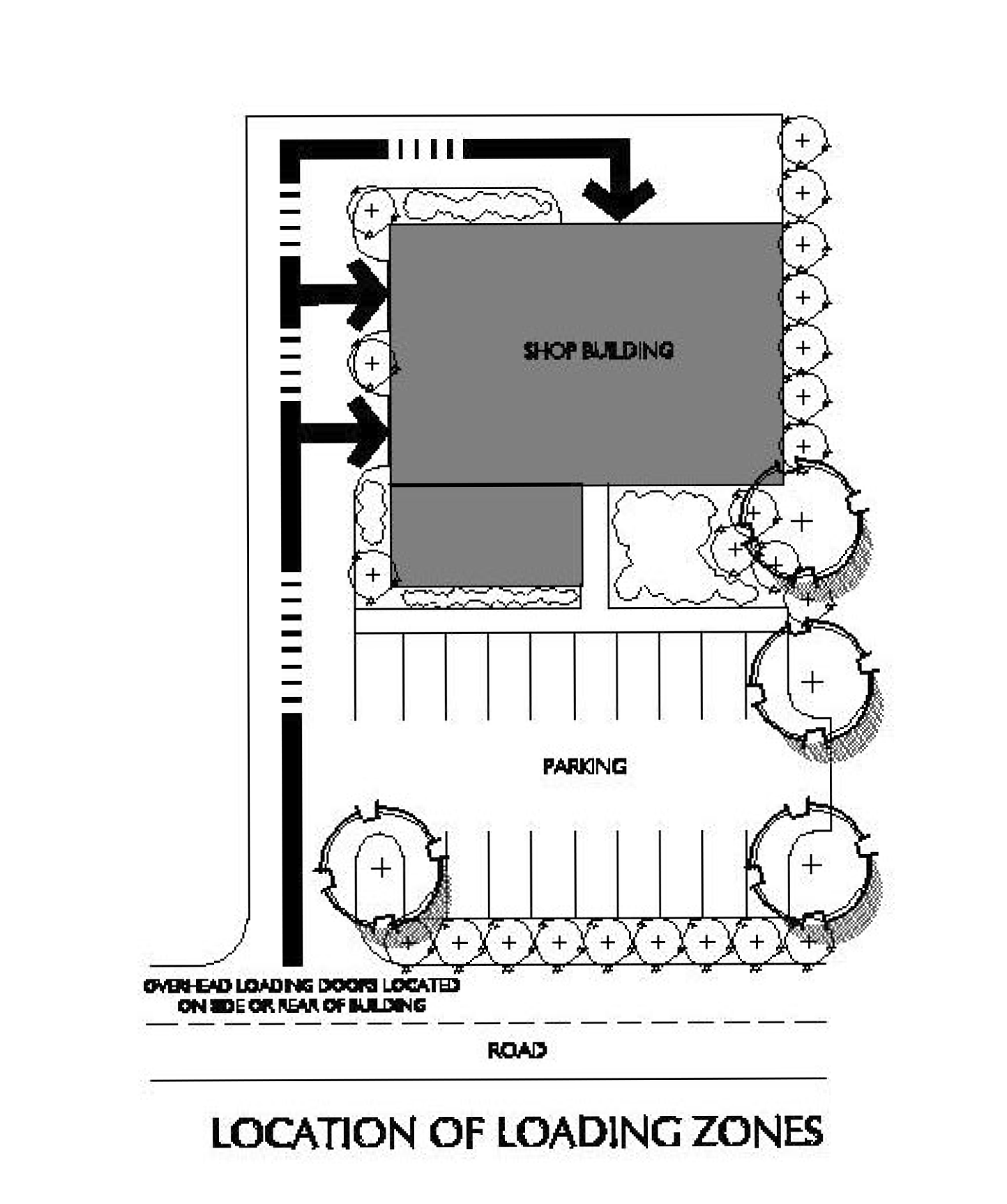
Loading areas shall be located to the rear of the building unless site design precludes a rear location, in which case loading shall be to the side of a building. Loading areas shall not be permitted within front yards.
Sec. 22.4. - Minimum Number of Off-Street Loading Spaces Required.
Off-street loading spaces for various types of use shall be in accordance with the following table and shall be of the same dimensions as described in Section 22.2 unless other permissible dimensions are specifically denoted.
Off-street Loading Requirements
(Ord. No. 767, § 1, 11-20-2025)

