
Hartford City Zoning Code
4.0
BUILDING TYPES
4.2 - General Design Requirements for All Building Types
The following requirements affect a building's appearance and are intended to improve the physical quality of buildings, enhance the pedestrian experience, and protect the character of the each neighborhood, district, node, or corridor.
4.18 - Explanation & Measurement of Regulations Specific to Building Types
The following explains and defines the regulations established in the tables for each building type. Refer to 4.3 through 4.16 Building Types.
4.19 - Entrance & Roof Types
The following entrance and roof types are permitted by building type, defined in the Building Type Table requirements, sections 4.3 through 4.16.
4.1.1 - APPLICABILITY
The Building Types detailed in this chapter, 4.0 Building Types, define the required building forms for new construction, renovation of existing structures, and redevelopment within all zoning districts.
Figure 4.1-A Permitted Building Types by District for Mixed-Use and Non-Residential Districts
***Expand table to lock table headings in place while scrolling***
Figure 4.1-B Permitted Building Types by District for Residential Districts
***Expand table to lock table headings in place while scrolling***
4.1.2 - GENERAL REQUIREMENTS
All Building Types shall fulfill the following requirements.
A.
Zoning Districts. Each Building Type shall be constructed only within districts where the Building Type is permitted. Refer to Figures 4.1-A and 4.1-B for Building Types Permitted by District.
B.
Uses. Each Building Type can house a variety of uses depending on the district in which it is located. Refer to 3.0 Uses for uses permitted per district. Some Building Types have additional limitations on permitted uses.
C.
No Other Building Types. All buildings constructed must fulfill the requirements of one of the Building Types permitted within the zoning district of the lot.
D.
Permanent Structures. All buildings constructed shall be permanent construction without a chassis, hitch, or wheels, or other features that would make the structure mobile, unless otherwise noted.
E.
Restoration of Unsafe Buildings. Nothing in these regulations shall prevent the strengthening or restoring to a safe condition of any part of any building declared unsafe by the director of the division of licenses and inspections or where required by any lawful order.
F.
Buildings to Be Moved.
(1)
Any building or structure which has been wholly or partially erected in the city shall not be moved or placed upon any premises in the city until a permit for such removal shall have been obtained from the director of the division of licenses and inspections. When moved onto new premises, such building or structure shall conform to all the provisions of these regulations. No building or structure shall be moved into the city from outside the city until a permit for such moving shall have been obtained from the director of the division of licenses and inspections.
(2)
Before a permit may be issued for moving a building or structure, the director of the division of licenses and inspections shall inspect the building and shall determine if it is in a safe condition to be moved, whether it may be reconditioned to comply with the state building code and other city requirements for the use and occupancy for which it is to be used, and whether it will be of similar character with the buildings or structures in the area where it is to be moved. If these conditions can be complied with, a permit shall be issued for the moving of the building or structure.
G.
Building Line. For all Building Types, the build-to zones or, in some cases, the setbacks defined in the requirements reference the building line. The building line is defined in 1.6.
H.
Treatment of Yards. Paved vehicular areas are limited to specific locations per the Building Type. The following further defines the permitted treatments of the yard areas around the buildings. Refer to 1.6 for definitions of yards.
(1)
Landscape, Patio, Sidewalks. All yards shall contain either landscape areas, patio space, or sidewalk space, unless otherwise noted, not exceeding the maximum levels of imperviousness and semi-perviousness set per Building Type.
(2)
Driveways. Driveways may cross through yards as follows:
(a)
Front & Corner Yards. Where permitted as access to the lot, driveways may cross perpendicularly through the front or corner side yards. Circular drop-off drives may be permitted per the Building Type requirements.
(b)
Perpendicular Crossing of Side & Rear Yards. In all districts except NX and N districts, driveways are encouraged to and may cross perpendicularly through the side and rear yards to connect to parking on adjacent lots.
(c)
Parallel Crossing of Side & Rear Yards. Driveways accessing rear yard garages are permitted within the side or rear yard setback, no closer than 2 feet from a side or rear property line, unless the driveway is shared
(3)
Side Yard Parking Lots. Some building types permit side yard parking lots. Note that side parking lots shall not encroach on the front yard. Parking lots may not encroach upon the minimum side setback. Minimum side setback areas shall be landscaped.
(4)
Rear Yards. Paved vehicular areas (parking lots, loading areas, drives) are typically required to be located in the rear yard; however, minimum rear yard setbacks apply to parking lots. The minimum rear yard setback area shall only contain landscape, patio space, or sidewalk, unless otherwise noted.
(5)
Through Lots. Through lots require special consideration with regard to rear and side yard requirements, and the property owner may be allowed or required by the zoning administrator or commission, as applicable: to meet some or all of the requirements of a front yard, front setback line, or front build-to zones on both street frontages of the lot; and to deviate from additional Building Type requirements to ensure that the intent of these regulations with respect to the occupation of the street and the proper functioning of a site for utility and other access is ensured.
I.
Vehicular Access. Driveways shall be designed in accordance with 7.5 and shall be minimized to the extent practical and located to have the least impact on pedestrian accessibility, safety, and comfort.
(1)
Driveway Location. Permitted driveway locations are defined by Building Type, and such driveways may be located on a side property line, provided, however, that required buffers per 6.9 may be reduced or waived by the zoning administrator or commission, as applicable, upon a finding that the shared driveway will result in a net decrease in impervious coverage and that the best location of such shared driveway is along the property line.
(2)
Shared Driveways. Shared driveways between abutting lots are encouraged.
(3)
Driveways and Curb Cuts. Refer to 7.5 Site Access & Driveways. Applicants shall comply with curb cut specifications issued by the department of public works.
(4)
Circular Drop-Off Drives. Where permitted by Building Type in the MX-1, MX-2, and N-1 districts, circular drop-off drives are permitted on lots 100 feet in width and over, with front yards at least 20 feet deep. A minimum 5' wide landscape area is required between the drop-off drive and the front property line.
J.
Accessory Structures. Refer to 4.20 Accessory Structures.
(1)
Attached accessory structures are considered part of the principal structure.
(2)
Detached accessory structures are permitted per each Building Type and shall comply with all setbacks except the following:
(a)
Detached accessory structures are not permitted in the front yard.
(b)
Detached accessory structures shall be located behind the principal structure in the rear yard.
(c)
Detached accessory structures shall not exceed the height of the principal structure.
K.
Floor Area for Dwelling Units. Housing units shall not have a minimum square footage except for public health reasons enshrined in building and housing codes.
(Amend. of 12-13-2022)
4.1.3 - HOW TO READ THE BUILDING TYPE REGULATIONS
The following outlines the process for understanding the Building Type regulations.
A.
Building Types Permitted by District Table. On the previous pages, Figure 4.1-A Permitted Building Types by District for Mixed-Use and Non-Residential Districts, and Figure 4.1-B Permitted Building Types by District for Residential Districts, define which Building Types are permitted within the districts mapped on the city's Zoning Map.
B.
General Design Requirements. Refer to 4.2 General Design Requirements for All Building Types, on the following pages, for design requirements applicable to all Building Types. These requirements include such items as materials, windows, and balcony design requirements.
Figure 4.1-C How to Read the Building Type Table Spread
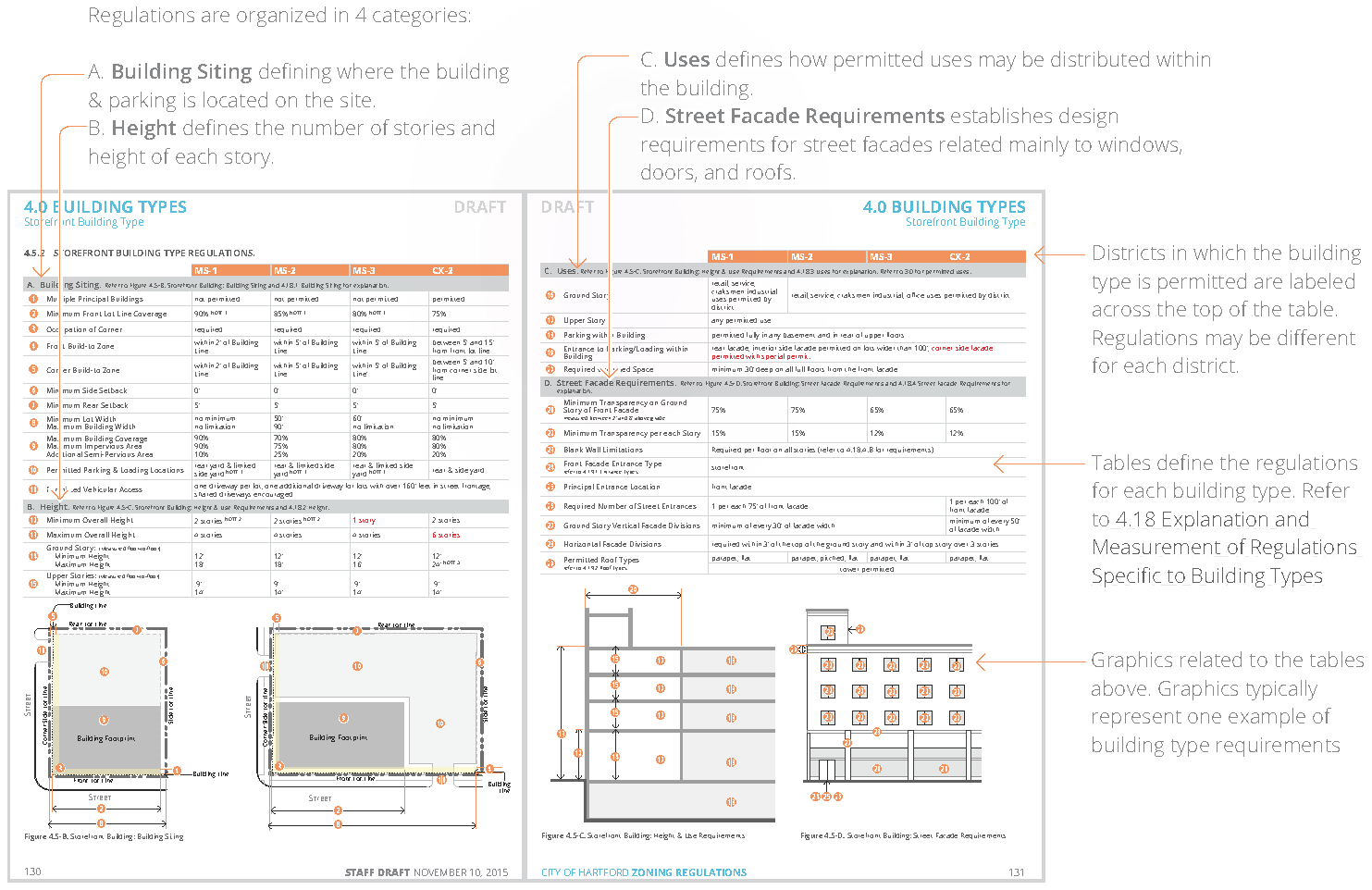
C.
Building Type Pages. In Sections 4.3 through 4.16, four pages are provided for each of the Building Types:
(1)
Description of Building Type. The first page for each Building Type provides a general description of the Building Type and several images of typical buildings in Hartford indicative of multiple elements of the Building Type. The images are intended to be illustrative only and may not fully exemplify all of the requirements of the Building Type.
(2)
Table & Diagrams Spread. The next 2 pages of each Building provides the key spread of information, meant to be viewed simultaneously. Refer to Figure 4.1-C How to Read the Building Type Table Spread, below for an explanation of the Building Type spread.
(3)
Notes. The final page of each Building Type section contains a page of notes referenced from the table of regulations. Additional graphic diagrams of unique situations may also be provided.
D.
Explanation and Measurement of Regulations Specific to Building Types. In Section 4.18, at the end of the Building Types, an explanation of each line item in the tables is provided, defining how to measure the requirement and other reference information.
E.
Entrance & Roof Types. In 4.19 Entrance & Roof Types, entrance types and roof types referred to in the Building Type tables are further defined. Additional regulations are included in this section. Graphic diagrams are provided to further illustrate the intent of each entrance and roof type.
F.
Accessory Structures. Section 4.20 Accessory Structures establishes the regulations for Accessory Structures, permitted by district in Figure 4.20-A Accessory Structure Table.
4.2.1 - MATERIALS
A.
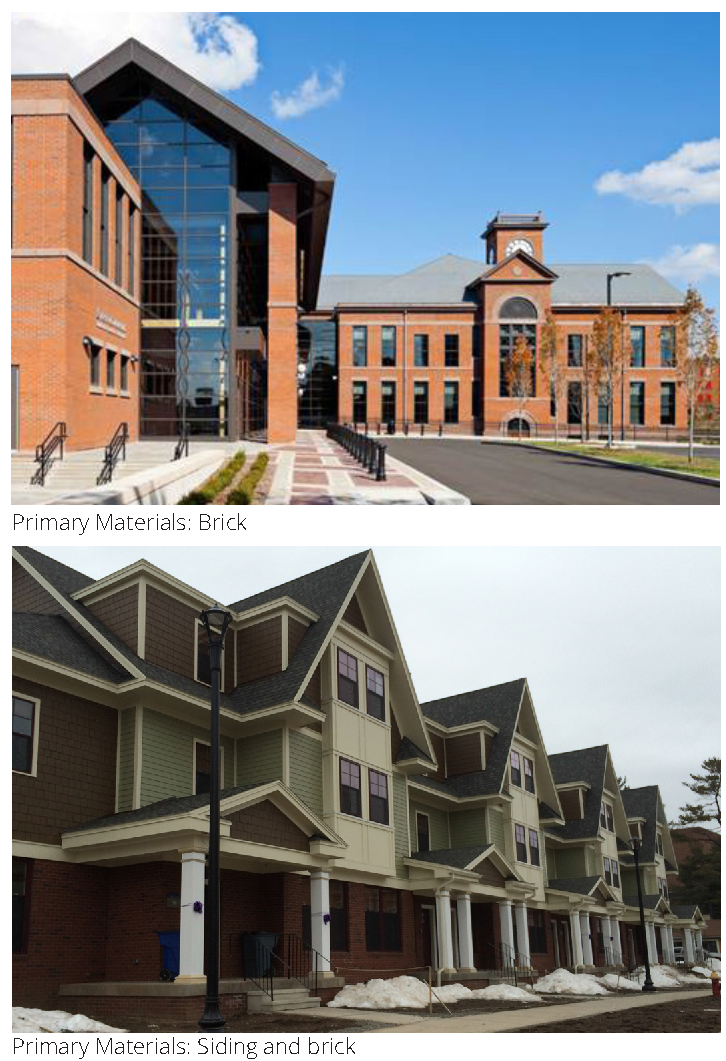
Primary Facade Materials. 80 percent of each facade shall be constructed of primary materials. For facades over 100 square feet, more than one material shall be used to fulfill the 80 percent requirement.
(1)
Permitted primary building materials include: high quality, durable, natural materials, such as stone, brick; wood lap siding; lapped, shingled, or panel fiber cement board siding; glass.
Figure 4.2-A Primary Materials
(2)
Other high quality materials may be approved in the sole discretion of the decision-making body upon a determination that such materials are appropriate to the architectural style of the building and the surrounding context, after receiving from the applicant relevant information as may be requested by the decision-making body, which information may include but shall not be limited to a material sample, specification sheet(s), and a document explaining successful, high quality installations of such materials.
(3)
Refer to Figure 4.2-A Primary Materials.
B.
Secondary Facade Materials. Secondary materials are limited to details and accents and include gypsum reinforced fiber concrete for trim and cornice elements; metal for beams, lintels, trim, and ornamentation, and exterior architectural metal panels and cladding.
(1)
Exterior Insulation and Finishing Systems (EIFS) is permitted for trim only or on upper floor facades only.
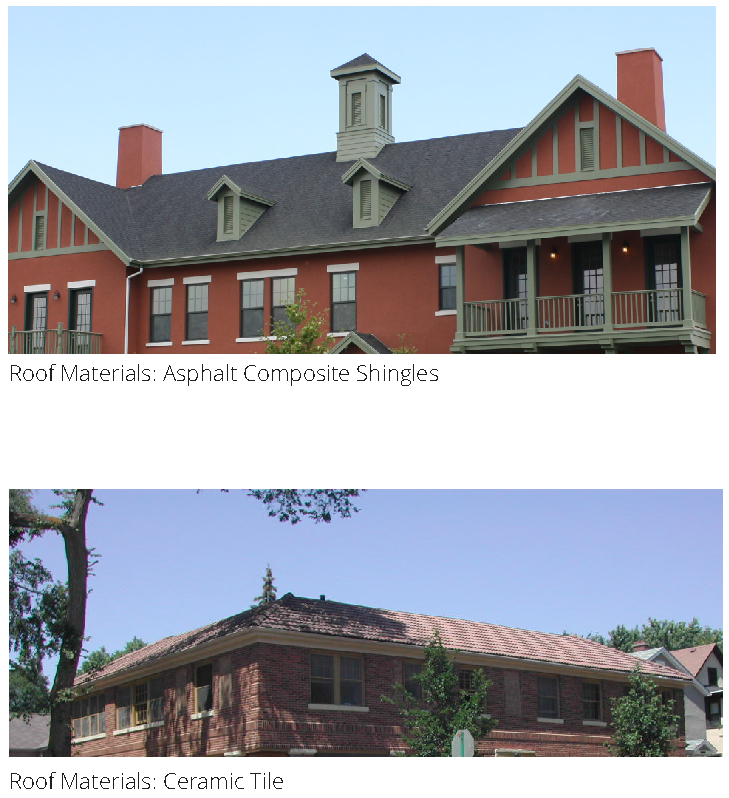
Figure 4.2-B Roof Materials
C.
Roof Materials. Acceptable roof materials include 300 pound or better, dimensional asphalt composite shingles, wood shingles and shakes, metal tiles or standing seam, slate, and ceramic tile, as well as membrane for flat roofs, and any additional materials necessary for the proper installation of green roofs. "Engineered" wood or slate may be approved during the site plan process with an approved sample and examples of successful, high quality local installations. Refer to Figure 4.2-B Roof Materials. An applicant seeking approval for a building with a parapet or flat roof - which contains a use other than a 1-, 2-, or 3-Unit Dwelling, and other than a Retail or Service Use less than 10,000 square feet - shall incorporate cool roofs, green roofs, and solar panels for roofing materials, and if the application does not include such materials, the applicant must provide an explanation.
D.
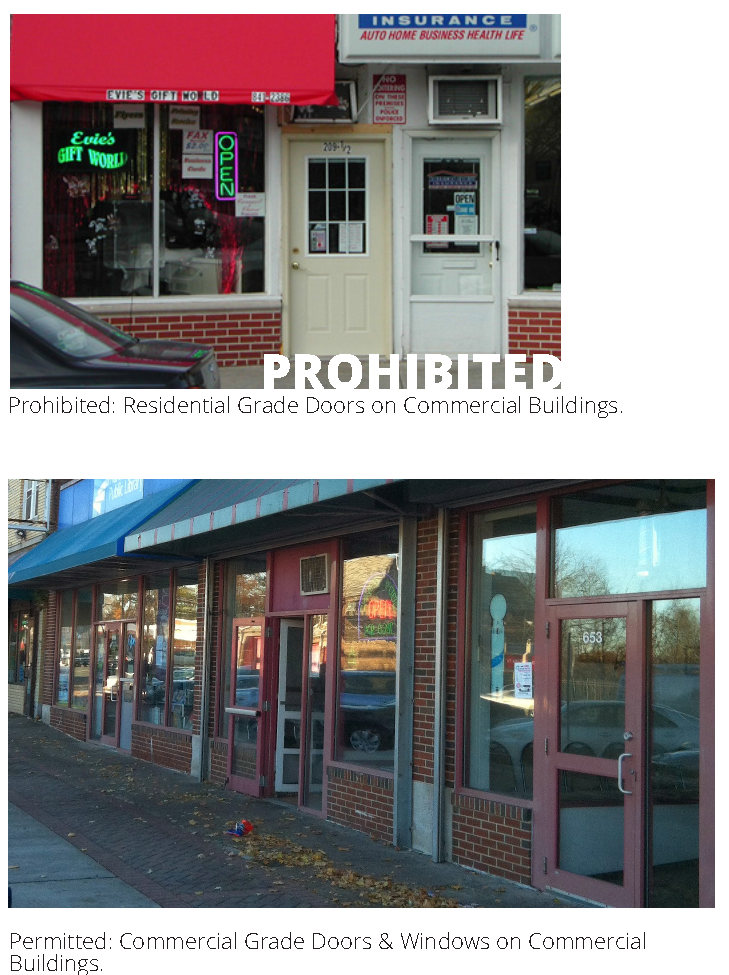
Appropriate Grade of Materials. Commercial grade doors, windows, and hardware shall be used on all building types with the exception of the Row Building and the House Building Types used for residential purposes. Refer to Figure 4.2-C Commercial Grade Doors & Windows.
Figure 4.2-C Commercial Grade
Doors & Windows
(Amend. of 12-13-2022)
4.2.2 - WINDOWS, AWNINGS, & SHUTTERS
A.
Windows. All windows on all buildings, other than windows 20 feet above grade in the DT districts, shall fulfill the following:
(1)
Recessed Glass. All window glass shall be recessed a minimum of 2 inches from the facade.
(2)
Type. A minimum of 80 percent of all non-storefront window glass on street facades shall be double hung, casement, or vertically oriented.
(3)
Prohibited Windows. Tinted or reflective glass, and glass block are prohibited on street facades. Blocked or covered windows, whether covered by paint, fabric, plastic, or signage, shall be prohibited except as allowed in 8.9 Window Sign.
(4)
Percent of Transparency. Percent of transparency as required by Adult Use Cannabis or required per building type.
(5)
Operable Windows. A minimum of 60 percent of all transparency on street facades except storefronts shall be operable.
(6)
Lintels. Lintels shall be expressed above all windows and doors, whether by a change in brick coursing or a separate element. Refer to Figure 4.2-D Expressed Lintels.
Figure 4.2-D Expressed Lintels
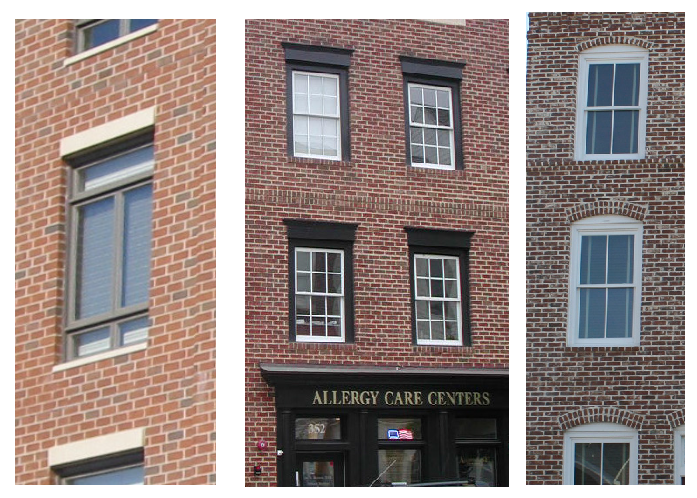
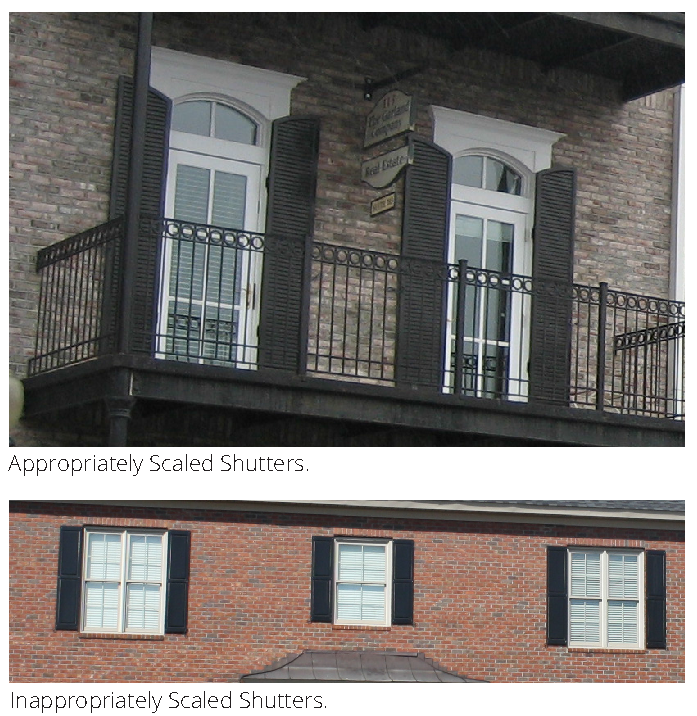
Figure 4.2-E Shutters
B.
Shutters. If installed, shutters, whether functional or not, shall be sized for the windows. If closed, the shutters shall not be too small for complete coverage of the window. Shutters shall be wood. "Engineered" wood may be approved during the site plan process with an approved sample and examples of successful, high quality local installations. Refer to Figure 4.2-E Shutters
C.
Window Bars. Exterior bars are prohibited on any window.
D.
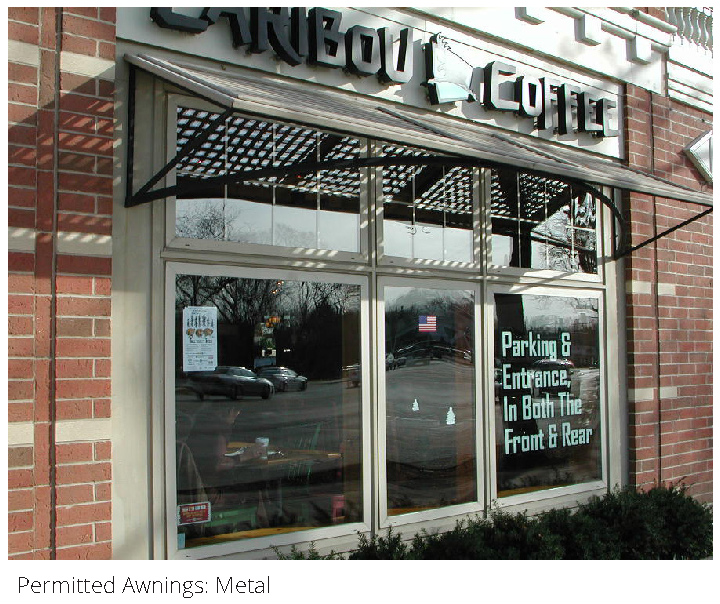
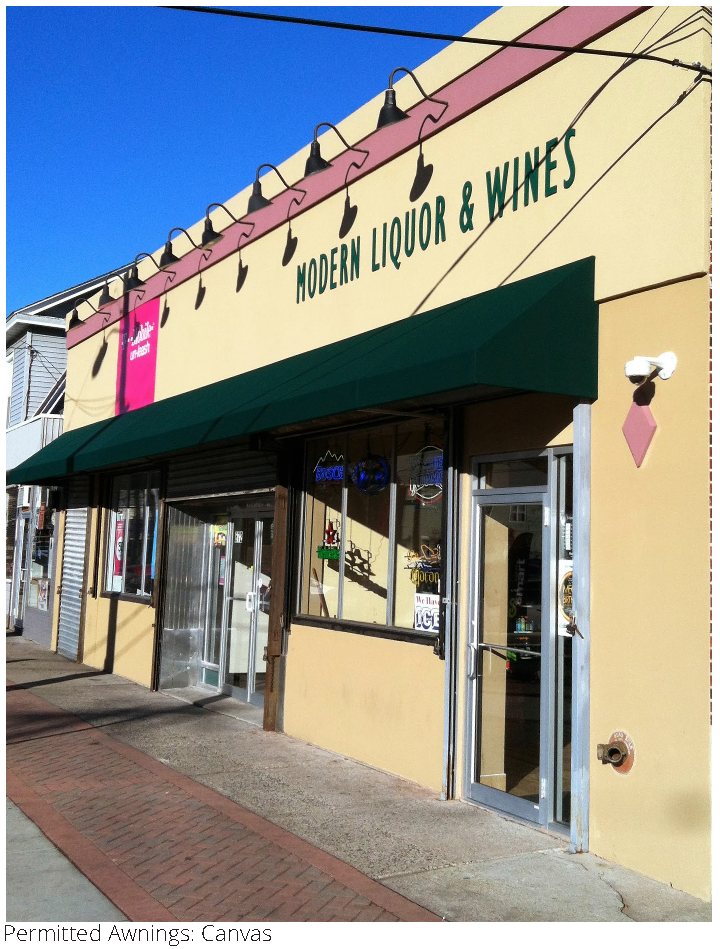
Awnings. All awnings shall be canvas or metal. Plastic awnings are not permitted. Awning types for each building face shall be coordinated. Refer to Figure 4.2-F Examples of Awnings from Other Cities.
Figure 4.2-F Examples of Awnings from Other Cities
E.
Security Grills.
(1)
Definition. A security grill is a building-mounted grating or screen of metal bars or wires, used as protection or to allow ventilation or discreet observation.
(2)
Interior Mounted. Security grills shall be located completely within the interior of the building with the window glass on the exterior.
(3)
Fully Retractable. Grills shall be fully retractable with the housing located above the window on the interior of the building, not visible from the street. Grills mounted to the exterior of the building are prohibited.
(4)
Retracted During the Day. Grills shall be retracted during the daylight hours, all days except Sunday.
(Amend. of 11-23-2021(2))
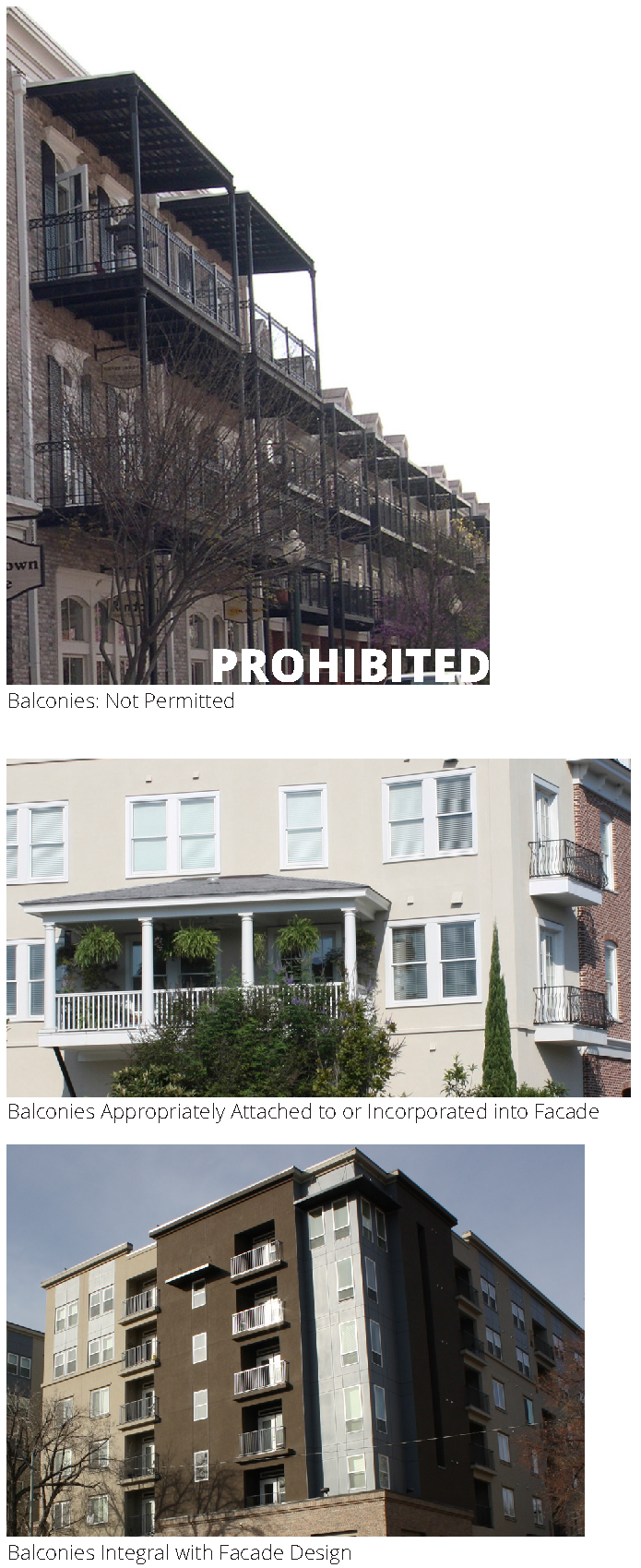
4.2.3 - BALCONIES
The following applies in all locations where balconies are incorporated into the facade design facing any street or parking lot. Refer to Figure 4.2-G Balcony Examples from Other Cities.
A.
Definition. Balconies include any platform that projects from the wall of a building above grade and is enclosed by a parapet or railing.
(1)
Exception: False Balconies. These regulations do not apply to false balconies a maximum of 16 inches deep, sometimes referred to as juliet balconies or balconets, which are permitted. False balconies consist of a rail and door, with no outdoor platform.
B.
Size. Balconies shall be a minimum of 5 feet deep and 6 feet wide.
C.
Connection to Building. Balconies that are not integral to the facade shall be independently secured and unconnected to other balconies.
D.
Facade Coverage. A maximum of 40 percent of the front and corner side facades, as calculated separately, may be covered with balconies, including street-facing railing and balcony structure.
Figure 4.2-G Balcony Examples from
Other Cities
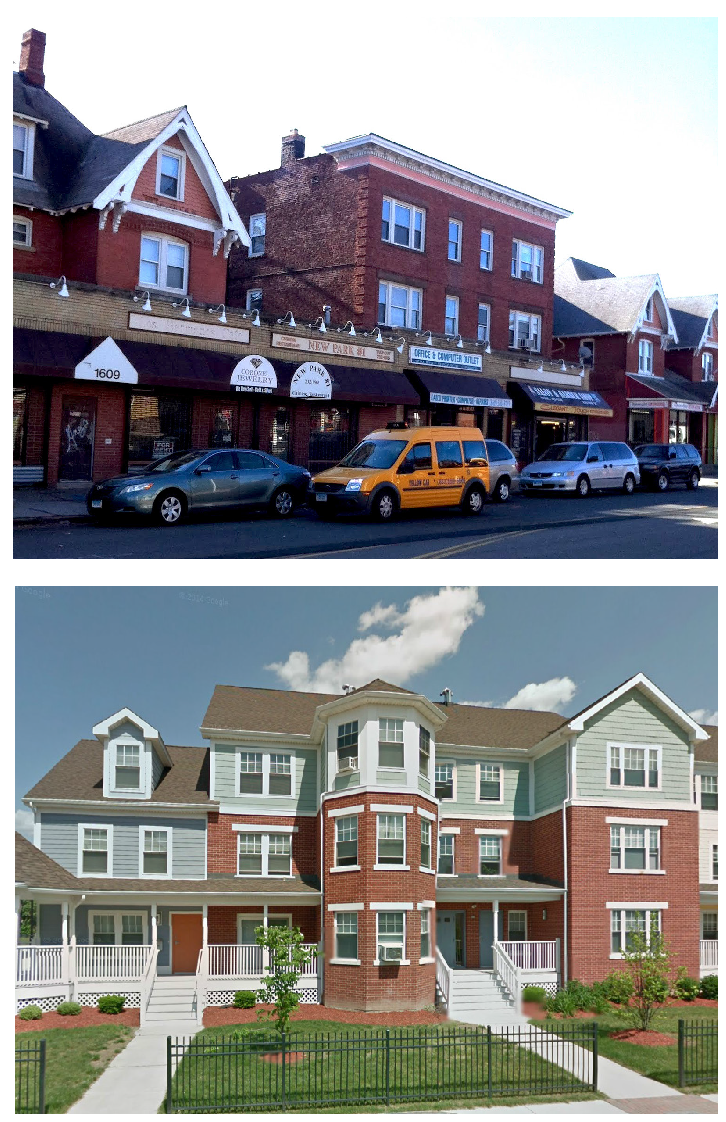
4.2.4 - BUILDING VARIETY
Building design shall vary between vertical facade divisions, where required per the building types, and from adjacent buildings by the type of dominant material or color, scale, or orientation of that material and at least 2 of the following. Refer to Figure 4.2-H Examples of Building Variety for illustrations of this requirement.
A.
The proportion of recesses and projections.
B.
The location of the entrance and window placement, unless storefronts are utilized.
C.
Roof type, plane, or material, unless otherwise stated in the building type requirements.
Figure 4.2-H Examples of Building Variety
4.2.5 - COURTYARDS
Courtyards, defined in 1.6, are permitted in any location on a lot. Minor offsets and recesses intended for architectural effect shall not be considered courtyards. All courtyards, except those provided adjacent to any House Type, shall fulfill the following:
A.
No Parking. Courtyards shall not be used for parking.
B.
Courtyards on Street Frontage. Courtyards that open onto any street frontage are regulated as follows:
(1)
Width. The minimum width of the courtyard for any use shall be 25 feet as measured along the street frontage. The maximum width shall be 1/3 of the building width or 90 feet, whichever is less.
(2)
Depth. The minimum depth of the courtyard shall be 25 feet and the maximum depth shall be 3 times the width.
(3)
Fence and Landscape. In all districts except the DT districts, fence and landscaping meeting the requirements of 6.8 Frontage Buffer shall be provided along the building line.
(4)
Impervious Area. Courtyards in all NX and N districts shall be no more than 25 percent impervious.
C.
Other Courtyards. Courtyards other than those fronting a street are regulated as follows:
(1)
Enclosed Courtyards on Residential Buildings. Courtyards enclosed on all sides shall not be permitted in any building used exclusively for residential purposes.
(2)
Enclosed Courtyards on Mixed-Use Buildings. In buildings used partly for residential and partly for non-residential uses, enclosed courtyards may be permitted provided the following:
(a)
The courtyard shall be not less than 18 feet or 1/3 the average height of the walls surrounding the courtyard, whichever is greater. The depth shall be no greater than 3 times the width.
(b)
In those parts of such buildings used for residence, no rooms other than bathrooms or halls shall be dependent for light and air on windows or openings on such enclosed courtyards.
(3)
Courtyards Opening to the Side or Rear Yard. Courtyards opening to the side or rear of the lot shall have a width not less than 18 feet or 1/3 of the average height of the walls surrounding the courtyard, whichever is greater. In a residential building, the depth shall be no greater than 3 times the width.
4.3.1 - DESCRIPTION & INTENT
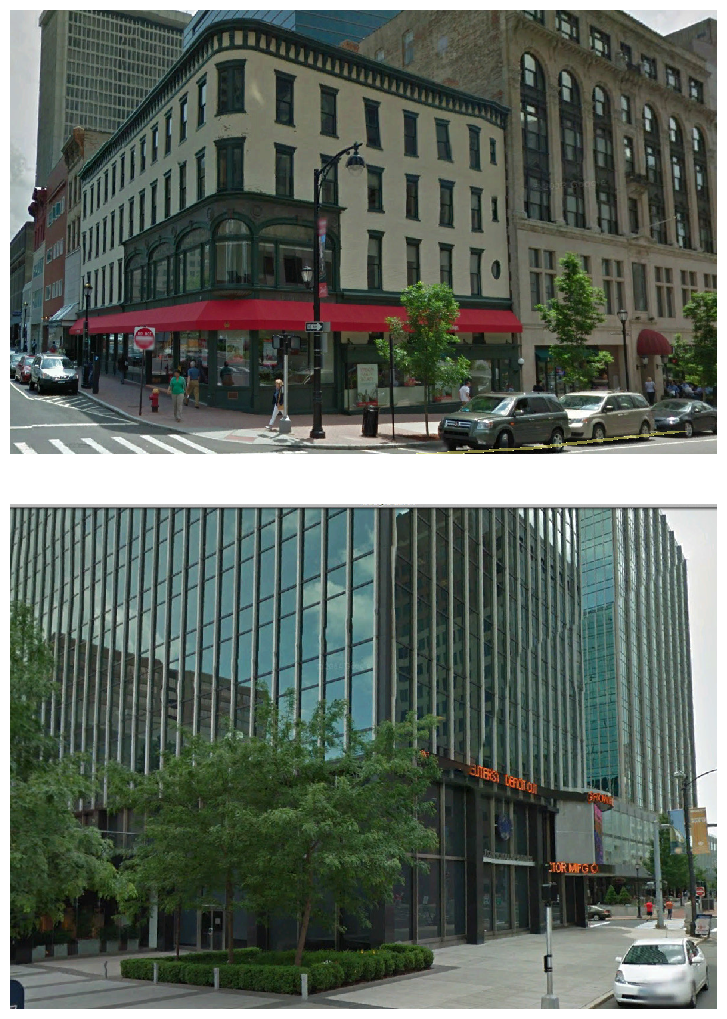
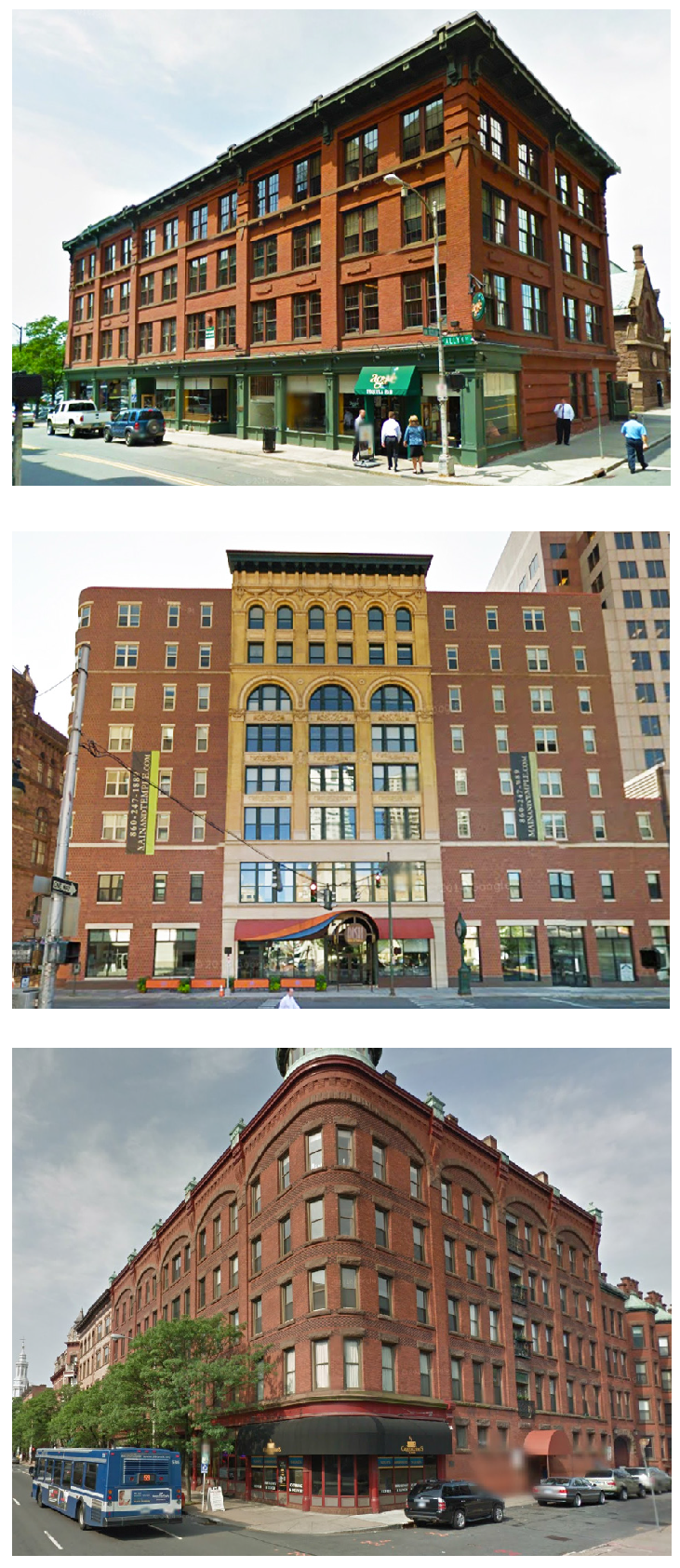
The Downtown Storefront Building is a mid-rise or high-rise building permitted in the downtown core, in the Transit Oriented Development Overlay, and downtown peripheral areas. This building type is required in certain locations in the downtown.
Like the Storefront Building Type, the key facade element of Downtown Storefront Buildings is the storefront required on the ground floor front facade, with large amounts of glass and regularly spaced entrances. Parking is preferred to be provided in parking structures to maximize the building footprint and density.
Figure 4.3-A Illustrative Examples of Downtown Storefront Buildings
4.3.2 - DOWNTOWN STOREFRONT BUILDING TYPE REGULATIONS
Figure 4.3-B Downtown Storefront Building: Building Siting
***Expand table to lock table headings in place while scrolling***
Figure 4.3-B Downtown Storefront Building: Building Siting
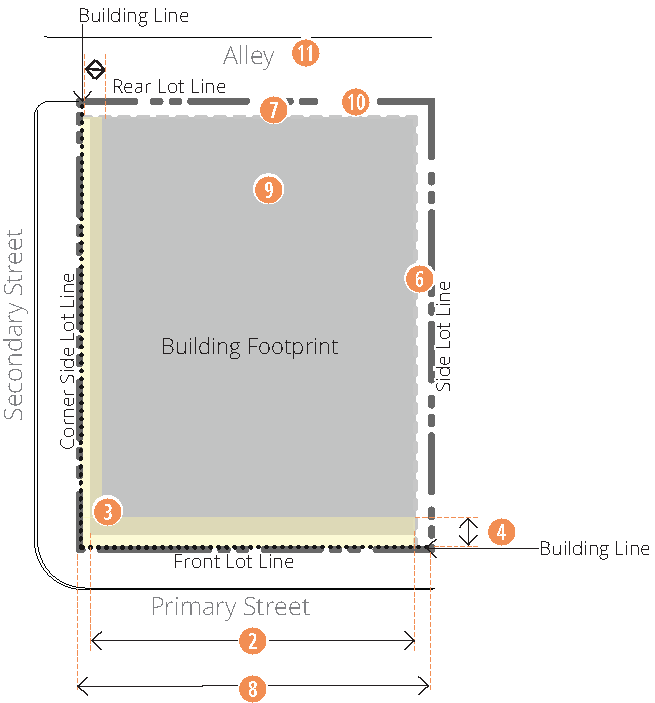
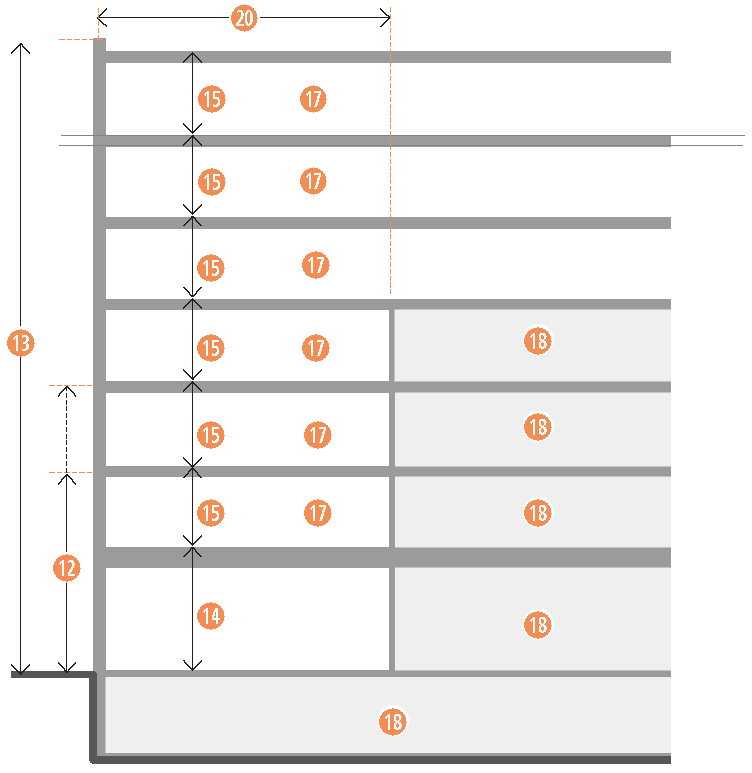
Figure 4.3-C Downtown Storefront Building: Height & Use Requirements
***Expand table to lock table headings in place while scrolling***
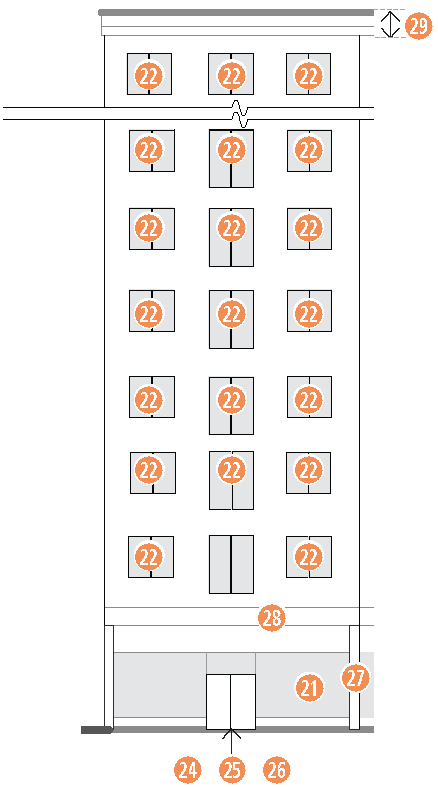
Figure 4.3-D Downtown Storefront Building: Street Facade Requirements
E.
Notes. The following notes are keyed to the requirements in the building type table, A through D:
1.
In DT-1 and DT-3, the Downtown Storefront Building Type is required to front all Primary Streets. Refer to the Zoning Map for the locations of Primary and Secondary Streets adjacent to these districts.
2.
Above the 8th story, the upper stories of any building facade with street frontage shall have a step back from the lower stories that is a minimum of 12 feet and a maximum of 30 feet deep.
3.
On Main Street south of Elm, the maximum height is 5 stories.
4.
If 18 feet or more in height, the ground story shall count as 2 stories towards maximum building height.
5.
Property owners may exceed the maximum overall height set forth in 4.3.2 B.(13) by up to 6 stories by providing the following amenities:
a.
2 additional stories permitted by providing a green roof covering 75 percent of the overall roof surface area.
b.
3 additional stories for providing a functional green roof covering 50 percent of the overall roof surface area.
c.
2 additional stories for providing on-site renewable energy fulfilling at least 25 percent of the energy needs of the building occupants.
d.
3 additional stories for a combined heat and power system (cogeneration) fulfilling at least 50 percent of the heating and cooling needs of the building occupants.
e.
2 additional stories for designating 15 percent of residential units to be affordable.
6.
In DT-2 along Bushnell Park North (Ford and Jewell Streets) between Pearl and Trumbull Streets, Eating Places (refer to 3.3.5 J.) or Eating Places with Drinking (refer to 3.3.5 I.(4)) shall occupy a minimum of 60 percent of the street frontage of the ground story.
7.
Any Eating Places (refer to 3.3.5 J.) or Adult Use Cannabis Uses (refer to 3.3.10) open to the public, but within the interior of the building, shall be located only on the first or second stories and shall be directly accessible from a public right of way. If located on the second story, "directly accessible" shall include being accessible through a small ground-story lobby containing an elevator and stairs. Allowed signage marking the entrance of the Eating Place shall be provided on the exterior of the building.
8.
Where the wall of a building on an adjacent lot contains windows that have served, since November 1, 2016, as the primary means for obtaining natural light and air for more than 50 percent of the interior living or working spaces (excluding mechanical, storage spaces, and stairways) adjoining said wall, and where such wall is within 5 feet of the property line between the lot subject to the application and the adjacent lot, the zoning administrator or the commission, as applicable, may increase all or some portions of the rear and side setback requirements of the lot subject to the application by to up to 30 feet or may require the design of the building wall on that side to be stepped, upon a finding that the additional distance or a stepped design is required to ensure continued access to light and air to the existing living or working spaces.
9.
Tenant amenities in DT Districts:
1.
Not more than sixty percent (60%) of the aggregate square footage of the ground store shall include tenant amenities.
2.
The commission may authorize up to one hundred percent (100%) of the aggregate square footage of the ground story to be used for tenant amenities by special permit.
(Amend. of 11-23-2021(2); Amend. of 3-7-2025(1))
4.4.1 - DESCRIPTION & INTENT
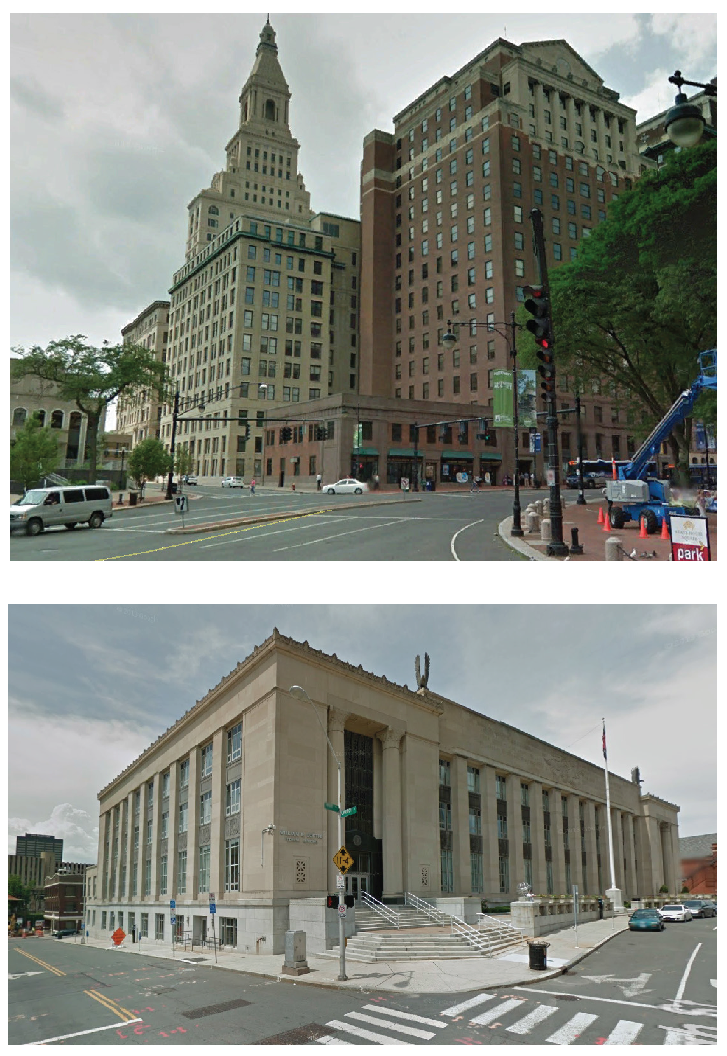
The Downtown General Building Type is a mid-rise or high-rise building located in Hartford's commercial core and in the Transit Oriented Development Overlay that generally accommodates office and/or residential uses, including on the ground floor. Facade requirements and a front entrance location make this a pedestrian-friendly building face suitable for secondary and urban neighborhood streets, rather than shopping districts.
It is typically sited with zero-lot lines, with facades meeting the back of the sidewalk, or facing a courtyard along a Primary or a Secondary Street face. Parking is preferred to be provided in parking structures to maximize the building footprint and density.
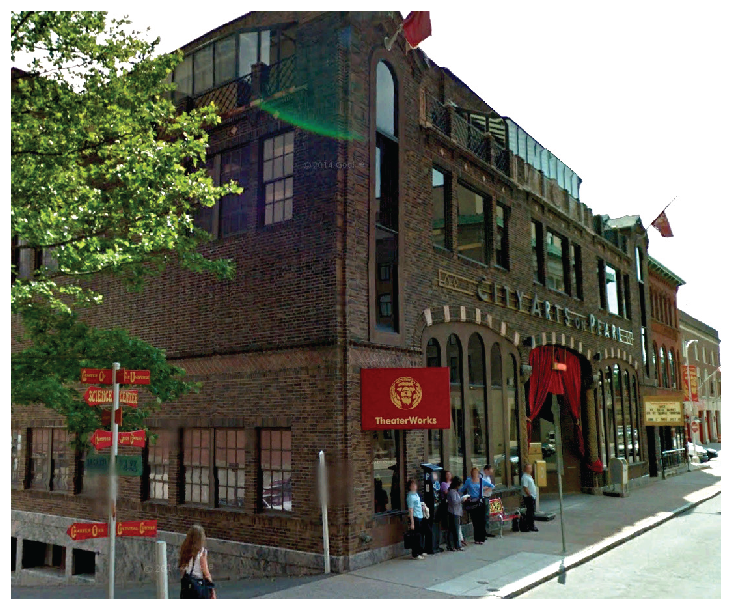
Figure 4.4-A Illustrative Examples of General Buildings
4.4.2 - DOWNTOWN GENERAL BUILDING TYPE REGULATIONS
***Expand table to lock table headings in place while scrolling***
Figure 4.4-B Downtown General Building: Building Siting
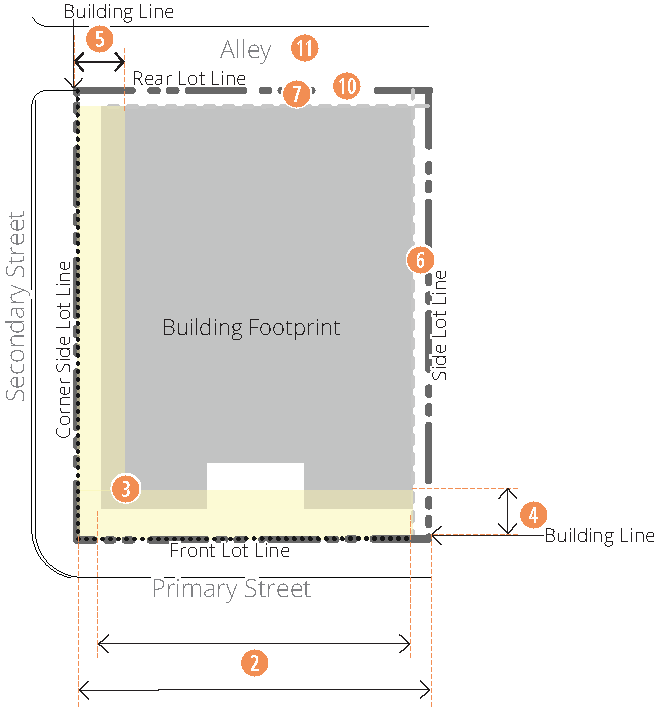
Figure 4.4-C Downtown General Building: Height & Use Requirements
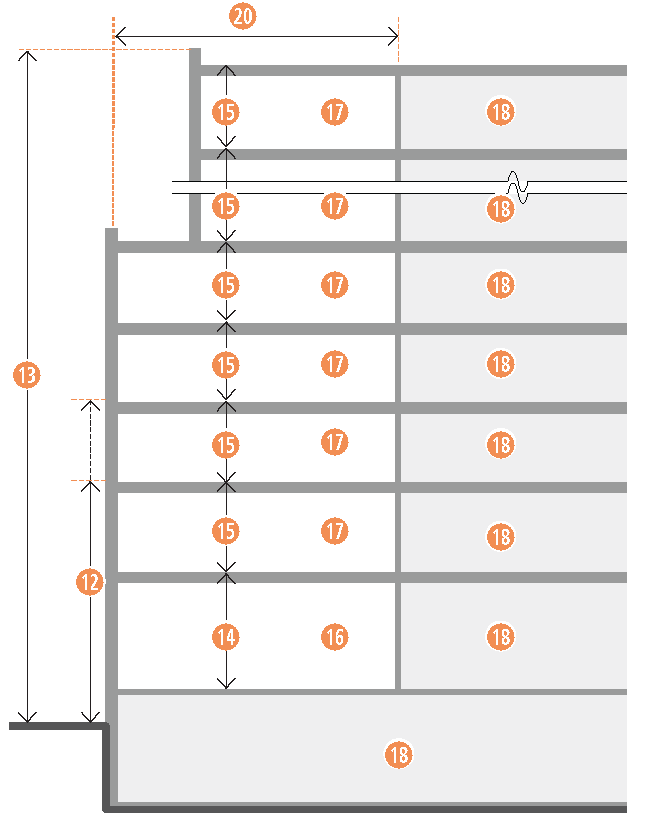
***Expand table to lock table headings in place while scrolling***
Figure 4.4-D Downtown General Building: Street Facade Requirements
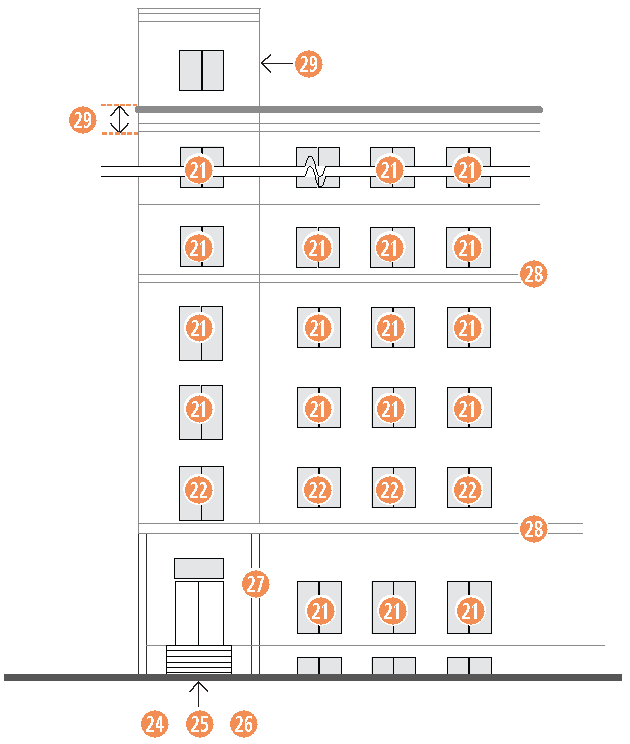
E.
Notes. The following notes are keyed to the requirements in the building type table, A through D:
1.
In DT-1 and DT-3, the Downtown Storefront Building Type is required to front all Primary Streets. Refer to the Zoning Map for the locations of Primary and Secondary Streets adjacent to these districts.
2.
In DT-2 along Bushnell Park North (Ford and Jewell Streets) between Pearl and Trumbull Streets, Downtown Storefront Buildings are required to front towards the park.
3.
A courtyard covering up to 35 percent of the front facade is permitted and may contribute to the Front Lot Line Coverage requirement, provided that a fence and landscaping fulfilling the requirements of 6.8 Frontage Buffer is provided along the building line. Refer to 4.2.5 Courtyards. Courtyard facades shall fulfill 4.4.2 D. Street Facade Requirements.
4.
Above the 8th story, the upper stories of any building facade with street frontage shall have a step back from the lower stories that is a minimum of 12 feet and a maximum of 30 feet deep.
5.
On Main Street south of Elm, the maximum height is 5 stories.
6.
If 18 feet or more in height, ground story shall count as 2 stories towards maximum building height.
7.
Property owners may exceed the maximum overall height set forth in 4.4.2 B.(13) by up to 6 stories by providing the following amenities:
a.
2 additional stories permitted by providing a green roof covering 75 percent of the overall roof surface area.
b.
3 additional stories for providing a functional green roof covering 50 percent of the overall roof surface area.
c.
2 additional stories for providing on-site renewable energy fulfilling at least 25 percent of the energy needs of the building occupants.
d.
3 additional stories for a combined heat and power system (cogeneration) fulfilling at least 50 percent of the heating and cooling needs of the building occupants.
e.
2 additional stories for designating 15 percent of residential units to be affordable.
8.
Any Eating Places (refer to 3.3.5 J.) or Adult Use Cannabis Uses (refer to 3.3.10) open to the public, but within the interior of the building, shall be located only on the first or second stories and shall be directly accessible from a public right of way. If located on the second story, "directly accessible" shall include being accessible through a small ground-story lobby containing an elevator and stairs. Allowed signage marking the entrance of the Eating Place shall be provided on the exterior of the building.
9.
Where the wall of a building on an adjacent lot contains windows that have served, since November 1, 2016, as the primary means for obtaining natural light and air for more than 50 percent of the interior living or working spaces (excluding mechanical, storage spaces, and stairways) adjoining said wall, and where such wall is within 5 feet of the property line between the lot subject to the application and the adjacent lot, the zoning administrator or the commission, as applicable, may increase all or some portions of the rear and side setback requirements of the lot subject to the application by to up to 30 feet or may require the design of the building wall on that side to be stepped, upon a finding that the additional distance or a stepped design is required to ensure continued access to light and air to the existing living or working spaces.
(Amend. of 11-23-2021(2))
4.5.1 - DESCRIPTION & INTENT
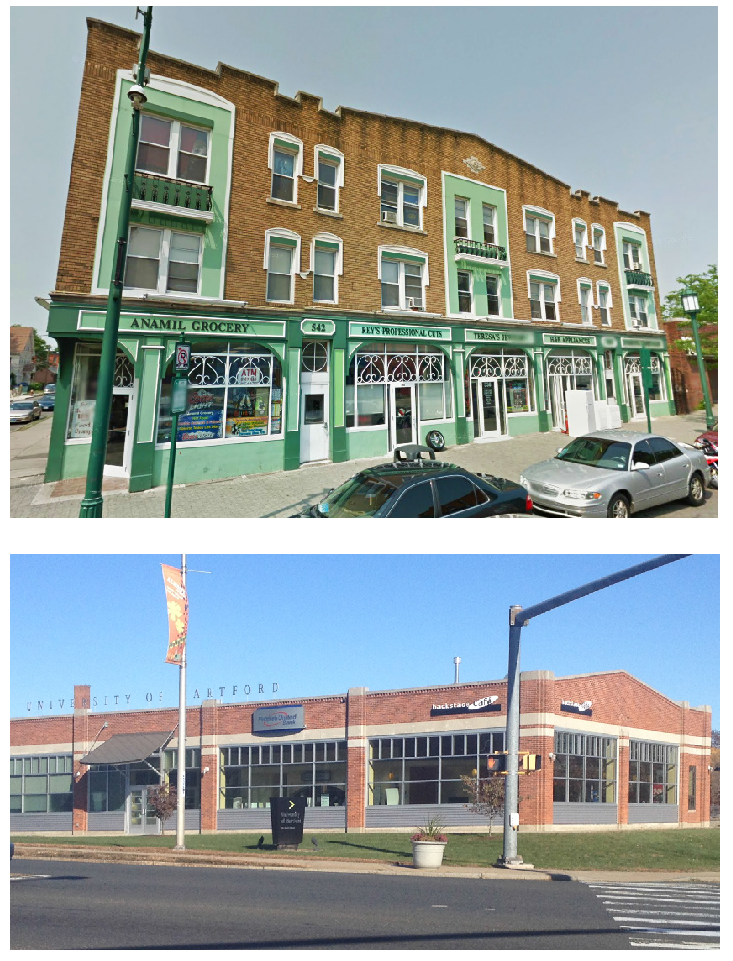
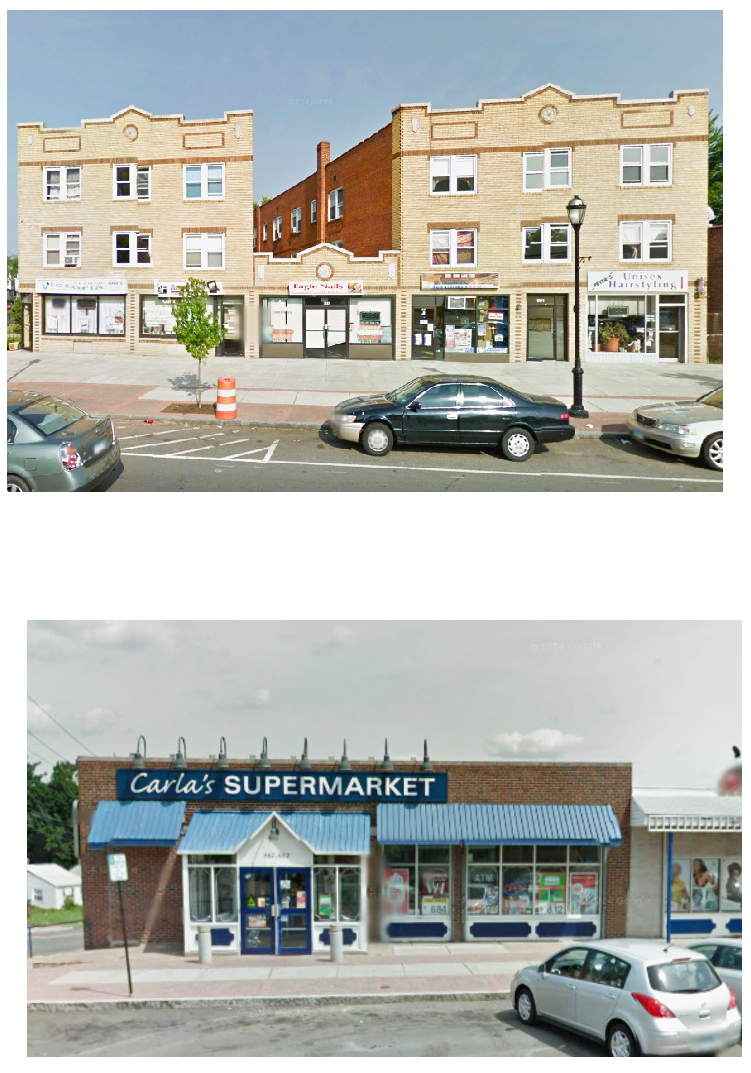
The Storefront Building Type is intended for use as a mixed-use building located close to the front lot line with parking in the rear and sometimes the side of the lot.
The key facade element of this Building Type is the storefront required on the ground floor front facade, with large amounts of glass and regularly spaced entrances.
This building is permitted in a variety of intensities, depending on the district within which it is located.
Figure 4.5-A Illustrative Examples of Storefront Buildings
4.5.2 - STOREFRONT BUILDING TYPE REGULATIONS
***Expand table to lock table headings in place while scrolling***
Figure 4.5-B Storefront Building: Building Siting
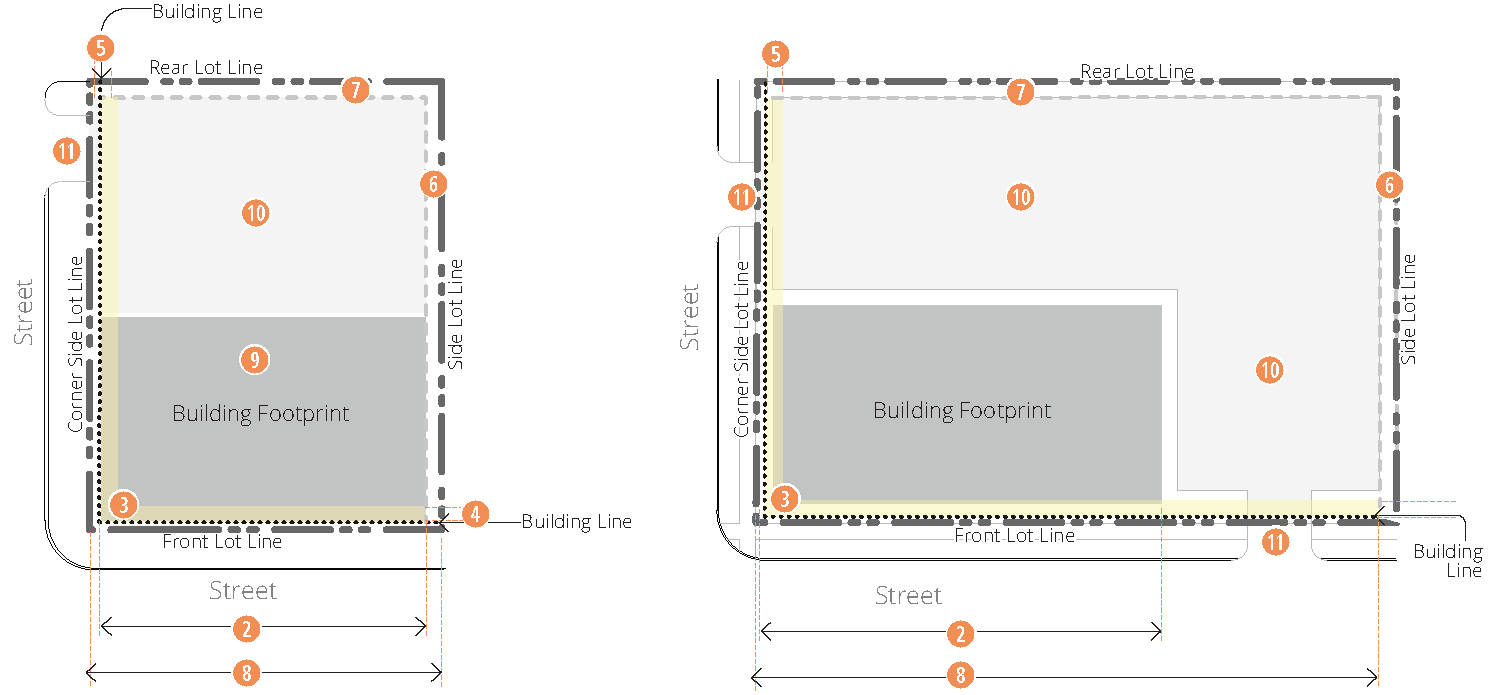
Figure 4.5-C Storefront Building: Height & Use Requirements
***Expand table to lock table headings in place while scrolling***
Figure 4.5-D Storefront Building: Street Facade Requirements
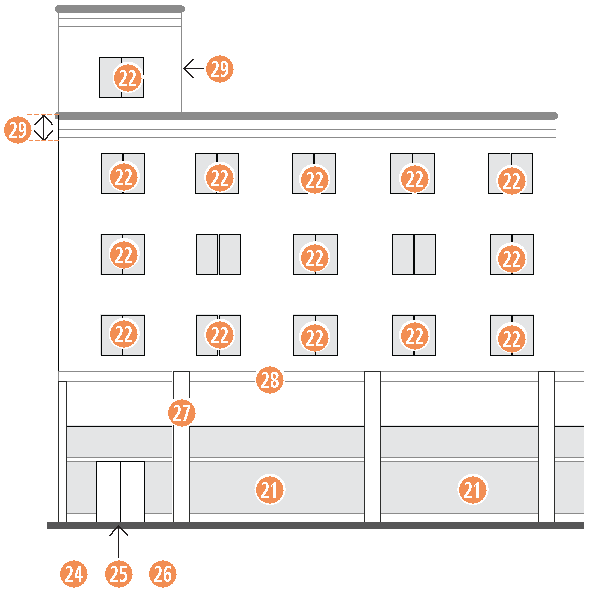
E.
Notes. The following notes are keyed to the requirements in the building type table, A through D:
1.
Where limited side yard parking is permitted, the following is allowed:
a.
On lots wider than 100 feet at the front lot line, one single-loaded aisle of parking (maximum width of 32 feet), located perpendicular to the front lot line, is exempt from Front Lot Line Coverage.
b.
On lots wider than 160 feet at the front lot line, one double-loaded aisle of parking (maximum width 65 feet), located perpendicular to the front lot line, is exempt from Front Lot Line Coverage.
2.
Where existing at the adoption of these regulations, a single story extension on the front of a previously residential-only structure shall not be considered nonconforming in height. The extension shall fulfill all other requirements of the Storefront Building Type, except the roof type shall be the parapet type. The residential street facade behind the storefront shall fulfill the Street Facade Requirements of House B, with the exception of entrance requirements. Refer to 4.15.2 House B Building Type Regulations.
3.
If 18 feet or more in height, ground story shall count as 2 stories towards maximum building height.
(Amend. of 11-23-2021(2); Amend. of 4-23-2024(1))
4.6.1 - DESCRIPTION & INTENT
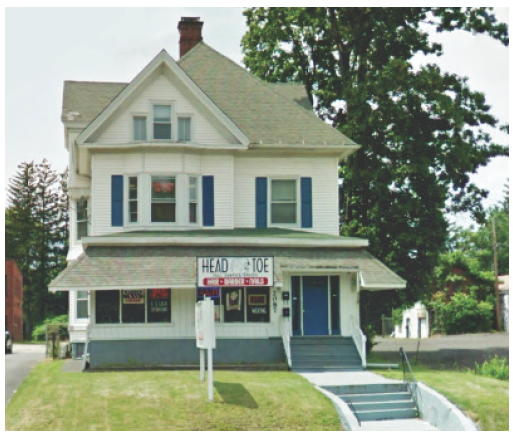
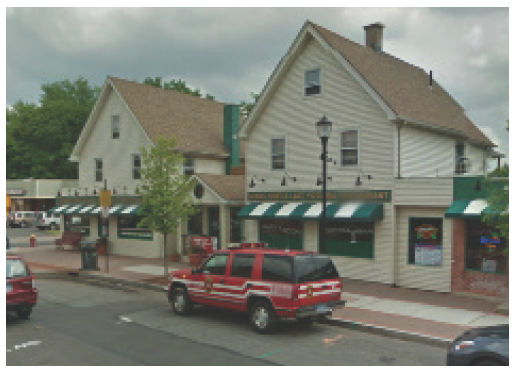
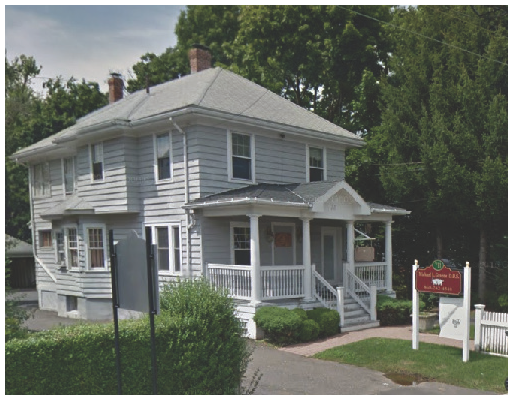
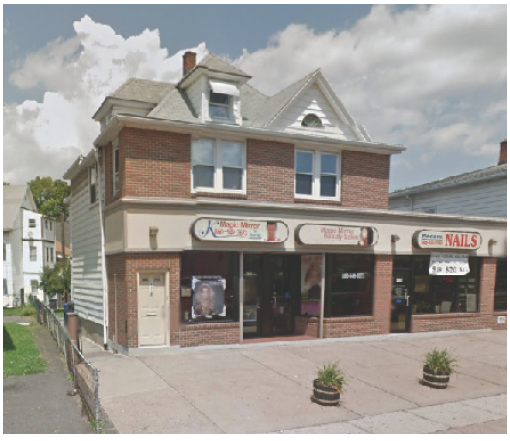
The Cottage Commercial Building allows a wide mix of uses in a building with physical characteristics of a residential cottage, such as a pitched roof and a front stoop or porch.
This lower-scale building has a pedestrian-friendly storefront, stoop, or porch entrance type with moderate transparency and a primary entrance that faces the street. The ground story elevation may be at sidewalk grade or raised. The building may have a small landscaped area in the front yard.
Parking is permitted in the rear yard of the lot and sometimes in the side yard with limited dimensions.
Figure 4.6-A Illustrative Examples of Cottage Commercial Buildings
4.6.2 - COTTAGE COMMERCIAL BUILDING TYPE REGULATIONS
***Expand table to lock table headings in place while scrolling***
Figure 4.6-B Cottage Commercial Building: Building Siting
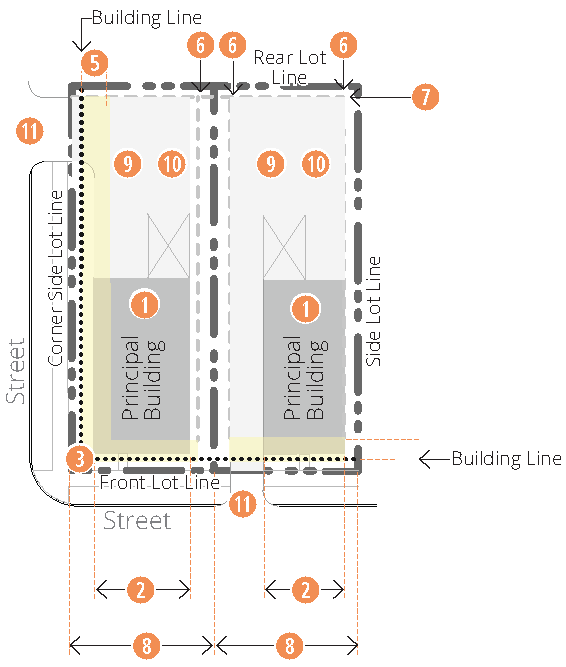
Figure 4.6-C Cottage Commercial Building: Height & Use Requirements
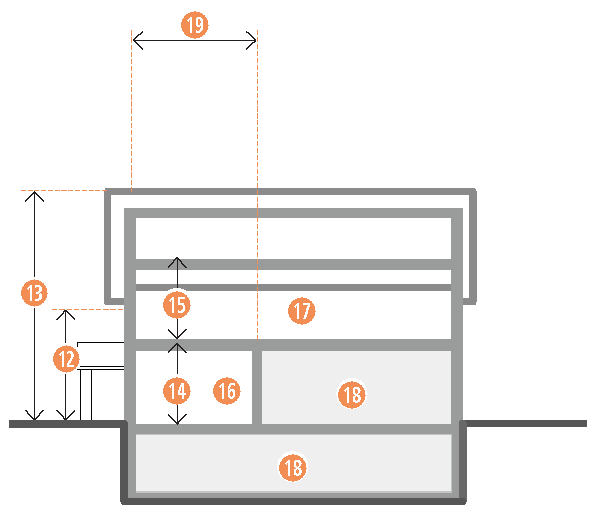
***Expand table to lock table headings in place while scrolling***
Figure 4.6-D Cottage Commercial Building: Street Facade Requirements
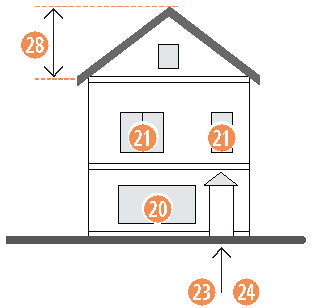
E.
Notes. The following notes are keyed to the requirements in the building type table, A through D:
1.
When noted by district, multiple buildings may be located on a lot. Each building shall fulfill all requirements of the Building Type.
2.
On lots wider than 50 feet, one single-loaded aisle of parking (maximum width of 32 feet), located perpendicular to the front lot line, is permitted and shall otherwise have a Front Lot Line Coverage of 50 percent.
(Amend. of 11-23-2021(2))
4.7.1 - DESCRIPTION & INTENT
The Commercial Center Building is designed to be both pedestrian-friendly and convenient for vehicular access. The building is required to provide a percentage of building built close to the street, while allowing parking lots along the street. This type maintains a high level of ground story transparency on the street and requires entrances along the street as well as addressing the facades on the main parking lot.
The Commercial Center may contain only one use, but is permitted to contain a mix of uses.
Multiple buildings are permitted on a single lot, with parking within the rear of the building, or in the rear or side yards that can be accessed by a driveway per street frontage.
Figure 4.7-A Illustrative Examples of Commercial Center Buildings
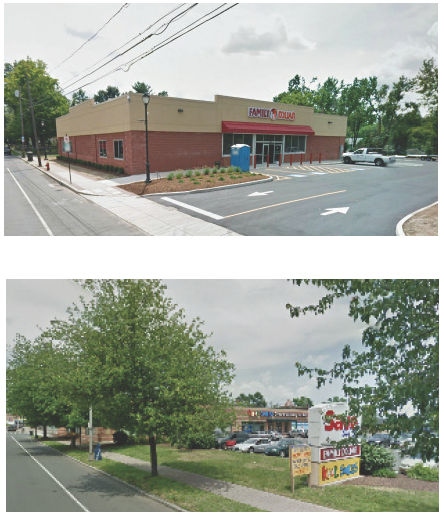
4.7.2 - COMMERCIAL CENTER BUILDING TYPE REGULATIONS
***Expand table to lock table headings in place while scrolling***
Figure 4.7-B Commercial Center Building: Building Siting
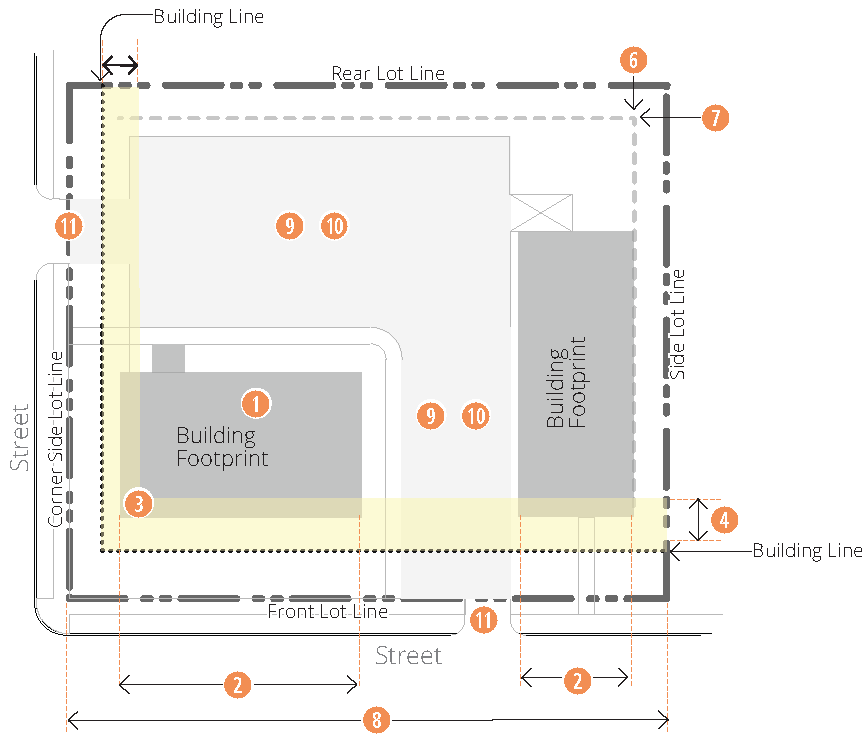
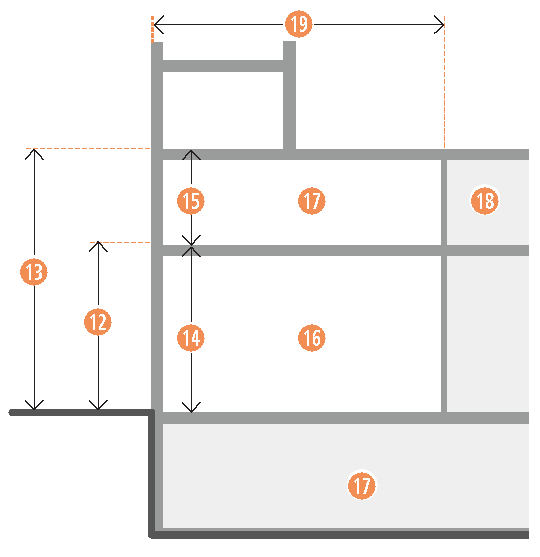
Figure 4.7-C Commercial Center Building: Height & Use Requirements
***Expand table to lock table headings in place while scrolling***
Figure 4.7-D Commercial Center Building: Street Facade Requirements
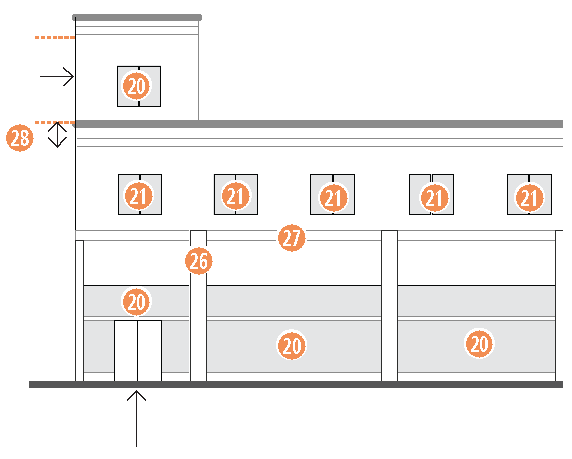
E.
Notes. The following notes are keyed to the requirements in the building type table, A through D:
1.
Multiple principal buildings are permitted on a single lot. The buildings may work together to fulfill the requirements of the Commercial Center Building Type.
(Amend. of 11-23-2021(2))
4.8.1 - DESCRIPTION & INTENT
The General Building Type is a less distinctive building than the Storefront or Civic buildings and is typically limited to office, civic, and/or residential uses.
The General Building is intended to be built close to the front and corner lot lines allowing easy access to passing pedestrians and transit riders, but with a landscaped area between the building and sidewalk.
Parking may be provided in the rear of the lot, within the building, or, in some cases, one double-loaded aisle of parking is permitted in the interior or the side yard at the front lot line.
Figure 4.8-A Illustrative Examples of General Buildings
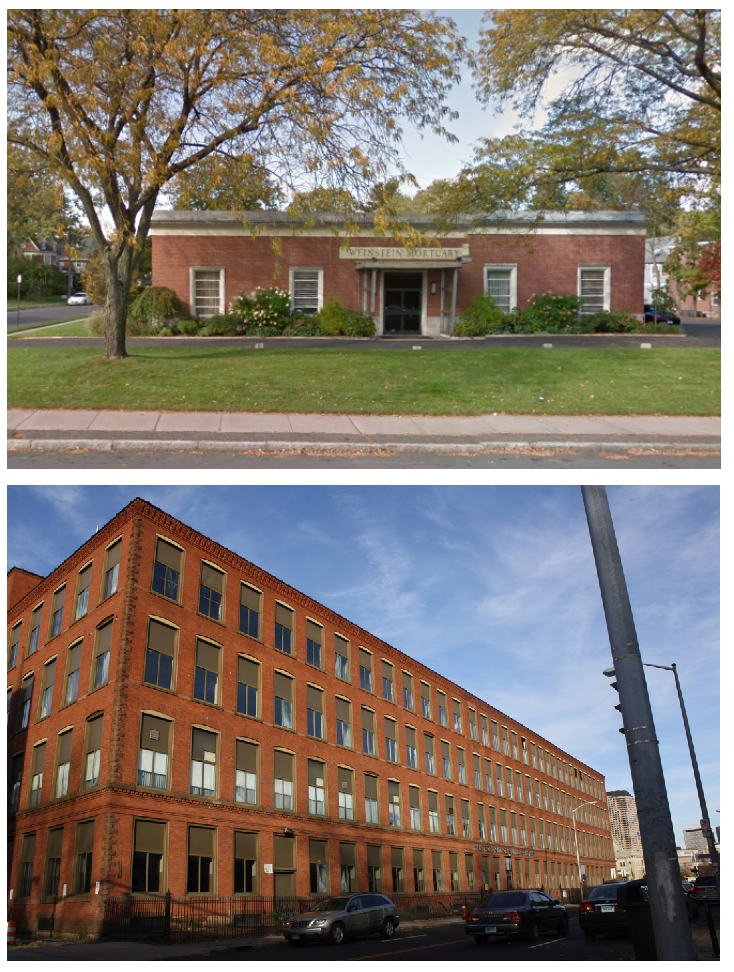
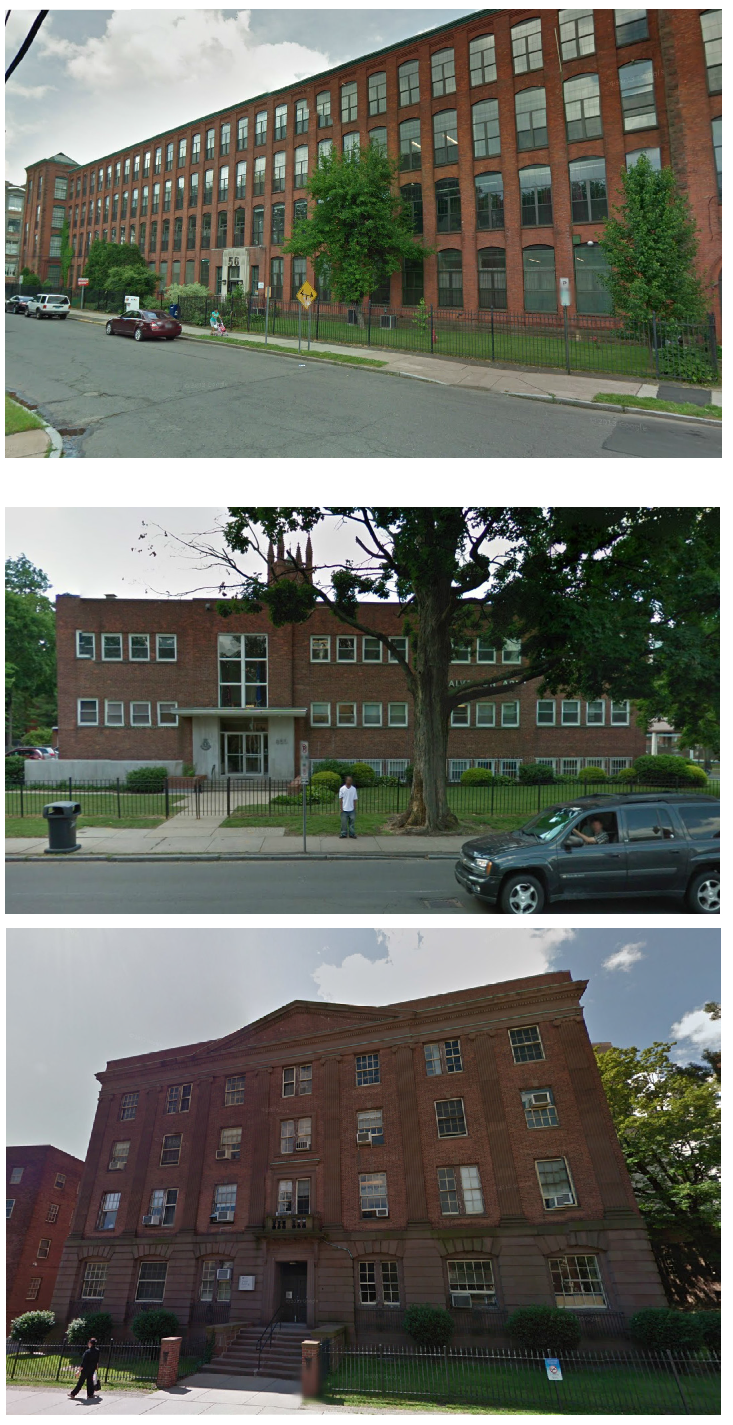
4.8.2 - GENERAL BUILDING TYPE REGULATIONS
***Expand table to lock table headings in place while scrolling***
Figure 4.8-B General Building: Building Siting
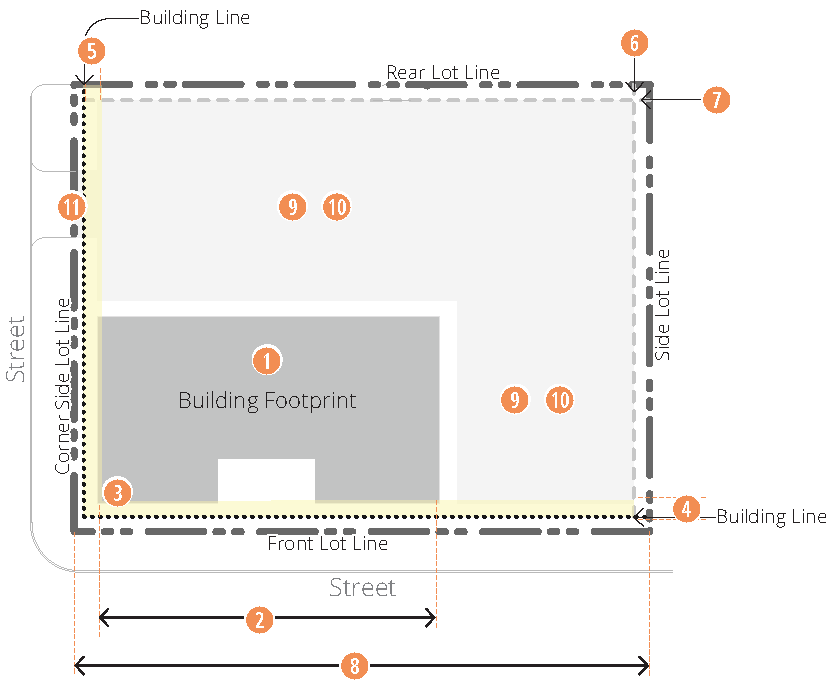
Figure 4.8-C General Building: Height & Use Requirements
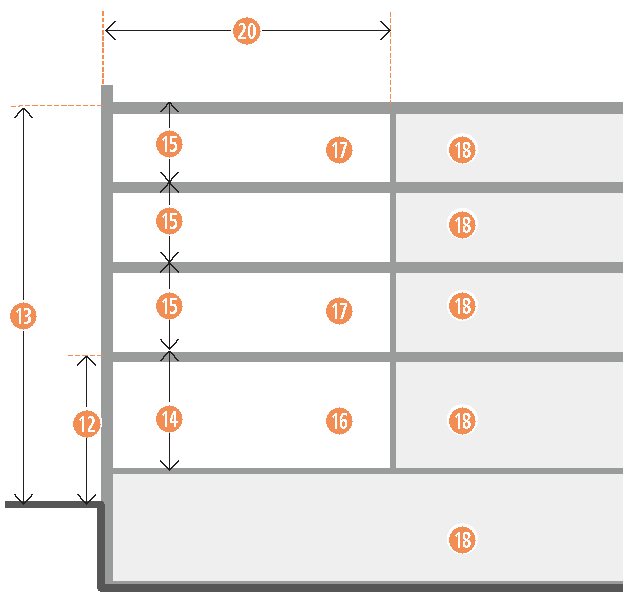
***Expand table to lock table headings in place while scrolling***
Figure 4.8-D General Building: Street Facade Requirements
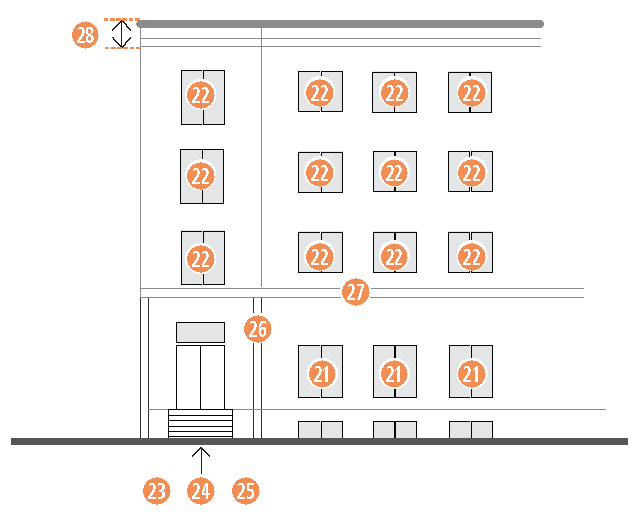
E.
Notes. The following notes are keyed to the requirements in the building type table, A through D:
1.
A courtyard covering up to 35 percent of the front facade is permitted and may contribute to the Front Lot Line Coverage requirement, provided that a fence and landscaping fulfilling the requirements of 6.8 Frontage Buffer is provided along the building line. Refer to 4.2.5 Courtyards. Courtyard facades shall fulfill 4.8.2 D. Street Facade Requirements.
2.
Lots wider than 140 feet are permitted one double-loaded aisle of parking (maximum width of 65 feet), located perpendicular to the front lot line.
3.
If 18 feet or more in height, ground story shall count as 2 stories towards maximum building height.
3.a.
For any Substance Use Rehabilitation Clinic (refer to Section 3.3.5 Q.), if ground floor is 18 feet or more in height, the ground story shall count as 2 stories towards maximum building height.
4.
Any Eating Places (refer to 3.3.5 J.) or Adult Use Cannabis Uses (refer to 3.3.10) open to the public, but within the interior of the building, shall be located only on the first or second stories and shall be directly accessible from a public right of way. If located on the second story, "directly accessible" shall include being accessible through a small ground-story lobby containing an elevator and stairs. Allowed signage marking the entrance of the Eating Place shall be provided on the exterior of the building.
5.
Per Section 3.3.5 Q., a Substance Use Rehabilitation Clinic may occupy 100% of the building's ground floor or upper floors.
(Amend. of 11-23-2021(2); Amend. of 9-13-2022; Amend. of 12-13-2022)
4.9.1 - DESCRIPTION & INTENT
The Workshop/Warehouse Building Type provides a street facade similar to the General Building.
This Building Type is still intended to be built fairly close to the front and corner lot lines allowing easy access to pedestrians.
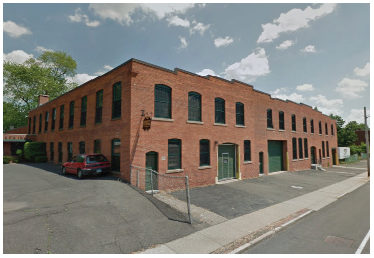
In the Industrial (ID) districts, the regulations for this building are very flexible to allow a wide range of forms, accommodating larger scale truck loading, warehousing, and manufacturing. In other districts, the Workshop/Warehouse Building is defined to work within a more pedestrian oriented area. In those locations, parking is limited to the side and rear, and service bays and loading are limited on the front facade.
Figure 4.9-A Illustrative Examples of Workshop/Warehouse Buildings
4.9.2 - WORKSHOP/WAREHOUSE BUILDING TYPE REGULATIONS
***Expand table to lock table headings in place while scrolling***
Figure 4.9-B Workshop/Warehouse Building: Building Siting
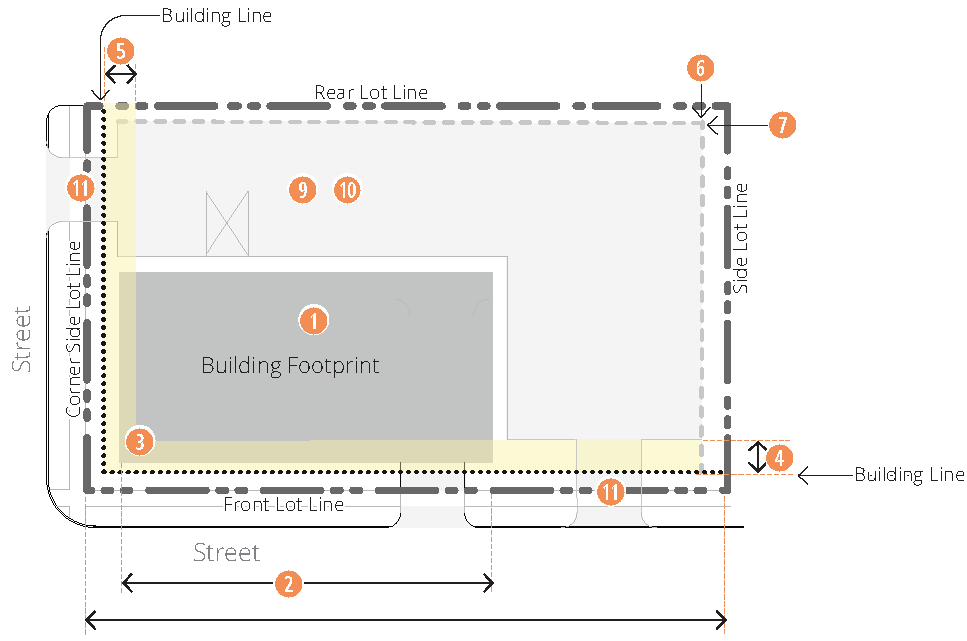
Figure 4.9-C Workshop/Warehouse Building: Height & Use Requirements
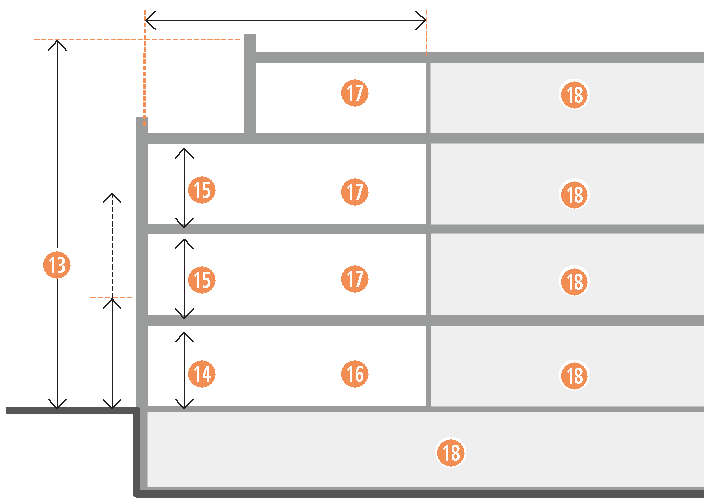
***Expand table to lock table headings in place while scrolling***
Figure 4.9-D Workshop/Warehouse Building: Street Facade Requirements
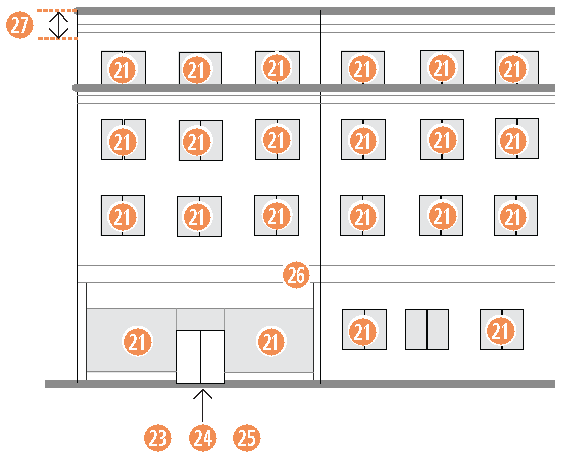
E.
Notes. The following notes are keyed to the requirements in the building type table, A through D:
1.
Limited side yard parking is one double-loaded aisle of parking (maximum width of 72 feet), located perpendicular to the front lot line.
2.
If 18 feet or more in height, ground story shall count as 2 stories towards maximum building height.
3.
Any Eating Places (refer to 3.3.5 J.) or Adult Use Cannabis Uses (refer to 3.3.10) open to the public, but within the interior of the building, shall be located only on the first or second stories and shall be directly accessible from a public right of way. If located on the second story, "directly accessible" shall include being accessible through a small ground-story lobby containing an elevator and stairs. Allowed signage marking the entrance of the Eating Place shall be provided on the exterior of the building.
(Amend. of 11-23-2021(2))
4.10.1 - DESCRIPTION & INTENT
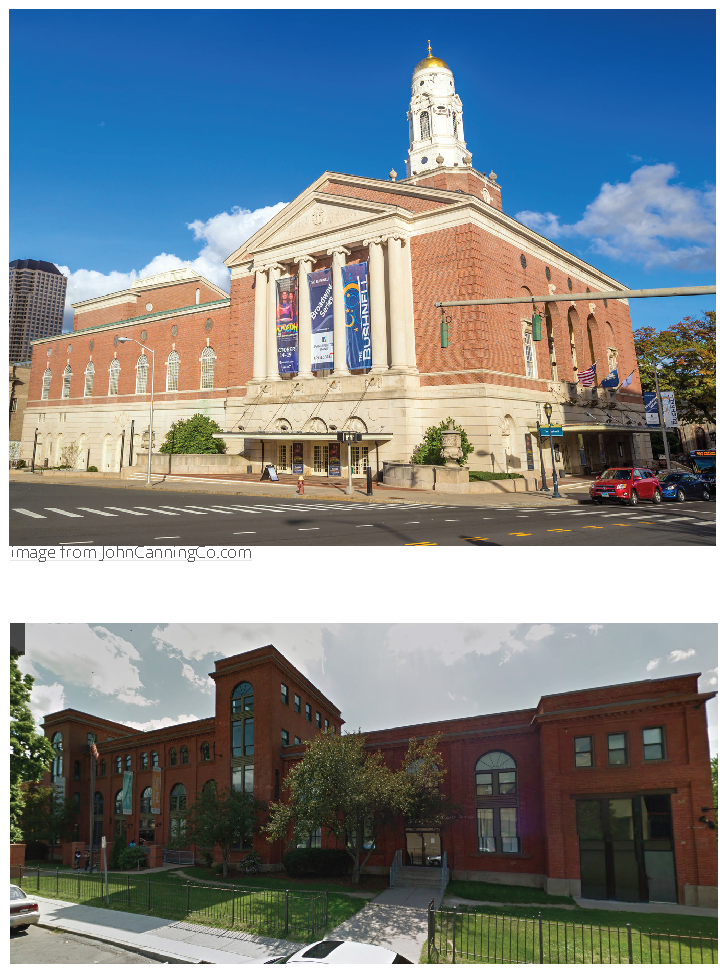
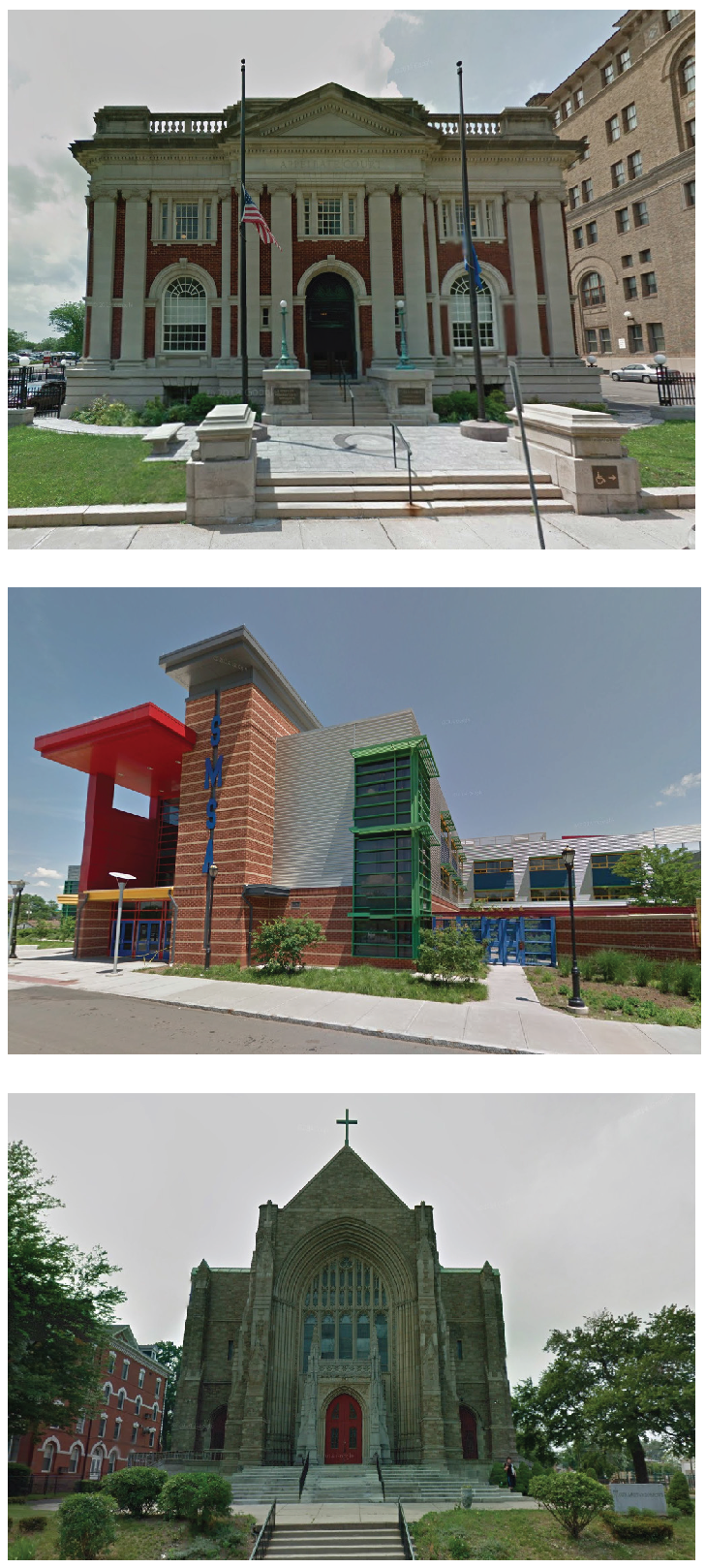
The Civic Building is the most flexible Building Type intended only for buildings utilizing the civic and institutional category of uses.
These buildings are distinctive within the urban fabric created by the other Building Types and could be designed as unique and/or iconic structures.
In contrast to most of the other Building Types, a minimum setback line is required instead of a build to zone, though this setback is required to be landscaped. Parking is typically limited to the rear and small side yard lots.
Figure 4.10-A Illustrative Examples of Civic Buildings
4.10.2 - CIVIC BUILDING TYPE REGULATIONS
SEE NOTE 1
***Expand table to lock table headings in place while scrolling***
Figure 4.10-B Civic Building: Building Siting Examples
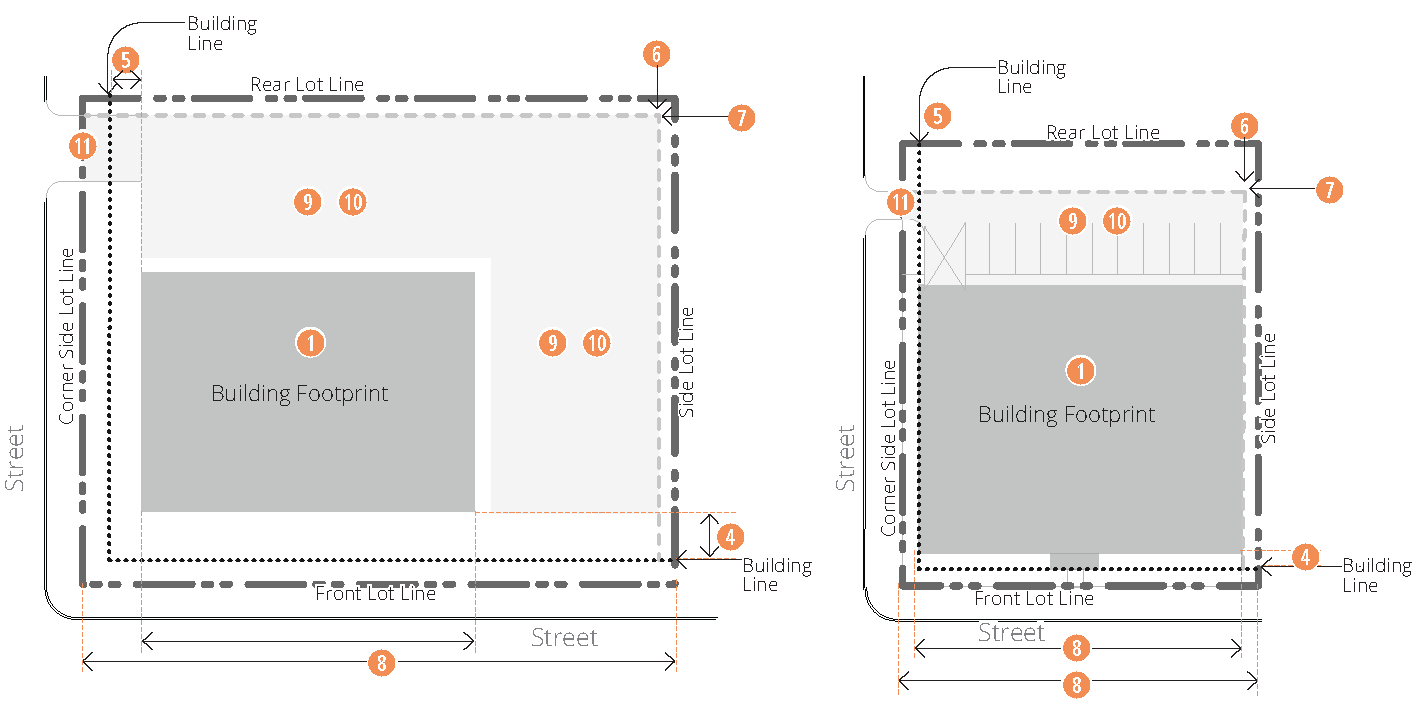
Figure 4.10-C Civic Building: Height & Use Requirements
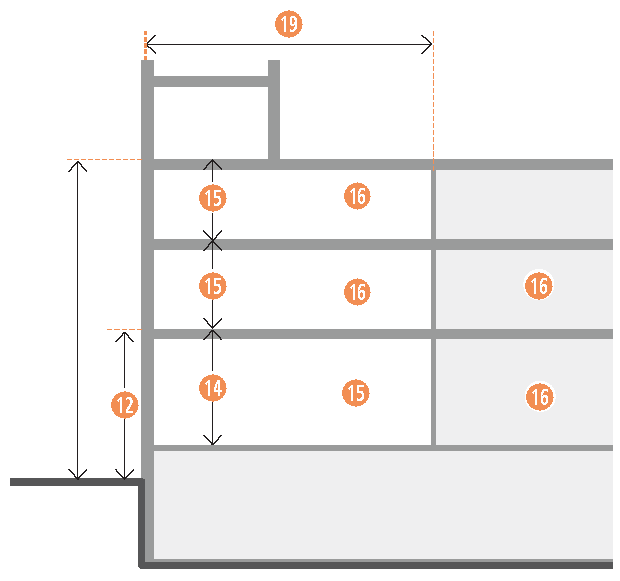
***Expand table to lock table headings in place while scrolling***
Figure 4.10-D Civic Building: Street Facade Requirements
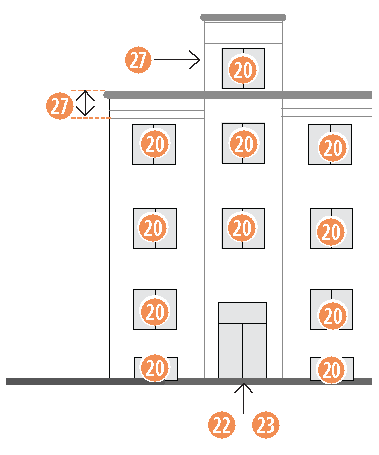
E.
Notes. The following notes are keyed to the requirements in the building type table, A through D:
1.
The Civic Building Type shall only be utilized for certain uses per the Building Type table, except that Civic Building Type buildings over 50 years old may be used for residential and lodging uses, retail uses, service uses, or employment uses. Further, in some districts, the Civic Building may only be used on a corner lot (refer to Figure 4.1-B Permitted Building Types by District for Residential Districts).
2.
Lots wider than 140 feet are permitted to have one double-loaded aisle of parking (maximum width of 72 feet), located perpendicular to the front lot line.
3.
If 18 feet or more in height, ground story shall count as 2 stories towards maximum building height.
4.11.1 - DESCRIPTION & INTENT
The Apartment Building is designed to house multiple residential units within multi-unit districts throughout the city.
The Apartment Building includes a landscaped front yard and a front primary entrance, which contributes to a pedestrian-friendly neighborhood.
Figure 4.11-A Illustrative Examples of Apartment Buildings in Hartford
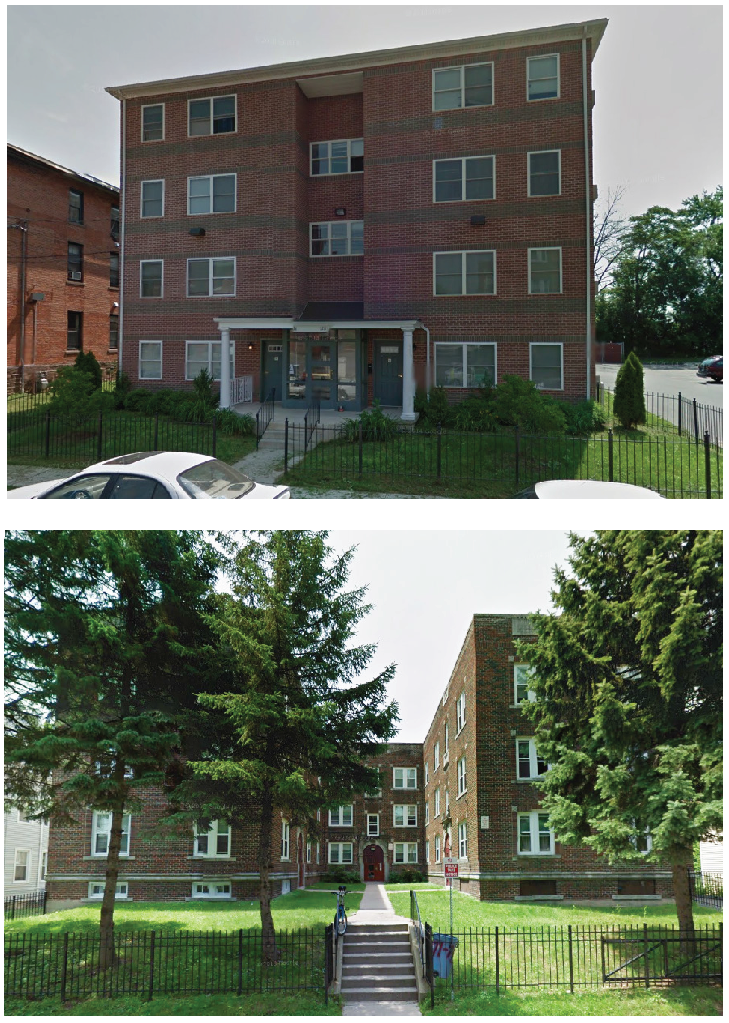
4.11.2 - APARTMENT BUILDING TYPE REGULATIONS
***Expand table to lock table headings in place while scrolling***
Figure 4.11-B Apartment Building: Building Siting
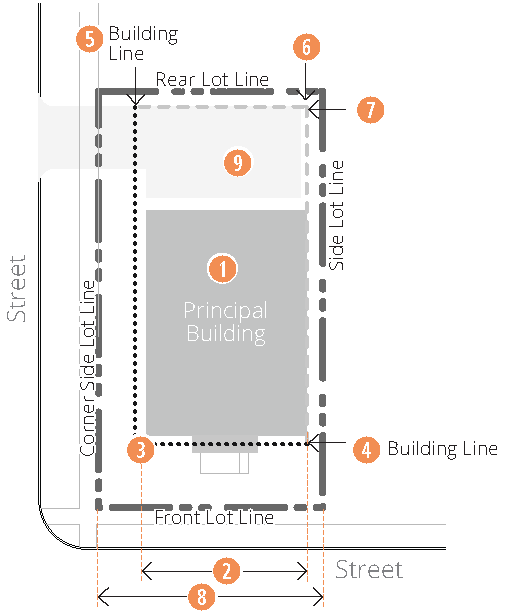
Figure 4.11-C Apartment Building: Height & Use Requirements
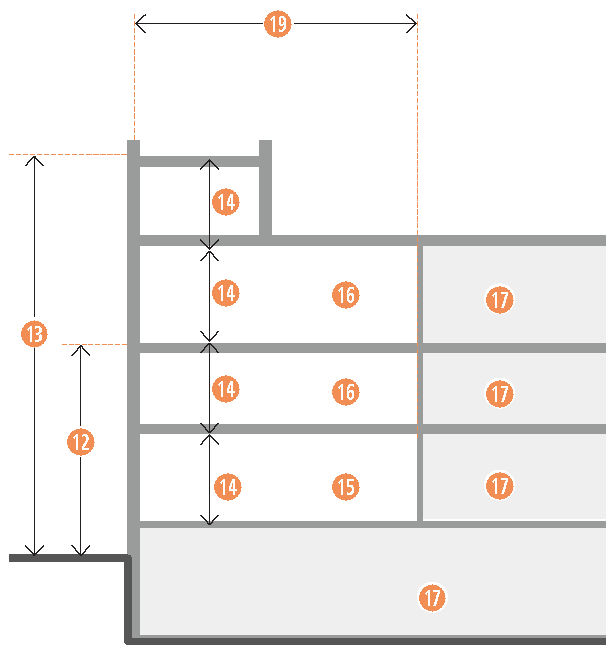
***Expand table to lock table headings in place while scrolling***
Figure 4.11-D Apartment Building: Facade Requirements
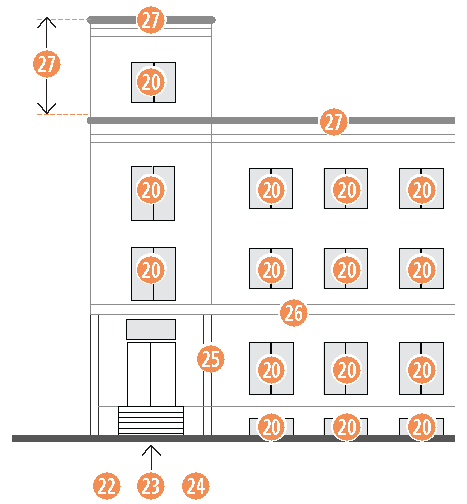
E.
Notes. The following notes are keyed to the requirements in the building type table, A through D:
1.
A landscaped court covering up to 35 percent of the front facade is permitted and may contribute to the Front Lot Line Coverage requirement, provided that a fence and landscaping fulfilling the requirements of 6.8 Frontage Buffer is provided along the building line. Refer to 4.2.5 Courtyards. Court facades shall fulfill 4.11.2 D. Street Facade Requirements.
2.
Where noted, lots wider than 140' are permitted one double-loaded aisle of parking (maximum width of 65'), located perpendicular to street, which is exempt from Front Lot Line Coverage calculation.
3.
Maximum impervious and semi-pervious area in any front yard (refer to 1.6) is 25 percent.
4.
If 18 feet or more in height, ground story should count as 2 stories towards maximum building height.
5.
In the MS-2 district, buildings located on street corners, may incorporate the following:
a.
Uses. Up to 25 percent of the ground story on the corner of the building may be used for permitted retail and service uses.
b.
Entrance Type. The storefront entrance type is required for retail or service uses, and may be used on up to 30 percent of any street facing facade.
c.
Ground Story Transparency. On the storefront entrance type, a minimum of 50 percent ground story transparency is required.
6.
In the NX-1 district, on a lot located on a block that is adjacent to a block not containing any lot zoned to any N district, the maximum building coverage may be 45%. The preceding sentence is intended to allow for greater building coverage where the NX-1 lot is located in a neighborhood of higher density structures.
4.12.1 - DESCRIPTION & INTENT
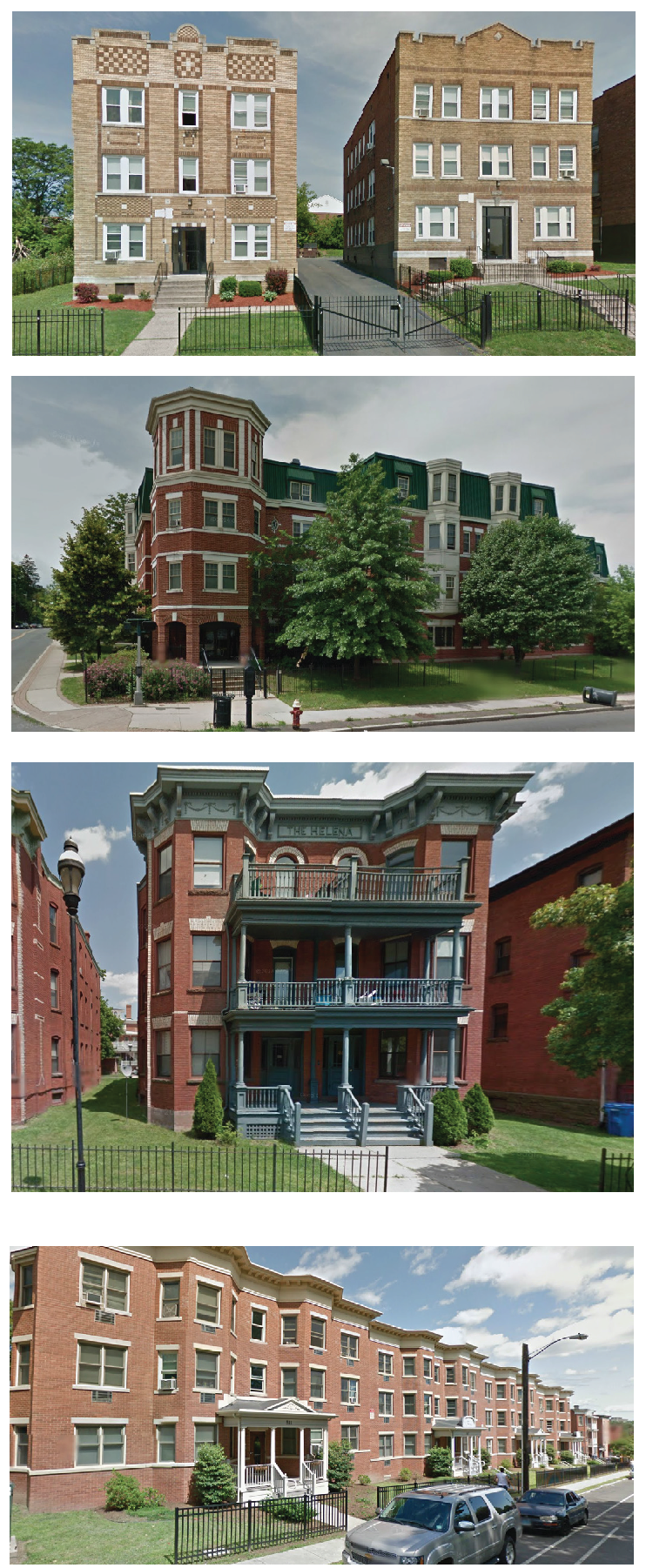
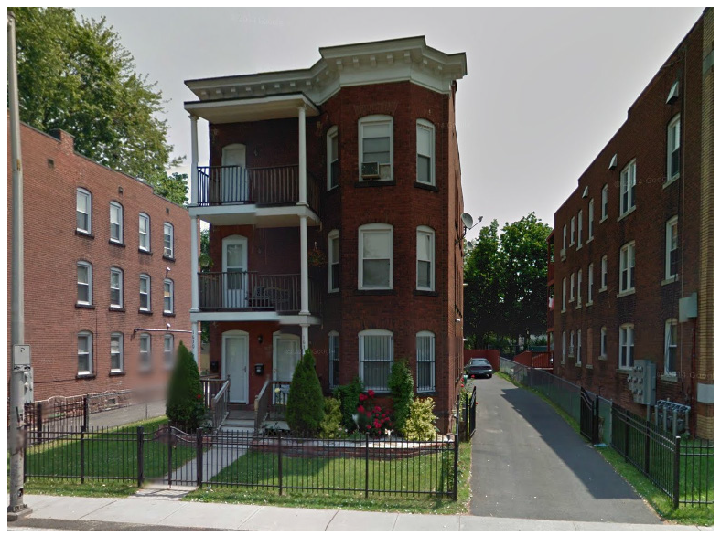
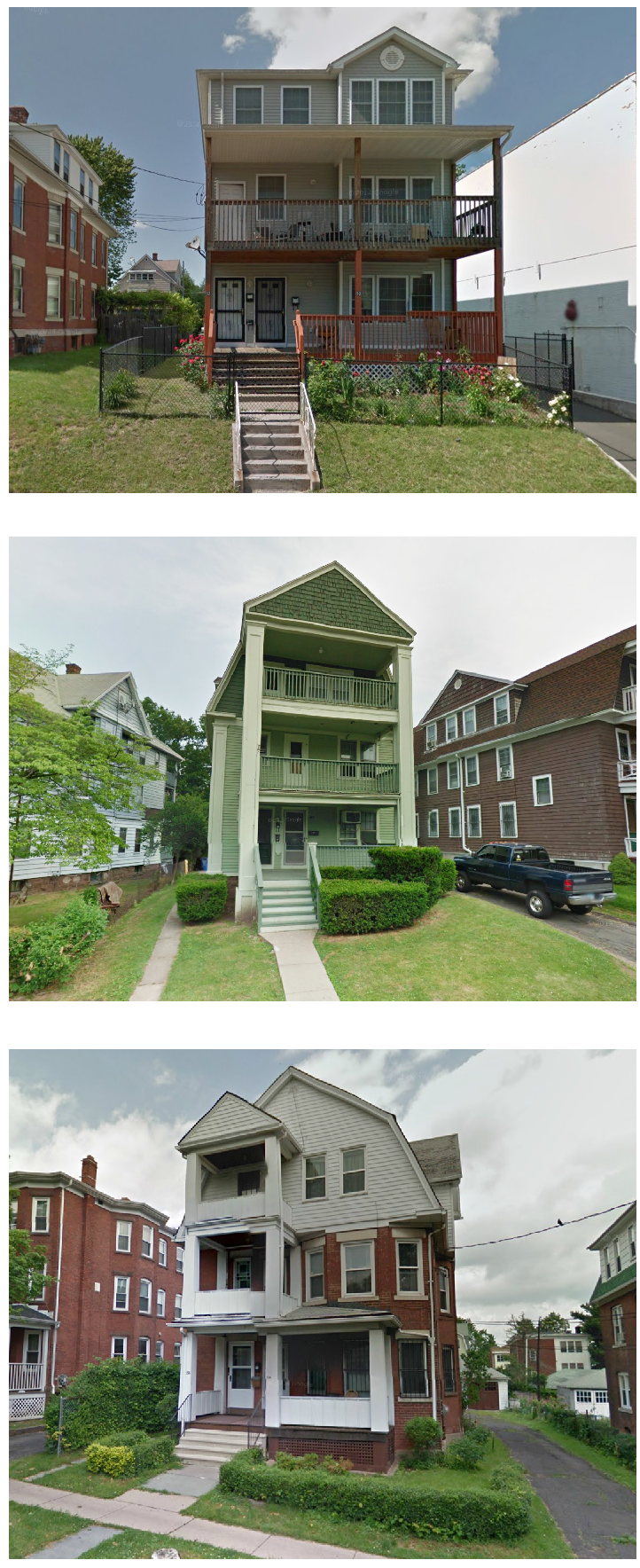
The Stacked Flats Building is a narrow, smaller-scale multi-unit building with multiple residential units off of an internal stairway. The units are typically horizontal, stacked on top of each other with one unit per floor.
Historically, the Stacked Flats Building has been either a 3 story wood clad building with one floor located under a gambrel roof, or a "Triple Decker," 3 story, 3 flat brick building with a parapet roof and heavy cornice.
Figure 4.12-A Illustrative Examples of Stacked Flats Buildings from Hartford
4.12.2 - STACKED FLATS BUILDING TYPE REGULATIONS
***Expand table to lock table headings in place while scrolling***
Figure 4.12-B Stacked Flats: Building Siting
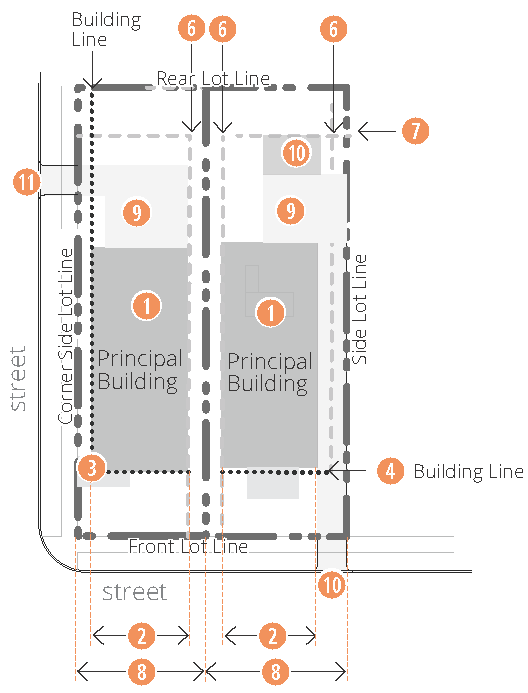
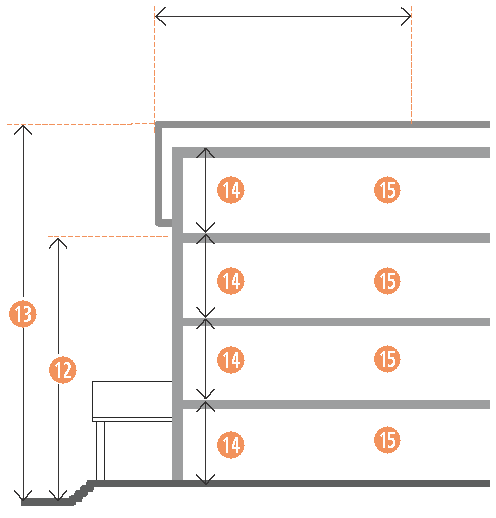
Figure 4.12-C Stacked Flats: Height & Use Requirements
***Expand table to lock table headings in place while scrolling***
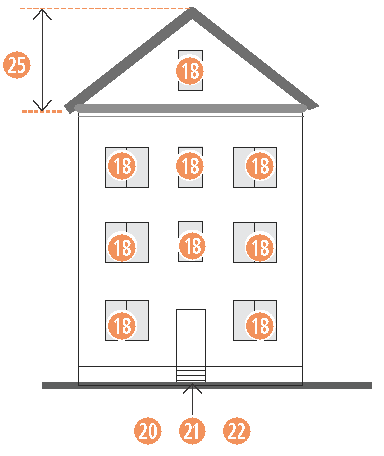
Figure 4.12-D Stacked Flats: Facade Requirements
E.
Notes. The following notes are keyed to the requirements in the building type table, A through D:
1.
Maximum impervious and semi-pervious area in any front yard (refer to 1.6) is 25 percent.
4.13.1 - DESCRIPTION & INTENT
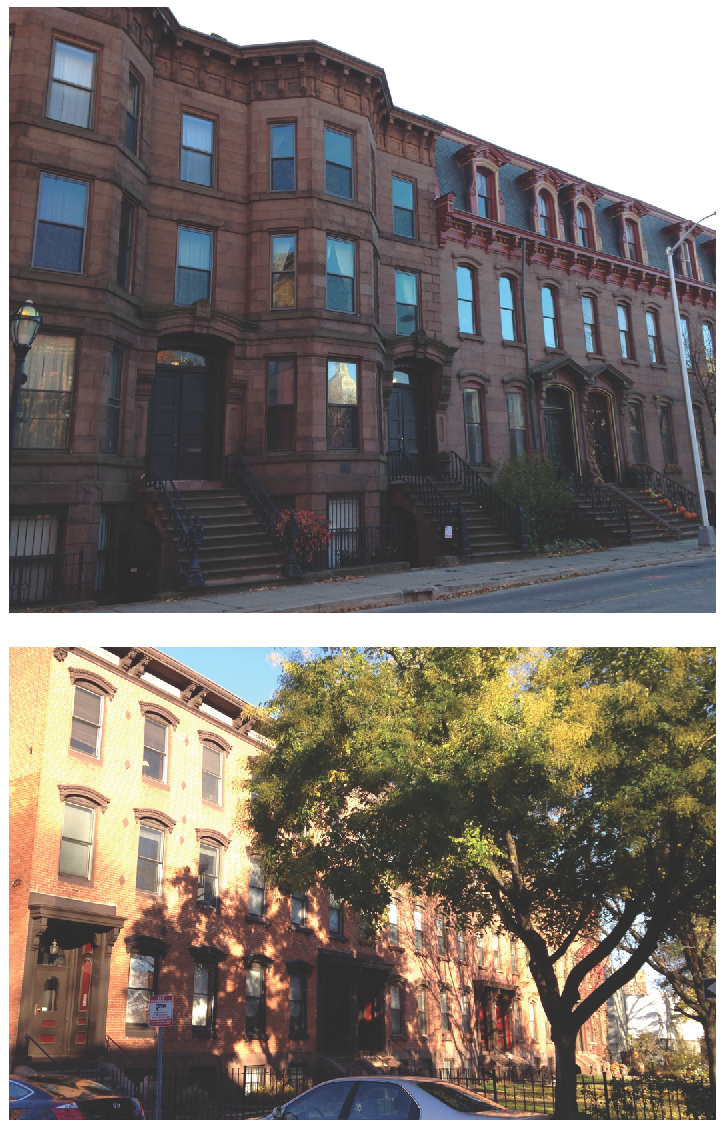
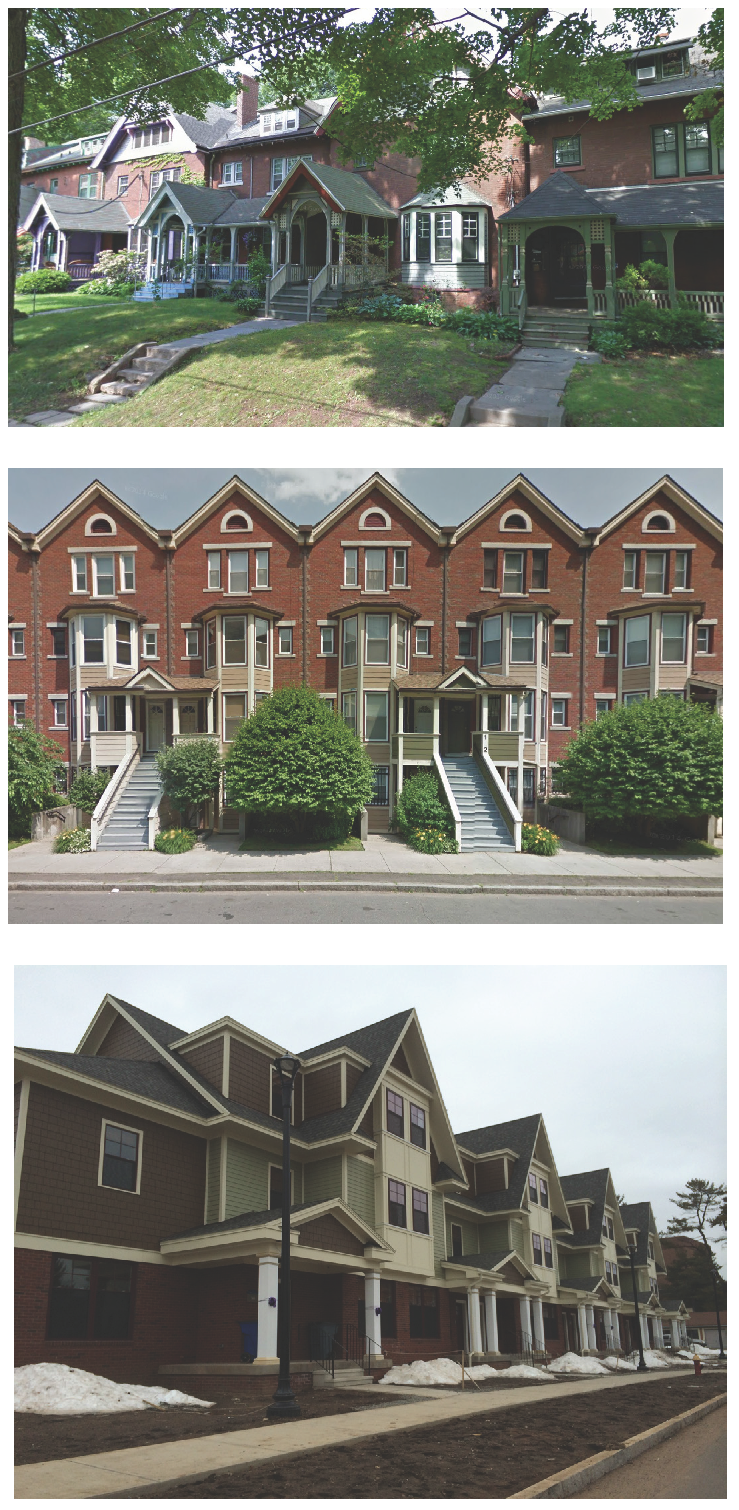
The Row Building is a set of multiple buildings, either all located on the same lot or on adjacent lots, which must have a separate entrance to the street and may contain one or more stacked dwelling units. This building type may be organized as townhouses or rowhouses, or can be utilized for live/work units when non-residential uses are permitted. Parking is required to be located in the rear yard and may be incorporated either into a detached garage or in an attached garage accessed from the rear of the building. However, when the garage is located within the building, a minimum level of occupied space is required on the front facade to ensure that the street facade is active.
Figure 4.13-A Illustrative Examples of Row Buildings from Hartford
4.13.2 - ROW BUILDING TYPE REGULATIONS
***Expand table to lock table headings in place while scrolling***
Figure 4.13-B Row Building: Building Siting
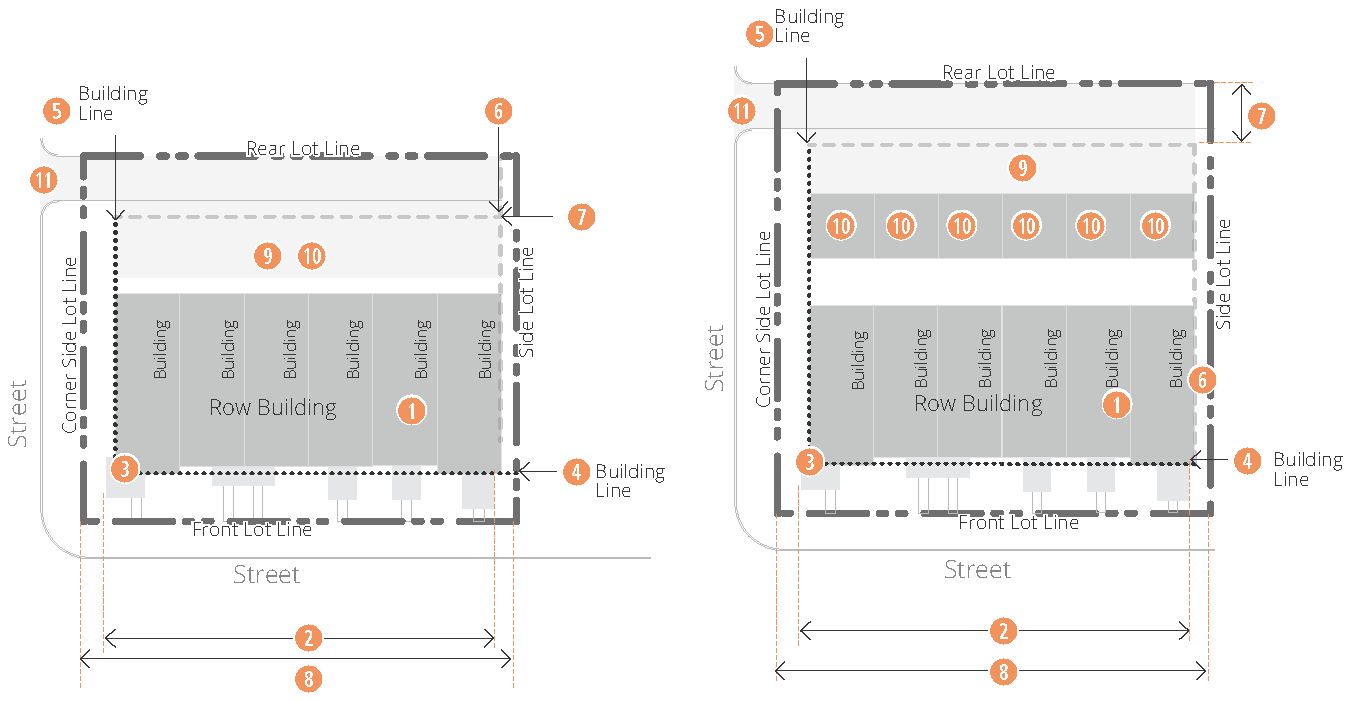
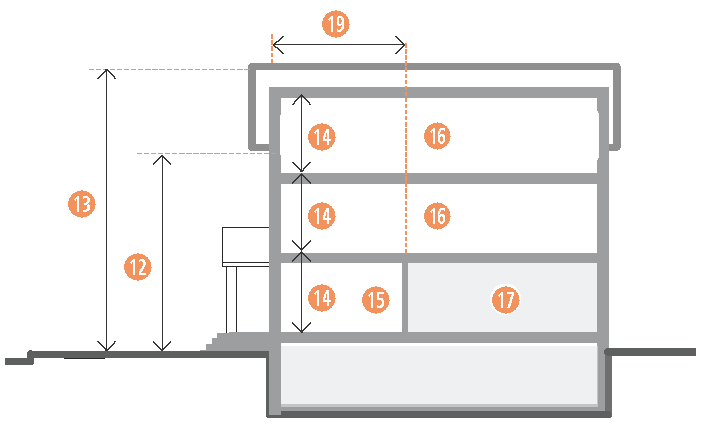
Figure 4.13-C Row Height & Use Requirements
***Expand table to lock table headings in place while scrolling***
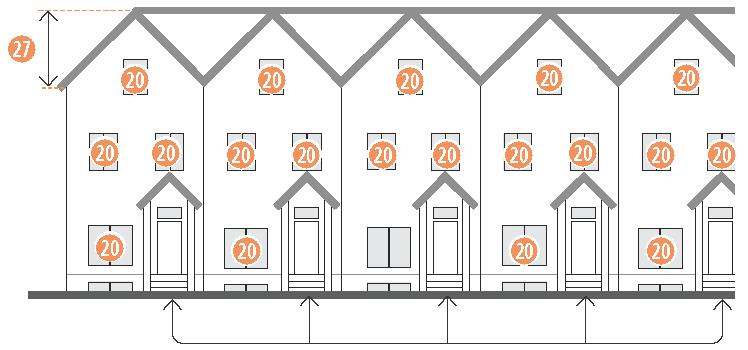
Figure 4.13-D Row Building: Facade Requirements
E.
Notes. The following notes are keyed to the requirements in the building type table, A through D:
1.
The Row Building must include 3 or more buildings, located either on the same lot or on adjacent lots, except that for existing buildings built before January 1, 1940, a Row Building Type may be used for just 2 buildings on adjacent lots. In case of a Row Building being developed on multiple lots, separate applications must be filed for each lot per 1.3.1 B.(6), and a certificates of occupancy for one Row Building shall not be issued until certificates of occupancy can be issued each contiguous building comprising the Row Building. When permitted, multiple buildings may be located on a lot with the minimum required space between them. However, each building shall fulfill all requirements of the Building Type unless otherwise noted.
2.
Where multiple buildings are permitted, each building shall fulfill the Front Lot Line Coverage requirement except one of every 2 buildings may front a courtyard. Refer to 4.2.5 Courtyards for requirements.
a.
Entrances to buildings on courtyard may be off the courtyard.
b.
Facades on courtyard shall fulfill the Street Facade Requirements.
3.
Maximum impervious and semi-pervious area in any front yard (refer to 1.6) is 25 percent.
4.
The building minimum side setback and the minimum space between buildings shall be zero feet where a Row Building occupies the full length of the front lot line and neighboring lots are, or are reasonably anticipated to be, the Row Building type, and in the case of a Row Building on a corner, the building minimum side setback and the minimum space between buildings shall be zero feet on the side of the Row Building adjoining another building.
5.
Each building must have one entrance oriented to the street, with each dwelling unit accessed through such street entrance, either directly from the street or through a common hallway. Each vertical unit may include up to one dwelling unit per floor.
4.14.1 - DESCRIPTION & INTENT
The House A Building is a large, wide residential building on an oversized lot, which can also potentially accommodate non-residential uses.
The House A Building is set back from the front and corner side lot lines to allow for large landscaped yards.
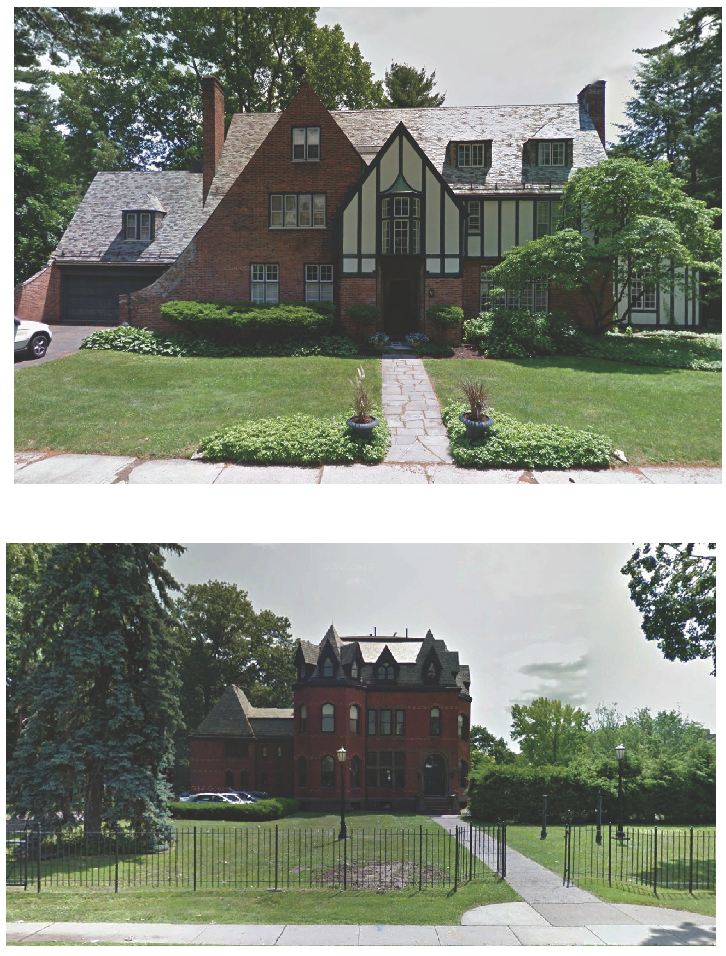
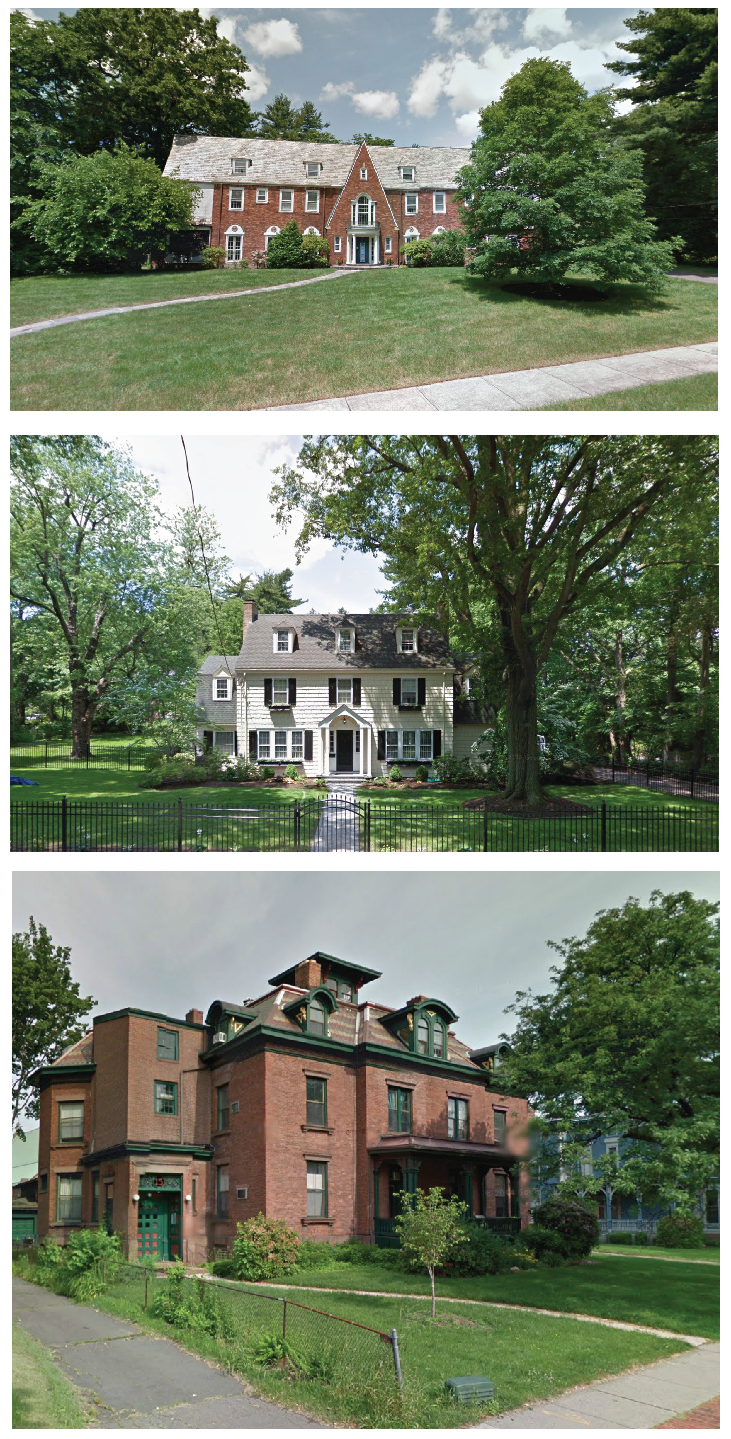
This type includes a range of larger lots, wider than the House B Building Type, and includes several historic homes that have been converted to offices and museums.
Figure 4.14-A Illustrative Examples of House A Buildings from Hartford
4.14.2 - HOUSE A BUILDING TYPE REGULATIONS
***Expand table to lock table headings in place while scrolling***
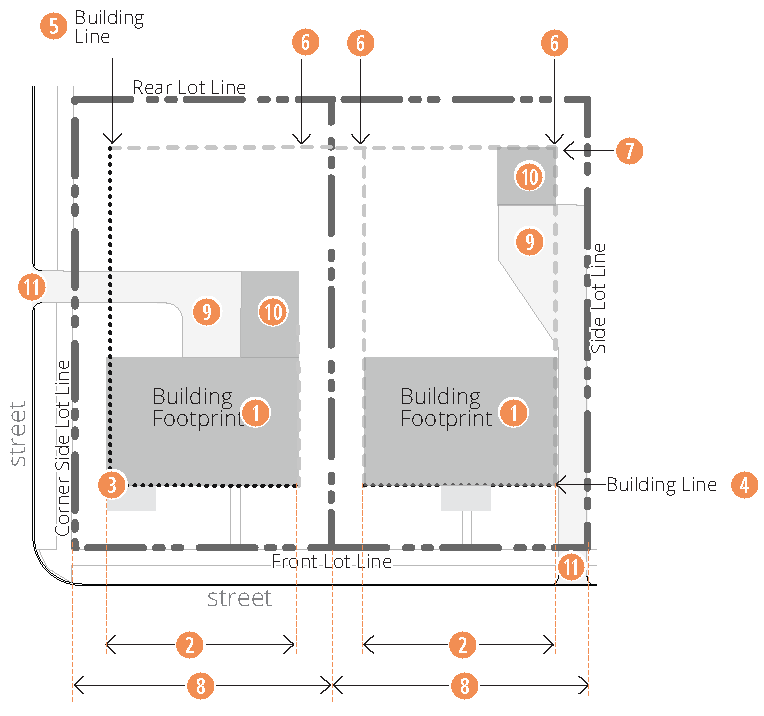
Figure 4.14-B House A: Building Siting
***Expand table to lock table headings in place while scrolling***
Figure 4.14-C House A: Height & Uses Requirements
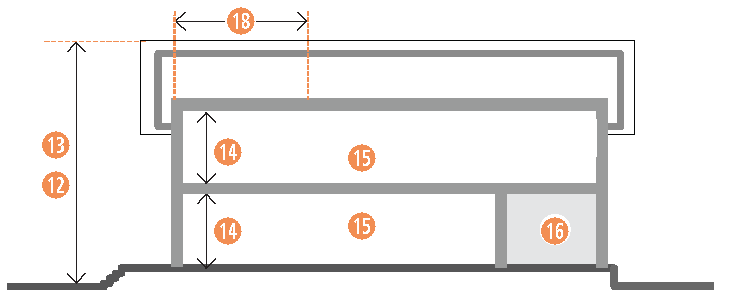
Figure 4.14-D House A: Facade Requirements
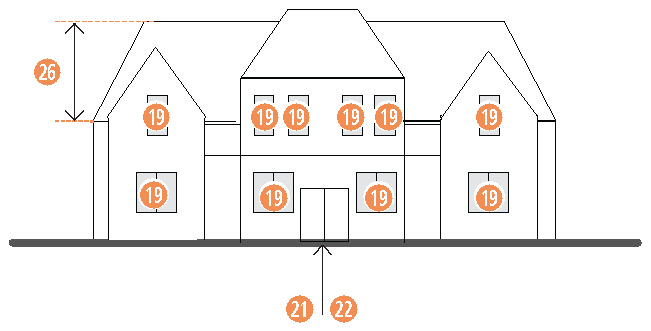
E.
Notes. The following notes are keyed to the requirements in the building type table, A through D:
1.
A landscaped court covering up to 35 percent of the front facade is permitted and may contribute to the Front Lot Line Coverage requirement. Refer to 4.2.5 Courtyards. Courtyard facades shall fulfill 4.14.2 D. Street Facade Requirements.
2.
Maximum impervious and semi-pervious area in any front yard (refer to 1.6) is 25 percent.
3.
In districts where noted, the following limited side yard parking is permitted:
a.
In MX-1, lots wider than 150 feet are permitted one single-loaded aisle of parking (maximum width of 45 feet), located perpendicular to the street.
b.
In MX-2, lots wider than 150 feet are permitted one double-loaded aisle of parking (maximum width of 62 feet), located perpendicular to the street.
4.
In districts where noted, lots wider than 110 feet are permitted garage entrances off front facade.
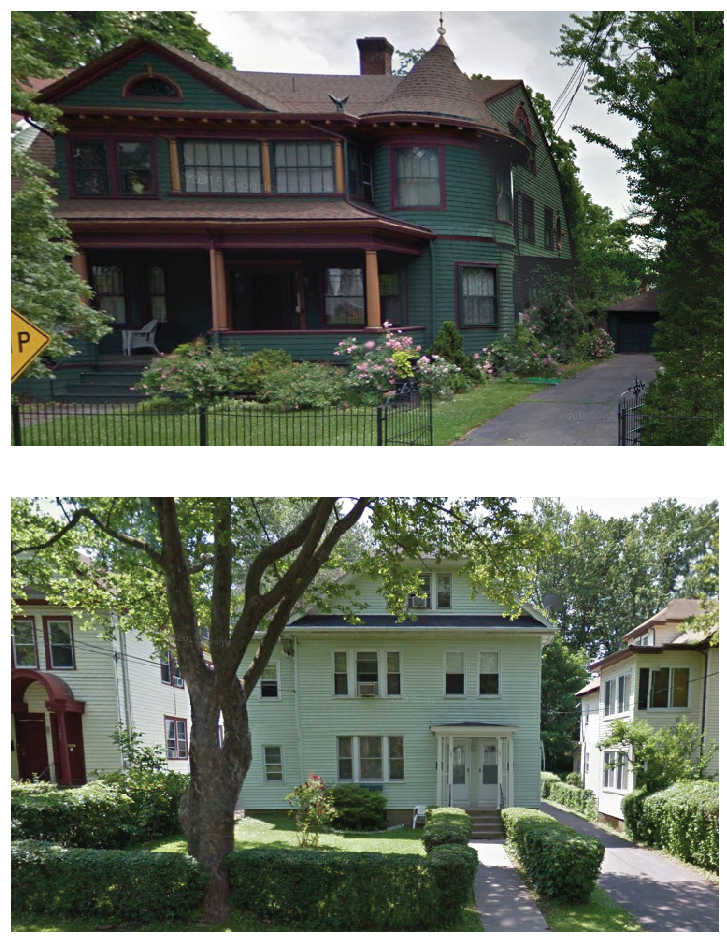
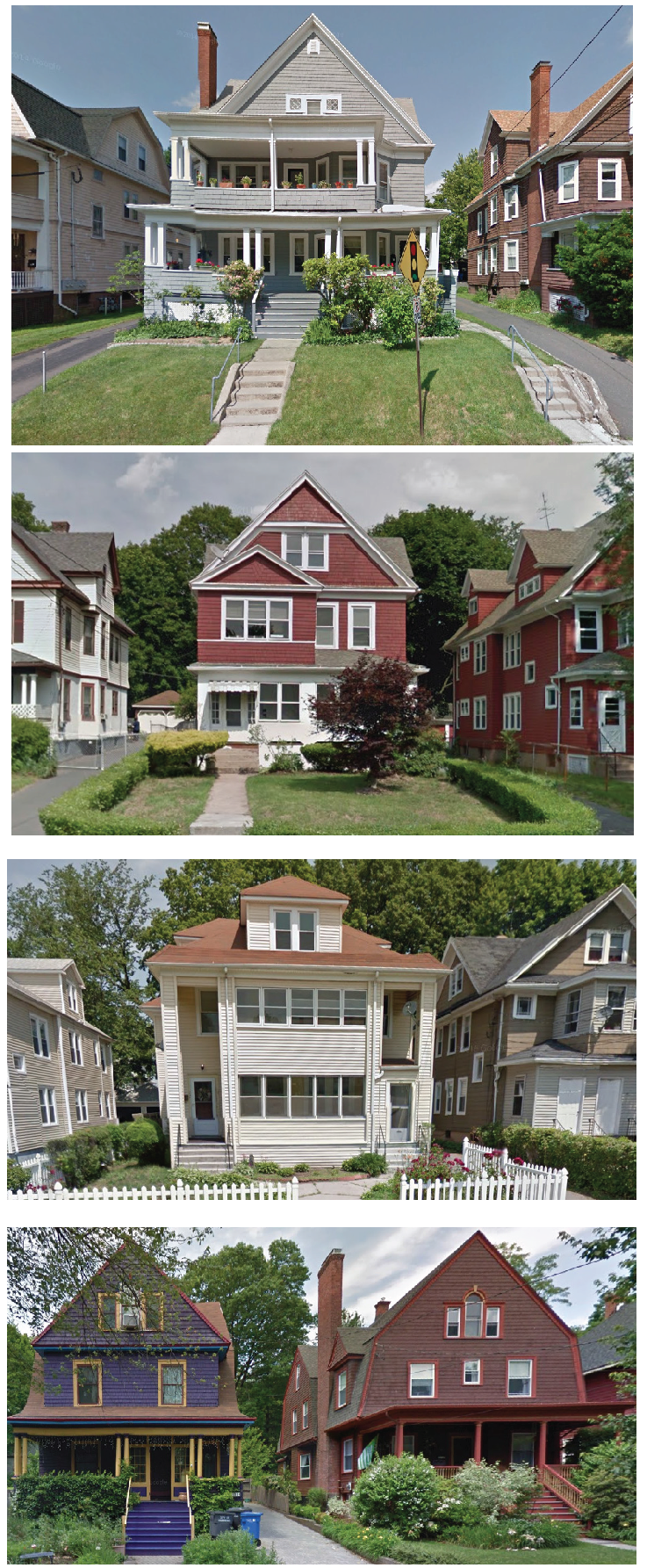
4.15.1 - DESCRIPTION & INTENT
The House B Building is the most common building in Hartford, making up a significant number of the residential buildings in neighborhoods throughout the city. It can house 1 to 4 housing units and typically has a porch or stoop entry.
Existing House B buildings are most commonly 2.5 stories and have a pitched roof.
Lot characteristics include a front yard and back yard, and usually a driveway accessed from the street that leads to a detached garage in the rear yard.
Figure 4.15-A Illustrative Examples of House B Buildings from Hartford
4.15.2 - HOUSE B BUILDING TYPE REGULATIONS
***Expand table to lock table headings in place while scrolling***
Figure 4.15-B House B Building: Siting
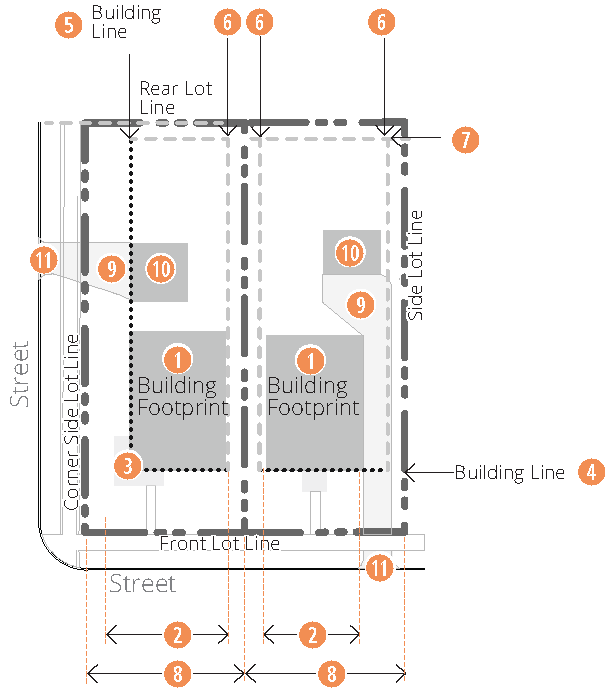
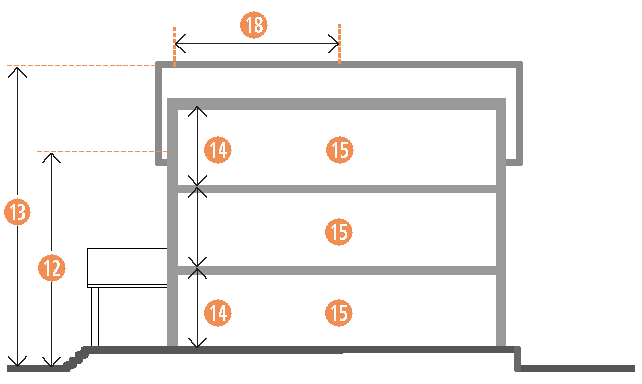
Figure 4.15-C House B Building: Height & Use Requirements
***Expand table to lock table headings in place while scrolling***
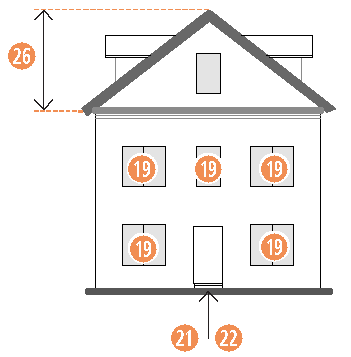
Figure 4.15-D House B Building: Facade Requirements
E.
Notes. The following notes are keyed to the requirements in the building type table, A through D:
1.
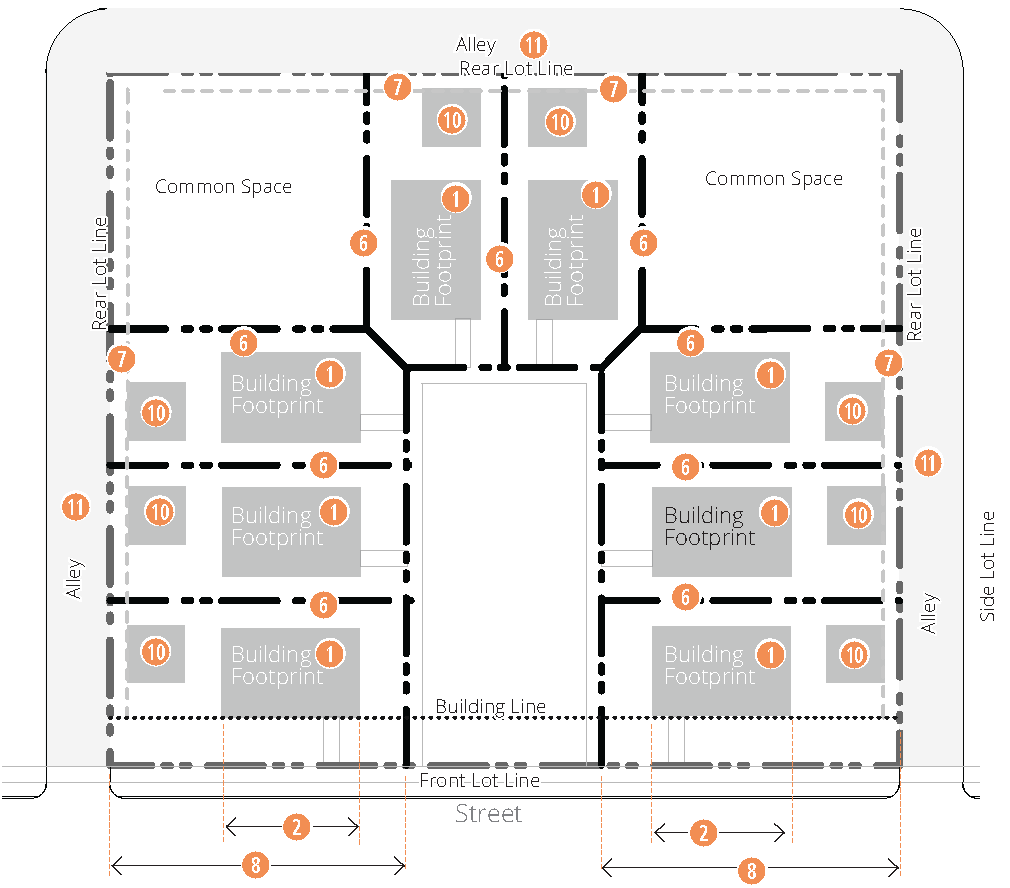
Notwithstanding 4.15.2 A.(1), in any Campus Overlay, for every House B fronting the street located in the build-to zone, up to 3 units may front a common area with a minimum width of 30 feet per the following:
a.
The common area shall be defined on three sides by units and open to the street. Refer to 4.2.5 Courtyards.
b.
Refer to Figure 4.15-E. Alternative Layout: Type B House Court for one example of multiple House B Building Types on a development site.
c.
The front façade of any House B building fronting the common area shall align with the side façade, delineating the common area, of the House B building fronting the street.
d.
Side and rear setbacks shall apply between buildings for each building. For example, with a 5' side setback, 10' is required between buildings.
e.
Street Facade Requirements shall apply to common area facades.
2.
When approved through a special permit, a 0' side yard setback may be permitted on one side of a lot, allowing for no more than 2 units side-by-side, each unit on their own lot.
3.
Maximum impervious and semi-pervious area in any front yard (refer to 1.6) is 25 percent.
Figure 4.15-E. Alternative Layout: Type B House Court
4.16.1 - DESCRIPTION & INTENT
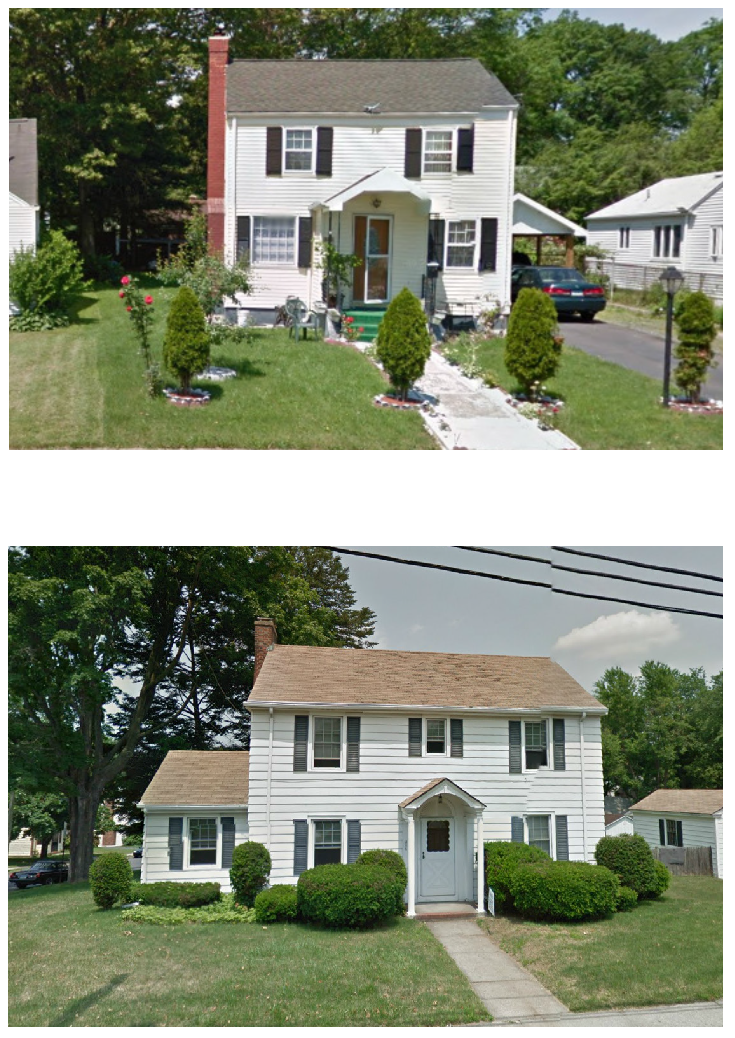
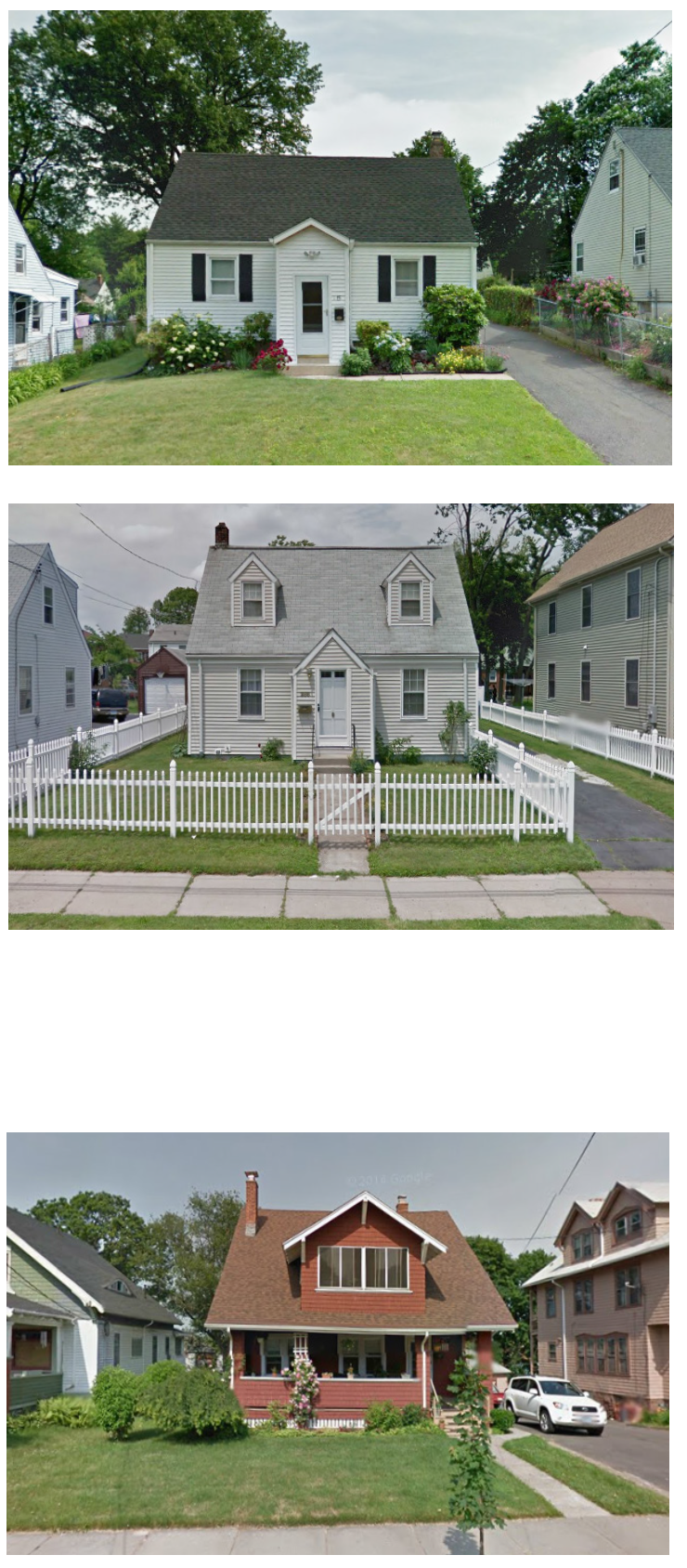
The House C Building is a smaller footprint, low-scale residential building type typically housing only one dwelling unit. When 2-unit dwellings are accommodated, the structure typically consists of 2 attached House C buildings on one lot sharing a common wall.
Lot characteristics include a front yard and back yard, and usually a driveway accessed from the street that often leads to a detached garage in the rear yard.
Figure 4.16-A Illustrative Examples of House C Buildings from Hartford
4.16.2 - HOUSE C BUILDING TYPE REGULATIONS
***Expand table to lock table headings in place while scrolling***
Figure 4.16-B House C Building: Building Siting
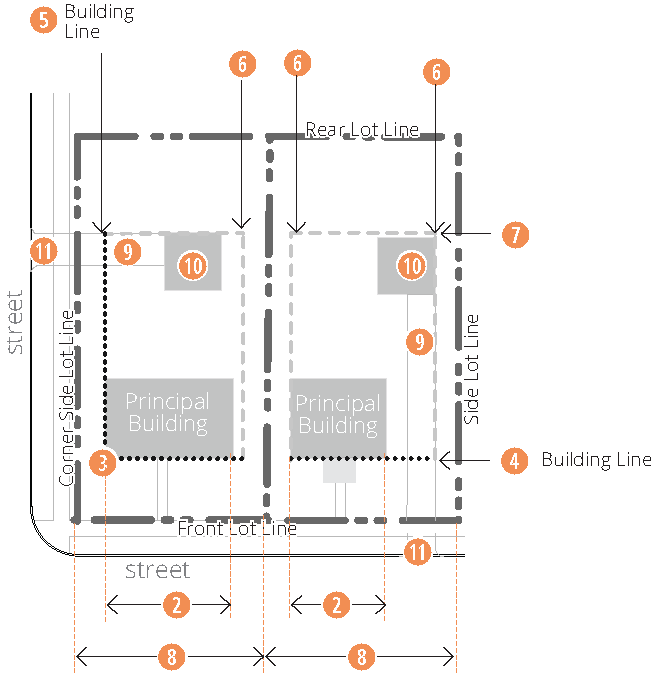
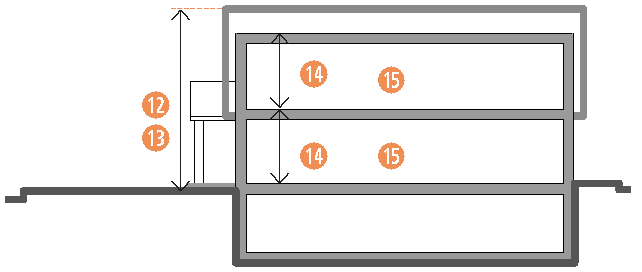
Figure 4.16-C House C Building: Height & Use Requirements
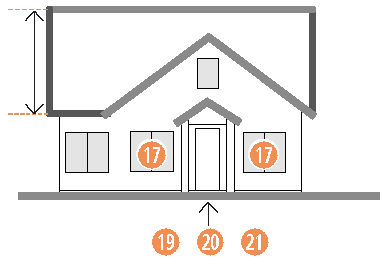
***Expand table to lock table headings in place while scrolling***
Figure 4.16-D House C Building: Facade Requirements
E.
Notes. The following notes are keyed to the requirements in the building type table, A through D:
1.
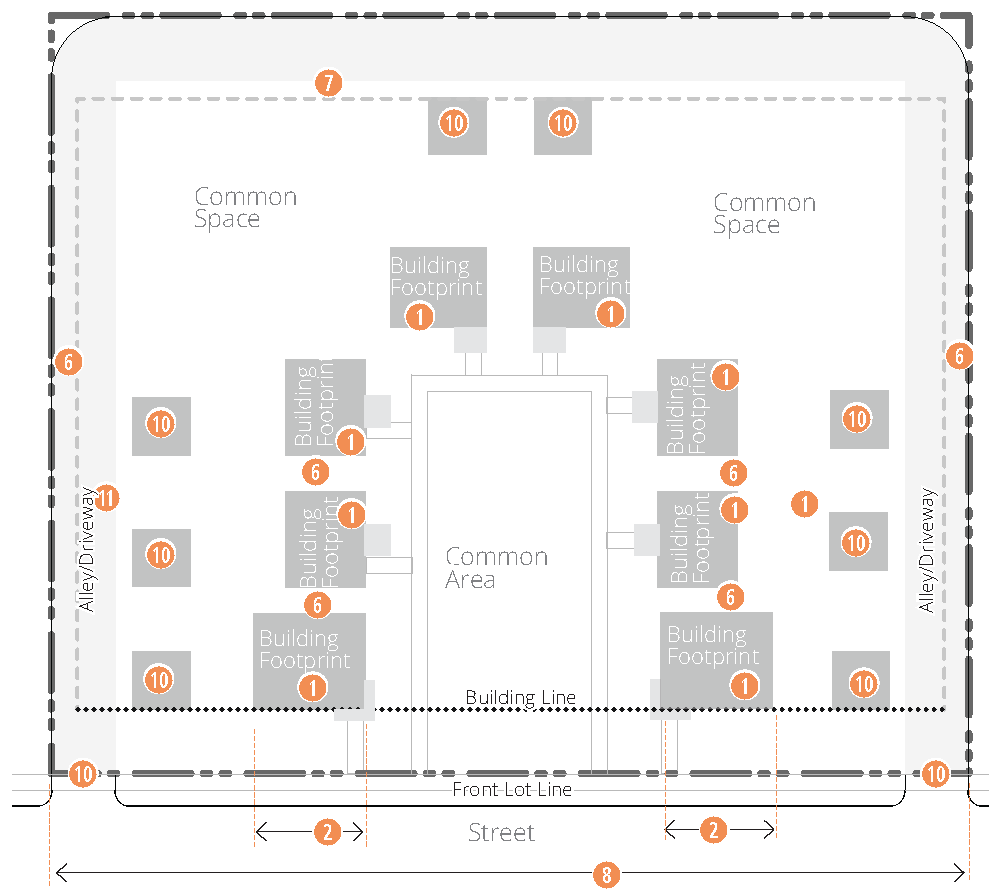
Notwithstanding 4.16.2 A.(1), in any Campus Overlay, for every House C fronting the street located in the build-to zone, up to 3 units may front a common area with a minimum width of 30 feet per the following:
a.
The common area shall be defined on three sides by units and open to the street. Refer to 4.2.5 Courtyards.
b.
Refer to Figure 4.16-E Alternative Layout: Type C House Court for one example of multiple House C Building Types on a development site.
c.
The front façade of any House C building fronting the common area shall align with the side façade, delineating the common area, of the House C building fronting the street.
d.
Side and rear setbacks shall apply between buildings for each building. For example, with a 5' side setback, 10' is required between buildings.
e.
Street Facade Requirements shall apply to common area facades.
2.
When approved through a special permit, a 0' side yard setback may be permitted on one side of a lot, allowing for no more than 2 units side-by-side, each unit on their own lot.
3.
Maximum impervious and semi-pervious area in any front yard (refer to 1.6) is 25 percent.
Figure 4.16-E Alternative Layout: Type C House Court
4.17.1 - PARKING STRUCTURES
Parking structures as the principal use on the lot require a special use permit (refer to 3.3.8 A.) and shall meet the following requirements:
A.
Materials. Major and minor material requirements shall be met on all street facades. Additional permitted secondary material is stained, finished concrete.
B.
Ramps and Slopes. Ramps and slopes shall be located on non-primary street or side street facades.
C.
Vertical Divisions. Vertical divisions the full height of the structure are required every 30 feet to de-emphasize the horizontal decks. Divisions shall be a minimum of 2 feet in width with a minimum projection of 2 inches.
D.
Blank Wall Limitations. No rectangular area greater than 30 percent of any story's facade, as measured from floor to floor, and no horizontal segment of a story's facade greater than 15 feet in width may be solid, blank wall.
E.
Entry Bay. A defined pedestrian entrance/exit is required separate from the vehicular entrance and directly accessing the sidewalk. If the space is enclosed, windows are required to meet a transparency rate of 65 percent. The entry bay shall include a roof type defined in 4.19.2 Roof Types.
F.
Vehicular Entrances. Access should be located on a non-primary street, when feasible. No more than 2 access points shall be located on any one street. Refer to 7.5 Site Access & Driveways for driveway widths and additional requirements.
G.
Parking Structures. It is recommended that the parking structure be designed in such a way that it can be converted to habitable use in the future, including, for example, reinforcement for additional loads, the minimization of ramping, fenestration of a size and dimension suitable for later window installation, flat slabs on the perimeter of the structure, and upper-story infrastructure that can be retrofitted support a roof, walls, and related material.
4.17.2 - FUELING STATIONS & CAR WASHES
Vehicle Fueling Stations and Car Washes require a special use permit (refer to 3.3.5) and the structures shall meet the following requirements:
A.
Fuel Pumps & Canopies. Any fuel pumps and/or canopies shall be located in the rear or interior side yard per 4.20.4 F. Accessory Structure: Fueling Pumps and Canopies.
B.
Convenience Store/Building. A building, such as those typically associated with a fueling station, shall be located in the build-to zone and shall occupy any corner. The building shall fulfill all requirements of a building type permitted in the district with the exception of the Minimum Front Lot Line Coverage and the Minimum Height Requirement.
C.
Car Wash Facility. Any car wash facility shall be located in the rear or side of the lot. Vehicle entrance doors may be located on the rear yard facade, corner side yard facade, or an interior facade. Vehicular entrances are prohibited on a primary street facade, unless otherwise approved through an exception.
D.
Pavement. Site paving shall consist of maximum 22 feet wide driveways and lanes along parking and along pumps, and parking spaces. Car washes may include prepping and finishing pavement areas. All other areas shall be landscaped.
E.
Additional Drive Entrance. One driveway entrance, in addition to the driveways permitted by building type, is permitted on the lot.
4.18.1 - BUILDING SITING
The following defines the line item requirements within subsection "A. Building Siting" in each Building Type Table. Refer to 4.3 through 4.16 Building Types.
A.
Multiple Principal Buildings. The allowance of more than one principal structure on a lot.
(1)
Not Permitted. When noted as such, the building type is limited to one principal building per lot.
(2)
Permitted. When noted as such, the building type is permitted to have more than one principal building per lot. Each building shall fulfill the requirements of the building type, and combined shall fulfill the minimum Front Lot Line Coverage requirement, unless otherwise noted.
B.
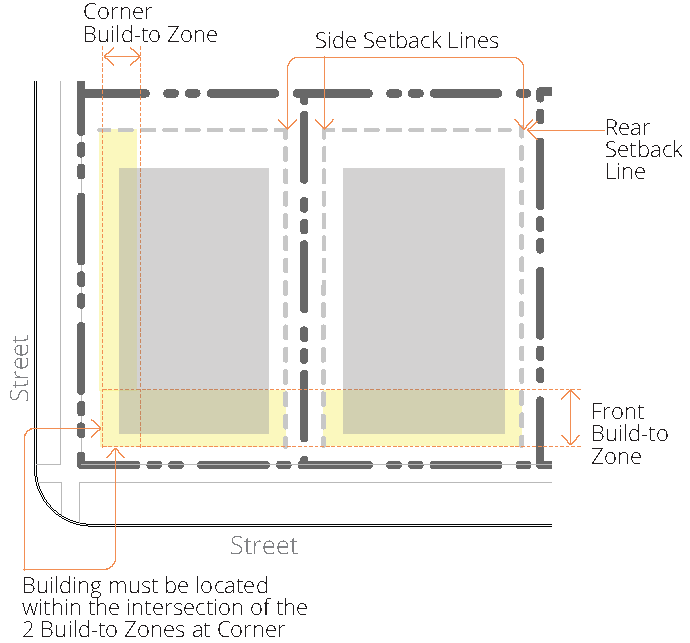
Occupation of Corner. When required, a principal building shall be located at the intersection of the front and corner build-to zones. Refer to Figure 4.18-A Build-to Zone & Occupation of Corner.
C.
Minimum Front or Primary Lot Line Coverage. The minimum percentage of street wall or building facade required along the street.
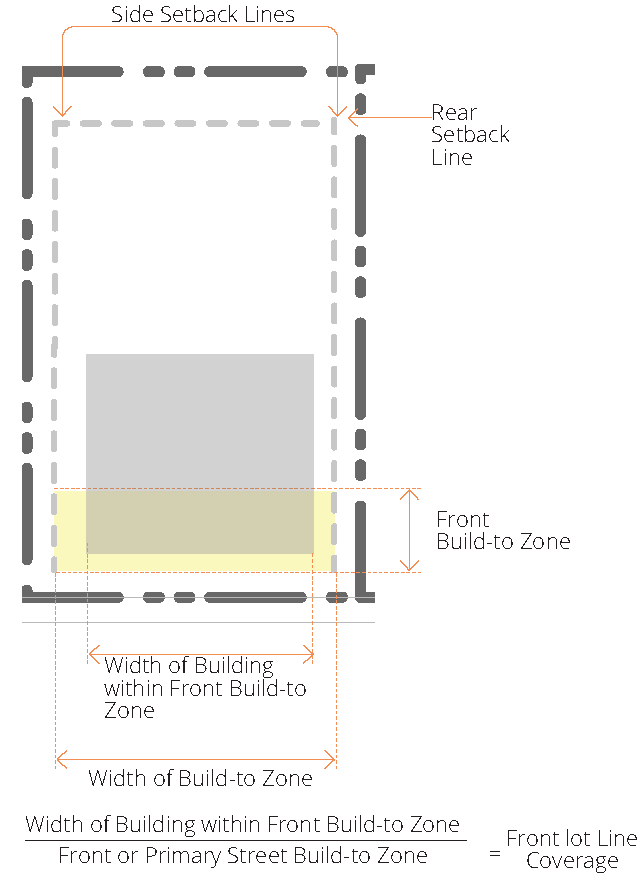
(1)
Measurement. The width of the principal structure(s) (as measured within the front or Primary Street build-to zone) shall be divided by the maximum width of the front or Primary Street build-to zone. Refer to Figure 4.18-B Measuring Front Lot Line Coverage.
(2)
Exceptions. Exceptions, such as the following, are noted in the tables.
(a)
Some building types have this number set to also allow the development of a courtyard along the front lot line.
(b)
Some building types allow side yard parking to be exempted from the Front Lot Line Coverage calculation.
Figure 4.18-A Build-to Zone & Occupation of Corner
D.
Front or Primary Street Build-to Zone. The build-to zone parallel to the front or Primary Street lot line, typically defined in reference to the Building Line. In the downtown districts, this build-to zone is defined by Primary Street designation, located on the city's Zoning Map. Refer to Figure 4.18-A Build-to Zone & Occupation of Corner.
(1)
Encroachments.
(a)
Building-supported awnings, canopies, balconies, eaves, and cornices are permitted to encroach beyond the building line up to 5 feet over the lot line, provided they allow a minimum of 8 feet vertical clearance in any public right-of-way. No additional support is permitted.
(b)
A porch or stoop may project into the front yard for a distance not less than 5 feet and not exceeding 10 feet, or the established veranda line, whichever is more restrictive. This shall be interpreted to include porches which may be enclosed by removable windows or fixed canopies.
(c)
Ramps are preferred in the side or rear yard and shall not encroach into the respective setbacks. If a ramp is to be located in the front yard, it shall not encroach beyond the veranda line or other setbacks. Exception to the requirements of front yard placement may be given by the zoning administrator if a Reasonable Accommodation form is completed and placed on file with the Planning Division.
Figure 4.18-B Measuring Front Lot
Line Coverage
(2)
Determining Front Lot Line on Corner Lot. On corner lots, the front lot line is determined first by primary street designation per 2.2.3 Primary Street Designations. If no primary street designation is determined, the front lot line shall be determined by the 2 abutting lots on each side of the lot under the direction of the zoning administrator.
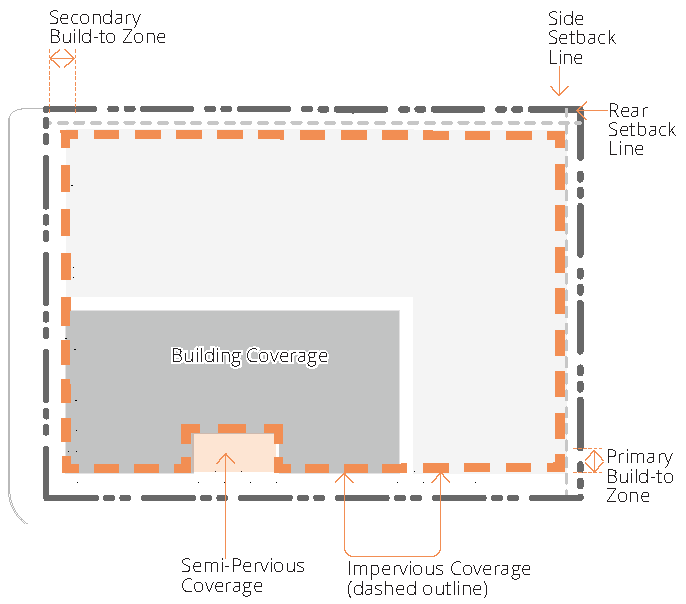
Figure 4.18-C Maximum Impervious & Additional Semi-Pervious Coverage
(3)
Percent Within Build-to Zone. A minimum of 80 percent of each building must be placed within the build-to zone, and the remaining 20 percent must be placed within the build-to zone or within 6 feet behind the build-to zone. When meeting this requirement, the zoning administrator shall determine that the portion of the building not within the build-to zone does not adversely impact the streetscape and character of the architecture.
E.
Corner or Secondary Street Build-to Zone. The build-to zone or setback parallel to the corner lot line. In the downtown districts, this build-to zone is defined by the Secondary Street designation, located on the city's Zoning Map.
(1)
Encroachments. Building-supported awnings, canopies, balconies, bays, eaves, and cornices are permitted to encroach provided they allow a minimum of 8 feet vertical clearance in any public right-of-way. No additional support is permitted.
F.
Minimum Side Setback. The minimum required building setback along a side lot line.
(1)
Encroachments. Building-supported awnings, bays, eaves, and cornices are permitted to encroach beyond the building line up to 2 feet from the lot line. No additional support is permitted.
G.
Minimum Rear Setback. The minimum required building setback along a rear lot line.
H.
Minimum Lot Width. The minimum width of a lot, measured at the front or Primary Street lot line.
I.
Maximum Building Width. The maximum width of the building measured parallel to the front or Primary Street lot line.
J.
Maximum Building Coverage. The maximum percentage of a lot permitted to be covered by principal structures and accessory structures.
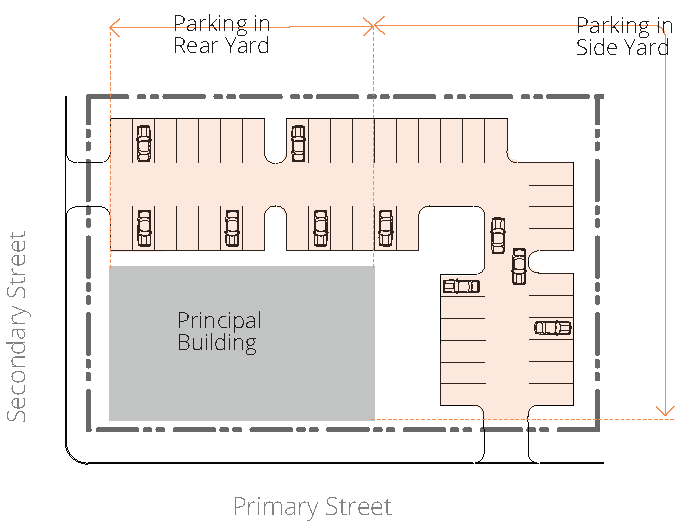
Figure 4.18-D Surface Parking Lot
K.
Maximum Impervious Area. The maximum percentage of a lot permitted to be covered by principal structures, accessory structures, pavement, and other impervious surfaces. Refer to Figure 4.18-C Maximum Impervious & Additional Semi-Pervious Coverage.
L.
Additional Semi-Pervious Area. The additional percentage of a lot beyond the maximum impervious coverage, which may be covered in a semi-pervious surface, including a green roof or pavers. Refer to 1.6 Definitions for definition of a semi-pervious surface. Refer to Figure 4.18-C Maximum Impervious & Additional Semi-Pervious Coverage.
M.
Permitted Parking & Loading Location. Each building type defines yards where surface parking lots and accessory parking structures are permitted. Refer to 1.6 for yard definition and Figure 4.18-D Surface Parking Lot.
(1)
Corner Side & Front Yards. Parking is not permitted in any corner side or front yard.
(2)
Rear Yard. Parking is permitted in the rear yard, but may not encroach into the minimum rear and side setback areas. Refer to 6.0 Sitework & Landscape for buffers and parking lot landscape requirements.
(3)
Side Yard. Parking may be either permitted or limited in the side yard, but may not encroach into the minimum side setback areas.
(4)
Loading Location. Loading, refuse and recycling collection is defined per permitted yard, typically the rear yard. Refer to 1.6 for yard definition. Refer to 6.12 Screening of Necessary Appurtenances.
N.
Permitted Vehicular Access. The permitted means of vehicular ingress and egress to the lot. Refer to 4.1.2 I. for general vehicular access design requirements and 7.5 Site Access & Driveways.
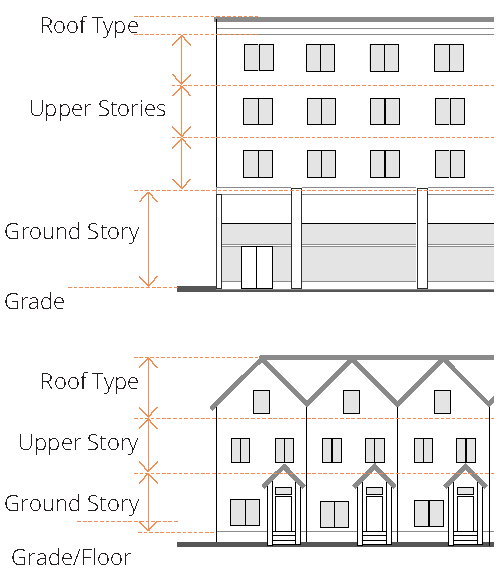
Figure 4.18-E Measuring Height
(Amend. of 12-13-2022)
4.18.2 - HEIGHT
The following explains the line item requirements for each Building Type Table within subsection "B. Height." Refer to 4.3 through 4.16 Building Types.
A.
Minimum Overall Height. The minimum overall height for the building shall be located within the build-to zone; stories above the required minimum height may be required to be stepped back from the facade.
B.
Maximum Overall Height. The sum of a building's maximum total number of stories.
(1)
Half stories are located either completely within the roof structure with street-facing windows or in a visible basement exposed a maximum of one half story above grade.
(2)
A building incorporating both a half story within the roof and a visible basement shall count the height of the 2 half stories as one full story.
(3)
Some building types require a building facade to step back as its height increases. If required, the upper stories of any building facade with street frontage shall be set back a designated amount beyond the building facade of the lower stories.
(4)
Exceptions to Maximum Height. Accessory rooftop appurtenances permitted in 4.20 Accessory Structures, building mechanicals, skylights, chimneys and smokestacks, communication antennas permitted pursuant to 3.0 Uses, and water tanks or similar structures are permitted to extend above the maximum building height as follows.
(a)
Additional Height Limit. No such structure may be erected to exceed by more than 15 feet the height limits of the district in which it is located.
(b)
Roof Area. With the exception of accessory energy generation, the appurtenance extending above the maximum height shall have a total area no greater than 10 percent of the roof area of the building.
(c)
Use. Any appurtenance extending above the maximum height shall not be used for any use other than a use incidental to the principal use of the building.
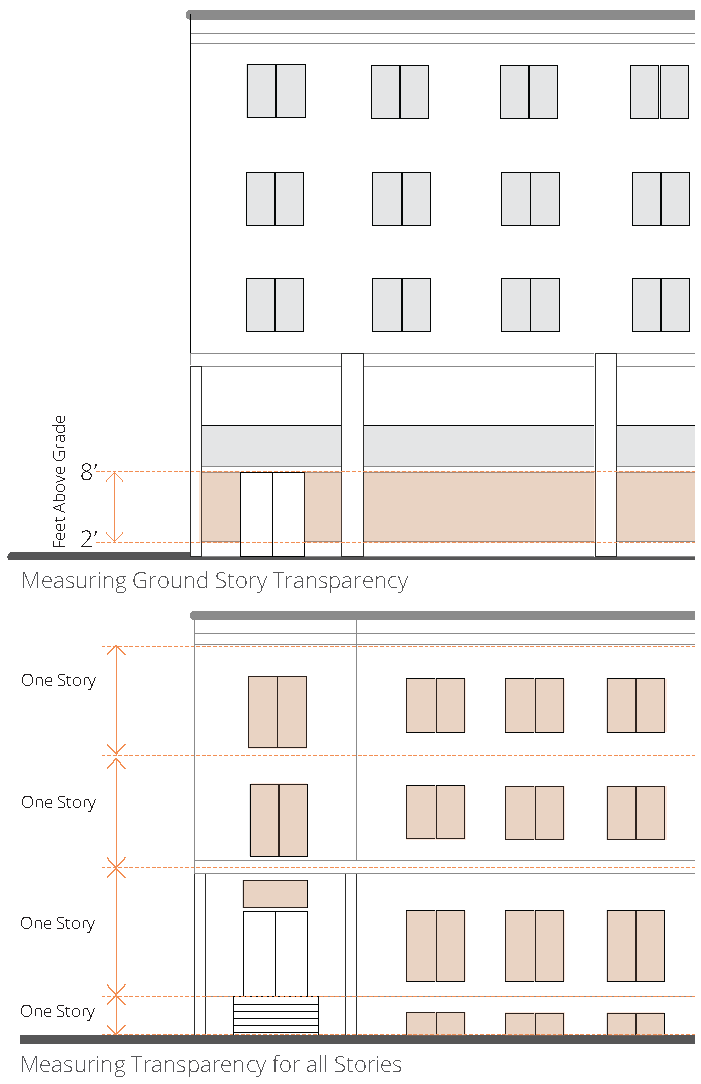
Figure 4.18-F Measuring Transparency
(5)
Towers. Towers may be permitted by building type are permitted to extend above the maximum building height. Refer to 4.19.2 E. Towers.
C.
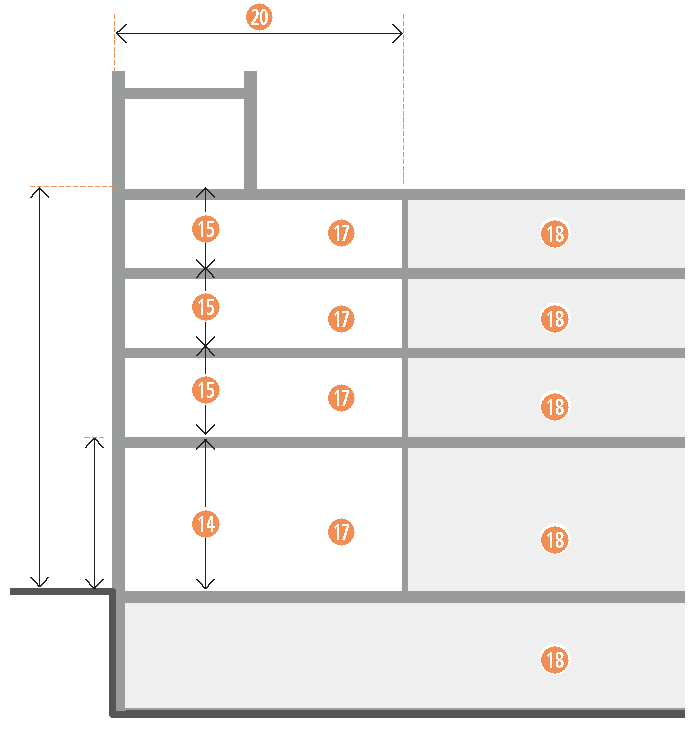
Ground Story and Upper Story, Minimum and Maximum Height. (Figure 4.18-E Measuring Height.) Each building type includes a permitted range of height in feet for each story.
(1)
Floor height is measured in feet between the floor of a story to the floor of the story above it.
(2)
Floor height requirements apply only to street facing facades, with the following provisions applied to ground story height requirements: For front facades or Primary Street facades in the DT district, ground story height requirements must be maintained for either the depth of an average minimum of 30 feet or the depth of a public or common portion of the street facing use or uses, whichever depth is smaller.
(a)
For all other facades, compliance with ground story minimum height requirements may be achieved through an average of the ground story heights along either the depth of a minimum of 30 feet or the depth of a public or common portion of the street facing use or uses, whichever depth is smaller.
(b)
Where site slope renders strict compliance with ground story floor height requirements impracticable, the decision-making body may reasonably calculate average ground story heights across a reasonable portion of the ground floor, taking uses, front façade location, and the intent of these regulations into account.
(c)
For single story buildings and the uppermost story of a multiple story building, floor to floor height shall be measured from the floor of the story to the tallest point of the ceiling. One foot may be deducted from the required minimum dimension for top stories.
4.18.3 - USES
The following explains the line item requirements for each Building Type Table within subsection "C. Uses." Refer to 3.0 Uses for uses permitted within each district. The requirements in this section of the Building Type Tables may limit those uses within a specific building type.
A.
Ground and Upper Story. The uses or category of uses which may occupy the ground and/or upper story of a building. Uses permitted within the building type are permitted in the basement of the building.
B.
Parking Within Building. The area(s) of a building in which parking is permitted within the structure.
C.
Entrance to Parking/Loading within Building. Vehicular entrances to structured parking or service areas within the building are permitted per facade.
D.
Garage Entrance/Service Bay Location. Vehicular entrances to structured parking, service areas, and/or garage service bays for vehicular maintenance are permitted per facade. These entrances and service bays shall have garage doors.
E.
Required Occupied Space. The minimum depth of space, as measured from the front or Primary Street facade into the building required to be designed as occupied space or interior building space regularly occupied by the building users. It does not include storage areas, utility space, or parking.
4.18.4 - STREET FACADE REQUIREMENTS
The following explains the line item requirements for each Building Type Table within subsection "D. Street Facade Requirements." Refer to 4.3 through 4.16 Building Types. Street Facade Requirements apply only to building facades facing a public or private street right-of-way. Where noted, courtyards opening up to a street are also required to fulfill these requirements. The rear or interior side yard facades are not required to fulfill these standards unless otherwise stated.
A.
Minimum Ground Story and Upper Floor Transparency. (Refer to Figure 4.18-F Measuring Transparency.) The minimum amount of transparency required on street facades with street frontage.
(1)
Ground Story Front Facade Transparency, when defined separately from the overall minimum transparency, shall be measured between 2 feet and 8 feet from the average grade at the base of the front facade.
(2)
A general minimum transparency requirement is measured from floor to floor of each story.
B.
Blank Wall Limitations. A restriction of the amount of windowless area permitted on a facade with street frontage. If required, the following shall both be met for each story:
(1)
No rectangular area greater than 30 percent of a story's facade, as measured from floor to floor, may be windowless; and
(2)
No horizontal segment of a story's facade greater than 15 feet in width may be windowless.
C.
Entrance Type. The Entrance Type(s) permitted for the entrance(s) of a given building type. A mix of permitted Entrance Types may be utilized. Refer to 4.19.1 Entrance Types for definition of and additional requirements for each Entrance Type.
D.
Principal Entrance Location. The facade on which the principal building entrance is to be located. Principal building entrance is the main public entrance to the majority of uses in the building.
E.
Required Number of Street Entrances. The minimum number of and maximum spacing between entrances on the ground floor building facade with street frontage.
F.
Ground Story Vertical Facade Divisions. The use of a vertically oriented expression line or building element to divide the ground story facade into increments no greater than the dimension shown, as measured along the base of the facade, and extending a minimum of 80 percent from the average grade of the facade elevation to the interior ceiling elevation. Building elements may include a column, pilaster, or other continuous vertical ornamentation, all with a minimum depth of 2 inches and a minimum width of 3 inches. Refer to 1.6 for definition of expression line.
G.
Horizontal Facade Divisions. The use of a horizontally oriented expression line or building element to divide portions of the facade into horizontal divisions, extending a minimum of 80 percent of the full width of the facade. Building elements may include a cornice, belt course, molding, string courses, or other continuous horizontal ornamentation a minimum of one and a half inch depth and a minimum height of 3 inches. Refer to 1.6 for definition of expression line.
H.
Permitted Roof Type. The roof type(s) permitted for a given building type. Refer to 4.19.2 Roof Types for more specific requirements.
(1)
Tower. A vertical building extension, which is a rectilinear or cylindrical vertical element, may be permitted in conjunction with another roof type on certain building types. Refer to 4.19.2 E. Tower in Roof Types.
4.19.1 - ENTRANCE TYPES
Entrance type standards apply to the ground story and visible basement of front facades of all building types as defined in this Section. Refer to the Building Type Table Requirements, sections 4.3 through 4.16.
A.
General. The following provisions apply to all entrance types.
(1)
Intent. To guide the design of the ground story of all buildings to relate appropriately to pedestrians on the street. Treatment of other portions of the building facades is detailed in each Building Type Table (refer to Building Types 4.3 through 4.16).
(2)
Applicability. The entire ground story street-facing facade(s) of all buildings shall fulfill the requirements of at least one of the permitted entrance types, unless otherwise stated.
(3)
Measuring Transparency. Refer to Figure 4.18-F Measuring Transparency for information on measuring building transparency.
(4)
Visible Basements. Visible basements, permitted by entrance type, are optional. The visible basement shall be a maximum of one-half the height of the tallest story.
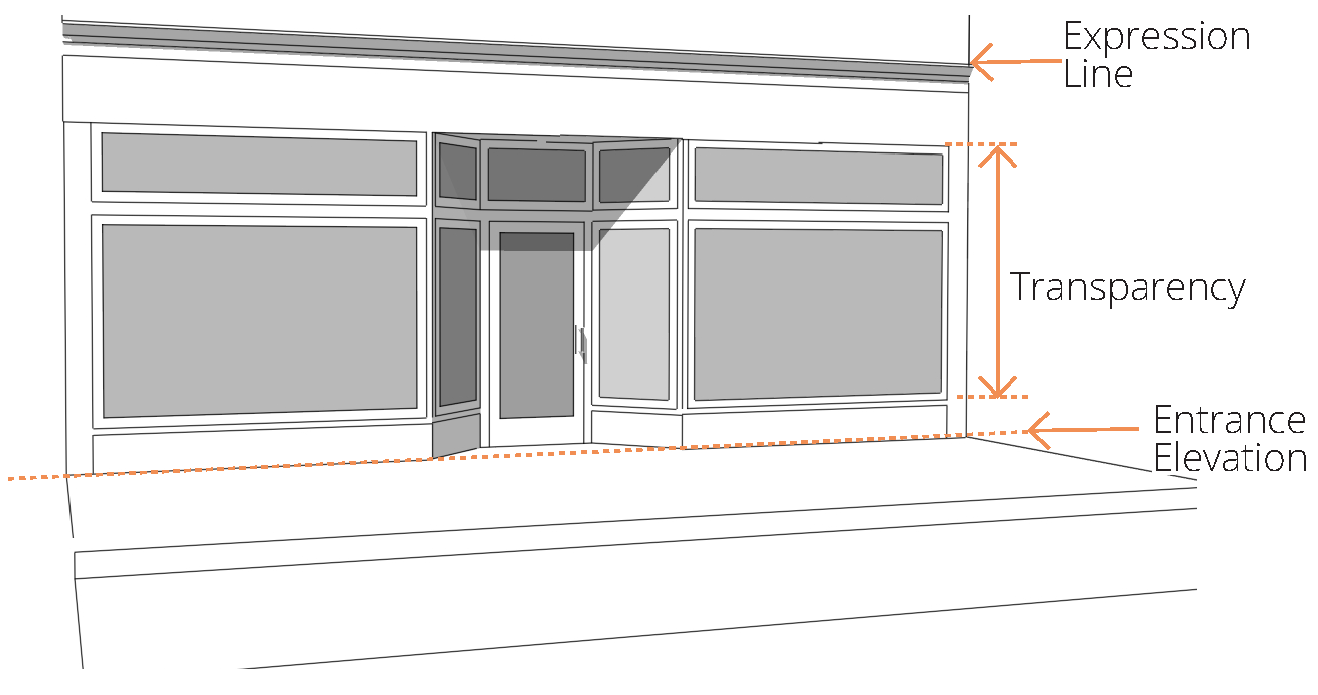
Figure 4.19-A Storefront Entrance Type
B.
Storefront Entrance Type. (Refer to Figure 4.19-A Storefront Entrance Type.) The Storefront entrance type is a highly transparent ground story treatment designed to serve primarily as the display area and primary entrance for retail or service uses.
(1)
Transparency. Minimum transparency is required per building type.
(2)
Elevation. Storefront entrance threshold elevation shall be between zero and one foot above sidewalk.
(3)
Visible Basement. A visible basement is not permitted.
(4)
Horizontal Facade Division. Horizontally define the ground story facade from the upper stories with an expression line.
(5)
Entrance. Entries may be recessed from the front facade closest to the street.
(a)
Any recessed entrance shall be a minimum of 3 feet and a maximum of 8 feet deep, measured from the portion of the front facade closest to the street.
(b)
When the recessed entrance falls behind the front build-to zone, the recess shall be no wider than 8 feet.
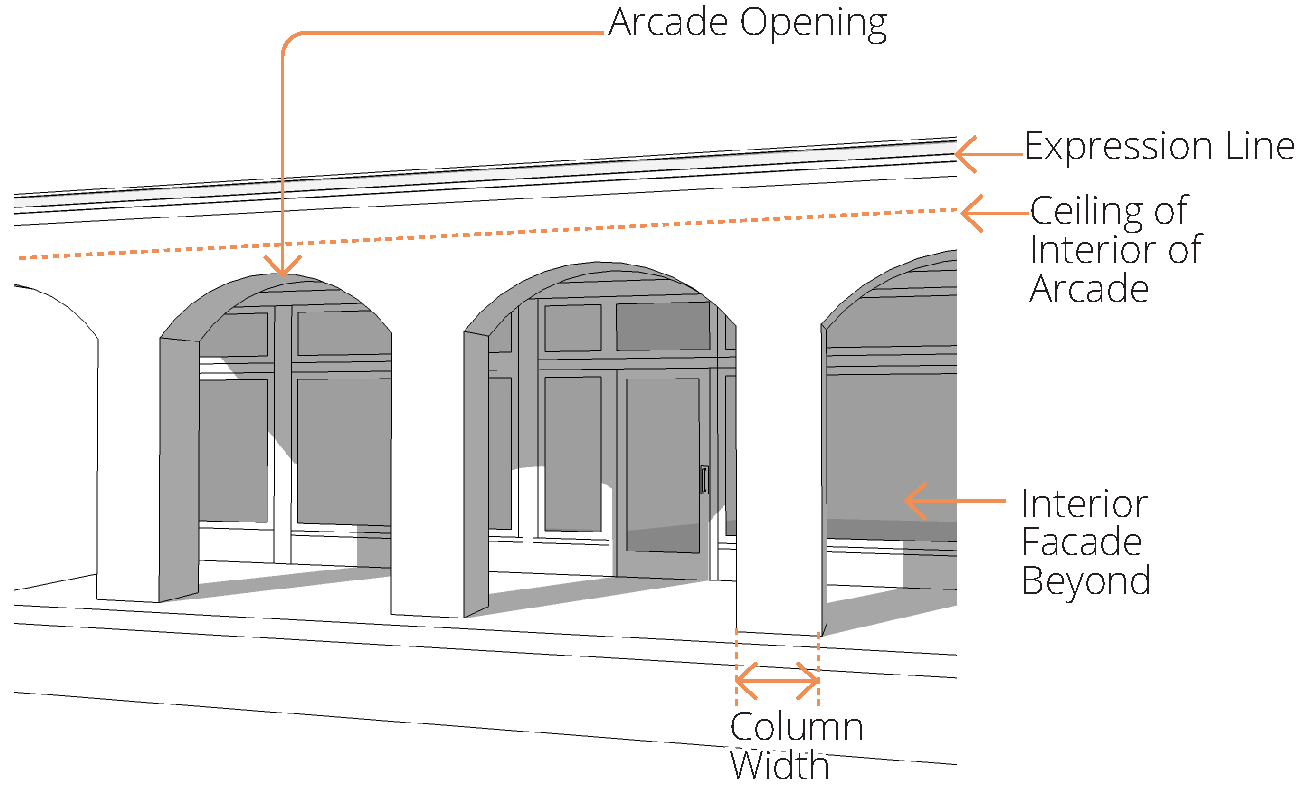
Figure 4.19-B Arcade Entrance Type
C.
Arcade Entrance Type. (Refer to Figure 4.19-B Arcade Entrance Type.) An Arcade entrance type is a covered pedestrian walkway within the recess of a ground story.
(1)
Arcade. An open-air public walkway is required from the face of the building recessed into the building a minimum of 8 and a maximum of 15 feet.
(2)
Build-to Zone. When the Arcade is utilized, the outside face of the Arcade shall be considered the front facade, located within the required build-to zone.
(3)
Interior Facade. Storefront entrance type is required on the interior ground story facade provided, however, that the requirement to recess such entrance in 4.19.1 B.(5) does not apply.
(4)
Column Spacing. Columns shall be spaced between 10 feet and 12 feet on center.
(5)
Column Width. Columns shall be a minimum of 1'-8" and a maximum 2'-4" in width.
(6)
Arcade Opening. Opening shall not be flush with interior arcade ceiling and may be arched or straight.
(7)
Horizontal Facade Division. Horizontally define the ground story facade from the upper stories with an expression line.
(8)
Visible Basement. A visible basement is not permitted.
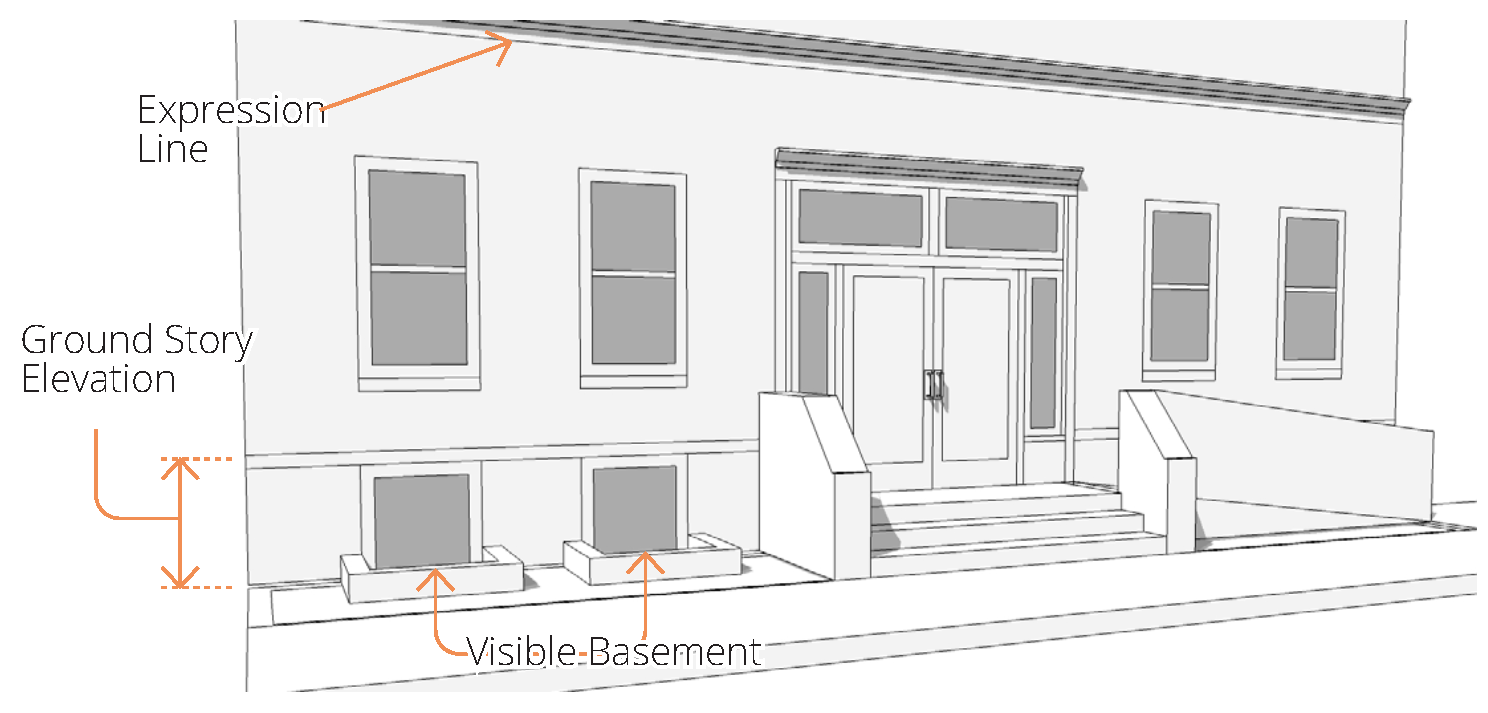
Figure 4.19-C Stoop Entrance Type
D.
Stoop Entrance Type. (Refer to Figure 4.19-C Stoop Entrance Type.) A stoop is an unroofed, open platform.
(1)
Stoop Size. Stoops shall be a minimum of 4 feet deep and 6 feet wide.
(2)
Elevation. Stoop elevation shall be located a maximum of 2'-6" above the sidewalk without visible basement and a maximum of 4'-6" above the sidewalk with a visible basement.
(3)
Visible Basement. A visible basement is permitted and shall be separated from the ground story by an expression line.
(4)
Entrance. All front facade entries shall be located off a stoop.
(5)
Encroachment. Refer to 4.18.1 D.(1) Encroachments.
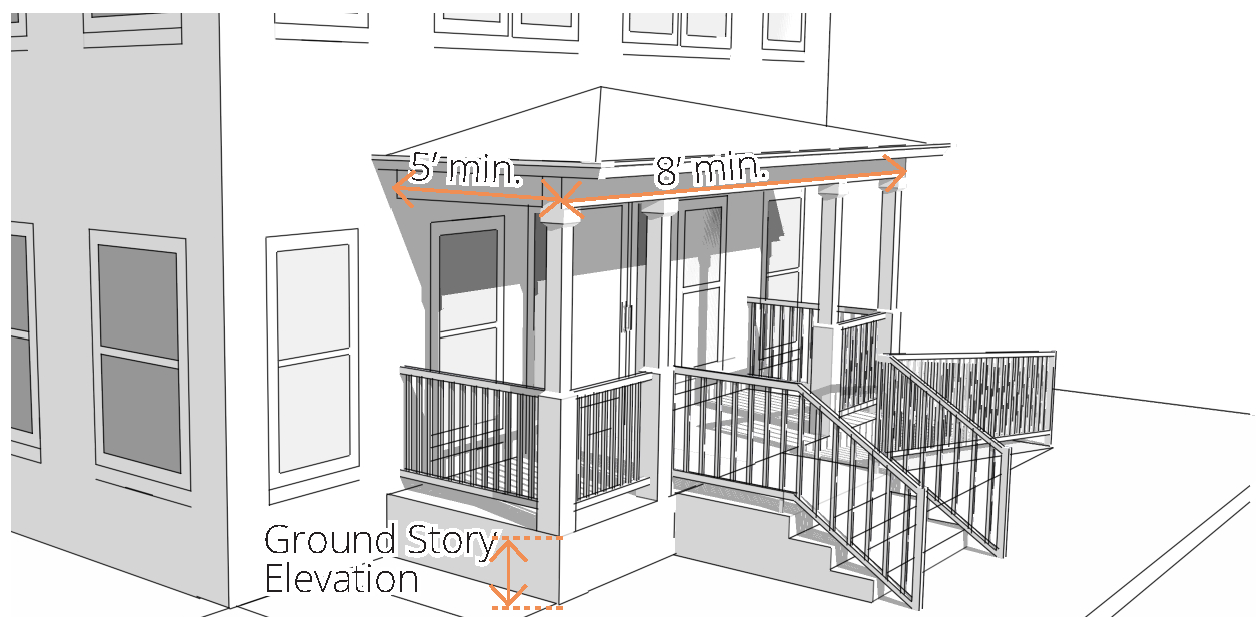
Figure 4.19-D Porch Entrance Type
E.
Porch Entrance Type. (Refer to Figure 4.19-D Porch Entrance Type.) A porch is a raised, roofed platform that may or may not be enclosed on all sides. If enclosed, the space shall not be climate controlled.
(1)
Transparency.
(a)
Minimum transparency per building type is required.
(b)
If enclosed, a minimum of 40 percent of the enclosed porch shall be comprised of highly transparent, low reflectance windows.
(2)
Porch Size. The porch shall be a minimum of 5 feet deep and 8 feet wide.
(3)
Elevation. Porch elevation shall be located a maximum of 2'-6" above the sidewalk without a visible basement and a maximum of 4'-6" above the sidewalk with a visible basement.
(4)
Visible Basement. A visible basement is permitted.
(5)
Height. Porches up to 3 stories are permitted for Apartment Building or Stacked Flats Building Types, up to 2 stories for Row and House Building Types, and one story for Cottage Commercial Building Types. An upper story of any porch structure which is used either as an open-air balcony or as a roofed balcony or porch counts as a story when calculating the number of stories of the porch.
(6)
Entrance. All front facade entries shall be located off a porch.
(7)
Encroachment. Refer to 4.18.1 D.(1) Encroachments.
(8)
Heat and Use. No facilities for providing heat shall be permitted on a porch, and a porch shall not be used as a sleeping room.
4.19.2 - ROOF TYPES
Roof type standards apply to the roof and cap of all building types as defined in this section. Refer to sections 4.3 through 4.16 Building Types.
A.
General Provisions. The following provisions apply to all roof types.
(1)
Intent. To guide the design of the cap of all buildings.
(2)
Applicability. All buildings shall fulfill the requirements of one of the roof types permitted for the building type.
(3)
Measuring Height. Refer to 4.18.2 Height for information on measuring building height.
(4)
Other Roof Types. Other building caps not listed as a specific type may be made by a request to the zoning administrator with the following requirements:
(a)
The roof type shall not create additional occupiable space beyond that permitted by the building type.
(b)
The shape of the roof type shall be significantly different from those defined in this section 4.19.2 Roof Types, i.e. a dome, spire, vault.
(c)
The building shall warrant a separate status within the community from the fabric of surrounding buildings, with a correspondence between the form of the roof type and the meaning of the building use.
B.
Parapet Roof Type. (Refer to Figure 4.19-E Parapet Roof Type) A parapet is a low wall projecting above a building's roof along the perimeter of the building. It can be utilized with a flat or low pitched roof and also serves to limit the view of roof-top mechanical systems from the street.
Figure 4.19-E Parapet Roof Type
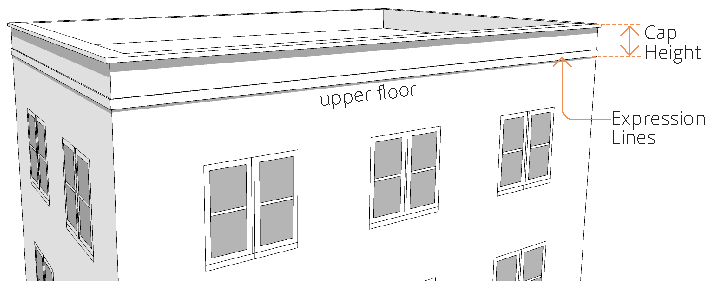
(1)
Parapet Height. Height is measured from the top of the upper story to the top of the parapet.
(a)
Minimum height is 2 feet with a maximum height of 6 feet.
(b)
Roof appurtenances shall be located a distance behind the parapet so as not to be visible from any street sidewalk.
(2)
Horizontal Expression Lines. An expression line shall define the parapet from the upper stories of the building and shall also define the top of the cap.
(3)
Occupied Space. Occupied space shall not be incorporated behind this roof type.
C.
Pitched Roof Type. (Refer to Figure 4.19-F Pitched Roof Types.) This roof type has a sloped or pitched roof. Slope is measured with the vertical rise divided by the horizontal span or run.
(1)
Pitch Measure. The roof may not be sloped less than a 4:12 (rise:run) or more than 16:12.
Figure 4.19-F Pitched Roof Types
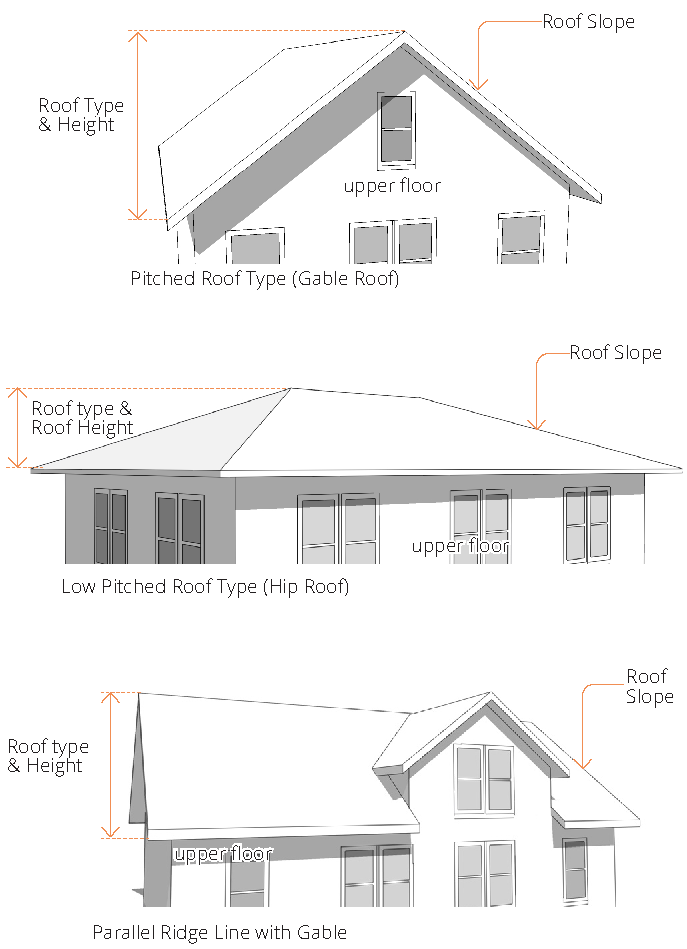
(a)
Slopes less than 4:12 are permitted to occur on second story or higher roofs.
(2)
Configurations.
(a)
Hipped, gabled, and combination of hips and gables with or without dormers are permitted.
(b)
Butterfly roofs (inverted gable roof) are permitted with a maximum height of 8 feet, inclusive of overhang.
(c)
Gambrel roofs and mansard roofs are permitted only on House Types A, B, and C and the Stacked Flats Building Type.
(3)
Parallel Ridge Line. A gabled end or perpendicular ridge line shall occur at least every 100 feet of roof when the ridge line runs parallel to the front lot line. (Refer to Figure 4.19-F Pitched Roof Types.)
(4)
Roof Height. Roofs without occupied space and/or dormers shall have a maximum height on street-facing facades equal to the maximum floor height permitted for the building type.
(5)
Occupied Space. Occupied space may be incorporated behind this roof type.
D.
Flat Roof Type. (Refer to Figure 4.19-G Flat Roof Type.) This roof type has a flat roof with overhanging eaves.
(1)
Configuration. Roofs with no visible slope are acceptable. Eaves are required on all street facing facades.
(2)
Eave Depth. Eave depth is measured from the building facade to the outside edge of the eave. Eaves shall have a depth of at least 14 inches.
(3)
Eave Thickness. Eave thickness is measured at the outside edge of the eave, from the bottom of the eave to the top of the eave. Eaves shall be a minimum of 8 inches thick.
Figure 4.19-G Flat Roof Type
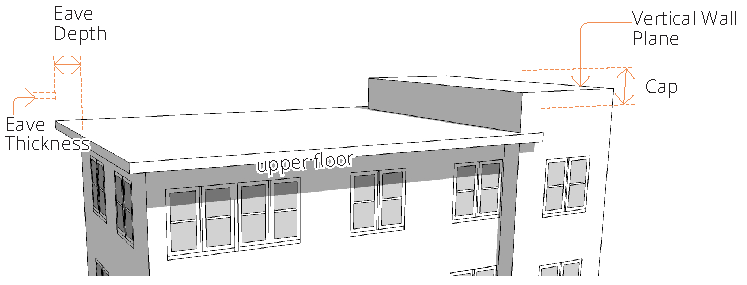
(4)
Interrupting Vertical Walls. Vertical walls may interrupt the eave and extend above the top of the eave with no discernible cap.
(a)
No more than one-half of the front facade can consist of an interrupting vertical wall.
(b)
Vertical walls shall extend no more than 4 feet above the top of the eave.
(5)
Occupied Space. Occupied space shall not be incorporated behind this roof type.
E.
Towers. (Refer to Figure 4.19-H Tower.) When utilized, a tower must be used in conjunction with other roof types.
(1)
Quantity. All building types, with the exception of the Civic Building, are limited to one tower per building.
(2)
Tower Height. Maximum height, measured from the top of the parapet or eave to the top of the tower, is the equivalent of the height of one upper floor of the building to which the tower is applied.
(3)
Tower Width. Maximum width along all facades is one-third the width of the front facade or 30 feet, whichever is less.
(4)
Horizontal Expression Lines. An expression line shall define the tower from the upper stories, except on House or Row Building Types.
(5)
Occupied Space. Towers may be occupied by the same uses allowed in upper stories of the building type to which it is applied.
(6)
Application. May be combined with all other roof types.
(7)
Tower Cap. The tower may be capped by the parapet, pitched, or flat roof types may cap the tower.
Figure 4.19-H Tower
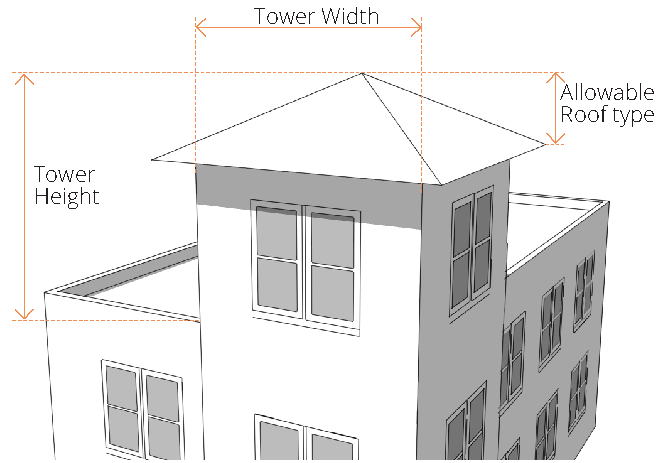
4.20.1 - ACCESSORY STRUCTURES TABLE
Figure 4.20-A Accessory Structure Table establishes the permitted accessory structures in each district.
A.
Accessory structures are divided into 3 categories: Accessory Buildings, Accessory Outdoor Structures, and Accessory Utility Structures.
B.
Each accessory structure is permitted by right in the districts in which it is listed, provided that it is developed utilizing any development standards detailed below.
4.20.2 - GENERAL DEVELOPMENT STANDARDS
All accessory structures shall fulfill the following development standards, unless otherwise stated.
A.
Yard. Accessory structures shall be located in the side and rear yards unless located within the OS district without a principal building.
B.
Setback. Accessory structures shall comply with the following setbacks:
(1)
Front and Corner Lot Lines. Accessory structures shall not extend closer to the front or corner lot line than the principal structure. In the absence of a principal structure, accessory structures shall be set back a minimum of 15 feet. Refer to Building Siting requirements of the associated Building Type (refer to 4.3 through 4.16).
(2)
Side and Rear lot Lines. Minimum setback of an accessory structure shall be 5 feet.
(3)
OS Districts. When a principal structure is not required in association with an OS district, an accessory structure shall be set back from all lot lines a minimum of 10 feet.
(4)
ADA-Required Accessory Structures. Notwithstanding the foregoing, a ramp or similar accessory structure designed to comply with requirements of the Americans with Disabilities Act or any more stringent state requirement shall not be subject to setback requirements if (a) the department of public works confirms in writing to the zoning administrator that such ramp will not obstruct the public right of way or shared driveway, and (b) such ramp or structure is attached to a building that obtained a certificate of occupancy before January 1,1990.
C.
Building Coverage. All roofed accessory structures contribute to the maximum building coverage for the site, as noted in the associated Building Type (refer to refer to 4.3 through 4.16).
D.
Impervious Site Area. All accessory structures with roofs or impermeable paving contribute to the maximum impervious coverage for the site, as noted in the associated Building Type (refer to 4.3 through 4.16).
E.
Height. The maximum height is 15 feet, except where a higher maximum height is otherwise expressly permitted.
F.
Roof Type. Roof type should match that of the principal structure when the accessory structure is greater than 300 square feet. Refer to the roof type requirements of the associated Building Type (refer to 4.19.2 Roof Types and 4.3 through 4.16 Building Types).
G.
Materials. Materials shall match those of the principal structure when the accessory structure is greater than 300 square feet. Refer to the building material requirements of the associated Building Type (refer to 4.3 through 4.16).
Figure 4.20-A Accessory Structure Table
***Expand table to lock table headings in place while scrolling***
(Amend. of 2-8-2022(1); Amend. of 1-10-2023; Amend. of 8-13-2024(1))
4.20.3 - ACCESSORY BUILDINGS
Accessory Buildings are fully enclosed, unless otherwise stated. The following are classified as Accessory Buildings:
A.
Construction Structures. Temporary structures associated with a construction project, including: temporary buildings used to house offices associated with construction and/or sales and marketing for the development; and temporary storage and waste containers.
(1)
Construction Structures are permitted in all yards.
(2)
Construction Structures are only permitted in conjunction with open building permits and shall be removed when building permits are closed.
(3)
Two Construction Structures are permitted per development project with one additional structure per every 2 acres of lot area.
(4)
Wheels and chassis on temporary buildings shall be screened from the street by skirting.
B.
Kiosk. An accessory building with limited space for the proprietor and associated goods and no space for customers to enter the structure, with the exception of bathrooms. Except in association with an Outdoor Market use, a Kiosk is not permitted when a principal structure is located on the lot. Refer to Figure 4.20-C Kiosk.
(1)
Yard. Permitted in all yards.
(2)
Use.
(a)
In the OS district, a Kiosk may contain a Neighborhood Retail or Service Use (refer to 3.0 Uses).
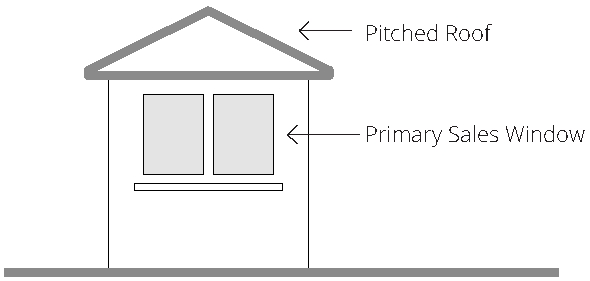
(3)
Area. Maximum of 500 square feet floor area.
(4)
Height. Maximum of one story or 15 feet (refer to 4.18.2 Height).
(5)
Facade Requirements. A Kiosk shall fulfill the following facade requirements:
(a)
At least one Front and corner facades shall have a minimum transparency of 20 percent (refer to 4.18.4 A.).
(b)
The kiosk shall be oriented toward the front of corner lot line. The primary sales or service windows or principal entrance shall be located on the front or corner façade except in the case of Outdoor Markets.
(6)
Reserved.
(7)
Permanent Structure. No wheels, hitch, or chassis shall be located on a kiosk.
(8)
Materials. Permitted materials include durable, natural materials, such as stone, brick, stucco, metal, concrete, and painted or stained wood.
C.
Out Building and Garage. A fully enclosed building on a lot that is detached from the principal structure on the same lot. A principal structure is required, unless otherwise stated. Typical Out Buildings include garages, pool houses, workshops, barns, or sheds.
(1)
Side and Rear Setback. Minimum side and rear setback of an Out Building shall be 5 feet.
(2)
Height. The height of the Out Building may be one story lower than the principal building utilizing the floor to floor heights of the principal building.
(3)
Residential Districts. A maximum of one Out Building shall be located on a lot zoned Neighborhood (N) or Neighborhood Mix (NX).
(4)
OS Districts. No principal structure is required. Uses may not include retail sales or service.
D.
Parking Structure. A parking structure as defined in 3.5.2 F.(2) is an accessory structure pursuant to this chapter if it is a stand-alone structure that is customary and incidental to the principal use on the site.
(1)
Location. An accessory parking structure shall be located as follows:
(a)
Parking structures shall be located in the rear yard only and shall be screened from view from the front of the lot or any Primary Street by the principal building.
(b)
Parking structures shall not extend closer to the front, corner, or side lot line than the principal structure.
(2)
Height. The overall height of a parking structure shall be one story lower than the majority height of the principal structure, not including the roof type unless such structure meets the following criteria:
(a)
Such structure shall be separated from any primary street on at least two sides by the principal structure.
(b)
The parking structure has been designed:
1.
With an overall height which does not exceed the height of the principal building
2.
So as it will not be visible from the principal building façade
(c)
Such structures located thirty (30) feet or less from a required build-to line shall be screened with landscaping and/or other pedestrian or tenant amenities.
Figure 4.20-D Plan of Parking Structure
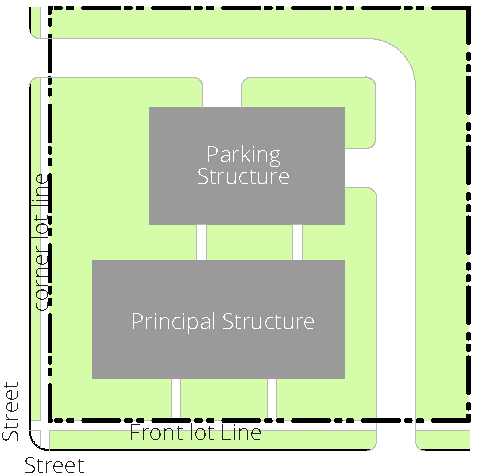
Figure 4.20-E Section of Parking Structure
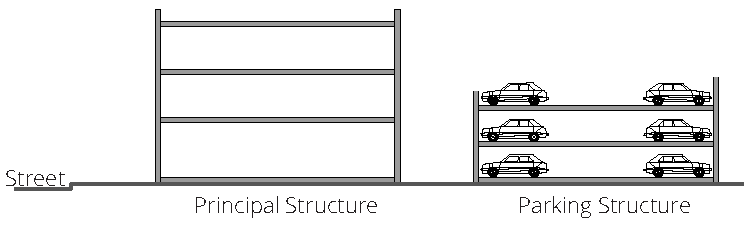
E.
Temporary Building. A temporary structure typically associated with a temporary event, such as a circus or temporary sale (refer to 3.6 Temporary Uses).
(1)
Yard. Permitted in all yards.
(2)
Temporary buildings associated with a temporary event shall be removed within 24 hours of the close of the event.
(3)
Wheels and chassis shall be screened by skirting.
(4)
Tents are considered a type of Temporary Building.
(a)
Tents are permitted in all districts and are the only Temporary Building permitted in districts MX-1 and NX districts.
(b)
Height shall not exceed that of the permitted Building Type(s) (refer to 4.3 through 4.16).
(c)
Tents must be constructed of fire retardant material.
(d)
Guy wires, stakes, and other supports must be clearly marked and secured.
(Amend. of 1-10-2023; Amend. of 3-7-2025(1))
4.20.4 - ACCESSORY OUTDOOR STRUCTURES
The following accessory structures are classified as Accessory Outdoor Structures. Refer to Figure 4.20-A Accessory Structure Table for permitted locations.
A.
Ball Court. Athletic facilities such as tennis and basketball courts.
B.
Deck and Patio. An outdoor space, which has a hard flooring surface such as wood, composite, stone, or tile, which is not roofed and not enclosed by walls or windows.
(1)
Yards. Permitted in all yards.
(2)
Non-Residential Deck and Patio. Any deck or patio associated with a non-residential use shall be located in the rear, side, corner side yard. When located in the front yard, the deck or patio shall not occupy more than 30 percent of the front facade. Refer to Figure 4.20-F Deck and Patio for Non-Residential Use.
(3)
Attachment. A deck must be attached to the principal structure. A patio may be attached, semidetached, or detached from the principal structure.
(4)
Location. Decks shall be located within the allowable footprint for the principal structure, per 4.1.2 J.(1).
Figure 4.20-F Deck and Patio for Non-Residential Use
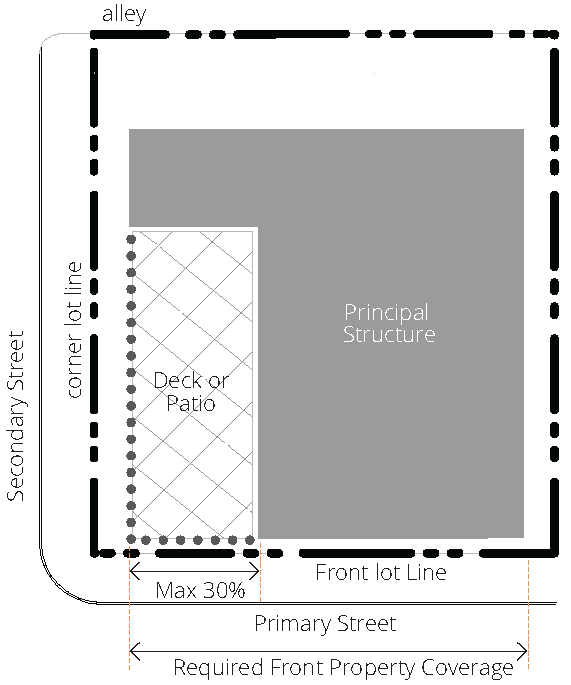
(5)
Height. Decks shall be located higher than 8 inches higher than the finished grade. Patios may be located at the finished grade or up to 8 inches higher than the finished grade.
(6)
Enclosure. A deck shall be partially or fully enclosed by a semi-opaque railing made of durable materials such as wood, composite, iron, or metal, not to exceed 36 inches in height. A patio is typically not enclosed.
C.
Dog Run. An enclosed outdoor area intended for containment and/or exercise of dogs and other domestic animals.
(1)
A Dog Run must be screened from view of the street by the principal structure or through fencing or landscape buffers.
(2)
A Dog Run shall be associated with a residential use or commercial animal boarding use. Refer to 3.3.5 B. General Service Uses.
D.
Drive-Through Facility. Refer to 3.5.2 A. for Drive-Through Facility in Accessory Uses.
E.
Flag Pole. A freestanding pole, usually constructed of wood or metal, installed for the sole purpose of flying a flag.
(1)
Yard. Permitted in all yards.
(2)
Height. A flag pole shall not exceed the following height limits:
(a)
MX-1, N, NX Districts. The maximum height is 15 feet or the two-thirds the height of the primary structure, whichever is shorter .
(b)
All Other Districts. The maximum height is 60 feet.
(3)
Setback. A setback of 10 feet from all lot lines is required.
(4)
Flag Size. The dimensions of any flag shall be proportional to the flagpole height such that the hoist side of the flag shall not exceed 50 percent of the vertical height.
(5)
Quantity of Flags. More than 2 flags on a lot requires a sign permit and all flags shall be counted towards the maximum signage per lot.
F.
Fuel Pumps and Canopies. Facility associated with a commercial or industrial use that distributes fuel.
(1)
Yard. Permitted in side and rear yards.
(2)
Areas outside the drive, access, parking, and passing areas shall not be paved (refer to 7.3 Parking Design Standards).
(3)
A frontage buffer is required (refer to 6.8 Frontage Buffer).
(4)
Height. The height of the structure shall not exceed 18 feet at its highest point from any single finished grade location.
G.
Gazebo. A freestanding roofed structure with open sides, whose primary purpose is for seating and which shall not be used for storage of any kind.
(1)
Yard. Permitted in all yards.
(2)
Setback. Must be set back at least 15 feet from front and corner side lot lines.
H.
Landscape Features.
(1)
Definitions. This category of residential recreational and aesthetic landscape outdoor structures includes the following:
(a)
Play Equipment. Recreational equipment for children, such as a sandbox, slide, climbing apparatus, skate board ramp, or swings.
(b)
Ponds. Water gardens or fish ponds; small ponds that consistently contain water during the summer and warmer months; and any pond containing plants and/or aquatic life.
(c)
Swimming Pool or Hot Tub. Any basin or other structure containing a minimum of 2 feet of water at any point in time for use by the resident, their family or guests, and associated integrated and attached decking and stairs, if basin is above-ground. Temporarily erected plastic, canvas, or rubber pools that do not fulfill the depth requirement do not apply.
(2)
Yard. Permitted in all yards.
(3)
Setback. Must be set back at least 15 feet from front and corner side lot lines.
I.
Temporary Storage Container. Temporary and transportable container for personal storage.
(1)
The container's size is limited to no greater than 825 cubic feet or covering an area no greater than 180 square feet of area.
(2)
Only one storage container is permitted per lot at a time.
(3)
Unless being used in conjunction with a valid building permit, the container may be located on a lot for no more than 7 consecutive days, no more than twice in a calendar year.
(4)
Any container must be stored in a side or rear yard.
(Amend. of 12-13-2022)
4.20.5 - ACCESSORY URBAN AGRICULTURAL STRUCTURES
A.
Accessory Farm Structures. Accessory Farm Structures include, but are not limited to, sheds (tool and packing), shade pavilions, farm stands, trellises, or other vertical supports for growing crops, and structures used to extend the growing season such as greenhouses, hoophouses, coldframes, or similar structures.
(1)
Location. Such structure shall be located in a rear yard in residential (N or NX) districts and any residential property.
(2)
Lot Coverage. Such structure shall not occupy more than 25 percent of the lot on which it is located.
(a)
If located on a lot used primarily for residential purposes, the accessory farm structure shall not occupy more than 25 percent of the required rear setback, provided that the total area of agricultural structures on any lot in a residential district shall not exceed 500 square feet in size.
(3)
Maximum Height. Such structure shall not exceed 20 feet in height in the case of greenhouses, hoophouses, coldframes, and similar structures which are located on the site of an approved urban farm or community garden not in a residential district, or 10 feet in height in the case of all other farm structures, unless a lower height is required by the building code.
B.
Compost Bins. A structure used to contain organic wastes as they decompose to result in compost, which is constructed of metal, blocks, bricks, wood, or plastic.
(1)
Design. Bins shall be constructed and situated in such a way as to control odor, prevent rodent or other pest infestation, eliminate runoff into waterways and onto adjacent properties, and not otherwise create a nuisance for nearby properties.
(2)
Plant Materials Only. Bins shall be used only to compost plant-based materials, and not used for cooked foods, animal proteins, and fats.
(3)
Screening. Screening, shall be provided in accordance with 6.12 Screening of Necessary Appurtenances.
(4)
Location. Bins shall be located in the rear yard, and shall be a minimum of 20 feet from any residential building.
C.
Henhouses. An enclosed structure for keeping hens only.
(1)
Permits Required. The property owner or henhouse operator shall obtain any and all necessary permits prior to the operation of any henhouse.
(2)
Size & Quantity. Henhouses shall be no larger than 200 square feet.
(a)
Residential Uses. No more than one henhouse holding a maximum of 6 hens is permitted per lot.
(3)
Community Garden or Urban Farm. One henhouse holding a maximum of 6 hens is permitted per lot. The number of hens allowed on such lot shall be increased by one additional hen for every 1,000 square feet of lot area over 10,000 square feet with a maximum of 12 hens on any lot.
(4)
Location. The henhouse shall be located in a rear yard at least 25 feet from any street line, at least 15 feet from any residential dwelling, and at least 15 feet from any property line. In the instance that more than one distance requirement shall apply, the greater distance requirements shall apply.
(5)
Materials. The henhouse shall be made of washable and sanitizable material such as fiberglass reinforced plastic, and no part of the henhouse (including the area for a run) shall exceed 8 feet in height.
(6)
Design. The henhouse shall be: predator proof, thoroughly ventilated, watertight, and easily accessed and cleaned. Direct access from the coop to an outdoor enclosure shall be provided with the outdoor enclosure designed to be: predator proof, easily accessed and cleaned, and fenced to contain the chickens.
(7)
Prohibited Activities.
(a)
No rooster shall be kept on any lot.
(b)
The on-site slaughtering of chickens is prohibited.
(8)
Biosecurity. The flock shall be cared for using consistent biosecurity practices as detailed by the U.S. Department of Agriculture Animal and Plant Health Inspection Service to prevent the spread of diseases.
(9)
Water & Waste. No discharge of water or waste from the henhouse shall occur on any neighboring property or on a public way.
(10)
Screening. All outdoor roaming areas shall be enclosed and screened from public ways and from neighboring properties by a fence which is 60 percent opaque or year-round landscaping at least 4 feet in height.
(11)
Farm Stand. No sales of eggs shall occur on the lot containing the henhouse, except in the case of a henhouse operator located on a urban farm where there is a farm stand, in which case the henhouse operator shall be permitted to sell eggs at the farm stand. Such stand shall be permitted in accordance with 4.20.5 A. Accessory Farm Structures.
(12)
Public Nuisance. The presence of obnoxious odors or unsanitary conditions which annoy the immediate neighborhood, is hereby declared to be a public nuisance and may be summarily abated by the proper city officials.
4.20.6 - ACCESSORY RENEWABLE ENERGY STRUCTURES
A.
Solar Building-Mounted. A solar energy system that is affixed to or an integral part of a principal or accessory building, including but not limited to photovoltaic or hot water solar energy systems which are contained within roofing materials, windows, skylights, and awnings.
(1)
Quantity. The total square footage may not exceed the total area of roof surface of the structure to which the system is attached.
(2)
Flush Mounted System. Systems should be less than 4 inches from the roof surface whenever possible.
(3)
Height.
(a)
Systems shall not extend beyond 3 feet parallel to the roof surface of a pitched roof.
(b)
Systems shall not extend beyond 4 feet parallel to the roof surface of a flat roof.
(c)
Systems shall not extend more than 5 feet above the highest peak of a pitched roof.
(4)
Location on Structure. Allowed on the following:
(a)
Principal and accessory structures.
(b)
Any roof face.
(c)
Side and rear building facades.
(5)
Projection. The system may project off a roof edge or building facade as follows.
(a)
May project laterally from a building facade or roof edge a maximum of 3.5 feet.
(b)
May project into an interior side or interior rear setback, but shall be no closer than 5 feet to the interior side or interior rear property line.
(6)
Signs. Signage or writing of any kind is not permitted on any portion of system, other than required manufacturer plates and safety labeling.
B.
Solar Freestanding. A solar energy system with a supporting framework that is placed on, or anchored in, the ground and that is indepen dent of any building or other structure other than parking lot canopy solar energy systems described in 4.20.6 B.
(1)
Output. The system shall produce less than one megawatt of electricity.
(2)
Size. A system in any MX, N, or NX district shall not exceed either the area of 50 percent of the principal building footprint or 600 square feet, whichever is greater.
(3)
Maximum Height. The system shall be as close to the ground as practicable, and not taller than 20 feet on lots of at least 5 acres in the ID districts, 12 feet on lots of at least 5 acres, and 6 feet on all other lots, all measured from the grade at the base of the pole to the highest edge of the system.
(4)
Clearance. Minimum clearance between the lowest point of the system and the surface on which the system is mounted is 3 feet.
(5)
Location. Allowed in the interior side yard and interior rear yard only.
(a)
For any property designated as historic or located within a historic district, such system shall be located in the rear yard.
(6)
Setbacks. All parts of the freestanding system shall be set back a minimum of 5 feet from the interior side and interior rear property lines and shall not be located in a public utility easement.
(7)
Appearance. Such system must be gray, natural green, or beige in color, with the exception of the solar photovoltaic panels which are usually black, or system must be screened from view from surrounding residential properties.
(8)
Materials. Such system shall not include any unfinished lumber.
C.
Solar Parking Lot Canopy. A solar energy system with a supporting framework that is placed on, or anchored in, the ground and that is independent of any building or other structure, which is used in a parking lot or the top story of a parking structure to shade vehicles parked in such lot or structure.
(1)
Size. A system in any residential district (MX, N, or NX) shall not exceed either the area of 50 percent of the principal building footprint or 600 square feet, whichever is greater.
(2)
Maximum Height. The system shall be between 8 and 15 feet in height, so as to provide for parking underneath the system.
(3)
Clearance. Minimum clearance between the lowest point of the system and the surface on which the system is mounted is 7.5 feet.
(4)
Location. Allowed in the interior side yard and interior rear yard only, if applicable.
(a)
For any property designated as historic or located within a historic district, such system shall be located in the rear yard, if applicable.
(b)
Shall not cover more than 50 percent of the parking lot or story of the parking structure in which it is located.
(5)
Setbacks. All parts of the freestanding system shall be set back a minimum of 5 feet from the interior side and interior rear property lines and shall not be located in a public utility easement.
(6)
Appearance. Such system must be gray, natural green, or beige in color, with the exception of the solar photovoltaic panels which are usually black, or system must be screened from view from surrounding residential properties. Signage or writing of any kind is not permitted on any portion of any parking lot canopy solar energy system, other than required manufacturer plates or safety labeling.
(7)
Materials. Such system shall not include any unfinished lumber.
D.
Wind Freestanding. Small wind energy systems that stand independent of a building structure.
(1)
Output. The system shall produce less than one megawatt of electricity.
(2)
Location in City. System shall be located within 1,000 feet of an interstate or the Connecticut River.
(3)
Height. The height of any component of a small wind energy system shall not exceed 200 feet, as measured from the ground to highest point of the blade arc.
(4)
Permitted Yard Location. Allowed only in the interior side and interior rear yards.
(a)
Front, exterior side, and exterior rear yards may be allowed in non-residential districts with a special use permit provided there are no residential districts within 120 feet of any property line of the lot where the turbine will be located.
(b)
System shall not be visible from the street when installed on any property designated as historic or located within a historic district.
(5)
Setbacks. The base of the system shall be setback 1.1 times the height of the highest edge of the system from all property lines, overhead utility line poles, public sidewalks or trails, and public rights-of-way. Any system or any ancillary equipment shall not be located within any required setbacks of the respective zoning district
(6)
Installation. Small wind energy systems shall be installed only by professional installers certified to install wind turbines, and only pursuant to manufacturer specifications.
(7)
Signs. Signage or writing of any kind is not permitted on any portion of any wind turbine, other than required manufacturer plates or safety labeling.
(8)
Lighting. Small wind energy systems shall provide lighting per Federal Aviation Administration (FAA) regulations. Lighting shall be red and may not be of the incandescent variety, unless FAA regulations otherwise allow or require.
(9)
Clearance. Minimum clearance between the lowest tip of the rotor or blade and the ground is 10 feet.
(10)
Access. Climbing access (rungs or foot pegs) to the tower shall not start until 12 feet above grade to prevent unauthorized access.
E.
Wind Roof-Mounted. Wind energy systems that are attached to the roof of a building.
(1)
Quantity. One turbine is allowed for every 750 square feet of the combined roof area of all structures on a lot. For a pitched roof, each surface of the roof shall be included in the roof area calculation.
(2)
Rated Capacity. A maximum rated capacity of 3 kilowatts per turbine is allowed.
(3)
Height.
(a)
The maximum height of 15 feet is measured from the roof surface on which the system is mounted to the highest edge of the system with the exception of any pitches 10:12 or greater.
(b)
The system shall not extend more than 5 feet above the highest peak of a pitched roof.
(4)
Location. Roof-mounted wind energy systems are only permitted on structures that are a minimum of 4 stories tall or 40 feet.
(a)
Roof-mounted wind energy systems must be set back from the roof or parapet wall one foot for every foot in height of the device above the roof or parapet wall.
(b)
Roof-mounted wind energy systems shall only be permitted on roofs with a slope of one inch per foot or less.
(c)
A roof-mounted wind energy system shall not be visible from the street when installed on any property designated as historic or located within a historic district.
(5)
Installation. Roof-mounted wind energy systems shall be installed only by professional installers certified to install wind turbines, and only pursuant to manufacturer specifications.
4.20.7 - ACCESSORY UTILITY STRUCTURES
The following accessory structures are classified as Accessory Utility Structures:
A.
Antenna and Satellite Dish. An apparatus, detached or attached to the exterior of a building, together with any supporting structure, for sending or receiving electromagnetic waves, excluding antennas, satellites, and equipment associated with small cell nodes.
(1)
Size. The smallest practical size shall be used for any antenna or satellite dish.
(a)
A stand-alone antenna or satellite dish shall not exceed a maximum of 10 feet in its outside diameter or 10 feet in height.
(b)
An antenna or satellite dish that is attached to the exterior of a building shall not be larger than 36 inches in diameter.
(c)
Additional size may be approved through the special permit process (refer to 1.3.4).
(d)
A roof mounted antenna or satellite dish shall not occupy more than 25 percent of the roof area.
(2)
Location. Antennae and satellite dishes shall be located as follows:
(a)
Stand-alone antennae and satellite dishes shall be located in the side and rear yards.
(b)
Antennae and satellite dishes may be attached to the roof and side and rear facades of buildings.
(c)
Roof mounted antennas shall be set back from the roof edges 10 feet, or 10 percent of roof depth (measured from edge facing public street to opposite edge of roof), whichever is greater. The applicant shall demonstrate that the antenna is the minimum height required to function satisfactorily. No antenna that is taller than this minimum height shall be approved.
(d)
If these permitted locations will not allow the antenna or satellite dish to fully function, it may be located in the front or corner side yards or on the front or corner facades.
(e)
Evidence shall be provided to the zoning administrator prior to installation in the front or corner yards or on the front or corner facades that the antenna or satellite dish cannot fully function in either the side or rear yards or on the side or rear facades.
(f)
When a stand-alone antenna or satellite dish occurs adjacent to a residential district, the Side & Rear Buffer with a solid fence is required (refer to 6.9 Side & Rear Buffer).
(3)
Replacement. Replacement of antennae and satellite dishes shall be permitted if:
(a)
New equipment is dimensionally similar and in the same location as the replaced equipment; and
(b)
Equipment being replaced was legally permitted at the time of installation.
B.
Electric Vehicle Charging Stations. An electric vehicle charging station is a public or private parking space that is served by battery charging equipment with the purpose of transferring electric energy to a battery or other energy storage device in an electric vehicle.
(1)
Types.
(a)
Level 1, slow charging, operates on a 15 to 20 amp breaker on a 120 volt AC circuit.
(b)
Level 2, medium charging, operates on a 40 to 100 amp breaker on a 208 volt or 240 volt AC circuit.
(c)
Level 3, fast or rapid charging, operates on a 60 amp or higher breaker on a 480 volt or higher 3-phase circuit with special grounding equipment.
(2)
Siting & Setbacks. The siting and setbacks for stations shall be the same as the parking facility within which they are associated, except that no interior side or interior rear lot line setbacks are required. Stations additionally serving one or more adjoining lots may be sited on the lot line coincident with said adjoining lots; appropriate documentation shall be provided demonstrating shared ownership or consent of all owners of the lots served.
(3)
Design.
(a)
Except when located in one, 2-, and 3-unit dwelling locations, stations shall be reserved for parking and charging of electric vehicles only, with signage as described in 4.20.7 B.(3) (b), below.
(b)
Signage. Each station shall be marked with signage indicating the space is only for electric vehicle charging purposes.
(c)
Accessibility. At least one accessible station shall be provided for every 20 electric vehicle charging stations. Such accessible stations shall be located in proximity to the buildings or facility entrances and shall be connected to a barrier-free accessible route of travel.
(d)
Equipment.
(i)
Equipment mounted on pedestals, lighting posts, bollards, or other devices for on-street charging station shall be designed and located as to not impede pedestrian travel or create trip hazards within the right-of-way.
(ii)
Charging station outlets and connector shall be no less than 36 inches or no higher than 48 inches from the top of the surface where mounted and shall contain a retraction device or a place to hang cords and connectors above the ground surface.
(iii)
Equipment shall be protected by wheel stops or concrete-filled bollards.
(iv)
Stations located within parking lots or garages may be included in the calculation of the minimum required parking spaces required.
(e)
The station shall be designed to be:
(i)
Safe for use during inclement weather,
(ii)
Tamper-resistant to prevent injury, particularly to children,
(iii)
Resistant to potential damage by vandalism, and
(iv)
Equipped with a mechanism to prevent the theft of electricity by an unauthorized user.
(f)
The station shall have complete instructions and appropriate warnings posted in an unobstructed location next to each station.
(g)
Vehicle charging equipment must be designed and located so as to not impede pedestrian, bicycle or wheelchair movement, or create safety hazards on sidewalks.
(4)
Maintenance. Electric vehicle charging stations must be maintained in all respects, including the functioning of the equipment.
C.
Freestanding Radio or Wireless Tower. A freestanding tower associated with a wireless transmission facility or a commercial radio station fully licensed by the Federal Communications Commission.
(1)
Yard. Towers that are accessory to a principal structure shall be located in the rear yard.
(2)
Setback. Freestanding radio or wireless towers shall have the following setbacks:
(a)
Towers shall be set back a minimum of 50 feet from any lot line.
(b)
Towers shall be set back from any MX-1, N, or NX district a minimum of 100 feet.
(3)
Height. Freestanding radio or wireless towers shall have the following heights:
(a)
CX Districts. Towers shall not exceed 50 feet in height.
(b)
ID Districts. Towers shall not exceed 75 feet in height. Additional height may be permitted by special permit (refer to 1.3.4).
(4)
Screening. Refer to 6.12 Screening of Necessary Appurtenances.
(5)
Co-Location and Stealth Installations. New facilities shall be developed using the following techniques unless otherwise authorized for good cause during the required site plan review (refer to 1.3.5).
(a)
Co-Location. A wireless service antenna support structure designed, constructed, and installed to be of a sufficient size and capacity to allow the location of additional personal wireless service antennas to accommodate at least 2 additional personal wireless service provider in the future.
(b)
Stealth Installation. A wireless service antenna whose appearance is concealed or disguised to appear like another object, such as a tree or steeple.
(6)
Towers shall comply with all Federal Communications Commission and Federal Aviation Authority regulations.
D.
Mechanical-Appurtenances. Heating and air conditioning equipment, outdoor utility equipment and other appurtenances as outlined herein (excluding other types of accessory utility structures independently defined herein) for the ordinary function of a building or use.
(1)
Screening. Ground-mounted mechanical equipment must be screened in accordance with 6.12 Screening of Necessary Appurtenances.
(2)
Roof-mounted mechanical equipment shall be located on the rear pitch of a roof where possible and shall be set back either a minimum of 10 feet from each roof edge or a minimum of 10% of the roof depth (measured from the edge facing public street to opposite edge of roof) and, if visible from a public right of way, appropriately screened. The applicant shall demonstrate that the roof-mounted mechanical equipment is the minimum height required to function satisfactorily.
(3)
Mechanical equipment incorporated within or projecting through the exterior wall of a building shall not extend more than six (6) inches from the building wall unless located on an approved building projection (deck, patio, porch etc.)
(a)
Any mechanical appurtenance which projects more than four (4) inches from the building wall which is not located on an approved projection shall be located on a side or rear facade unless the following criteria have been met:
i.
Such appurtenance shall not project through the building wall at a height of more than three (3) feet above grade, and;
ii.
Be continuously screened from view with suitable landscaping or other permanent opaque screening, and;
iii.
Such appurtenance shall be located within thirty-six (36) inches of a building end.
E.
Rainwater Collection/Cistern. A container or series of containers for the collection and reuse of rainwater.
(1)
A cistern is exempted from inclusion in the site impervious area calculation.
(2)
Front Yard. In the CX and ID districts, a cistern may be located in the front yard of the principal structure, but shall still fulfill the required setbacks.
F.
Small Cell Node. A cellular radio access node that has as its key components an antenna and an equipment box, operates in licensed and unlicensed spectra, and is designed or used to increase capacity and stability of a wireless communications network.
(1)
Size. A Small Cell Node shall be sized as follows:
(a)
The smallest practical size shall be used for each component of any Small Cell Node.
(b)
The size of any antenna associated with a Small Cell Node shall not exceed a maximum of 5 feet in height, except for Small Cell Nodes visible from the public right of way, which shall not exceed a maximum of 3 feet in height, except when two antennas are located on a single pole, in which case a total combined antenna height of 6 feet is permitted.
(2)
Location. A Small Cell Node shall be located as follows:
(a)
In the rear of a lot or in any other location where no part of the Small Cell Node is visible from the public right of way; or
(b)
On the roof of an existing building, with all components being set back from the roof edges sufficiently to shield all components from a person viewing the building from any public right of way, except that, in any allowed district other than the MS, MX, and OS districts, a cylindrical antenna with a maximum cross-section of 30 square inches may project up to 5 feet from the parapet wall of a building with a flat roof, as long as the building is at least 4 stories tall and as long as there is only one Small Cell Node visible from the public right of way per street façade face; or
(c)
On an existing or replacement, light pole, traffic signal structure, or City-owned utility pole; or
(d)
In the OS district, only on an existing or replacement, light pole, traffic signal structure, or City-owned utility pole.
(3)
Number. No more than two Small Cell Node antennas may be located on a single pole.
(4)
Design.
(a)
The Small Cell Node equipment must be a consistent color to the structure to which it is mounted or fully enclosed in a replacement structure.
Figure 4.20-G Small Cell Node Allowed
Configuration
(b)
The Small Cell Node, other than a Small Cell Node not visible from the public right of way, shall be designed to minimize the visibility of cables and other appurtenances.
(c)
For Small Cell Nodes on City-owned utility poles, light poles, and traffic signal structures, the department of public works must determine that:
(i)
The Small Cell Node can be reasonably supported by such infrastructure considering the structural condition of the specific structure and as shown in an engineering analysis filed by the applicant; and
(ii)
The Small Cell Node location, design, and equipment will not interfere with pedestrian or vehicular travel.
(d)
For a Small Cell Node visible from the public right of way, equipment other than the antenna and a disconnect switch box of a size no larger than 1 cubic foot, shall be designed and located to minimize visibility of the equipment from the public right of way which requires a concealment element or underground installation. See Figure 4.20-G. for an allowed configuration.
(5)
Evidence, in the form of renderings, at least two sightline perspectives, a coverage map, and engineering analysis regarding the suitability of any existing structure to which a Small Cell Node is proposed to be mounted, and representations about the size and nature of the components shall be provided to the zoning administrator with each application. Generic drawings and photographs of equipment will not be accepted.
(6)
Modification of any Small Cell Node shall be approved by the zoning administrator through a zoning permit process if each and every piece of equipment is a modification which does not substantially change the physical dimensions of the eligible facility or support structure. The following constitute substantial changes:
(a)
It increases the height of the support structure or the Small Cell Node by more than 10 percent or more than 10 feet, whichever is less;
(b)
It involves installation of any new equipment cabinets on the ground if there are no pre-existing ground cabinets associated with the structure, or else involves installation of ground cabinets that are more than 10 percent larger in height or overall volume than any other ground cabinets associated with the structure;
(c)
It entails any excavation or deployment outside the current site; or
(d)
It would defeat the concealment elements of the eligible support structure.
(7)
Alternative designs for Small Cell Nodes, including those designed to be mounted to a building façade or designs that involve a City-owned replacement structure for a utility pole, light pole, traffic signal, or other structure, may be considered by the commission under special permit review
(8)
Staff shall have the authority to approve, on behalf of the commission, the design of a Small Cell Node which has been approved by the commission pursuant to a previous special permit application, if such design is exactly duplicated and does not otherwise violate this section, provided that staff may also decline to exercise such authority and request that the commission review. The preceding sentence shall not relieve the responsibility of an applicant to tender special permit fees applicable to Small Cell Node applications.
(9)
Staff shall have the authority to approve small cell node installations administratively through a zoning permit process on existing or replacements of City owned light poles, traffic signal structures, or utility poles provided that such installations are consistent with the use and design standards of Section 4.20.7 F.
G.
Transportation - Bike Share Structure. A stand-alone structure, commonly known as a dock, and used for the storing of shared bicycles.
(1)
The design and exact location of any bike share structure must be approved by the department of public works, which shall take into account relevant site conditions, including but not limited to the width of the sidewalk for which the structure is proposed, the sight lines from nearby streets and driveways, the location of windows of adjacent buildings used for commercial purposes, and the locations of other nearby street furniture.
(2)
Each bike share structure in the DT, MS, CX, ID, or MX-2 zones may have off-site advertising signage, provided that:
(a)
The bike share structure is located at least 600 feet away from another bike share structure with off-site advertising signage, which is on the same side of the street, except in the DT zoning districts where there is no such dispersion requirement, and except that 2 bike share structures with off-site advertising signage may be located on opposite sides of the same block of the same street;
(b)
The off-site advertising signage may be internally illuminated in accordance with 8.1.8 Illumination; and
(c)
No portion of the off-site advertising signage shall be a Dynamic Display.
(d)
The off-site advertising signage shall conform to the design (but not location or placement) standards of 8.11, Ped-Scale Pole-Mounted Sign, except that the height of such signage shall not exceed 6 feet.
H.
Transportation - Bus Shelter. A stand-alone, open-air structure with 3 vertically screened sides and a roof that may be located on public or private property for use by patrons awaiting a regional public transit service.
(1)
The design and exact location of any shelter must be approved by the department of public works, which shall take into account relevant site conditions, including but not limited to the width of the sidewalk for which the shelter is proposed, the sight lines from nearby streets and driveways, the location of windows of adjacent buildings used for commercial purposes, and the locations of other nearby street furniture.
(2)
Both sides of one of the vertical screens of a transportation shelter in the DT, MS, CX, ID, or MX-2 zones may have off-site advertising signage, provided that:
(a)
The transportation shelter is located at least 600 feet away from another transportation shelter with off-site advertising signage, which is on the same side of the street, except in the DT zoning districts where there is no such dispersion requirement, and except that 2 transportation shelters with off-site advertising signage may be located on opposite sides of the same block of the same street;
(b)
The off-site advertising signage may be internally illuminated in accordance with 8.1.8 Illumination; and
(c)
No portion of the off-site advertising signage shall be a Dynamic Display.
(3)
During the permit review process, the decision-making body may, in consultation with the department of public works, require an applicant in a lot with direct access, current or expected, to a public transit area to provide a transportation shelter designed in accordance with this section.
I.
Macro Cell Nodes. All cellular radio access nodes larger than those qualifying as Small Cell Nodes and not located on a Freestanding Radio or Wireless Tower (Section 4.20.7.C) shall be considered Macro Cell Nodes. Macro Cell Nodes shall be permitted in all zones and subject to the following conditions.
(a)
Macro Cell nodes are permitted in locations where they are least visible from the public right of way including: on the roof of existing buildings; and, on rear or internal side facades subject to these conditions.
(b)
Macro Cell Nodes shall maintain a 50-foot setback from a 1, 2 or 3-family residential properties.
(c)
Any equipment shelters, or cabinets associated with a Macro Cell Node must be concealed from public view using landscaping or fencing for ground-mounted equipment, roof-top screening for roof-mounted equipment if said equipment is visible from a public right of way or equipment may be placed underground. Roof-top equipment screening shall be made compatible with the architecture of the surrounding structures.
(d)
The applicant shall submit written documentation demonstrating that the emissions from the proposed project are within the limits set by the Federal Communications Commission.
(e)
Façade mounted antennas should be painted and/or textured to match the existing structure.
(f)
Where feasible, antennas can be placed directly above, below or incorporated within vertical design elements of a building to help in camouflaging.
(g)
Façade-mounted antennas shall not extend above the cornice line of the building.
(h)
Roof -mounted antennas shall be permitted on flat or on shallow-pitched roofs. Shallow pitched roofs shall be those with a ratio of 2/12 or less. If the roof is pitched the node should be placed on the rear pitch whenever possible.
(i)
Roof mounted antennas shall be set back from the roof edge 10 feet, or 10 percent of roof depth (measured from the building edge facing public street to opposite edge of roof), whichever is greater.
(j)
Roof mounted antennas shall not extend more than 15' above the roof line or parapet.
(k)
Roof-mounted antennas and associated equipment shall not occupy more than 25% of the roof area.
(l)
The applicant shall demonstrate that the antenna size and the antenna height are the minimum required to function satisfactorily.
(m)
An antenna may not be located on a building or structure that is listed on an historic register or is within an historic district, except with approval from the Historic Preservation Commission and by special permit approved by the Commission.
(Amend. of 10-26-2021(1); Amend. of 2-8-2022(1); Amend. of 12-12-2023(2); Amend. of 8-13-2024(1); Amend. of 8-27-2024(1); Amend. of 11-26-2024(1))

