
Hot Springs City Zoning Code
ARTICLE V
- COMMERCIAL DISTRICTS
16-2-5.1. - Purpose.
(a)
C-TR Commercial Transitional District. The C-TR Commercial Transitional District is intended to accommodate low intensity commercial uses that serve as a transition between residential neighborhoods and higher intensity commercial or mixed-use areas. The C-TR District also accommodates conversions of existing single-family dwellings to low intensity commercial uses, creating a unique mixed-use character.
(b)
C-N Neighborhood Commercial District. The C-N Neighborhood Commercial District is intended to accommodate convenience commercial and personal service uses that primarily serve nearby residential neighborhoods, often in a nodal development form.
(c)
C-MU Commercial Mixed-Use District. The C-MU Commercial Mixed-Use District is intended to accommodate both vertical and horizontal mixed-use development, allowing for residential uses above the ground floor of mixed-use structures, as well as on the ground floor of multi-family structures.
(d)
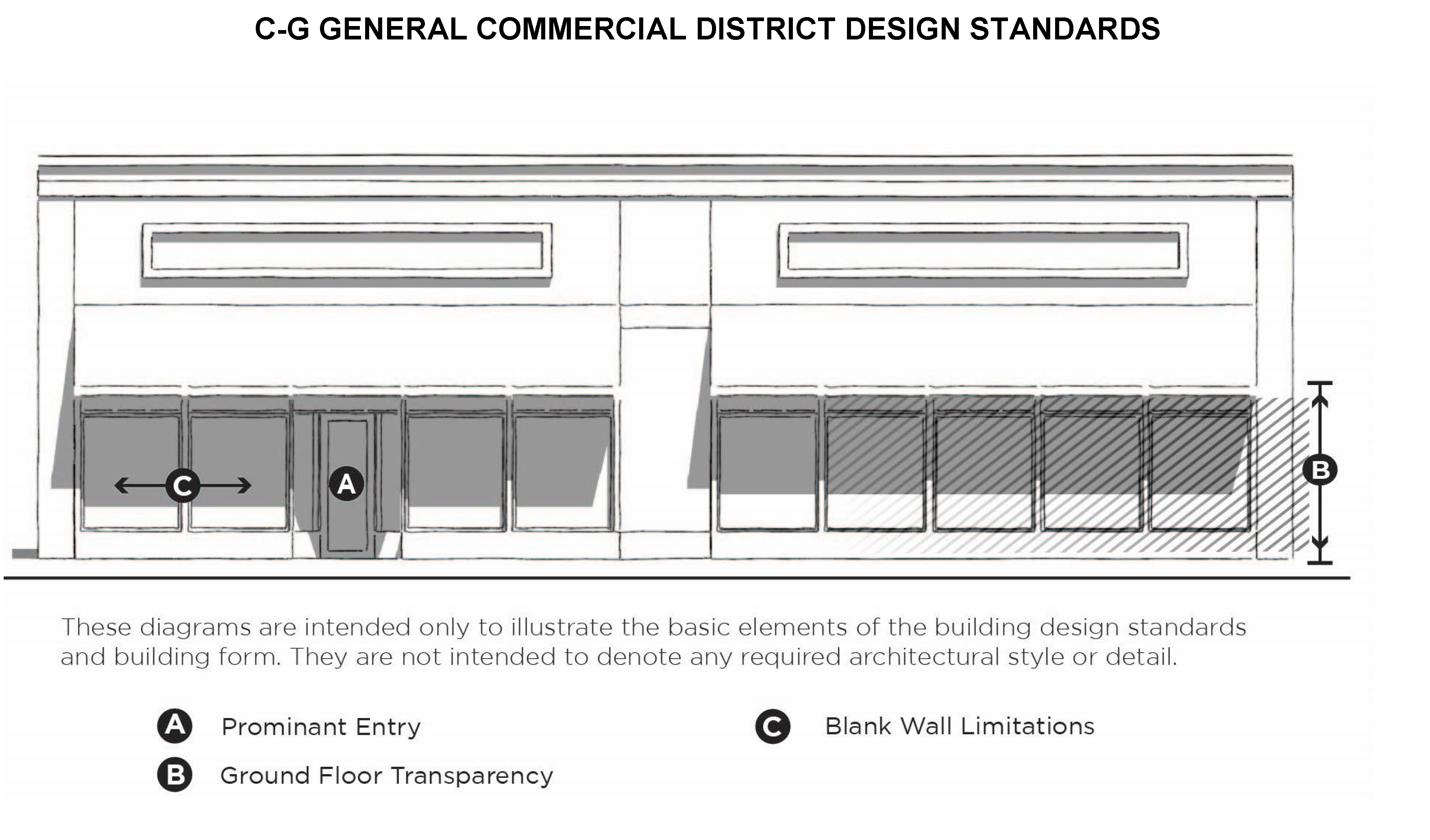
C-G General Commercial District. The C-G General Commercial District is intended to accommodate areas of commercial development predominantly located along corridors, and at key nodes that serve residents, the community at large, and visitors to the city.
(e)
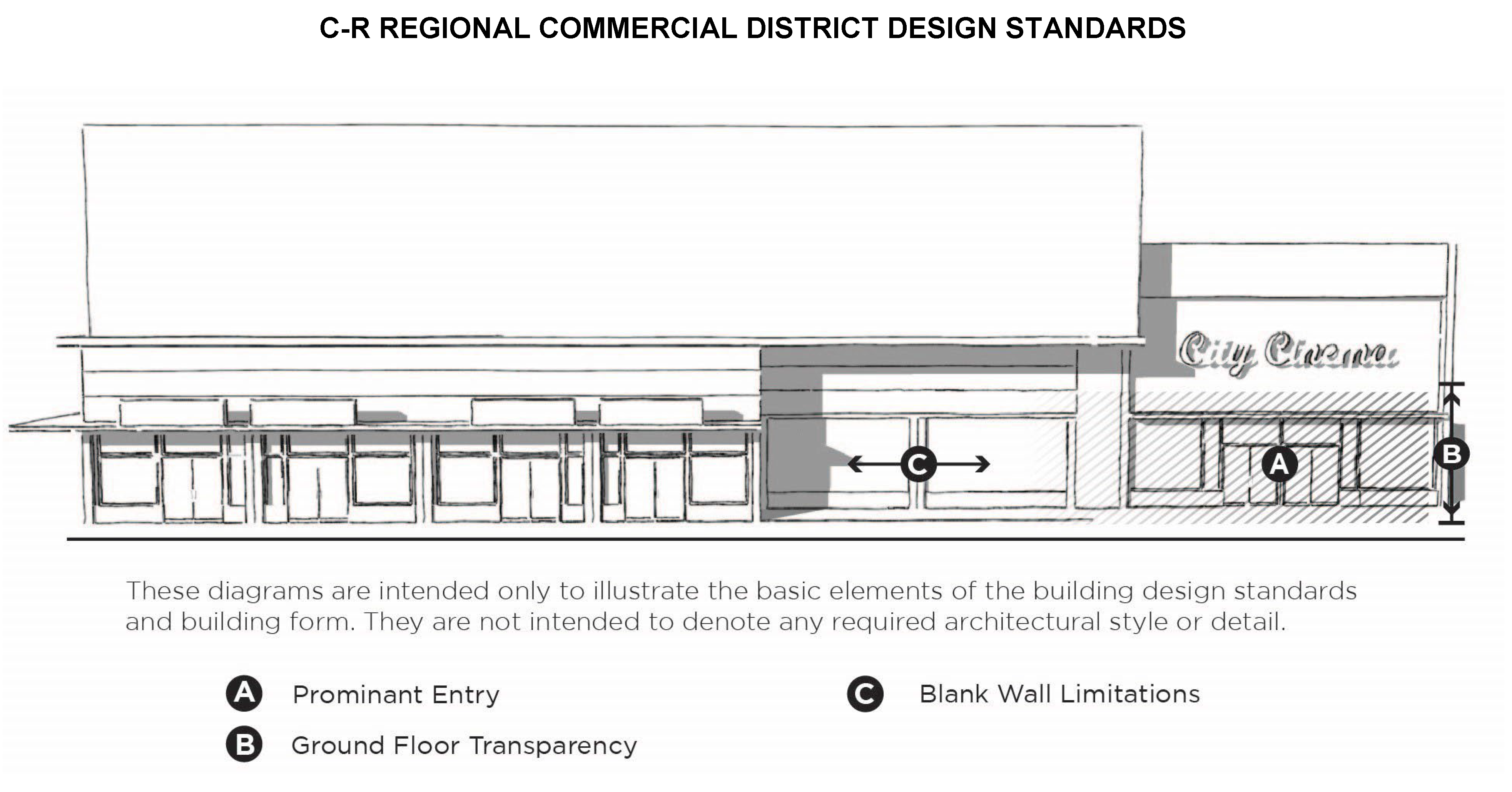
C-R Regional Commercial District. The C-R Regional Commercial District is intended to accommodate large-scale commercial development that may attract a regional consumer base and is typically more auto-oriented, located along major commercial arterials and State highways.
(f)
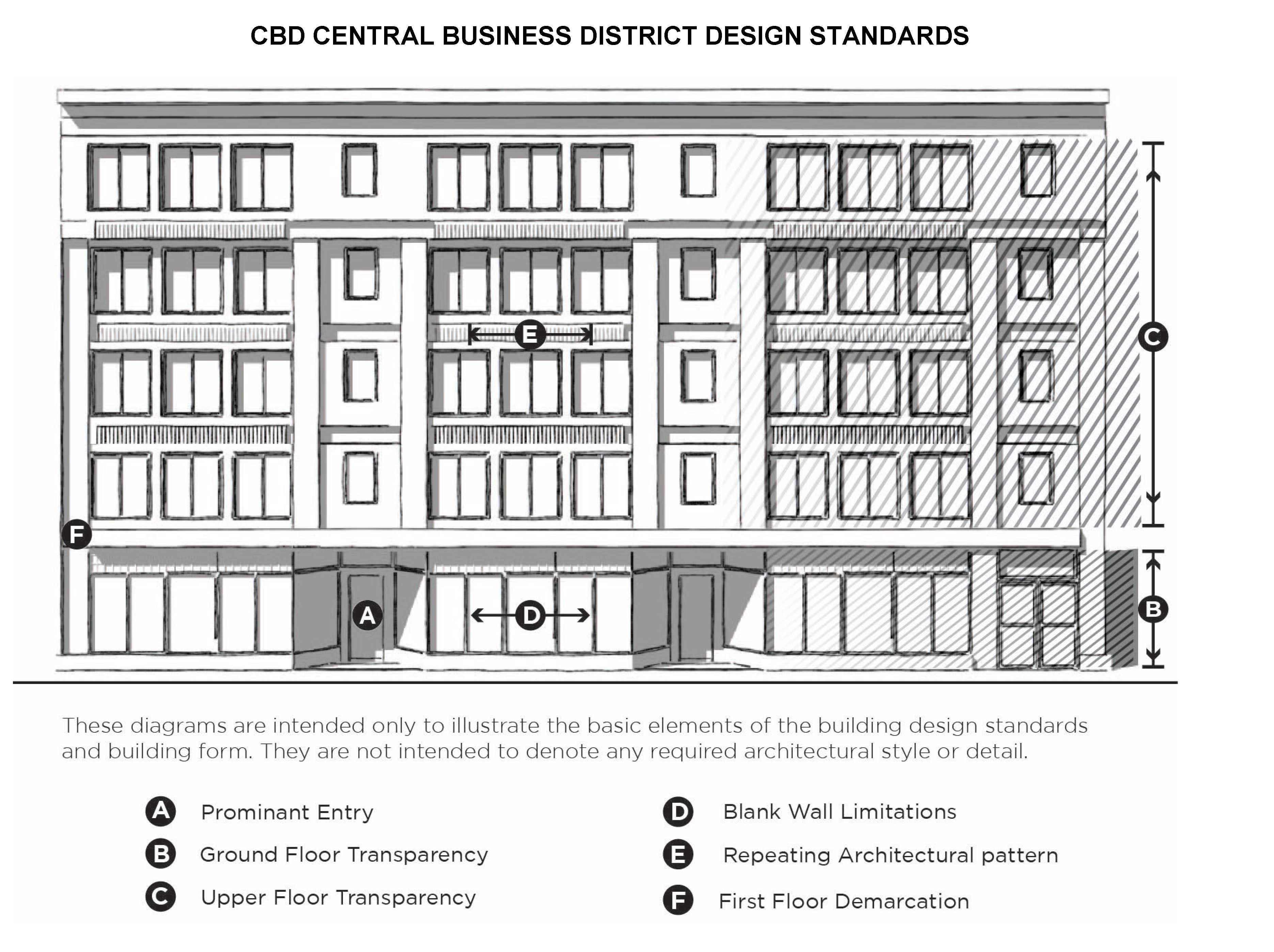
CBD Central Business District. The CBD Central Business District is intended to accommodate the most intense mixed-use development within the City of Hot Springs. The CBD District comprises a predominantly vertically mixed-use environment focused on creating a vibrant, pedestrian oriented, active Downtown. District standards are oriented toward achieving a high quality of design and encouraging building forms that complement the area's existing urban fabric.
(Ord. No. 6513, § 1(Exh. A), 11-19-24)
16-2-5.2. - Uses.
Article VIII lists principal, temporary, and accessory uses allowed within the commercial districts.
(Ord. No. 6513, § 1(Exh. A), 11-19-24)
16-2-5.3. - Commercial districts dimensional standards.
Table 5-1: Commercial District Dimensional Standards establishes the dimensional standards for the commercial districts. These regulations apply to all uses within each district unless a different standard is listed for a specific use. If a property is located within any historic district, additional regulations may apply and control over the standards of this section. See section 16-2-2.4 for the measurement methodologies for each of the dimensional standards.
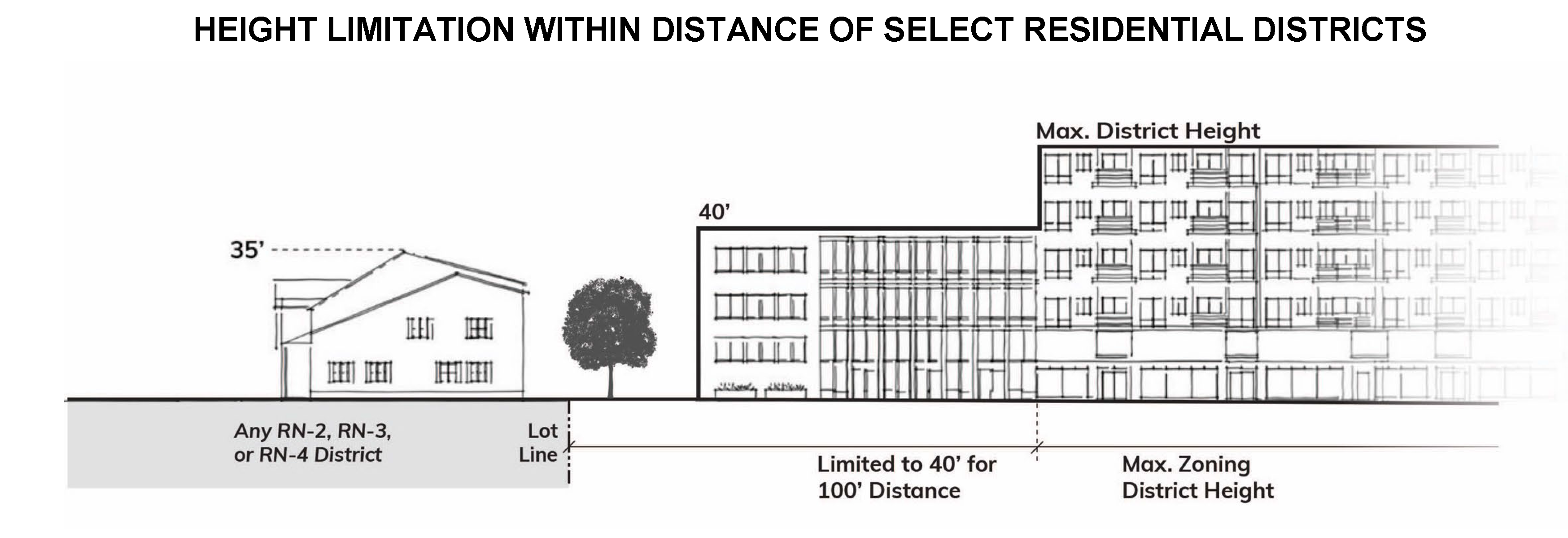
1 Maximum height of a structure is limited to 40' within 100' of an R-R, R-S, RN-1, RN-2, RN-3, or RN-4 District. This limitation applies only to that portion of a structure within the 100' distance.
2 Does not apply to institutional uses such as places of worship, government facilities, and educational facilities.
3 Any front or corner side setback, including a build-to zone (BTZ) located along a State highway, a minimum setback of 25' is required. A BTZ standard does not apply and the 25' setback controls over any minimum setback required.
4 The minimum rear setback along any Lake Hamilton waterfront lot line is 20 feet. See section 16-2-2.4(10)f.
(Ord. No. 6513, § 1(Exh. A), 11-19-24)
16-2-5.4. - Commercial districts design standards.
(a)
Applicability.
(1)
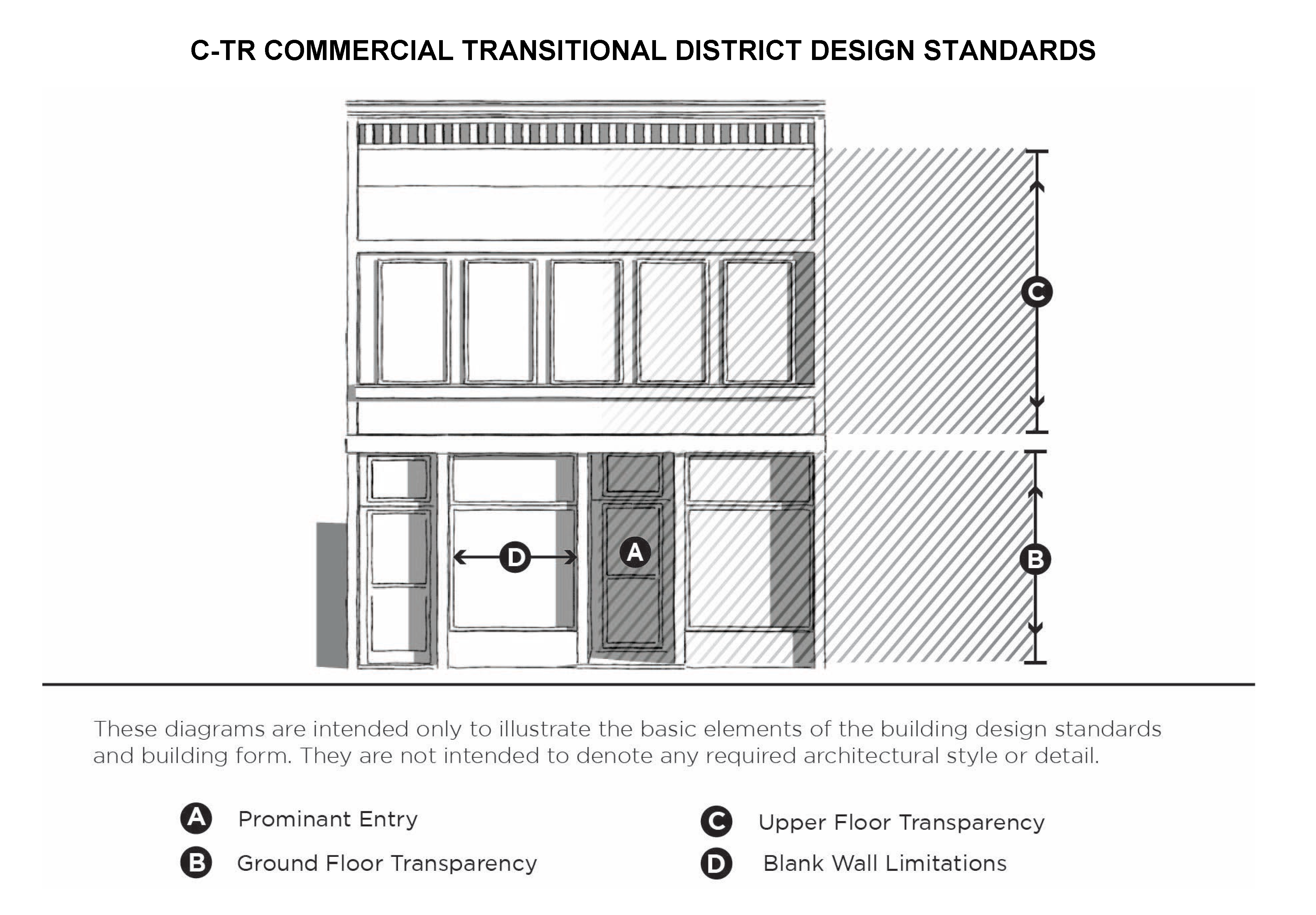
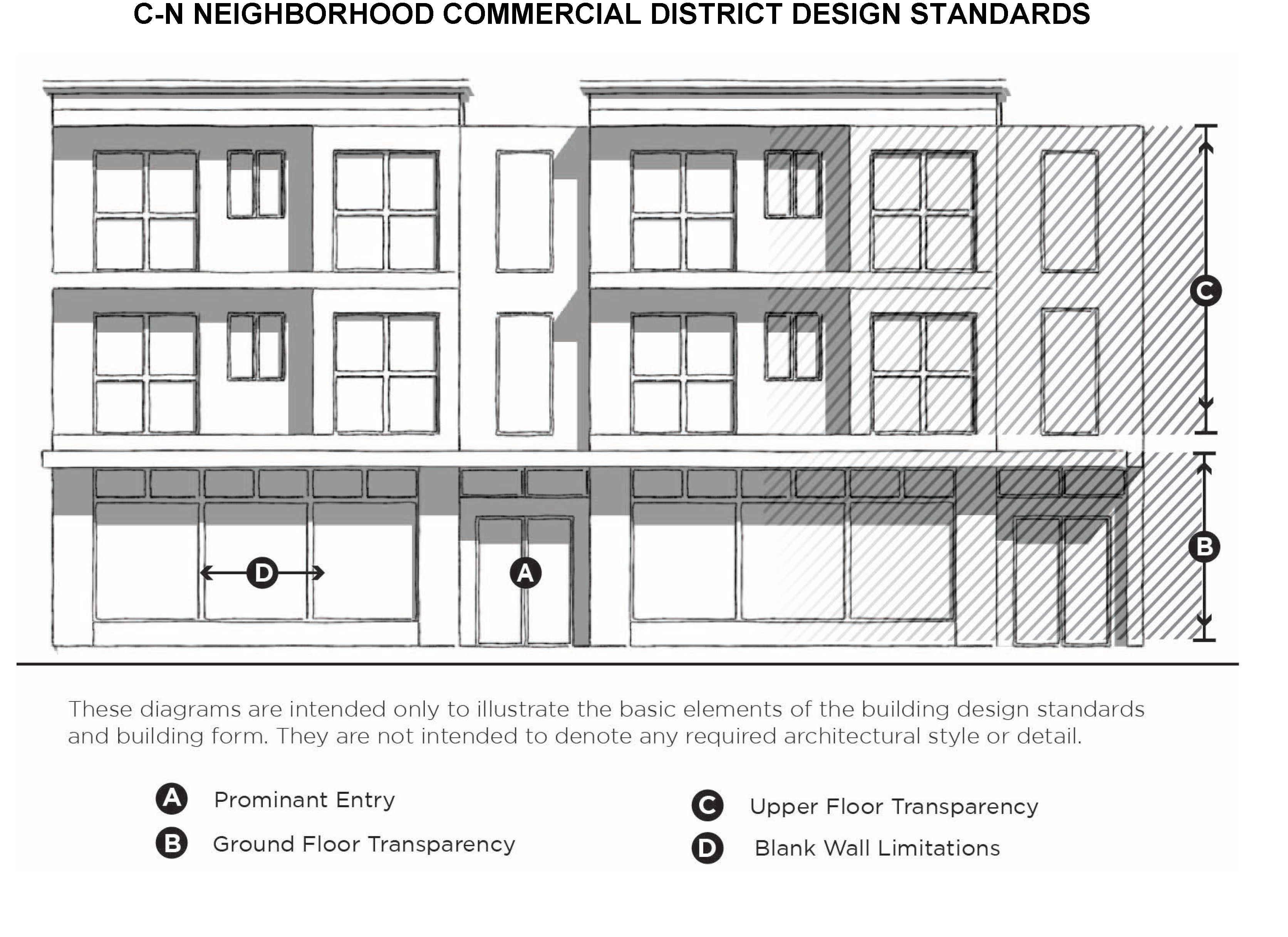
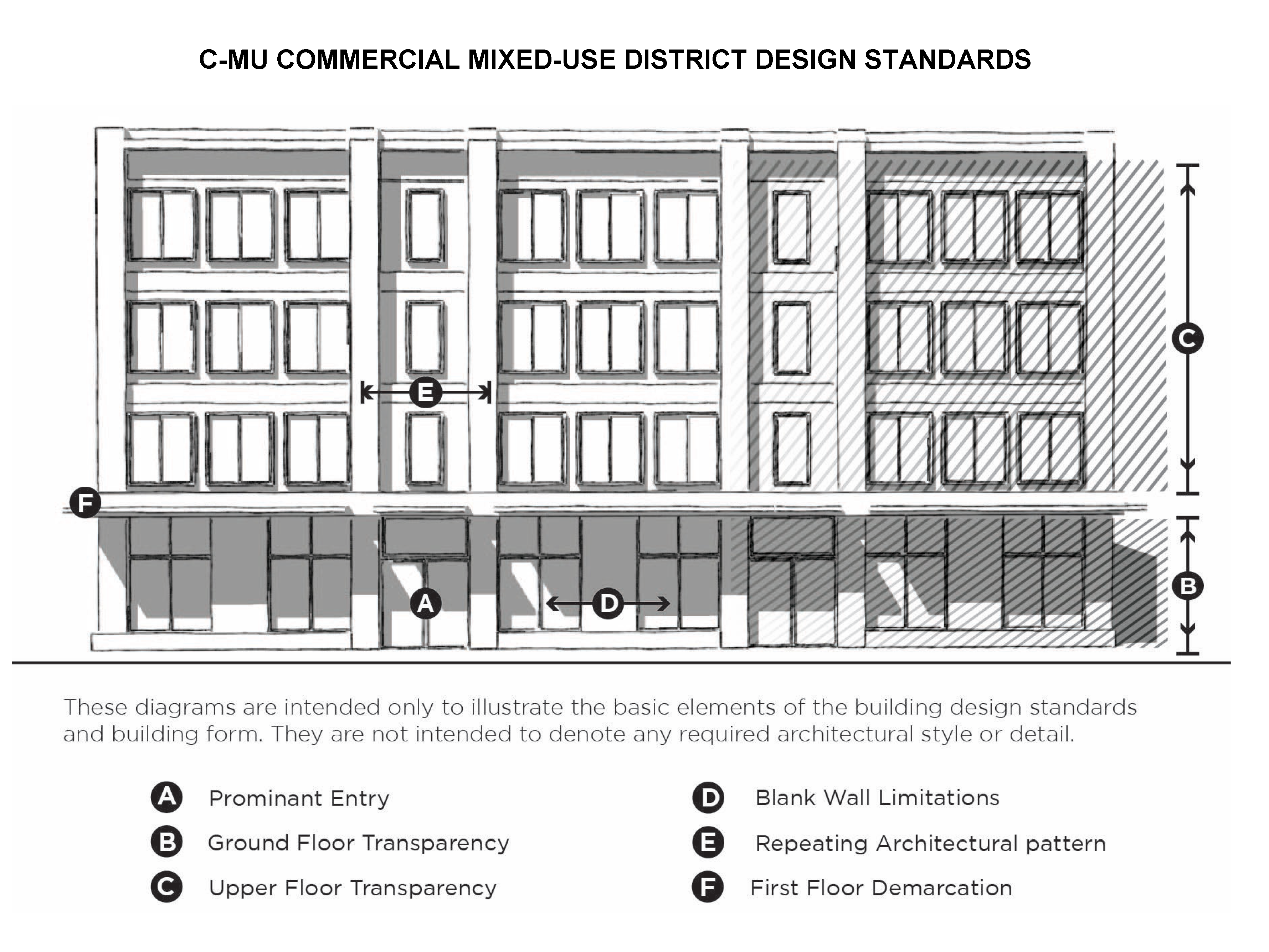
The design standards of this Table 5-2: Commercial District Design Standards apply to nonresidential and mixed-use developments in the commercial districts. Multi-family dwellings in the C-MU and CBD Districts are also subject to the design standards of Table 5-2.
(2)
Design standards apply to new construction and additions that increase the building square footage by 25 percent or more. However, these standards do not apply to conversion of an existing single-family home to a nonresidential use in the C-TR District.
(3)
When standards indicate that they are applicable when facing a street, this does not apply to alleys.
(4)
Diagrams included below are for illustrative purposes only.
(5)
If a property is located within any historic district, additional regulations may apply and control over the standards of this section.
(b)
Design standards. In Table 5-2: Commercial District Design Standards, a "√" indicates that the standard is applicable in the district indicated. The absence of a "√" or the abbreviation "N/A" indicates that the standard is not applicable to the district.
(c)
Building materials.
(1)
A building façade facing a street must be a minimum of 50 percent masonry with non-masonry building materials each not to exceed 25 percent.
(2)
The masonry must wrap onto the non-street facing façade a minimum of eight feet.
(3)
The portion of the façade used for windows is not subject to any building material standards.
(Ord. No. 6513, § 1(Exh. A), 11-19-24)
16-2-5.5. - Additional standards.
(a)
General site development standards See article IX for additional on-site development standards and requirements.
(b)
Accessory structures. See article X for accessory structure standards and requirements.
(c)
Off-street parking and loading. See article XI for parking, loading, and access standards and requirements.
(Ord. No. 6513, § 1(Exh. A), 11-19-24)

