
Hot Springs City Zoning Code
ARTICLE VI
- INDUSTRIAL DISTRICTS
16-2-6.1. - Purpose.
(a)
I-L Light Industrial District. The I-L Light Industrial District is intended to accommodate industrial activities that do not create appreciable nuisance or hazards, or that require a pleasant, hazard-and-nuisance-free environment. The I-L District may also accommodate select service or commercial uses.
(b)
I-H Heavy Industrial District. The I-H Heavy Industrial District is intended to accommodate those industrial activities which may produce moderate nuisances or hazards in areas that are incompatible with non-industrial development.
(c)
I-MU Industrial Mixed-Use District. The I-MU Industrial Mixed-Use District is intended to accommodate a mix of light industrial uses and compatible commercial uses such as retail and entertainment. This mix is designed to promote the reuse of older, character-giving structures that may no longer be suitable for their original industrial purposes but can accommodate a variety of alternative types of uses. Residential uses are also permitted in the I-MU District.
(Ord. No. 6513, § 1(Exh. A), 11-19-24)
16-2-6.2. - Uses.
Article VIII lists principal, temporary, and accessory uses allowed within the industrial districts.
(Ord. No. 6513, § 1(Exh. A), 11-19-24)
16-2-6.3. - Industrial districts dimensional standards.
Table 6-1: Industrial District Dimensional Standards establishes the dimensional standards for the industrial districts. These regulations apply to all uses within each district unless a different standard is listed for a specific use. See section 16-2-2.4 for the measurement methodologies for each of the dimensional standards.
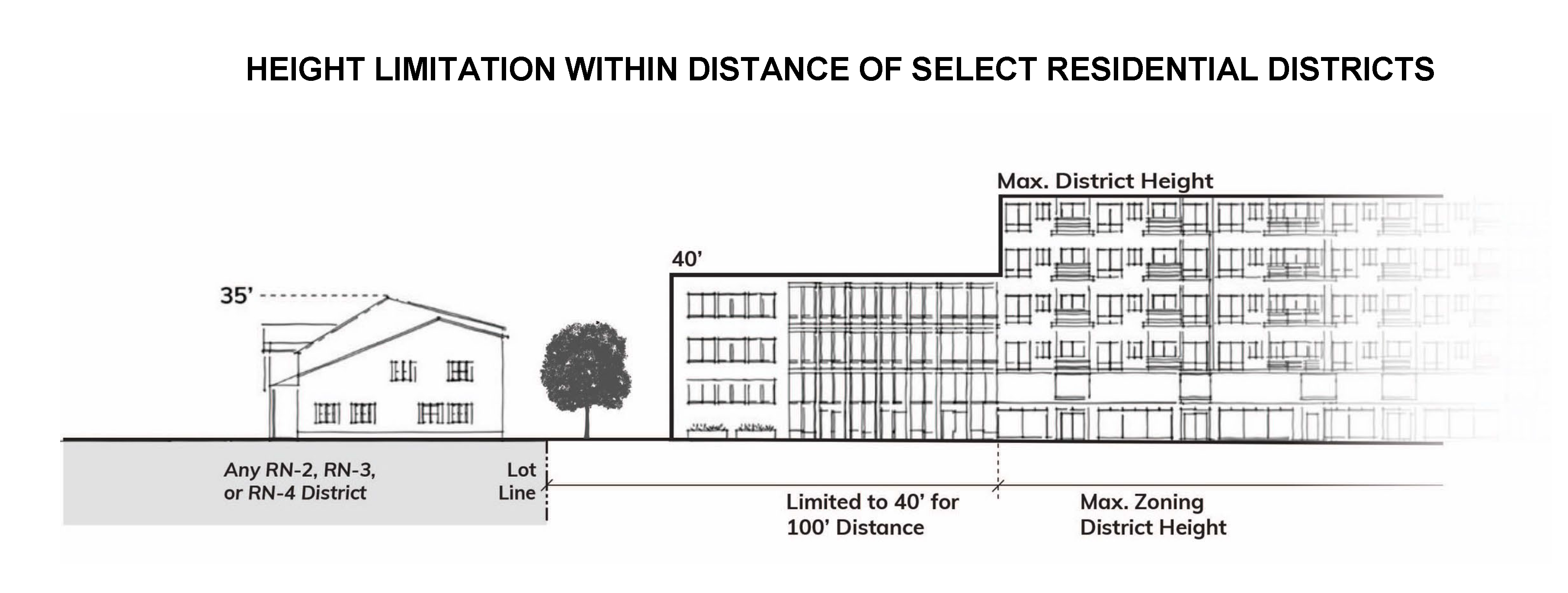
1 Maximum height of a structure is limited to 40' within 100' of an R-R, R-S, RN-1, RN-2, RN-3, or RN-4 District. This limitation applies only to that portion of a structure within the 100' distance.
2 Any front or corner side setback located along a State highway, a minimum setback of 25' is required. The 25' setback controls over any minimum setback required.
3 The minimum rear setback applies along any Lake Hamilton waterfront lot line. See section 16-2-2.4(10)f.
(Ord. No. 6513, § 1(Exh. A), 11-19-24)
16-2-6.4. - I-MU District design standards.
(a)
Applicability.
(1)
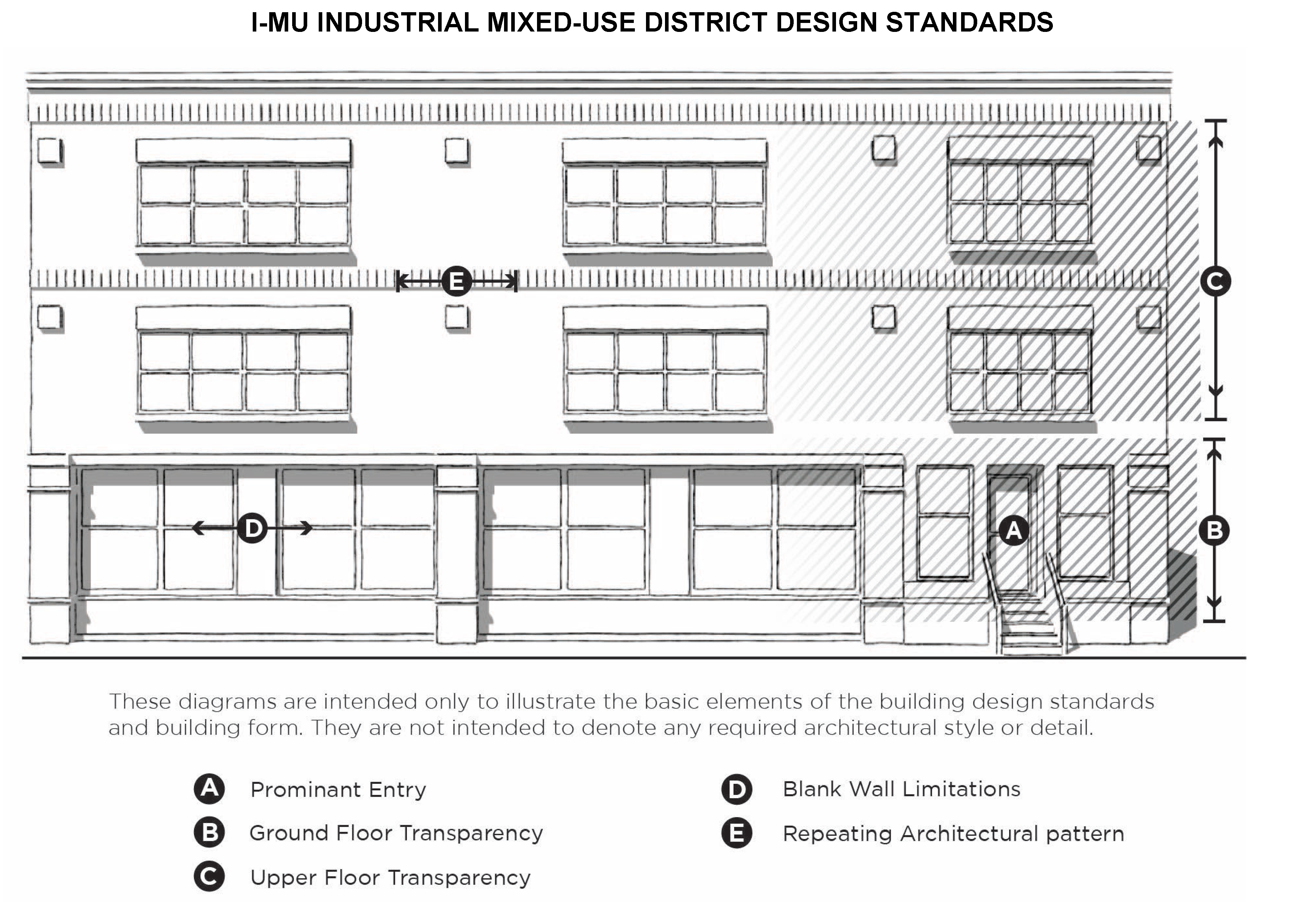
The design standards of Table 6-2: Industrial Mixed-Use District Design Standards apply to developments in the I-MU District only. A "√" indicates that the standard is applicable for the development type indicated. The absence of a "√" or the abbreviation "N/A" indicates that the standard is not applicable to the development type.
(2)
Design standards apply to new construction only.
(3)
When standards indicate that they are applicable when facing or visible from a street, this does not apply to alleys.
(4)
Diagrams included below are for illustrative purposes only.
(b)
Building materials.
(1)
A building façade facing a street must be a minimum of 50 percent masonry with non-masonry building materials each not to exceed 25 percent.
(2)
The masonry must wrap onto the non-street facing façade a minimum of eight feet.
(3)
The portion of the façade used for windows is not subject to any building material standards.
(Ord. No. 6513, § 1(Exh. A), 11-19-24)
16-2-6.5. - Additional standards.
(a)
General site development standards. See article IX for additional on-site development standards and requirements.
(b)
Accessory structures.See article X for accessory structure standards and requirements.
(c)
Off-street parking and loading. See article XI for parking, loading, and access standards and requirements.
(Ord. No. 6513, § 1(Exh. A), 11-19-24)

