
Minturn City Zoning Code
ARTICLE 2
Definitions, Illustrations and Lot Standards1
Editor's note— Ord. No. 01-2015, §2, adopted March 18, 2015, changed the title of Art. 2 from "Definitions and Illustrations" to "Definitions, Illustrations and Lot Standards."
Sec. 16-2-10.- Purpose.
The purpose of this Article is to define words, terms and phrases contained within this Chapter.
(Prior code 16-2-1; Ord. 15-2008 §1)
Sec. 16-2-20. - Definitions.
For the purposes of this Chapter, the following terms shall have the meanings set forth below unless the context clearly indicates otherwise:
Accessory apartment means a dwelling unit that has been added onto, or created within, a single-family dwelling or detached garage. The accessory apartment has separate cooking, bathing and sleeping areas. The inclusion of an accessory apartment shall maintain the appearance of the structure as a single-family dwelling or detached garage. The accessory apartment shall remain under the same ownership as the single-family dwelling.
Accessory building orstructure means a building or structure detached from a principal building located on the same lot and customarily incidental and subordinate to the principal building or use. An accessory building or structure is functionally dependent upon the principal use. (See Illustration No. 16-1 at Section 16-2-30)
Accessory dwelling means an individual dwelling unit subordinate to, and contained within or on the same lot as, a single-family dwelling.
Accessory use means a use of land, or of a building or portion thereof, customarily incidental to and subordinate to the principal use of the land or building and located on the same lot with the principal use.
Active programmed recreation turf means grass used for recreation that is one thousand five hundred (1,500) contiguous square feet or greater; and located at least ten (10) feet from a street or interior-facing parking lot unless the turf area is at least thirty (30) feet in all dimensions or immediately adjacent to an athletic field.
Active use means a building space at the ground level of a building that is designed for retail or other customer-oriented commercial use. Such space shall not include vehicle parking, service areas, utility facilities, residential uses, or residential support uses such as lobbies, resident laundry rooms and resident work-out facilities.
Adult use means an establishment consisting of, including or having the characteristics of any or all of the following:
Adult bookstore means an establishment having as a substantial or significant portion of its stock-in-trade books, magazines, publications, tapes or films that are distinguished or characterized by their emphasis on matter depicting, describing or relating to sexual activities or anatomical genital areas.
Adult cabaret means:
1.
An establishment devoted to adult entertainment, either with or without a liquor license, presenting material distinguished or characterized by an emphasis on matter depicting, describing or relating to sexual activities or anatomical genital areas;
2.
A cabaret that features topless dancers, go-go dancers, strippers, male or female impersonators or similar entertainers for observation by patrons.
Adult massage parlor means a similar establishment or portion of an establishment presenting material distinguished by emphasis on matter depicting, describing or relating to sexual conduct or sexual excitement and customarily not open to the general public through the exclusion of minors.
Adult motion picture theater means an enclosed building used for presenting material distinguished or characterized by an emphasis on matter depicting, describing or relating to sexual activities or anatomical genital areas.
Nude entertainment establishment means an establishment where a person appears in a state of nudity when such person is unclothed or in such attire, costume or clothing as to expose to view any portion of the female breast below the top of the areola or any portion of the pubic hair, anus, cleft of the buttocks, vulva or genitals of either sex.
Agricultural use means the production, keeping or maintenance, for sale, lease or personal use, of plants and animals useful to man, including, but not limited to:
Animal husbandry means raising of livestock, bees, apiary products and fur animals, including the incidental preparations for market, storage and delivery, but not the sale of retail products.
Horticulture means the cultivation of a garden or orchard, including floriculture and viticulture, and comprises the production of crops and raising nursery stock, including incidental preparations for market, storage and delivery but not retail sale of products.
Alley means a service roadway providing a secondary means of access to abutting property and designated for service access to the rear or side of buildings.
Alteration means any act or process that changes one (1) or more of the exterior architectural features of any building or structure. A change in exterior color is not an alteration.
Alteration, structural means any change in the supporting members of a building, such as bearing walls, columns, beams and girders, or in the dimensions or configurations of the roof, foundation or exterior walls.
Amusements means an establishment or enterprise for the purpose of amusing or entertaining persons, including by way of example but not in limitation, museums, bowling alleys, pool halls, arcades, dance halls, puppet shows, theaters, cinemas, concerts, stage shows, roller and ice skating rinks, sport facilities and recreational facilities, whether such establishments are indoor or outdoor, for profit or not for profit or in conjunction with another use on the premises. However, amusements shall not include devices for amusement and entertainment such as jukeboxes, pool tables, coin-operated games, pinball machines or television and radio where such devices are clearly incidental and subordinate to the principal use of the premises.
Apartment house means a structure containing three (3) or more dwelling units that have not been subdivided into separate ownership units.
Area median income (AMI) means the median household income estimates and program income limits compiled and released annually for Eagle County by the United States Department of Housing and Urban Development (HUD).
Athletic field turf means grass used for sports or physical education that is one thousand five hundred (1,500) contiguous square feet or greater; not less than thirty (30) feet in any dimension; and located at a school, daycare, religious institution, recreation center, senior center, park or water park. Athletic field turf may be located less than ten (10) feet from a street or interior-facing parking lot.
Automobile service station means any building, land area or other premises or portion thereof used for the retail dispensing or sales of vehicular fuels; serving and repair of automobiles; and including as an accessory use the sale and installation of lubricants, tires, batteries and similar vehicle accessories. Motor vehicle service is listed as an industrial use.
Automotive detail shop means a building, or portion thereof, containing facilities for complete or partial hand-washing of automobiles as a service to a customer.
Automotive parts/sales means any building or premises whose primary use is for the dispensing or sale at retail to the public of lubricating oil or grease, tires, batteries and other minor automobile accessories.
Bakeries and confectioneries means the baking of bread, cake, cookies and other similar items for delivery to wholesale customers or for door-to-door sale or delivery to retail customers.
Bakeries and delicatessens with food service means stores engaged in the sale at retail of bread, cake, cookies and other similar items, including the baking of such items on the premises, but excluding the baking of such items for delivery to wholesale customers or for door-to-door sale or delivery to retail customers.
Banks andfinancial institutions means commercial banks, savings and loan associations, brokerage offices and other similar financial institutions, but not including pawnshops.
Batch plant means the manufacturing of asphalt or concrete which may include the storage of related component materials.
Battle Retained Parcels means, whether unplatted or divided into tracts, parcels, lots and blocks pursuant to the exemption plat process or a recorded final plat, all land within the Bolts Lake Property that is neither a Town parcel nor a restricted parcel and is intended for future development or other disposition.
Bed and breakfast and tourist home mean a dwelling unit in which overnight accommodations and a morning meal are provided only to guests of the facility for compensation. There are no cooking or dining facilities provided in individual rooms, and the length of stay is less than thirty (30) days. See also Commercial accommodations.
Bolts Concept Plan means and refers to the concept plan and master map for the Bolts Lake Property that is set forth in Section 16-10.5-25, and which depicts the general locations of the Battle Retained Property, the restricted parcels and the Town parcels.
Bolts Lake Property means the approximately three hundred seventy-nine (379) acres of land consisting of the Battle Retained Property, the restricted parcels and the Town parcels, as conceptually depicted in the Bolts Concept Plan, but excluding any land conveyed to and owned in fee by ERWSD (or its successors and assigns) pursuant to the Reservoir Agreement.
Bolts Water Distribution System has the meaning stated in Section 13-1-10.
Bolts Water Treatment Plant has the meaning stated in Section 13-1-10.
Bolts Water Treatment System has the meaning stated in Section 13-1-10.
Building means any structure having a roof supported by columns or walls and intended for the shelter, housing or enclosure of any individual, animal, process, equipment, goods or materials of any kind.
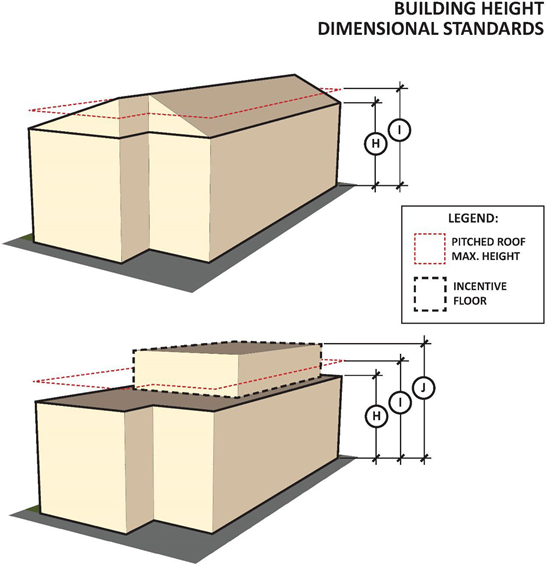
Building height or height of building means the maximum vertical (plumb) distance measured at any point along the perimeter of the structure from the finished, natural, or established grade (whichever is more restrictive) and a point on the roof depending on the roof type. No portion of any structure included in building height measurements where height is measured to a mean or mid-point shall exceed the applicable building height limitation contained in this Code. (See Illustration No. 16-2.)
Building lot coverage means the portion of a lot that is covered by buildings, including all interior space including garages, and all enclosed cantilevered portions of a building, covered porches, covered walkways and similar covered areas. Buildings are measured at the outside exterior wall. Additionally, fifty percent (50%) of the total area of second- and third-level decks shall be counted towards the allowable building lot coverage. Second- and third-level decks that cover a portion of a building that has already been counted towards the allowable lot coverage shall not count towards the total lot coverage. Second- and third-level decks that are structurally supported from the ground level shall have their entire area counted towards the allowable lot coverage. (See Illustration No. 16-3.)
Bulk plane means a theoretical plane beginning at a setback or directly above a street line at a maximum height of twenty (20) feet and rising over a slope determined by a forty-five (45) degree angle measured down from the vertical. (See Illustration No. 16-3)
Camper/trailer means a vehicle eligible to be registered and insured for highway use, designed to be used as temporary shelter for travel, recreational and vacation purposes for not more than thirty (30) days. The term includes, but is not limited to, equipment commonly called fifth wheels, independent travel trailers, dependent travel trailers, tent trailers, pickup campers, motor homes and converted buses, but does not include mobile homes.
Campground means any property utilized for camping and/or parking of a camper/ trailer for a period not to exceed thirty (30) days.
Car wash means a building, or portion thereof, containing facilities for washing automobiles, using production line methods with a chain conveyor, blower, steam cleaning device or other mechanical devices; or providing space, water, equipment or soap for the complete or partial hand-washing of such automobiles, whether by an operator or by a customer.
Caretaker unit means a stand-alone building that houses an accessory dwelling use and is intended to be occupied by not more than four (4) unrelated individuals, or by a family, which individuals are employed for the purpose of taking care of the property and improvements located within a ranch lot or within an estate lot and/or providing domestic services to the principle single family dwelling located on such lot.
Cemetery means the use of property for the interment of human remains, whether above or below ground, along with all accessory structures and uses which are commonly and reasonably associated with such use. Accessory uses shall include, but are not limited to, funeral homes, columbarias, cenotaph walls, and ossuaries.
Church means a building or structure, or groups of buildings or structures, that by design and construction are primarily intended for conducting organized religious services and associated accessory uses.
Club means any nonprofit organization exclusively serving members and their guests whose facilities are limited to meeting, eating and recreational uses; and further, whose activities are not conducted principally for monetary gain.
Commercial accommodations means a building or group of buildings containing guest units designed to be rented for less than thirty (30) days to the general public for compensation and which may or may not have eating or drinking facilities as an accessory use. Commercial accommodations include inns, hostels, motels, hotels, boarding houses, lodging houses and dormitory housing.
Commercial use means an activity involving the sale of goods or services carried out for profit.
Community center means a building used for recreational, social, educational and cultural activities, open to the public or a designated part of the public, usually owned and operated by a public or nonprofit group or agency.
Community character means the image of a community or area as defined by such factors as its social and economic characteristics and the built environment, natural features and open space elements, type of housing, architectural style, infrastructure and the type and quality of public facilities and services.
Community facilities means a building or structure owned and operated by a governmental agency to provide a governmental service to the public.
Community housing means a residential dwelling unit within the Town of Minturn that is deed-restricted in accordance with this Article and the Town of Minturn's Community Housing Requirements and Guidelines, as approved and amended from time to time by resolution by the Town Council, and in accordance with a deed restriction approved by the Town of Minturn Town Council or its designee.
Community housing for sale unit means a community housing unit that is deed-restricted in accordance with this Article and the Town of Minturn's Community Housing Requirements and Guidelines, as approved and amended from time to time by resolution by the Town Council, and in accordance with deed restrictions approved by the Town of Minturn Town Council or its designee to establish maximum initial sales and resale prices, as well as residency, employment and income qualifications for owners and occupants.
Community housing rental unit means a community housing unit that is deed-restricted in accordance with this Article and the Town of Minturn's Community Housing Requirements and Guidelines, as approved and amended from time to time by resolution by the Town Council, and in accordance with deed restrictions approved by the Town of Minturn Town Council or its designee, to establish a maximum rental prices, as well as residency, employment and income qualifications for owners and occupants.
Community housing residency requirements and guidelines means the requirements adopted by resolution by the Town Council, from time to time, which may include, but shall not be limited to, standards concerning the procedure for qualifying to own or rent community housing units; the requirements (e.g. residency) for qualifying to own or rent community housing units; forms of approved deed restrictions: limitations on appreciation of sales prices of community housing; procedures for sale of community housing; priorities for persons bidding to purchase community housing units; maximum sales and rental rate increases; standards for the number of residents per dwelling unit; quality of construction requirements for new community housing units; and possible incentives for the construction of community housing. The Community Housing Residency Requirements and Guidelines, and amendments thereto, shall be adopted following a duly noticed public hearing at which such guidelines are considered.
Community housing unit means a residential dwelling unit within the Town of Minturn that is deed-restricted in accordance with this Article and the Town of Minturn's Community Housing Requirements and Guidelines, as approved and amended from time to time by resolution of the Town Council, and in accordance with deed restrictions approved by the Town of Minturn Town Council or its designee.
Community-oriented building, facility or use means a predominately noncommercial use established primarily for the benefit and service of the general public or the community in which it is located. Such facilities include, but are not limited to: community centers, art/performing arts or cultural centers, libraries, museums and other similar uses.
Conditional use means a use listed in the Character Area use tables and permitted upon approval of the Town Council upon showing that such use in a specified location will comply with the conditions and standards for the zone and location proposed.
Conditional use permit means a use permit issued by the Town stating that the conditional use meets all the standards and conditions set forth in this Chapter.
Condominium means a building or group of buildings in which dwelling units, offices or floor areas are owned individually, and the structure, common areas and facilities are owned by all the owners on a proportional, undivided basis.
Contiguous means sharing a common border at more than a single point of intersection and in such a manner that the shared boundaries are touching. Lands that are separated by a right-of-way that is dedicated in fee simple shall not be considered to be contiguous. Lands that touch at points of intersection shall also not be considered to be contiguous.
Convenience store means a small-scale food store less than two thousand five hundred (2,500) square feet in size, generally located in small neighborhood convenience centers. Such stores may have on-site service of food or drink for immediate consumption, and carry for sale general food items, as well as medicines, cosmetics and limited beer and wine items.
Coop means an enclosed and secured facility for housing fowl.
Cottage industry: See Home occupation.
Day care center means a licensed facility which provides regular care and supervision, for an entire day or a portion of a day, for five (5) or more children who are not related to the owner, operator or manager thereof, whether such facility is operated with or without compensation for such care.
Day spa means a non-destination commercial establishment (as distinguished from a spa/wellness center) comprising less than five thousand (5,000) square feet of gross leasable area (as defined in Section 16-10.5-80(2)) that offers aesthetic services such as massages, face and body treatments, and skin and nail treatments.
Deed restriction means a contract entered into between the Town and the owner or purchaser of real property identifying the conditions of occupancy and resale.
Delicatessens andspecialty food stores means establishments selling specialty foods at retail and less than two thousand five hundred (2,500) square feet in size.
Density means a unit of measurement indicating the number of dwelling units per acre of land.
Gross density includes all the area within the boundaries of the particular area, excluding nothing.
Net density excludes the area within the one-hundred-year floodplain and slopes in excess of thirty percent (30%).
Designated use area (landscaping) means grass designated for special use at cemeteries and mortuaries.
Design continuity means a unifying or connecting theme or physical feature of the Town or Character Area, provided by one (1) or more elements of the natural or created environment.
Design fit means consistency in scale, quality or character between new and existing development so as to avoid abrupt and/or severe differences.
Design review means the submission of a site or building design for review by the Town Design Review Board. See Appendix B to this Code.
Design standards means the Town's Design Standards and Guidelines defining parameters to be followed in site and/or building design and development. See Appendix B to this Code.
Designated buildable area(s) has the meaning stated in Section 17-2-10.
Development means any manmade change to improved or unimproved real estate, including, but not limited to, construction, demolition, renovation, rehabilitation, mining, dredging, filling, grading, paving, excavation or drilling operations.
Dormitory housing means a building used as group living quarters for a student body or religious order as an accessory use for a college, university, boarding school, convent, monastery or other similar institutional use.
Drive-in use means an establishment that, by design, physical facilities, service or packaging procedures, encourages or permits customers to receive services, obtain goods or be entertained while remaining in their motor vehicles.
Drive-through/drive-up establishment means a place of business operated for the retail sale and purchase of food and other goods, services or entertainment, which is laid out and equipped so as to allow its patrons to be served or accommodated while remaining in their automobiles, or which allows the consumption of food or beverages in automobiles on the premises or elsewhere on the premises, but outside any completely enclosed structures.
Drugstores andpharmacies means a retail store which sells prescription drugs and which may also sell other items at the retail level. A pharmacy may have a maximum gross floor area of five thousand (5,000) square feet. Prescription drugs may also be sold in department stores, variety stores and food stores, but such a store shall not be deemed to be a pharmacy.
Dry cleaners means an establishment engaged in providing laundry, dyeing and dry-cleaning services to individual customers.
Duplex means a structure that is used exclusively by two (2) families, each living as an independent house keeping unit. Joining Requirements: a shared roof line, buildings connected by a common roof, including covered walkways; or a minimum ten percent (10%) of a party wall; or a structure divided into two (2) living spaces by one (1) wall or floor. (See Illustration No. 16-5.)
Duplex lot means a lot located within a character area and zone that permits duplexes that has a minimum lot size of at least five thousand (5,000) square feet.
Dwelling means a structure or portion thereof that is used exclusively for human habitation.
Dwelling, multiple-family means a building containing three (3) or more dwelling units, including apartments, condominium units or townhouses, designed for and used by three (3) or more families each living as an independent housekeeping unit.
Dwelling, single-family means a building containing a single dwelling unit.
Dwelling unit means any room or group of rooms with not more than one (1) indoor kitchen facility designed for or used as a dwelling for one (1) family as an independent housekeeping unit. Dwelling unit shall include mobile and manufactured homes, but shall not include hotels, motels, clubs, boarding houses, dormitories or other institutions such as hospitals or jails.
Dwelling unit, efficiency means a dwelling unit consisting of not more than one (1) habitable room together with a kitchen or kitchenette and sanitary facilities.
Easement means a grant of one (1) or more of the property rights by the property owner to and/or for use by the public, a corporation or another person or entity.
Eating and drinking establishment means a commercial establishment other than a drive-through or fast food restaurant where food and drink are prepared, served and consumed primarily within the principal building.
Educational facility means public schools, nonpublic schools, colleges and universities, proprietary schools and schools administered and operated by the State. The following definitions shall apply to the various types of educational facilities:
Colleges oruniversities means such educational facilities under charter or license from the State.
Nonpublic schools means all private, parochial and independent schools which provide education for compulsory school-age pupils comparable to that provided in the public schools of the State.
Proprietary facilities means all privately owned and managed educational facilities which may include, but not be limited to, art, church, business colleges, trade schools, church camps and day camps.
Public schools means those schools administered by legally organized school districts.
Employee/qualified resident means a person who is employed on the basis of a minimum of one thousand five hundred (1,500) hours worked per calendar year in the employment area, which averages thirty (30) hours per week for a minimum of ten (10) months per year, physically working in the employment area and who resides in the community housing unit as their sole and exclusive place of residence a minimum nine (9) months of a twelve-month period. Priority will be given to employees/qualified residents employed within the Town of Minturn boundaries.
Employment area means that portion of the Eagle River Valley located from Dotsero to Red Cliff, including Vail.
Encroachment means any obstruction or illegal or unauthorized intrusion in a setback or right-of-way or on adjacent land.
Enlargement means an increase in the size of an existing structure or use, including physical size of the property, building, parking and other improvements.
ERWSD has the meaning stated in Section 13-1-10.
Estate lot has the meaning stated in Section 17-2-10.
Estate lot plat has the meaning stated in Section 17-2-10.
Estate lot process has the meaning stated in Section 17-2-10.
Exception means permission to depart from the design standards in the design standards.
Exemption plat has the meaning stated in Section 17-2-10.
Exemption plat parcel has the meaning stated in Section 17-2-10.
Exemption plat process has the meaning stated in Section 17-2-10.
Family means any number of individuals living and cooking together, including domestic employees, as a single housekeeping unit under a common housekeeping management plan based on an intentionally structured relationship providing organization and stability, but not exceeding four (4) unrelated individuals. A single housekeeping unit is defined as common use and access to all living and eating areas, bathrooms and food preparation and serving areas.
Family child care home means a facility for child care in a place of residence of a family or person for the purpose of providing less than twenty-four-hour care for up to twelve (12) children who are not related to the person or persons providing the care, as defined and regulated by the Colorado Department of Human Services Child Care Facility Licensing regulations, whether such facility is operated with or without compensation for such care.
Festival marketplace means a retail center located in a unique architectural setting with a mix of small specialty shops and carts offering one-of-a-kind merchandise, with an emphasis on gifts and crafts supplied locally and food offerings.
Fiscal impact analysis means an analysis, also known as a cost-revenue analysis, of the costs and revenues to the Town associated with a specific development application.
Flea market means an occasional or periodic market held in an open area or structure where groups of individual sellers offer goods for sale to the public.
Fowl means any fowl, including any chicken, duck, goose, turkey, pigeon or other fowl.
Free range means fowl being allowed to move about within an open area on the permitted property without the benefit of a coop or run.
Functional turf means an irrigated grass area that provides a recreational benefit to the community and is:
1.
Not located on single-family lots;
2.
Located at least ten (10) feet from a street, on slopes less than twenty-five percent (25%), and not installed within street medians, along streetscapes or at the front of entryways to parks, commercial sites, neighborhoods, or subdivisions; and
3.
Active/programmed recreation turf, athletic field turf, designated use area (landscaping), pet relief area, playground turf or resident area turf.
Funeral home means a building used for the preparation of the deceased for burial and the display of the deceased and rituals connected therewith before burial or cremation.
Gas station means any place where motor vehicle fuel is sold and dispensed as either a principal or incidental activity. Where the sale and dispensing of vehicle fuel is the principal activity, accessory activities may include the retail sale of lubricants, tires, batteries, motor vehicle accessories and supplies, including minor installation services or repairs customarily incidental thereto.
General development plan means a plan showing general land use, circulation, open space, utilities, stormwater management, environmental factors, community facilities, housing, impacts and phasing for development proposed to be constructed as a Planned Unit Development.
Grade, established means the grade of a previously disturbed property prior to the most recent proposed development or construction activity. On developed lots, the established grade is established by extrapolating and referencing elevations at points where the previously disturbed and/or developed area appears to meet the undeveloped portions of the lot. Such extrapolation and reference may occur at the property boundary if the lot is previously disturbed or developed to the furthest extent of the lot.
Grade, finished means the final elevation of the ground surface of a site after human-made alterations, such as grading, grubbing, cutting, filling, or excavating, have been made on the ground surface; the grade of a site after reconfiguring grades according to an approved site plan.
Grade, natural means the elevation of the surface of the ground which has been created through the action of natural forces and has not resulted from humanmade cuts, fills, excavation grading or similar earthmoving processes, or, the ground surface elevation in existence prior to the initiation of development on a parcel of land.
Grocery store means a commercial establishment over two thousand five hundred (2,500) square feet in size, commonly known as a supermarket or food store, primarily engaged in the retail sale of canned foods and dry goods, fresh fruits and vegetables, fresh and prepared meats, fish and poultry.
Gross income means the total income, including alimony and child support, derived from a business, trust, employment and from income-producing property, before deductions for expenses, depreciation, taxes, and similar allowances.
Gross leasable area (GLA) means the total floor area for which the tenant pays rent and that is designed for the tenant's occupancy and exclusive use. GLA does not include public or common areas such as utility rooms, stairwells, malls and so on.
Group home means a residential building that is owned and operated by a nonprofit organization, or is owned and operated by an individual or group of individuals who actually reside at and maintain their primary place of residence in the group home, that is:
a.
Occupied by elderly persons. Is occupied by not more than eight (8) persons who are sixty (60) years of age or older who do not require skilled or intermediate care facilities.
b.
Occupied by developmentally disabled persons. Contains a state-licensed facility for the exclusive use of not more than eight (8) persons who are developmentally disabled due to their having cerebral palsy, multiple sclerosis, mental retardation, autism or epilepsy.
c.
Occupied by mentally ill persons. Contains a state-licensed facility for the exclusive use of not more than eight (8) persons who have been screened by a mental health professional and have been determined to be mentally ill. No person who has been determined to be not guilty of a violent offense by reason of insanity or who has been convicted of a felony shall be placed in a group home.
Guest unit means a room or suite of rooms without cooking facilities, suitable for separate occupancy in a motel, hotel, condominium, lodging unit or similar establishment, including a single-family or multi-family residence. If the unit is designed for and used by a person as an independent housekeeping unit, it shall be considered as a dwelling unit.
Half stories means habitable space that is located within the pitched roof portion of a structure or where the majority of the habitable space is below-grade. Habitable space within a half story shall have a minimum floor to ceiling height of five (5) feet at the lowest point. See Section 16-2-65.
Health/medical office means a building, the principal use of which is for offices of health professionals, which contains facilities for the examination and treatment of patients but not for their lodging. This includes physicians, dentists, chiropractors or other licensed practitioners of the healing arts for the examination and treatment of persons solely on an outpatient basis.
High use area means an area within a required yard intended or expected to serve as the primary outdoor use, recreation, pedestrian traffic or gathering place for personal or commercial purposes.
Historic property means a building, structure, site, or object which is designated by the Town Council pursuant to Chapter 19, Historic Preservation.
Home business means the conduct of a business, occupation or trade as an accessory use entirely within a residential building or accessory structure for gain or support by residents of the dwelling and employees residing off the premises, which may serve patrons on the premises.
Home occupation means an occupation conducted within a building or a portion thereof by a resident of the premises. Such occupations include:
a.
An endeavor involving the production and sale of goods or services, which does not change the residential character of the area; and
b.
Contracting for services where such services are not provided on the premises, except on an appointment basis.
Hospital means an institution providing primary health services and medical or surgical care to persons, primarily inpatients suffering from illness, disease, injury, deformity and other abnormal physical or mental conditions, and including as an integral part of the institution related facilities such as laboratories, outpatient facilities, training facilities, medical offices and staff housing.
Hotel means a facility offering transient lodging and accommodations to the general public and providing additional services, such as restaurants, meeting rooms, entertainment and recreational facilities.
Hydrozone means areas within the landscape defined by a grouping of plants requiring a similar amount of water to sustain health. For the purposes of this document, hydrozones are broken into the following four (4) categories:
1.
Very low hydrozones include plantings that need water when first planted, but none once established.
2.
Low hydrozones include plantings that generally do not require more than three (3) gallons per square foot of supplemental water per year. During plant establishment or drought, additional supplemental water may be beneficial.
3.
Moderate hydrozones include plantings that generally require between three (3) and ten (10) gallons per square foot of supplemental water per year.
4.
High hydrozones include plantings that generally require between ten (10) and eighteen (18) gallons per square foot of supplemental water per year.
Impervious surface area means any material that prevents absorption of water into the ground. The area of the lot covered by the following shall be considered as impervious surface in all character areas:
a.
The principal building, excluding roof overhangs.
b.
All accessory buildings, parking garages, carports and sheds.
c.
Porches, stairways, decks, elevated walkways, sheds and other structures, together with paved areas or areas otherwise covered with materials impervious to water.
d.
Parking areas, sidewalks and driveways regardless of surface materials.
Incentive floor means an additional floor of development that is allowed only when additional requirements for the development are met. See Section 16-2-65.
Inclusionary community housing means the policy of requiring community housing in residential developments to ensure adequate housing stock for local residents and to maintain or increase the current ratio of primary to second home ownership in the Town of Minturn.
Initial sales price means the maximum price for which a price capped community housing for sale unit may be initially sold.
Institutional use means a religious or public use, such as a church, library, public or private school, hospital or government-owned or -operated building, structure or land used for public purposes.
Junk means any scrap, waste, reclaimable material or debris, whether or not stored, for sale or in the process of being dismantled, destroyed, processed, salvaged, stored, baled, disposed of or other use or disposition.
Junkyard means any area, lot, land, parcel, building, structure or part thereof used for the storage, collection, processing, purchase, sale, salvage or disposal of junk.
Kennel means any building, structure or open space devoted wholly or partly to the raising, boarding or harboring of four (4) or more animals that are over six (6) months old.
Kennel, commercial means a commercial establishment in which dogs or domesticated animals are housed, groomed, bred, boarded, trained or sold, all for a fee or compensation.
Laundromat means a business that provides home-type washing and drying machines for hire to be used by customers on the premises.
Laundry means an industrial establishment where washing and drying machines are used on a large scale for private facilities not open to the public.
Legal lot of record means any lot, parcel or tract of land that was filed in the records of the County Clerk and Recorder and complied with all applicable laws, ordinances and regulations in effect at that time.
Limited review uses means uses that are allowed in a specific zone, subject to limited review and approval by the Planning Director.
Liquor store means a facility principally for the retail sale of alcoholic beverages for off-premises consumption.
Loading space means an off-street space or berth, on the same lot with the building it serves, for the temporary parking of vehicles while loading or unloading merchandise or material and which has access to a street, alley or other appropriate means of ingress or egress.
Lot means a parcel of land as established by survey, plat or deed. (See Illustration No. 16-1 at Section 16-2-30.)
Lot area means the number of square feet contained within a lot exclusive of any area in a street or public right-of-way, unless said street or public right-of-way was created as a result of either an act of condemnation under the eminent domain authorities of Articles 1 through 7, Title 38, C.R.S, or the grant of a deed to a condemning authority in lieu of condemnation.
Lot depth means the average distance from the median of the front property line to the median of the rear property line measured perpendicularly from one (1) of the sides.
Lot, substandard means a parcel of land that has less than the minimum area or minimum dimensions required in the zone in which the lot is located.
Lot, transition means a lot in one (1) zoning district abutting another district.
Lot width means the average distance between the medians of the two (2) side lot lines, measured perpendicularly from one (1) of the sides.
Low-impact commercial business means a commercial use which complies with the parking standards and does not emit an excessive amount of traffic, noise, vibration, light, heat and/or fumes to be considered a nuisance to surrounding residential areas.
Manufactured home means factory-built, single-family structures that meet the National Manufactured Home Construction and Safety Standards Act (42 U.S.C. § 5401), commonly known as the HUD Code.
Manufacturing, light means an establishment engaged in manufacturing, assembly, compounding, processing, packaging, treatment or distribution of projects, including primary product production from raw materials or production of services, but excluding establishments which produce or emit toxic or noxious gases, odors or fumes, excessive noise, vibration or electrical interference or similar substances or conditions onto adjacent or other properties; or dangerous to the comfort, peace, enjoyment, health and safety of the community.
Master map means the map set forth in Section 16-10-35, which map depicts all previously defined non-buildable area(s) within the mountaintop area that contain lynx denning and peregrine falcon nesting areas, view shed corridors, wetlands and stream corridors, and critical slopes greater than thirty percent (30%).
Mixed-use development means the development of a tract of land, building or structure with a variety of complementary and integrated uses such as, but not limited to, residential, office, manufacturing, retail, public or entertainment in a compact urban form.
Mobile home means a single-family dwelling built on a permanent chassis designed for long-term residential occupancy and containing complete electrical, plumbing and sanitary facilities and designed to be installed in a permanent or semi-permanent manner with or without a permanent foundation, which is capable of being drawn over public highways as a unit or in sections by special permit. (Section 38-12-201.5[2], C.R.S.)
Mobile home park means a site containing three (3) or more spaces with required improvements and utilities that are leased for the long-term placement of mobile homes and that may include services and facilities for the residence.
Mobile or manufactured home sales means the sale, lease or rental of new and used mobile homes, modular homes, manufactured homes, trailers and motor homes.
Modular home means a single-family dwelling which is partially or entirely manufactured in a manufacturing facility; is installed on an engineered permanent foundation; has brick, wood or cosmetically equivalent exterior siding and a pitched roof; and is certified pursuant to the adopted Building Code.
Motel means an establishment providing sleeping accommodations with a majority of all rooms having direct access to the outside without the necessity of passing through the main lobby of the building.
Motor vehicle sales means the sale, lease or rental of new and used automobiles, trucks, motor homes, recreational vehicles and trailers.
Mountaintop area has the meaning stated in Section 17-2-10.
Municipal property means any chattels, structures, lots and/or parcels owned by the Town.
Municipal use means any use of land or structures by the Town.
Nonconforming lot means any lot which was lawfully established pursuant to the regulations in effect at the time of its development, but which does not conform to the minimum lot area standards of this Chapter for the zone district in which the lot is located.
Nonconforming structure means any structure which was lawfully established pursuant to the regulations in effect at the time of its development, but which does not conform to the standards of this Chapter for the zone district in which the structure is located regarding minimum setbacks, maximum height or maximum building lot coverage, the applicable standards for off-street parking or other applicable standards.
Nonconforming use means any use of a structure or land which was lawfully established pursuant to the regulations in effect at the time of its development, but which use is not designated in this Chapter as an allowed use, a use allowed by limited review or a use allowed by conditional review in the zone district in which it is located.
Non-impervious surface means area on a lot that consists of natural material that absorbs water, including storm water, and includes: wild ground cover, fescue sod, native grasses, wildflowers, xeriscape areas, trees, riparian areas, river and creek areas, wetlands, reservoirs, and other green plant life.
Office use means offices or studios of professional or service occupations or agencies which benefit from and contribute to an environment of semi-residential nature characterized by low traffic and pedestrian volumes, lack of distracting, irritating or sustained noise and low density of building developments, including accountant, appraiser, architect, engineer, insurance adjuster, landscape architect, lawyer, consultant, secretarial agency, bonding agency, travel agency, real estate, mortgage or title agency and investment agency.
Open space means any parcel or area of land or water essentially unimproved and set aside, dedicated, designated or reserved for public or private use or enjoyment or for the use and enjoyment of owners, occupants and their guests of land adjoining or neighboring such open space. Ownership of open space may be deeded or reserved to a property owner's association, dedicated to the public or protected in other forms deemed acceptable to the Town Council.
Open space, common means land within or related to a project, not individually owned or dedicated for public use, that is designed and intended for the common use or enjoyment of the residents and guests of the development, and may include such complementary structures and improvements as are necessary and appropriate.
Open space, green means an open space area not occupied by any structures or impervious surfaces.
Open space, private means common open space, the use of which is normally limited to the occupants of a single dwelling or building or property.
Open space, public means open space owned by a public agency and maintained by it for the use and enjoyment of the general public.
Open space ratio means total area of open space divided by the total site area in which the open space is located.
Unusable open space means land dedicated to conservation opportunities in which construction is limited to trails, bridges, irrigation structures, erosion protection devices, underground utilities and similar low-impact uses.
Usable open space means land dedicated to outdoor recreation which may include parks with play equipment, ball fields, lawn areas, walkways, soft and hard trails, sitting areas, courtyards and landscaping areas, tennis courts, swimming pools or other meaningful recreation facilities common to the residents.
Ordinary high water mark means that line on the bank established by the fluctuations of water and indicated by physical characteristics such as a clear, natural line impressed on the bank, shelving, changes in the character of soil, destruction of terrestrial vegetation, the presence of litter and debris or other appropriate means that consider the characteristics of the surrounding areas.
Parcel means a unit of land or a series of contiguous units of land held in common ownership. (See Illustration No. 16-1 at Section 16-2-30.)
Parking area means any public or private area under or outside of a building or structure, designed and used for parking motor vehicles, including parking lots, garages, private driveways and legally designated areas of public streets.
Parking area, private means a parking area for the exclusive use of the owners, tenants, lessees or occupants of the lot on which the parking area is located, or their customers, employees or whomever else they permit to use the parking area.
Parking area, public means a parking area available to the public, with or without payment of a fee.
Parking area, shared means joint use of a parking area for more than one (1) use.
Parking, off-street means any parking area located off of any publicly or privately owned street and entirely within the boundaries of one (1) or more lots or parcels.
Parking, on-site means parking spaces located on the same lot or parcel as the land use generating the need for parking.
Parking space means space adequate to park a standard automobile, plus means of access.
Parking structure means a building or structure consisting of more than one (1) level and used to store motor vehicles.
Party wall means a common, shared wall between two (2) separate structures, buildings or dwelling units. (See Illustration No. 16-1 at Section 16-2-30.)
Pawnshop means a place of business which takes or receives, by way of pledge, pawn or exchange, goods, wares, merchandise or any kind of personal property whatever, for the repayment or security of any money loaned thereon, or to loan money on deposit of personal property.
Pedestrian scale means the proportional relationship between an individual and his or her environment. Pedestrian scale suggests that the relationship between a person and the environment, whether natural or created, is comfortable and intimate and contributes to the individual's sense of accessibility.
Permitted property means the property subject to and associated with the fowl permit.
Personal services means establishments primarily engaged in providing services involving the care of a person or his or her personal goods or apparel. Personal services include, but are not limited to, the following: laundry, linen supply, diaper service, beauty and barber shops, shoe repair, funeral service, steam baths, reducing salons and health clubs, clothing rental, locker rental, porter service and domestic services.
Pet relief area means grass at a property providing commercial and retail services for pets, such as veterinarian and boarding facilities. The area must not exceed two hundred (200) square feet.
Phasing means development undertaken in a logical time and geographic sequence. See also the phasing standards at Section 16-17-230 of this Chapter.
Photographic studios means an establishment for taking and developing photos for sale.
Planned Unit Development (PUD) means an area of land controlled by one (1) or more landowners, to be developed under unified control or unified plan of development for a number of dwelling units, residential, commercial, educational, recreational or industrial uses or any combination of the foregoing, the plan for which may not correspond in lot size, bulk or type of use, density, building lot coverage, open space or other restriction to the existing land use regulations. (Section 24-67-103(3), C.R.S.)
Planning Director means the Town Administrator or his or her designee.
Playground turf means grass in designated play areas with playground amenities, including, but not limited to, slides, swings and climbing structures on homeowner association owned/managed property or at a public park, water park, school, daycare or family care center facility, senior center or religious institution. Playground turf may be located less than ten (10) feet from a street if fenced.
Plaza means an open area that may be improved and landscaped; usually surrounded by streets and buildings.
Preexisting use means the use of a lot or structure prior to the time of the enactment of this Zoning Code.
Price capped for sale housing means housing subject to a deed restriction requiring that the housing meet initial sales prices, resale price appreciation limits, quality, and other criteria set forth in the guidelines and administrative procedures.
Price capped rental housing means rental housing subject to a deed restriction requiring that the housing meet rental rate restrictions, quality, annual compliance and other criteria set forth in the guidelines and administrative procedures.
Principal use means the primary purpose or function that a lot serves or is intended to serve.
Professional activities means the conduct of a business, profession, service or government where retail trade is not conducted.
Professional offices means a room or suite of rooms maintained for the practice of any generally recognized profession, including medical practitioners, dentists, lawyers, architects, engineers or similar professions.
Public building or use means any building open to the general use, participation or enjoyment of the public and owned by the Town, county, district, state or federal government or a public utility corporation.
Public nuisance means any place where people congregate, which encourages a disturbance of the peace, or where the conduct of persons in or about that place is such as to annoy or disturb the peace of the occupants of or persons attending such place, or the passerby on the public street or highway. (Section 16-14-304(1)(a), C.R.S.)
Public utility means a closely regulated enterprise with a franchise for providing to the public a utility service deemed necessary for the public health, safety and welfare. Facilities used for public utility purposes, including but not limited to an electric substation, a gas regulator station, a telephone exchange, a water or sewer pumping station or a water reservoir.
Publicly accessible means a space such as a plaza or sidewalk on private property that is directly accessible from a public right-of-way and use by the general public is allowed.
Railroad yard means an open area for the storage and repair of trains.
Ranch lot has the meaning stated in Section 17-2-10.
Ranch lot plat has the meaning stated in Section 17-2-10.
Ranch lot process has the meaning stated in Section 17-2-10.
Recreational facility means a place designed and equipped for the conduct of sports and leisure-time activities.
Recreational vehicle means a vehicular-type portable structure without permanent foundation that can be towed, hauled or driven and primarily designed as a temporary living accommodation for recreational, camping and travel use and including, but not limited to, travel trailers, truck campers, camping trailers and self-propelled motor homes.
Recreational vehicle park means any lot or parcel of land upon which two (2) or more recreational vehicles sites are located, established or maintained for occupancy by recreational vehicles of the general public as temporary living quarters for recreation or vacation purposes.
Reservoir means a pond, lake, tank or basin, natural or manmade, used for the storage, regulation and control of water.
Reservoir Agreement has the meaning stated in Section 13-1-10.
Resident area turf means grass up to one hundred fifty (150) square feet per dwelling or accommodation unit at multi-family residential properties, multi-family mixed use properties, or assisted living and rehabilitation centers used by tenants for recreation or leisure, and is separate from non-functional and non-accessible but required landscape areas typically associated with parking lots, streetscapes or other non-accessible areas.
Resident occupied community housing means housing with a deed restriction recorded against it requiring that it be owned or occupied by an employee/qualified resident as its primary residence as set forth in this Article and the Town of Minturn Housing Residency Requirements and Guidelines.
Restaurant means any establishment whose principal business is the sale of food for consumption at tables located on the premises.
Restricted parcels means, as depicted on the Bolts Concept Plan, the following parcels or tracts of land within the Bolts Lake Property that are created pursuant [to] the exemption plat process, are neither Town parcels nor Battle Retained Parcels, and are subject to certain perpetual easements, restrictive covenants, purchase options or similar restrictions that run with title to such parcels, are binding on the landowner thereof, and are enforceable by and for the benefit of the Town:
(1)
The OTP Area;
(2)
The Processing Area (being a portion of the Reservoir South Area);
(3)
The CTP Area; and
(4)
The Maloit Wetlands Area.
Retail means the sale of merchandise. These stores and lines of merchandise include, but are not limited to, apparel stores; art supply stores and galleries; bookstores; camera stores and photographic studios; candy stores; chinaware and glassware stores; florists; gift stores; hobby stores; household appliance stores; jewelry stores; leather goods stores; luggage stores; music and record stores: newsstands and tobacco stores; sporting goods stores; stationery stores; toy stores; variety stores; yardage and dry goods stores.
Retail store means a building or part of a building where goods, merchandise, substances, articles or things are offered or kept for retail sale directly to the general public and includes storage on the store premises of limited quantities of such goods, merchandise, substances, articles or things sufficient only to service such store. Such a use may include outside display and sale.
Right-of-way means a strip of land acquired by reservation, dedication, forced dedication, prescription or condemnation and intended to be occupied by a road, crosswalk, railroad, electric transmission line, oil or gas pipeline, water line, sanitary storm sewer and other similar uses. Generally, it is the right of one to pass over the property of another.
Roadside stand means a temporary structure designed or used for the display or sale of one-of-a-kind artwork and crafts, nursery, greenhouse, garden or other produce.
Run means when associated with fowl, a "run" is an enclosed and secured facility where fowl are able to move around more freely than within a coop.
Self-service storage facility means a structure containing separate, individual and private storage spaces of varying size, leased or rented, on individual leases for varying periods of time. Self-service storage facilities are often referred to as mini-warehouses and designed to serve both residential and commercial customers.
Setback means the distance required between the face of a building and the lot line opposite that building face, measured perpendicularly to the building.
Shared or party driveway means a single driveway, no more than eighteen (18) feet wide serving two (2) or more adjoining lots. (See Illustration No. 16-1 at Section 16-2-30.)
Short-term rental means any residential property dwelling unit or portion thereof rented for a period of less than thirty (30) consecutive days. Rentals of entire dwelling units, individual rooms, or portions of rooms shall each be considered short-term rentals. Short-term rentals are considered lodging accommodations under Chapter 4, Article 4, of this Code.
Site plan means the scaled development plan for one (1) or more lots on which is shown the existing and proposed conditions of the lot. (See Illustration No. 16-4 at Section 16-2-30.)
Ski area means an area developed for snow skiing and snowboarding, with trails and lifts, including ski and snowboard rental and sales, instruction, emergency medical and eating facilities.
Ski resort means a ski area that also includes sales, rental and services of related equipment and accessories, eating places, residences, hotels and motels.
Small appliance repair shops, excluding furniture repair means a center for the sale, repair, maintenance of or diagnosis upon small appliances, defined herein as a device or instrument designed to perform a specific function, especially an electrical device such as a toaster, for household use.
Spa/wellness center means a destination commercial establishment (as distinguished from a day spa) comprising at least five thousand (5,000) square feet of gross leasable area (as defined in Subsection 16-10.5-80(2)) that offers health and aesthetic services such as massages, face and body treatments, and skin treatments; health and wellness activities such as yoga rooms, meditation rooms, saunas, and hot tubs; and/or associated food and beverage services.
Storage and utility area means that portion of a building or lot designed or used or both, primarily for holding or safekeeping goods or machinery, or for the location or installation of mechanical devices to provide, generate or store utility service, including heat, water, cooling, electric power, propane gas and natural gas.
Street means any vehicular way that: (1) is an existing state, county or municipal roadway; (2) is shown upon a plat approved pursuant to law; (3) is approved by other official action; or (4) is shown on a plat duly filed and recorded in the County Clerk and Recorder's office. A street includes the land between the street lines, whether improved or unimproved.
Street level means the elevation of the finished street, parking area, mall, or other circulation area open to the public. For multistory buildings, the floor at street level shall be that floor nearest in elevation to the elevation of that point of the finished street, parking area, mall, or other circulation area open to the general public.
Street, private means a street that has not been accepted by the Town or other governmental entity.
Structure means anything constructed or erected, the use of which requires location on or in the ground, including buildings, mobile homes, billboards, swimming pools or the like or part thereof. Utility poles, flagpoles or walls and fences less than four (4) feet high are excluded.
Studio for arts and crafts means the workshop of an artist, sculptor, photographer, crafts person or organization.
Tailors and dressmakers means a center for the repair or manufacturing of individual clothing or apparel on a small scale.
Temporary processing area means, together with the placement site as described below, an area used for processing and temporary storage of soil, gravel, minerals, rocks, sand and similar materials excavated from an immediately adjacent site, for the purpose of post-processing placement on another immediately adjacent site.
Temporary structure means a structure without any foundation or footings and that is removed when the designated time period, activity or use for which the temporary structure was erected has ceased.
Temporary use means a use established for not more than six (6) months with the intent to discontinue such use upon the expiration of the time period.
Terminal means a place where transfer between modes of transportation takes place.
Theater means a place of public assembly designed for the screening or viewing of motion pictures.
Town parcels means, as depicted on the Bolts Concept Plan, the following parcels or tracts of land within the Bolts Lake Property that are created pursuant the exemption plat process, are neither Battle Retained Parcels nor restricted parcels, and are fee-owned by the Town (or a successor of the Town):
(1)
The Highlands Area;
(2)
The Reservoir South Area (excluding the Processing Area);
(3)
The Rec Center Parcel(s); and
(4)
The Highway 24 Parcels.
Townhouse means a single-family dwelling in a row of at least three (3) such units in which each unit has its own front and rear access to the outside, no unit is located over another unit and each unit is separated from any other unit by one (1) or more vertical, common fire-resistant walls.
Traffic impact study means a report analyzing anticipated street and roadway conditions within and without an applicant's development.
Trailer means a structure standing on wheels, towed or hauled by another vehicle, and used for short-term human occupancy, carrying of materials, goods or objects, or as a temporary office.
Transitional use means a permitted land use or structure of an intermediate intensity by level of activity or scale between a more intensive and less intensive use. Some examples of transitional use include professional offices located between retail and residential uses, duplex and townhouse units located between single-family detached and multi-family areas, and private clubs or low-intensity recreational uses between industrial and residential uses.
Travel and ticket agency means a sales or service establishment dealing in travel services.
Use means the purpose or activity for which land or buildings are designed, arranged or intended, or for which land or buildings are occupied or maintained.
Vested right means a right that cannot be changed or altered by change in a regulation.
Warehouse means a building used primarily for the storage of goods and materials.
Xeriscape means a landscaping method developed especially for arid and semiarid climates that utilizes water-conserving techniques (such as the use of drought-tolerant plants, mulch, and efficient irrigation). Xeriscape areas must include at least fifty percent (50%) plants (as opposed to rocks under-laid by a landscape/soil barrier), and permit infiltration of stormwater into the underlying soil.
Yard means the space on the same lot as a building or structure that is unoccupied and open to the sky, except as provided herein.
Yard, corner lot means the yard on a lot that is bounded on two (2) sides by streets. The front yard is side of the lot where the front door is located as determined by the Planning Director. In addition to front, rear and side yard setbacks, a corner lot must meet the "clear vision" code. The application of side and rear yard setbacks shall be determined by the Planning Director.
Yard, front means that portion of a yard between the street line and the front door of the building and between the two (2) side lot lines, the depth of which shall be the least distance between the front lot line and the building.
Yard, rear means that portion of a yard between the rear of a building and a rear lot line, and between two (2) side lot lines, the depth of which shall be the least distance between the building and the rear lot line.
Yard, side means all the yard between the front and rear yards, the width of which shall be the least distance between the side lot lines and the building.
(Prior code 16-2-2; Ord. 9-2002 §3; Ord. 15-2008 §1; Ord. 4-2011 §2; Ord. 1-2012 §1; Ord. 01-2015 §2; Ord. 1-2017 §§3, 5.1; Ord. 5-2018, §2; Ord. 7-2020 §3; Ord. 12-2021 §2; Ord. 1-2022 §2(Exh. A); Ord. 2-2022 §2; Ord. 17-2022 §2; Ord. 11-2022 §2; Ord. 4-2023 §2; 9-2024 §4; Ord. 1-2024 §5.1; Ord. 20-2024 §2; Ord. 10-2024 §2)
Sec. 16-2-30. - Illustrations.
The following illustrations shall apply to this Chapter:
Illustration No. 16-1
Accessory Building or Structure Shared or Party Driveway
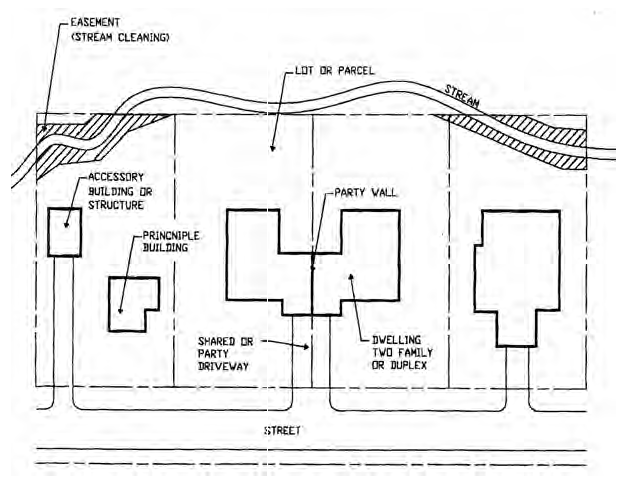
Illustration No. 16-2
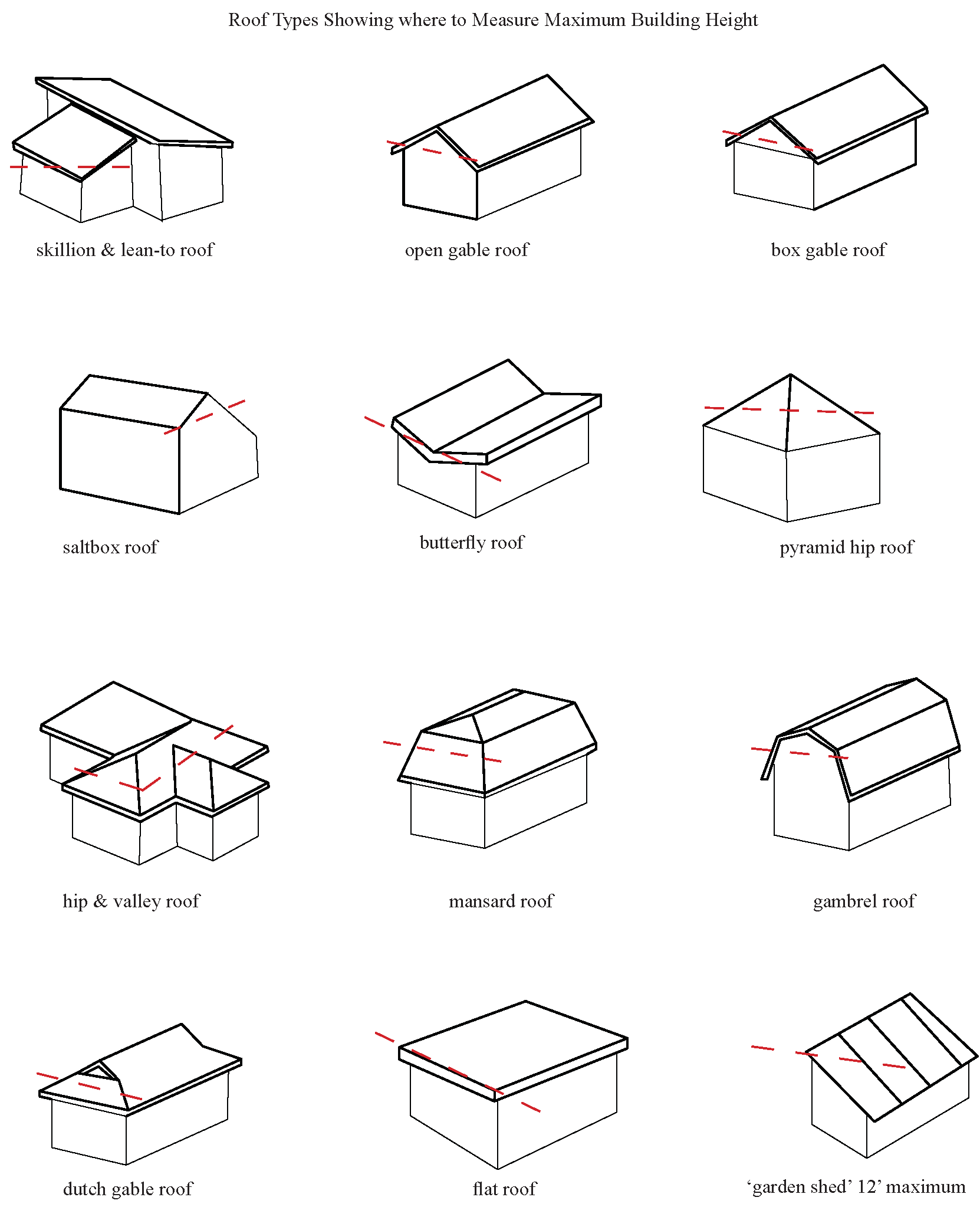
Illustration No. 16-2 (cont'd.)
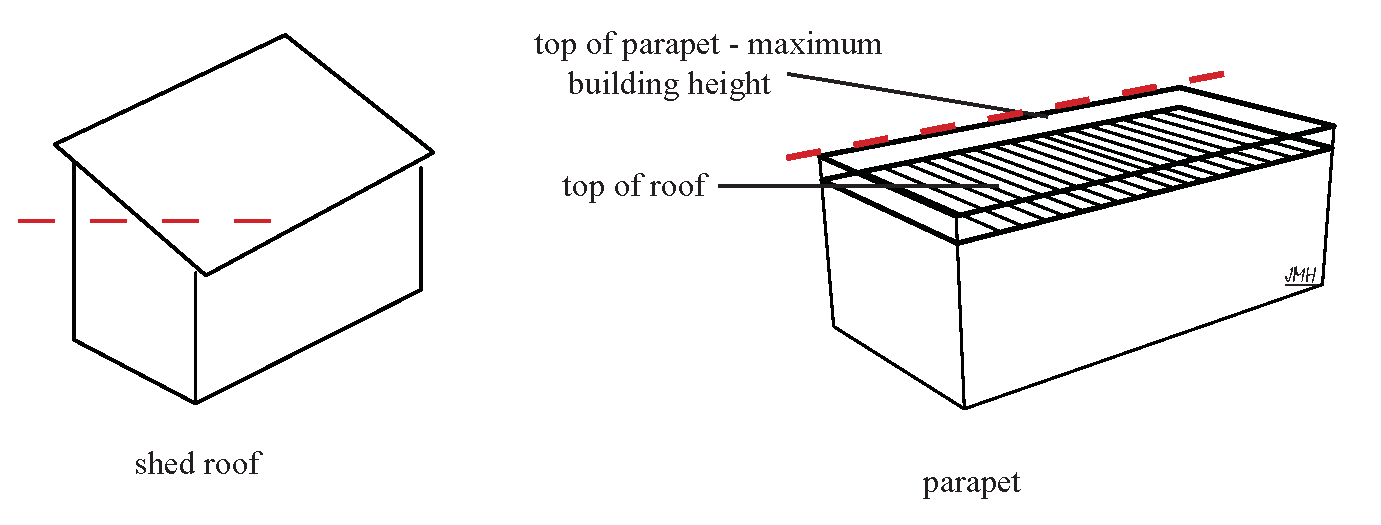
Illustration No. 16-2 (cont'd.)
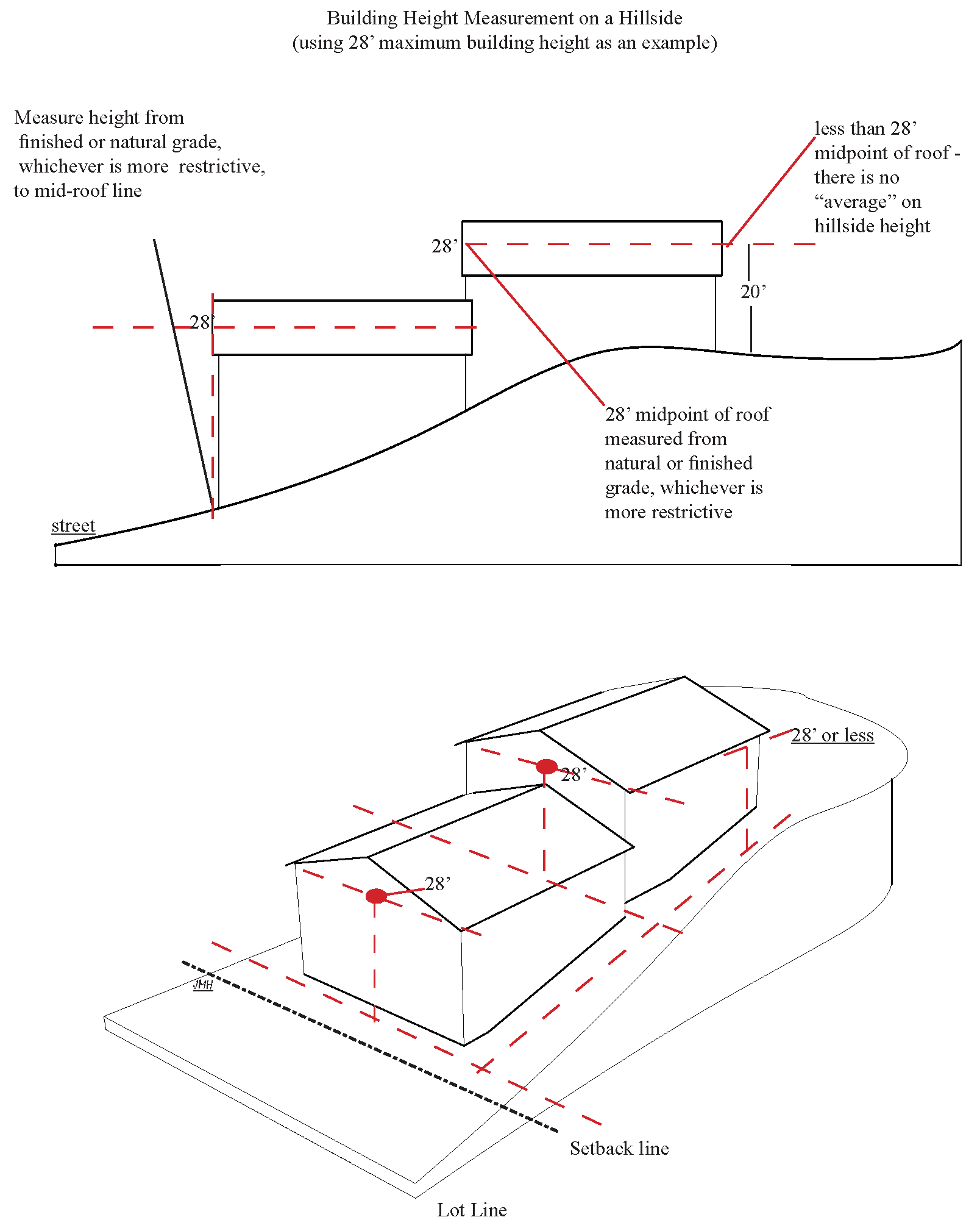
Illustration No. 16-2 (cont'd.)
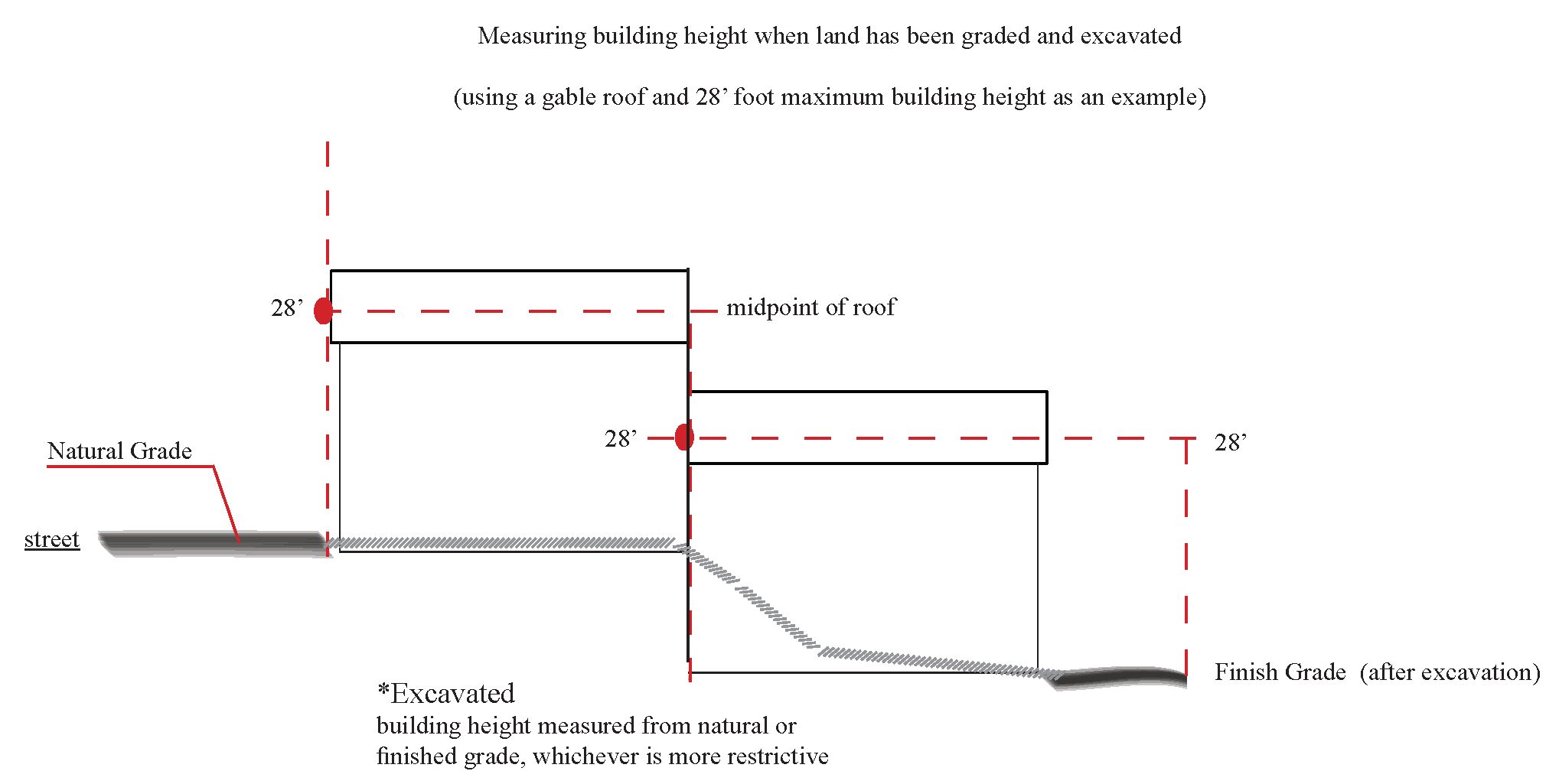
Illustration No. 16-3
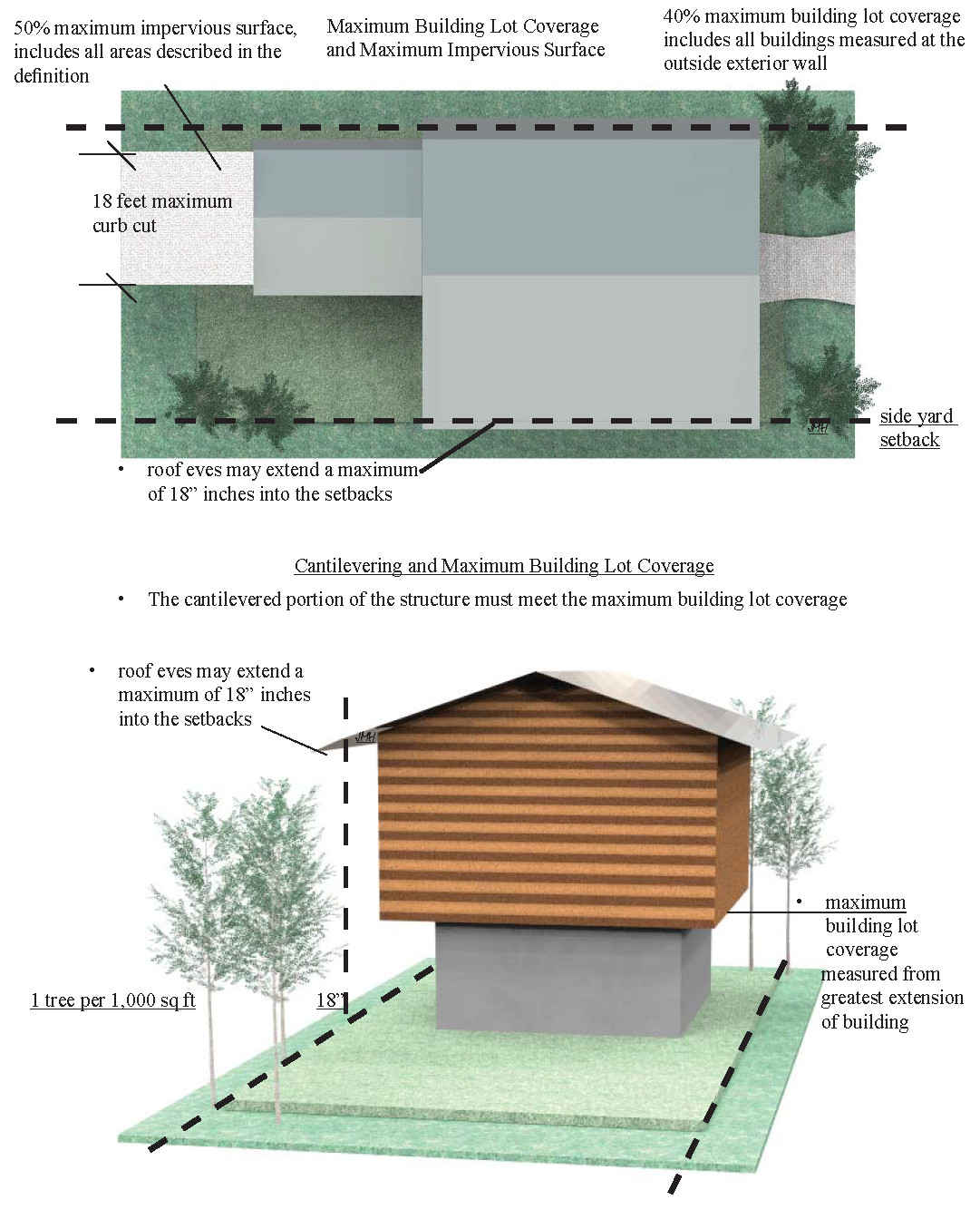
Illustration No. 16-4
Bulk Plane
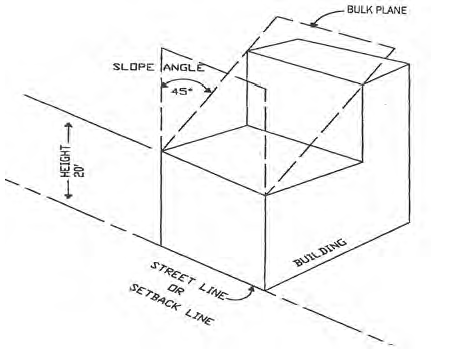
Illustration No. 16-5
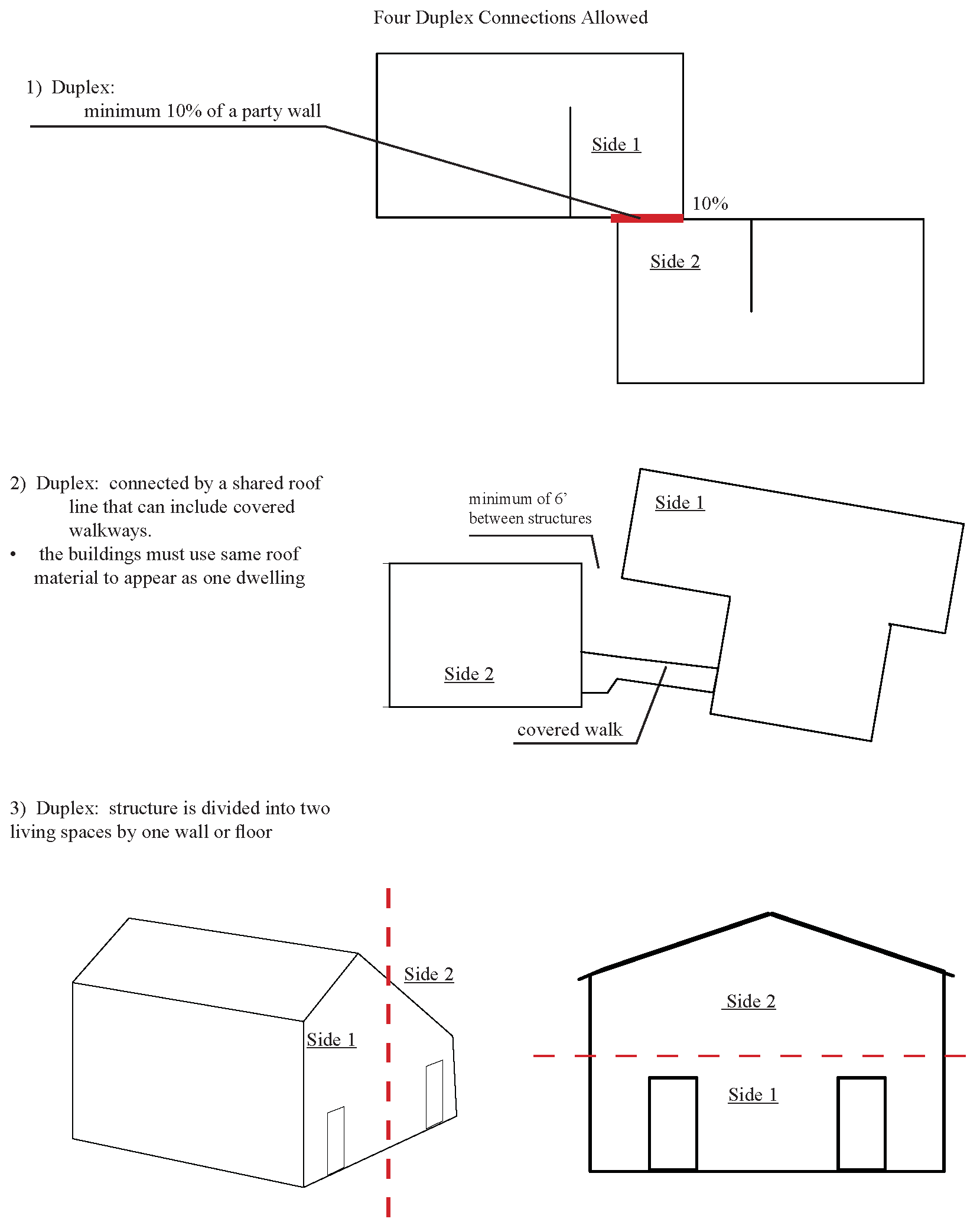
Illustration No. 16-5 (cont'd.)
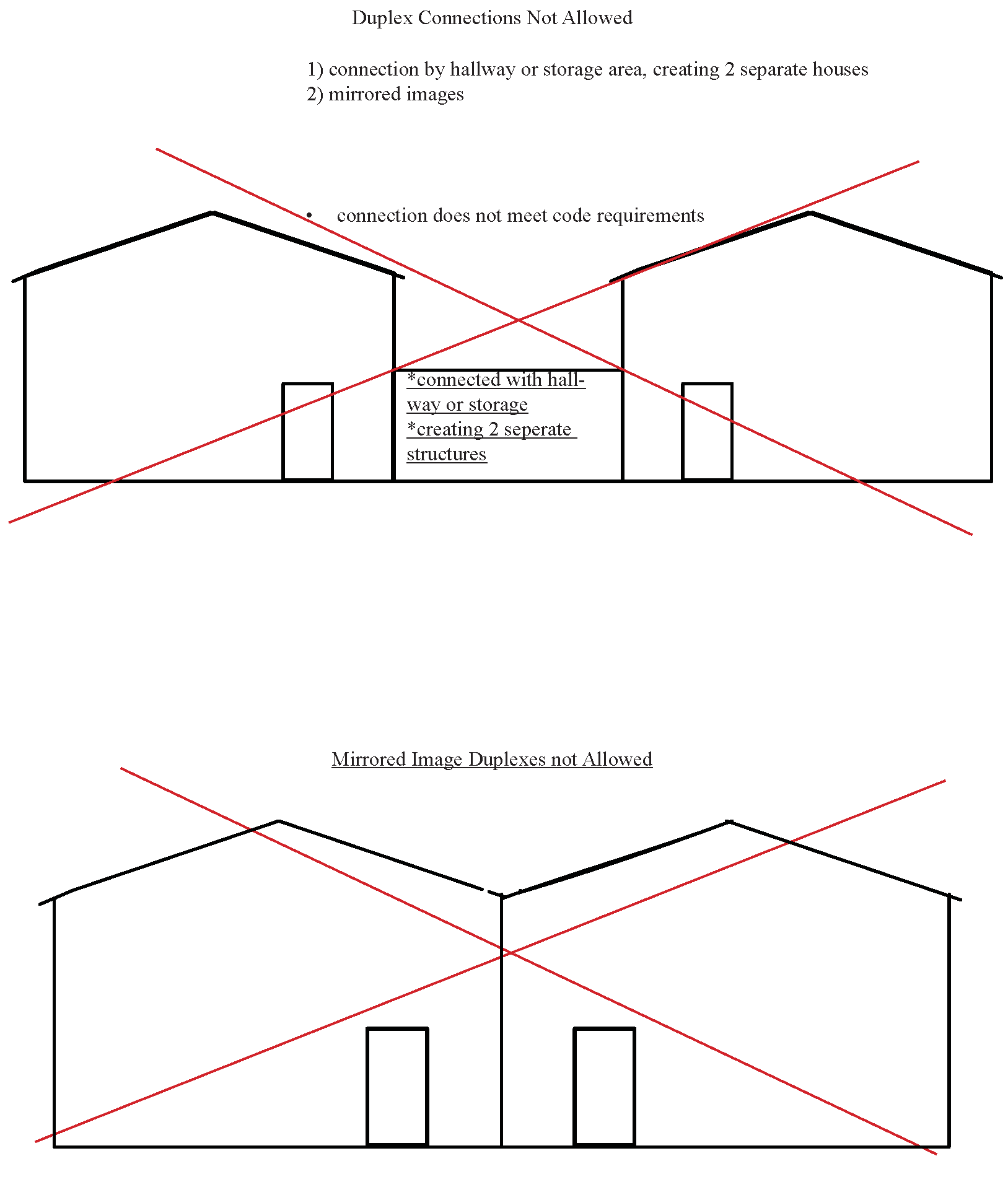
Illustration No. 16-6
Lot Requirements and Dimensional Standards
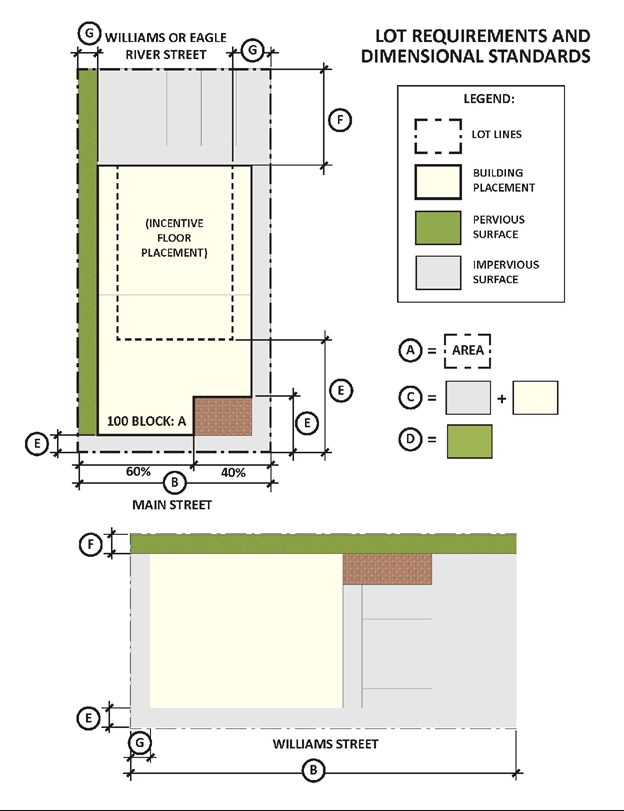
Illustration No. 16-7
Building Height Dimensional Standards
(Prior code 16-2-3; Ord. 15-2008 §1; Ord. 01-2015 §2; Ord. 11-2022 §2)
Sec. 16-2-40. - General lot requirements and dimensional standards.
The following Table 16-A sets forth general lot requirements and dimensional standards:
TABLE 16-A
Dimensional Standards
Note 1. For any and all lots within the Old Town Mixed-Use zone district, if a proposed use and/or development on a lot is one hundred percent (100%) residential in nature, such use and/or development must conform to allowable residential standards (forty-five percent (45%) building lot coverage and fifty-five percent (55%) impervious). However, if such use and/or development includes bona fide ground floor retail and/or sales tax generating commercial uses as the primary use of the property; any residential uses included as a mixed-use development are secondary or ancillary; and all other development standards are met, then the use and/or development may conform to the commercial standards (seventy percent (70%) building lot coverage and eighty percent (80%) impervious coverage).
(Prior code 16-17-19; Ord. 9-2002 §1; Ord. 15-2008 §1; Ord. 6-2012 §1; Ord. 01-2015 §2; Ord. 3-2016 §2; Ord. 5-2016 §2; Ord. 3-2021 §2; Ord. 11-2022 §2; Ord. 9-2024 §4)
Editor's note— Ord. No. 01-2015, §2, adopted March 18, 2015, renumbered the substantive provisions of former §16-17-190 as §§16-3-10 and 16-3-20. Inasmuch as there were already provisions so designated, said sections have been codified herein as §§16-2-40 and 16-2-50 at the discretion of the editor. The historical notation has been retained with the amended provisions for reference purposes.
_____
Sec. 16-2-50. - Specific lot requirements and dimensional standards.
(a)
Portions of a lot contained in a river or creek as defined by the ordinary high-water mark, shall not be included in the lot's square footage for purposes of calculating the maximum building lot coverage or the maximum impervious surface area.
(b)
Live stream setback. A strip of land measured horizontally from the ordinary high water mark on each side of any live stream, river, or creek shall be protected in its natural state free from human made structures or other improvements and appurtenances, and vegetated with natural riparian vegetation. If necessary to protect the live stream, river or creek, additional setback distances may be required by the Planning Commission. The following exceptions may be considered by the Planning Commission and/or the Town Council on a case-by-case basis:
(1)
Underground utilities may be located in the live stream river or creek setback; provided, however, that there is no practical alternative location for such utilities, and that plans and/or reports related to proposed disturbance within the setback area are prepared by qualified professionals showing limits of disturbance, erosion control measures and revegetation are approved by the Town Council.
(2)
Roof overhangs may project a maximum of eighteen (18) inches into the live stream setback if the Planning Commission determines that such encroachments do not detrimentally impact the proper, natural functioning of the protected live stream setback area.
(c)
The ordinary high water mark shall be identified by a professional land surveyor licensed in the State of Colorado on all applicable surveys, plats and plans required under this Chapter 16.
(d)
The minimum setback between two (2) structures on the same lot is six (6) feet.
(e)
Garage doors in the Old Town Character Area facing Main Street must be set back at least eighteen (18) feet from the lot line.
(f)
Fences and boundary walls are allowed in the setbacks subject to the following limitations:
(1)
Height shall not exceed six (6) feet in the rear yard setback.
(2)
Height shall not exceed six (6) feet in the side yard setback located from the front of the primary structure on the lot and the rear lot line and shall not exceed four (4) feet from the front of the primary structure on the lot and the front yard lot line. Clear vision requirements may be more restrictive.
(3)
Height shall not exceed four (4) feet in the front yard setback.
(4)
Height of fences shall be measured from natural grade adjacent to or underneath the fence to avoid the appearance of artificially raised fence structures; berms or retaining walls may be used underneath or in combination with fences located within setback areas, however, fence height will be measured from the base elevation (bottom of wall or toe of slope of a berm) adjacent to or underneath the fence to establish maximum height.
(g)
Encroachments of architectural features—Rear yard. The following architectural features may encroach into the rear yard setback but must be a minimum of five (5) feet from the rear lot line(s):
(1)
Unroofed terraces or patios, not to exceed forty-eight (48) inches above grade.
(2)
Chimneys.
(3)
Awnings or shading devices.
(4)
Upper floor(s) in 100 Block: A with rear setbacks to Williams and Eagle River Streets may encroach into the rear yard a maximum of five (5) feet for enclosed space and a maximum of ten (10) feet for terraces or balconies. These dimensions shall not be combined, i.e. ten (10) feet is the maximum overall encroachment allowed.
(h)
Encroachments of architectural features—Front yard:
(1)
Bay windows, including roof overhangs or eave lines, may encroach up to three (3) feet into the required front yard setback area.
(i)
Roofed terraces, decks and patios are not permitted in the required setbacks.
(j)
All cantilevered building elements and areas count toward maximum building lot coverage and maximum impervious lot coverage.
(k)
A maximum of eighteen (18) inches of roof eave may encroach into the required front, rear, and side live stream yard setbacks.
(l)
The first ten (10) feet of the front yard setback shall be dedicated to landscaping, except for driveways and non-motorized sidewalks and trails. This requirement does not apply to commercial and mixed-use zones in the Old Town Character Area.
(m)
Sheds.
(1)
To constitute a shed that does not require a building permit, the structure shall be no larger than one hundred twenty (120) square feet in ground floor area and no higher than twelve (12) feet. Sheds in excess of one hundred twenty (120) square feet of ground floor area or twelve (12) feet in height require a building permit.
(2)
Sheds must be located in the rear or side yards, but such structures may not encroach into the side yard setbacks. A shed may encroach in the rear yard setback so long as it is a minimum of five (5) feet from all lot lines.
(3)
Sheds in all character areas and zones require a limited use review permit approved by the Planning Director. The denial of a limited use review permit by the Planning Director may be appealed to the Planning and Zoning Commission.
(4)
Sheds count toward the maximum impervious surface lot requirements.
(n)
Greenhouses.
(1)
In all zones, a permanent greenhouse (which is not fully deconstructed and removed prior to winter) which exceeds one hundred twenty (120) square feet in the ground floor area or exceeds twelve (12) feet in height must receive a limited use review permit approved by the Planning Director and obtain a building permit. The denial of a limited use review permit by the Planning Director may be appealed to the Planning and Zoning Commission.
(2)
Permanent greenhouses shall be counted toward maximum impervious lot coverage requirements.
(3)
Non-permanent greenhouses (which are fully deconstructed and removed prior to winter every year) do not count toward maximum impervious lot coverage requirements.
(o)
Any residential structure constructed in a commercial zone district must comply with the applicable residential maximum building lot coverage limitation, the residential maximum impervious structure limitation, the residential building height limitation and residential set back requirements.
(Ord. 01-2015 §2; Ord. 2-2020 §2; Ord. 3-2021 §2; Ord. 11-2022 §2; Ord. 4-2023 §2)
Note— See the editor's note to §16-2-40.
Sec. 16-2-60. - Building height limitations for all zone districts except 100 Block Zones.
(a)
Building roof height is not to exceed twenty-eight (28) feet at the mid-roof line in all character areas and zones, with the exception of the Old Town character area in the Old Town Commercial Zone. Residential construction in the Old Town Commercial Zone must follow residential building height limitations.
(b)
The maximum angle of the roof is forty-five (45) degrees of the bulk plane from the property line in a Commercial Zone district. See illustrations No. 16-3.
(c)
Flat roofs shall not exceed twenty-eight (28) feet in height for any character area or zone (including commercial and mixed-use zones).
(d)
In the Old Town Character Area, commercial buildings in the commercial zone can have a maximum roof height of thirty-five (35) feet with a maximum angle of forty-five (45) degree bulk plane from the street front setback or a maximum of twenty-eight (28) feet for a flat roof.
(e)
No building shall exceed three (3) stories in height.
(See also Illustration No. 16-2 and Appendix B, Design Standards and Guidelines)
The following Table 16-B contains the regulations for building height.
TABLE 16-B
Building Height
(Prior code 16-17-5; Ord. 15-2008 §1; Ord. 01-2015 §2; Ord. 5-2016 §2; Ord. 11-2022 §2; Ord. 9-2024 §4)
Editor's note— Ord. 11-2022, §2, adopted Oct. 19, 2022, amended the title of §16-2-60 to read as herein set out. The former §16-2-60 title pertained to building height limitations for all zone districts except 100 Block Commercial Zone.
_____
Sec. 16-2-65. - 100 Block Zones building height limitations.
(a)
New buildings in the 100 Block shall be allowed a maximum height as shown in Table 16-C.
(b)
An incentive floor is allowed for 100 Block: A, following dimensional requirements listed in Tables 16-A and 16-C, and based on the provision of the following on-site improvements associated with the development:
(1)
An enhanced streetscape along Main Street that provides a minimum of one (1) street tree per thirty (30) linear feet; one (1) bench/seating area per thirty (30) linear feet; and one (1) bike rack accessible from a public right-of-way or passage; plus one (1) of the following:
a.
A publicly-accessible plaza or outdoor dining space (area shall be a minimum of fifteen percent (15%) of total area of lot) that is visible from a public right-of-way.
b.
A publicly-accessible passage (minimum four-foot-wide pathway) is provided between Main Street and Williams Street or Main Street and Eagle River Street. A minimum eight-foot-side setback shall be required to accommodate this space. Public passages shall be a minimum of one hundred fifty (150) feet apart, i.e. if one (1) is already provided one hundred (100) feet away, this option shall not be used.
c.
An active use (minimum fifty percent (50%) frontage) is provided along Williams or Eagle River Street.
Table 16-C
(Ord. 5-2016 §2; Ord. 11-2022 §2)
Secs. 16-2-70, 16-2-80. - Reserved.
Editor's note— Ord. 11-2022, § 2, adopted Oct. 19, 2022, repealed §§ 16-2-70 and 16-2-80, which pertained to specific front, side and rear yard setbacks requirements for 100 Block Commercial Zone, and block and building site patterns and side yard setbacks for 100 Block Commercial Zone, and derived from Ord. 5-2016 §2 and § 2(Exh. C).

