
Morehead City City Zoning Code
ARTICLE 19
- SIGNS
19-1 - Purpose
19-1.1
To protect the safety and welfare of the public by minimizing hazards and distractions to pedestrian and vehicular traffic;
19-1.2
To encourage the effective use of signs as a means of communication for businesses, organizations, and individuals;
19-1.3
To further economic development by providing for adequate business identification, advertising, and communication;
19-1.4
To avoid unnecessary visual clutter and to avoid the unregulated construction, placement, and display of signs which are or may become a public nuisance;
19-1.5
To minimize adverse effects of signs on nearby property; and
19-1.6
To enable the fair and consistent enforcement of sign regulation.
19-2 - Applicability
19-2.1
This article shall apply to the installation and modification of all signs within the City and its extraterritorial jurisdiction.
19-2.2
No sign shall be installed or modified unless expressly permitted under this Ordinance.
19-2.3
A permit shall be required to install, modify, or relocate any sign unless specifically exempted from permitting requirements.
19-2.4
Any installation or modification of a sign must comply with applicable provisions of this Article as well as with all other applicable standards, requirements, laws, and ordinances.
19-2.5
Any sign, including an existing sign, which is not in compliance with this Article shall be subject to the enforcement and review terms of this Ordinance.
(Ord. No. 2025-O-04, 1-14-2025)
19-3 - General Sign Requirements
19-3.1
General sign requirements and maintenance.
(A)
Signs shall be constructed of durable materials and permanently affixed to the ground or building except for the following sign types:
(1)
Temporary signs as permitted under Section 19-8;
(2)
Banner signs as permitted under Section 19-11;
(3)
Flag signs as permitted under Section 19-12;
(4)
Window signs as permitted under Section 19-15;
(5)
A-Frame and T-Frame signs as permitted under Section 19-19;
(6)
Pole banner signs as permitted under Section 19-22; and
(7)
Governmental flags as permitted under Section 19-23.
(B)
Signs shall comply with all applicable federal, state, and local laws and regulations.
(C)
Signs and sign support structures, together with their supports, braces, guys and anchors, shall be kept in good repair and in safe condition.
(D)
The display surfaces of signs shall be kept neatly painted or posted at all times.
(E)
The following signs are specifically prohibited:
(1)
Signs which emit any sound, odor, or other visible matter, such as smoke or vapor;
(2)
Signs which exhibit any statement, word, or picture of an obscene or pornographic nature;
(3)
Signs which falsely present or imply the need or requirement of stopping or of caution or the existence of danger;
(4)
Signs which are a copy or an imitation of or that for any reason are likely to be confused with a governmental sign;
(5)
Hand-carried signs;
(6)
Signs which are dilapidated;
(7)
Signs, for which a permit is required, yet which are erected or displayed without issuance of a permit or for which a permit has been denied;
(8)
Feather flag signs; and
(9)
Pennant string signs.
(F)
Replacement of a sign face within an existing panel, repainting of an existing sign, and changeable copy are considered exempt from permitting requirements.
(G)
Conversion of a non-electronic sign to an electronic sign is not considered replacement of a sign face and is subject to permitting requirements.
19-3.2
Sign location requirements.
(A)
No sign shall be placed in such a manner as to endanger pedestrians, bicyclists, or traffic by obscuring the view or interfering with official street signs, signals, or governmental signs.
(B)
Signs and their supporting structures shall maintain a clearance and noninterference with utility and communication lines and equipment.
(C)
Signs or sign structures shall not obstruct a sight triangle nor impede visibility at intersections. Signs located within fifty (50) feet of the intersection of two (2) or more streets shall be either less than three (3) feet in height or greater than ten (10) feet in height in addition to any applicable height requirements for the specific sign type.
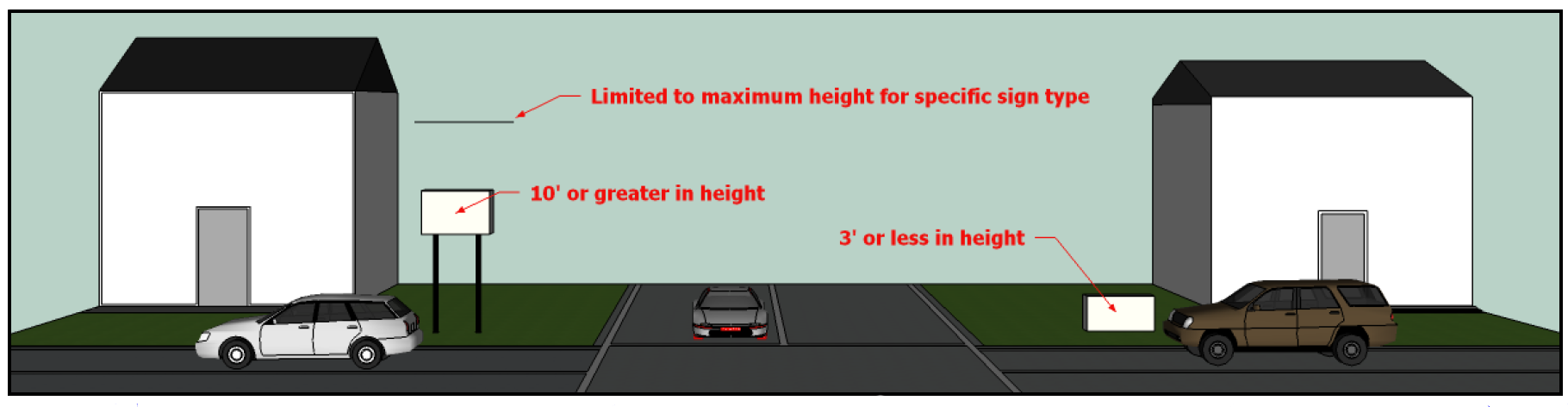
Signs within Fifty (50) Feet of Intersections Must Meet the Requirements of Subsection
19-3.2
(D)
Sign setbacks shall be measured from the property line and the minimum setback requirement shall be in accordance with the requirements for the specific sign type.
(E)
Signs shall not be located in or over any street right-of-way unless the sign is a governmental sign and unless permitted by the North Carolina Department of Transportation.
(F)
No sign shall be affixed to any vehicle or trailer on public or private property unless the vehicle or trailer is currently and regularly being used in the daily function of the business to which the sign relates, is currently registered and licensed to operate on public streets, can legally operate on public streets while the sign is affixed, and is not for the sole purpose of attracting business.
(G)
No sign shall be affixed to a storage container on public or private property except for a two (2) square foot owner identification sign which is painted on or otherwise permanently applied to the storage container.
(H)
Signs shall not be painted on or otherwise affixed to an object which is not principally intended to support a sign. Examples include trees, other natural features, and utility and light poles. The exceptions to this requirement are interior parking lot signage which is not visible from the right-of-way and which meets the requirements of Section 19-9 and pole banner signage which meets the requirements of Section 19-22.
(I)
Signs shall not be located in areas subject to periodic inundation by tidal saltwater, except governmental signs.
(J)
Signs shall not be located in any waterway within five hundred (500) feet of the mean high water mark except for lettering, logos, and decals adhered to a vessel with a valid registration.
19-3.3
Sign illumination requirements.
(A)
Sign illumination shall be in a manner that avoids glare or reflection onto a residentially zoned property and that does not in any way interfere with traffic safety.
(B)
Illuminated signs in residential and office and institutional zoning districts shall be internally illuminated.
(C)
No occulting, oscillating, flashing, rotating, flickering, or blinking of signs shall be permitted.
(D)
Temporary signs shall not be illuminated.
19-3.4
Changeable copy of signs.
(A)
General requirements for changeable copy.
(1)
Changeable copy is allowed on signs in nonresidential districts; for nonresidential uses in planned developments; and for religious, medical, and educational institution uses which are allowed as permissible or special uses in any district subject to the applicable requirements of this Ordinance.
(2)
No more than one (1) sign per street front of any premises shall contain changeable copy.
(3)
Signs which incorporate changeable copy shall not cause glare or reflection onto adjacent properties nor interfere with traffic safety.
(4)
Signs which incorporate changeable copy shall be subject to additional requirements based upon the sign type.
(5)
The permitted sign type for changeable copy shall be limited to freestanding signs, wall signs, outdoor advertising signs, canopy signs and menu board signs.
(6)
Freestanding signs which incorporate changeable copy may not be installed parallel to a right-of-way except in the case of a corner lot when the sign may be installed parallel to the secondary street or road.
(B)
Electronic changeable copy. In addition to the requirements of Subsection 19-3.4(A), signs which incorporate electronic changeable copy shall also be subject to the following requirements:
(1)
Electronic changeable copy shall not exceed fifty (50) percent of the total sign area for any individual sign, with the exception of outdoor advertising signs which may use the full permitted sign area if a permit has been issued by the North Carolina Department of Transportation to allow such electronic message board sign.
(2)
Except as permitted for outdoor advertising signs under Subsection 19-3.5(A)(3), conversion from a non-electronic changeable copy sign to an electronic changeable copy sign is prohibited if the original sign is a nonconforming sign, unless the sign will be brought into conformity with this Ordinance as a result of the modification.
(3)
Electronic changeable copy shall not include animation, streaming video, or text or images which flash, flicker, rotate, blink, twinkle, move, or scroll.
(4)
Each complete message must fit on one (1) screen.
(5)
The electronic changeable copy must transition instantly (i.e. "hard cut"), with no special effects or special transition graphics (e.g. no fade-in or fade-out).
(6)
All displays must remain static with no movement.
(7)
Displays may not change less than every eight (8) seconds.
(8)
Signs located within five hundred (500) feet of a residential zoning district may utilize electronic changeable copy from 5:00 a.m. until 11:00 p.m., or ½ hour past the close of the business or other establishment which is located on-site whichever is earlier.
(9)
Signs which include electronic changeable copy are subject to the following brightness limits:
(a)
All signs which incorporate electronic changeable copy shall adjust or shall be adjusted in correlation with ambient light conditions.
(b)
The sign owner shall provide written certification at installation that the sign meets the following light level standards as measured in nits:
1.
The maximum daytime light level is five thousand (5,000) nits or seven thousand five hundred (7,500) nits if the sign is equipped with an automatic dimmer.
2.
From dusk until dawn, the maximum light level is two hundred fifty (250) nits.
(c)
Upon notification that the City has received a complaint, the sign owner shall provide written certification that the light level standards in Subsection 19-3.4(B)(9) are being met.
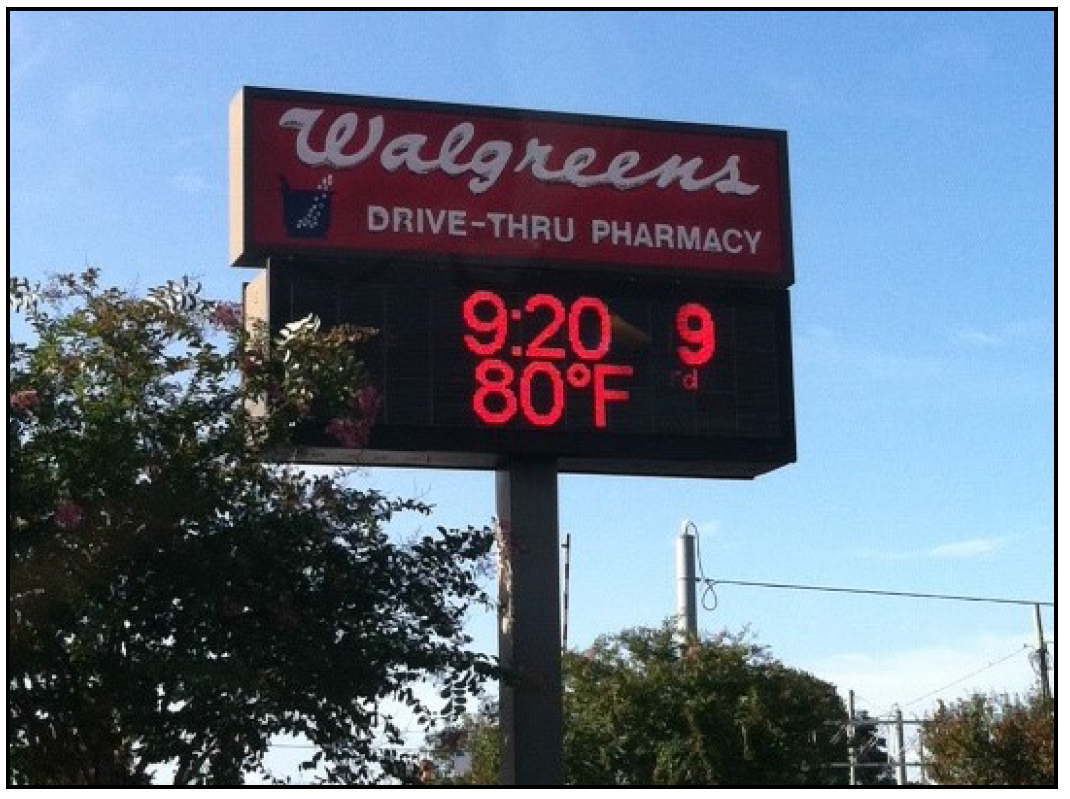
Freestanding Sign Which Utilizes Electronic Changeable Copy
19-3.5
Nonconforming, illegal, and obsolete signs.
(A)
Nonconforming signs.
(1)
Nonconforming signs that were lawful at the time of their construction but which are not in conformance with current requirements may be maintained as nonconforming signs.
(2)
Nonconforming signs may not be installed, modified, enlarged, or relocated, except under the following circumstances:
(a)
If the entire sign and structure are brought into conformity with this Ordinance;
(b)
If the work proposed involves ordinary maintenance, a copy change, or repair not involving any structural, material, or electrical changes; or
(c)
If such sign was damaged or partially destroyed by man-caused or natural act such as fire, accident, explosion, flood, lightning, wind or other calamity. In such cases, the sign may stay at its current location provided the structural integrity of the support structure has not been compromised as determined by the building inspector and/or a licensed engineer qualified to make such certification. However, the sign must adhere to the current square footage and height requirements of this Article.
(3)
Exception for nonconforming outdoor advertising signs. In accordance with G.S. 136-131.2, the repair or reconstruction of an outdoor advertising sign shall be permitted provided that there is in effect a valid permit issued by the North Carolina Department of Transportation and that the square footage of the advertising surface area is not increased. For purposes of this subsection, reconstruction includes the changing of an existing multipole structure to a new monopole structure.
(B)
Illegal signs.
(1)
Signs that were not lawful at the time of construction shall be removed or shall be brought into compliance with the requirements of this Ordinance.
(C)
Obsolete signs.
(1)
Any obsolete sign related to or identifying a business or activity which has not been conducted on the premises or which has not been actively marketed for sale, lease, or rent for a period of six (6) months or more must be removed. In the event the business or property is sold, leased, or rented and the new owner or tenant chooses not to use the sign, the obsolete sign or portion thereof must be removed.
(2)
Both the owner of the property upon which the sign is located and the owner of the sign, if different, are separately responsible for the sign removal.
(3)
The support structure for an obsolete sign must also be removed if a replacement sign could not meet the requirements of this Ordinance due to the structure's height, physical location, or other standard of this Ordinance.
(D)
The City will compensate the owners for the removal of any nonconforming, lawfully erected off-premises outdoor advertising sign in accordance with the provisions of G.S. 160D-912.
(Ord. No. 2025-O-04, 1-14-2025)
19-4 - Exempt Signs
19-4.1
The following sign types shall be permitted in all zoning districts subject to applicable permitting requirements:
(A)
Federal, state, local, traffic control, and other governmental signs;
(B)
Public notices and warnings required by valid and applicable federal, state, or local law, regulation, or ordinance;
(C)
Temporary lighting and displays that are part of customary holiday decorations, provided that they contain no commercial message, are located on private property, and are not located in the public right-of-way;
(D)
Customary identification signs such as building numbers, addresses, private parking signs, security signs, neighborhood watch signs, no trespassing signs, beware of animal signs, or similar signs which enhance emergency response and public safety; and
(E)
Signage affixed to a petroleum dispenser which is not visible from the right-of-way.
19-5 - Wall Signs
19-5.1
Wall signs may be located on a parapet provided the sign does not exceed the height of the parapet.
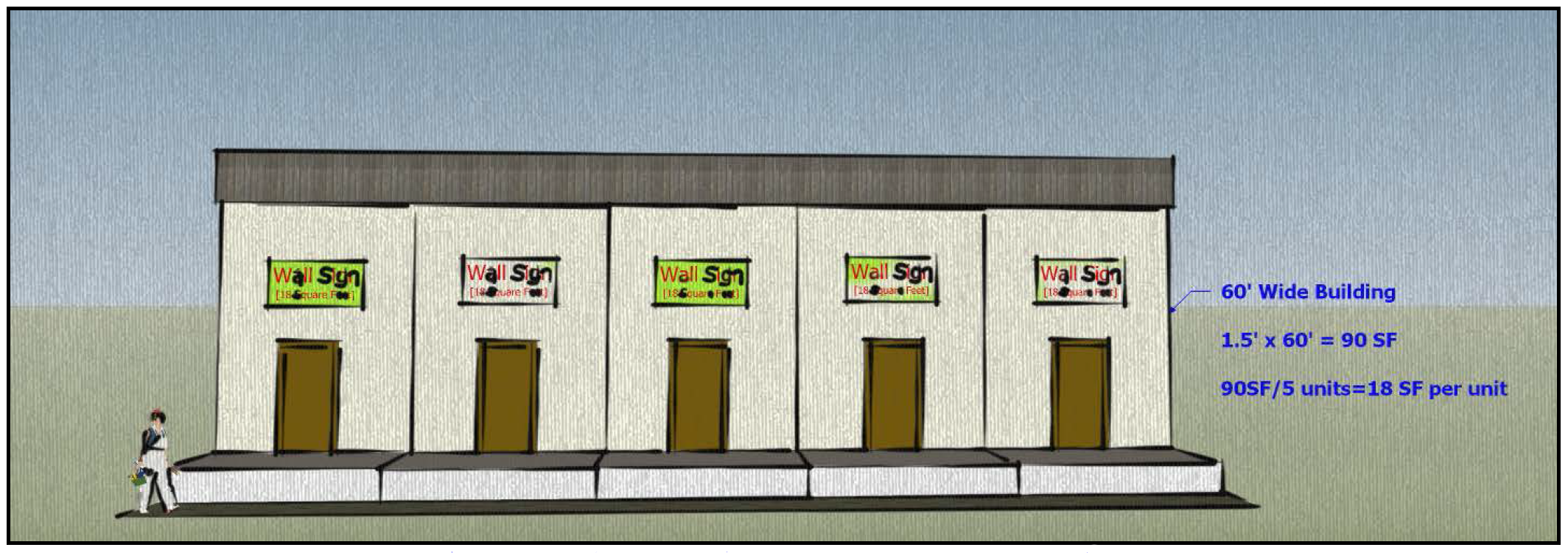
Example of Allowable Wall Sign Area Calculation
19-5.2
Wall signs shall adhere to the requirements of Table 19-5.1.
Table 19-5.1 Requirements for Wall Signs
19-6 - Freestanding Signs
19-6.1
Freestanding signs shall be designed to withstand wind pressures as specified in the North Carolina State Building Code except signs that do not exceed sixteen (16) square feet and which are no more than seven (7) feet in total height.
19-6.2
The maximum depth of any freestanding sign shall not exceed twenty-five (25) percent of the width.
19-6.3
The area of a sign support for any freestanding sign is limited to the same number of square feet as the sign face that it supports.
19-6.4
Freestanding signs shall be limited to a maximum of two (2) sign faces per sign.
19-6.5
Freestanding signs shall contain the street number of the premises.
19-6.6
Freestanding signs which use changeable copy shall not be installed parallel to a right-of-way except in the case of a corner lot when the sign may be installed parallel to the secondary street or road.
19-6.7
In order to promote the fair distribution and unified appearance of signage, primary freestanding signs located within multi-tenant developments may be permitted additional sign area subject to the following requirements.
(A)
A multi-tenant signage plan shall be submitted for review and approval by the City Planning and Inspections Department staff. The plan shall include:
(1)
Site plan, drawn to scale, showing the lot lines and dimensions of any existing and proposed freestanding signs to be located on the site.
(2)
Information concerning the maximum dimensions and sign type of all proposed freestanding signage, including any non-primary freestanding signs (e.g. directional signs).
(3)
North arrow and orientation.
(4)
Location of existing and proposed rights-of-way.
(5)
Location of existing and proposed driveways or alleys.
(B)
Additional sign area per individual sign shall be based upon the number of additional advertised tenants in accordance with Table 19-6.1.
(C)
Additional primary freestanding signs may be permitted at a rate of one (1) per one hundred (100) feet of linear foot of road frontage (as measured from the center of the sign) with a maximum of three (3) freestanding signs for the multi-tenant development.
(D)
Outparcels associated with the multi-tenant development shall be consolidated with the remainder of the development and included within the multi-tenant signage plan in order to utilize the additional signage allowances.
(E)
Both a copy of the signage plan and the deed (or other recordable instrument referencing the approved signage plan) shall be recorded with the Carteret County Register of Deeds prior to final approval of the multi-tenant signage plan.
(F)
The community hospital is exempt from the maximum number of primary freestanding signs permitted as set forth in Subsection 19-6.7(C), is exempt from the requirement to consolidate outparcels as set forth in Subsection 19-6.7(D), and is exempt from the requirements to record the signage plan and deed with the Carteret County Register of Deeds as set forth in Subsection 19-6.7(E) provided all other requirements for multi-tenant development signage have been met, including the minimum one hundred (100) foot separation requirement. The ability to communicate information associated with a hospital use is paramount to the public health and welfare of the City citizens and visitors. The maximum square footage of primary freestanding multi-tenant development signs associated with a community hospital shall be limited to the maximum allowed for the total building area on the parcel.
19-6.8
Freestanding signs shall adhere to the requirements of Table 19-6.1 and Table 19-6.2 with the exception of secondary freestanding signs in non-residential districts (see Table 19-6.3) and freestanding signs in residential districts (see Table 19-6.4).
Table 19-6.1 Area and Quantity Requirements for Primary Freestanding Signs
* Additional allowable square footage of sign area per additional advertised tenant is subject to approval of a multi-tenant signage plan in accordance with Subsection 19-6.7.
Table 19-6.2 Requirements for Primary Freestanding Signs
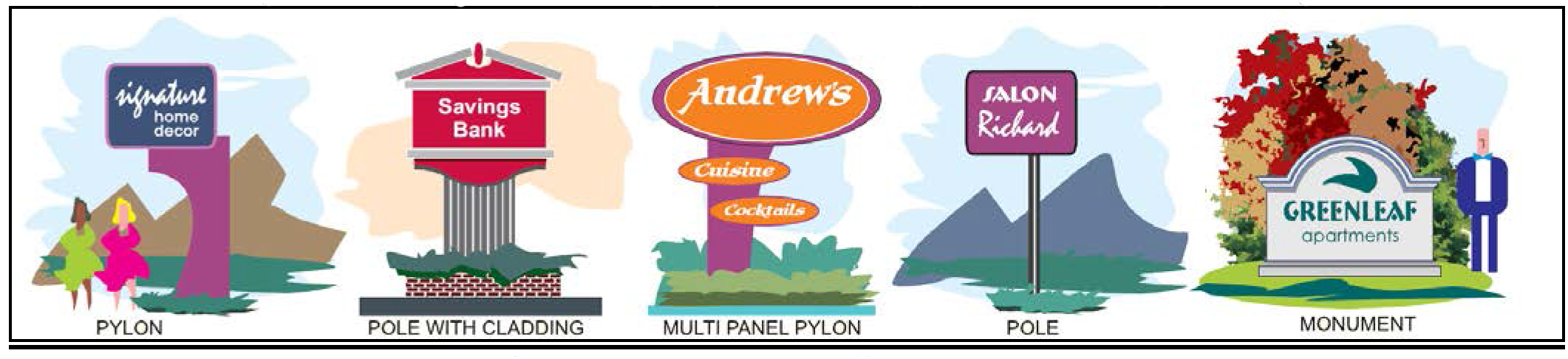
Primary Freestanding Sign Examples
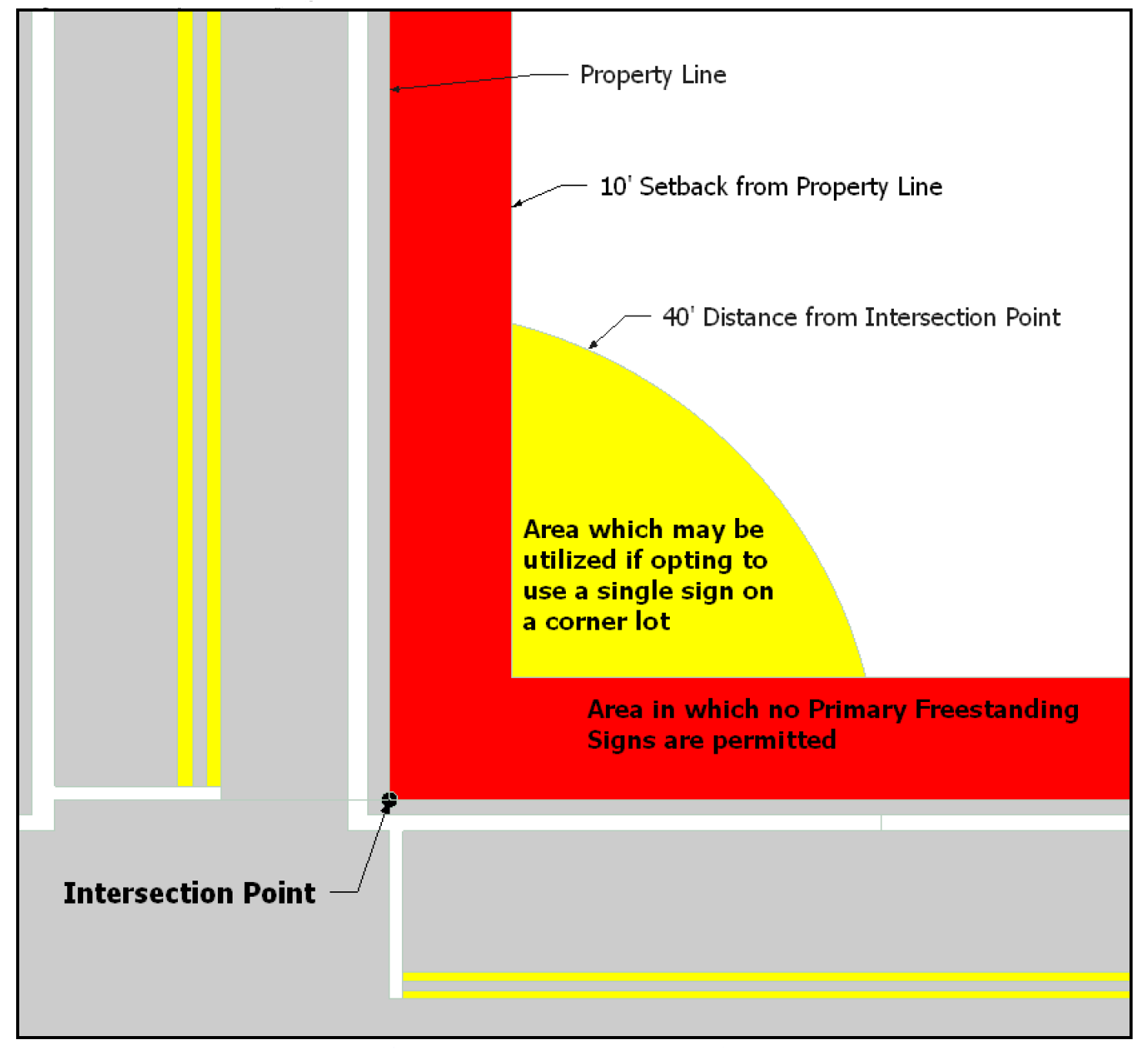
Primary Freestanding Sign Locational Requirements
19-6.9
Properties in non-residential districts are permitted one (1) additional freestanding sign (e.g. a directional sign) per entrance located within five (5) feet of the entrance and within five (5) feet of the property line subject to the requirements of Table 19-6.3.
Table 19-6.3 Requirements for Secondary Freestanding Signs
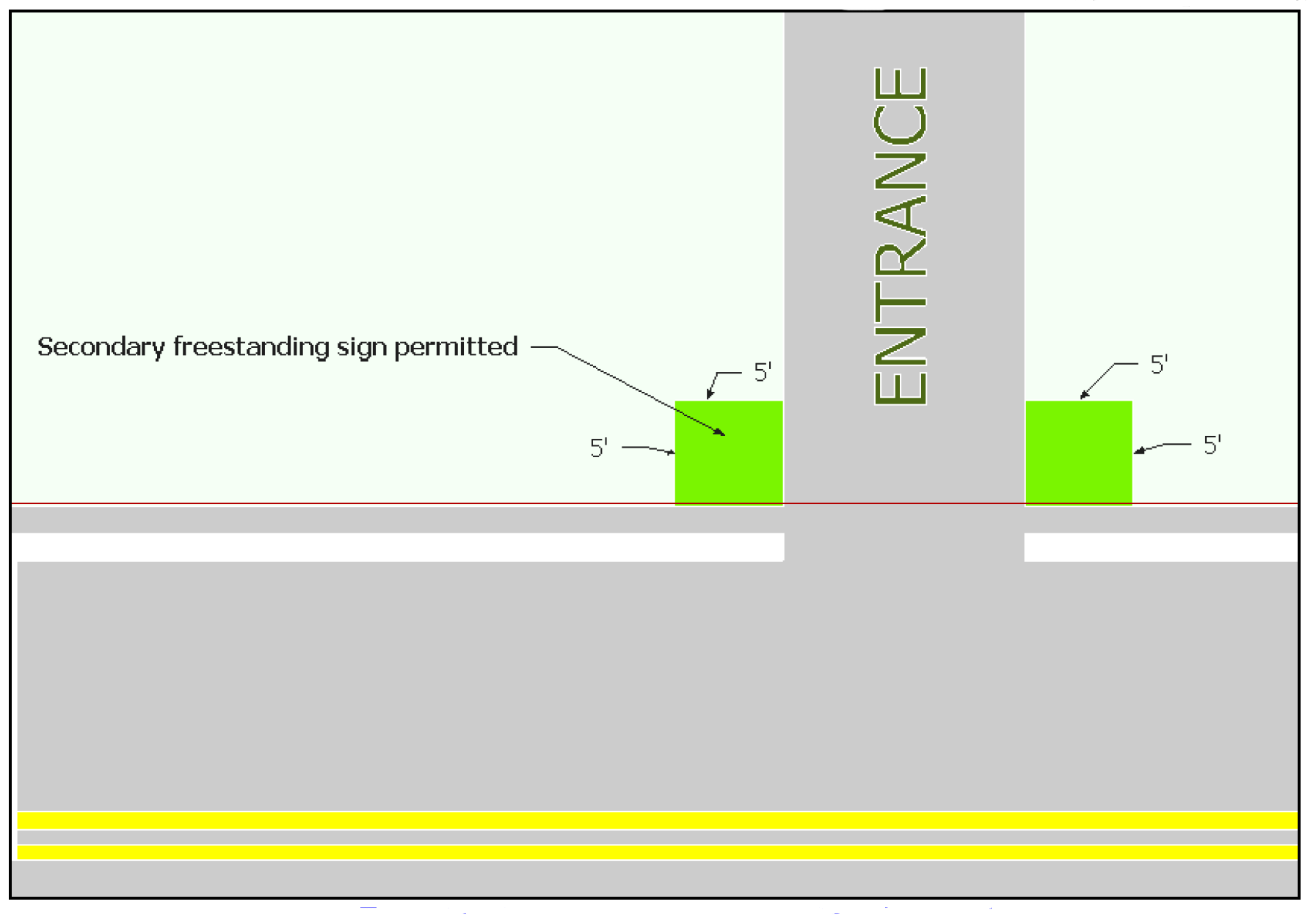
Secondary Freestanding Sign Locational Requirements
19-6.10
Non-residential uses in residential districts are permitted freestanding signage in accordance with Table 19-6.4.
Table 19-6.4 Freestanding Sign Requirements for Non-Residential Uses in Residential Districts
(Ord. No. 2025-O-04, 1-14-2025)
19-7 - Outdoor Advertising Signs
19-7.1
A maximum of two (2) faces per sign are permitted with the exception of tri-view signs.
19-7.2
The bottom edge of an outdoor advertising sign shall not be less than ten (10) feet in height from the average right-of-way grade elevation at the base of the sign.
19-7.3
Outdoor advertising signs shall be subject to the requirements of Table 19-7.1.
Table 19-7.1 Requirements for Outdoor Advertising Signs
19-8 - Temporary Signs
19-8.1
All signs shall be erected in a safe manner.
19-8.2
Where accessory outdoor displays are permitted, temporary signs may be displayed on accessory outdoor displays.
19-8.3
No temporary signs shall be permitted to be located on public property or within any right-of-way. Such signs are declared to be public nuisance, antithetical to public health, safety and welfare, and they may be summarily removed by the City pursuant to Section 22-11 of this UDO.
19-8.4
Six (6) weeks prior to an election and one (1) week following an election, there shall be no limit as to the number of temporary signs permitted.
Table 19-8.1 Requirements for Temporary Signs
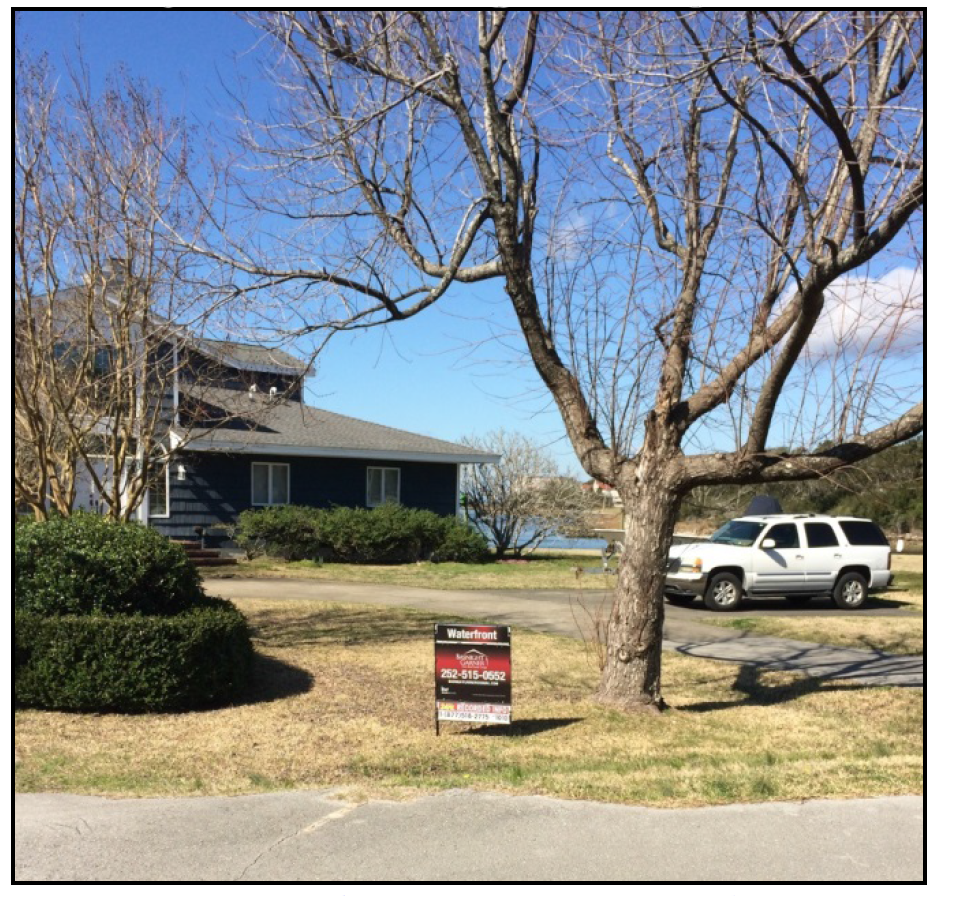
Temporary Sign in Residential Zoning District
19-8.5
Temporary signs shall be subject to the requirements of Table 19-8.1.
(Ord. No. 2021-O-20, § 1, 8-10-2021; Ord. No. 2025-O-04, 1-14-2025)
19-9 - Interior Parking Area Signs
19-9.1
Signs which are not visible from the right-of-way may be located within a parking area in a non-residential district, subject to the requirements of Table 19-9.1.
Table 19-9.1 Requirements for Interior Parking Area Signs
19-9.2
In addition to the signs permitted under Subsection 19-9.1, additional signs may permitted when located on a drive through menu board, subject to the requirements of Table 19-9.2.
19-9.3
In the event that a menu board sign is installed as a wall sign, the area of the wall-mounted menu board shall be included in the aggregate wall sign area.
Table 19-9.2 Requirements for Menu Board Signs
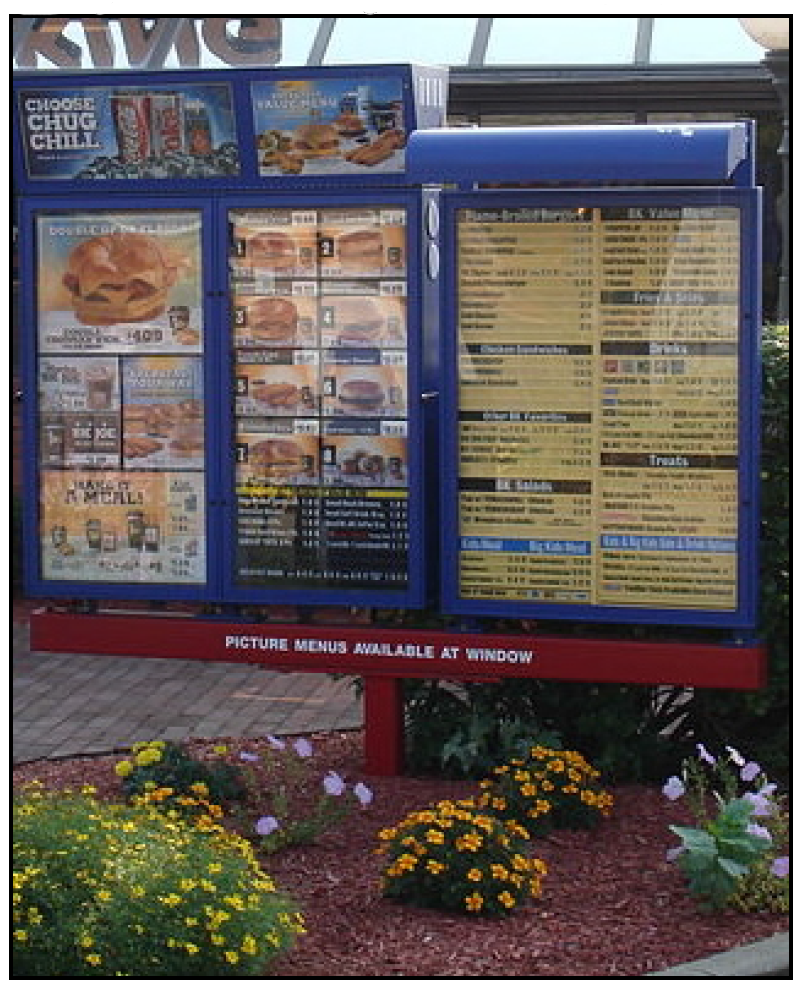
Drive-Through Menu Board Sign
19-10 - Inflatable Displays
19-10.1
Inflatable displays shall be subject to the requirements of Table 19-10.1.
Table 19-10.1 Requirements for Inflatable Displays
19-11 - Banners
19-11.1
All freestanding banner signs exceeding sixteen (16) square feet shall be erected on a minimum ten (10) foot long salt-treated four (4) by four (4) with a minimum of three (3) feet below ground level.
19-11.2
Banners must be removed upon installation of a permanent wall sign or freestanding sign if the presence of both the banner and the permanent sign would cause the property to exceed the site's maximum freestanding or wall sign requirements.
19-11.3
Banners may not be placed on fences or freestanding walls.
19-11.4
Banners are subject to the requirements for the associated sign type (i.e. either a wall sign or a freestanding sign) and the requirements of Table 19-11.1.
Table 19-11.1 Requirements for Banners
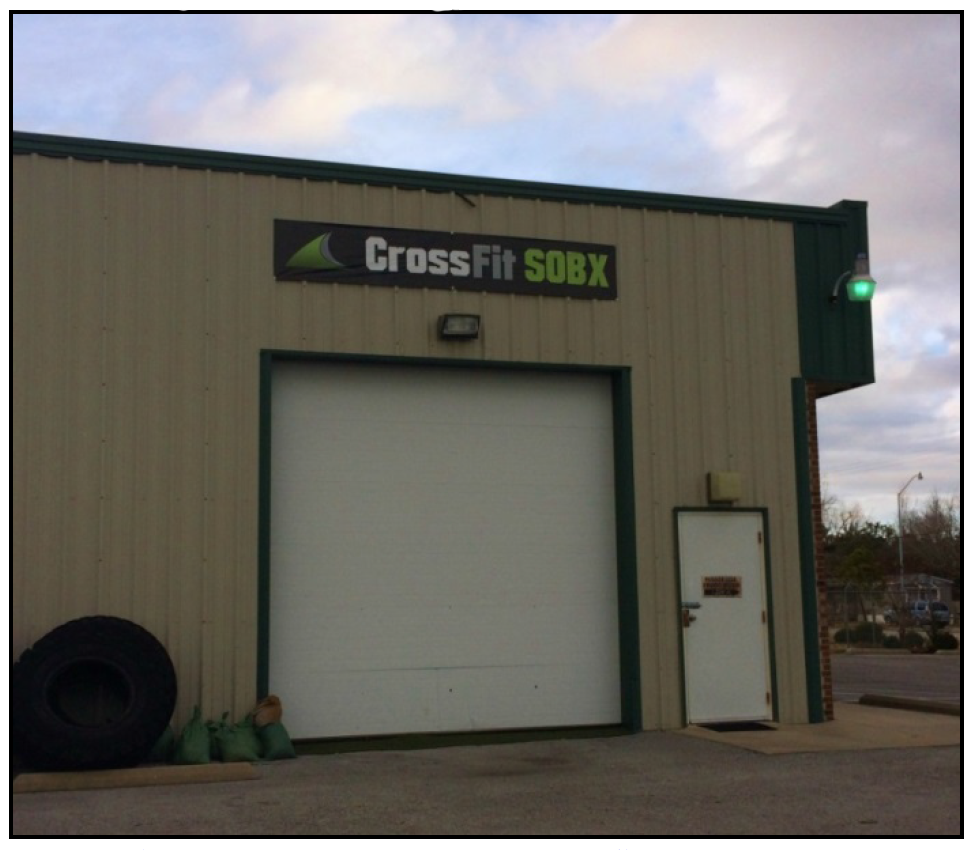
Banner Permitted in Accordance with Wall Sign Requirements
19-12 - Flag Signs
19-12.1
Flag signs that are torn or tattered shall be in violation of this Ordinance and shall be removed.
19-12.2
In addition to the requirements under Table 19-12.1, the following shall be applicable to flag signs located within the CD and DB zoning districts.
(A)
Flag signs attached to buildings shall be located no closer than two (2) feet, measured in horizontal distance, to the curb line of any street.
(B)
Flag signs shall be displayed during business hours, only.
(C)
Flag signs shall be located at least twenty (20) feet from any intersection and at least five (5) feet from any crosswalk or fire hydrant.
(D)
Any individual wishing to locate a freestanding feather flag sign in the right-of-way shall sign an indemnification agreement, approved by the City Attorney, prior to issuance of a right-of-way usage permit. The indemnification agreement shall be accompanied by evidence of insurance covering the liability assumed in the indemnity agreement.
(E)
Additional restrictions may be applicable for flag signs located along NCDOT rights-of-way.
19-12.3
Flag signs shall be subject to the requirements of Table 19-12.1.
Table 19-12.1 Requirements for Flag Signs
(Ord. No. 2025-O-04, 1-14-2025)
19-13 - Canopy Signs
19-13.1
A canopy located in the CD or DB district shall meet the requirements of Subsection 12-2.9.
19-13.2
A canopy sign shall not extend beyond the edge of the canopy to which it is attached.
19-13.3
Canopy signs shall be subject to the requirements of Table 19-13.1.
Table 19-13.1 Requirements for Canopy Signs
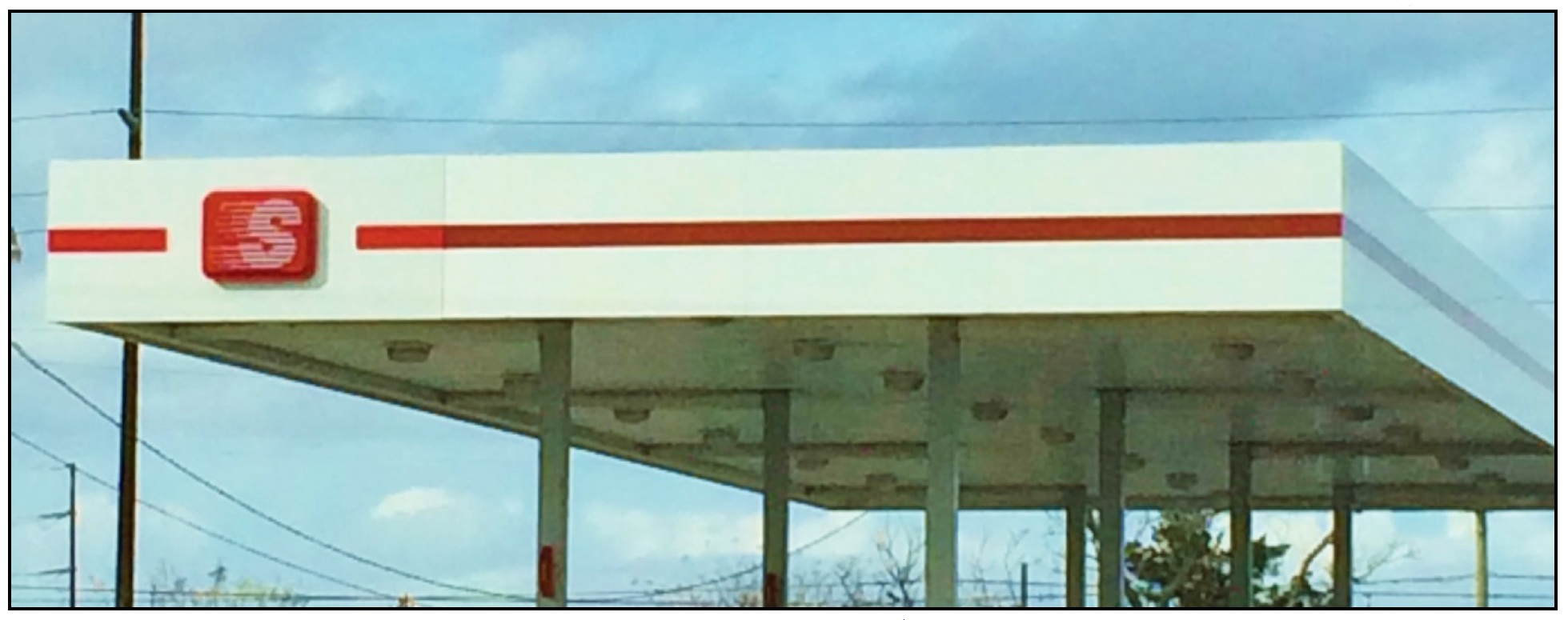
Signs on Gas Station Canopies Are a Type of Canopy Sign
19-14 - Awning Signs
19-14.1
In addition to the requirements of this section, an awning located in the CD or DB district shall meet the requirements of Subsection 12-2.9.
19-14.2
Awning signs shall meet the requirements of Table 19-14.1.
Table 19-14.1 Requirements for Awning
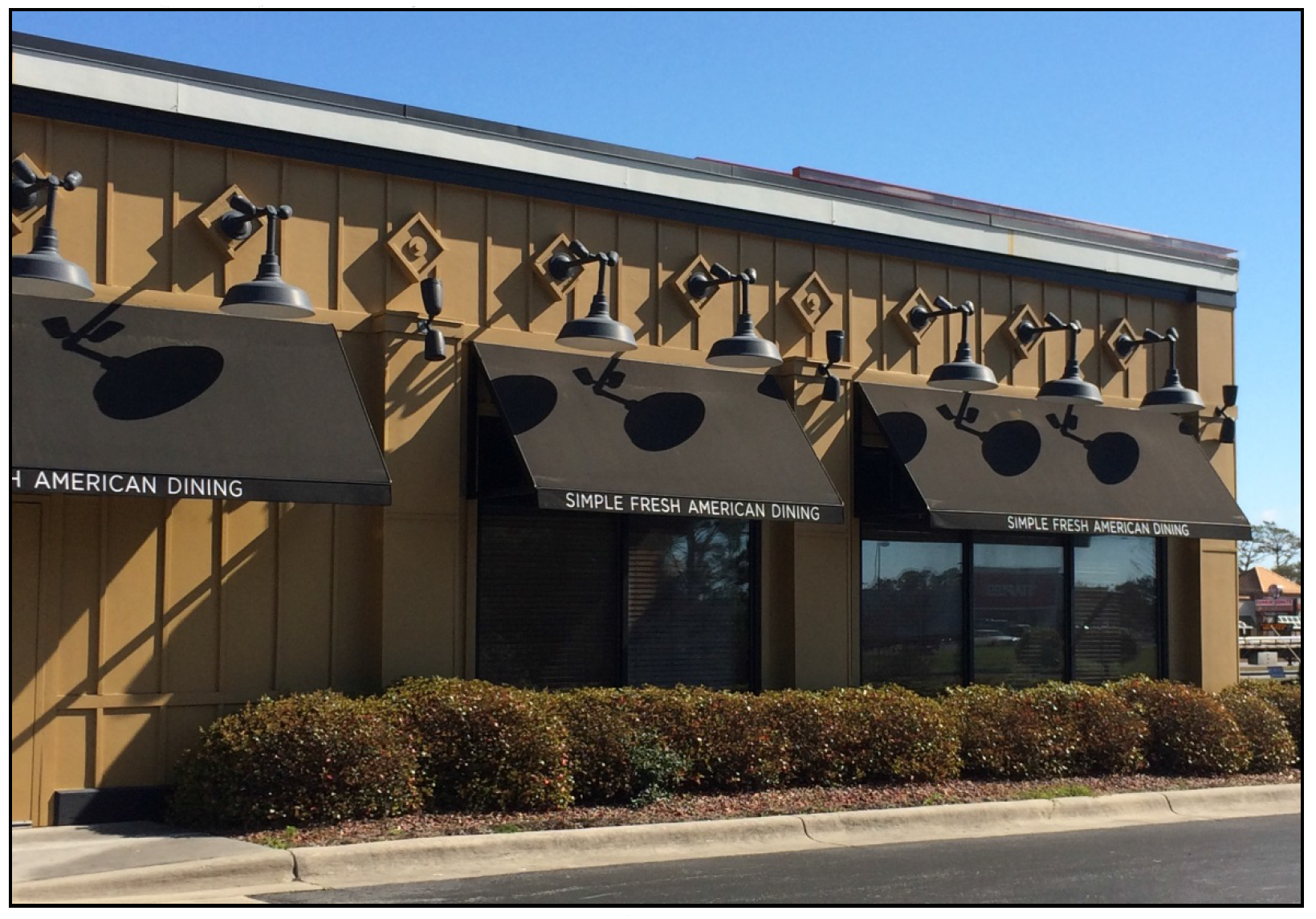
Awning Signs
19-15 - Window Signs
19-15.1
Window signs shall be subject to the requirements of Table 19-15.1.
Table 19-15.1 Requirements for Window Signs
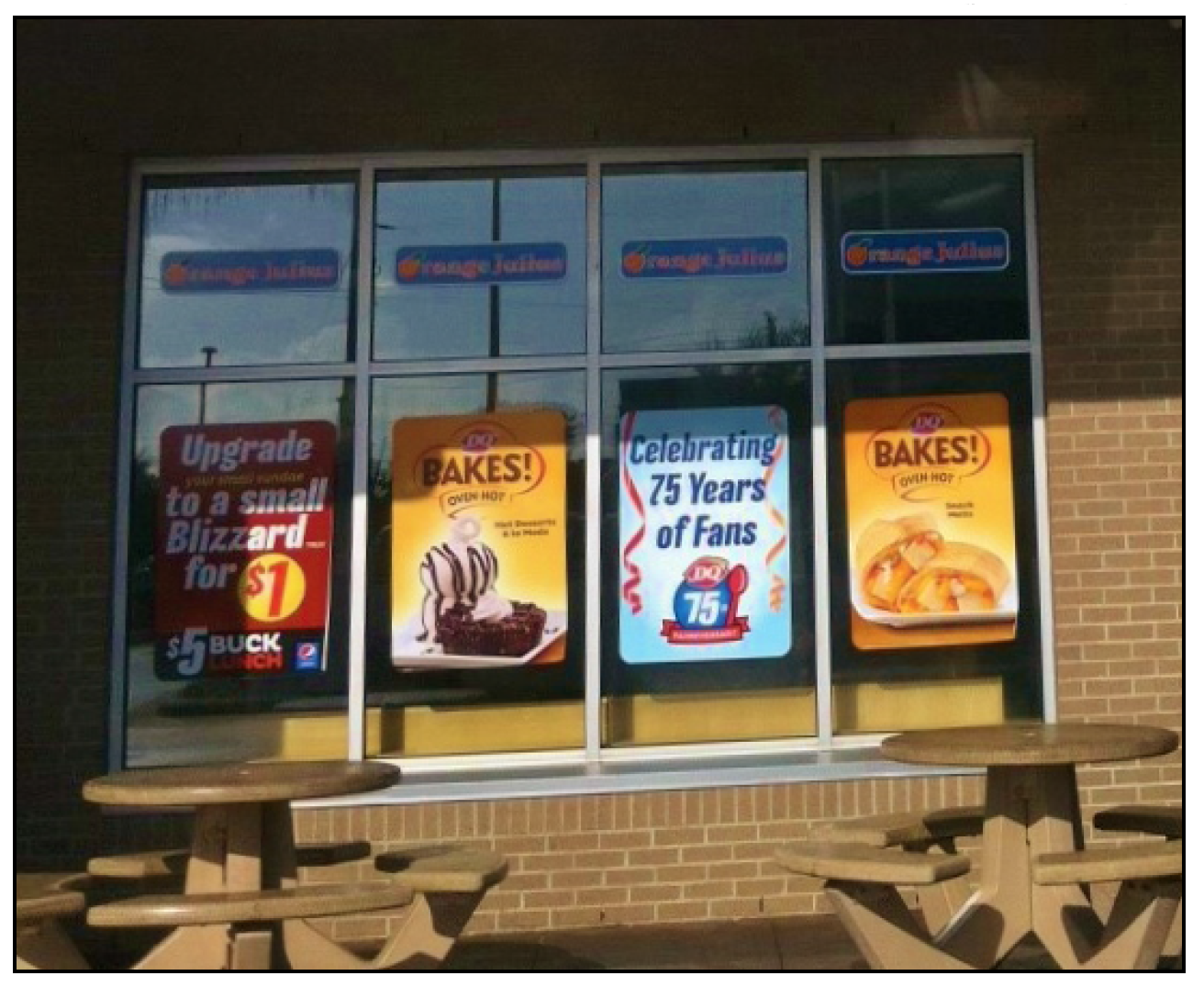
Window Signs
19-16 - Suspended Signs
19-16.1
Suspended signs shall be subject to the requirements of Table 19-16.1.
Table 19-16.1 Requirements for Suspended Signs
19-17 - Projecting Signs
19-17.1
Projecting signs shall be subject to the requirements of Table 19-17.1.
Table 19-17.1 Requirements for Projecting Signs
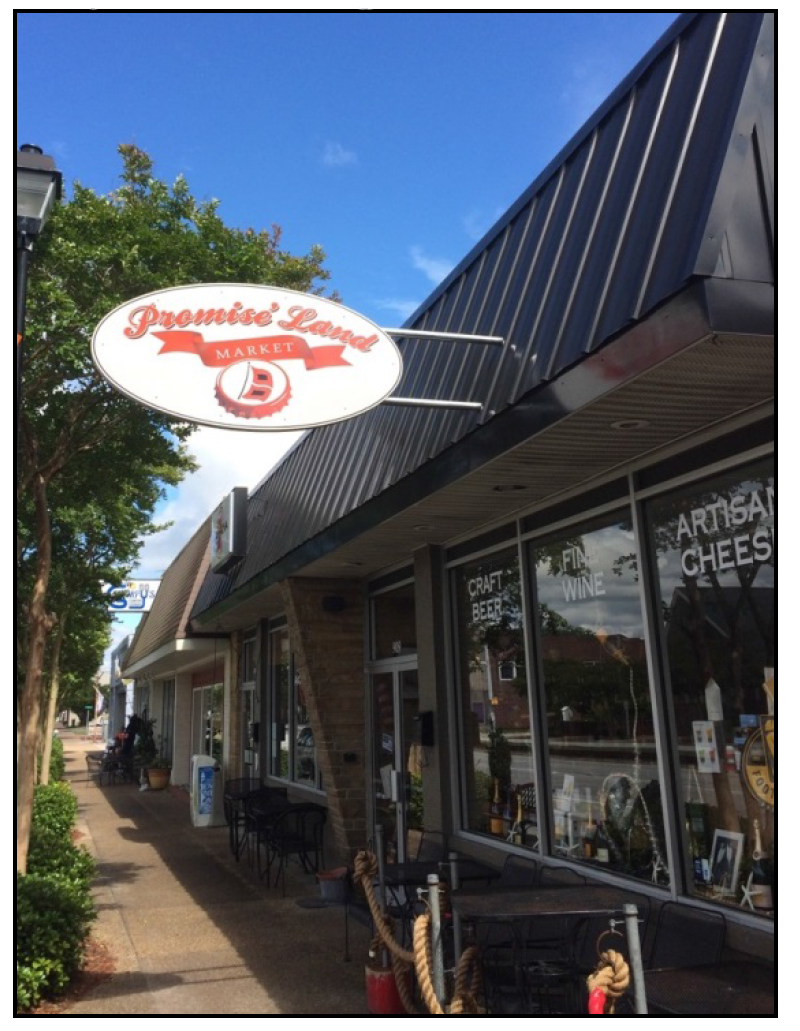
Projecting Sign
19-18 - Roof Signs
19-18.1
Roof signs shall be subject to the requirements of Table 19-18.1.
Table 19-18.1 Requirements for Roof Signs
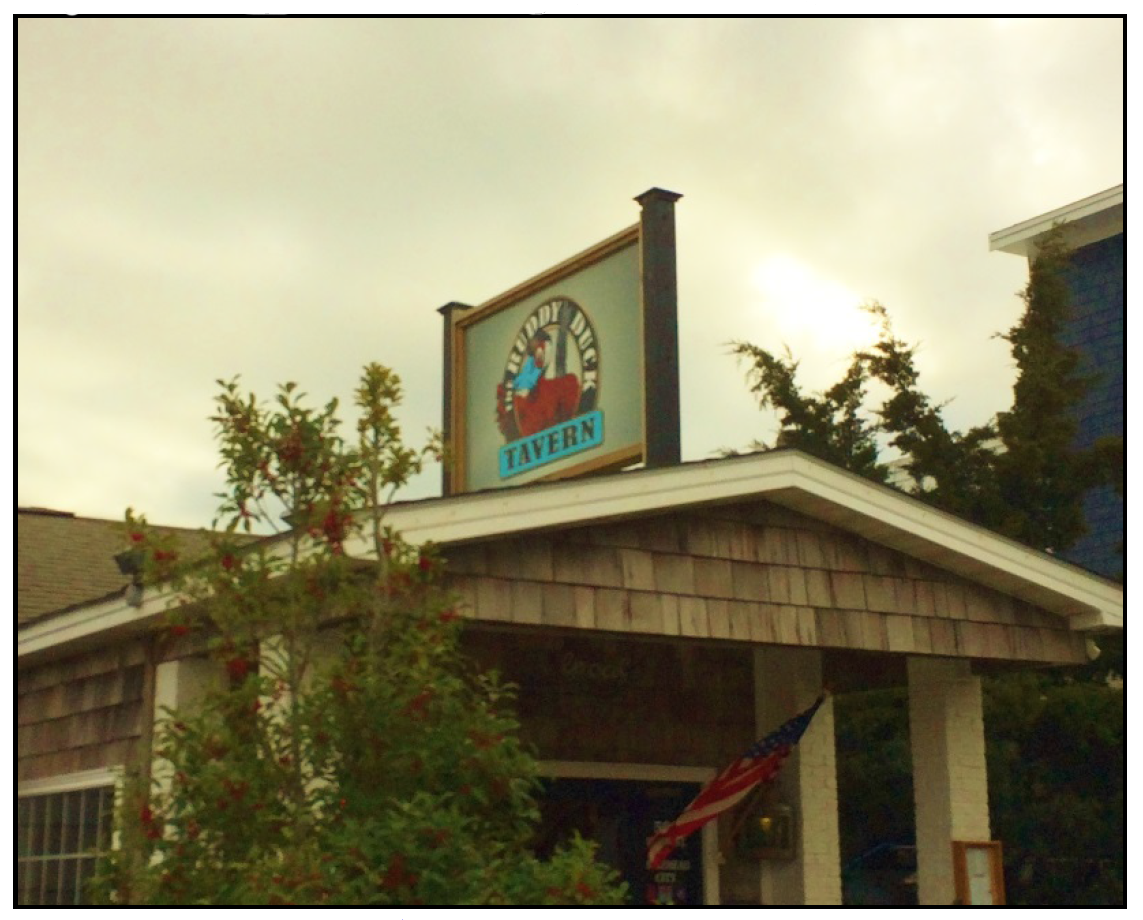
Roof Sign
19-19 - A-Frame and T-Frame Signs
19-19.1
Within the specified maximum dimensions, varying shapes of A-Frame and T-Frame signs are permitted.
19-19.2
A-Frame and T-Frame signs may be displayed during business hours only.
19-19.3
A-Frame and T-Frame signs must be at least twenty (20) feet from any intersection and at least five (5) feet from any crosswalk or fire hydrant.
19-19.4
A minimum of four (4) feet of unobstructed space must be maintained for the passageway of pedestrians.
19-19.5
The sign must be constructed of materials that present a finished appearance. Rough-cut plywood is not acceptable.
19-19.6
The sign lettering should be professionally painted or applied; a "yard sale" or "graffiti" look with hand painted or paint stenciled letters is not acceptable; however, chalkboard signs are permitted.
19-19.7
Any individual wishing to locate an A-Frame or T-Frame sign in the CD or DB district shall sign an indemnification agreement, approved by the City Attorney, prior to the issuance of a right-of-way usage permit. The indemnification agreement shall be accompanied by evidence of insurance covering the liability assumed in the indemnity agreement.
19-19.8
A-Frame and T-Frame signs shall be subject to Table 19-19.1.
Table 19-19.1 Requirements for A-Frame and T-Frame Signs
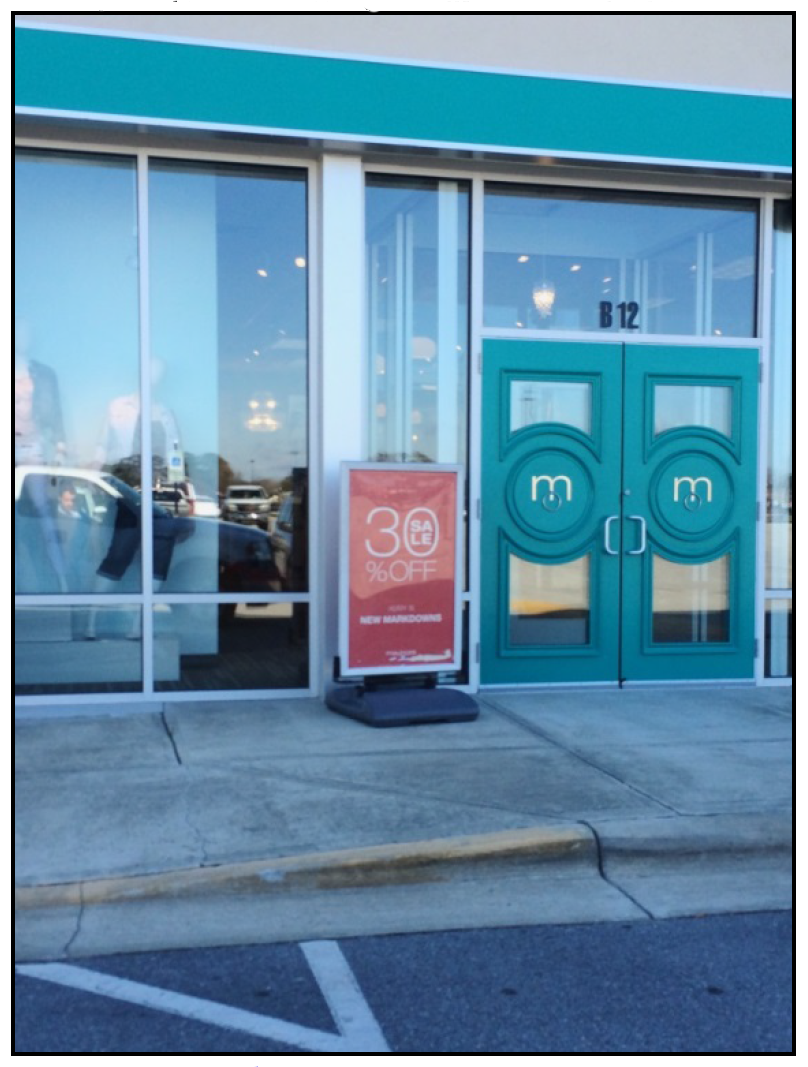
T-Frame Sign
(Ord. No. 2025-O-04, 1-14-2025)
19-20 - Pedestrian Wayfinding Signs
19-20.1
Pedestrian wayfinding signs may be permitted in accordance with an approved City wayfinding program.
19-20.2
Pedestrian wayfinding signs may be permitted in accordance with an approved City wayfinding program.
Table 19-20.1 Requirements for Pedestrian Wayfinding Signs
(Ord. No. 2025-O-04, 1-14-2025)
19-21 - Fence Screening Signs
19-21.1
The fence or gate to which a fence screening sign is attached shall meet the requirements of Section 14-1.
19-21.2
Fence screening signs shall be subject to the requirements of Table 19-21.1.
Table 19-21.1 Requirement for Fence Screening Signs
19-22 - Pole Banner Signs
19-22.1
Pole banner signs must be located on lighted utility poles on private property and may not overhang onto adjacent public or private property.
19-22.2
Permission must be obtained from both the property owner upon which the light pole is located and the light pole owner, if different.
19-22.3
Pole banner signs shall be limited to cloth, flexible plastic, vinyl, or similar material, and shall not be made of paper, poster board, foam, card board, wood, aluminum, or rigid plastics.
19-22.4
Pole banners must be installed in a secure manner using pole banner brackets.
19-22.5
The requirements of this section do not apply to City-owned or sponsored pole banner signs located within the right-of-way or upon City-owned property.
19-22.6
Pole banner signs shall be subject to the requirements of Table 19-22.1.
Table 19-22.1 Requirement for Pole Banner Signs
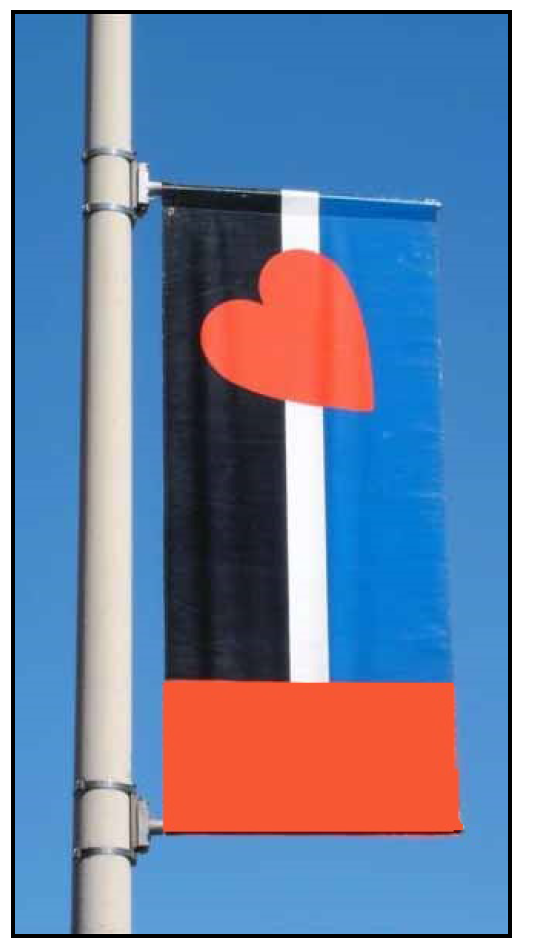
Pole Banner Sign
(Ord. No. 2025-O-04, 1-14-2025)
19-23 - Governmental Signs and Flags
19-23.1
Any governmental flag that is torn or tattered shall be in violation of this Ordinance and shall be removed.
19-23.2
Governmental signs and flags shall be subject to the requirements of Table 19-23.1.
Table 19-23.1 Requirements for Governmental Signs and Flags
19-24 - Substitution Clause
19-24.1
Notwithstanding any other provision of this Article, noncommercial copy may be substituted for commercial copy or other noncommercial copy on any sign that is permissible under this Article.

