
Morehead City City Zoning Code
Appendix VI
TREE PLANTING RECOMMENDATIONS
Recommended Canopy Tree List
| Common Name | Scientific Name |
Mature Height
(in feet) |
Mature Width
(in feet) | Site | Form |
Special
Considerations | Images |
|---|---|---|---|---|---|---|---|
| American beech | Fagus grandifolia | 50-80 | 40-60 | Sun to partial shade; moist, well-drained soil | Dense; broad with wide spreading crown | Deciduous; native; casts very dense shade; shallow roots; difficult to grow plants underneath; seeds poisonous if ingested (low-toxicity); no serious pests; younger trees hold leaves in winter | 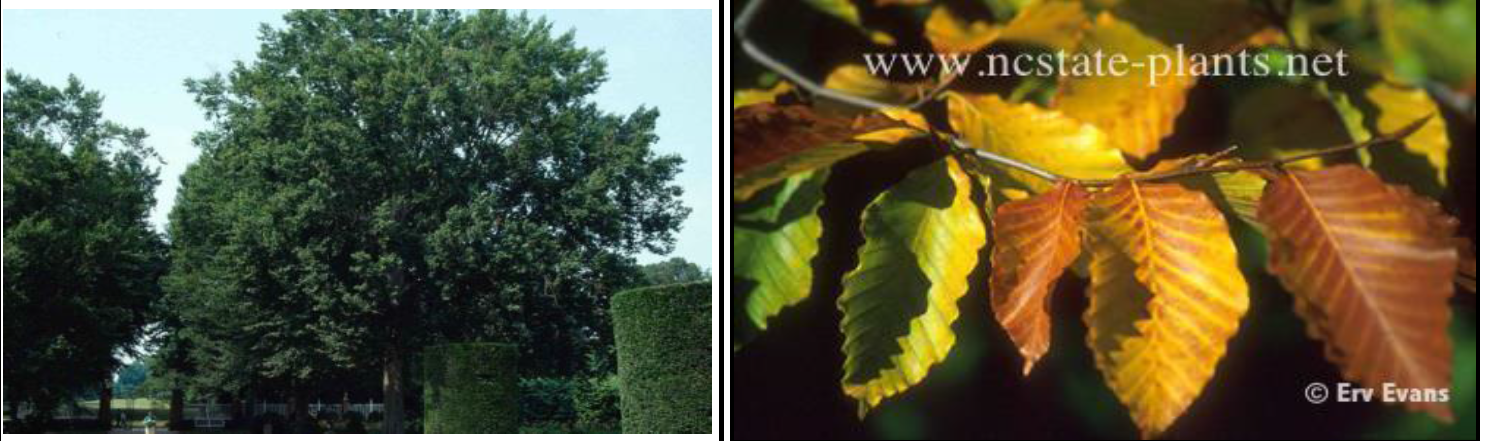 |
| Atlantic white cedar |
Chamae-
cyparis thyoides | 40-85 | 10-20 | Sun; range of soil types, including damp soil | Tall, slender columnar tree; loses lower branches with age | Evergreen; native; not shade tolerant; salt tolerant | 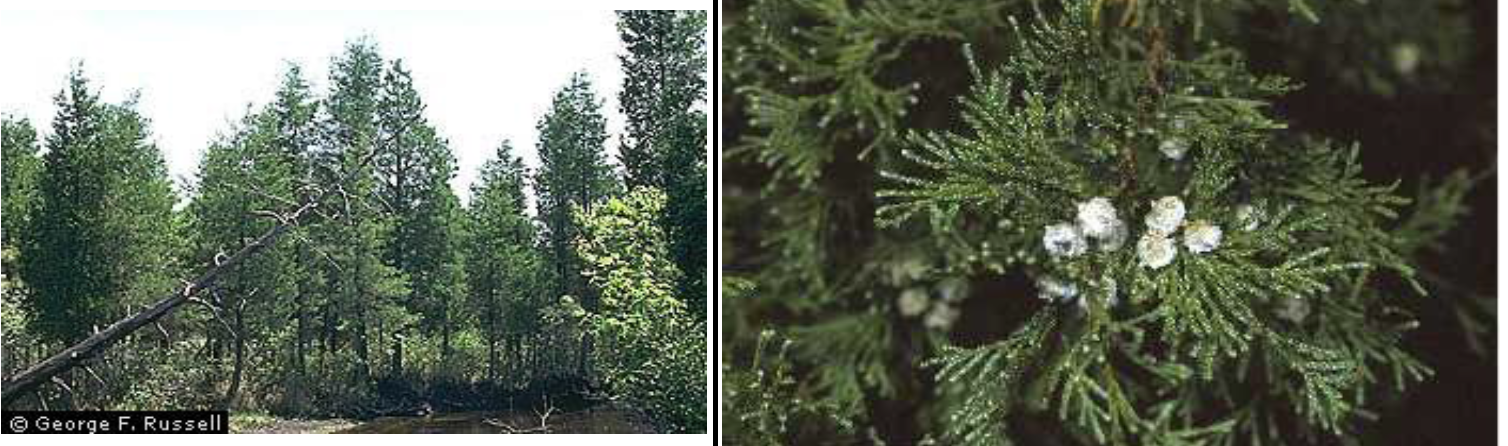 |
| Bald cypress | Taxodium distichum | 50-100 | 20-30 | Sun; grows in variety of soils (wet, dry, and compacted) | Pyramidal in youth; broad open crown at maturity | Deciduous; native; casts light shade; cypress knees produced when grown in or near water; large taproot; heat and drought tolerant; no serious pests | 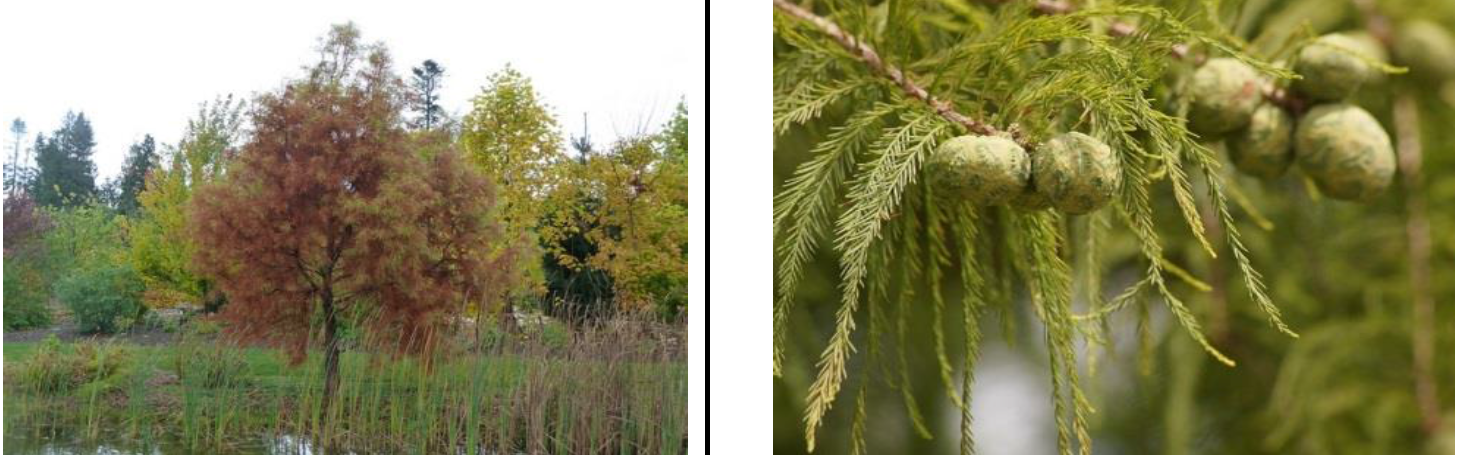 |
| Black gum, Black tupelo, Sour gum | Nyssa sylvatica | 40-60 | 20-30 | Sun to partial shade; prefers moist, well-drained soil; provide shelter from wind | Pyramidal when young; opens with age; some branches are pendulous | Deciduous; native; long taproot; spectacular fall color, no serious pests | 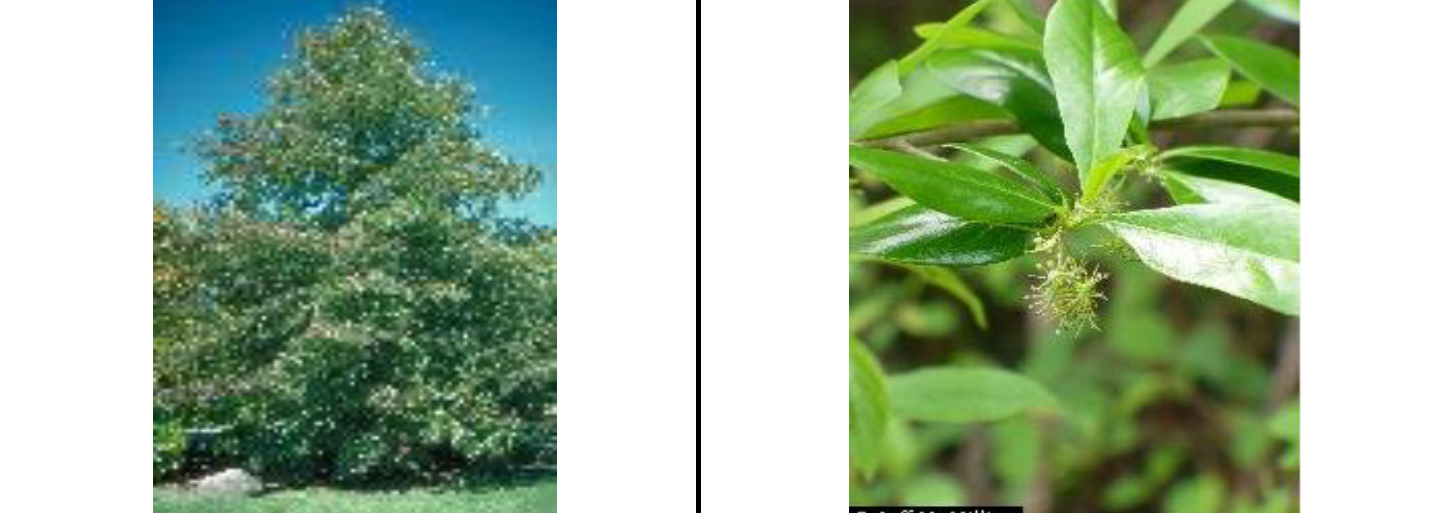 |
| Crepe (Crape) myrtle [Basham Pink, Fantasy, Kiowa, and other large varieties] | Lagerstroemia (Large Varieties) | 35-50 | 25-35 | Six hours or more of direct sun to maximize blooming; sand, loam, or clay | Multi-stemmed; rounded crown; dense branching | Deciduous | 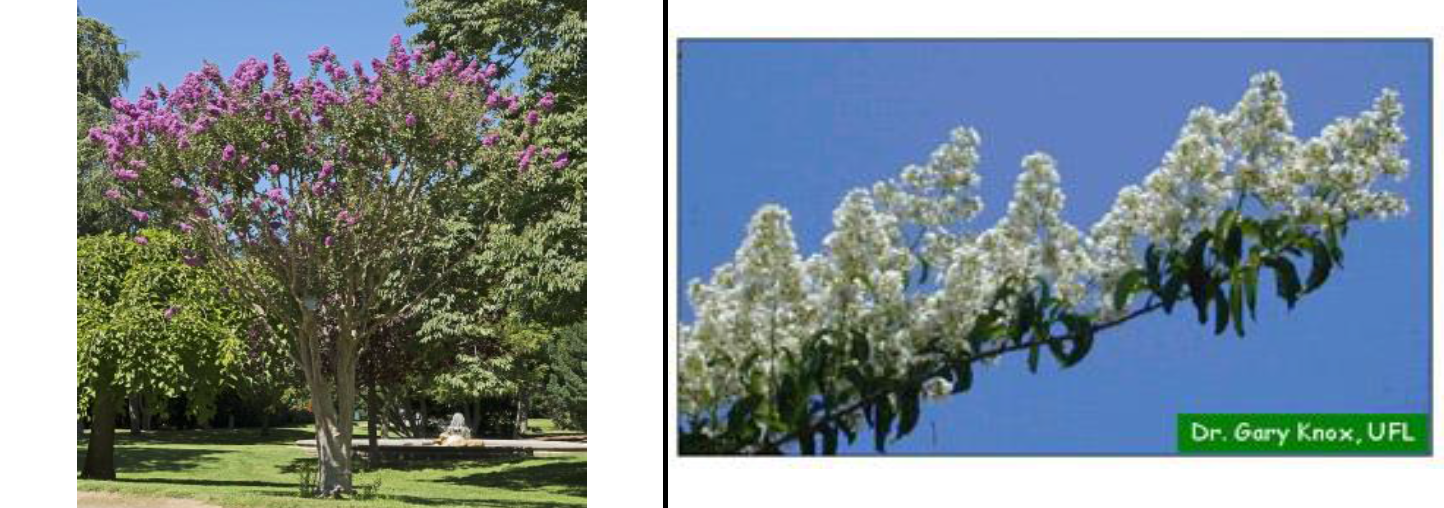 |
| Dawn redwood |
Metasequoia glypto-
stroboides | 50-90 | 15-25 | Sun; moist, well-drained soil | Pyramidal, conical with single straight trunk | Deciduous; casts medium shade | 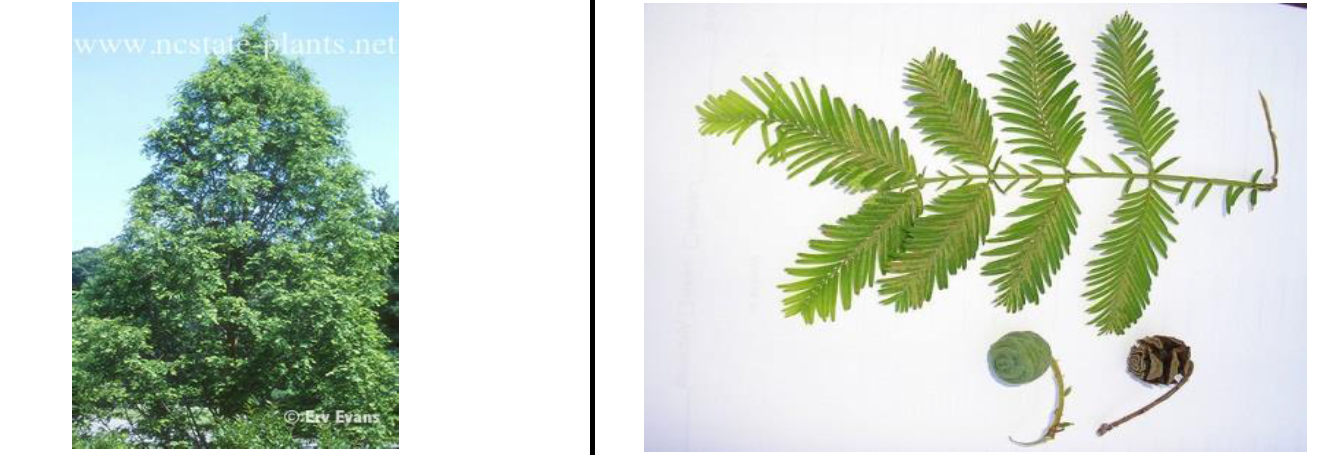 |
| Deodar cedar | Cedrus deodara | 30-50 | 30-40 | Sun to partial shade; well-drained, somewhat dry site; needs protection from wind | Pyramidal with pendulous branches | Evergreen; cones on female tree | 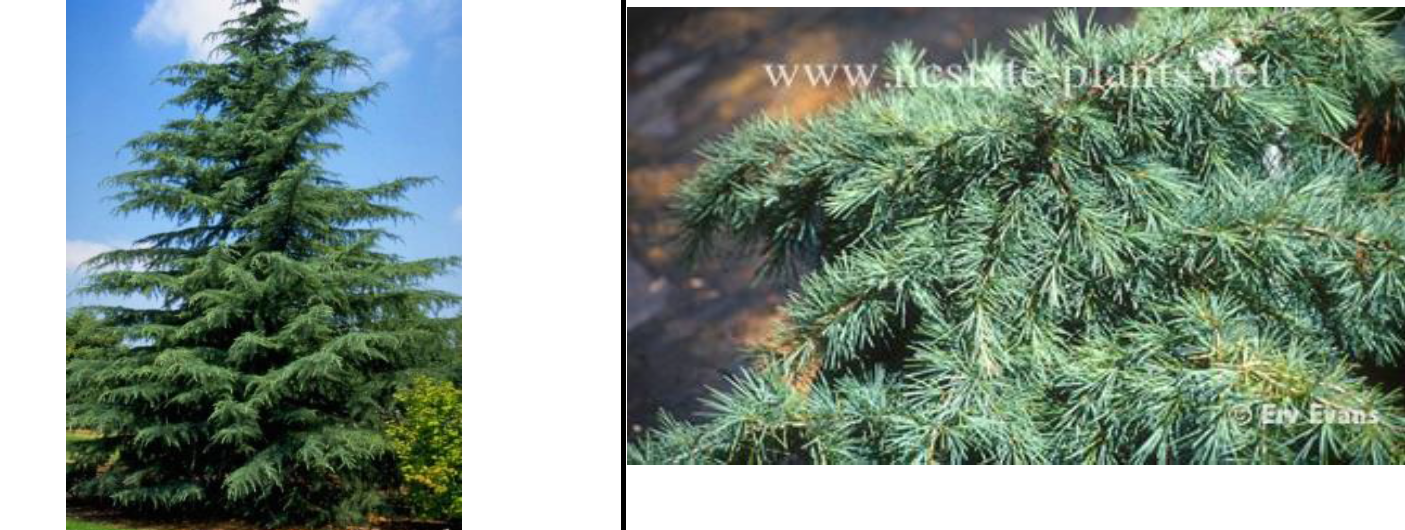 |
| Eastern redcedar | Juniperus virginiana | 30-40 | 42663 | Sun; prefers well-drained soil but tolerates wide range of soil types | Densley pyramidal; becomes irregular and slightly pendulous with age | Evergreen; native; cones (resemble berries) and leaves are poisonous if ingested (low-toxicity); drought and heat tolerant; may be susceptible to bagworm | 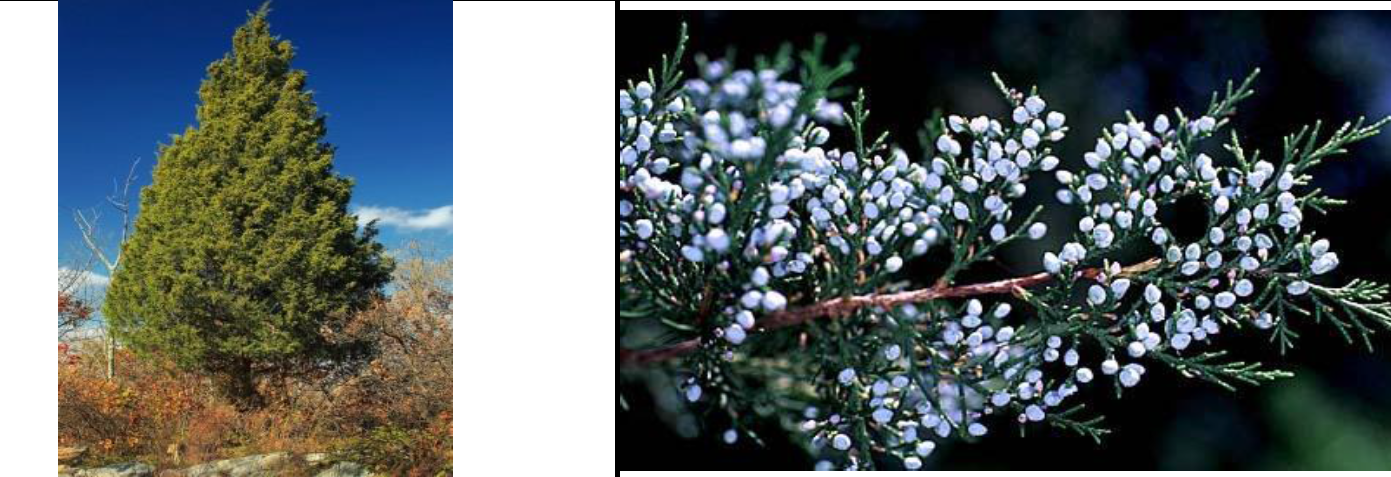 |
| Giant arborvitae, Western red cedar | Thuja plicata | 50-80 | 15-25 | Sun to partial shade; moist, well-drained soil but does well in clay; needs protection from wind | Conical; narrow to broad pyramidal | Evergreen; cone production begins at age 10-20 years; bagworms can be a problem | 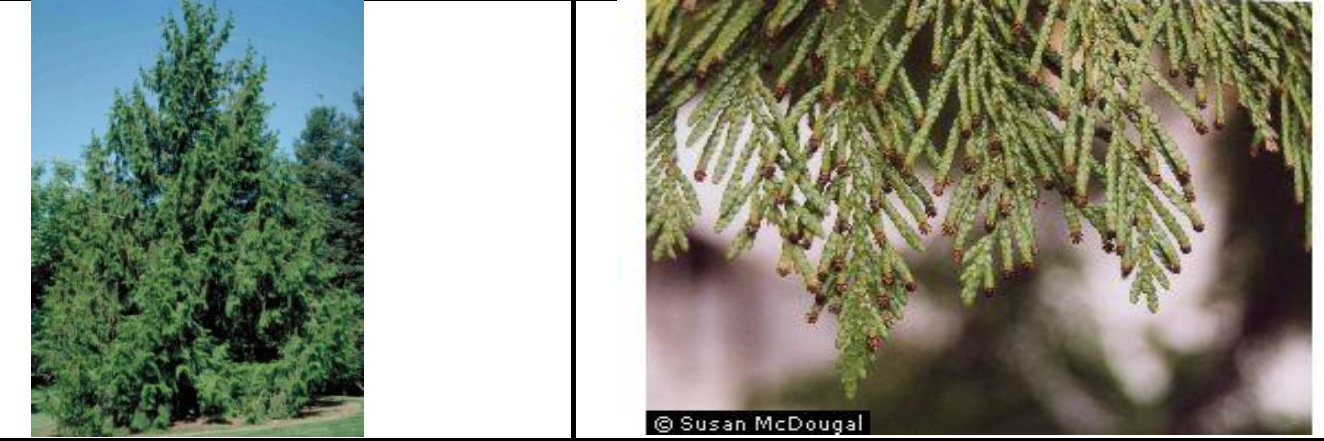 |
| Ginkgo, Maidenhair tree | Ginkgo biloba | 40-70 | 20-40 | Sun; range of soil types except wet soil | Irregular horizontal branches; pyramidal | Deciduous, plant only male trees; messy fruit; drought, heat, air pollution, and salt tolerant; outer pulp of seeds and raw seed kernel are poisonous if ingested in large quantities | 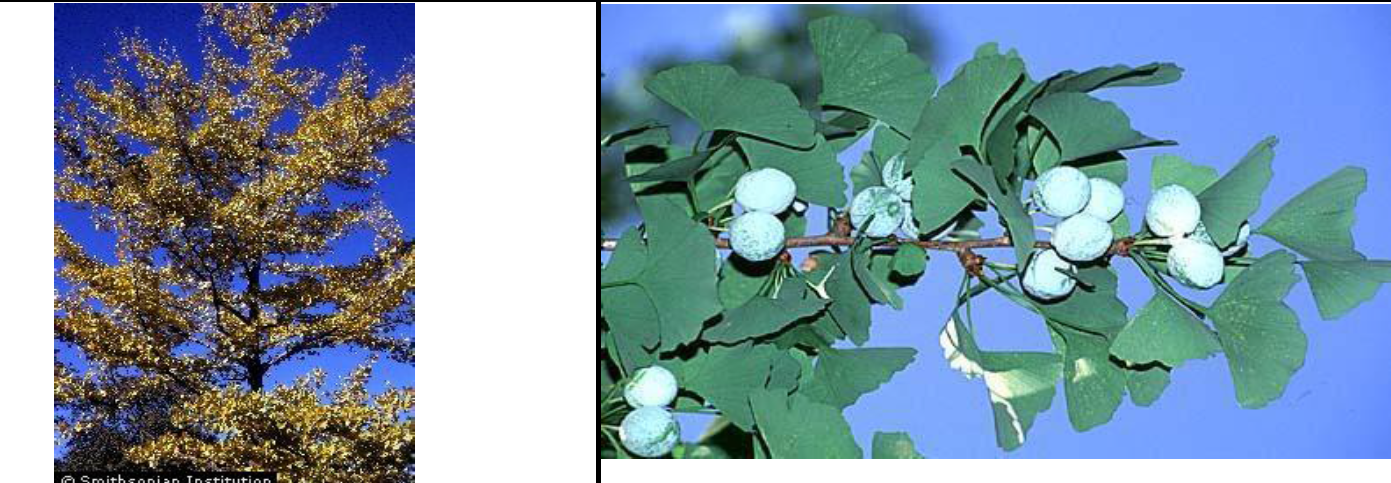 |
| Green ash | Fraxinus pennsylvanica | 50-60 | 25-30 | Sun; tolerates wet to dry soil | Pyramidal in youth; upright; spreading; irregular crown | Deciduous; drought, wind, and salt tolerant | 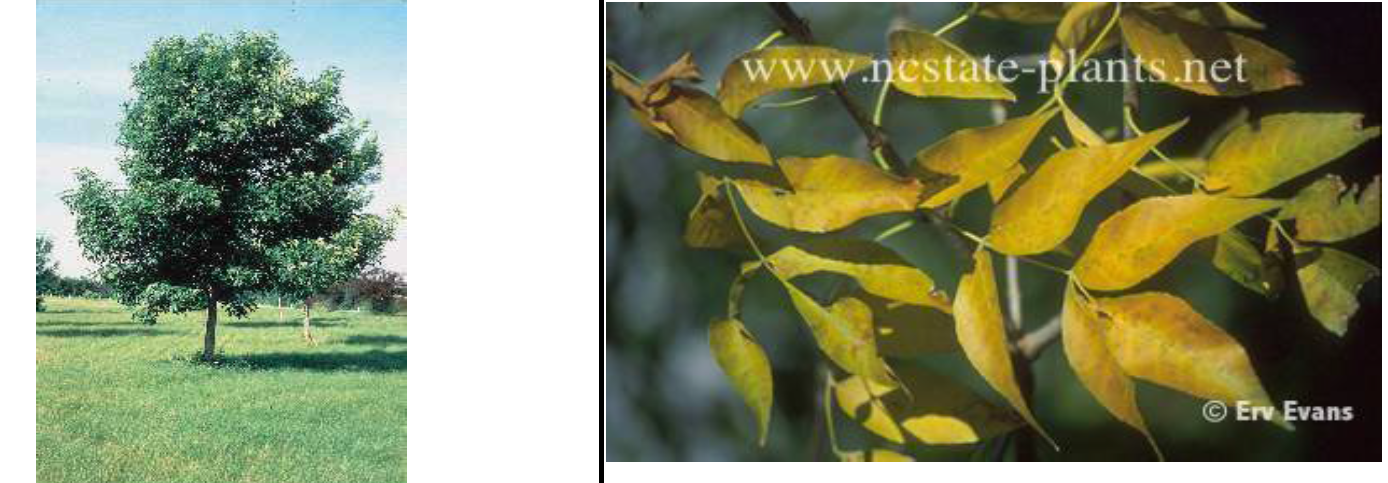 |
| Pignut hickory | Carya glabra | 50-60 | 25-35 | Sun to partial shade; range of soil types, however, prefers well-drained acidic soils | Regular, open, oval head; slender, contorted branches | Deciduous; drought tolerant; deep taproot | 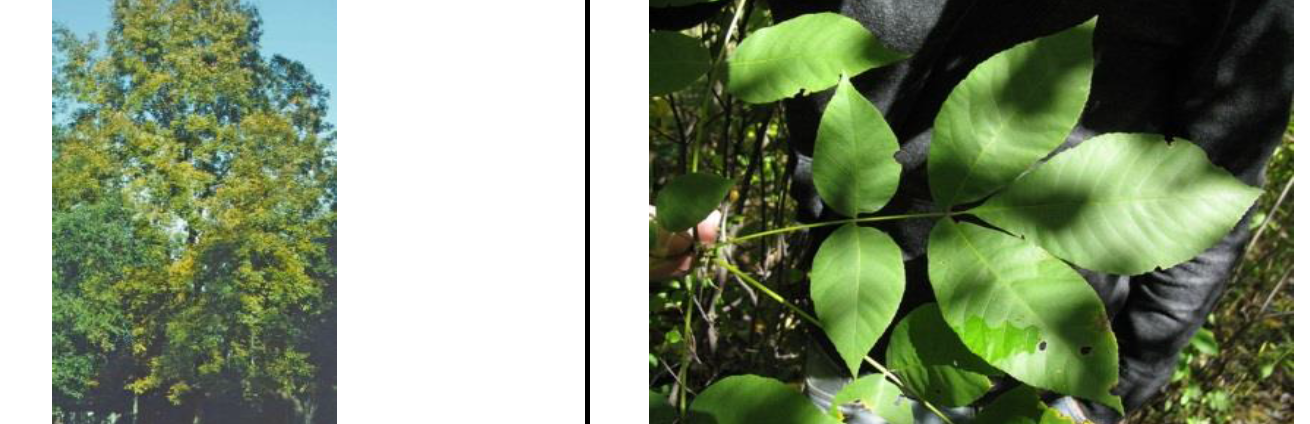 |
| Thornless common honeylocust | Gleditsia triacanthos vari. Inermis | 30-70 | 20-40 | Sun; range of soil types | Short trunk; open spreading crown | Deciduous; drought tolerant; casts light shade; some varieties' root systems will lift sidewalks | 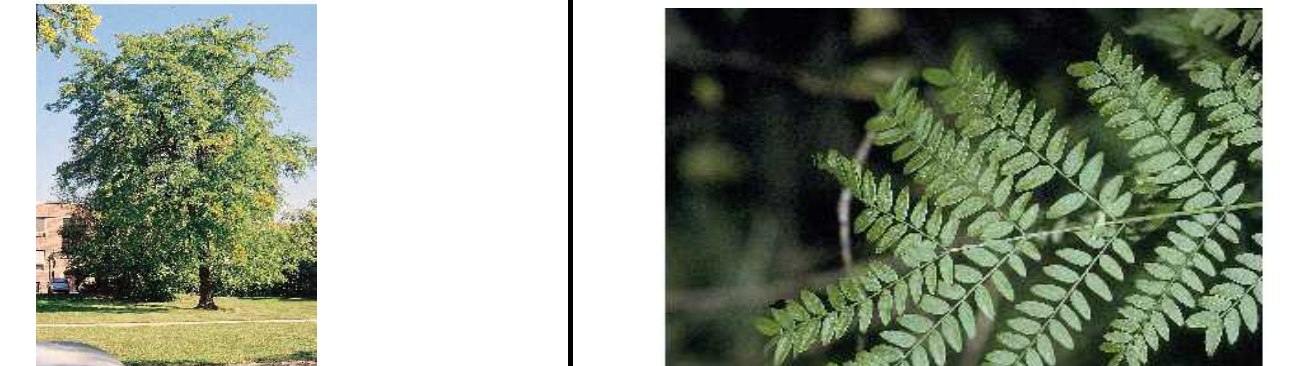 |
| Japanese black pine | Pinus thunbergiana | 40-70 | 15-25 | Sun; range of soil types but prefers well-drained soil | Pyramidal when young; irregular, asymmetrical, spreading crown with pendulous branches with age; dense | Evergreen; heat and drought tolerant; very tolerant to salt spray | 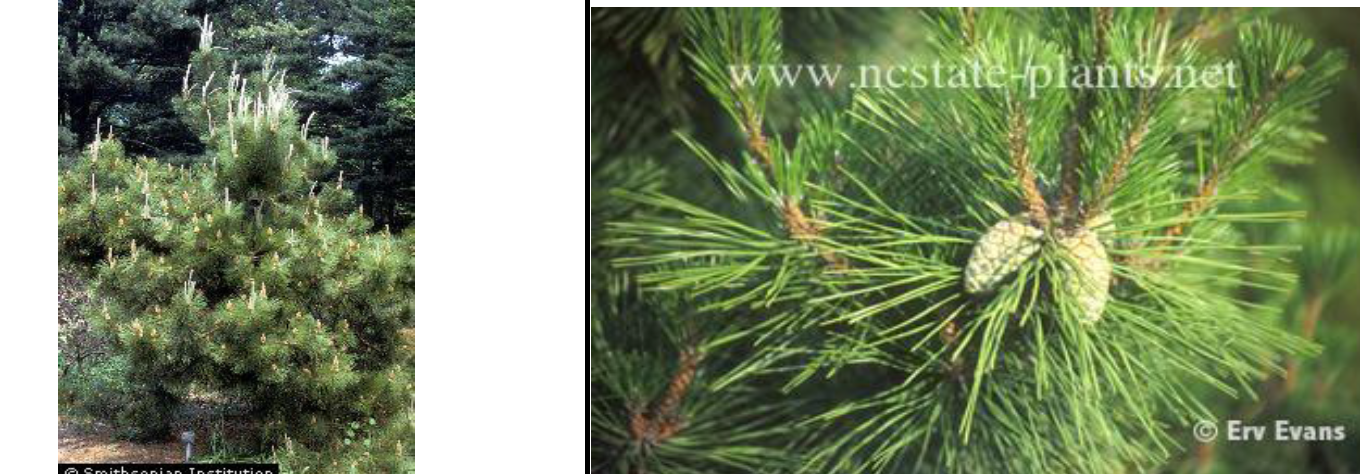 |
| Lacebark elm, Chinese elm, Drake elm | Ulmus parvifolia | 40-50 | 30-40 | Sun; prefers moist, well-drained soil; tolerates poor soil | Round-headed tree, pendulous branches | Deciduous; durable tree; resistant to Dutch Elm disease and air pollution; bark sheds | 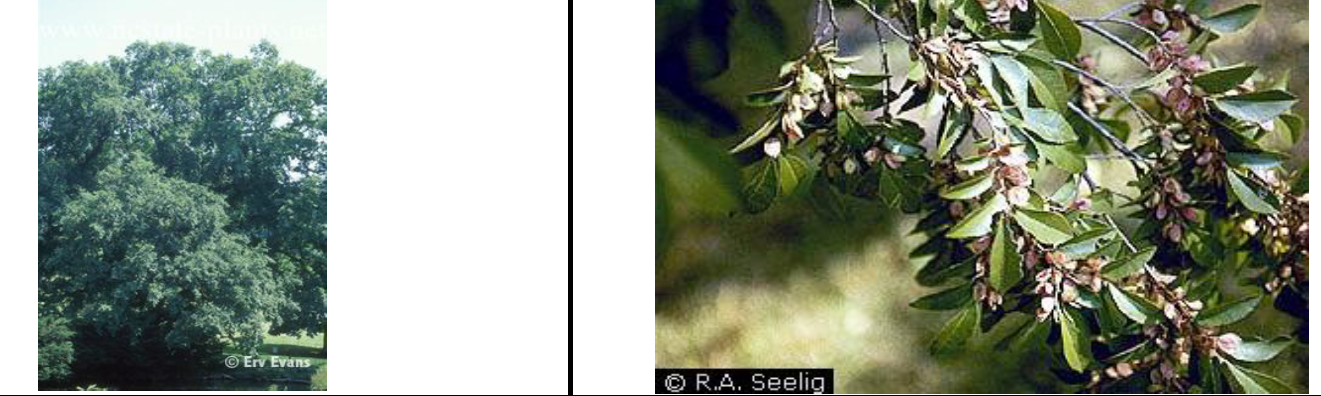 |
| Loblolly pine (non-dwarf variety) | Pinus taeda | 50-90 | 30-40 | Sun to partial shade; tolerant of poor soils | Horizontal, ascending branches; oval-rounded crown; loosely pyramidal in youth | Evergreen; native; most rapid growth of all pine trees; good wind break | 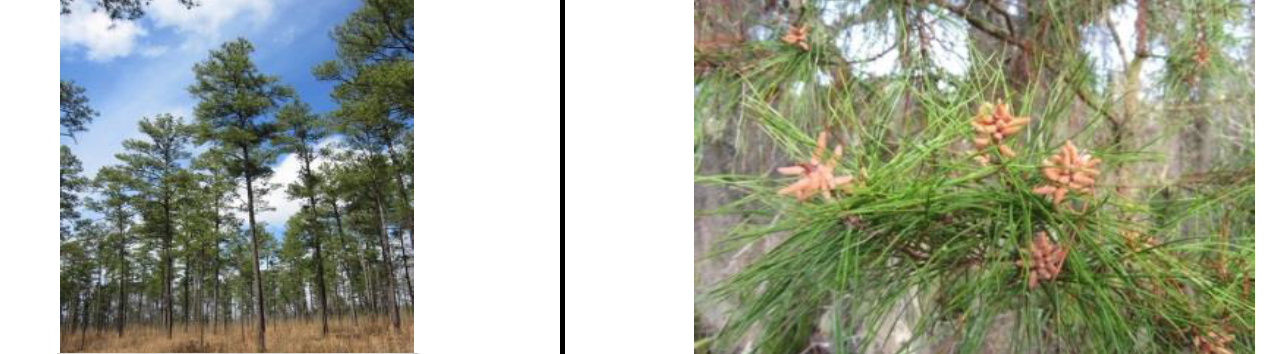 |
| Oak: White oak | Quercus alba | 60-100 | 50-90 | Sun; prefers moist, well-drained soil but tolerates a range of soil types, including clay | Pyramidal in youth; broad crown with age; massive, spreading tree with thick trunk | Deciduous; native; avoid planting near paved areas; does not withstand construction damage well; drought tolerant; acorns and young leaves are poisonous if ingested (low-toxicity) | 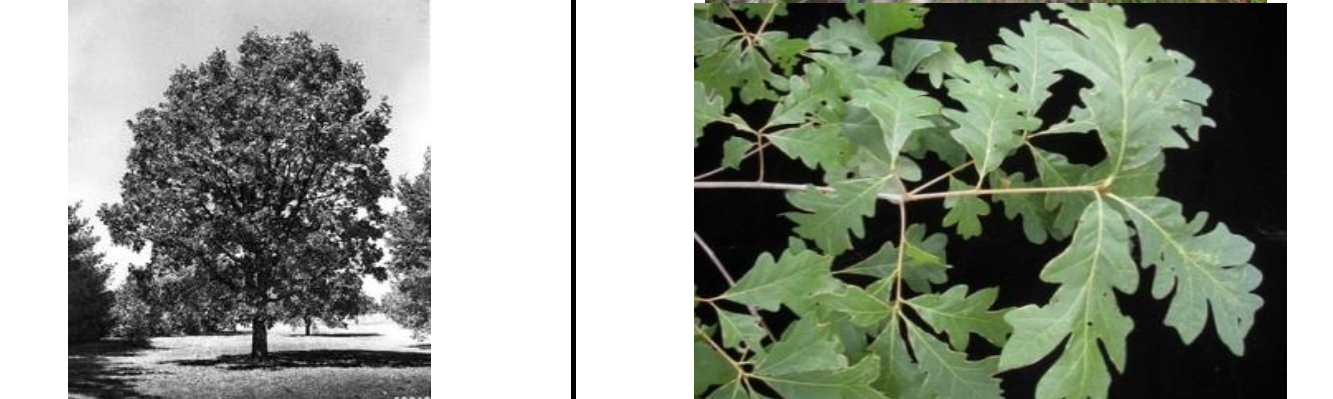 |
| Oak: Willow oak | Quercus phellos | 60-80 | 30-40 | Sun; prefers moist, well-drained soil, but will grow in a wide range of soil conditions, including compacted soil | Conical in youth; rounded crown; dense | Deciduous; native; tolerant of heat, drought, air pollution, and standing water; acorns and young leaves are poisonous if ingested (low-toxicity) | 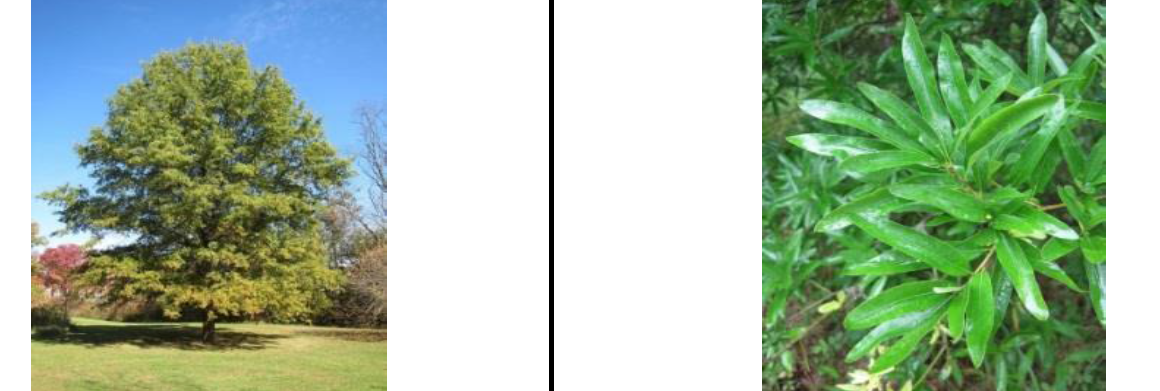 |
| Red maple | Acer rubrum | 40-60 | 25-45 | Sun to shade; range of soil types | Pyramidal when young; ascending branches with an irregular, rounded crown | Deciduous; native; some air pollution tolerance | 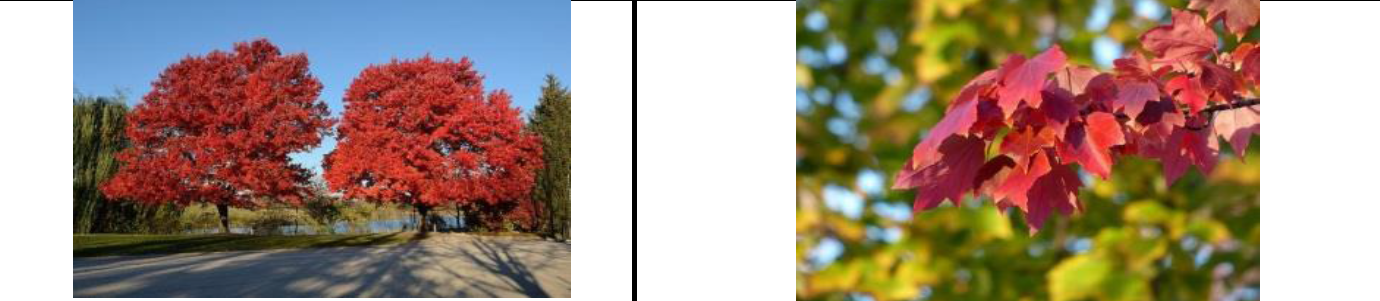 |
| River birch | Betula nigra | 40-70 | 20-60 | Sun to partial shade; moist, well-drained soil | Multi-stemmed, pyramidal in youth, rounded at maturity | Deciduous; native; best not to prune in spring - sap "bleeds"; heat tolerant | 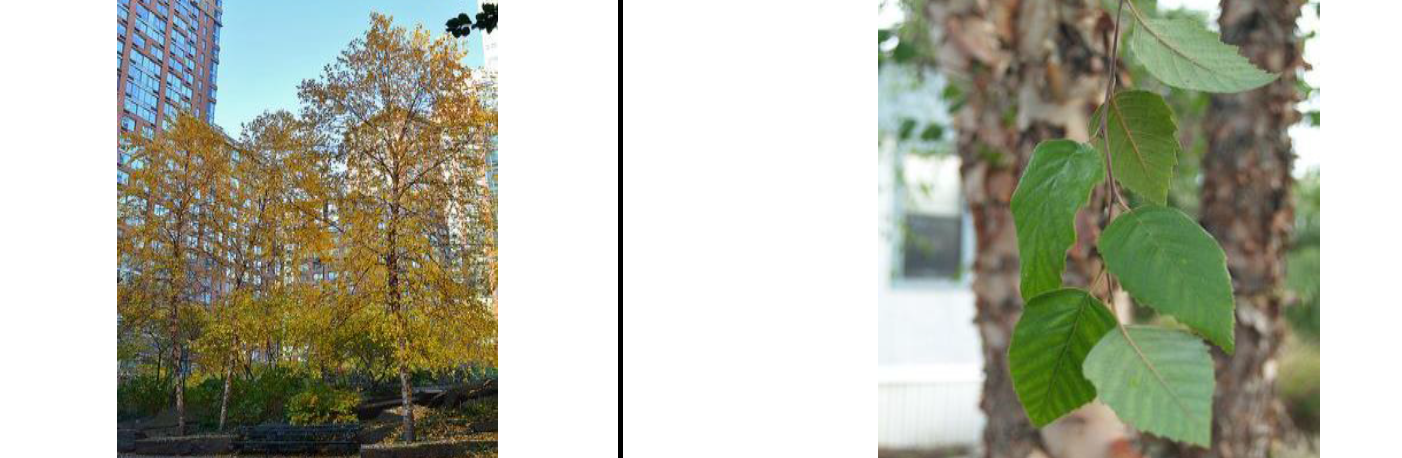 |
| Sassafras | Sassafras albidum | 30-60 | 25-40 | Sun to partial shade; moist, well-drained soil but is adaptable | Pyramidal in youth; irregular rounded crown with age | Deciduous; native; bark poisonous if ingested (low toxicity) | 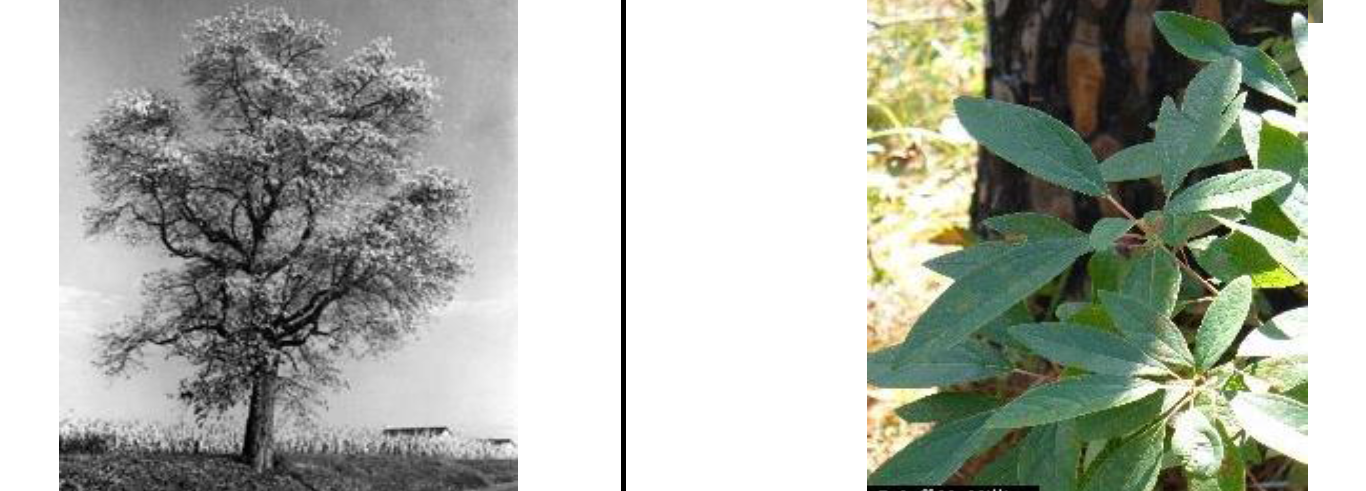 |
| Southern magnolia | Magnolia grandiflora | 40-80 | 25-40 | Sun to partial shade; well-drained soil; tolerates high moisture | Symmetrical, sweeps to ground | Evergreen; native; dense and shallow roots make it difficult to grow plants; should be planted where lowest branches can grow to ground; difficult to grow anything underneath | 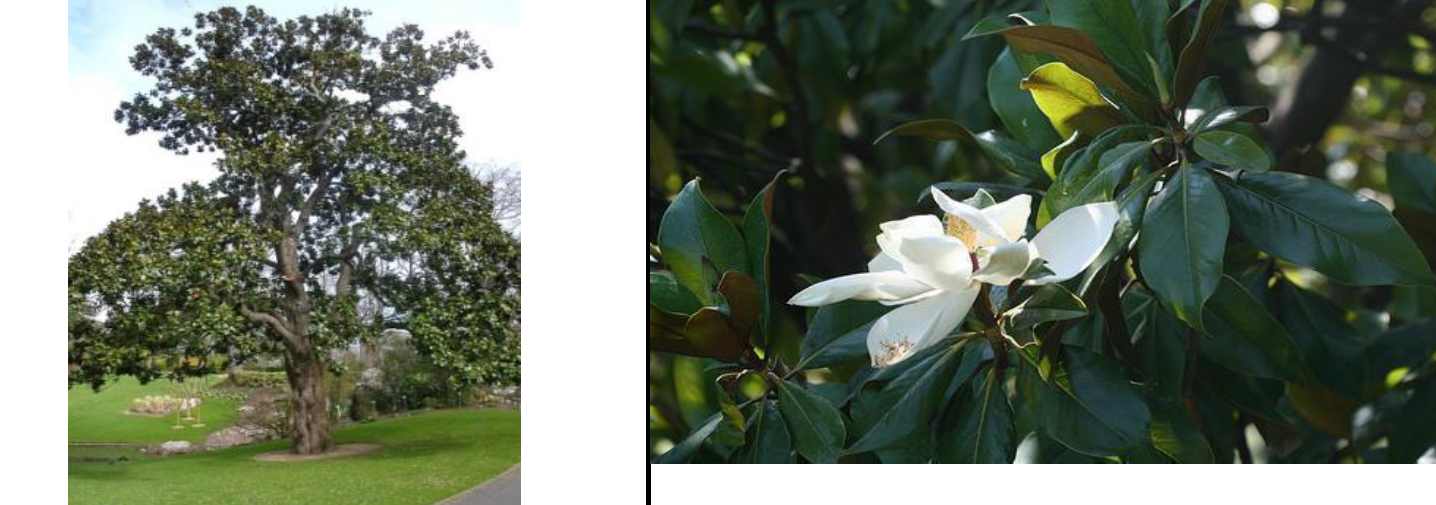 |
| Sweetgum | Liquidambar styraciflua | 60-100 | 50-75 | Sun to partial shade; dry to moist soil | Pyramidal in youth; upright; semi-conical to spreading with age | Deciduous; non-fruiting variety, such as Rotundiloba, preferred; resistant to insect attack; provide large areas of shade; capable of fixing nitrogen in soil | 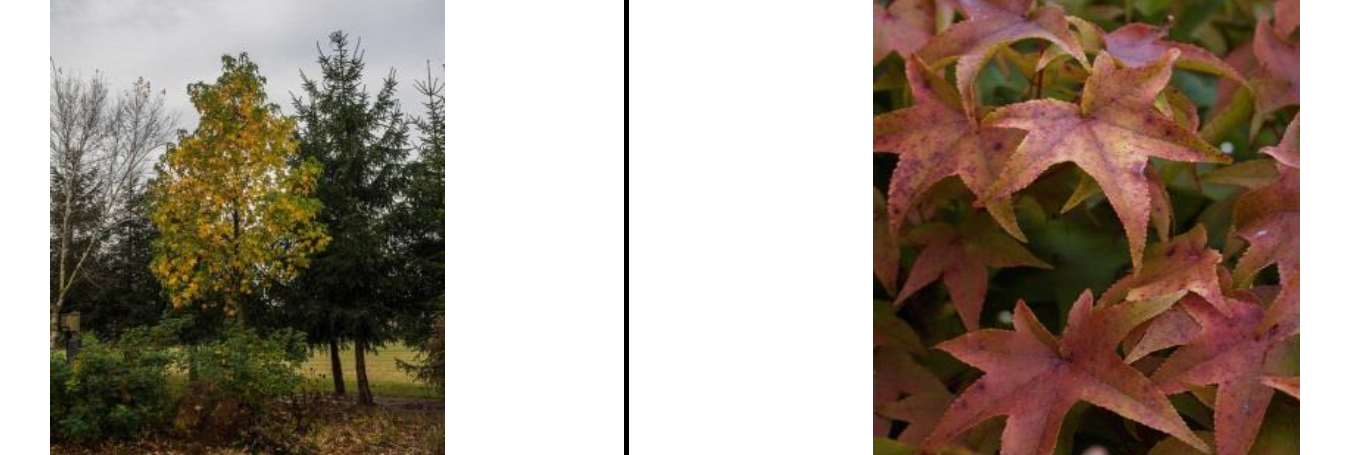 |
| Sycamore | Platanus occidentalis | 70-100 | 60-80 | Sun to partial shade; prefers moist, well-drained soil | Large massive trunk; wide-spreading open crown; crooked branches | Deciduous; subject to anthracnose and lace bugs | 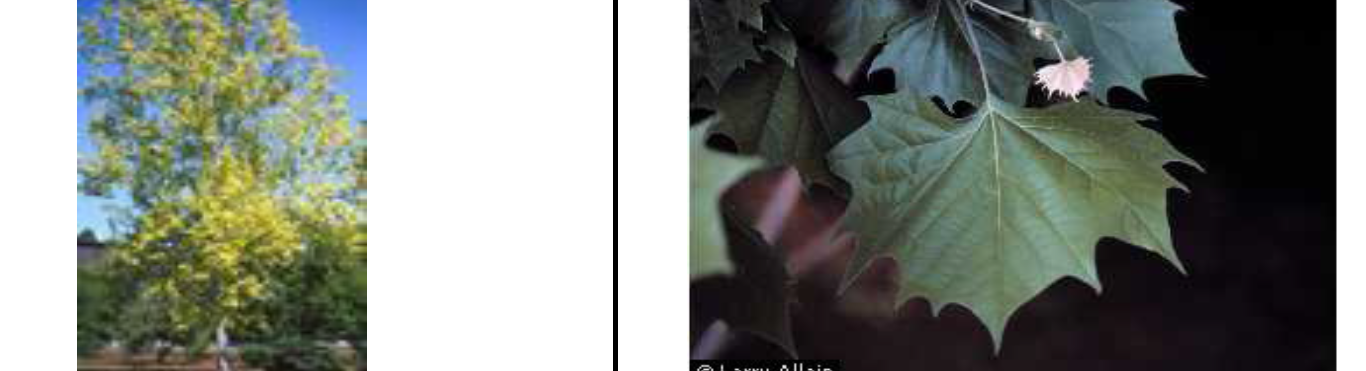 |
| Tulip poplar, tuliptree, yellow poplar | Liriodendron tulipifera | 40-100 | 20-40 | Sun; moist, well-drained soil | Tall, straight trunk; upper branches create a rounded crown; in an open landscape has upright, oval shape | Deciduous; native; branches are brittle; not a true poplar | 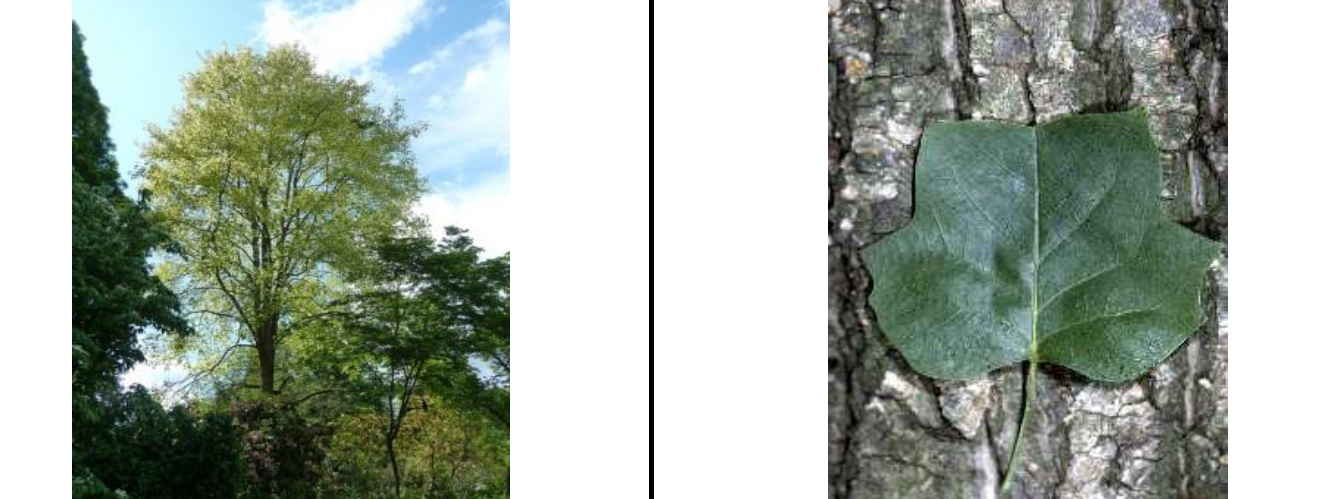 |
Images from the North Carolina State University Cooperative Extension Plant List Database, the University of Florida Institute of Food and Agricultural Sciences Extension Southern Tree Fact Sheets, and the US Department of Agriculture Natural Resources Conservation Service Plant Database
Recommended Understory Tree List
| Common Name | Scientific Name |
Mature Height
(in feet) |
Mature Width
(in feet) | Site | Form |
Special
Considerations | Images |
|---|---|---|---|---|---|---|---|
| American holly | Ilex opaca | 25-50 | 15-35 | Sun to partial shade; moist to dry soil | Upright; conical; pyramidal in youth; with age open, irregular with high branches at wide angles | Evergreen; native; both male and female plants needed for berry production; berries toxic in large quantities (low-toxicity) | 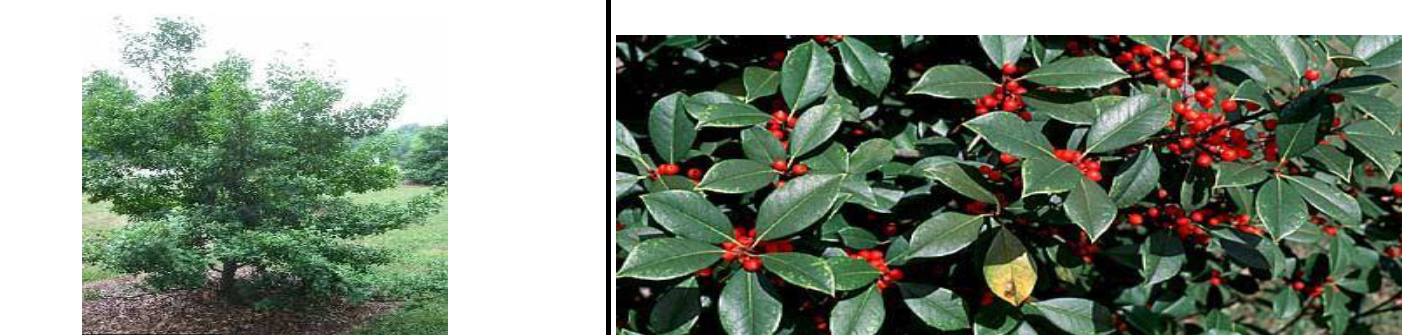 |
| Carolina cherry laurel | Prunus caroliniana | 20-40 | 15-20 | Sun to partial shade; moist, well-drained soil | Pyramidal in youth; dense; rounded crown with age | Evergreen; native; foliage is poisonous to livestock; withstands heavy pruning; wilted leaves, twigs (stems), and seeds poisonous if ingested (highly toxic; may be fatal) | 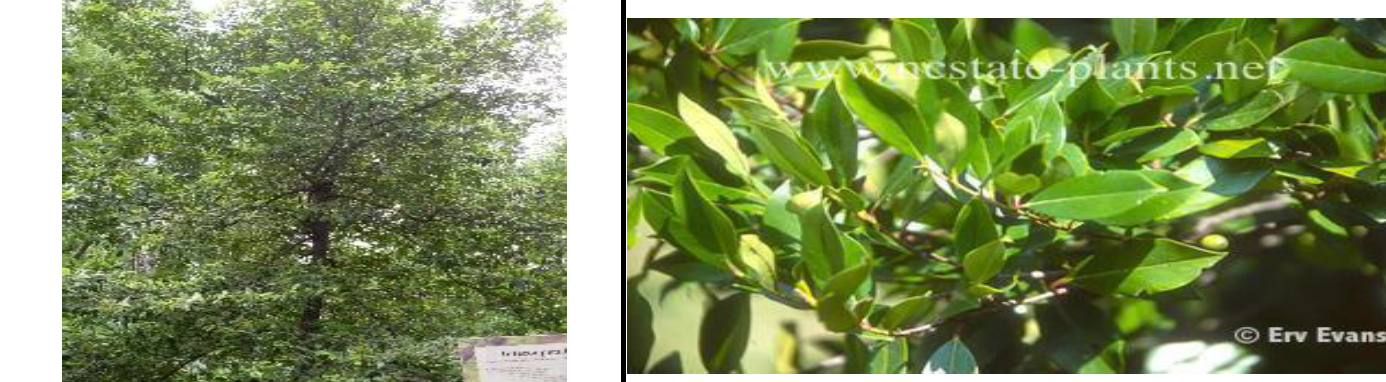 |
| Chastetree | Vitex agnus-castus | 15-20 | 42658 | Sun; range of soil types | Rounded; oval; open; shrubby | Deciduous; prefers hot weather; withstands heavy pruning in spring | 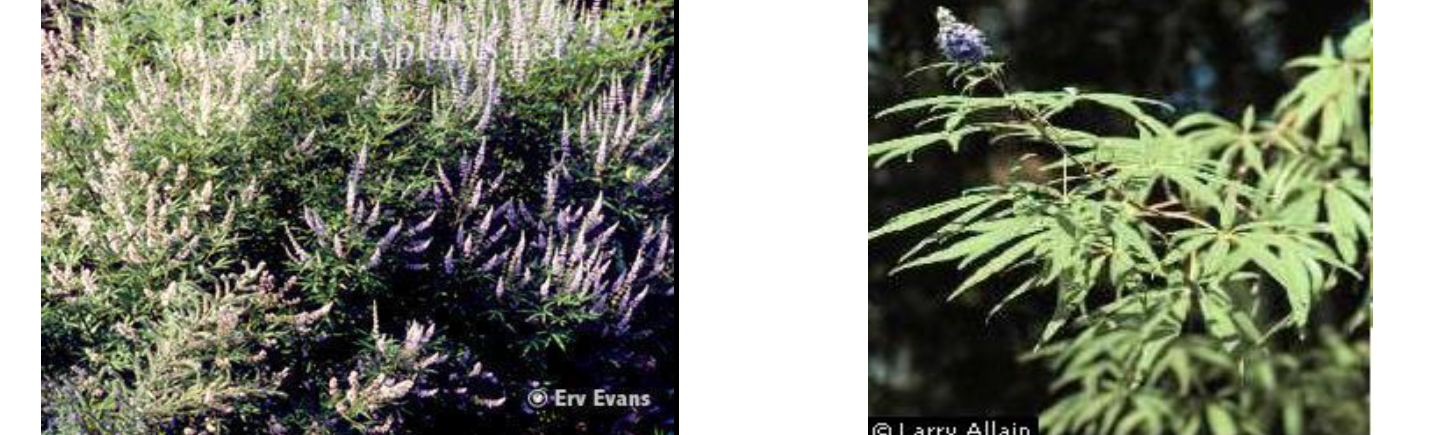 |
| Chinese pistachio | Pistacia chinensis | 25-40 | 25-35 | Sun; prefers moist, well-drained soil but tolerates a wide range of soils | Oval; rounded; spreading; vase shape | Deciduous; drought tolerant |  |
| Crepe (Crape) myrtle | Lagerstroemia | Aug-35 | 6-15 | Sun; moist, well-drained soil | Multi-stemmed; rounded crown; dense branching | Deciduous; select powdery mildew resistant cultivars; depending on the location, small or medium (non-dwarf) varieties may be desirable | 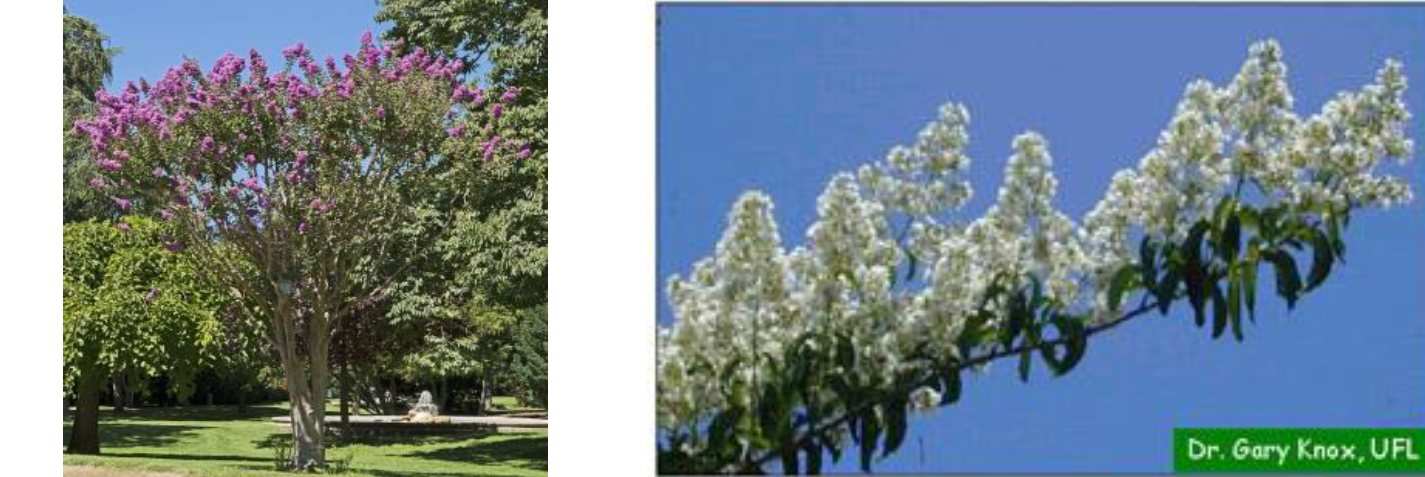 |
| Dwarf palmetto; swamp palmetto (or any other palm suitable to site conditions) | Sabal minor | 8-10 | Sun to light shade; moist, well-drained soil | Alternate, palmately compound, fan-shaped blue-green leaves | Evergreen; salt and drought tolerant | 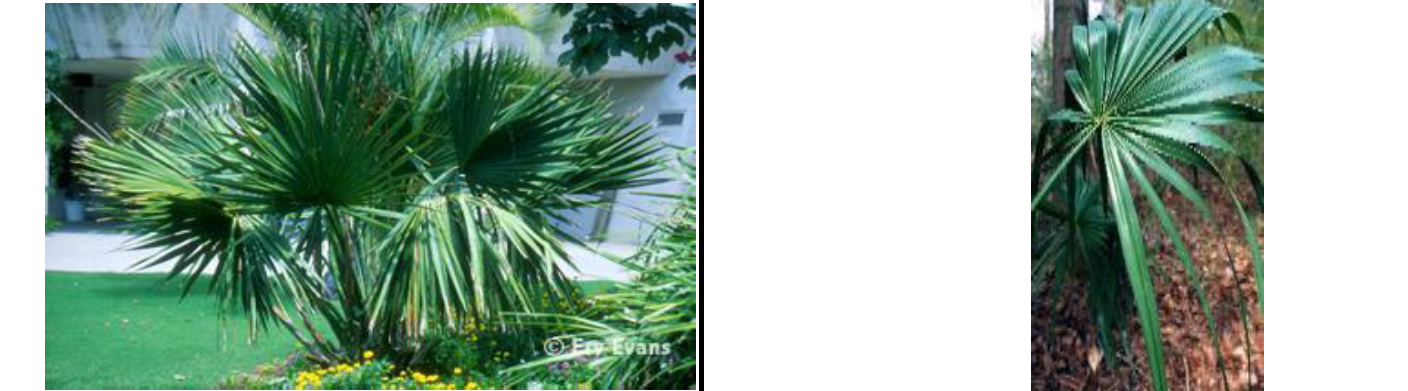 | |
| Eastern redbud; Redbud | Cercis canadensis | 15-30 | 15-25 | Sun to partial shade; prefers moist, well-drained soil but tolerates a range of soil types | Dense; flat-topped to rounded crown; often multi-stemmed; zig-zag horizontal branches | Deciduous; native; prone to root rot in wet soils; Trees look better when they receive some irrigation in summer dry spells | 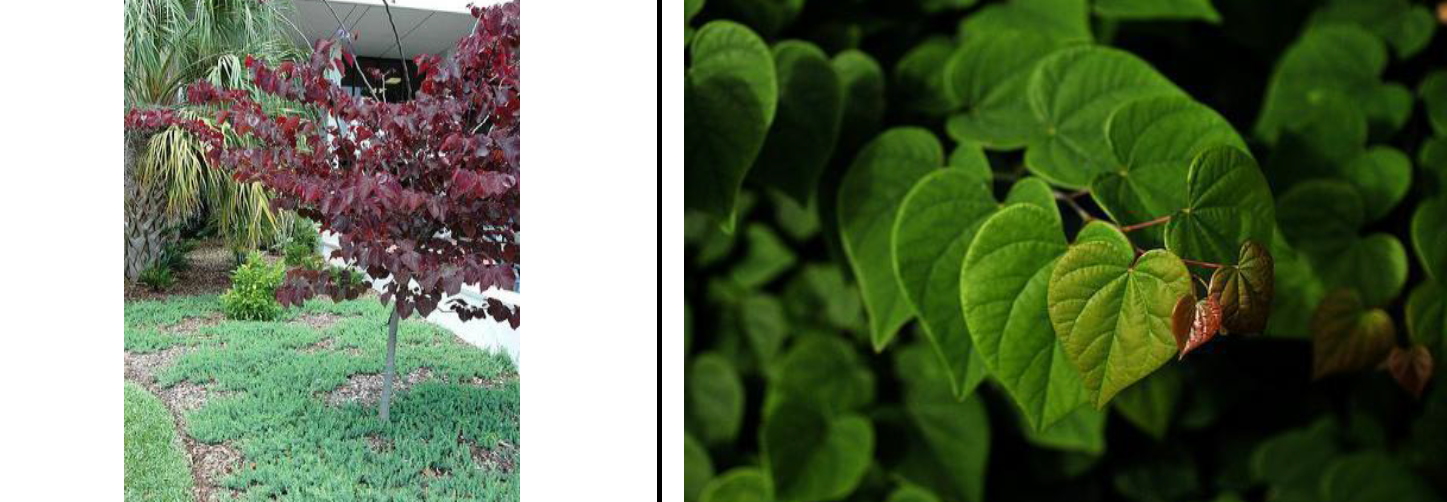 |
| Florida anise tree | Illicium flordanum | 10 | 8 | Partial shade; average to moist soil | Broad-leafed; compact stature | Evergreen; foliage and fruit are poisonous to livestock; should be mulched and watered during prolonged dry spells as it has a tendency to wilt | 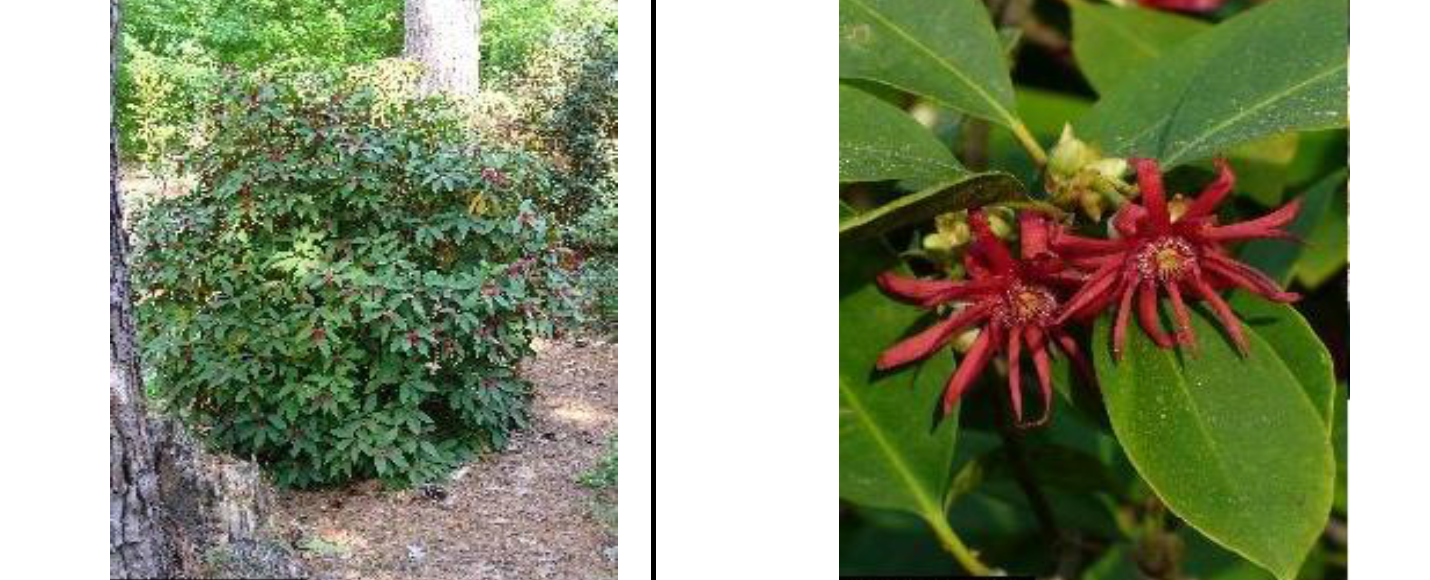 |
| Crabapples | Malus | 15-25 | 10-20 | Sun; tolerates a range of soil types but prefers moist, well-drained soil | Most have a round to spreading crown; vase shaped; varies with species and cultivar | Deciduous; plant only disease-resistant cultivars; best located away from patios or other hard surfaces, as fruits can drop and cause a mess | 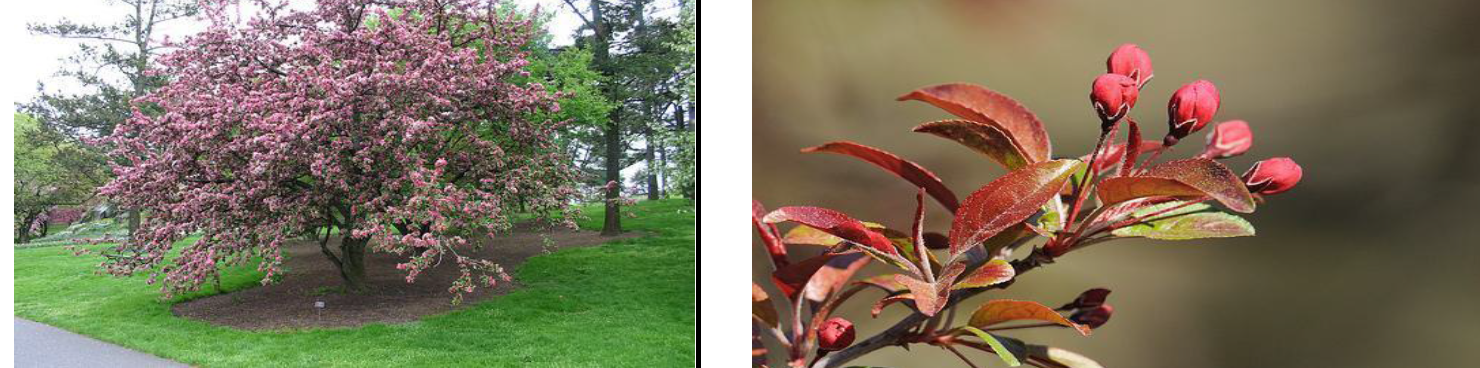 |
| Flowering dogwood | Cornus florida | 15-30 | 15-20 | Partial shade; moist, well-drained soil | Semi-rounded top; horizontal low branches creating a layered look | Deciduous; native; shallow root system; mulch to maintain moist soil; may be subject to leaf and flower diseases, cankers, and root rot; may be trained to grow with a single trunk | 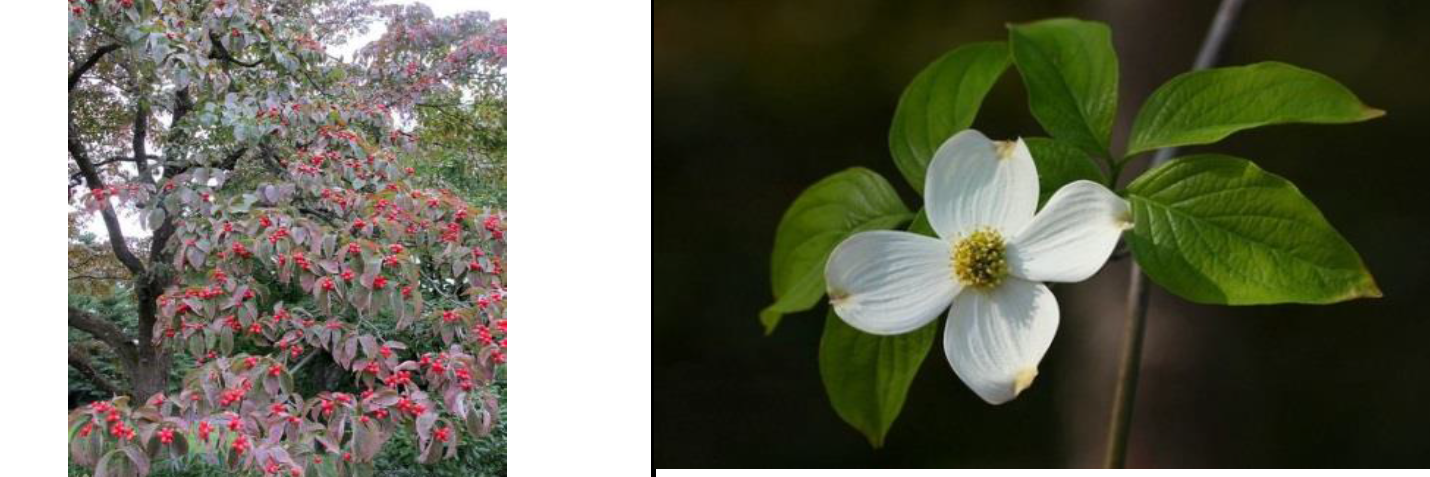 |
| Fringe tree | Chionanthus | 20-Dec | 12-20 | Sun to partial shade; average moisture; tolerates dry soil | Spreading, open crown; often multi-stemmed | Deciduous; native |  |
| Hedge Maple | Acer campestre | 25-35 | 25-35 | Sun to light shade; moist, well-drained soil but tolerates slightly wet and compacted soil | Low-branched with a rounded form | Deciduous; tolerates drought, air pollution, and wind; casts dense shade; shallow root system | 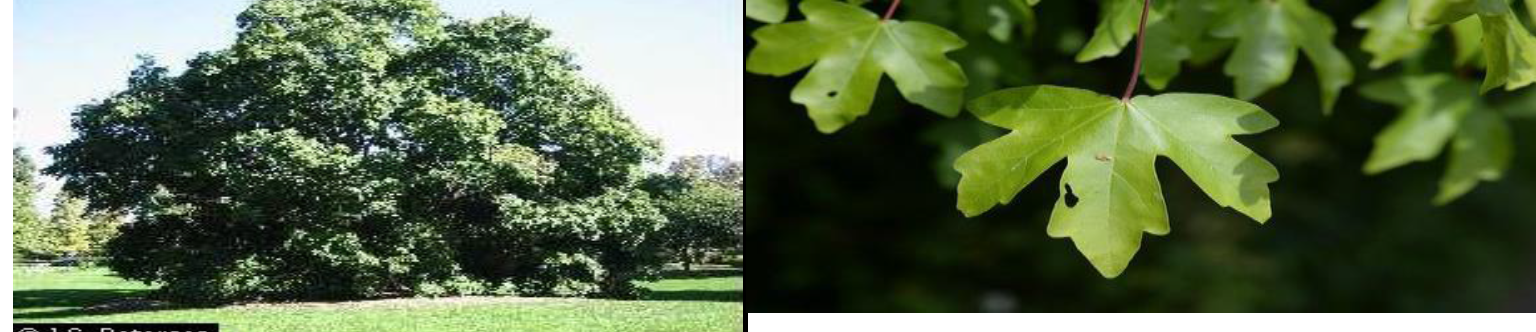 |
|
American hornbeam, Ironwood, Muscel
wood, Blue beech* | Carpinus caroliniana | 20-30 | 20-30 | Sun to partial shade; does well in moist to wet soil | Wide-spreading flat or round top; single or multi-stemmed | Deciduous; native; Slow grower, very interesting, muscular tree | 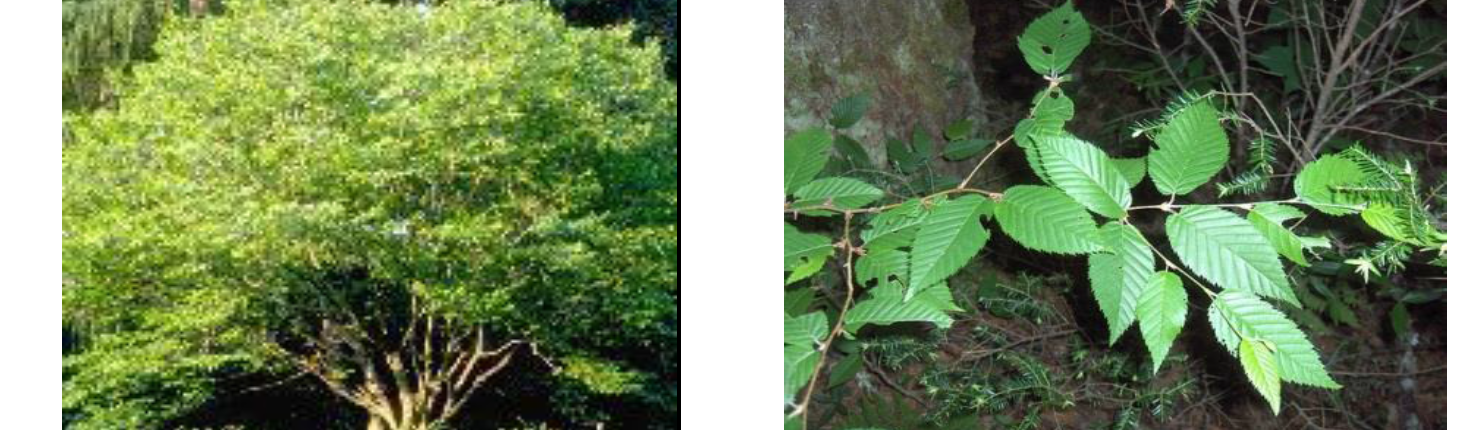 |
| Japanese Maple | Acer palmatum | 20-25 | 15-20 | Sun to modest shade; prefers moist, well-drained soil but tolerates a range of soil types including sand and heavy clay | Dense, rounded top; spreading branches | Deciduous; drought tolerant | 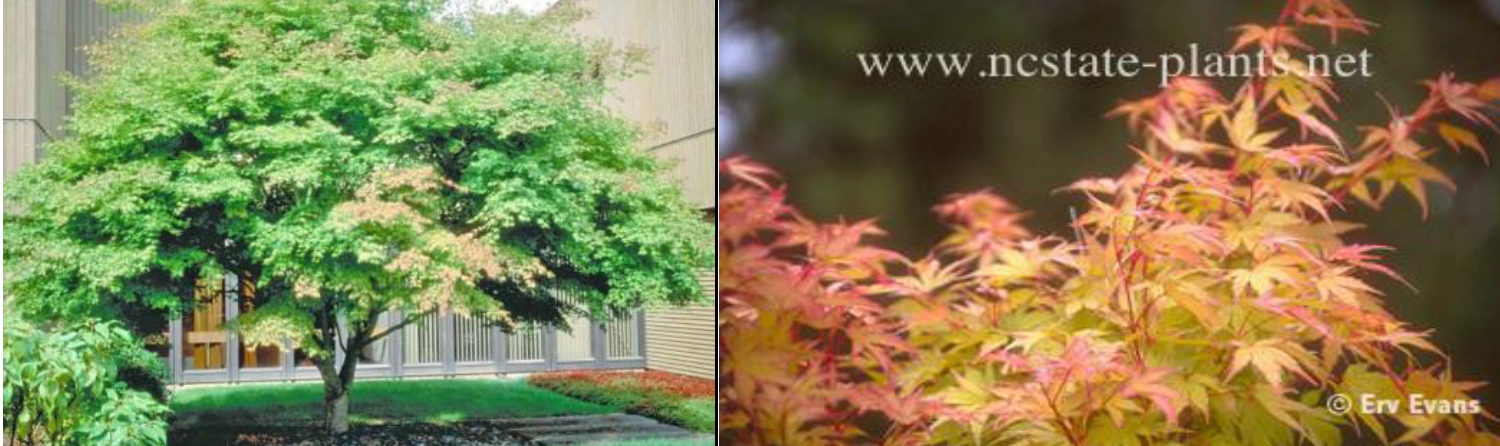 |
| Little Gem magnolia | Magnolia grandiflora 'Little Gem' | 15-20 | 8-10 | Sun to part shade | Compact, upright growth habit more typical of a multi-stemmed shrub than a single-trunked tree | Evergreen; dwarf cultivar of Southern magnolia; ideal for low-maintenance landscape | 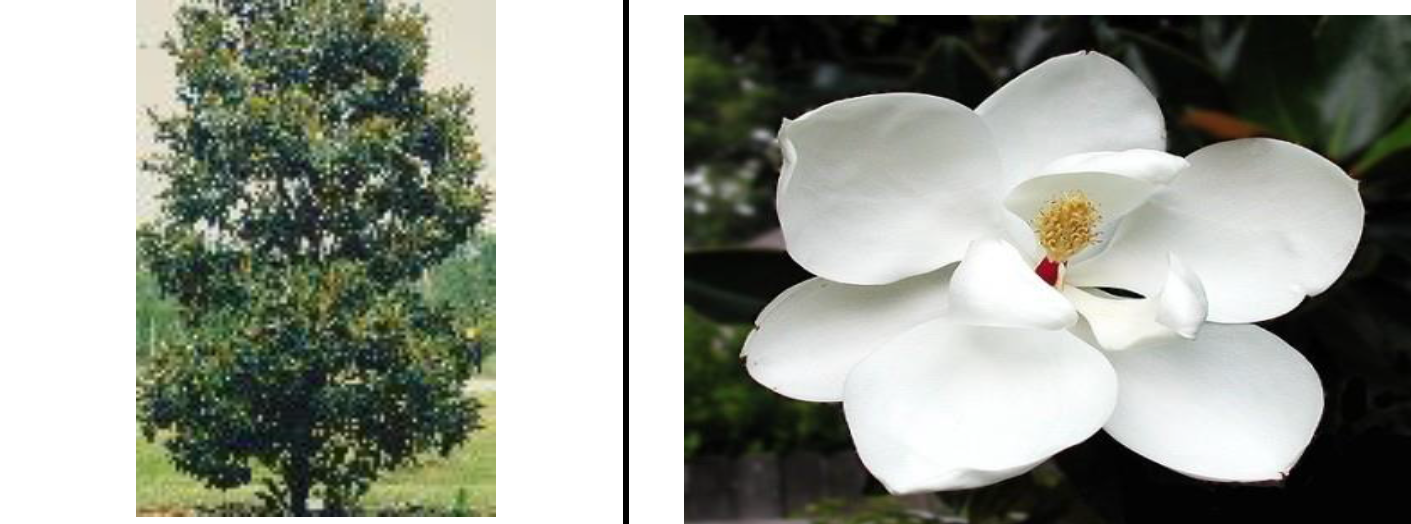 |
| Loquat | Eriobotrya japonica | 25-Oct | 8-10 | Sun to partial shade; moist, well-drained soil | Short, slender trunk; dense rounded form | Evergreen; cold sensitive; modest drought tolerance; usually does not fruit in NC; can be used in areas where overhead space is limited; pit kernel from cracked seeds toxic in large quantities | 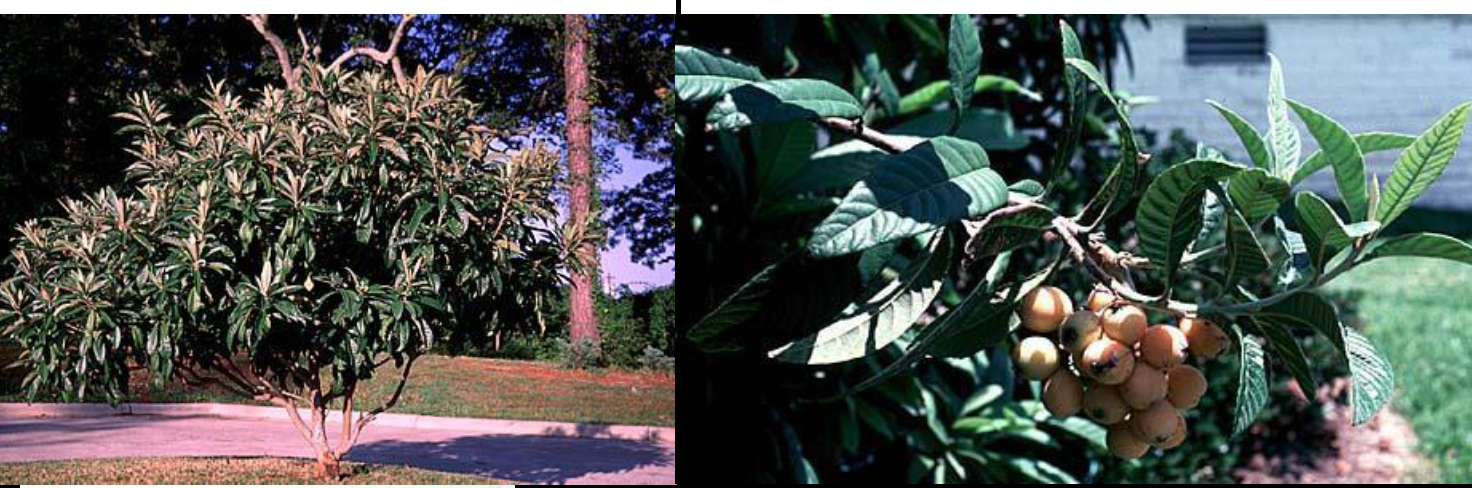 |
| Nellie R. Stevens Holly | Ilex x 'Nellie R. Stevens' | 30-40 | 10-15 | Sun to partial shade; prefers well-drained soil but tolerates a range of soil types (heavy clay; damp); best to avoid wet sites | Oval; pyramidal; upright; dense | Evergreen; allow room for spreading; drought and heat tolerant | 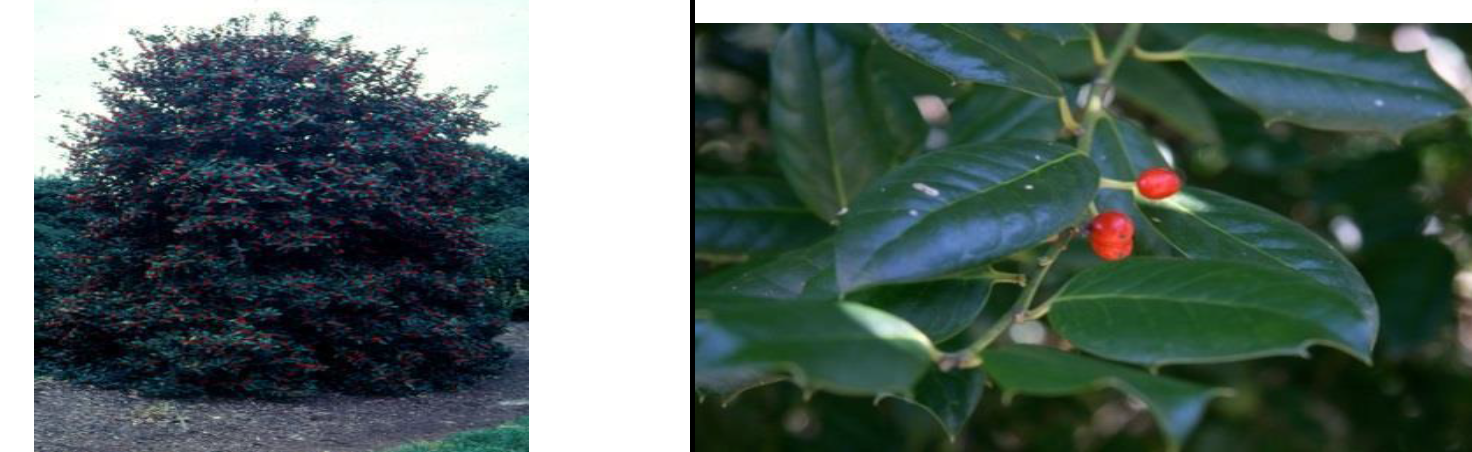 |
| Common persimmon | Diospyros virginiana | 30-60 | 20-35 | Sun to light shade; prefers moist, well-drained soil but tolerates dry soil | Pyramidal in youth; slender, oval rounded crown | Deciduous; native; deep tap root; drought tolerant | 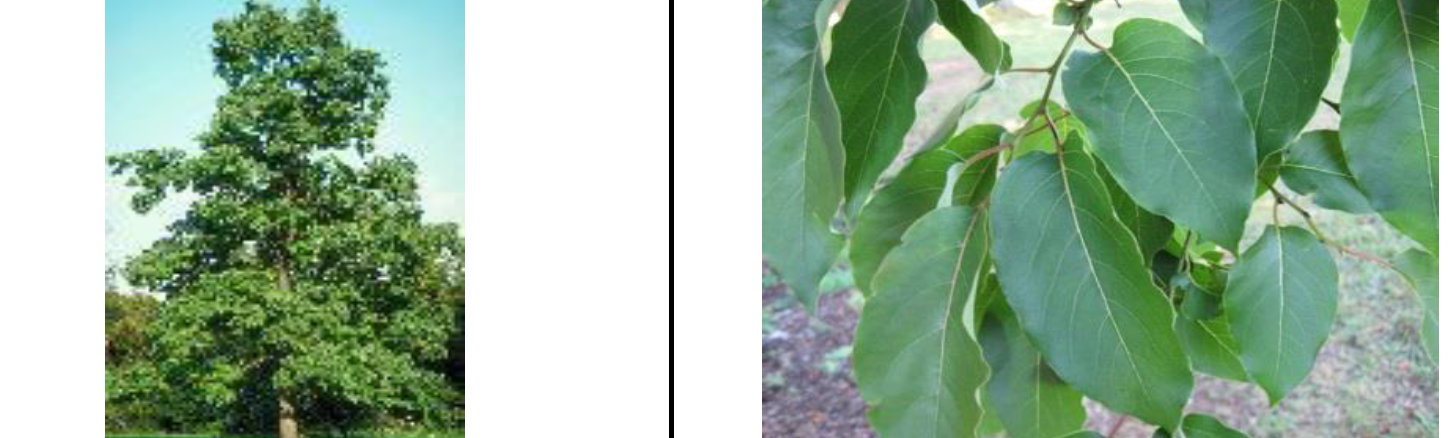 |
| Possumhaw holly | Ilex decidua | 20-30 | 7-15 | Sun to partial shade; moist to dry soil | Loose; rounded; many horizontal and ascending branches | Deciduous; native berries persist through winter | 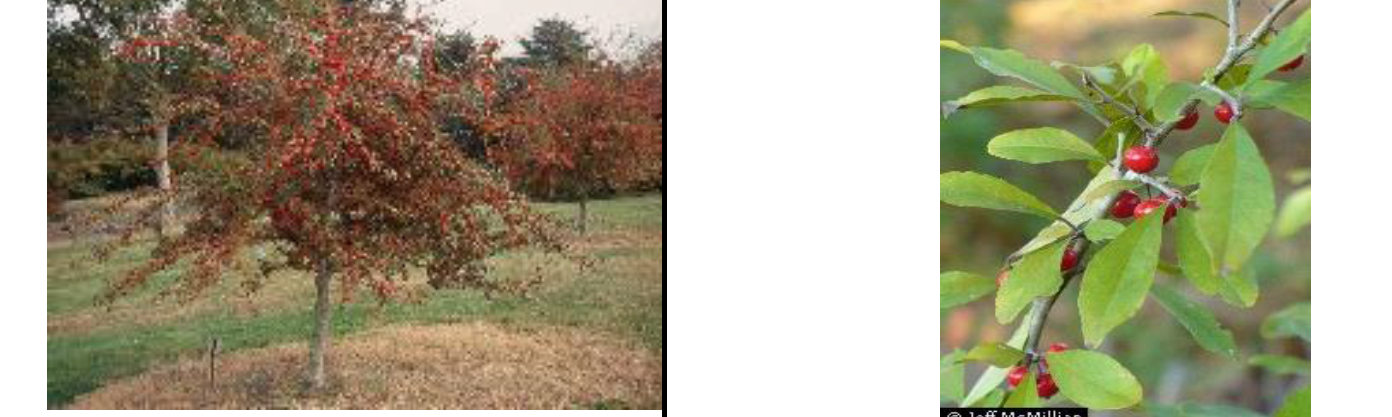 |
| Red buckeye; scarlet buckeye; firecracker plant | Aesculus pavia | 10-30 | 10-20 | Sun to partial shade; moist, well-drained soil; dislikes dry soil | Clump forming; round top | Deciduous; native; leaf scorch possible in hot sunny, dry summers |  |
| River birch | Betula nigra | 40-70 | 20-60 | Sun to partial shade; moist, well-drained soil | Multi-stemmed, pyramidal in youth, rounded at maturity | Deciduous; native; best not to prune in spring - sap "bleeds"; heat tolerant | 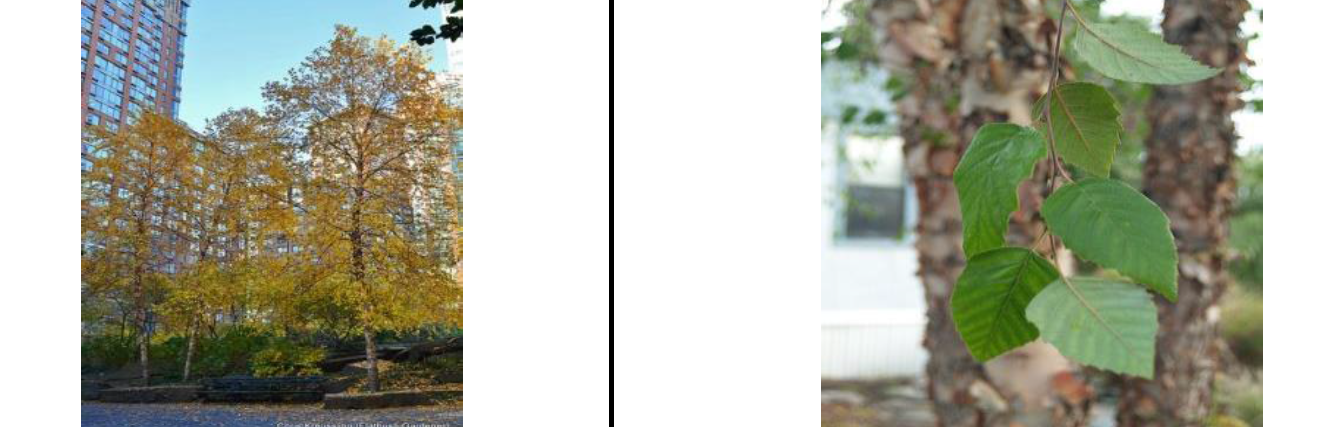 |
| Savannah holly | Ilex x attenuata 'Savannah' | 25-30 | 10 | Sun; well-drained soil | Loosely pyramidal; upright | Evergreen | 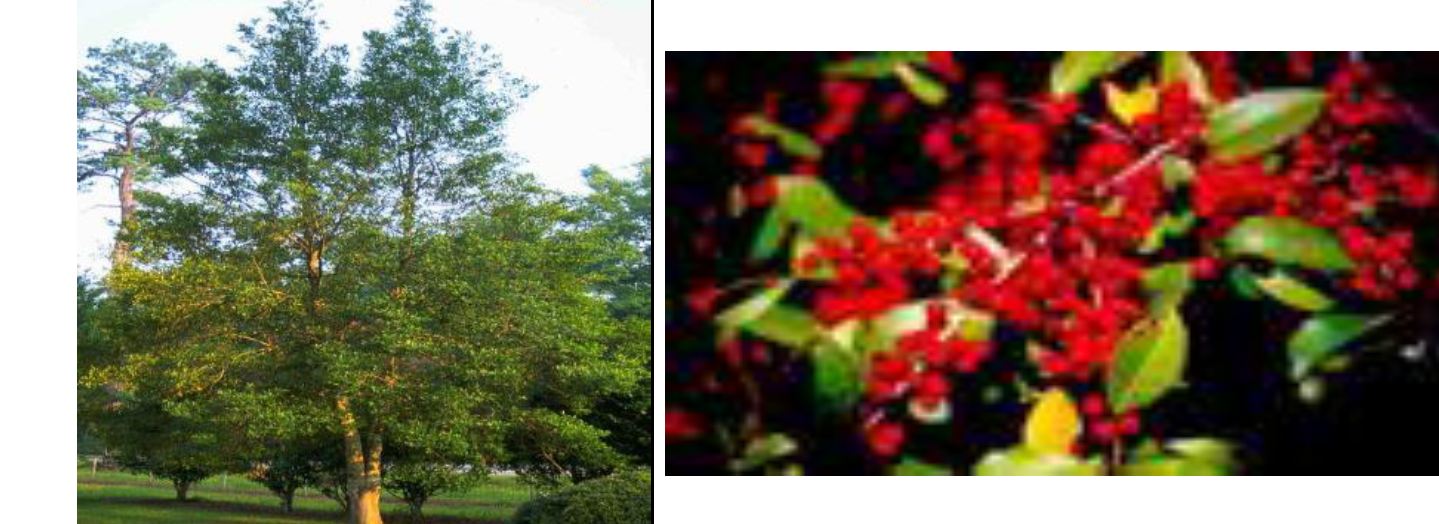 |
| Serviceberry | Amelanchier arborea | 25-Oct | 10-15 | Sun to partial shade; prefers moist soil but will tolerate a range of soil types (dry, clay, sand, wet) | Irregular branching; narrow, rounded crown | Deciduous; native; fire blight can be problem | 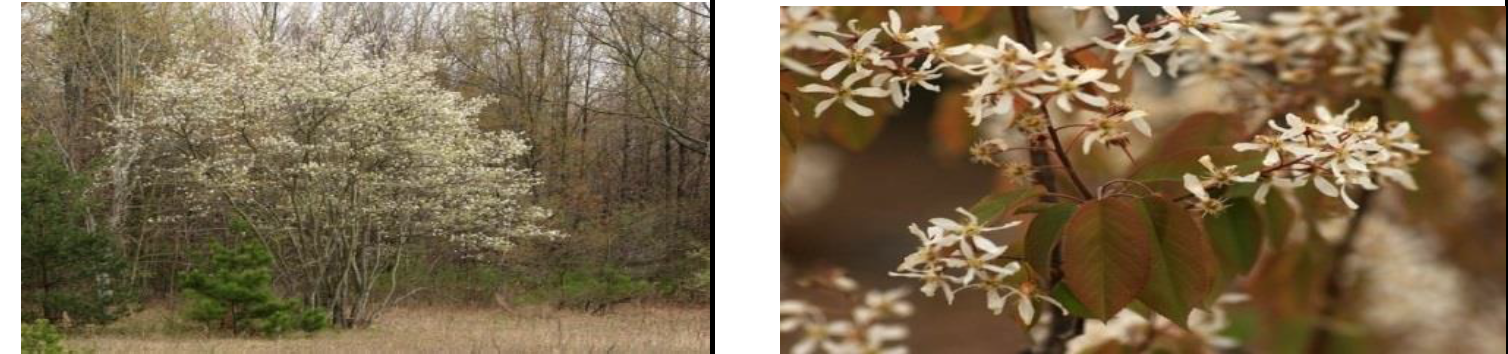 |
| Sourwood, Lily of the valley tree, Sorrel tree | Oxydendrum arboreum | 20-30 | 10-15 | Sun to partial shade; well-drained soil but does well in dry soil | Pyramidal; slender trunk; drooping branches; narrow crown | Deciduous; native | 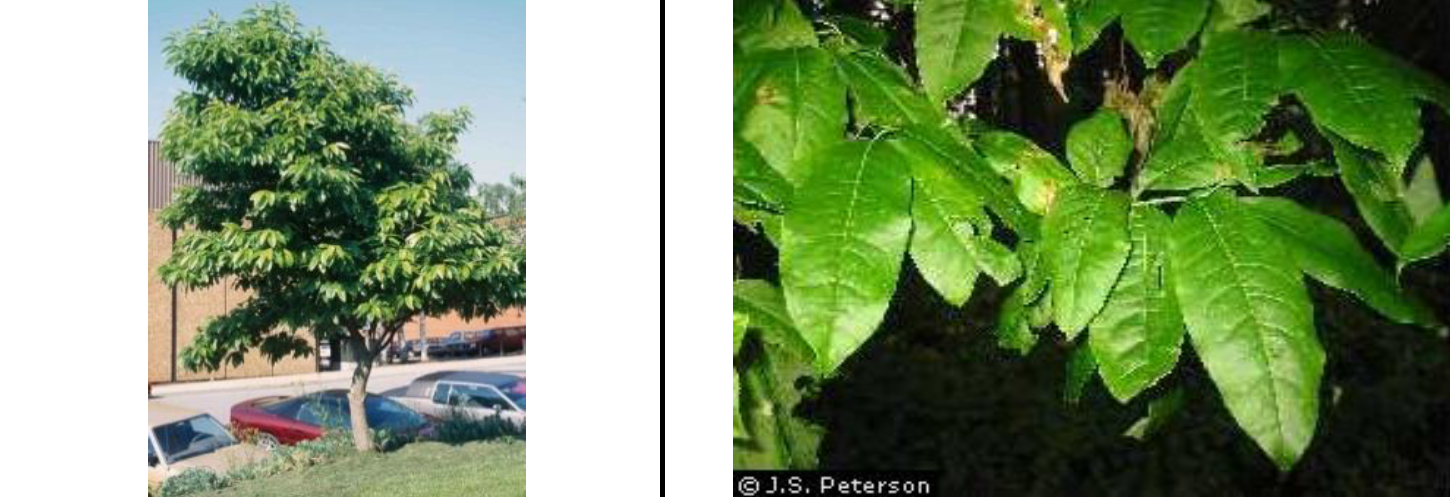 |
| Star Magnolia | Magnolia stellata | 20-Oct | 10-15 | Sun; range of soil types (clay, sand) | Typically branching close to the ground, the multi-stemmed form develops with a dense head of foliage | Deciduous; frost-sensitive; plant in protected site; tolerates heat; Intolerant of root competition or dryness | 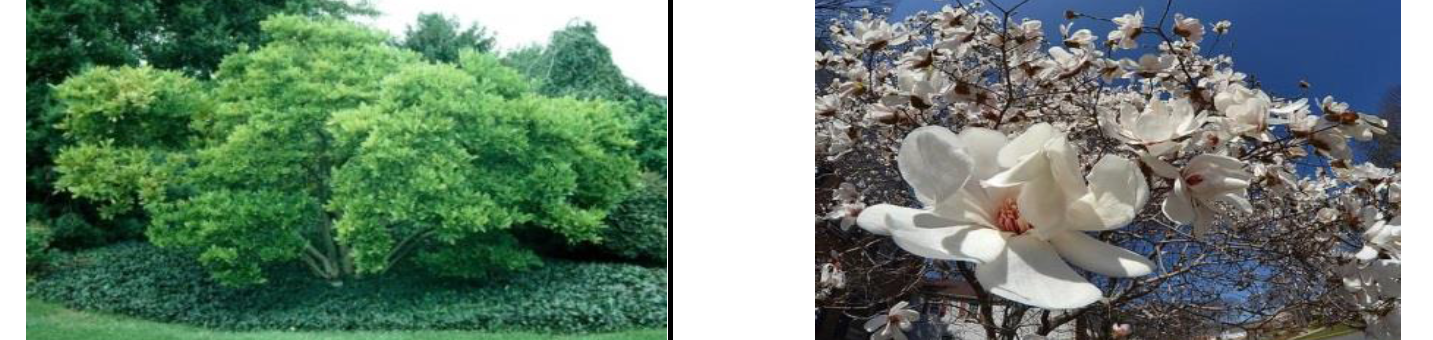 |
| Swamp magnolia, Sweet bay, Sweetbay magnolia | Magnolia virginiana | Oct-60 | 10-20 | Sun to partial shade; moist to wet soil | Conical narrow, rounded crown; multi-trunked; upright spreading habit | Evergreen; native; shallow roots; | 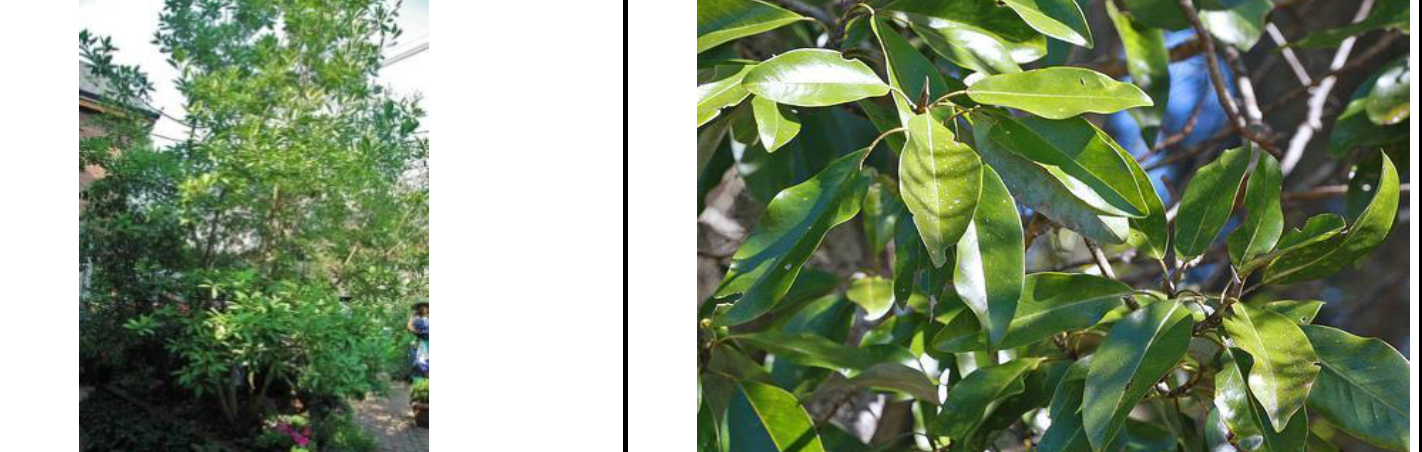 |
| Trident maple | Acer buergerianum | 25-35 | 20-30 | Sun; well-drained soil; tolerates dry, infertile sites | Upright; rounded crown | Deciduous; tolerant of wind, salt, drought, air pollution, and soil compaction; may suffer breakage with ice storms | 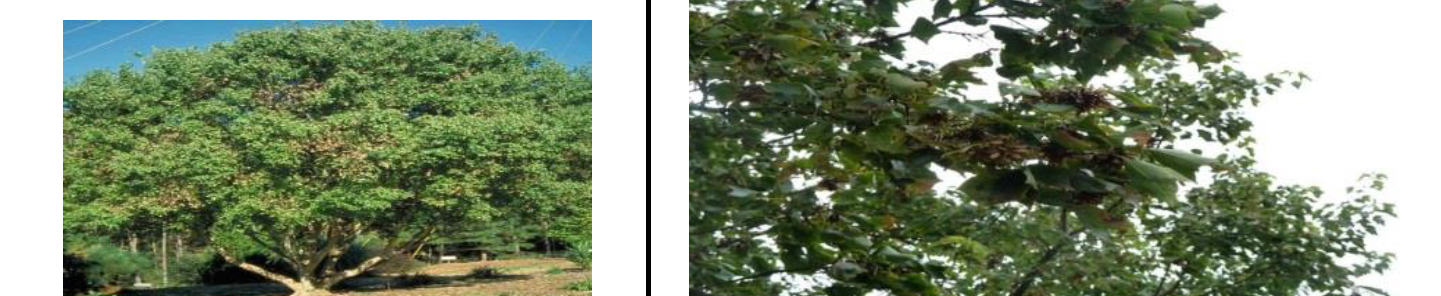 |
| Waxmyrtle, Southern waxmyrtle | Myrica cerifera | 15-Oct | 8-10 | Sun to partial shade; range of soil types (sand, clay, poor fertility) | Irregular; rounded; dense | Evergreen; native; drought and salt spray tolerant; fixes atmospheric nitrogen; spreads by suckers; can be severely pruned | 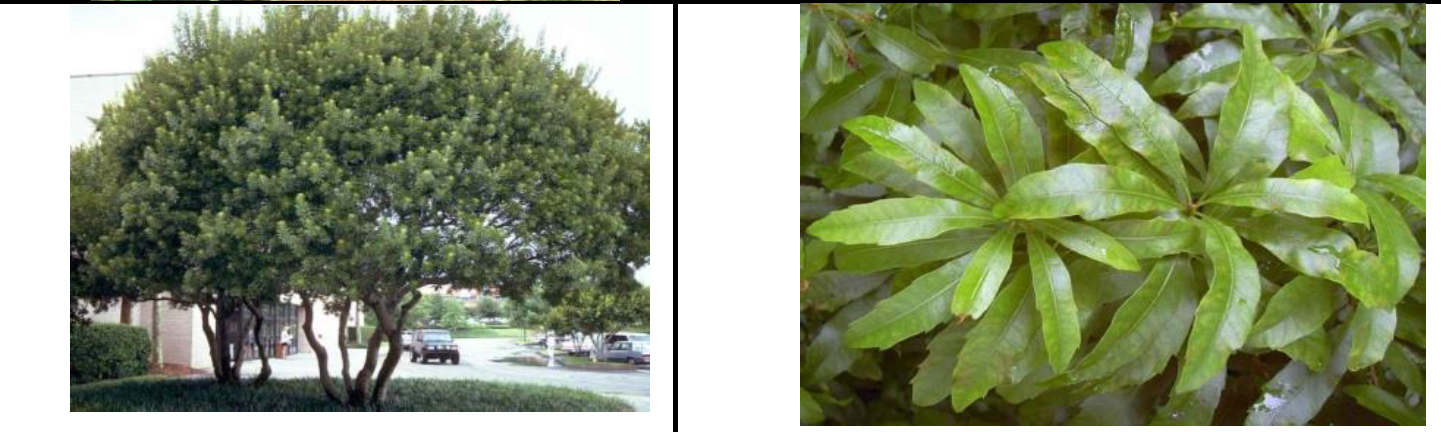 |
| Wild olive; Devilwood | Osmanthus americanus | 15-25 | 10-20 | Sun to partial shade; range of soil conditions | Symmetrical, round, and dense crown | Evergreen; native; drought resistant once established; salt tolerant | 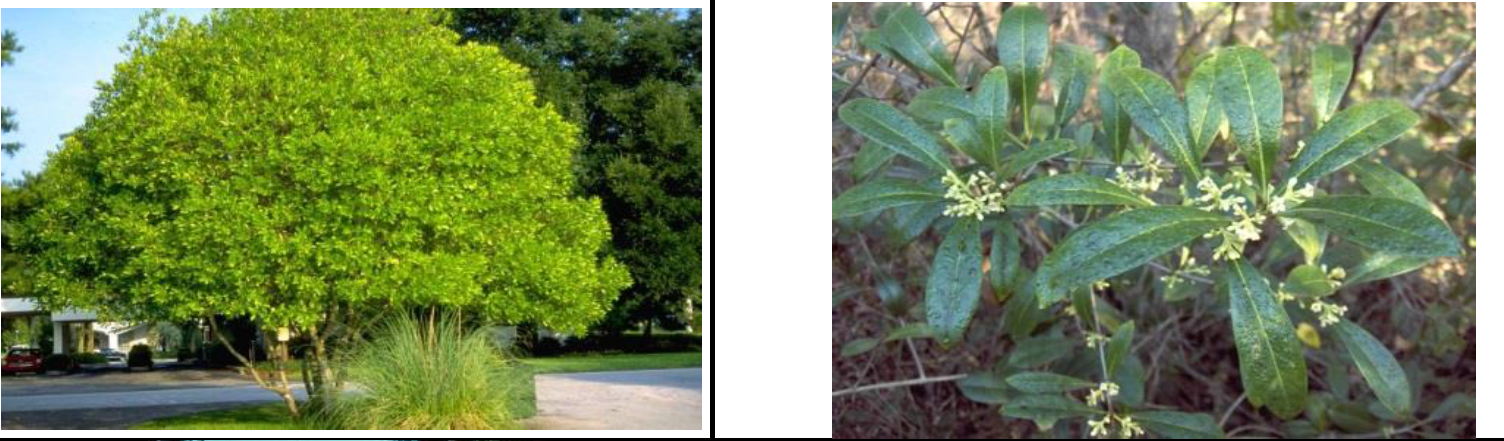 |
| Witchhazel* | Hamamelis virginiana | 15-30 | 15-25 | Sun to shade; moist, well-drained soil; avoid extremely dry sites | Open spreading; irregular branching; multi-stemmed | Deciduous; native; roots are sensitive to disturbance | 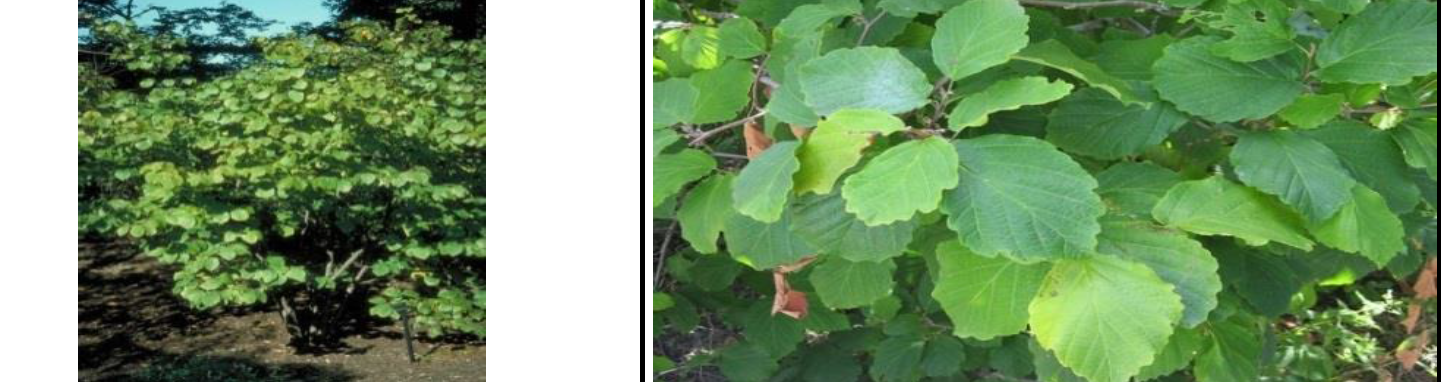 |
| Yaupon Holly | Ilex vomitoria | 15-25 | 15-20 | Sun to part shade | Round; vase shape | Evergreen; sprouting plants underneath can be difficult if soil beneath canopy is disturbed; needs to be pruned to ground two or three times a year to maintain neat appearance | 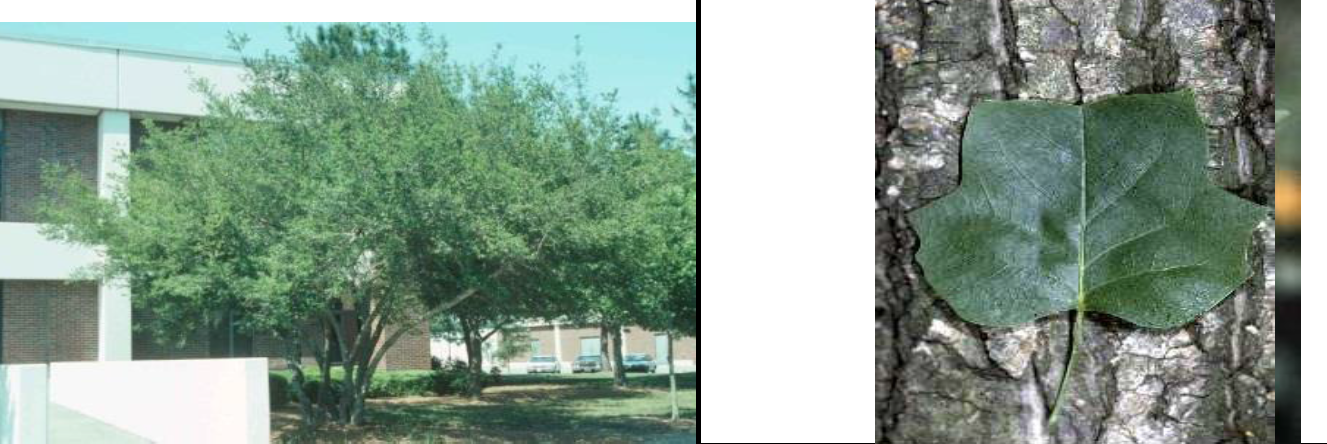 |
Images from the North Carolina State University Cooperative Extension Plant List Database, the University of Florida Institute of Food and Agricultural Sciences Extension Southern Tree Fact Sheets, and the US Department of Agriculture Natural Resources Conservation Service Plant Database
Evergreen Planting Recommendation
For the health of the tree stand and protection of landscaping investment, it is recommended that evergreens consist of no less than three (3) different, unrelated species, planted alternately, so that no two (2) plants of the same species or related species is next to one another.
Tree Types to be Planted with Caution
Black alder (Ilex verticillata). Not heat tolerant.
Black cherry (Prunus serotina). Weedy and aggressive.
Bradford pear (Pyrus calleryana). One of the South's most overplanted trees; relatively short-lived; brittle and easily-damaged in storms.
Chinese privet, variegatum (Ligustrum). Invasive.
Locust (Robinia). Can become very weedy; root suckers prolifically.
Long leaf pine (Pinus palustris). Uproots and breaks in half in high winds. Avoid planting near homes and other structures.
Pecan (Carya illinoinensis). Tends to be brittle and lose large limbs in high winds. Avoid planting near homes and other structures.
Silver maple (Populus alba).Weak wood.
Water oak (Quercus nigra). Weak wood; limbs break in wind; weedy.
Yucca (Yucca aloifolia). Not for use where children play; useful where human access is to be discouraged.
(Ord. No. 2017-20, §§ 298—302, 6-13-2017)

