Ponce Inlet City Zoning Code
ARTICLE 7
NONCONFORMITIES
SECTION 7.1 - GENERAL PROVISIONS
A.
This article applies to lots, uses, and structures that lawfully existed before the LUDC became effective or was amended, but are prohibited, regulated, or restricted under current regulations.
B.
Nonconforming lots, uses, and structures may continue in their present condition, but shall not be enlarged, expanded, or used for adding other structures or uses prohibited elsewhere in the same zoning district.
C.
Legal nonconforming uses and structures may be altered to decrease their nonconformity.
D.
Section 7.3 (Nonconforming lots) and section 7.4.2 (Nonconforming use of a premises) do not to apply to involuntary movements of uses or structures as a result of condemnation actions or other litigation.
SECTION 7.3 - NONCONFORMING LOTS
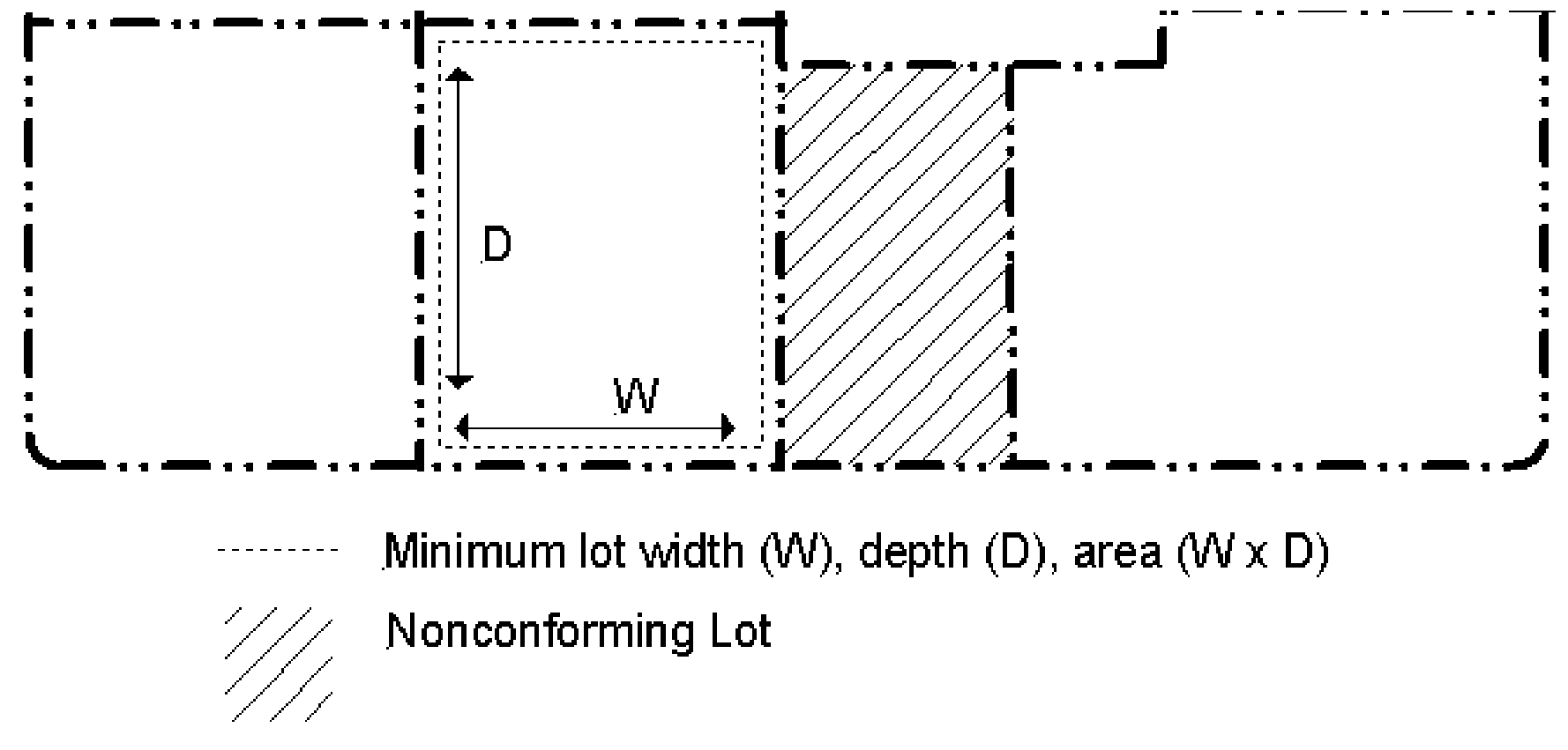
The following regulations apply to nonconforming lots. A "nonconforming lot" is a lot that does not meet the minimum dimensions, area or other regulations of the zoning district where it is located.
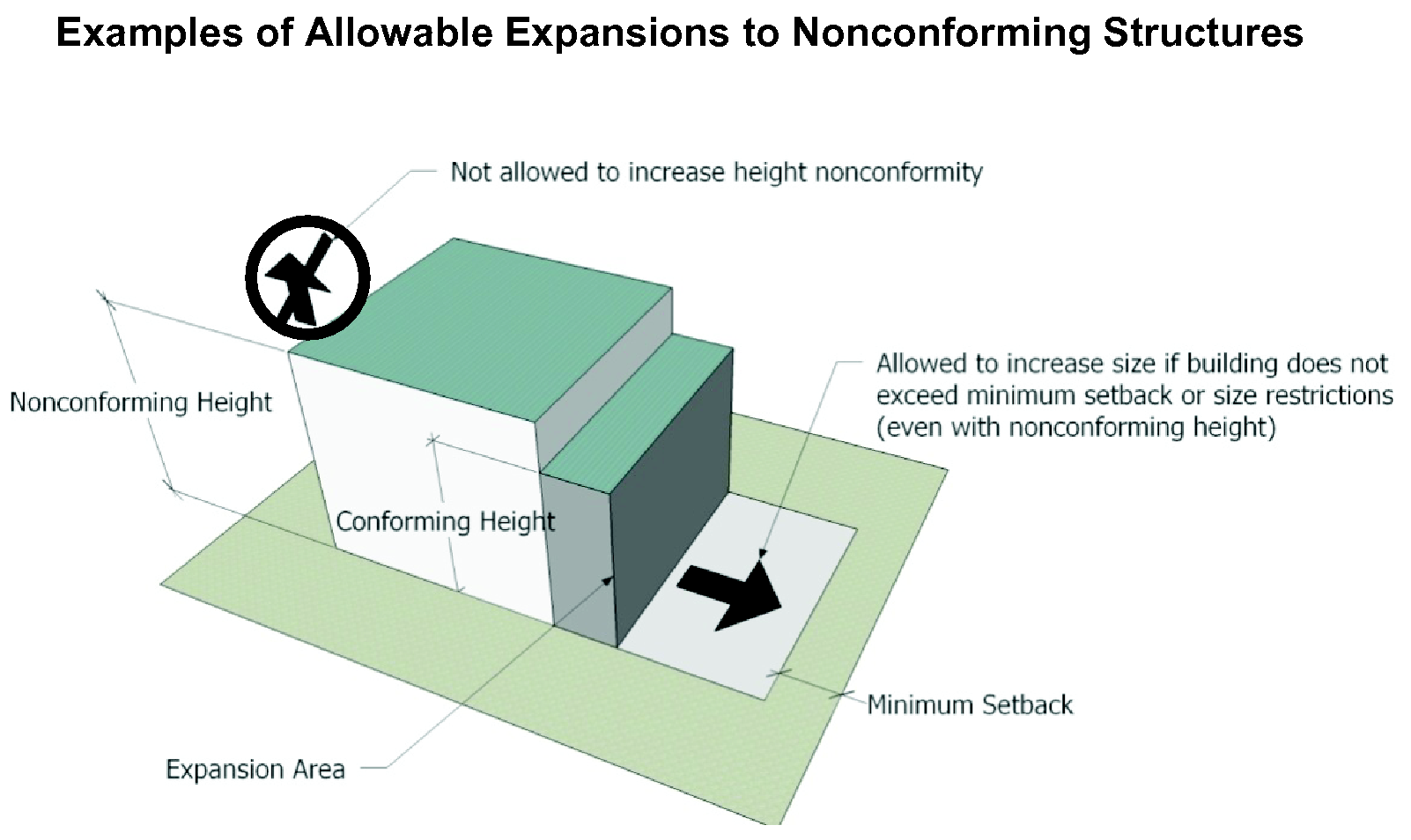
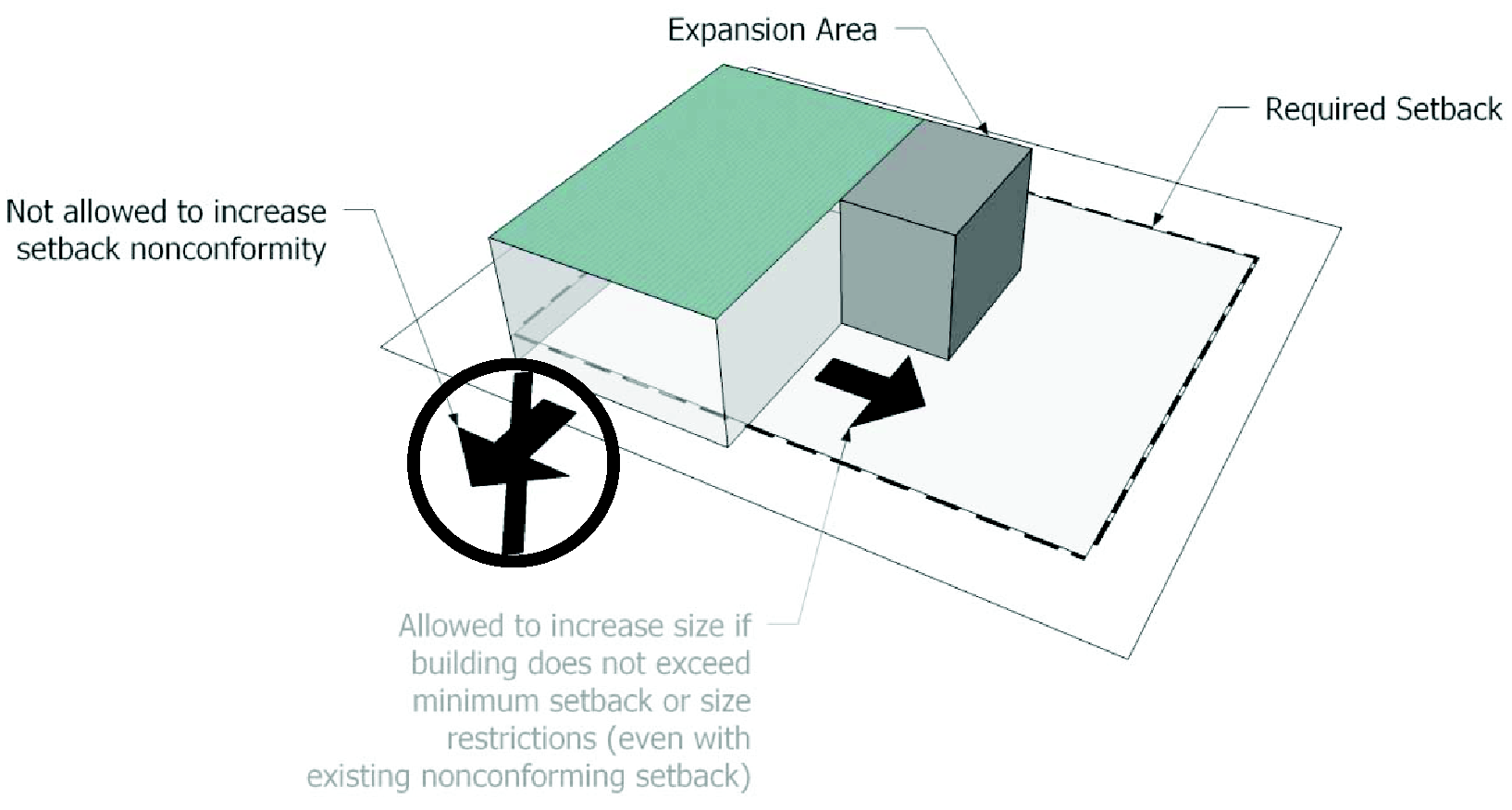
SECTION 7.5 - NONCONFORMING STRUCTURES
The following regulations apply to legal nonconforming structures. A "legal nonconforming structure" is a building or structure that complies with the zoning and land development regulations at the time of construction, but is no longer in compliance due to subsequent changes to the LUDC. A nonconforming structure includes but is not limited to any principal or accessory structure located within a required yard setback, or on a lot or parcel that does not meet the required lot coverage, height, density, floor area ratio (FAR), building envelope, or setbacks of its zoning district.
SECTION 7.6 - NONCONFORMING SIGNS
A "nonconforming sign" means a sign that lawfully exists and does not conform to the regulations of the LUDC. See subsection 3.30.3.G for the regulation of nonconforming signs.
7.2.1 - Previously issued development permits.
The LUDC and any future amendments do not affect the validity of any lawfully issued development permit if:
A.
The development activity authorized by the development permit commenced prior to the effective date of the LUDC or any future amendments, or will be commenced after the effective date of the LUDC but within six months of issuance of the development permit; and
B.
The development activity continues without interruption (except because of war or natural disaster) until the development is complete. If the development permit expires, any further development on that site may occur only in conformance with the LUDC or future amendment.
7.2.2 - Previously approved development orders.
A development order that has not expired at the time of adoption of the LUDC (or future amendments) must meet only the regulations in effect when the development order was issued. If the development order expires or is invalidated, any further development on that site may occur only in conformance with the LUDC and any future amendments.
7.3.1 - Generally.
A.
Principal and accessory structures may be constructed on any nonconforming lot that existed when the LUDC was adopted or amended, provided that all standards of the applicable zoning district are met other than minimum lot area and lot width requirements.
B.
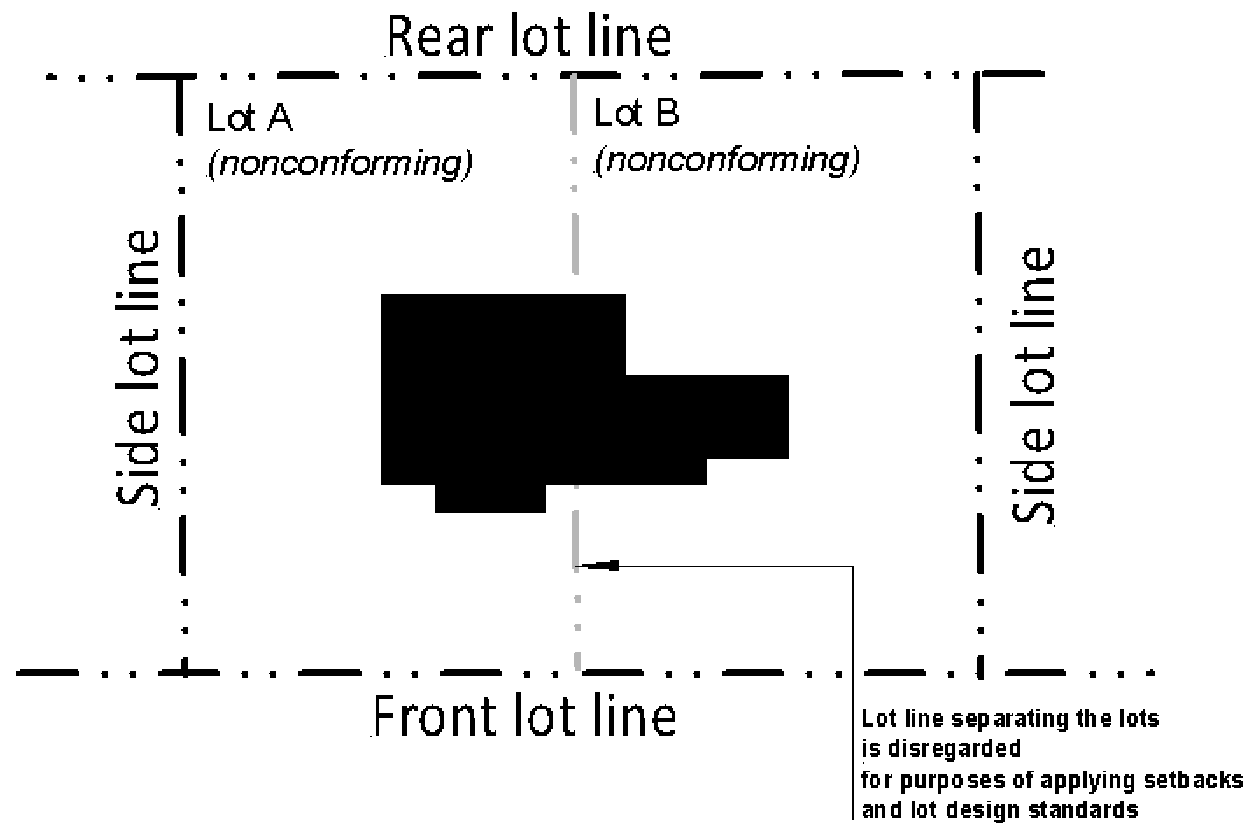
If more than one nonconforming lot with continuous frontage exists under single ownership, the lots will be treated as a single lot to meet all zoning district lot area requirements. A building or structure must comply with all lot design and development standards for the resulting "lot" (see section 4.6.3 and applicable zoning district regulations, article 2). For purposes of applying the setback standards, the front, side and lot lines are the combined front, side and rear lot lines of the combined "lot," and the lot line dividing the lots is disregarded.
7.3.2 - Nonconforming lots in residential zoning districts.
See [section] 7.5.4.
7.3.3 - Nonconforming lots created by eminent domain proceedings.
A.
Any lot or parcel made nonconforming by the following actions is considered a conforming lot or parcel:
1.
As a result of eminent domain proceedings instituted by the Town of Ponce Inlet or any other governmental agency; or
2.
Through voluntary conveyance of the lot in lieu of formal eminent domain proceedings, where the lot or parcel would be otherwise conforming.
B.
All yard requirements of the zoning district in which the lot or parcel is located control any new construction or building addition.
7.4.1 - Applicability.
This section applies to legal nonconforming uses. A "legal nonconforming use" means a principal or accessory use of any land, building or structure that:
A.
Lawfully exists on the effective date or amendment of the LUDC (the "effective date"), but
B.
Is not permitted by the LUDC or code amendment.
7.4.2 - Nonconforming use of a premises.
A legal nonconforming use may continue, or be resumed if destroyed, if:
A.
It is not enlarged, increased, or extended to occupy a greater area than it did on the effective date;
B.
It is not moved in whole or part to any portion of the lot; and
C.
No additional structure is constructed or erected that is related to the nonconforming use. For purposes of this section, "related to" means that the structure is physically connected to the use, connected by a breezeway or similar structure, or is accessory to the nonconforming use.
7.4.3 - Nonconforming parking.
This article does not permit the continued parking of any vehicles or watercraft in violation of the LUDC.
7.4.4 - Abandonment of nonconforming use.
A.
A nonconforming use shall not be re-established if it has been abandoned for six consecutive months. All future uses after this period shall conform to the LUDC.
B.
For purposes of this section, "abandon" or "abandoned" means the voluntary, intentional discontinuance of an existing land use or structure.
1.
Voluntary, intentional discontinuance includes, but is not limited to, the following:
a.
Failure to pursue or obtain necessary permits, licenses, or other governmental approvals;
b.
Failure to secure the property against trespass and vandalism;
c.
Failure to pay property taxes or other governmental taxes or assessments;
d.
Severance of electrical, water, or other utility services; or
e.
Any other actions or inactions that are considered a voluntary discontinuance or abandonment of a nonconforming use under Florida law.
2.
The following are not considered a voluntary, intentional discontinuance:
a.
Ownership or lease interest transfers;
b.
Acts of God;
c.
Bankruptcy, probate, foreclosure, or other judicial or administrative proceedings;
d.
Governmental restrictions on access or use;
e.
Repairs and maintenance;
f.
Temporary absences by part-time residents; or
g.
Any other actions or inactions that are not considered a voluntary discontinuance or abandonment of a nonconforming use under Florida law.
7.5.1 - General provisions.
A legal nonconforming structure may continue to be used. However, a legal nonconforming structure loses its legal status and must be rebuilt in compliance with the current code if:
A.
The structure is enlarged or altered to increase its non-conformity (except as provided in subsection 7.5.2.B.1); or
B.
The cost to reconstruct or repair the structure will exceed 65 percent of the Volusia County Property Appraiser's most recent Assessed Value of the structure prior to the reconstruction or repair (known as the 65 percent rule), except as otherwise provided in section 7.4.2 (this rule applies to reconstruction or repair); or
C.
It is moved for any reason, or for any distance.
7.5.2 - Exceptions for post-disaster buildback; criteria.
This subsection applies to post-disaster buildback (reconstruction) of lawfully constructed nonconforming residential structures damaged by terrorist act, accidental fire or natural disaster.
A.
Nonconforming residential structures in compliance with federal flood regulations. A lawfully-constructed nonconforming residential structure that complies with federal flood regulations and Code of Ordinances chapter 18, article X (Flood damage prevention) may be built back subject to all of the following conditions:
1.
Within its pre-disaster footprint;
2.
Within the three-dimensional envelope of the pre-disaster habitable area;
3.
Up to its pre-disaster gross square footage;
4.
Up to the same number of dwelling units and the pre-disaster floor area ratio, but elevated above the base flood elevations required by federal flood regulations, and Code of Ordinances chapter 18, article X (Flood damage prevention);
5.
Conforming in all other respects to the town's codes, the Florida Building Code, other federal and state regulations, and state coastal construction control lines in effect at the time of reconstruction.
B.
Nonconforming residential structures not in compliance with federal flood regulations. Lawfully constructed nonconforming residential structures located in a special flood hazard area (SFHA) that do not comply with federal flood regulations and Code of Ordinances chapter 18, article X (Flood damage prevention) may be built back as follows.
1.
Structures over 35 feet in height. Any uninhabitable ground floor resulting from the required elevation of the structure to comply with federal and town flood regulations is not considered part of the three-dimensional envelope. The structure may be built back subject to the conditions set forth in subsection 7.5.2.A.
2.
Structures 35 feet or less in height. If the structure must be elevated under the 50 percent rule, the elevation will not result in a loss of nonconforming status of the structure, and the conditions in subsection 7.5.2.A apply. The reconstructed structure shall not be higher than 35 feet. The loss of any habitable area to comply with the 35-foot height restriction shall not limit the number of dwelling units rebuilt.
C.
Applications to build back a registered lawfully constructed nonconforming structure under this section shall be filed within 12 months of the date of the damage to the building. Property owners who do not apply within 12 months must build back in compliance with the current code.
D.
This section does not apply to:
1.
Involuntary demolition of a structure made unsafe by means other than a terrorist act, accidental fire, or natural disaster; or
2.
Voluntary demolition and redevelopment; or
3.
Voluntary reconstruction and redevelopment; or
4.
Repairs or reconstruction due to neglect, age, and wear and tear; or
5.
Accidental fires or natural and disastrous forces and events that occurred six months prior to the date of adoption of the LUDC; or
6.
Lawfully constructed accessory structures not structurally/physically connected to a principal residential structure.
E.
The town manager shall establish written policies and procedures to implement this section and section 7.5.3 below.
7.5.3 - Registration of nonconforming structures.
All claims of legal nonconforming structures shall be registered with the town on a form provided by the director. An application to register a legal nonconforming structure must be submitted to the town before the terrorist act, accidental fire or natural disaster occurs. Evaluation of nonconformity claims shall be on a case-by-case basis by the director based on the lawful nature of the structure when established, subject to appeal as provided in subsection 6.3.7. The town shall make every effort to notify the landowners of record, owners, and homeowner associations regarding the registration program by one or all of the following means: mail, email, phone calls, and notices and information posted to the town's website. The town assumes no responsibility or liability if a property owner chooses not to register the legal nonconforming structure after the town has provided such notification.
(Ord. No. 2013-09, § 2, 7-18-2013)
7.5.4 - Structures on nonconforming lots in residential zoning districts.
A.
This section applies to any nonconforming lot of record that:
1.
Is located in any zoning district where single family dwellings are permitted; and
2.
is in separate ownership and not contiguous to other lots under the same ownership.
B.
A single-family dwelling may be erected, expanded, or altered on any single lot of record if the dwelling is not a nonconforming structure.
C.
The expansion or alteration of an existing lawfully established nonconforming structure shall not increase its non-conformity. This provision does not allow the enlargement, increase, extension or moving of a nonconforming use (see section 7.4.2).