
Powder Springs City Zoning Code
ARTICLE 11
- STORMWATER MANAGEMENT
Division II. - Post-Development Stormwater Management Standards
Subject to the applicability criteria in section 11-6 and exemptions in section 11-7, the following stormwater management standards apply. Additional details for each standard can be found in the GSMM Section 4.2.
Sec. 11-1. - Findings.
(a)
Land development projects and other land use conversions, and their associated changes to land cover, permanently alter the hydrologic response of local watersheds and increase stormwater runoff rates and volumes, which in turn increase flooding, stream channel erosion, and sediment transport and deposition.
(b)
Land development projects and other land use conversions also contribute to increased nonpoint source pollution and degradation of receiving waters.
(c)
The impacts of post-development stormwater runoff quantity and quality can adversely affect public safety, public and private property, drinking water supplies, recreation, fish and other aquatic life, property values and other uses of lands and waters.
(d)
These adverse impacts can be controlled and minimized through regulation of stormwater runoff quantity and quality from land development by the use of structural facilities as well as nonstructural measures, such as the conservation of greenspace.
(e)
Preservation and protection of natural areas for stormwater management benefits is encouraged through the use of incentives or "credits."
(f)
The Georgia Greenspace Program provides a mechanism for preservation and coordination of those greenspace areas that yield stormwater management quality and quantity benefits.
(g)
Compliance by municipalities in the state of Georgia with a number of both State and Federal laws, regulations and permits is mandated to address the impacts of post development stormwater runoff quality and nonpoint source pollution.
(h)
It is reasonable to establish this set of stormwater management requirements to regulate post-development stormwater runoff for protecting local water resources from degradation. The regulation of post-development stormwater runoff discharges in order to control and minimize increases in stormwater runoff rates and volumes, postconstruction soil erosion and sedimentation, stream channel erosion and nonpoint source pollution associated with post-development stormwater runoff is in the public interest.
(i)
Stormwater pond technology is limited in its ability to protect watersheds and cannot reproduce predevelopment hydrological functions. Through the use of stormwater better site design practices, the need for stormwater ponds on individual development sites can sometimes be eliminated, or at least the pond size can be decreased.
Sec. 11-2. - Purpose and objectives.
The purpose of this article is to protect, maintain and enhance the public health, safety, environment and general welfare by establishing minimum requirements and procedures to control the adverse effects of increased post-construction stormwater runoff and nonpoint source pollution associated with new development and redevelopment. Proper management of post-construction stormwater runoff will minimize damage to public and private property and infrastructure, safeguard the public health, safety, environment and general welfare of the public, and protect water and aquatic resources. Additionally, the City of Powder Springs is required to comply with several State and Federal laws, regulations and permits and the requirements of the Metropolitan North Georgia Water Planning District's regional water plan related to managing the water quantity, velocity, and quality of post-construction stormwater runoff. This article seeks to achieve that purpose through the pursuing of the following objectives:
(a)
Implement decision-making processes and procedures concerning land development that protect the integrity of the watershed and preserve the health of water resources;
(b)
Require that development projects maintain the pre-development hydrologic response in their post-development state as closely as is feasible to reduce flooding, stream bank erosion, nonpoint source pollution and increases in stream water temperature while maintaining the integrity of stream channels and aquatic habitats;
(c)
Establish minimum post-development stormwater management standards and design criteria for regulation and control of stormwater runoff quantity and quality;
(d)
Formulate design and application criteria for the construction and use of structural stormwater control facilities used to achieve minimum post-development stormwater management standards;
(e)
Strongly encourage the implementation of principles of low-impact development, including the use of nonstructural stormwater management and improved stormwater better site design practices such as preservation of greenspace and other conservation areas to the maximum practical extent, as are more fully described in Chapter 3 of Volume 1 of the Georgia Stormwater Management Manual and Chapter 4 of Volume 2 of said Manual.
(f)
Establish provisions for the long-term responsibility for and maintenance of structural stormwater control facilities and nonstructural stormwater management practices to ensure such facilities continue to function as designed, are maintained, and pose no threat to public safety; and,
(g)
Adopt administrative procedures for submission and review of stormwater management plans, for the monitoring and inspection of projects under construction, and for long-term follow up inspection of completed projects.
Sec. 11-3. - Title.
This article shall be known as the "City of Powder Springs Stormwater Management Ordinance."
Sec. 11-4. - Definitions.
For this article, the terms below shall have the following meanings:
Administrator: The person appointed to administer and implement this article on post-construction stormwater management for new development and redevelopment in accordance with section 11-8.
Applicant: A person submitting a post-development stormwater management application and plan for approval.
As-built survey drawings: Drawings specifying the dimensions, location, fixtures, elements, sizes, capacities and operational capabilities of streets and stormwater structures and facilities, and water and sewer systems, as they have been constructed.
Bioretention: A practice to manage and treat stormwater runoff by using a conditioned planting soil bed and planting materials to filter runoff stored within a shallow depression. The method combines physical filtering and adsorption with biological processes.
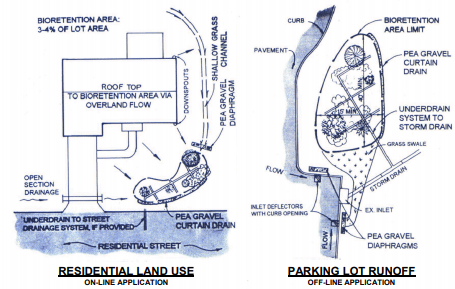
Source: Georgia Stormwater Management Manual, Vol. 2
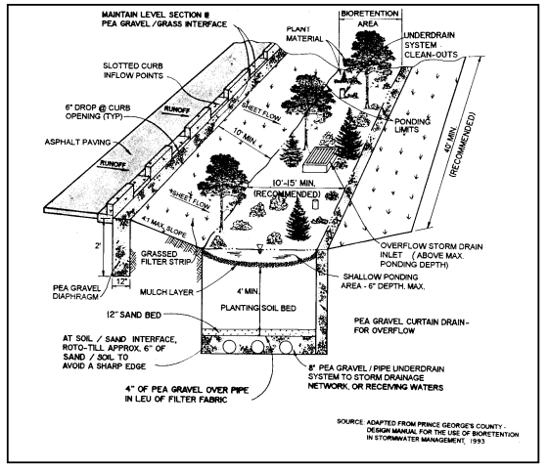
Figure 3.2.3-3 Schematic of a Typical Bioretention Area
Source: Georgia Stormwater Management Manual, Vol. 2
Best management practice (BMP): Both structural devices to store or treat stormwater runoff and non-structural programs or practices which are designed to prevent or reduce the pollution of the waters of the State of Georgia.
BMP landscaping plan: A design for vegetation and landscaping that is critical to the performance and function of the BMP including how the BMP will be stabilized and established with vegetation. It shall include a layout of plants and plant names (local and scientific).
Channel: A natural or artificial watercourse with a definite bed and banks that conveys continuously or periodically flowing water.
Conservation easement: An agreement between a landowner and the City of Powder Springs, other government agency, or land trust that permanently protects greenspace by restricting the amount and type of development that may occur, while the owner retains the remaining property rights and ownership as a fee simple interest in the property.
Detention: The temporary storage of stormwater runoff in a stormwater detention facility for the purpose of controlling peak discharge.
Detention facility: A structure designed for the storage and gradual release of stormwater runoff at controlled rates.
Developer: A person who undertakes land development activities.
Development: New development or redevelopment.
Drainage: A general term applied to the removal of surface or subsurface water from a given area either by gravity or by pumping; most commonly applied to surface water.
Drainage easement: An easement appurtenant or attached to a tract or parcel of land allowing the owner of adjacent tracts or other persons to discharge stormwater runoff onto the tract or parcel of land subject to the terms of the drainage easement.
Drainage structure: A device composed of a virtually non-erodible material such as concrete, steel, plastic or other such material that conveys water from one place to another by intercepting the flow and carrying it to a release point for stormwater management, drainage control or flood control purposes.
Drainage system: The surface and subsurface system for the removal of water from the land, including both the natural elements of streams, marshes, swales and ponds, whether of an intermittent or continuous nature, and the man-made element which includes culverts, ditches, channels, detention facilities and the storm sewer system.
Dry well: A small excavated pit backfilled with aggregate, usually pea gravel or stone. Dry wells function as infiltration systems used to control runoff from building rooftops. Another special application of dry wells is modified catch basins, where inflow is a form of direct surface runoff. Dry wells provide the majority of treatment by processes related to soil infiltration, including absorption, trapping, filtering, and bacterial degradation.
Erosion and sedimentation control plan: A plan designed to minimize the accelerated erosion and sediment runoff at a site during land disturbance activities.
Extended detention: The storage of stormwater runoff for an extended period of time.
Extreme flood protection: Measures employed to prevent adverse impacts from large low-frequency storm events with a return frequency of 100 years or more.
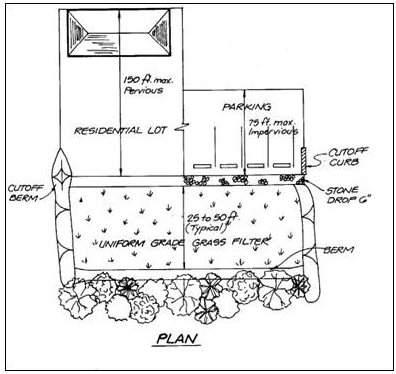
Filter strip: Typically a band of close-growing vegetation, usually grass, planted between pollutant source areas and a downstream receiving waterbody. Vegetation can filter sediment from runoff. Thus grass strips can be used to remove sediment from surface runoff. Vegetation also slows the velocity of runoff and helps maintain the infiltration capacity of a soil.
Flooding: a volume of surface water that exceeds the banks or walls of a BMP, or channel; and overflows onto adjacent lands.
Georgia Stormwater Management Manual(GSMM): The latest edition of the Georgia Stormwater Management Manual, Volume 2: Technical Handbook, and its Appendices.
Greenspace or open space: Permanently protected areas of a site that are preserved in a natural, undisturbed state. Greenspace encompasses "open space."
Hotspot: A land use or activity on a site that has the potential to produce higher than normally found levels of pollutants in stormwater runoff. As defined by the administrator, hotspot land use may include gasoline stations, vehicle service and maintenance areas, industrial facilities (both permitted under the Industrial Stormwater General Permit and others), material storage sites, garbage transfer facilities, and commercial parking lots with high-intensity use.
Hydrologic soil group (HSG): A natural resource conservation service classification system in which soils are categorized into 4 runoff potential groups. The groups range from "Group A" soils, with high permeability and little runoff produced, to "Group D" soils, which have low permeability rates and produce significantly more runoff.
Impervious surface: A surface composed of any material that significantly impedes or prevents the natural infiltration of water into the soil. Impervious surfaces include, but are not limited to, rooftops, buildings, streets and roads, and any concrete or asphalt surface.
Industrial stormwater permit: A National Pollutant Discharge Elimination System (NPDES) permit issued by Georgia Environmental Protection Division to an industry or group of industries for stormwater discharges associated with industrial activity that regulates pollutant levels associated with industrial stormwater discharges or specifies on-site pollution control strategies based on Standard Industrial Classification (SIC) Code.
Infiltration: The process of percolating stormwater runoff into the subsoil.
Inspection and maintenance agreement: A written agreement providing for the long-term inspection, operation, and maintenance of the stormwater management system and its components on a site.
Infiltration trench: An excavated trench that has been back-filled with stone to form a subsurface basin. Stormwater runoff is diverted into the trench and is stored until it can be infiltrated into the soil, usually over a period of several days. An infiltration trench may include pretreatment such as vegetated filter strips or grassed swales.
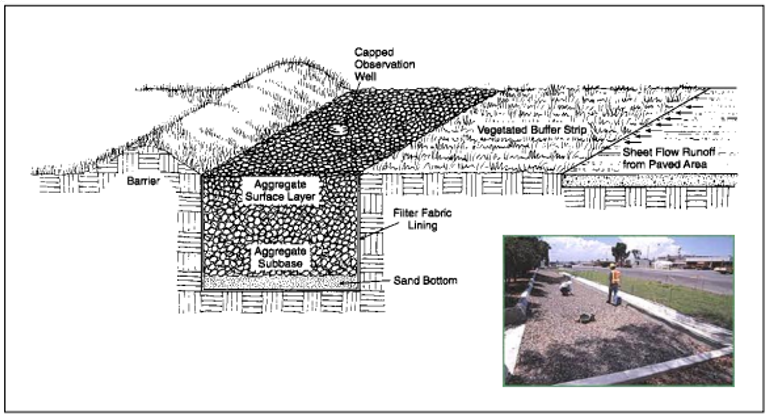
Source: Georgia Stormwater Management Manual, Vol. 2
Inspection and maintenance agreement: A written agreement providing for the long-term inspection and maintenance of stormwater management facilities and practices on a site or, with respect to a land development project, which when properly recorded in the deed records constitutes a restriction on the title to a site or other land involved in a land development project.
Jurisdictional wetland: An area that is inundated or saturated by surface water or groundwater at a frequency and duration sufficient to support a prevalence of vegetation typically adapted for life in saturated soil conditions, commonly known as hydrophytic vegetation.
Land development: Any alteration to the land including, but not limited to, clearing, cutting, digging, grubbing, stripping, removal of vegetation, dredging, grading, excavating, transporting and filling of land, construction, paving and any installation of impervious cover.
Land development activities: Those actions or activities that comprise, facilitate or result in land development.
Land development application: The application for a land development permit on a form provided by City of Powder Springs along with the supporting documentation required in section 11-31.
Land development permit: The authorization necessary to begin construction-related, land-disturbing activity.
Land development project: A specific land development undertaking.
Land disturbing activity: Any activity which may result in soil erosion from water or wind and the movement of sediments into state water or onto lands within the state, including but not limited to clearing, dredging, grading, excavating, and filling of land. Land disturbing activity does not include agricultural practices as described O.C.G.A. § 12-7-17(5) or silvicultural land management activities as described O.C.G.A. § 12-7-17(6) within areas zoned for these activities.
Level spreader: Typically, an outlet designed to convert concentrated runoff to sheet flow and disperse it uniformly across a slope to prevent erosion. Level spreaders can be used to convey sheet flow runoff from lawn areas within graded areas to bioretention facilities and transition areas.
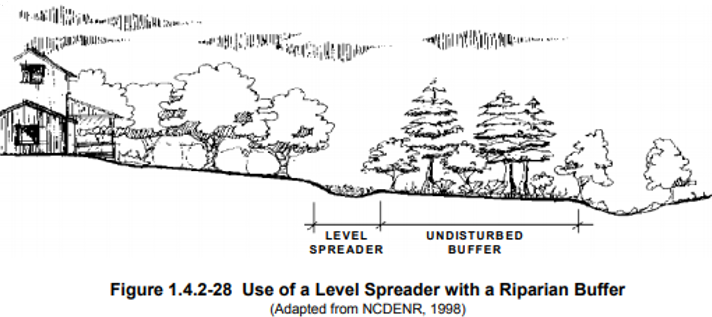
Source: Georgia Stormwater Management Manual, Vol. 2
Linear feasibility program: A feasibility program developed by the City of Powder Springs and submitted to the Georgia Environmental Protection Division, which sets reasonable criteria for determining when implementation of stormwater management standards for linear transportation projects being constructed by the City of Powder Springs is infeasible.
Linear transportation projects: Construction projects on traveled ways including but not limited to roads, sidewalks, multi-use paths and trails, and airport runways and taxiways.
Low-impact development (LID): The integration of site ecological and environmental goals and requirements into all phases of urban planning and design from the individual lot level to the entire watershed. In the context of this article, low-impact development is a set of stormwater design practices that are non-structural stormwater controls, specifically stormwater better site design practices.
MS4 permit: The NPDES permit issued by Georgia Environmental Protection Division for discharges from the City of Powder Springs' municipal separate storm sewer system.
New development: Land disturbing activities, structural development (construction, installation or expansion of a building or other structure), and/or creation of impervious surfaces on a previously undeveloped site.
Nonpoint source pollution: A form of water pollution that does not originate from a discrete point such as a sewage treatment plant or industrial plant discharge, but involves the transport of pollutants such as sediment, fertilizers, pesticides, heavy metals, oil, grease, bacteria, organic materials and other contaminants from land to surface water and groundwater via mechanisms such as precipitation, stormwater runoff and leaching. Nonpoint source pollution is a by-product of land use practices such as agricultural, silvicultural, mining, construction and subsurface disposal as well as from urban runoff sources.
Nonstructural stormwater management practice or nonstructural practice: Any natural or planted vegetation or other nonstructural component of the stormwater management plan that enhances stormwater quantity and/or quality control or other stormwater management benefits and includes, but is not limited to, riparian buffers, greenspace areas, overland flow filtration areas, natural basins and vegetated channels.
Off-site facility: A stormwater management facility located outside the boundaries of a development site.
On-site facility: A stormwater management facility located within the boundaries of a development site.
Overbank flood protection: Measures taken to prevent an increase in the frequency and magnitude of out-of-bank flooding (i.e. flow events that exceed the capacity of the channel and enter the floodplain). Such measures are intended to protect downstream properties from flooding during a 2-year through 25-year frequency storm events.
Owner: The legal or beneficial owner of a site including, but not limited to, a mortgagee or vendee in possession, receiver, executor, trustee, lessee or other person, firm or corporation in control of the site.
Permeable: Soil or other material that allows the infiltration or passage of water or other liquids.
Permit: The permit issued by the City of Powder Springs to an applicant that is required for conducting any land development activity.
Person: Except to the extent exempted from this article, any individual, partnership, firm, association, joint venture, public or private corporation, trust, estate, commission, board, public or private institution, utility, cooperative, city, county or other political subdivision of the State, any interstate body or any other legal entity.
Post-construction stormwater management: Stormwater best management practices that are used on a permanent basis to control and treat runoff once construction has been completed in accordance with a stormwater management plan.
Post-development: The conditions anticipated to exist on site immediately after completion of the proposed development.
Practicability policy: The latest edition of the Metropolitan North Georgia Water Planning District's Policy on Practicability Analysis for Runoff Reduction.
Pre-development: The conditions that exist on a site immediately before the implementation of the proposed development. Where phased development or plan approval occurs (preliminary grading, roads and utilities, etc.), the existing conditions at the time before the first item being approved or permitted shall establish pre-development conditions.
Pre-development hydrology: (a) for new development, the runoff curve number determined using natural conditions hydrologic analysis based on the natural, undisturbed condition of the site immediately before implementation of the proposed development; and (b) for redevelopment, the existing conditions hydrograph may take into account the existing development when defining the runoff curve number and calculating existing runoff, unless the existing development causes a negative impact on downstream property.
Previously developed site: A site that has been altered by paving, construction, and/or land disturbing activity.
Project: A land development project.
Redevelopment: Structural development (construction, installation, or expansion of a building or other structure), creation or addition of impervious surfaces, replacement of impervious surfaces not as part of routine maintenance, and land disturbing activities associated with structural or impervious development on a previously developed site. Redevelopment does not include such activities as exterior remodeling, ordinary maintenance, remodeling of existing buildings, resurfacing of paved areas, and exterior alterations or improvements that do not materially increase or concentrate stormwater runoff or cause additional nonpoint source pollution.
Regional stormwater management facility or regional facility: Stormwater management facilities designed to control stormwater runoff from multiple properties where the owners or developers of the individual properties may assist in financing the facility and the requirement for on-site stormwater management facilities is either eliminated or reduced.
Routine maintenance: Activities to keep an impervious surface as near as possible to its constructed condition. This includes ordinary maintenance activities, resurfacing paved areas, and exterior building changes or improvements which do not materially increase or concentrate stormwater runoff, or cause additional nonpoint source pollution.
Runoff: Stormwater runoff.
Site: An area of land where development is planned, which may include all or portions of one or more parcels of land. For subdivisions and other common plans of development, the site includes all areas of land covered under an applicable stormwater management permit.
Stormwater better site design: Nonstructural site design approaches and techniques that can reduce the impact of a site on the watershed and can provide for nonstructural stormwater management. Stormwater better site design includes conserving and protecting natural areas and greenspace, reducing impervious cover and using natural features for stormwater management.
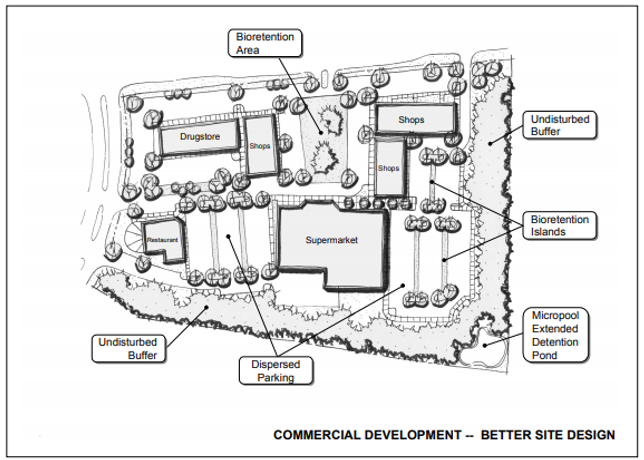
Source: Georgia Stormwater Management Manual, Vol. 2
Stormwater concept plan: An initial plan for post-construction stormwater management at the site that provides the groundwork for the stormwater management plan including the natural resources inventory, site layout concept, initial runoff characterization, and first round stormwater management system design.
Stormwater credits for better site design: A set of stormwater "credits" can be used to provide developers and site designers an incentive to implement better site design practices that can reduce the volume of stormwater runoff and minimize the pollutant loads from a site. The credit system directly translates into cost savings to the developer by reducing the size of structural stormwater control and conveyance facilities. (Reference: GSMM, Vol. 1, Sec. 4.1). The better site design practices that provide for site design stormwater credits include (per GSMM Vol. 2, Table 2.2.5-1): natural area conservation; stream buffers; use of vegetated channels; overland flow filtration/infiltration zones; and environmentally sensitive large-lot subdivisions. Credits are applied based on criteria in SWMM.
Stormwater management: The collection, conveyance, storage, treatment and disposal of stormwater runoff in a manner intended to prevent increased flood damage, stream bank channel erosion and habitat and water quality degradation, and to enhance and promote public health, safety and general welfare.
Stormwater management facility: Any infrastructure that controls or conveys stormwater runoff.
Stormwater management measure: Any stormwater management facility or nonstructural stormwater practice.
Stormwater management plan: A plan for post-construction stormwater management at the site that meets the requirements of section 11-34 and is included as part of the stormwater management application.
Stormwater management standards: Those standards set forth in section 11-35.
Stormwater management system: The entire set of non-structural site design features and structural BMPs for collection, conveyance, storage, infiltration, treatment, and disposal of stormwater runoff in a manner designed to prevent increased flood damage, streambank channel erosion, habitat degradation and water quality degradation, and to enhance and promote the public health, safety and general welfare.
Stormwater retrofit: A stormwater management practice designed for a developed site that previously had either no stormwater management practice in place or a practice inadequate to meet the stormwater management requirements of the site.
Stormwater runoff: Flow on the surface of the ground, resulting from precipitation.
Structural stormwater control: A structural stormwater management facility or device that controls stormwater runoff and changes the characteristics of that runoff including, but not limited to, the quantity and quality, the period of release or the velocity of flow of such runoff.
Subdivision: The division of a tract or parcel of land resulting in one or more new lots or building sites for the purpose, whether immediately or in the future, of sale, other transfer of ownership or land development, and includes divisions of land resulting from or made in connection with the layout or development of a new street or roadway or a change in an existing street or roadway.
Swale: An open drainage channel designed to detain or infiltrate stormwater runoff. Grassed swales consist of 2 types: the dry swale, which provides both quantity (volume) and quality control by facilitating stormwater infiltration; and the wet swale, which uses residence time and natural growth to reduce peak discharge and provide water quality treatment before discharge to a downstream location.
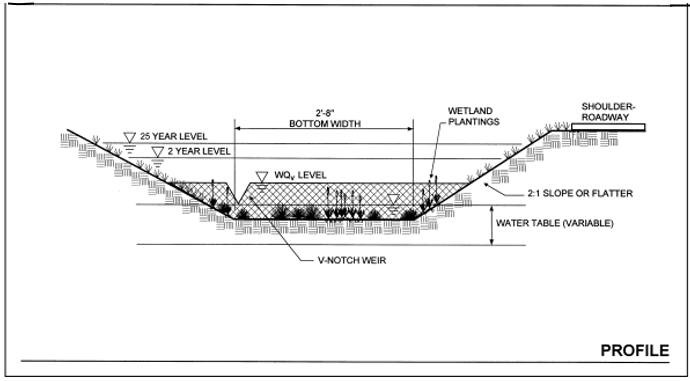
Figure 3.2.6-3 Schematic of Wet Swale
Source: Georgia Stormwater Management Manual, Vol. 2
Other terms used but not defined in this article shall be interpreted based on how such terms are defined and used in the GSMM and the City of Powder Springs' MS4 permit.
Sec. 11-5. - Adoption and implementation of the GSMM; conflicts and inconsistencies.
(a)
In implementing this article, the City of Powder Springs shall use and require compliance with all relevant design standards, calculations, formulas, methods, and other guidance from the GSMM as well as all related appendices.
(b)
This article is not intended to modify or repeal any other article, ordinance, rule, regulation or other provision of law, including but not limited to any applicable stream buffers under state and local laws, and the Georgia Safe Dams Act and Rules for Dam Safety. In the event of any conflict or inconsistency between any provision in the City of Powder Springs' MS4 permit and this article, the provision from the MS4 permit shall control. In the event of any conflict or inconsistency between any provision of this article and the GSMM, the provision from this article shall control. In the event of any other conflict or inconsistency between any provision of this article and any other ordinance, rule, regulation or other provision of law, the provision that is more restrictive or imposes higher protective standards for human health or the environment shall control.
(c)
If any provision of this article is invalidated by a court of competent jurisdiction, such judgment shall not affect or invalidate the remainder of this article.
Sec. 11-6. - Applicability.
This article shall apply to all the following land development activities, including, but not limited to, site plan applications, subdivision applications and grading applications, unless specifically exempt by this article:
(a)
New development that creates or adds 5,000 square feet or greater of new impervious surface area or that involves land disturbing activity of one acre of land or greater;
(b)
Redevelopment (excluding routine maintenance and exterior remodeling) that creates, adds, or replaces 5,000 square feet or greater of new impervious surface area or that involves land disturbing activity of one acre or more;
(c)
New development and redevelopment if
i.
Such new development or redevelopment is part of a subdivision or other common plan of development, and
ii.
The sum of all associated impervious surface area or land disturbing activities that are being developed as part of such subdivision or other common plan of development meets or exceeds the threshold in (a) and (b) above;
(d)
Any commercial or industrial new development or redevelopment, regardless of size, that is a hotspot land use as defined in this article; and
(e)
Linear transportation projects that exceed the threshold in (a) or (b) above.
Sec. 11-7. - Exemptions.
The following uses shall be exempt from the provisions and standards of this article:
(a)
Land disturbing activity conducted by local, state, authority, or federal agencies, solely to respond to an emergency need to protect life, limb, or property or conduct emergency repairs;
(b)
Land disturbing activity that consists solely of cutting a trench for utility work and related pavement replacement;
(c)
Land disturbing activity conducted by local, state, authority, or federal agencies, whose sole purpose is to implement stormwater management or environmental restoration;
(d)
Repairs to any stormwater management system deemed necessary by the administrator;
(e)
Agricultural practices as described O.C.G.A. § 12-7-17(5) within areas zoned for these activities with the exception of buildings or permanent structures that exceed the threshold in section 11-6(a) or (b);
(f)
Silvicultural land management activities as described O.C.G.A. § 12-7-17(6) within areas zoned for these activities with the exception of buildings or permanent structures that exceed the threshold in section 11-6(a) or (b);
(g)
Installations or modifications to existing structures solely to implement Americans with Disabilities Act (ADA) requirements, including but not limited to elevator shafts, handicapped access ramps and parking, and enlarged entrances or exits; and
(h)
Linear transportation projects being constructed by the City of Powder Springs to the extent the administrator determines that the stormwater management standards may be infeasible to apply, all or in part, for any portion of the linear transportation project. For this exemption to apply, an infeasibility report that is compliant with the City of Powder Springs linear feasibility program shall first be submitted to the administrator that contains adequate documentation to support the evaluation for the applicable portion(s) and any resulting infeasibility determination, if any, by the administrator.
Sec. 11-8. - Designation of administrator.
The community development director is hereby appointed to administer and implement the provisions of this article; provided, however, that engineering considerations shall be the responsibility of the public works director. Both the community development director and the public works director are charged with encouraging and implementing low-impact development practices, especially in awarding (when warranted) credits for better site design as described in the Georgia Stormwater Management Manual and this article. The community development director may from time to time appoint someone to administer and implement this article.
Sec. 11-11. - Design of stormwater management system.
The design of the stormwater management system shall be in accordance with the applicable sections of the GSMM as directed by the administrator. Any design which proposes a dam shall comply with the Georgia Safe Dams Act and Rules for Dam Safety as applicable.
Sec. 11-12. - Natural resources inventory.
Site reconnaissance and surveying techniques shall be used to complete a thorough assessment of existing natural resources, both terrestrial and aquatic, found on the site. Resources to be identified, mapped, and shown on the stormwater management plan, shall include, at a minimum (as applicable):
(1)
Topography (minimum of 2' contours) and steep slopes (i.e., areas with slopes greater than 15%),
(2)
Natural drainage divides and patterns,
(3)
Natural drainage features (e.g., swales, basins, depressional areas),
(4)
Natural feature protection and conservation areas such as wetlands, lakes, ponds, floodplains, stream buffers, drinking water wellhead protection areas and river corridors,
(5)
Predominant soils (including erodible soils and karst areas), and
(6)
Existing predominant vegetation including trees, high quality habitat and other existing vegetation.
Sec. 11-13. - Better site design practices for stormwater management.
Stormwater management plans shall preserve the natural drainage and natural treatment systems and reduce the generation of additional stormwater runoff and pollutants to the maximum extent practicable. Additional details can be found in the GSMM Section 3.3.
Sec. 11-14. - Stormwater runoff quality/reduction.
Stormwater runoff quality/reduction shall be provided by using the following:
(1)
For development with a stormwater management plan submitted before December 10, 2020, the applicant may choose either (A) Runoff reduction or (B) Water quality.
(2)
For development with a stormwater management plan submitted on or after December 10, 2020, the applicant shall choose (A) Runoff Reduction and additional water quality shall not be required. To the extent (A) Runoff reduction has been determined to be infeasible for all or a portion of the site using the practicability policy, then (B) Water quality shall apply for the remaining runoff from a 1.2" rainfall event and must be treated to remove at least 80% of the calculated average annual post-development total suspended solids (TSS) load or equivalent as defined in the GSMM.
a.
Runoff reduction - The stormwater management system shall be designed to retain the first 1.0" of rainfall on the site using runoff reduction methods, to the maximum extent practicable.
b.
Water quality - The stormwater management system shall be designed to remove at least 80% of the calculated average annual post-development total suspended solids (TSS) load or equivalent as defined in the GSMM for runoff from a 1.2" rainfall event.
(3)
If a site is determined to be a hotspot as detailed in section 11-4, the City of Powder Springs may require the use of specific or additional components for the stormwater management system to address pollutants of concern generated by that site.
Sec. 11-15. - Stream channel protection.
Stream channel protection shall be provided by using all of the following 3 approaches:
(1)
24-hour extended detention storage of the one-year, 24-hour return frequency storm event;
(2)
Erosion prevention measures, such as energy dissipation and velocity control; and
(3)
Preservation of any applicable stream buffer.
Sec. 11-16. - Overbank flood protection.
Downstream overbank flood protection shall be provided by controlling the post-development peak discharge rate to the pre-development rate for the 25-year, 24-hour storm event.
Sec. 11-17. - Extreme flood protection.
Extreme flood protection shall be provided by controlling the 100-year, 24-hour storm event such that flooding is not exacerbated.
Sec. 11-18. - Downstream analysis.
Due to peak flow timing and runoff volume effects, some structural components of the stormwater management system fail to reduce discharge peaks to pre-development levels downstream from the site. A downstream peak flow analysis shall be provided to the point in the watershed downstream of the site or the stormwater management system where the area of the site comprises 10% of the total drainage area in accordance with Section 4.2.3 of the GSMM. This is to help ensure that there are minimal downstream impacts from development on the site. The downstream analysis may result in the need to resize structural components of the stormwater management system.
Sec. 11-19. - Stormwater management system inspection and maintenance.
The components of the stormwater management system that will not be dedicated to and accepted by the City of Powder Springs, including all drainage facilities, best management practices, credited conservation spaces, and conveyance systems, shall have an inspection and maintenance agreement to ensure that they continue to function as designed. All new development and redevelopment sites are to prepare a comprehensive inspection and maintenance agreement for the on-site stormwater management system. This plan shall be written in accordance with the requirements in section 11-41.
Sec. 11-31. - Permit application requirements.
No owner or developer shall perform any land development activities without first meeting the requirements of this article. Unless specifically exempted by this article, any owner or developer proposing a land development activity shall submit a permit application to the City of Powder Springs on a form provided by the city for that purpose and pay the applicable fee as established by fee schedule. Unless otherwise exempted by this article, the following information shall accompany a permit application:
(a)
Stormwater concept plan;
(b)
Stormwater management plan;
(c)
Inspection and maintenance agreement, if applicable;
(d)
Performance bond if applicable; and,
(e)
Permit application and plan review fees.
Sec. 11-32. - Pre-submittal meeting.
Before a stormwater management permit application is submitted, an applicant may request a pre-submittal meeting with the City of Powder Springs. The pre-submittal meeting should take place based on an early step in the development process such as before site analysis and inventory (GSMM Section 2.4.2.4) or the stormwater concept plan (GSMM Section 2.4.2.5). The purpose of the pre-submittal meeting is to discuss opportunities, constraints, and ideas for the stormwater management system before formal site design engineering. To the extent applicable, local and regional watershed plans, greenspace plans, trails and greenway plans, and other resource protection plans should be consulted in the pre-submittal meeting. Applicants must request a pre-submittal meeting with the City of Powder Springs when applying for a determination of infeasibility through the practicability policy.
Sec. 11-33. - Stormwater concept plan requirements.
The landowner or developer shall meet with representatives of the departments of community development and public works of the City of Powder Springs for a consultation meeting on a concept plan for the post-development stormwater management system to be used in the proposed land development project prior to submitting any stormwater management permit application. This consultation meeting shall occur at preliminary subdivision plat or other early step in the development process. The purpose of this meeting is to discuss the post-development stormwater management measures necessary for the proposed project and to assess constraints, opportunities and approaches for stormwater management design prior to commencing formal site design engineering. During such consultation meetings, the city and applicant will examine the potential applicability of non-structural stormwater controls (stormwater better site design practices). Local watershed plans, the Cobb County greenspace protection plan, as applicable, and any relevant resource protection plans will be consulted in the discussion of the concept plan.
(a)
The stormwater concept plan shall be submitted prior to the consultation meeting: and prepared using the minimum following steps:
(1)
Develop the site layout using better site design techniques, as applicable (GSMM Section 2.3).
(2)
Calculate preliminary estimates of the unified stormwater sizing criteria requirements for stormwater runoff quality/reduction, channel protection, overbank flooding protection and extreme flood protection (GSMM Section 2.2).
(3)
Perform screening and preliminary selection of appropriate best management practices and identification of potential siting locations (GSMM Section 4.1).
(b)
The stormwater concept plan shall contain:
(1)
Common address and legal description of the site,
(2)
Vicinity map, and
(3)
Existing conditions and proposed site layout mapping and plans (recommended scale of 1" = 50'), which illustrate at a minimum:
a.
Existing and proposed topography (minimum of 2' contours),
b.
Perennial and intermittent streams,
c.
Mapping of predominant soils from USDA soil surveys,
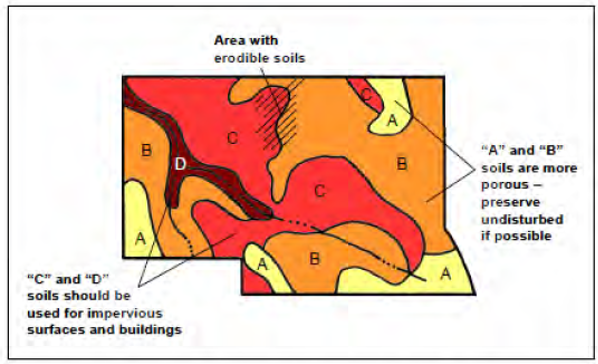
Figure 1.4.2-7 Soil Mapping Information Can Be Used to Guide Development
Source: Georgia Stormwater Management Manual, Vol. 2
d.
Boundaries of existing predominant vegetation and proposed limits of clearing and grading,
e.
Location and boundaries of other natural feature protection and conservation areas such as wetlands, lakes, ponds, floodplains, stream buffers and other setbacks (e.g., drinking water well setbacks, septic setbacks, etc.),
f.
Location of existing and proposed roads, buildings, parking areas and other impervious surfaces,
g.
Existing and proposed utilities (e.g., water, sewer, gas, electric) and easements,
h.
Preliminary estimates of unified stormwater sizing criteria requirements,
i.
Preliminary selection and location, size, and limits of disturbance of proposed BMPs,
j.
Location of existing and proposed conveyance systems such as grass channels, swales, and storm drains,
k.
Flow paths,
l.
Location of the boundaries of the base flood floodplain, future- conditions floodplain, and the floodway (as applicable) and relationship of site to upstream and downstream properties and drainage, and
m.
Preliminary location and dimensions of proposed channel modifications, such as bridge or culvert crossings.
Sec. 11-34. - Stormwater management plan requirements.
The stormwater management plan shall describe the methods and approaches proposed to control and manage post-development stormwater runoff. A description of the measures that will be employed to comply with the standards and requirements of this article, including performance criteria required by this article shall also be provided. The stormwater management plan shall be in accordance with the criteria established in this article and be prepared under the direct supervisory control of either a registered professional engineer or a registered landscape architect licensed in the state of Georgia, who shall seal and sign the work. The work shall be conducted under the direct supervisory control of a registered professional engineer, Portions of the overall plan such as boundary surveys, contour maps and erosion and sedimentation control plans may be prepared and stamped by a registered land surveyor licensed in the state of Georgia, as appropriate. The stormwater management plan must ensure that the requirements and criteria in this article are met, and that opportunities to minimize adverse post-development stormwater runoff impacts generated by the development are considered. The plan shall consist of maps, narrative, and supporting design calculations (hydrologic and hydraulic) for the proposed stormwater management system.
Sec. 11-35. - Contents of stormwater management plan.
The stormwater management plan for each land development project shall provide for stormwater management measures located on the site of the project, unless provisions are made to manage stormwater by means of an off-site or regional facility.
The stormwater management plan shall contain the items listed in this part and be prepared under the direct supervisory control of either a registered Professional Engineer or a registered Landscape Architect licensed in the State of Georgia. Subsections (3), (4), (5), and (6) shall be sealed and signed by a registered Professional Engineer licensed in the State of Georgia. The overall site plan must be stamped by a design professional licensed in the State of Georgia for such purpose. (GSMM Section 2.4.2.7)
(1)
General: Common address and legal description of the site, and a vicinity map;
(2)
Natural resources inventory: A written or graphic inventory of the natural resources on the site and surrounding area as exists prior to commencement of the project. This description shall include a discussion of soil conditions, forest cover, topography, wetlands, and other native vegetative areas on the site, as well as the location and boundaries of other natural feature protection and conservation areas such as wetlands, lakes, ponds, floodplains, stream buffers and other setbacks (e.g., drinking water well setbacks, septic setbacks, etc.). Particular attention must be afforded environmentally sensitive features that represent constraints to development;
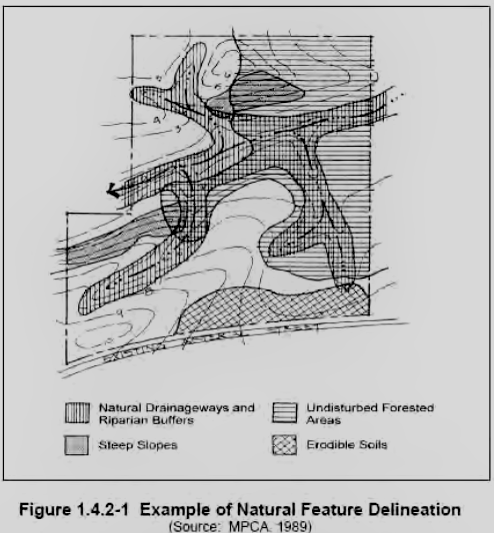
Source: Georgia Stormwater Management Manual, Vol. 2.
(3)
Stormwater concept plan: A written or graphic concept plan of the proposed post-development stormwater management system that includes the following information: preliminary selection and location of proposed structural stormwater controls; location of existing and proposed conveyance systems such as grass channels, swales and storm drains; flow paths; location of floodplain/floodway limits; relationship of site to upstream and downstream properties and drainages; and preliminary location of proposed stream channel modifications such as bridge or culvert crossings.
(4)
Existing conditions hydrologic analysis: The existing condition hydrologic analysis for stormwater runoff rates, volumes and velocities, which shall include the following information:
a.
A topographic map of existing site conditions with the drainage basin boundaries indicated;
b.
Acreage, soil types and land cover of areas for each sub-basin affected by the project;
c.
All perennial and intermittent streams and other surface water features;
d.
All existing stormwater conveyances and structural control facilities;
e.
Direction of flow and exits from the site;
f.
Analysis of runoff provided by off-site areas upstream of the project site; and
g.
Methodologies, assumptions, site parameters and supporting design calculations used in analyzing the existing conditions site hydrology. For redevelopment sites, predevelopment conditions shall be modeled using the guidelines established by the director of public works for the portion of the site undergoing land development activities.
(5)
Post-development hydrologic analysis: The post-development hydrologic analysis for stormwater runoff rates, volumes and velocities, which shall include the following information:
a.
A topographic map of developed site conditions with the post-development drainage basin boundaries indicated;
b.
Total area of post-development impervious surfaces and other land cover areas for each sub-basin affected by the project;
c.
Calculations for determining the runoff volumes that need to be addressed for each sub-basin for the development project to meet the post-development stormwater management performance criteria of this article;
d.
Location and boundaries of proposed natural feature protection and conservation areas;
e.
Documentation and calculations for any applicable site design credits that are being utilized; and
f.
Methodologies, assumptions, site parameters and supporting design calculations used in analyzing the existing conditions site hydrology. Redevelopment sites on which the land development activity constitutes more than 50% of the entire site shall meet the performance criteria of this article as concerns the stormwater runoff from the entire site.
(6)
Stormwater management system: The description, scaled drawings and design calculations for the proposed post-development stormwater management system, which shall include the following information:
a.
A map and/or drawing or sketch of the stormwater management facilities, including the location of nonstructural site design features and the placement of existing and proposed structural stormwater controls, including design water surface elevations, storage volumes available from zero to maximum head, location of inlet and outlets, location of bypass and discharge systems, and all orifice/restrictor sizes;
b.
A narrative describing how the selected structural stormwater controls will be appropriate and effective; cross-section and profile drawings and design details for each of the structural stormwater controls in the system, including supporting calculations to show that the facility is designed according to the applicable design criteria;
c.
A hydrologic and hydraulic analysis of the stormwater management system for all applicable design storms (including stage-storage or outlet rating curves, and inflow and outflow hydrographs);
d.
Documentation and supporting calculations to show that the stormwater management system adequately meets the post-development stormwater management performance criteria of this article;
e.
Drawings, design calculations, elevations and hydraulic grade lines for all existing and proposed stormwater conveyance elements including stormwater drains, pipes, culverts, catch basins, channels, swales and areas of overland flow;
f.
A narrative describing how the stormwater management system corresponds with any watershed protection plans and/or local greenspace protection plan, as applicable; and
g.
A narrative describing the extent to which non-structural stormwater controls, specifically including stormwater better site design practices, are implemented.
(7)
Downstream analysis: A downstream peak flow analysis that includes the assumptions, results and supporting calculations to show safe passage of post-development design flows downstream. The analysis of downstream conditions in the report shall address every point or area along the boundary of the project site at which runoff will exit the property. The analysis shall focus on the portion of the drainage channel or watercourse immediately downstream from the project. This area shall extend downstream from the project to a point in the drainage basin where the project area represents 10% of the total basin area. In calculating runoff volumes and discharge rates, consideration may need to be given to any planned alteration in future, upstream land use. The analysis shall be in accordance with the GSMM.
(8)
Erosion and sedimentation control plan: An erosion and sedimentation control plan in accordance with article 9 of this development code and the NPDES permit for construction activities. The plan shall also include information on the sequence/phasing of construction and temporary stabilization measures and structures that will be converted into permanent stormwater controls.
(9)
BMP landscaping plan: A detailed landscaping and vegetation plan describing the woody and herbaceous vegetation that will be used within and adjacent to stormwater management facilities and practices. The landscaping plan must also include the following information:
a.
Arrangement of planted areas, natural and greenspace areas and other landscape features depicted on the plan drawings;
b.
Information necessary to install the landscape features shown on the plan drawings;
c.
Descriptions and standards for the methods, materials and vegetation to be used in the installation;
d.
Density of plantings;
e.
Descriptions of the stabilization and management techniques used to establish vegetation;
f.
Identification of the party responsible for ongoing maintenance of vegetation for the stormwater management facility and the practices to be employed to ensure that adequate vegetative cover is preserved; and
g.
The extent to which landscaping will implement stormwater better site design practices.
(10)
Operations and maintenance plan: Detailed description of ongoing operations and maintenance procedures for stormwater management facilities and practices to ensure their continued function as designed and built, or preserved. This plan will identify the components of a stormwater management facility or practice that must be regularly inspected and maintained, and the equipment and skills necessary to the inspections and maintenance. The plan shall include an inspection and maintenance schedule, maintenance tasks, responsible parties for maintenance, funding, access and safety issues. Provisions for the periodic review and evaluation of the effectiveness of the maintenance program and the process for revisions or additional maintenance procedures shall be included in the plan.
(11)
Maintenance access easements: The applicant shall provide unfettered access to stormwater management facilities and practices requiring regular maintenance at the site from public right-of-way. Such access shall be sufficient to accommodate all necessary maintenance equipment. Such access shall also be for the purpose of inspection and repair and shall be guaranteed by the granting of a permanent, maintenance access easement. Upon final inspection and approval, a plat or document indicating that such easements exist shall be recorded and shall survive the transfer of title to the property.
(12)
Inspection and maintenance agreement: Unless an on-site stormwater management facility or practice is dedicated to and accepted by the City of Powder Springs, the applicant shall execute an easement and an inspection and maintenance agreement binding on all subsequent owners of land served by an on-site stormwater management facility or practice in accordance with this article.
(13)
Evidence of acquisition of applicable local and non-local permits: The applicant shall certify and provide documentation to the City of Powder Springs that all other applicable environmental permits have been acquired for the site prior to approval of the stormwater management plan.
(14)
Determination of infeasibility (if applicable).
For redevelopment and to the extent existing stormwater management structures are being used to meet stormwater management standards the following must also be included in the stormwater management plan for existing stormwater management structures:
a.
As-built drawings;
b.
Hydrology reports;
c.
Current inspection of existing stormwater management structures with deficiencies noted;
d.
BMP landscaping plans.
Sec. 11-36. - Stormwater management inspection and maintenance agreements.
Prior to issuance of any permit for a land development activity requiring a stormwater management facility or practice hereunder, and for which the City of Powder Springs requires ongoing maintenance, the applicant or owner of the site shall execute an inspection and maintenance agreement and/or a conservation easement, if applicable, that shall be binding on all subsequent owners of the site. The inspection and maintenance agreement must be approved by the City of Powder Springs prior to plan approval and recorded in the deed records upon final plat approval.
An inspection and maintenance schedule shall be developed as part of the inspection and maintenance agreement to ensure proper functioning of the stormwater management facility or practice. The agreement shall also include plans for annual inspections to ensure proper performance of the facility between scheduled maintenance and shall also include remedies for the default thereof.
Sec. 11-37. - Application fee and procedures.
The fee for review of any land development application shall be based on the fee structure established by the City of Powder Springs and payment shall be made before the issuance of any land disturbance permit or building permit for the development.
Land development applications are handled as part of the process to obtain the land disturbance permit pursuant to article 8 of this development code, as applicable. Before any person begins development on a site, the owner of the site shall first obtain approval in accordance with the following procedure:
(a)
File a land development application with the City of Powder Springs department of community development with the following supporting materials:
(1)
Two copies of the stormwater management plan and the inspection maintenance agreement prepared in accordance with section 11-31,
(2)
Certification that the development will be performed in accordance with the stormwater management plan once approved,
(3)
A preliminary determination of infeasibility, as applicable, prepared in accordance with the practicability policy, and
(4)
An acknowledgement that applicant has reviewed the City of Powder Springs' form of inspection and maintenance agreement and that applicant agrees to sign and record such inspection and maintenance agreement before the final inspection.
(b)
The administrator shall inform the applicant whether the application and supporting materials are approved or disapproved. In approving or disapproving stormwater management plans, the community development director will base the decision in part on the extent to which opportunities for implementing stormwater better site design practices. After consultation with the director of public works and the applicant, the community development director may disapprove a stormwater management plan if the applicant has failed to consider non-structural stormwater management alternatives and implemented stormwater better design practice(s), where feasible.
(c)
If the application or supporting materials are disapproved, the administrator shall notify the applicant of such fact in writing. The applicant may then revise any item not meeting the requirements hereof and resubmit the same for the administrator to again consider and either approve or disapprove.
(d)
If the application and supporting materials are approved, the City of Powder Springs may issue the associated land disturbance permit or building permit, provided all other legal requirements for the issuance of such permits have been met. The stormwater management plan included in such applications becomes the approved stormwater management plan.
Sec. 11-38. - Compliance with the approved stormwater management plan.
All development shall be:
(a)
Consistent with the approved stormwater management plan and all applicable land disturbance and building permits, and
(b)
Conducted only within the area specified in the approved stormwater management plan.
No changes may be made to an approved stormwater management plan without review and advanced written approval by the administrator.
Sec. 11-39. - Responsibilities after permit issuance.
Upon issuance of the permit, the applicant or other responsible party conducting the land development project shall be subject to the following requirements:
(a)
The applicant shall comply with all applicable requirements of the approved plan and this article and shall certify that all land clearing, construction, land development and drainage will be performed according to the approved plan;
(b)
The land development project shall be conducted only within the area specified in the approved plan;
(c)
City personnel shall have access to the site to conduct periodic inspections of the project;
(d)
No changes shall be made to an approved plan without review and written approval by the director of community development; and,
(e)
Upon completion of the project, the applicant or other responsible party shall submit the engineer's report and certificate and as-built plans required by this article.
Sec. 11-40. - Modifications for off-site facilities.
If provisions are made to manage stormwater by means of an off-site or regional facility, such off-site or regional facility shall meet the following requirements:
(a)
It shall be located on property legally dedicated for that purpose;
(b)
It shall be designed and adequately sized to provide a level of stormwater quantity and quality control equal to or greater than that which would be afforded by on-site practices;
(c)
It shall be controlled by an identified, legally-obligated entity responsible for long-term operation and maintenance of the off-site or regional stormwater facility;
(d)
On-site measures shall be implemented, where necessary, to protect upstream and downstream properties and drainage channels from the site to the off-site facility; and
(e)
A stormwater management plan shall be submitted to the City of Powder Springs that documents the adequacy of the off-site or regional facility.
(f)
To be eligible for a modification, the applicant must demonstrate to the satisfaction of the public works director that use of an off-site or regional facility will not cause any the following impacts to upstream or downstream areas:
(1)
Increased threat of flood damage to public health, life or property;
(2)
Deterioration of existing culverts, bridges, dams or other structures;
(3)
Accelerated stream bank or streambed erosion or siltation;
(4)
Degradation of in-stream biological functions or habitat; or
(5)
Water quality impairment in violation of State water quality standards or violation of any state or federal regulations.
Sec. 11-41. - Inspection and maintenance agreements
(a)
The owner shall execute an inspection and maintenance agreement with the City of Powder Springs obligating the owner to inspect, clean, maintain, and repair the stormwater management system; including vegetation in the final BMP landscaping plan. The form of the inspection and maintenance agreement shall be the form provided by the City of Powder Springs. After the inspection and maintenance agreement has been signed by the owner and the City of Powder Springs, the owner shall promptly record such agreement at the owner's cost in the property record for all parcel(s) that make up the site.
(b)
The inspection and maintenance agreement shall identify by name or official title the person(s) serving as the point of contact for carrying out the owner's obligations under the inspection and maintenance agreement. The owner shall update the point of contact from time to time as needed and upon request by the City of Powder Springs. Upon any sale or transfer of the site, the new owner shall notify the City of Powder Springs in writing within 30 days of the name or official title of new person(s) serving as the point of contact for the new owner. Any failure of an owner to keep the point of contact up to date shall, following 30 days' notice, constitute a failure to maintain the stormwater management system.
(c)
The inspection and maintenance agreement shall run with the land and bind all future successors-in-title of the site. If there is a future sale or transfer of only a portion of the site, then:
(1)
The parties to such sale or transfer may enter into and record an assignment agreement designating the owner responsible for each portion of the site and associated obligations under the inspection and maintenance agreement. The parties shall record and provide written notice and a copy of such assignment agreement to the City of Powder Springs.
(2)
In the absence of a recorded assignment agreement, all owners of the site shall be jointly and severally liable for all obligations under the inspection and maintenance agreement regardless of what portion of the site they own.
Sec. 11-42. - Right of entry for maintenance inspections.
The terms of the inspection and maintenance agreement shall provide for the City of Powder Springs' right of entry for maintenance inspections and other specified purposes. If a site was developed before the requirement to have an inspection and maintenance agreement or an inspection and maintenance agreement was for any reason not entered into, recorded, or has otherwise been invalidated or deemed insufficient, then the City of Powder Springs shall have the right to enter and make inspections pursuant to the City of Powder Springs' general provisions for property maintenance inspections pursuant to the City of Powder Springs Stormwater Management Ordinance.
Sec. 11-43. - Owner's failure to maintain the stormwater management system.
The terms of the inspection and maintenance agreement shall provide for what constitutes a failure to maintain a stormwater management system and the enforcement options available to the City of Powder Springs. If a site was developed before the requirement to have an inspection and maintenance agreement or an inspection and maintenance agreement was for any reason not entered into, recorded, or has otherwise been invalidated or deemed insufficient, then:
(a)
An owner's failure to maintain the stormwater management system so that it performs as it was originally designed shall constitute and be addressed as a violation of, or failure to comply with, owner's property maintenance obligations pursuant to City of Powder Springs Stormwater Management Ordinance; and
(b)
To address such a failure to maintain the stormwater management system, the City of Powder Springs shall have all the powers and remedies that are available to it for other violations of an owner's property maintenance obligations, including without limitation prosecution, penalties, abatement, and emergency measures.
Sec. 11-44. - Inspections to ensure plan compliance during construction.
Periodic inspections of the stormwater management system during construction shall be conducted by the staff of the City of Powder Springs or conducted and certified by a professional engineer who has been approved by the City of Powder Springs. Inspections shall use the approved stormwater management plan for establishing compliance. All inspections shall be documented with written reports that contain the following information:
(a)
The date and location of the inspection;
(b)
Whether the stormwater management system is in compliance with the approved stormwater management plan;
(c)
Variations from the approved stormwater management plan; and
(d)
Any other variations or violations of the conditions of the approved stormwater management plan.
(e)
The applicant shall be notified in writing of the nature of any violations found and the required corrective actions.
Sec. 11-45. - Final inspection; as-built drawings; delivery of inspection and maintenance agreement.
Upon completion of the development, the applicant is responsible for:
(a)
Certifying that the stormwater management system is functioning properly and was constructed in conformance with the approved stormwater management plan and associated hydrologic analysis,
(b)
Submitting as-built drawings showing the final design specifications for all components of the stormwater management system as certified by a professional engineer,
(c)
Certifying that the landscaping is established and installed in conformance with the BMP landscaping plan, and
(d)
Delivering to City of Powder Springs a signed inspection and maintenance agreement that has been recorded by the owner in the property record for all parcel(s) that make up the site.
The required certification under subsection (a) shall include a certification of volume, or other performance test applicable to the type of stormwater management system component, to ensure each component is functioning as designed and built according to the design specifications in the approved stormwater management plan. This certification and the required performance tests shall be performed by a qualified person and submitted to the City of Powder Springs with the request for a final inspection. The City of Powder Springs shall perform a final inspection with applicant to confirm applicant has fulfilled these responsibilities.
Sec. 11-46. - Records of maintenance activities.
Parties responsible for operation and maintenance of a stormwater management facility shall provide all records of any maintenance and repairs to City of Powder Springs within 30 days upon written request.
Sec. 11-47. - Violations and enforcement.
Any violation of the approved stormwater management plan during construction, failure to submit as-built drawings, failure to submit a final BMP landscaping plan, or failure of the final inspection shall constitute and be addressed as violations of, or failures to comply with, the underlying land disturbance permit pursuant to article 8 of this development code. To address a violation of this article, the City of Powder Springs shall have all the powers and remedies that are available to it for other violations of building and land disturbance permits, including without limitation the right to issue notices and orders to ensure compliance, stop work orders, and penalties as set forth in the applicable ordinances for such permits. The city may require the posting of bonds or other security to guarantee performance of construction and/or maintenance obligations of this article.
Sec. 11-48. - Maintenance by owner of stormwater management systems predating current GSMM.
For any stormwater management systems approved and built based on requirements predating the current GSMM and that is not otherwise subject to an inspection and maintenance agreement, such stormwater management systems shall be maintained by the owner so that the stormwater management systems perform as they were originally designed.

