
Powder Springs City Zoning Code
ARTICLE 3
- USE DEFINITIONS
A—Definitions.
Accessory apartment, attached: A second dwelling unit that is added to the structure of an existing site-built single-family dwelling, for use as a complete, independent living facility for a single household, with provision within the accessory apartment for cooking, eating, sanitation and sleeping. Such a dwelling is considered an accessory use to the principal dwelling.
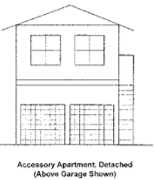
Accessory apartment, detached: A second dwelling unit that is added to an existing accessory structure (e.g., residential space above a detached garage), or as a new freestanding accessory building, for use as a complete, independent living facility for a single household, with provision within the accessory apartment for cooking, eating, sanitation and sleeping. Such a dwelling is considered an accessory use to the principal dwelling. Includes the term garage apartment.
Adult day services: A facility that provides supports for elderly individuals (and their families, if present), who do not function fully independently, but who do not need 24-hour nursing care. Participants may have: some degree of physical disability; a social impairment; mental confusion; need for some assistance with activities of daily living which fall short of the need for placement in and institution; or returned from a recent hospital or institutional stay. There are 2 types of adult day services programs: basic social, and medical.
Adult business: Any use defined in section 4-520 of this development code.
Agriculture: Farming, including plowing, tilling, cropping, utilization of best management practices, seeding, cultivating or harvesting for the production of food and fiber products (except commercial logging and timber harvesting operations); aquaculture; sod production; orchards; Christmas tree plantations; and nurseries. This term specifically includes "horticulture," or the growing of fruits, vegetables, herbs, flowers or ornamental plants. This term also includes plant nurseries and greenhouses, where lands or structures are used primarily to cultivate trees, shrubs, flowers or other plants for sale.
Agricultural facility: Includes, but is not limited to, any land, building, structure, pond, impoundment, appurtenance, machinery, or equipment which is used for the commercial production or processing of crops, livestock, animals, poultry, honeybees, honeybee products, livestock products, poultry products, timber, forest products, or products which are used in commercial aquaculture. Such term does not include any farm labor camp or facilities for migrant farm workers. (Georgia Code Section 41-1-7)
Agricultural operation: Those practices involving the establishment, cultivation, or harvesting of products of the field or orchard; the preparation and planting of pasture land; farm ponds; dairy operations; livestock and poultry management practices; the construction of farm buildings; The plowing, tilling, or preparation of soil at an agricultural facility; The planting, growing, fertilizing, harvesting, or otherwise maintaining of crops; The application of pesticides, herbicides, or other chemicals, compounds, or substances to crops, weeds, or soil in connection with the production of crops, timber, livestock, animals, or poultry; The breeding, hatching, raising, producing, feeding, keeping of livestock, hogs, equines, chickens, turkeys, poultry or other fowl normally raised for food, mules, cattle, sheep, goats, dogs, rabbits, or similar farm animals for commercial purposes, but not the regular slaughtering, or processing of such animals; the production and keeping of honeybees, the production of honeybee products; the production, of eggs or egg products; the rotation of crops, including without limitation timber production; aquaculture; and the application of existing, changed, or new technology, practices, processes, or procedures to any agricultural operation (based on Georgia Code Sections 1-3-3 and 41-1-7). Agricultural operation does not include a roadside stand or agricultural processing.
Agricultural processing: Activities distinguished from the raising, cultivating, harvesting of food and fiber products (i.e., agriculture) because they go beyond the basic production cycle and involve significant manufacturing or processing operations so that the naturally grown or raised product is changed for consumer use, or where some physical, chemical, or similar change of an agricultural product occurs. Such activities include but are not limited to: cotton ginning, grist mills, milling of flour, feed, or grain, packaging of fresh or dried foods and fibers for wholesale or retail sale, slaughterhouses, refineries, wineries, canneries, and milk processing plants. Agricultural processing is considered a manufacturing use.
Aircraft landing field: Any landing area, runway, or other facility designed, used, or intended to be used for the taking off or landing of aircraft and including all necessary taxiways, aircraft storage, tie-down areas, hangars, and other necessary buildings and appurtenances.
Animal hospital: An establishment designed or used for the care, observation, or treatment of domestic animals. This definition includes veterinary clinics.
Animal shelter: Any premises designed or operated for impounding and caring for stray, homeless, abandoned, or unwanted animals (usually primarily cats and dogs), or that are otherwise subject to impoundment. An animal shelter is usually intended to provide only temporary kenneling of such animals until a permanent home if found.
Animal quarters: Any structure which surrounds or is used to raise, breed (husbandry), house, shelter, care for, feed, exercise, train, exhibit, display, or show any animals or livestock other than domestic pets. This is not intended to apply to non-structural, fenced land for grazing. This includes the term "barn" when used to shelter livestock or other animals.
Antenna: Any device or combination of devices, whether rods, panels or dishes, designed to receive and/or transmit radio frequency signals including but not limited to broadcast radio and television, satellite television, wireless cable, amateur radio, Citizen's Band radio, land mobile communications, personal wireless services, and fixed wireless signals.
Antique store: A retail store whose inventory consists entirely of works of art, furniture, or decorative objects, created or produced in a former period at least 50 years before the date of purchase. An antique store is an enclosed retail trade establishment unless it has more than 200 square feet of outdoor storage, in which case it is an open air business.
Apartment: A building, distinguished from a "duplex" or "two-family" dwelling, designed for or occupied exclusively by 2 or more families with separate housekeeping facilities for each family for rent or lease. For purpose of this Code an apartment building shall also be considered a "multi-family" dwelling.
Arcade, amusement: A place or facility where pinball or electronic games are played for amusement. An amusement arcades is an indoor commercial recreation facility.
Art gallery: An establishment engaged in the sale, loan, or display of art books, paintings, sculpture, or other works of art. This use does not include libraries and museums. An art gallery is an enclosed retail trade establishment unless operated by a public entity in which case it is considered a public use.
Assisted living facility: Residences for the elderly who are in need of assistance, that provide rooms, meals, personal care, and supervision of self-administered medication. They may provide other services incidental to the above. An assisted living facility is an institutionalized residential living and care facility.
Auction house or auction yard: Any building, structure, enclosure, or place where goods or livestock are sold by auction (i.e., through bid in competition with others).
Automated teller machine: A mechanized consumer device that is operated by a customer and which performs banking and financial functions. An automated teller machine is an accessory use. This use is also referred to in state law as a "remote service terminal."
Automobile repair: Includes but is not limited to engine overhaul, dismantling of subparts, body or frame repair, paint, automotive glass, transmission, and alternator repair. It is characteristic of automobile repair facilities that the customer will typically leave the vehicle overnight, thus requiring storage of vehicles under repair. Automobile repair establishment may conduct vehicle emission services as an accessory use.
Automobile service: Includes but is not limited to oil change facilities and engine tune-up facilities, as well as facilities providing for the rotation of tires. Automobile service may occur in conjunction with auto sales or auto repair, but it is characteristic of automobile service facilities that the customer will receive service in one day, thus not requiring the storage of vehicles under service.
Automobile sales: New or used car, truck, tractor, trailer, boat, recreational vehicle, camper, motorcycle, and other motorized vehicle sales, leasing, and rental, including agricultural implements and equipment, and similar pieces of equipment or vehicles (excluding manufactured home sales), all of which are complete and operable. This definition includes rental car facilities. An automobile sales establishment may include automobile repair and maintenance facilities as an accessory use.
B—Definitions.
Bail bonding or bondsperson: An establishment that acts as a surety and pledges money or property as bail for the appearance of a person accused in court.
Bank: A business that accepts money for deposit into accounts from the general public or other financial institutions, and which may include personal or business loans, wire transfers and safe deposit boxes.
Barn: A building or structure accessory to agriculture or single-family residential use which is used for the storage of grain, hay, and other farm products, or the sheltering of livestock, or the storage of farm equipment housed or used on the premises.
Batching plant: A plant for the manufacture or mixing of asphalt, concrete, cement, or concrete or cement products, including any apparatus incidental to such manufacturing and mixing.
Bed and breakfast inn: A facility where overnight accommodations not exceeding 6 rooms are provided to transients for compensation, with or without a morning meal, and which may include afternoon and/or evening meal for guests, and where the operators of the facility live on the premises. A bed and breakfast inn does not include retail uses, public bar, conference center, or special event facilities.
Big box commercial retail building: A retail business involving the sale of services or merchandise on an individual lot of record where an individual tenant occupies more than 60,000 square feet.
Boarding house: A building, house, or portion thereof, where persons reside and meals are provided for not more than 8 persons, who are not members of the operator's family.
Body piercing: An establishment engaged in the practice of puncturing or cutting a part of the human body to create an opening in which jewelry may be worn.
Botanical garden: A private facility, either nonprofit or operated for a fee, for the demonstration and observation of the cultivation of flowers, fruits, vegetables, or ornamental plants.
Broadcast tower: Any structure designed and constructed primarily for the support of one or more antennae and including guyed, self-support (lattice) and monopole types.
Brewery: An industrial use that brews ales, beers, or similar beverages on site. This definition excludes micro-breweries.
Broadcasting studio: A room or suite of rooms operated as a radio or television broadcasting studio or station with local broadcast capability or intended for satellite distribution of programs, and usually including satellite dishes, microwave dishes, and/or other communications equipment.
Building: The word "building" includes the word "structure."
Building, accessory: A building subordinate to the main building on a lot and used for purposes incidental to the main or principal building and located on the same lot therewith.
Building, principal: A building in which is conducted the principal use of the lot on which said building is situated. In any residential zoning district, any structure containing a dwelling unit shall be defined to be the principal building on the plot on which same is situated, except for detached accessory apartments.
Building materials sales: An establishment offering lumber or other construction materials used in buildings for sale to contractors or the general public. When operated in whole or part outside the confines of a building, a building materials sales establishment is an open air business.
Building sales establishment: A lot on which the principal use is the sale of manufactured homes and/or modular buildings. This use is an open-air business.
Bulk storage: The storage of chemicals, petroleum products, or similar materials in above ground or below-ground storage containers designed for wholesale distribution or mass consumption. This includes fuel oil distributors with storage of products.
Business service establishment: A business activity engaged in support functions to establishments operating for a profit on a fee or contract basis, including but not limited to: advertising agencies, photocopying, blueprinting and duplication services, mailing agencies, commercial art and graphic design; personnel supply services and employment agencies, computer and data processing services, detective, protective, and security system services, accounting, auditing, and bookkeeping services, messenger services and couriers, and publications and business consulting firms.
Business services, accessory: One or more accessory operations that provide incidental services to individuals patronizing a principal use commercial establishment such as hotels and other lodging, convention centers, and the like. Such uses may depending on the principal use include financial transaction processing, concession operations, check room services, comfort station and rest room operators, concierge services, or other similar service arrangers. Such accessory services may also include automated teller machines, newsstands, gift, novelty, and souvenir shops, coin-operated blood pressure check machines, vending machines, photograph booths, and lockers for short-term rental.
C—Definitions.
Camp or campground: Any place established or maintained for 2 or more individual spaces or sites for temporary living quarters in cabins, structures, or tents for recreation or vacation purposes for a fee.
Car wash: The use of a site for washing and cleaning of passenger vehicles, other vehicles, or other light duty equipment. Car washes consist of self-service, staffed, or mechanically automated facilities. A car wash may be operated as a principal use or accessory to another use or building.
Caretaker's residence: A dwelling unit within a principal building or any freestanding building or structure that is an accessory use which is used for occupancy as a dwelling by an owner, security agent, or caretaker.
Carnival: Any use which constitutes a traveling or transportable group or aggregation of rides, shows, gaming booths, and concessions and where the public either pays admission or participation fees.
Carport: A roofed, accessory building or structure, not necessarily fully enclosed on the sides and usually open on 2 or more sides, made of canvas, aluminum, wood, or any combination thereof, including such materials on movable frames, for the shade and shelter of private passenger vehicles or other motorized or non-motorized equipment such as tractors and boats.
Catering service: An establishment that serves and supplies food to be consumed off-premises.
Cemetery: The use of property as a burial place.
Child care learning center: Any place operated by a person, society, agency, corporation, institution or group wherein are received for pay for group care, for fewer than 24 hours per day without transfer of legal custody, 19 or more children under 18 years of age and which is required to be licensed. Child care learning center also includes any day care center previously licensed by the Department of Human Resources and transferred pursuant to O.C.G.A. Code Section 20-1A-1 et seq.
Christmas tree sales facility: A facility conducted on a temporary basis during holiday season, generally conducted wholly outdoors but which may involve a tent or other temporary structure, that offers for sale Christmas trees and incidental holiday items such as wreaths and Christmas tree stands. Such facility is a temporary, open-air business establishment. This use is typically accessory to commercial.
Church: A building or structure, or group of buildings or structures, which by design and construction are primarily intended for conducting organized religious services. Associated accessory uses include but are not limited to: schools, meeting halls, indoor recreational facilities, day care, counseling, and kitchens. This term includes synagogues, temples, and places of worship.
Clinic: An institution or professional office, other than a hospital or nursing home, where persons are counseled, examined, and/or treated by one or more persons providing any form of healing or medical health service. Persons providing these services may offer any combination of counseling, diagnostic, therapeutic or preventative treatment, instruction, or services, and which may include medical, physical, psychological, or mental services and facilities for primarily ambulatory persons.
Club or lodge, nonprofit: A building or premises, used for associations or organizations of an educational, fraternal, or social character, not operated or maintained for profit. Representative organizations include Elks, Veterans of Foreign Wars, and Lions. The term shall not include casinos, nightclubs, bottle clubs, or other establishments operated or maintained for profit.
Collection bin: Any closed receptacle or container made of metal, wood, steel or similar materials designed or intended for the collection of clothing, toys and other small, customary household items (excluding furniture and carpeting) for purposes of donation to needy households; or any such receptacle or container for the collection of recycled materials such as glass, paper, or aluminum.
College or university: An educational use that provides training beyond and in addition to that training received in the 12 th grade (i.e., undergraduate and graduate), and which has students regularly attending classes, and which confers an associate, bachelor, master, and/or doctoral degree(s).
Co-generation facility: An installation that harnesses energy that normally would be wasted to generate electricity, usually through the burning of waste, and which may use, distribute through connection, or sell the energy converted from such process.
Commercial recreational facility, indoor: A use that takes place within an enclosed building that involves the provision of sports and leisure activities to the general public for a fee, including but not limited to the following: assembly halls, auditoriums, meeting halls, for-profit art galleries, billiard halls and pool rooms, amusement halls, video arcades, ice and roller skating rinks, and bowling alleys.
Commercial recreational facility, outdoor: A use of land and/or buildings that involves the provision of sports and leisure activities to the general public for a fee, and which all or part of the activities occur outside of a building or structure, including but not limited to the following: amusement parks, stadiums, amphitheaters, fairgrounds, drive-in theaters, golf courses, golf driving ranges, miniature golf courses, batting cages, race tracks for animals or motor-driven vehicles, archery ranges, unenclosed firearms shooting ranges and turkey shoots, fish ponds, botanical and zoological gardens, ultra-light flight parks, and bungee jumping. A golf course and private club that is built as part of an approved single-family residential subdivision is not considered to be an outdoor commercial recreational facility.
Commercial vehicle: A vehicle exceeds with: an overall length of 21'; an overall width of 7'; an overall height of 8', or with the top of the highest sidewall more than 3' above the bed or taller than the roofline of the vehicle.
Community donation center: A building or structure owned or leased by a charitable, nonprofit organization which collects donated items such as clothing, furniture, house wares, small electrical appliances, toys and other small household items for distribution to needy persons, and where the exchange of goods does not involve payment for such goods.
Community recreation: A private recreational facility for use solely by the residents and guests of a particular (usually residential) development, including indoor facilities such as community meeting rooms and outdoor facilities such as swimming pools, tennis courts, and playgrounds. These facilities are usually proposed, planned, and provided in association with a development and are usually located within the boundaries of such development.
Condominium building: A building containing one or more individually owned units or building spaces situated on jointly-owned, common areas as defined by laws of the State of Georgia. When a building on property under condominium ownership contains only one dwelling unit, that building is considered a detached, single-family condominium building. When a building on property under condominium ownership contains 2 or more dwelling units, that building is considered an attached, multi-family condominium building.
Conservation area: Any land set aside for conservation of the land in its natural state.
Construction contractor's establishment: An establishment engaged in the provision of construction activities, including but not limited to, plumbing, electrical work, building, grading, paving, roofing, carpentry, and other such activities, including the storage of material and the overnight parking of commercial vehicles. Also, this definition includes landscaping companies, as defined herein.
Construction field office: A manufactured home, travel trailer, truck trailer, or other structure used as an office in conjunction with a project while it is being constructed. A construction field office is a temporary use.
Construction yard: An area on or immediately adjacent to a construction site used on a temporary basis for the parking and storage of equipment used in a construction project, and the storage and preparation of materials and other items used in the construction project. Such yards may include one or more construction field offices.
Continuing care retirement community: A residential facility providing multiple, comprehensive services to older adults. Such facility normally contains a combination of independent living units, assisted living, and skilled nursing care units as defined herein.
Consumer fireworks: Any small fireworks devices containing restricted amounts of pyrotechnic composition, designed primarily to produce visible or audible effects by combustion, that comply with the construction, chemical composition, and labeling regulations of the United States Consumer Product Safety Commission as provided for in Parts 1500 and 1507 of Title 16 of the Code of Federal Regulations, the United States Department of Transportation as provided for in Part 172 of Title 49 of the Code of Federal Regulations, and the American Pyrotechnics Association as provided for in the 2001 American Pyrotechnics Association Standard 87-1, and additionally shall mean Roman candles. The term consumer fireworks shall not include: (1) Model rockets and model rocket engines designed, sold, and used for the purpose of propelling recoverable aero models, toy pistol paper caps in which the explosive content averages 0.25 grains or less of explosive mixture per paper cap or toy pistols, toy cannons, toy canes, toy guns, or other devices using such paper caps; nor shall the term consumer fireworks include ammunition consumed by weapons used for sporting and hunting purposes; and (2) Wire or wood sparklers of 100 grams or less of mixture per item; other sparkling items which are nonexplosive and nonaerial and contain 75 grams or less of chemical compound per tube or a total of 500 grams or less for multiple tubes; snake and glow worms; smoke devices; or trick noise makers which include paper streamers, party peppers, string peppers, snappers, and drop pops each consisting of 0.25 grains or less of explosive mixture.
Consumer fireworks retail sales facility: Shall have the same meaning as provided for by the National Fire Protection Association Standard 1124, Code for the Manufacture, Transportation, Storage, and Retail Sales of Fireworks and Pyrotechnic Articles, 2006 Edition (NFPA 1124).
Consumer fireworks retail sales stand:Shall have the same meaning as provided for by National Fire Protection Association (NFPA) Standard 1124: A temporary or permanent building or structure that has a floor area not greater than 800 square feet (74 square meters), other than tents, canopies, or membrane structures, that is used primarily for the retail display and sale of consumer fireworks to the public.
Convenience store: A retail store, usually with a floor area no more than 5,000 square feet and often approximately 2,500 to 3,000 square feet, which sells convenience goods, such as prepackaged food items and a limited line of groceries. Convenience stores may or may not sell gasoline, diesel, and kerosene but do not include automotive services.
Cottage industry: An individually owned craft or trade shop that produces on the premises through hand-made workmanship craft one or more goods for retail sale, such as candle-making, glass blowing, pottery making, weaving, woodworking, sculpting, and other similar or associated activities.
Crisis center: A facility or portion thereof and premises that are used for the purposes of emergency shelter, crisis intervention, including counseling, referral, hotline response, and similar human social service functions. Said facility may include meal preparation, distribution, or service for residents of the center as well as nonresidents, merchandise distribution, or shelter, including boarding, lodging, or residential care. This term includes domestic violence and centers, homeless shelters, and halfway houses.
(Ord. No. 2024-018, § 1 (Exh. A), 12-2-24)
D—Definitions.
Day care: The use of a building or premises for the care and supervision of children or adults who do reside on the property for less than 24 hours.
Development: (1) A land development project involving the construction of streets, utilities, buildings, or other improvements required for the habitation or use of property, such as a residential neighborhood, an apartment complex, a store, or a shopping center; (2) Any manmade change to improved or unimproved real estate, including, but not limited to, buildings or other structures, mining, dredging, filling, grading, paving, excavating, drilling operations, or permanent storage of materials; (3) The act of constructing or carrying out a land development project, including the alteration of land or vegetation in preparation for construction activity."
Distribution center: A use where goods are received and/or stored for delivery to the ultimate customer at remote locations.
Dormitory: A building designed for a long-term stay by students of a college, university, or nonprofit organization for the purpose of providing rooms for sleeping purposes, and which may include common kitchen and/or common gathering rooms for social purposes.
Drive-through: A retail or service enterprise wherein service is provided or goods are sold to the customer within a motor vehicle and outside of a principal building.
Driving range: An area equipped with distance markers, clubs, balls, and tees for practicing golf drives, putting, and/or chipping, and which may include a snack bar and/or pro-shop. A driving range is an outdoor commercial recreation facility.
Dry cleaning plant: A building, portion of a building, or premises used or intended to be used for cleaning fabrics, textiles, wearing apparel, or articles of any sort by immersion or agitation, or by immersions only, in volatile solvents included, but not limited to, solvents of the petroleum distillate type, and/or the chlorinated hydrocarbon type, and the processes incidental thereto.
Dumpster: A container designed to hold refuse that has a hooking connection that permits it to be raised and dumped into a sanitation truck for disposal, or a container designed to hold refuse that is loaded onto a truck.
Duplex: A two-family dwelling; a building designed or arranged to be occupied by 2 families or households living independently of each other and where both dwelling units are located on the same lot in fee-simple title.
Dwelling: A building, other than a manufactured home, mobile home, house trailer, or recreational vehicle, which is designed, arranged or used for permanent living, and/or sleeping quarters.
Dwelling, single family attached: A single-family dwelling unit consists of one or more rooms which are arranged, designed or used as living quarters for one family including up to one unrelated adult, or 2 or fewer unrelated adults and their children and/or grandchildren.
(1)
A single-family dwelling unit shall have an interior bathroom and complete kitchen facilities, permanently installed.
(2)
A single-family dwelling unit shall have at least 390 square feet of living building square footage (as determined and maintained in the records of the Cobb County Tax Assessor) per each adult occupant.
(3)
No more than one vehicle per 390 square feet of living building square footage may be parked regularly overnight on the property upon which the single-family dwelling unit exists. Of the total number of vehicles allowed per 390 square feet of living building square footage, there shall be a maximum of 4 or less (of the total) parked outside of a garage, carport or the like for properties zoned MDR and PUD-R. Other zoning districts used for single family dwelling units shall have no more than 4 vehicles parked outside. This includes vehicles parked within the right-of-way adjacent to a dwelling unit. "Regularly" means a majority of days in any 7-day period.
Exceptions to this definition may be considered as a special use by the Mayor and Council.
Dwelling, single-family detached: A single-family dwelling unit consists of one or more rooms which are arranged, designed or used as living quarters for one family including up to one unrelated adult, or 2 or fewer unrelated adults and their children and/or grandchildren.
(1)
A single-family dwelling unit shall have an interior bathroom and complete kitchen facilities, permanently installed.
(2)
A single-family dwelling unit shall have at least 390 square feet of living building square footage (as determined and maintained in the records of the Cobb County Tax Assessor) per each adult occupant.
(3)
No more than one vehicle per 390 square feet of living building square footage may be parked regularly overnight on the property upon which the single-family dwelling unit exists. Of the total number of vehicles allowed per 390 square feet of living building square footage, there shall be a maximum of 4 or less (of the total) parked outside of a garage, carport or the like for properties zoned R-20, R-15, MDR and PUD-R.
Of the total number of vehicles allowed per 390 square feet of living building square footage, there shall be a maximum of 5 or less (of the total) parked outside of a garage, carport or the like for properties zoned R-30. Other zoning districts used for single family dwelling units shall have no more than 4 vehicles parked outside. This includes vehicles parked within the right-of-way adjacent to a dwelling unit. "Regularly" means a majority of days in any 7-day period.
Exceptions to this definition may be considered as a special use by Mayor and Council.
E—Definitions.
Excavation: The mechanical removal of earth material.
Exterminator: An establishment engaged in pest control for businesses, institutions, residences, or industries.
F—Definitions.
Fairground: An area of land permanently established and intended to be devoted to seasonal community events, and which may include agricultural related office buildings, animal shows and judging, carnivals, circuses, community meeting or recreational buildings and uses, concerts, food booths and stands, games, rides, rodeos, sales and auctions. A fairground not owned by the public is an outdoor commercial recreation facility.
Fallout shelter: An accessory building or underground facility designed for the protection of life from radioactive fallout. A fallout shelter may be an accessory use to a dwelling or other principal use.
Family: means 2 or more persons related by blood, legal adoption, or marriage, occupying a dwelling. Related means persons are all related to each other within the fourth degree, as defined in O.C.G.A. § 53-2-1, which includes parents, children, grandparents, grandchildren, brothers and sisters. State of Georgia authorized foster children of a family member shall also be deemed a member of the family for this purpose. A child or children and any parent(s) and/or guardian(s) of that child or children shall also be considered a family.
Family day care home: A private residence operated by any person who receives therein for pay for supervision and care fewer than 24 hours per day, without transfer of legal custody, at least 3 but not more than 6 children under 13 years of age who are not related to such persons and whose parent(s) or guardians are not residents in the same private residence as the provider; provided, however, that the total number of unrelated children cared for in such home, for pay and not for pay, may not exceed 6 children under 13 years of age at one time. A family day care home may be authorized as a home occupation in accordance with this unified development code.
Farm winery: A use that makes wines, meads or similar beverages on site. The use may further be described in O.C.G.A. 3-6-21.1
Farmers market: A structure or location wherein space is provided to multiple independent operators for the purpose of retail and/or wholesale trade of raw agricultural products; provided, however, the use shall not include the processing of any product or the sale of poultry, fish, shellfish, pork, beef or other wildlife or domesticated meat products.
Fence: An enclosure or barrier, composed of wood, masonry, stone, wire, iron, or other materials or combination of materials used as a boundary, means of protection, privacy screening, or confinement, including brick or concrete walls but not including hedges, shrubs, trees, or other natural growth. This does not included barbed wire and chain-link, which are separately defined.
Fence, barbed wire: One or more strands of wire or other material having intermittent sharp points of wire or metal that may puncture, cut, tear, or snag persons, clothing, or animals, including vertical supports.
Fence, chain-link: An open mesh fence made entirely of wire woven in squares of approximately 1.5" with vertical supports, usually spaced at an interval of 6', usually at a height of 3 or more feet.
Finance, insurance, and real estate establishment: Such uses include but are not limited to banks, savings and loan institutions and credit unions, security and commodity exchanges, insurance agents, brokers, and service, real estate brokers, agents, managers, and developers, trusts, and holding and investment companies.
Fireworks: Any combustible or explosive composition or any substance or combination of substances or article prepared for the purpose of producing a visible or audible effect by combustion, explosion, deflagration, or detonation, including blank cartridges, balloons requiring fire underneath to propel them, firecrackers, torpedoes, skyrockets, Roman candles, bombs, sparklers, and other combustibles and explosives of like construction, as well as articles containing any explosive or flammable compound and tablets and other devices containing an explosive substance. The term fireworks shall not include: (1) Model rockets and model rocket engines designed, sold, and used for the purpose of propelling recoverable aero models, toy pistol paper caps in which the explosive content averages 0.25 grains or less of explosive mixture per paper cap or toy pistols, toy cannons, toy canes, toy guns, or other devices using such paper caps; nor shall the term fireworks include ammunition consumed by weapons used for sporting and hunting purposes; and (2) Wire or wood sparklers of 100 grams or less of mixture per item; other sparkling items which are nonexplosive and nonaerial and contain 75 grams or less of chemical compound per tube or a total of 500 grams or less for multiple tubes; snake and glow worms; smoke devices; or trick noise makers which include paper streamers, party peppers, string peppers, snappers, and drop pops each consisting of 0.25 grains or less of explosive mixture.
Fitness center: An establishment which for profit or gain provides as one of its primary purposes, services or facilities which are purported to assist patrons improve their physical condition or appearance through change in weight, weight control, treatment, dieting, or exercise. The term includes establishments designated as "reducing salons," "exercise gyms," "health spas," "health studios," "health clubs," "fitness studios," and other terms of similar import. Not included within this definition are facilities operated by nonprofit organizations, facilities wholly owned and operated by a licensed physician at which such physician is engaged in the practice of medicine, or any establishment operated by a health care facility, hospital, intermediate care facility, or skilled nursing care facility.
Flea market: The use of land, structures or buildings for the sale of produce or goods, usually second-hand or cut-rate. A flea market is an open air business.
A flea market is also defined in state law as follows: Flea market means any event (1) at which 2 or more persons offer personal property for sale or exchange; and (2) at which a fee is charged for the privilege of offering or displaying personal property for sale or exchange; or (3) at which a fee is charged to prospective buyers for admission to the area where personal property is offered or displayed for sale or exchange; or (4) regardless of the number of persons offering or displaying personal property or the absence of fees, at which used personal property is offered or displayed for sale or exchange if the event is held more than six times in any 12 month period. The term "flea market" is interchangeable with and applicable to "swap meet," "indoor swap meet," or other similar terms regardless of whether these events are held inside a building or outside in the open. The primary characteristic is that these activities involve a series of sales sufficient in number, scope, and character to constitute a regular course of business. The term "flea market" shall not mean and shall not apply to (1) an event which is organized for the exclusive benefit of any community chest, fund, foundation, association, or corporation organized and operated for religious, educational, or charitable purposes, provided that no part of any admission fee or parking fee charged vendors or prospective purchasers or the gross receipts or net earnings from the sale or exchange of personal property, whether in the form of a percent of the receipts or earnings, as salary, or otherwise, inures to the benefit of any private shareholder or person participating in the organization or conduct of the event; or (2) any event at which all of the personal property offered for sale or displayed is new, and all persons selling, exchanging, or offering or displaying personal property for sale or exchange are manufacturers or licensed retail or wholesale merchants (O.C.G.A. 10-1-360).
Food processing plant: A manufacturing establishment producing or processing foods for human or animal consumption and certain related products or by-products, including but not limited to the following products: sugar, dairy, fruit and vegetable (including canning, preserving and processing), grain mill products and by-products, meat, poultry and seafood (including by-product processing but not including the slaughtering of animals), and miscellaneous foot preparation from raw products. This is a manufacturing use.
Food truck: A licensed, motorized vehicle or mobile food unit which is temporarily placed on a privately owned lot (or in authorized instances, on public property) where food items are sold to the general public. A food truck upon its establishment on a property is by definition an accessory use.
Forestry: An operation involved in the growing, conserving, and managing of forests and forest lands. Forestry operations or practices include the raising and harvesting of timber, pulp woods and other forestry products for commercial purposes, the construction of roads, insect and disease control, fire protection, and may include the temporary operation of a sawmill and/or chipper to process the timber cut from the parcel or parcels. This term does not include the cutting of timber associated with approved land development.
Fuel tank sales: The retail sale of bulk storage tanks for flammable and combustible liquids, compressed gases or liquefied petroleum (LP) gas. Gas tank sales are considered open air business uses.
Funeral home: means a building or facility utilized for preparations and ceremonies for deceased persons prior to burial or cremation. All funeral homes must comply with state regulations as well as the rules promulgated by the Georgia State Board of Funeral Service, as may be amended from time to time. A funeral home may have an accessory crematory within the main building in compliance with manufacturer's instructions and any state or federal laws.
G—Definitions.
Garage: A building, or part thereof, used or designed to be used for the parking and storage of vehicles. A garage in the customary sense is distinguished from a carport in that it is fully enclosed. It may be attached to a single-family dwelling or may be an accessory building. In such context a garage is an accessory use to a single-family dwelling.
Greenhouse: A building designed or used for growing or propagating plants, with walls or roof usually designed to transmit light.
Group day care home: Any place operated by any person(s), partnership, association or corporation wherein are received for pay for group care not less than 7 nor more than 18 children under 18 years of age for less than 24 hours without transfer of legal custody and which is required to be licensed or commissioned by the Georgia Department of Early Care and Learning.
Group home: means a dwelling unit, operated by an affiliate of a national, regional, state, county or city organization with a philanthropic mission, shared by 4 or fewer persons, excluding resident staff, who live together as a single housekeeping unit and in a long term, family-like environment in which staff persons provide care, education and participation in community activities, under a structured and scheduled plan that must be provided to the city, for the residents with the primary goal of enabling the residents to live as independently as possible in order to reach their maximum potential under the direction and guidance of a designated managing caregiver, designated as such by the affiliate organization, who must be a resident of the group home and available by telephone on a 24-hour basis in case of complaints. A copy of the home rules shall be provided to the city as well as (if applicable) evidence of active enforcement under the Georgia Association of Recovery Residence standards. The schedule of activities may be verified via periodic inspection by community development staff. The term "group home" shall not include a halfway house, a treatment center for alcoholism or drug abuse, a work release facility for convicts or ex-convicts, a home for the detention and/or rehabilitation of juveniles adjudged delinquent or unruly and placed in the custody of the state, or other housing facilities serving as an alternative to incarceration. The term "group home" shall also not allow the use of a dwelling as an apartment or duplex. A group home shall not allow use of the dwelling as a home for individuals on parole, probation, or convicted and released from incarceration, for any crimes including child molestation, aggravated child molestation, or child sexual abuse, as defined in O.C.G.A. § 16-6-4 or individuals required to register as sex offenders pursuant to O.C.G.A. § 42-1-12. A group home may include a home for the disabled. As used in this subsection, the term "disabled" shall mean:
(1)
Having a physical or mental impairment that substantially limits one or more of such person's major life activities;
(2)
Having a record of having such an impairment; or
(3)
Being regarded as having such an impairment.
However, "disabled" shall not include persons who currently use illegal controlled substances, persons who have been convicted of the illegal manufacture or distribution of controlled substances, sex offenders, and juvenile offenders or persons with or without disabilities who present a direct threat to the persons or property of others.
Guest house: An accessory use to a dwelling designed and intended for the temporary housing of visitors to a property at the behest of the property residents for no fee or other consideration.
(Ord. No. 2023-07, § 1(Exh. A), 7-17-2023)
H—Definitions.
Halfway house shall mean any dwelling used as a residence by individuals on parole, probation, or serving a criminal sentence on condition of house arrest, for the purpose of rehabilitation of the individual while transitioning back into the community.
Halfway houses shall not be located within 1,000' of any child care facility, private or public school, church, school bus stop, public or private playground and parks or swimming pools, or other areas where minors congregate as defined in O.C.G.A. § 42-1-12(a)(3).
Halfway houses are not allowed in any residential zoning districts, (including any MXU or CBD districts) except by a special use permit (SUP) granted by the Mayor and Council. Halfway houses are not allowed in mixed use districts, (including MXU and CBD) except by a special use permit (SUP) granted by the Mayor and Council. Applications for special use permits for halfway houses shall comply with the provisions of O.C.G.A. § 36-66-4(f), as may be amended from time to time.
Hazardous waste: Any materials defined or customarily defined as hazardous waste by the Environmental Protection Division of the Georgia Department of Natural Resources; generally, any refuse or discarded material or combination of refuse or discarded materials in solid, semisolid, liquid or gaseous form which cannot be handled by routine waste management techniques because they pose a substantial present or potential hazard to human health or other living organisms because of their chemical, biological or physical properties.
Heavy truck: A motor vehicle with two or more rear axles or other vehicle that weighs in excess of 8,000 pounds. For purposes of this definition, each component part of a heavy truck, such as the semi-trailer and truck tractor is considered a heavy truck, whether or not it is connected to another component or stand alone.
Helicopter landing pad: Any structure or area which is designed or constructed for use, or used, as a helicopter landing area or any structure or area which is used as a helicopter landing area. A helicopter landing pad is an accessory use.
Home occupation: Any activity carried out for profit by the resident and conducted as an accessory use in the resident's dwelling unit.
Hookah bar or hookah lounge: Any facility, building, structure, or location where customers share tobacco or similar product from an individual or communal hookah placed throughout the establishment.
Hospital: An institution licensed by the state and providing primary health services and medical or surgical care to persons, primarily in-patients, suffering from illness, disease, injury, deformity or other abnormal physical or mental conditions, and including as an integral part of the institution, such related facilities as laboratories, outpatient facilities, or training facilities.
Hotel: A commercial lodging service with one or more buildings devoted to the temporary shelter for the traveling public, and where entry to individual guest rooms is via a central lobby. A hotel is a lodging service for purposes of this development code.
Housing shelter: Charitable, nonprofit, short-term housing or room and board accommodations for transient or needy individuals.
(Ord. No. 2023-07, § 1(Exh. A), 7-17-2023)
I—Definitions.
Incinerator: A facility with equipment that uses a thermal combustion process to destroy or alter the character or composition of medical waste, sludge, soil, or municipal solid waste, not including animal or human remains.
Industrial use: An activity or structure in which the primary purpose involves manufacturing, assembly, fabrication, and processing, bulk handling of products, warehousing, heavy trucking, power generation facilities, etc. Such use may also include such activities as research and technological processes.
Industrialized building: Any structure or component thereof which is designed and constructed in compliance with the state minimum standards codes and is wholly or in substantial part made, fabricated, formed, or assembled in manufacturing facilities for installation or assembly and installation on a building site and has been manufactured in such a manner that all parts or processes cannot be inspected at the installation site without disassembly, damage to, or destruction thereof. An industrialized building bears an insignia of approval issued by the Commissioner of the Georgia Department of Community Affairs. All industrialized buildings bearing an insignia of approval issued by the Commissioner of the Georgia Department of Community Affairs pursuant to applicable state law shall be deemed to comply with state minimum standards codes and all ordinances and regulations enacted by any local government which are applicable to the manufacture or installation of such buildings.
Industrialized building, residential: Any dwelling unit designed and constructed in compliance with the Georgia State Minimum Standard One and Two Family Dwelling Code which is wholly or in substantial part, made, fabricated, formed, or assembled in a manufacturing facility and cannot be inspected at the installation site without disassembly, damage to, or destruction thereof. Any such structure shall not contain a permanent metal chassis and shall be affixed to a permanent load-bearing foundation. The term shall not include manufactured homes as defined by the National Manufactured Housing Construction and Safety Standards Act of 1974, 42 U.S.C. Section 32 5401, et seq. A residential industrialized building bears an insignia of approval issued by the Commissioner of the Georgia Department of Community Affairs. For purposes of this article, a detached residential industrialized building for one family shall be considered the same as a detached, single-family dwelling and permitted under the same zoning districts as a detached, single-family dwelling. All residential industrialized buildings bearing an insignia of approval issued by the Commissioner of the Georgia Department of Community Affairs pursuant to applicable state law shall be deemed to comply with state minimum standards codes and all ordinances and regulations enacted by any local government which are applicable to the manufacture or installation of such buildings. This article shall not be construed to exclude detached, single-family residential industrialized buildings from being sited in a residential district solely because the building is a residential industrialized building.
Institutional residential living and care facility: An umbrella term that encompasses the following uses as specifically defined in this article: assisted living facility, intermediate care home, nursing home, skilled nursing care facility, and personal care home.
Intermediate care home: A facility which admits residents on medical referral; it maintains the services and facilities for institutional care and has an agreement with a physician and dentist who will provide continuing supervision including emergencies; it complies with rules and regulations of the Georgia Department of Human Resources. The term "intermediate care" means the provision of food, including special diets when required, shelter, laundry and personal care services, such as help with dressing, getting in and out of bed, bathing, feeding, medications and similar assistance, such services being under appropriate licensed supervision. Intermediate care does not normally include providing care for bed patients except on an emergency or temporary basis. For purposes of this Code, this use is an institutional residential living and care facility.
Intermodal container: A 6-sided container used for the storage and/or transportation of goods and designed for transport or capable of being transported by a variety of transportation modes, i.e., on semi-trailer beds, rail cars, or ships.
J—Definitions.
Junk: Scrap or waste material of any kind or nature collected for resale, disposal, or storage, or by accumulation.
K—Definitions.
Kennel: Any facility used for the purpose of commercial boarding or sale of domestic animals or pets such as dogs and cats, and any other customarily incidental treatment of the animals such as grooming, cleaning, selling of pet supplies, or otherwise.
Kitchen: Any room or part of a room designed, built, used, or intended to be used for cooking, the preparation of food, or dishwashing. The presence of a range, oven, or dishwasher, or utility connections suitable for serving a range or oven, shall normally be considered as establishing a kitchen.
L—Definitions.
Landfill, construction and demolition: A disposal facility accepting waste building materials and rubble resulting from construction, remodeling, repair and demolition operations on pavements, houses, commercial buildings, and other structures. Such wastes include, but are not limited to, asbestos containing waste, wood, bricks, metal, concrete, wall board, paper, cardboard, inert waste landfill material and other inert wastes which have a low potential for groundwater contamination.
Landfill, inert waste: A disposal facility accepting only wastes that will not or are not likely to cause production of leachate of environmental concern. Such wastes are limited to earth and earth-like products, concrete, cured asphalt, rock, bricks, yard trimmings, stumps, limbs, and leaves, and specifically excluding industrial and demolition waste.
Landfill, sanitary: The burial of nonhazardous waste where such waste is covered on a daily basis, as distinguished from a construction and demolition landfill.
Landscaping company: A business engaged in the provision of landscaping services and/or the wholesale or retail sale of landscaping products including but not limited to sod, trees, landscaping timbers, and earth covering materials. The processing of wood into timbers, mulch, and/or chips is considered an incidental use of a landscaping company whose primary purpose is the wholesale or retail sale of landscaping products.
Laundromat: A facility where patrons wash, dry, or dry clean clothing or other fabrics in machines operated by the patron.
Live-work unit: Buildings or spaces within buildings that are used jointly for commercial and residential purposes where the two uses are physically connected in one unit and residential use of the space is accessory to the primary use as a place of work. This term is distinguished from a home occupation and from a mixed-use building. Live-work units may have larger work spaces than permitted by home occupation, and live/work units design the floor space for both living and working areas. Live-work units are distinguished between mixed-use buildings in that a mixed-use building has residential and nonresidential uses in the same building, but the residential and nonresidential spaces are not necessarily connected or used by the same person.
Livestock: Cattle, horses, pigs, sheep, goats, llamas, emus, ostriches, donkeys, and mules, goats, sheep, chickens, ducks, geese, and other fowl, rabbits, minks, foxes and other fur or hide-bearing animals customarily bred or raised in captivity, whether owned or kept for pleasure, utility, or sale.
Lodging service: A facility that offers temporary (15 days or less in one room) shelter accommodations, or place for such shelter, open to the public for a fee, including "hotel," "motel," and single-room occupancy. "Bed and breakfast inn" is defined separately and is not considered a lodging service for purposes of this definition.
Lodging service, extended stay: Any hotel or motel in which 30% or greater of all guest rooms have facilities for both the storage, refrigeration, and preparation of food, or which are advertised, designed, or utilized for weekly or monthly occupancy. Additionally, any hotel or motel which offers or otherwise permits more than 3% of its rooms to be rented by guests staying on the premises for longer than 30 consecutive days or which offers or permits any guests to stay more than 45 days in a 180 day period, shall also be considered an extended stay facility, regardless of whether the units provide facilities for the storage and preparation of food.
Logging yard: Areas where logs of wood are stored on a regular basis before transfer by truck or railroad.
Lumber yard: A facility where wood materials such as lumber, plywood, panels or other wood products are processed and sold for retail sale or wholesale. Such use may involve performing millwork, planning, cutting, and/or other customizing processes.
M—Definitions.
Manufactured home: A dwelling fabricated in an off-site facility for installation or assembly at the building site, bearing a label certifying that it is constructed in compliance with the National Manufactured Housing Construction and Safety Standards Act of 1974, 42 U.S.C. 5401, et seq.), which first became effective on June 15, 1976. The term "manufactured home" includes a structure, transportable in one or more sections, which, in the traveling mode, is 8 body feet or more in width or 40 body feet or more in length or, when erected on site, is 320 or more square feet in floor area, and which is built on a permanent chassis and designed to be used as a dwelling with or without a permanent foundation when connected to the required utilities and includes the plumbing, heating, air-conditioning, and electrical systems contained therein; except that such term includes any structure which meets all the requirements of this definition except the size requirement and with respect to which the manufacturer voluntarily files a certification required by the Secretary of Housing and Urban Development and complies with the standards established under the National Manufactured Housing Construction and Safety Standards Act of 1974, 42 U.S.C. 5401, et seq.
Manufactured home park: A parcel of land or any portion thereof under which has been designed, planned, or improved for the placement of two or more manufactured homes for residential use, including land, buildings, and facilities used by the occupants of manufactured homes on such property.
Manufactured home sales lot: A premises on which manufactured homes are displayed for sale.
Manufactured home space: A parcel of land within a manufactured home park which is reserved or leased for the placement of an individual manufactured home and accessory structures for the exclusive use of its occupants.
Materials recovery facility: A solid waste handling facility that provides for the extraction from solid waste of recoverable material, materials suitable for use as a fuel or soil amendment, or any combination of such materials.
Medical hardship: A person whose health or mental condition necessitates attention and supervision from the occupants of the dwelling located on the lot.
Micro-brewery: A facility for the production and packaging of malt beverages for distribution, retail or wholesale, on or off the premises, and which has a capacity of no more than 15,000 barrels per year. The development may include other uses such as a restaurant, bar or live entertainment.
Mining: All or any part of the process involved in the mining of aggregates and/or minerals by removing overburden and mining directly from the mineral deposits, open pit mining or minerals naturally exposed, mining by auger methods, dredging, and quarrying, underground mining, and surface work incidental to such activities. See also the term, "resource extraction."
Mini-warehouse: (see self-service storage facility).
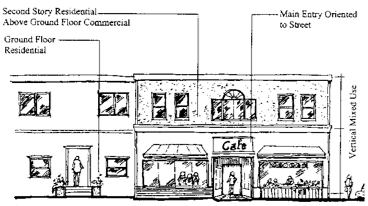
Mixed-use building: A building designed, planned and constructed as a unit, used partially for residential use and partially for office, personal service, retail, entertainment or public uses. This term includes live-work units, which are jointly used for commercial and residential purposes but where the residential use of the space is secondary or accessory to the primary use as a place of work. This term is distinguished from a dwelling containing a home occupation.
Mobile home: A dwelling manufactured prior to June 15, 1976, transportable in one or more sections, which, in the traveling mode, is 8 body feet or more in width or 40 body feet or more in length or, when erected on site, is 320 or more square feet in floor area, and which is built on a permanent chassis and designed to be used as a dwelling with or without a permanent foundation when connected to the required utilities and includes the plumbing, heating, air-conditioning, and electrical systems contained therein.
Model home: A dwelling temporarily used as a sales office or demonstration home for a residential development under construction, said dwelling being used as an example of a product offered for sale to purchasers (by a realtor, building developer, or contractor). The dwelling may be furnished but is not occupied as a residence while being used as a model home.
Motel: A commercial lodging service with one or more buildings devoted to the temporary shelter for the traveling public, and where entry to individual guest rooms is via the exterior of the building rather than through a central lobby.
Multi-family: A single residential building or group of residential buildings each containing 3 or more dwelling units located on a single parcel of land.
Museum: A building having public significance by reason of its architecture or former use or occupancy, or a building serving as a repository for a collection of natural, scientific, literary curiosities or objects of interest, or works of art, and arranged, intended, and designed to be viewed by members of the public with or without an admission fee, and which may include as an accessory use the sale of snacks and goods to the public as gifts or for their own use.
N—Definitions.
Nonconforming building or structure: A building or structure that does not meet one or more setbacks for the zoning district in which said building or structure is located, or a building or structure that exceeds the maximum building coverage for the zoning district in which said building or structure is located, or a principal building or accessory structure that otherwise does not comply with dimensional requirements established by this unified development code for the particular principal building or accessory structure or for the zoning district in which the nonconforming building or structure is located.
Nonconforming lot: A lot which does not conform to the lot requirements of the zoning district in which the lot is located as established by this unified development code but which was a lot of record prior to the effective date of this unified development code or its amendment.
Nonconforming use: Any building or use of land or building lawfully existing on or before the effective date of this unified development code or as a result of subsequent amendments to this unified development code, which does not conform to the use provisions of the zoning district in which it is located.
Nursery or kindergarten school: Any building used routinely for the daytime care or education of preschool age children and including all normal accessory and play areas. For purpose of this Code, a nursery or kindergarten school is a day care center.
Nursing home: A facility which admits patients on medical referral only and for whom arrangements have been made for continuous medical supervision; it maintains the services and facilities for skilled nursing care, rehabilitative nursing care, and has an agreement with a physician and dentist who will be available for any medical and/or dental emergency and who will be responsible for the general medical and dental supervision of the patients; it complies with rules and regulations of the Georgia Department of Human Resources. For purposes of this Code, this use is an institutional residential living and care facility.
O—Definitions.
Office: A building or portion thereof wherein services are performed involving predominantly administrative, professional or clerical operations and not involving retail sales on the premises.
Office, medical: An office for a physician, dentist, medical specialist, chiropractor, and similar medical professionals and which may include outpatient and laboratory facilities as accessory uses.
Office/warehouse: A building that combines office and warehouse or storage functions, where the majority of the area of the building is devoted to warehouse or storage functions, and which does not involve retail sales.
Open air business: Any commercial establishment with the principal use of displaying products in an area exposed to open air on 3 or more sides, including but not limited to rock yards, nurseries and garden centers and garden supply stores, lumber and building materials yards, statuaries and monument sales establishments, and tank sales. A roadside stand is not considered to be an open air business. A flea market is defined separately from open air business.
Orchard: An establishment which cares for and harvests fruit- or nut-bearing trees, bushes, or vines.
P—Definitions.
Package store: A store that sells alcoholic beverages in sealed containers for consumption elsewhere; a liquor store.
Parking lot: Any public or private area at grade used for the express purpose of temporarily parking automobiles and other vehicles otherwise in operation for personal or business use.
Parking lot, off-site: A parcel of land or portion thereof principally used for the parking or storage of operable motor vehicles whether or not a fee is paid for parking, not located on the same site as the destination of the motor vehicle operator.
Parking structure: A structure or portion thereof composed of one or more fully or partially enclosed levels or floors used for the parking or storage of motor vehicles. This definition includes parking garages, deck parking, and underground parking areas under buildings.
Pawn shop: Any business wherein a well-defined part thereof is to take or receive, by way of pledge or pawn through bailment, any goods, wares, merchandise, or any kind of personal property whatever, as security for any debt or engagement, redeemable upon certain terms and with the express or implied power of sale on default.
Payday loan establishment: Any facility that offers short-term borrowing, where an individual borrows a small amount at a very high rate of interest. The borrower typically writes a post-dated personal check in the amount they wish to borrow plus a fee in exchange for cash.
Personal care home: Any dwelling, whether operated for profit or not, which undertakes through its ownership or management to provide or arrange for the provision of housing, food service, and one or more personal services for 2 or more adults who are not related to the owner or administrator by blood or marriage. Personal care tasks include assistance with bathing, toileting, grooming, shaving, dental care, dressing, and eating. For purposes of this development code, this use is an institutional residential living and care facility.
Personal service, apparel: An establishment that has one or more persons or machines or other equipment on-site to deliver certain services related to personal clothing and apparel, and where a person brings to the site on-person or in-hand an article of clothing or other apparel or device worn on the body to be serviced. These include shoe shine (boot black), shoe repair, clothing repair. This definition also includes costume or clothing rental facilities and items on the personal body including optical goods, and hearing aids. Excludes body piercing, dry cleaners and laundromats.
Personal service, entertainment: An establishment that arranges the dispatch of one or more persons with or without incidental items to an off-site location for a temporary duration for purposes of temporary amusement or entertainment. These include singing telegram and balloon-o-gram services. This category excludes food caterers and other establishments that serve food.
Personal service, event or travel: An establishment that assists one or more persons in arranging an event such as a wedding or special event planner, or travel.
Personal service, forecasting: An establishment that has one or more persons on-site to deliver certain services related to the forecasting or prediction of future events and conditions. These include astrology (horoscope), fortune telling, numerology, palm reading, and psychic services.
Personal service, on-site provider: An establishment that has one or more persons on-site to deliver certain bodily services and which the person serviced is present to receive such bodily services. This definition includes hair (barber, stylists, beauticians, etc.), nail, and tanning establishments. This definition also includes diet and weight reduction establishments (excluding fitness centers and exercise rooms). This definition does not include clinics and medical establishments or service providers such as professional massage therapists. This definition excludes service to pets and animals other than humans. Excludes body piercing and tattooing.
Personal service, onsite provider also includes microblading as defined by O.C.G.A. § 31-40-1 conducted as a secondary use to a beauty service establishment.
Personal service, social relationship: An establishment that arranges for social relationships and may provide for the dispatch from an office location or from another location, one or more persons to accompany another person or persons for pleasure or social interaction. These include dating services and escort services. Not included within this definition is any establishment involving sexually explicit activity or service. Security services are defined separately.
Pet, household: Any animal other than livestock or wild animals, which is kept for pleasure and not sale, which is an animal of a species customarily bred and raised to live in the habitat of residential dwellings or on the premises thereof and is dependent upon residents of the dwelling for food and shelter. Household pets include but are not limited to dogs, cats, rodents, common cage birds, aquarium-kept fish, and small amphibians and reptiles.
Pet care: An establishment that provides grooming, training, sitting, or psychological services for household pets.
Photovoltaic (PV) system: A solar energy system that produces electricity by the use of semiconductor devices, called photovoltaic cells, that generate electricity whenever light strikes them. Included in a PV system are the solar energy generation mechanisms (e.g., panels or other assemblies of solar electric cells), inverters (devices that convert direct current electricity produced by the system to usable alternating current), batteries and battery systems that store electrical energy from the PV system for future use, meters, and electric transmission wires and conduits that facilitate connections with users and/or the local power grid.
Planned unit development: A form of development characterized by a unified site design for a number of housing units, clustered buildings, common open space, and a mix of building types and land uses.
Power plant, private: A facility, distinguished from a public use, which converts one or more energy sources, including but not limited to water power, fossil fuels, nuclear power, or solar power, into electrical energy or steam, the primary function of which is the provision of electricity to the use on the site the facility is located, or off-site.
Public art: Any artwork installed or maintained on public property or in public view on private property, including sculptures, murals, mosaics, installations, and other visual art forms.
Public art review process: A process that allows for community input and feedback on proposed public art projects.
Public use: Any building, structure, or use owned and/or operated by the federal government, state of Georgia, Cobb County or other County, a municipality, or any authority, agency, board, or commission of the above governments, that is necessary to serve a public purpose, such as but not limited to the following: government administrative buildings, post offices, police and fire stations, libraries and publicly operated museums, public health facilities and public hospitals, public works camps, parks and community centers, public roads and streets, airports, water and sanitary sewerage intake, collection, pumping, treatment, and storage facilities, emergency medical facilities, and jails and correctional facilities.
(Ord. No. 2024-009, § 1(Exh. A), 8-19-2024)
R—Definitions.
Rail yard: An area of land, a portion of which is covered by a system of railroad tracks, that provides for switching, storing, moving, repairing, and weighing of railroad cars, trains, engines, locomotives, and similar stock designed to roll on a track.
Recovered materials: Those materials which have known use, reuse, or recycling potential; can be feasibly used, reused, or recycled; and have been diverted or removed from the solid waste stream for sale, use, reuse, or recycling, whether or not requiring subsequent separation and processing. (O.C.G.A. § 12-8-22)
Recovered materials processing facility: A facility engaged solely in the storage, processing, and resale or reuse of recovered materials. Such term shall not include a solid waste handling facility; provided, however, any solid waste generated by such facility shall be subject to all applicable laws and regulations relating to such solid waste. (O.C.G.A. § 12-8-22)
Recreation, active: Equipment and areas prepared for active use for recreational and leisure purposes, including but not limited to: playground equipment (swing sets and climbing structures); courts for basketball, volleyball, and tennis; leveled, striped fields for football, soccer, or multiple purposes; community picnic pavilions (including covered facilities with grills and/or fire rings); community buildings for recreational events, and golf courses, excluding clubhouses, developed areas and accessory uses. Trails and bikeways through open spaces shall not be considered active recreational facilities.
Recreation, passive: Recreational activities and places that generally do not require a developed site. This generally includes such activities as hiking, horseback riding, and picnicking, provided that such activities occur in a manner that is compatible with existing natural conditions.
Recreational vehicle: A vehicular type unit primarily designed as temporary living quarters for recreational, camping or travel use, which either has its own motive power or is mounted or drawn by another vehicle. This term includes motorized homes, motorized campers, pick-up campers, travel trailers, camping trailers, and tent trailers, among others.
Recreational vehicle park: Any lot of land upon which 2 or more recreational vehicle sites are located, established or maintained for occupancy on a temporary basis by recreational vehicles of the general public as temporary living quarters by campers, vacationers or travelers. This definition also includes developed campgrounds, governed by a set of public or private management rules, that accommodate recreational vehicles on camping spaces for paying guests and which may include park-owned recreational vehicle(s) for rent. A recreational vehicle park is distinguished from a campground in that all or some of the camping sites provide recreational vehicle utility connection assemblies to enable the camping unit to connect with water, sewage disposal, electric power, and/or other utilities and services.
Recreational vehicle space: A plot of ground within a recreational vehicle park intended for the accommodation of a recreational vehicle, tent, or other individual camping unit on a temporary basis.
Recreational vehicle dealer: The use of any building or premises for the display and sale of new or used recreational vehicles, and which may include any repair service conducted as an accessory use. This use is an automobile sales establishment.
Recycling processing center: Any facility utilized for the purpose of collecting, sorting and processing materials to be recycled, including but not limited to, plastics, glass, paper and metals.
Relocated residential structure: A detached, single-family dwelling, site-built (i.e., excluding a manufactured home or mobile home) that is moved or disassembled into more than one structure and moved to another site, whether temporarily or permanently.
Research laboratory: A facility for scientific laboratory research in technology-intensive fields, including but not limited to biotechnology, pharmaceuticals, genetics, plastics, polymers, resins, coatings, fibers, fabrics, films, heat transfer, and radiation research facilities, computer software, information systems, communication systems, transportation, geographic information systems, multi-media and video technology. Also included in this definition are facilities devoted to the analysis of natural resources, medical resources, and manufactured materials, including environmental laboratories for the analysis of air, water, and soil; medical or veterinary laboratories for the analysis of blood, tissue, or other human medical or animal products; and forensic laboratories for analysis of evidence in support of law enforcement agencies.
Resource extraction: Removal or recovery by any means whatsoever of sand, gravel, soil, rock, minerals, mineral substances or organic substances other than vegetation, from water or land on or beneath the surface thereof, exposed or submerged. This term includes gravel pits, mines, quarries, and similar operations, but it does not include borrow pits approved as part of a development permit.
Restaurant: Any establishment in which the principal business is the sale of foods and beverages to customers in a ready-to-consume state, and in which customers are served their food and/or beverages by a restaurant employee at the same table or counter at which the items are consumed, or customers are served their food and/or beverages by means of a cafeteria-type operation where the food or beverages are consumed within the restaurant building. This term includes taverns, bars, pubs, and sidewalk cafes.
Restaurant, drive-through: Any establishment in which the principal business is the sale of foods and beverages to customers in a ready-to-consume state and in which the principal or accessory method of operation of all or any portion of the business is to allow food or beverages to be served directly to the customer in a motor vehicle without the need for the customer to exit the motor vehicle.
Retail trade establishment, enclosed: Any business offering goods and products for sale to the public, which may include the incidental repair of such goods and products, that operates entirely within a structure containing a roof and walls on all sides, except for outdoor display or other use during business hours and accessory storage in enclosed, subordinate buildings. These include but are not limited to the following: hardware, paint, glass and wallpaper stores, grocery and miscellaneous food stores including retail bakeries, apparel, shoe, and accessory clothing stores, furniture, upholstery, floor covering, household appliance and home furnishing stores, musical instrument stores, radio, television, and computer stores, record, tape, and compact disc stores, drug stores, apothecaries and proprietary stores, sporting goods stores and bicycle shops, art and stationery stores, hobby, toy, and game shops, jewelry, gift, novelty, souvenir and antique shops, camera and photographic supply stores, luggage and leather goods stores, sewing, needlework, and piece goods stores, newsstands, florists, video rental and sales stores, and watch and clock sales and repair shops. Retail trade establishment excludes the following uses: package stores, pawn shops, tobacco shops, auto parts stores, and used merchandise.
Retail trade establishment, used merchandise: Establishments primarily engaged in retailing used merchandise and secondhand goods (except motor vehicles, such as automobiles, RVs, motorcycles, and boats; motor vehicle parts; tires; and mobile homes).
Riding academy or equestrian center: An establishment where horses are kept for riding or are kept for competition or educational purposes incidental to a club, association, ranch, educational institution or similar establishment but which does not involve commercial sales and is not open to the general public for a fee.
Riding stable: An establishment where horses or other animals that can be ridden by humans are kept for riding and which offers the general public rides for a fee.
Roadside stand: A use offering either farm-grown, prepared food products such as fruits, vegetables, canned foods, or similar agricultural products for sale on the premises within or without a temporary structure on the premises with no space for customers within the structure itself, and which does not exceed 1,000 square feet. A roadside stand is accessory to some permitted agricultural use.
S—Definitions.
Salvage yard: A place of business primarily engaged in the storage, sale, dismantling or other processing of uses or waste materials which are not intended for reuse in their original forms. Typical uses include paper and metal salvage yards, used tire storage yards, or retail and/or wholesale sales of used automobile parts and supplies. This term includes junk yards.
Sawmill: A facility where logs or partially processed wood are sawn, split, shaved, stripped, chipped, or otherwise processed to produce wood products. This term does not apply to the processing of timber for use on the same lot by the owner or occupant of that lot.
School for the arts: An educational use not operated by the County Board of Education that offers or provides instruction to more than 2 students at a time in dance, singing, music, painting, sculpting, fine arts, or martial arts.
School, private, elementary, middle, or high: An educational use for students in grades one through 12 or for only certain ranges of grades one through 12, not operated by the County Board of Education, which has a curriculum at least equal to a public school with regard to the branches of learning and study required to be taught in the public schools of the state of Georgia.
School, public: An educational use for students in grades one through 12 or for only certain ranges of grades one through 12, operated by the County Board of Education.
School, special: An educational use not operated by the County Board of Education that provides special education to more than 2 students at a time, including but not limited to the training of gifted, learning disabled, and mentally or physically handicapped persons.
School, trade: An educational use not operated by the County Board of Education and having a curriculum devoted primarily to business (including barbers and beauticians), industry, trade, or other vocational-technical instruction.
Security service: An establishment that provides a security-related service to an individual or business. These include locksmiths, investigation, identity theft protection, security guard and patrol services, and security system sales.
Self-service storage facility: Mini-warehouse; A structure, building or group of buildings divided into separate compartments, spaces, or stalls, which may be of different sizes and which may or may not be climate controlled, and which are leased or rented on an individual basis to businesses and residents for temporary storage needs, but where no commercial transactions or activities take place other than the rental of the storage units for exclusively storage purposes. A manager's office is an accessory use to this principal use.
Semi-trailer: A trailer with a set or sets of wheels at the rear, the forward portion of which is designed to be supported by a truck tractor or towing vehicle. For the purpose of this definition, flatbeds designed to be hauled by truck tractors are included as semi-trailers.
Sexually-oriented adult use: Any establishment that, as a regular and substantial business purpose, offers services, live performances or materials in print or in any photographic or recorded media that involves sexually-oriented activities or depicts sexually-oriented anatomical areas, with the intent of providing sexual stimulation or gratification to the customer. Such uses include but are not limited to: an adult bookstore, adult dancing establishment, adult mini-motion picture theater, adult motion picture arcade, adult motion picture theater, adult video store, lingerie modeling, erotic dance establishment, and escort bureau.
Showroom: A principal or accessory use where wholesale goods are displayed.
Silviculture: The scientific management of forest trees; the ongoing growing, cultivation and reforestation of trees. Silviculture is included in the term "forestry."
Single-room occupancy facility: A lodging service that offers shelter accommodations for a person or persons for more than 15 days or less in one room, open to the public for a fee.
Skilled nursing care facility: A facility which admits residents on medical referral; it maintains the services and facilities for skilled nursing care and has an agreement with a physician and dentist who will provide continuing supervision including emergencies; it complies with rules and regulations of the Georgia Department of Human Resources. The term "skilled nursing care" means the application of recognized nursing methods, procedures, and actions directed toward implementation of the physician's therapeutic and diagnostic plan, detection of changes in the human body's regulatory system, preservation of such body defenses, prevention of complications and emotional well-being. For purposes of this Code, this use is an institutional residential living and care facility.
Slaughterhouse: A facility for the slaughtering and processing of animals and the refinement of their byproducts. This term includes rendering plants.
Solar access easement: A recorded easement, the purpose of which is to secure the right to receive sunlight across real property of another for continued access to sunlight necessary to operate a solar energy system.
Solar array: A number of photovoltaic modules or panels that generate solar electricity, assembled or connected together to provide a single electrical output.
Solar array, tracking: A solar array that follows the path of the sun to optimize the amount of solar radiation received by the device. A tracking solar array may be ground mounted or building mounted.
Solar energy: Radiant energy received from the sun that can be collected in the form of heat or light by a solar collector or solar energy system.
Solar energy facility: The area of land devoted to solar energy system installation. A solar energy facility may include an interconnection with the local utility power grid for distribution to more than one property or consumer in the electricity market as a commercial venture. Includes the term "solar farm."
Solar energy system: The components and subsystems required to convert solar energy into electric or thermal energy suitable for use. The term applies, but is not limited, to photovoltaic (solar electric) systems and thermal solar energy systems.
Solar energy system, building mounted: A solar energy system, which may include solar thermal panels, solar hot water system panels, and photovoltaic panels, which are mounted to a building or structure, to provide energy primarily for on-site use. Building-mounted solar panels may be flush-mounted (i.e., flush to the surface of a building roof or building facade in a manner that the panel cannot be angled or raised), or as one or more modules fixed to frames which can be tilted or automatically adjusted at an optimal angle for sun exposure. A mounted solar energy system is accessory to the building or structure.
Solar energy system, ground mounted: A solar energy system that is directly installed on (mounted to) the ground and is not attached or affixed to any structure.
Solar energy system, thermal: A solar energy system that directly heats water or other liquid using sunlight, including the use of heated liquid for such purposes as space heating and cooling, domestic hot water, and heating pool water.
Solar farm: A solar energy facility, typically with multiple solar arrays, designed and used for the purpose of generating electric energy via a photovoltaic system.
Solid waste handling facility: Any facility the primary purpose of which is the storage, collection, transportation, treatment, utilization, processing, or disposal, or any combination thereof, of solid waste. (O.C.G.A. § 12-8-22)
Solid waste transfer facility: A fixed facility where solid waste from collection vehicles is consolidated and temporarily stored for subsequent transport to a permanent disposal site.
Special event facility: A facility or assembly hall available for lease by private parties or special events such as weddings. This term includes wedding chapels.
Structure: Anything built, constructed or erected, or established or composed of parts joined together in some definite manner, the use of which requires location on the ground or which is attached to something having permanent location on the ground. For purposes of this development code, swimming pools, tennis courts, dog houses, and outdoor fenced animal runs are considered structures. Tents, vehicles, trailers, and play equipment attached to the ground in some permanent or temporary way shall be considered structures. A structure may or may not be easily moved from a given location on the ground. Walls and fences are considered structures but are subject to setback regulations for walls and fences rather than principal or accessory building setback regulations.
T—Definitions.
Tattoo: To mark or color the skin by pricking in, piercing, or implanting indelible pigments or dyes under the skin. (Reference O.C.G.A. § 31-40-1)
Tattoo studio: Any facility or building on a fixed foundation wherein a tattoo artist performs tattooing. (Reference O.C.G.A. § 31-40-1)
Taxi-cab or limousine service: Any place used to dispatch motor vehicles with drivers for hire.
Taxidermy: A business engaged in preparing, stuffing, and mounting of the skins of animals.
Tow service: An establishment that dispatches towing vehicles and which provides for the storage of vehicles for a period not exceeding 60 days but does not include disposal, disassembly, salvage, or accessory storage of inoperable vehicles. This term is distinguished from "wrecked motor vehicle compound" and "salvage yard" as defined herein.
Tower, amateur radio: A freestanding or building-mounted structure, including any base, tower or pole, antenna, and appurtenances, intended for airway communication purposes by a person holding a valid amateur radio (HAM) license issued by the Federal Communications Commission.
Townhouse: One of a group of 3 or more single-family, attached dwelling units under fee simple ownership.
Trash enclosure: An accessory use of a site where trash and/or recyclable material containers, or any other type of waste or refuse container is stored.
Truck stop: A commercial use of property on one parcel providing facilities for the refueling, maintenance and/or servicing of heavy trucks and which may include related service facilities for such vehicles and their drivers, including but not limited to dispensing of motor fuels and petroleum products directly into motor vehicles, restaurants, lodging, shower and laundry facilities, truck service, overnight truck parking and/or storage, and a parking area in association with the above services.
Truck terminal: A facility or premise for the receipt, transfer, short-term storage, and dispatching of goods transported by truck.
U—Definitions.
Use: The purpose for which land or a building or other structure is designed or arranged, or for which it is occupied.
Use, accessory: A use of land subordinate to the principal building or use on a lot for purposes incidental and related to the principal building or use and located on the same lot therewith.
Use, permitted: A use by right which is specifically authorized in a particular zoning district.
Use, principal: The specific, primary purpose for which land or a building is used.
Use, special: A use that would not be appropriate generally or without restriction throughout the particular zoning district and is not automatically permitted by right within a zoning district, but which, if controlled as to number, area, location or relation to the neighborhood, may be found to be compatible and approved by the governing body within a particular zoning district as provided in certain instances by this Code. An approved conditional use runs with the property.
Utility company: A private business providing electricity, natural gas, telephone or other services under the regulation of Georgia Public Services Commission. This use includes equipment and vehicle storage.
Utility substation: A facility used for the transmission or distribution of services provided by a utility company, such as an electrical transformer station, telephone junction box, cable box, television box, or natural gas regulator station.
V—Definitions.
Vapor bar or vapor lounge: Any facility, building, or structure or location where customers use an electronic smoking device or other apparatus to deliver an inhaled dose of nicotine or other substance within the establishment. This use includes utilization of a heating element that vaporizes a substance that releases nicotine, tobacco, flavored vapor or other substances, through one or more electronic or battery operated delivery devices, including any device known as an electronic cigarette (also commonly referred to as e-cigarette).
Vehicle emission testing facility: A building, structure, or use which is specifically designed to test the vehicle emissions of vehicles for compliance with air quality standards. This use may be a principal or accessory use.
W—Definitions.
Warehouse: A use involving the storage of products, supplies, and equipment, and which typically involve truck transportation to and from the site. A mini-warehouse is defined as a different use (self-service storage facility).
Wastewater treatment plant: A facility or group of units used for the treatment of industrial or domestic wastewater for sewer systems and for the reduction and handling of solids and gasses removed from such waste, whether or not such facility is discharging into state waters.
Wholesale trade establishment: An establishment engaged in the selling or distribution of merchandise to retailers, to industrial, commercial, institutional or professional business users, or to other wholesalers.
Wireless telecommunication equipment: Any equipment used to provide wireless telecommunication service, but which is not affixed to or contained within a wireless telecommunication facility, but is instead affixed to or mounted on an existing building or structure that is used for some other purpose. Wireless telecommunication equipment also includes a ground mounted base station used as an accessory structure that is connected to an antenna mounted on or affixed to an existing building.
Wireless telecommunication facility: Any freestanding facility, building, pole, tower, or structure used to provide wireless telecommunication services, and which consists of, without limitation, antennae, equipment and storage and other accessory structures used to provide wireless telecommunication services.
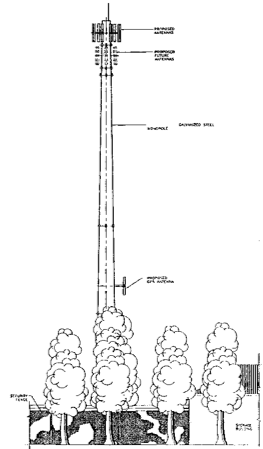
Wrecked motor vehicle compound: An area used to store disabled or impounded motor vehicles until such time as their disposition (either by junk, salvage, repair, etc.) has been determined by the insurance company, the owner of the vehicle, or his legal representative.
Y—Definitions.
Yard sale: The temporary sale of home furniture, appliances, clothing and/or domestic items owned by an occupant of a residential dwelling and taking place on the premises on which such occupant resides, whether in the yard or in a carport or garage. Yard sales which do not take place on the premises on which such occupant resides are considered open-air businesses, except that this shall not be construed to prevent the sale of such items by another family or household in connection with an event where such items are sold by the occupant of a residence on the premises where the yard sale occurs. This term includes garage sales.

