Zoneomics Logo
search icon

Franklin Park City Zoning Code

CHAPTER 5

- Commercial Districts

9-5-1.- Purpose statements.

A.

C-1 Neighborhood convenience district. The C-1 Neighborhood Convenience District accommodates low intensity commercial uses primarily intended to serve the daily/frequent needs of those residing within the adjacent neighborhoods. This district may serve as a transition between the Village's low intensity residential districts, and more intensely developed commercial districts.

B.

C-2 Community shopping district. The C-2 Community Shopping District is intended to provide for a mixture of retail, personal service, office and residential uses in a commercial environment designed to serve the community-at-large. The C-2 District permits a broader range of commercial uses than those within the C-1 District, and as such may serve as an appropriate transition between areas of greater and lesser development intensity within the Village.

C.

C-3 General commercial district. The C-3 General Commercial District is intended to provide for a full range of commercial activities, including those that may serve both local and regional markets. Such activities may generate considerable traffic, and typically require significant area to accommodate parking and ensure adequate transitions to lower intensity districts. District regulations are intended to ensure the mitigation of any potential impacts related to business establishments on neighboring uses.

D.

C-4 Commercial flex district. The C-4 Commercial Flex District is intended to provide for a diverse, mixed-use environment encapsulating a broad range of permitted uses, from light artisan industrial to retail to residential dwellings. The standards of the C-4 District acknowledge the constraints associated with existing development sites and provide flexibility for the reuse or redevelopment of existing structures.

E.

C-5 Commercial manufacturing district. The C-5 Commercial Manufacturing District accommodates those areas of the Village that are characterized by small or shallow development parcels located within close proximity to or adjacent to the railroad. The C-5 District provides for a mixture of light industrial, contractor, and artisan uses with a variety of compatible commercial uses. The standards of the C-5 District acknowledge the constraints associated with existing development sites and provide flexibility for the reuse or redevelopment of existing structures.

9-5-2. - Uses.

Chapter 9 lists allowed principal, temporary, and accessory uses for the commercial districts.

9-5-3. - Dimensional standards.

Table 5-1: Commercial Districts Dimensional Standards establishes the dimensional standards for the commercial districts. These regulations apply to all uses within each district unless a different standard is listed for a specific use.

Table 5-1: Commercial Districts Dimensional Standards
C-1 C-2 C-3 C-4 C-5
Bulk Standards
Minimum Lot Area 3,000sf N/A 3,000sf N/A N/A
Minimum Lot Width 25 feet N/A 25 feet 25 feet 25 feet
Minimum Dwelling Unit Size 900sf/du 900sf/du 900sf/du 900sf/du 900sf/du
Maximum Building Height 1 35 feet 45 feet 60 feet 45 feet 45 feet
Minimum Greenspace Requirement For lots of 5,000sf or less: 25 percent of each required setback

For lots of more than 5,000sf: 50 percent of each required setback
For lots of 5,000sf or less: 25 percent of each required setback

For lots of more than 5,000sf: 50 percent of each required setback
For lots of 5,000sf or less: 25 percent of each required setback

For lots of more than 5,000sf: 50 percent of each required setback
For lots of 5,000sf or less: 25 percent of each required setback

For lots of more than 5,000sf: 50 percent of each required setback
For lots of 5,000sf or less: 25 percent of each required setback

For lots of more than 5,000sf: 50 percent of each required setback
Setback Requirements
Front Setback Build-To Zone 0 feet - 25 feet 5 feet - 25 feet 25 feet 5 feet - 15 feet 5 feet - 15 feet
Minimum Interior Side Setback None, unless the side lot line is adjacent to residential district, then 15 feet None, unless the side lot line is adjacent to residential district, then 20 feet None, unless the side lot line is adjacent to residential district, then 20 feet None, unless the side lot line is adjacent to residential district, then 10 feet None, unless the side lot line is adjacent to residential district, then 10 feet
Minimum Corner Side Setback None, unless corner side lot is adjacent to front yard of a residential district, then 15 feet None, unless corner side lot is adjacent to front yard of a residential district, then 15 feet 25 feet None, unless corner side lot is adjacent to front yard of a residential district, then 15 feet None, unless corner side lot is adjacent to front yard of a residential district, then 15 feet
Minimum Rear Setback 20 feet 20 feet 20 feet None, unless adjacent to residential district, then 20 feet None, unless adjacent to residential district, then 20 feet


1 See definition of building height (Chapter 2) for maximum building height exceptions.

9-5-4. - Design standards.

The following design standards apply to new construction, substantial repair or rehabilitation meant to remedy damage or deterioration of the exterior façade of an existing structure, and additions to an existing structure. However, only those standards that relate to the specific repair, rehabilitation, or addition action apply. These standards do not apply to interior remodeling.

A.

Design standards. Table 5-2: Commercial District Design Standards indicates the applicability of building design standards to the commercial districts. An "✓" indicates that the standard is applicable in the district indicated. The absence of an "✓" indicates that the standard is not applicable.

Table 5-2: General Building Design Standards
C-1 C-2 C-3 C-4 C-5
Façade Design
Building façades that face a street must not contain blank wall areas that exceed 40 linear feet, measured parallel to the street.
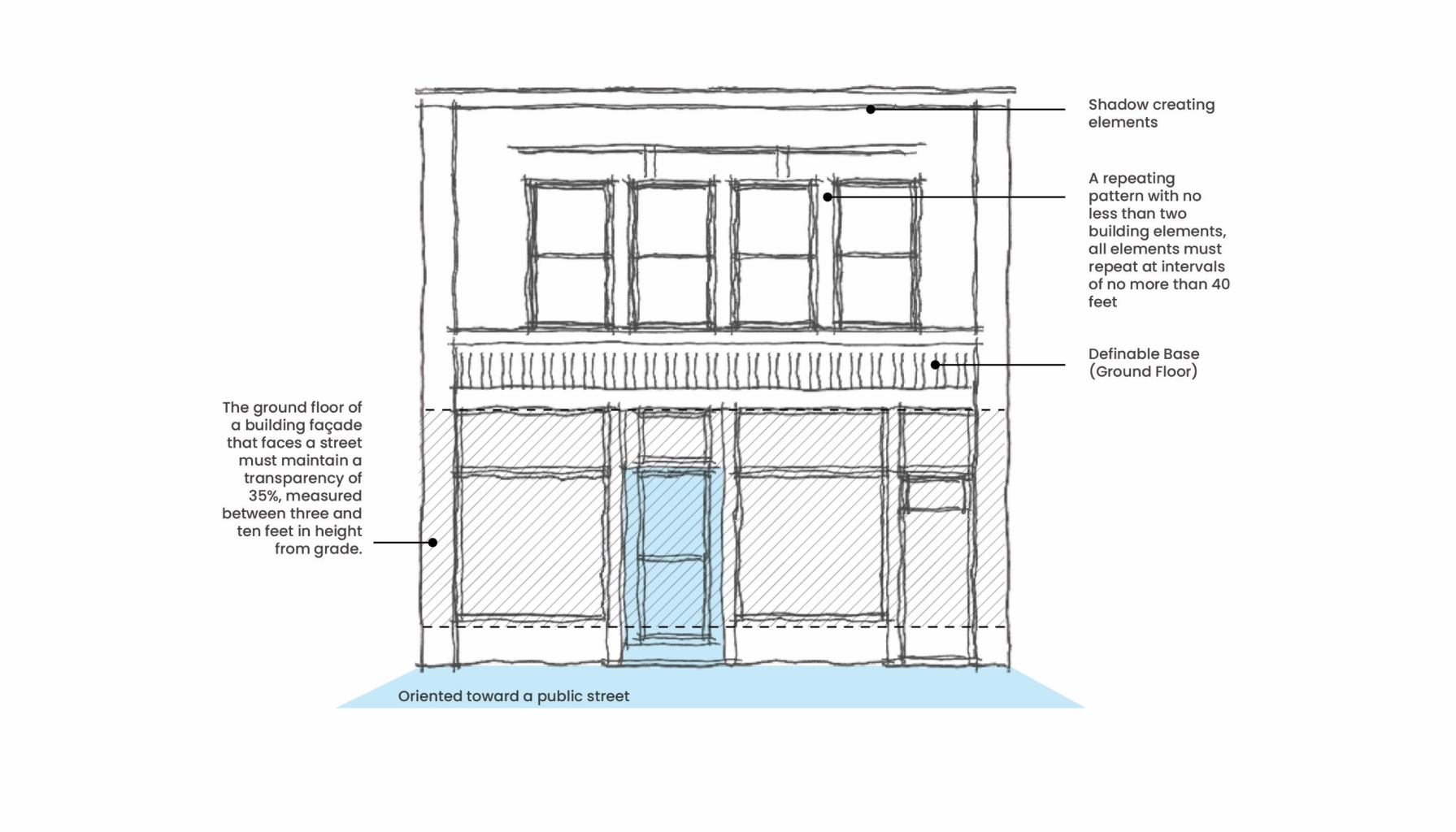
Building façades in excess of 100 feet that face a public street must include a repeating pattern with no less than two of the following elements: windows; color change, texture change, material module change, or a wall articulation change of no less than two feet in depth, such as a reveal, pilaster, or projecting rib. All elements must repeat at intervals of no more than 40 feet.
All buildings of three or more stories must be designed with a definable base (ground floor), using architectural features such as cornice treatments, recesses, corbeling, brick courses, and window designs.
Building materials and visual elements used on the primary façade must continue on all building façades that abut a street and any façade abutting a residential district.
Entry Design
Ground floor building entrances must address adjacent streets, and must be visually distinctive or prominent on the building façade. This may be accomplished through the use of architectural features such as entranceway roofs, canopies or awnings, entranceway recesses, a chamfered corner, sidelight windows, transom windows, or other adjacent window designs.
Window Design
The ground floor of a building façade that faces a street must maintain a transparency of the percentage shown in the applicable column, measured between three and ten feet in height from grade. 50 percent 35 percent 35 percent 35 percent 35 percent
Upper floors of a building façade that faces a street must maintain a transparency of the percentage shown in the applicable column of the wall area of the story. 20 percent 20 percent 20 percent
Roof Design
Rooflines over 100 linear feet in building length must be variegated, and incorporate a major focal point feature, such as a dormer, gable, or projected wall feature. An element of variegation on the roofline must occur at intervals of no more than 75 feet.
Parapet walls must feature three-dimensional cornice treatments or other shadow-creating details along their tops.
Green roof, blue roof, and white roof designs are encouraged.
Reflective roof surfaces that produce glare are prohibited, except for roofs designed to radiate absorbed or non-reflected solar energy and reduce heat transfer to the building.
Site Design
Sites must be designed to ensure safe pedestrian access from a public street, and safe pedestrian circulation within the development.
A cohesive character is required through the use of coordinated hardscape treatment (special paving materials, lighting, street furniture, etc.) and landscaping.
Any outlot buildings must meet the minimum transparency requirements of the district along façades facing the street.


B.

Building material restrictions. The following building materials may only be used as decorative or detail elements for up to thirty (30) percent of any building façade that abuts a public street or a residential district, or as part of construction that is not used as an exterior surface finish material.

1.

Plain concrete masonry units (CMU) and cinder blocks.

2.

Exposed aggregate concrete wall panels.

3.

Corrugated metal.

4.

Exterior insulating finish systems (EIFS).

5.

T-111 composite plywood siding.

6.

Plastic.

7.

Vinyl or asphalt siding.

8.

Architectural foam.

C-1 NEIGHBORHOOD CONVENIENCE DISTRICT
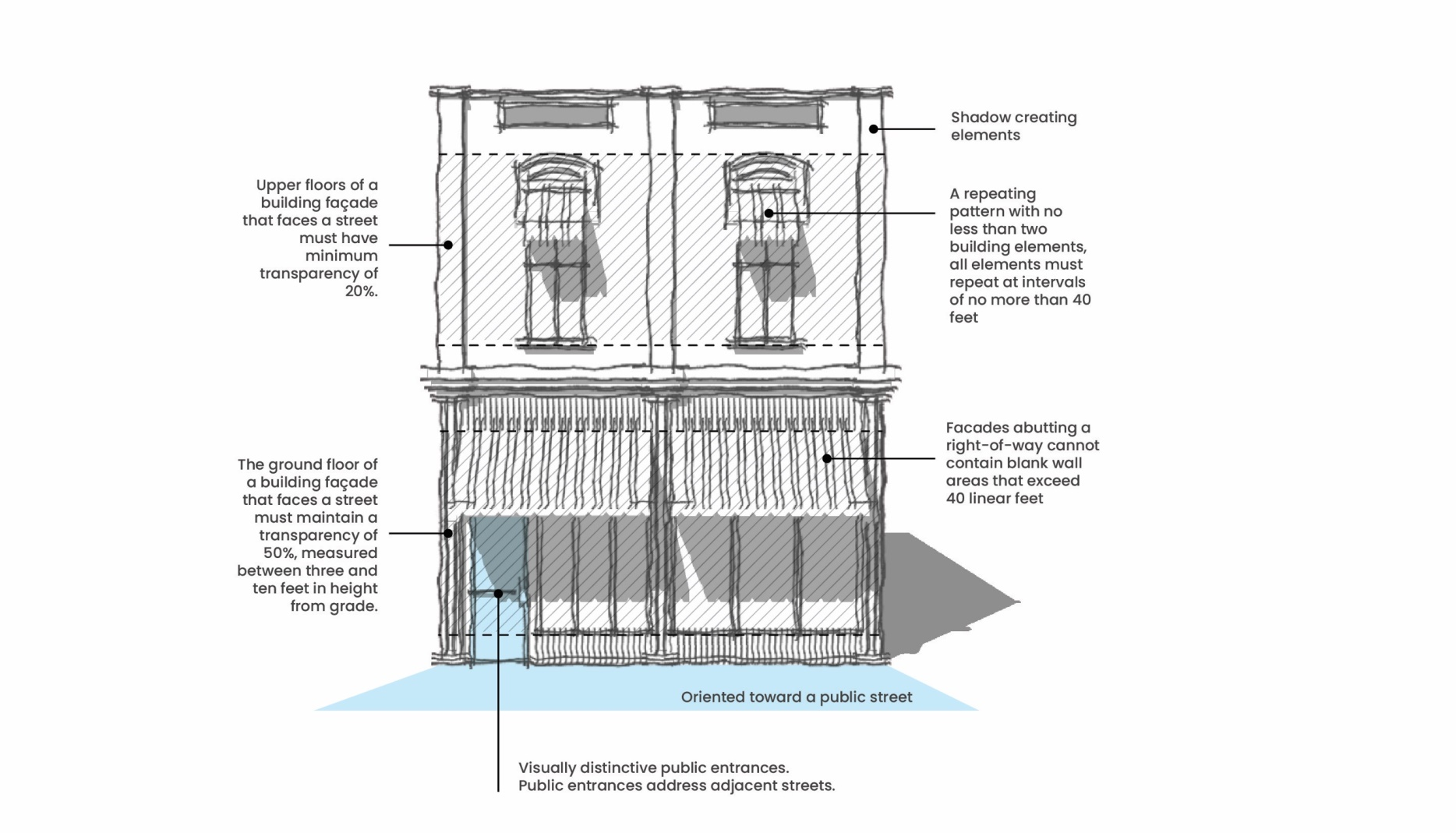

C-2 COMMUNITY SHOPPING DISTRICT
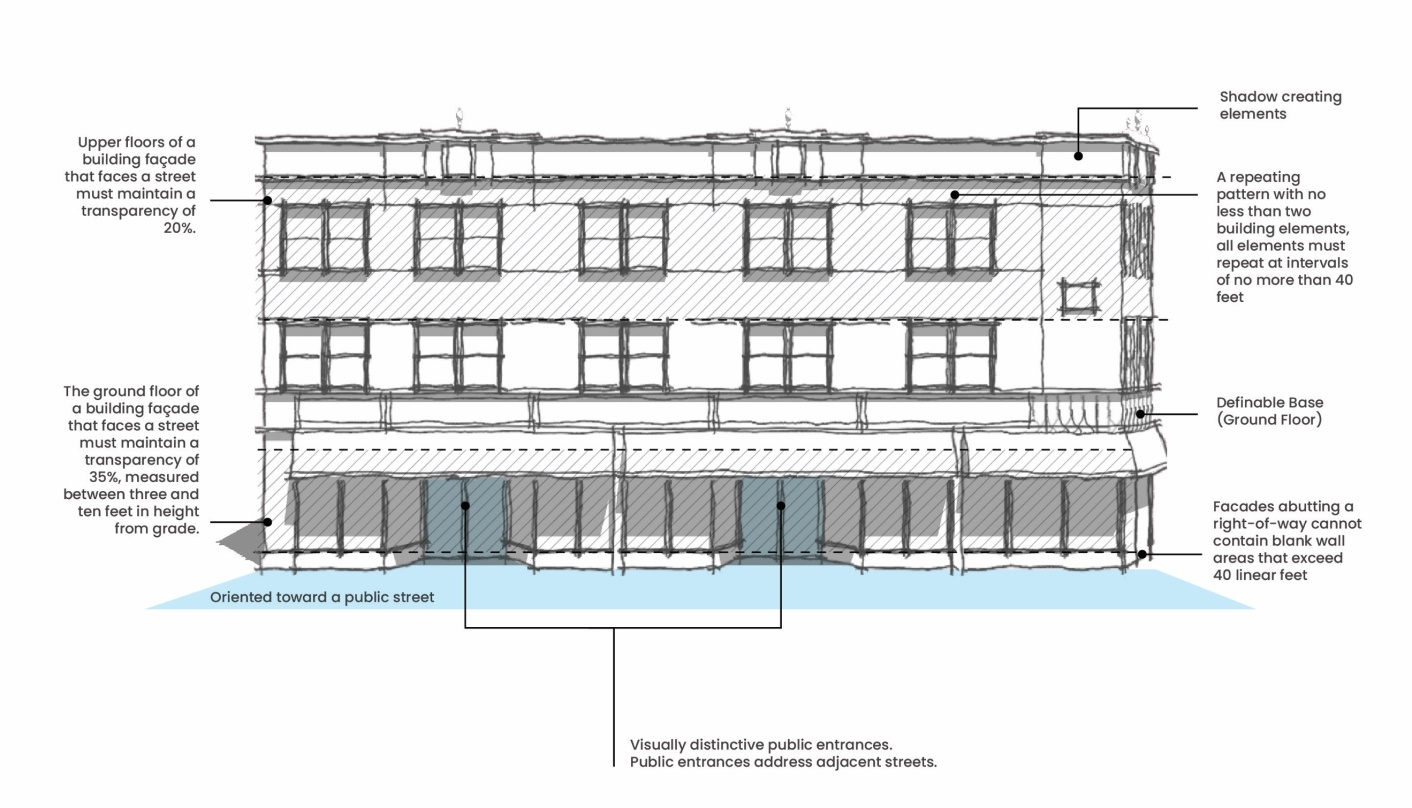

C-3 GENERAL COMMERCIAL DISTRICT
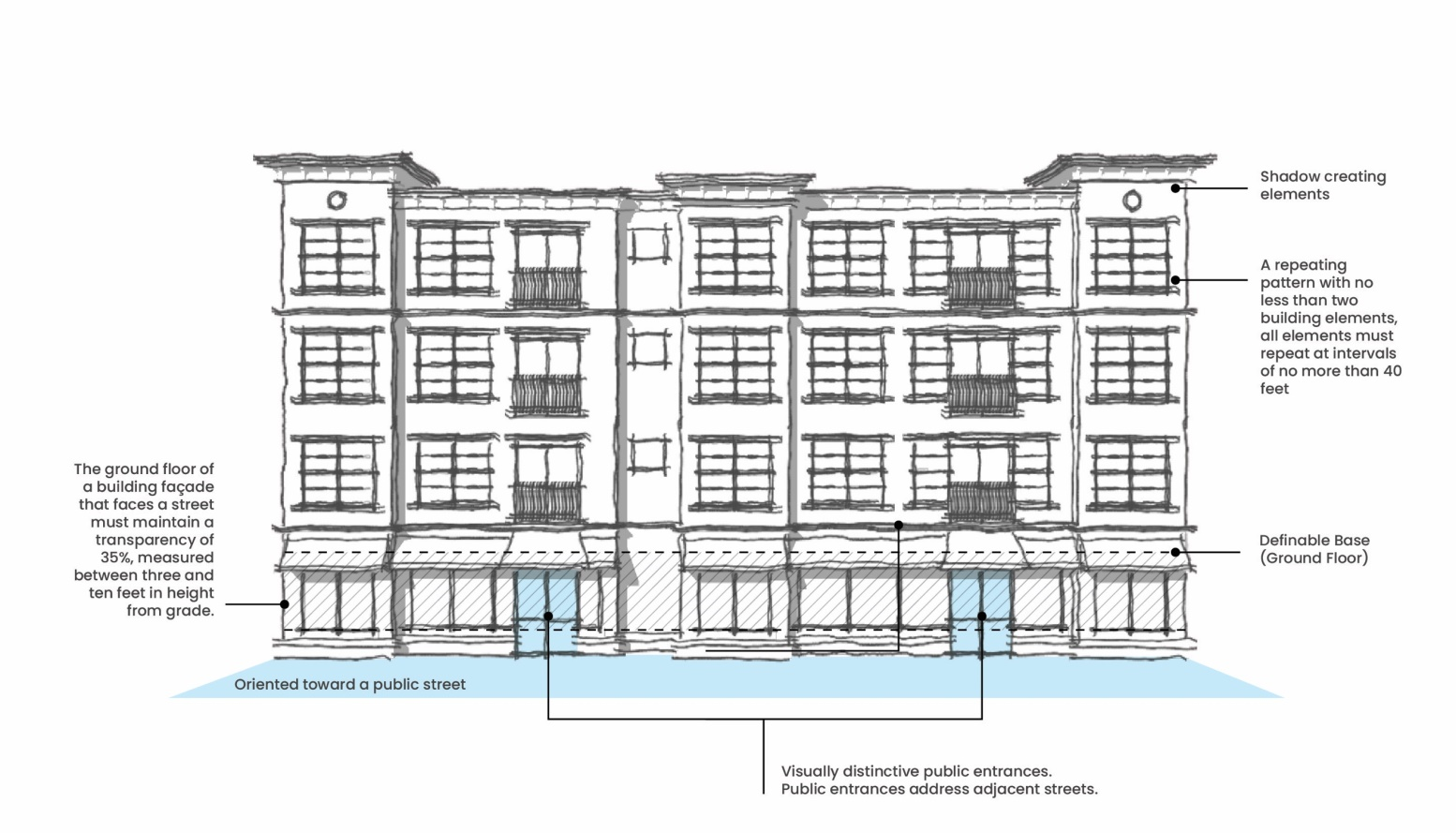

C-4 COMMERCIAL FLEX DISTRICT
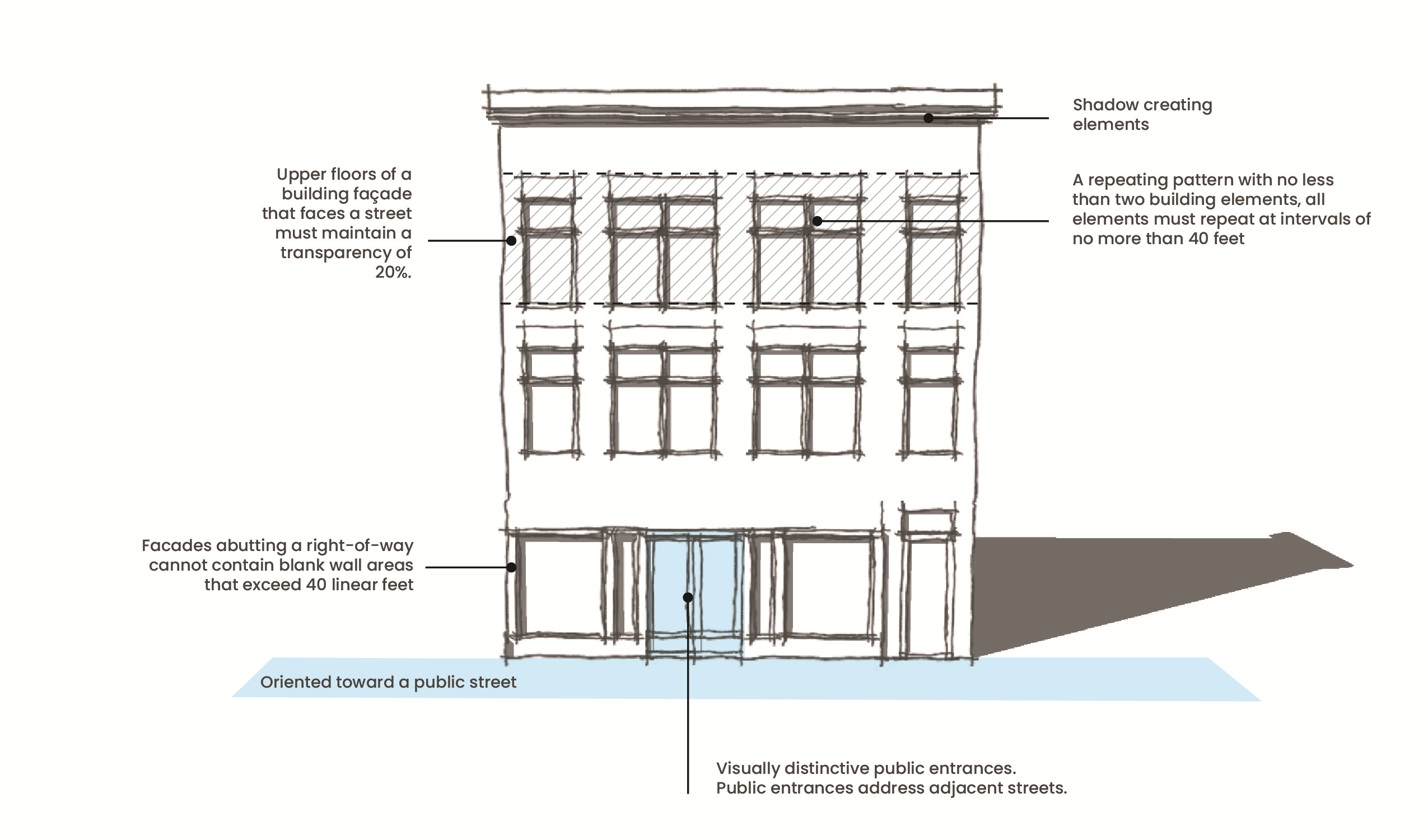

C-5 COMMERCIAL MANUFACTURING DISTRICT

9-5-5. - General standards.

A.

Site development standards. See Chapter 10 for on-site development standards and requirements, such as exterior lighting, accessory structures, and permitted encroachments.

B.

Off-street parking and loading. See Chapter 11 for off-street parking and loading standards and requirements.

C.

Landscape. See Chapter 12 for landscape, buffering, and screening standards and requirements.

D.

Signs. See Chapter 13 for sign standards.

