
Franklin Park City Zoning Code
CHAPTER 6
- Downtown Districts
9-6-1.- Purpose statements.
A.
DT-1 Downtown core district. The DT-1 Downtown core district is intended to accommodate a mixed-use development environment predominantly characterized by walkable, pedestrian-oriented retail and service uses on the ground floor, with office and residential uses above. Form standards included for the district establish a strong street wall, with buildings located close to the sidewalk and parking areas located to the rear of structures.
B.
DT-2 Downtown mix district. The DT-2 Downtown mix district accommodates a flexible mixed-use development environment predominantly characterized by walkable, pedestrian oriented retail and service uses, intermixed with other uses which may be appropriate on the ground floor. Residential uses are encouraged above the ground floor, and form standards for the district ensure the continuation of the downtown development form, but with additional flexibilities for accommodation of off-street parking.
C.
DT-3 Downtown edge district. The DT-3 Downtown edge district is a lower intensity mixed-use district, allowing a mixture of more traditional office and residential development forms. Form standards included for the district ensure that buildings continue to address the street and pedestrian realm, but allow greater flexibility for the incorporation of setbacks and significant landscaping where appropriate to soften their appearance.
D.
DT-4 Downtown transition district. The DT-4 Downtown transition district is intended to accommodate a mixture of residential dwelling forms in close proximity to downtown Franklin Park. District standards permit multi-family, townhouse, and single-family development in a variety of configurations to create effective and appropriate transitions from Downtown Franklin Park into adjacent established residential areas of the Village.
9-6-2. - Uses.
Chapter 9 lists allowed principal, temporary, and accessory uses for the downtown districts.
9-6-3. - Dimensional standards.
A.
Primary streets established. For the purposes of applying the dimensional standards of this section, the following streets are designated as primary streets:
1.
Belmont Avenue, from Washington Street to Rose Street.
2.
Pacific Avenue, from Rose Street to Emerson Street.
3.
Franklin Avenue, From Edgington Street to Ruby Street.
4.
Rose Street, from Schiller Boulevard to Minneapolis Avenue.
B.
Building above fifty (50) feet in height. In all downtown districts, buildings fifty (50) feet in height or taller require review and recommendation by the Zoning Board of Appeals prior to approval of the zoning certificate.
C.
District dimensional standards. Table 6-1: Downtown Districts Dimensional Standards establishes the dimensional standards for the downtown districts. These regulations apply to all uses within each district unless a different standard is listed for a specific use.
1 See definition of building height (Chapter 2) for maximum building height exceptions.
9-6-4. - Design standards.
The following design standards apply to new construction, substantial repair or rehabilitation meant to remedy damage or deterioration of the exterior façade of an existing structure, and additions to an existing structure. However, only those standards that relate to the specific repair, rehabilitation, or addition action apply. These standards do not apply to interior remodeling.
A.
Design standards. Table 6-2: Downtown District Design Standards indicates the applicability of building design standards to the downtown districts. A "✓" indicates that the standard is applicable in the district indicated. The absence of a "✓" indicates that the standard is not applicable.
B.
Building material restrictions.
1.
Building façade materials. The following building materials may only be used as decorative or detail elements for up to thirty (30) percent of any building façade that abuts a public street or a residential district, or as part of construction that is not used as an exterior surface finish material.
a.
Plain concrete masonry units (CMU) and cinder blocks.
b.
Exposed aggregate concrete wall panels.
c.
Corrugated metal.
d.
Exterior insulating finish systems (EIFS).
e.
T-111 composite plywood siding.
f.
Plastic.
g.
Vinyl or asphalt siding.
h.
Architectural foam.
2.
Roof materials. Acceptable roof materials include three hundred (300) pound or better, dimensional asphalt composite shingles, wood shingles and shakes, metal tiles or standing seam, slate, and ceramic tile. "Engineered" wood or slate may be approved during the site plan process with an approved sample and examples of successful, high quality local installations.
3.
Color. Main building colors shall utilize any historic palettes from any major paint manufacturer. Other colors may be utilized for details and accents, not to exceed a total area larger than ten (10) percent of the façade surface area.
4.
Appropriate grade of materials. Commercial quality doors, windows, and hardware shall be used on all building types with the exception of the row building and the yard building.
C.
Windows and shutters.
1.
All upper story windows on all historic, residential, and mixed-use buildings must be recessed. Horizontal or vertical strip windows, tinted or reflective glass, and glass block are prohibited on street facades.
2.
Grills must be fully retractable and completely within the interior of the building and inconspicuous to the extent possible. Exterior bars are prohibited on any window.
4.
If installed, shutters, whether functional or not, must be sized for the windows. If closed, the shutters cannot be too small for complete coverage of the window. Shutters must be wood. Engineered wood may be approved during the site plan process with an approved sample and examples of successful, high quality local installations.
DT-1 DOWNTOWN CORE DISTRICT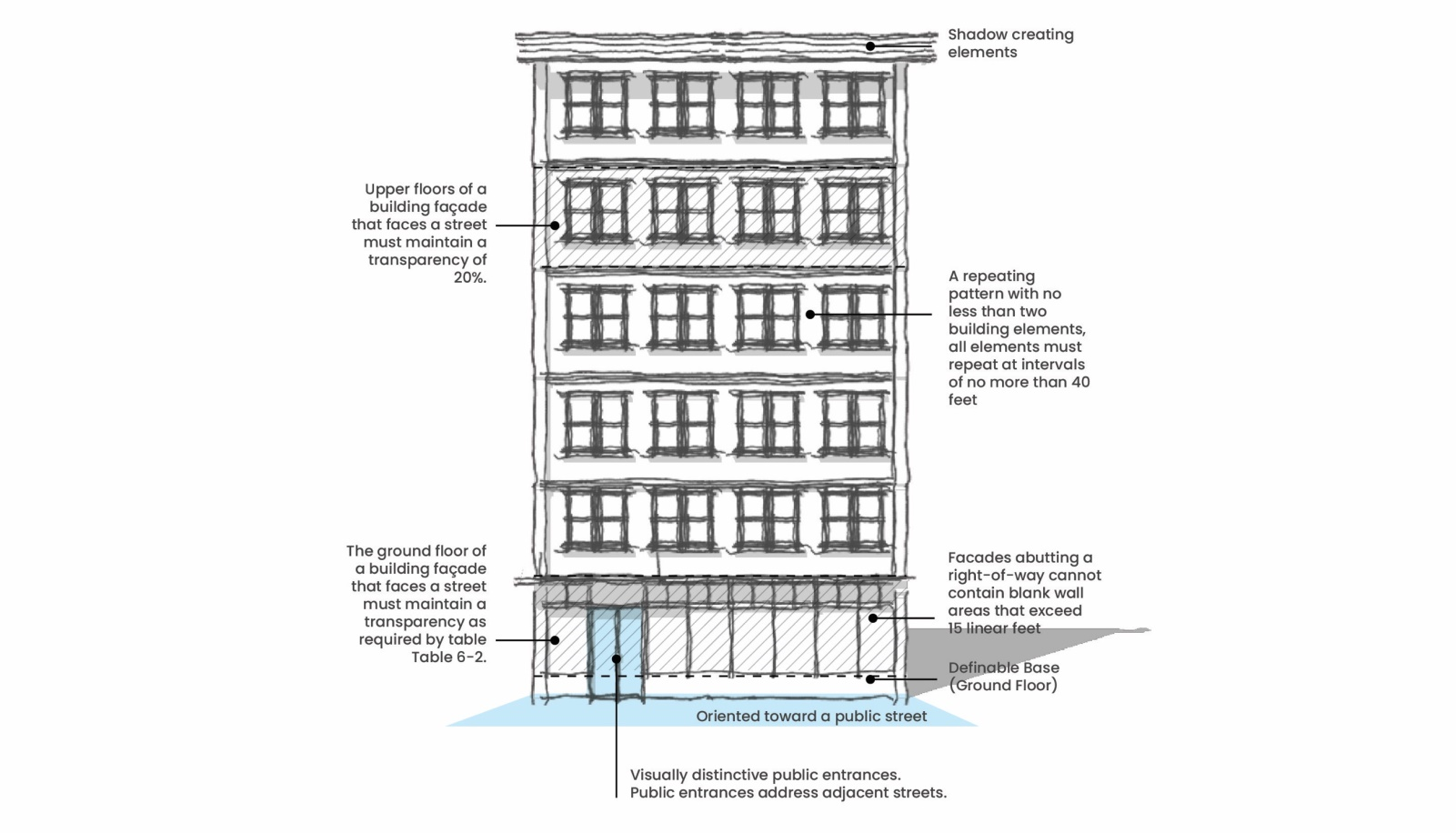
DT-2 DOWNTOWN MIX DISTRICT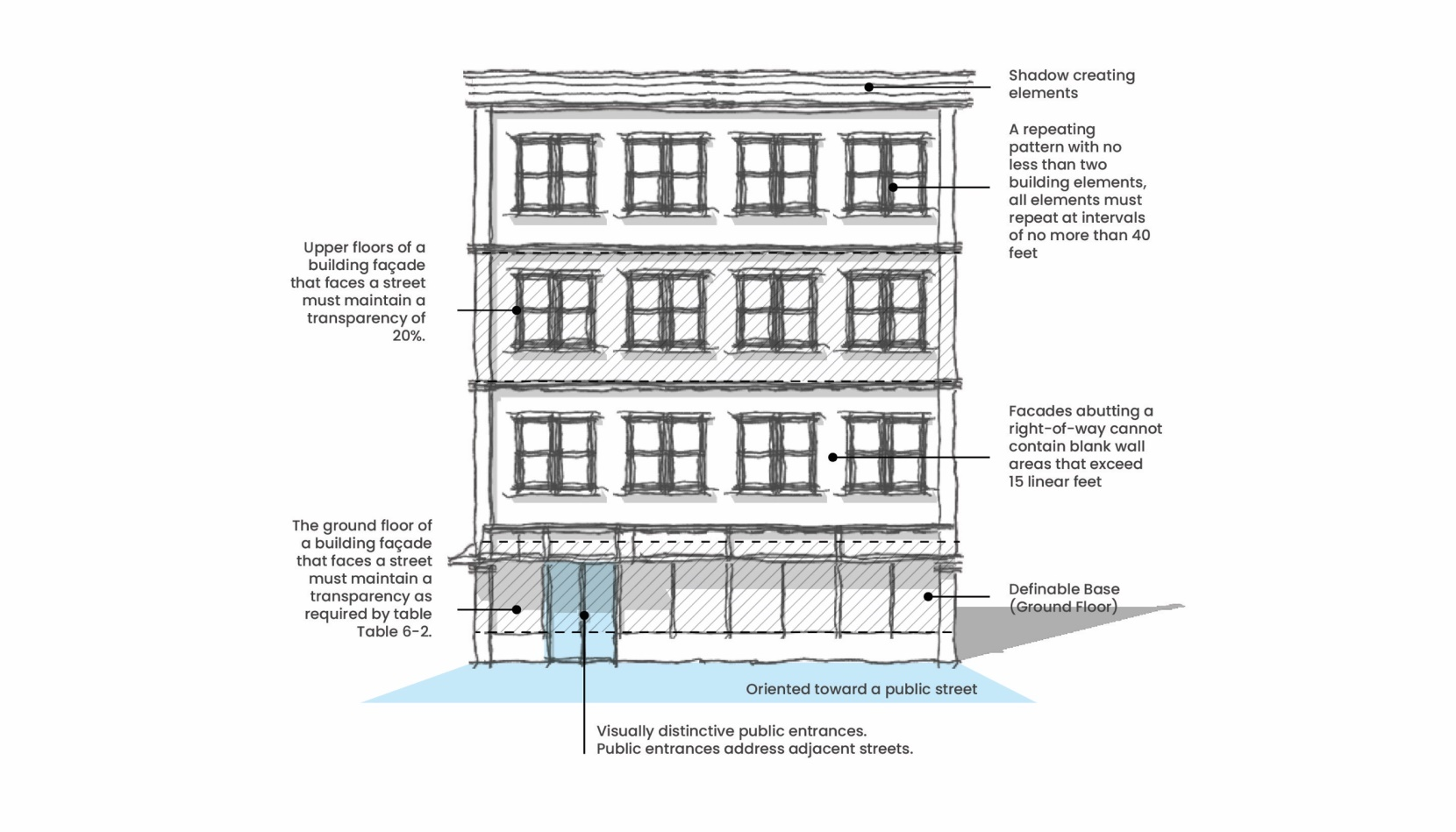
DT-3 DOWNTOWN EDGE DISTRICT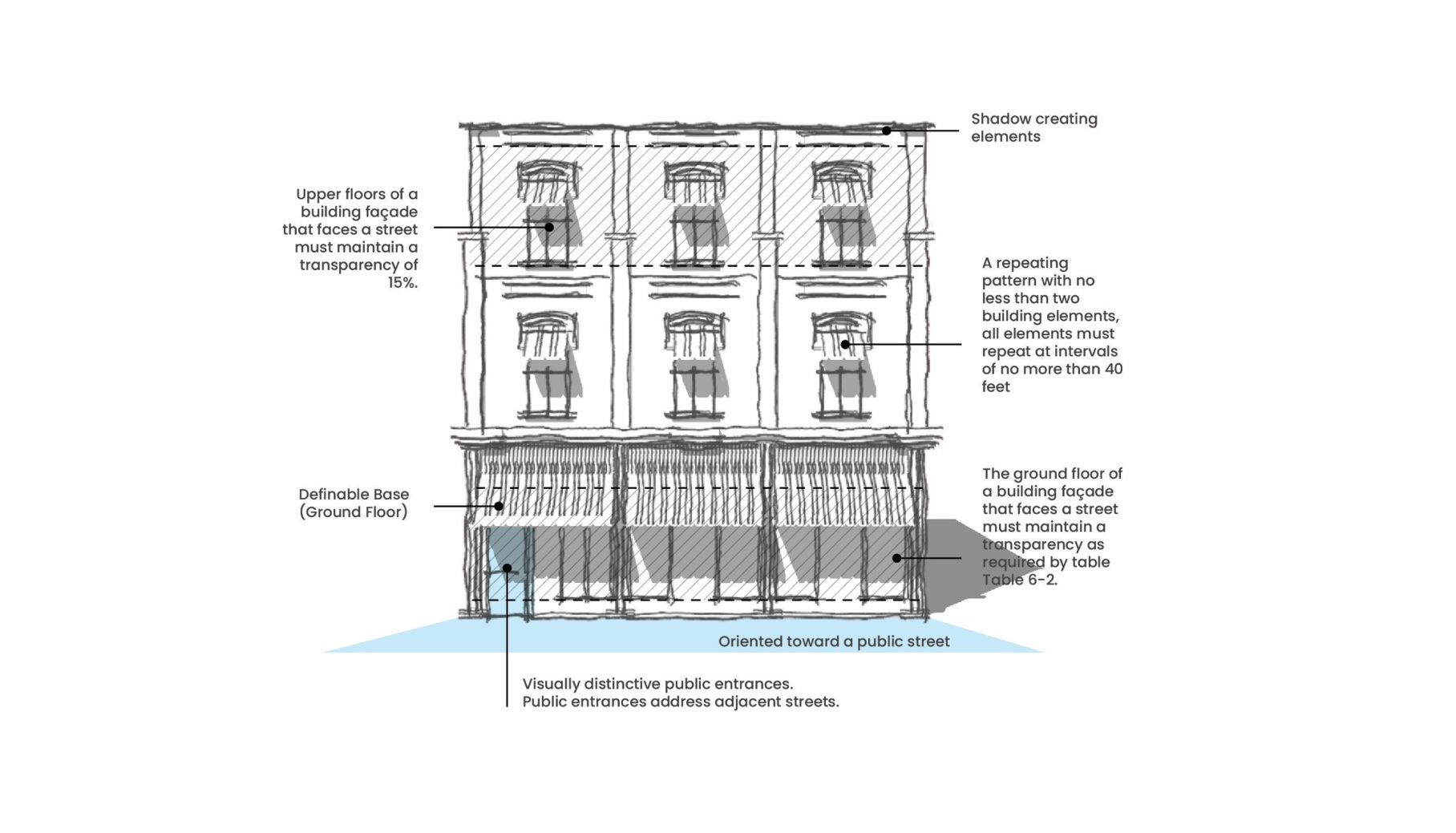
DT-4 DOWNTOWN TRANSITION DISTRICT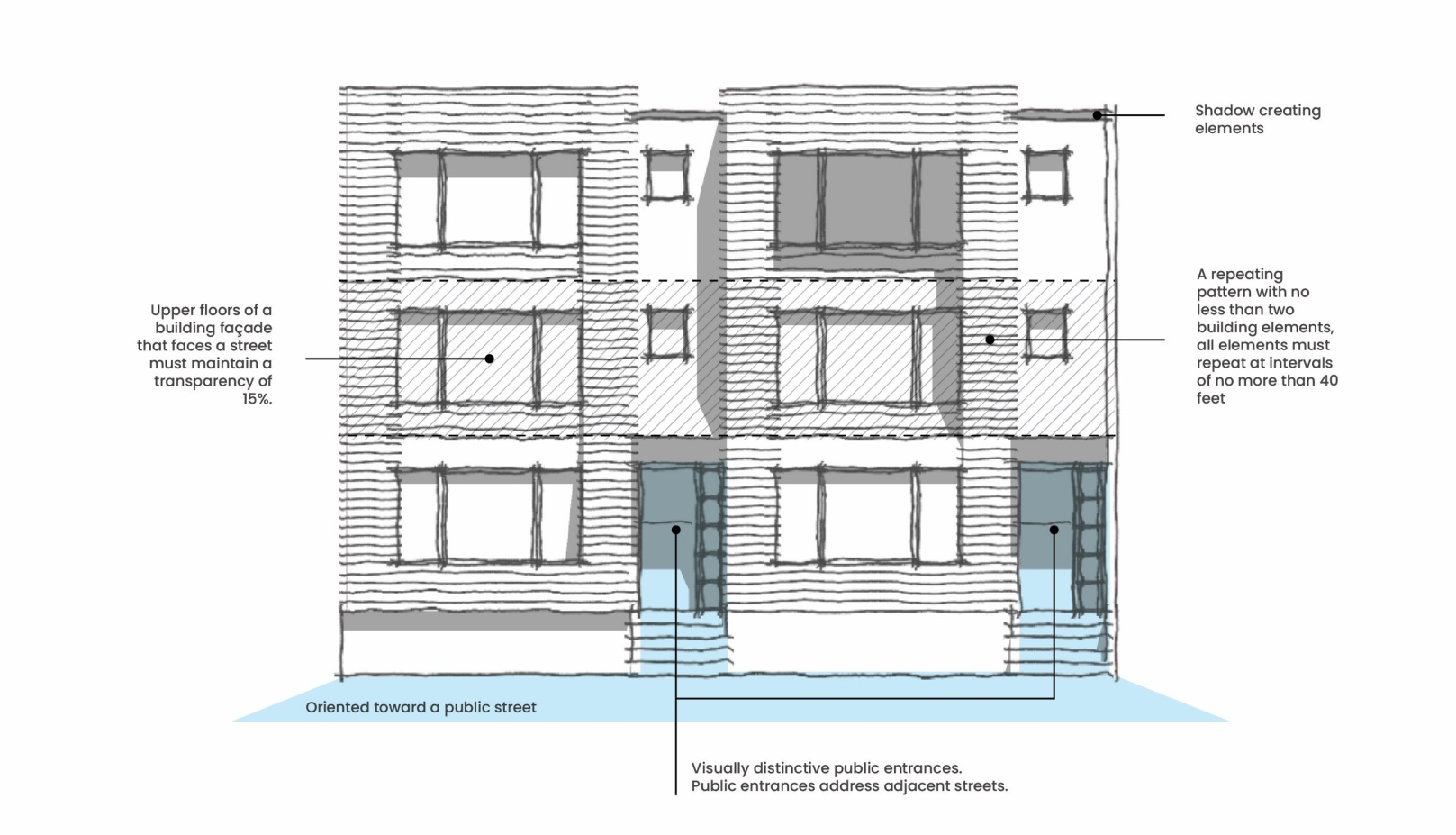
9-6-5. - General standards.
A.
Site development standards. See Chapter 10 for on-site development standards and requirements, such as exterior lighting, accessory structures, and permitted encroachments.
B.
Off-street parking and loading. See Chapter 11 for off-street parking and loading standards and requirements.
C.
Landscape. See Chapter 12 for landscape, buffering, and screening standards and requirements.
D.
Signs. See Chapter 13 for sign standards.

