
Herriman City Zoning Code
CHAPTER 10
29 SUPPLEMENTARY AND QUALIFYING REGULATIONS
10-29-1 Purpose
The purpose of this chapter is to provide for the miscellaneous land development regulations which apply throughout the city regardless of zone.
(Code 2023, § 10-29-1; Ord. No. 2017-54, 12-13-2017)
Adopted by Ord. 2025-13 on 5/14/2025
10-29-2 Scope
The requirements of this chapter shall apply in addition to the development and use standards set forth in other chapters of this title and shall prevail over any conflicting provision of this title unless a different requirement is expressly intended to supersede such provision.
(Code 2023, § 10-29-2; Ord. No. 2017-54, 12-13-2017)
Adopted by Ord. 2025-13 on 5/14/2025
10-29-3 Definitions.
Certain words and phrases in this chapter are defined in HCC chapter 10-3.
(Code 2023, § 10-29-3; Ord. No. 2017-54, 12-13-2017)
Adopted by Ord. 2025-13 on 5/14/2025
10-29-4 Abandoned And Junk Vehicles
- Prohibited. Parking or storage of any abandoned, wrecked, or junk vehicle in any zone shall be prohibited except as expressly authorized under this title or this Code.
- Exceptions. Notwithstanding the foregoing, storage of vehicles is permitted as follows:
- One truck, with a capacity of one ton or less, or one automobile which is not currently licensed and registered in the state or another state but is otherwise operable, may be stored on property for two years if it is secured with the windows closed, the trunk and hood closed, and the doors locked, and is not damaged, exposing jagged metal.
- One truck, with a capacity of one ton or less, or one automobile which is inoperable, may be stored in a side yard, except a side yard which faces on a street, or a rear yard on property for two years, provided:
- The automobile or truck is secured with the windows closed, the trunk and hood closed, and the doors locked, and is not damaged, exposing jagged metal;
- The automobile or truck is not visible from any public street; and
- The automobile or truck is entirely concealed by a covering which is maintained in good condition and which does not extend closer to the ground than the lowest point of the vehicle body.
- All existing legal nonconforming motor vehicles as of the effective date of the ordinance from which this section is derived, or any amendment hereto, shall comply with the provisions of this subsection within one year from the date of the enactment of the ordinance from which this section is derived or any amendment thereto.
(Code 2023, § 10-29-4; Ord. No. 2017-54, 12-13-2017)
Adopted by Ord. 2025-13 on 5/14/2025
10-29-5 Accessory Vehicle Storage
- Purpose. As recreational and accessory vehicle ownership continues to be desirable for city residents, it is the intent of this section to continue allowing that to occur, while also protecting neighborhoods and the community from unsafe accessory vehicle storage. It also intends to promote a desirable approach to accessory vehicle storage on residentially zoned lots.
- Accessory vehicle storage shall be permitted in residential (R), agricultural (A), and forest recreation (FR) zones as follows:
- Outdoor accessory vehicle storage shall not be allowed on any lot zoned as agricultural (A), residential (R), or forest recreation (FR), except when:
- A permanent home is located on the lot, or a lot is contiguous with a permanent home under one common owner; or
- Other primary use is established on the property; or
- As specified in subsection (B)(2)(a) of this section.
- Recreational vehicles shall not be occupied when located on any property, except:
- When being used as a temporary shelter (travel trailer, camper, etc.) to allow a property owner to construct a single-family home on their vacant lot for a period of no longer than one year.
- The property owner must obtain a land use permit from the city allowing temporary occupancy of the recreational vehicle on the property.
- The property owner must have evidence of having obtained a legal building permit for the home from the city on site.
- The recreational vehicle must be located on the property so as not to interfere with traffic or sidewalk circulation and may attach to any utility, including water, sewer, gas or electrical, with the required permits.
- The recreational vehicle and site must be maintained in a manner as not to create excessive amounts of trash, smells and unnecessary debris.
- The property owner complies with the noise control provisions of HCC chapter 4-6.
- When being used as a temporary shelter (travel trailer, camper, etc.) to allow a property owner to construct a single-family home on their vacant lot for a period of no longer than one year.
- No storage of material is permitted in any recreational vehicle located on a lot zoned as agricultural (A), residential (R), or forest recreation (FR). Storage of materials includes hazardous materials, flammable materials, or a large number of items that interfere with the safe operation of the recreational vehicle.
- All AVs stored on any property described above shall be maintained in good working condition.
- For AVs with wheels, proper blocking which ensures secure storage on the site, especially on sloped storage areas is required.
- The number of allowed accessory vehicles, including recreational vehicles and utility trailers, for each of the following lots zoned as agricultural (A), residential (R), or forest recreation (FR) is as follows:
Up to 0.25 acres (0--10,890 square feet) Total of 4 0.25 acres to 1 acre (10,891--43,560 square feet) Total of 6 1 to 5 acres (43,561--217,800 square feet) Total of 8 5+ acres Total of 10 - Accessory vehicles located entirely within a garage or accessory structure do not count towards the total allowed on the property.
- Agricultural vehicles and machinery used for active agricultural activities on the property where they are stored, and which is larger than 0.5 acres, do not count as accessory vehicles.
- Exception to exceed the total number of allowed AVs on a property.
- An applicant may exceed the total number of allowed AVs on a property by a maximum of:
For lots 0.25 acres and less 1 For lots 0.25--1 acres 2 For lots 1--5 acres 3 For lots greater than 5 acres 4 - A conditional use for AV storage must be applied for which includes obtaining a home occupation for AV storage.
- When an applicant exceeds the maximum number of AVs allowed on a property the following improvements shall be provided:
- All storage of AVs must be on an improved surface of one of the following:
- Concrete.
- Asphalt.
- Gravel, when installed at a minimum four inches deep and which includes a four-inch-wide and four-inch-tall concrete boundary. If gravel is installed the applicant shall maintain the area weed-free.
- Screening from adjacent properties. A minimum six-foot solid fence shall be installed around the entire property where the AV storage is located.
- All AVs shall be parked no closer than three feet from any adjacent property in the sides and rear portions of the lot.
- All AVs shall be maintained in good condition; no storing of inoperable, junk vehicles is permitted.
- No AV shall be occupied as living quarters while stored on the lot.
- All storage of AVs must be on an improved surface of one of the following:
- An applicant may exceed the total number of allowed AVs on a property by a maximum of:
- The number of allowed accessory vehicles, including recreational vehicles and utility trailers, for each of the following lots zoned as agricultural (A), residential (R), or forest recreation (FR) is as follows:
- Permitted vehicle storage location and access.
- Construction of accessory vehicles is not permitted in any (A) agricultural, (R) residential, or (FR) forest recreational zone. Repair/remodeling of personally owned AVs is permitted on site.
- Access to location.
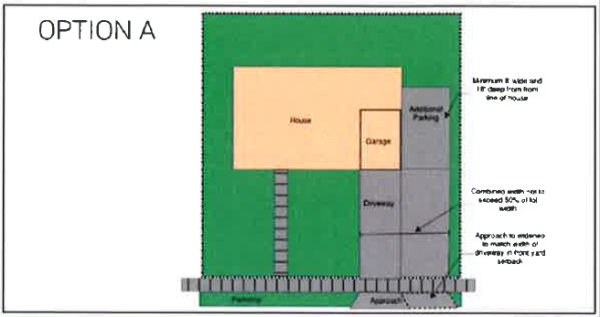
- Any new driveway shall be reviewed by city staff to ensure adequate access to the storage site. When an additional driveway or widening of the primary driveway is necessary (see Option A illustration below), the applicant shall provide a drive approach within the public right-of-way.
- The widened, or additional, drive approach shall be paved with concrete as approved by the city when within public right-of-way.
- A permit from the city is required to perform any work in the public right-of-way.
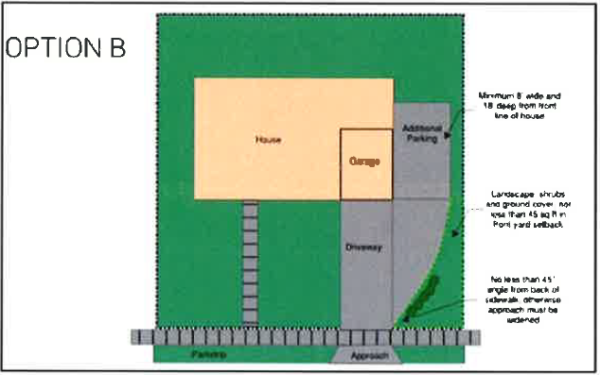
- A driveway taper approach is also allowed (see Option B illustration below) when driveway access is provided at no less than a 45-degree angle from the public sidewalk, or other point as determined appropriate by staff. The remnant area in the front yard setback shall be landscaped with a minimum ground cover, provided that this option is not allowed if the remnant landscaped area is less than 45 square feet.
- Any new driveway shall be reviewed by city staff to ensure adequate access to the storage site. When an additional driveway or widening of the primary driveway is necessary (see Option A illustration below), the applicant shall provide a drive approach within the public right-of-way.
- The parking area for accessory vehicles shall be kept in good condition, be regularly maintained, and shall be constructed as to not cause drainage onto adjacent properties.
- Driveway access shall be provided to the accessory parking from the front lot line to the rear yard setback with materials provided for in subsection (B)(7)(d)(3) of this section.
- If the side yard is fenced, driveway access shall only be required to the front yard setback.
- If access to the accessory storage are comes from an approved driveway that is not the main access for the home, an improved surface shall be provided for within 20 feet of any public road, sidewalk, trail, or right-of-way as provided for in subsection (B)(7)(d)(3) of this section.
- A hard surface material which is limited to concrete, heavy-duty driveway pavers, or asphalt. Other materials such as a gravel or crushed concrete surface, may also be utilized provided:
- The gravel or crushed concrete is at least four inches deep, compacted, and is sized between one-half inch to 1 1/2 inches; and a poured concrete or masonry border with a minimum four-inch width and four-inch depth is constructed on all exterior sides of the surface with masonry being limited to either brick, stone or precast concrete;
- Road-base or other similar materials shall not be substituted for compactible gravel or crushed concrete; and
- The surface material is properly maintained, kept free of weeds or other vegetation and is kept fully contained within the allowed area.
- Time of compliance. In order to provide city residents time to comply with city ordinance and who do not currently comply with city ordinance, no formal action by the city shall be pursued or allowed for a period of one year from the date of approval by the city council (October 10, 2025) except in cases where a code enforcement case has already been established.
- Outdoor accessory vehicle storage shall not be allowed on any lot zoned as agricultural (A), residential (R), or forest recreation (FR), except when:
(Code 2023, § 10-29-22; Ord. No. 2024-26, exh. A(10-29-22), 10-9-2024)
Adopted by Ord. 2025-13 on 5/14/2025
10-29-6 Adequate Public Facilities
Land shall be developed only where existing infrastructure is in place or will be timely provided to service proposed development. The city may require an analysis to be completed to determine whether adequate public facilities are available to service a development and whether such development will change existing levels of service or will create a demand which exceeds acceptable levels of service for roadways, intersections, bridges, storm drainage facilities, water lines, water pressure, sewer lines, fire and emergency response times, and other similar public services. The city may disapprove a proposed development if demand for public services exceeds service levels adopted by the city. No subsequent approval of such development shall be given until either the developer or the city installs improvements calculated to raise service levels to the standards adopted by the city.
(Code 2023, § 10-29-6; Ord. No. 2017-54, 12-13-2017)
Adopted by Ord. 2025-13 on 5/14/2025
10-29-7 Animals And Fowl
- Family food production. The keeping of animals and fowl is allowed as set forth in the chart below in the A-1-10, A-1-21, A-1-43, R-1-21, and R-1-43 zones.
- The number of animals and fowl may be doubled temporarily if the increase is related strictly to meat or milk production, or for a bona fide youth project such as 4-H and fair projects.
- The keeping of more animals and fowl than listed in the chart or allowed temporarily for meat or milk production may be approved in zones where family food production is allowed as a conditional use.
- Small animals and fowl shall be rabbits, chickens (including hens and pullets but excluding roosters), pheasants, ducks, and pigeons. Medium animals and fowl shall be sheep, goats, turkeys, geese, and miniature horses. Large animals shall be cows, horses, and alpaca.
- The keeping of animals and fowl shall conform to good animal husbandry practices, including, but not limited to, mitigation of noise, smells, insects, rodents, dust, or other nuisances resulting from the keeping of animals and fowl.
- No animals or fowl described in subsection (A)(3) of this section shall be kept or maintained closer than 40 feet from any dwelling on an adjacent parcel of land, and no barn, stable, coop, pen, or corral shall be kept closer than 40 feet from any street.
Zone Lot Size 0.49 Acre or Less 0.5 Acre to 0.99 Acre Per 1 Acre + A-1-10 Permitted: 40 small animals and 2 medium animals Permitted: 75 small animals, 4 medium animals, and 2 large animals Permitted: 100 small animals, 15 medium animals, and 4 large animals A-1-21 A-1-43 R-1-21 R-1-43
- Backyard chickens; authorized when. In R-1 and R-2 zones not included under family food production, persons may keep backyard chickens on detached single-family residential lots in accordance with the provisions of this subsection.
- Maximum number of backyard chickens allowed.
Lot Size (square feet) Maximum Number of Chickens Less than 5,000 0 5,000 to 7,999 4 8,000 to 9,999 6 10,000 or more 10 - At large. It is unlawful for any person who is the owner, keeper, or temporary custodian of any chicken to allow the animal to be at large, off the premises or outside the approved enclosure.
- Unsanitary conditions and animal husbandry. It is unlawful for any person to keep and maintain in an unclean or unsanitary condition any coop, enclosure or other structure or area in which any chicken is kept. The keeping of animals must conform with good animal husbandry practices, including, but not limited to, mitigation of noise, smells, insects, rodents, dust, or other nuisance type effects of family food production.
- Nuisance. It is unlawful for the owner or keeper of any chicken to allow the animal to be a nuisance to any neighbor, including, but not limited to, creating noxious odors from the animals, their waste, coop, or related structure or generating noise of a loud and persistent nature.
- Subject to inspection. All places where any backyard chickens are kept shall be subject to inspection for cleanliness, health, and sanitation purposes by a code enforcement official, animal service officer, or representative of the county health department, based on any complaint or observation that the requirements of this subsection are in violation.
- Female chickens only. Only female chickens may be kept. No ducks, geese, turkeys, peafowl, crowing hens, or roosters may be kept. No other bird species shall be kept except as provided by this Code and birds normally and generally considered household or indoor pets.
- Accessory buildings. Chicken coops shall be considered accessory buildings and are subject to the accessory building requirements of the zone in which the property is located.
- Personal use only. Chickens shall be for personal use only. The selling of eggs or fertilizer or the breeding of chickens for commercial use is prohibited.
- Slaughtering. The slaughtering of chickens on the premises is allowed in areas not visible to the public and must be accomplished in a humane and sanitary fashion. All entrails and byproducts of the slaughtering process shall be discarded in accordance with health department regulations.
- Enclosure standards.
- Chickens must be contained within an enclosure or fenced area at all times.
- Chicken enclosures shall be contained entirely behind a fence in the side or rear yard. No enclosures will be permitted in any front yard.
- Chicken coops shall be maintained in good condition.
- All chicken coops shall be placed at least 25 feet from any dwelling on an adjacent lot.
- Maximum number of backyard chickens allowed.
(Code 2023, § 10-29-7; Ord. No. 2017-54, 12-13-2017; Ord. No. 2018-13, 3-14-2018; Ord. No. 2019-21, 6-26-2019, eff. 7-1-2019; Ord. No. 2019-29, 8-28-2019; Ord. No. 2022-18, 4-27-2022; Ord. No. 2024-21, exh. A(10-29-7), 8-14-2024)
Adopted by Ord. 2025-13 on 5/14/2025
10-29-8 Antenna--Monopole On Public Or Quasi Public Property
In addition to the other provisions of this title, monopoles are allowed in the zones in which they are listed, subject to the provisions set forth in this section:
- Monopoles shall be constructed so as to allow a collocation of a second user on the base or original pole.
- The height of the pole shall be limited to 50 feet above grade, unless approved by the planning commission for a greater height, but in no case greater than 100 feet above grade.
- The distance between a monopole and a residential structure shall be at least 150 feet unless the planning commission determines a greater distance is necessary to meet the requirements for approval of a conditional use permit, when the monopole is authorized as a conditional use.
- The applicant shall submit images or drawings of a proposed monopole to show what it will look like when built. The images or drawings shall show two vantage points as determined by the community development director.
- Property owners within 600 feet of a monopole shall be given notice of the public meeting before the planning commission to consider approval of a conditional use permit.
- Every effort should be made to keep a monopole 100 feet from a public street.
- Each telecommunication company requesting a monopole shall submit a general master plan of the proposed number of poles projected within the city limits over the subsequent three years.
- A monopole and the site the pole occupies shall be properly maintained. The pole shall be removed within 60 days after the communications use is discontinued.
- Monopoles may be required to be designed to blend into their surroundings.
(Code 2023, § 10-29-8; Ord. No. 2017-54, 12-13-2017)
Adopted by Ord. 2025-13 on 5/14/2025
10-29-9 Antenna--Roof-Mounted
- Where permitted; conditional. Roof-mounted antennas shall be a permitted use in commercial, office, and industrial zones, and a conditional use in all other zones.
- Appearance. Roof-mounted antennas shall be constructed, painted, or fully screened to match as closely as possible the color and texture of the building and wall on which it is mounted.
- Screening. Roof-mounted antennas may be mounted on the top of existing penthouses or mechanical equipment rooms if the antennas and antenna support structures are enclosed or visually screened from view. Screening structures may not extend more than eight feet above the existing roofline of the penthouse or mechanical equipment room.
- Distance; height. Antennas not mounted on a penthouse or mechanical equipment room shall be mounted at least five feet back from the exterior wall of the building. The maximum height of an antenna mounted between five feet and ten feet back from the exterior wall shall be directly proportional to the setback distance and may not exceed ten feet above the roofline of the building. Antennas shall be mounted at least five feet behind any parapet wall. An antenna may not exceed more than 15 feet above the roofline of the building itself, except as allowed as a conditional use. Similarly, a roof-mounted antenna may not extend above the roofline of a penthouse or mechanical equipment room, except as allowed as a conditional use.
(Code 2023, § 10-29-9; Ord. No. 2017-54, 12-13-2017)
Adopted by Ord. 2025-13 on 5/14/2025
10-29-10 Antenna--Wall-Mounted
- Where permitted; conditional. Wall-mounted antennas shall be a permitted use in commercial, office, and industrial zones, and conditional use in all other zones.
- Size. Wall-mounted antennas may not extend above the wall line of the building or extend more than four feet horizontally from the face of the building.
- Appearance of supporting structures. Antennas, equipment, and the supporting structures shall be painted to match the color of the building or structure, or the background against which they are most commonly seen. Antennas and supporting structures on the building shall be architecturally compatible with the building.
- Mounted antennas. Antennas mounted directly on existing walls, penthouses, or mechanical equipment rooms shall be deemed a wall-mounted antenna if no portion of the antenna extends above the roofline of those building structures.
(Code 2023, § 10-29-10; Ord. No. 2017-54, 12-13-2017)
Adopted by Ord. 2025-13 on 5/14/2025
10-29-11 Apiaries
An apiary is allowed in any zone which allows single-family residential, with the following requirements:
- Lots may contain two hives per 10,000 square feet, but not more than four hives or equivalent capacity. Hives shall be located in the side or rear yard.
- If required by state law, each beekeeper shall be registered with the state department of agriculture and food.
- Honeybee colonies shall be kept in hives with removable frames which shall be kept in sound and usable condition.
- Hives shall be placed at least five feet from any property line and six inches above the ground, as measured from the ground to the lowest portion of the hive; provided, however, that this requirement may be waived if permission is attained in writing by the adjoining property owner.
- Hives shall be operated and maintained as provided in the Utah Bee Inspection Act (U.C.A. 1953, § 4-11-101 et seq.).
- Each hive shall be conspicuously marked with the owner's name, address, telephone number, and state registration number, if any.
- Each beekeeper shall ensure that a convenient source of water is available to the colony continuously between March 1 and October 31 of each year. The water shall be in a location that minimizes any nuisance created by bees seeking water on neighboring property.
- A fence may be required upon complaint from the neighbor.
(Code 2023, § 10-29-11; Ord. No. 2017-54, 12-13-2017)
Adopted by Ord. 2025-13 on 5/14/2025
10-29-12 Buildable Area
Every lot created after the effective date of the ordinance from which this title is derived shall have a buildable area sufficient to place a building or structure thereon which meets the minimum standards of the zone where the lot is located. Buildable area shall be required to be depicted on a proposed subdivision plat, site plan, or plot plan for the purpose of notifying future owners of the approved buildable area based on applicable development standards. Area within an easement may not be included within buildable area unless the easement beneficiary executes and records a release of the easement in a form acceptable to the city attorney.
(Code 2023, § 10-29-12; Ord. No. 2017-54, 12-13-2017)
Adopted by Ord. 2025-13 on 5/14/2025
10-29-13 Building On Legally Created Lot
- Legal lot. Every building, including a dwelling, shall be located and maintained on a legally created lot as defined in this title, unless such lot is a legally nonconforming lot.
- Number of single-family dwellings on one lot. Not more than one single-family dwelling shall occupy a lot except as authorized by the provisions of this title.
(Code 2023, § 10-29-13; Ord. No. 2017-54, 12-13-2017)
Adopted by Ord. 2025-13 on 5/14/2025
10-29-14 Bus Shelters
Bus shelters authorized by the state transit authority and sited with approval of affected property owners, if any, and the planning commission, may be placed within the front yard setback required in the zone in which the shelter is located.
(Code 2023, § 10-29-14; Ord. No. 2017-54, 12-13-2017)
Adopted by Ord. 2025-13 on 5/14/2025
10-29-15 Cannabis Production Establishments
In addition to the conditional use standards found in HCC 10-5-10, the following standards apply to all cannabis production establishments:
- A cannabis production establishment shall not be located within 1,000 feet of any other cannabis production establishment or an alcohol establishment.
- All outside areas of a cannabis production site shall meet the minimum lighting levels for commercial uses set forth in the city engineering standards.
- As required by state law, a copy of an applicant's state approved license application shall be submitted as part of the conditional use application.
- There shall be no emission of dust, fumes, vapors, odors or waste into the environment from any facility where growing, processing and testing of cannabis occurs.
- Spacing requirements set forth in state law shall apply.
- As required by state law, no signage is allowed for cannabis production establishments.
(Code 2023, § 10-29-50; Ord. No. 2019-22, 7-10-2019)
Adopted by Ord. 2025-13 on 5/14/2025
10-29-16 Car Wash, Specific Standards
To preserve the limited water resources within the city, all new and renovated car washes that replace 50 percent or more of the car wash equipment shall meet the following additional standards:
- In addition to the applicable landscaping requirements of this title, landscaping for all car washes shall double the number of plantings required in areas adjacent to the stacking and drive-through areas to mitigate reasonably anticipated detrimental impacts associated with the land use.
- Car washes shall use façade materials that produce texture. Such materials include, but are not limited to, split-face block, brick, or other approved exterior building materials allowed within the zoning district or development agreement, and more than one such material shall be utilized. All colors shall be muted. Bright or reflective colors shall not be allowed except as an accent, up to ten percent of each façade. No long, continuous rooflines without a horizontal break shall be permitted.
- Sides of car wash bays or tunnels facing a residential use or neighborhood zoning district shall be completely enclosed by a wall. Solid windows that do not open, glass blocks, or other closed material may be used for the wall.
- Vacuum stations and related equipment shall comply with the setbacks for the principal structure.
- Vacuum stations and related equipment are prohibited along any side of a building facing a residential use or residential zoning district.
- The site shall provide sufficient space to accommodate the minimum number of stacked or queue spaces specified in HCC chapter 10-24 for vehicles waiting to access the car wash prior to reaching the payment area. All stacking shall be maintained on-site and shall not back onto any public right-of-way.
- Recycling of all water used in a car wash is encouraged to reduce the amount of fresh culinary water used. All car washes must be plumbed at the time of construction to provide water recycling systems for both wash water and reverse osmosis rinse water systems, whether installed or not.
- All car washes must install systems and equipment sufficient to limit the amount of fresh culinary water used on a per-vehicle basis. No car wash shall be permitted unless it can be demonstrated that the system shall not use more than an average of 35 gallons of culinary water per car.
- Systems that recycle water used for vehicle washing and recycle reverse osmosis reject water must be used in perpetuity following installation.
- The use of secondary irrigation water in the wash cycle may be permitted in lieu of one or more of the water recycling requirements of this title if approved by the public works director or authorized designee. The use of recycling water systems and the disposal of water fluids and solids shall comply with applicable state and federal laws, guidelines, and standards. Larger storage tanks may be permitted on site to capture and reuse water.
- Car wash operators shall provide an annual report to the public works director that details the operational history and status of the water recycling system and the rate of culinary water consumption per car. To ensure compliance with the requirements of this title, the city shall be permitted to inspect the recycling system during normal business hours.
(Code 2023, § 10-29-5; Ord. No. 2024-14, exh. A(10-29-5), 6-12-2024)
Adopted by Ord. 2025-13 on 5/14/2025
10-29-17 Commercial Short-Term Rental Of Dwellings Prohibited
It shall be deemed a commercial use and unlawful to lease or rent any dwelling or portion thereof located within any agricultural or residential zones for lodging or accommodation purposes for a period less than 30 consecutive days, except as specifically allowed in the R-M zone.
(Code 2023, § 10-29-15; Ord. No. 2017-54, 12-13-2017)
Adopted by Ord. 2025-13 on 5/14/2025
10-29-18 Day Care And Preschools
A day care/preschool center, as defined in HCC chapter 10-3, shall be subject to the following conditions:
- Compatibility. A day care/preschool center located within an existing building shall be compatible with existing and proposed land uses located on the same lot. New construction shall be compatible in design and scale of building with existing development within the same area.
- State approval. A day care/preschool center shall be approved as required by the state department of social services.
- Parking. Parking, pickup, and delivery areas shall be provided as required by HCC chapter 10-24.
- Frontage. In any zone, except the R-M, C-1, C-2, or M-1 zones, the lot on which a day care/preschool center is located shall have frontage on a street with an existing right-of-way of 80 feet or greater.
(Code 2023, § 10-29-16; Ord. No. 2018-36, 11-14-2018)
Adopted by Ord. 2025-13 on 5/14/2025
10-29-19 Easements
- Acknowledgment required. No dwelling, main building, or permanent accessory building shall be located within a recorded easement area unless the property owner either produces evidence satisfactory to the community development director that the easement has been abandoned, or executes a recordable document, in a form approved by the city attorney, acknowledging that notwithstanding apparent abandonment of the easement, the structure may be subject to the superior interest of the easement holder and may be required to be relocated at the property owner's expense to accommodate such interest.
- Location. Any structure in an easement area shall be located pursuant to the setback and other applicable requirements of this title.
- No change in legal rights. Nothing in this section is intended to expand or restrict the rights or obligations of any party to any recorded easement.
(Code 2023, § 10-29-17; Ord. No. 2017-54, 12-13-2017)
Adopted by Ord. 2025-13 on 5/14/2025
10-29-20 Flag Lots
- Purpose. Flag lots are intended to apply only to exceptionally deep or odd-shaped parcels that are isolated from public streets and would be difficult to develop or utilize in any other way. An applicant shall demonstrate that a flag lot is the most appropriate development option and will not detract from the surrounding neighborhood.
- Minimum requirements. A flag lot shall meet the following minimum requirements:
- The staff portion of a flag lot shall front on and be contiguous to a dedicated local public street. Flag lots shall not front on a collector or arterial street. Exception: Flag lots may front on a minor collector if the proposed subdivision contains two acres or more, within an A-1-10, A-1-21 or A-1 agricultural zone and each subdivided lot shall be a minimum of one-half acre.
- The minimum width of the staff portion of a flag lot shall be 25 feet to accommodate the required drivable surface, drive approach, utilities, fencing, and landscaping as needed. For properties where the length of the staff exceeds 150 feet, the width of the staff may be increased if recommended by the city engineer, the authority having jurisdiction for fire services, and approved by the planning commission.
- The maximum length of the staff portion of a flag lot shall be 220 feet unless otherwise approved by the planning commission upon recommendation of the authority having jurisdiction for fire services.
- The flag lot shall have a hard-surfaced driveway from a public street to the required parking area. Adequate provisions shall be made for driveway drainage, such as curb and gutter, landscaped berms or swales, and fencing.
- A flag lot shall not be created from an illegally divided lot or parcel.
- A flag lot shall not gain access via an easement on an adjacent property.
- No building or construction, except for driveways, shall be allowed on the staff portion of a flag lot unless the minimum width thereof is the same or greater than the minimum width for a lot as allowed by the zone in which the flag lot is located (excluding entrance features and streetlights).
- The front yard of a flag lot shall be deemed to be that side nearest to the dedicated public street upon which the staff portion fronts, unless otherwise determined by the planning commission.
- The staff portion of a flag lot shall be deemed to end, and the flag portion of the lot shall be deemed to commence, at the extension of the front lot line.
- The square footage of a flag lot shall be at least one-half acre. The square footage located in the flag portion of the lot, which shall be exclusive of the square footage located in the staff portion of the lot, shall be at least one-third acre.
- The front, side, and rear yard requirements of the flag portion of a flag lot shall be the same as required by the zone in which the lot is located.
- Only one single-family dwelling shall be allowed on a flag lot.
- The approved building envelope of a flag lot shall be illustrated upon the final subdivision plat.
- A six-foot privacy fence shall be installed on all sides of a flag lot, including along both sides of the staff portion of the lot, subject only to the requirements of HCC 10-21-3 regarding front yard fencing. The planning commission may remove or modify this standard to avoid double fencing, preserve mature vegetation, or maintain clear views for public safety.
- All applicable street improvements, including curb, gutter, and sidewalk, shall be installed along the front of both the flag lot and the lot or parcel from which it is being subdivided.
(Code 2023, § 10-29-18; Ord. No. 2017-54, 12-13-2017; Ord. No. 2021-23, 9-8-2021; Ord. No. 2022-17, 4-27-2022)
Adopted by Ord. 2025-13 on 5/14/2025
Amended by Ord. ORD 2026-04 on 2/11/2026
10-29-21 Front Yard Measurement
When a front yard is required for a lot facing on a street for which an official map has been recorded, the depth of such front yard shall be measured from the mapped street line shown on the official map.
(Code 2023, § 10-29-19; Ord. No. 2017-54, 12-13-2017)
Adopted by Ord. 2025-13 on 5/14/2025
10-29-22 Front Yard Setback Reduction On Culs-De-Sac
When a front yard is adjacent to the circle of a cul-de-sac, the setback for a main building may be reduced to 22 feet.
(Code 2023, § 10-29-20; Ord. No. 2017-54, 12-13-2017)
Adopted by Ord. 2025-13 on 5/14/2025
10-29-23 Gasoline Pump Requirements
- Setback requirements. Gasoline pumps shall be set back not less than 18 feet from any street line to which the pump island is perpendicular and 12 feet from any street line to which the pump island is parallel, and not less than ten feet from any residential zone boundary line. If the pump island is set at an angle on the property, it shall be so located that vehicles stopped for service will not extend over the property line.
- Canopies. Canopies constructed to provide a weather shield over gasoline pump islands shall be set back not less than six feet from any street line and not less than ten feet from any residential zone boundary.
(Code 2023, § 10-29-21; Ord. No. 2017-54, 12-13-2017)
Adopted by Ord. 2025-13 on 5/14/2025
10-29-24 Height, Buildings Less Than One Story
No building shall be erected to a height less than one story above grade.
(Code 2023, § 10-29-23; Ord. No. 2017-54, 12-13-2017)
Adopted by Ord. 2025-13 on 5/14/2025
10-29-25 Height Measurement, Exceptions, And Limitations
- Height measurement.
- Building heigh shall be measured vertically from the established grade plane to the highest point of the building or structure.
- Where a rooftop is utilized as a usable floor space, such as an uncovered rooftop deck or patio, the highest point shall be measured to the top of a parapet wall, guardrail, or the highest point of the building elevation.
- The following structures shall not be included in determining building height:
- penthouses and roof structures for elevators, stairways, tanks, ventilating fans, or similar equipment required to operate and maintain a building;
- fire or parapet walls, skylights, towers, steeples, flagpoles, chimneys, smokestacks, water tanks, wireless or television masts, theater lofts, silos, and similar structures.
- penthouses and roof structures for elevators, stairways, tanks, ventilating fans, or similar equipment required to operate and maintain a building;
- Where a rooftop is utilized as a usable floor space, such as an uncovered rooftop deck or patio, the highest point shall be measured to the top of a parapet wall, guardrail, or the highest point of the building elevation.
- On sloped lots or buildings with varied floor elevations:
- On sloped lots, the height of each building facade shall be measured as the average of the vertical distance between finished grade and the highest point of the building along that facade. For the purpose of calculating the overall building height, the average height shall be determined by averaging the heights of all sides of the building. Example: if thee highest grade point along the front facade results in a height of 25 feet and the lowest grade point results in a height of 35 feet, the average height of that facade shall be 30 feet. the overall building height shall then be calculated as the average of the facade heights on all sides of the building.

- On sloped lots, the height of each building facade shall be measured as the average of the vertical distance between finished grade and the highest point of the building along that facade. For the purpose of calculating the overall building height, the average height shall be determined by averaging the heights of all sides of the building. Example: if thee highest grade point along the front facade results in a height of 25 feet and the lowest grade point results in a height of 35 feet, the average height of that facade shall be 30 feet. the overall building height shall then be calculated as the average of the facade heights on all sides of the building.
- No single facade shall exceed 125% of the maximum height permitted in the zone, even if the average height complies with the overall limit.
- Building heigh shall be measured vertically from the established grade plane to the highest point of the building or structure.
- Unless an administrative interpretation permits or requires additional building elevation measurements due to unusual or atypical architectural design, an applicant shall provide four building elevation measurements, one for each building elevation.
- Where uncertainty exists regarding finished grade or grade plan, the Community Development Director stall establish the proper measurement based on the best available information.
- Agricultural structures. Agricultural structures may have less than one story.
(Code 2023, § 10-29-24; Ord. No. 2017-54, 12-13-2017)
Adopted by Ord. 2025-13 on 5/14/2025
Amended by Ord. Ord 2025-20 on 9/10/2025
10-29-26 Hold
Adopted by Ord. 2025-13 on 5/14/2025
10-29-27 Lots And Parcels Used As One Building Site
When a common side lot line separating two or more contiguous lots is covered or proposed to be covered by a building, such lots shall constitute a single building site and the setback requirements of this title shall not apply to the common lot line if a document is recorded indicating the owner's intent to use the combined lots as a single development site. The setback requirements of this title shall apply only to the exterior side lot lines of the contiguous lots so joined.
(Code 2023, § 10-29-25; Ord. No. 2017-54, 12-13-2017)
Adopted by Ord. 2025-13 on 5/14/2025
10-29-28 Lots And Parcels Created Without Minimum Width And Area
No lot which has less than the minimum width and area requirements for the zone in which it is located may be created except within a planned development or as authorized by a duly granted variance or other provision of this title.
(Code 2023, § 10-29-26; Ord. No. 2017-54, 12-13-2017)
Adopted by Ord. 2025-13 on 5/14/2025
10-29-29 Lots And Parcels Not Meeting Minimum Area And Width
Minimum lot area and width requirements of this title shall not be construed to prevent the use of a lot for a single-family dwelling so long as such lot was held in separate ownership on the effective date of the ordinance from which this title is derived and was legally created when it became nonconforming as to the minimum area or width.
(Code 2023, § 10-29-27; Ord. No. 2017-54, 12-13-2017)
Adopted by Ord. 2025-13 on 5/14/2025
10-29-30 Lot Coverage
A building or group of buildings and associated accessory buildings shall conform to the lot coverage requirements of the zone in which they are located. If such zone has no lot coverage requirement, then such buildings shall not cover more than 50 percent of the area of the lot on which they are located.
(Code 2023, § 10-29-28; Ord. No. 2017-54, 12-13-2017)
Adopted by Ord. 2025-13 on 5/14/2025
10-29-31 Lot, Double Frontage
A lot having frontage on two or more streets shall be prohibited except for corner lots and double frontage lots in subdivisions which abut an arterial or collector street shown on the city's master street plan.
- Access. Double-frontage lots shall be accessed only from an internal subdivision street.
- Lots with more than one front lot line. Frontage on lots having a front lot line on more than one street shall be measured on one street only.
(Code 2023, § 10-29-29; Ord. No. 2017-54, 12-13-2017)
Adopted by Ord. 2025-13 on 5/14/2025
10-29-32 Lot Grade
- Grade at property line. The grade of a lot along a property line shall be:
- The grade shown on an approved subdivision grading plan; or
- The naturally occurring grade.
- Grade from property line. The grade of a slope from a property line shall not exceed 25 percent except as permitted by a variance approved under HCC 10-5-21.
(Code 2023, § 10-29-30; Ord. No. 2017-54, 12-13-2017)
Adopted by Ord. 2025-13 on 5/14/2025
10-29-33 Model Home Sales Office
- Street paving. Model units shall not be used until streets are paved.
- Parking. Parking shall be in designated parking areas only.
- Signage. Signage shall conform to the requirements of HCC chapter 10-27.
- Hours of operation. Operating hours shall be between 9:00 a.m. to 8:30 p.m.
- Restoration. The unit shall be converted back to a dwelling within 120 days after the last unit within the project is sold.
- Lighting. Lighting shall be low level and compatible with a residential area.
- Business activity. The activity conducted within a model home shall be sales only, and not related to construction or production.
(Code 2023, § 10-29-31; Ord. No. 2017-54, 12-13-2017)
Adopted by Ord. 2025-13 on 5/14/2025
10-29-34 Occupancy Permit
- Compliance. Land, buildings, and premises in any zone shall hereafter be used only for purposes authorized by this title in such zone and in accordance with the regulations established for the zone.
- Issuance. An occupancy permit shall be issued by the community development director to the effect that the use and/or building or premises conforms to the provisions of this title and related ordinances prior to the occupancy of any building hereafter erected, enlarged, or structurally altered, or where any vacant land is hereafter proposed to be occupied or used.
- Change of use. Such a permit shall also be issued whenever the character or use of any building or land is proposed to be changed from one use to another use.
- Verification request. Upon written request from the owner, such a permit shall also be issued covering any lawful use of a building or premises existing on the date of city incorporation.
(Code 2023, § 10-29-32; Ord. No. 2017-54, 12-13-2017)
Adopted by Ord. 2025-13 on 5/14/2025
10-29-35 Off-Site Improvements
- Off-site improvements required. The applicant for a building or conditional use permit for all dwellings within an approved subdivision, commercial or industrial uses, and all other business and public and quasi-public uses, shall provide curb, gutter, and sidewalk along the entire property line which abuts any public road or street in cases where it does not exist at city standards.
- Vehicular entrances to the property shall be approved by the community development director.
- Height, location, structural specifications, maximum and minimum cut radius and minimum roadway approach angles to the centerline of the street are subject to the approval of the agency concerned.
- Fee in lieu of improvements.
- Where conditions exist which make it unfeasible or impractical to install such curb, gutter, and sidewalk, the applicant may, in lieu of providing the improvements, pay to the city a fee equal to the estimated cost of such improvements, as determined by the community development director. Upon payment of such fee by the developer, the city shall assume the responsibility for future installation of such improvements.
- The city treasurer shall place such fees in a special account and shall credit to such account a proportioned share of interest earned from investment of city monies. Records relating to identification of properties for which fees have been collected, fee amounts collected for such properties, and money transfer requests shall be the responsibility of the community development department.
(Code 2023, § 10-29-33; Ord. No. 2017-54, 12-13-2017)
Adopted by Ord. 2025-13 on 5/14/2025
10-29-36 Outdoor Lighting
- General provisions. Outdoor lighting fixtures shall be arranged to direct light away from adjoining residential property.
- Lighting fixtures mounted on utility poles shall be fully shielded, cut-off type fixtures that will not allow light dispersion or direct glare to shine above a 90-degree horizontal plane from the base of the fixture.
- Detached lighting of signs, buildings and displays shall be directed downward. Uplighting shall be prohibited except as allowed in landscaped areas as part of an approved site plan, conditional use permit, or other plan or permit.
- Electrical service to outdoor lighting fixtures shall be underground unless fixtures are mounted directly on utility poles.
- Exemptions. The following types of outdoor lighting shall be exempt from the provisions of this section:
- Holiday lighting during the months of November, December, and January, provided such lighting does not create dangerous glare on adjacent streets or property;
- Temporary lighting for temporary uses approved as part of a temporary use permit pursuant to HCC 10-5-13;
- Lighting associated with agricultural operations;
- Construction or emergency lighting, provided such lighting is temporary and is discontinued when the need for such lighting ends; and
- Roadway lighting.
(Code 2023, § 10-29-34; Ord. No. 2017-54, 12-13-2017)
Adopted by Ord. 2025-13 on 5/14/2025
10-29-37 Private Right-Of-Way
The community development director shall not authorize a building permit for a dwelling located on a lot accessed only by a private right-of-way except under one of the following conditions:
- Nonconforming lot. The lot was legally created and recorded prior to the effective date of the ordinance from which this title is derived.
- Variance. A variance is granted by the appeal authority.
- Planned development or condominium. The lot is part of an approved planned development or condominium.
(Code 2023, § 10-29-35; Ord. No. 2017-54, 12-13-2017)
Adopted by Ord. 2025-13 on 5/14/2025
10-29-38 Public And Quasi-Public Uses
- The requirements of this title as to minimum lot area and minimum yards may be reduced by the planning commission for a public use. The planning commission shall not authorize a reduction in the lot area or yard requirements unless the evidence presented is such as to establish that the reduction will not, under the circumstances of the particular case, be detrimental to the health, safety, or general welfare of persons residing or working in the vicinity, or injurious to property or improvements in the vicinity.
- All façades, including back and side elevations of a public or quasi-public building generally visible from public view or adjacent to residential areas, shall have an element of rock or stone. The type and amount of rock or stone shall be approved by the planning commission.
(Code 2023, § 10-29-36; Ord. No. 2017-54, 12-13-2017)
Adopted by Ord. 2025-13 on 5/14/2025
10-29-39 Reduction Of Minimum Yard Requirements
Any lot under separate ownership from adjacent lots and recorded before the effective date of the ordinance from which this title is derived which has a smaller width than required by the zone in which the lot is located shall be deemed a buildable lot as follows:
- Interior lots. For interior lots, the smaller of the two side yards is at least five feet wide and the other side yard is at least eight feet wide.
- Corner lots. For corner lots, the street side yard is at least 15 feet wide and the other side yard is at least five feet wide.
(Code 2023, § 10-29-37; Ord. No. 2017-54, 12-13-2017)
Adopted by Ord. 2025-13 on 5/14/2025
10-29-40 Reuse Of Metal Shipping Container As Accessory Structure
- This section intends to limit, except as provided herein, the placement and use of any shipping container as an accessory building for storage, or as a living unit where residential uses are permitted. The intent of these limitations is to protect the city's public health, safety, and aesthetic quality.
- Placement and use of shipping containers shall be subject to the following limitations:
- Accessory use. Metal shipping containers may be allowed as an accessory use for storage or living space but shall not be used as an accessory dwelling unit.
- Temporary use. Except as otherwise provided, metal shipping containers may be allowed in all zones for temporary use during construction, grading operations, or agricultural operations when utilized solely to store supplies and equipment used for the construction, grading, or agricultural operations on that site.
- Building permit. A building permit shall be required for the placement and use of a metal shipping container for any approved land use.
- Commercial site plan approval. In commercial and manufacturing zones, placement of metal shipping containers as an accessory use requires conditional use approval from the planning commission to ensure overall compliance with zoning ordinances.
- Placement standards. Except as otherwise provided in this section, the placement of metal shipping containers shall be allowed in all zones as an accessory use subject to the following development standards:
- No more than one metal shipping container is allowed on lots less than one acre.
- No more than two metal shipping containers are allowed on lots one acre or greater but less than five acres.
- No more than three metal shipping containers are allowed on lots five acres or greater but less than ten acres.
- No more than five metal shipping containers are allowed on lots ten acres or greater.
- The size of each metal shipping container shall not exceed the following:
- For all commercial and mixed-use zoned properties, and all agriculturally zoned properties larger than one acre:
- 42 feet (length) by 13 1/2 feet (width) by ten feet (height).
- For all agricultural and residential zoned properties larger or equal to one-half acre:
- 30 feet (length) by 13 1/2 feet (width) by ten feet (height).
- For all agricultural and residential zoned properties less than one-half acre but greater than one-quarter acre:
- 20 feet (length) by 13 1/2 feet (width) by ten feet (height).
- For all agricultural and residential zoned properties less than one-quarter acre:
- 15 feet (length) by 13 1/2 feet (width) by ten feet (height).
- For all commercial and mixed-use zoned properties, and all agriculturally zoned properties larger than one acre:
- No metal shipping container shall be placed on top of another metal shipping container.
- A principal building, dwelling unit, or agricultural operation shall be located on the lot.
- Placement shall be to the rear of the principal building or dwelling unit and on the rear half of the lot unless screened so as to not be visible from the street and finished in a manner that minimizes visibility from abutting properties.
- Except as otherwise provided in this section, the maximum size and minimum setbacks shall be governed by the designated zone and other provisions of this title.
- Exterior treatments of metal shipping containers shall be as follows:
- For all commercial and mixed-use zoned properties, and agriculturally zoned properties larger than one acre, the finish material shall be rust-free and painted a neutral earth-tone color or a color consistent with the principal building or dwelling unit. No commercial advertisement or graphic shall be visible from an adjacent agricultural or residential land use or district, or from a public or private street within an agricultural or residential district.
- For all residentially zoned properties, both the paint color and finish materials of the container shall match, or be similar to, the main material of the primary structure on all street-facing sides.
- For all agriculturally zoned properties less than one acre, both the paint color and finish materials of the container shall match, or be similar to, the main material of the primary structure on all street-facing sides except when the structure is used for agricultural uses, in which situation, subsection (B)(5)(j)(1) of this section shall apply.
- Metal shipping containers shall not be located within an area that includes sensitive lands, natural hazards, or historical resources.
- Metal shipping containers shall be located on a three-inch deep layer of gravel contained by a border to facilitate drainage away from the structure. An alternate system may be approved by the building official.
- Metal shipping containers shall be secured from entry by children and the general public when not attended and provide a means of emergency egress in compliance with applicable building code.
- Exit doors must allow people to leave the space quickly without using a key, tool, extra force or special knowledge to unlock the door, and the unlatching of any door must not require more than one operation.
(Code 2023, § 10-29-52; Ord. No. 2021-31, exh. A(10-29-53), 12-8-2021)
Adopted by Ord. 2025-13 on 5/14/2025
10-29-41 Sale Or Lease Of Required Land
No land needed to meet the size, width, yard, area, coverage, parking or other requirements of this title for a lot shall be sold, leased, or otherwise transferred away from such lot, whether by subdivision lot line adjustment or metes and bounds, so as to create or increase a nonconformity except as may be allowed by this title or state law.
(Code 2023, § 10-29-38; Ord. No. 2017-54, 12-13-2017)
Adopted by Ord. 2025-13 on 5/14/2025
10-29-42 Second Kitchen In A Single-Family Dwelling
- Approval. Approval of a second kitchen within a single-family dwelling unit shall not be an approval of a second dwelling unit or accessory dwelling unit.
- Permitted use; requirements. A second kitchen in a single-family residence (dwelling unit) may be allowed as a permitted use in the zones in which they are listed if all of the following requirements are met:
- The residence shall have only one front entrance.
- The residence shall have only one address.
- An interior access shall be maintained to all parts of the residence to ensure that a secondary unit or apartment is not created. There shall be no keyed and deadbolt locks or other manner of limiting or restricting access from the second kitchen to the remainder of the residence.
- The residence shall have no more than one electrical meter.
- The residence shall have no more than one water and one sewer hookup.
- Construction of any such kitchen shall meet standards of the current building codes adopted by the city.
- Occupancy limitation. When a second kitchen is approved pursuant to subsection (B) of this section, both present and future owners of the premises shall limit the use of the dwelling unit to family occupancy only and no roomers or boarders shall be permitted. Such limitation shall not apply if the second kitchen is part of an approved internal accessory dwelling unit.
- Inspections. Upon request by the city, the dwelling owner shall allow inspection of the dwelling unit at reasonable times to determine compliance with this section.
(Code 2023, § 10-29-39; Ord. No. 2017-54, 12-13-2017; Ord. No. 2021-29, 10-27-2021; Ord. No. 2022-03, 2-23-2022)
Adopted by Ord. 2025-13 on 5/14/2025
10-29-43 Setback, Deck And Patio
Any part of a deck or patio covered with a roof or enclosed on two or more sides, or which exceeds 30 inches in height at any point above finished grade, shall conform to applicable yard setback requirements.
(Code 2023, § 10-29-40; Ord. No. 2019-15, 6-12-2019)
Adopted by Ord. 2025-13 on 5/14/2025
10-29-44 Setback Measurement
The depth of a required yard abutting a street shall be measured from the lot line except as set forth below:
- Blocks with nonconforming setbacks. In blocks where more than 50 percent of the buildable lots have main buildings which do not meet the current front yard setback of the zone in which the block is located, the minimum front yard requirement for new construction shall be equal to the average existing front yard size on the block.
- Proposed streets. Whenever a front, side, or rear yard abuts a public street proposed to be constructed or widened as shown on the master street plan or official map, the depth of such yard shall be measured from a line which is one-half of the proposed right-of-way width from the centerline of the street to be constructed or widened, or from the current lot line, whichever is greater.
(Code 2023, § 10-29-41; Ord. No. 2017-54, 12-13-2017)
Adopted by Ord. 2025-13 on 5/14/2025
10-29-45 Single-Family Attached Or Detached Dwellings; Standards
Any detached or attached single-family dwelling located on an individual lot, except within a mobile home park or mobile home subdivision, shall meet the off-street parking requirements in HCC chapter 10-24, and the following standards in addition to any others required by law, except as provided in subsection (H) of this section. Attached single-family dwellings include, but are not limited to, two-family dwellings, three-family dwellings, four-family dwellings, townhomes, or other similar types of dwelling units.
- Exterior materials. Except for detached single-family or two-family dwellings, exterior materials for all buildings shall include brick, stucco, stone, or other decorative masonry products including fiber-cement siding as approved by the planning commission. A minimum of 40 percent of the front exterior and any side or rear viewable from the street shall be brick or stone. Vinyl and wood siding are not permitted; however, shake shingles may be permitted as an accent material as approved. All sides of dwellings shall receive equal design consideration, particularly where they may be readily viewed by pedestrians and motorists, or from adjacent properties. However, exterior cladding that the construction industry has found evidence of material defects or hazardous, such as asbestos shingles and siding, shall be prohibited in the construction of all single-family attached or detached dwelling units.
- Review of building colors and materials. Except for detached single-family or two-family dwellings, building colors and materials shall be reviewed by the planning commission at the time of subdivision approval. A materials board shall be submitted with each subdivision application.
- Garages. Dwellings shall include a minimum two-car garage (minimum 24 feet by 22 feet, or equivalent approved by the planning commission).
- Parking. The driveway shall be a minimum of 24 feet in length.
- Minimum floor area. The minimum total floor area, finished and unfinished, of any single-family dwelling shall be 1,000 square feet, excluding the garage.
- Roof pitch. Except for detached single-family or two-family dwellings, main buildings shall be constructed with a minimum 5:12 roof pitch.
- Building elevations. Building elevations shall vary so that the same house is not built within three lots or across the street from the same elevation.
- Deviations and exemption.
- The planning commission may approve deviations from one or more of the developmental or architectural standards provided in this section based on a finding that the proposed architectural style provides compensating design features.
- All detached single-family or two-family dwellings within a planned unit development, master development agreement, or zoning overlay that the property owner requests for an increase in density or another benefit not otherwise available as a permitted use in the zoning area or district are not exempt from design standards.
(Code 2023, § 10-29-42; Ord. No. 2017-54, 12-13-2017; Ord. No. 2021-30, 10-27-2021)
Adopted by Ord. 2025-13 on 5/14/2025
10-29-46 Slope Limits, Driveways
No driveway shall exceed a slope of 12 percent. When a driveway slopes downward from a street, the driveway shall be designed to prohibit surface water drainage from entering a building.
(Code 2023, § 10-29-43; Ord. No. 2017-54, 12-13-2017)
Adopted by Ord. 2025-13 on 5/14/2025
10-29-47 Storage Of Trash And Debris
No yard or other open space shall be used for the accumulation of trash, debris, or abandoned equipment and no land shall be used for such purposes, except as authorized by and in compliance with the provisions of this title.
(Code 2023, § 10-29-44; Ord. No. 2017-54, 12-13-2017)
Adopted by Ord. 2025-13 on 5/14/2025
10-29-48 Subdivision Of Two-Family Dwellings
Upon certification by the community development director, a legal existing or proposed two-family dwelling may be divided into attached single-family dwellings by subdividing the lot. Each dwelling shall have a minimum lot area equal to one-half of the minimum lot area required in the zone for a two-family dwelling, which in no case shall be less than 4,000 square feet, and shall meet all building, fire, health, parking and other requirements for a single-family dwelling. An application for lot division certification shall be accompanied by a site plan showing buildings, landscaping, parking, and any other information deemed necessary by the community development director. The community development director may attach conditions to certification consistent with the purpose of this title. Such division of a lot shall not be deemed a subdivision of land.
(Code 2023, § 10-29-45; Ord. No. 2017-54, 12-13-2017)
Adopted by Ord. 2025-13 on 5/14/2025
10-29-49 Swimming Pools
Swimming pools of permanent construction not enclosed within a building shall be set back at least five feet from all property lines and shall be completely surrounded by a fence or wall having a lockable self-closing gate and a height of at least six feet which conforms to building code requirements. If the applicable building code has a different requirement, such requirement shall prevail over this section.
(Code 2023, § 10-29-46; Ord. No. 2017-54, 12-13-2017)
Adopted by Ord. 2025-13 on 5/14/2025
10-29-50 Uses Not Listed; Administrative Determination
Determination as to the classification of uses not specifically listed or interpretation of uses listed in this title shall be made by the community development director as provided in HCC 10-5-23.
(Code 2023, § 10-29-47; Ord. No. 2017-54, 12-13-2017)
Adopted by Ord. 2025-13 on 5/14/2025
10-29-51 Visual Obstructions
To avoid creating a visual obstruction and promote public safety, a fence, wall, sign, or other similar structure or landscaping located in a required front yard shall meet the following requirements:
- Driveway. No sight-obscuring fence, wall, sign, or other similar structure, or landscaping which exceeds three feet in height shall be placed within a triangular area formed by a driveway line, the street property line, and a line connecting them at points 12 feet along the driveway line and 12 feet along the street curbline, except for a reasonable number of trees pruned high enough to permit unobstructed vision for drivers of motor vehicles.
- Clear view of intersecting street. In all zones, no sight-obscuring fence, wall, sign, or other similar structure, or landscaping which exceeds three feet in height shall be placed on any corner lot within a triangular area formed by the street property lines and a line connecting them at points 30 feet from the intersection of the street lines, except for public safety signs and equipment. Tree canopies pruned to seven feet above grade are permitted, provided no tree trunk shall be located inside the clear-view area.
(Code 2023, § 10-29-48; Ord. No. 2017-54, 12-13-2017)
Adopted by Ord. 2025-13 on 5/14/2025
10-29-52 Yard Space For One Building Only
No required yard or other open space around an existing building, or which is hereafter provided around any building for the purpose of complying with the provisions of this title, shall be considered as providing a yard or open space for any other building; nor shall any yard or other required open space on an adjoining lot be considered as providing a yard or open space on a lot whereon a building is to be erected or established. This section shall be so construed to mean only one main building may be permitted on a lot unless otherwise provided in this title.
(Code 2023, § 10-29-49; Ord. No. 2017-54, 12-13-2017)
Adopted by Ord. 2025-13 on 5/14/2025
10-29-53 Retaining Walls
- Purpose: it is the purpose of this section to establish regulations that control the use, permitting, and construction of retaining walls in a manner that provides erosion control, slope stability, site drainage, and mitigates secondary impacts to adjacent properties.
- Applicability: this section applies to all "retaining walls" and "subdivision walls," as defined in section 10-3-5 of this title.
- Permits: Applications shall be processed and issued in accordance with building permit procedures and applicable provisions of this section. Building permit review fees will be assessed and collected upon the submittal of the building permit application.
- Building Permit Required: Except as otherwise provided in subsection E, all retaining walls with an unbalanced load of (4) four feet or greater require a building permit prior to construction or alteration (see Figure 1). Retaining walls with an unbalanced load of less than (4) four feet that are subject to a surcharge require a building permit. Any retaining wall, or portion thereof, located within a public utility easement shall satisfy all requirements outlined in §10-29-19 of this title.
- Building Permit Exemptions: Retaining walls that retain less than (4) four feet of unbalanced fill (see Figure 1) and meet the criteria outlined below do not require a building permit. However, any retaining wall that supports a surcharge or requires engineering design, as specified in Section R404.4 (Retaining Walls) of the International Residential Code (IRC), requires a building permit.
- The front and back slopes of a retaining wall shall not be steeper than a horizontal-to-vertical ratio exceeding two-to-one (2H:1V). (See Figure 2).
- Tiered retaining walls with an unbalanced load of less than (4) four feet per wall, and have front and back slopes from each wall no steeper than or equal to a horizontal-to-vertical ratio exceeding two-to-one (2H:1V), and have a horizontal separation that is twice the height of the unbalanced load (2S:1H). (See Figure 3).
- A building permit shall be required if the horizontal spacing of the retaining wall is less than 2S:1H or in any instance where a surcharge cannot be mitigated through the horizontal spacing of a retaining wall.
- A retaining wall with an unbalanced load of less than (4) four feet located within a public utility easement shall satisfy all requirements outlined in §10-29-19 of this title.
- The front and back slopes of a retaining wall shall not be steeper than a horizontal-to-vertical ratio exceeding two-to-one (2H:1V). (See Figure 2).
- Location: Retaining walls with an unbalanced load of (4) four feet or greater shall not be placed in the following areas:
- Within a public utility easement (PUE) located along the front boundary line, or a rear or exterior side boundary line adjacent to a street.
- Within a PUE located along the rear or an interior lot line without satisfying all requirements outlined in §10-29-19 of this title, and approved by the city engineer.
- Within (5) five feet of a rear or interior lot line unless approved as part of a subdivision wall.
- No portion of a retaining wall, including the footings and anchors, shall encroach into an adjacent property without the written consent of the adjacent property owner.
- Within a public utility easement (PUE) located along the front boundary line, or a rear or exterior side boundary line adjacent to a street.
- Height: For this subsection, the height of a retaining wall, excluding rockeries, is measured as the exposed height (H) of the wall. The height of a rockery is measured from the bottom of the footing, or base stone, to the top of the wall. If a retaining wall has a varying height along its length, the height is the largest value of the measured height along the length of the wall.
- Residential, Forestry Recreation, and Agricultural Zones
- A single retaining wall shall not exceed (10) ten feet in height.
- Within the front or corner yard setback areas facing a street, each retaining wall shall not exceed (4) four feet in height.
- Terracing of retaining walls is permitted, but the combined height of all walls shall not exceed (18) eighteen feet. Walls with a separation distance of at least twice the height of the tallest wall, measured from face of wall to face of wall, shall be considered as separate walls. Within a terraced retaining wall group, a minimum horizontal separation of at least half the height of the tallest wall within the group is required. The horizontal separation is measured from the back of the lower wall to the face of the higher wall. (See figure 4).
- When a grade change of (4) four feet or greater is created by a proposed retaining wall along the boundary of the subject property, fencing with a minimum height of (3) three feet shall be installed along the boundary of the property where a grade change of (4) four feet or more occurs.
- Tiered wall terraces shall incorporate a minimum of (5) five shrubs per (20) twenty linear feet or live plant material that provides 50 percent ground cover at maturity. Drip irrigation shall be used, where applicable, to minimize erosion and maintain landscaping.
- A single retaining wall shall not exceed (10) ten feet in height.
- All other zones
- A single retaining wall shall not exceed ten feet in height, unless specifically modified within an approved planned unit development or master development agreement.
- Terracing of retaining walls is permitted, but the combined height of all walls shall not exceed (18) eighteen feet. Walls with a separation distance of at least two times the height of the tallest wall, measured from face of wall to face of wall, shall be considered as separate walls. Within a terrace retaining wall group, a minimum horizontal separation of at least half the height of the tallest wall in the group is required. Horizontal separation is measured from the back of the lower wall to the face of the higher wall. (See figure 4).
- When a grade change of (4) four feet or greater is created by a proposed retaining wall along the boundary of the subject property, fencing with a minimum height of (3) three feet shall be installed along the boundary of the property where a grade change of (4) four feet or more occurs.
- Tiered wall terraces shall incorporate a minimum of (5) five shrubs per (20) twenty linear feet or live plant material which provides 50 percent ground cover at maturity. Drip irrigation shall be used when applicable to minimize erosion and maintain landscaping.
- A single retaining wall shall not exceed ten feet in height, unless specifically modified within an approved planned unit development or master development agreement.
- Residential, Forestry Recreation, and Agricultural Zones
- Height and Location Exceptions: An exception may be granted by the City Engineer to place a retaining wall within (5) five feet of a property line, or in a front or side yard public utility easement, if the following conditions are met:
- The proposed retaining wall will restrain existing slopes along the boundaries of the site, excluding front and side boundary lines adjacent to a street, that exceed a 3:1 slope and cannot be naturally stabilized.
- To secure a cut or retain soil to accommodate vehicular access or for the construction of a home or detached structure.
- The unbalanced load of the retaining wall placed within (5) five feet of the property line does not exceed (4) four feet. However, the city engineer may grant an exception to the unbalanced load maximum when:
- The slope along the boundary line cannot be retained in a single lift or cut of (4) four feet or less;
- Tiering would eliminate the side or rear yard and leave the property owner with a strip of unusable yard space that is less than (5) five feet; or
- The site is constrained in a manner that is not conducive to tiering due to topography or an adjoining use.
- The slope along the boundary line cannot be retained in a single lift or cut of (4) four feet or less;
- Placement of retaining wall shall not negatively impact any adjacent properties by limiting the construction or placement of structures, parking areas, site work, landscaping, etc., or create an unsafe environment that cannot be mitigated through requirements outlined in this chapter.
- Retaining walls constructed in a Hillside Overlay Zone shall comply with all regulations of this section and the requirements outlined in §10-15(B) of this Title.
- Rock walls, or rockeries, are not eligible for height exceptions.
- The proposed retaining wall will restrain existing slopes along the boundaries of the site, excluding front and side boundary lines adjacent to a street, that exceed a 3:1 slope and cannot be naturally stabilized.
- Subdivision Walls: A retaining wall or rockery installed during the initial grading and development of a subdivision. Submittals for subdivision walls shall occur at the time the pre-liminary plat is submitted for the subdivision. Subdivision walls shall be reviewed and approved by city staff prior to the recordation of the final plat.
- Subdivision walls are exempt from subsections F and I of this chapter but are subject to the following requirements:
- Rockeries shall not exceed an unbalanced load greater than (9) nine feet. Rockeries used to restrain lifts or cuts greater than (9) nine feet in height shall be tiered with a minimum horizontal separation of 2H:1V.
- Block, concrete, or segmented retaining walls shall not exceed a height of (20) twenty feet in a single lift. Retaining walls exceeding the height of (20) twenty feet shall be tiered. However, the city engineer may grant additional height when necessary to minimize the width of a dedicated public or private right-of-way.
- Block, concrete, or segmented retaining walls greater than (9) nine feet in height shall incorporate design features such as color bands, curves, and decorative top caps.
- Rockeries shall not exceed an unbalanced load greater than (9) nine feet. Rockeries used to restrain lifts or cuts greater than (9) nine feet in height shall be tiered with a minimum horizontal separation of 2H:1V.
- Subdivision walls are exempt from subsections F and I of this chapter but are subject to the following requirements:
- Engineering Design Required:
- All retaining walls that retain an unbalanced load of (4) four feet or greater are required to obtain a building permit.
- All retaining walls with an unbalanced load of (4) four feet or less, which hold a surcharge such as parking areas and footings, are required to obtain a building permit.
- Plans shall be designed by a geotechnical engineer licensed by the state of Utah.
- Plans submitted must be stamped by the design engineer.
- All retaining walls that retain an unbalanced load of (4) four feet or greater are required to obtain a building permit.
- Submittals: The following documents and calculations prepared by a licensed engineer of the state of Utah shall be submitted with each retaining wall building permit application:
- Profile drawings if the retaining wall is longer than (50) fifty linear feet, with the base elevation, exposed base elevation, and top of wall labeled at the ends of the wall and every (50) fifty linear feet or change in grade;
- Cross-sectional drawings, including surface grades and structures located in front of and behind the retaining wall, for a distance equivalent to (3) three times the height of the wall, and if the wall is supporting a slope, then the cross section shall include the entire slope plus surface grades and structures within a horizontal distance equivalent to one times the height of the slope;
- A site plan showing the location of the retaining walls with the base elevation, exposed base elevation, and top of wall labeled at the ends of the wall and every (50) fifty linear feet or change in grade;
- Material strength parameters used in the design of the retaining wall, substantiated with laboratory testing of the materials as follows:
- For soils, this may include, but is not limited to, unit weights, direct shear tests, triaxial shear tests, and unconfined compression tests;
- If laboratory testing was conducted using off-site soils in the area, the results of the testing with similar soil classification testing must be submitted;
- For segmented block walls, the manufacturer's test data for the wall facing, soil reinforcement, and connection parameters shall be submitted in an appendix;
- Minimum laboratory submittal requirements are the unit weight of retained soils, gradation for cohesionless soils, Atterberg limits for cohesive soils, and shear test data;
- Soil classification testing shall be submitted for all direct shear or triaxial shear tests;
- If a Proctor is completed, classification testing shall be submitted with the Proctor result; and
- Laboratory testing shall be completed in accordance with applicable American Society for Testing and Materials (ASTM) standards.
- For soils, this may include, but is not limited to, unit weights, direct shear tests, triaxial shear tests, and unconfined compression tests;
- Profile drawings if the retaining wall is longer than (50) fifty linear feet, with the base elevation, exposed base elevation, and top of wall labeled at the ends of the wall and every (50) fifty linear feet or change in grade;
- Inspections and Final Report: The design engineer shall conduct all necessary inspections for final approval and acceptance of the retaining wall upon completion of construction. A final report from the engineer shall confirm that the retaining wall was constructed in accordance with the submitted design. The report shall include details of each required wall inspection. All pertinent compaction testing results shall be included in the final report.
- Maintenance: It shall be the property owner’s responsibility to maintain all retaining walls on their property in a manner that preserves the structural integrity, safety, drainage, and appearance of the retaining walls.
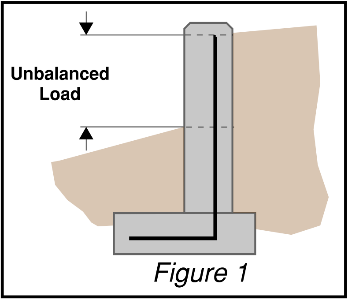
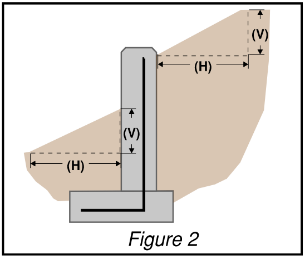
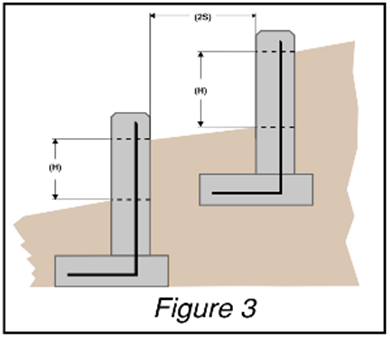
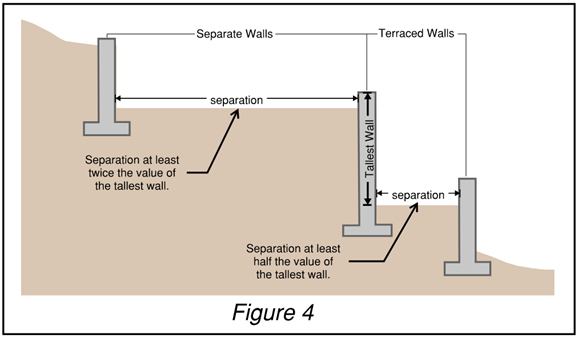
Adopted by Ord. Ord 2025-20 on 9/10/2025
Amended by Ord. ORD 2026-04 on 2/11/2026

