
Herriman City Zoning Code
CHAPTER 10
3 DEFINITIONS
10-3-1 Purpose
The purpose of this chapter is to provide rules of interpretation, definitions, and illustrations so that the provisions of this title may be readily understood and consistently administered.
(Code 2023, § 10-3-1; Ord. No. 2017-54, 12-13-2017)
Adopted by Ord. 2025-13 on 5/14/2025
10-3-2 Scope
The rules of interpretation, definitions, and illustrations contained in this chapter shall apply to the entirety of this title.
(Code 2023, § 10-3-2; Ord. No. 2017-54, 12-13-2017)
Adopted by Ord. 2025-13 on 5/14/2025
10-3-3 Rules Of Interpretation
- General. All provisions, terms, phrases and expressions contained in this chapter shall be liberally construed to accomplish the purposes of this title.
- Conjunctions. Unless the context clearly indicates to the contrary, conjunctions shall be interpreted as follows:
- "And" indicates that all connected items, conditions, provisions or events shall apply.
- "Or" indicates that one or more of the connected items, conditions, provisions or events shall apply.
- "Either . . . or" indicates that the connected items, conditions, provisions or events shall apply singly but not in combination.
- "And/or" indicates that all or one or more of the connected items, conditions, provisions or events shall apply.
- Ambiguity. Any word in this title that is not otherwise defined and is determined to be ambiguous by the community development director shall be defined by the 11th edition of the Merriam-Webster's Collegiate Dictionary pursuant to HCC 10-5-23.
- Amendments. Whenever reference is made in this title to provisions of this Code, the state code, or any federal law or regulation, such reference shall include any subsequent amendments or renumbering of the referenced provisions.
- Terms defined in state law. Any term defined in the Municipal Land Use, Development, and Management Act, U.C.A. 1953, § 10-9a-101 et seq., shall be interpreted and applied as provided in the Act notwithstanding whether a different definition is contained in this chapter.
(Code 2023, § 10-3-3; Ord. No. 2017-54, 12-13-2017; Ord. No. 2023-14, exh. A(10-3-3), 7-12-2023)
Adopted by Ord. 2025-13 on 5/14/2025
10-3-4 Illustrations
For the convenience of users of this title, certain terms may be graphically illustrated. If a conflict arises between an illustration and a definition, the definition shall apply.
(Code 2023, § 10-3-4; Ord. No. 2017-54, 12-13-2017)
Adopted by Ord. 2025-13 on 5/14/2025
10-3-5 Definitions Generally
The following words, terms and phrases, when used in this title, shall have the meanings ascribed to them in this section, except where the context clearly indicates a different meaning:
Accessory building or structure means a detached, subordinate building or structure clearly incidental to the main use or building in area and purpose, and located upon the same lot occupied by the main building. The term "accessory building or structure" also includes a building clearly incidental to an agriculture or animal care land use located on a lot in an agricultural zone, which lot meets the minimum lot size for such zone and is not less than half acre in area.
Active fault means a fault displaying evidence of greater than four inches of displacement along one or more of its traces during Holocene time (about 11,000 years ago to the present).
Alley. See Street.
Amusement device means any video game, pinball or other machine, whether mechanically or electronically operated that, upon insertion of a coin, trade-token, slug or similar object, or upon payment of money or other consideration through use of a metered or similar device, operates or may be operated as a game or contest of skill or amusement of any kind or description, and that contains no automatic payoff for the return of money or trade-tokens, or that makes no provision whatsoever for the return of money to the player. The term "amusement device" is further defined as any machine, apparatus or contrivance that is used or that may be used as a game of skill and amusement wherein or whereby the player initiates, employs or directs any force generated by the machine. An amusement device excludes billiard, pool or bagatelle tables.
Animal services means the animal services department of the city, or other agency/entity that provides animal control services for the city.
Animals and fowl for family food production means the keeping of the animals and fowl on a lot for exclusive use by persons residing thereon as provided in HCC 10-29-7.
Antenna facility means a telecommunication antenna device which is mounted on a building roof or mounted in a vertical wall. These antennas are allowed on any zone, provided they are safely attached and are not visually obtrusive.
Antenna, radio and television transmitting tower, means an antenna used to broadcast radio and television signals.
Antenna, roof antenna or roof-mounted, means an antenna or series of individual antennas mounted on the roof, mechanical room, or penthouse of a building.
Antenna, wall-mounted, means an antenna or series of individual antennas mounted against the vertical face of a building, chimney, or wall.
Appeal authority means the person, board, commission, agency, or other body designated by ordinance to decide an appeal of a decision of a land use application or a variance.
Applicant means a person who submits an application for consideration and approval as required by this title.
Application means a general plan application, land use application, or regulatory application, as the case may be.
Base flood means a flood having a one percent chance of being equaled or exceeded in any given year.
Baseline density calculation means the total number of units anticipated in a proposed development project divided by the total aggregate acreage of the project. The aggregate acreage shall not include schools, churches, or any nonresidential zoned property. (Example: The total acreage of a proposed project is 50 acres and 90 units are anticipated in the project resulting in a baseline density of 1.8 calculated by dividing 90 by 50.)
Basement means any floor level below the first story in a building, except that a floor level in a building having only one floor level shall be classified as a basement unless such floor level qualifies as a first story.
Beekeeper means a person who owns or has charge of one or more colonies of bees.
Beekeeping equipment means anything used in the operation of an apiary, such as hive bodies, supers, frames, top and bottom boards, and extractors.
Benchmark means a mark affixed to a permanent or semi-permanent object along a line of survey to furnish a datum level.
Block means the land surrounded by streets and other rights-of-way other than an alley, or land designated or shown as a block on a recorded subdivision plat.
Building means any structure having a roof supported by columns or walls.
Building, main, means the principal building or one of the principal buildings upon a lot, or the building or one of the principal buildings housing a main use upon a lot.
Canopy means a roofed structure supported by a building and/or supports extending to the ground directly underneath the canopy, and providing a protective shield for service station pump islands and walkways.
Capital asset means an asset the city intends to hold and derive benefits from for a period of more than one year such as land, buildings, infrastructure, and major equipment.
Capital project means an organized undertaking which provides, or is intended to provide, the city with a capital asset.
Carport means a private area not completely enclosed by walls or doors. For the purpose of this title, a carport shall be subject to all of the regulations prescribed for a private garage.
Check cashing means a check or assignment of wages for consideration or extending a deferred deposit loan and shall include any other similar type of businesses licensed by the state pursuant to the Check Cashing and Deferred Deposit Lending Registration Act (U.C.A. 1953, § 7-21-101 et seq.). The term "check cashing" excludes fully automated stand alone services, such as automated teller machines, located inside of an existing building, so long as the automated service incorporates no signage in adjacent windows or outside of the building.
Collector street. See Street.
Colony means bees in any hive including queens, workers, or drones.
Community development department means the department of the city responsible for the administration of the land use ordinances of the city and which oversees and regulates building, construction, and development activities within the city.
Community development director means the person appointed to perform the duties and responsibilities of community development director, as provided by city ordinances and resolutions.
Concept plan means a schematic drawing showing generally the layout of land uses, streets, buildings, and other features in a proposed development project as required under this title.
Condominium means the ownership of a single unit in a multiunit project together with an undivided interest in common in the common areas and facilities of the property created pursuant to the Utah Condominium Ownership Act, as set forth in U.C.A. 1953, § 57-8-1 et seq.
Condominium plat means a plat land and units prepared in accordance with the Utah Condominium Ownership Act (U.C.A. 1953, § 57-8-1 et seq.), as set forth in U.C.A. 1953, § 57-8-13.
Construction codes means the construction codes applicable within the city pursuant to the Utah Construction and Fire Codes Act set forth in U.C.A. 1953, § 15A-1-101 et seq. Such codes may also be referred to as building codes, fire codes, or safety codes.
Contaminated soil means soil having concentrations of regulated contaminants which exceed prescribed levels established by the city or other applicable authority.
Contamination area means an area within the contamination hazard specifications standard as shown on the contamination map on file with the city.
Corral means a space, other than a building, less than one acre in area or less than 100 feet in width, used for the confinement of animals.
Court means an occupied space on a lot, other than a yard, designed to be partially surrounded by group dwellings.
Critical facilities means:
- Lifelines, such as major communication, utility and transportation facilities and their connection to emergency facilities; or
- Essential facilities, such as:
- Hospitals and other medical facilities having surgery and emergency treatment area;
- Fire and police stations;
- Tanks or other structures containing housing or supporting water or other fire suppression materials or equipment required for the protection of essential or hazardous facilities, or special occupancy structures;
- Emergency vehicle shelters and garages;
- Structures and equipment in emergency preparedness centers;
- Standby power generating equipment for essential facilities;
- Structures and equipment in government communication centers and other facilities required for emergency response; or
- Hazardous facilities, such as structures housing, supporting or containing sufficient quantities of toxic or explosive substances to be dangerous to the safety of the general public if released; or
- Special occupancy structures, such as:
- Covered structures whose primary occupancy is public assembly (capacity greater than 300 persons);
- Buildings for schools through secondary or day care centers (capacity greater than 250 students);
- Buildings for colleges or adult education schools (capacity greater than 500 students);
- Medical facilities with 50 or more resident incapacitated patients, but not included above;
- Jails and detention facilities;
- All structures with occupancy greater than 5,000 persons; and
- Structures and equipment in power generating stations and other public utility facilities not included above, and required for continued operation.
Cul-de-sac. See Street.
Culinary water authority means the city water department, which is responsible for review and approval of the feasibility of the culinary water system and sources for the property in the city.
Decision-making body or official means the city council, a land use authority, or an appeal authority as defined in this chapter.
Developer. See Land use applicant.
Development activity means:
- Any construction or expansion of a building, structure, or use that creates additional demand and need for public facilities;
- Any change in use of a building or structure that creates additional demand and need for public facilities; or
- Any change in the use of land that creates additional demand and need for public facilities.
Double fencing means fences running parallel to each other, separated by less than six feet. Fences running parallel with each other greater than six feet in separation distance properly gated or accessible for maintenance purposes shall not be considered a double fence.
Easement means a present or future right of use under, on, or above the surface of property by a person other than the legal owner of the property.
Engineering geologist means a geologist who, through education, training, and experience, is able to ensure that geologic factors affecting engineering works are recognized, adequately interpreted, and presented for use in engineering practice and for protection of the public. An engineering geologist should have at least a four-year degree in geology, engineering geology, or a related field from an accredited university, and at least three full years of experience in a responsible position in the field of engineering geology.
Engineering geology means the application of geological data and principles to engineering problems dealing with naturally occurring rock and soil for the purposes of assuring that geological factors are recognized and adequately interpreted in engineering practice.
FAA means the Federal Aviation Administration.
Family means:
- Any number of people living together in a dwelling unit who are related by blood, marriage, adoption, or other legal relationship; or
- One to four unrelated people living together in a dwelling unit.
Fault means a fracture in the earth's crust forming a boundary between rock or soil masses that have moved relative to each other.
Fault scarp means a steep slope or cliff formed directly by movement along a fault.
Fault trace means the intersection of a fault plane with the ground surface.
Fault zone means a corridor of variable width along one or more fault traces.
Fee schedule means the schedule of fees adopted by the city council setting forth various fees charged by the city.
Fence means any tangible barrier, an obstruction of any material, a line of obstacles, latticework, screening material, wall, hedge, or continuous growth of shrubs or trees with the purpose of or having the effect of preventing passage or view across the fence line.
Final plat means the final drawing of a subdivision prepared for recordation in compliance with the requirements of this title and the Municipal Land Use, Development, and Management Act, as set forth in U.C.A. 1953, § 10-9a-101 et seq.
Finished grade means:
- the ground surface elevation of the undisturbed natural topography
- the elevation established through grading in accordance with a subdivision approval, or
- a grading permit approved by the City in a non-residential zone.
Fire authority means the Unified Fire Authority, which is responsible to review and approve the feasibility of fire protection and suppression services.
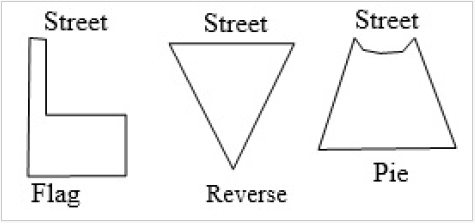
Flag lot means a lot in an agricultural or a residential zone that does not have required frontage on a public street, and which has two distinct parts: the flag, which contains the buildable area and is located behind another lot; and the staff, which connects the flag to the street, provides the only street frontage for the lot, and contains less than the minimum lot frontage requirement for the zone.
Flood or flooding means a general and temporary condition of partial or complete inundation of normally dry land areas from:
- The overflow of inland or tidal waters; and/or
- The unusual and rapid accumulation or runoff of surface waters from any source.
Flood insurance rate map (FIRM) means the official map on which the Federal Emergency Management Agency has delineated areas of special flood hazard and the risk premium zones applicable to the city.
Flood insurance study means the official report provided by the Federal Emergency Management Agency that includes flood profiles, the flood boundary-floodway map, and the water surface elevation of the base flood.
Flood, ten-year, means a flood that statistically has a ten percent chance of occurring any given year.
Flood, 100-year, means a flood that statistically has a one percent chance of occurring any given year.
Floodway means the channel of a river or other watercourse and the adjacent land areas that must be reserved in order to discharge the base flood without cumulatively increasing the water surface elevation more than one foot.
Freeway. See Street.
Frontage means all property fronting on one side of a street between intersecting or intercepting streets, or between a street and a right-of-way, waterway, end of a dead-end street, or political subdivision boundary, measured along the street line. An intercepting street shall determine only the boundary of the frontage on the side of the street which it intercepts.
Garage sale means the sale of used personal property conducted on the premises of a dwelling unit where the owner of the property resides.
General plan applicant means the person, or the person's designee, who submits a general plan application under the provisions of this title.
General plan application means an application required by this title to enact, amend, or repeal the general plan. The term "general plan application" does not include a land use application or a regulatory application.
Grade means ground surface elevation immediately adjoining the exterior wall of a building. Unless otherwise specified, "grade" shall mean the finished grade.
Grade plane means a reference plan representing the average of the lowest and highest points of elevation of the finished grade within the area between the building:
- and one of the following points:
- the lot line, where the lot line is located six feet or less from the building, or
- a point six feet from the building, where the lot line is located more than six feet from the building.
- the lot line, where the lot line is located six feet or less from the building, or
- The measurement shall exclude depressions caused by window wells, basement stairwells, or similar below-grade features, except for garages.
Guest means a transient person who rents or occupies a room for sleeping purposes.
Guestroom means a room which is designed for double occupancy by guests for sleeping purposes.
Half street. See Street.
Health department means the county health department.
Height. measurement means the established method for measuring building height, as described in HCC 10-29-25.
Height, fence, means the vertical distance from the ground to the top of a fence panel (portion of fence between the fence poles or supports). Fence height excludes minimal fence poles or supports that extend no higher than six inches above the fence panel.
Height, hub, when referring to a wind turbine, means the distance measured from ground level to the center of the turbine hub.
Height, total, when referring to a wind turbine, means the distance measured from ground level to the blade extended at its highest point.
Height, tower, when referring to a wind turbine, means the distance measured from ground level to the top of the tower, not including the blades.
Home day care means a facility located within a dwelling and yard which, for direct or indirect compensation, provides care, protection, supervision, of 12 or less children, including the caregiver's own children under the age of six and not yet in full day school. (State statutes and regulations may contain additional requirements or may limit the number of children allowed in a home day care.) The term "home day care" does not include care provided in the home of the parent or legal guardian of a child.
Home group instruction means a facility located within a dwelling and yard which, for direct or indirect compensation, provides instruction for three or more students at a time for uses including, but not limited to, preschool, tumbling lessons, swimming lessons, or dance lessons, subject to the requirements of HCC chapter 10-22.
Home occupation means a commercial or other nonresidential use conducted within a dwelling unit that is incidental and secondary to the use of the dwelling for residential purposes as permitted pursuant to HCC chapter 10-22.
Home occupation, special, means a home occupation located in an agricultural zone conducted pursuant to HCC chapter 10-22.
Impact fee means a payment of money imposed under Utah Impact Fees Act as set forth in U.C.A. 1953, § 11-36a-101 et seq.
Improvement completion and warranty agreement means an agreement, on forms approved by the city, wherein a land use applicant agrees to install required landscaping and infrastructure improvements and to secure such obligation with an improvement completion assurance in an amount corresponding to the city engineer's estimate.
Intensity means the concentration of activity, such as a combination of the number of people, cars, visitors, customers, hours of operation, outdoor advertising; and the size of buildings or structures, the most intense being higher, longer, and/or wider.
Land use means the manner in which land is occupied or utilized.
Land use applicant means a property owner, or the property owner's designee, who submits a land use application regarding the property owner's land under the provisions of this title.
Land use application means an application required by this title and submitted by a land use applicant to obtain a land use decision. The term "land use application" does not include a general plan application or a regulatory application.
Land use authority means the person, board, commission, or body designated by the city council to act upon a land use application.
Land use decision means a final action of a land use authority or appeal authority regarding a land use permit; a land use application; or the enforcement of a land use regulation, land use permit, or development agreement.
Land use permit means a permit issued by a land use authority under this title.
Land use regulation means the provisions set forth in this title; the city zoning map; city standards and specifications; associated fees shown on the city fee schedule; and any ordinance, law, code, map, resolution, specification, or rule that governs the use or development of land. A land use regulation does not include:
- The general plan;
- A land use decision of the city council acting as a land use authority, even if the decision is expressed in a resolution or ordinance; or
- A temporary revision to an engineering specification that does not materially:
- Increase a land use applicant's cost of development compared to the existing specification; or
- Impact a land use applicant's use of land.
Landscaping means the installation of any combination of turf (including either sod or seeded area), planter beds, gardens, trees and shrubs, statuary, boulders, rock areas, or other customary landscape features that occupy the entire unpaved portion of the front yard area, specifically excluding artificial turf or plants.
Landslide means down slope movement of a mass of soil, superficial deposits, or bedrock.
Liquefaction means a process by which certain water saturated soils lose bearing strength because of ground shaking and increase of groundwater pore pressure.
Local district means an entity established under U.C.A. 1953, title 17B (U.C.A. 1953, § 17B-1-10 et seq.) and any other governmental or quasi-governmental entity that is not a county, municipality, school district, or the state.
Lot, corner, means a lot abutting on two intersecting or intercepting streets, where the interior angle of intersection or interception does not exceed 135 degrees.
Lot, double frontage, means a lot abutting two parallel or approximately parallel streets.
Lot frontage, means the distance, measured along the front lot line, where the lot adjoins a street.
Lot, interior, means a lot other than a corner lot.
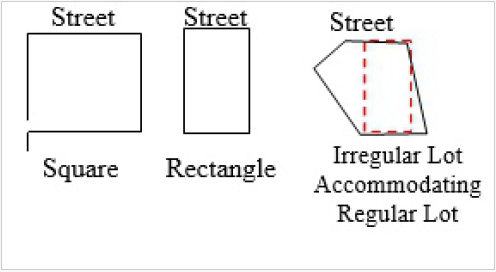
Lot, irregular, means flag lots, pie- and reverse pie-shaped lots, or any lot that is not considered a regular lot.
Lot line means a line of record bounding a lot that divides one lot from another or from a street.
Lot line, front, means a lot line separating a lot from a street right-of-way. For a corner lot, the narrowest of the two lot lines adjoining the street is the front lot line.
Lot line, rear, means the lot lines generally opposite and most distant from the front lot line, except in the case of a triangular or gore shaped lot, a constructive line ten feet in length within the lot parallel to the front lot line which intercepts the side lot lines at points most distant from the front lot line.
Lot line, side, means any lot line that is not a front lot line or a rear lot line. A side lot line separating one lot from another is an interior side lot line.
Lot, regular, means any generally square, or rectangular shaped lot or similar to shown below, and any lot that can accommodate a regular shaped lot within it which meets the minimum zone size requirements.
Lot width means the distance between side lot lines measured at the required front yard setback line.
Master street plan means that portion of the general plan which shows future streets, including maps or reports or both, approved by the city council.
MET tower means a meteorological tower used for the measurement of wind speed.
Natural hazard means liquefaction and/or surface fault rupture hazard.
Natural hazard maps means the maps entitled "Liquefaction Potential Special Study Areas," and "Surface Fault Rupture Special Study Areas" showing natural hazards special study areas in the city.
Natural hazard special study area means a potentially hazardous area as shown on natural hazards maps within which hazard investigations are generally required prior to development.
Natural waterways means those areas varying in width along streams, creeks, gullies, springs, or washes which are natural drainage channels, as determined by the city engineer, and in which areas no building shall be constructed.
Noncomplying building or structure means a structure that:
- Legally existed before its current land use designation; and
- Because of one or more subsequent land use ordinance changes, does not conform to the setback, height restrictions, or other regulations, excluding those regulations, which govern the use of land.
Other nonconformity means a situation other than a nonconforming use or lot or noncomplying structure, that:
- Legally existed before the current zoning designation of the lot where the nonconformity is located; and
- Because of subsequent zoning changes, does not conform with applicable requirements of this title.
Owner means the owner in fee simple of real property as shown in the records of the county recorder's office and may mean either a natural person, firm, association, partnership, trust, private corporation, limited liability company, public or quasi-public corporation, other entities authorized by the state, or any combination of any of the foregoing.
Owner Occupant. For the purposes of this chapter, the property owner is defined as the titleholder of the lot or parcel, or an immediate family member such as a parent, child, spouse, sibling, or grandchild, who occupies either the principal dwelling or the ADU as a primary residence.
Parking space means space within a building, lot, or parking lot for the parking or storage of one automobile.
Parkstrip means the strip of land located within a public right-of-way between a sidewalk and curb and gutter.
Permitted use means a land use allowed by the zone in which the land is located and for which no conditional use permit is required.
Planned unit development means an integrated design for development of residential, commercial, or industrial uses, or combination of such uses, in which one or more of the regulations, other than use regulations, of the zone in which the development is to be situated, is waived or varied to allow flexibility and initiative in site and building design, and location in accordance with an approved plan and requirements as specified in HCC chapter 10-15.
Planning commission means the planning commission of the city.
Preliminary plat means a plan of a proposed subdivision showing information and features required by the provisions of this title.
Protection strip means a strip of land bordering a subdivision, or a street within a subdivision, which serves to bar access of adjacent property owners to required public improvements installed within the subdivision until such time as the adjacent owners share in the cost of such improvements.
Public improvements. See Infrastructure improvement.
Qualified testing lab means any testing facility which has been approved by the city or the Environmental Protection Agency as qualified to test for the regulated contaminants.
Record of survey means a map of a survey of land prepared in accordance with U.C.A. 1953, § 17-23-17.
Regulated contaminants means those contaminants in the soil which are regulated by federal, state or local government laws and those contaminants which the Environmental Protection Agency finds may be hazardous to public health. Contaminants include lead, arsenic, and any other heavy metal, organic solvent known or suspected to be present in city soils and which may cause harm to human health and well-being.
Regulatory applicant means the person, or the person's designee, who submits a regulatory application under the provisions of this title.
Regulatory application means an application required by this title to enact, amend, or repeal a land use regulation. The term "regulatory application" does not include a general plan application or a land use application.
Required soil testing means soil tests which conform to the requirements of the Environmental Protection Agency for the presence of regulated contaminants.
Responsible person means the person responsible for detecting and/or abating regulated contaminants as provided in HCC chapter 10-15-1. A "responsible person" includes the property owner, a person intending to inhabit a new structure, or a person intending to sell, assign, transfer, or gift property located within the contamination area.
Retaining wall means any structure designed to resist the lateral displacement of soil or other materials. Examples include block walls, rock walls (i.e., rockeries), concrete walls, and segmented walls. Retaining walls that have an unbalanced load of less than four feet in height are generally considered landscaping elements. A retaining wall is not considered a fence.
Sanitary sewer authority means the South Valley Sewer District, which is responsible to review and approve the feasibility of sanitary sewer services or on-site wastewater systems.
Secondary water system means any system designed and intended to provide, transport, and store water used for watering of crops, lawns, shrubberies, flowers, and other non-culinary uses.
Shadow flicker means the on and off flickering effect of a shadow caused when the sun passes behind the rotor of a wind turbine.
Shopping center means a group of architecturally unified commercial establishments built on a site which is planned, developed, owned and managed as an operating unit.
Short-term rental means lease or rental of a dwelling unit or any portion thereof located within agricultural or residential zones for lodging or accommodation purposes for a period of less than 30 consecutive days, except as specifically allowed in the R-M Zone.
Sign means any device employing letters, words, numerals, figures, graphics, pictures, illustrations, symbols, or any combination thereof, visible to persons in a public area designed to communicate information or used to attract attention. The term "sign" also includes the sign structure supports and lighting system, if any. A sign does not include signs less than one square foot in size when accessory to the use of a lot.
Sign alteration means a change or rearrangement in the structural parts or design of a sign, including, but not limited to, extending the length of a side, increasing sign area or height, or relocating or changing the sign position.
Sign area means the portion of a sign used for display purposes within a line that forms a complete geometric shape encompassing the outer extremities of all sign copy.
Sign copy means that portion of a sign which uses letters, words, numerals, figures, graphics, pictures, illustrations, symbols, or any combination thereof to communicate information.
Sign setback means the minimum distance that any portion of a sign or sign structure shall be from any street right-of-way line and lot line coterminous with a street.
Sign structure means anything constructed or erected supporting a sign which requires location on or below the ground or attached to something located on or below the ground.
Sign, A-frame, means a sign constructed with two sides attached at the top so as to allow the sign to stand in an upright position and to be moved at will.
Sign, animated, means a sign which moves, rotates, or has subdued color changes of any part by mechanical or artificial means or which has, or appears to have, motion or rotation of lighting elements.
Sign, awning, means a sign designed in awning form that is an illuminated or non-illuminated space frame structure attached to a building or other permanent structure.
Sign, balloon, means a balloon attached to real or personal property with the purpose or effect of attracting public attention to an object or site.
Sign, construction, means a sign located on a lot where construction activities are being actively performed and which is not permanently attached to a structure or the ground.
Sign, electronic, means a mechanism or device which uses a combination of lights, or lighted or unlighted panels which are controlled electronically to produce sign copy.
Sign, flashing, means a sign which displays flashing or intermittent light.
Sign, flat, means a sign erected parallel to and attached to the outside wall of a building and extending not more than 24 inches from such wall, with sign copy on the face side only.
Sign, floodlighted, means a sign made legible in the absence of daylight by devices which reflect or project light upon it.
Sign, ground, means a sign supported by a fixed permanent frame support in the ground.
Sign, illuminated, means a sign which has sign copy illuminated by electric lights or luminous tubes.
Sign, interior, means a sign located within a building that is visible only within the building in which the sign is located.
Sign, mobile, means a sign mounted on a trailer or frame, lighted or unlighted, which is not permanently attached to a structure or the ground.
Sign, monolithic, means a high profile, on-premises sign where the sign face and supports are within the same cabinet structure, independent of any building or other structure.
Sign, monument, means a sign permanently incorporated into the landscape or architectural design scheme of the building on the lot where the sign is located.
Sign, nonconforming, means a sign that:
- Was legally established;
- Has been maintained continuously; and
- Because of one or more subsequent changes to this title, does not conform to regulations that now govern the sign.
Sign, overhanging, means a sign which projects 12 inches or more over the roof of a building.
Sign, pedestal, means a temporary and/or movable sign supported by a column and a base that allows the sign to stand in an upright position.
Sign, planned center, means a freestanding sign structure in a C-2 or MU-2 zone which is architecturally similar to the buildings in the center and includes multiple tenants.
Sign, premises ground, means a ground sign with a sign area of not more than six square feet.
Sign, premises wall, means a sign attached to the wall of a building with an area of not more than three square feet for each tenant of the premises on the lot where the building is located.
Sign, projecting, means a sign attached to a building or canopy and extending in whole or part more than 24 inches beyond any wall of the building or canopy.
Sign, promotional, means a permanently attached changeable copy sign not exceeding 20 square feet per face with one or two faces back-to-back.
Sign, roof, means a sign erected partly or wholly on the roof of a building. Notwithstanding the foregoing, a sign structure having main supports embedded in the ground shall not be considered to be a roof sign even if the sign supports pass through a roof, canopy, or parapet of a building.
Sign, snipe, means a sign attached to a utility pole, fixture pole, canopy support, or supports for another sign.
Sign, temporary, means any sign constructed of paper, cloth, canvas, light fabric, cardboard, wallboard, or other light materials, with or without frames, displayed a maximum of 21 consecutive days in any one period of time, and not more than four time periods during a calendar year.
Sign, wall, means a sign painted on a wall or its facing which does not have a sign frame or separation from the wall or facing.
Sign, window, means a sign attached to a window or door of a building that is visible outside of the building.
Sign, yard, means a temporary sign placed upon or supported by the ground independently of any other sign on property. A yard sign does not include an A-frame sign.
Soil barriers means any artificial or man-made structure, marker, or indicator which has been placed in the soil for the purpose of notifying a person of the presence of regulated contaminants.
Special flood hazard area means the land in the floodplain within a community subject to a one percent or greater chance of flooding in any given year.
Standards and specifications means the engineering, development, and technical standards adopted pursuant to HCC 9-2-1 and 9-2-2 and any other development standards adopted by the city council.
Start of construction means the issuance date of a building permit, provided the actual start of construction, repair, reconstruction, placement, or other improvement is within 180 days of the permit issuance date.
- The term "actual start" means either the first placement of permanent construction of a structure on a site, such as the pouring of slabs or footings, the installation of piles, the construction of columns, or any work beyond the stage of excavation; or the placement of a manufactured dwelling on a foundation.
- The term "permanent construction" does not include:
- Land preparation, such as clearing, grading, and filling;
- Installation of streets and/or walkways;
- Excavation for a basement, footings, piers, or foundations, or the erection of temporary forms; or
- Installation on the property of accessory buildings, such as garages or sheds not occupied as dwelling units or not as part of the main structure.
- Start of construction of a substantial improvement, as defined in this section, is considered to occur when the first alteration of any wall, ceiling, floor, or other structural part of the building commences, whether or not that alteration affects the external dimensions of the structure.
Story means that portion of a building included between the upper surface of any floor and the upper surface of the floor next above, except that the topmost story shall be that portion of a building included between the upper surface of the topmost floor and the ceiling or roof above. If the finished floor level directly above a usable or unused underfloor space is more than six feet above grade for more than 50 percent of the total perimeter, or is more than 12 feet above grade at any point, such usable or unused underfloor space shall be considered as a story.
Story, first, means the lowest story in a building which qualifies as a story, except that a floor level in a building having only one floor level shall be classified as a first story, provided such floor level is not more than four feet below grade for more than 50 percent of the total perimeter, or not more than eight feet below grade at any point.
Story, half, means a story with at least two of its opposite sides situated in a sloping roof, the floor area of which does not exceed two-thirds of the floor immediately below it.
Street means a public right-of-way, including a highway, avenue, boulevard, parkway, road, lane, walk, alley, viaduct, subway, tunnel, bridge, public easement, or other way, including the following:
- Alley means a public way which affords a secondary means of access to abutting property.
- Collector street means a street which carries traffic from minor streets to the major street system, including the principal entrance streets of residential developments and the primary circulating streets within such developments.
- Cul-de-sac means a minor terminal street having one open end and being terminated by a vehicular turnaround.
- Freeway means a street with fully controlled access designed to link major destination points and which is designed for high speed traffic.
- Half street means the portion of a street within a subdivision comprising one-half of the minimum required right-of-way.
- Major street means a street, existing or proposed, which serves or is intended to serve as a major trafficway and which is designated on the master street plan as a controlled access highway, major street, parkway, or by equivalent terms suitable to identify streets comprising the basic structure of the street plan.
- Marginal access street means a minor street which is parallel to and adjacent to a major street and which provides access to abutting properties and protection from through traffic.
- Minor street means a street, existing or proposed, which is supplementary to a collector or major street and of limited continuity, which serves or is intended to serve the local needs of a neighborhood.
- Private street means a street which:
- Is reserved by dedication or established by use for non-public access to one or more lots;
- Is not owned or maintained by the city; and
- May or may not comply with adopted standards and specifications.
Structural alterations means any change in supporting members of a building or structure, such as bearing walls, columns, beams, or girders.
Structure means anything constructed or erected which requires location on the ground, or attached to something having a location on the ground.
Structure designed for human occupancy means any residential dwelling or any other structure used or intended for supporting or sheltering any use or occupancy, which is expected to have occupancy rate of more than 2,000 person hours per year.
Subdivider means a land use applicant who undertakes creation of a subdivision.
Subdivision wall means a retaining wall or rockery installed during the initial grading of a subdivision. Subdivision walls shall be constructed as shown on grading plans approved by the City Engineer during final subdivision plat review and approval. Subdivision walls may cross lot lines and be installed along boundary lines in areas where the soil would not naturally retain itself, such as steep slopes with a horizontal-to-vertical ratio exceeding two-to-one, or near-vertical slopes.
Substantial improvement means:
- Any repair, reconstruction or improvement of a structure, the cost of which equals or exceeds 50 percent of the market value of the structure, either:
- Before the improvement or repair is started; or
- If the structure is damaged and is being restored, before the damage occurred.
- The term "substantial improvement" does not, however, include any project for improvement of a structure to comply with existing state or local health, sanitary or safety code specifications which are solely necessary to ensure safe living conditions.
Surcharge means an additional load or weight applied to the soil behind a retaining structure or excavation, beyond the weight of the retained soil itself. Examples of surcharges, or additional loads beyond the self-weight of soil, include stockpiled materials, traffic on roadways, nearby structures, and construction equipment, all of which can increase lateral earth pressure and necessitate reinforced engineering solutions.
Use, accessory, means a subordinate land use customarily incidental to and located upon the same lot occupied by a main use.
Use, conditional, means a land use that, because of its unique characteristics or potential impact on the city, surrounding neighbors, or adjacent land uses, may not be compatible in some areas or may be compatible only if certain conditions are required that mitigate or eliminate the detrimental impacts.
Use, main, means the primary purpose for which a lot or structure is designed, arranged, or intended; or for which it is occupied or maintained as allowed by the provisions of this title.
Use, permitted, means:
- The collocation of a small wireless facility in any ROW; and
- The installation of a new utility pole in permitted ROW.
Use, public, means a use operated exclusively by a public agency which serves public health, safety, orgeneral welfare, and includes uses such as public schools, parks, playgrounds and other recreational facilities, administrative and service facilities, and public utilities.
Utilities means culinary waterlines, pressure and gravity irrigation lines, sanitary and storm sewer lines, subdrains, electric power, natural gas, cable television and telephone transmission lines, underground conduits, and junction boxes.
Water and sewer improvement district means any duly organized water or sewer improvement district which has jurisdiction over land proposed for a subdivision.
Water interest means any right to the beneficial use of water, including:
- Each of the rights listed in U.C.A. 1953, § 73-1-11; and
- An ownership interest in the right to the beneficial use of water represented by:
- A contract; or
- A share in a water company, as defined in U.C.A. 1953, § 73-3-3.5.
Weeds means vegetation that is uncultivated, useless, unsightly, or which has become a fire hazard or otherwise determined by the city to be noxious, dangerous, or a nuisance, including, but not limited to, musk thistle (Carduus nutans), poison ivy (Rhus Toxicodendron) and those plants named in the Utah Noxious Weed Act, U.C.A. 1953, title 4, as amended.
Wind turbine means a wind energy conversion system which converts wind energy into electricity through the use of a wind turbine generator, and includes the turbine, blade, tower, base, and pad transformer, if any, provided that such a system shall only be a wind turbine for purposes of this title if it both has a total height greater than 80 feet and nameplate capacity of greater than 30 kilowatts. A small wind turbine is a turbine less than 80 feet in height and less than 30 kilowatts.
Wireless telecommunication facility means a self-supporting communications tower consisting of a single pole without guywires or other stabilizers.
Written notice/stop order means a written order issued by the building department, or a designated representative, to stop all construction, installation, modification, or occupation of any building in violation of a provision of this title.
Yard means a space on a lot, other than a court, unoccupied and unobstructed from the ground upward by buildings or structures, except as follows:
- Fences;
- Canopies allowed under this title;
- Accessory buildings in a rear yard;
- The ordinary projections of windows where the projection is at least 18 inches above floor level, roofs, cornices, chimneys, flues, and other ornamental features which project into a yard not more than three feet;
- Open or lattice enclosed exterior stairways, located in a commercial or manufacturing zone, projecting into a yard not more than five feet; and
- Structures less than 30 inches in height from the finished ground surface.
Yard, front, means a space on the same lot with a building, between the front line of the building and the front lot line, and extending across the full width of the lot. The depth of the front yard is the minimum distance between the front lot line and the front line of the building.
Yard, rear, means a space on the same lot with a building, between the rear line of the building and the rear lot line, and extending the full width of the lot. The depth of the rear yard is the minimum distance between the rear lot line and the rear line of the building.
Yard, side, means a space on the same lot with a building, between the side line of the building and the side lot line, and extending from the front yard to the rear yard. The width of the side yard is the minimum distance between the side lot line and the side line of the building.
(Code 2023, § 10-3-5; Ord. No. 2017-54, 12-13-2017; Ord. No. 2018-36, 11-14-2018; Ord. No. 2018-41, 12-12-2018; Ord. No. 2019-21, 6-26-2019, eff. 7-1-2019; Ord. No. 2019-29, 8-28-2019; Ord. No. 2021-23, 9-8-2021; Ord. No. 2022-03, 2-23-2022; Ord. No. 2023-03, § 1(A), 1-25-2023; Ord. No. 2023-14, exh. A(10-3-5), 7-12-2023; Ord. No. 2024-21, exh. A(10-3-5), 8-14-2024)
Adopted by Ord. 2025-13 on 5/14/2025
Amended by Ord. Ord 2025-20 on 9/10/2025
Amended by Ord. ORD 2026-04 on 2/11/2026
Amended by Ord. ORD 2026-11 on 5/27/2026
10-3-6 Land Use Categories Definitions
The following words, terms and phrases, when used in this title, shall have the meanings ascribed to them in this section, except where the context clearly indicates a different meaning:
- Agricultural uses.
Agricultural business means agricultural activity involving the keeping, grazing, and pasturing of animals and fowl for commercial gain, excluding public and private stables. Typical uses include animal feed yards, apiaries, aviaries, commercial poultry and egg production, and fur farms.
Agricultural processing means an industry or business involving agricultural products or byproducts in processing, packaging, treatment, and sales, excluding slaughterhouses. Typical uses include commercial milk production, food packaging, and food processing plants.
Agriculture means the tilling of soil, raising of crops, horticulture and gardening, but not including the keeping or raising of animals or fowl and not including any agricultural business as defined in this section.
Apiary means any place where one or more colonies of bees are located.
Cannabis production establishment means such establishments as defined in U.C.A. 1953, § 4-41A-102.
Soil products means a business or activity involving the manufacture, processing, and/or sales of soil additives and conditioners; manure, and/or soil composting.
Stable, private, means a detached accessory building for the keeping of horses owned by the occupants of the premises and not kept for remuneration, hire, or sale.
Stable, public, means a stable other than a private stable. - Residential uses.
Accessory Dwelling Unit (ADU). A self-contained residential unit located on the same lot as a single-family dwelling, containing its own kitchen, bathroom, and sleeping facilities, and subordinate in size and use to the principal dwelling. ADUs are classified as either internal or detached as defined below.- Internal Accessory Dwelling Unit (IADU). An ADU that is contained entirely within, or attached to, the principal single-family dwelling, including units created within a basement, garage conversion, or addition to the principal structure.
- Detached Accessory Dwelling Unit (DADU). An ADU that is physically separated from the principal single-family dwelling and located on the same lot or parcel. This definition does not include ADUs that are internal or attached to the principal dwelling (Cross-reference: HCC 10-3-5 "Accessory Building or Structure").
Apartment. See Dwelling, multifamily.
Assisted living facility means a residential facility that provides supportive personal and health care services to residents and is licensed by the state.
Boardinghouse means a building with not more than five guestrooms, where, for compensation, meals are provided for at least five but not more than 15 persons.
Congregate living facility means a development of five or more dwelling suites which is planned, designed, and managed to include facilities and common space that:
- Maximize the residents' potential for independent living.
- Include direct services provided or made available on or off the premises that:
- Relate to the nutritional, social, recreational, housekeeping, and personal needs of residents; and
- Are provided or made available at a level necessary to assist the residents to function independently.
- For the purposes of this definition:
- The term "direct services" means, but is not limited to, meals, housekeeping services, transportation services, and planned recreational and social activities which may be provided to residents directly or indirectly through independent vendors and providers or by the facility managers.
- The term "support services" means social services, adult day care services, and in-home services which facility managers may use to assist residents.
Dwelling means any building, or portion thereof, having one or more dwelling units occupied as, or designed or intended for occupancy as, a residence by one or more families, but not including hotels, motels, boardinghouses, or other facilities offering transient lodging facilities.
Dwelling group means a group of two or more multifamily dwellings located on a lot in one ownership and having any yard or court in common.
Dwelling unit means one or more rooms physically arranged so as to create an independent housekeeping establishment for occupancy by one family, with separate toilets and facilities for cooking and sleeping.
Dwelling, caretaker, means living quarters for persons employed on the premises of any main use.
Dwelling, four-family, means a building arranged or designed to be occupied by four families, the structure having only four dwelling units. Also referred to as an attached single-family dwelling.
Dwelling, manufactured, means a transportable factory built housing unit constructed on or after June 15, 1976, according to the National Manufactured Housing Construction and Safety Standards Act of 1974, in one or more sections, that:
- In the traveling mode, is eight body feet or more in width or 40 body feet or more in length, or when erected on site, is 400 or more square feet; and
- Is built on a permanent chassis and designed to be used as a dwelling with or without a permanent foundation when connected to the required utilities, and includes plumbing, heating, air conditioning, and electrical systems.
Dwelling, mobile home, means a transportable factory built housing unit built prior to June 15, 1976, in accordance with a state mobile home code which existed prior to the Federal Manufactured Housing and Safety Standards Act.
Dwelling, multifamily, means a building arranged or designed to be occupied by more than four families, the structure having more than four dwelling units.
Dwelling, single-family, means a building arranged or designed to be occupied by one family, the structure having only one dwelling unit.
Dwelling, single-family with accessory apartment, means a dwelling having only one dwelling unit and one accessory apartment which:
- Has the appearance of a single-family dwelling; and
- Is owned by one or more of the occupants of the single-family dwelling and occupied as their primary residence.
Dwelling, single-family with second kitchen, means a dwelling having only one single-family dwelling unit and two kitchens as provided in HCC 10-29-42.
Dwelling, temporary, means a trailer or structure used for temporary residential purposes solely by the property owner or builder during the construction of a permanent dwelling on a lot.
Dwelling, three-family, means a building arranged or designed to be occupied by three families, the structure having only three dwelling units. Also referred to as an attached single-family dwelling.
Dwelling, two-family, means a building arranged or designed to be occupied by two families, the structure having only two dwelling units.
Group living arrangement means a group living or congregate living arrangement where groups of more than four unrelated persons live together in a single dwelling, including, but not limited to, an assisted living facility, boardinghouse, congregate living facility, protected living facility, residential facility for persons with a disability, boarding school, dormitory, student housing, fraternity, club, institutional group, halfway house, convent, monastery, or other similar group living or congregate living arrangement of unrelated persons. The term "group living arrangement" does not include clinics, medical or dental; hospital or hospital/clinic.
Manufactured and mobile home park means a lot, or contiguous lots, under one ownership designed and planned to accommodate the occupancy of manufactured or mobile homes regardless of whether or not a charge is made for such accommodation.
Protected living facility means a facility that provides food, shelter, sleeping accommodations, and supervision of activities of daily living for persons of any age who are unable to independently maintain these basic needs and functions. Typical uses include facilities for abused or neglected children awaiting placement in foster care, pregnant or parenting teens; or victims of sexual or domestic abuse.
Residential facility for persons with a disability means any facility or dwelling that houses or seeks to provide housing to five or more persons with a disability.
Short-term rental means lease or rental of a dwelling unit or any portion thereof located within agricultural or residential zones for lodging or accommodation purposes for a period of less than 30 consecutive days, except as specifically allowed in the R-M Zone.
C. Public and civic uses.
Auditorium or stadium means an open or enclosed facility used for spectator sports, entertainment events, expositions, and other public gatherings. Typical uses include convention and exhibition halls, sports arenas, and amphitheaters.
Bus terminal means a building or premises for storage or parking of buses and passenger loading/unloading areas, including ticket offices, luggage checking facilities, and similar uses.
Cemetery means land used or intended to be used for the burial of the dead, whether human or animal, including crematoriums and mausoleums.
Church or place of worship means a building used as a church, synagogue, chapel, sanctuary, or cathedral where persons regularly assemble for religious activity.
Club or service organization means an establishment or organization providing meeting, recreational, or social facilities for a private or nonprofit association. Typical uses include lodges, meeting halls, recreation centers, and areas operated by private social clubs, fraternal, and service organizations.
College or university means an institution of higher education offering undergraduate or graduate degrees and including such accessory uses as dormitories and stadiums.
Conference and reception center means a facility used for business events, wedding or other receptions, or social events.
Correctional facility means a facility providing housing and care for individuals legally confined for violations of law.
Cultural service means a library, museum, or similar place that displays, preserves, or exhibits things or information having community and cultural interest.
Golf course means a facility providing private or public golf services and support facilities, including driving ranges.
Government service means any building or facility used, owned, or operated by a government entity which provides services for the public, excluding utilities and recreational services. Typical uses include administrative offices of government agencies and utility billing offices.
Hospital means a facility which provides diagnostic, therapeutic, and rehabilitative services to both inpatients and outpatients by or under the supervision of physicians.
Operations center means a maintenance, repair, or service facility operated by a local, state, or federal government agency.
Park, public, means a park, playground, swimming pool, golf course, athletic field, trail, or other area or open space providing opportunities for active or passive recreational or leisure activities which is under the control, operation, or management of a local, state, or federal government agency.
Post office means a facility or structure used to collect, sort, and distribute mail and which may provide mail related products and services.
Protective service means a facility for conduct of public safety and emergency services.
Resource recycling collection point means a portable structure, enclosed bin, trailer, or reverse vending machine where recyclable material (aluminum cans, glass, paper, etc.) is exchanged for money or deposited as a donation and which is approved or reapproved for a period not exceeding 12 months.
Sanitary landfill means a land disposal site where solid waste is disposed of using sanitary landfilling techniques, including, but not limited to, an engineered method of disposing of solid waste on land in a manner that does not create a nuisance or health hazard, and that protects the environment, by spreading the waste in thin layers, compacting it to the smallest practical volume, confining it to the smallest practical area, and covering it with soil by the end of each working day, or as often as may be directed by the board of health or other regulatory body.
School, boarding, means a private school that has the primary purpose of providing students with an education pursuant to a regionally accredited education program and provides a residence for the school's students, but does not provide any residential treatment or services described in U.C.A. 1953, § 26B-2-101(39).
School, charter, means a school that is an operating charter school; a charter school applicant that has its application approved by a charter school authorizer in accordance with U.C.A. 1953, 53G, ch. 5 (U.C.A. 1953, § 53G-5-101 et seq.), the Utah Charter Schools Act; or an entity that is working on behalf of a charter school or approved charter applicant to develop or construct a charter school building. A charter school does not include a therapeutic school.
School, elementary, middle, or high, means any building or group of buildings or premises approved by the state for public or private elementary or secondary instruction. The term "school, elementary, middle, or high" does not include home occupations represented as schools, vocational schools, charm schools, dancing schools, music schools, or similar limited schools; boarding schools; or public or private colleges or universities.
School, vocational, means an establishment, for profit or not, offering regularly scheduled instruction in technical, commercial, or trade skills, such as, but not limited to, business, real estate, building and construction trades, electronics, computer programming and technology, automotive and aircraft mechanics and technology, and similar types of instruction.
Utility substation means any above-ground, free-standing structure which regulates the use of electricity, natural gas, sewer, water, telecommunications, or any other utility system except:
- Utility poles, features, or equipment to be placed on such a pole;
- Equipment attached to a building; and
- Structures with maximum horizontal and vertical dimensions of three feet.
Utility, major, means a facility of any entity which provides the general public with electricity, natural gas, sewage collection, telecommunication, water, or other similar service. The term "utility, major" excludes wireless telecommunication facilities, storage buildings or yards, gas or oil processing, manufacturing facilities, and other uses defined in this section. Typical uses include electric generation plants, water storage reservoirs, and water and wastewater treatment plants.
Wind energy facility means an electricity generating facility consisting of one or more wind turbines under common ownership or operating control, including substations, MET towers, cables/wires, and accessory buildings whose main purpose is to supply electricity to off-site customers.
Wind energy facility, small, means a wind energy conversion system consisting of a wind turbine, a tower, and associated control or conversion electronics, which has a rated capacity of not more than 30 kilowatts and which is intended to primarily reduce on site consumption of utility power. Small wind energy systems are typically designed for on-site home, farm, and small commercial use.
D. Commercial uses.
Agricultural sales and service means an establishment primarily engaged in the sale or rental of animal care products; anhydrous ammonia; farm supplies, tools and implements; feed and grain; tack; and the like; including accessory machinery repair services.
Animal care service means an establishment providing care and treatment for animals, including grooming, but excluding a kennel.
Assembly of Goods means the process of putting together previously manufactured parts or sub-assemblies into a finished item or unit.
Bank or financial institution means an organization involved in deposit banking, finance, investment, mortgages, trusts, and the like. Typical uses include commercial banks, credit unions, finance companies, and savings institutions.
Bed and breakfast homestay means a dwelling which:
- Has frontage on a street with a minimum right-of-way of 60 feet;
- Contains a maximum of five guestrooms;
- Is occupied by the owner or individual responsible for operating the facility;
- Provides accommodations for guests paying compensation;
- May serve breakfast served during the morning hours but lunch or dinner is not served;
- Does not change the residential character of the dwelling or property where the dwelling is located; and
- Conforms to applicable requirements of the health department and the fire department.
Bed and breakfast inn means a building which:
- Contains a minimum of six, but not more than 30, guestrooms (except in the R-M Zone, which is limited to a maximum of 20 guestrooms);
- Provides accommodations for guests paying compensation;
- Serves breakfast;
- Does not include cooking in any individual guestroom;
- Has a residential appearance;
- Does not exceed two stories in height; and
- May include a restaurant and conference meeting rooms.
Brewpub means a business that produces or manufactures beer for consumption in connection with a meal prepared by an on-premises restaurant.
Business equipment rental and supplies means an establishment primarily engaged in the display, storage, and sale of goods or services used by office, professional and service establishments, including sale, rental, or repair of equipment and supplies used by office, professional, and service establishments, but excluding automotive, construction, and farm equipment. Typical uses include office equipment and supply firms, small business machine repair shops, and hotel equipment and supply firms.
Business services means an establishment that provides photocopy, packaging, mail, or delivery services.
Car Detailing means the process of cleaning, refurbishing, and maintaining the interior and exterior of vehicles to enhance their appearance and condition, focusing on the cosmetic care of vehicles, distinct from mechanical repairs or routine maintenance.
Car wash, accessory, means an automatic or self-serve car wash that is an accessory use to a primary use on the same parcel or lot.
Car wash, automatic, means an establishment primarily engaged in providing automatic or unassisted machinery for the cleaning of motor vehicles, with or without hand drying or vacuuming facilities for customer use.
Car wash, full serve, means an establishment primarily engaged in providing cleaning or detailing services of motor vehicles, both exterior and interior surfaces, by one or more employees of the establishment. A full-serve car wash may or may not include the use of automatic or unassisted machinery in the cleaning or detailing process. A full-serve car wash may be allowed as a main use on a parcel or lot where permitted by the zoning district.
Car wash, self-serve, means an establishment primarily engaged in providing self-serve facilities for the cleaning of motor vehicles in a wash bay with a pressurized water hose, with or without hand drying or vacuuming facilities, by a customer, subscriber, or user of the establishment.
Commissary means a licensed and approved commercial kitchen facility.
Construction sales and service means an establishment engaged in retail or wholesale sale of materials and services used in construction of buildings or other structures, as well as outdoor storage of construction equipment or materials on lots other than construction sites. Typical uses include lumber yards, home improvement centers, lawn and garden supply stores, construction equipment sales and rental, air conditioning, electrical, plumbing, and heating supply stores, swimming pool sales, construction and trade contractors' offices and storage yards, and public utility corporation storage yards.
Convenience store means an establishment, not exceeding 5,000 square feet of gross floor area, serving a limited market area and engaged in retail sales, from the premises, of gasoline, food, beverages, and frequently or recurrently needed items for household use.
Data center means a centralized repository for the storage, management, and dissemination of electronic data.
Day care/preschool center means a facility, other than a facility located in an occupied dwelling, operated by a person qualified by the state which provides day care, protection, or supervision and/or preschool instruction but which does not include any person who is violent or being treated for alcoholism or drug abuse, or is placed in the facility in lieu of confinement, rehabilitation, or treatment in a correctional facility. A day care/preschool center excludes:
- Kindergartens or nursery schools or other daytime programs operated by public or private elementary or secondary schools or institutions of higher learning;
- Facilities operated in connection with a shopping center or other principal activity, where children are cared for temporarily while parents or custodians of the children are occupied on the premises or are in the immediate vicinity and readily available; or
- Special activities or programs, including athletics, crafts instruction, and similar activities conducted on a periodic basis by civic, charitable, private, or governmental organizations.
Dealership means a site or location in the state:
- At which a franchisee conducts the business of a new motor vehicle dealer; and
- That is identified as a new motor vehicle dealer's principal place of business for licensing purposes under U.C.A. 1953, § 41-3-204.
Dealership; automobile, trucks, sales and service (new), means the use of any building, land area, or other premises or portion thereof, for the display, or sale of new automobiles, light trucks or vans, and including any warranty repair work and other repair service conducted as an accessory use.
Dealership; automobile, trucks, sales and service (used), means the use of any building, land area, or other premises or portion thereof, for the display or sale of used automobiles, light trucks or vans, and including any warranty repair work and other repair service conducted as an accessory use.
Dealership; recreational vehicle, all-terrain vehicle, boat or trailer, sales and service (new), means the use of any building, land area, or other premises or portion thereof, for the display, or sale of new recreational vehicles, all-terrain vehicles, boats or trailers, and including any warranty repair work and other repair service conducted as an accessory use.
Dealership; recreational vehicle, all-terrain vehicle, boat or trailer, sales and service (used), means the use of any building, land area, or other premises or portion thereof, for the display, or sale of used recreational vehicles, all-terrain vehicles, boats or trailers, and including any warranty repair work and other repair service conducted as an accessory use.
Drive-up self-storage means fully enclosed individual storage units at ground level, allowing customers to drive their vehicles directly up to the unit for easy loading and unloading.
Fireworks stand means a temporary structure used for the sale of Class C fireworks by a retail seller authorized by the state.
Food cart means a non-motorized cart that a vendor, standing outside the frame of the cart, uses to prepare, sell, or serve food or beverages for immediate human consumption.
Food truck means a fully encased food service establishment on a motor vehicle or on a trailer that a motor vehicle pulls to transport, and from which a food truck vendor, standing within the frame of the vehicle, prepares, cooks, sells, or serves food or beverages for immediate human consumption. The term "food truck" does not include a food cart or an ice cream truck.
Garage, private, means an accessory building designed or used for storage of not more than four automobiles owned and used by the occupants of the building to which it is accessory. A garage shall be considered part of a dwelling if the garage and the dwelling have a roof or wall in common.
Garage, public, means a building or portion thereof, other than a private garage, designed or used for servicing, repairing, equipping, hiring, selling or storing motor-driven vehicles.
Garden center means an establishment primarily engaged in retail sales of horticultural specialties, such as flowers, shrubs and trees, intended for ornamental or landscaping purposes.
Gas and fuel, storage and sales means an establishment or site used for bulk storage and wholesale distribution of flammable liquid, gas, or solid fuel, excluding below-ground storage accessory to an allowed main use on the site.
Gasoline service station means an establishment engaged in retail sale of gasoline and petroleum products.
Hotel/motel means an establishment with six or more guestrooms, each rented for a period less than 30 days and without fixed cooking facilities, offering transient lodging accommodations to the general public, and which may provide additional services such as restaurants and meeting rooms.
Indoor self-storage means storage units located inside a building, offering protection from the elements and potentially climate control, unlike outdoor storage units. These units are typically accessed through hallways or corridors within the building, with options for first-floor or elevator access.
Kennel means a commercial establishment having three or more dogs for the purpose of boarding, breeding, buying, grooming, letting for hire, training for a fee, or selling said dogs.
Laundry or dry cleaning, limited, means an establishment providing household laundry and dry cleaning services, classified as low hazard under applicable codes, with customer dropoff and pickup; or an establishment providing home-type washing, drying, and/or ironing machines for hire to be used by customers on the premises. Limited laundry or dry cleaning excludes laundry services as defined in this section.
Liquor store means a state store or package agency engaged in the sale of alcoholic beverages for off-site consumption as provided in Utah Code § 32B-1-102.
Media service means an establishment primarily engaged in broadcasting and other information services accomplished by electronic mechanisms, including the internet, radio, television, film, or sound recording studios.
Medical or dental laboratory means an establishment that conducts basic medical or dental research and analysis. The term "medical or dental laboratory" does not include a facility providing any type of in-house patient services typically provided by hospitals and clinics.
Medical service means an establishment providing therapeutic, preventive, or corrective personal treatment services on an out-patient basis by physicians, dentists, and other practitioners of the medical or healing arts, such as licensed, accredited massage therapists; licensed physical therapists; and psychotherapists; as well as the provision of medical testing and analysis services. Typical uses include medical and dental offices and clinics, and blood banks.
Mobile store means a portable structure, including vehicles, without a permanent foundation, for use on a temporary or seasonal basis, from which goods or merchandise are sold or where a service is provided which is utilized on the premises and which is approved for not more than 120 days per calendar year at the same location or within 250 feet of a previously approved location.
Model home sales office means an unoccupied dwelling used for promotion and sales of new homes or condominium units.
Mortuary means an establishment that prepares the bodies of deceased persons for burial or cremation and conducts funerals.
New motor vehicle means a motor vehicle that:
- Has never been titled or registered; and
- For a motor vehicle that is not a trailer, travel trailer, or semitrailer, has been driven less than 7,500 miles.
New motor vehicle dealer means a person who is licensed under U.C.A. 1953, § 41-3-202(1)(a) to sell new motor vehicles.
Office, professional, means a building or premises where executive, management, administrative, or professional services are provided, except medical services, and excluding the sale of merchandise on the premises except when associated with uses such as a cafeteria and child care facilities which are accessory to a main use.
Parking lot means an open area, other than a street, used for parking of more than four automobiles and available for public use, whether free, for compensation, or as an accommodation for clients or customers. A parking lot excludes an impound lot.
Pawn shop means any person or establishment engaged in any of the following:
- Lending money on deposit of personal property;
- Dealing in the purchase, exchange, or possession of personal property on condition of selling the same back again to the pledgor or depositor;
- Lending or advancing of money on personal property by taking chattel mortgage security thereon and taking or receiving possession of such personal property; or
- Selling unredeemed pledged personal property.
Personal care service means an establishment primarily engaged in providing frequently or recurrently needed services of a personal nature. Typical uses include barbershops, beauty salons, electrolysis studios, massage therapists, portrait studios, shoe repair shops, tailors, tanning and nail salons, and weight loss centers.
Personal instruction service means an establishment primarily engaged in the provision of informational, instructional, personal improvement, and similar services. Typical uses include art and music schools, driving and computer instruction, gymnastic and dance studios, handicraft or hobby instruction, and martial arts training.
Printing means an establishment primarily engaged in producing books, magazines, newspapers, and other printed matter.
Printing distribution means activities related to both printing and the distribution of printed materials.
Produce stand means a booth, stall, or other area located on property where produce raised on the property is sold to the general public.
Recreation and entertainment, indoor, means an establishment providing recreation and entertainment that is wholly enclosed in a building. Typical uses include amusement rides, athletic and fitness facilities, bowling alleys, dance halls, indoor theaters, pool halls, racquetball and handball courts, and swimming pools.
Recreation and entertainment, outdoor, means an establishment providing recreation and entertainment which takes place in the open. Typical uses include archery ranges, batting cages, campgrounds, golf courses, golf driving ranges, drive-in theaters, miniature golf courses, rodeo grounds, tennis courts, and amusement rides.
Recreational vehicle park means an area or tract of land used or designed to accommodate two or more recreational vehicles on a commercial basis.
Repair service means an establishment primarily engaged in providing repair services, but excluding vehicle and equipment repair. Typical uses include appliance repair shops, computer and other electronic equipment repair, furniture repair and upholstery shops, watch or jewelry repair shops, and musical instrument repair shops.
Research service means an establishment engaged in industrial, medical, or scientific inquiries.
Reselling means the retail sales of merchandise after the buying, selling, or trading of the merchandise.
Restaurant, fast food, means an establishment that sells ready-to-eat food and beverages quickly and which has one or more of the following characteristics:
- Food and beverage orders are not taken at the customer's table;
- Food and beverages are generally served in disposable wrapping or containers; and
- Food and beverages may be offered directly to the customer in a motor vehicle from a drive-up service window.
Restaurant, general, means an establishment open to the public where food is prepared and consumed on the premises and where food and beverage orders are taken at the customer's table from an individually-provided menu and are served in non-disposable containers by an employee at the same table.
Retail, general, means an establishment that rents or sells goods to the public, but excluding uses specifically classified in another term in this section. Typical uses include apparel stores, antique shops, art and hobby supply stores, bicycle shops, bookstores, clothing rental stores, department stores, discount stores, drugstores, electronic appliance stores, florists, furniture and appliance stores, gift and novelty shops, glass and mirror shops, grocery stores, hardware stores, jewelry stores, medical supply stores, music stores, optical retail sales, paint stores, pet stores, sporting goods stores, toy stores, and variety stores.
Retail tobacco specialty business means:
- A commercial establishment in which:
- The sale of tobacco products accounts for more than 35 percent of the total annual gross receipts for the establishment;
- Food and beverage products, excluding gasoline sales, is less than 45 percent of the total annual gross receipts for the establishment; and
- The establishment is not licensed as a pharmacy under the Pharmacy Practice Act (U.C.A. 1953, § 58-17b-101 et seq.).
- Tobacco products include electronic cigarettes as defined in U.C.A. 1953, § 59-14-802 and e-cigarettes as defined in such code.
Secondhand store means a retail establishment for purchase and resale of used goods such as clothing, furniture, appliances, books, and other household items.
Sexually oriented business means any adult business, nude entertainment business, seminude dancing bar, outcall service, and nude and seminude dancing agency as defined in HCC 3-12-3.
Tavern means any business establishment which is:
- Licensed by the state alcoholic beverage control commission as an on-premises beer retailer and designated by the commission as a tavern which sells beer for consumption on the establishment's premises; and
- Licensed as required under this Code.
Temporary building means a temporary movable structure utilized during construction of a development project for purposes incidental to the construction work on property where it is located.
Transportation service means an establishment that moves people or goods and services. Typical uses include taxicab service, passengers automobiles for rent with drivers, ambulance service, and parcel delivery service.
Vehicle and equipment rental means an establishment engaged in rental of vehicles or equipment from the premises, along with incidental service, or maintenance. Typical uses include rental of automobiles and trucks, boats, farm equipment, motorcycles, and recreational vehicles; construction equipment rental yards; and moving trailer rental.
Vehicle and equipment repair, general, means an establishment primarily engaged in major repair or painting of motor vehicles or heavy equipment. Typical uses include automobile repair garages, paint and body shops, farm equipment repair, upholstery shops, installation of major accessories, and transmission and engine rebuilding services.
Vehicle repair, limited, means an establishment providing motor vehicle repair or maintenance services within a completely enclosed building. Limited vehicle repair excludes paint and body shops, general vehicle equipment and repair services, and storage of vehicles for more than 90 days. Typical uses include businesses engaged in repair and/or replacement of brakes, air conditioning, generators, starters, and tires; motor tune-ups; front-end alignments; battery recharging; lubrication; and sales, repair, and installation of associated parts and accessories such as tires, batteries, windshield wipers, and hoses.
Warehouse, self-service, means a building, not served by sewer, water, or gas utilities, which contains separate, individual, and private storage spaces of various sizes used exclusively for storing personal property, retail business inventory items, and business records and accounts.
Wireless telecommunication facility means a building or structure consisting of equipment used for transmission, reception, or transfer of voice or data through radio wave or wireless transmission.
E. Industrial uses.
Freight terminal means a building or area where freight brought by motor trucks or rail is assembled and/or stored for routing in intrastate or interstate shipment by motor truck or rail.
Heavy industry means an establishment engaged in processing and manufacturing of materials or products predominantly from extracted or raw materials, or a use involving storage of or manufacturing processes utilizing flammable or explosive materials or storage or manufacturing processes which potentially involve hazardous or commonly recognized offensive conditions. Typical uses include chemical manufacturing and warehousing, dry ice manufacturing, fat rendering, fertilizer manufacturing, fireworks and explosives manufacturing and warehousing, petroleum refineries, pulp processing and paper products manufacturing, radioactive materials manufacture or use, slaughterhouses, steel works, and tanneries.
Impound lot means a secure outdoor area for storage of operable motor vehicles and which is not a junkyard as defined in this section.
Junkyard means any lot or area used for collection or storage of wastepaper, rags, scrap metal, or discarded or salvaged material, including disassembly, demolition, or abandonment of automobiles or other vehicles, or machinery or parts thereof, but not including any use clearly accessory and incidental to any permitted agricultural use.
Laundry services means an establishment primarily engaged in large-scale cleaning of laundry or dry cleaning activities other than those classified as low hazard under applicable codes. Laundry services excludes limited laundry or dry cleaning as defined in this section.
Manufacturing means an establishment engaged in the manufacture of finished products or parts, predominantly from previously prepared materials, including processing, fabrication, assembly, treatment and packaging, and incidental storage, sales, and distribution of such products, but excluding heavy industry uses as defined in this section.
Manufacturing, light, means an establishment engaged in limited processing, fabrication, assembly, and packaging of products utilizing processes that have no noise, odor, vibration, or other impacts discernible outside a building.
Mineral extraction means removal of sand, gravel, dirt, or other non-ferrous materials by grading or excavating.
Organic disposal site means a lot or area where settled or precipitated solid matter produced by water and sewage treatment processes is disposed of in compliance with applicable regulations using sanitary landfilling techniques.
Recreational vehicle storage yard means a fenced area for storage of recreational vehicles.
Wholesale and warehousing, general, means an establishment primarily engaged in storage and sale of goods to other firms for resale, as well as activities involving movement and storage of products or equipment. Typical uses include mail distribution centers, moving and storage firms, and warehousing and storage facilities.
Wholesale and warehousing, limited, means an establishment engaged in small scale storage and sale of goods to other businesses for resale, excluding self-storage warehouses, major distribution centers, motor freight terminals, moving and storage firms, and similar high volume, high turnover facilities. Limited wholesale and warehouse facilities will generally be under 50,000 square feet in area and operate during conventional business hours.
(Code 2023, § 10-3-6; Ord. No. 2017-54, 12-13-2017; Ord. No. 2018-36, 11-14-2018; Ord. No. 2018-41, 12-12-2018; Ord. No. 2019-05, 3-13-2019; Ord. No. 2019-12, 5-22-2019; Ord. No. 2019-22, 7-10-2019; Ord. No. 2019-31, 9-11-2019; Ord. No. 2021-29, 10-27-2021; Ord. No. 2022-11, 3-23-2022; Ord. No. 2022-20, 5-11-2022; Ord. No. 2023-03, § 1(B)--(D), 1-25-2023; Ord. No. 2024-14, exh. A(10-3-6), 6-12-2024)
Adopted by Ord. 2025-13 on 5/14/2025
Amended by Ord. Ord 2025-21 on 10/8/2025
Amended by Ord. ORD 2026-11 on 5/27/2026

