


Madison City Zoning Code
SUBCHAPTER 28D
- MIXED-USE AND COMMERCIAL DISTRICTS
28.060 - GENERAL PROVISIONS FOR MIXED-USE AND COMMERCIAL DISTRICTS.
(1)
Statement of Purpose.
Mixed-use and commercial districts are established to provide a range of district types, from the small neighborhood center to regional-level retail centers, while fostering high-quality building and site design and pedestrian, bicycle and transit as well as automobile circulation.
(2)
Design Standards. The following design standards are applicable after the effective date of this code to all new buildings and major expansions (fifty percent (50%) or more of building floor area). Design standards shall apply only to the portion of the building or site that is undergoing alteration. For a Civic or Institutional Building, the "Door and/or Window Openings" standards of subsection (2)(d) do not apply. (Am. by ORD-23-00077, 8-10-23)
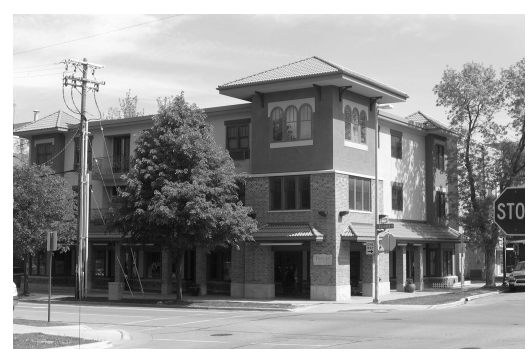
Figure D1: Entrance Orientation
(a)
Entrance Orientation (See Figure D1). All new buildings shall have a functional entrance oriented to an abutting public street. Additional entrances may be oriented to a private street or parking area. For buildings with multiple non-residential tenants, a minimum of one (1) tenant space shall have a functional entrance oriented towards an abutting public street. Other tenant spaces shall be connected to the public street with a private sidewalk connection. Entries shall be clearly visible and identifiable from the street, and delineated with elements such as roof overhangs, recessed entries, landscaping, or similar design features. Barrier-free entrances are encouraged. (Am. by ORD-13-00113, 6-26-13)
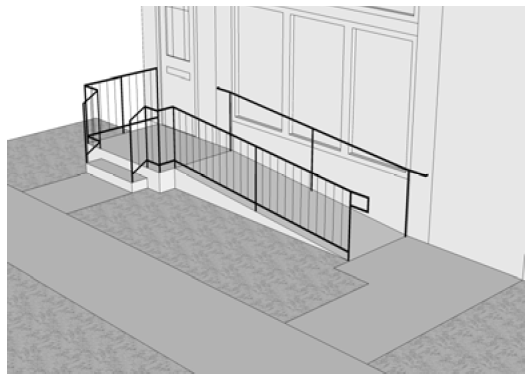
Figure D2: Barrier-Free Entrance Example
(b)
Facade Articulation. Consistent with the design of traditional storefront buildings, new buildings of more than forty (40) feet in width shall be divided into smaller increments, through articulation of the facade. This can be achieved through combinations of including but not limited to the following:
1.
Facade Modulation (See Figure D3). Stepping back or extending forward a portion of the facade.
2.
Vertical divisions using different textures or materials (although materials shall be drawn from a common palette).
3.
Division into storefronts, with separate display windows and entrances.
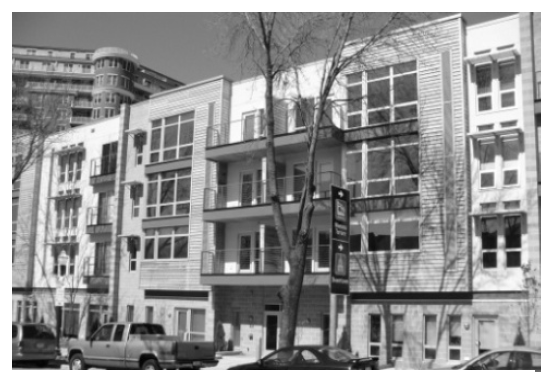
Figure D3: Facade Modulation
4.
Variation in roof lines by alternating dormers, stepped roofs, gables, or other roof elements to reinforce the modulation or articulation interval (See Figure D4).
5.
Arcades, awnings, and window bays at intervals equal to the articulation interval.
(c)
Design of Street-Facing Facades.
No blank walls shall be permitted to face the public street, sidewalks, or other public spaces such as plazas. Elements such as windows, doors, columns, changes in material, and similar details shall be used to add visual interest.
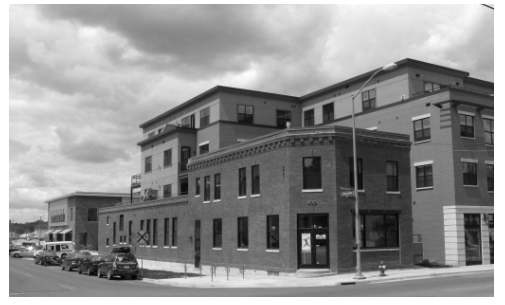
Figure D4: Variation in Roof Lines
(d)
Door and/or Window Openings. For nonresidential uses at ground floor level, windows and doors or other openings shall comprise at least sixty percent (60%) of the length and at least forty percent (40%) of the area of the ground floor of the primary street facade. At least fifty percent (50%) of windows on the primary street facade shall have the lower sill within three (3) feet of grade.
For residential uses at ground level, a minimum of fifteen percent (15%) of the ground level of residential facades or side and rear facades not fronting a public street shall consist of windows and door openings. On upper stories, window or balcony openings shall occupy a minimum of fifteen percent (15%) of the upper-story wall area.
1.
Glass on windows and doors shall be clear or slightly tinted, allowing views into and out of the interior. Spandrel glass that mimics the appearance of windows may be used for up to twenty percent (20%) of the required area of the openings. (Am. by ORD-13-00205, 12-10-13)
2.
Displays may be placed within windows. Equipment within buildings shall be placed a minimum of five (5) feet behind windows. To preserve views, within three (3) feet of any window, not more than thirty percent (30%) of the view through the windows shall be blocked by merchandise, displays, shelving, or other obstructions.
3.
Window shape, size and patterns shall emphasize the intended organization of the facade and the definition of the building.
(e)
Equipment and Service Area Screening. If an outdoor storage, service or loading area is visible from adjacent residential uses or an abutting public street or public walkway, it shall be screened by a decorative fence, wall or screen of plant material at least six (6) feet in height. Fences and walls shall be architecturally compatible with the primary structure.
(f)
Screening of Rooftop Equipment. All rooftop equipment, with the exception of solar and wind equipment, shall be screened from view from adjacent streets and public rights-of-way. Rooftop equipment shall be screened from view from adjacent buildings to the extent possible.
1.
The equipment shall be within an enclosure. This structure shall be set back a distance of one and one-half (1½) times its height from any primary facade fronting a public street.
a.
Screens shall be of durable, permanent materials (not including wood) that are compatible with the primary building materials.
b.
Screening shall be constructed to a height of at least one (1) foot above the height of the equipment.
2.
Exterior mechanical equipment such as ductwork shall not be located on primary building facades.
(g)
Materials. Nonresidential or mixed-use buildings shall be constructed of durable, high-quality materials such as brick, stone, textured cast stone, or tinted masonry units. Table 28D-1 below lists allowable building materials. When applying these requirements, consideration shall be given to the use, amount, placement and relationship of each material as part of a comprehensive palette of building materials. All building facades visible from a public street or public walkway should employ materials and design features similar to or complementary to those of the front facade.
Table 28D-1.
A - Shall be used in conjunction with a palette of materials and shall not comprise more than 33% of any building wall adjacent to a public street or walkway.
B - Shall incorporate horizontal and vertical articulation and modulation, including but not limited to changes in color and texture, or as part of a palette of materials.
C - Shall not be within three feet of the ground or used in heavily trafficked pedestrian areas or where high pedestrian traffic is anticipated.
D - Shall be used in conjunction with a palette of materials; shall be a heavy gauge metal, and; shall be non-reflective.
E - Shall be used in limited quantities due to its limited durability.
F - Shall be used in limited quantities as an accent material.
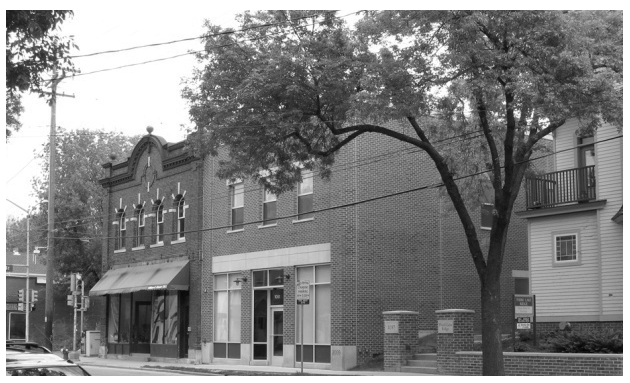
Figure D5: Compatibility with Traditional Buildings
(h)
Compatibility with Traditional Buildings. (See Figure D5.) New development shall relate to the design of traditional buildings adjacent to the site, where present, in scale and character. This can be achieved by maintaining similar, facade divisions, roof lines, rhythm and proportions of openings, building materials and colors. Historic architectural styles need not be replicated.
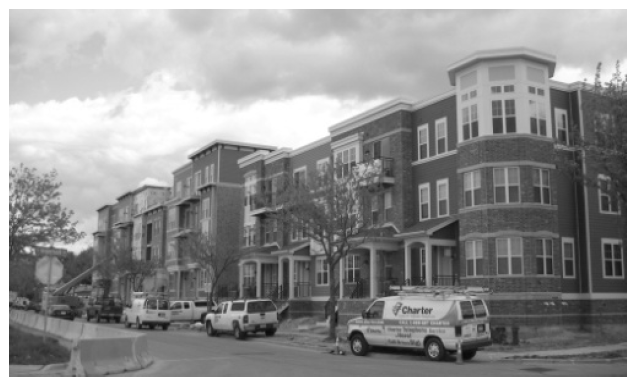
Figure D6: Building Alignment
(i)
Building Alignment. (See Figure D6.) Buildings shall be aligned with facades parallel with the street to create a well-defined street edge.
(j)
Building Articulation. (See Figure D7.) Buildings shall have horizontal and vertical articulation, which may include dormers, cornice detailing, recesses and projections, stepbacks of upper stories, changes in roof types and planes, building materials, and window patterns. The base of the building shall relate to the human scale, including doors and windows, texture, projections, awnings, canopies, and similar features.
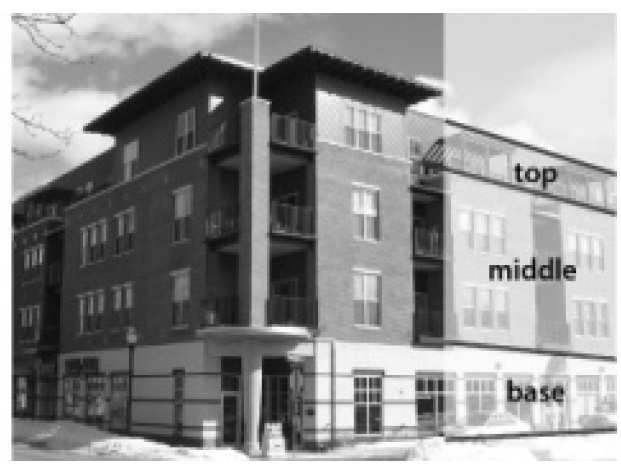
Figure D7: Building Articulation
(k)
Ground-Floor Residential Uses. (See Figure D8.) Ground-floor residential uses fronting a public street or walkway, where present, shall be separated from the street by landscaping, steps, porches, grade changes, and low ornamental fences or walls in order to create a private yard area between the sidewalk and the front door.
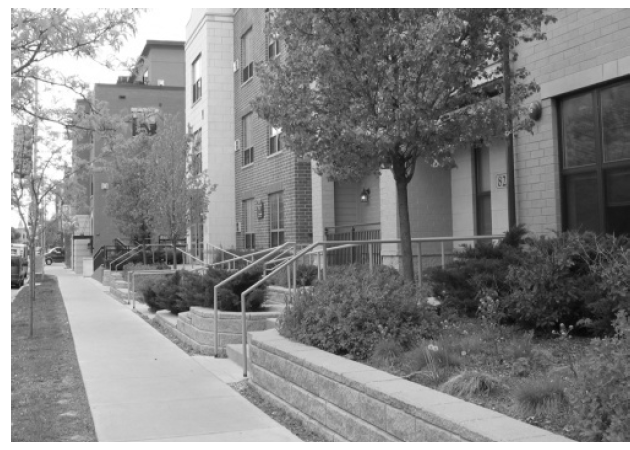
Figure D8: Ground Floor Residential Uses
28.061 - MIXED-USE AND COMMERCIAL DISTRICTS USES.
(1)
Table 28D-2 lists all permitted and conditional uses in the mixed-use and commercial districts.
(a)
"P" means permitted in the districts where designated.
(b)
"C" means allowed as conditional uses in the districts where designated, in compliance with all applicable standards.
(c)
Uses indicated as "P/C" means permitted or conditional, depending on specific requirements in Supplemental Regulations, Sec. 28.151. (Am. by ORD-22-00096, 9-15-22)
(d)
"Y" means that there are specific requirements in Sec. 28.151 associated with a use. (Am. by ORD-22-00096, 9-15-22)
(e)
"LMX" means Limited Mixed-Use District.
(f)
"NMX" means Neighborhood Mixed-Use District.
(g)
"TSS" means Traditional Shopping Street District.
(h)
"MXC" means Mixed-Use Center District.
(i)
"CC-T" means Commercial Corridor - Transitional District.
(j)
"CC" means Commercial Center District.
(k)
"RMX" means Regional Mixed Use District. (Cr. by ORD-21-00008, 2-10-21)
(l)
"THV" means Tiny House Village District. (Cr. By ORD-21-00061, 9-13-21)
Table 28D-2.
(Am. by ORD-13-00007, 1-15-13; ORD-13-00054, 4-24-13; ORD-13-00096, 1-3-13; ORD-13-00134, 8-14-13; ORD-13-00147, 9-11-13; ORD-13-00177 & ORD-13-00178, 10-23-13; ORD-13-00183 & ORD-13-00185, 11-5-13; ORD-13-00189, 11-26-13; ORD-14-00015, 1-29-14; ORD-14-00083, 4-16-14; ORD-14-00115, 7-11-14; ORD-14-00133, 8-13-14; ORD-14-00143, 9-12-14; ORD-15-00026, 3-11-15; ORD-15-00032, 4-8-15; ORD-15-00054, 5-27-15; ORD-15-00124, 11-11-15; ORD-16-00042, 4-27-16; ORD-16-00049, 5-25-16; ORD-16-00069, 8-13-16, ORD-16-00074, 9-15-16; ORD-16-00092 & ORD-16-00093, 11-9-16; ORD-16-00109, 12-14-16; ORD-17-00025, 2-20-17; ORD-17-00106, 10-25-17; ORD-17-00116, 12-1-17; Am. by ORD-18-00068, 7-19-18; Am. by ORD-18-00114, 11-9-18; Am. by ORD-18-00118, 12-3-18; Am. by ORD-19-00024, 4-29-19; Am. by ORD-19-00051, 7-2-19; Am. by ORD-20-00059, 6-29-20; Am. by ORD-20-00107, 12-3-20; Am. by ORD-21-00001, 1-19-21; Am. by ORD-21-00007, 2-2-21; Am. by ORD-21-00008, 2-10-21; Am. by ORD-21-00012, 2-10-21; Am. by ORD-21-00044, 6-14-21; Am. by ORD-21-00061, 9-13-21; Am. by ORD-21-00062, 9-13-21; Am. by ORD-21-00073, 11-17-21; Am. by ORD-21-00087, 12-15-21; Am. by ORD-22-00016, 4-7-22; Am. by ORD-22-00033, 5-19-22; Am. by ORD-22-00096, 9-15-22; Am. by ORD-22-00107, 10-21-22; Am. by ORD-23-00013, 1-25-23; Am. by ORD-23-00022, 3-10-23; Am. by ORD-24-00001, 1-17-24; Am. by ORD-24-00033, 6-3-24; Am. by ORD-25-00023, 4-24-25; Am. by ORD-25-00042, 6-27-25)
28.062 - MIXED-USE AND COMMERCIAL DISTRICTS BUILDING FORMS.
28.063 - LIMITED MIXED-USE DISTRICT.
(1)
Statement of Purpose.
The LMX District is established to allow for small-scale mixed-use development within or adjacent to otherwise residential areas. The district is also intended to:
(a)
Encourage pedestrian, bicycle and transit use as a means of accessing these developments.
(b)
Protect the integrity of the surrounding residential uses.
(c)
Facilitate preservation, development or redevelopment consistent with the adopted goals, objectives, policies, and recommendations of the Comprehensive Plan and of adopted neighborhood, corridor or special area plans.
(2)
Permitted and Conditional Uses.
See Table 28D-2 for a complete list of allowed uses within the mixed-use and commercial districts.
(3)
Dimensional Requirements.
Requirements represent minimums unless otherwise noted. Dimensions are in feet unless otherwise noted.
(Am. by ORD-21-00028, 3-30-21, Eff. 4-9-21; Am. by ORD-25-00011, 3-8-25)
(4)
Site Standards. The following standards shall apply to new buildings and additions exceeding 50% of original building's floor area.
(a)
Maximum Size. Buildings shall not exceed five thousand (5,000) square feet of floor area. Buildings exceeding five thousand (5,000) square feet of floor area but not more than seven thousand five hundred (7,500) square feet of floor area may be allowed with conditional use approval. (Am. by ORD-15-00033, 4-8-15)
(b)
Surface parking shall not be located between the primary street and the plane of the principal building's primary street-facing facade. Surface parking abutting the primary street frontage is limited to seventy (70) feet in width or fifty percent (50%) of lot frontage, whichever is less.
(c)
All surface parking areas must be screened from adjacent residentially zoned properties.
(Am. by ORD-24-00018, 3-20-24)
(5)
Site Standards: New and Existing Development.
(a)
All business activities shall be conducted within completely enclosed buildings, except:
1.
Off-street parking and off-street loading.
2.
Outdoor display.
3.
Vending machines.
4.
Outdoor eating, cooking, and service areas associated with food and beverage establishments. (Am. by ORD-13-00178, 10-23-13)
5.
Auto service stations.
6.
Bicycle-sharing facilities.
7.
Walk-up service windows.
8.
Temporary outdoor events.
9.
Solar energy systems and wind energy systems.
10.
Yard sales.
11.
Agricultural activities.
12.
Cemeteries.
13.
Composting.
14.
Keeping of chickens and keeping of honeybees.
15.
Outdoor recreation.
28.064 - NEIGHBORHOOD MIXED-USE DISTRICT.
(1)
Statement of Purpose.
The NMX District is established to encourage and sustain the viability of commercial nodes that serve the shopping needs of residents in adjacent neighborhoods. The district is also intended to:
(a)
Encourage pedestrian, bicycle and transit use as a means of accessing these commercial areas.
(b)
Encourage diversification of uses, including residential, commercial, and civic uses, in order to enhance the vitality and appeal of these areas.
(c)
Facilitate preservation, development or redevelopment consistent with the adopted goals, objectives, policies, and recommendations of the Comprehensive Plan and of adopted neighborhood, corridor or special area plans.
(2)
Permitted and Conditional Uses.
See Table 28D-2 for a complete list of allowed uses within the mixed-use and commercial districts.
(3)
Dimensional Requirements.
Requirements represent minimums unless otherwise noted. Dimensions are in feet unless otherwise noted.
(Am. by ORD-17-00054, 6-19-17; Am. by ORD-21-00028, 3-30-21, Eff. 4-9-21; Am. by ORD-21-00044, 6-14-21; Am. by ORD-25-00011, 3-8-25)
(a)
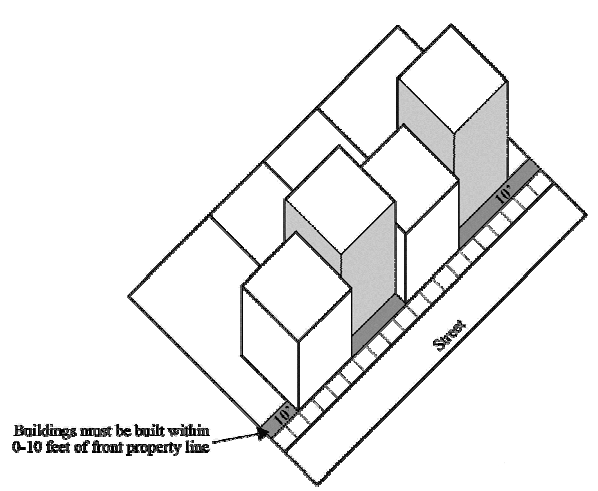
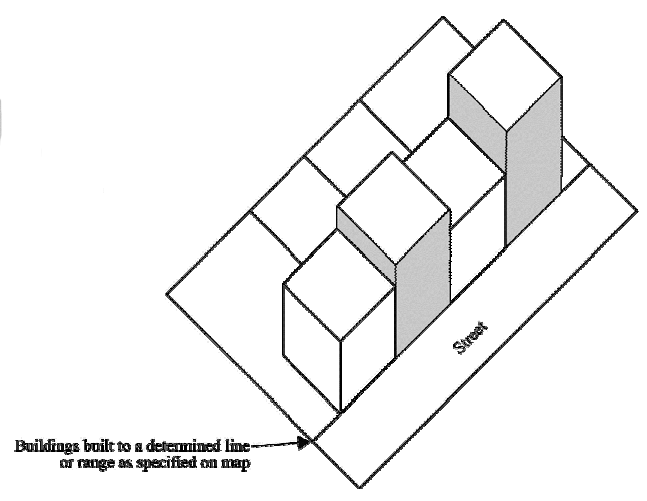
Front Yard Setback. For buildings and additions exceeding fifty percent (50%) of floor area, the maximum front yard setback shall be twenty-five (25) feet unless designated otherwise on the zoning map. Front yard setbacks on the zoning map may be designated as a specific location (build to line) or as a range.
(b)
Additional Height. Building height exceeding the maximum may be allowed with conditional use approval.
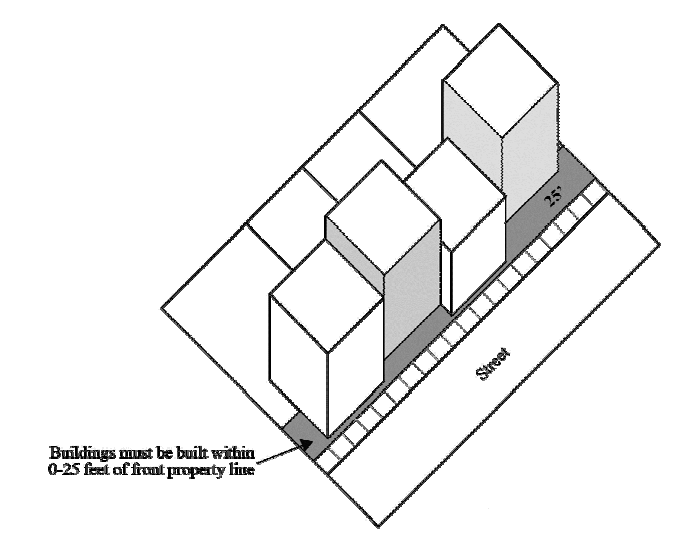
Figure D9: Maximum Front Yard Setback in NMX District unless designated otherwise
on the zoning map
Figure D10: Where designated on the zoning map, properties may have a maximum setback
of 10 feet in the NMX district.
(c)
(Rep. by ORD-17-00054, 6-19-17)
(d)
Rear or Side Yard Height Transition to Residential Districts. Where the NMX District abuts a residential district at the rear or side lot line, building height at the rear or side yard setback line shall not exceed the maximum height in feet allowed in the abutting district as a permitted use. From this point, building height may increase at a ratio of one foot of rise to one foot of horizontal distance away from the property line, (a 45º angle) up to the maximum allowed height. Transitions exceeding this height and/or ratio limitation require conditional use approval. (See Figure D12) (Am. by ORD-25-00067, 10-16-25)
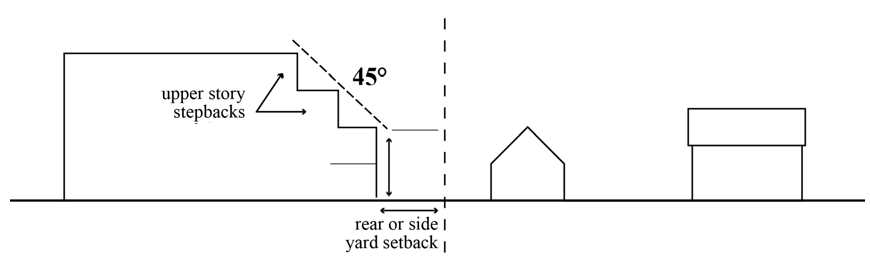
Figure D12: Rear or Side Yard Height Transition
(Am. by ORD-14-00131, 8-13-14; Am. by ORD-25-00067, 10-16-25)
(4)
Site Standards. The following standards shall apply to new buildings and additions exceeding fifty percent (50%) of original building's floor area.
(a)
For the Single-Family Attached, Small Multi-Family, Large Multi-Family, and Courtyard Multi-Family Building Forms, surface parking shall not be located between any street and the plane of the principal building's corresponding street-facing facade. If located on the side of the building, parking facilities shall occupy no more than twenty-five percent (25%) of the frontage along the primary abutting street. For Large Multi-Family Buildings, structured parking at ground level shall not be visible on the front façade of the building.
(b)
For all Building Forms other than (a) above, surface parking shall not be located between the primary street and the plane of the principal building's primary street-facing facade. Surface Parking abutting the primary street frontage is limited to seventy (70) feet in width or fifty percent (50%) of lot frontage, whichever is less.
(Am. by ORD-15-00033, 4-8-15; Rpld. By ORD-21-00044, 6-14-21; Am. by ORD-24-00018, 3-20-24)
(5)
Site Standards: New and Existing Development.
(a)
All business activities shall be conducted within completely enclosed buildings, except:
1.
Off-street parking and off-street loading.
2.
Outdoor display.
3.
Vending machines.
4.
Outdoor eating, cooking, and service areas associated with food and beverage establishments. (Am. by ORD-13-00178, 10-23-13)
5.
Auto service stations.
6.
Bicycle-sharing facilities.
7.
Walk-up service windows.
8.
Temporary outdoor events.
9.
Solar energy systems and wind energy systems.
10.
Yard sales.
11.
Agricultural activities.
12.
Cemeteries.
13.
Composting.
14.
Keeping of chickens and keeping of honeybees.
15.
Outdoor recreation.
28.065 - TRADITIONAL SHOPPING STREET (TSS) DISTRICT.
(1)
Statement of Purpose.
The TSS District is established to encourage and sustain the viability of Madison's mixed-use corridors, which sustain many of the City's traditional neighborhoods. The district is also intended to:
(a)
Encourage pedestrian, bicycle and transit use as a means of accessing and moving through these corridors.
(b)
Encourage diversification of uses, including residential, commercial, and civic uses, in order to enhance the vitality and appeal of these areas.
(c)
Maintain the viability of existing residential buildings located within or adjacent to these corridors.
(d)
Encourage appropriate transitions between higher-intensity uses within TSS districts and adjacent lower-density residential districts.
(e)
Facilitate preservation, development or redevelopment consistent with the adopted goals, objectives, policies, and recommendations of the Comprehensive Plan and of adopted neighborhood, corridor or special area plans.
(2)
Permitted and Conditional Uses.
See Table 28D-2 for a complete list of allowed uses within the mixed-use and commercial districts.
(3)
Dimensional Requirements.
Requirements represent minimums unless otherwise noted. Dimensions are in feet unless otherwise noted.
(Am. by ORD-13-00007, 1-15-13; ORD-14-00148, 9-12-14; Am. by ORD-21-00028, 3-30-21, Eff. 4-9-21; Am. by ORD-21-00044, 6-14-21; Am. by ORD-25-00011, 3-8-25)
(a)
Front Yard Setback. For new buildings and additions exceeding fifty percent (50%) of building's original floor area, the maximum front setback shall be twenty-five (25) feet, unless designated otherwise on the zoning map. Front yard setbacks on the zoning map may be designated as a specific location (build-to-line) or as a range. (See Figures D9-D11)
(b)
Rear or Side Yard Height Transition to Residential Districts. Where the TSS District abuts a residential district at the rear or side lot line, building height at the rear or side yard setback line shall not exceed the maximum height in feet allowed in the abutting district as a permitted use. From this point, building height may increase at a ratio of one foot of rise to one foot of horizontal distance away from the property line, (a 45° angle) up to the maximum allowed height. Transitions exceeding this height and/or ratio limitation require conditional use approval. (See Figure D12) (Am. by ORD-14-00131, 8-13-14; Renum. by ORD-14-00148, 9-12-14; Am. by ORD-25-00067, 10-16-25)
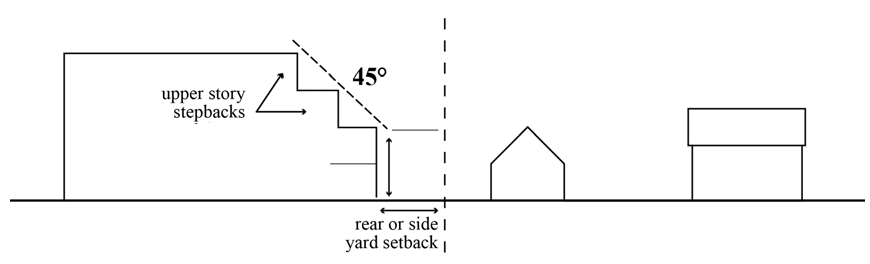
Figure D12: Rear or Side Yard Height Transition
(c)
Additional Height. Building height exceeding the maximum may be allowed with conditional use approval. (Renum. by ORD-14-00148, 9-12-14)
(4)
Site Standards. The following standards are applicable to new buildings and additions exceeding fifty percent (50%) of original building's floor area.
(a)
For the Single-Family Attached, Small Multi-Family, Large Multi-Family, and Courtyard Multi-Family Building Forms, surface parking shall not be located between any street and the plane of the principal building's corresponding street-facing facade. If located on the side of the building, surface or structured parking shall occupy no more than twenty-five percent (25%) of the frontage along the primary abutting street. For Large Multi-Family Buildings, structured parking at ground level shall not be visible on the front facade of the building.
(b)
For all Building Forms other than (a) above, surface parking shall not be located between the primary street and the plane of the principal building's primary street-facing facade. Surface parking abutting primary street frontage is limited to forty percent (40%) of lot frontage.
(c)
Parking Buildings shall be designed with ground-floor retail or office uses fronting primary streets.
(Am. by ORD-15-00033, 4-8-15; Rpld. by ORD-21-00044, 6-14-21; Am. by ORD-24-00018, 3-20-24)
(5)
Site Standards: New and Existing Development.
(a)
All business activities shall be conducted within completely enclosed buildings except:
1.
Off-street parking and off-street loading.
2.
Outdoor display and outdoor storage.
3.
Vending machines.
4.
Outdoor eating, cooking, and service areas associated with food and beverage establishments. (Am. by ORD-13-00178, 10-23-13)
5.
Bicycle-sharing facilities.
6.
Auto service stations.
7.
Agricultural activities.
8.
Temporary outdoor events.
9.
Solar energy systems and wind energy systems.
10.
Walk-up service windows.
11.
Yard sales.
12.
Cemeteries.
13.
Composting
14.
Keeping of chickens and keeping of honeybees.
15.
Outdoor recreation.
16.
Vacuuming and cleaning at car washes. (Cr. by ORD-21-00021, 3-15-21)
28.066 - MIXED USE CENTER (MXC) DISTRICT.
(1)
Statement of Purpose.
The MXC District is established to encourage the development or redevelopment of mixed-use centers that combine new or existing retail development with a variety of housing, offices, studios, live-work space, civic buildings, and other complementary uses arranged in a cohesive, compact, and walkable environment that makes it convenient for residents, customers, and employees to travel by transit, bicycle, foot, or car. The MXC District is intended to facilitate the development or redevelopment of properties recommended for mixed-use development or transit-oriented development in the Comprehensive Plan or adopted neighborhood, corridor or special area plans. MXC Districts shall be located along existing or planned high-capacity multi-modal transportation corridors. The district is also intended to:
(a)
Encourage appropriate transitions between higher-intensity uses within mixed-use centers and adjacent lower-density residential districts.
(b)
Encourage the development of mixed-use buildings, though not every building in the MXC District needs to include both residential and non-residential uses. However, both types of land uses shall be accommodated within the district as a whole. MXC Districts shall be planned to provide a suitable residential environment.
(2)
Standards for Approval of Zoning Map Amendment.
The standards for approval of a zoning map amendment to the MXC District, approval of a MXC district master plan, or any major alteration to an approved master plan, are as follows:
(a)
The MXC District and master plan shall facilitate the development or redevelopment of a property or properties recommended for mixed-use or transit-oriented development in the Comprehensive Plan and of adopted neighborhood, corridor or special area plans.
(b)
The range of non-residential uses, and the development density of both residential and non-residential uses in MXC districts will vary depending on the size of the district and the type and intensity of the surrounding development. An MXC District shall include a mix of residential, retail, office, open space and public uses arranged in a fashion conducive to all forms of transportation.
(c)
An MXC District shall be located along existing or planned high-capacity multi-modal transportation corridors.
(d)
The MXC District master plan shall not create traffic or parking demands disproportionate to the facilities and improvements designed to meet those demands. (Am. by ORD-24-00001, 1-17-24)
(e)
The MXC District master plan shall include open space suitable to the type and character of development proposed, including for projects with residential components, a mix of structured and natural spaces for use by residents and visitors. Areas for stormwater management, parking, or in the public right-of-way shall not be used to satisfy this requirement.
(f)
The MXC District master plan shall include suitable assurances that each phase could be completed in a manner that would not result in an adverse effect upon the community as a result of termination at that point.
(3)
Master Plan Required.
Prior to the issuance of permits for construction in an MXC District or as part of a zoning map amendment as prescribed in Sec. 28.182, MGO, establishing a MXC District a master plan shall be approved to guide development of the District in a manner consistent with the statement of purpose and requirements for this section.
(a)
Contents of Master Plan. All MXC District master plans shall contain the following:
1.
An accurate map of the District including its relationship to surrounding properties and existing topography and key features, including existing buildings and structures.
2.
The arrangement of buildings, parking facilities, internal circulation of pedestrians and vehicles, access to individual development sites from public streets and internal drives, and the location of storm drainage facilities and open spaces within the District.
3.
Identification of the minimum and maximum anticipated gross square footage for the overall District and its individual sites, and the minimum and maximum height of each proposed building within the District.
4.
The general arrangement of individual lots, outlots, tracts, easements, and all dedications to the public to serve the MXC District. The master plan may be used as a preliminary subdivision plat if it includes all of the information required for a preliminary plat under Sec. 16.23(5)(a), MGO. The master plan may propose a planned multi-use site as defined in Sec. 28.211 and as governed by Sec. 28.137(2), provided that any planned multi-use site in the MXC District shall be governed by the requirements of this section where the requirements of Sec. 28.137 conflict.
5.
A reciprocal land use agreement approved by the Director of Traffic Engineering, City Engineer and Director of Planning and Community and Economic Development recorded in the office of the Dane County Register of Deeds shall be required to govern shared access, circulation or parking within the District. (Am. by ORD-23-00098, 10-26-23)
6.
When requested, a general outline of intended organizational structure related to property owner's association, deed restrictions and private provision of common services.
7.
A schedule or phasing plan indicating the approximate dates when construction of the MXC District can be expected to begin and be completed.
8.
Building design standards including the massing and composition of structures, orientation of windows and entries; doors and other elements of the facade, and primary facade materials and colors to be at least as restrictive as the minimum requirements in the General Provisions for Mixed-Use and Commercial Districts in Sec. 28.060, except that new buildings may have the functional entrance oriented to a private street if that street abuts a private parking area or other common amenity available for use by all tenants of the building. (Am. by ORD-17-00023, 2-20-17)
9.
Site design standards including but not limited to the landscaping and screening of building sites, surface parking lots, and common open spaces, which shall be at least as restrictive as the minimum requirements in Landscaping and Screening Requirements in Sec. 28.142, and the signage of the MXC District as regulated by Chapter 31, Sign Code. (Am. by ORD-24-00018, 3-20-24)
(b)
Decision on Master Plan.
1.
The decision process for approval of a master plan, including any major alteration to an approved master plan, shall be as specified in Sec. 28.182, including a recommendation by the Plan Commission and action by the Common Council.
2.
The applicant shall receive a recommendation on the master plan from the Urban Design Commission on the proposed arrangement of buildings, parking facilities, internal circulation of pedestrians and vehicles, and access to individual development sites from public streets and internal drives prior to the Plan Commission review.
3.
The Urban Design Commission shall approve the building design and site design standards in (a) 8 and 9 above prior to the issuance of building permits prior to the issuance of permits for construction in an MXC District.
(4)
Permitted and Conditional Uses.
See Table 28D-2 for a complete list of allowed uses within the mixed-use and commercial districts.
(5)
Dimensional Requirements.
Requirements represent minimums unless otherwise noted. Dimensions are in feet unless otherwise noted.
(Am. by ORD-21-00028, 3-30-21, Eff. 4-9-21; Am. by ORD-21-00044, 6-14-21; Am. by ORD-25-00011, 3-8-25)
(a)
Front Yard Setback.
1.
On perimeter streets, a minimum of sixty percent (60%) of the lot frontage on the primary abutting street shall be occupied by buildings placed within forty (40) feet of the street right-of-way and with front or side facades oriented to the street.
2.
On internal streets, a minimum of fifty percent (50%) of the lot frontage on internal streets shall be occupied by buildings placed within twenty-five (25) feet of the street right-of-way or sidewalk edge, and with front or side facades oriented to the street.
(b)
Rear or Side Yard Height Transition to Residential Districts. Where the MXC District abuts a residential district at the rear or side lot line, building height at the rear or side yard setback line shall not exceed the maximum height in feet allowed in the abutting district as a permitted use. From this point, building height may increase at a ratio of one foot of rise to one foot of horizontal distance away from the property line (a 45° angle) up to the maximum allowed height. Transitions exceeding this height and/or ratio limitation require conditional use approval. (See Figure D12) (Am. by ORD-14-00131, 8-13-14; Am. by ORD-25-00067, 10-16-25)
Figure D12: Rear or Side Yard Height Transition
(Am. by ORD-25-00067, 10-16-25)
(6)
Site Standards. The following standards are applicable to new buildings and additions exceeding fifty percent (50%) of original building's floor area.
(a)
Maximum Size. Buildings shall not exceed twenty-five thousand (25,000) square feet floor area for an individual establishment or forty thousand (40,000) square feet floor area for a mixed-use or multi-tenant building. Buildings exceeding this size may be allowed as conditional uses. All new retail establishments with a total gross floor area (GFA) of forty thousand (40,000) square feet or more are subject to review by the Urban Design Commission under the provisions of Sec. 33.24(4)(f). (Am. by ORD-15-00033, 4-8-15)
(b)
Buildings shall be oriented to the primary abutting street or to an internal street, court, walkway or plaza, where one is present.
(c)
All building facades visible from a public or private street or walkway shall employ materials and design features similar to or complementary to those of the front facade.
(d)
At least twenty-five percent (25%) of the required parking shall be structured.
(e)
For the Single-Family Attached, Small Multi-Family, Large Multi-Family and Courtyard Multi-Family Building Forms, surface parking shall not be located between any street and the plane of the principal building's corresponding street-facing facade.
(f)
For all Building Forms other than (e) above, surface parking shall not be located between the primary street and the plane of the principal building's primary street-facing facade.
(g)
Surface parking shall be divided into separate modules no greater in size than one hundred (100) spaces; modules shall be separated by buildings, landscaped open space areas, internal streets or landscaped pedestrian pathways at least twenty (20) feet in width.
(h)
For Single-Family Attached, Small Multi-Family, Large Multi-Family, or Courtyard Multi-Family Building Forms, if parking is located on the side of the building, surface or structured parking shall occupy no more than twenty-five percent (25%) of the frontage along the primary abutting street. For Large Multi-Family Buildings, structured parking at ground level shall not be visible from the front facade of the building.
(i)
For all Building Forms other than (h) above, surface parking abutting the primary street frontage shall be limited to forty percent (40%) of the total lot width.
(j)
Parking Buildings abutting any public or private street shall be designed with ground-floor retail or office uses fronting the primary street. Upper floors devoted solely to parking shall be stepped back from the principal facade and designed with materials and proportions similar to new commercial or mixed-use buildings.
(k)
All new buildings or additions to existing buildings shall be approved by the Zoning Administrator in conformance with the building design standards and site design standards approved as part of the master plan per sub. (3)(a). Any appeal of the Zoning Administrator's decision on the application of the building design standards and site design standards shall be made to the Urban Design Commission for a determination.
(Am. by ORD-24-00018, 3-20-24)
(7)
Site Standards: New and Existing Development.
(a)
All business activities shall be conducted within completely enclosed buildings except:
1.
Off-street parking and off-street loading.
2.
Outdoor display and outdoor storage.
3.
Vending machines.
4.
Outdoor eating, cooking, and service areas associated with food and beverage establishments. (Am. by ORD-13-00178, 10-23-13)
5.
Bicycle-sharing facilities.
6.
Temporary outdoor events.
7.
Walk-up service windows.
8.
Agricultural activities.
9.
Drive-through windows. (Am. by ORD-24-00033, 6-3-24)
10.
Solar energy systems and wind energy systems.
11.
Yard sales.
12.
Auto service stations.
13.
Cemeteries.
14.
Composting.
15.
Outdoor recreation.
16.
Keeping of chickens and keeping of honeybees.
17.
Vacuuming and cleaning at car washes. (Cr. by ORD-21-00021, 3-15-21)
(8)
Access and Circulation.
Any newly mapped MXC District shall take primary access from a collector or higher order street. A network of public or private streets and walkways may be used to provide circulation through the district. An internal system of streets, walkways, lanes and blocks shall be provided for districts of five (5) acres or more, and may be required as a condition of approval for a master plan or for conditional uses.
(9)
Required Mix of Uses.
An MXC District larger than one (1) acre in net area shall contain uses from at least two (2) of the following categories:
(a)
Commercial uses, including retail, service and office uses.
(b)
Residential - family and group living categories.
(c)
Civic and institutional uses.
(10)
Required Open Space.
The MXC District shall include open space suitable to the type and character of development proposed.
(a)
For projects with residential components, a mix of structured and natural spaces for use by residents and visitors.
(b)
Any MXC District site greater than five (5) acres in size shall include common open space designed and improved as a plaza, square or green, comprising a minimum of five percent (5%) of the development site. Areas for stormwater management not designed and improved for recreational purposes, parking, or in the public right of way shall not be used to satisfy this requirement.
(c)
Open space to serve the MXC District shall be distributed throughout the district and clearly dimensioned on the master plan.
(11)
Construction Required.
Any MXC master plan not constructed in accordance to its approved phasing plan, and any phases not constructed within ten (10) years of the Common Council approval of the master plan, shall require approval of a new master plan by the Common Council following a recommendation by the Plan Commission and Urban Design Commission. In considering extensions of approved master plans for unconstructed components/phases, the commissions and council shall consider changes in the surrounding area or neighborhood since approval of the master plan that would render the project incompatible with current conditions.
(12)
Changes to Master Plan.
Alterations to an approved master plan may be approved by the Plan Commission if the requested alterations are consistent with the concept approved by the Common Council, provided however, the Zoning Administrator may, following consideration by the alderperson of the district, issue permits for minor alterations that are approved by the Director of Planning and Community and Economic Development and are consistent with the concept approved by the Common Council. If the change or addition constitutes a substantial alteration of the original plan, the procedure in sub. (3) above is required.
(Sec. 28.066 Am. by ORD-16-00039, 4-8-16)
28.067 - COMMERCIAL CORRIDOR - TRANSITIONAL DISTRICT.
(1)
Statement of Purpose.
The CC-T District is established to recognize the many commercial corridors within the City that remain largely auto-oriented, and to encourage their transformation into mixed-use corridors that are equally conducive to pedestrian, bicycle, transit and motor vehicle activity. The district is also intended to:
(a)
Improve the quality of landscaping, site design and urban design along these corridors.
(b)
Maintain the viability of existing residential uses located along predominantly commercial corridors.
(c)
Encourage appropriate transitions between higher-intensity uses along commercial corridors and adjacent lower-density residential districts.
(d)
Facilitate preservation development or redevelopment consistent with the adopted goals, objectives, policies, and recommendations of the Comprehensive Plan and of adopted neighborhood, corridor or special area plans.
(e)
Structured parking is encouraged.
(2)
Permitted and Conditional Uses.
(a)
See Table 28D-2 for a complete list of allowed uses within the mixed-use and commercial districts.
(3)
Dimensional Requirements.
Requirements represent minimums unless otherwise noted. Dimensions are in feet unless otherwise noted.
(Am. by ORD-13-00007, 1-15-13; ORD-17-00054, 6-19-17; Am. by ORD-21-00028, 3-30-21, Eff. 4-9-21; Am. by ORD-21-00044, 6-14-21; Am. by ORD-25-00011, 3-8-25)
(a)
Front Yard Setback. The following setbacks shall apply to zoning lots with one principal building. When more than one principal building is developed on a zoning lot, additional buildings shall be exempt from the front yard setback requirement if approved and constructed concurrently with or after a building or buildings that comply with the front yard setback requirements below and occupy thirty percent (30%) of each street frontage on the zoning lot. Front yard setbacks on the zoning map may also be designated as a specific location (build-to-line) or as a range. (Am. by ORD-20-00017, 2-13-20)
1.
A minimum of fifty percent (50%) of the street-facing building wall shall be set back no more than twenty-five (25) feet. (Am. by ORD-20-00017, 2-13-20)
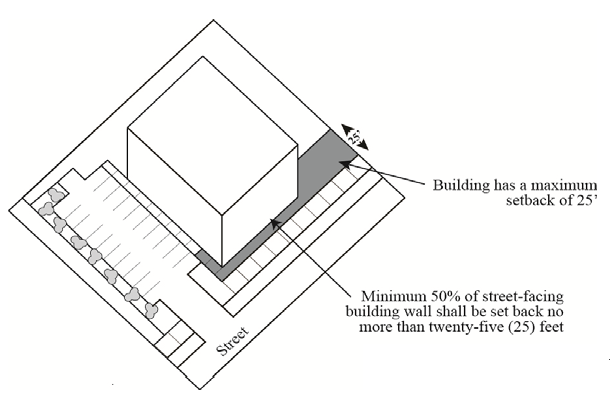
Figure D13: Maximum Setback Illustration, Option 1
2.
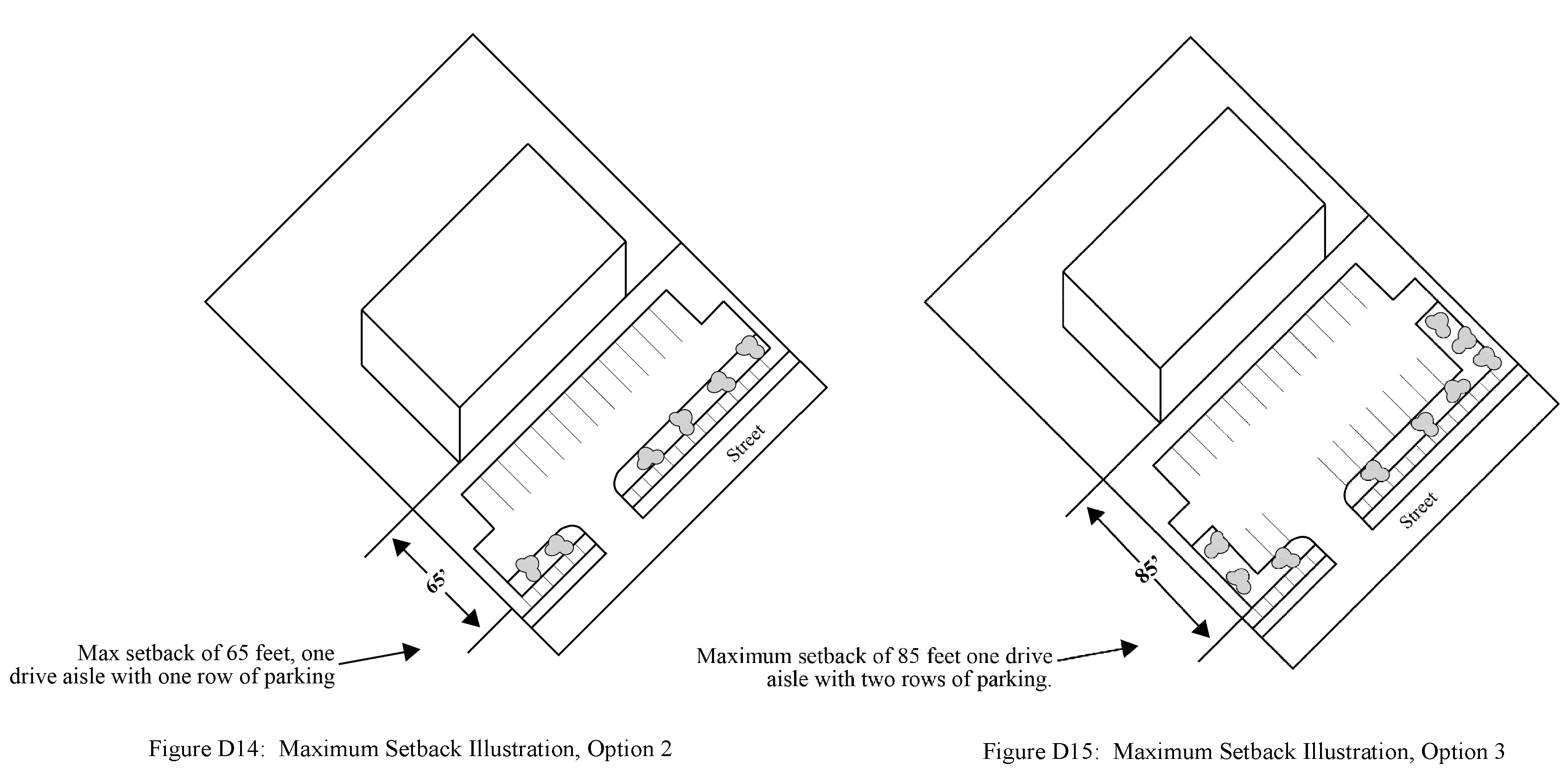
If there is no on-street parking in front of the lot, a building may be setback of up to sixty-five (65) feet from the front property line, provided that at least seventy percent (70%) of the street-facing building wall is setback no more than sixty-five (65) feet. This setback shall allow for one (1) drive aisle and up to one (1) row of surface parking between the building and the street. (Am. by ORD-24-00018, 3-20-24)
3.
Alternatively, if there is no on-street parking in front of the lot, the following greater setbacks can be allowed if approved as a conditional use:
a.
A building may be setback of up to eighty-five (85) feet provided that at least seventy percent (70%) of the street-facing building wall is setback no more than eighty-five (85) feet. This setback shall allow for one (1) drive aisle and up to two (2) rows of surface parking between the building and the street. (Am. by ORD-24-00018, 3-20-24)
b.
If traffic circulation, drainage and or other site design issues are shown to require additional space, the setback may be extended to a maximum of one hundred (100) feet.
(Am. by ORD-13-00127, 7-26-13)
(b)
(Rep. by ORD-17-00054, 6-19-17)
(c)
Rear or Side Yard Height Transition to Residential Districts. Where the CCT District abuts a residential district at the rear or side lot line, building height at the rear or side yard setback line shall not exceed the maximum height in feet allowed in the abutting district as a permitted use. From this point, building height may increase at a ratio of one foot of rise to one foot of horizontal distance away from the property line, (a 45° angle) up to the maximum allowed height. Transitions exceeding this height and/or ratio limitation require conditional use approval. (See Figure D12) (Am. by ORD-14-00131, 8-13-14; Am. by ORD-25-00067, 10-16-25)
Figure D12: Rear or Side Yard Height Transition
(Am. by ORD-25-00067, 10-16-25)
(d)
Additional Height. Heights exceeding the maximum may be allowed with conditional use approval.
(4)
Site Standards. The following standards are applicable to new buildings and additions exceeding fifty percent (50%) of original building's floor area.
(a)
Buildings shall be oriented to the primary abutting street or to an internal street, court, walkway, plaza, or multi-use path.
(b)
All building facades visible from a public street or public walkway shall employ materials and design features similar to or complementary to those of the front facade.
(c)
For the Single-Family Attached, Small Multi-Family, Large Multi-Family and Courtyard Multi-Family Building Forms, parking shall not be located between any street and the plane of the principal building's corresponding street-facing facade.
(d)
Surface parking shall be divided into separate modules no greater in size than one hundred (100) spaces; modules shall be separated by buildings, landscaped open space areas, internal streets or landscaped pedestrian pathways at least twenty (20) feet in width.
(e)
Except as allowed in Section (3)(a)2. and 3. above, surface parking abutting the primary street frontage shall be limited to fifty percent (50%) of the total lot frontage, except that for the Single-Family Attached, Small Multi-Family, Large Multi-Family and Courtyard Multi-Family Building Forms, if located on the side of the building, surface or structured parking shall occupy no more than twenty-five percent (25%) of the frontage along the primary abutting street. For Large Multi-Family Buildings, structured parking at ground level shall not be visible on the front facade of the building.
(Am. by ORD-24-00018, 3-20-24)
(5)
Site Standards: New and Existing Development.
(a)
All business, servicing or processing shall be conducted within completely enclosed buildings, except:
1.
Off-street parking and off-street loading.
2.
Outdoor display and outdoor storage.
3.
Outdoor eating, cooking, and service areas associated with food and beverage establishments. (Am. by ORD-13-00178, 10-23-13)
4.
Bicycle-sharing facilities.
5.
Auto service stations.
6.
Drive-through windows. (Am. by ORD-24-00033, 6-3-24)
7.
Walk-up service windows.
8.
Solar energy systems and wind energy systems.
9.
Cemeteries.
10.
Yard sales.
11.
Vending machines.
12.
Composting.
13.
Outdoor recreation.
14.
Keeping of chickens and keeping of honeybees.
15.
Vacuuming and cleaning at car washes. (Cr. by ORD-21-00021, 3-15-21)
28.068 - COMMERCIAL CENTER DISTRICT.
(1)
Statement of Purpose.
The CC District is established to recognize the existing large-format retail and office sites within the City that remain largely auto-oriented, and to encourage their transformation into mixed-use centers that are equally conducive to pedestrian, bicycle, transit and motor vehicle activity. The district is also intended to:
(a)
Improve the quality of landscaping, site design and urban design within commercial centers.
(b)
Encourage diversification of land use in commercial centers.
(c)
Encourage appropriate transitions between higher-intensity uses and adjacent lower-density residential districts.
(d)
Facilitate preservation, development or redevelopment consistent with the adopted goals, objectives, policies, and recommendations of the Comprehensive Plan and of adopted neighborhood, corridor or special area plans.
(2)
Permitted and Conditional Uses.
(a)
See Table 28D-2 for a complete list of allowed uses within the mixed-use and commercial districts.
(3)
Dimensional Requirements.
Requirements represent minimums unless otherwise noted. Dimensions are in feet unless otherwise noted.
(Am. by ORD-13-00007, 1-15-13; ORD-17-00054, 6-19-17; Am. by ORD-21-00028, 3-30-21, Eff. 4-9-21; Am. by ORD-21-00044, 6-14-21; Am. by ORD-25-00011, 3-8-25)
(a)
Front Yard Setback. Unless designated otherwise on the zoning map, at least seventy percent (70%) of the street-facing building wall shall be setback no more than eighty-five (85) feet. This setback shall allow for a single drive aisle and two (2) rows of surface parking or landscaped area. This setback may be extended to a maximum of one hundred (100) feet if traffic circulation, drainage and or other site design issues are shown to require additional space. Front yard setbacks for planned multi-use sites may be measured from interior private access road curb faces or edges of pavement. Front yard setbacks on the zoning map may be designated as a specific location (build-to-line) or as a range. (Am. by ORD-13-00127, 7-26-13; Am. by ORD-20-00114, 12-14-20; Am. by ORD-24-00018, 3-20-24)
(b)
(Rep. by ORD-17-00054, 6-19-17)
(c)
Rear or Side Yard Height Transition to Residential Districts. Where the CC District abuts a residential district at the rear or side lot line, building height at the rear or side yard setback line shall not exceed the maximum height in feet allowed in the abutting district as a permitted use. From this point, building height may increase at a ratio of one foot of rise to one foot of horizontal distance away from the property line, (a 45° angle) up to the maximum allowed height. Transitions exceeding this height and/or ratio limitation require conditional use approval. (See Figure D12) (Am. by ORD-14-00131, 8-13-14; Am. by ORD-25-00067, 10-16-25)
Figure D12: Rear or Side Yard Height Transition
(Am. by ORD-25-00067, 10-16-25)
(d)
Additional Height. Heights exceeding the maximum may be allowed with conditional use approval.
(4)
Site Standards.
The following standards are applicable to new buildings and additions exceeding 50% of original building's floor area.
(a)
Maximum Size. Buildings shall not exceed twenty-five thousand (25,000) square feet floor area for an individual establishment or forty thousand (40,000) square feet floor area for a multi-tenant building. Buildings exceeding this size may be allowed as conditional uses, meeting the standards governing large retail developments in Section 33.24(4)(f), Madison General Ordinances. (Am. by ORD-15-00033, 4-8-15)
(b)
Buildings shall be oriented to the primary abutting street or to an internal street, court, walkway or plaza.
(c)
All building facades visible from a public street or walkway shall employ materials and design features similar to or complementary to those of the front facade.
(d)
Surface parking shall be divided into separate modules no greater in size than one hundred (100) spaces; modules shall be separated by buildings, landscaped open space areas, internal streets or landscaped pedestrian pathways at least twenty (20) feet in width.
(e)
For the Single-Family Attached, Small Multi-Family, Large Multi-Family and Courtyard Multi-Family Building Forms, surface parking shall not be located between any street and the plane of the principal building's corresponding street-facing facade. If located on the side of the building, surface or structured parking shall occupy no more than twenty-five percent (25%) of the frontage along the primary abutting street. For Large Multi-Family Buildings, structured parking at ground level shall not be visible on the front façade of the building. (Am. by ORD-24-00018, 3-20-24)
(5)
Site Standards: New and Existing Development.
(a)
All activities shall be conducted within completely enclosed buildings, except:
1.
Off-street parking and off-street loading.
2.
Outdoor display and outdoor storage stores.
3.
Outdoor eating, cooking, and service areas associated with food and beverage establishments. (Am. by ORD-13-00178, 10-23-13)
4.
Bicycle-sharing facilities.
5.
Auto service stations.
6.
Drive-through windows. (Am. by ORD-24-00033, 6-3-24)
7.
Walk-up service windows.
8.
Solar energy systems and wind energy systems.
9.
Yard sales.
10.
Vending machines.
11.
Agricultural activities.
12.
Temporary outdoor events.
13.
Cemeteries.
14.
Composting.
15.
Keeping of chickens and honeybees. (Am. by ORD-16-00074, 9-15-16)
16.
Vacuuming and cleaning at car washes. (Cr. by ORD-21-00021, 3-15-21)
28.069 - REGIONAL MIXED-USE (RMX) DISTRICT.
(1)
Statement of Purpose. This district is intended to provide opportunities for high-intensity mixed-use centers supporting a variety of multifamily housing options and commercial activities that serve the needs of the region. These areas typically include large-scale sites supportive of multistory buildings and should be the most intensively developed areas in the city outside of the downtown.
(2)
Permitted and Conditional Uses. See Table 28D-2 for a complete list of allowed uses within the downtown and urban districts.
(3)
Dimensional Standards. Standards represent minimums unless otherwise noted. Dimensions are in feet unless otherwise noted.
(Am. by ORD-24-00001, 1-17-24; Am. by ORD-25-00011, 3-8-25)
(a)
Front Yard Setback. The following setbacks shall apply to zoning lots with one principal building. When more than one principal building is developed on a zoning lot, additional buildings shall be exempt from the front yard setback requirement if approved and constructed concurrently with or after a building or buildings that comply with the front yard setback requirements below and occupy 30% of each street frontage on the zoning lot. Front yard setbacks on the zoning map may also be designated as a specific location (build-to-line) or as a range.
1.
A minimum of fifty percent (50%) of the street-facing building wall shall be set back no more than twenty-five (25) feet.
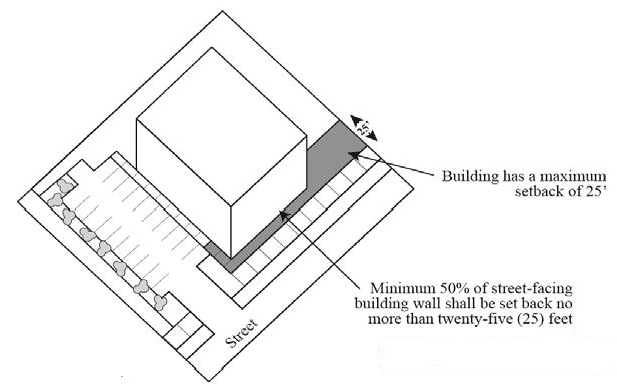
Figure D16: Maximum Setback Illustration
(b)
Rear or Side Yard Height Transition to Residential Districts. Where the RMX District abuts a residential district at the rear or side lot line, building height at the rear or side yard setback line shall not exceed the maximum height in feet allowed in the abutting district as a permitted use. From this point, building height may increase at a ratio of one foot of rise to one foot of horizontal distance away from the property line, (a 45° angle) up to the maximum allowed height. Transitions exceeding this height and/or ratio limitation require conditional use approval. (See Figure D12) (Am. by ORD-25-00067, 10-16-25)
Figure D12: Rear or Side Yard Height Transition
(Am. by ORD-25-00067, 10-16-25)
(c)
Additional Height. Building height exceeding the maximum may be allowed with conditional use approval.
(4)
Site Standards. The following standards are applicable to new buildings and additions exceeding fifty percent (50%) of original building's floor area:
(a)
For the Single-Family Attached, Small Multi-Family, Large Multi-Family, and Courtyard Multi-Family Building Forms, surface parking shall not be located between any street and the plane of the principal building's corresponding street-facing facade. If located on the side of the building, surface or structured parking shall occupy no more than twenty-five percent (25%) of the frontage along the primary abutting street. For Large Multi-Family Buildings, structured parking at ground level shall not be visible on the front facade of the building.
(b)
For all Building Forms other than (a) above, surface parking shall not be located between the primary street and the plane of a principal building's primary street-facing facade. Surface parking abutting primary street frontage is limited to forty percent (40%) of lot frontage.
(c)
Parking Buildings shall be designed with ground-floor retail or office uses fronting primary streets.
(Am. by ORD-24-00018, 3-20-24)
(5)
Site Standards: New and Existing Development.
(a)
All business activities shall be conducted within completely enclosed buildings except:
1.
Off-street parking and off-street loading.
2.
Outdoor display and outdoor storage.
3.
Vending machines.
4.
Outdoor eating, cooking, and service areas associated with food and beverage establishments.
5.
Bicycle-sharing facilities.
6.
Agricultural activities.
7.
Temporary outdoor events.
8.
Solar energy systems and wind energy systems.
9.
Walk-up service windows.
10.
Yard sales.
11.
Composting
12.
Keeping of chickens and keeping of honeybees.
13.
Outdoor recreation.
(Cr. by ORD-21-00008, 2-10-21)
28.070 - TINY HOUSE VILLAGE (THV).
(1)
Statement of Purpose. The Common Council finds that a core component of the public health, safety, and welfare is ensuring that all residents have access to safe, stable, affordable, and legal places to sleep. The Common Council also finds that meeting this need in today's economy requires creativity and flexibility with respect to the type of housing allowed in the City's Zoning Code. The Tiny House Village (THV) District recognizes the success of previous tiny house village communities in meeting this critical need for Madison's residents and therefore establishes a regulatory framework for the establishment of Tiny House Villages within the City.
(2)
General Requirements. Tiny House Village District is a specific type of zoning classification established pursuant to the procedures contained in MGO Sec. 28.182 for a map amendment where the principal use of the property is a Tiny House Village. All additional uses allowed in the district shall be incidental to the Tiny House Village use pursuant to the definition of Incidental Use in MGO Sec. 28.211.
(3)
Permitted and Conditional Uses. See Table 28D-2 for a full list of allowable uses in the Tiny House Village (THV) district.
(4)
Density and Area Requirements. A Tiny House Village District shall meet the following requirements:
(Cr. By ORD-21-00061, 9-13-21)