


Madison City Zoning Code
SUBCHAPTER 28F
- EMPLOYMENT DISTRICTS
28.081 - EMPLOYMENT DISTRICTS.
(1)
Statement of Purpose.
Employment districts are established to strengthen and diversify the local economy, expand the local tax base, cultivate an entrepreneurial culture and stimulate job creation. The districts are also intended to:
(a)
Encourage the design of employment centers that are well-connected to transit, bike and pedestrian corridors, regional highways, and nearby housing, civic, commercial and recreational uses.
(b)
Encourage provision of support facilities and services to employment centers.
(c)
Encourage sustainable building and site design.
(d)
Provide adequate buffering and screening for less intensive land uses adjoining industrial or other employment uses, in particular, to minimize the impact of odors, noise, vibration, glare and other potential effects of manufacturing beyond the property where such uses exist.
(e)
Provide adequate screening of outdoor activities and storage from primary streets.
28.082 - EMPLOYMENT DISTRICT USES.
(1)
Table 28F-1 lists all permitted and conditional uses in the employment districts.
(a)
"P" means permitted in the districts where designated.
(b)
"C" means allowed as conditional uses in the districts where designated, in compliance with all applicable standards.
(c)
"P/C" means permitted or conditional, depending on specific requirements in Supplemental Regulations, Sec. 28.151. (Am. by ORD-22-00096, 9-15-22)
(d)
"Y" means there are specific requirements in Sec. 28.151 associated with the use. (Am. by ORD-22-00096, 9-15-22)
(e)
"TE" means Traditional Employment District.
(f)
"SE" means Suburban Employment District.
(g)
"SEC" means Suburban Employment Center District.
(h)
"EC" means Employment Campus District.
(i)
"IL" means Industrial - Limited District.
(j)
"IG" Industrial - General District.
Table 28F-1.
(Am. by ORD-13-00007, 1-15-13; ORD-13-00029, 3-27-13; ORD-13-00054 & ORD-13-00055, 4-24-13; ORD-13-00099, 6-12-13; ORD-13-00132 & ORD-13-00134, 8-14-13; ORD-13-00147, 9-11-13; ORD-13-00178, 10-23-13; ORD-13-00185, 11-5-13; ORD-13-00189 & ORD-13-00192, 11-26-13; ORD-14-00015, 1-29-14; ORD-14-00037, 3-6-14; ORD-14-00051, 3-12-14; ORD-14-00083, 4-16-14; ORD-14-00115, 7-11-14; ORD-14-00163, 10-29-14; ORD-15-00026, 3-11-15; ORD-15-00031 & ORD-15-00032, 4-8-15; ORD-15-00080, 8-12-15; ORD-16-00074, 9-15-16; ORD-16-00092 & 00097, 11-9-16; ORD-16-00109, 12-14-16; ORD-17-00016, ORD-17-00019, ORD-17-00024, 2-20-17; ORD-17-00046, 5-11-17; ORD-17-00107, 10-25-17; Am. by ORD-18-00068, 7-19-18; Am. by ORD-18-00100, 10-23-18; Am. by ORD-18-00114, 11-9-18; Am. by ORD-18-00118, 12-3-18; Am. by ORD-19-00024, 4-29-19; Am. by ORD-19-00051, 7-2-19; Am. by ORD-20-00018, 2-13-20; Am. by ORD-20-00059, 6-29-20; Am. by ORD-20-00087, 9-15-20; Am. by ORD-21-00001, 1-19-21; Am. by ORD-21-00007, 2-2-21; Am. by ORD-21-00012, 2-10-21; Am. by ORD-21-00062, 9-13-21; Am. by ORD-22-00016, 4-7-22; Am. by ORD-22-00096, 9-15-22; Am. by ORD-22-00107, 10-21-22; Am. by ORD-24-00001, 1-17-24; Am. by ORD-24-00033, 6-3-24; Am. by ORD-25-00023, 4-24-25; Am. by ORD-25-00040, 6-27-25; Am. by ORD-25-00042, 6-27-25)
28.083 - EMPLOYMENT DISTRICTS BUILDING FORMS.
Table 28F-2.
28.084 - TRADITIONAL EMPLOYMENT DISTRICT.
(1)
Statement of Purpose.
The TE District is established to encourage a broad range of employment activities, taking advantage of the varied transportation options and proximity to urban activities and cultural amenities found in many Traditional Employment locations. Residential uses are of secondary importance. The district is also intended to:
(a)
Encourage businesses with the potential to provide significant numbers of living-wage jobs that contribute to a sustainable economy and a strong tax base.
(b)
Support the continued use or adaptive re-use of traditional industrial buildings for a variety of purposes.
(c)
Facilitate preservation, development or redevelopment consistent with the adopted goals, objectives, policies, and recommendations of the Comprehensive Plan and adopted neighborhood, corridor or special area plans.
(2)
Permitted and Conditional Uses.
See Table 28F-1 for a complete list of allowed uses within the employment districts.
(3)
Dimensional Requirements, Permitted and Conditional Uses.
Requirements represent minimums unless otherwise noted. Dimensions are in feet unless otherwise noted.
(Am. by ORD-14-00003, 1-14-14; ORD-14-00133, 8-13-14; ORD-14-00169, 12-3-14; ORD-17-00054, 6-19-17; Am. by ORD-21-00028, 3-30-21, Eff. 4-9-21; Amended by ORD-21-00054, 7-30-21; Am. by ORD-25-00011, 3-8-25)
(a)
(Rep. by ORD-17-00054, 6-19-17)
(b)
Rear or Side Yard Height Transition to Adjacent Residential Districts. Where the TE District abuts a residential district, building height at the rear or side yard setback line shall not exceed the maximum height in feet allowed in the abutting district as a permitted use. From this point, building height may increase at a ratio of one foot of rise to one foot of horizontal distance away from the property line, (a 45° angle) up to the maximum allowed height. (See Figure D12) (Am. by ORD-14-00131, 8-13-14; Am. by ORD-25-00067, 10-16-25)
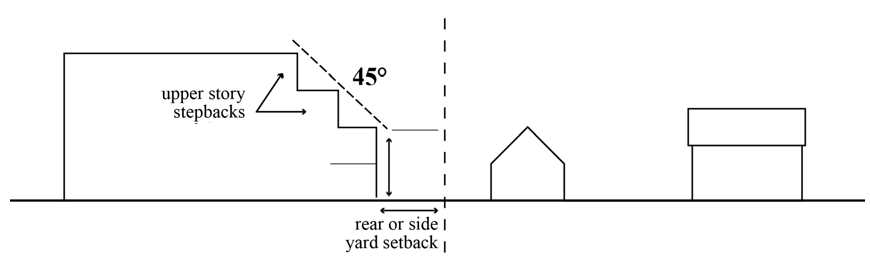
Figure D12: Rear or Side Yard Height Transition
(Am. by ORD-25-00067, 10-16-25)
(c)
Additional Height. Building heights exceeding the maximum height may be allowed with conditional use approval. (Cr. by ORD-13-00007, 1-15-13)
(4)
Site Standards.
The following standards apply to new buildings and additions exceeding fifty percent (50%) of the original building's floor area.
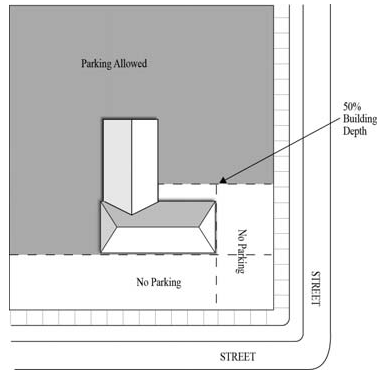
Figure F1: Parking Placement on Corner Properties
(a)
Parking Placement. Surface parking shall not be located between the plane of the front facade of a building and the abutting street. In addition, for buildings at corner locations, surface parking shall not be placed between the plane of a side facade of the building and an abutting street, in the area from said street back to a point marking fifty percent (50%) of the total building depth. These provisions do not apply when the building being enlarged is an existing landmark building or a contributing building in a historic district.
(b)
For the Single-Family Attached, Small Multi-Family, Large Multi-Family and Courtyard Multi-Family Building Forms, surface parking shall not be located between any street and the plane of the principal building's corresponding street-facing facade. If located on the side of the building, surface or structured parking shall occupy no more than twenty-five percent (25%) of the frontage along the primary abutting street. For Large Multi-Family Buildings, structured parking at ground level shall not be visible from the front facade of the building.
(c)
For all Building Forms other than (b) above, surface parking shall be located to the rear or side of the principal building.
(d)
Loading. All loading shall be from the rear or side of the building, but not facing an arterial street. Loading docks may be located in the rear yard, or a side yard facing a street that is internal to a TE district.
(e)
Entrance Orientation. Primary building entrances on all new buildings shall be oriented to the primary abutting public street. The entrance shall have a functional door. Additional, secondary entrances may be oriented to a secondary street or parking area. Entries shall be clearly visible and identifiable from the street, and delineated with elements such as roof overhangs, recessed entries, landscaping, or similar design features. Barrier-free entrances are encouraged.
(f)
Notwithstanding (a), for lots abutting a street on three (3) or more sides, a maximum of twelve (12) parking stalls but no more than fifty percent (50%) of the total surface parking spaces may be located between the front facade and the street. These spaces shall be oriented to customers and visitors. (Cr. by ORD-14-00069, 4-16-14)
(Am. by ORD-24-00018, 3-20-24)
(Sec. 28.084(4) Am. by ORD-13-00193, 11-26-13)
(5)
Site Standards: New and Existing Development.
(a)
All business activities shall be conducted within completely enclosed buildings, except:
1.
Off-street parking and off-street loading.
2.
Outdoor display and outdoor storage.
3.
Temporary outdoor events.
4.
Outdoor eating, cooking, and service areas associated with food and beverage establishments. (Am. by ORD-13-00178, 10-23-13)
5.
Agricultural activities.
6.
Drive-through windows. (Am. by ORD-24-00033, 6-3-24)
7.
Solar energy systems and wind energy systems.
8.
Bicycle-sharing facilities.
9.
Farmers' markets.
10.
Composting.
11.
Auto service stations.
12.
Outdoor recreation.
13.
Vacuuming and cleaning at car washes. (Cr. by ORD-21-00021, 3-15-21)
(b)
Outside storage shall be effectively screened with screening between six (6) and eight (8) feet in height. Storage shall not exceed the height of the screening. Storage and loading areas shall be screened from direct view from the street, including views down access driveways.
28.085 - SUBURBAN EMPLOYMENT DISTRICT.
(1)
Statement of Purpose.
The SE District is established to encourage a broad range of employment activities, including limited industrial uses conducted within enclosed buildings, while also encouraging shared access, improved landscaping and site design, and bicycle and pedestrian facilities. The district is also intended to:
(a)
Encourage the integration of complementary employment and related uses in an attractive and pedestrian-oriented environment.
(b)
Discourage proliferation of highway-oriented commercial uses that reduce the land area available for development or expansion of employment uses.
(c)
Facilitate preservation, development or redevelopment consistent with the adopted goals, objectives, policies, and recommendations of the Comprehensive Plan and adopted neighborhood, corridor or special area plans.
(2)
Permitted and Conditional Uses.
See Table 28F-1 for a complete list of allowed uses within the employment districts.
(3)
Dimensional Requirements, Permitted and Conditional Uses.
Requirements represent minimums unless otherwise noted. Dimensions are in feet unless otherwise noted.
(Am. by ORD-17-00054, 6-19-17; Am. by ORD-21-00028, 3-30-21, Eff. 4-9-21; Am. by ORD-25-00011, 3-8-25)
(a)
Front Yard Setback. For buildings at corner locations, within thirty (30) feet of the corner, at least seventy percent (70%) of the building facade shall be located within twenty-five (25) feet of the front lot line. Surface parking shall not be located between the building and the street in this area. (Am. by ORD-24-00018, 3-20-24)
(b)
(Rep. by ORD-17-00054, 6-19-17)
(c)
Rear or Side Yard Height Transition to Adjacent Residential Districts. Where the SE District abuts a residential district, building height at the rear or side yard setback line shall not exceed the maximum height in feet allowed in the abutting district as a permitted use. From this point, building height may increase at a ratio of one foot of rise to one foot of horizontal distance away from the property line, (a 45° angle) up to the maximum allowed height. (See Figure D12) (Am. by ORD-14-00131, 8-13-14; Am. by ORD-25-00067, 10-16-25)
Figure D12: Rear or Side Yard Height Transition
(Am. by ORD-25-00067, 10-16-25)
(d)
Additional Height. Building heights exceeding the maximum may be allowed with conditional use approval.
(e)
For lots of record created prior to adoption of this ordinance with existing buildings exceeding five (5) stories or sixty-eight (68) feet, the maximum building height shall be limited to the height of any existing buildings exceeding five (5) stories or sixty-eight (68) feet.
(4)
Site Standards: New Development.
The following standards apply to new buildings and additions exceeding fifty percent (50%) of the original building's floor area.
(a)
Parking Placement. For the Single-Family Attached, Small Multi-Family, Large Multi-Family, and Courtyard Multi-Family Building Forms, surface parking shall not be located between any street and the plane of the principal building's corresponding street-facing facade. If located on the side of the building, surface or structured parking shall occupy no more than twenty-five percent (25%) of the frontage along the primary abutting street. For Large Multi-Family buildings, structured parking at ground level shall not be visible from the front facade of the building.
(b)
For all Building Forms other than (a) above, the majority of off-street surface parking shall be located to the rear or side of the principal building. A maximum of one drive aisle and two rows of surface parking, not to exceed seventy (70) feet of parking, may be located between the front of the principal building and the street, set back at least twenty-five (25) feet from the front lot line. (Am. by ORD-18-00050, 5-14-18)
(c)
The building front shall be oriented to the primary street. Loading and service areas shall be located at the rear or side of the building, but not facing an arterial street. Loading docks may be located in the rear yard, or a side yard facing a street that is internal to an SE district.
(Am. by ORD-24-00018, 3-20-24)
(5)
Site Standards: New and Existing Development.
(a)
All business activities shall be conducted within completely enclosed building, except:
1.
Off-street parking and off-street loading.
2.
Composting.
3.
Bicycle-sharing facilities.
4.
Outdoor display and outdoor storage.
5.
Temporary outdoor events.
6.
Agricultural activities.
7.
Solar energy systems and wind energy systems.
8.
Outdoor eating, cooking, and service areas associated with food and beverage establishments. (Am. by ORD-13-00178, 10-23-13)
9.
Drive-through windows. (Am. by ORD-24-00033, 6-3-24)
10.
Outdoor recreation.
11.
Auto Service Stations. (Cr. by ORD-21-00021, 3-15-21)
12.
Vacuuming and cleaning at car washes. (Cr. by ORD-21-00021, 3-15-21)
(b)
All storage, except for storage of licensed operable vehicles, shall be within completely enclosed buildings or located to the rear of buildings and limited to a maximum of five percent (5%) of the total lot area. Outside storage shall be effectively screened with screening between six (6) and eight (8) feet in height. Storage shall not exceed the height of the screening. Storage and loading areas shall be screened from direct view from the street, including views down access driveways.
28.086 - SUBURBAN EMPLOYMENT CENTER DISTRICT.
(1)
Statement of Purpose.
The SEC district is established to recognize existing office and research parks developed in accordance with master plans, and to provide for the continued development of these parks in accordance with their adopted plans. Therefore, the placement of buildings, open space, internal roads and parking within these parks is allowed to remain in its current form. The district is also intended to encourage the integration of complementary employment and related uses in an attractive and functional environment. The district is not intended to apply to new office and research parks.
(2)
Permitted and Conditional Uses.
See Table 28F-1 for a complete list of allowed uses within the employment districts.
(3)
Dimensional Requirements, Permitted and Conditional Uses.
Requirements represent minimums unless otherwise noted. Dimensions are in feet unless otherwise noted.
(Am. by ORD-20-00087, 9-15-20)
(4)
Site Standards.
(a)
In the design of any office or research park, consideration shall be given to pedestrian circulation, preservation and linkage of open space areas, location of future buildings, and the clustering of amenities to provide for a planned integrated development.
(b)
Parking Design. Access driveways and surface parking lots shall be separated from principal pedestrian walkways and recreational areas by pavement markings, curbs, planting areas, fences or other appropriate materials to ensure pedestrian safety.
1.
Off-street surface parking shall not be located within front or street side yard setbacks, but may be located within rear yard and interior side yard setbacks and the building envelope.
2.
Surface parking located in a side or rear yard setback shall be set back a minimum of twenty (20) feet from the boundary of a Residential or Special district.
(Am. by ORD-24-00018, 3-20-24)
(c)
All storage, except for storage of licensed operable vehicles, shall be within completely enclosed buildings or located to the rear of buildings and limited to a maximum of five percent (5%) of the total lot area. Outside storage shall be effectively screened with screening between six (6) and eight (8) feet in height. Storage shall not exceed the height of the screening. Storage and loading areas shall be screened from direct view from the street, including views down access driveways.
(d)
All business activities shall be conducted within completely enclosed buildings except:
1.
Off-street parking and off-street loading.
2.
Outside storage and outdoor display.
3.
Bicycle-sharing facilities.
4.
Temporary outdoor events.
5.
Outdoor eating, cooking, and service area associated with food and beverage establishments. (Am. by ORD-13-00178, 10-23-13)
6.
Agricultural activities.
7.
Solar energy systems and wind energy systems.
8.
Composting.
9.
Drive-through windows. (Am. by ORD-24-00033, 6-3-24)
10.
Outdoor recreation.
(5)
Design Review.
All buildings constructed within an SEC district shall be reviewed and approved by an architectural review committee. The committee shall be established by the developer of the district and shall meet the following criteria:
(a)
The building design review criteria, design standards and guidelines, review procedures, categories of membership, and the language of any deed or plat restriction must be approved by the Urban Design Commission.
(b)
Until an architectural review committee is established and approved by the Plan Commission, all building and site plans shall be reviewed and approved by the Urban Design Commission.
28.087 - EMPLOYMENT CAMPUS DISTRICT.
(1)
Statement of Purpose.
The EC District is established to provide an aesthetically attractive urban working environment intended to promote desirable economic development activities, including high-technology, research and development, testing, and specialized manufacturing establishments, as well as professional offices and business incubators. The district is also intended to:
(a)
Encourage compact development, primarily with multi-story buildings.
(b)
Encourage mixed-use development in appropriate locations.
(c)
Provide readily accessible services for employees.
(d)
Improve pedestrian, bicycle and transit connections to and through employment campuses.
(e)
Encourage building and site design that advance the City's sustainability goals.
(f)
Maintain and improve the quality of the natural landscape within employment campuses.
(g)
Provide appropriate transitions to surrounding land uses.
(h)
Facilitate preservation, development or redevelopment consistent with the adopted goals, objectives, policies, and recommendations of the Comprehensive Plan and adopted neighborhood, corridor or special area plans.
(i)
Facilitate development with multiple buildings.
(2)
Permitted and Conditional Uses.
See Table 28F-1 for a complete list of allowed uses within the employment districts.
(3)
Dimensional Requirements, Permitted and Conditional Uses.
Requirements represent minimums unless otherwise noted. Dimensions are in feet unless otherwise noted.
(Am. by ORD-21-00028, 3-30-21, Eff. 4-9-21)
(a)
Front Yard Setback. At least fifty percent (50%) of the building facade facing the front property line shall be located within thirty (30) feet of the front lot line. For corner lots, the side street shall be treated as a front yard.
(b)
Exclusive Residential Use. Buildings with exclusively residential uses shall meet the Lot Area, Lot Width, and Side Yard Setback requirements of the TR-V2 District, Sec. 28.047.
(c)
For phased development, the minimum FAR for the first phase shall be 0.20. Area used for multi-site or regional stormwater management or for low-impact stormwater management methods shall not be counted as part of the floor area ratio calculation.
(4)
Site Standards.
The following standards apply to new buildings and additions exceeding fifty percent (50%) of the original building's floor area.
(a)
Parking Placement. For the Single-Family Attached, Small Multi-Family, Large Multi-Family and Courtyard Multi-Family Building Forms, parking shall not be located between any street and the plane of the principal building's corresponding street-facing facade. If located on the side of the building, surface or structured parking shall occupy no more than twenty-five percent (25%) of the frontage along the primary abutting street. For Large Multi-Family Buildings, structured parking at ground level shall not be visible from the front facade of the building.
(b)
For all Building Forms other than (a) above accessory off-street surface parking lots and loading berths, and access driveways shall be located, designed and improved so as to provide for safe and convenient access from adjoining streets, as well as safe and convenient circulation within the site. Access driveways and surface parking lots shall be separated from principal pedestrian walkways and recreational areas by pavement markings, curbs, planting areas, fences or other appropriate materials to ensure pedestrian safety. Off-street surface parking lots shall not be located in required front yards or street side yards on corner lots, but may be located in required rear yards to the rear of a building or in an interior side yard beyond the larger of the required front yard or the actual front setback. A surface parking lot containing not more than ten (10) parking spaces may be located to the front or side of a building, but not in any required front yard or in the required street side yard on a corner lot unless shown on an approved master plan for the district. If approved by the Architectural Design Committee, a surface parking lot containing more than ten (10) parking spaces may be located the front or side of a building, but not in any required front yard or in the required street side yard on a corner lot. Any surface parking lot located in a required side or rear yard shall be located not less than twenty (20) feet from any lot in a Residence or Special District. Access driveway shall be designed and located so that such driveways do not provide a direct unlandscaped view from the street to the loading berths or storage areas. A plan for tree islands and surface parking lot landscaping shall be included with the landscape plan required in sub. (5)(a) below. Off-street surface parking shall be located at least ten (10) feet from any property line and/or right-of-way and utilize a landscape buffer than includes trees, shrubs, decorative fencing, benches, flowerbeds, ground covers, or other high-quality materials. For every twelve (12) to fifteen (15) surface parking stalls in a continuous row, at least once canopy tree shall be required in an interior surface parking island pursuant to the requirements of Sec. 28.142 of these ordinances.
(c)
Loading. All loading shall be from the rear or side of the building, but not facing an arterial street. Loading docks may be located in the rear yard, or a side yard facing a street that is internal to an EC district.
(d)
All business activities shall be conducted within completely enclosed buildings, except for the following:
1.
Off-street parking and off-street loading.
2.
Drive-through windows. (Am. by ORD-24-00033, 6-3-24)
3.
Bicycle-sharing facility.
4.
Outdoor storage and outdoor display.
5.
Temporary outdoor events.
6.
Agricultural activities.
7.
Composting.
8.
Outdoor eating, cooking, and service areas associated with food and beverage establishments. (Am. by ORD-13-00178, 10-23-13)
9.
Farmers' markets.
10.
Outdoor recreation.
(e)
Access to the employment campus shall be from a collector or arterial street.
(f)
In addition to the requirements in Sec. 28.142, all lots shall be landscaped, including the provision of canopy-type shade trees. Where possible, existing healthy trees, other than nuisance species, shall be retained. All land areas not covered by buildings, structures, storage areas, surface parking lots, loading areas and driveways, shall be landscaped and maintained. Landscaping shall mean decorative plazas, mounds, pools or the planting of grass, shrubs, trees and other plant materials or other comparable surface cover. To comply with the above provisions, a landscape plan shall be submitted and approved by the Director of the Department of Planning and Community and Economic Development.
(g)
All storage, except for storage of licensed operable vehicles, shall be within completely enclosed buildings or located to the rear of buildings and limited to a maximum of five percent (5%) of the total lot area. Outside storage shall be effectively screened with screening between six (6) and eight (8) feet in height. Storage shall not exceed the height of the screening. Storage and loading areas shall be screened from direct view from the street, including views down access driveways.
(h)
Food and beverage uses shall only be located within a mixed-use building that includes office or other employment uses. (Cr. by ORD-14-00132, 8-13-14)
(Am. by ORD-24-00018, 3-20-24)
(5)
Master Plan.
A master plan for each employment campus shall be prepared as part of any rezoning submittal. The plan must be approved by the Plan Commission and include the following:
(a)
A site plan, including:
1.
Conceptual plan showing lots and approximate building footprints, parking and service areas.
2.
Landscape plan and landscape design standards.
3.
Street layout and street design standards.
4.
Signage and street graphics standards.
5.
Stormwater management plan.
(b)
Plan submittal and review procedures for individual sites within the campus.
(c)
A parking plan, meeting standards of this chapter for automobile and bicycle parking.
(d)
Reserved. (Rpld. by ORD-24-00001, 1-17-24)
(6)
Design Review.
All buildings constructed within an EC district shall be reviewed and approved by an architectural review committee. The committee shall be established by the developer of the district and shall meet the following criteria:
(a)
The building design review criteria, design standards and guidelines, review procedures, categories of membership, and the language of any deed or plat restriction must be approved by the Urban Design Commission. Design review shall not include the Dimensional Requirements in (8) below.
(b)
Until an architectural review committee is established and approved by the Plan Commission, all building and site plans shall be reviewed and approved by the Urban Design Commission, with an appeal process to the Plan Commission as established in Sec. 33.24, MGO.
(7)
Changes to Master Plan.
No alteration of an approved Master Plan shall be permitted unless approved by the Plan Commission, provided, however, the Zoning Administrator may, following consideration by the alderperson of the district, issue permits for minor alterations that are approved by the Director of Planning and Community and Economic Development and are consistent with the concept approved by the Common Council. If the change or addition constitutes a substantial alteration of the original plan, the procedure in Secs. 28.086 and 28.182 shall be required.
28.088 - INDUSTRIAL - LIMITED DISTRICT.
(1)
Statement of Purpose.
This district provides for a mix of light manufacturing uses, offices, warehousing, flex-space, limited storage and warehousing, and limited retail and service uses that primarily serve the industrial uses, designed with adequate landscaping and screening, to ensure compatibility with adjoining uses. Industrial districts typically require relatively direct access to the regional highway system, and may require rail or air transportation service. The IL district is also intended to:
(a)
Provide a variety of flexible sites for small, local or start-up businesses, as well as sites for large national or regional enterprises.
(b)
Discourage proliferation of highway-oriented commercial uses that reduce the land area available for development or expansion of employment uses.
(c)
Facilitate preservation, development or redevelopment consistent with the adopted goals, objectives, policies, and recommendations of the Comprehensive Plan and adopted neighborhood, corridor or special area plans.
(2)
Permitted and Conditional Uses.
See Table 28F-1 for a complete list of allowed uses within the employment districts.
(3)
Dimensional Requirements, Permitted and Conditional Uses.
Requirements represent minimums unless otherwise noted. Dimensions are in feet unless otherwise noted.
(Am. by ORD-13-00007, 1-15-13; Am. by ORD-18-00006, 1-29-18; Am. by ORD-21-00028, 3-30-21, Eff. 4-9-21)
(a)
Front Yard Setback. For buildings at corner locations, within thirty (30) feet of the corner, at least seventy percent (70%) of the building shall be located within twenty-five (25) feet of the front lot line.
(b)
Rear or Side Yard Height Transition to Adjacent Residential Districts. Where the IL District abuts a residential district, building height at the rear yard setback line shall not exceed the maximum height in feet allowed in the abutting district as a permitted use. From this point, building height may increase at a ratio of one foot of rise to one foot of horizontal distance away from the property line, (a 45° angle) up to the maximum allowed height. (See Figure D12) (Am. by ORD-25-00067, 10-16-25)
Figure D12: Rear or Side Yard Height Transition
(Am. by ORD-25-00067, 10-16-25)
(4)
Site Standards: New and Existing Development.
The following standards apply to new and existing buildings and uses:
(a)
All business activities shall be conducted within completely enclosed buildings except:
1.
Off-street parking and off-street loading, provided that all loading is internal to an IL District or, if not internal to an IL District, is screened from collector or higher classification streets and from lots that contain residential uses. Loading areas shall be screened as provided in M.G.O. Sec. 28.142(9)(c). (Am. by ORD-18-00116, 11-9-18)
2.
Outdoor display.
3.
Outdoor eating, cooking, and service areas associated with food and beverage establishments. (Am. by ORD-13-00178, 10-23-13)
4.
Bicycle-sharing facilities.
5.
Outdoor storage.
6.
Farmers' markets.
7.
Agricultural activities.
8.
Composting.
9.
Temporary outdoor events.
10.
Drive-through windows. (Am. by ORD-24-00033, 6-3-24)
11.
Solar energy systems and wind energy systems.
12.
Outdoor recreation.
(b)
Outside storage shall be effectively screened with screening between six (6) and eight (8) feet in height. Storage shall not exceed the height of the screening. Storage shall be screened from direct view from the street, including views down access driveways. (Am. by ORD-18-00116, 11-9-18)
(c)
Food and beverage uses shall only be located within a mixed-use building that includes office or other employment uses. (Cr. by ORD-14-00132, 8-13-14)
(5)
Site Standards: New Development.
The following standards apply to new buildings and additions exceeding fifty percent (50%) of the original building's floor area.
(a)
Parking Placement. A maximum of one (1) drive aisle and two (2) rows of surface parking not to exceed seventy (70) feet of parking area may be located between the front facade of a building and the front lot line. Surface parking shall be located to the rear or side of the principal building to the extent feasible. This requirement shall not apply to lots which are twenty (20) acres or larger. (Am. by ORD-13-00133, 8-14-13; Am. by ORD-24-00018, 3-20-24)
(b)
Entrance Orientation. Principal building entrances on all new buildings shall be oriented to the primary abutting public street. The entrance shall have a functional door. Additional, secondary entrances may be oriented to a secondary street or parking area. Entries shall be clearly visible and identifiable from the street, and delineated with elements such as roof overhangs, recessed entries, landscaping or similar design features. Barrier-free entrances are encouraged.
28.089 - INDUSTRIAL - GENERAL DISTRICT.
(1)
Statement of Purpose.
This district accommodates areas of heavy and concentrated fabrication, manufacturing and industrial uses. It is the intent of this district to provide an environment for industries that is unencumbered by nearby residential or commercial development. General Industrial districts should be located for convenient access for existing and future arterial thoroughfares and railway lines and may be separated from residential areas by business or light industry areas or by natural barriers; where they are adjacent to residential areas some type of artificial separation may be required.
The IG district is also intended to:
(a)
Provide a variety of flexible sites for small, local or start-up businesses, as well as sites for large national or regional enterprises.
(b)
Discourage proliferation of highway-oriented commercial uses that reduce the land area available for development or expansion of employment uses.
(c)
Facilitate preservation, development or redevelopment consistent with the adopted goals, objectives, policies, and recommendations of the Comprehensive Plan and adopted neighborhood, corridor or special area plans.
(2)
Permitted and Conditional Uses.
See Table 28F-1 for a complete list of allowed uses within the employment districts.
(3)
Dimensional Requirements, Permitted and Conditional Uses.
Requirements represent minimums unless otherwise noted. Dimensions are in feet unless otherwise noted.
(Am. of ORD-18-00006, 1-29-18; Am. by ORD-21-00028, 3-30-21, Eff. 4-9-21)
(a)
Rear or Side Yard Height Transition to Adjacent Residential Districts. Where the IG District abuts a residential district, building height at the rear yard setback line shall not exceed the maximum height in feet allowed in the abutting district as a permitted use. From this point, building height may increase at a ratio of one foot of rise to one foot of horizontal distance away from the property line, (a 45° angle) up to the maximum allowed height. (See Figure D12) (Am. by ORD-25-00067, 10-16-25)
Figure D12: Rear or Side Yard Height Transition
(Am. by ORD-25-00067, 10-16-25)
(4)
Site Standards: New and Existing Development.
(a)
All business activities shall be conducted within completely enclosed buildings except:
1.
Outdoor storage, subject to Sec. 28.142(10)(b).
2.
Off-street parking and off-street loading, provided that all loading is internal to an IG District or if not internal to an IG District, is screened from collector or higher classification streets and from lots contain residential uses. Loading areas shall be screened as provided in M.G.O. Sec. 28.142(9)(c). (Am. by ORD-18-00116, 11-9-18)
3.
Outdoor eating, cooking, and service areas associated with food and beverage establishments. (Am. by ORD-13-00178, 10-23-13)
4.
Temporary outdoor events.
5.
Composting.
6.
Agricultural activities.
7.
Drive-through windows. (Am. by ORD-24-00033, 6-3-24)
8.
Bicycle-sharing facilities.
9.
Solar energy systems and wind energy systems.
10.
Production and processing of woodchips.
11.
Farmers' markets.
12.
Outdoor display.
13.
Outdoor recreation.
(b)
Outside storage shall be effectively screened with screening between six (6) and eight (8) feet in height. Storage shall not exceed the height of the screening. Storage shall be screened from direct view from the street, including views down access driveways. (Am. by ORD-18-00116, 11-9-18)
(c)
Food and beverage uses shall only be located within a mixed-use building that includes office or other employment uses. (Cr. by ORD-14-00132, 8-13-14)