
Whittier City Zoning Code
CHAPTER 18
48 - OFF-STREET PARKING
18.48.010 - Facilities required.
A.
Off-street parking facilities for automobiles and bicycles, and vehicular loading spaces shall be deemed to be accessory uses in each zone established pursuant to this chapter. Every use permitted in each zone shall be provided with permanently maintained off-street parking facilities and vehicular loading spaces, in accordance with the provisions of this chapter.
B.
Off-street parking facilities including, but not limited to, all landscaping, irrigation, paved surfaces, striping, signage, pavement markings, etc. contained therein shall be maintained in good condition and repair at all times.
(Ord. 2865 § 2, 2005: prior code § 9340)
(Ord. No. 3159, § 3(Exh. A), 11-12-24)
18.48.020 - Schedule of parking requirements.
A.
Required on-site parking for each parcel shall be based on each on-site land-use conducted on the parcel.
B.
The off-street parking spaces required for each use permitted by this title shall not be less than the requirements identified in subsection 18.48.020(E), except as provided in subsections 18.48.020(C) and 18.48.020(D).
C.
Adaptive Reuse of Historic Designated or Eligible Residential Buildings. For adaptive reuse of a historic designated or eligible residential building, if the building is not being expanded in area by square footage, the existing parking spaces may remain. The parking otherwise required for an expanded portion of a designated or eligible historic building may be reduced by a maximum of twenty-five percent of the required parking spaces for the expanded portion.
D.
Except as necessary to comply with requirements to provide spaces for electric vehicle supply equipment or parking spaces that are accessible to persons with disabilities, the following minimum automobile parking standards apply.
1.
For sites located within one-half mile of a major transit stop as defined in Section 21155 of the Public Resources Code, at the time the application is deemed complete, no parking is required, except:
a.
Event centers shall provide parking for employees and other workers.
b.
Development projects where any portion is designated for use as a hotel, motel, bed and breakfast inn, or other transient lodging (except where a portion of a housing development project is designated for use as a residential hotel, as defined in Section 50519 of the Health and Safety Code) shall provide parking in accordance with the minimum parking requirements of subsection B.
c.
Development projects for which the city finds, based on a preponderance of the evidence in the record, that not imposing or enforcing minimum automobile parking requirements on the development would have a substantially negative impact on any of the following:
i.
The city's ability to meet its share of the regional housing need in accordance with Section 65584 for low- and very low-income households.
ii.
The city's ability to meet any special housing needs for the elderly or persons with disabilities identified in the analysis required pursuant to paragraph (7) of subdivision (a) of Section 65583.
iii.
Existing residential or commercial parking within one-half mile of the housing development project.
d.
Subsection (C) above shall not apply for the following projects:
i.
Housing development projects that dedicate a minimum of twenty percent of the total number of housing units to very low, low-, or moderate-income households, students, the elderly, or persons with disabilities.
ii.
Housing development projects that contain fewer than twenty housing units.
iii.
Housing development projects subject to parking reductions based on the provisions of any other applicable state law.
2.
For sites located more than one-half mile from a major transit stop as defined in Section 21155 of the Public Resources Code, the number of parking spaces shall be the minimum provided for each new use as identified in subsection 18.48.020(E) Off-Street Parking Schedule.
E.
Off-Street Parking Schedule.
* Including existing hotels and motels with certificates of occupancy dated prior to March 1, 2019.
(Ord. 2899 § 1, 2007: Ord. 2887 § 3, 2007: Ord. 2865 § 3, 2005: Ord. 2787 § 2, 2001; Ord. 2748 §§ 26—30, 1999; Ord. 2518 § 7 (part), 1990; Ord. 2515 § 3 (part), 1990; Ord. 2423 § 11, 1987; Ord. 2411 §§ 4, 5, 1987; prior code § 9341)
(Ord. No. 2938, § 3, 10-27-09; Ord. No. 2950, § 2, 2-23-10; Ord. No. 3068, § 7, 6-13-17; Ord. No. 3099, § 3, 5-28-19; Ord. No. 3116, § 14, 5-26-20; Ord. No. 3159, § 3(Exh. A), 11-12-24)
18.48.030 - Mixed occupancy requirements.
In the case of mixed uses in a building or on a lot, the total requirements for off-street parking facilities shall be the sum of the requirements for the various uses computed separately. Off-street parking facilities for one use shall not be considered as providing required parking facilities for any other, except as specified in this chapter for joint use.
(Prior code § 9342)
18.48.040 - Joint uses authorized when.
The director, upon application by the owner or lessee of any property, shall authorize the joint use of parking facilities by the following uses or activities under the conditions specified in this chapter:
A.
The parking facilities required by this chapter for a use which is nonresidential and is primarily a daytime use may be provided by the parking facilities of a use which is primarily a nighttime and/or Sunday use and vice versa, provided such reciprocal parking shall be subject to conditions set forth in subsection B of this section.
B.
Conditions Required for Joint Use.
1.
The outer boundaries of the properties upon which the uses are proposed, to which the application relates, shall be located within one hundred fifty feet of each other.
2.
The applicants shall show that there is no substantial conflict in the principal operating hours of the uses for which the joint use of off-street parking facilities is proposed.
3.
Schools and churches may be permitted to have up to eighty percent of their required on-site parking located on an off-site parking lot, through a joint use parking agreement, subject to the approval of the director of community development.
4.
Parties concerned with the joint use of off-street parking facilities shall evidence agreement for such joint use by a legal instrument approved by the city attorney as to form and content. Such instrument, when approved, shall be recorded in the office of the county recorder and copies thereof filed with the community development department.
(Ord. 2865 §§ 4—5, 2005; prior code § 9343)
18.48.050 - Plan required.
The plans for any proposed parking area shall be submitted to the department of building and safety at the time of the application for the building permit for the building for which such parking facilities are necessary. The plans shall clearly indicate the proposed development, including location, size, shape, designs, curb cuts, lighting, landscaping and other features and appurtenances of the proposed parking lot.
(Prior code § 9344)
18.48.060 - Loading spaces.
All uses located in non-residential zones, except for office uses, shall have and maintain vehicular loading spaces and areas as follows:
A.
For non-residential developments in centers which are on sites of less than one acre in size each loading space shall be a minimum of twelve feet in width and twenty-five feet in depth. For all other developments, each required loading space shall be a minimum of twelve feet in width and a minimum of forty feet in length. All loading spaces shall have an unobstructed vertical clearance of not less than fourteen feet and all loading spaces shall be readily accessible from a street or alley.
B.
The minimum loading areas which shall be provided for each C and M use shall be as follows:
1.
Not less than two hundred fifty square feet where the net floor area of all buildings on the lot is not more than twenty thousand square feet;
2.
Not less than five hundred square feet where the net floor area of all buildings on the lot is more than twenty thousand square feet and not more than fifty thousand square feet;
3.
Not less than seven hundred fifty square feet where the net floor area of all buildings on the lot exceeds fifty thousand square feet.
(Ord. 2865 §§ 6—7, 2005; Ord. 2515 § 3, 1990; prior code § 9345)
18.48.070 - Improvement and maintenance.
A.
Size. Each off-street parking space shall have open and unobstructed dimensions as follows:
1.
Non-Residential. Full-size parking spaces shall have a depth of not less than nineteen feet and a width of not less than nine feet;
2.
Residential. Full-sized parking spaces shall have a depth of not less than twenty feet and a width of not less than ten feet. The parking space dimensions should not include the thickness of exterior walls, interior separation walls, etc. when located inside a garage, carport, or similar structure.
a.
Residential surface parking space (unenclosed) may be a minimum of nine feet by nineteen feet (with two-foot overhang).
3.
Parking provided in tandem is only allowed with mixed-use and residential developments.
a.
Tandem parking shall be a minimum of nine feet by thirty-six feet (unenclosed) and ten feet by forty feet (enclosed).
B.
Location of Off-Site Parking Facilities. Off-street parking facilities shall be located on the same lot as the principal use served, except:
1.
For any commercial or manufacturing use, if the same is located upon a lot classified in any C or M zone, or zones MU, MED, INV, and GC as otherwise noted, located within five hundred feet of the outer boundaries of the lot upon which the principal use is located;
2.
For any joint-use parking facility allowed pursuant to Section 18.48.040.
C.
Location of On-Site Parking Facilities.
1.
On-site off-street parking facilities shall be located on a lot, only as follows:
a.
On any portion of any lot where a main building may be placed, except the same shall not be located within fifty feet of the front lot line on any R-2, R-3, R-4, or R-5-zoned lot unless:
i.
Such facilities are located within a building which has a closable garage door for each off-street parking space located therein, or
ii.
Each such off-street parking space is oriented and screened so that the interior thereof is not directly visible from an abutting street,
b.
In required rear yard areas when there is no alley abutting such lot, and
c.
In that portion of required side yard areas on interior lots within twenty-five feet of the rear lot line or abutting the rear property line or the rear one-third of the side property line of an R-zoned lot, if such parking facilities are not within a building, and
d.
Where the turnaround or backup space for a parking space is a driveway accessing a major arterial or secondary street, such parking space shall be set back from the street right-of-way line a minimum of fifteen feet; and
e.
Where a driveway serves only one dwelling (in addition to any "Secondary Dwelling Unit" or "Accessory Dwelling Unit" on the premises), the required, uncovered, on-site parking (including any guest parking space(s)) may be provided on the driveway serving the dwelling unit(s) and may include up to two tandem parking spaces. Operable vehicle(s) in good repair may be parked within the front yard setback on the driveway.
2.
Off-street parking facilities required on lots classified in the R-E and R-1 zones shall provide a minimum of two non-tandem parking spaces within a garage. Additional on-site parking spaces may be developed in tandem on the property.
a.
Off-street parking facilities required on lots classified in the R-2 zone shall be located within a garage, except for required guest spaces.
b.
Covered, partially enclosed parking spaces for commercial uses that are subject to a discretionary permit, shall be provided with security closures.
3.
Not less than two-thirds of the off-street parking facilities required on lots classified in zones R-3, R-4, and R-5 shall be located in garages or carports.
a.
The approval authority or the director of community development shall have the ability to permit an above or below ground covered parking structure instead of a garage or carport to shelter required parking spaces within a multi-family development when it is deemed necessary for the sole purpose of meeting the minimum required on-site density for the development.
4.
Non-Residential Developments
a.
Large expanses of uninterrupted parking should be avoided; well-distributed smaller lots and structured parking are preferable.
b.
Surface parking areas should be located to the side and rear of buildings. Parking lots and structures shall not be located adjacent to parks, courtyards, or plazas, and should not be located at the intersection of two property lines that abut the intersection of two streets.
D.
Access Driveways.
1.
Width. Driveways serving parking areas for less than five vehicles shall be a minimum of ten feet wide. Driveways serving parking areas for five or more vehicles shall be a minimum of twelve feet wide. Where both egress and ingress are provided on a single driveway, the minimum width shall be twenty feet. Parking areas with spaces for thirty or more vehicles shall be provided with separate driveways for ingress and egress, each of which shall be not less than twelve feet in width. In no event shall driveways cover more than thirty-three and one-third of the total lot width. "Dead end" vehicular drive aisles shall be avoided to the greatest extent possible.
a.
Throats. Curbed entrance "throats" shall be provided to prevent stacking of vehicles in public streets at all points of vehicular ingress to non-residential developments. Parking facilities with less than three hundred on-site parking spaces shall provide a thirty linear foot "throat," as measured from the property line. Parking facilities with over three hundred on-site parking spaces shall provide a sixty linear foot "throat," as measured from the property line.
The approval authority or the director of community development may, on the basis of land use, estimated traffic generation, existing traffic volumes, vehicle delay, and accident rates have the authority to require longer "throats" upon consultation with the city traffic engineer.
b.
Residential.
i.
Single-Family Dwellings. Driveways serving lots with one single-family dwelling, and authorized secondary and accessory units, shall be a minimum of ten feet wide. The maximum width of a driveway in the front of a lot shall not exceed one-third of the width of the lot, or twenty-four feet, whichever is the lesser, provided that no such driveway serving a two-car garage located on the front of the lot shall be required to be less than twenty feet in width, within twenty feet of the face of the garage entrance.
ii.
Two or More Dwellings. Driveways for projects of two or more dwelling units, serving five or less parking spaces, shall be a minimum of twelve feet wide. Driveways serving six or more parking spaces shall be a minimum of eighteen feet wide and shall not be wider than one-third of the width of the lot or twenty-four feet, whichever is the lesser.
iii.
Any driveway which is over one hundred feet in length shall not be less than fifteen feet in width.
iv.
Walkways. Walkways from the street to the entry of a dwelling, shall not exceed an average of six feet in width within the required front yard area and the total combined width of the driveway and walkway shall not exceed forty percent of the width of the lot within the front yard and such walkways shall be separated from a driveway by a raised curb, or a landscaped area not less than three feet wide, to prevent use of the walkway for parking.
v.
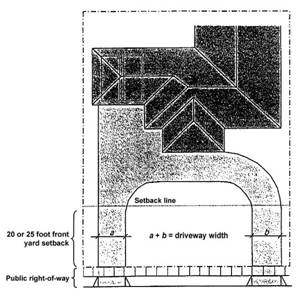
Circular Driveways. Circular driveways shall meet the minimum requirements illustrated below and shall be reviewed and approved by the city's public works department for all new curb cuts.
(A)
Circular driveways are only permitted for lots that are a minimum of one hundred-foot wide; and
(B)
The combined width of the driveways shall not exceed twenty-four feet. The minimum driveway width for R-E and R-1 zones is ten feet. The driveway(s) width shall be measured at its widest point within the front yard setback.
c.
Non-residential. Two-way drive aisles that are not adjacent to on-site parking stalls shall be a minimum of twenty-six feet in width. For one-way drive aisles, the minimum width shall be fourteen feet. A minimum of a twenty-six (or twenty-five) foot drive aisle is required for two-way traffic. See Appendix "B".
d.
Maximum Width. In no event shall driveways cover more than thirty-three and one-third percent of the total lot width, except for residential circular driveways.
2.
Location. The location of access driveways shall be as follows:
a.
On properties which are served by an alley, access to parking spaces shall be from the alley, unless there are physical conditions which make it impractical to access the parking from the alley.
b.
Where there is an existing driveway from the street and the majority of the lots on the block do not have driveways from the street and new construction results in the parking being provided from an alley, such existing driveway and drive approach shall be removed and replaced with full height curb, gutter and sidewalk. The development review authority may waive this requirement where such driveway is found to be compatible with the development of adjacent properties.
c.
Driveways serving garages on the front fifty feet of a lot shall be separated from side property lines by a landscaped area not less than three feet wide
d.
Driveway setbacks shall be a minimum of five feet from adjoining properties, and a minimum of three feet from adjacent buildings.
3.
Joint Use. Joint use driveways are strongly encouraged at the time of development and/or redevelopment of any commercial or manufacturing site in order to reduce the conflict to a smooth flow of traffic on major arterial, secondary highway or other roadway identified in the circulation element within the city. When joint use driveways are utilized, they shall be located and constructed in such a manner as to provide safe and convenient access to the site. Reciprocal access, parking and maintenance agreements shall be required on forms approved by the city attorney and maintained on file with the city. Driveways on properties other than commercial and manufacturing developments, used in combination with abutting properties shall be allowed when proper easements or agreements, approved as to form by the city attorney, have been executed and filed with the city;
4.
Clearance. All driveways shall be maintained with a vertical clearance of not less than twelve feet. No encroachment of any type, including but not limited to utility meters, trash receptacles, power poles, exterior plumbing or any other similar encroachment shall be permitted;
5.
Parking in Driveways.
a.
"No parking" signs and lettering not less than two inches in height shall be placed conspicuously at the entrance to, and at intervals of not less than fifty feet along each required driveway which serves parking facilities for five or more vehicles,
b.
Where a driveway serves parking facilities for five or more vehicles, no person shall park, stand or leave any vehicle in any portion of the driveway, except for the purpose of, and during the process of, loading or unloading passengers or goods;
6.
Parking Access. Access driveways which serve off-street parking facilities located on any lot shall be designed and located so that a motor vehicle may leave any such space without backing into a street which is designated, for the purposes of the city's select system, as an arterial or collector street.
7.
All dedications and public service easements shall be provided under or immediately adjacent to new public rights-of-way or within other public easements areas acceptable to the public works director. Utility lines under buildings will not be allowed.
E.
Surfacing. All off-street parking areas, including driveways and aisles, shall be paved with concrete or asphaltic concrete pavement in accordance with adopted city standards therefor. Such surfacing shall be designed, constructed and maintained so as to dispose of all surface water in accordance with city standards therefor.
1.
Driveway entrances and main pedestrian walkways for large developments should be paved with non-slip, attractive surfaces such as interlocking unit pavers, or scored and colored concrete.
F.
Barricades. Each parking space shall be provided with a suitable concrete curb, timber barriers, or fencing designed to stop the movement of vehicles. Such curbing, barriers or fencing shall be securely installed and permanently maintained.
G.
Screening. It is the purpose of this section to provide barriers which will partially screen parking areas from adjoining streets and protect residential areas adjacent to or across the street from parking areas. Every uncovered parking or maneuvering area that is subject to a discretionary permit, which:
1.
Is located upon a lot which has a common lot line with any R-zoned lot shall be screened therefrom by a solid, view-obscuring wall six feet in height. Any such required wall which is adjacent to the side of a front yard area on the adjoining R-zoned property shall conform to the height regulations applicable to front yard area in such R-zoned property; and
2.
Is within twenty-five feet of any property line separating the area from a street; shall have and maintain an earthen berm or a decorative, view obscuring, wall or combination thereof except where approved driveways are provided, at a precise height to be determined by the director pursuant to Section 18.50.040, not to exceed a height of sixty inches or be less than twenty-four inches, measured from top of curb on the public street or parking surface, whichever is higher, subject to the review and approval of the design review board who shall act upon the request.
H.
Lights. Suitable lighting shall be provided so as to adequately illuminate any parking area having spaces for five or more vehicles or new or used-car sales areas permitted by this title. Such lighting shall be arranged so as to reflect the light away from adjacent properties and in compliance with the following:
1.
Mounting height of light sources for area illumination (such as parking lots and yards) should be a maximum of eighteen feet, measured from the finished grade.
2.
For pole mounted lighting at pedestrian plazas, walkways, and entry areas, a pedestrian-height fixture is recommended — twelve to fifteen feet in height from grade to light source. Thirteen feet is optimal.
3.
Lighting for uncovered parking areas, vehicle access-ways and walkways shall not exceed a height of sixteen feet, except that the maximum height on the rooftop of any parking structure located on a lot adjacent to any residential zone shall not exceed a height of eight feet.
4.
Bollard mounted lighting and step-lighting is also recommended for low-level illumination of walkways and landscaped areas.
5.
Exterior Lighting. A lighting system shall be provided in the common areas and parking areas. Such lighting shall maintain an illumination level on the ground of not less than:
a.
0.5 footcandles along walkways and open common areas,
b.
0.5 footcandles in open parking areas and driveways;
c.
1.0 footcandles on the deck and water surface of swimming pool.
I.
Entrances and Exits. The location and design of all entrances and exits to streets or alleys from off-street parking lots shall be subject to the approval of the city traffic engineer, to ensure that such will result in a minimum of interference with the traffic flow on such adjacent streets and alleys.
J.
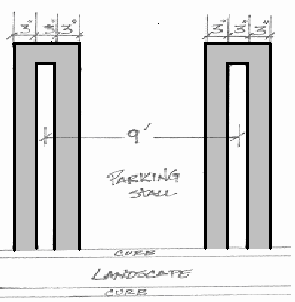
Striping. All parking spaces shall be double striped in a manner clearly showing the layout of the intended parking stalls. Such striping, not less than three inches in width, shall be maintained in a clear, visible and orderly manner.
K.
Signs. Where required by the city engineer for safety purposes, appropriate exit, entrance and directional signs and markings shall be installed and maintained.
L.
Maintenance and Irrigation. All parking areas shall be kept clean and free of dust, mud or trash. Parking areas shall be used only for the purpose of parking vehicles. Where landscaping is provided or required within or along parking areas, an adequate irrigation system shall be provided. For all developments, the developer shall prepare binding agreements ("CC&R's") addressing issues of common area interest in terms of maintenance of common open space, tree planter areas, planting strips, and walks.
M.
Landscaping of Parking Areas.
1.
Each parking area adjacent to a street shall be located no closer to the street than the required landscaped setback of the zone in which it is located. Said setback shall be permanently landscaped in accordance with Section 18.24.040(J);
2.
All areas within a parking lot not otherwise used as parking spaces, loading or maneuvering areas shall be permanently landscaped and maintained;
3.
Not less than ten percent of the total parking area, exclusive of required yards, shall be permanently landscaped and maintained in accordance with Section 18.24.040(J); and twenty-four-inch-box shade trees shall be planted within the parking rows at a ratio of one tree to every five parking spaces. The placement of said trees shall be in accordance with the city landscape guidelines.
4.
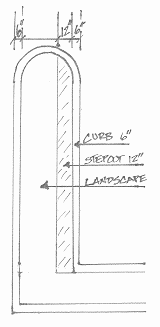
All required landscaped areas shall be permanently and continuously maintained by the owner or person in the possession of such areas. Landscaped areas shall be surrounded by a minimum continuous six-inch-high and six-inch wide solid concrete or decorative block curb;
5.
All parking spaces located adjacent to an interior property line shall have a landscape setback of not less than five feet in width, except for conditions where reciprocal parking is provided in accordance with this chapter;
6.
All parking spaces located adjacent to a building, where there are public entrances, shall be separated therefrom by a four-foot-wide sidewalk and four-foot-wide landscaped area, exclusive of allowed parking space overhang, or a combination of these with decorative planters with a drip irrigation system.
a.
For parking spaces adjacent to building walls, which are not visible from a public street, contiguous to an R zone or do not have a public entrance, the parking space shall be separated therefrom by only a five-foot wide landscaped area;
7.
In all non-residential parking facilities, a twelve-inch-wide concrete step-out with curb shall be provided within each parking lot landscape finger adjacent to a parking stall. The landscape planting area adjacent to the step-out should be a minimum of four feet wide.
8.
Where adjacent to Whittier Boulevard, or a collector or arterial street, development must be separated from the street by a landscaped buffer strip. The landscaped buffer strip shall be:
a.
A minimum of ten feet wide that that contains trees planted at least thirty feet on-center and within five feet of the front property line.
b.
Designed to screen vehicles while maintaining building and site visibility. This may be accomplished by a complimentary mix of berms, retaining walls, rock features, natural materials, or other similar materials. Berms shall provide a maximum three to one slope with varying berm heights ranging from twenty-four to thirty-six inches in height. Any trees included in the landscape area shall be installed and maintained to ensure visibility of buildings and their signage for location and advertising purposes and visibility into the parking area for public safety purposes.
c.
A landscape plan shall be prepared by a licensed landscape architect and approved by the appropriate approval authority. The approval authority in its sole discretion, may require a wider landscape buffer strip depending upon the proposed project and the site's physical characteristics.
9.
At non-residential properties adjacent to single or multi-family residential uses, attractive screen fencing or walls shall be provided along all side and rear property line(s) to screen buildings, service areas, and parking areas. A minimum five-foot landscape area, planted with trees at a minimum spacing of twenty feet on center, shall be established adjacent to the outside face of fences, walls, and along building walls.
10.
The perimeter of parking areas and driveways adjacent to streets and sidewalks shall be screened by a ten-foot wide landscaped buffer that contains trees planted at least thirty feet on-center and within five feet of the front property line. The landscape buffer shall include a screening feature such as an attractive low wall or ornamental metal fence that is thirty-six to forty-two inches in height or by a series of bollards. The perimeter of parking areas adjacent to interior block property lines shall be screened with a low wall or fence.
11.
Surface parking lot trees and other planting shall be properly maintained under the direction of a qualified arborist and utilize generally accepted pruning standards from recognized professional organizations such as the International Society of Arboriculture (ISA).
N.
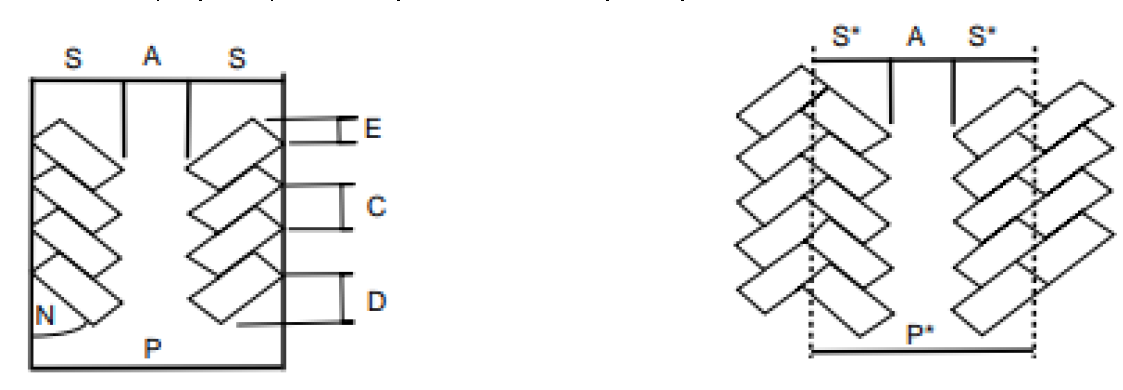
Parking Layout. Attached to this chapter as Appendix B is that document entitled "Parking Standards Chart," which contains certain charts, diagrams and standards. Parking facilities shall be constructed and maintained in accordance with the charts, diagrams and standards as set forth in Appendix B, except that the aisle width for aisles serving only small-car parking spaces may not be less than ninety degrees—twenty feet, sixty degrees—seventeen feet and forty-five degrees—thirteen feet.
O.
Open Space for Nonresidential Uses.
1.
General Rule. New nonresidential development shall provide physically delineated, usable, open space ("accessible open space") along the front of a single building or within a highly visible and easily accessible area between multiple buildings on the same property.
2.
Amount of Required Accessible Open Space. If the gross floor area of structures on the lot is:
By Building Size (Gross Floor Area)
a.
Less than ten thousand — No useable open space is required.
b.
Ten thousand to nineteen thousand nine hundred ninety-nine square feet — One thousand square feet of open space.
c.
Twenty thousand square feet and over — Five percent of total building gross floor area, up to a maximum of three thousand square feet.
3.
Requirements. The following are the requirements for useable open space:
a.
Useable open space should be accessible to all related buildings or units and remain unlocked during daylight hours.
b.
Required parking or setback areas shall not count towards the open space requirement.
c.
Open space shall be in the form of plazas, public greens, patios or squares, seating areas, the incorporation of an architectural landmark (e.g., a clock tower), or public art.
d.
Useable open space should be designed to take into consideration spatial enclosure and be defined by buildings or landscape elements on a minimum of two sides. It shall include an enhanced pedestrian system that connects to adjacent public streets and sidewalks via interior walkways. It should be designed to be visible from the street, using views into the site, tree-lined walkways, or a sequence of design elements to draw people into the space.
e.
The minimum dimensions of required open space for new development shall be twenty feet (depth and width). In instances where the proposed development has corners, angles, or other unique architectural features or the lot has an irregular configuration, the minimum depth of width dimensions of the open space area may be reduced by up to five feet, provided that the opposite dimension is increased in the same amount for the length of the modification.
f.
Accessible open space areas should contain both landscaped areas and hardscape areas.
g.
Common landscaped green and/or garden space shall comprise between seventy percent and eighty percent of the common outdoor area. The space should be centrally located to serve all related buildings or units. The space should be rectilinear with no side less than fifteen feet clear (with additional space allowance for buffer landscaping as required). Space should be seventy-five percent enclosed by buildings, low walls, low fences, or linear buffer landscaping (e.g., hedges or rows of trees) and not be bordered by streets or surface parking areas on more than one side.
h.
Common hardscape should comprise between twenty percent and thirty percent of common outdoor area. Common roof deck space may count towards this provision. Material selected for hardscape areas should be both functional and attractive, i.e. unit pavers or gravel. Hardscape space shall be connected directly to landscaped areas by stairs, walks, and/or ramps where necessary.
P.
Pedestrian Access and Access to Transit.
1.
Pedestrian walkways shall connect major building entries and transit stops with the public sidewalk along the street. Connecting walkways shall be at least four feet wide (excluding car overhangs) and be accompanied by a five-foot minimum landscape buffer with trees planted at least every thirty feet on-center.
2.
Transit shelters shall be provided near major concentrations of employees. For projects of at least five acres, the developer shall coordinate with the transit provider to determine a suitable location for a transit shelter on-site.
3.
Pedestrian access must be provided between transit stops and at least one building entrance for each on-site building tenant. Transit shelters must be provided at all transit stops as specified by the director of public works and/or transit provider.
(Ord. 2887 §§ 4—13, 2007; Ord. 2865 §§ 8—21, 2005; Ord. 2787, §§ 1, 3, 5 and 18, 2001; Ord. 2712 § 1(d), 1997; Ord. 2610 § 1(L—O), 1993; Ord. 2518 § 7 (part), 1990; Ord. 2515 § 3 (part), 1990; Ord. 2453 § 1, 1988; Ord. 2411 §§ 6—8, 1987; Ord. 2318 § 1(f), 1984; Ord. 2297 § 1(a—c), 1983; prior code § 9346)
(Ord. No. 2932, § 10, 8-11-09; Ord. No. 3054, §§ 7, 8, 8-9-16; Ord. No. 3159, § 3(Exh. A), 11-12-24)
18.48.080 - Exemption—Certain residential zone uses.
The provisions within this chapter pertaining to the number of required on-site parking spaces for the R-E and R-1 zones may be waived or modified by the planning commission when it can be demonstrated that the required on-site parking cannot be provided because of usual circumstances associated with the property due to one or more of the following findings:
A.
The topography of the property cannot be sufficiently altered to accommodate the required on-site parking.
B.
The property is eligible or listed on a local, state or National Historic Register or is a contributing resource within a historic district and the required on-site parking would adversely impact the historic setting or significance of the property should the required on-site parking necessitate significant grading to the property, demolition to existing or eligible on-site historic structures/resources, and/or the alteration of significant historic characteristics/features associated with the property.
C.
The existing property does not comply with the city's minimum required lot size, depth and/or width and the required parking cannot be physically developed on-site without the approval of a variance.
D.
The physical location of the existing primary residence and/or an accessory unit on the property does not enable the required on-site parking to be provided without the primary or accessory unit being demolished or significantly altered.
The planning commission's finding(s) shall be documented in writing and may be appealed to the city council within twenty calendar days of the date of the commission's decision. The appeal shall be filed with the appropriate fees with the city clerk.
(Ord. 2887 § 14, 2007: prior code § 9350)
(Ord. No. 3068, § 6, 6-13-17)
18.48.090 - Exemption—Parking districts.
Lots which are included in a planned comprehensive parking district, formed under a special assessment district proceeding, shall also be exempted from the provisions of this chapter under the following circumstances:
A.
The commission shall conduct a public hearing, noticed in the manner set forth in Section 18.52.090.
B.
At the hearing the commission shall determine, and accordingly recommend to the council, whether or not the district should be formed, based upon its findings that:
1.
The public interest, convenience and necessity so require;
2.
The district as established will substantially comply with the purpose and intent of this title; and
3.
The exemption, if granted, will be conditioned so as to insure that the purpose and intent of the provisions of this title, including but not limited to the provisions of this chapter, are met.
C.
1.
Upon receipt of a recommendation by the commission, the council shall conduct a hearing, noticed in the same manner as that held by the commission, and shall determine, based upon the standards set forth in subsection B, whether the exemption should be granted. It shall have the authority and power to grant the exemption, with conditions if necessary, so as to insure that substantial compliance is had with reference to the provisions of this title, and to insure compatibility of the physical facilities and uses. Such conditions may include, but are not limited to, a limitation upon the extent to which the construction of new buildings and structures, or the reconstruction or expansion of existing buildings or structures located on the lots included in the district, shall be permitted;
2.
Planned comprehensive parking districts created under this chapter are declared to be entitled to the exemption provided for in this section.
D.
Any condition imposed upon a planned comprehensive parking district may be modified, or new conditions may be added, if the city council, after a hearing, determines that the public interest so requires.
(Prior code § 9347)
18.48.100 - Limitations on use.
A.
Accessibility to Parking Spaces. Each parking space so required by this chapter shall be accessible without it being necessary to move any other vehicle except as provided within Section 18.48.070(C)(1)(e) and (C)(2)(a).
B.
Parking Charge. The parking of motor vehicles shall be without monetary charge when such parking is required in conjunction with a use or uses permitted by this title, except as is expressly provided in Section 18.52.030.
C.
Storage of Vehicles. The parking facilities required by this chapter shall be used only for the temporary parking of vehicles used in conjunction with the uses they serve. Such parking facilities shall not be used for any other purpose, including but not limited to, storage of vehicles.
D.
Required parking spaces in the R-2, R-3 and R-4 zones shall be utilized solely for parking of motor vehicles belonging to the tenants of the development and their guests. For the purpose of this paragraph, "required parking space" means all existing parking spaces, whether or not required at the time of construction, which do not exceed the requirements of the most recent zoning regulations.
(Ord. 2887 § 15, 2007; Ord. 2610 § 1(P), 1993; prior code § 9348)
18.48.110 - Underground parking facilities.
A.
Notwithstanding any other of the provisions of this chapter relating to the location of buildings and structures on a lot, off-street parking facilities may be located in any required yard area on a lot, except a required front yard, if:
1.
The same are subterranean; and
2.
The plans for the same are approved by the city engineer to insure that there will be adequate lateral support and safe vehicular and pedestrian ingress and egress thereto.
B.
"Subterranean," for the purposes of this section, means entirely below the finished grade of a lot.
(Prior code § 9349)
18.48.120 - Parking of commercial vehicles.
A.
It shall be unlawful to park or store any commercial vehicle, of an unladen gross vehicle weight in excess of fourteen thousand pounds, tow trucks (including dismantlers' or repossessor's tow vehicles), trailers, or other related equipment within residential zones within the city. A limit of one commercial vehicle fourteen thousand pounds or less is allowed per residential lot or residence, whichever is less, within residential zones. The provisions of this subparagraph do not apply to passenger vehicles, pickup trucks, passenger or cargo vans, recreational vehicles or utility trailers. For additional definitions and restrictions, refer to Chapter 10.40 of the Whittier Municipal Code.
B.
The provisions of this section shall not apply to any vehicle owned by the city or a public utility or licensed contractor while necessary in use in the construction, installation or repair of any public utility, or to any commercial vehicle actually being used for the pickup or for the delivery of goods, wares and merchandise, or for the delivery of materials to be used in the repair, alteration, remodeling or construction of any building.
(Ord. No. 3018, § 3, 3-25-14; Ord. No. 3159, § 3(Exh. A), 11-12-24)
Appendix B
Non-Residential Parking Standards Chart
9′ × 19′ Spaces (with 2′ overhang)(1)
Notes:
(1) Aisle widths of twenty feet to twenty-four feet allow two-way traffic, when a turnaround is provided.
(2) Aisle widths twenty-five feet and over allow two-way traffic.
(3) A space, the side of which is against a building, wall, or fence must be twelve feet in width.
(4) A two-foot vehicular overhang is permitted into a landscape planter area, except when there is an exclusive (required) landscape setback or open space area.
(Ord. 2887 § 16, 2007: Ord. 2865 § 22, 2005: Ord. 2787 § 10, 2001)
(Ord. No. 3159, § 3(Exh. A), 11-12-24)

