
Del Rio City Zoning Code
ARTICLE IXA
C-1-H HISTORICAL AND COMMERCIAL DISTRICT
Sec. 30-140.- Use regulations, height regulations, area regulations and parking regulations.
The use, height, area and parking regulations are as set forth in the C-1 Local Commercial District regulations [Article VII of this chapter], except that no nonresidential use, activity or sale of specific commodities permitted in the C-1 Local Commercial District regulations shall be permitted in this district unless a special permit has been issued therefor by the procedure of issuing special permits as set forth in Article XII, Special Permits, hereof; and the specific conditions of the issuance of a special permit for any nonresidential use, activity or sale of specific commodities are the finding of the city planning and zoning commissioner and the city council that the use, activity or sale of specific commodities is such to conform with, be compatible with and be in character with the intent and plan for the historical preservation, conservation and restoration of the area, of a nature to upgrade and enhance the historical, cultural and economic value of the area to the city and to be of such nature as to not adversely affect, by moral, physical or economic reasons, the existing and proposed uses, public or private, within or near the area.
(Ord. of 10-14-69, § 2)
Sec. 30-141. - Creation.
There is hereby created the Downtown Historic District of the City of Del Rio.
(Ord. No. O-2020-015, 2-11-20)
Sec. 30-141.1. - Purpose.
The city council of Del Rio, Texas hereby declares that, as a matter of public policy the protection, enhancement, and safeguarding of the Downtown Historic District landmarks and significance is necessary to promote the economic, cultural, educational, and general welfare of the public. It is recognized that the Downtown Historic District within the City of Del Rio represents a unique confluence of time and place that shape the identity of generations of citizens, collectively and individually, and produces significant historic, architectural, and cultural resources that constitute their heritage. This section is intended to:
(1)
Preserve and safeguard existing structures and exterior elements that represent our cultural heritage;
(2)
Protect and enhance the City of Del Rio's Downtown Historic Districts' attractiveness to visitors and the support and stimulus to the economy thereby provided;
(3)
Ensure the harmonious, orderly, and efficient growth and development of the Downtown Historic District by providing that new construction is appropriate to and contributes to the historical integrity;
(4)
Promote the economic prosperity and welfare of the community by encouraging architecturally appropriate exterior alterations and additions;
(5)
Encourage stabilization, restoration, and improvements of the properties within the Downtown Historic District;
(6)
Provide for the thoughtful consideration of requests for demolition or removal of property; and,
(7)
Strengthen the economy of the city by stabilizing and improving property values leading to increased civic pride and an enhancement of the city's historic assets that serve as attractions to tourists, visitors, and residents.
(Ord. No. O-2020-015, 2-11-20)
Sec. 30-141.2. - Downtown Historic District boundaries.
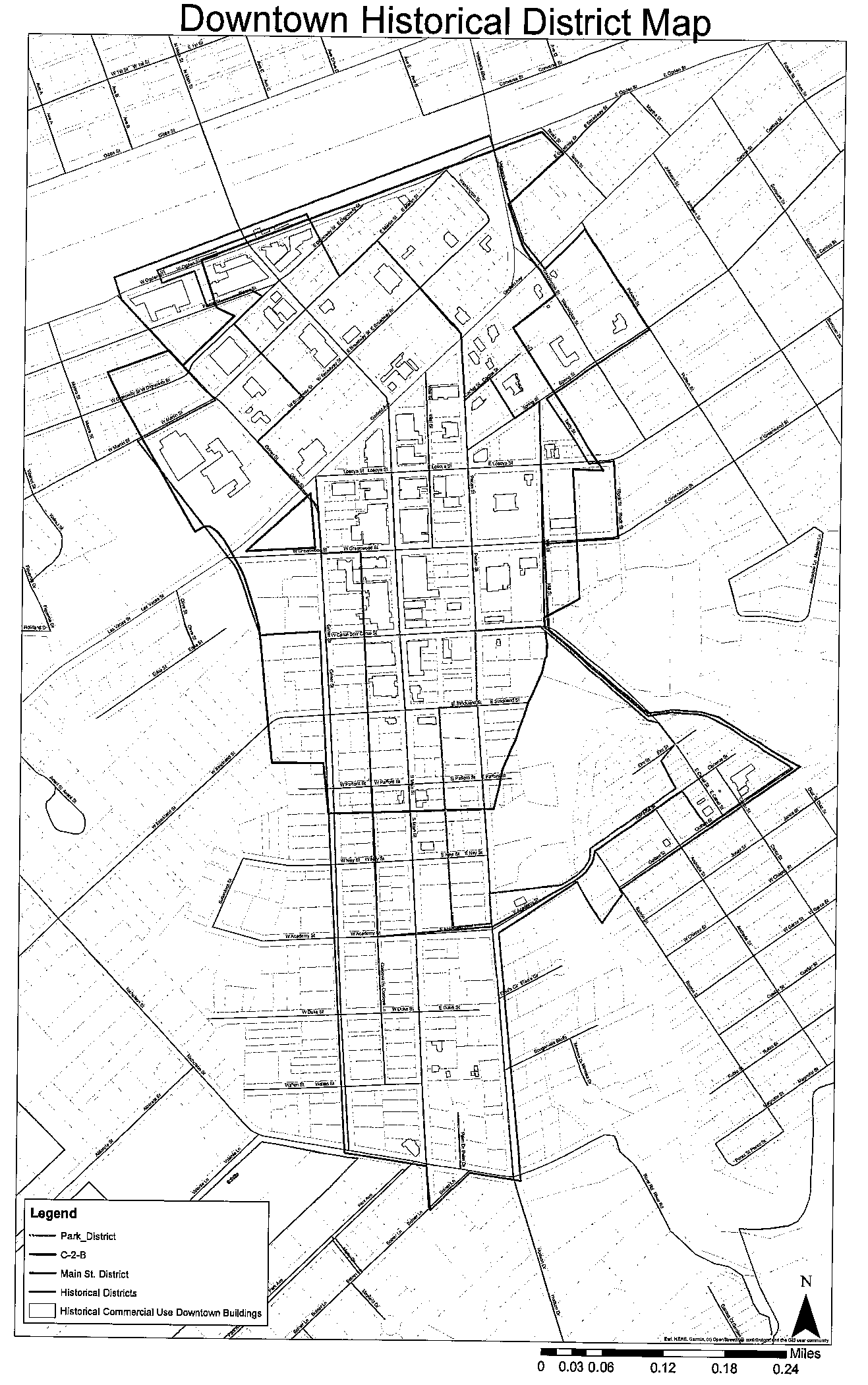
(Ord. No. O-2020-015, 2-11-20)
Sec. 30-141.3. - Historic design review committee.
There is hereby created a committee to be known as the historic design review committee, hereafter referred to as the "HDRC."
(1)
The HDRC shall consist of five (5) members appointed by the mayor and confirmed by the city council. At least one member shall be from the Val Verde County Historical Commission, one shall be business or property owners within the district, one shall be a licensed real estate broker and two (2) shall be a registered design professional. A design professional is defined as someone having training or expertise in historic architecture, art, and/or engineer.
(2)
All HDRC members, regardless of background, shall have a known and demonstrated interest, competence, or knowledge in historic preservation within the City of Del Rio.
(3)
The HDRC members shall serve for staggered terms of three (3) years. For initial committee members, the historic preservation officer shall conduct a blind draw to establish the staggered terms with two (2) of the initial board members serving one-year terms, two (2) of the initial board members serving two-year terms, and the remainder serving a full three (3) year term. Members shall serve a maximum of two (2) terms and may be reappointed after the initial term is completed.
(4)
The chairman and vice-chairman of the HDRC shall be elected by and from the members of the HDRC and shall serve in their elected positions for one year.
(5)
The HDRC shall have the power to:
a.
Adopt rules and procedures as necessary to provide for the orderly conduct of meetings.
b.
Maintain written minutes that record all actions taken by the HDRC and the reasons for taking such actions.
c.
Increase public awareness of the value of historic, cultural, and architectural preservation by encouraging and participating in public education programs developed by the historic preservation officer.
d.
Approve or disapprove application fur a certificate of appropriate design pursuant to this section.
e.
Recommend specific design guidelines to ensure compatibility within the district.
(6)
The HDRC shall meet at such times as determined by a submission of a certificate of appropriate design application if business is at hand or a minimum of three (3) times per year. Special meetings may be called at any time as required by the historic preservation officer. All meetings shall be held in conformance with the Texas Open Meetings Act.
(7)
A quorum fur the transaction of business shall consist of three (3) of the HDRC members.
(8)
Additionally, the committee may have four (4) ex-officio, non-voting members, each of whom shall be entitled to notice of all meetings of the committee and to fully participate in the discussion and consideration of all business coming before the committee. The ex-officio members shall be the building official, the planning director, the main street manager, and the historic preservation officer.
(Ord. No. O-2020-015, 2-11-20)
Sec. 30-141.4. - Appointment of an historic preservation officer.
The city manager shall appoint a qualified city staff person to serve as the historic preservation officer. This officer shall administer this article and advise the HDRC on matters submitted to it.
(Ord. No. O-2020-015, 2-11-20)
Sec. 30-141.5. - Certificate of appropriate design.
Any person carrying out any work that requires a building permit for exterior alteration, restoration, reconstruction, new construction or moving of a landmark or property within the DHD must first obtain a certificate of appropriate design from the HDRC. The historic preservation officer and/or the HDRC may review and comment as requested by the property owner with regards to color selection and changes or improvements not requiring a building permit.
(Ord. No. O-2020-015, 2-11-20)
Sec. 30-141.6. - Criteria for approval of a certificate of appropriate design.
The following standards, guidelines and criteria should be used in a balanced evaluation of the property under consideration for a certificate of appropriate design:
(1)
The HDRC shall follow the Secretary of Interior's Standards for Rehabilitation (Appendix A) and guidelines for rehabilitating National Registered Historic buildings to assist in its consideration of all applications for a certificate of appropriate design. These standards and guidelines shall be made available to the owners of the properties within the DHD upon request.
(2)
The HDRC shall develop and utilize a checklist (Appendix B), approved by city council, of design elements to be reviewed and considered in reaching a determination for each application.
(Ord. No. O-2020-015, 2-11-20)
Sec. 30-141.7. - Certificate of appropriate design procedures.
(1)
Prior to the commencement of any work requiring a certificate of appropriate design, the owner or the owner's representative shall file an application for such certificate with the chief building official or his designee. The property owner, or the owner's representative, shall consult with the historic preservation officer prior to submission of the application with regard to applicable standards and guidelines for the property.
(2)
The application shall contain:
a.
The physical address and property owner's name, address, and telephone number of the applicant and a detailed description of the proposed work.
b.
The physical location and photographs of the property and adjacent properties (historical photographs may also be helpful).
c.
Elevation drawings of the proposed changes, preferably showing the proposed exterior color scheme.
d.
Samples or examples of materials to be used.
(3)
The historic preservation officer will review the application, call a meeting of the HDRC, and make a staff recommendation to the HDRC regarding the request.
(4)
No building permit shall be issued for such proposed work until a certificate of appropriate design has been issued by the HDRC or upon appeal to the city council pursuant to Section 30-141.12 herein. The certificate of appropriate design shall be in addition to and not in lieu of any building permit or any other permit that may be required by another ordinance of the city.
(5)
The HDRC shall approve, approve with modifications, or deny an application within thirty (30) days from receipt of the application. Should the HDRC not take action within thirty (30) days, the property owner can proceed without a certificate of appropriate design.
(6)
All decisions of the HDRC shall be in writing. A certificate of appropriate design, if approved, shall be sent to the applicant within twenty-four (24) hours of the decision of the Committee, a copy shall be attached to the building permit for public inspection, and a copy retained on file. The HDRC decision shall state the reasons for denying or modifying any application.
(Ord. No. O-2020-015, 2-11-20)
Sec. 30-141.8. - Enforcement.
All work performed pursuant to a certificate of appropriate design issued under this section shall conform to any requirements included therein. It shall be the duty of the building official to perform inspections as required by scope of work required to ensure compliance. In the event it is found that work is not being performed in accordance with the certificate of appropriate design, the chief building official or code enforcement officer shall issue a stop work order, and all work shall immediately cease. No further work shall be undertaken on the project as long as the stop work order is in effect. Work may be reinstated, however, upon assurance that compliance will henceforth exist at the determination of the HDRC.
(Ord. No. O-2020-015, 2-11-20)
Sec. 30-141.9. - Ordinary maintenance.
Nothing in this section shall be construed to prevent the ordinary maintenance, replacement, or repair of any exterior architectural feature of property and structures within the DHD that does not involve a change in design material or outward appearance. In-kind replacement or repair is included in this definition of "ordinary maintenance."
(Ord. No. O-2020-015, 2-11-20)
Sec. 30-141.10. - Tax incentives.
In accordance with Section 30-141.2. of this article, a building, site or structure within the DHD that is in need of tax relief to encourage preservation and which is substantially rehabilitated and/or restored as certified by the HDRC and approved by the city council, shall have an assessed value fur ad valorem taxation as follows:
(1)
An abatement for rehabilitations at one hundred (100) percent for ten (10) years when costs exceed fifty (50) percent of the structure's pre-rehabilitated value.
(Ord. No. O-2020-015, 2-11-20)
Sec. 30-141.11. - Demolition.
All applications for a demolition permit for any structure within the DHD shall be reviewed by the historic preservation officer prior to approval by the building official. Such review shall include the following:
(1)
A review of available records to determine if the structure is listed on the National or Texas or Val Verde Register of Historic Places or structures.
(2)
Whether any action is pending by any agency that could result in listing of the structure as a landmark.
(3)
Whether the structure meets the requirements for listing for landmark status as defined by the county, state or U.S. Department of the Interior.
(4)
The owner may be required to submit documents to show that he cannot comply with the design guidelines and earn a reasonable rate of return on his investment in the property information required may include:
a.
Costs of proposed development with and without modification needed to comply with the design guidelines as determined by the committee;
b.
Structural report and/or feasibility report;
c.
Market value of the property in its present condition and after completion of the proposed project in the form of a certified appraisal report;
d.
Cost of the property, date purchased, relationship, if any, between seller and buyer, terms of financing;
e.
For the past two (2) years, annual gross income from the property with operating and maintenance expenses, deprecation, and annual cash flow before and after debt service during that time; and
f.
other information considered necessary by the committee to determine whether or not the property may yield a reasonable return.
(5)
If the review by the historic preservation officer determines that a structure proposed for demolition is listed, designated, or eligible for designation as a historic landmark, the HDRC shall review and consider the request at its next regular meeting in an attempt to find ways and means to advert the need for demolition.
(6)
If, after review, the HDRC determines there is a potential solution that will preserve the structure, it can impose a 90-day period moratorium on the issuance of the demolition permit during which time the staff and other interested persons and organizations shall be afforded time to obtain technical and financial assistance so that the owner may reasonably save the structure.
(7)
The HDRC may consider any options including public purchase or acquisition, grants or benefactors who would preserve the building and negotiate with the owner for the transfer of the building or structure. If the HDRC recommends purchase, or in some cases donation to the public of the building or structure, it shall forward such recommendation to the city council for consideration before the expiration of the moratorium.
(8)
On the last regular or special meeting for the HDRC before the expiration of the 90-day moratorium (or sooner if acceptable to the historic preservation officer and the applicant), the applicant may appear and present any evidence of substantial hardship that requires demolition of the building or structure.
(Ord. No. O-2020-015, 2-11-20)
Sec. 30-141.12. - Neglect.
No owner or person with an interest in real property designated as a landmark or included within a historic district shall permit the property to fall into a serious state of disrepair so as to result in the deterioration of any exterior architectural feature which would, in the judgment of the HDRC, produce a detrimental effect upon the character of the historic district as a whole or the life and character of the property itself.
Examples of such deterioration include:
(1)
Deterioration of exterior walls or other vertical supports.
(2)
Deterioration of roof or other horizontal members.
(3)
Deterioration of exterior chimneys.
(4)
Deterioration or crumbling of exterior stucco or mortar.
(5)
Ineffective waterproofing of exterior walls, roots, or foundations, including broken windows or doors.
(6)
Deterioration of any features so as to create a hazardous condition which could lead to the claim that demolition is necessary for the public safety.
(Ord. No. O-2020-015, 2-11-20)
Sec. 30-141.13. - Penalties.
Failure to comply with any of the provisions of this section shall be deemed a violation, and the violator shall be liable for a misdemeanor charge and be subject to a fine not to exceed five hundred dollars ($500.00), and each day that such violation continues shall constitute a separate offense and shall be punishable accordingly. These penal provisions shall not prevent an action on behalf of the city to enjoin any violation of the terms of this section or an action for mandatory injunction to remove any previous violation hereof.
(Ord. No. O-2020-015, 2-11-20)
Sec. 30-141.14. - Appeals.
Any person aggrieved by a decision of the HDRC relating to a certificate of appropriate design may, within twenty (20) days of the date of the posting of the certified mail to the address shown on the application, file a written application with the city council, through the office of the city secretary, for review of the decision and the approval, denial, modification of, or deviation from the HDRC's decision. The appeal application shall be set before the city council at the first available city council meeting. The historic preservation officer shall supply the city council with all of the background information and recommendations upon which the HDRC based their decision, as well as the written HDRC decision stating the reasons for denying or modifying the application.
(Ord. No. O-2020-015, 2-11-20)

