River Falls City Zoning Code
CHAPTER 17
68 - DOWNTOWN OVERLAY DISTRICT
Sections:
17.68.010 - Purpose and intent.
It is the purpose of this chapter to implement the objectives of the city downtown design plan, which establishes minimum standards for exterior architecture of nonresidential and mixed-use buildings located within the downtown overlay district in order to ensure high quality design of development and redevelopment in the city. These standards are intended to preserve and restore unique and historic buildings; ensure coordinated design of new and existing building exteriors, additions and accessory structure exteriors in order to prevent visual disharmony; minimize adverse impacts on adjacent properties from buildings which detract from the character and appearance of the district; protect vehicular and pedestrian traffic movements; and aid in improving the overall economic viability of the district. These standards are further intended to prevent use of materials that are unsightly, subject to rapid deterioration or which contribute to depreciation of property values or cause urban blight. It is not the intent of this chapter to unduly restrict design freedom when reviewing and approving project architecture in relationship to the proposed land use, site characteristics and interior building layout.
(Ord. 2006-29 § 1 (part))
17.68.020 - Scope.
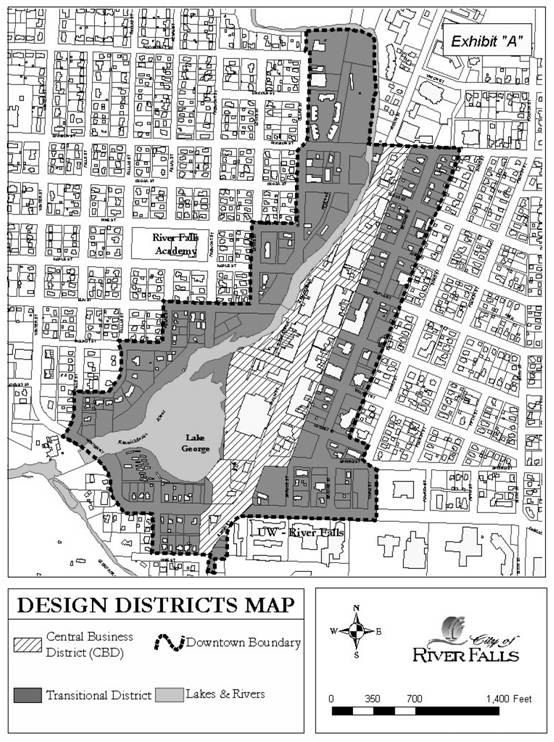
The regulations in this chapter pertain to all properties within the boundaries of the district, with the exception of properties used exclusively for residential purposes and their related accessory buildings, the district being as represented in Exhibit A.
(Ord. 2006-29 § 1 (part))
17.68.030 - Definitions.
As used in this chapter:
"Abandoned sign" means any sign, sign message, or sign frame and its supporting equipment that is in disrepair, no longer in use by the business occupying the lot on which it is situated, not working to its original design, not in compliance with city or state electrical code, or is a threat to the health, safety and welfare of the general public.
"Animated" or "revolving" means any sign or part of a sign that changes physical position or light intensity by any movement or rotation or gives the visual impression of such movement or rotation, excluding flags and barber pole signs.
"Awning" or "canopy" means a roof-like cover that projects from the wall of a building a minimum of two feet for the purpose of shielding a doorway or window from the elements.
"Banner" means a sign intended to be hung either with or without a frame possessing characters, letters or ornamentations applied to paper, plastic or fabric, but not flags.
"Billboard" means a sign used as an outdoor display for the purpose of advertising or promoting a business, service, activity or products, which are not found or located on the premises on which a sign is situated.
"Blade sign" means a sign that is attached to a building, oriented perpendicular to the face of the building, and has a thickness of no more than two inches.
"Central business district" means a portion of the downtown overlay district as shown in Exhibit A.
"Certificate of design review" means the certificate issued by the review authority approving new construction, alterations and additions to any parcel or improvement in the downtown overlay district.
"Changeable copy sign" means a sign or portion thereof with characters, letters or illustrations that can be changed or rearranged without altering the face of the sign. Time, temperature, and theater signs are not considered changeable copy signs.
"Conspicuous vehicle sign" means any sign mounted or painted on or otherwise affixed to any parked vehicle, parked trailer, or other parked device capable of being towed, which is conspicuously parked so as to advertise the business to the passing motorist or pedestrian. Excluded from this sign type are vehicles and equipment in operating condition which are currently registered and licensed to operate on public streets and which are actively used in the daily function of the business to which such sign relates.
"Directional sign" means an on-premises sign giving directions, instruction, and/or facility information, but containing no advertising copy (e.g., parking, exit or entrance signs).
"Disrepair" means, but is not limited to, a sign that is in need of repair, is faded, broken, torn, deteriorating, not working to its original design, cracked or other similar condition.
"Double-faced sign" means a sign with two parallel, or nearly parallel, faces, back to back, and located no more than twenty-four (24) inches from each other.
"Electronic reader board sign" means any sign that by electronic or digital means displays words, lines, logos, graphic images, or symbols that can change automatically or by computer program change to provide different information, and which includes computer signs, LED and other video display signs, and time and temperature signs.
"Flashing sign" means an illuminated sign on which artificial or reflected light is not maintained stationary and constant in intensity and color at all times when in use, but not including an electronic reader board sign when such sign meets all requirements of this chapter.
"Grade" means the elevation of the finished surface of the ground or paving at the base of the sign.
"Gross surface display area" means the entire face of a sign including the advertising surface and any framing, trim, or molding but not including the support structure. Only one side of a double-faced sign shall be included in a computation of sign area, if the faces are not more than twenty-four (24) inches apart. For other signs with more than one face, which are more than twenty-four (24) inches apart, each side shall be included in a computation of sign area. The area of a cylindrical or spherical sign shall be computed by multiplying the diameter of the cylinder by the height of the sign.
"Inflatable sign" means any object enlarged or inflated which floats, is tethered in the air or is located on the ground or on a building.
"Internally illuminated sign" means any sign covered with a translucent membrane that is, in whole or part, illuminated by light passing through the membrane.
"Menu boards" means signs that contain graphics or letters for communicating the menu provided at a restaurant.
"Monument sign" means a ground mounted sign which is mounted on a contiguous base having a minimum width of at least ninety (90) percent of the sign width and its supporting structure, where the entire bottom is in contact with or is close to the ground, and is not attached to any building.
"Moving signs" means any sign that moves or has motion.
"Nonconforming sign" means a sign lawfully erected and maintained prior to the adoption of the current ordinance that does not conform with its requirements.
"Overhanging sign" means a sign which is attached to and is perpendicular to the face or wall of a building and which extends twelve (12) inches or more from the building wall or face.
"Parapet wall" means a low wall or railing to protect the edge of a platform, roof, or bridge.
"Pennant" means pieces of cloth, paper, or plastic intended to be individually supported or attached to each other by means of rope, string or other material, and intended to be hung on buildings or other structures or between poles but which does not include any company logo or other form of copy.
"Portable changeable copy sign" means a single or double surface painted sign or poster panel type sign or variation thereof with characters, letters or illustrations that can be changed or rearranged without altering the face of the sign, temporary in nature, is easily moveable and is not permanently attached to a building or to the ground.
"Portable sign" means a sign that is to be displayed only during business hours which is not permanently attached to the ground or building and is an "A" frame, hinged or sandwich type design.
"Pylon sign" means a freestanding sign erected upon one or more pylons or posts placed in the ground.
"Roof sign" means any sign partially or wholly erected above the roof structure or on top of the parapet wall of any building.
"Sign" means any object, device, display, or structure, or part thereof, situated outdoors or painted or affixed to the interior or exterior of a window pane, that is used to advertise, identify, display, direct or attract attention to an object, person, institution, organization, business, product, service, event, or location by any means, including words, letters, figures, design, symbols, fixtures, color illumination, or projected images but excluding such items as merchandise, flags, window displays, government signs.
"Sign height" means the vertical distance from the grade to the highest point of the sign.
"Sign maintenance" means the replacing or repairing of a part or portion of a sign made necessary by ordinary wear, tear or damage beyond the control of the owner of a sign, property or establishment for which the sign is intended.
"Sign replacement" means when the frame, support structure, business name, or sign face is changed.
"Temporary sign" means a sign, banner, inflatable sign, balloon, pennant, poster, sign on wheels, or advertising display constructed of cloth, plastic, cardboard, wall board, or other materials, intended to be displayed on the exterior of a building for less than thirty (30) days in a calendar year and not permanently attached to a building or to the ground. For this chapter, permanently attached includes such means as bolts, concrete foot wings or foundations, or similar such devices.
"Transitional district" means a portion of the downtown overlay district as shown in Exhibit A.
"Wall sign" means a building mounted sign which is attached to, painted on, inscribed upon or derives its major support from a wall and which projects less than twelve (12) inches from the wall.
"Window sign" means a permanent sign that is painted or affixed to a window pane, either on the interior or exterior side of the window pane, solely for the purpose or effect of identifying premises from the sidewalk or street; or a temporary sign advertising special sales, events or products which is not permanently painted on or affixed to the window pane.
(Ord. 2006-29 § 1 (part))
(Ord. No. 2023-10, § 2, 7-11-2023)
17.68.040 - Design review committee composition.
A.
Membership. The design review committee shall consist of an alderperson, who shall be its presiding officer, a plan commissioner, a chamber of commerce board member or its director, a historic preservation commissioner, a business improvement district board member, a representative of a development group, and two business or property owners in the downtown overlay district. The alderperson shall be elected by a two-thirds vote of city council each April. The mayor shall appoint the committee members subject to confirmation by the city council.
B.
Vacancies. Vacancies other than ex officio shall be filled by appointment for the unexpired term in the same manner as original appointments.
C.
Powers and Duties. The design review committee shall review certificate of design review applications in accordance with Section 17.68.070 of this chapter and such other powers and duties as the council may prescribe from time to time.
D.
Meetings. If a certificate of design review has been requested from the design review committee, a meeting of the design review committee shall be held on the second Monday of each month, commencing no later than three p.m. Any meeting falling upon a holiday shall be held on the next following day at the same time and place unless duly changed by the design review committee at the meeting preceding the holiday.
(Ord. 2006-29 § 1 (part))
17.68.050 - Applicability.
All properties within the downtown overlay district, with the exception of properties used exclusively for residential purposes and their related accessory buildings, shall be subject to these regulations. If the provisions of this chapter are inconsistent with one another, or if they conflict with provisions found in other adopted codes, ordinances, or regulations of the city, the more restrictive provision will control unless otherwise expressly provided.
(Ord. 2006-29 § 1 (part))
17.68.060 - Ordinance provisions.
Except as exempted in Section 17.68.070 of this chapter, the provisions of this chapter shall apply to the following activities within the downtown overlay district:
A.
All new building construction;
B.
Any exterior alterations or additions to existing buildings;
C.
All new parking lots and their landscaping;
D.
All new signage;
E.
Changes to existing color.
(Ord. 2006-29 § 1 (part))
17.68.070 - Exemptions.
This chapter does not apply to the following activities:
A.
Maintenance of the exterior of an existing structure such as repainting, reroofing or residing where similar to the existing materials and colors are used or materials and colors are used that comply with this chapter.
B.
Interior remodeling.
C.
Parking lot expansion not exceeding twenty-five (25) percent of the gross square footage of the existing lot.
(Ord. 2006-29 § 1 (part))
17.68.080 - Process.
The following process shall be followed for new development or redevelopment projects located within the downtown overlay district:
A.
Prior to issuance of a stormwater management permit, parking lot permit, sign permit, or building permit for a project listed in Section 17.68.060 and not listed in Section 17.68.070(C) of this chapter, an applicant shall receive a certificate of design review approval from the review authority, in this case the planning director or designee, who shall approve, approve with conditions, or deny an application within fifteen (15) business days of receiving a complete application based upon compliance with the site plan criteria, design review guidelines and all city ordinances, rules and regulations. However, in his or her discretionary authority, the planning director may extend the review process an additional fifteen (15) business days.
B.
In the event the review authority denies the application in subsection A of this section the applicant can either: (1) resubmit the application bringing the request into compliance with the design review standards or (2) appeal the decision within thirty (30) days after the date of such decision to the design review committee. The design review committee shall review the application at its next scheduled meeting and shall approve, approve with conditions, or deny an application based upon compliance with the site plan criteria, design review standards and all city ordinances, rules and regulations.
C.
An applicant may appeal the decision made by the design review committee in subsection B of this section within thirty (30) days after the date of such decision to the city council. The city council shall approve, approve with conditions or deny any appeal.
(Ord. 2006-29 § 1 (part))
17.68.090 - Minimum submission requirements.
The applicant shall submit the following:
A.
Architecturally scaled elevations and dimensions of all sides of existing and proposed buildings, including roof mechanical equipment, vents, chimneys, or other projecting items above the roof line.
B.
Elevations and dimensions of all existing or proposed solid waste and recycling containment areas.
C.
Colored renderings, exterior building and finish material samples and color pallets.
D.
New sign schematic that meets the sign ordinance.
E.
Other information as required (i.e. state approvals).
(Ord. 2006-29 § 1 (part))
17.68.100 - Design review standards.
The design review standards shall be applied within two design districts, the central business district (CBD) and the transitional district, which are defined in Exhibit A.
A.
Buildings.
1.
Building Setbacks.
CBD:
a.
At least sixty-five (65) percent of the front facade of each building, where possible, shall meet the established building facade line on the block where it is located. On most downtown blocks, this is the edge of the sidewalk. For corner buildings, this requirement applies to each facade that fronts a public street. The remaining thirty-five (35) percent of the facade may be set back up to fifteen (15) feet to emphasize entries or create outdoor seating and gathering areas. Such front yard areas shall be landscaped and/or hard surfaced as pedestrian-friendly spaces, with amenities such as benches and planters provided.
Transitional District:
b.
At least sixty-five (65) percent of the front facade of building, where possible, shall meet the established building facade line on the block where it is located. If no consistent building facade line is present, front facades shall be setback from the inner edge of the sidewalk from a minimum of ten (10) feet to a maximum of twenty (20) feet. For corner buildings, this requirement applies to each facade that fronts a public street. The remaining thirty-five (35) percent of the facade may be set back a greater distance to emphasize entries or create outdoor seating and gathering areas. Such front yard areas shall be landscaped and/or hard surfaced as pedestrian-friendly spaces, with amenities such as benches and planters provided.
2.
Architectural Style.
CBD and Transitional District:
Architectural elements shall be based upon and be consistent with the architecture of the existing downtown district and the architecture of adjacent structures.
3.
Corner Buildings.
CBD and Transitional District:
Buildings on corner lots shall be oriented to the corner and both public streets. Both street-facing facades shall be built up to the established building facade line on each block for at least sixty-five (65) percent of the length of their facades. The remaining thirty-five (35) percent of the facade may be setback up to fifteen (15) feet to emphasize entries or create outdoor seating and gathering areas. Such front yard areas shall be landscaped and/or hard surfaced as pedestrian-friendly spaces, with amenities such as benches and planters provided. Corner entrances are desirable but are not required. Street-facing facades shall maintain similar articulation, detailing, and rhythm of window openings.
4.
Building Widths and Facades.
CBD:
a.
Buildings of more than forty (40) feet in width shall be divided into smaller increments of between twenty (20) and forty (40) feet through articulation of the facade. This can be achieved through combinations of the following techniques or others:
i.
Stepping back or extending forward a portion of the facade.
ii.
Using different textures or materials. The materials shall be drawn from a common palette.
iii.
Dividing the storefronts, with separate display windows and entrances.
iv.
Varying the rooflines by alternating dormers, stepped roofs, gables, or other roof elements.
v.
Using arcades, awnings, window bays, arched windows and balconies.
Transitional District:
b.
Buildings of more than forty (40) feet in width may be divided into smaller increments (between twenty (20) and forty (40) feet) through articulation of the facade. This can be achieved through combinations of the following techniques and others:
i.
Stepping back or extending forward a portion of the facade.
ii.
Using different textures or materials. The materials should be drawn from a common palette.
iii.
Dividing the storefronts, with separate display windows and entrances.
iv.
Varying the rooflines by alternating dormers, stepped roofs, gables, or other roof elements.
v.
Using arcades, awnings, window bays, arched windows and balconies.
vi.
Dividing the building into several "wings" consistent with residential building types in the surrounding neighborhoods.
5.
Ground Level Expression.
CBD:
a.
The ground level of any multi-story structure shall be visually distinct from the upper stories. This can be achieved through the use of one or more of the following techniques and others:
i.
An intermediate cornice line;
ii.
A sign band;
iii.
An awning, arcade or portico;
iv.
A change in building materials, texture or detailing;
v.
A change in window shape or treatment.
Transitional District:
b.
Storefront-type buildings. The ground level shall be visually distinct from the upper stories. This can be achieved through the use of one or more of the following techniques and others:
i.
An intermediate cornice line;
ii.
A sign band;
iii.
An awning, arcade or portico;
iv.
A change in building materials, texture or detailing;
v.
A change in window shape or treatment.
c.
Other multi-story buildings. The ground level shall be designed with a defined base, middle and top, created by variations in detailing, color and materials. This can be achieved through the use of one or more of the following techniques, and others:
i.
Articulated tops should be considered in the design of all buildings. This articulation might consist of pitched roofs, dormers, gable ends, cornice detailing, etc.
ii.
The base of the building shall include elements that relate to the human scale. These should include doors and windows, texture, projections, awnings and canopies, ornament, etc.
6.
Roof Style.
CBD and Transitional District:
a.
Roof style shall complement the prevailing rooflines of adjacent structures.
7.
Facade Transparency.
Central Business District:
a.
A minimum of thirty-five (35) percent of the ground level facade fronting a public street and a minimum of twenty (20) percent of the ground level of side and rear facades shall consist of either windows or door openings that allow views into and out of the building's interior. A minimum of fifteen (15) percent of all upper floors on front, side and rear facades shall be made transparent through the use of windows and balcony doorways.
b.
Window openings shall create a rhythm of light and shadow consistent with existing traditional commercial buildings.
c.
Windows shall be taller that they are wide (typical proportion of 2:1).
d.
Glass shall be clear or lightly tinted.
Transitional District:
e.
Where commercial or office uses are located on the ground floor a minimum of twenty-five (25) percent of the ground level facade fronting a public street and a minimum of fifteen (15) percent of the ground level on side and rear facades shall consist of either windows or door openings which allow views into and out of the building's interior. Other buildings, such as institutional buildings, shall maintain a minimum of twenty (20) percent transparency on the front (street facing) facade and fifteen (15) percent on side and rear facades.
f.
Window openings shall be punched and recessed in order to create rhythm of light and shadow consistent with traditional commercial buildings.
g.
Windows shall be taller that they are wide (typical proportion of 2:1).
h.
Glass shall be clear or lightly tinted.
8.
Front Entries.
CBD and Transitional District:
a.
The main entrance shall face the street, with secondary entrances to the side or rear.
9.
Rear Facades and Entries.
CBD and Transitional District:
a.
Rear facades shall be lit and signed to clearly identify the entrance.
10.
Materials—Front Facade.
CBD:
a.
Primary materials: buildings shall be constructed of materials that are typical of River Falls' traditional downtown buildings, including, but not limited to the following:
i.
Brick that matches or complements original material;
ii.
Natural stone;
iii.
Precast concrete units provided that surfaces are molded or textured giving the wall surface a three-dimensional character;
iv.
Stucco;
v.
Jumbo brick may be used on up to thirty (30) percent of any facade, provided that it is used only on the lower third of the building wall;
vi.
EIFS (exterior insulating finish system) may be used as an accent but not a primary material;
vii.
Siding that is historically appropriate (i.e., fiber cement siding);
viii.
New materials that meet the intent of the preamble above.
b.
The following materials are prohibited:
i.
Unadorned plain or painted concrete block;
ii.
Tilt-up concrete panels;
iii.
Pre-fabricated steel or sheet metal panels;
iv.
Reflective and darkly tinted glass;
v.
Aluminum, vinyl, fiberglass, asphalt or fiberboard siding;
vi.
Pole buildings.
c.
Accent materials may be used on up to fifteen (15) percent of the building's facade. These may include metal, glass, spandrel glass or similar materials as approved by the design review committee.
d.
The use of original materials is encouraged for the rehabilitation of existing buildings. If original materials cannot be restored or replicated, the primary materials listed above may be used.
Transitional District:
e.
Primary materials: buildings shall be constructed of high-quality materials that are typical of River Falls' traditional downtown buildings, including the following:
i.
Brick that matches or complements original material;
ii.
Natural stone;
iii.
Precast concrete units and decorative concrete block, provided that surfaces are molded or textured giving the wall surface a three-dimensional character;
iv.
Stucco;
v.
Jumbo brick may be used on up to thirty (30) percent of any facade, provided that it is used only on the lower third of the building wall;
vi.
EIFS (exterior insulating finish system) may be used as an accent but not a primary material;
vii.
Siding that is historically appropriate (i.e., fiber cement siding);
viii.
Wood may also be used consisting of horizontal lap siding or wood shakes. Wood surfaces shall be painted or stained;
ix.
New materials that meet the intent of the preamble above.
f.
The following materials are prohibited:
i.
Unadorned plain or painted concrete block;
ii.
Tilt-up concrete panels;
iii.
Pre-fabricated steel or sheet metal panels;
iv.
Reflective and darkly tinted glass;
v.
Aluminum, vinyl, fiberglass, asphalt or fiberboard siding;
vi.
Pole buildings.
g.
Accent materials may be used on up to fifteen (15) percent of the building's facade. These may include metal, glass, spandrel glass or similar materials as approved by the design review committee.
h.
The use of original materials is encouraged for the rehabilitation of existing buildings. If original materials cannot be restored or replicated, the primary materials listed above may be used.
11.
Materials—Side and Rear Facades.
CBD and Transitional District:
a.
Building materials of similar quality shall be used on front, side and rear facades. However, jumbo brick and EIFS (exterior insulating finish system) may be used as primary materials on rear facades.
12.
Architectural Details.
CBD and Transitional District:
a.
Architectural design shall be consistent with the massing and proportion of adjacent structures and reflect or complement the detailing of surrounding buildings with elements such as lintels, cornice lines, balconies and decorative brick or stone work.
13.
Awnings and Canopies.
CBD and Transitional District:
a.
Where awnings are desired, canvas or fabric awnings shall be used. Wood or metal awnings are prohibited.
b.
Awnings shall be installed without damaging the building or visually impairing distinctive architectural features.
c.
Internally illuminated awnings are prohibited.
14.
Color.
CBD:
a.
Principal building colors shall consist of subtle, neutral or muted colors, with low reflectance. Recommended colors include browns, grays, tans, beiges, and dark or muted greens, blues and reds consistent with historic River Falls.
b.
No more than two principal colors may be used on a facade or storefront.
c.
Bright white or primary colors shall be used only as accents, occupying a maximum of fifteen (15) percent of building facades. This standard shall not apply to murals or other works of public art.
Transitional District:
d.
Principal building colors shall consist of subtle, neutral or muted colors, with low reflectance. Recommended colors include browns, grays, tans, beiges, dark and muted greens, blues, whites and reds.
e.
No more than two principal colors may be used on a facade or storefront.
f.
Primary colors shall be used only as accents, occupying a maximum of fifteen (15) percent of building facades. This standard shall not apply to murals or other works of public art.
15.
Franchise Architecture.
CBD and Transitional District:
a.
Franchises or national chains shall follow this chapter.
16.
Mechanical Equipment.
CBD and Transitional District:
a.
All rooftop equipment shall be screened from view from adjacent streets and public rights-of-ways by the building parapet or otherwise located out of view from the ground.
B.
Parking Lots, Outdoor Space and Landscaping.
CBD:
1.
Parking Lot Layout.
a.
Off-street parking shall be located to the side or rear of buildings, not at intersections or between a building and the street.
Transitional District:
b.
Off-street parking shall be located to the side or rear of buildings, not at intersections or between a building and the street.
c.
Parking lots shall be located no closer than eight feet to any adjoining property residentially zoned nor shall any part of the parking lot encroach on the minimum yard areas established under the zoning code.
2.
Landscaping and Screening.
CBD:
a.
Rows of parking shall be broken every ten (10) spaces by a landscape break a minimum of seven feet in width. Parking lots shall provide a minimum of one indigenous shade tree that is drought and salt-tolerant per ten (10) parking spaces.
b.
In addition to subsection (B)(2)(a) of this section, shrubs and ground cover shall comprise fifty (50) percent of the required parking lot landscape breaks and no individual required landscape break shall be devoid of shrubs or ground cover.
c.
Parking lots shall be separated from the street or sidewalk by a landscaped buffer strip. The buffer shall be a minimum of five feet in width, containing one two and one-half caliper overstory tree per twenty-five (25) linear feet of parking lot frontage. A combination of deciduous and coniferous shrubs and decorative wall or fence made of wood, brick, or ornamental iron railing is considered to create an effective screen of a parking lot.
d.
Landscape buffer strips shall be approximately seventy-five (75) percent opacity up to three feet with clear visibility of pedestrians above three and one-half feet.
e.
Landscaping or screening with a fence or wall shall be required along street edges that abut arterial streets and along property lines that abut residential land uses.
Transitional District:
f.
Screen plantings, decorative fences, walls or a combination thereof shall be provided in the setback areas mentioned in subsection (B)(2)(c) of this section.
g.
Rows of parking shall be broken every ten (10) spaces by a landscape break a minimum of seven feet in width. Parking lots shall provide a minimum of one indigenous shade tree that is drought and salt-tolerant per ten (10) parking spaces.
h.
In addition to subsection (B)(2)(a) of this section, shrubs and ground cover shall comprise fifty (50) percent of the required parking lot landscape breaks and no individual required landscape break shall be devoid of shrubs or ground cover.
i.
Parking lots shall be separated from the street or sidewalk by a landscaped buffer strip. The buffer shall be a minimum of five feet in width, containing one two and one-half caliper overstory tree per twenty-five (25) linear feet of parking lot frontage. A combination of deciduous and coniferous shrubs and decorative wall or fence made of wood, brick, or ornamental iron railing is considered to be an effective screen of a parking lot.
j.
Landscape buffer strips shall be approximately seventy-five (75) percent opacity up to three feet with clear visibility of pedestrians above three and one-half feet.
k.
Landscaping or screening with a fence or wall shall be required along street edges that abut arterial streets and along property lines that abut residential land uses.
3.
Outdoor Space.
CBD and Transitional District:
a.
Outdoor seating areas shall not block storefront entrances or inhibit access for the pedestrian or physically disabled.
b.
Outdoor seating placed within the right-of-way or public open space shall require a special use permit. The process by which a special use permit is obtained is stated in Section 17.104.040 of this title.
c.
Outdoor storage, service, or loading areas facing adjacent residential uses or a public street, alley or walkway, shall be screened from view by masonry walls or plant material at least five feet in height. Dumpsters shall be screened by a wood fence or masonry wall at least five feet in height. Screen walls and fences shall be architecturally compatible with the primary structure.
d.
Loading docks and loading doors shall be located to the side or rear.
C.
Signs. All signs in the downtown design district are regulated and are allowed only by sign permit. Permit fees for new or replacement signs shall be in accordance with the current fee schedule on file with the city clerk. Signs that have not been erected within six months from the date of the receipt of the permit shall not be allowed to be erected until such time as a new permit has been issued and all requirements have been met.
1.
Sign Plan. A sign plan for the entire building must be provided with the application for a sign permit.
2.
Area. The total building signage shall not have an aggregate gross surface display area exceeding one square foot for each linear foot of building face parallel or substantially parallel to a street lot line. For purposes of this section, streets do not include alleys.
3.
Area Calculations. The following will be used in the calculation of sign area.
a.
If a sign is enclosed by a box or an outline, the total area of the box or outline will be the sign area.
b.
If a sign consists of individual letters or figures, the imaginary outline which would enclose all letters or figures shall be the sign area.
c.
One side of a double-faced sign shall be counted toward the total sign area allowed.
4.
Materials. Sign materials shall be consistent or compatible with the original construction materials and architectural style of the building facade on which they are to be displayed. Natural materials such as wood and metal shall be permitted.
5.
Position. Wall, projecting, or overhanging signs shall be positioned as to create an integral design feature of the building to complement and enhance the building's architectural features. Signs shall not obscure or destroy architectural details such as stone arches, glass transom panels, or decorative brickwork.
6.
Signs erected in this district shall not project out from the face of any building more than seven feet. This horizontal distance shall include any mounting or erection apparatus with which the sign is affixed thereto.
7.
Wall Signs.
a.
Location. A wall sign shall not project more than twelve (12) inches from the wall to which the sign is affixed.
b.
Height. A wall sign shall not project higher than the parapet line of the wall to which the sign is affixed or seventeen (17) feet as measured from the base of the building wall to which the sign is affixed, whichever is lower.
c.
The gross surface display area of a wall sign shall not exceed sixty (60) square feet on any one structure.
8.
Window Signs. Permanent window signs shall not exceed twenty-five (25) percent of the total glass or window area of the window in which they are located. An additional twenty-five (25) percent of the total glass or window area of the window may be used for temporary window signs leaving a minimum of fifty (50) percent of the total glass or window area free and clear at all times. A sign permit is required for permanent window signs while a permit shall not be required for temporary wall signs.
9.
Awning, Canopy and Overhanging Signs. Awning, canopy and overhanging signs in the downtown overlay district shall meet the following requirements:
a.
Area. The surface area of an awning or canopy sign shall not exceed fifty (50) percent of the gross surface area of any face of the awning or canopy to which the sign is affixed.
b.
Location. A sign may be affixed to or located upon any awning, canopy or marquee.
c.
Height. An awning, canopy or overhanging sign shall not project higher than seventeen (17) feet nor less than eight feet as measured from the base of the building wall to which the sign is affixed.
d.
Each business shall be allowed one overhanging sign not to exceed nine square feet.
e.
No canopy, awning, or overhanging sign shall be less than eight feet above the level of the sidewalk or ground.
10.
Blade Signs.
a.
One blade sign shall be permitted for each business not to exceed sixteen (16) square feet and five feet in width.
b.
Blade signs shall not project higher than the parapet line of the wall to which the sign is affixed or seventeen (17) feet as measured from the base of the building wall to which the sign is affixed, whichever is lower.
11.
Monument and Pylon Signs.
a.
Area. The area of a monument or pylon sign shall not exceed thirty (30) square feet.
b.
Location. A monument or pylon sign shall have a minimum setback of five feet from any point of vehicular access to the lot in question or from adjoining lot lines or street right-of-way lines.
c.
Height. A monument or pylon sign shall not project higher than eight feet.
d.
There shall be no more than one monument or pylon sign per parcel.
12.
Directional Signs. Directional signs limited in area to four square feet shall be permitted and not included in any computation of sign area to consist of one per entrance not to exceed two and one-half feet in height nor located within five feet of any street right-of-way line.
13.
Portable Signs.
a.
No permit shall be required for a portable sign.
b.
One portable sign shall be allowed per business address in addition to the total building signage.
c.
Portable signs shall be located within the adjacent public right-of-way to the building/business.
d.
Portable signs shall be displayed only during business hours.
e.
Portable signs shall be between two and one-half feet to four feet in height and no more than two and one-half feet in width.
f.
Portable signs shall have five continuous feet of sidewalk clear for pedestrian movement, shall not be located within the vision triangle and shall not obstruct the sidewalk or easements.
g.
Portable signs shall not be considered temporary signs.
h.
Any portable signs not in compliance with these provisions and located within the right-of-way may be removed by the city. A recovery fee of five dollars ($5.00) per portable sign shall be charged to the portable sign owner for return of the portable sign. Any sign not recovered by the sign owner within seven days after removal may be disposed of by the city.
14.
Lighting.
a.
Wall signs, overhanging signs, awnings canopies and blade signs, if lighted, shall be lighted from above. Monument signs may be lighted from below. Monument signs may also be lighted internally where only the text on the sign is illuminated.
b.
Lighted monument signs shall project light onto but not outside of the edges of the sign.
c.
Monument sign lighting must be landscaped and shielded from view from any right-of-way unless lighted from above or internally.
d.
Lighting shall employ incandescent, metal halide, LED or fluorescent light that emits a continuous white light.
15.
Flags. Flags that function as signs shall be considered as part of the total signage area for a building except that the following flags will not be considered signage: United States of America, State of Wisconsin, P.O.W., M.I.A.
16.
Temporary and Banner Signs.
a.
One temporary or banner sign shall be permitted per business for no more than thirty (30) days during a calendar year.
b.
A permit shall be obtained for each day that a temporary or banner sign is used or erected. Permits shall be issued for blocks of time not to exceed thirty (30) days per calendar year.
c.
A permit shall be issued for a temporary or banner sign when a business is disrupted due to public construction, for a suitable period in addition to the allowable thirty (30) days.
17.
Special Sign Permit. A special sign permit may be granted administratively to an applicant whose application does not meet the requirements within but demonstrates that the signage is consistent with the nature of the building. If the permit is denied, the applicant may apply to the design review committee.
18.
Abandonment and Maintenance.
a.
Any sign that is found to be unsafe, unsecured, abandoned, unlawful, or in disrepair shall be repaired or removed by the owner or lessee.
b.
If the owner or lessee fails to repair or remove the sign, the city shall give the owner a thirty (30) day written notice by certified mail to remove the sign.
c.
Upon failure to comply with the notice, the city may cause removal to be executed, the expense of which shall become a lien against the property as provided in state law and city ordinances on the property on which such sign is located at the time of the removal and shall automatically be extended upon the tax roll as a delinquent tax against the property.
d.
All signs or sign messages shall be removed by the owner or lessee if the premises upon which a sign is located when the business it advertises is no longer conducted therein.
19.
Exemptions.
a.
Governmental regulatory and informational signs;
b.
Political campaign signs located on private property;
c.
Real estate "For Sale" or "For Lease" signs located on the property for sale or lease;
d.
Barber poles are exempt from the moving sign prohibition;
e.
Banners on public property used in part or fully for promoting community events;
f.
Memorials or historical plaques;
g.
Schools and churches are exempt from the changeable copy sign prohibition;
h.
Theaters are exempt from the prohibition of changeable copy and internally illuminated signs;
i.
Gas stations are exempt from the changeable copy sign prohibition for the exclusive use of advertising fuel prices;
20.
Prohibited Signs.
a.
Moving;
b.
Flashing;
c.
Roof;
d.
Painted signs on buildings except on windows;
e.
Animated or revolving;
f.
Internally illuminated unless otherwise permitted in this section;
g.
Changeable copy;
h.
Inflatable signs;
i.
Pennants;
j.
Neon on outside of building;
k.
Portable changeable copy;
l.
Billboard;
m.
Conspicuous vehicle sign;
n.
Searchlights;
o.
Electronic reader board signs.
21.
Failure to comply with the provisions of this chapter shall constitute a violation of same and each violator shall be subject to a forfeiture of not less than two hundred fifty dollars ($250.00) plus the costs of conviction, as imposed by the municipal court. Each day or portion thereof during which a violation exists shall constitute a separate offense.
(Ord. 2006-29 § 1 (part))
(Ord. No. 2022-09, § 1, 8-23-2022)