
Sanford City Zoning Code
SCHEDULE W
FIRE PREVENTION AND OPERATIONAL STANDARDS
Section 1.0.- Purpose and intent.
A.
Purpose and intent. The purpose of this schedule is to compile a set of regulations that can be implemented during the review process to protect the public health, safety and general welfare by providing the highest quality of service, reducing loss of life and property, and applying appropriate development standards as follows:
1.
Establish standards to further enhance the NFPA (National Fire Protection Association) regulations for the installment, use and maintenance of equipment for the prevention, extinguishment, and mitigation of fires; and
2.
Create a set of regulations to promote the control of fire hazards and enhance life safety; and
3.
Generate an overall means of protecting property from various fire hazards, and related hazards, and to sustain property values and reduce economic loss.
B.
Applicability. These standards shall apply as follows:
1.
Compliance with these standards shall be demonstrated prior to site development order, building plan approval and permit issuance.
2.
Variances shall not be permitted relative to the standards set forth in this schedule.
(Ord. No. 4573, § 3(Att.), 11-9-2020)
Section 2.0. - Automatic fire sprinklers.
Automatic fire sprinklers are required throughout the city as follows:
1.
Buildings and structures constructed of 8,000 square feet, under one roof, shall be protected with an automatic fire sprinkler system; provided, however, that if a building or structure has been vacant/unoccupied for a period of six months or longer, then said building or structure shall be subject to the same requirements as new construction prior to being reoccupied.
2.
Each automatic fire sprinkler system installed shall be installed in accordance with controlling law.
3.
The property owner of buildings or structures constructed or reoccupied after a six-month period of vacancy/unoccupancy after the effective date of this schedule with an automatic fire sprinkler system shall receive a 20 percent credit on the city's fire public safety facilities impact fees as required to be paid under the provisions of chapter 74, article IV, division 4 of this Code or a 20 percent reimbursement of any fee paid when the automatic fire sprinkler system meets the provisions of controlling law as determined by the city's fire marshal.
4.
Any new occupancy construction, which has an automatic fire suppression sprinkler system and is installed in a manner approved by the city, shall receive a 20 percent credit on the city fire/rescue impact fee.
(Ord. No. 4573, § 3(Att.), 11-9-2020)
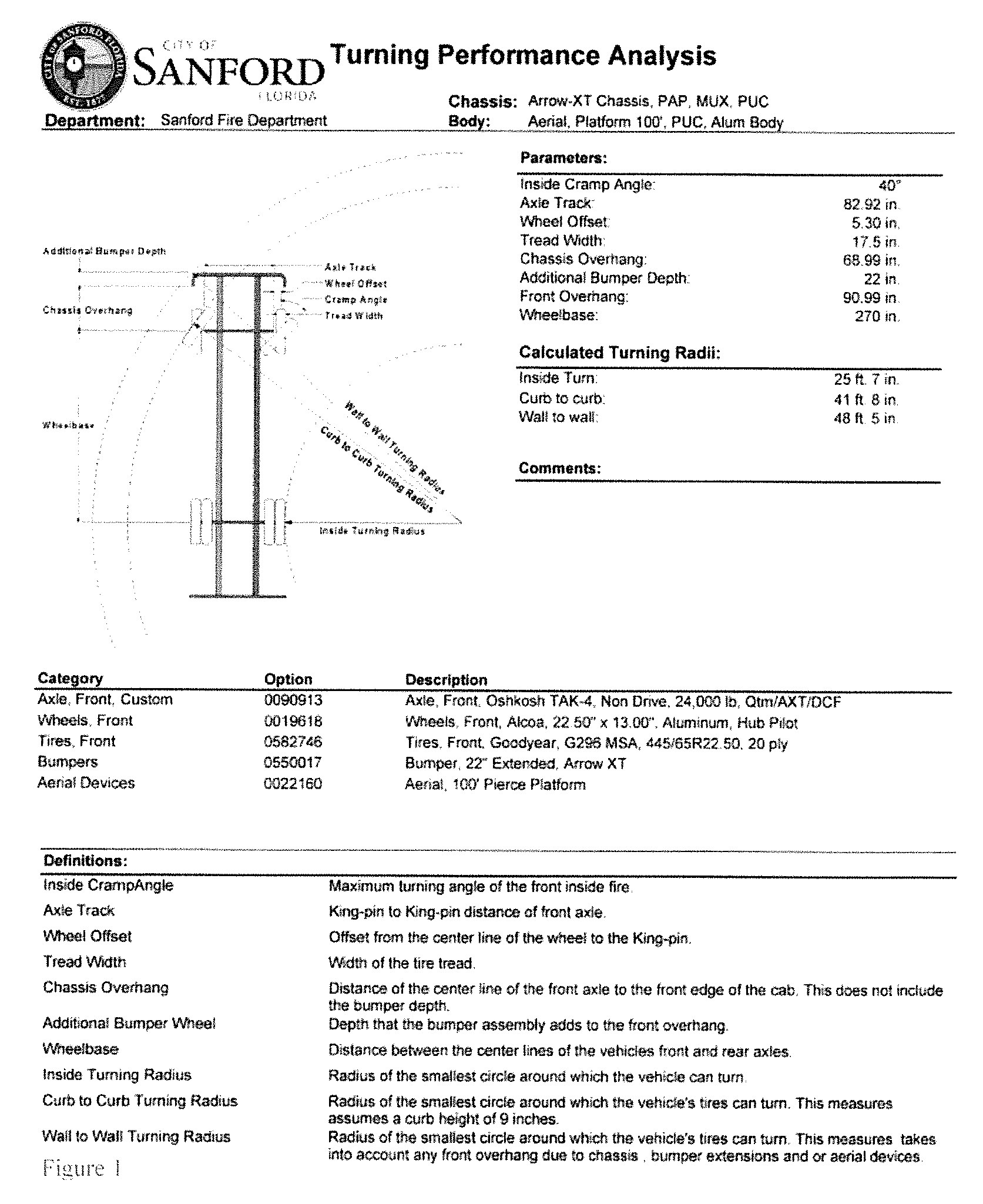
Section 3.0. - Turning radius design striping and signage.
The turning performance of the operating tower truck currently in service, which may be updated as equipment is modified, is shown in the following Figure 1:
(Ord. No. 4573, § 3(Att.), 11-9-2020)
Section 4.0. - Additional requirements and references.
Additional requirements relating to other aspects of design are located within the applicable schedules of the land development regulations. These regulations, although not specifically incorporated into the fire prevention and operational standards schedule, still apply as well any other requirements within said code not referenced herein.
1.
Development standards, including increased setbacks, signage, pavement markings, and similar requirements for miscellaneous non-residential development including both hazardous and non-hazardous uses, mining, exceptional uses as well as townhomes and multiple family development are addressed in Schedule E, Additional Requirements and Provisions for Specific Uses.
2.
Height exceptions for specific fire structures are granted in Schedule F, Requirements for Buildings, Parcels, Yards, Building Setbacks and Lighting.
3.
Tree planting requirements as it relates to fire protection and access as well as exceptions to tree removal requirements when life safety may be at risk are addressed in Schedule J, Landscape, Buffer and Tree Requirements, and Schedule U, Overlay Districts.
4.
Subdivision design criteria relating to culs-de-sac, dead end streets, fire hydrant placement, and entry gate and access requirements are located in Schedule N, Subdivision Requirements.
5.
Specific criteria for adopted level of service standards including fire flow requirements are referenced in Schedule Q, Level of Service Requirements and Methodologies.
(Ord. No. 4573, § 3(Att.), 11-9-2020)

