
Belton City Zoning Code
CHAPTER 40
USE-SPECIFIC STANDARDS—RESIDENTIAL, COMMERCIAL, OTHER1
Editor's note— Ord. No. 2025-4912, § 5 (Exh. E), adopted April 29, 2025, repealed the former ch. 40, §§ 4-1—4-4, and enacted a new ch. 40 as set out herein. The former ch. 40 pertained to similar subject matter and derived from Ord. No. 2011-3734, §§ 1(15.1), 1(15.3—15.5), adopted July 12, 2011; Ord. No. 2012-3851, § 1, adopted Oct. 23, 2012; Ord. No. 2013-3922, § 1, adopted June 11, 2013; Ord. No. 2014-4028, § 1, adopted Aug. 26, 2014; Ord. No. 2015-4073, § 2, adopted March 10, 2015; Ord. No. 2016-4244, § 1, adopted July 12, 2016; Ord. No. 2017-4393, § 8, adopted Nov. 28, 2017; Ord. No. 2018-4414, § 5, adopted March 13, 2018; Ord. No. 2018-4436, § 5, adopted May 15, 2018; Ord. No. 2019-4529, § 1, adopted July 9, 2019; Ord. No. 2023-4750, § 2, adopted Jan. 10, 2023; Ord. No. 2023-4751, §§ 8—10, adopted Jan. 10, 2023; Ord. No. 2023-4777, §§ 3, 4, adopted June 13, 2023; Ord. No. 2023-4789, § 3, adopted July 25, 2023; Ord. No. 2023-4800, §§ 1, 2, adopted Aug. 22, 2023; and Ord. No. 2024-4836, § 4, adopted Feb. 27, 2024.
Sec. 40-1.- Land uses and definitions.
(a)
Use groups. The use table classifies land uses into 14 major groupings, referred to as "use groups:"
Agricultural,
Residential,
Institutional and civic,
Commercial services,
Restaurant, retail and entertainment,
Office and business services,
Lodging,
Marijuana facilities,
Vehicle sales and services,
Arts and crafts manufacturing and production,
Industrial,
Waste and recycling services,
Utilities, energy, data storage, and communications, and
Accessory and Parking.
(b)
Use categories. Each use group is further divided into "use categories." These categories classify land uses based on common characteristics, such as the type of products sold, site conditions or the amount of activity on the site.
(c)
Determination of land use category. When a land use cannot be classified into a use category or appears to fit into multiple categories, the community development director is authorized to determine the most appropriate use category.
(d)
Permitted uses. Uses identified with a "P" in the use table are permitted by right in the designated zoning districts, subject to compliance with all other applicable provisions of this Code.
(e)
Uses subject to conditions. Uses identified with a "C" in the use table are permitted by-right in the designated zoning districts, subject to compliance with all conditions of this chapter and with all other applicable provisions of this Code.
(f)
Special use permits. Uses identified with an "S" in the use table may be allowed in the designated zoning districts if approved with the granting of a special use permit. Approved special uses are subject to compliance with all special use standards and all other applicable provisions of this Code.
(g)
Accessory uses. Uses identified with an "A" in the use table are permitted as an accessory to a principal use in the designated zoning district, subject to any conditions in this chapter and all other applicable provisions of this Code, including accessory use and structure standards.
(h)
Prohibited uses. Uses identified with a "—" in the use table are expressly prohibited. Uses not listed in the use table are also prohibited unless the community development director determines that the use fits into an existing use category. Some land uses are prohibited in all zoning districts due to their current incompatibility within any zoning district.
(i)
Land use table and land use definitions.
Land use definitions
Agriculture uses: This use group includes uses that are most common in agricultural zoning districts that include the production of food and horticultural products, as well as the keeping of livestock.
Garden - community. An area of land managed and maintained by a group of individuals to grow and harvest food and/or horticultural products for personal or group consumption or for sale or donation. Community gardens may be divided into separate plots for cultivation by one or more individuals or may be farmed collectively by members of the group and may include common areas maintained and used by group members.
Garden - accessory. A garden that is maintained as an accessory use to grow and harvest food and/or horticultural products for personal consumption or for sale or donation. This definition includes home gardens for residential land uses and kitchen gardens for restaurant and arts and crafts manufacturing and production uses.
Farming. The use of a tract of land for the growing of crops, pasturage, nursery of the raising of livestock and poultry, including the structures necessary for carrying out farming operations and the residence or residences of those owning or operating the premises, a member of the family thereof, or persons employed thereon, and the family thereof, but such use shall not include feedlots, sales yards and auction yards for cattle and hogs.
Stables. Facilities used for horses, including horse ranches; boarding stables; riding schools and academies; horse exhibition facilities; and any bar, stables, corrals and paddocks incidental to these uses.
Agritourism. Events and activities conducted on a working farm that allows members of the public to view, enjoy, or participate in rural activities, for recreational, educational, or entertainment purposes. Activities include, but are not limited to, farm tours, hayrides, corn mazes, petting zoos, classes related to agricultural products or skills, and picnic and party facilities offered in conjunction with such activities.
Nursery and garden center. A facility primarily engaged in the cultivation of horticultural specialties such as flowers, shrubs, and trees, intended for sale for ornamental or landscaping purposes. This use may include bulk storage of mulch, fertilizer, and other landscaping materials, as well as the sale of tools, equipment, and other materials normally associated with home landscaping or the landscaping industry.
Indoor agriculture. The production of crops completely indoors through methods including, but not limited to, horticulture, hydroponics, and pisciculture. This definition does not include the indoor cultivation of marijuana.
Residential uses: This use group includes dwelling units in various household formats, including units for single -family households and group housing within facilities with shared services.
Single-family, detached. A dwelling unit designed for one family that does not share a common wall with any other dwelling and is surrounded on all sides by open space located on the same lot.
Single-family, attached. A dwelling unit designed for one-family having its own ground floor entrance and open space, and joined to two or more dwellings by common walls or other horizontally unifying structural element. This use type includes townhouses, row-houses, and other similar dwelling types.
Two-family (duplex). A building designed for or occupied exclusively by two families. A two-family dwelling also includes the terms "duplex" and "two-flat."
Multi-family (3+ units). A building designed for or occupied exclusively by three or more families. A multifamily dwelling also includes the terms "tri-plex," "quad-plex" and "four-plex."
Apartment community. A group of two or more multifamily dwellings occupying a parcel of land in one ownership and having a park or court in common, but not including motels or other lodging uses.
Cluster residential development. Dwelling units permitted on smaller lots in exchange for preserving common open spaces, natural features, and other amenities.
Manufactured home park. Any area, piece, parcel, tract or plot of ground equipped as required for support of manufactured homes and offered for use by the owner or representative for manufactured home park purposes and/or ground upon which three or more manufactured homes are parked, whether for compensation or not, including all accessory uses thereof. The term "manufactured home park" does not include sales lots of which unoccupied manufactured homes are parked for the purpose of inspection and sale.
Dwelling units above ground floor. Dwelling units located above the ground-floor of a non-residential use or space located within the same building.
Employee living quarters. Living quarters for persons employed on the premises and not rented otherwise as a separate dwelling.
Assisted living. A group living facility that provides health and living services for persons who because of age, illness or infirmity cannot live independently, but do not require continuous care.
Residential care facility. A group living facility providing 24-hour bed care and in-patient services for persons needing regular medical attention, but excluding facilities for the care and treatment of mental illness, alcoholism, narcotics addiction, emergency medical services or communicable disease. Typical uses include nursing homes and memory care facilities.
Transitional living. State licensed group-care homes for juvenile delinquents, halfway houses providing residence, rehabilitation and counseling to persons on release from a more restrictive custodial confinement and residential rehabilitation treatment centers which also may provide out-patient rehabilitation for alcohol and other drug abuse.
Group home. A single-family dwelling serving as a group home in which eight or fewer unrelated mentally or physically handicapped persons reside and may include two additional persons acting as house parents or guardians who need not be related to each other or any of the mentally or physically handicapped persons residing in the home.
Group living not otherwise classified. Residential uses other than household living that provides common kitchen/dining facilities that fall outside of the definitions of assisted living, residential care facility, transitional living, and group home.
Institutional and civic uses: This use group includes public and semi-public facilities and institutions that support the community.
College or university. Institution of higher learning that offers courses of general or specialized study leading to a degree and is certified by the state or a recognized accredited agency.
Library. A publicly-operated facility housing a collection of books, magazines, newspapers, digital records, and other material for borrowing and use by the public.
School, pre-k to 12. Public or private institutions that provide state-mandated basic education at the elementary, middle or high school level.
Cultural facility. A nonprofit institution engaged primarily in the performing arts or in the display of objects of interest in the arts or sciences that is open to the public on a regular basis, including performing arts centers, museums, historical sites, art galleries, libraries, zoos, aquariums, and observatories.
Government and public safety facilities, offices, and services. Facilities owned or operated by a government entity and providing services for the public, excluding utilities. Typical uses include post offices, public safety and emergency services, and administrative offices of government agencies.
Hospital. Uses providing medical or surgical care to patients and offering inpatient (overnight) care.
Parks and open space. A park, playground, recreational facility, or passive or active open space that may be owned publicly, in common, or privately. This use includes community centers, neighborhood or community swimming pools, dog parks, picnic facilities, and related accessory structures, including restrooms and concessions.
Religious assembly. Religious uses commonly involving public assembly as customarily occurs in churches, synagogues, and temples.
Social club or lodge. Any establishment, public or private, commercial, nonprofit, that provides a gathering place for people, with or without food and beverage, commonly known as, but not limited to the following: teen centers; youth centers; senior centers; and civic and fraternal organizations, but excluding banquet facilities, event spaces, bars, nightclubs, and indoor entertainment.
Commercial service uses: This use group includes commercial uses that provide services to the general public, including on-site interaction with customers and patrons.
Animal services - kennel. A facility that provides boarding, breeding, and sheltering of animals that may include outdoor kennels or runs. Typical uses include boarding kennels, breeding kennels, and animal rescue shelters. This use includes any animal services use that include outdoor runs without supervision.
Animal services - veterinary and pet care services. A facility that provides care, observation, or treatment of domestic animals and/or a facility that provides limited boarding, grooming, sitting, and training of pets with limited outdoor runs with supervision. Typical uses include veterinary offices, pet stores, pet grooming shops, and pet daycare facilities.
Bank. Financial or securities brokerage services, including but not limited to banks, savings and loan or consumer investment businesses.
Short-term loan service. Any business which loans money on a short-term basis to members of the general public as an element of its operation, including businesses offering title loans, payday loans, signature loans and small loans under chapter 367 or section 408.500, RSMo., and other similar businesses, but not to include a bank, savings and loan association or credit union which is licensed by appropriate state and federal agencies, or a retail credit financing institution which is licensed under chapter 364 or 365, RSMo., or pawnbrokers governed by chapter 367, RSMo., or retail merchants covered by chapter 400, article 2, RSMo.
Building or grounds maintenance services. Provision of maintenance and custodial services to commercial and industrial establishments. Typical uses include janitorial, landscape maintenance, and window cleaning services. Also includes exterminator services for residential, commercial or industrial applications.
Construction sales and services. Establishments that construct, or assist in, the construction of buildings and improvements, including, but not limited to: HVAC contractors, painters, plumbers, roofers, carpenters, electricians, and general contractors.
Cemetery. Land or facilities used for burial of the deceased, including a mausoleum or columbarium.
Crematorium. An establishment providing services for the reduction of bodies of deceased persons to cremated remains.
Funeral home. An establishment providing services of preparing the deceased for burial and arranging or managing funerals.
Body art services. Provision of any of the following procedures: body piercing, tattooing, cosmetic tattooing, branding, and scarification. This definition does not include practices that are considered medical procedures by the Missouri Medical Board, which may not be performed in a body art services establishment.
Medical services. An establishment where patients are not lodged overnight but are admitted for examination and treatment by a group of physicians or dentists practicing medicine.
Personal and consumer services. Sale of any service to individual customers for informational, instructional, personal improvement, and similar services. Typical uses include beautician and barber services, specialized instruction, laundry and dry-cleaning services, health clubs, yoga or dance studios, non-automotive repair shops, and similar services.
Social services. An establishment that provides social assistance directly to clients such as children, elderly persons, homeless persons, veterans, and persons with disabilities. Social assistance may include clothing, food, medical relief, counseling, or training. Typical uses include services that provide clothing, food, and employment assistance, but do not provide accommodations or shelter with the exception of temporary warming or cooling centers that are accessory to the principal services provided.
Day care center, if state license required. A business that provides care, protection, and supervision of individuals away from their primary residence.
Restaurant, retail, and entertainment uses: This use group includes restaurant, retail, and entertainment uses that provide goods or experiences to the general public, including on-site customers and patrons.
Restaurant, no drive thru. An establishment where the primary business is the sale of prepared food and beverages to customers without a drive-thru or drive-in option.
Restaurant, with drive thru. An establishment where the primary business is the sale of prepared food and beverages to customers with a drive-thru or drive-in option.
Bar or tavern. An establishment primarily engaged in serving alcoholic beverages for consumption on the premises and in which the serving of prepared food and live entertainment may be provided.
Food truck, accessory. A food truck that is accessory to the principal use that is parked and utilized on site for longer than a temporary basis.
Food truck court. A permanent site for the location of multiple food trucks simultaneously.
Banquet facility or event space. An establishment that provides space for private events that may include the catering and/or serving of food and beverage.
Indoor recreation and entertainment. A use offering recreation, entertainment, or games of skill to the public for a fee or charge and that is fully located in an enclosed buildings. Typical uses include bowling alleys, concert halls, theaters, pool or billiard halls, arcades, and escape rooms.
Outdoor recreation and entertainment. A use offering recreation, entertainment, or games of skill to the public for a fee or charge and that is fully or partially located outdoors. Typical uses include archery ranges, sports courts, batting cages, golf driving ranges, drive-in theaters, outdoor concerts, performances or plays, and miniature golf courses.
Adult business. See definition of "Adult business" and related terms in UDC section 1-5.
Small retail (up to 15,000 gross floor area). Businesses that sell, lease, or rent new or used products to the general public that are not intended for resale with a gross floor area of less than 15,000 square feet. Typical uses include pharmacies, specialty food stores, auto parts stores, and boutique shops.
Medium retail (15,000-75,000 gross floor area). Businesses that sell, lease, or rent new or used products to the general public that are not intended for resale with a gross floor area between 15,000 and 75,000 square feet. Typical uses include grocery stores, general merchandise stores, hardware stores, sporting goods stores, furniture stores, and department stores.
Large retail (75,000+ gross floor area). Businesses that sell, lease, or rent new or used products to the general public that are not intended for resale with a gross floor area of 75,000 square feet or greater. Typical uses include general merchandise and home improvement stores.
Pawn shop. An establishment or person (pawnbroker) engaged in the business of receiving property in pledge or as security for money or other things advanced to the pawner or pledger.
Tobacco shop. A retail store where more than 25 percent of the floor area of the sales floor area is devoted to the sale, display, or storage of tobacco-related products, including, but not limited to: cigarettes, cigars, pipe tobacco, loose tobacco, cigarette papers, pipes, and electronic and vapor cigarettes and related products.
Farmer's market. A structure or place where agricultural products or consumer goods are brought by individual producers for the purposes of retail sales. The structure from which produce and goods are sold need not be portable or capable of being dismantled or removed from the site.
Office use: This use group includes administrative, executive, financial, or operational functions of a business where the principal functions are employment and related activities that do not typically involve frequent interaction with customers, clients, or the general public.
Business support services. Provision of clerical, employment, protective or minor processing services to firms rather than individuals, excluding any storage of goods other than samples. Typical uses include secretarial services, telephone answering services, information technology services, and copying or blueprint services. Also, includes business or trade schools that do not involve any outdoor storage or manufacturing processes.
Office. Professional, governmental, executive, management, or administrative offices of private, public, or non-profit organizations.
Research and development. An establishment primarily engaged in the research, development and controlled production of high technology electronics, industrial or scientific products or commodities for sale. This classification includes biotechnology firms and manufacturers of nontoxic computer components. Includes government research such as space research and technology.
Lodging use: This use group includes lodging establishments in a variety of formats that serve transient guests.
Bed and breakfast. An establishment that is in a private residence with guest rooms that are supplied for short-term rent to transient guests who are lodged for compensation and making available services normally provided by hotels.
Hotel or motel. A use used, maintained, or advertised as a place where sleeping accommodations, in rooms without individual kitchens, are supplied for short-term rent to transient guests. A hotel may include accessory uses, including restaurants, taverns, banquet facilities, ballrooms, and meeting rooms.
Recreational vehicle park. An establishment where temporary accommodations are provided for recreational vehicles or travel trailers open to the public either for free or for a fee.
Short-term rental. The rental of an existing residential building, dwelling unit, or any portion thereof that is rented for less than 30 days at a time.
Marijuana uses: This use group includes state-licensed medical marijuana and comprehensive marijuana facilities.
Medical marijuana dispensary. A facility licensed by the Missouri Department of Health and Senior Services, to acquire, store, sell, transport, and deliver marijuana, marijuana-infused products, and drug paraphernalia used to administer marijuana as provided for in this section to a qualifying patient, a primary caregiver, another medical marijuana dispensary facility, a medical marijuana testing facility, or a medical marijuana-infused products manufacturing facility.
Comprehensive marijuana dispensary facility. A facility licensed by the Missouri Department of Health and Senior Services to acquire, process, package, store on or off site, sell, transport to or from, and deliver marijuana, marijuana seeds, marijuana vegetative cuttings (clones), marijuana-infused products, and drug paraphernalia used to administer marijuana as allowed by applicable law to a qualifying patient or primary caregiver, as defined by law, or to a consumer, anywhere on the licensed property or to any address as directed by the patient, primary caregiver, or consumer and consistent with the limitations of applicable laws and as otherwise allowed by law, to a comprehensive facility, a marijuana testing facility, or a medical facility. Comprehensive dispensary facilities may receive transaction orders at the dispensary directly from the consumer in person, by phone, or via the internet, including from a third party. A comprehensive marijuana dispensary facility need not segregate or account for its marijuana products as either non-medical marijuana or medical marijuana, but shall collect all appropriate tangible personal property sales tax for each sale, as set forth in Article XIV of the Missouri Constitution and provided for by general or local law. A comprehensive marijuana dispensary facility's authority to process marijuana shall include the creation of prerolls.
Microbusiness dispensary facility. A facility licensed by the Missouri Department of Health and Senior Services to acquire, process, package, store on or off site, sell, transport to or from, and deliver marijuana, marijuana seeds, marijuana vegetative cuttings (clones), marijuana-infused products, and drug paraphernalia used to administer marijuana as allowed by law to a qualifying patient or primary caregiver, as defined by law, or to a consumer, anywhere on the licensed property or to any address as directed by the qualifying patient, primary caregiver, or consumer and consistent with the limitations of Article XIV of the Missouri Constitution and as otherwise allowed by law, a microbusiness wholesale facility, or a marijuana testing facility. Microbusiness dispensary facilities may receive transaction orders at the dispensary directly from the consumer in person, by phone, or via the internet, including from a third party. A microbusiness marijuana dispensary facility's authority to process marijuana shall include the creation of prerolls.
Medical marijuana cultivation facility. A facility licensed by the Missouri Department of Health and Senior Services, to acquire, cultivate, process, store, transport, and sell marijuana to a medical marijuana dispensary facility, medical marijuana testing facility, or to a medical marijuana-infused products manufacturing facility.
Comprehensive marijuana cultivation facility. A facility licensed by the Missouri Department of Health and Senior Services to acquire, cultivate, process, package, store on site or off site, transport to or from, and sell marijuana, marijuana seeds, marijuana vegetative cuttings (clones) to a medical facility, comprehensive facility, or marijuana testing facility. A comprehensive marijuana cultivation facility need not segregate or account for its marijuana products as either non-medical marijuana or medical marijuana. A comprehensive marijuana cultivation facility's authority to process marijuana shall include the creation of prerolls, but shall not include the manufacture of marijuana-infused products.
Medical marijuana-infused products manufacturing facility. A facility licensed by the Missouri Department of Health and Senior Services, to acquire, store, manufacture, transport, and sell marijuana-infused products to a medical marijuana dispensary facility, a medical marijuana testing facility, or to another medical marijuana-infused products manufacturing facility.
Comprehensive marijuana-infused products manufacturing facility. A facility licensed by the Missouri Department of Health and Senior Services to acquire, process, package, store, manufacture, transport to or from a medical facility, comprehensive facility, or marijuana testing facility, and sell marijuana-infused products, prerolls, and infused prerolls to a marijuana dispensary facility, a marijuana testing facility, or another marijuana-infused products manufacturing facility. A comprehensive marijuana-infused products manufacturing facility need not segregate or account for its marijuana products as either non-medical marijuana or medical marijuana.
Microbusiness wholesale facility. A facility licensed by the Missouri Department of Health and Senior Services to acquire, cultivate, process, package, store on site or off site, manufacture, transport to or from, deliver, and sell marijuana, marijuana seeds, marijuana vegetative cuttings (clones) and marijuana infused products to a microbusiness dispensary facility, other microbusiness wholesale facility, or marijuana testing facility. A microbusiness wholesale facility may cultivate up to 250 flowering marijuana plants at any given time. A microbusiness wholesale facility's authority to process marijuana shall include the creation of prerolls and infused prerolls.
Medical marijuana testing facility. A facility certified by the Missouri Department of Health and Senior Services, to acquire, test, certify, and transport marijuana.
Transportation facility. A facility licensed as such by the Missouri Department of Health and Senior Services in connection with the transportation and storage of medical marijuana.
Vehicle sales and services uses: This use group includes auto-oriented uses where the principal use is for the fueling, servicing, selling, or renting of automobiles and related vehicles or equipment.
Car wash. Any building or site providing facilities for washing motor-vehicles, using either automatic equipment or providing space and equipment for handwashing of vehicles by either customers or employees.
Gas station. Any building or premises whose principal use is the dispensing, sale or offering for sale at retail of any motor-vehicle fuels, oil or accessories, where repair service or car wash facilities is incidental, where no motor vehicle storage is present and where no motor vehicles are offered for sale.
Vehicle repair - minor. A facility for passenger cars and trucks that provides replacement or repair of vehicle parts and wear parts that does not involved body work or painting or require the removal of the engine, head or pan, transmission, or differential. Typical uses include glass installation, window tinting, brake and muffler shops, auto detailing, radio and stereo installation, tire and battery stores, tune-up, quick lube and fluid change businesses, and auto diagnostic centers.
Vehicle repair - major. A facility for passenger cars and trucks providing services other than those outlined in "Vehicle repair - minor." Typical uses include more intensive vehicle repair services, such as auto body repair and painting, engine overhaul and replacement, transmission repair and replacement, but excluding the repair or serving of commercial vehicles or heavy equipment.
Vehicle repair - heavy. A facility providing services outlined in "Vehicle repair - minor" and "Vehicle repair - major" for the repair or servicing of commercial vehicles or heavy equipment.
Vehicle and equipment sales - light. Businesses that sell, lease, rent or wholesale from the premises automobiles, noncommercial trucks, motorcycles, trailers with less than 10,000 pounds of gross cargo capacity, motor homes and boat dealers, along with incidental maintenance. Typical uses include car dealerships, recreational vehicle and boat dealerships, and rental car establishments.
Vehicle and equipment sales - heavy. The sale, retail, wholesale, or rental from the premises of heavy construction equipment, farm implements, tractors, commercial vehicles, trucks, and trailers, together with incidental maintenance. Typical uses include heavy construction equipment dealers, tractor trailer sales, and moving truck rental establishments.
Vehicle and equipment storage and towing. Land or building used primarily for the collecting and storage of vehicles and equipment. Typical uses include towing service lots or the storage of vehicles, recreational vehicles, and boats as a principal use. This use does not include heavy equipment storage, salvage or junk yards, or storage yards for materials or supplies.
Arts and crafts manufacturing and production uses: This use group provides for the production, processing, and selling of handcrafted and small-scale artisan products, as well as the utilization of shared spaces to encourage the growth and development of small businesses.
Arts and crafts studios and galleries. A use involving the production of works of art by individuals and assistants produced by the use of hand tools or domestic mechanical equipment and includes the displaying, loaning, and selling of art books, paintings, sculptures, or other works of art and accessory supplies.
Artisan micro-manufacturing. On-site production of goods by hand manufacturing, involving the use of hand tools and small-scale, light mechanical equipment. Typical uses include woodworking and cabinet shops, ceramic studios, jewelry manufacturing and similar types of arts and crafts of very small-scale manufacturing uses that have no negative external impacts on surrounding properties. Showrooms and sales of goods produced on-site are permitted.
Artisan food and beverage production. On-site production or preparation of food made on site with limited to no automated processes involved and may include direct sales to or consumption by consumers on premises. Typical uses include small-batch bakeries, small-batch non-alcoholic beverage producers, small-batch candy or chocolate shops, local cheese makers and other specialty food production services. Total production areas typically occupy less than 10,000 square feet in agricultural or commercial zoning districts, but may be larger in business park, flex commercial/industrial, and industrial zoning districts.
Artisan alcoholic beverage production. On-site production of alcoholic beverages and may include direct sales to or consumption by customers on premises. Typical uses include micro-breweries, micro-wineries, and micro-distilleries. Sites may include tasting rooms. Total production areas typically occupy less than 10,000 square feet in agricultural or commercial zoning districts, but may be larger in business park, flex commercial/industrial, and industrial zoning districts.
Business incubator/makerspace/co-working. A commercial or non-profit organization providing multiple individuals and small firms access to shared office, meeting, and production spaces for small businesses. Shared spaces may include small assembly spaces for education and training. Production spaces may include commercial kitchens that can be shared by multiple artisan food and beverage producers.
Industrial uses: This use group provides for the production, storing, and handling of various products, including products that may be a nuisance or hazardous.
Flex space - minor. Buildings designed to accommodate a combination of land uses in an underlying zoning district that typically need both a storefront or office space with production or warehouse space. The building footprint is limited to 10,000 square feet or less and typically includes bay doors on the rear of the building. Each land use within a tenant space within a building is subject to the standards of the underlying zoning district, including permitted, conditional, and special uses. Outdoor storage is limited and subject to the underlying zoning district restrictions and screening requirements.
Flex space - major. Buildings designed to accommodate a combination of land uses in an underlying zoning district that typically need both a storefront or office space with production or warehouse space. The building footprint exceeds 10,000 square feet or less and typically includes bay doors on the rear of the building. Each land use within a tenant space within a building is subject to the standards of the underlying zoning district, including permitted, conditional, and special uses. Outdoor storage is limited and subject to the underlying zoning district restrictions and screening requirements.
Warehousing, storage, wholesale, and distribution facilities. A facility for (1) storing goods, merchandise, or bulk goods and non-retail store items for wholesale distribution or (2) for keeping business, personal property and office records in an enclosed and roofed building. Typical uses include storage warehouses, trucking or cartage operations, truck staging or storage areas, wholesale sales of materials and equipment to parties other than the general public, and distribution facilities.
Limited manufacturing, production, and industrial services. Manufacturing of finished parts or products primarily from previously prepared materials, including but not limited to printing and related support activities; and the manufacturing and assembly of machinery, food, computer and electronic products, electrical equipment, appliance components, and furniture; and other manufacturing and production establishments that typically have very few, if any, negative external impacts on surrounding properties.
General manufacturing and production. Manufacturing of finished or unfinished products, primarily from extracted or raw materials, or recycled or secondary materials, or bulk storage and handling of such products and materials, including but not limited to: textile mills, textile product mills, and the manufacturing of apparel, leather and allied products, and wood products.
General industrial services. Industrial service firms engaged in the repair or servicing of industrial or commercial machinery, equipment, products or byproducts, including but not limited to welding shops, machine shops, industrial tool repair, laundry and dry-cleaning services, carpet cleaning plants, and photo-finishing laboratories.
Intensive manufacturing, production, and industrial services. Manufacturing of finished or unfinished products, primarily from extracted, raw, recycled or secondary materials, particularly those of a hazardous nature; or bulk storage and handling of such products and materials. Typical uses include manufacturing, processing, or storage of chemicals, asbestos, metals, hazardous materials, plastics, rubber and rubber products, paper products, carpets, cleaning products, toiletries, electronics, nonmetallic minerals, transportation equipment, paints, and petroleum drilling; and the manufacturing, storage, processing, or warehousing of hazardous, radioactive, explosive or volatile materials.
Self-storage facility. An office-like building in which separate storage spaces that are accessed from inside the building are rented as individual units for the storage of household or business goods.
Self-storage facility - warehouse. A building or group of buildings divided into separate self-contained units offered for rent for self-service storage of household and personal property which are typically accessed from an exterior garage door.
Outdoor storage yard. Any off-street area designated and used for placing, keeping, holding, and storing of building materials, supplies, and equipment; trailers; and heavy construction equipment, but not including a vehicle and equipment storage, tow lots, or salvage/junk yards.
Waste and recycling services uses: This use group includes facilities that collect, store, and process household and business waste.
Salvage/junk yard. A place where junk, waste, discarded or salvaged materials are bought, sold, exchanged, stored, baled, packed, disassembled, or handled including wrecked automobiles, house wrecking and structural steel materials and equipment, and more than four vehicles or appliances which are inoperable for a period of over seven consecutive days, but not including the interior purchase, sale, or storage of used furniture and household equipment.
Recycling processing facility. Any business that engages in the collection, storage or processing of any type of aluminum, glass, paper, plastic, rubber, textile, landscape waste or other similar materials for the purpose of marketing the material for use in the manufacturing process of new, reused or reconstituted products.
Recycling collection facility. A facility for the deposit or drop-off of recyclable materials for public or semi-public use. The facility typically consists of bins, boxes, trailers, reverse vending machines, and other containers for the collection of recyclable materials for transport offsite for processing.
Sanitary landfill. A method of disposing of refuse by spreading and covering such refuse with earth to a depth of two feet or more on the top surface and one foot or more on the sides of the bank.
Composting facility. A facility where organic matter derived primarily from off-site is processed by composting and/or is processed for commercial purposes. Activities of a composting facility may include management, collection, transportation, staging, composting, curing, storage, marketing, or use of compost.
Utilities, energy, data storage, and communication uses: This use group includes both public and private facilities and installations that generate, manage, store, receive, and transmit for the purposes of providing utility services, communication services, and energy and data storage.
Utilities - minor. Services and facilities of agencies that are under public franchise or ownership to provide services that are essential to support development and that involve only minor structures, such as poles, lines, and cabinets, which may be located on private or public property, including within the right-of-way.
Utilities - major. Services and utilities that have substantial impacts on surrounding areas, including but not limited to water and wastewater treatment facilities, public works garages, major water storage facilities, pumping stations, electric substations, gas regulator stations, telephone transmission structures, radio, and television and microwave relay towers.
Data center. A facility containing one or more large-scale computer systems used for data storage and processing for off-site users. Typical supporting equipment includes back-up batteries and power generators, cooling units, and enhanced security features.
Battery energy storage system. One or more containers or cabinets containing batteries and related equipment, assembled together, capable of storing electrical energy in order to supply electrical energy at a future time.
Freestanding wireless communication facility. A new tower, monopole or other unattached structure erected to support wireless communication antennas and connecting appurtenances.
Co-location wireless communication facility. A wireless telecommunication facility that is attached to an existing pole, tower or other structure including, but not limited to, a structure that can accommodate the future installation of two or more antenna systems.
Accessory and parking uses: This use group includes accessory uses and parking uses that are commonly found in multiple use groups and zoning districts.
Accessory uses. A use that is subordinate in area, extent and purpose to the principal use on a lot and that is customarily found in conjunction with a permitted principal use.
Home occupations. The lawful operation of a home-based business or occupation performed by a resident within a dwelling unit or accessory structure, which is clearly incidental and secondary to the use of the dwelling unit for residential purposes and does not change the residential character of the residential building or adversely affect the character of the surrounding neighborhood.
Accessory parking. Motor vehicle parking facilities that provide parking that are accessory to a specific use or uses.
Non-accessory parking. Facilities that provide motor vehicle parking that are not accessory to a specific use, regardless of whether a fee is charged. Non-accessory parking does not include vehicle storage lots, tow lots, or outdoor storage yards.
Drive-thru facilities. Facilities used to provide or dispense products or services through an attendant or a window or an automated machine, to persons remaining in vehicles that are in designated stacking aisle. A drive-thru facility may be in combination with other uses, such as financial institutions, personal service use, retail store or eating establishment. A drive-thru facility does not include a "car wash" or "gas station" as defined herein.
(Ord. No. 2025-4912, § 5 (Exh. E), 4-29-2025; Ord. No. 2025-4950, § 2(Exh. B), 11-25-2025)
Sec. 40-2. - Special use provisions.
(a)
Generally.
(1)
Some uses of land are not appropriate in all locations within a district or under circumstances where the use imposes an inappropriate impact on the public or neighboring properties and are therefore designated as "special uses." These uses may be approved at a particular location through the receipt of a special use permit where the impact of these uses does not inappropriately affect or impair the use and enjoyment of neighboring property and meet the standards of approval in this section.
(2)
The city council may authorize by ordinance, under prescribed conditions, the construction or undertaking of any special use that is expressly permitted as a special use in a particular zoning district; however, the city reserves full authority to deny any request for a special use, to impose conditions on the use, or to revoke approval at any time, upon a finding that the permitted special use will or has become unsuitable and incompatible in its location as a result of any nuisance or activity generated by the use.
(3)
A special use permit shall be required for any use authorized in the applicable district as a "special use" on the table of uses, subsection 40-1(h), and for any other use otherwise requiring a special use permit by this chapter. A special use is prohibited and a special use permit may not be granted except as authorized in the table of uses, subsection 40-1(h), or elsewhere in this chapter. The application process shall follow the procedures in appendix B of this Code and all other applicable processes and procedures in this Code or as determined by the director.
(b)
Approval process.
(1)
The special use permit application must be submitted to the planning commission for review and recommendation. The planning commission must hold a public hearing on the application, notice of which must be given 15 days prior. The public hearing must be held at the next regular meeting of the planning commission for which the application may be scheduled given public notice deadlines, unless the applicant has consented to an extension of this time period. The applicant shall send certified letters to the most recent property owner of record for all properties within 185 feet of the subject property 15 days prior to the public hearing. The applicant shall provide proof of such mailing to city staff prior to the public hearing.
(2)
Upon conclusion of the public hearing, the planning commission will submit a recommendation to the city council to approve, approve with modifications, or deny the special use permit. The city council must consider the special use permit within 60 days of receipt of the recommendation of the planning commission, and take final action to approve or deny it. If final action is not taken by the city council within 120 days after the recommendation of the planning commission is received, the special use permit will be deemed to have been denied, unless the applicant has consented to an extension of this time period. Whenever a special use permit has been denied by the city council, the special use permit cannot be approved without a new public hearing.
(3)
If the city council approves the special use permit, it will adopt an ordinance to that effect.
(c)
Standards for approval.
(1)
A special use permit may only be granted by the city council upon a finding that the applicant has satisfied the burden of establishing that the following criteria have been met:
a.
The proposed use complies with all applicable provisions of these regulations, including yard regulations, parking requirements and use limitations.
b.
The proposed use at the specific location will not detract or encroach upon the welfare or convenience of the public.
c.
The proposed use will not cause substantial injury to the value of other property in the neighborhood in which it is to be located.
d.
The location and size of the use, the nature and intensity of the operation in connection with it, and the location of the site with respect to the surrounding street network will not dominate the immediate neighborhood nor prevent the development of neighboring property. In determining such dominance, consideration shall be given to:
1.
The location, nature and height of buildings, structures, walls and fences on the site;
2.
The nature and extent of landscaping and screening on the site;
3.
The adequacy of the adjacent street system to carry the traffic generated by the use;
4.
Adequate utility, drainage, and other such necessary facilities have been or will be provided;
5.
Adequate access roads, loading areas and entrance and exit drives will be provided and shall be so designed to prevent traffic hazards and to minimize traffic congestion in public streets and alleys.
(2)
An approved special use permit may not be expanded, changed in use, or deviate from the approved site plan or conditions without being resubmitted and approved by the planning commission and city council.
(d)
Conditions. In granting any special use permit, the city council may impose any conditions of the special use it deems appropriate to meet the requirements of the approval in addition to the conditions contained within this section. Such conditions must serve a legitimate zoning purpose and:
(1)
Be clearly expressed with sufficient clarity to give notice of the limitations on the use of the land;
(2)
Relate directly to the proposed use of land; and
(3)
Address a legitimate zoning purpose that bears a relationship to the public health, safety and welfare.
Additionally, the city council may restrict the time period for the special use permit, including expiration or renewal dates. The city council may also restrict the special use permit to a specific applicant. If restricted to an applicant, the transferability section in this section shall be followed for the transfer of a special use permit.
(e)
Transferability.
(1)
A special use permit may be transferred for existing conditions if the use for which the special use permit has been issued is in operation at the time of transfer. The transfer of a permit in which these conditions have not been satisfied shall be invalid. Nothing in this section shall be construed to alter the expiration date of permits or the authority of the governing body to revoke a permit.
(2)
A permit cannot be assigned or transferred to a different parcel of land.
(3)
Every entity attempting to transfer a special use permit shall give notice in writing to the community development director within 72 hours after having sold, transferred, given away or otherwise disposed of an interest in or control of a parcel of land for which a special use permit has been issued. Such notice shall include the name and address of the successor in interest or control of the parcel. Receipt of such notice shall not constitute acceptance of an invalid transfer.
(f)
Renewal. A special use permit may be renewed using the same procedure as was used for the original approval set forth in this section. The city council may grant a renewal containing modifications, but only for existing conditions, without the submission of a preliminary development plan.
(g)
Revocation.
(1)
Basis. Any special use permit granted by the city council is subject to revocation for any or all of the following reasons:
a.
Noncompliance with all the conditions of approval established in the ordinance granting such special use permit; b. A change from the original use or the intensity of the original use for which the permit was issued resulting in a change in impact upon the surrounding neighborhood;
c.
Expiration of the special use permit;
d.
Violation of any provisions of this chapter; or
e.
Violation of any provisions of the Code of Ordinances pertaining to the use of land, construction or uses of buildings or structures, or activities conducted on the premises by the permit holder, agents of the permit holder or tenants and is declared to be a nuisance to the neighborhood in which located.
(2)
Procedure.
a.
Revocation proceedings may be initiated by the community development director or his designee.
b.
Notice of intent to revoke shall be mailed to the permit holder's last known address stating the grounds for the intended revocation, and the date, time and place of the hearing.
c.
The matter will then be placed on a designated planning commission agenda for hearing, which may be continued for good cause shown.
d.
The matter will then be forwarded to the city council with the planning commission's findings and recommendation.
e.
The city council will consider the findings and recommendation of the planning commission in rendering their final decision.
f.
No special use permit shall be revoked unless a majority of the city council is satisfied by a preponderance of the evidence that grounds for revocation exist.
(h)
Nonconforming uses. Uses that are allowed without a special use permit prior to the effective date of the ordinance from which this chapter is derived, but are designated as special uses in this chapter shall be allowed to continue as nonconforming uses if the requirements of chapter 20, article II are satisfied.
(Ord. No. 2025-4912, § 5 (Exh. E), 4-29-2025)
Sec. 40-3. - Special use standards.
All special uses delineated in the land use table in section 40-1 shall comply with the following special use standards and all other standards within this Code:
(1)
Stables. Stables, including corrals and the operation of riding schools, may be permitted with a special use permit subject to the following requirements:
a.
The minimum lot size shall be three acres.
b.
No stable, corral, or similar structure shall be located closer than 20 feet of any property line.
c.
The surface of all corrals and paddocks shall be graded to prevent the accumulation of stormwater.
d.
All corrals, training, show, riding, boarding, and pasture areas shall be enclosed by a fence a minimum of four feet in height.
e.
The minimum distance of a stable or corral from any residential structure on a neighboring property existing at the time of issuance of the original permit shall be 200 feet.
(2)
Agritourism uses (arts and crafts manufacturing and production uses; food truck, accessory; small retail; and farmer's markets) in "A" zoning districts. Agritourism uses (arts and crafts manufacturing and production uses; food truck, accessory; small retail; and farmer's markets) in "A" zoning districts may be permitted with a special use permit subject to the following requirements:
a.
The primary access to the site shall be provided from an arterial or collector street.
b.
Use(s) shall be secondary to the principal agricultural use of the property. The principal source of retail sales shall be from products cultivated on site.
c.
Arts and crafts manufacturing and production uses and retail sales shall be conducted in a permanent enclosed structure in compliance with adopted building and fire codes. Accessory outdoor sales associated with special, temporary, or seasonal events may be permitted with a special use permit.
d.
The site shall meet minimum parking standards based on the combination of uses.
e.
Hours of operations that will not negatively impact surrounding agricultural and residential land uses shall be established with the special use permit.
f.
Farmer's markets as part of an agritourism use shall meet the special use requirements for farmer's markets in addition to the above items.
g.
Accessory food trucks as part of an agritourism use shall meet the conditional use requirements for food truck, accessory in addition to the above items.
(3)
Nursery and garden center. Nursery and garden center uses may be permitted with a special use permit subject to the following requirements:
a.
The primary access to the site shall be provided from an arterial or collector street.
b.
The site shall meet minimum parking standards for the combination of uses on site.
c.
Outdoor storage yards of landscaping materials, including pavers, rock, mulch, and other ground covers shall be located to the sides or rear of the principal retail building.
d.
Outdoor storage yards accessible to the public for pick-up of materials and supplies shall be paved with a dust-free material.
e.
Outdoor storage yards for materials, supplies, and plantings that are inaccessible to customer vehicles are not required to be paved but shall utilize materials and methods to minimize dust.
f.
Screening with fencing, walls, or landscaping may be required to minimize the impact of noise, lighting, dust, and other features on adjacent properties.
(4)
Transitional living. Transitional living facilities may be permitted with a special use permit subject to the following requirements:
a.
The minimum lot size shall be 10,000 square feet
b.
There shall be a minimum of 500 square feet of lot area per resident and resident staff.
c.
There shall be a minimum of 250 square feet of floor area per resident and resident staff.
d.
The facility shall maintain the residential character of the structure and there shall be no exterior evidence of the use or signage advertising the use.
e.
At the time of initial approval, no transitional living facility shall be located within 1,500 feet of another transitional living facility, group home, or group living not otherwise classified facility. The distance shall be measured from property line to property line.
f.
Transitional living facilities shall not be located within 500 feet of a school as measured in a straight line from the nearest point between buildings, however, the city council may waive this requirement if the facilities are separated by a major thoroughfare, railroad track, waterway, or other comparable manmade or natural barrier.
(5)
Group living not otherwise classified. Group living not otherwise classified uses may be permitted with a special use permit subject to the following requirements:
a.
At the time of initial approval, no facility shall be located within 1,500 feet of another transitional living facility, group home, or group living not otherwise classified facility. The distance shall be measured from property line to property line.
b.
All buildings and properties must maintain an exterior appearance that reasonably conforms to the neighborhood in which it is proposed to be located.
(6)
College or university. College or university uses may be permitted with a special use permit subject to the following requirements:
a.
A campus master plan shall be provided that details the uses of the site, projected enrollment and staffing, parking needs and requirements, and any on-campus living arrangements.
(7)
Library. Libraries may be permitted with a special use permit in certain zoning district subject to the following requirements:
a.
Access to the facility shall be provided from an arterial or collector street.
b.
When located in an agricultural or residential zoning district, the perimeter of the site adjacent to any other agricultural or residential zoning district shall be screened with a type "C" broken screen. Additional screening may be required for parking lots, outdoor activity areas, loading/unloading, and other site or building features that may create a nuisance to adjacent agricultural or residential properties.
(8)
Cultural facility. Cultural facilities may be permitted with a special use permit in certain zoning district subject to the following requirements:
a.
Access to the facility shall be provided from an arterial or collector street.
b.
When located in an agricultural or residential zoning district, the perimeter of the site adjacent to any other agricultural or residential zoning district shall be screened with a type "C" broken screen. Additional screening may be required for parking lots, outdoor activity areas, loading/unloading, and other site or building features that may create a nuisance to adjacent agricultural or residential properties.
c.
Any outdoor activities associated with the cultural facility shall be identified, reviewed, and approved with the special use permit.
(9)
Kennel. Kennel uses may be permitted with a special use permit subject to the following requirements:
a.
The minimum lot size shall be one acre.
b.
No structure or outdoor run shall be closer than 50 feet from any property line.
c.
Outdoor runs shall be hard surfaced or grassed with drains provided as necessary and connected with an approved sanitary facility.
d.
To protect neighboring properties, enhanced screening and landscaping may be required.
(10)
Short-term loan service. Short-term loan service uses may be permitted with a special use permit subject to the following requirements:
a.
A short-term loan service use shall not be established within 500 feet of the district boundary line of any residential zoning district.
b.
A short-term loan service use shall not be established or expanded within 1,000 feet of the property line of a church, school, or public park except in the instance when such church, school, or public park is located within a zoning district in which the short-term loan service use may be permitted.
c.
A short-term loan service use shall not be established or expanded within 1,000 feet of any short-term loan service use.
d.
Subject to all other licensing requirements and standards in chapter 6 of the Code of Ordinances.
(11)
Cemetery and crematorium. Cemetery and crematorium uses may be permitted with a special use permit subject to the following requirements:
a.
Access to the site shall be provided from an arterial or collector street.
b.
All applicable state regulations shall be met.
(12)
Day care center, if state license required. Day care centers may be permitted with a special use Permit subject to the following requirements:
a.
Day care centers must obtain a local business license, any state licenses if required, and meet any additional special use requirements as approved by city council.
b.
Any outdoor areas used by the facility as recreational areas must be enclosed by a fence no less than 42 inches in height.
c.
Day care centers must provide designated safe unloading (drop-off) and loading (pick-up) areas.
(13)
Outdoor recreation and entertainment. Outdoor recreation and entertainment uses may be permitted with a special use permit subject to the following requirements:
a.
Access to the outdoor recreation and entertainment use shall be provided from an arterial or collector street. Access to a local street shall only be permitted as a secondary access and will not negatively impact adjacent properties.
b.
Hours of operations may be restricted to ensure compliance with all noise regulations in the Code of Ordinances.
c.
Outdoor recreation and entertainment areas adjacent to residential zoning districts may require enhanced screening and landscaping to protect neighboring residential properties.
(14)
Farmer's market. Farmer's market uses may be permitted with a special use permit subject to the following requirements:
a.
The farmer's market shall be operated by a non-profit, for-profit entity, or organization and follow all guidelines of the Missouri Department of Agriculture, the Missouri Department of Health and Senior Services, and all other local, county, state, or federal agencies responsible for the sale and safety of farmer's market products.
b.
Products to be offered for retail sales are limited to agricultural products (such as produce, meat and dairy products, cut flowers, and live plants) and artisan products (cottage foods, arts, and crafts). A pre-approved list of vendors, products, and vendor types shall be provided.
c.
A site plan shall be provided that includes the following:
1.
Layout of vendor area, including approximate number of vendor areas and stall size.
2.
Widths of pedestrian access aisle between vendors.
3.
Location of electrical services and public facilities (restrooms, etc.)
4.
Location of parking that will be utilized for the site.
5.
Days and hours of operation.
6.
Special or seasonal events that may be associated with the farmer's market site. Any events not covered may require a separate temporary use permit or special event permit.
7.
Location and design of all permanent structures that will be constructed on site.
d.
Temporary vendor stalls and tents shall only be placed on the site up to 24 hours before the opening of the farmer's market and removed within 24 hours of closing the farmer's market. Additional or clarifying restrictions may be conditioned with special use permit approval.
(15)
Hotel or motel. Hotel or motel uses may be permitted with a special use permit in the C-1 zoning district in the Old Town Belton Overlay subject to the following requirements:
a.
The hotel or motel building shall meet the design standards established in the Old Town Belton Overlay with a main lobby that is accessed directly from the primary street sidewalk.
b.
All off-street parking shall be located at the rear of the building.
(16)
Car wash. Car washes may be permitted with a special use permit subject to the following requirements:
a.
Service bays shall be designed to not face residential zoning districts or land uses.
b.
Car wash uses adjacent to residential zoning districts may require enhanced screening and landscaping to protect neighboring residential properties.
c.
Vacuum stations shall be located in the side or rear yard in relation to the car wash service bays or building.
(17)
Vehicle repair - minor. Vehicle repair - minor uses may be permitted with a special use permit subject to the following requirements:
a.
All vehicle repair shall be conducted in an approved permanent enclosed building.
b.
Vehicles shall not be stored on the site for longer than seven days.
c.
A site plan shall be provided that delineates parking for vehicle drop-off and pick-up areas.
(18)
Vehicle repair - major and vehicle repair - heavy. Vehicle repair - major and vehicle repair - heavy uses may be permitted with a special use permit subject to the following requirements:
a.
All vehicle repair shall be conducted in an approved permanent enclosed building. Doors and windows shall only be opened at intervals necessary for ingress and egress when body and fender repair are being conducted to limit exterior noise.
b.
No spray painting may be performed except in a building or room specifically designed for that purpose.
c.
Vehicles shall not be stored on the site for longer than 30 days.
d.
A site plan shall be provided that delineates parking for vehicle drop-off and pick-up areas.
(19)
Vehicle and equipment sales - light and vehicle and equipment sales - heavy. Vehicle and equipment sales - light and - heavy uses may be permitted with a special use permit subject to the following requirements:
a.
All vehicle and equipment sales uses shall have a minimum of 100 feet of street frontage and shall be a minimum of one acre in size.
b.
All vehicle and equipment sales uses shall not be located within 100 feet of any residential zoning district.
c.
All vehicle and equipment sales uses shall have at least one frontage on an arterial or collector street. Direct access to a local street is only permitted if access is restricted to the fronting arterial or collector street.
d.
All vehicle access, drive aisle, and parking lot design and paving standards shall be met.
e.
All vehicles and equipment on the site shall be operational.
f.
All vehicles and equipment on the site shall be arranged and parked in an orderly manner that does not interfere with ingress/egress or traffic flow through the site.
g.
Any accessory maintenance and repair work must be performed within an approved permanent enclosed structure. All maintenance and repairs shall be completed before the vehicle or equipment is returned to the lot.
h.
All vehicle and equipment sales uses shall meet perimeter landscaping, screening, and buffering requirements.
i.
Vehicle sales for used vehicles are subject to all other licensing requirements and standards in chapter 6 of the Code of Ordinances.
(20)
Intensive manufacturing, production, and services. Intensive manufacturing, production, and services uses may be permitted with a special use permit subject to the following requirements:
a.
The operations of the business and any external impacts shall be reviewed for compliance with all performance standards within the Unified Development Code and will not constitute a nuisance to other uses on the subject property or adjacent properties.
(21)
Self-service storage. Self-service storage facilities may be permitted with a special use permit subject to the following requirements:
a.
Regardless of zoning district and location, all performance, building, and site design standards in chapter 28 shall be met, unless located in an overlay with separate building and design standards, in which case, the overlay district standards shall be followed.
b.
All facades adjacent to and visible from street frontages shall be designed with an office building appearance. Primary building entrances shall include a storefront design. Windows and variations in materials and design elements shall be incorporated into all facades visible from a street.
c.
Outdoor storage is prohibited.
d.
Vehicle or equipment rental may be requested as an accessory use to a self-service storage facility provided all requirements are met for vehicle and equipment sales uses and that a separate special use permit may be reviewed and determined independent of the self-service storage facility special use permit.
(22)
Mini warehouse. Mini warehouse facilities may be permitted with a special use permit subject to the following requirements:
a.
Mini warehouse buildings may be permitted as an accessory use to a self-service storage facility subject to the following conditions:
1.
The total square footage of mini warehouse buildings shall not exceed 50 percent of the square footage of the self-service storage facility.
2.
All mini warehouse storage units shall be located at the rear of the self-service storage facility, except that storage units may be incorporated into the rear façade at ground-level of a multi-unit self-service storage facility.
3.
Mini warehouse buildings shall be complementary to the design, colors, and materials of the self-service storage facility.
4.
The site shall be designed to screen the view of overheard garage doors from the street and adjacent properties.
5.
All storage units and spaces shall be fully enclosed. Outdoor storage and carports are prohibited as an accessory to a self-service storage facility.
b.
Mini warehouse buildings may be permitted as a principal use subject to the following conditions:
1.
The site shall be designed to screen the view of overhead garage doors from the street and adjacent properties.
2.
Open outdoor storage shall be limited to no more than 50 percent of outdoor storage stalls. All other storage stalls shall consist of covered outdoor storage (i.e. carport structures) for the storage of boats, recreational vehicles, and similar vehicles and equipment, or as otherwise limited or approved with the special use permit. All outdoor storage areas shall be located in the rear of the property (behind principal permanently enclosed structures) and screened with a combination of fencing/walls, berming, and/or landscaping to screen from view of adjacent properties. Covered structures shall be complementary to the design, colors, and materials of the principal structure(s) on the site.
3.
All drive aisles, parking spaces, and covered and uncovered outdoor storage areas shall be designed and paved in compliance with the parking lot design standards. Gravel is not permitted.
(23)
Outdoor storage yard. Outdoor storage yards may be permitted with a special use permit subject to the following requirements:
a.
All outdoor storage areas shall be paved with an approved surface, and if used for the parking of vehicles or equipment, shall meet minimum parking lot design standards. Gravel is not a permitted surface for outdoor storage areas.
b.
All outdoor storage areas shall be screened from view of the street and adjacent properties with a privacy fence or wall and landscaping. Fencing and landscaping standards shall meet the design standards for the base zoning district or overlay district in which the site is located.
c.
Materials and supplies stored in the outdoor storage yard shall be arranged in a manner to provide minimum ingress and egress to, from, and through the site. The height of stacked materials and supplies shall not exceed the height of the screening wall or fence, unless otherwise permitted by this Code or by special use permit.
d.
The storage of shipping containers is prohibited.
e.
All vehicles and equipment stored on the premises shall be operational.
(24)
Salvage/junk yard. Salvage/junk yard uses may be permitted with a special use permit subject to the following requirements:
a.
Shall not be located within 2,640 feet (0.50 miles) of any residential zoning district or any planned residential area as identified by the future land use map.
b.
The operations of the use shall be conducted in a fully enclosed building or within an area surrounded on all sides by a solid privacy fence or wall ten feet in height. The fence or wall shall be of uniform color, material, and appearance for the full enclosure, except where entrance gates may be located. Exceptions to the fence or wall requirement may be requested where natural or manmade features provide sufficient screening.
c.
No scrap, junk, or other salvage materials shall exceed the height of the enclosure.
d.
No scrap, junk, or other salvage materials shall be loaded, unloaded, or otherwise placed either temporarily or permanently outside of the building and/or enclosure.
e.
All access drives shall be a minimum of 25 feet wide.
f.
Subject to all other licensing requirements and standards in chapter 6 of the Code of Ordinances.
(25)
Sanitary landfill. Sanitary landfills may be permitted with a special use permit subject to the following requirements:
a.
Shall not be located within 2,640 feet (0.50 miles) of any residential zoning district or any planned residential area as identified by the future land use map.
b.
All access drives shall be paved and dust-free if within 500 feet of any property line. Access drives include any access drive that connects to the public street system.
(26)
Recycling processing facility. Recycling processing facilities may be permitted with a special use permit subject to the following requirements:
a.
Shall not be located within 500 feet of any residential zoning district or any planned residential area as identified by the future land use map.
b.
All access drives shall be paved and dust-free if within 250 feet of any property line. Access drives include any access drive that connects to the public street system.
c.
All outdoor storage areas of materials shall be screened from view of all rights-of-way and adjacent properties.
(27)
Recycling collection facility. Recycling collection facilities may be permitted with a special use permit subject to the following requirements:
a.
In residential zoning districts, the facility shall only be permitted as an accessory to a school or a place of religious assembly.
b.
In all other zoning districts, the facility may be permitted as a principal or accessory use.
c.
All containers shall be located at least 150 feet from property zoned residential or property used for residential purposes.
d.
A site plan shall be provided with the special use permit showing the layout of collection containers, traffic circulation on the site, signage, lighting, landscaping, fencing, and screening.
e.
All materials shall be stored in containers and containers shall be well maintained.
f.
The days and hours of operation may be limited with the special use permit based on the site location and surrounding land uses.
(28)
Composting facility. Composting facilities may be permitted with a special use permit subject to the following requirements:
a.
Shall not be located within 500 feet of any residential zoning district or any planned residential area as identified by the future land use map.
b.
All access drives shall be paved and dust-free within 250 feet of any property line. Access drives include any access drive that connects to the public street system.
c.
Collection and processing piles shall be set back a minimum of 50 feet from all property lines and methods to minimize the impact of odors, dust, and other potential nuisances shall be utilized or applied.
d.
Screening of collection and processing piles, as well as other outdoor storage areas of materials and supplies, from the view of all rights-of-way and adjacent properties shall be provided. Exceptions or modifications may be requested on sites where visibility is limited or adjacent properties are of the same general character.
(29)
Utilities - major. Utilities - major uses may be permitted with a special use permit subject to the following requirements:
a.
The perimeter of the site shall be screened with a type "A" opaque screen consisting of fencing and landscaping to effectively screen the site from all adjacent properties and rights-of-way.
(30)
Wireless communication facilities. Wireless communication facilities must have a special use permit and meet the following regulations, which have been developed in accordance with the general guidelines set forth in the Federal Telecommunications Act of 1996.
a.
Applicability.
1.
Pre-existing towers and antennas. Except as otherwise noted, the requirements of this section apply to all new wireless telecommunications facilities, any portion of which is located within the city. Any towers and/or antennas legally existing and in use prior to adoption of this section will be allowed to continue as a nonconforming use. This section will not preclude the routine maintenance, repair and/or replacement of antennas on pre-existing towers. Any such towers or antennas will be referred to in this section as "pre-existing towers" or "pre-existing antennas." Any addition to an existing tower requires a special use permit (i.e., antennas, ground facilities).
2.
District height limitations. The requirements set forth in this section govern the location of towers and alternative support structures and/or antennas that are installed at a height in excess of 20 feet. Zoning district height limitations as specified in bulk and dimensional standards tables do not apply.
3.
Public property. Existing antennas or towers located on property owned, leased or otherwise controlled by the city are exempt from the requirements of this section, provided a license or lease authorizing the antenna or tower has been approved by the city council.
4.
Enclosed wireless systems. Wireless telecommunications facilities that are completely within an existing structure, with no visible evidence of the telecommunications facilities and do not use a telecommunications tower or an alternative support structure are exempt from this section.
b.
General standards.
1.
Federal requirements. All towers and antenna must meet applicable standards and regulations of the Federal Aviation Administration (FAA), the Federal Communications Commission (FCC) and any other agency of the Federal Government with the authority to regulate towers and antennas.
2.
License. Applications for required permits will only be processed when the applicant demonstrates either that it is a FCC-licensed telecommunications provider or that it has agreements with a FCC-licensed telecommunications provider for use or lease of the support structure.
3.
Registration. On January 1 of each fifth year following the installation of the wireless telecommunications facility the owner of such facilities must submit a letter to the community development director registering the antenna on forms prepared by the city and submitting information on location, type, FCC licensure, antenna operating status and any change in facility status in the previous registration period.
4.
Principal or accessory use. Antennas and towers may be considered either principal or accessory uses. A different existing use or an existing structure on the same lot will not preclude the installation of an antenna or tower on a lot. For purposes of determining whether the installation of a tower or antenna complies with district development regulations, including but not limited to yard, lot coverage and other district requirements, the dimensions of the entire lot will control, even though the antennas or towers may be located on leased parcels within an individual lot.
5.
Inventory of existing sites. Each applicant for an administrative approval or a conditional use permit must provide to the community development director an inventory of its existing towers that are either within the city limits or within one mile of its boundary, including specific information about the location, height and design of each tower. The community development department may share such information with other applicants applying for administrative approvals or conditional use permits under this section or other organizations seeking to locate antennas within the jurisdiction of the city; provided, however, that the community development department is not, by sharing such information, in any way representing or warranting that such sites are available or suitable.
6.
Building codes and safety standards. To ensure the structural integrity of towers, the owner of a tower must ensure that it is maintained in compliance with standards contained in applicable local building codes and the applicable standards for towers that are published by the electronic industries association, as amended from time to time. If, upon inspection, the city concludes that a tower fails to comply with such codes and standards and constitutes a danger to persons or property, then upon notice being provided to the owner of the tower, the owner will have 30 days to bring the tower into compliance with applicable codes and standards. If the owner fails to bring the tower into compliance within 30 days, the city may remove the tower at the owner's expense.
7.
Inspections. The city and its agents have the authority to enter onto the property upon which a tower is located between the inspections and certifications required to inspect the tower for the purpose of determining whether it complies with the International Building Code and all other construction standards provided by the city's Code, federal, and state law. The city reserves the right to conduct such inspections at any time, upon reasonable notice to the owner.
8.
Non-use/abandonment. Any antenna or tower that is not operated for a continuous period of 12 months will be considered abandoned. The owner of such antenna or tower must remove it within 90 days of receipt of notice from the city notifying the owner of such abandonment. If such antenna or tower is not removed within 90 days, the city may remove such antenna or tower at the owner's expense. If there are two or more users of a single tower, then this provision will not become effective until all users cease using the tower. It will be the duty of the telecommunications service provider and/or tower owner to provide written notice to the city when said condition exists.
9.
Facilities in agricultural zoning districts. For the purposes of this section, land currently zoned agricultural will be treated according to its zoning designation provided for in the future land use plan, included as part of the city's growth management plan.
10.
Third party review. When the city staff determines that the technical information provided by the applicant warrants outside review, the applicant, in addition to the usual application fee, must reimburse the city for the actual cost to the city for the services of a technical expert to review the application and/or information submitted, up to a maximum of $5,000.00.
11.
Building permit. A building permit is required for the installation of any tower, antenna, alternate tower structure or wireless telecommunications facility.
12.
Pre-application meetings. Prior to leasing or purchasing facilities, the telecommunications service provider is encouraged to meet with the community development director or his designee to determine if the location will require a conditional use permit or other approvals, the required submittals, and to review the merits of potential locations.
c.
Submittal requirements for all towers.
1.
Submittal requirements for all towers, alternative tower structures, antennas, equipment facilities or other telecommunications facilities include the following:
(i)
Legal description of the parcel, if applicable;
(ii)
A letter signed by the applicant stating the tower facility will comply with all applicable FAA regulations and EIA standards and all other applicable federal, state and local laws and regulations;
(iii)
A statement by the telecommunications company that it is licensed by the FCC if required to be licensed under FCC regulations;
(iv)
Proof of lease agreements with an FCC licensed telecommunications provider if such telecommunications provider is required to be licensed by the FCC;
(v)
Copies of any environmental documents required by any federal agency. These include the environmental assessment required by FCC Para. 1.1307, or, in the event that an FCC environmental assessment is not required, a statement that describes the specific factors that obviate the requirement for an environmental assessment;
(vi)
Certification that the antenna usage will not interfere with other adjacent or neighboring transmission or reception functions;
(vii)
At the time of site selection, a statement that demonstrates how the proposed site fits into its overall network within the city;
(viii)
A site plan clearly indicating the location, type and height of the proposed tower, alternative support structure, antenna, and/or equipment facility and all other required site plan data in accordance with the city's application requirements;
(ix)
The approximate distance between the proposed tower and the nearest residential building, residentially zoned properties, and from any property where the future land use designation indicated by the growth management plan is residential;
(x)
A screening plan including the method of fencing, finished color and, if applicable, the method of illumination;
(xi)
A landscape plan indicating the specific placement of the facility on the site in relation to any existing landscaping and natural features on the site and all existing and proposed landscape materials to be utilized to screen the facility; and
(xii)
Photo-simulations of the proposed facility from affected residential properties and public rights-of-way at varying distances;
(xiii)
A statement by a registered professional engineer as to whether construction of the tower or alternative support structure can accommodate collocation of additional antennas for future users. If the construction of the tower or structure will accommodate the collocation of additional antennas, a signed statement indicating that:
A.
The applicant and landowner agree they will diligently negotiate in good faith to facilitate collocation of additional personal wireless service facilities by other providers on the applicants structure or within the same site location; and
B.
The applicant and/or landlord agree to remove the facility within 60 days after abandonment in accordance with the abandonment regulations herein.
(xiv)
A map showing the locations and service areas of other adjacent telecommunications facilities operated by the applicant and those proposed by the applicant that are close enough to impact service within the city, so as to determine whether a new tower or structure is necessary.
2.
Proprietary information. In the event meeting any submission requirements of this subsection (8)c requires presentation of proprietary confidential information, the applicant may submit same under seal, which will be returned upon approval of the application and made available to the city at its request.
d.
Design standards for antennas, towers, and alternative support structures.
1.
Aesthetics and lighting. This subsection (8)d provides standards for the appearance of all towers, alternative support structures and antennas as follows:
(i)
Towers must either maintain a galvanized steel finish or, subject to any applicable standards of the FAA, be painted a neutral color, so as to reduce visual obtrusiveness;
(ii)
At a tower site, the design of the buildings and related structures must, to the extent possible, use materials, colors, textures, screening, and landscaping that will blend the tower facilities with the surrounding natural setting and built environment;
(iii)
If an antenna is installed on a structure other than a tower, the antenna and supporting electrical and mechanical equipment must be of a neutral color that is nearly identical to, or closely compatible with, the color of the supporting structure so as to make the antenna and related equipment as visually unobtrusive as possible. All cables and related utility structures must be placed underground where required by the city; and
(iv)
Towers cannot be artificially lighted, unless required by the FAA or other applicable authority. If lighting is required, the city may review the available lighting alternatives allowed by the FAA and approve the design that would cause the least disturbance to surrounding property owners.
2.
Setbacks and separation. The following setbacks and separation requirements apply to all towers:
(i)
Towers must be set back a distance of at least four times the tower height from any residential structure and any property currently zoned or designated by the growth management plan for R-1, R-1A, R-1B, R-2; R-3, or R-3A;
(ii)
Towers, guys, and accessory facilities must satisfy the minimum zoning district setback requirements; and
(iii)
In zoning districts other than BP, M-1 or M-2 districts, towers over 90 feet in height cannot be located within one mile of any existing tower that is over 90 feet in height.
3.
Security and fencing. Freestanding facilities must be enclosed by security fencing secured with a locked gate that is six feet in height and must also be equipped with an appropriate anti-climbing device. Chainlink or other wire fencing is only permitted where it is screened from public view by a minimum eight-foot-wide landscape strip in accordance with subsection (8)d.4 of this section.
4.
Landscaping. The following requirements are for landscaping around the base of towers and equipment structures:
(i)
The base of tower facilities and ground level equipment buildings must be landscaped with a buffer of plant materials that effectively screens it from adjacent residential properties. The standard buffer must consist of a landscaped strip at least eight feet wide around the perimeter of the facility; and
(ii)
In locations where the visual impact of the tower and/or equipment building would be minimal or where the facility is adequately screened by existing vegetation, the landscaping requirement may be reduced or completely waived.
5.
Equipment structures. The standards for the design of equipment structures are as follows:
(i)
Equipment structures mounted on a roof must have a finish similar to the exterior building walls. Equipment for roof-mounted antenna may also be located within the building on which the antenna is mounted;
(ii)
In instances where equipment buildings are located in residential zoning districts, equipment buildings must comply with setback requirements and be designed to be compatible in appearance with nearby residential structures; or where feasible located underground; and
(iii)
If the equipment cabinets or storage buildings contain machinery that produces noise, the cabinet or building must be designed so to meet the noise regulations of the city.
6.
Signs. Except as otherwise permitted in this section, no signs, lettering, symbols, images or trademarks in excess of 200 square inches may be placed on or affixed to any part of a telecommunications tower, antenna, antenna array, equipment building, or security fencing other than as required by FCC regulations or other applicable laws.
7.
Access and parking. All parcels upon which towers are located must provide at least one vehicular space on site. The dimensions of access drives, parking aisles and spaces to meet this requirement must meet the minimum standards.
8.
Height/type limitation.
(i)
Any applicant proposing to construct a tower or alternative support structure must demonstrate utilizing engineering evidence that the height requested is the minimum height necessary to fulfill the site function.
(ii)
Guyed towers and towers over 199 feet in height will only be permitted when other options are unavailable or prove to be technically infeasible.
e.
Special standards for facilities in residential districts. In addition to all other standards and criteria provided for in this section, the following standards apply to wireless telecommunications facilities in zoning districts R-1, R-1A, R-1B, R-2, R-3, and R-3A:
1.
Antennas and antenna support structures will only be allowed on any lot used for residential purposes as follows:
(i)
Support structures operated by an amateur radio operator licensed by the FCC; and
(ii)
Satellite antennas one meter or less in diameter erected on a residence or residential property.
2.
Antennas will only be allowed on existing nonresidential buildings within residential districts as follows:
(i)
Antennas and related equipment must be concealed by the architecture of the structure such as clock towers, observation towers, church steeples, etc.
(ii)
Except as otherwise noted below, antennas and related equipment will only be permitted on existing nonresidential structures which are 20 feet or greater in height and comply with the provisions below:
A.
All antennas and related equipment may be rooftop mounted or attached to the side of an existing structure so long as such antennas and equipment do not increase the height of the existing structure by more than 15 feet;
B.
Antennas and related equipment must be camouflaged or painted with a color which is determined to be compatible with the structure to the satisfaction of the community development director;
C.
No freestanding telecommunication towers of any kind will be permitted in a residential district except as may be erected on public properties for the health and safety purposes by the city or other entity of the government; or in such a case that no other options are available or technically feasible; and
D.
In residential districts, antennas may be placed on structures used for utility transmission purposes with the permission of the utility company. Such antennas cannot increase the existing height of the support structure by more than 15 feet.
f.
Special standards for facilities proposed on public property.
1.
Priority. When public property is requested to be utilized by an applicant, priority for the use of city-owned land for wireless antennas and towers will be given to the following entities in descending order:
(i)
The City of Belton;
(ii)
Public safety agencies, including law enforcement, fire and ambulance services, which are not part of the City of Belton and private entities with a public safety agreement with the City of Belton;
(iii)
Other governmental agencies, for uses which are not related to public safety; and
(iv)
Entities providing licensed commercial wireless telecommunication services including cellular, personal communication services (PCS), specialized mobilized radio (SMR), enhanced specialized mobilized radio (ESMR), data, internet, paging, and similar services that are marketed to the general public.
2.
Minimum requirements. The placement of wireless telecommunication facilities on city-owned or other public property must comply with the following minimum requirements, and any additional requirements as provided for in the required lease:
(i)
The facilities will not interfere with the purpose for which the city-owned property is intended;
(ii)
The facilities will have no significant adverse impact on surrounding private property;
(iii)
The applicant is willing to obtain adequate liability insurance and commit to a lease agreement that includes equitable compensation for the use of public land and other necessary provisions and safeguards. The city shall establish fees after considering comparable rates in other cities, potential expenses, risks to the city, and other appropriate factors;
(iv)
The applicant will submit a letter of credit, performance bond or other security acceptable to the city to cover the costs of removing the facilities;
(v)
The antennas or tower will not interfere with other users who have a higher priority;
(vi)
The lease will provide that the applicant agrees that in the case of a declared emergency or documented threat to public health, safety or welfare and following reasonable notice, the city may require the applicant to remove the facilities at the applicant's expense;
(vii)
The applicant must reimburse the city for any related costs which the city incurs because of the presence of the applicant's facilities;
(viii)
The applicant must obtain all necessary land use approvals and enter into a franchise agreement with the city; and
(ix)
The applicant must cooperate with the city's objective to encourage collocations and thus limit the number of telecommunications sites requested or camouflage the site as necessary.
g.
Review criteria. The applicant must demonstrate that the proposal is consistent with the special use approval criteria and other criteria as may be appropriate to further the purposes of this section. The governing authority may waive or reduce the burden on the applicant of one or more of these criteria, if the governing authority concludes that the purposes of this section are better served thereby:
1.
Minimal height of the proposed tower, consistent with technical requirements of the telecommunications service;
2.
Utilization of surrounding topography to minimize visibility of the tower from existing and future residential areas and public streets;
3.
Utilization of surrounding tree coverage and foliage to minimize visibility of the tower from existing and future residential areas and public streets;
4.
Type and design of the tower, with particular reference to design characteristics that have the effect of camouflaging facilities or otherwise reducing or eliminating visual obtrusiveness;
5.
Proximity of the tower to residential structures and residential district boundaries;
6.
Nature of uses on adjacent and nearby properties;
7.
Mitigation of visual impact;
8.
Proposed ingress and egress; and
9.
Availability of suitable existing towers and other structures.
h.
Visual impact. To the extent feasible, wireless telecommunications towers:
1.
Must be located where they are the least obtrusive as viewed from prominent public locations;
2.
Must be placed within forested areas with antennas just above the tree line;
3.
Must not be so located or be of such height as to necessitate FAA coloring or lighting;
4.
Must be located in industrial or heavy commercial areas;
5.
Must be of the minimum height necessary for operation of the telecommunication system, considering the visual trade-off of a greater number of towers at lower heights; and
6.
Must not be located and visible in historic districts or on historic structures designated by the city council.
i.
Availability of suitable existing towers or other structures. No new tower will be permitted unless the applicant demonstrates to the reasonable satisfaction of the city that no existing tower or structure can accommodate the applicant's proposed antenna. Evidence submitted to demonstrate that no existing tower or structure can accommodate the applicant's proposed antenna may consist of any of the following:
1.
No existing towers or structures are located within the geographic area required to meet the applicant's engineering requirements;
2.
Existing towers or structures are not of sufficient height to meet the applicant's engineering requirements;
3.
Existing towers or structures do not have sufficient structural strength to support the applicant's proposed antenna and related equipment;
4.
The applicant's proposed antenna would cause electromagnetic interference with the antenna on the existing towers or structures, or the antenna on the existing towers or structures would cause interference with the applicant's proposed antenna;
5.
The fees, costs or contractual provisions required by the owner in order to share an existing tower or structure or to adapt an existing:
(i)
Tower or structure for sharing are unreasonable. Costs exceeding new tower development are presumed to be unreasonable; or
(ii)
The applicant demonstrates that there are other limiting factors that render existing towers and structures unsuitable.
(31)
Short-term rentals. A short-term rental may be permitted as a principal use or as an accessory use in a residential dwelling or an approved accessory dwelling unit as a special use subject to the following:
a.
Location. Short-term rentals are limited to the following locations subject to special use permit approval.
1.
Old Town Belton Redevelopment Area boundaries as established by the Old Town Belton Redevelopment Corporation and outlined in the map below.
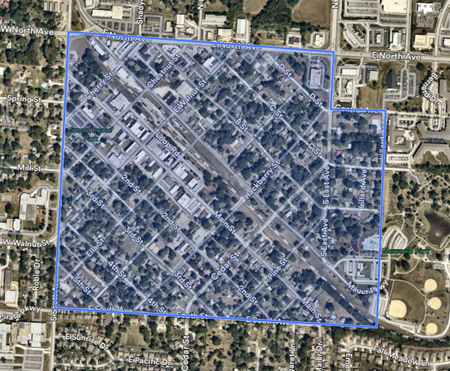
2.
Parcels greater than three acres in size.
3.
Short-term rentals are only allowed in single-family dwelling units, two-family dwelling units, upper-level dwelling units in mixed-use buildings in the Old Town Belton Redevelopment Area, and approved accessory dwelling units. Short-term rentals are not permitted in multi-family buildings.
b.
Special use permit required. Prior to approval of a registration, listing, and operation, a special use permit request is required to be approved through the processes outlined in this Code.
c.
Ownership.
1.
Only the property owner of record may request a short-term rental registration. The property owner shall be considered the host, unless another local point of contact is specifically listed as the host. The host shall be the contact person responsible for all listings and approvals of guests. Both the property owner and the host are responsible for following all requirements of this section and are both subject to citations for any violations of this section.
2.
No property owner shall be permitted to register more than five short-term rentals in the city limits.
d.
Registration time limit. All short-term rental unit registrations shall be valid for 12 months and subject to the annual license fee as provided in this section and shall be renewed prior to the expiration date.
e.
Registration and inspections. All short-term rental units shall be registered with the city and meet the following requirements prior to allowing the unit to be listed or occupied as a short-term rental.
1.
A short-term rental unit registration shall be submitted by the property owner of record. A separate registration is required for each short-term rental unit.
2.
For a property owner whose primary address is located more than 30 miles from city limits, a local point of contact or property manager within 30 miles of city limits shall be provided. This local point of contact shall serve as the host.
3.
A short-term rental unit shall be a separate registration from a rental registration. A dwelling unit cannot be registered as a short-term rental and a residential rental unit at the same time.
4.
The property owner or host shall notify the city and follow the appropriate registration requirements when a unit changes from a short-term rental to a residential rental and vice versa and/or when the property owner or host changes. All notifications shall be made to the city within 30 days of change.
5.
Prior to registration approval, all short-term rental units shall be inspected for compliance with the rental registration requirements per UDC sec. 10-143(c) and compliance with all requirements of this section. All non-compliant items shall be brought into compliance, reinspected, and pass inspection prior to approval of a short-term rental registration.
6.
At a minimum, the following must be provided for registration review and approval:
i.
Completed registration application as provided by staff.
ii.
Name, contact information, and copy of a government-issued ID of property owner and host.
7.
A short-term rental registration fee, provided for in appendix A of this Code, shall be assessed and paid prior to registration approval.
8.
A short-term rental registration certificate shall be posted on the interior of the unit in a visible and accessible location.
f.
Development standards.
1.
All short-term rentals shall meet the minimum parking requirements for a residential unit in the underlying zoning district. Pre-existing non-conforming parking requirements must be brought into compliance prior to approval of a short-term rental registration.
2.
No exterior evidence that the property or unit is being used as a short-term rental is allowed, including signage.
g.
Occupancy limits. All short-term rental units shall adhere to the following occupancy limits and restrictions.
1.
No short-term rental unit shall exceed a maximum occupancy of two adults per bedroom plus one additional adult per dwelling unit up to a maximum of ten guests, including children.
2.
No short-term rental unit shall be listed, offered, or rented for use as a reception space, party space, meeting space, or other similar event open to non-resident guests. Small, informal non-commercial gatherings of family and friends of short-term rental guests are permitted, provided the gathering is not a disturbance to the surrounding neighborhood, including, but not limited to, creating parking or noise issues.
h.
Operational and performance standards. All short-term rental units shall adhere to the hosting responsibilities and safety standards required by the respective third-party vender (i.e. Airbnb, VRBO, etc.) and all federal, state, and local laws and codes, including providing the following in each short-term rental unit:
1.
A working fire extinguisher.
2.
A working battery-powered portable flashlight or lantern or other emergency lighting device suitable for an electric power outage.
3.
Working smoke detectors and carbon monoxide detectors as required by building codes.
4.
Contact information for the host and local emergency services provided in a visible and accessible location.
5.
For a short-term rental unit located in a mixed-use building, a map displaying evacuation routes from the building in case of an emergency shall be posted in a visible and accessible location in the unit.
6.
Child-proof electrical outlet coverings.
i.
Additional inspections. In addition to the required annual inspection for each registration and renewal, additional inspections may be conducted during the registration period based on concerns or complaints received from a guest with documented evidence to determine that the unit may be out of compliance with any requirements or standards within this section. The property owner or host shall provide access to the director, building official, or their designee, within ten days or prior to a new guest stay, whichever is first.
j.
Registration denial or revocation process. To ensure that short-term dwelling units that pose a nuisance to the community are promptly addressed, registrations are subject to the following:
1.
A short-term rental unit registration is subject to revocation or denial upon three or more code violations within a 12 month period. Code violations include, but are not limited to, citations or tickets for property maintenance, nuisance, and offences, that constitute a chronic nuisance. The property owner may appeal a revocation through the special use permit process by filing an application within 30 days of the date of notification of revocation.
2.
The dwelling unit of any revoked or denied short-term rental unit registration is not eligible for registration approval for a minimum period of two years from the date of revocation or denial.
3.
The property owner and/or host of any revoked or denied short-term rental unit registration is not eligible for any new short-term rental unit registrations. Renewals of previously approved short-term rental units may be approved provided that they are in compliance with this Section. The property owner and/or host may be eligible for new short-term rental unit registrations after two years from the date of revocation or denial.
k.
Hotel/motel (license) tax collection. Each short-term rental unit is responsible for and subject to payment of the following:
1.
The property owner or host is responsible for the payment of the city of Belton's five percent Hotel/Motel (License) Tax, as required by Ordinance No. 2009-3530. Tax payments shall be made monthly to the city's finance department.
2.
Short-term rental unit renewals may not be approved until hotel/motel tax payments have been received by the finance department for the previous registration period.
l.
Illegal operation. Any short-term rental unit operating without a valid registration or not within compliance with any other requirements of this section shall be subject to the following:
1.
A violation notice shall be issued subject to the procedures in chapter 2 of this Code.
2.
Any person or entity who fails to comply with this section within 30 days of violation shall be fined not less than $200.00, but not more than $500.00. Each day may be considered as a separate offense.
(Ord. No. 2025-4912, § 5 (Exh. E), 4-29-2025; Ord. No. 2025-4950, § 2(Exh. B), 11-25-2025)
Sec. 40-4. - Uses subject to conditions.
All uses subject to conditions delineated in the land use table in section 40-1 shall comply with the following conditional use standards and all other standards within this Code:
(1)
Garden - community. The following conditions shall apply to the establishment and operations of a community garden:
a.
Community gardens shall be organized and managed by a property management association, non-profit organization, or public entity.
b.
Retail sales on the property are restricted to only the sale of produce grown on-site.
c.
Fencing may be used to enclose the garden and is limited to wood, vinyl, or aluminum or steel picket-style fencing up to four feet in height. Privacy fencing in compliance with section 28-8 may be used along interior perimeter property lines for screening from adjacent properties.
d.
Cultivated areas shall be setback a minimum of five feet from all property lines and not encroach into any sight triangle.
e.
Hours of operations shall be restricted to between dawn and dusk and shall adhere to all noise standards in the Code of Ordinances.
f.
One accessory storage structure up to 120 square feet shall be allowed on the property and shall meet all exterior and interior setbacks based on the zoning district of the community garden. Greenhouses and hoop houses are subject to the zoning district and accessory structure standards.
g.
Parking is not required for community gardens along streets where on-street parking is not restricted. Off-street parking is required for all other locations at one space per 15,000 square feet of lot area and shall meet all commercial driveway and parking lot design standards.
h.
One permanent non-illuminated monument sign may be installed, up to six feet in height and 32 square feet, and subject to the design and material standards.
(2)
Garden - accessory. Gardens are permitted as an accessory use to a principal residential dwelling use and to commercial uses that may utilize gardens to enhance a principal use, including, but not limited to, restaurants, retail, and arts and crafts production and manufacturing uses, subject to the following conditions:
a.
Gardens located in the front yard are limited to raised garden beds and movable pots or planters. Row and field crops planted directly into the ground are not permitted in the front yard. Row and field crops do not include cultivated fruit trees, bushes, or shrubs.
b.
No plantings or support structures shall be located in a sight triangle.
c.
Abandoned or non-cultivated gardens in the front yard are subject to nuisance regulations in the Code of Ordinances and shall be removed and replaced with required ground cover or other permitted landscaping.
(3)
Nursery and garden center. The following conditions apply to nursery and garden centers uses:
a.
The primary access to the site shall be provided from an arterial or collector street.
b.
The site shall meet minimum parking standards for the combination of uses on site.
c.
Outdoor storage yards of landscaping materials, including pavers, rock, mulch, and other ground covers shall be located to the sides or rear of the principal retail building.
d.
Outdoor storage yards accessible to the public for pick-up of materials and supplies shall be paved with a dust-free material.
e.
Outdoor storage yards for materials, supplies, and plantings that are in accessible to customer vehicles are not required to be paved but shall utilize materials and methods to minimize dust.
f.
Screening with fencing, walls, or landscaping may be required to minimize the impact of noise, lighting, dust, and other features on adjacent properties.
(4)
Cluster residential development. The following conditions apply to cluster residential developments:
a.
Cluster residential developments shall be permitted as a planned unit development (PUD).
b.
Natural or environmentally-sensitive areas, such as floodplains, bodies of water, forested areas, areas of steep or unique topography, and view sheds shall be preserved and protected as common areas owned and maintained by a property or home owners association.
c.
In lieu of the land preserved and protected, the overall density of the development may be concentrated in a smaller area of the development provided that the following standards are met:
1.
Maximum density does not exceed the following density requirements for the entire development, including preserved and protected areas:
i.
R-1: 5 units/acre.
ii.
R-2: 10 units/acre.
iii.
R-3: 15 units/acre.
iv.
R-3A: 20 units/acre.
2.
Minimum lot sizes, widths, depths, coverages, and setbacks may be adjusted and established through the PUD provided that enhancements are provided in building design, materials, and the streetscape, including front entrance features and landscaping. A minimum five-foot setback is required from all property lines.
3.
Front-loaded attached garages are generally discouraged, but if provided, shall be setback a minimum of 25 feet from the right-of-way and setback behind the front building wall (e.g. the primary front entrance of the house and front entrance features shall be closer to the street than the garage door).
d.
Active and passive open space amenities shall be provided and accessible to all dwelling units via pedestrian connections through public and private sidewalk and trail systems.
(5)
Manufactured home park. The following conditions shall apply to manufactured home parks:
a.
Manufactured homes may only be located for occupancy or occupied if located on a designated space within an existing manufactured home community.
b.
Redevelopment of existing manufactured home communities shall be permitted under this regulation where 50 percent of the homes are removed and/or replaced as a part of the redevelopment, or where there are privately-initiated improvements to the public infrastructure, including but not limited to water lines, electrical lines and sewer systems. A preliminary development plan and a final development plan shall be submitted to the city in accordance with the requirements contained herein, and in accordance with section 20-5 of this Code. The preliminary and final site plans shall be considered by the planning commission and approved, denied, or approved with conditions. Appeals of the planning commission's decision shall be heard by the city council.
c.
All redeveloped manufactured home communities shall meet the following minimum community requirements/improvements:
1.
Manufactured home community locations shall conform to the city's comprehensive plan, as amended.
2.
Manufactured home communities shall be platted as one lot in accordance with local subdivision regulations.
3.
Manufactured home communities shall contain a minimum gross area of 15 acres, which may include all private streets, parking spaces, manufactured home spaces and common areas within the community.
4.
Manufactured home communities and spaces shall be located on a well-drained site, properly graded and maintained to ensure proper drainage and freedom from stagnant pools of water.
5.
Manufactured home communities shall be provided with at least two permanent entrances both of which shall be at least 35 feet in width.
6.
There shall not be more than seven manufactured homes per gross acre within a manufactured home community.
7.
Manufactured home communities shall only be used for residential purposes, customary and incidental accessory uses common to residential districts, and service buildings as permitted by this section but not be used for commercial sale of manufactured homes, unless specifically authorized by valid occupational license.
8.
A sidewalk of at least 42 inches shall be constructed along at least one side of each street within the manufactured home community, except on turn around (cul-de-sac) streets, in accordance with city construction standards.
9.
A minimum of 500 square feet of recreational or open space shall be provided per manufactured home space. Each recreational or open space shall contain a minimum of 5,000 square feet in area, and shall be fully developed when the community is 50 percent occupied. If the development of the tract is shown to be divided into phases on the approved plan, recreational or open space may also be phased if the amount of recreational or open space is equivalent to 500 square feet for each manufactured home space in each phase; if this recreational or open space is fully improved when the appropriate phase is 50 percent occupied; and if each recreational or open space is accessible via a paved road or sidewalk to all residents within the developed areas of the manufactured home park. All developed recreational or open space shall be maintained in a neat and usable manner with at least the improvements shown on the approved site plan.
10.
Every space within a manufactured home community shall be provided with public sanitary sewer and public water service with all utility lines constructed in accordance with city approved plumbing, sanitary and other construction codes. Water and sewer lines under all streets shall be the same diameter and materials as required for public streets and shall loop or connect to each other as is practical. All utility lines, including electrical service, shall be placed underground.
11.
No manufactured home space shall be located further than 300 feet from a fire hydrant.
12.
All manufactured home communities shall be surrounded by a ten-foot-wide landscaped screen.
13.
Sidewalks and streets shall be adequately lighted at night so to be consistent with the standards established by the American Public Works Association for manufactured home communities.
d.
All existing and redeveloped manufactured home communities must meet the following requirements:
1.
Each manufactured home shall be provided with a weather-tight durable container with a tight fitting cover for refuse. The community owner shall ensure that containers are emptied regularly at least weekly, and maintained in a usable sanitary condition. Refuse containers and trash shall not be stored in the open, on the grass or in parking areas.
2.
A storm shelter consistent with the International Code Council (ICC) 500 Standard shall be provided which is sufficient to accommodate two persons per manufactured home and shall be located within said community so that no manufactured home is more than 600 feet away from a storm shelter. In addition, the storm shelter shall be architecturally compatible with surrounding structures. If necessary, more than one storm shelter may be provided to meet capacity and location requirements.
3.
All landscaped areas must be capable of preventing soil erosion and of eliminating objectionable dust. In addition, all private walkways, driveways, parking lots or public walkways must be maintained in good repair.
4.
Community buildings or laundry facilities may be provided within a manufactured home community. However, such service buildings may not occupy more than five percent of the area of the community. Service buildings shall be located, designed, and only intended to serve the residents of the community and shall present no visible evidence of their commercial character from any area outside the community. In addition, service buildings must be architecturally compatible with surrounding structures.
5.
Sanitary conditions within any manufactured home community shall be consistent with the regulations of the state board of health, clean water commission, other state regulatory agencies and ordinances of the city.
6.
All manufactured home communities and individual spaces shall be maintained in a neat and presentable manner consistent with the city's property maintenance code.
7.
No manufactured home shall be parked or permitted to stand upon any public street, highway, road, alley or other such right-of-way for more than 24 hours unless approved by the city council for the purpose of temporarily supervising or policing a construction project.
e.
New installations of manufactured homes, regardless of age, in existing and redeveloped communities must meet the following requirements:
1.
All manufactured homes shall front facing a street within the manufactured home community. (The front of a manufactured home shall contain its narrowest width). Where topography or the configuration of the entire manufactured home community makes it appropriate, manufactured home spaces may be arranged with the long side fronting the street. In addition, manufactured homes shall not be positioned vertically, stacked with one over the other, in whole or in part in the manufactured home community.
2.
Every manufactured home shall be installed according to the home manufacturer's installation instructions, the Missouri Public Service Commission and the Department of Housing and Urban Development's Manufactured Housing Improvement Act ("HUD Regulations").
3.
Each manufactured home may have a separate enclosed accessory structure with a maximum size of 120 square feet for storage located on a concrete slab where an on-space enclosed garage is not provided. Accessory structures in the manufactured home park community shall be architecturally compatible in design and shall be maintained in good repair at all times.
4.
Each manufactured home space shall be provided with an electrical source supplying at least 200 amps and natural gas, in accordance with city standards and construction codes.
5.
Each manufactured home shall be entirely skirted to a solid surface within 30 days after placement in a community by enclosing the open area under the unit with a metal or synthetic material that is compatible with the exterior finish of the manufactured home, and must be ventilated in accordance with the Missouri Public Service Commission and HUD Regulations. In addition, all hitches must be removed from the home within 30 days of installation.
6.
Each manufactured home space may be provided with a paved patio area other than a parking space. Each manufactured home space may be provided with a minimum six feet by eight feet front deck, and/or three feet by five feet rear deck.
7.
All manufactured homes shall be blocked in accordance with manufacturer specifications or, if specifications are not available, a sealed report from a structural engineer licensed for such installations in the state.
8.
Tie-downs and ground anchors shall secure all manufactured homes to the ground in accordance with state and laws federal laws and manufacturers specifications.
9.
No manufactured home may be located in the 100-year floodplain.
10.
Stairs, porches, entrance platforms, ramps and other means of entrance and exit to and from the homes shall be installed or constructed in accordance with the standards set by the building code.
11.
Each manufactured home shall have the general appearance of an on-site, single-family dwelling.
f.
Expansion of existing manufactured home communities.
1.
When an existing manufactured home community approved prior to the date of this chapter expands to an area not previously approved for manufactured home community use, the new area must be appropriately zoned and a preliminary development plan and a final development plan for the entire manufactured home community shall be submitted to the city in accordance with the requirements of this section, and in accordance with section 20-5 of this Code. The preliminary and final site plans shall be considered by the planning commission and approved, denied, or approved with conditions. Appeals of the planning commission's decision shall be heard by the city council.
2.
All new areas shall be designed, approved and improved in accordance with subsections 40-4(1)c., d., and e.
3.
Individual manufactured home spaces within the new area of the community shall have a minimum area of 5,000 square feet each.
4.
Every manufactured home space within the new area of the community shall have at least 40 feet of frontage on a paved curbed and guttered street constructed to city street standards. Turnaround streets (cul-de-sacs) shall have a minimum diameter of 80 feet.
5.
No manufactured home within the new area of the community shall be located closer than 20 feet from any property line bounding the manufactured home community.
6.
Minimum building setbacks shall be provided for each manufactured home space in the new area of the community, and shall be measured from the space boundaries as shown on the approved manufactured home community site plan, as follows:
i.
Minimum front yard: 22 feet.
ii.
Minimum rear yard: ten feet.
iii.
Minimum side yard: ten feet for any one and 17 feet for the other.
7.
Each manufactured home space in the new area shall be provided with two paved off-street parking spaces designed in accordance with the off-street parking requirements of these regulations.
8.
Each manufactured home in the new area shall be provided with landscaping to at least include two shade trees with a planted caliper of at least 1½ inches.
9.
As a condition of approval of any such expansion, the following requirements of the listed sections must be complied with in the existing areas of the manufactured home community:
(6)
Assisted living and residential care facility. The following standards apply to assisted living and residential care facilities:
a.
Assisted living and residential care facilities shall be accessed from collector or arterial streets. Local streets may be utilized for limited or secondary access.
(7)
Group home.
a.
Group homes must maintain an exterior residential appearance in general conformance with the neighborhood.
b.
Group homes must be located a minimum distance of 1,500 feet from any other group home, measured from property line to property line.
(8)
School. The following standards apply to school uses in agricultural or residential zoning districts:
a.
School uses with an occupancy limit greater than 500 persons shall be accessed from collector or arterial streets. Local streets may be utilized for limited or secondary access.
b.
The perimeter of the site adjacent to any other agricultural or residential zoning district shall be screened with a type "C" broken screen. Additional screening may be required for parking lots, outdoor activity areas, loading/unloading, and other site or building features that may create a nuisance to adjacent agricultural or residential properties. This condition does not apply when adjacent to other institutional or civic land uses that are zoned agricultural or residential.
(9)
Government and public safety facilities, offices, and services. The following standards apply to government and public safety facilities, offices, and services:
a.
Facilities, offices, and services located in residential zoning districts shall be accessed from collector or arterial streets. Local streets may be utilized for limited or secondary access or for facilities, offices, and services with limited public access.
b.
When located in an agricultural or residential zoning district, the perimeter of the site adjacent to any other agricultural or residential zoning district shall be screened with a type "C" broken screen. Additional screening may be required for parking lots, outdoor activity areas, loading/unloading, and other site or building features that may create a nuisance to adjacent agricultural or residential properties. This condition does not apply when adjacent to other institutional or civic land uses that are zoned agricultural or residential.
(10)
Parks and open space. The following standards apply to parks and open space uses:
a.
Community and regional parks (parks greater than 25 acres) shall be accessed from collector or arterial streets. Local streets may be utilized for limited or secondary access.
b.
When located in an agricultural or residential zoning district, the perimeter of the site adjacent to any other agricultural or residential zoning district shall be screened with a type "C" broken screen. Additional screening may be required for parking lots, outdoor activity areas, loading/unloading, and other site or building features that may create a nuisance to adjacent agricultural or residential properties. This condition does not apply when adjacent to other institutional or civic land uses that are zoned agricultural or residential.
(11)
Religious assembly. The following standards apply to religious assembly uses in agricultural or residential zoning districts:
a.
Assembly uses with an occupancy limit greater than 500 persons shall be accessed from collector or arterial streets. Local streets may be utilized for limited or secondary access.
b.
The perimeter of the site adjacent to any other agricultural or residential zoning district shall be screened with a type "C" broken screen. Additional screening may be required for parking lots, outdoor activity areas, loading/unloading, and other site or building features that may create a nuisance to adjacent agricultural or residential properties. This condition does not apply when adjacent to other institutional or civic land uses that are zoned agricultural or residential.
(12)
Building or ground maintenance services. The following standards apply to building or ground maintenance services:
a.
No outdoor storage includes equipment and trailers, supplies, and materials, however, licensed and operable cars and trucks that serve the business may be parked in paved and striped parking spaces.
b.
Where outdoor storage is permitted, the outdoor storage area shall be screened from view of the street and adjacent properties with a privacy fence or wall and landscaping. Fencing and landscaping standards shall meet the design standards for the base zoning district or overlay district in which the site is located.
(13)
Construction sales and services. The following standards apply to construction sales and services:
a.
No outdoor storage includes equipment and trailers, supplies, and materials, however, licensed and operable cars and trucks that serve the business may be parked in paved and striped parking spaces.
b.
Where outdoor storage is permitted, the outdoor storage area shall be screened from view of the street and adjacent properties with a privacy fence or wall and landscaping. Fencing and landscaping standards shall meet the design standards for the base zoning district or overlay district in which the site is located.
(14)
Restaurant, with drive-thru. The following standards apply to restaurants with drive thrus in the C-1 zoning district in the Old Town Belton Overlay:
a.
Drive thrus are prohibited in the Old Town Belton Overlay except for restaurants with drive thrus with frontage on E. North Avenue.
b.
All other drive-thru standards, including minimum access and stacking standards shall be met.
(15)
Food truck, accessory. The following standards apply to food truck, accessory, uses:
a.
A food truck, accessory, includes any food truck that is semi-permanently or permanently located at the site of a supporting principal use, including, but not limited to a restaurant, bar or tavern, indoor or outdoor recreation and entertainment, artisan food or beverage production, and agritourism use.
b.
The hours of operation of the food truck shall not exceed the hours of operation of the principal use.
c.
The food truck shall not be located within the right-of-way and located outside of the sight triangle.
d.
The food truck shall not interfere with ingress and egress of vehicular traffic or ingress and egress for building entrances or exits.
e.
The food truck shall be parked on a paved surface if located in a parking lot or along a sidewalk or parked on pavers if located in a non-paved (e.g. rock, mulch, etc.) outdoor seating area.
f.
The food truck operator is responsible for the proper disposal of waste, trash, and grease generated by the food truck.
g.
The food truck operator shall follow all other regulations required for food trucks in chapter 6 of the Code of Ordinances.
(16)
Food truck court. The following standards apply to food truck courts:
a.
A food truck court shall have a minimum of two food trucks. The maximum number of food trucks may vary by lot size and the ability to provide required access, parking, and site improvements. The maximum number of food trucks may be conditioned with a final development plan.
b.
Food trucks and all other accessory buildings or structures on site shall have a ten-foot separation.
c.
The food truck court area shall be clearly defined and separated from access drives and parking areas with fencing, decorative bollards, or planters. Fencing shall be picket-style with a maximum height of four feet.
d.
Seating and shade elements shall be provided. A minimum of six seats per food truck shall be provided.
e.
A minimum of two permanent restrooms shall be provided within 200 feet of the food truck area and shall be accessible during hours of operation. Restrooms shall comply with minimum design standards in this Code.
f.
A food truck court shall be located a minimum of 500 feet from any brick-and-mortar restaurant use unless said restaurant is operating a food truck in the food truck court.
g.
A food truck court shall be located a minimum of 1,500 feet from any other food truck court.
h.
A permanent power source shall be provided for each food truck; individual generators are not allowed.
i.
Each food truck operator shall follow all other regulations required for food trucks in chapter 6 of the Code of Ordinances.
(17)
Adult business. The following standards apply to adult businesses, as defined in section 40-2 and section 1-5:
a.
No adult business shall be located within 900 feet of any school, church, licensed day care center, public park, or property zoned for residential use within the city limits. Measurements shall be made in a straight line, without regard to intervening structures or objects, from the nearest point of the premises from which the adult business would be operated to the nearest point on the property line of any school, church, licensed day care center, public park, or property zoned for residential use within the city limits:
1.
Provided the phrase "property zoned for residential use" shall not include any property zoned for residential use for which a special use permit has been granted for an indefinite period of time which permit allows a non-residential use; nor shall it include property zoned for agricultural use;
2.
Provided further, the list of protected uses set forth herein shall exclude streets, alleys, and highway rights-of-way;
3.
Provided further, any school, church, or licensed day care center located within commercially zoned property pursuant to a special use permit shall not be included as a protected use;
4.
Provided further, that the 900-foot restriction between such uses may be waived by the city council after review and recommendation by the planning commission, if the applicant demonstrates by substantial and competent evidence and it is found that:
i.
The proposed use will not be contrary to the public interest or contrary to nearby properties, and that the spirit and intent of this chapter will be observed;
ii.
The proposed use will not enlarge or encourage the development of a "blighted area" as defined in RSMo. 100.310, as amended; and
iii.
The establishment of an additional regulated use in the area will not be contrary to any program of neighborhood conservation nor will it interfere with any program or urban renewal.
b.
No adult business shall be located within 900 feet of any other adult business for which there is a license issued by the city regardless of whether such businesses are located on the same property or separate properties. Measurements shall be made in a straight line, without regard to intervening structures or objects from the premises from which an adult business would be operated to the nearest point on the property line of such other adult business located within the city:
1.
Provided the list of protected uses set forth herein shall exclude streets, alleys, and highway rights-of-way; and
2.
Provided further, that the 900-foot restriction between such uses may be waived by the city council after review and recommendation by the planning commission, if the applicant demonstrates by substantial and competent evidence and it is found that:
i.
The proposed use will not be contrary to the public interest or contrary to nearby properties, and that the spirit and intent of this chapter will be observed;
ii.
The proposed use will not enlarge or encourage the development of a "blighted area" as defined in RSMo. 100.310, as amended; and
iii.
The establishment of an additional regulated use in the area will not be contrary to any program of neighborhood conservation nor will it interfere with any program or urban renewal.
c.
Site development regulations:
1.
Applicability. This subsection shall apply to any bookstore, media store or video store, in which adult media constitutes more than ten percent but not more than 40 percent of the stock in trade of the business at any time, or where adult media occupies more than ten percent but not more than 40 percent of the gross public floor area of the business at any time.
2.
Prohibition of public display. The owner or operator of a store to which this subsection is appblicable shall have the affirmative duty to prevent the public display of "adult media" at or within the portions of the business open to the general public.
3.
Display of adult media. Adult media in a store to which this subsection is applicable shall be kept in a separate room or section of the store, which room or section shall:
i.
Not be open to any person under the age of 18 years;
ii.
Be physically and visually separate from the rest of the store by an opaque wall or durable material reaching at least eight feet high or to the ceiling, whichever is less;
iii.
Be located so that the entrance to it is as far as reasonably practicable from media or other inventory in the store likely to be of particular interest to children; and
iv.
Have access controlled by electronic or other means to provide assurance that persons under age 18 will not gain admission and that the general public will not accidentally enter such room or section.
(18)
Pawn shop. The following standards apply to pawn shops, as defined in section 40-2:
a.
A pawn shop shall not be established or expanded within 500 feet of the boundary line of a residential zoning district.
b.
A pawn shop shall not be established or expanded within 1,000 feet of the property line of a church, school, or public park, except the separation is reduced to 500 feet in situations where a church, school, or public park is zoned C-2 (General commercial) or M-1 (Light industrial).
c.
A pawn shop shall not be established or expanded within 1,000 feet of any other pawnshop, measured from the nearest point between buildings.
(19)
Tobacco shop. The following standards apply to tobacco shops, as defined in section 40-2:
a.
No tobacco shop shall be located within 1,000 feet of a school, playground, youth center, city-owned and operated park or recreational facility, or library. The distance shall be measured by the shortest straight line from the tobacco shop building to the building or structure of a school, playground, youth center, park or recreational facility, or library.
b.
No tobacco shop shall be located within 1,000 feet of another tobacco shop, measured by the shortest straight line between the tobacco shop buildings.
c.
Each application for a business license shall include a map demonstrating that the proposed location of the tobacco shop is consistent with the minimum separation distances established in this section.
(20)
Bed and breakfast. The following standards must be met for a bed and breakfast:
a.
The bed and breakfast must be owner-occupied with the operator residing on the property.
b.
A maximum of eight guest rooms are permitted.
c.
The bed and breakfast must only serve meals to overnight guests, unless the bed and breakfast is located on an arterial or collector street.
d.
Off-street parking requirements must be met in a parking area located behind the front building line.
e.
Retail and other sales are not permitted on the premises.
(21)
Reserved.
(22)
Medical and comprehensive marijuana facilities. The following regulations apply to all medical marijuana facilities, comprehensive marijuana facilities, and microbusinesses, including cultivation facilities, dispensary facilities, infused productions manufacturing facilities, testing facilities, transportation facilities, and wholesale facilities:
a.
[Minimum distance.] No new facility shall be initially sited within 500 feet of any then-existing elementary or secondary school, daycare, or church.
For purposes of this section,
1.
A daycare means a child-care facility, as defined by RSMo 210.201 that is licensed by the State of Missouri.
2.
An elementary or secondary school means any public school as defined in RSMo 160.011 or any private school giving instruction in a grade or grades not higher than the 12th grade, including any property owned by the public or private school that is regularly used for extracurricular activities, but does not include any private school in which education is primarily conducted in private homes.
3.
A church means a permanent building primarily and regularly used as a place of religious worship.
4.
Then existing means any school, child daycare center, or church with a written building permit from the city to be constructed, or under construction, or completed and in use at the time the marijuana facility first applies for either zoning or a building permit, whichever comes first.
5.
Separation distances shall be measured along the shortest path that can be lawfully traveled by foot between the following demarcation points:
(i)
Freestanding facilities - the distance between the facility and school, daycare, or church shall be measured from the external wall of the facility structure closest in proximity to the school, daycare, or church to the closest point of the property line of the school, daycare, or church. If the school, daycare, or church is part of a larger structure, such as an office building or strip mall, the distance shall be measured to the entrance or exit of the school, daycare, or church closest in proximity to the facility.
(ii)
Facilities in a larger structure (such as an office building or strip mall) - the distance between the facility and the school, daycare, or church shall be measured from the property line of the school, daycare, or church to the facility's entrance or exit closest in proximity to the school, daycare, or church. If the school, daycare, or church is part of a larger structure, such as an office building or strip mall, the distance shall be measured to the entrance or exit of the school, daycare, or church closest in proximity to the facility.
b.
Outdoor operations or storage prohibited. Unless licensed as an outdoor medical or comprehensive marijuana cultivation facility, all medical marijuana and marijuana facilities' operations and all storage of materials, products, or equipment shall be within a fully enclosed building.
c.
Onsite usage prohibited. No marijuana may be smoked, ingested, or otherwise consumed on the premises of a medical marijuana or marijuana facility.
d.
Hours of operation. All medical marijuana and marijuana facilities shall be closed to the public, no persons not employed by the business shall be on the premises, and no sales or distribution of marijuana shall occur upon the premises or by delivery from the premises between the hours of 10:00 p.m. and 8:00 a.m., provided that, sales and distribution of medical or comprehensive marijuana or any other products sold to the public through a medical, comprehensive, or wholesale marijuana dispensary may occur until midnight on Friday and Saturday evenings.
e.
Residential dwelling units prohibited. No medical, comprehensive, or wholesale marijuana facility shall be located in a building that contains a residence.
g.
Ventilation required. All medical marijuana and marijuana facilities shall install and operate a ventilation system that will prevent any odor of marijuana from leaving the premises of the facility. No odors shall be detectable by a person with a normal sense of smell outside the boundary of the parcel on which the facility is located.
(23)
Car wash. The following conditions shall be met for car wash uses:
a.
Service bays shall be designed to not face residential zoning districts or land uses.
b.
Car wash uses adjacent to residential zoning districts may require enhanced screening and landscaping to protect neighboring residential properties.
c.
Vacuum stations shall be located in the side or rear yard in relation to the car wash service bays or building.
(24)
Gas station. The following conditions shall be met for gas station uses:
a.
Access to the gas station use shall be provided from an arterial or collector street. Access to a local street shall only be permitted as a secondary access and will not negatively impact adjacent properties.
b.
A traffic study prepared by a licensed engineer shall be required for all gas stations. The traffic study shall address all access and traffic flow through the site and include any recommendations for public and private improvements necessary to adequate address safety and efficient traffic flow.
c.
Gas station uses adjacent to residential zoning districts may require enhanced screening and landscaping to protect neighboring residential properties.
d.
Gas pump islands and canopies shall be designed to be compatible with the design of the convenience store building.
(25)
Vehicle repair - minor. The following conditions shall be met for vehicle repair - minor uses:
a.
All vehicle repair shall be conducted in an approved permanent enclosed building.
b.
Vehicles shall not be stored on the site for longer than seven days.
c.
A site plan shall be provided that delineates parking for vehicle drop-off and pick-up areas.
(26)
Vehicle repair - major and vehicle repair - heavy. The following conditions shall be met for vehicle repair - major and vehicle repair - heavy uses:
a.
All vehicle repair shall be conducted in an approved permanent enclosed building. Doors and windows shall only be opened at intervals necessary for ingress and egress when body and fender repair are being conducted to limit exterior noise.
b.
No spray painting may be performed except in a building or room specifically designed for that purpose.
c.
Vehicles shall not be stored on the site for longer than 30 days.
d.
A site plan shall be provided that delineates parking for vehicle drop-off and pick-up areas.
(27)
Vehicle and equipment sales - light and vehicle and equipment sales - heavy. The following conditions shall be met for vehicle and equipment sales - light and heavy uses:
a.
All vehicle and equipment sales uses shall have a minimum of 100 feet of street frontage and shall be a minimum of one acre in size.
b.
All vehicle and equipment sales uses shall not be located within 100 feet of any residential zoning district.
c.
All vehicle and equipment sales uses shall have at least one frontage on an arterial or collector street. Direct access to a local street is only permitted if access is restricted to the fronting arterial or collector street.
d.
All vehicle access, drive aisle, and parking lot design and paving standards shall be met.
e.
All vehicles and equipment on the site shall be operational.
f.
All vehicles and equipment on the site shall be arranged and parked in an orderly manner that does not interfere with ingress/egress or traffic flow through the site.
g.
Any accessory maintenance and repair work must be performed within an approved permanent enclosed structure. All maintenance and repairs shall be completed before the vehicle or equipment is returned to the lot.
h.
All vehicle and equipment sales uses shall meet perimeter landscaping, screening, and buffering requirements.
i.
Vehicle sales for used vehicles are subject to all other licensing requirements and standards in chapter 6 of the Code of Ordinances.
(28)
Vehicle and equipment storage and towing. The following conditions shall be met for vehicle and equipment storage and towing uses:
a.
All outdoor storage areas shall be paved with an approved surface, and if used for the parking of vehicles or equipment, shall meet minimum parking lot design standards. Gravel is not a permitted surface for outdoor storage areas.
b.
All outdoor storage areas shall be screened from view of the street and adjacent properties with a privacy fence or wall and landscaping. Fencing and landscaping standards shall meet the design standards for the base zoning district or overlay district in which the site is located.
c.
All vehicles and equipment stored on the premises shall be operational, except for tow lots, which may include inoperable vehicles stored temporarily for up to 30 days.
(29)
Flex space - minor. The following conditions shall be met for flex space - minor uses:
a.
The total building footprint is limited to 10,000 square feet and each flex space shall be a minimum 1,200 square feet.
b.
Each flex space shall have a storefront on the front elevation.
c.
Overhead doors shall be located on the rear building elevation. If the rear yard is adjacent to right-of-way, screening is required with fencing or walls and landscaping.
d.
Outdoor storage is subject to the underlying zoning district restrictions and screening requirements.
(30)
Flex space - major. The following conditions shall be met for flex space - major uses:
a.
Each flex space shall be a minimum 1,200 square feet.
b.
Each flex space shall have a storefront on the front elevation.
c.
Overhead doors shall be located on the rear building elevation. If the rear yard is adjacent to right-of-way, screening is required with fencing or walls and landscaping.
d.
Outdoor storage is subject to the underlying zoning district restrictions and screening requirements.
(31)
Limited manufacturing, production, and industrial services. Limited manufacturing, production, and industrial services may be permitted with a special use permit subject to the following requirements:
a.
The total manufacturing, production, and/or service area does not exceed 10,000 square feet. The square footage calculation does not include office, showroom, or retail floor area.
b.
The operations of the business and any external impacts shall be reviewed for compliance with all performance standards within the Unified Development Code and will not constitute a nuisance to other uses on the subject property or adjacent properties.
(32)
Utilities - minor. The following standards apply to utilities - minor/accessory uses:
a.
Every public utility, cable company, video service provider and other users of the city rights-of-way or adjacent easements to provide services shall, in addition to entering into a franchise agreement with the city, comply with the supplementary regulations in this section regarding the placement of accessory utility facilities on public or private property. Except where limited by other provisions of city ordinances, accessory utility facilities shall be subject to the following supplementary regulations:
b.
Approval; design; location; application. The design, location, and nature of all accessory utility facilities on private or public property shall require approval of the city in conformance with this section, and subject to reasonable permit conditions as may be necessary to meet the requirements of this section. In considering individual or multiple location applications, the city shall review the request to ensure the proposed facilities do not impair public safety or significant sight-lines, or degrade the aesthetics of the adjoining properties or neighborhood. Any material expansions or extensions of new utility services to such facilities or the construction of any additional structures shall be subject to the requirements and approvals as set forth herein. Unless otherwise prohibited, utility facilities subject to this subsection may be located in minimum setback areas provided that all other requirements are met. A filing fee shall be required as may be established by the city to reimburse the city for the costs of review and inspection of accessory utility facilities as may be permitted by applicable law.
c.
The following general regulations shall apply to all accessory utility facilities:
1.
All such facilities shall be placed underground, except as otherwise provided in this section.
2.
All such facilities shall be constructed and maintained in such a manner so as not to emit any unnecessary or intrusive noise.
3.
All facilities shall be deemed abandoned after six continuous months of non-use, and shall therefore be removed within 30 days thereafter at the cost of the utility.
4.
Any damage to landscaping, vegetation, sidewalks, or pavement on private or public property during installation, maintenance, or removal of facilities shall be promptly remedied by the facility owner within ten days of any such damage.
5.
At least 48 hours prior to any non-emergency repair requiring excavation, installation, replacement, or expansion of any facility located on private property, the facility owner shall provide notice to the property owner. Notice shall include detailed description of work to be done, the exact location of work, the time and duration when it will be undertaken, the name and telephone number of the facility owner, and if applicable, the name and telephone number of the facility owner's contractor.
6.
If there is an emergency necessitating response work or repair, the utility may begin that repair or emergency response work or take any action required under the circumstances, provided that the facility owner notifies the community development director promptly after beginning the work and meets any permit or other requirement had there not been such an emergency.
7.
No facilities may be located so as to interfere, or be likely to interfere, with any public facilities or use of public property.
8.
No facilities may be located within the required sight triangle of any driveway or intersection.
9.
All utility facilities not authorized by this section or specifically addressed elsewhere in this Code shall be authorized only by conditional use permit.
d.
Accessory utility facilities may be installed above ground upon compliance with the following requirements:
1.
In commercial or multifamily zoning districts, above-ground accessory utility facilities with a height of 3.5 feet or greater or covering an area eight square feet or greater must be screened. Such screen shall be required to sufficiently conceal the facility from the public right-of-way.
2.
In all zoning districts, above-ground accessory utility facilities with a height of 5.5 feet or greater or covering an area 25 square feet or greater must be screened. Such screen shall be required to sufficiently conceal the facility from the public right-of-way. When the subject facility is clustered with other accessory utility facilities, all facilities must be screened.
3.
Required screening for accessory utility facilities to be installed in conjunction with new development shall be shown on the site plan or landscape plan submitted by the developer.
4.
Required screening for accessory utility facilities to be installed or expanded in an existing development (i.e., where principal buildings already exist on the subject lot) shall be shown on a site plan submitted by the utility. The site plan may be approved by the community development director. In addition to the requirements, the site plan shall include the type, height, color, and appearance of the proposed accessory utility facility, the size and species of landscaping materials to be used for screening, and the proposed means of access to the accessory utility facility. If the means of access is from an arterial or collector street, a driveway may be required by the director of public works. The driveway shall be designed such that vehicles can turn around without backing onto the street.
5.
All above-ground facilities shall be placed in the rear yard wherever practical. If locating these facilities in the rear yard is not practical, then such facilities may be located in the interior side yard. Such facilities shall not be located in the front yard, exterior side yard, or within the public right-of-way unless all other alternatives are not feasible.
e.
Compliance with other laws. All accessory utility facilities shall be subject to all other applicable regulations and standards as established as part of the city Code, including but not limited to building codes, zoning requirements and rights-of-way management regulations in addition to the supplementary regulations herein. The provisions of this section shall not apply to any circumstance or entity in which application under such circumstances is preempted or otherwise precluded by superseding law.
(33)
Accessory uses. Accessory uses are permitted as accessory to a principal use subject to the accessory use standards for the base zoning district in which the principal use is located.
(34)
Home occupations. Home occupations shall be permitted as an accessory use in residential dwellings or residential accessory structures in any zoning district where residential dwelling units are permitted subject to the following:
a.
General provisions.
1.
The home occupation shall be clearly incidental and subordinate to the principal residential use of the premises. The primary use of the building in which the home occupation is located shall clearly be on the premises of the dwelling unit used by the person as their private residence.
2.
Business-related activity, including storage or use of equipment, may occur inside the dwelling unit, inside the accessory structure, or in the yard of the residential dwelling unit, but shall not be visible from the street.
3.
A home occupation may be permitted one wall-mounted sign, which shall not exceed two square feet, shall not be illuminated, and shall match the principal structure in color and design.
4.
The total number of employees and clients on the premises at any one time shall not exceed the occupancy limit of the residential dwelling or accessory structure.
5.
The home occupation must not generate traffic, parking, sewerage or water use in excess of what is normal or customary in a residential neighborhood.
6.
The home occupation shall not create a hazard to person or property, result in electrical interference, produce noise, vibration, smoke, odors, heat, or glare in excess of what would normally be produced by a single residence, or become a nuisance in the neighborhood.
7.
Deliveries of materials to and from the premises in conjunction with the home occupation shall not require the use of vehicles other than parcel post or similar parcel service vehicles.
8.
Home occupations shall maintain required licenses mandated by applicable state and/or federal laws.
9.
Persons residing within a homeowners association should notify the homeowners association of their intent to operate a home business prior to operations.
b.
Home occupations permitted. Home occupations and home-based businesses, as defined in section 71.990, RSMo., as amended, shall be permitted. No business license from the City of Belton is required for a no-impact occupation or business as said term is defined by section 71.990, RSMo., and interpreted by the director. A business license from the City of Belton is required for all other occupations or businesses. Permitted home occupations include the following list of uses and others that are similar in character:
1.
Instructors (tutors, private music and/or dance lessons, etc.) and counselors.
2.
Professional offices.
3.
Arts and crafts studios.
4.
Small appliance and electronics repair services.
5.
Catering services.
6.
Gun repair and cleaning services.
7.
Salon and barber services.
8.
Any other home occupation or home-based business that meets the general provisions and is not prohibited, as outlined in this section.
c.
Particular home occupations prohibited. Home occupations and home-based businesses that negatively impact public health, sanitation, and safety, are not in compliance with building or fire codes, create substantial traffic, or generate solid waste, hazardous waste, pollution, and/or noise that is out of character for a residential property are prohibited.
(35)
Non-accessory parking. Non-accessory parking facilities are permitted subject to the following conditions:
a.
The applicant or property owner shall provide the following information:
1.
Identify the need for the parking facility;
2.
Identify the properties and uses within the vicinity that will have access to the parking facility; and
3.
Identify any parking management strategies, including if payment is required and hour limitations per vehicle and for the lot.
b.
The parking facility shall meet all parking lot design and pavement standards.
c.
The parking facility shall meet all landscaping, buffering, and screening requirements.
d.
The parking facility shall not be utilized as a vehicle storage lot, tow lot, or outdoor storage yard.
(36)
Drive-thru facilities. All drive-thru facilities are permitted subject to the following conditions:
a.
Drive-thru facilities, including stacking spaces, shall be setback at least 40 feet from any residentially zoned property.
b.
Speaker systems in conjunction with a drive-thru facility shall be oriented and designed so that they are not audible at any property line adjacent to residentially zoned property.
c.
Drive-thru facilities shall meet all minimum parking standards and the following minimum stacking space requirements:
1.
Each vehicle stacking shall be a minimum of nine feet wide by 18 feet long.
2.
Each vehicle stacking shall be separate and not conflict with any vehicle or pedestrian access, drive aisle, loading space, or parking space.
(Ord. No. 2025-4912, § 5 (Exh. E), 4-29-2025)

