
Belton City Zoning Code
CHAPTER 6
AGRICULTURAL AND RESIDENTIAL ZONING DISTRICTS
Sec. 6-1.- Agricultural and residential zoning districts.
(a)
A Agricultural District. The purpose of the A Agricultural District is to accommodate agricultural activities and related uses on the fringe of the urbanized area of the city. Land within this district is likely to be developed with other land uses in the future. Because A districts will typically be located within close proximity to urban development, the agricultural activities conducted in the A district should not be detrimental to surrounding land uses. The type and intensity of uses permitted in this district will encourage and protect agricultural uses until urbanization is warranted and the appropriate change in district classification is requested by the property owner or initiated by the city.
(b)
R-1 Single-Family Residential District. The purpose of the R-1 Single-Family Residential District is to accommodate low-density residential development and limited institutional uses compatible with surrounding residential neighborhoods.
(c)
R-1A Single-Family Residential District. The purpose of the R-1A Single-Family Residential District is to accommodate low-density residential development. The R-1A district also provides for limited institutional uses compatible with surrounding residential neighborhoods, with slightly larger lot sizes and lower density than the R-1 Single-Family Residential District.
(d)
R-1B Single-Family Residential District. The R-1B Single-Family Residential District is the most restrictive residential district that provides for a larger minimum lot size and is the lowest density residential zoning district. The principal use of land is for single-family dwellings and related recreational, religious and educational facilities normally required to provide the basic elements of a balanced and attractive residential area.
(e)
R-2 Single- and Two-Family Residential District. The purpose of the R-2 Single- and Two-Family Residential District is to accommodate single- and two-family residential development. The R-2 district typically functions as a transition between arterial and collector streets, commercial and/or higher residential areas, and lower density single-family residential areas. The R-2 district also provides for limited institutional uses compatible with surrounding residential neighborhoods.
(f)
R-3 Multiple-Family Residential District. The R-3 Multiple-Family Residential District is intended to accommodate a mix of two-family and attached single-family residential development. The R-3 district is typically located adjacent to an arterial or collector street and serves as a transition between commercial development or heavy automobile traffic and lower density residential development. The R-3 district also provides for limited institutional uses compatible with surrounding residential neighborhoods.
(g)
R-3A Apartment Community Residential District. The R-3A Apartment Community Residential District is intended to accommodate multiple-family residential development where there are sufficient services and infrastructure to support higher density residential development. The principal use of the land in this district is multiple-family development that is planned and developed only on a lot or tract under single ownership or unified control.
(h)
PR Parks, Recreation and Public Use District. The PR Parks, Recreation and Public Use District is a special purpose district that is intended to accommodate land uses that offer a variety of active and passive recreational opportunities and other public uses.
(UDC 2010, § 10.1)
Sec. 6-2. - Bulk and dimensional standards table.
(a)
For bulk and dimensional standards table for properties in the North Scott Corridor please see section 18-8, North Scott Corridor Overlay District. Additionally, please see site design standards in the North Scott Corridor Overlay District + Guidelines plan, page 8.
(UDC 2010, § 10.3; Ord. No. 2011-3737, § 1, 7-26-2011; Ord. No. 2017-4393, § 2, 11-28-2017)
Sec. 6-3. - Exceptions to dimensional standards table.
(a)
Projections into required yards. Required yards must be unobstructed and unoccupied from the ground to the sky except that certain building features and structures are allowed to project into required yards.
In addition to allowed accessory structures and uses in section 4-1, the following features are allowed within setbacks:
(1)
Awnings, canopies, and roof overhangs may project up to four feet or up to 30 percent into a required setback, whichever is less.
(2)
Balconies may project up to four feet or up to 30 percent into a required setback, whichever is less.
(3)
Bay windows, architectural features, cantilevered floors, chimneys, and other ornamental features of the building may project up to four feet or up to 30 percent into a required setback, whichever is less.
(4)
Steps, stairs, stoops, landings, and uncovered fire escapes may project up to 30 percent into a required setback. Steps included as part of a walkway to the front property line may be located within the front setback.
(5)
Wheelchair lifts and ramps that meet federal, state, and local accessibility standards may be located within any setback.
(6)
Air conditioning units and other mechanical units may project up to five feet into a required setback.
(7)
Fences and walls may be located within any setback subject to the standards in section 28-8.
(8)
Signs and flagpoles as allowed in chapter 30.
(9)
Ornamental and security lighting subject to outdoor lighting standards, where applicable.
(10)
Driveways and unenclosed parking spaces subject to driveway and parking standards.
(11)
Utility poles and wires.
(b)
Exception for lots that utilize average front yards.
(1)
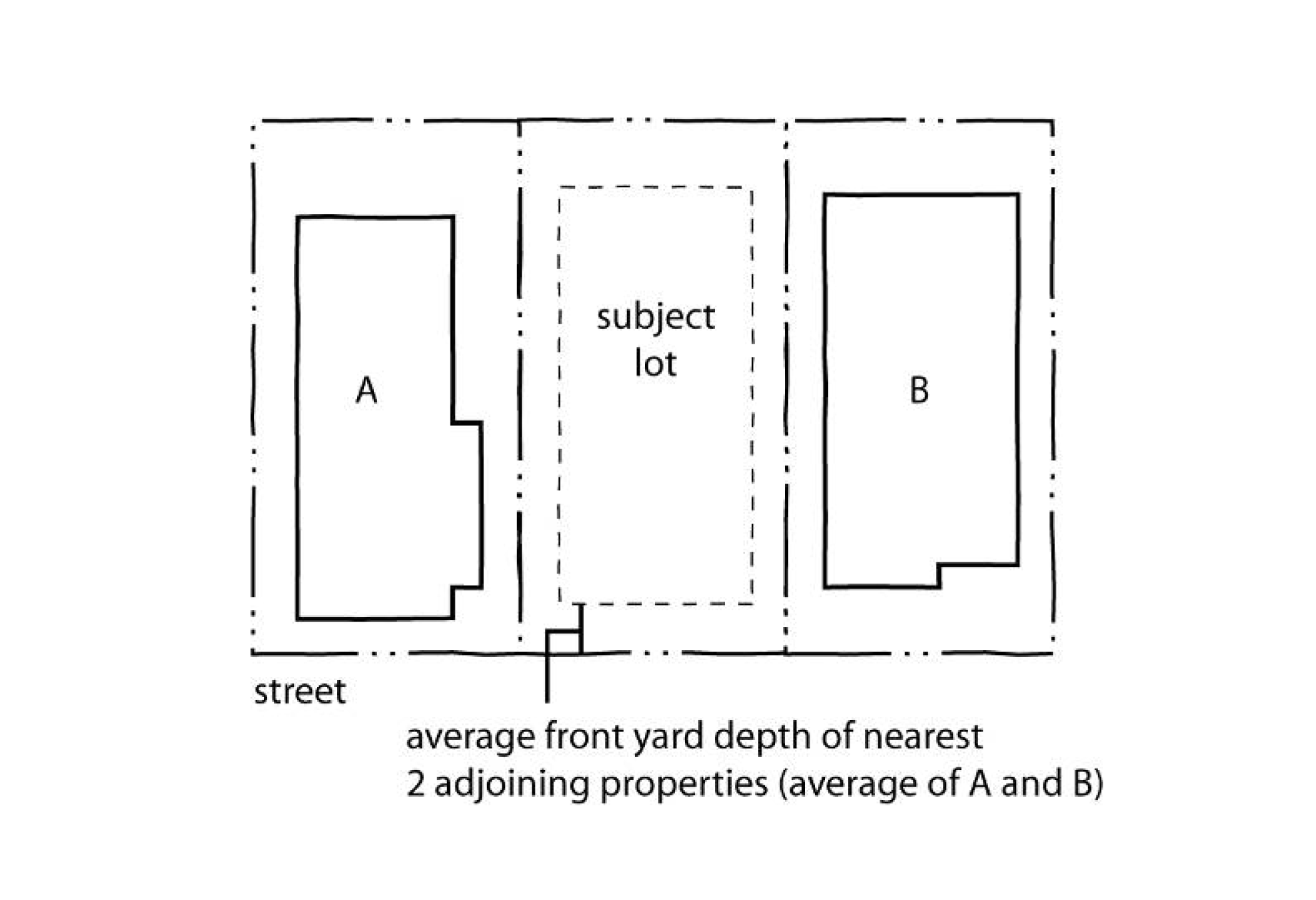
Where a building is to be constructed on a parcel of land that is within 100 feet of the existing buildings on both sides, the minimum front yard may be an average of the front yards as measured from the two closest front corners of the adjacent buildings on the two sides; or
(2)
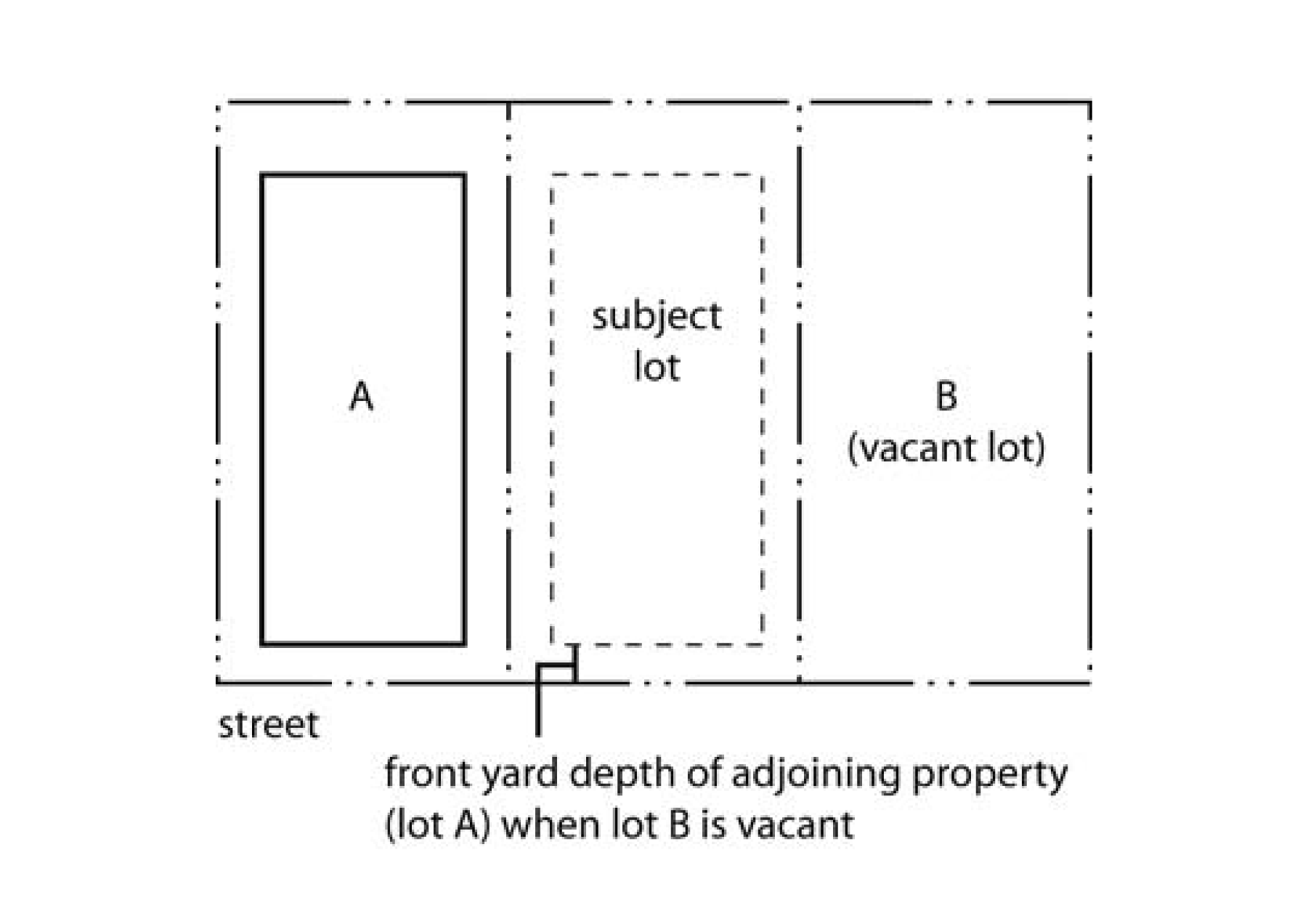
Where a building is to be erected on a parcel of land that is within 100 feet of an existing building of one side only, such building may be erected as close to the street as the existing adjacent building.
(UDC 2010, § 10.4; Ord. No. 2011-3737, § 1, 7-26-2011; Ord. No. 2025-4901, § 3 (Exh. B), 3-11-2025)
Sec. 6-4. - Additional regulations.
(a)
Only one principal building. Only one principal building may be located, erected or moved onto any lot of record in the A, R-1, R-1A, R-1B, R-2, R-3, and R-3A districts.
(b)
Minimum square footage of residential structures. All new single family residential structures constructed shall have no less than 1,200 square feet of living area, unless a different minimum is established with a PUD or overlay. A special use permit may be applied for to allow for a single family residential structure less than the required minimum square footage.
(c)
Lot transition regulations. New single-family and two-family developments adjacent to existing platted single-family developments must comply with the subdivision standards.
(d)
Operational performance standards. All uses in the residential districts must comply with the operational performance standards.
(e)
Plot plan requirements.
(1)
All plot plans for residential construction shall be submitted following the plot plan checklist provided by the community development department. The plot plan checklist may be amended administratively as needed to accommodate changes in planning, building, engineering, or fire requirements that must be reviewed for compliance prior to permit issuance.
(2)
It shall be the responsibility of the builder to provide a copy of the approved plot plan to construction personnel.
(3)
Driveway slopes shall not exceed the slope of the street up to a maximum of eight percent.
(4)
All grading plans that are in engineering plans and site plans must show a building or house footprint to provide proper sediment/erosion control and drainage. The footprint must include the proposed finished elevation of the first floor or lowest floor of the structure.
(UDC 2010, §§ 10.5.1—10.5.7; Ord. No. 2005-3142, 3-22-2005; Ord. No. 2011-3737, § 1, 7-26-2011; Ord. No. 2018-4414, § 3, 3-13-2018; Ord. No. 2025-4901, § 3 (Exh. B), 3-11-2025)

