
Coppell City Zoning Code
ARTICLE 18
A.- "RBN" RESIDENTIAL URBAN NEIGHBORHOOD DISTRICT REGULATIONS
Sec. 12-18A-0.- General purpose and description.
The City of Coppell recognizes that land is a precious, non-renewable resource, and that conventional zoning tends to foster a pattern of development that excessively separates land uses and results in the requirement of extensive vehicular travel. The urban residential neighborhood (RBN) is hereby established as a residential district zoning and is intended primarily as a residential area with supporting and complementary commercial and public uses. The purpose of the urban residential neighborhood (RBN) as envisioned in the Coppell 2030 - A Comprehensive Master Plan, codified as chapter 12A of the Code of Ordinances, is to provide a development that will promote:
1.
The physical and social integration of citizens diverse in age, lifestyle and economic status, among others;
2.
An adequate supply of housing that is affordable at all income levels;
3.
A greater diversity of types of housing than found in other Coppell neighborhoods;
4.
An alternative means of developing land;
5.
Public health, safety and welfare that fosters a strong sense of neighborhood identity based on a shared, coherent, functionally efficient physical environment; and
6.
The distinctive, small-town character of Coppell.
In applying the regulations set forth in this article all figures and tables are enforceable provisions of the code and all illustrations are for illustrative purposes only and should not be considered for any other purposes but as a guideline.
(Ord. No. 91500-A-595, § 1, 8-14-12)
Sec. 12-18A-1. - Use regulations.
A.
A building or premise shall be used only for the following purposes:
1.
Any use permitted in the "2F-9", "TH-1", "TH-2", "MF-1", "MF-2" Districts, or combination of such uses.
2.
Single family detached dwellings with an average lot size of typically no greater than 5,000 square feet, and shall generally only be permitted to provide a transition between existing single family detached developments and proposed higher intensity RBN district uses.
3.
Any use permitted by special use permit, article 12-18, section 12-30-6, including as amended in subsection 12-18A-1 5. of this article.
4.
Home occupations.
5.
Uses permitted in the "O" (office) and "R" (retail) district are permitted as secondary uses, whereas the primary uses within a RBN district shall be residential. These uses shall be permitted by special use permit or planned development as regulated in article 12, sections 12-30 and section 12-27, of the Code of Ordinances. These office and retail uses shall comply with the following conditions:
a.
Uses permitted shall not be located in "stand alone" buildings and shall be seamlessly integrated with residential units, or community/recreation facilities associated with the development.
b.
A lot containing such uses shall have frontage on a boulevard, a freeway or at the corner of two Avenues as defined in the "Coppell 2030 Transportation Plan" of Chapter 12A, Coppell 2030 Comprehensive Master Plan.
c.
Parking for these uses shall be as provided as required in article 12, section 12-31 of the Code of Ordinance, as amended.
d.
The incorporation of ground floor retail may require off-street loading facilities.
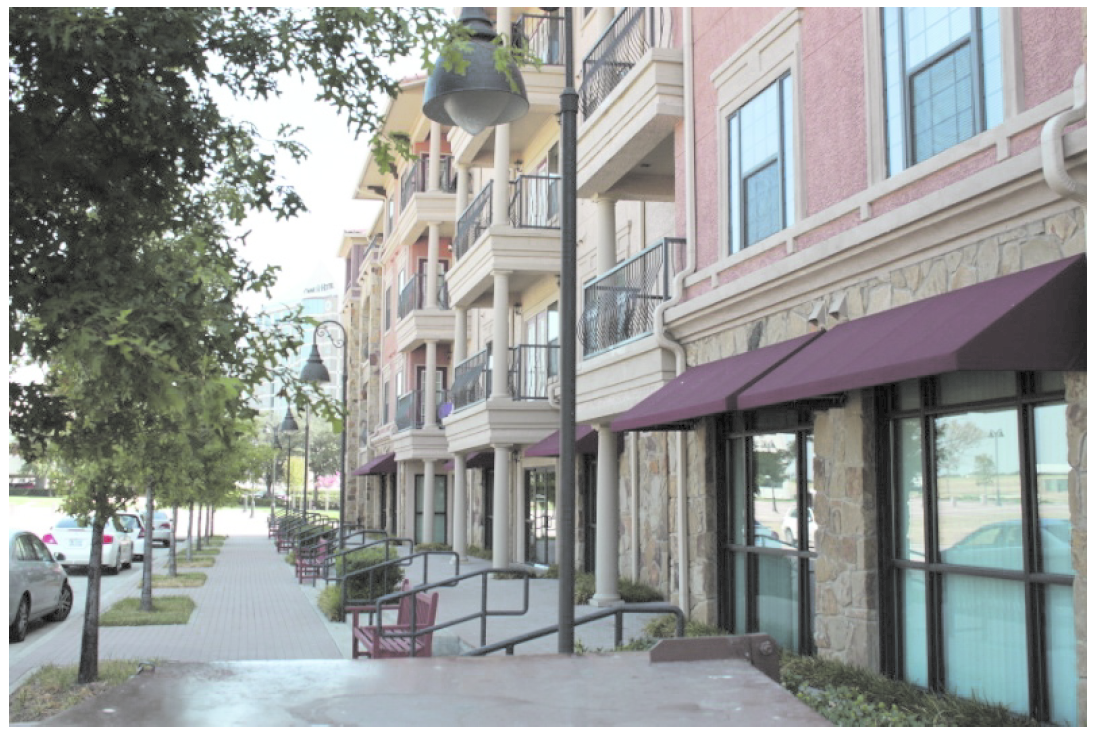
Illustration 12-18A-1
(Ord. No. 91500-A-595, § 1, 8-14-12)
Sec. 12-18A-2. - Height regulations.
The height of the structures shall be:
A.
The maximum height shall be 35 feet or three stories, except,
1.
When adjacent to a freeway or along a transit corridor, the maximum height shall be five-stories, not to exceed 70 feet.
a.
Additional setbacks are required for the portions of the building which exceed 35 feet as defined in section 12-18A-5 architectural guidelines and standards, of this article.
b.
Additional building code and/or requirements are applicable when buildings exceed 55 feet in height.
2.
When adjacent to existing single family (SF) or two family-9 (2F-9) uses, the maximum height in the RBN district shall be the same as the height of the homes adjacent to and within 100 feet of the RBN district or minimum of 24 feet which ever is greater.
3.
If the proposed building falls within the height envelope created by a 1:3 residential proximity slope originating from an adjacent residentially zoned property line, the height can be increased one foot for every three linear feet over 24 feet.
Figure 12-18A-1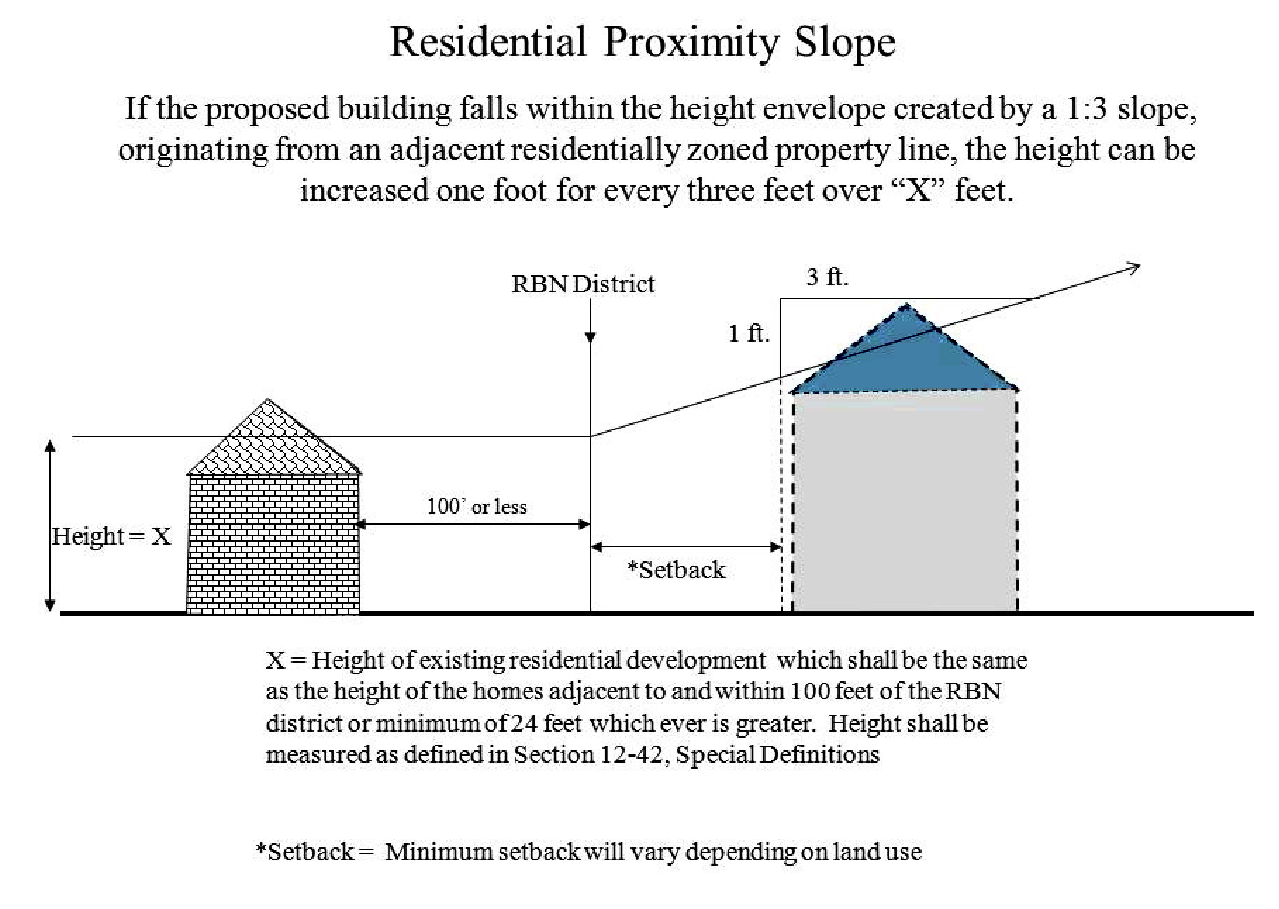
(Ord. No. 91500-A-595, § 1, 8-14-12)
Sec. 12-18A-3. - Area regulations.
A.
s1.
To encourage context sensitive design and to promote pedestrian friendly streetscapes in lieu of typical minimum setbacks, build-to lines are being established (Refer to article 12, section 12-18A-4, building orientation, of this article for additional information). The build-to lines shall be determined by the type of street frontage as the "Coppell 2030 Transportation Plan" of Chapter 12A, Coppell 2030 Comprehensive Master Plan, CHAPTER 2, Transportation and Mobility.
a.
Front yard (build-to lines). The required front yards shall be landscaped, and shall not contain any paving except for driveways perpendicular to the street and pedestrian areas, including walkways and plazas:
i.
Freeway—n/a (see section 12-18A-3 A.3.).
ii.
Boulevard—15 feet.
iii.
Avenue—15 feet.
iv.
Local street—10 feet.
2.
Build-to lines may be adjusted to provide for additional pedestrian amenities, but in no event shall parking or driveways parallel to the street be permitted between the curb line and the face of the building.
3.
Minimum front yard setback, adjacent to freeways only.
a.
No residential structure shall be located closer than 60 feet from the freeway right-of-way line.
b.
The minimum setback can be achieved through a combination of common open space/landscaping and/or building setbacks.
B.
Development Regulations:
TABLE 12-18A-1
Illustration 12-18A-2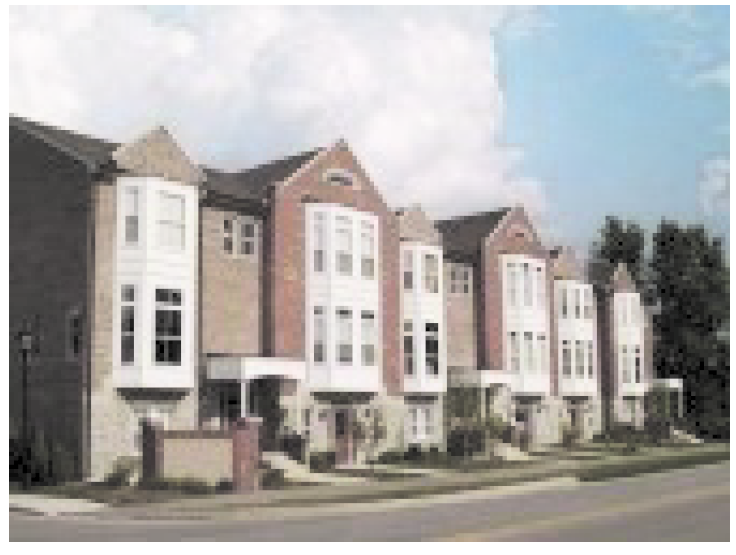
C.
Open space/common areas:
1.
Open/common areas shall be provided for gathering places to promote social recreation and interaction in developments with densities greater than five dwelling units per gross acre, as follows:
a.
A minimum of 15 percent of the overall property shall be devoted to open/common space areas.
b.
A maximum of 50 percent of the common open area is allowed to be in the flood plain, which shall adhere to the regulations of the floodplain ordinance.
c.
All units shall have pedestrian access to open space/common area(s).
2.
The provision of this open space provided in this article shall not be construed to be a credit or off set with other open space and/or park dedication requirement as provided in the Code of Ordinances is in addition to compliance with the Park Dedication Ordinance.
(Ord. No. 91500-A-595, § 1, 8-14-12)
Sec. 12-18A-4. - Building orientation.
The following standards are intended to orient buildings close to streets to promote human-scale development, slow traffic and encourage walking in neighborhoods. Developments in the RBN District shall be oriented to a street. Building orientation shall be as follows:
A.
All buildings shall have their primary entrance(s) oriented to the street. Multi-family buildings entrances may include entrances to individual units, lobby entrances, or breezeway/courtyard entrances (i.e., to a cluster of units). Alternatively, a building may have its entrance oriented to a side yard when a direct pedestrian walkway is provided between the building entrance and the street. In this case, at least one entrance shall be provided not more than 20 feet from the closest sidewalk or street.
B.
Off-street parking, drives (parallel to the street) or other vehicle areas shall not be placed between buildings and streets.
Illustration 12-18A-3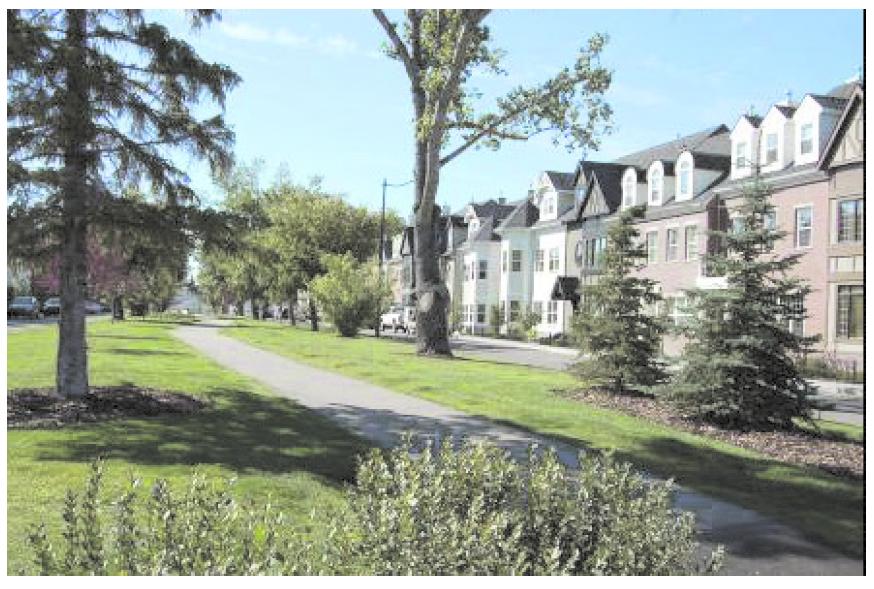
(Ord. No. 91500-A-595, § 1, 8-14-12)
Sec. 12-18A-5. - Architectural guidelines and standards.
To address the purpose and intent of the objectives of the Coppell 2030 Comprehensive Master Plan, as codified is Chapter 12A, Comprehensive Land Use Plan, of the Code of Ordinances, developments in Urban Residential Neighborhoods should be of an "Architectural character (which) is compatible with the style, proportions, period, materials and colors of adjacent single family neighborhoods, but may vary to a greater degree in proximity to higher intensity development areas". The architectural standards are intended to provide detailed, human-scale design, while affording flexibility to use a variety of building styles. All buildings that are subject to this section shall comply with all of the following standards. The graphics provided with each standard are intended to show examples of how to comply. Other building styles and designs can be used to comply, so long as they are consistent with the text of this section. An architectural feature (i.e., as shown in the graphics) may be used to comply with more than one standard.
Illustration 12-18A-4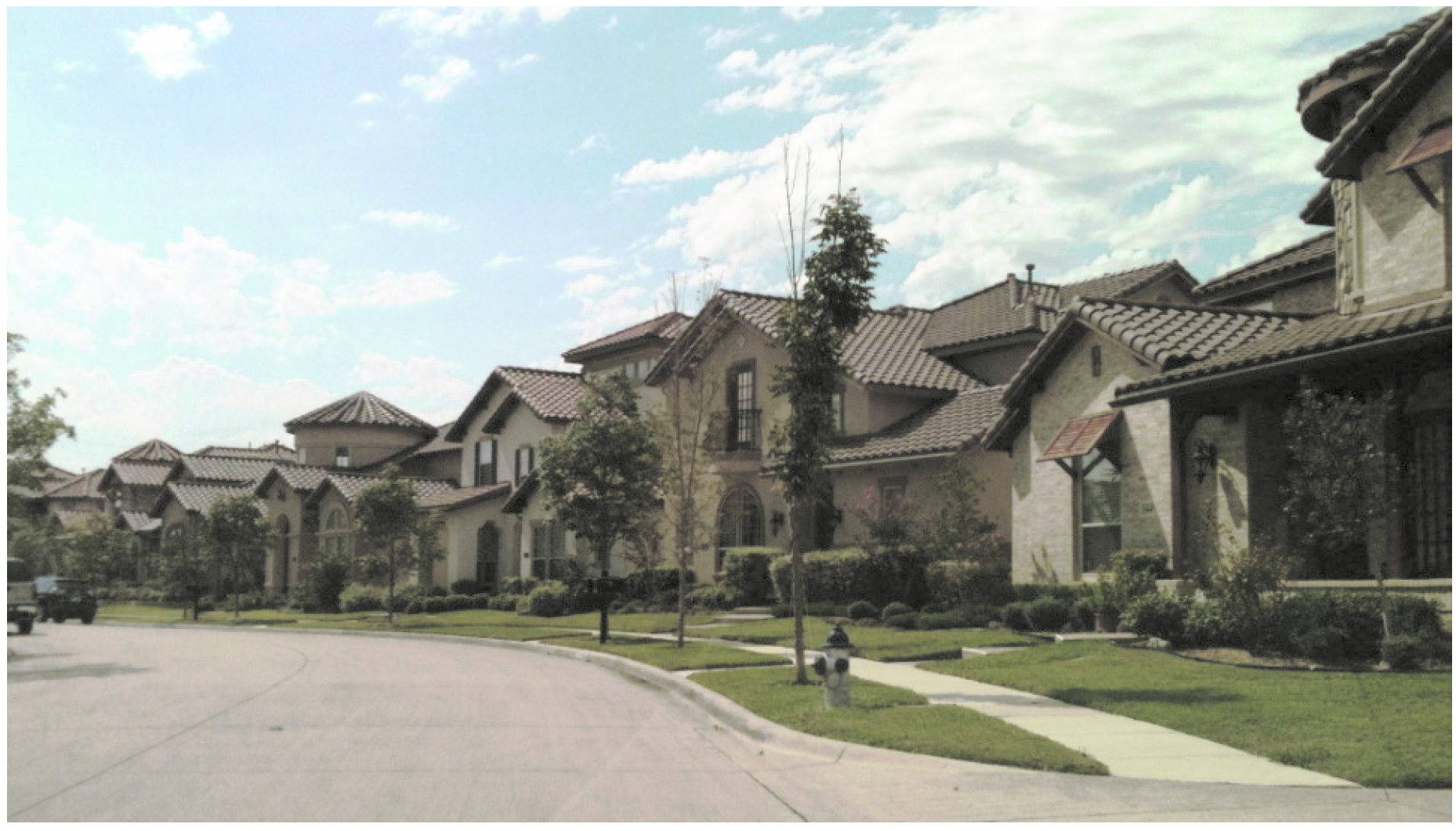
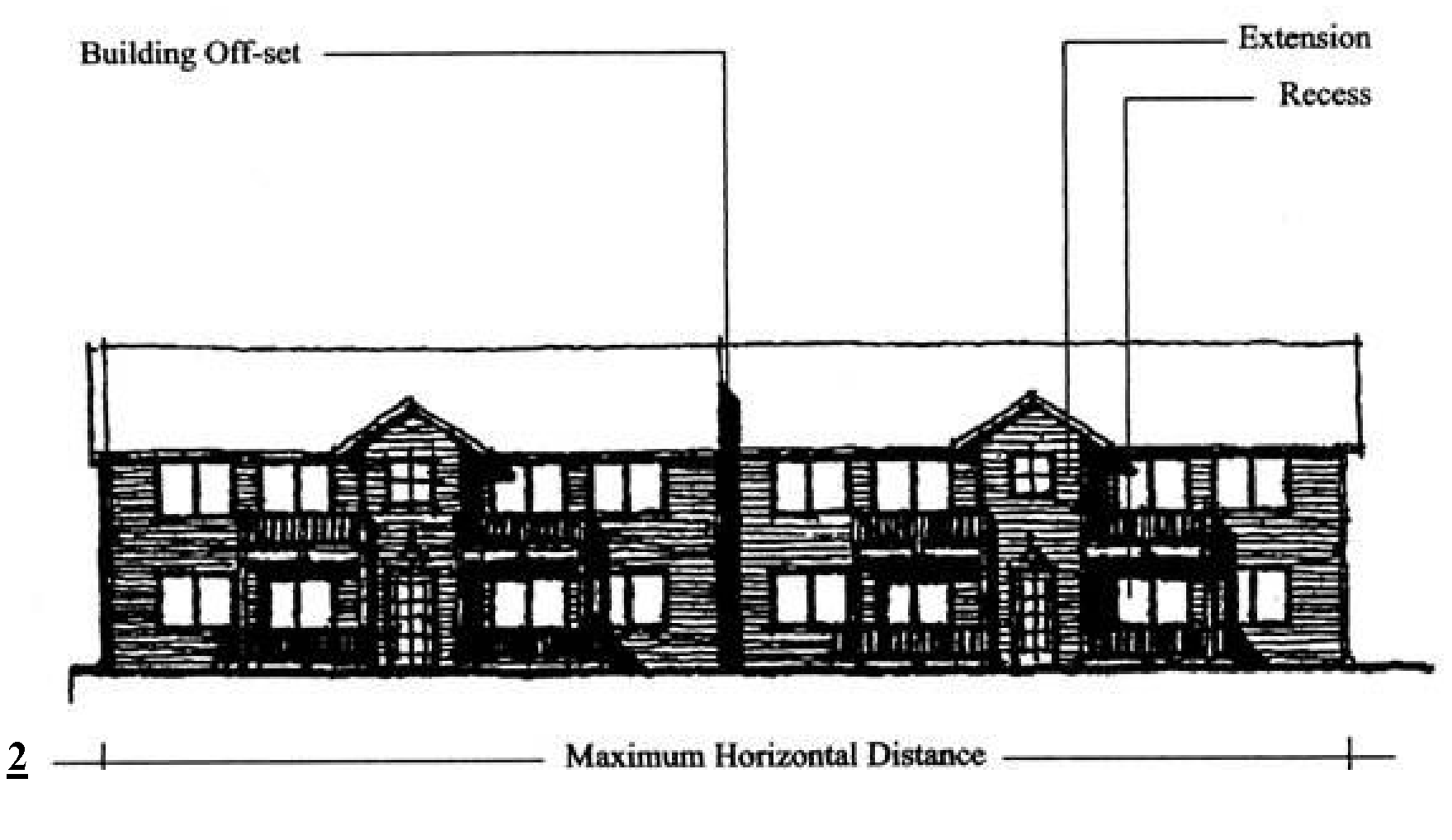
Figure 12-18A-2
1.
Where elevations are adjacent to a street, a minimum of 50 percent of front elevations, and a minimum of 25 percent of side and rear building elevations, shall be doors, porches, balconies, and/or windows. This standard applies to each full and partial building story.
2.
The continuous horizontal distance (i.e., as measured from end-wall to end-wall) of individual buildings shall not exceed 250 feet.
3.
All buildings shall incorporate design features such as offsets, balconies, projections, windows, reveals, or similar elements to preclude large expanses of uninterrupted building surfaces. Along the vertical face of a structure, such features shall occur every 20 to 30 feet, and on each floor shall contain at least two of the following features:
a.
Recess (e.g., deck, patio, courtyard, entrance or similar feature) that has a minimum depth of four feet;
b.
Extension (e.g., floor area, deck, patio, entrance, or similar feature) that projects a minimum of two feet and runs horizontally for a minimum length of four feet; and/or
c.
Offsets or breaks in roof elevation of two feet or greater in height.
Illustration 12-18A-5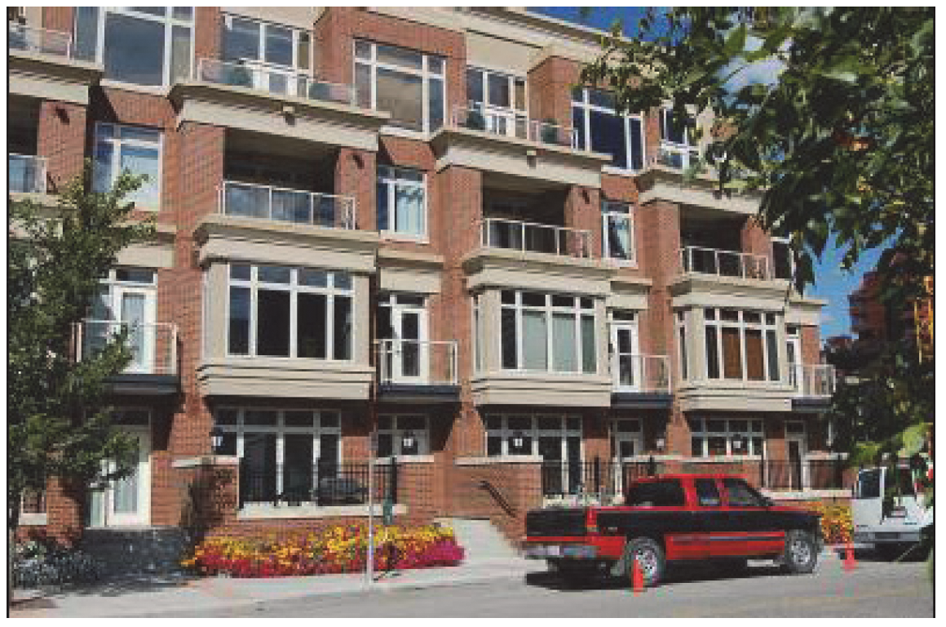
Figure 12-18A-3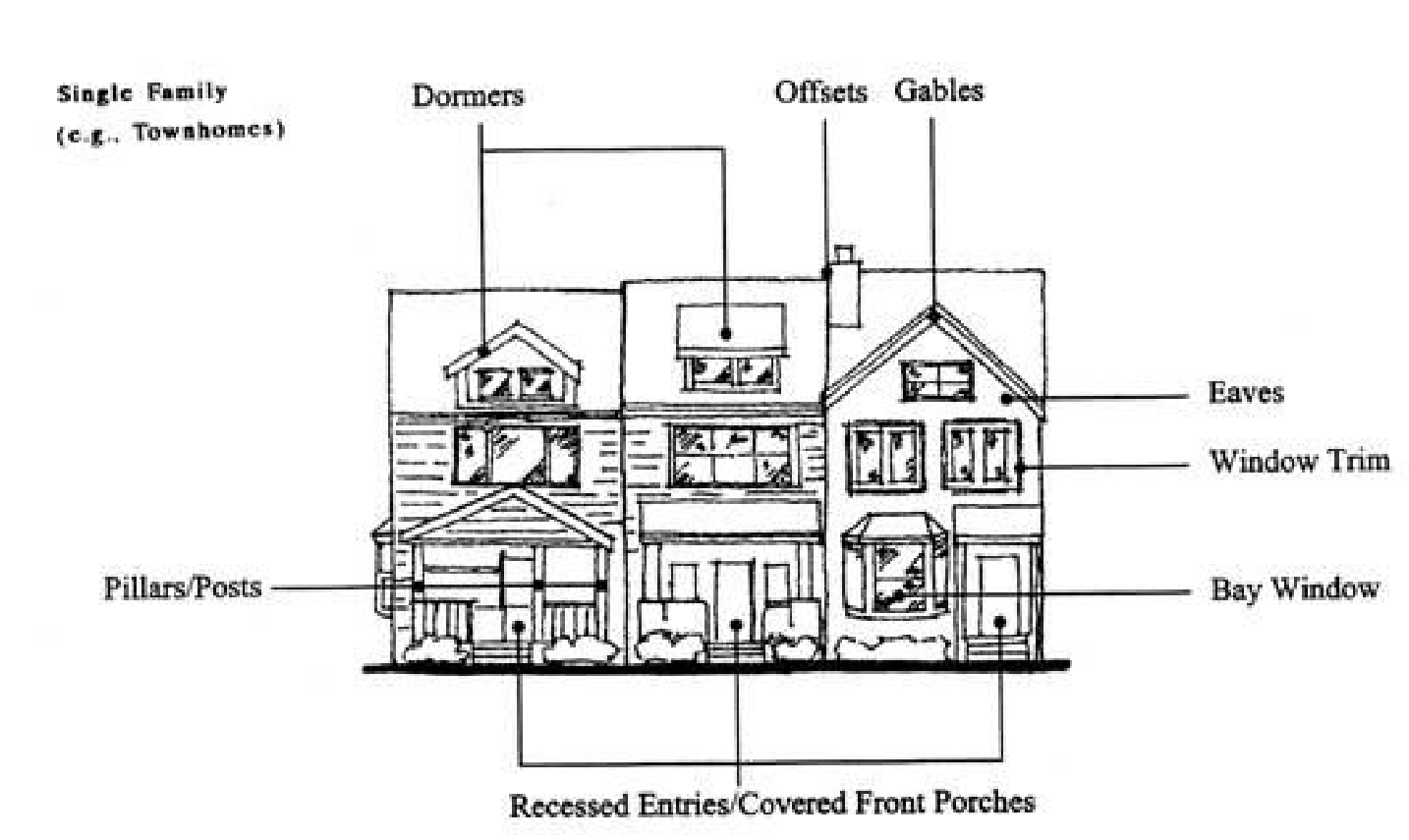
Figure 12-18A-4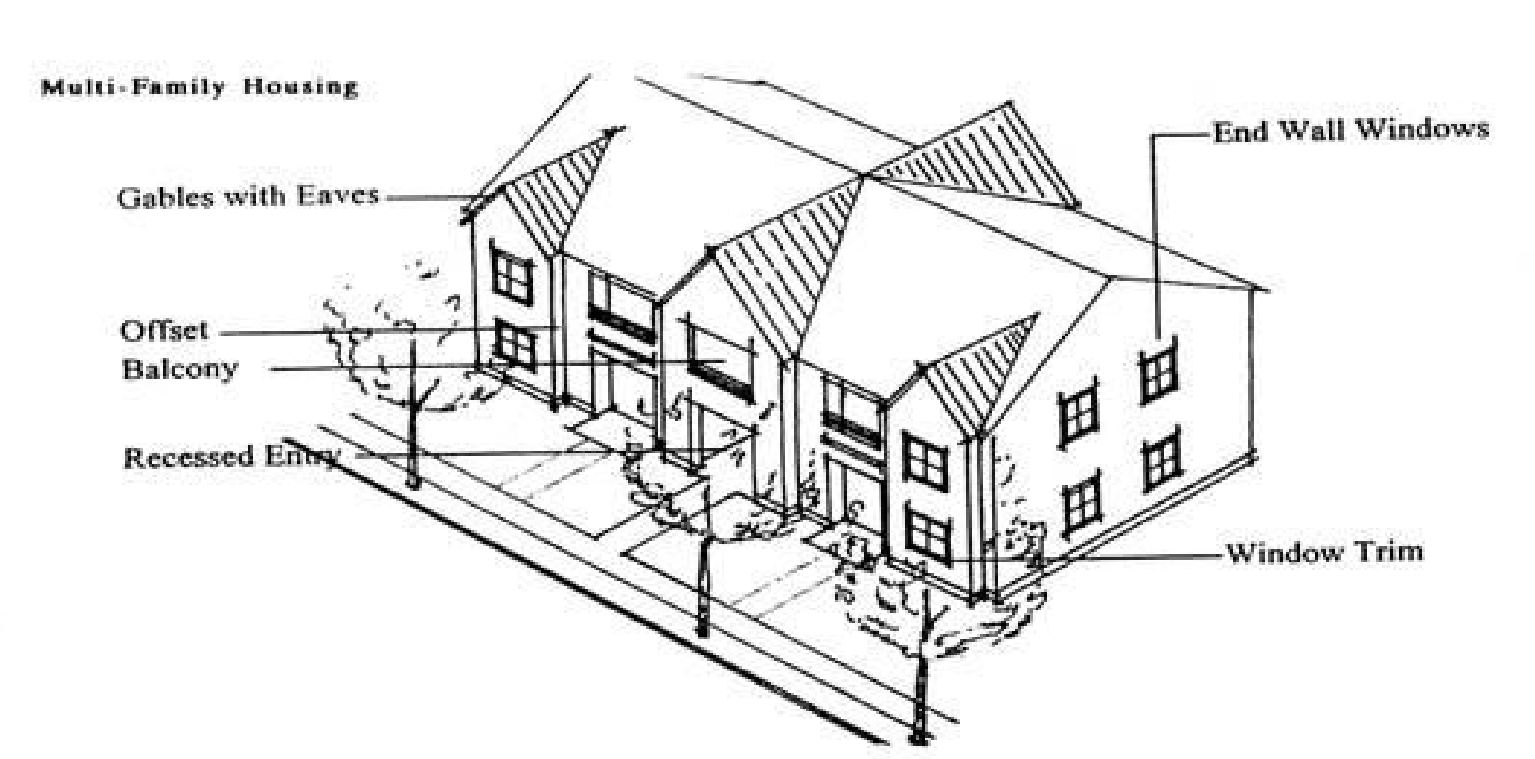
4.
Detailed design. All buildings shall provide detailed design along all street facing elevations (i.e., front, rear and sides). Detailed design shall be provided by using at least three of the following architectural elements on all elevations, as appropriate for the proposed building type and style (may vary features on each elevation):
a.
Dormers;
b.
Gables;
c.
Recessed entries;
d.
Covered porch entries;
e.
Cupolas or towers;
f.
Pillars or posts;
g.
Eaves (minimum one-foot projection);
h.
Off-sets in building face or roof (minimum two feet);
i.
Bay windows;
j.
Balconies;
k.
Decorative patterns on exterior finish (e.g., scales/shingles, wainscoting, ornamentation, and similar features);
l.
Decorative cornices and roof lines (e.g., for flat roofs);
m.
An alternative feature providing visual relief, similar to options in this section.
5.
Ground level front yard porches a minimum depth of seven feet are encouraged for all single family, duplex and townhome developments. Porches may encroach four feet into the required front yard.
6.
Additional regulations for buildings exceeding 35 feet in height.
a.
The portions of buildings, which exceed 35 feet in height, shall be setback an additional minimum of ten feet for each story exceeding three (i.e. the 4th story shall be setback ten feet, and the 5th story 20 feet).
b.
Porches and balconies are permitted within these setback areas.
(Ord. No. 91500-A-595, § 1, 8-14-12)
Sec. 12-18A-6. - Type of exterior construction.
At least 80 percent of the exterior of all structures shall be of masonry type (see section 12-42-1, article 12-14, of the Code of Ordinance) construction exclusive of doors and windows. Each story above the first floor of a straight wall structure shall be at least 80 percent masonry exclusive of doors, windows and the area above the top plate line.
Illustration 12-18A-6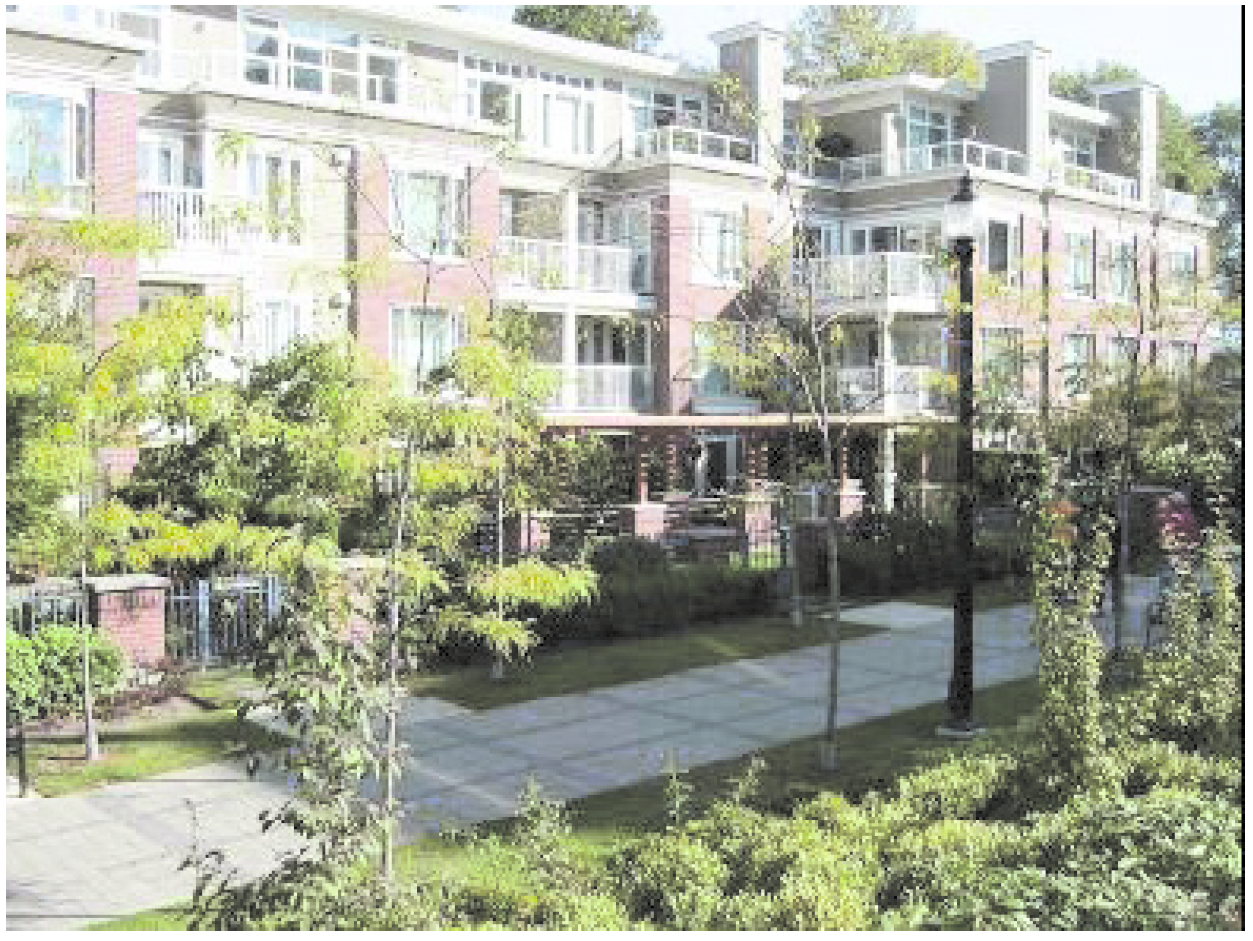
(Ord. No. 91500-A-595, § 1, 8-14-12)
Sec. 12-18A-7. - Parking regulations.
1.
Parking shall be provided for "SF", "2F9" and "TH" uses as follows:
a.
A minimum of two garage-enclosed parking space and two additional off-street parking spaces (driveway may be counted toward provision of off-street parking) shall be provided for each lot.
b.
Alley served: Rear entry, alley-served developments are encouraged. Garages shall be set back a minimum of 20 feet from the alley right-of-way.
c.
Front entry: To keep the front of the structure from being dominated by garage doors, for dwellings less than thirty-five feet wide, the dwelling is limited to a single wide garage if such garage door is front facing.
d.
All garage doors facing the street must be setback a minimum of 22 feet from the street rights-of-way.
e.
The garage may be a tandem garage or, if a swing entry, rear or side access, it may be a double garage.
f.
In addition to the required off-street parking, another one-half space per unit is required for guest parking. These required spaces are to be located within 600 feet of the respective units
2.
MF uses:
a.
Parking spaces shall not be located between the buildings and the public street right-of-way.
b.
Two parking spaces shall be provided for every one- and two-bedroom unit and 2.5 parking spaces per three-bedroom unit.
c.
Structured parking is encouraged, especially when incorporating office and/or retail uses.
d.
At a minimum, covered parking spaces shall be provided for at least 50 percent of the total required parking spaces (not including required guest parking). The covered parking structures shall be architecturally compatible with the main structures.
e.
In addition to the required off-street parking, another one-half space behind the curb line per unit is required for guest parking. These required spaces are to be located within 600 feet of the respective units and can be provided on-site or on-street.
Illustration 12-18A-7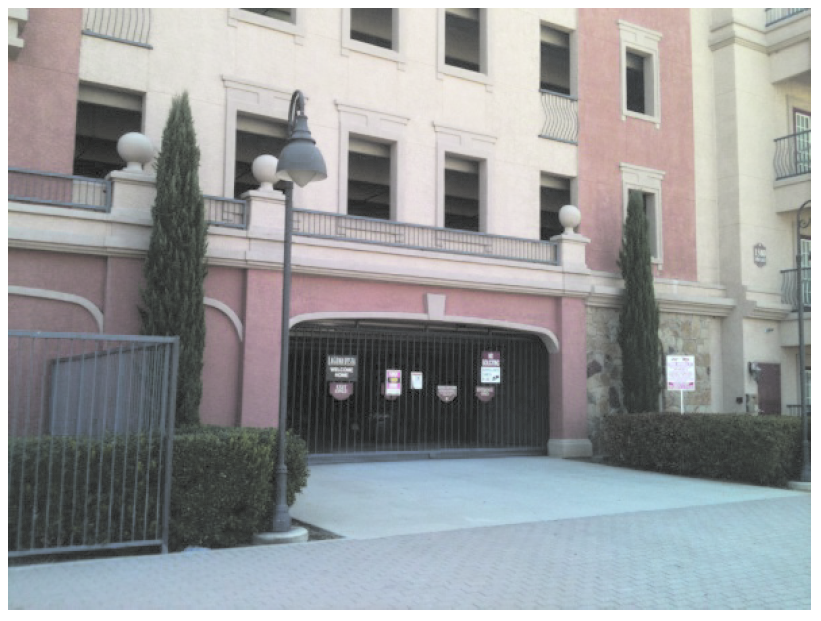
3.
On street parking within the RBN district, shall be permitted subject to:
a.
On-street parking shall be designed to allow safe and efficient movement into and out of travel lanes.
b.
To minimize additional paving, on-street should generally be limited to parallel parking. Parallel parking spaces shall be a minimum 20 feet in length and eight feet in width from face of curb.
c.
Parking stalls shall be spatially separated from through-lanes to provide visibility for motorists driving, parking, or disembarking parked vehicles.
Figure 12-18A-5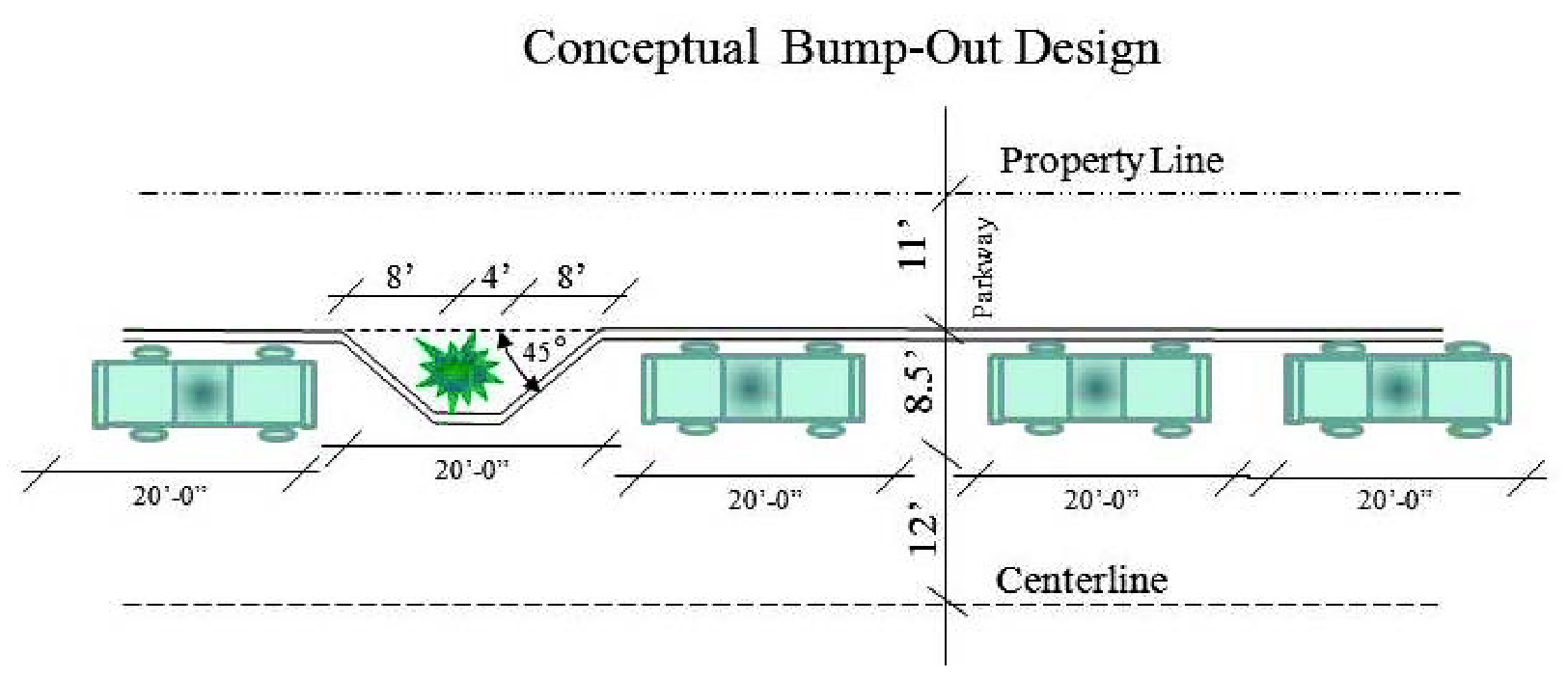
d.
Approval of detail plans will be subject to engineering department review and approval.
e.
Right-of-way widths will vary depending on type of street.
f.
There shall be a maximum of six parallel spaces between bump-outs. Bump-outs shall also be provided at all street intersections where on-street parking is permitted. Additional on-street parking shall not be permitted in close proximity and on the same side of the street.
(Ord. No. 91500-A-595, § 1, 8-14-12)
Sec. 12-18A-8. - Streetscape design.
The intent of the streetscape design it to provide pleasant and attractive pedestrian environment while supporting safe vehicular movements. These areas shall be of sufficient width to accommodate sidewalks, street trees, street furniture and other amenities as appropriate.
1.
The streetscape area shall be defined as the area between the back of curb and the build-to lines (face of the building).
2.
The property owner shall be responsible for the construction and maintenance of this area, whether privately-owned or public right-of-way.
3.
The streetscape area will vary in width depending on the type of street and the build-to line (refer to article 12-18A, section 12-18A-3 A.1., area regulations).
4.
Street trees shall be provided on private property along all street frontages, as follows.
a.
40-foot on center if not individually platted lots, and one tree per lot if townhouse, duplex or single-family.
b.
Trees shall be overstory trees, minimum three inches caliper at the time of planting and shall be selected from the plant pallet in article 34, landscape regulations, Code of Ordinance.
c.
The trees shall be limbed-up to at least seven feet and pruned to leave a minimum seven feet of clearance over pedestrian walkway and 14 feet of clearance over on-street parking spaces and travel lanes.
5.
Sidewalks shall generally be located five feet from back of curb to provide a buffer between vehicular and pedestrian movements. The width of the sidewalk will vary depending on the built-to line and adjacent street classification, but shall not be less than four feet in width.
(Ord. No. 91500-A-595, § 1, 8-14-12)
Sec. 12-18A-9. - Mechanical equipment.
Mechanical equipment shall be constructed, located and screened so as not to interfere with the peace, comfort and repose of the occupant(s) of any adjacent building or residence, and shall comply with article 12-3, section 12-33-1, location of required screening, Code of Ordinances.
(Ord. No. 91500-A-595, § 1, 8-14-12)
Sec. 12-18A-10. - Refuse facilities.
1.
Multifamily uses:
a.
Every dwelling unit shall be located within 250 feet of a refuse facility, measured along the designed pedestrian and vehicular travel ways.
b.
There shall be available at all times at least six cubic yards of refuse container per 30 multi-family dwelling units and at least one triple-wide recycling enclosure.
c.
For complexes with less than 30 units no less than four cubic yard refuse container shall be provided.
d.
Each refuse facility and recycling container shall be visually screened by a six-foot high solid masonry enclosure on all sides except the side used for refuse pickup service, which shall have gates of solid screening material. These gates shall remain closed at all times when not in active use.
e.
Each refuse facility shall be located so as to provide safe and convenient pickup by refuse collection agencies.
(Ord. No. 91500-A-595, § 1, 8-14-12)
Sec. 12-18A-11. - Other applicable regulations.
Unless otherwise specified in this article, development within this district shall comply with the development regulations applicable to the uses and regulations as included in chapter 12, zoning of the Coppell Code of Ordinances, as amended.
(Ord. No. 91500-A-595, § 1, 8-14-12)

