
Coppell City Zoning Code
Appendix B
Repair and Maintenance
A.
Awnings.
1.
Should be washed periodically and kept in good repair.
2.
Hardware should be regularly checked for rust or loose mechanisms.
3.
Torn or deteriorated awnings should be replaced.
B.
Brick and Masonry.
1.
Materials original to the building should be preserved.
2.
Brick and masonry should not be sandblasted or subjected to any kind of abrasive cleaning. Do not clean with high-pressure water, which exceeds 450 pounds per square inch. These processes damage brick surfaces and erode mortar joints.
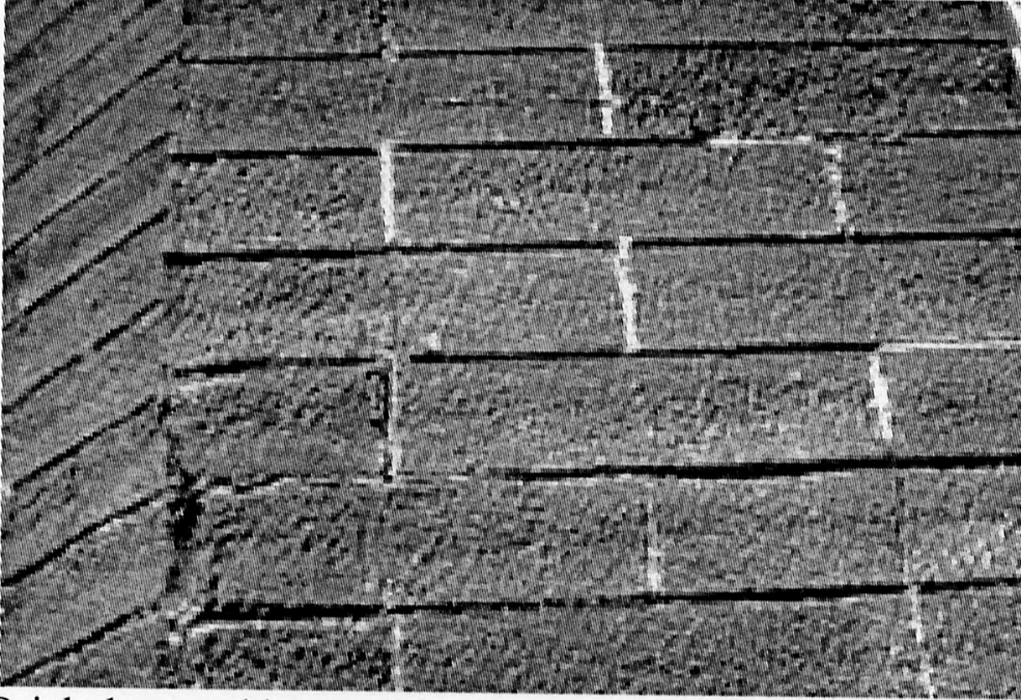
Brick damaged by sandblasting
Brick damaged by sandblasting
(Taken from the Secretary of the Interior's Standards for Rehabilitation)
3.
Brick and Masonry should be cleaned with detergent cleansers or chemical agents.
4.
To avoid needlessly introducing moisture or chemicals into the building, brick and masonry should be cleaned only when necessary to remove heavy soiling and to stop deterioration.
5.
Paint removal should not be done if the paint is firmly adhered to, and therefore protecting the masonry surface.
6.
Water-repellent coatings should not be added unless masonry repairs have failed to stop water penetration problems.
7.
As a general rule, brick and masonry should not be painted unless in the case of brick, the brick is extremely mismatched from earlier alterations or cannot withstand weather. (Stone shall not be painted.)
8.
Keep exterior brick clean of mildew, efflorescence and dirt. Also keep exterior brick clean of vines, ivy, and other plant material.
9.
Repointing of historic mortar should be with a mortar, which matches the original in appearance and composition. The use of Portland cement is generally not appropriate due to the hardness of the mortar versus the softness of the brick. Most mortar prior to 1900 was composed of lime and sand. Mortar with similar content should be applied on buildings of that era.
10.
Repointing should be done with original compounds, if it can be determined, or with a historic compound such as one part lime and two parts sand. Original type mortar compounds allow for expansion and contraction while hard mortar or cement prevents the expansion and contraction process.
11.
Repointing should match original width, depth, color, raking profile, composition and texture.
12.
Most silicone based or waterproof coatings have limited effectiveness and may actually add to moisture problems by not allowing the brick to breathe. The use of these products is discouraged.
13.
Brick and masonry should not be stuccoed.
14.
Mortar should be removed by hand tools, not electric power saws, for repairs. Electric tools can damage older brick.
15.
Features that are missing may be replaced where extensive deterioration requires, if it is accurately duplicated.
16.
Repair existing stucco and stucco texture. It is inappropriate to remove stucco from any originally stuccoed surface or to add stucco as a major wall material to any building, which did not originally use stucco as the dominant exterior wall material.
C.
Chimneys.
1.
Chimneys should be regularly checked for cracking, leaning, spalling, and infestation by birds and insects. The use of chimney caps over chimneys or flue openings is recommended to keep out moisture.
D.
Entrances.
1.
Doors, transoms, and sidelights should be kept clean and the glass should be washed.
2.
Original locks and hardware should be kept oiled and in good repair. If original hardware is missing or is deteriorated, the use of reproduction locks and hardware suitable for the building is recommended.
3.
Doors with stained wood finish should be kept varnished and paint over the wood finish is not recommended.
E.
Foundations.
1.
All water should drain away from a building and should not enter the foundation.
2.
Trees, shrubs and other plants should be kept well away from the foundation to prevent damage from moisture and root movement.
F.
Gutters and Downspouts.
1.
Keep gutters and downspouts in good repair. Make sure they are properly connected, are clean of leaves and other debris, and channel water away from the building. Seal all cracks in downspouts with silicone caulk or sealants.
2.
The use of splash blocks to keep water away from the foundation is recommended.
3.
Gutters and downspouts that are deteriorated should be replaced with new gutters and downspouts. Half-round gutters and round downspouts are preferable to corrugated designs.
G.
Porches and Exterior Ornamentation.
1.
Use pressure treated wood for exterior repairs and replacement.
2.
Keep all porch and trim elements painted.
H.
Roof, Cornices.
1.
Check the roof regularly for leaks, deterioration of flashing, and worn roof surfaces such as rolled asphalt shingles. An inspection of the upper floor or attic space during or following a rainstorm can also assist in detection of water related problems.
2.
Know what metals are used in cornice or roof's flashing and use only similar metals during replacement or repair. Different metals should not touch each other or a galvanic reaction may occur leading to corrosion.
3.
Metal roofs and cornices should be kept painted to prevent rust and deterioration. Appropriate paints include those with an iron oxide oil base. Asphalt based paints and aluminum paints should not be use on historic metals as they could accelerate the rusting process.
I.
Siding.
1.
Siding original to the building should be repaired and maintained. Replacement is permitted only when necessary due to deterioration.
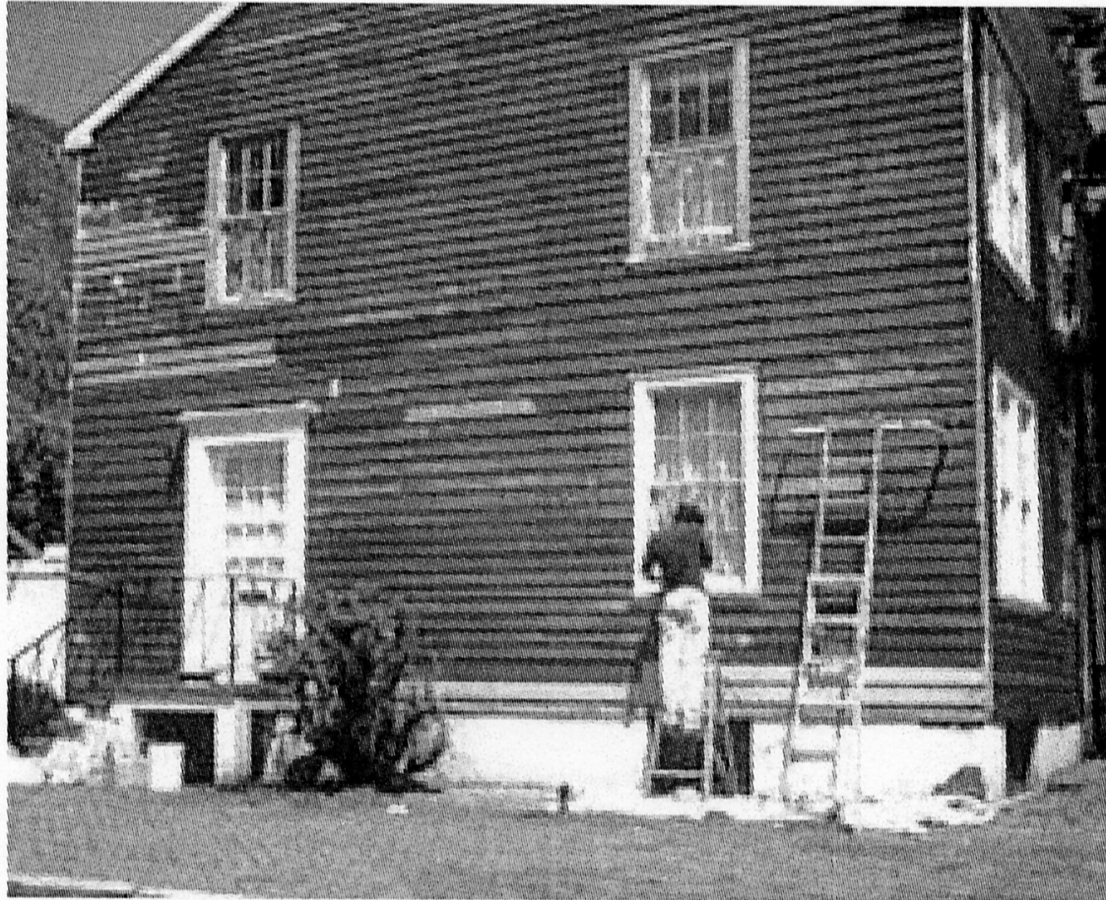
Limited clapboard replacement
Limited clapboard replacement
(Taken from the Secretary of the Interior's Standards for Rehabilitation)
2.
Where exterior siding has to be replaced, the use of pressure treated wood is recommended to prevent deterioration. Replacement siding should match the profile of the existing siding.
3.
When original flashing materials are replaced, the new siding should match the original as closely as possible, especially with respect to board size. Original corner boards should be duplicated to their full original width.
4.
Repairs for wood siding such as cracks can be made through the use of waterproof glue or plastic wood. Large cracks may be filled with caulk followed by putty or plastic wood. The surface should then be sanded, allowed to dry, and painted.
5.
Oil based paints are recommended for exterior siding.
6.
Prevent water from making contact with exterior wood siding. Keep all gutters and downspouts in good repair to keep water from infiltrating the wood-surface.
7.
Siding of artificial or substitute materials such as steel, vinyl or aluminum is discouraged unless the board width, corner boards, cornice and window trim are of the same proportion as the original. If artificial siding is used, retention of original wood window trim, rafter tails, and ornamental wood detailing is encouraged.
8.
Application of such uncharacteristic material as steel siding, aluminum siding, vinyl siding, imitation stucco, and metal frame windows obscures the original character of the building and of the neighborhood. This should be avoided.
Note: The application of synthetic wall material such as aluminum and vinyl siding has
long been discouraged by preservationists due to the fact that the placement of these
materials may seal the wall and cause the wood to rot. In many cases, existing rotted
wood is not removed and the structural integrity of the house is at risk due to unseen
progressive decay.
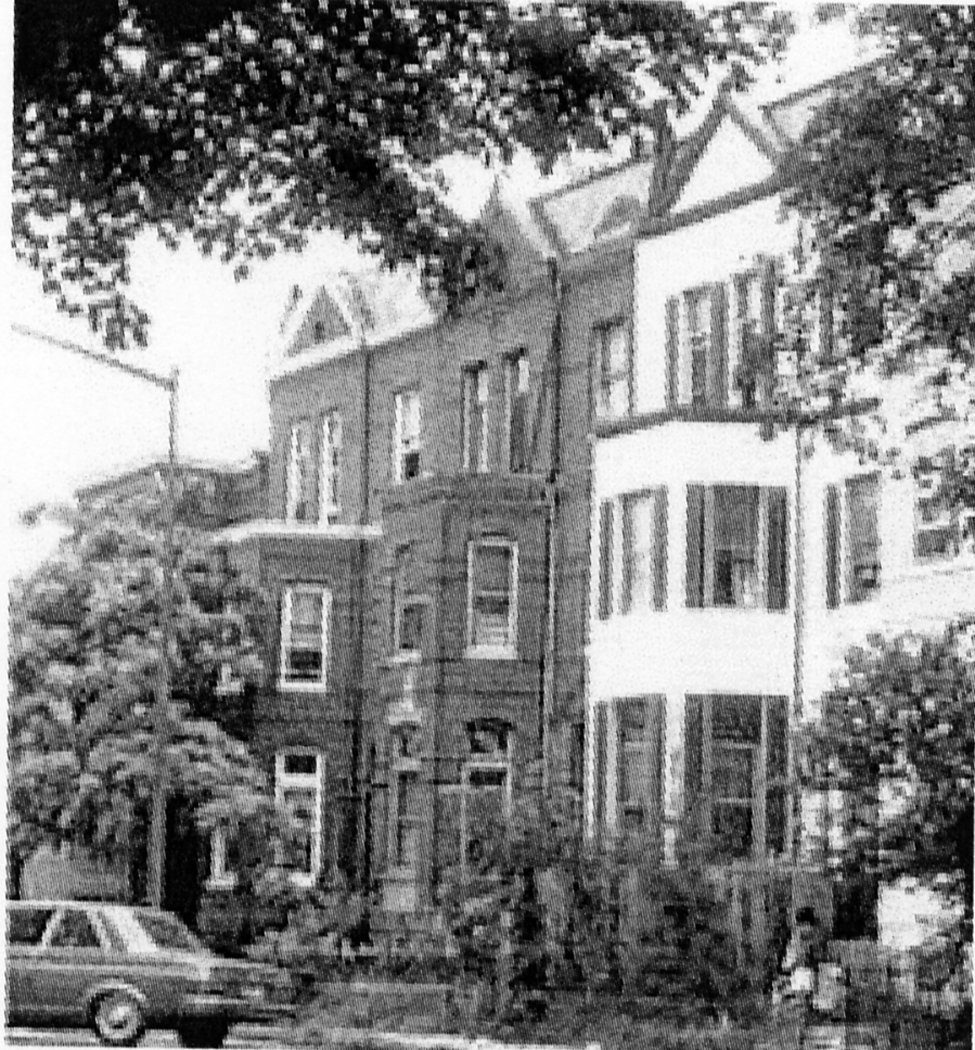
Setting altered by vinyl siding
Setting altered by vinyl siding
(Taken from the Secretary of the Interior's Standards for Rehabilitation)
J.
Signs.
1.
Abandoned signs and sign hardware should be removed from a building, unless historic.
2.
Signs should be kept painted and mounting bolts should be checked periodically to make sure they are secure.
3.
Light fixtures, conduits, and wiring for signs should be inspected and replaced when necessary.
K.
Windows.
1.
Windows should be kept clean and free of dirt and grime. Wood sash surfaces should be painted regularly.
2.
Windows should be kept caulked and sealed to aid in energy conservation.
3.
Shutters should be kept painted and in good repair.
4.
Old or deteriorated curtains or shades behind house windows should be removed or replaced.
L.
Wood.
1.
Wood and wood details original to a building should be repaired rather than replaced.
2.
Exposed structural elements such as beams and rafter rails should be retained and maintained.
3.
Replacement of wood features and details should match the original in dimension, size and profile.
4.
Wood should always be treated and kept in good order (including paint, stain, nailing, etc.).
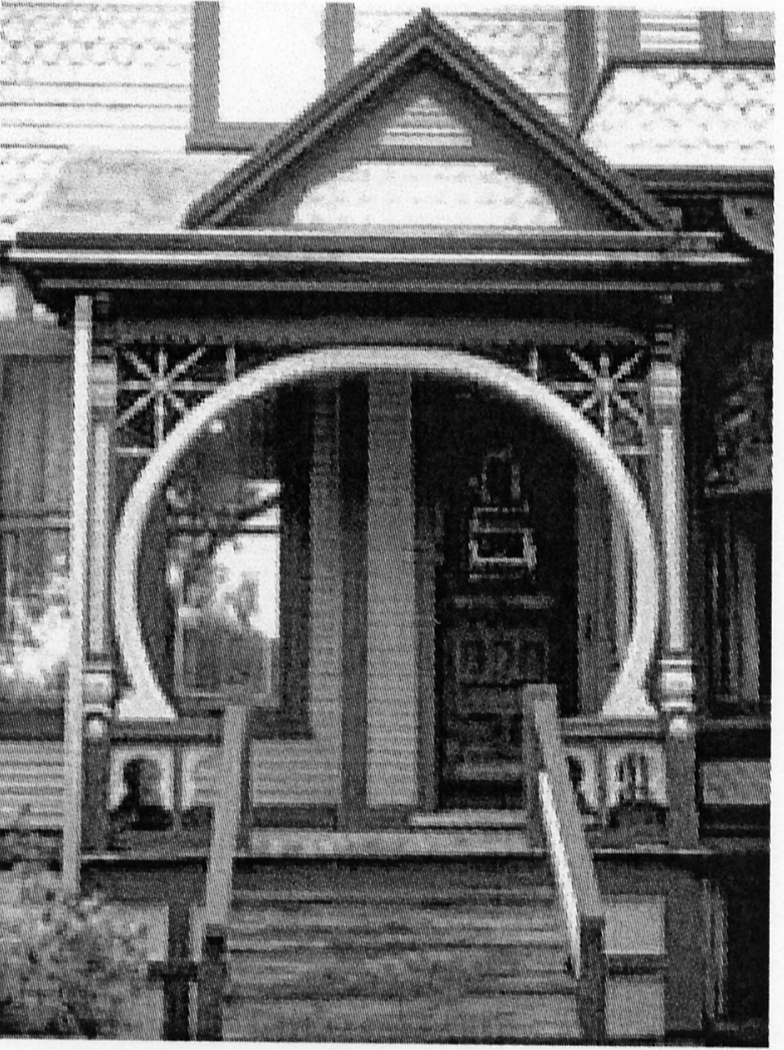
Repair/preservation of wooden features
Wood features on porch repaired and preserved during rehabilitation
(Taken from the Secretary of the Interior's Standards for Rehabilitation)

