
Coppell City Zoning Code
APPENDIX 1
OLD COPPELL DESIGN GUIDELINES4
Introduction:
A.
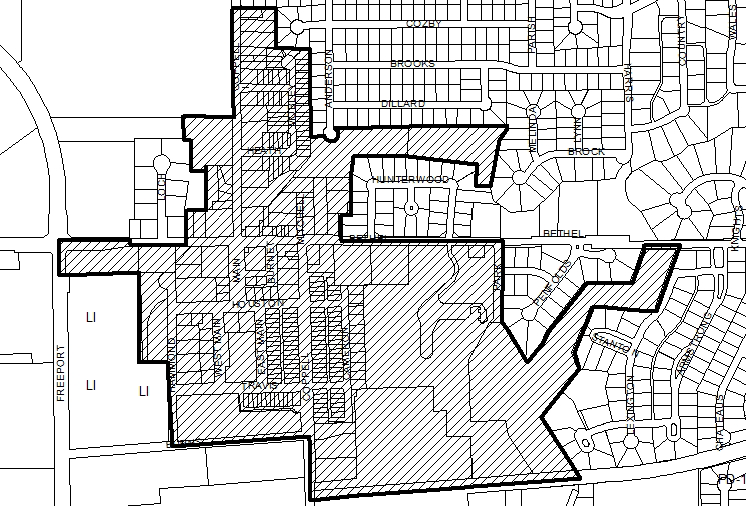
These guidelines are intended to be helpful in development and redevelopment of the Historic District. These do not provide exact formulas for design. The desired results of the Historic District are as follows:
1.
Provide special development standards compatible with the unique character of Old Town Coppell, as defined herein.
2.
Preserve and enhance the area's special historic, architectural and aesthetic features.
3.
Ensure that new construction and alterations to existing structures are compatible with the unique character of the area.
4.
Provide an area for living shopping, dining, working, recreation and entertainment.
5.
Promote pedestrian activity within Old Coppell to encourage an atmosphere of a by-gone era.
Targeted and Permitted Uses.
A.
As stated in the Old Coppell Master Plan, The proposed mechanism for regulating land uses within the study area is mixed use zoning that will accommodate a rich variety of uses. While this proposed land use plan should remain flexible to adapt to changing market conditions, as the proposed zoning will achieve, the following land uses are currently considered optimal. A complete list of Permitted Uses is contained in section 12-28A-1 of the Zoning Ordinance.
1.
Artisan's Workshop;
2.
Bakery;
3.
Family Restaurant;
4.
Fine Dining Restaurant;
5.
Bookstore;
6.
Gift Shop;
7.
Coffee House;
8.
Antiques;
9.
Theme Restaurant;
10.
Hobby/Craft Store;
11.
Florist;
12.
Bed-n-Breakfast;
13.
Hotel;
14.
Theater;
15.
Shoe Repair;
16.
Jewelry Shops;
17.
Retail on First Floor;
18.
Office and Residential on Second Floor and/or Rear;
19.
Institutional;
20.
Parks and Open Space;
21.
Residential.
B.
Events encouraged are:
1.
Festivals/Parties;
2.
Concerts;
3.
Farmers Market Activities;
4.
Arts and Craft Shows;
5.
Children's Events (Puppet Shows, Easter Egg Hunts, etc.);
6.
Book Signings.
New Construction (Planning and Zoning Commission and City Council approval required).
A.
New construction of primary buildings shall maintain, not disrupt, the existing pattern of surrounding historic buildings along the street by being similar in the following:
1.
Scale (height and width). Maximum height is to be 35' or two and one-half stories, not including architectural elements such as cupolas, chimneys and steeples.
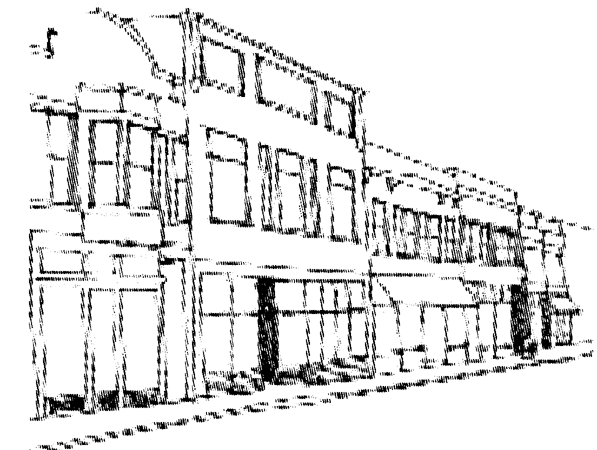
Appropriate scale
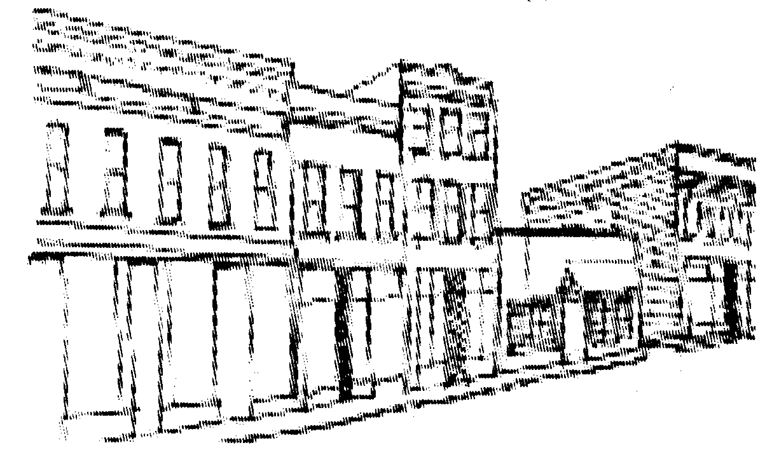
Inappropriate scale
2.
Shape. The massing of new buildings should be consistent with the general massing of the existing "character defining" buildings, and shall generally not exceed 5,000 square feet in size.
3.
Roof form and pitch.
a.
The predominant roof form should be a gable. Gable ends fronting the street are particularly appropriate based on historic precedents.
b.
Exceptions to the gable roof form are most appropriate for institutional buildings that warrant distinction. Architectural features such as cupolas and steeples are appropriate for institutional buildings.
c.
Roofs can be screened by parapet facades
d.
Dormers shall be traditional in design and compatible with the character and scale of the structure.
4.
Orientation to the street.
a.
Building facades should be parallel with the street.
b.
All buildings should have the main entrance fronting the primary adjacent street, and entrances should be well articulated through design. Corner entrances are acceptable for corner buildings.
c.
Commercial buildings should be built in close proximity to the sidewalk, with the exceptions being restaurants with front outdoor dining.
d.
Institutional buildings can be set back from the street to distinguish themselves as special buildings.
e.
Townhouses should front directly onto the sidewalk, although a shallow lawn can be bridged with a front stoop.
5.
Location and proportion of entrances, windows, columns, porches, and divisional bays:
a.
Buildings having facades longer than those historically found in the district should utilize distinct vertically oriented bays to break up the massing.
b.
Massing should be broken up through the use of facade plane projections and recesses, pilasters, roofline variations, color and material variations, and canopies.
c.
All window and door openings should be vertically oriented and should be vertically aligned between floors.
6.
Windows:
a.
Display window mullion or framing shall be of wood, copper, or bronze metal.
b.
Clear, rather than tinted glass shall be used for storefronts. If privacy or shade is required, use interior shades or blinds.
c.
Windowpanes shall be vertically oriented.
7.
Foundation/first floor height. Foundations should be raised and constructed of brick (Brick veneer is acceptable).
8.
Porch height and depth. Porches should encourage street activity.
9.
Canopies/awnings. When adding canopies or awnings to a building, use traditional designs, materials, and placement.
a.
Shall be individually located within major bays, not continuous.
b.
Shall not cover architectural features of the facade.
c.
Shall be of colors to compliment the structure.
d.
Shall be made to fit opening and shall be of a style appropriate to the building.
e.
When adding to a building, use traditional designs, materials, and placement.
f.
Canopies shall be at least 8' above grade.
g.
Canopies shall be wooden and parallel with the sidewalk.
h.
Awnings shall be angled and made of fabric (canvas) or similar materials (sunbrella). Plastic and metal are prohibited.
i.
Awnings shall not be internally lit.
10.
Material, material color and texture.
a.
Commercial buildings should have a minimum of 60 percent glazed area (window and door openings) for ground floor primary facades.
b.
Glass should be transparent rather than tinted or reflective.
c.
Exterior facade material should be wood siding or other siding consisting of or closely resembling painted horizontal clapboard, horizontal shiplap, vertical tongue-in-groove or vertical board and batten siding. Materials used for siding other than wood shall consist of masonry, metal or vinyl. Metal and vinyl siding shall have a baked-on, non-glossy enamel surface or other factory finish, which requires no additional coat(s) of paint at time of installation.
d.
Aluminum if clad chimneys are prohibited.
e.
Paint colors.
1.
Paint colors should highlight architectural details based on historic tradition for the building's type and style.
2.
Keep colors compatible with the building's style and design.
3.
Loud, garish, or harsh colors, and bright hues are prohibited.
4.
Generally no more than three colors are applied per building
5.
Brick, stone or other naturally unpainted materials shall not be painted unless the material has been painted previously.
6.
Color determination should be based on historic schemes appropriate for the style of the building. Reference materials and assistance is available from the Planning Department and the Texas Historical Commission in determining appropriate paint colors.
7.
Oil based paints are recommended for exterior siding.
11.
Placement on the lot (setbacks).
a.
The structure shall conform to the existing setback pattern along the same street.
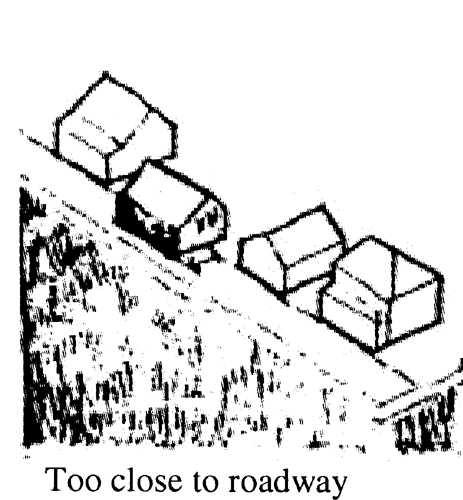
Too close to roadway
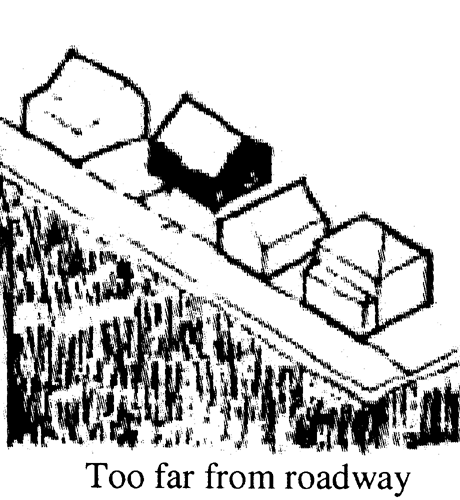
Too far from roadway
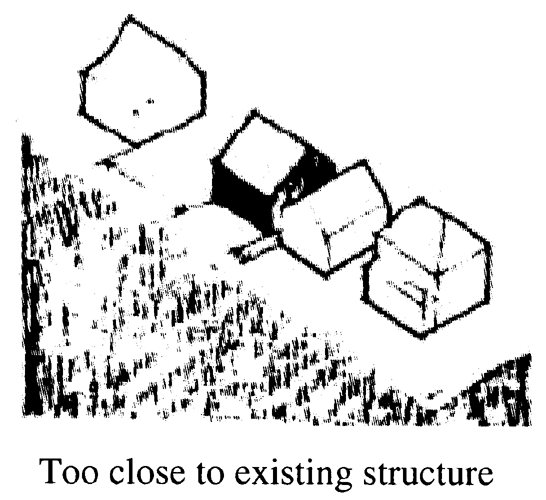
Too close to existing structure
b.
Front yard.
1.
To be measured from back of curb.
2.
Generally, 15'—25' total comprising of:
a.
Seven-foot wide area of street trees, landscaping and lighting.
b.
Minimum five-foot concrete sidewalk with stamped concrete bands.
c.
Five-foot to ten-foot wide area with plants area other amenities (benches, trash receptacles, bike racks, etc…) if appropriate.
3.
The front yard may also contain a patio if a restaurant or similar use is proposed. A larger front yard is permitted for institutional uses.
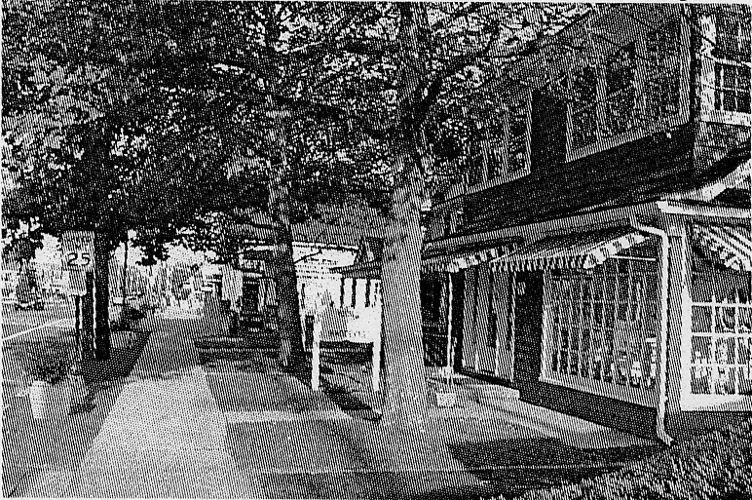
Front yard with 10 feet planting area adjacent to facade
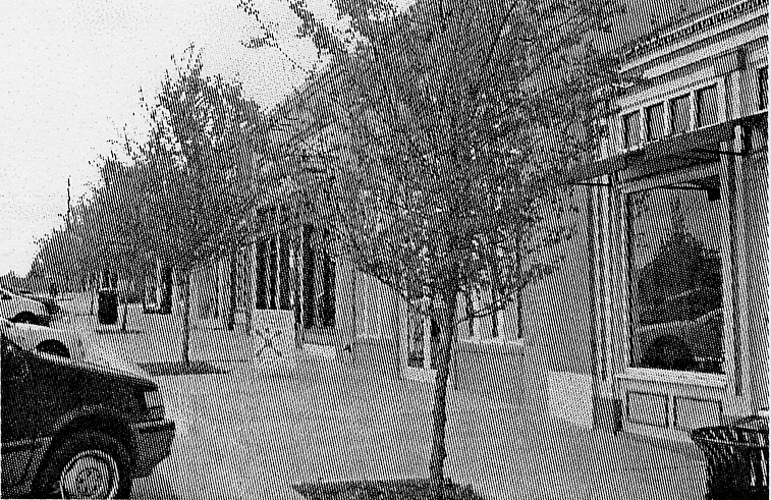
Front yard without planting area adjacent to facade
c.
Side yard. Zero-foot to eight-foot unless:
1.
Adjacent to a roadway, then it shall be treated as a front yard (this shall follow the same architectural guidelines as the primary facade).
2.
Adjacent to a residential district, then it shall equal the side yard requirements of that residential district.
3.
A fire lane or drive is included in the side yard, then a side yard can extend to the limits of such fire lane or drive.
d.
Rear yard. No rear yard is required unless adjacent to a residential zoning district, then a ten-foot minimum landscape buffer is required in accordance with Section 12-33-1 of the Zoning Ordinance. Rear yards shall provide for parking.
B.
Additions.
1.
Additions shall be of a compatible design in keeping with the original structure's character, roof shape, materials, color, and alignment of window, door, and cornice height, etc.
2.
Generally, additions should be secondary (subordinate) to the original structure in scale, design, and placement.
3.
Additions should be attached to the rear facade, not on front facade or visible portions of secondary facades.
4.
Additions should not attempt to imitate an earlier historic style or architectural period than that of the existing structure.
5.
Additions should be constructed in a manner that avoids extensive removal or loss of historic materials, and which does not damage or destroy character-defining features.
6.
It is recommended that the exterior walls of the original structure be kept intact and existing openings utilized for connecting an addition with the original structure.
7.
Additions should not be created through enclosure of a front porch or architecturally important prominent side porch.
8.
Excavation adjacent to historic foundations should take care to avoid undermining the structural stability of the historic building.
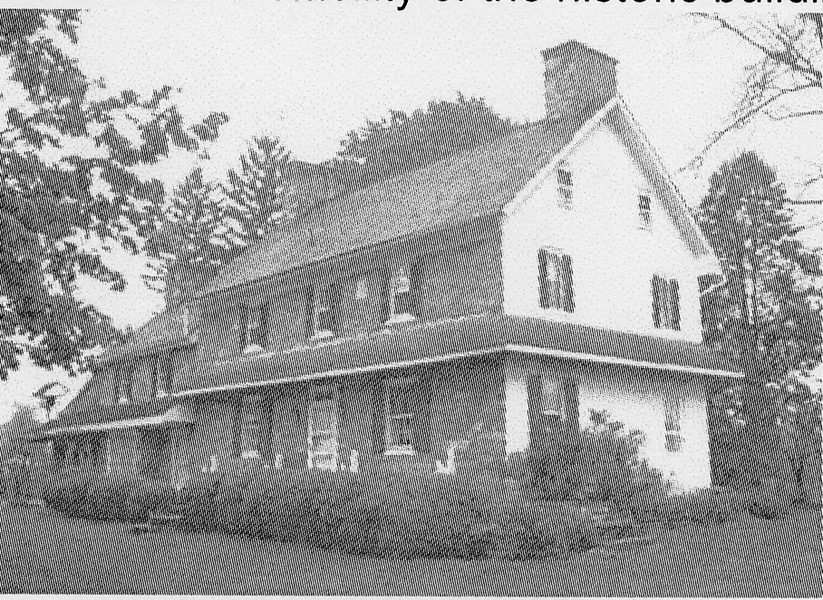
Kitchen addition on left side of building
(Good example of an addition being subordinate to main structure)
Accessory Structures (Administrative Approval Available).
Includes garages, storage buildings and outbuildings.
A.
Existing structures:
1.
Should be maintained in good condition.
2.
If visible from street should maintain original style and scale.
B.
New construction of secondary structures such as garages, storage buildings and other outbuildings:
1.
Should be smaller in scale than the primary building.
2.
Should be compatible in design, shape, materials, and roof shape and reflect the general character of the primary building (wood allowed).
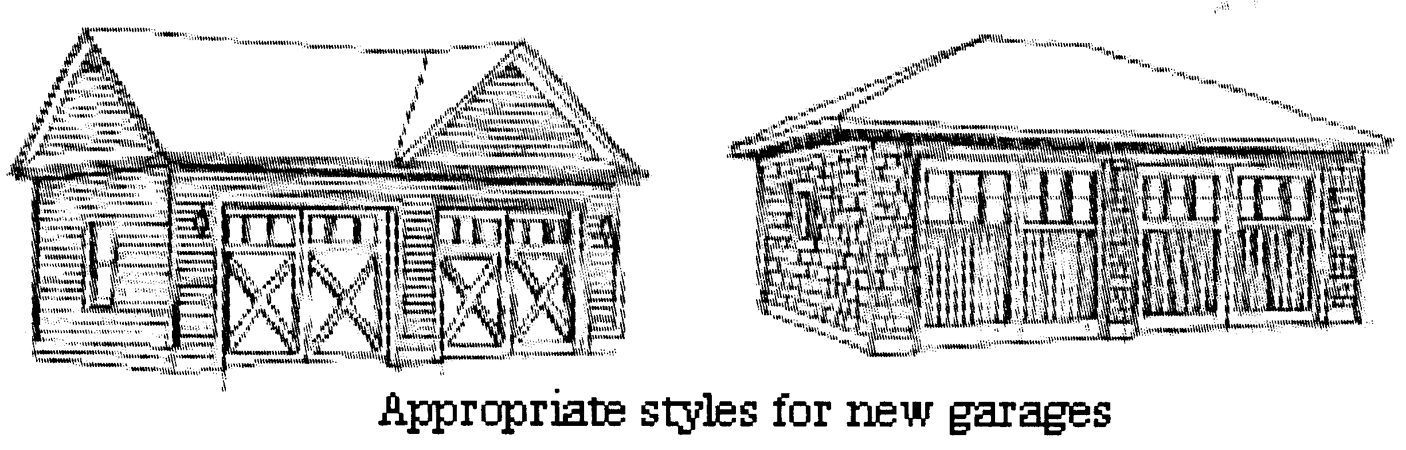
Appropriate styles for new garages
3.
Should be located where such a structure would have historically been located (near the alley, not close to or attached to the primary building).
4.
Shall conform to the setback standards of Section 12-28A-3 of the Zoning Ordinance.
Demolition (Planning and Zoning Commission and City Council Approval Required).
A.
Demolition of any original feature or part of a historic building should be avoided.
B.
Demolition of a building which contributes to the historic or architectural integrity of the Historic District should not occur, unless:
1.
Public safety and welfare requires the removal of a building or structure due to severe structural instability, deterioration or other factors as determined by the building code inspector and concurring reports acceptable to the Planning and Zoning Commission from an engineer, architect, or other person expert in historic preservation.
2.
The building has lost its original architectural integrity and no longer contributes to the district.
3.
No other reasonable alternative is feasible, including relocation.
C.
Demolition of pre-1945 secondary (accessory) buildings (garages, storage sheds, etc.) may be appropriate if substantially deteriorated (requiring well over 50 percent replacement of exterior siding, roof rafters, surface material, and structural members).
Moving Buildings (Planning and Zoning Commission and City Council Approval Required).
A.
It may be appropriate to move a building into the historic district if that building is compatible with the district architectural character through style, use, period, height, scale, materials, setting, and placement on the lot.
B.
New foundation walls should be compatible with the architectural style of the building.
C.
Moving existing buildings out of the district that contribute to the historic and architectural character should be avoided unless demolition is the only alternative.
Non-Historic Buildings:
Although a building may not be historic at this time, some day it will be (it is generally accepted that a building is considered "historic" when it reaches 50 years of age). Each building period has its own details and characteristics, which contribute towards its uniqueness. Non-historic buildings should be maintained as close to their original design as possible.
On-Site (Requirements for New Construction, Additions and Renovations):
A.
Curb Cuts.
1.
Curb cuts should generally be avoided unless necessary to access new parking for commercial and institutional structures.
2.
Curb cuts should be constructed to match the curb cuts of the district in size, color, materials, and configuration.
3.
Curb cuts should conform to the City of Coppell standards for allowable locations.
B.
Driveways.
1.
Generally, no more than one driveway should exist per building.
2.
Maximum driveway widths should not exceed 24'.
3.
Shared driveways are encouraged.
4.
The original design, materials and placement of driveways should be preserved.
5.
Driveways shall be located to the side with garages sited in the rear yards unless original garage was located to the side.
6.
Concrete, patterned concrete, brick or asphalt are permitted for driveways outside of the public right-of-way, patterned concrete within the public right-of-way.
7.
Driveways should have their parking pads located in the rear yard nearer the alley than the structure and screened with hedges, shrubs, or fences where visible from the street.
8.
Front yards should not be paved, covered with gravel, or used as a parking area.
C.
Fences and Walls.
1.
Wooden picket fences in the front yard may be constructed to a height of three-and-a-half feet; have pickets no wider than four inches and set no further apart than three inches; and of a design compatible and appropriate design with the house.
2.
Wood board fences for privacy shall only be located in rear yards; generally no taller than six feet; set back from the front facade (wall plane) of the structure at least half-way back from the front to the back walls, and should be stained or painted to blend with the structure; and of a design compatible with the structure.
3.
Walls of freestanding brick are not permitted in front yards but are acceptable at rear yards and side yards not visible from the street.
4.
Fences of railroad ties or timbers, whether freestanding or as a retaining wall, are not permitted.
Within nonresidential zones of the historic district, alternative fencing and fence materials, aside from vinyl, may be acceptable providing these types of fences are not easily visible from the street. This shall be determined on a case by case basis.
D.
Fire Safety.
1.
Fire lanes.
a.
Required if any portion of a building is in excess of 150' from dedicated fire lane or street.
2.
Coverage requirements.
a.
Fire hydrants required to be spaced every 300 linear feet along the right-of-way (street and/or fire lane).
b.
Automatic fire sprinkler system is required if building size exceeds 5,000 square feet. Additions of wooden (combustible) canopies are included within the building size.
c.
Fire Department connection shall be located at a minimum distance of 1.5 x height of building, unless otherwise deemed acceptable by the Fire Marshal.
3.
Fire escapes are not permitted unless required by the Fire Marshal, and no other means of fire escape is reasonably feasible. Fire escapes are required to be located where not readily visible from the street.
E.
Handicap access.
1.
Ramps should be located on secondary or rear facades.
2.
Ramps are encouraged to be of stained or painted wood construction.
3.
Ramps should be screened with landscaping or low shrubbery to soften their appearance.
4.
Shall comply with the Texas Accessibility Standards.
F.
Landscaping.
1.
Landscaped areas shall be provided according to Article 34 of the Zoning Ordinance. Considerations for additional streetscaping/hardscaping in lieu of required nonvehicular and/or perimeter landscaping within Article 34 can be considered at time of the site plan approval process. All of the interior landscaping (12-34-8(B)) requirements shall be met.
2.
Landscaping should not overwhelm a dwelling or conceal or obscure its primary facade. It is important to maintain large trees which line streets of the Historic District through regular pruning. Missing trees should be replaced when possible in similar patterns to the original. Trees should be planted in similar patterns to the adjacent property if applicable.
3.
Landscaping must conform to the requirements of the City of Coppell governing tree preservation, tree removal, and site clearing.
4.
Landscaping should be considered an important part of any site rehabilitation or new construction. In such cases, continuing the planting strip of trees at the street edge, use of landscaping to buffer parking, and landscaping to accent the scale, proportion, and massing of a building is encouraged.
5.
Features that are original such as sidewalks, planned green space, retaining walls, curbs, stepping blocks, etc. should be preserved.
6.
Plant beds of railroad ties, cut wood, concrete, or any other structural material should be avoided unless appropriate to the architectural style of the house.
7.
Trees shall be planted with similar species and patters to the adjacent property, if applicable.
8.
Landscaping shall be used to buffer parking areas from public view.
Note: Maintain, do not remove, historic or early landscaping, especially trees. Prune and regularly maintain mature shade trees. Keep new landscaping patterns to those traditional to the neighborhood and avoid concealing architectural features of the historic building.
G.
Lighting shall provide adequate level of safety while illuminating buildings, signage, parking areas and walkways.
1.
Lighting fixtures original to the building should be preserved.
2.
Fixtures to be added should be from the period of the structure, or if new, simple in design, based on traditional designs of the early twentieth century, and mounted on porch ceilings or on the exterior wall adjacent to the primary entrance.
3.
Security lighting, such as floodlights, should be mounted on secondary and rear facades.
4.
Small walkway lights rather than freestanding post-mounted lights are more appropriate for private sidewalks and driveways.
5.
Fixtures to be avoided are carriage lamps or any fixtures evocative of a period earlier than the building. Refer to historical photographs and research for light fixtures appropriate to the period of the building.
6.
Street lighting in a residential district should provide effective security for the neighborhood without compromising the trees lining the streets.
7.
Parking lot lighting shall be appropriate to the district and shall not exceed 20 feet in height.
8.
Signs shall be lit top-down style with the lighting well aimed having very little or no spill over.
9.
Street lights shall be representative of the Victorian lighting styles often found in historic downtowns. The street light shown below has been approved within the Old Coppell Historic District and is appropriate for the area.

Typical street light
H.
Mechanical systems.
1.
Mechanical equipment shall be constructed, located and screened so as not to interfere with the peace, comfort and repose of the occupant(s) of any adjacent building or residence.
2.
Window air-conditioners should be located in windows on the rear or side facades and should not result in the removal or replacement of the original window sash or surround.
3.
Electrical and gas meters and other mechanical equipment shall be located on the rear facade and screened from view.
4.
Refer to Article 33 of the Zoning Ordinance for additional screening regulations.
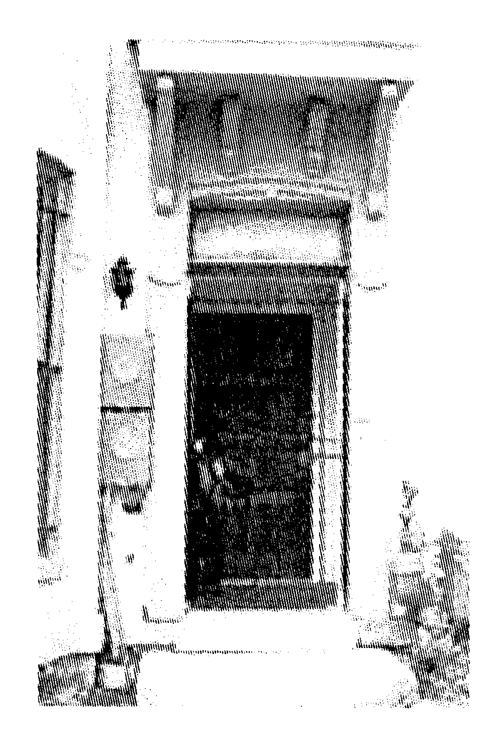
Inappropriate location of meters
Inappropriate location of meters on the primary facade
(Taken from the Secretary of the Interior's Standards for rehabilitation)
I.
Parking and parking lots: Parking shall be in accordance with the off-street parking regulations of Article 31 of the Zoning Ordinance. Special considerations and requirements specifically for the Historic District are as follows:
1.
No parking area shall be allowed within five feet of the rear property line, when abutting a nonresidential district.
2.
Parking is not permitted to be located in the front yard.
3.
No property shall be converted to exclusive parking usage without being approved through the Special Use Permit Process.
4.
Asphalt shall be permitted for parking areas within the Historic District.
5.
Parking lots shall be screened through plantings of hedges, shrubs, trees, or fences at edges and in medians within the parking area. The screening and landscaping of parking areas shall be in accordance with Articles 33 and 12-34-8b, respectively.
6.
Parking lots between buildings shall align edge screening with front facades of adjacent buildings.
7.
Parking lots on comer lots shall have edge screening on both the front and side street.
8.
On street, valet and/or shared parking (Section 12-31-8) may be counted towards the parking requirements.
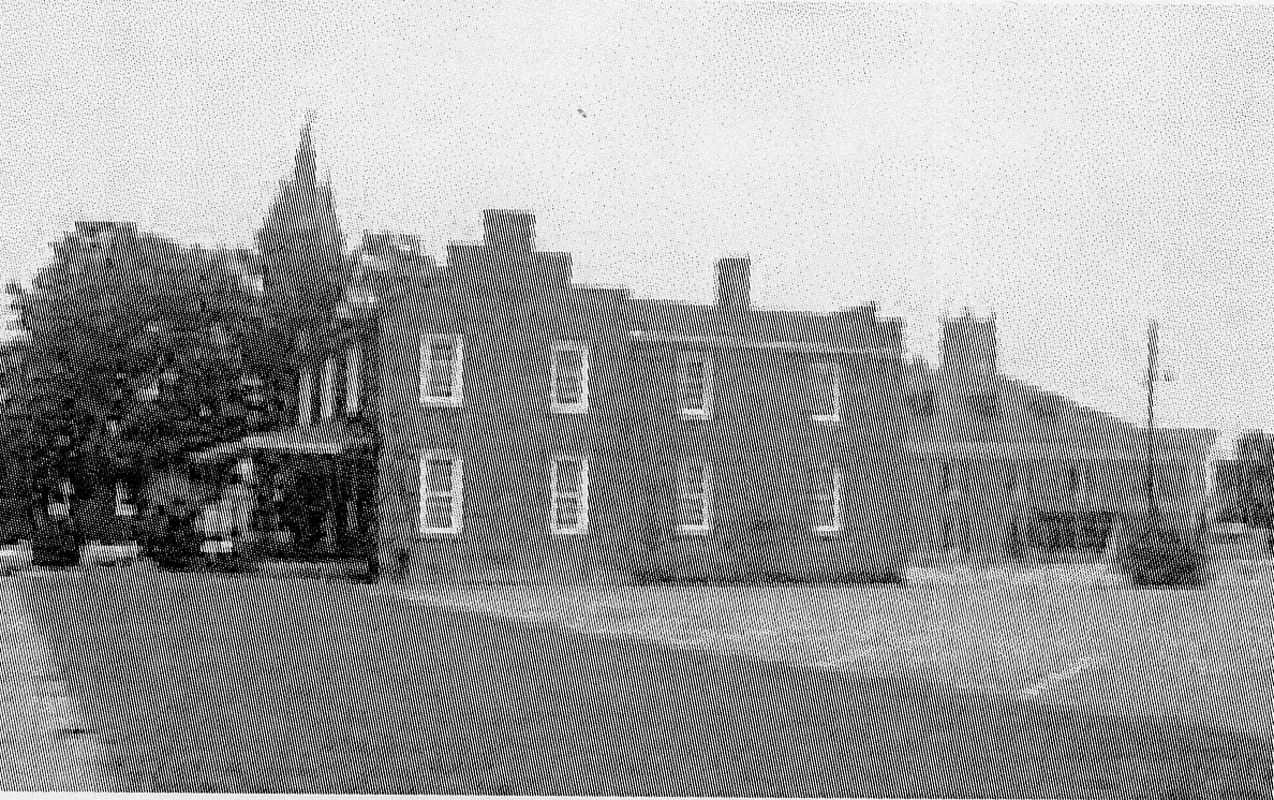
Inappropriate alteration
Inappropriate alteration of a site for parking
(Taken from the Secretary of the Interior's Standards for Rehabilitation)
J.
Parks/playgrounds.
1.
In an existing park (Grapevine Springs Park), original pre-1945 elements, site features (such as benches, walls, etc.) and park layout should be preserved, if possible.
2.
New park space should conform to its location. If in a residential area, a low-impact park with playground equipment and benches is appropriate. Landscaping should conform to the surrounding area with as many original shade trees as possible.
The Parks and Recreation Department shall review proposed playground equipment.
K.
Paving.
1.
All on-site pavement shall comply with city design criteria and standards for parking lots. (For City Design Criteria and Standards see Appendix C, Section I, paragraph E.(1)(j), of Ordinance No. 94643, Subdivision Regulations, as amended.)
L.
Refuse Containers.
1.
For institutional and commercial structures, refuse containers (dumpsters) should be located in the rear and screened from street view with screening/fencing and/or shrubbery.
2.
For residential areas in the historic district, it is not permitted for a single family home to have a permanent refuse container. If (as in the case of a multi-family residential building), a refuse container is necessary, it should be to the rear of the structure, or movable to the location of garbage pickup.
3.
In no case should bagged, boxed or any other garbage other than in permanent garbage collectors be placed on the street before regular pickup days longer than 24 hours. Refer to Article 3-5 of the Coppell Code of Ordinances.
4.
If proposing a trash receptacle, then it shall be designed as outlined in subsection R, Streetscape Furnishings.
M.
Sidewalks.
1.
Refer to Section VIII of Appendix C of the City of Coppell Subdivision Regulations for sidewalk requirements. A wider sidewalk may be needed if abutting on-street parking or an existing wider sidewalk system.
2.
Concrete texturing is encouraged within the Historic District.
N.
Signs.Article 29 is not applicable to the Historic District. All elements (board, bracket, posts, mounting devises, etc. of the sign must be approved by the Planning and Zoning Commission and the City Council.
1.
Signage should not obscure the building's facade or hide the building's character. Signage should reflect or compliment the architectural features of the structure.
2.
The placement of new signage in the same location as early 20th century signage on a particular structure is encouraged. This may be determined from historic photographs.
3.
Some examples of compatible signs are:
a.
Signs painted directly on window glass.
b.
Signs placed in the original sign board area.
c.
Individual letter signs incorporated in the primary facade.
d.
Temporary and appropriate freestanding signs in yards.
e.
Projecting signs or hanging signs as approved through the site plan approval process
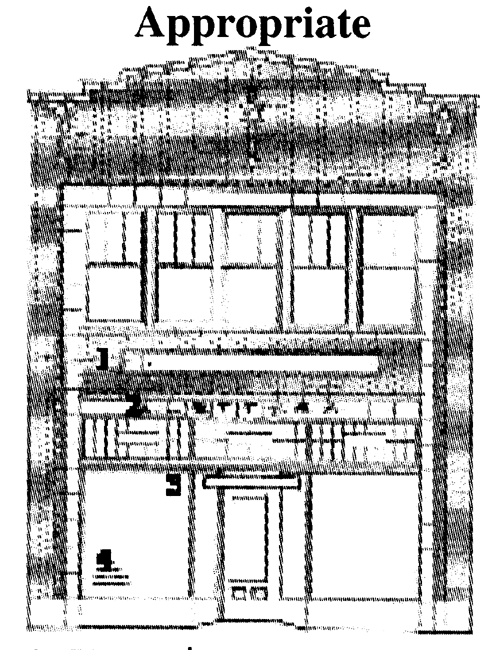
Appropriate
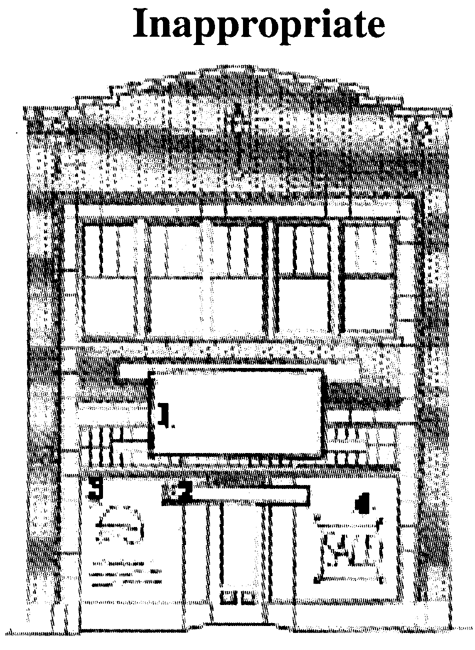
Inappropriate
4.
Signage, which was successfully integrated into the building's design, can be considered a historic addition and may be retained as a historic element.
5.
Colors and materials.
a.
Colors should compliment those used on the structure.
b.
Fluorescent colors and reflective paints or materials are specifically excluded.
c.
Gold and metal leaf is appropriate for lettering and design elements but not as a background or major surface.
6.
Signs should be pedestrian in scale.
7.
Signs may not use motion or flashing lights.
8.
The shape of signs, design elements and style of lettering should be complimentary to the structure.
9.
Signs shall be lit top-down style with the lighting well aimed with little or no spill over.
O.
Steps and walks. Steps and walks original to a property should be retained and maintained.
P.
Street widths/right-of-way. Street widths and right-of-way shall be in accordance with the Subdivision Ordinance unless alternative widths are deemed appropriate by the City Engineer.
Q.
Streetscape furnishings.
1.
Shall be located in accordance with the Old Coppell Master Plan.
2.
Benches shall be constructed of wood and simple in design and compatible with the architecture.
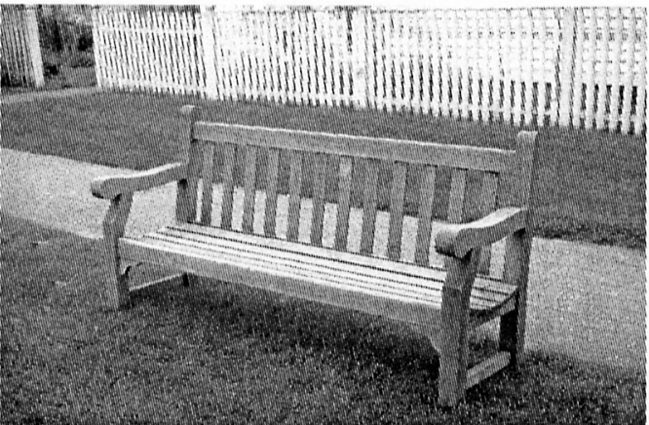
Typical Wooden Bench
3.
Trash receptacles. The receptacle should be a dark color (black or dark green). It is recommended that the same color be used for the trash receptacles and the street lights in order to achieve some level of uniformity.
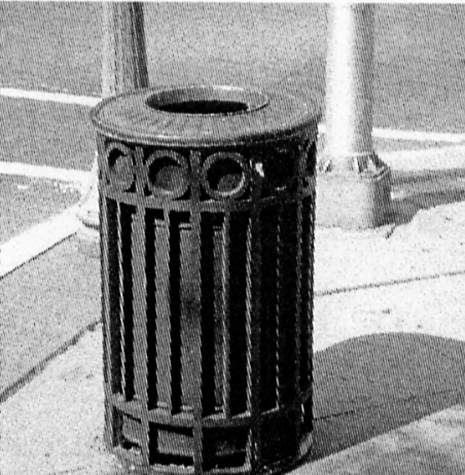
Typical Trash Receptacle
4.
Street lights shall be representative of the Victorian lighting styles often found in historic downtowns. The street light shown below has been approved within the Old Coppell Historic District and is appropriate for the area.

Typical Street Light
Editor's note— Printed herein are the "Old Coppell Design Guidelines" as enacted by Ord. No. 91500-A-409, § 3, adopted May 10, 2005.

