
Coppell City Zoning Code
Appendix A
Architectural Design Details
A.
Architectural Details and Features (Eaves, brackets, dentils, cornices, molding, trimwork, shingles, columns, pilasters, balustrades, or any decorative or character-defining features).
1.
In new construction, all details and features shall be traditional in design.
2.
It is preferable to repair rather than replace an original architectural detail or feature.
3.
Substituting original materials in making repairs or in replacing missing features should be avoided.
4.
Saving deteriorated parts that must be replaced may later assist in matching reconstructed features. Items such as wood siding, soffits, fascias, brackets, ornamental shingles, wooden sash windows and doors can often be restored or duplicated.
5.
It is not appropriate to add details unless original and authentic to the structure and accurately based on physical, pictorial, or historical evidence (not conjecture) in materials, scale, location, proportions, form and detailing.
6.
Original details should not be removed or changed.
B.
Awnings/Canopies.
1.
Canopies shall be at least eight feet above grade.
2.
Canopies shall be wooden and parallel with the sidewalk.
3.
Shall be individually located within major bays, not continuous.
4.
Shall not cover architectural features.
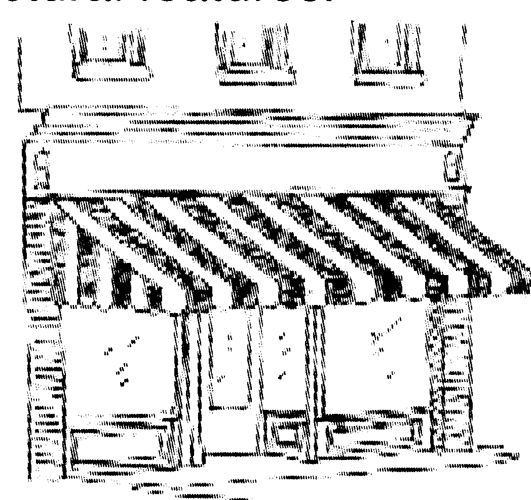
Awnings should reinforce openings, not cover features
5.
Shall be of colors to compliment the structure.
6.
When adding to a building, use traditional designs, materials and placement.
7.
Shall be made to fit opening and shall be of a style appropriate to the building.
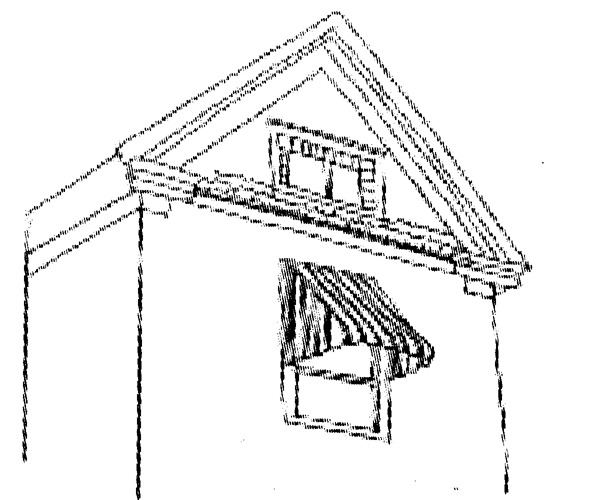
Awnings should fit the opening to which they are applied
8.
Fabric awnings (canvas or sunbrella type) are most appropriate in the Historic District.
Note: Awnings have traditionally been used more for function (shade) than for decoration.
In terms of decoration, awnings have fallen in and out of favor over the years. If
too many awnings are used on a structure or if awnings are used on too many dwellings
in an area, the result can be visual clutter. For commercial buildings, historic storefronts
often have awnings and a row of commercial buildings with storefront awnings is appropriate.
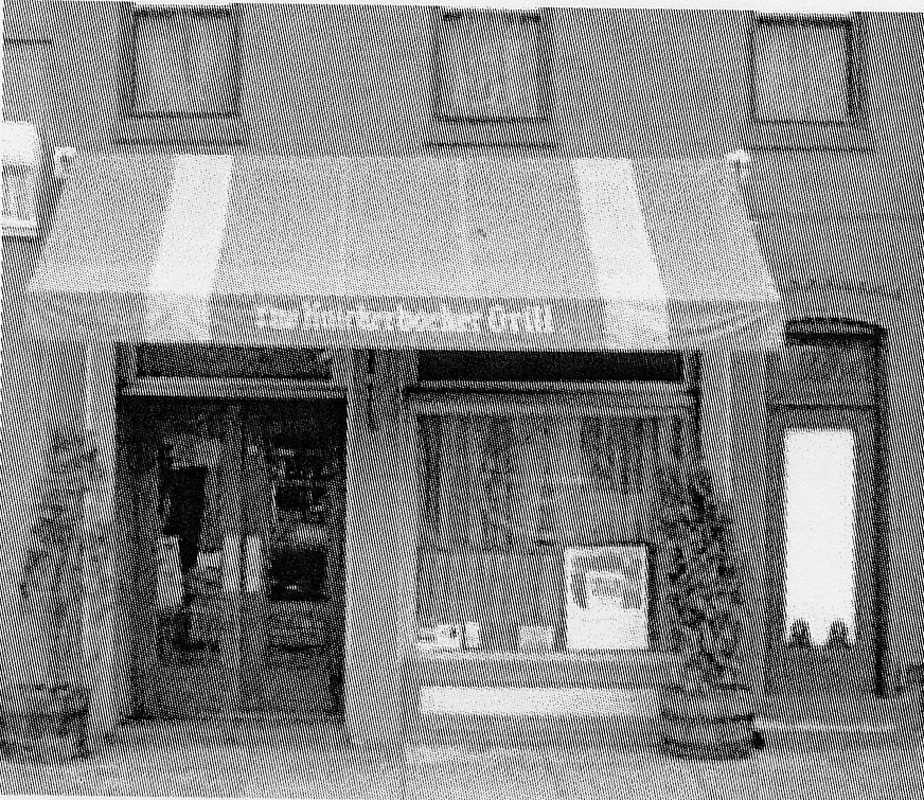
Awning used to reduce heat gain
Awning used to reduce heat gain
(Taken from the Secretary of the Interior's Standards for Rehabilitation)
C.
Chimneys.
1.
In new construction, chimneys shall be traditional in design.
2.
Chimneys that are prominent features of the structure should not be removed or changed, if original. Non-functional chimneys should be maintained and not removed above the roofline. It may be appropriate to remove nonfunctional secondary chimneys.
3.
Chimneys should be repointed and cleaned according to brick and masonry guidelines (outlined in Appendix B) to match original materials, colors, shape, brick pattern and tooling.
4.
If reconstruction of a chimney is necessary due to structural instability or deterioration, it should be rebuilt in the original configuration.
5.
Aluminum or clad chimneys are prohibited.
D.
Decks.
1.
Decks should be located on the rear and be screened from street view with fencing and/or plants and shrubs where visible.
2.
Decks should be stained or painted to match or blend with the house if visible from street view.
3.
The style of the deck and its balusters and railing should match the style of the house.
4.
Decks should be kept to a minimum and subordinate to house and yard in size and scale.
Inappropriate decks shall be made compatible with the building or must be removed prior to the approval of any new decks.
E.
Doors.
1.
Doors located on the primary facade should be traditional in design (stamped metal doors are not appropriate).
2.
Original doors and/or their entranceway surrounds, sidelights, transoms, and detailing shall not be removed or changed.
3.
Replacement of missing original doors should be like or very similar to the original in style, materials, glazing (glass area) and lights (pane configuration)
4.
Extra doors should not be added to the primary facade or to secondary facades where readily visible from the street.
5.
Doors, if added where inconspicuous on secondary or rear facades, should be similar to the original doors, not of a style or period earlier than the original building.
6.
Screen doors should be preserved and maintained if original, and constructed with wood frame if new.
7.
Storm doors should be full-view and baked-on enamel or anodized aluminum in compatible colors. Silver aluminum storm doors on the primary facade are discouraged.
8.
Security doors should be simple, without excessively ornate or decorative grillwork.
F.
Fences and Walls.
1.
Iron, wood, stone, or brick fences or walls that are original to the structure should be preserved, or if missing, may be reconstructed based on physical or pictorial evidence.
2.
For new construction, refer to On Site Requirements for New Construction - Subsection C.
G.
Foundations.
1.
Foundations should be preserved in the original design and with original materials and detailing.
2.
Foundation alterations, if required, shall not be made at the primary facade or readily visible side facades.
3.
Foundations should be raised and constructed of brick (no concrete, plywood, corrugated metal, or shingles).
4.
Foundations should be cleaned, repaired, or repainted according to the brick and masonry guidelines outlined in Appendix B - Repair and Maintenance.
H.
Gutters.
1.
New gutters shall be half-rounded and traditional in design.
2.
Boxed or built-in type gutters should be repaired rather than replaced if possible.
3.
Downspouts should be located away from significant architectural features on the front of the house.
4.
Gutters should provide proper drainage through use of downspouts and flashing if needed to avoid water damage to the building.
I.
Light Fixtures on Commercial Buildings.
1.
Preserve, maintain, or repair exterior historic light fixtures. If historic light fixtures do not exist or require replacement use concealed light fixtures, fixtures of simple design, or fixtures appropriate to the period of the building.
2.
For new construction, refer to On Site Requirements for New Construction - Subsection G.
J.
Porches.
1.
Porches on front and side facades should be maintained in their original configuration and with original materials and detailing.
2.
The porch in its original design was intended as a focal point for the entrance to the house and should not be removed if original. Enclosure of a porch changes the overall character of a house and should be avoided.
3.
Enclosure or removal of a porch can make a building facade seem flat. Without a porch there is no transition from sidewalk to house. If a porch must be enclosed, the manner of the enclosure should not destroy the original openness, focus and transition from outside to inside. The use of materials and details compatible with the original character of the house is important in any necessary porch enclosure.
4.
Porch details should be retained intact with repair work and replacement of missing parts, such as columns, posts, railings, balusters, decorative molding and trimwork, to match the original in design, materials, scale, and placement.
5.
Porch columns and rails should not be replaced by decorative wrought iron.
K.
Roofs.
1.
The original shape and pitch of the roof with original features (such as cresting, chimneys, finials, dormers, etc.) should be preserved and if previously altered, replaced with original form and detailing.
2.
The use of fiberglass shingles is appropriate if the use of original material is not economically feasible. Dark colors are best for historic buildings.
3.
Unless original to the house, dormers should not be placed in front rooflines. The addition of dormers to secondary and rear facades is appropriate if in keeping with the character and scale of the house.
4.
Skylights, decks, or balconies should not be added to a roof where visible from the street.
5.
For new construction, refer to New Construction - Subsection A3.
L.
Screens.
1.
Screening of front porches is not appropriate.
2.
Side and rear porches may be screened, although discouraged, if the structural framework for the screen panels is minimal and the open appearance of the porch is maintained.
3.
Screen doors should be preserved and maintained if original.
4.
Screen doors if new, should be wood and full-view or with structural members aligned with those of the original door.
5.
Window screens should be wood or baked-on or anodized aluminum and fit within the window frames, not overlap the frames.
M.
Security Doors and Windows.
1.
Security doors located on primary facades should be simple and without excessively ornate or decorative grillwork.
2.
The use of security bars on primary facade windows is discouraged, but if necessary, consider internal bars.
N.
Shutters. Shutters shall be of louvered wood construction, and shall fit the window opening (so that if closed, they would cover the window opening).
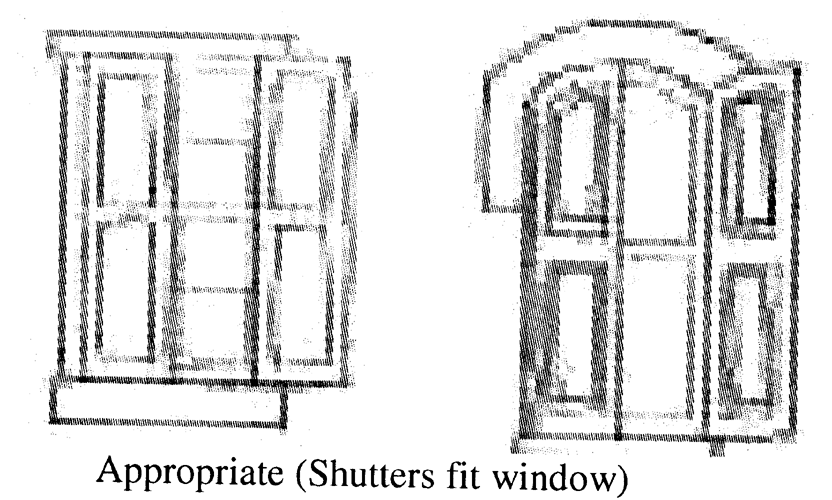
Appropriate (Shutters fit window)
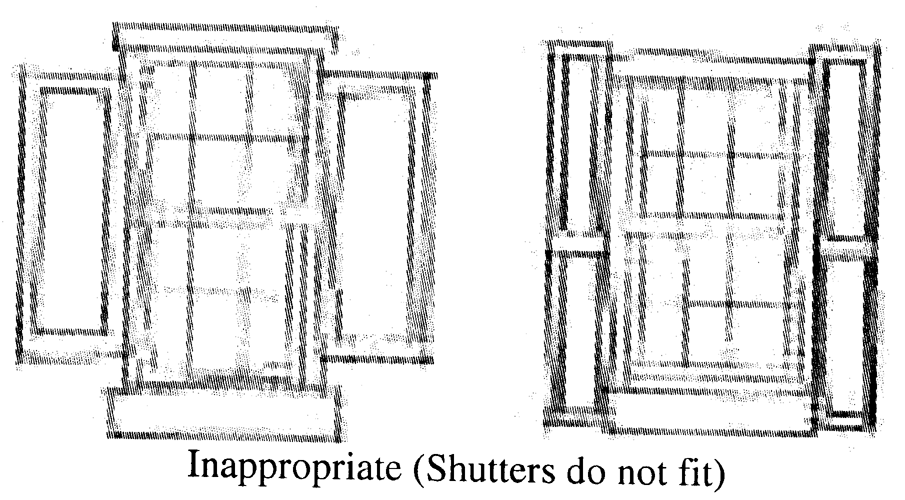
Inappropriate (Shutters do not fit)
O.
Skylights. Skylights should not located where visible from the street.
P.
Staircases. Staircases should be enclosed and not open to the street.
Q.
Storefronts on Commercial Buildings.
1.
Commercial buildings shall have a minimum of 60 percent glazed area (window and door openings) for ground floor primary facades.
2.
Storefronts should be traditional in design. For new construction, refer to the section entitled - New Construction.
3.
Multi-paned storefronts are encouraged.
4.
Preserve (maintain or restore, not remove or alter) existing original storefronts.
5.
Storefront features that are deteriorated should be repaired rather than replaced.
6.
If replacement of the original storefront is necessary due to significant deterioration, replace with features to match the original in design and materials.
7.
Storefronts that were remodeled after the 1940's should be rebuilt based on pictorial or physical evidence of the original design. If the original storefront design and features cannot be determined, install a traditional storefront arrangement with features, materials, and proportions typical of similar buildings of the same style or period.
8.
Original storefront doors should be preserved and maintained. Traditional entrance arrangements such as recessed or flush with the sidewalk should be maintained.
9.
If the original door design is unknown, replace with a single light (glass area) door design, not solid paneled door, decorative doors, or any kind of door based on a different historical period or style.
10.
Preserve, maintain, or repair original display windows. If a storefront is missing display windows, new windows should match the original in location, design, size, and materials.
11.
Display window mullion or framing should be of wood, copper, or bronze metal.
12.
Clear, rather than tinted glass should be used for storefronts. If privacy or shade is required, use interior shades or blinds.
13.
Preserve, maintain, or repair bulkheads (kickplates) where they exist. Original bulkhead panels should not be removed.
14.
Paint color on commercial buildings should conform to original color and general streetscape. Unpainted brick should not be painted.
R.
Windows.
1.
Display window mullion or framing shall be of wood, copper, or bronze metal.
2.
Clear, rather than tinted glass shall be used for storefronts. If privacy or shade is required, use interior shades or blinds.
3.
In new construction, windows and window treatments shall be traditional in design.
4.
Windowpanes shall be oriented vertically.
5.
All window openings shall be vertically oriented and should be vertically aligned between floors. Vertically oriented windows may be ganged (grouped side-by-side) in a manner that has a collective horizontal orientation.
6.
Windows should be preserved in their original location, size, and design and with their original materials and numbers of panes.
7.
Window sashes should be preserved, maintained, or repaired including size, number and arrangement of lights, materials, and decorative detailing. Windows should not be concealed, enclosed or covered.
8.
Non-original windows should not be added to primary facades or to secondary facades where readily visible.
9.
Windows should be repaired rather than replaced, but if replacement is necessary due to severe deterioration, the replacement should, as close as possible, match the original in material and design.
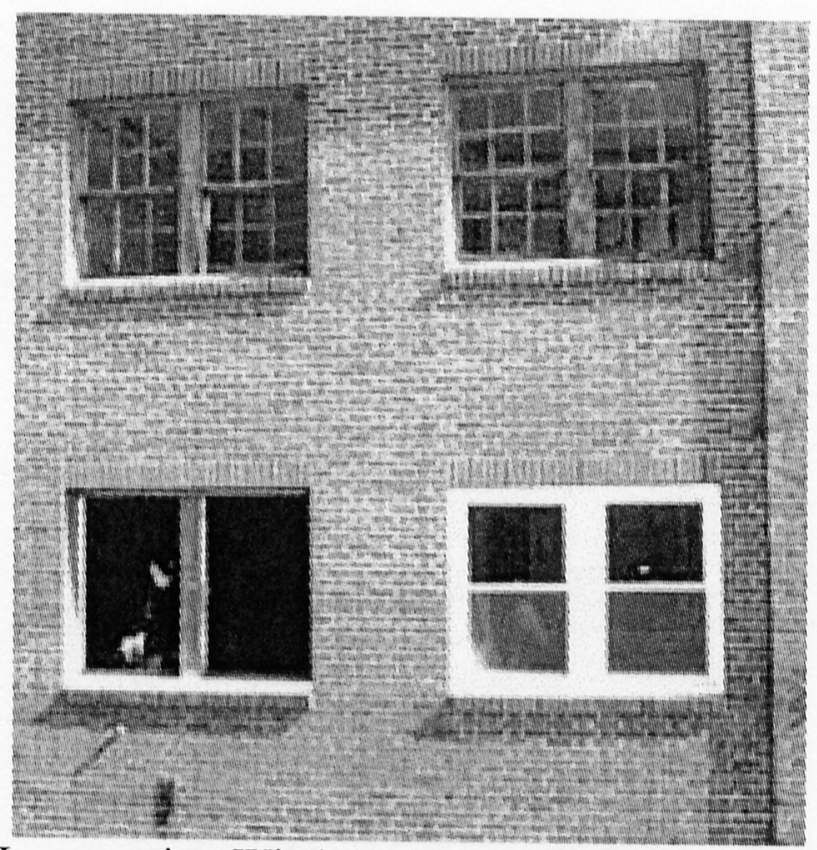
Inappropriate Window change
Inappropriate Window change
(Taken from the Secretary of the Interior's Standards for Rehabilitation)
10.
The use of jalousie windows, awning windows or picture windows on houses within the historic district is inappropriate. Glass block should only be used on buildings where it may have originally existed.
11.
Storm windows should be wood or aluminum with baked-on or anodized finish and fit in the window frames, not overlap the frames.
12.
Security bars that are visible from the street are discouraged.

