
Largo City Zoning Code
CHAPTER 10
LANDSCAPE STANDARDS
Section 10.1 - Purpose
The purpose of this chapter is to promote the health, safety, and welfare of residents and to increase the aesthetic appeal of the community by establishing minimum standards for the installation and maintenance of landscaping within the City. It is also the intent of this Chapter to protect natural plant communities and preserve an adequate tree canopy Citywide. More specifically, the standards in this Section are intended to:
A.
Promote water conservation by: encouraging the preservation of existing plant communities, encouraging the planting of natural or uncultivated areas, encouraging the use of site specific plant materials, providing for natural water recharge, preventing excess off-site runoff, mitigating flood impacts down stream and down pipe, and establishing best management practices for the installation and maintenance of sustainable landscape materials and irrigation systems.
B.
Improve environmental quality by: recognizing the numerous beneficial effects of landscaping upon the environment, including:
(1)
Improved air quality by reduction of harmful air pollutants such as carbon dioxide and through the interception of airborne particulate matter;
(2)
Improved water quality by moderating storm water run - off and absorbing contaminants;
(3)
The maintenance of permeable land areas essential to surface water management, aquifer recharge, and the conservation of fresh water resources;
(4)
Improved control of soil erosion through soil stabilization by tree and plant roots;
(5)
Reduced levels of air, heat, and chemical pollution through the biological filtering capacities of trees and other vegetation;
(6)
Energy conservation through the creation of shade, reducing heat gain in or on buildings or paved areas;
(7)
Conservation of topsoil resources; and
(8)
The preservation of habitat for urban wildlife.
C.
Improve the aesthetic appearance of the City by: enhancing the natural and built environment, which in turn encourages economic development.
D.
Reduce the negative impacts: (such as noise and glare) from adjacent uses.
Section 10.2 - Authority
This Chapter implements the policies of the adopted Comprehensive Plan. Compliance is a statutory precondition for the issuance of a Development Order (DO).
Section 10.3 - Applicability
The requirements of Sections 10.4 and 10.5 shall apply to all developments subject to a DO (see Section 3.4: Level II, Full Scale Review). These Sections do not apply to the development of individual single family, duplex, triplex, as well as mobile homes on already platted lots, since they do not require a DO. Landscape standards for these types of low density residential developments are found in Section 10.5.3.
10.4.1 - Preliminary Landscape Site Plan Submittal Requirements
The following information shall be provided as part of the preliminary site plan submittal:
A.
Stormwater retention areas - The location of proposed stormwater retention areas are required to be shown on the preliminary site plan;
B.
Landscape buffer and site data table - Location of required landscaping buffers are required to be shown on the preliminary site plan with data (including types of buffers and widths) entered in the Site Data Table, similar in form and content to Table 10-1, Example Site Data Table, shown below;
C.
Tree inventory - The tree inventory shall be completed and signed by a registered Landscape Architect, licensed Arborist, or similarly credentialed professional. The identification of trees to be removed and/or preserved are required to be shown on the preliminary site plan. A corresponding data table itemizing the total of caliper inches of existing trees to be removed and the total of proposed tree caliper inches to be replaced must also be included, similar in form and content to Table 10-2: Tree Preservation and Replacement Table. The applicant shall also include the following additional information:
(1)
Existing Trees - The location and type of all existing trees on site that are four (4) inches in caliper or greater must be specifically indicated, either on the landscape plan or on a separate tree inventory plan;
(2)
Trees to be Preserved - An inventory of all preserved trees existing on site and all trees on adjacent properties within twenty-five (25) feet of the property lines. The inventory will list each tree by a number in the inventory that will correspond to a number on the site plan that will identify the trees in the field (location), size (in caliper inches), species (common and botanical name) and condition (overall rating of health, structure and form). Trees growing off-site, but within twenty-five (25) feet of a property line on adjacent properties must be similarly inventoried but do not require a condition rating. The following information must also be included as part of the tree inventory submissions:
a.
Location and details of tree barricades and other proposed tree protection methods, indicating how existing trees will be protected from damage during construction;
b.
A written explanation as to the reason for requesting the removal of protected tree(s) (see Chapter 20 for definition of protected trees);
(3)
Location of all planned roadways, drives or other vehicular use areas, all structures, signs, all easements and utility lines or mains above or below ground; and
(4)
Grading plan, showing all existing and proposed grades on the site. Existing and proposed grades must be shown on the plan within fifty (50) feet of any protected tree.
10.4.2 - Final Landscape Site Plan Submittal Requirements
A.
Applicability - Approval of the master landscape plan is required prior to issuance of a DO. All sub-elements of the final landscape site plan shall be completed and signed and sealed by a registered landscape architect as part of the final site plan portion of the development review process. The following information shall be provided as part of the final site plan submittal.
B.
Final landscape plan required submittals - The final landscape plan must include the following elements:
(1)
Date, scale, north arrow, and the names, addresses, and telephone numbers of both the property owner and the person preparing the plan;
(2)
Location of existing boundary lines and dimensions of the site, the land use designation of the site and adjacent properties;
(3)
Approximate centerlines of existing watercourses and the location of the twenty-five (25) year and one hundred (100) year floodplain, if applicable; location of significant drainage features; and the location and size of existing and proposed buildings, streets, utility easements, overhead utilities, driveways, parking, sidewalks, and similar features;
(4)
Location, height, and material of proposed screening and fencing;
(5)
Complete description of plant materials shown on the plan (which must be consistent with Table 10-9 of this CDC), including common and botanical names, locations, quantities, container or caliper sizes at installation, heights, spreads, method of irrigation, and spacing;
(6)
Size, height, location, and material of proposed lighting, seating, planters, sculptures, and water features;
(7)
The location of the water source and size of well (if applicable), backflow preventer (if applicable), the location of irrigation heads, drip lines, water lines, or other items to show that one hundred (100) percent irrigation is serving all required landscape areas. The irrigation system should be automatically timed and activated;
(8)
Location of visibility triangles (for vehicles, pedestrians and bicyclists) on the site and a cross-section of any landscaping within the triangle showing that clear visibility will be maintained; and
(9)
Descriptive tables similar to the one shown in Table 10-1 and Table 10-2.
C.
Site clearing and grading final site plan submittal requirements
(1)
Objective - To minimize the negative impacts of development upon the land during the site clearing process by establishing standards for erosion control, which directly impacts tree protection.
(2)
Submission requirements - A site clearing, grading, and grubbing plan, including a tree survey and applicable detail, shall be submitted as part of the final site plan review process.
(3)
Restrictions - Approval of proposed sediment and erosion control plans and tree protection measures during construction is required prior to issuance of a Development Order (DO). On parcels undergoing site plan review, no land clearing or grading may occur until after the DO is issued. Tree protection submittal requirements are contained in Section 10.4.2.D Tree Preservation Plan. Sediment and erosion control submittal requirements are contained in Section 10.6.4.
D.
Tree preservation plan
(1)
Objective - To encourage the inclusion and protection of existing trees on-site.
(2)
Scope - The tree preservation plan shall describe in detail the measures that will be implemented to ensure the survival of trees chosen for preservation. The plan shall be a separate page of the construction plans and shall clearly delineate preservation measures to be utilized.
Examples include: Type and location of all tree barricades, root prune lines including the depth and length, pre-construction pruning, location and design of aeration systems, location and design of cabling and bracing procedures, location and design of retaining walls, and structural pruning plans etc.
(3)
Plan extent - The tree preservation plan shall include the measures taken to ensure survival of trees growing on adjacent properties within twenty-five (25) feet of a property line. If there are no existing trees on the site or trees to be removed, the applicant shall include a note on the cover sheet of the site plan stating this information.
(4)
Implementation of the tree preservation plan - A monthly project status report shall be submitted by the end of each month to the Building Division detailing the status of tree protection measures, (e.g., the date tree barricades are installed, retaining walls constructed, tree pruning completed etc.) In addition, a Certified Arborist shall inspect the site bi-weekly and include a status report on the tree barricades. The project status report shall be submitted from the date the construction permits are approved until the certificate of occupancy is issued unless the Building Division decides otherwise.
(5)
Credit for preservation of protected trees - Protected trees shown on the tree preservation plan proposed to be saved may be credited against the tree planting requirement for all sites, based on the following conditions:
a.
Trees proposed to be saved must meet all the requirements of Section 10.7.2 and figure 10-20; and
b.
Trees that are proposed to be saved may be credited toward new trees required at the ratios shown in Table 10-8: Tree Replacement Ratio.
For example, a twenty-four (24) inch caliper canopy tree preserved provides a credit of two (2) new buffer trees or forty-eight (48) inches of preservation credit against the requirement for new trees.
Cash in lieu of replacement = ___ inches × $(fee per inch) = $___
10.5.1 - Landscape Design Standards within the City's Activity Centers, Multimodal Corridors, and Community Redevelopment Districts
A.
Activity Centers and Multimodal Corridors defined - The City's Activity Centers and Multimodal Corridors are shown on Map 7-1. Landscaping standards not identified in Chapter 7 for each Activity Center and Multimodal Corridor will defer to citywide landscaping standards identified in Chapter 10 of the CDC.
B.
Community Redevelopment Districts defined - The City's Community Redevelopment Districts (CRDs) include the Clearwater-Largo Road CRD (CLR-CRD) and West Bay Drive CRD (WBD-CRD). Each CRD is shown on Map 7-1. Landscaping standards not identified in Chapter 7 for each CRD will defer to citywide landscaping standards identified in Chapter 10 of the CDC.
C.
Required streetscape within Activity Centers Multimodal Corridors, and Community Redevelopment Districts - Streetscapes and internal pedestrian streets within Activity Centers, Multimodal Corridors, and CRDs must comply with the regulations contained in Chapter 7 of this CDC.
D.
Buffer landscape requirements - Landscape buffers within Activity Centers, Multimodal Corridors, and Community Redevelopment Districts must comply with the requirements of Chapter 7 of this CDC.
(Ord. No. 2026-07, § 27, 5-19-2026)
10.5.2 - Citywide Design Standards for Non-Residential and Multi-Family Residential Sites
A.
Objective
(1)
To enhance the appearance of buildings and sites, thus improving the City's image.
(2)
To enhance the pedestrian environment, thus supporting mobility through sites and along public streets.
(3)
To provide shade over parking lots, sidewalks and other paved areas, thus providing an environmental benefit.
(4)
To protect natural plant communities and natural water recharge.
(5)
To provide for pervious areas, thus addressing Florida's stormwater standards.
B.
Applicability - The following standards shall apply to all development with the exception of single-family, duplex, triplex, and mobile homes, as well as areas with Special Area Plans.
C.
Buffer landscape requirements
(1)
Objective - To separate potentially conflicting uses and to provide attractive boundaries, improving the City's image. Landscaping buffers are required along site perimeters to screen unsightly uses and structures, glare, noise, parking areas, and to reduce heat from parking lots.
(2)
Types of site perimeter landscaping:
a.
Landscape buffers between parcels - Landscape buffers are required between parcels with different land use intensities. Table 10-3 and Table 10-4 provide specific standards:
Figure 10-1: Type A Buffer Typical (Streetside)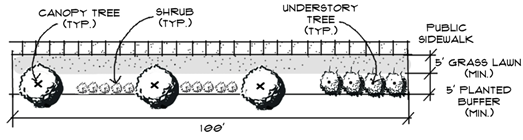
Figure 10-2: Type B Buffer Typical (Streetside)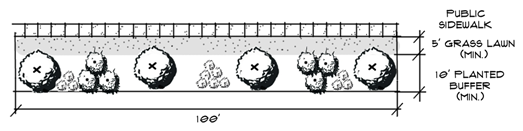
Figure 10-3: Type C Buffer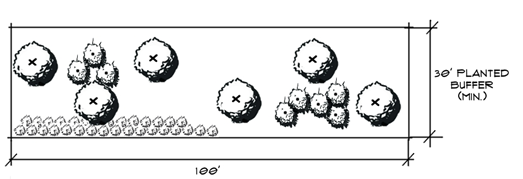
b.
Landscape buffers adjacent to streets - Buffers adjacent to streets are required where buildings, parking, driveways, loading and trash facilities are adjacent to the right-of-way. All buffers shall either be Type A or B (see Figures 10-1 and 10-2);
(i)
Typical treatment - A grass lawn shall be provided with a width of at least five (5) feet at the back of the public sidewalk, between the sidewalk and any required landscaping, including any shrubs, understory and canopy trees. This lawn area shall be kept clear of plantings other than sod and shall extend along the edge of interior driveways and walkways leading into the site from the street.
(ii)
Alternate treatment - Where additional improvements are made to facilitate pedestrian accessibility, as recommended by the Transportation Element of the Comprehensive Plan and the Strategic Plan (such as enhanced pedestrian improvements above CDC requirements in a driveway between a building and the right-of-way) the DCO has the discretion to reduce or alter the width and/or planting required in a streetside buffer to facilitate the implementation of an alternate streetside plan.
(iii)
Scenic non-commercial corridors - Along all rights-of-way within a scenic non-commercial corridor, as designated on the Pinellas County Countywide Plan, a streetside buffer B shall be installed. Within Activity Centers, the required streetscape, see Chapter 7, shall be installed.
c.
Fencing - Fences are required for proposed non-residential uses and along non-residential parcels that abut residential land use. This requirement may be administratively waived where adjacent to the right-of-way or if the property abuts parcels that are non-residential in use. Fence height and material must be consistent with the requirements of this CDC.
d.
Commercial general buffers - Commercial uses shall comply with the buffer standards for CG-Heavy when outdoor activities, such as drive-thrus, call boxes, or outside storage will be part of a proposed use.
D.
General site landscaping standards - The following standards are intended to ensure compatibility among uses while promoting creativity and flexibility that enhances the aesthetic appeal of the site and moderates the heat generated by asphalt parking areas.
(1)
Landscape spacing - All trees must be spaced so as to attain their natural height and spread at maturity. Species that naturally grow in clusters may be grouped at a minimum of ten (10) feet on center. All other species of trees shall be installed at a minimum of fifteen (15) feet on center. Shrubs must be installed at a minimum of three (3) feet on center.
(2)
Visibility triangle - Required landscaping to be located in the sight triangle shall not limit the line of sight between three (3) feet above grade and eight (8) feet above grade (Figure 10-4).
Figure 10-4: Preservation of the Visibility Triangle with Landscape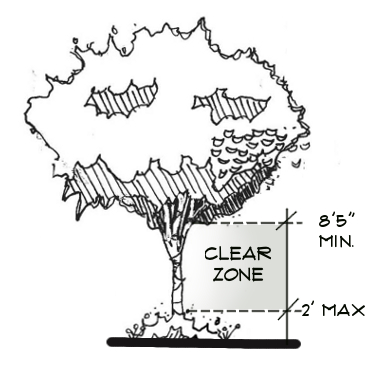
(3)
Overhead utility lines - For buffers that contain overhead utility lines, the requirement for canopy trees may be altered to low understory trees, or palms in clusters of three, at a ratio of 2.5 understory/palm trees for each required canopy tree (Bismarck, Canary Island, and Medjool palms, because of their large canopies, may be substituted for canopy trees in the above situations on a one-to-one ratio).
(4)
Plantings within easements and rights-of-way - Trees shall not be planted within public right-of-way, or private utility easements without an approved right-of-way permit from the Engineering Department or permission from the respective easement holder.
(5)
Use of native species - At least forty (40) percent of all landscaping material planted on a parcel must be species native to central Florida. Use of 100% Florida-friendly landscaping (F.S. Ch. 373.185) drought resistant species is strongly encouraged.
(6)
Use of palms - A maximum of forty (40) percent of all required understory trees may be palm trees. Palms are not approved for use as canopy trees, except as noted in Table 10-9.
(7)
Plant selection - Plant species best suited for the soils and topography of the site shall be selected, thereby minimizing maintenance demands. All plants used in required landscaping areas shall be selected from Table 10-9 and have non-invasive growth habits.
(8)
Water treatment swales and storm water ponds within buffers - Water treatment swales and storm water ponds may not be located within a required buffer unless the swale or pond is designed with the planting included in the pond/swale capacity calculation and is graded to meet minimum grade requirements of 6:1 for plantings.
(9)
Trees adjacent to signs - Trees shall not be located adjacent to freestanding signs or below wall signs where the tree will create a visual obstruction at time of planting or in the future (Figure 10-5).
Figure 10-5: Avoid Sign Obstruction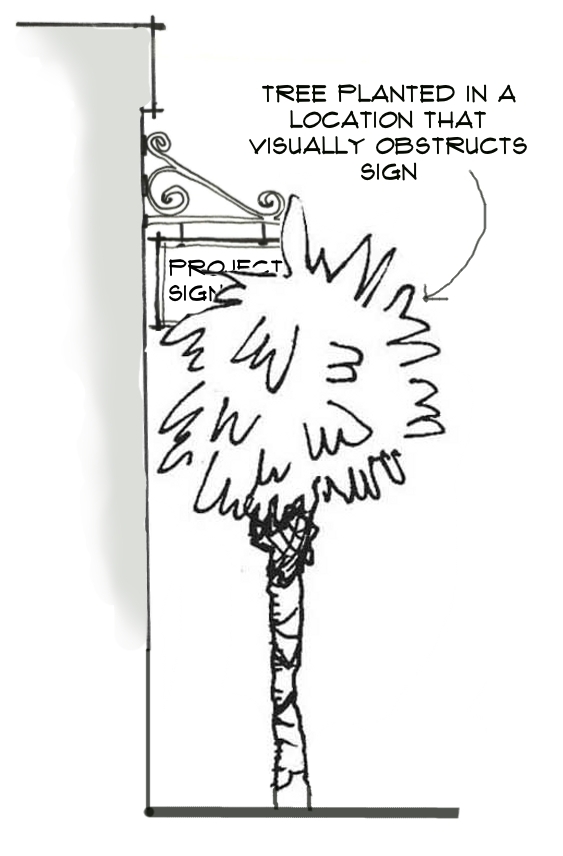
(10)
Clustering of trees - Clustering of trees is permitted to prevent obstruction of signs and conflicts with overhead power lines. Clustering of interior parking area landscaping may be permitted when existing native vegetation will be preserved.
(11)
Landscape of retention ponds - Retention ponds may be used for the planting of replacement trees subject to the following:
a.
Stormwater facilities shall be designed and utilized as site amenities;
b.
Stormwater retention areas shall be naturalistic in shape, dry, sodded, and designed to blend with the overall landscape theme and landform;
c.
Stormwater retention areas may be wet, if designed to be part of a water feature; and
d.
Where fencing or wall enclosures are required, only decorative, aesthetically-pleasing fence railings or walls, as approved by the DCO, shall be approved. Neither opaque fences nor chain link fences are permitted along retention areas, provided however that for retention areas that abut a parcel's boundaries, perimeter or buffer fencing may be opaque or constructed of chain link as permitted by Section 10.5.2(15).
(12)
Trees in close proximity to each other shall be combined in a continuous mulch bed as to minimize maintenance and eliminate small strips of turf.
Figure 10-6: Continuous Mulch Bed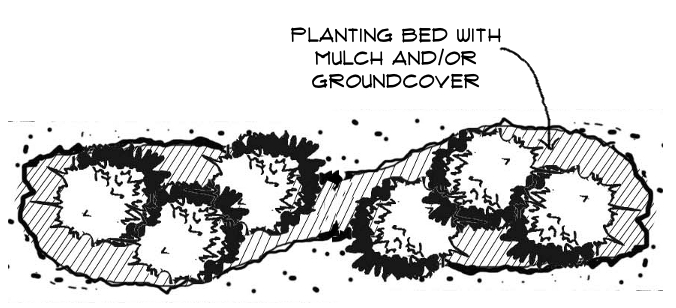
(13)
Landscape at the base of US19 signs - Freestanding signs permitted along the US Highway 19 roadway in accordance with Section 12.7.3.C of this CDC shall have a minimum 200 square foot landscaped area located at the base of the sign, excluding the area occupied by the base of the sign, designed in accordance with the landscaping design standards of this Chapter. The landscaping shall consist of a minimum of nine (9) shrubs planted three (3) feet on center and one (1) understory tree selected from the Approved Species List contained in Table 10-9 of this Section. The landscaped area shall be irrigated in accordance with Section 10.6.2.
Figure 10-7: Landscape at Base of US-19 Sign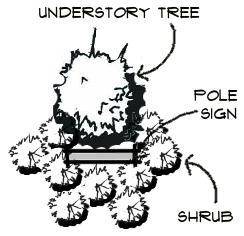
(14)
Tree species diversity - The applicant shall choose a variety of species, consistent to the requirements of Table 10-5, to ensure diversity throughout a proposed development.
(15)
Walls and fences within buffers - All walls or fences shall comply with the requirements of Section 16.3 of this CDC and the following requirements:
a.
Acceptable fence materials include: concrete aggregate, stucco finish (either colored or painted), brick, stone, PVC, or glass block.
b.
Concrete masonry shall be allowed only if split face design or stucco covered.
c.
No chain link (including chain link with slats) shall be allowed except in single-family residential, institutional, industrial, transportation/utility, preservation or recreational applications.
(i)
The DCO may allow chain link fences where a commercial use abuts commercial uses and other nonresidential uses which are permitted to have chain link fences.
(ii)
Chain link and associated posts must be vinyl-coated to blend into surroundings on all non single-family residential properties.
d.
Wood fences shall only be permitted on individual residential lots, but are not permitted as subdivision perimeter fencing.
e.
Required fences must be structurally safe and made of durable materials.
f.
Applicants shall provide visual relief from long expanses of walls, in excess of seventy-five (75) lineal feet, through the use of staggering, capping, recessing, or providing inlays, columns, texture or similar treatments.
E.
Landscaping for parking lots and vehicular use areas - The following landscaping standards shall apply to all off-street parking and vehicular use areas.
Figure 10-8: Typical Parking Layout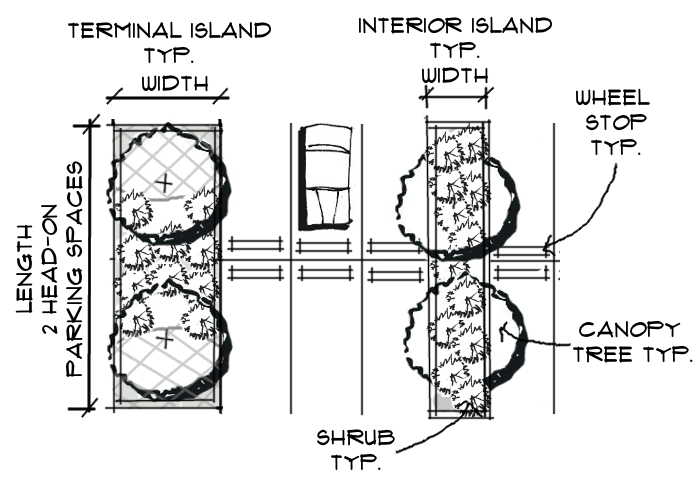
Figure 10-9: Wheel Stops Next to Walkways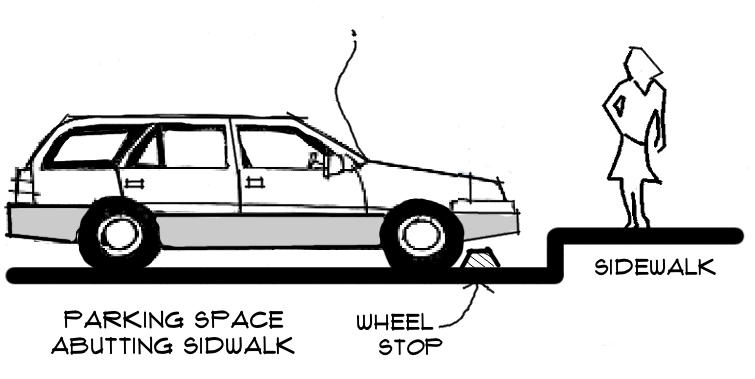
(1)
Tree island spacing - To encourage design flexibility while achieving the intent of this Section of the CDC, the maximum number of parking spaces allowed between landscape areas shall be as follows:
a.
Twelve (12) parking spaces (Figure 10-10), except as provided herein.
Figure 10-10: Off-Street Vehicular Parking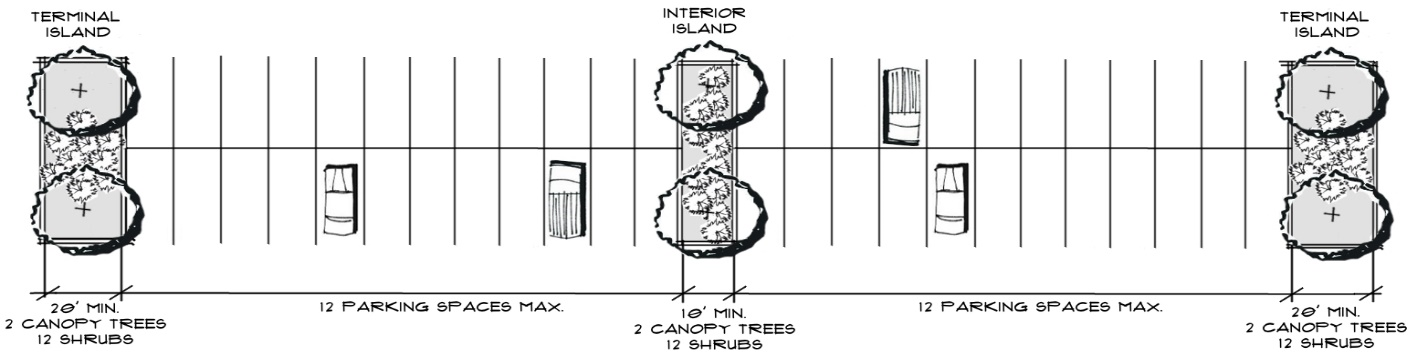
b.
As an alternative, fourteen (14) parking spaces shall be allowed on one side of a head-to-head parking row when an interior landscape area is provided, with an interval of no more than six (6) spaces, on the opposite side of the head-to-head parking row (Figure 10-11). The row end landscape areas shall be a minimum of twenty (20) feet in width and ten (10) feet in length.
Figure 10-11: Off-Street Vehicular Parking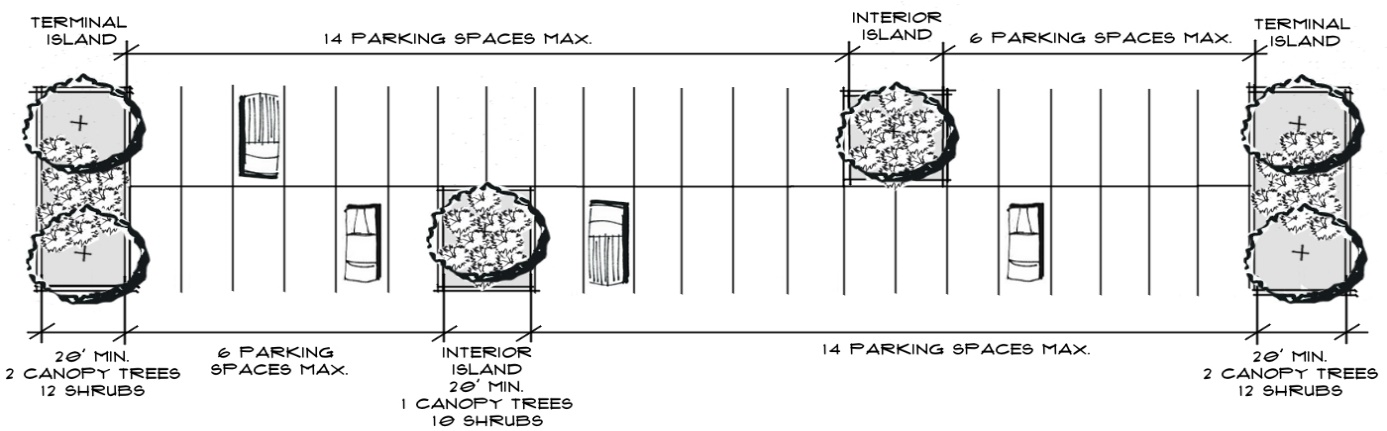
c.
There shall be no maximum number of spaces in a row when the parking spaces meet the following requirements:
(i)
Include terminal landscaped areas at least twelve (12) feet in width and abut a central median divider at least 7.5 feet in width or a central median divider at least 7.5 feet in width or a central median divider with pedestrian walkway at least 11.5 feet in width (Figure 10-14 through 10-17); or
(ii)
Abut a perimeter landscape area; or abut a landscape area adjacent to a right-of-way or property line.
d.
Other spacing scenarios may be considered as long as they meet all other requirements of this Section of the CDC.
(2)
Tree island and median divider minimum dimensions - All dimensions shall be taken from the inside of the curb. The minimum length of landscape islands required by this Section shall be equal to the length of the adjacent parking space. The minimum width of landscape areas required by this Section shall be as follows:
a.
Terminal island - The required length of all terminal islands shall be equal to the equivalent of two (2) head-on parking spaces. The minimum width of terminal islands shall be no less than:
(i)
Twelve (12) feet (Figure 10-14, 10-15, 10-16, or 10-17 divider median); or
(ii)
Fifteen (15) feet (Figure 10-13, intermediate islands), twenty (20) feet (Figure 10-12 and Figure 10-13). The required length of all terminal islands shall be equal to the equivalent of two (2) head-on parking spaces.
Figure 10-12: Off-Street Vehicular Parking "Diamond Islands"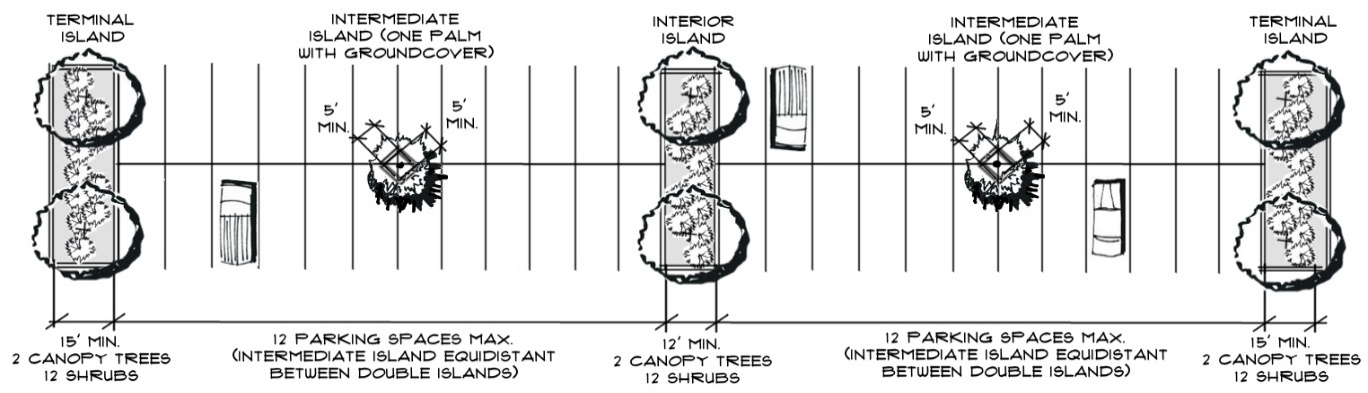
Figure 10-13: Off-Street Vehicular Parking "Median Divider"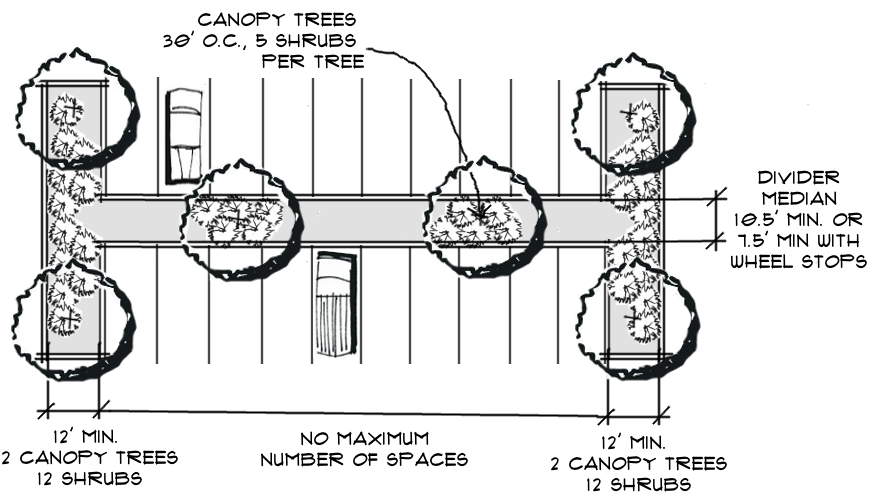
Figure 10-14: Off-Street Vehicular Parking "Median Divider"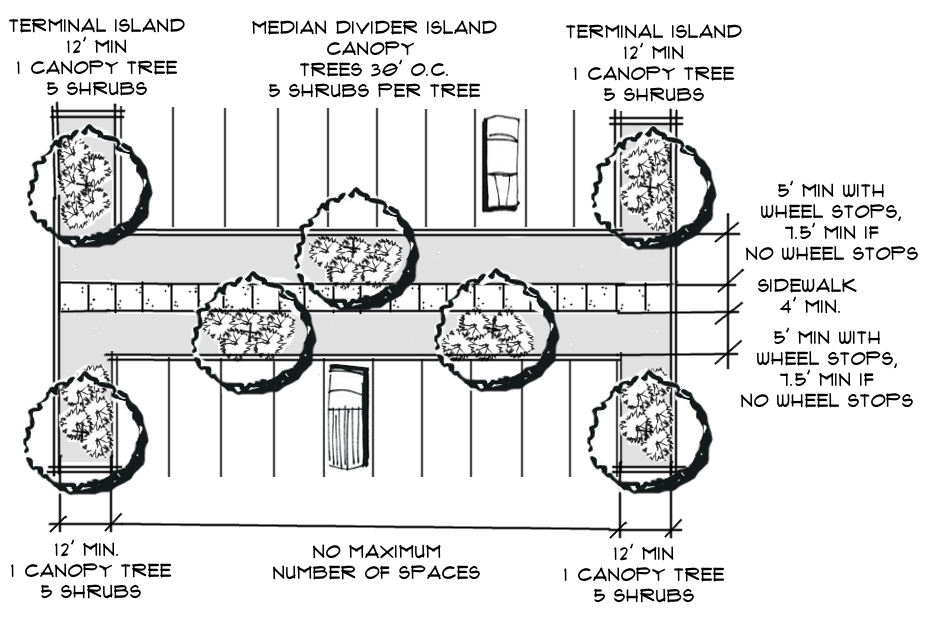
Figure 10-15: Off-Street Vehicular Parking "Terminal Divider"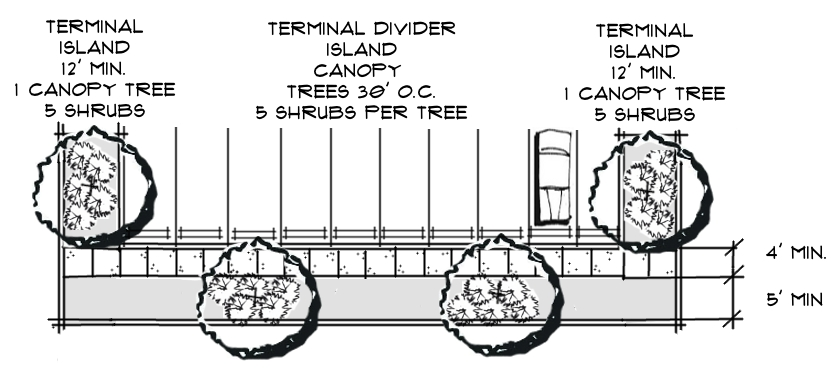
Figure 10-16: Off Street Vehicular Parking "Median"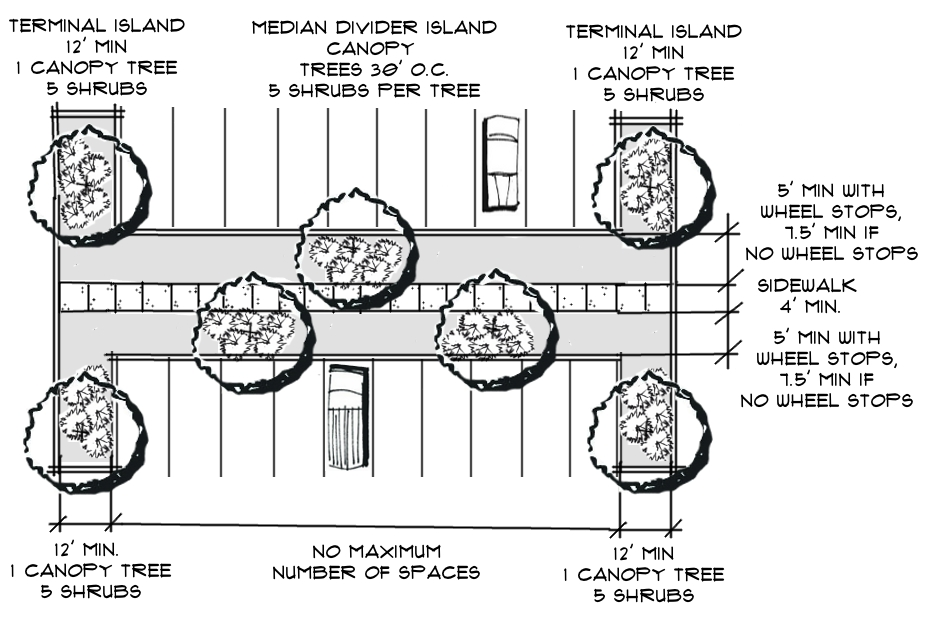
b.
Interior island:
(i)
Ten (10) feet in width, and the equivalent of two (2) head-on parking spaces in length (Figure 10-11); or
(ii)
Twenty (20) feet in width and the equivalent of one (1) parking space in length (Figure 10-12); or
(iii)
Twelve (12) feet and the equivalent of two (2) head-on parking spaces in length (Figure 10-13).
c.
Intermediate "diamond" island (Figure 10-13) - five (5) feet by five (5) feet.
d.
Divider median
(i)
No pedestrian walkway (Figure 10-13) - 7.5 feet with wheel stops, 10.5 feet without wheel stops.
(ii)
Divider median with pedestrian walkway (Figure 10-16) - 11.5 feet with wheel stops on both sides of the divider or 14.5 feet with wheel stops on one (1) side adjacent to pedestrian walkways.
(iii)
Divider median with landscape on both sides of the pedestrian walkway (Figure 10-16) - 14 feet with wheel stops on both sides of the median divider; 16.5 feet with wheel stops on one side of the divider median; or 19 feet with no wheel stops on either side of the divider median.
(3)
Use of wheel stops within parking areas - Wheel stops are required abutting pedestrian walkways to prevent vehicular encroachment over the walkways. Vehicle overhang of landscaped areas is allowed provided the adjacent landscaped area meets or exceeds the required planting dimensions.
(4)
Planting requirements - Landscaping shall be provided in accordance with Tables 10-9 and the following additional requirements:
(a)
Intermediate "diamond" landscape islands (Figure 10-12) shall contain one palm and groundcover. No sod is permitted.
(b)
Interior and terminal islands shall contain a minimum of one canopy tree, five (5) shrubs and groundcover. No sod is permitted.
(c)
Median dividers shall contain canopy trees thirty (30) feet on center, with a minimum of five (5) shrubs per tree. Shrubs may be either grouped or linear in arrangement. Up to fifty (50) percent of the ground may be sodded within the divider, the remainder must be covered by groundcover.
(5)
Terminal island placement - Terminal islands shall be required at the ends of rows of parking spaces adjacent to interior drive aisles to reduce vehicular conflicts and provide for safe turning movements for vehicles. They must be no less than twelve (12) feet in width.
(6)
Site lighting - Site lighting shall be installed so that it does not conflict with the natural growth of canopy trees within and around parking lots and vehicular use areas. No pole mounted site lighting shall be closer than twenty (20) feet to a canopy tree.
(7)
Preservation of natural areas - To encourage the protection of natural plant communities and natural water recharge, the DCO may reduce required landscaping for parking lots and vehicular use areas (including amount of trees and vegetation required and number of tree islands) in return for the preservation of existing natural areas on a site; or the installation of bioswales, as part of a parking lot or elsewhere on site, in addition to required storm water retention ponds.
F.
Deviations from required landscape plantings - Deviation from the above requirements may be allowed or required, at the discretion of the DCO or his/her designee, in situations such as the following:
(1)
A masonry wall may be required where a fence will not adequately provide a buffer between the proposed use and adjacent existing uses.
(2)
Tree substitution - Canopy trees may be substituted for understory trees and vice versa where safety is impacted by the strict interpretation of the CDC. This includes, but is not limited to, situations where an understory tree would obstruct the line of sight from a vehicle, pedestrian or bicyclist.
(3)
Preservation of existing plantings - This CDC requires the preservation of trees and other plantings where the existing native vegetation fulfills the intent of the CDC, or where replacement of the existing native vegetation fulfills the intent of the CDC, or where replacement of the existing vegetation along with required plantings would result in a less-intensive buffer.
(4)
Increased building visibility - In order to minimize conflicts with monument signs and to allow better visibility of buildings, the DCO or his/her designee has the discretion to reduce the quantities of any plant materials required in the street frontage buffer by up to thirty (30) percent and to approve a landscape plan that provides for staggered spacing of landscaped materials in the street frontage area.
(5)
Blank wall screening - Windows and architectural detailing are encouraged on building walls facing the public right-of-way. To reduce the negative effect of blank, windowless building walls facing the public right-of-way, the DCO or his/her designee have the discretion to require additional evergreen shrubs and trees to screen such walls from public view.
(Ord. No. 2021-55, §§ 2—5, 10-19-2021; Ord. No. 2023-27, § 5, 6-20-2023; Ord. No. 2023-52, § 2, 10-17-2023; Ord. No. 2024-18, § 5, 3-5-2024)
10.5.3 - Landscape Requirements for Low-Density Residential Development
A.
Objective
(1)
To create and maintain the City's urban forest;
(2)
To enhance the appearance of low density residential lots;
(3)
To provide the benefits of shade; to help meet Florida's stormwater standards.
B.
Applicability - The following provisions shall apply to the development of single-family, duplex and triplex lots as well as mobile homes on already platted lots. The standards in this Section shall be required to be met on all parcels prior to the issuance of a certificate of occupancy for new construction and prior to the approval of a final inspection for any property that requires a site plan amendment for a repair or reconstruction in excess of fifty (50) percent of the property's value as shown on the records of the property appraiser.
C.
General requirements
(1)
Applicants are not required to submit landscape plans.
(2)
Tree diversity - The applicant shall choose a variety of species, consistent to the requirements of Table 10-5, to ensure diversity throughout a development.
(3)
Existing trees - Existing trees preserved during site development will be counted toward fulfillment of this requirement in accordance with Table 10-8: Tree Preservation and Replacement.
(4)
Minimum size - The minimum size of canopy and understory trees at the time of planting shall be of two (2) inch caliper and shall be Florida Grade No. 1 or better, as specified by the State Division of Plant Industry Grades and Standards for Nursery Plants manual published by the Florida Department of Agriculture and Consumer Services - 2015 edition.
(5)
Removal and replacement - Any removal of trees greater than ten (10) inches diameter at breast height (DBH) from the site will require that the minimum planting requirement, shown on Table 10-6, is maintained. Any trees determined by the City as left in a healthy growing condition on the site may be counted toward these minimum numbers. Existing single family, duplex and triplex lots shall not be required to replace trees that are ten (10) inches in DBH or less, provided that the minimum planting requirement is met. However, providing that the minimum planting requirement in Table 10-6 is met, replacements shall not be required for the removal of trees greater than ten (10) inches in diameter.
Alternatively, on lots where the DCO determines that there is insufficient space to meet the minimum tree planting requirement, applicants may elect to pay a cash-in-lieu fee, in accordance with the then current fee schedule.
(6)
Trees planted shall conform with the species listed in Table 10-9 Approved Species List. Each single-family, duplex and triplex lot shall contain a minimum number of trees based on Table 10-6: Tree Requirements for Single Family, Duplex Triplex Lots.
One canopy or understory tree is required for each 2,500 square feet, or portion thereof, in excess of 15,000 square feet. Where site constraints exist, on sites above 6,000 square feet, understory trees may be substituted for canopy trees at a ratio of two (2) understory trees for each canopy tree.
D.
Mobile home development lots - Individual lots in mobile home parks shall be exempt from the requirement to contain a minimum number of canopy and/or understory trees. When determining replacement requirements for tree removal from individual lots in mobile home communities, required replacements shall not be required to be replaced on individual lots but shall be replaced into areas maintained by the park as a whole, such as common areas, buffer yards, and areas around retention ponds.
Where the DCO determines that there is insufficient space to meet the minimum tree planting requirement, the applicant may elect to pay a cash-in-lieu fee in accordance with the then current fee schedule. Alternatively, a master landscape plan may be approved by the DCO at the request of a mobile home park for the purpose of identifying receiving areas for replacement trees. When the replacement requirements of the master landscape plan have been fulfilled, no further replacement or fees in lieu of replacement shall be required for trees removed on individual lots.
10.6.1 - Standards for Plant Material
A.
Plant material grade - All new and replacement plantings shall be graded State Department of Agriculture Nursery Grade No. 1 or better, as specified by the State Division of Plant Industry Grades and Standards for Nursery Plants manual published by the Florida Department of Agriculture and Consumer Services.
B.
Approved species list - The City prefers drought-resistant, Florida-friendly, native species. These plants are preferred for their hardiness, resistance to disease and pests, and drought-tolerance. For a list of approved species see Table 10-9. Substitutions or additions to this list may be approved by the DCO or his/her designee.
C.
Use of field-grown trees - All sites with a Development Order (DO) shall require the use of field grown trees. If such trees are not available the contractor may substitute with container grown trees at the discretion of the DCO. Containers that prevent the development of circling roots must be used for all container-grown trees. Landscape contractors must provide the City's inspector with documentation (i.e. receipts or invoices) at the time of inspection to validate the use of such containers. All field grown trees must be hardened off (see definition Chapter 20) at the time of inspection.
D.
Minimum installation standards - The following standards shall be considered the minimum requirements for the installation of plant materials within the City:
(1)
Pre-installation inspection - All plant material must be inspected by the City prior to installation to determine proper root ball size and compliance with all minimum standards of this CDC.
(2)
Approved installer - All landscaping shall be installed by a person knowledgeable of proper horticultural practices and having a Business Tax Receipt (BTR) on file with the City of Largo. Landscape shall be installed according to accepted and proper planting procedures.
(3)
Soil - All required landscape materials shall be installed using planting soil of a type appropriate to the individual plant material and the soil conditions in which the planting is occurring. Fertilizers that add phosphorus to the soil are generally discouraged. All applicable Pinellas County fertilizer ordinance requirements shall be followed. A pH test shall be performed at each site subject to a DO. The results of the soil test shall be submitted prior to planting. Prior to the pre-installation inspection a certified letter, stating that the planned species match the existing conditions, must be submitted
(4)
Use of mulch - The use of organic mulches is required to reduce the growth of weeds and add nutrients to the soil as well as retain moisture over the root zones of plant materials. A two (2) to three (3) inch layer of organic mulch shall be placed over all newly installed tree, shrub, and ground cover planting areas. No mulch shall be placed on the root flair of a tree. The use of cypress mulch is prohibited. The harvest of cypress trees for mulch eliminates valuable cypress trees, which are an essential component of Florida's wetlands.
(5)
Approved size - All landscape shall be installed in accordance with Table 10-7 Minimum Size of Landscape at Planting. In the event of a market shortage, the DCO may at his/her discretion, approve a reduction of the required caliper to the largest available Grade No. 1 tree.
(6)
Staking and wire basket removal - The top 1/3 of wire baskets shall be removed prior to mulching. No wire shall be placed around the trunk of a tree as part of a staking system. A rubber tree tie is required as part of all tree staking systems. All staking systems shall be removed by the approved installer one year after a Certificate of Occupancy (CO) is issued or sooner at the discretion of the DCO.
E.
Prohibited species - Prohibited species include any invasive exotic plant species listed on the current Florida Exotic Pest Plant Council exotic and invasive species list at http://www.fleppc.org/list/list.htm. These species shall not be planted on any site subject to a DO or Development Permit (DP). Existing prohibited species shall be removed from a site as a condition of a DO and/or DP at the discretion of the DCO. After the issuance of the certificate of occupancy, the property owner shall control re-growth of invasive exotic plants. Citrus trees in existing residential lots do not have to be removed as a condition of a DP.
Figure 10-17: Preferred Palm Planting Detail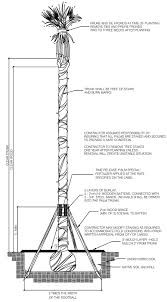
Figure 10-18: Preferred Tree Planting Detail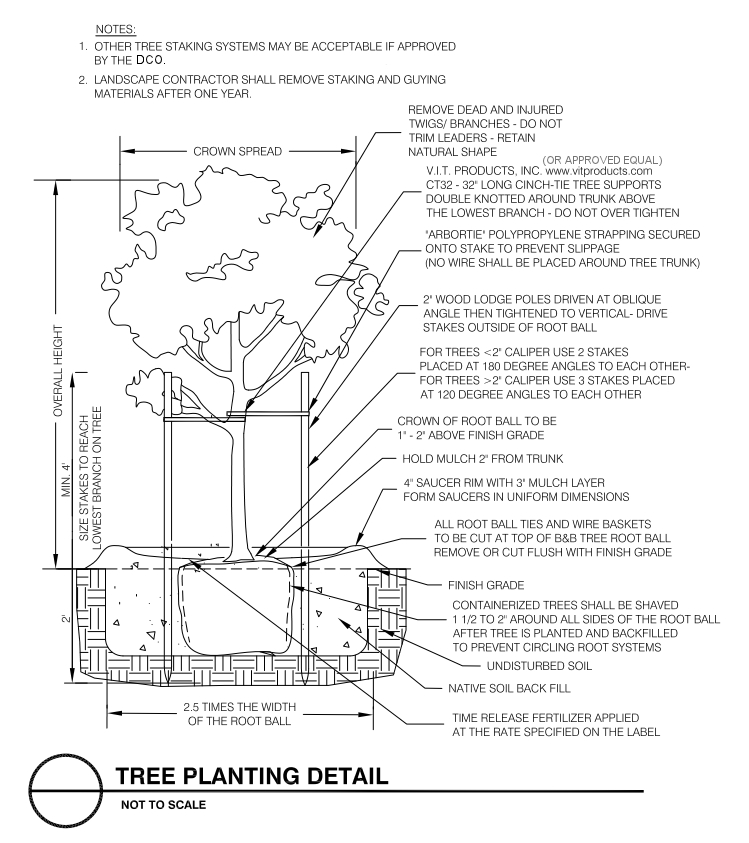
Figure 10-19: Preferred Sabal Palm Planting Detail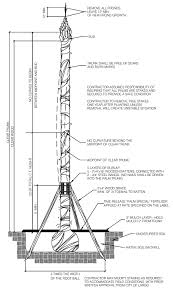
10.6.2 - Standards for Irrigation Systems
A.
Objective - The standards for irrigation systems are intended to ensure the long term survivability of required plantings while protecting water resources by reducing demand through conservation and management efforts.
B.
Authority - This Section implements the policies of the adopted Comprehensive Plan. Compliance is a statutory precondition for the issuance of a DO.
C.
Applicability - The irrigation requirements of this section shall apply to all developments subject to a DO.
D.
Submittal requirements - The following standards shall apply to the design, installation, and maintenance of the irrigation systems:
(1)
Irrigation System Plan - Submittal of an irrigation system plan is required for all landscaped areas. An irrigation system may either be a separate plan or shown on the submitted landscape plan.
(2)
Automatic Irrigation System - One hundred (100) percent automatic irrigation systems shall be required for all projects subject to a DO, except for single-family residential lots.
(3)
Rain or moisture sensing shut-off devices shall be installed with any irrigation system. Drip or microjet irrigation shall be used where possible. Low trajectory spray nozzles are encouraged.
(4)
Hose bibs are not allowed for developments subject to a DO.
(5)
Existing plant communities, maintained in a natural state, will not require supplemental irrigation.
(6)
Potable Water Use - Development proposing to irrigate with potable water must demonstrate that no alternative is available and shall be required to xeriscape a minimum of fifty (50) percent of the provided open space area.
(7)
Potable Water Alternatives -
a.
Reclaimed Water Use: Reclaimed water shall be used when service connection to a property can be made without digging under a roadway or extending a main reclaimed water line, if available. This provision applies to all properties applying for a DO and a lawn irrigation permit.
b.
Stormwater reuse, shallow wells, and wet retention/detention ponds shall also be used as alternatives to potable water whenever available.
(8)
Irrigation systems shall be designed to minimize the amount of water applied to or running off into impervious surfaces. Spray heads or nozzles shall be directed away from all travel lanes and sidewalks.
(9)
Irrigation systems and landscaping may extend into the green portion of the City controlled right-of-way (between sidewalk and road) subject to the following conditions:
a.
Repairs, maintenance, proper operation and replacement of irrigation and landscaping within the right-of-way shall be the sole responsibility of the property owner. Irrigation and landscaping within the right-of-way shall be considered an encroachment and may be removed by the City or entities having easement rights for purposes of maintenance or installation of utilities or other public improvements.
b.
For public health and safety reasons, the City may rescind any approval and cause removal of any irrigation line within the rights-of-way without cause or reimbursement to the property owner.
(10)
Properties adjacent to County or State rights-of-way must obtain proper approval from the appropriate agencies.
E.
Inspection and approval - Prior to issuance of a CO, the professional responsible for the landscape portion of the project shall provide written, sealed, or notarized certification that the installation of irrigation and landscaping has been completed in accordance with the approved plan. A site inspection will be made by the City to verify compliance with all provisions of the DO and this Section. Final approval is required prior to issuance of any CO.
10.6.3 - Protection of Trees and Native Vegetation from Construction
The following specifications must be followed before and during construction:
A.
Tree preservation standards - When construction activities impact the tree protection zone of a protected tree(s), adherence to the following procedures is required:
(1)
Disturbance within the tree protection zone - When the Tree Protection Zone will be disturbed, affected roots must be severed by clean pruning cuts at the point where construction impacts the roots. Roots shall be pruned by utilizing a root pruning machine designed for this purpose.
(2)
When underground utility lines are to be installed within the critical root zone, the root pruning requirements may be waived by the Building Division if the lines are installed via directional boring or tunneling as opposed to open trenching.
B.
Tree protection barriers - A protective barrier shall be erected around all trees and native vegetation, which are to remain permanently on-site. Such trees and vegetation shall be identified by flagging or staking.
(1)
Barrier construction - Protective barriers are to be constructed using no less than 2" × 4" lumber for upright posts. Upright posts are to be at least four (4) feet in length with a minimum of one (1) foot anchored in ground and three feet above ground. Upright posts are to be placed at a maximum distance of six (6) feet apart. Horizontal rails are to be constructed using no less than 2" × 4" lumber and shall be securely attached to the top of the upright posts. A PVC-type safety fence, the height of the barrier, shall be attached to the upright posts, the top rail, and the ground, with fasteners a maximum of eight (8) inches apart. Barriers shall extend at least one (1) foot beyond the drip line of all protected trees on the property and shall be at least three (3) feet high. (See Figure 10-20.)
Figure 10-20: Tree Protection Detail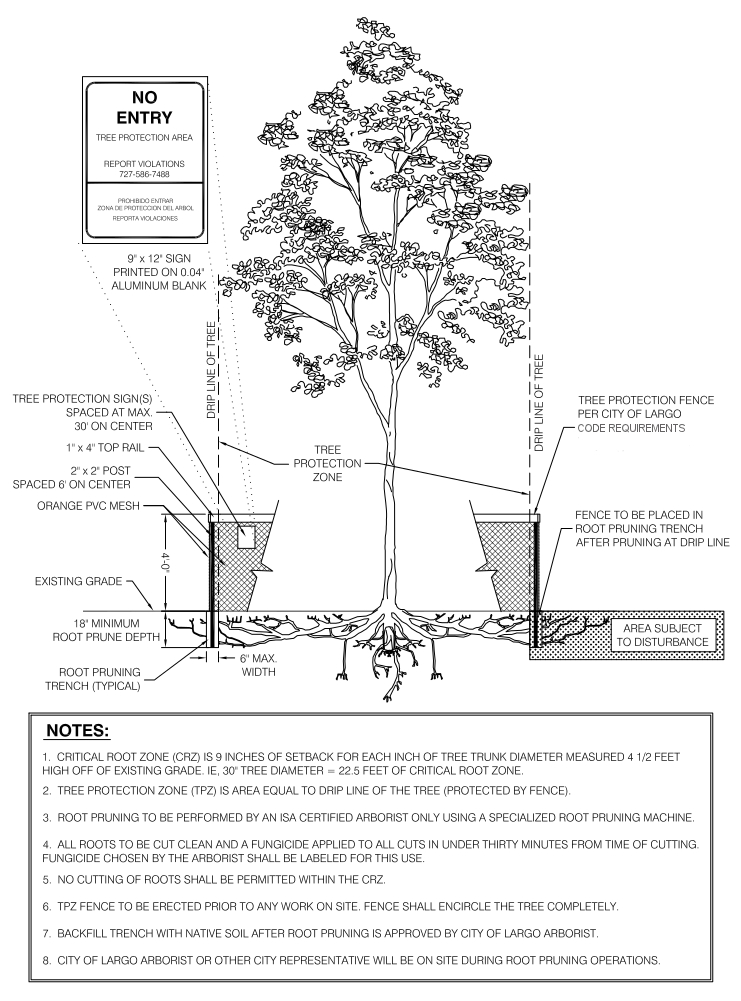
(2)
Alternative protective method - Alternative methods may be utilized when extending protective barriers beyond the drip line is not feasible. Possible alternatives include pumping concrete from a truck through conveyor pipes rather than driving over roots, or bridging root areas with steel plates. Any proposed alternatives must be designed by a certified arborist and approved by the DCO prior to issuance of a DO or Permit.
(3)
Barrier duration - All protective barriers shall be in place and inspected prior to any site clearing or demolition and shall remain in place until all construction activity is completed. Protective barriers may be temporarily removed only if reasonable access into the site is obstructed. Removal of barriers must be approved and inspected by the City's Arborist prior to any site clearing or demolition. Should removal of the barriers result in stress or damage to the tree, as determined by the City's Arborist or designee, removal or replacement of the tree may be required.
(4)
Excess fill within barrier - No excess soil or additional fill, building materials, debris, or litter shall be placed within protective barriers. Any demolition within the protective barriers shall be accomplished by hand operated equipment. Once all material has been successfully dislodged by hand, heavy equipment will be allowed one entry into the barriers in order to push demolition materials beyond the barriers, after which the barriers must be reinstalled. Under no other circumstances shall tractors or heavy machinery be allowed to work, park, or locate within barrier areas.
(5)
Signs, building permits, wires, (other than protective guy wires), or other attachments of any kind shall not be attached to any trees or shrubs within protective barriers.
(6)
All underground utilities shall be routed outside the protective barriers. If this results in unreasonable hardship, a soil auger shall be used to tunnel under the root systems. The DCO shall be notified and at his option may require a staff member present during this procedure to assure adherence to all requirements.
(7)
Installation of structures such as protective barricades, fences, posts, or walls shall not destroy or irreversibly harm the root systems of protected trees. Footers for walls shall end at the point where larger roots are encountered, and the roots shall be bridged. Post holes and trenches located close to protected trees shall be adjusted to avoid damage to major roots.
(8)
Destruction or disregard for the construction/maintenance protective barricades may require the full replacement of the protected tree.
C.
Root pruning - Before grading, pad preparation, or excavation for parking area, curbs, sidewalks, or driveways, the roots of impacted trees must be pruned with approved equipment one foot outside of barriers (or as determined by the DCO). All root pruning shall be conducted by a licensed arborist, and may require the City's arborist to be present during this procedure, as determined by the DCO.
(1)
A detailed report outlining the required root pruning procedures shall be prepared by a certified arborist prior to issuance of any clearing and grubbing or demolition permit, when applicable.
(2)
All damaged roots are to be exposed to sound tissue and severed cleanly. Roots shall be pruned to a depth of eighteen (18) inches below the existing grade or to the depth of disturbance if less than eighteen (18) inches from the existing grade.
(3)
Prophylactic treatments, such as the application of fungicides into the pruning trench, will be required to ensure the least amount of damage to pruned roots.
(4)
After completion of root pruning, all barriers are to be reinstalled, and the area inside the barrier is to receive core aeration.
(5)
Adequate water must be supplied to root pruned trees to aide in root regeneration and decrease stress.
D.
Relocation of trees on site - The following standards shall apply to all trees to be relocated on site during construction:
(1)
Relocated trees shall be no larger than eight (8) inches in diameter.
(2)
All relocated trees shall have a minimum of twelve (12) inches of root ball for every inch caliper.
(3)
All trees to be relocated are to be flagged and inspected prior to removal. The trees must then be moved to the holding area prior to issuance of a grubbing permit.
(4)
Staff shall re-evaluate each tree prior to installation to determine its survivability or if replacement will be required.
(5)
Relocated trees must be sustainable for one (1) year per inch of diameter (i.e., a five (5) inch caliper tree must survive for five (5) years in order to waive the replacement value).
E.
Compliance and enforcement
(1)
Erosion - Property owners and contractors shall be required to implement and comply with the City's notice to contractors regarding measures to eliminate sedimentation, erosion, and adverse drainage impacts caused by construction activity. The City may, at its discretion, inspect construction activities for compliance, as indicated in Section 22-107 of the Largo Code of Ordinances, and impose additional requirements or penalties, as deemed necessary. Failure to properly install and/or maintain the specific Best Management Practices (BMPs) may result in the issuance of a stop work order.
(2)
Destruction of trees - Trees that are illegally destroyed or that have received major damage from illegal activities shall be replaced in accordance with the tree replacement standards of this CDC.
(3)
Pre-demolition/construction meeting - The contractor shall meet with the erosion control and tree protection inspectors prior to issuance of any demolition permit to review all work procedures and tree protection measures. Additional meetings and inspections may be required at the discretion of the DCO or City Engineer prior to and during demolition and construction.
10.6.4 - Site Clearing and Grading Design Standards
A.
Site clearing may occur after issuance of a DO and prior to issuance of a Development Permit at the discretion of the DCO as determined on a case-by-case basis.
B.
Site clearing shall be limited to those areas upon which construction is to take place.
C.
Soils in areas cleared for construction shall be stabilized by periodic watering or chemical means during construction.
D.
Erosion shall be minimized, and sediment should be retained on the site of development.
E.
Stabilization shall be effected immediately by re-vegetation of cleared areas.
F.
Areas on a development site, where land preparation and construction activities will not occur, or where heavy machinery will not venture, shall be delineated at the point of interface, using a woven fabric ribbon or other materials approved by the DCO. Approved materials shall be attached to 2" x 2" upright posts. Upright posts shall be made of wood or other suitable material, be at least 4' in height, and be spaced no more than fifty (50) feet apart. No ropes or ribbons shall be attached to any protected tree.
G.
Natural vegetation shall be retained and protected within areas on a development site where land preparation and construction activities will not occur.
H.
An on-site holding area shall be designated for the protection of removed trees to be replanted on-site.
I.
Erosion and sedimentation control devices shall be installed between the area to be disturbed and the remaining wetlands before clearing, grading, cutting, or filling is begun.
J.
Sediment shall be retained in settling basins or other appropriate locations on the development site. Wetlands and other natural waterbodies shall not be used as sediment traps during development.
K.
Erosion and sedimentation facilities shall receive regular maintenance according to best management practices to ensure that they continue to function properly.
L.
Erosion shall be minimized by limiting clearing to those areas which are to be disturbed, rather than across the entire site.
M.
Post-construction re-vegetation and stabilization of swales, ditches, and disturbed embankments shall be implemented without delay.
N.
Prior to issuance of a Certificate of Occupancy, spot survey elevations showing significant compliance with DO grading requirements shall be submitted.
10.7.1 - Maintenance Standards for Required Landscape Areas
A.
Objective - To ensure the community's long term enjoyment of the numerous beneficial effects of landscaping upon the natural and built environment.
B.
Applicability - Landscaping required as part of a DO approval must be maintained in accordance with the approved landscaping plan for the life of the project. Streetscape improvements including landscaping adjacent to a property and installed by a property owner shall be maintained in perpetuity by the property owner. Single family, duplex, and triplex lots that are developed after the adoption of this CDC, are required to maintain the number of trees per lot as described in Table 10-6.
Requirements for mobile home lots are as stated in Section 10.5.3.D.
C.
Requirements - The following maintenance is required:
(1)
Maintenance shall consist of mowing, removal of litter and dead plant materials, and necessary pruning (see Section 10.7.1.D).
(2)
Natural watercourses within a buffer shall be maintained as free-flowing and free of debris. Stream channels shall be maintained so as not to alter a flood plain.
(3)
Required plant materials which are removed or die shall be replaced with equivalent vegetation within thirty (30) days.
(4)
Preserved trees which die prior to the issuance of a CO shall be replaced in accordance with Table 10-8. Preserved trees which die following the issuance of a CO shall be replaced in accordance with the amount of credit awarded under the DO.
(5)
Natural plant communities left intact on all site developments shall be maintained as required to promote good ecology.
(6)
No mulch or soil shall be placed over the root flair of any existing trees and shrubs to prevent circling roots and trunk rot.
D.
Pruning permit requirements for all sites, excluding low density residential, multi-family and mobile homes
(1)
Pruning of approved trees on a site subject to a DO shall be conducted in accordance with specifications based on the ANSI A 300 Pruning Standards and performed by or under the direct supervision of a licensed arborist.
(2)
All trees may be pruned to maintain shape and promote their shade-giving qualities and to remove diseased or dying portions in areas where falling limbs could be a hazard to people or property. Tree pruning shall be done in accordance with the latest revision of the American National Standard for Tree Care Operations "Tree, Shrub and Other Woody Plant Maintenance" (ANSI A300) and "Pruning, Trimming, Repairing, Maintaining, and Removing Trees, and Cutting Brush—Safety Requirements" (ANSI Z133). No more than twenty-five (25) percent of the crown shall be removed at one time. In order that trees shall develop a healthy structure, no more than thirty-three (33) percent of the trunk of immature trees shall be left bare by limb removal. Also, the top branch or leader of immature trees shall not be removed. Hooks shall not be used to climb trees unless the tree is being taken down. Mature trees overgrowing vehicular use areas shall be pruned to allow the passage of emergency vehicles. Excessive pruning, hat racking or pollarding of trees into round balls of crown or branches, which results in an unnecessary reduction of shade and promotes weak branch attachments, shall be prohibited. Figure 10-21 provides graphic examples of permitted pruning practices. Trees pruned by utility providers within utility easements are not subject to this provision.
Figure 10-21: Correct Tree Pruning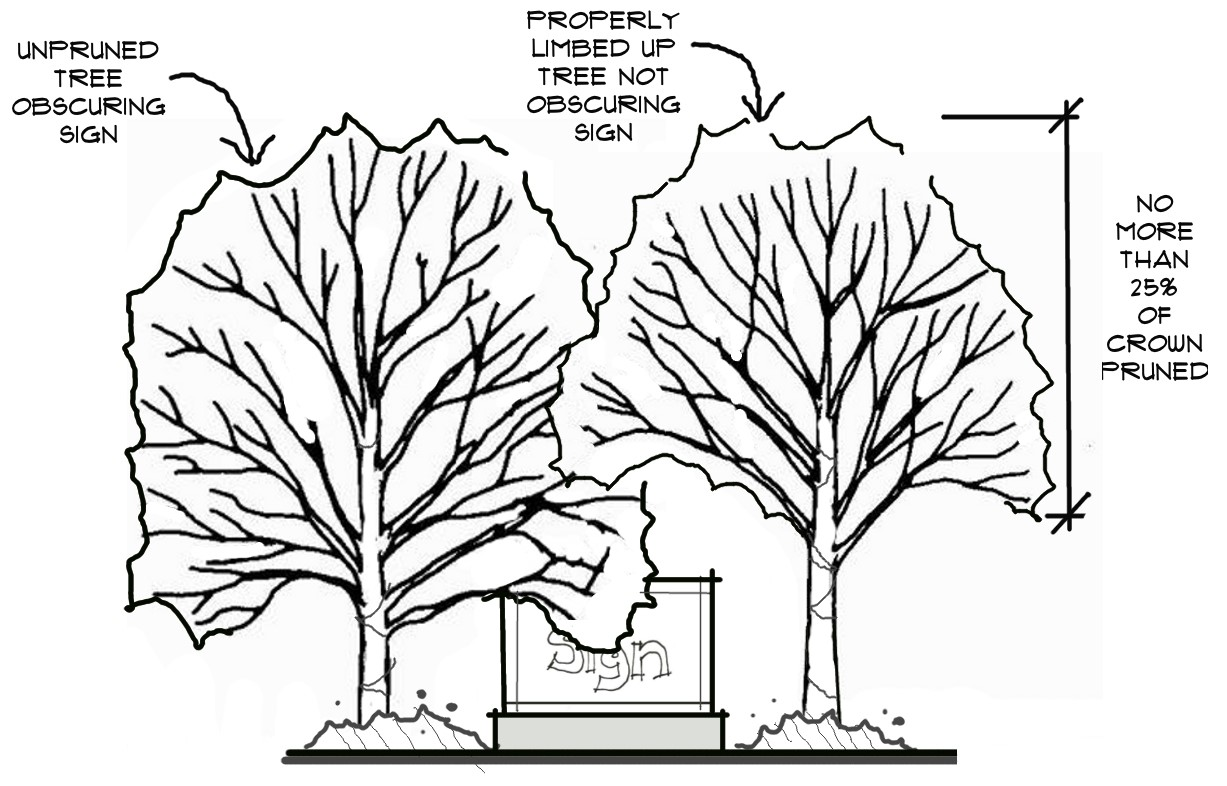
E.
Maintenance limits - All property owners are required to maintain and prune those portions of trees that originate on their property and project out over the public right-of-way, including public sidewalks. All vegetation shall be maintained at a height of no less than eight (8) feet over sidewalks and sixteen (16) feet over roadways. Visibility triangles must be maintained as specified in Section 9.2.3. In addition, property owners must be in compliance with all requirements of the property maintenance requirements in Chapter 18 of this CDC.
F.
Failure to maintain - Failure to maintain any required landscaped area to the standards in this Section shall be a violation of the DO. Upon notice by the City, the property owner shall have thirty (30) days to remedy the violation. If upon re-inspection, it is determined that no corrective action has been taken, the violator shall be subject to code enforcement action.
10.7.2 - Tree Removal and Replacement Requirements
A.
Objective - It is the objective of this Section to regulate the removal, replacement and replanting of trees within the City limits and to ensure the adequacy of tree canopy in the City in order to limit the destruction of natural drainage basins and water recharge zones by promoting the preservation of existing plant communities and natural areas on site. Furthermore, it is the intent of this Section to ensure that protected trees are maintained in accordance with industry standards in order to promote a healthy and structurally sound tree canopy within the City, all for the benefit, health and general welfare of its citizens. Benefits derived from tree protection and planting also include the benefits enumerated in Section 10.1.
B.
Tree removal permits
(1)
Administration - A tree removal permit may be issued in the following circumstances:
a.
Simultaneously with a DO as part of the site plan review process;
b.
Prior to issuance of a site clearing or grubbing permit; or
c.
For the removal of an individual tree at any point during or after the development process, for any site, regardless of whether or not it is subject to a DO.
(2)
Applicability - A tree removal permit shall be required for the removal or alteration of the following protected trees and groupings of native vegetation on any site in the City, including the public right-of-way and public properties, regardless of use or land use designation:
a.
Protected trees - Trees protected under this Section are:
(i)
Trees measuring four (4) inches caliper or greater; or
(ii)
Palms with a four and one-half (4½) feet or more of clear trunk, as measured from the lowest green frond to ground level.
b.
Mangroves - No mangrove plant or tree shall be removed. No trimming of mangroves shall take place without a permit issued by Pinellas County Environmental Management. All trimming and maintenance of mangroves is subject to the requirements of F.S. 403.9321—403.9333.
c.
Native vegetation - A tree removal permit shall also be required to alter stands of native vegetation serving as existing or potential buffers along watercourses, along freshwater and saltwater wetland edges, along marine shorelines, around the periphery of a site, and separating potentially incompatible land uses.
d.
Public safety - The DCO may authorize the immediate removal of any tree endangering the public health or safety prior to filing an application for a tree removal permit. In addition, trees with a main stem or major branch contacting a permanent living structure shall require a permit but shall not require a permit fee or replacement.
(3)
Exemptions -
a.
Target invasive exotic plant species shall be those species listed on the current Florida Exotic Pest Plant Council exotic and invasive species list and shall be exempt from permit fees and replacement. Available at: http://www.fleppc.org/list/list.htm
b.
Existing single family, duplex, triplex and mobile home lots shall not be required to provide tree replacement for the removal of trees ten (10) inches in diameter or less. Replacement will be required for trees greater than ten (10) inches in diameter. However, providing that the minimum planting requirement in Table 10-6 is met, replacements shall not be required for the removal of trees greater than ten (10) inches in diameter.
c.
Bona fide agricultural uses existing at the time of adoption of this CDC and those portions of state-approved or governmental nursery operations growing plants, trees, and produce for resale, or for sale to the general public in the normal course of business, are also exempt from the provisions of this Section.
d.
Removal of dead, dying or diseased trees shall not require a permit fee or replacement, but shall require a permit.
e.
The DCO may also exempt from a permit fee, replacement requirements and/or a fee in lieu of replacement of tree. The DCO must first determine that the documented or predicted cost of repairing damage that has been created by the tree, exceeds the value of the tree as established by the fee in lieu of replacement that tree provided in Section 10.7.2 of the CDC and the fee schedule adopted by the City Commission. Such determination shall be issued in writing after consultation with a City representative and the applicant for tree removal.
(4)
Application for Permit
a.
Any person wishing to obtain a permit to remove a protected tree shall file an appropriate application with the City on forms provided by the City. The form shall be filled out completely and accurately by the legal property owner or representative of the property owner, which may include a tree service hired by the property owner and with a current BTR on file with the City of Largo.
b.
The property owner shall be liable for any tree replacement requirements or fees in lieu of replacement assessed as a result of tree removal approval. A sketch of the property showing the locations of trees requested for removal shall accompany the application.
(5)
Permit Review Process - City staff shall use the following process in reviewing an application for a tree removal permit:
a.
The application for a permit to remove a protected tree, along with the required information, shall be field checked by the City Arborist;
b.
Tree removal shall be documented on the City Inspection form;
c.
Approval standards - The following standards shall serve as a justification for approving a tree removal permit:
(i)
If the tree is a threat to public safety, and/or health through danger of falling or interference with utility services;
(ii)
If there is a likelihood of property damage the property owner must provide the appropriate documentation to demonstrate the damage to the property.
(6)
Relocation or replacement as condition of approval for permit.
a.
When the City approves the removal of a tree(s) it shall, unless otherwise specified in this Section, as a condition to approving the application, require the applicant to relocate or replace the tree(s) to be removed. Replacement trees shall be of a commensurate tree in respect to size and species as the tree(s) removed, (i.e. shade tree(s) species shall replace shade tree(s)), and as contained on, but not limited to, the City of Largo Approved Species List, Table 10-9. Existing trees shall be replaced using the ratios contained in Table 10-8.
b.
Replacement tree(s) shall be no less than eight (8) feet in height and two (2) inches in trunk caliper. All replacement trees shall be Florida Grade #1 quality or greater nursery stock, as consistent with the Florida Grades and Standards for Nursery Stock. If replacement trees are installed, the applicant shall guarantee that the replacement trees are in a healthy growing condition for a period of one year after installation.
c.
It is the intent of this provision to have trees replaced on the site where the tree removal occurred. If a property has insufficient space for the required replacement trees, any remaining deficit in inches to be replaced from Table 10-8 shall be mitigated by payment of a fee in lieu of replacement to the City of Largo Tree Fund. Fees in lieu of replacement are established in the City's fee ordinance.
d.
Trees planted to fulfill buffer requirements shall not count toward tree replacement requirements.
e.
Relocated trees - The relocation of trees within the site must comply with the standards for tree protection during construction discussed in the Site Clearing section of this CDC. The Building Division shall be notified at least forty-eight (48) hours in advance of transplanting operations.
(7)
Payment of cash-in-lieu of replacement - The amount charged per inch of tree removed and not replaced shall be established in the City's fee ordinance.
10.8.1 - Purpose
The plant species listed in Table 10-9 are recommended for planting to meet the applicable provisions of this CDC's landscape requirements. Overall, plant species selected should match the conditions of the site where they are planted. Other plants identified as "Florida Friendly" by the Southwest Florida Water Management District will be considered as substitute plant material to those specifically listed.
10.8.2 - Approved Landscape Species Key
The following key references the columns contained in Table 10-9, which begins on the following page.
A.
Native - A "yes" indicates a species native to Central Florida, "no" indicates a species that is not native to Central Florida.
B.
Drought-tolerant - Drought tolerance refers to a plant's ability to survive drought periods. A plant with high drought tolerance can survive extended drought periods. However, even the most drought tolerant plants should be irrigated in urban areas. "Low" indicates a plant with low drought tolerance.
"Mod" indicates a plant with moderate drought tolerance. "High" indicates a plant with high drought tolerance.
C.
Light - This category refers to the preferred light requirements for optimal plant growth and flowering, if applicable. "FS" indicates a plant prefers full sun. "PS" indicates a plant that prefers partial shade. "SH" indicates a plant that prefers shade.
D.
Salt - This category refers to a plant's ability to withstand aerosol salt spray and reclaimed water. "Low" indicates a plant with low salt tolerance. "Mod" indicates a plant with moderate salt tolerance. "High" indicates a plant with high salt tolerance.

