
Largo City Zoning Code
CHAPTER 7
SPECIAL DESIGNATIONS AND OVERLAYS
Section 7.2 - Major Activity Centers
Map 7-1: CRDs, Activity Centers, and Employment Centers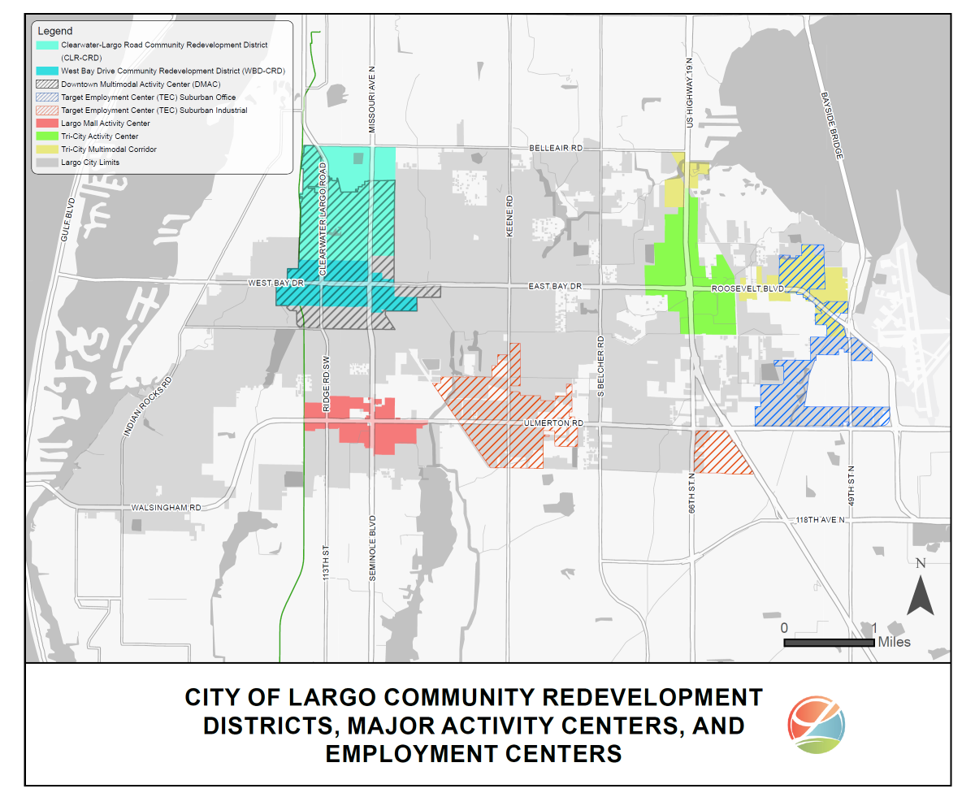
(Ord. No. 2021-32, § 5(Exh. A), 3-2-2021; Ord. No. 2026-07, § 5, 5-19-2026)
7.1.1 - Purpose
The City of Largo Strategic Plan, adopted in 2004 and updated in 2011, recommended that existing commercial nodes be redeveloped into concentrated areas of higher density, mixed-use development which emphasize a multimodal transportation orientation and pedestrian connections to adjacent neighborhoods. This Strategic Plan recommendation is part of a countywide strategy to identify and foster target areas for redevelopment. The City of Largo Comprehensive Plan establishes a framework for implementing this vision through supportive goals and policies, which were used to develop the standards in this section. There are three types of Activity Centers: Major Activity Centers, Neighborhood Activity Centers, and Employment Centers. The three (3) types are described below.
A.
Major Activity Centers
(1)
Location and Description - There are three (3) Major Activity Centers in the City of Largo: The Downtown Multimodal Activity Center (DMAC), the Largo Mall Activity Center and the Largo Tri-City Activity Center (LTAC) (See Map 7-1). Major Activity Centers are characterized by a mix of business, residential and civic uses in a high density, compact physical arrangement that creates a walkable environment, which makes it convenient for residents and employees to travel by public transit, bicycle, foot, or car.
(2)
Regulatory Authority - Development and redevelopment within the Major Activity Centers is guided by Special Area Plans. The Special Area Plans designate allowable uses, development standards, and design standards. The plans also delineate available incentives and provide a framework for public infrastructure improvements within each designated special area boundaries. Dedicated multimodal transportation plans may also be developed for the Major Activity Centers. These plans are coordinated with the Special Area Plan for the area in order to create land use and transportation strategies that are supportive of redevelopment in an urban, pedestrian-oriented form.
B.
Neighborhood Activity Centers
(1)
Location and Description - Neighborhood Activity Centers, while not overlays governed by special area plans and are not regulatory, generally consist of clusters of commercial land uses located at the intersections of arterials and community streets. These areas typically feature commercial uses that serve adjacent neighborhoods.
(2)
Regulatory Authority - Development and redevelopment within the Neighborhood Activity Centers is regulated by the standards applicable to the land uses within each area, as well as by the design guidelines contained within the Urban Design Guidelines for Activity Centers. Development and redevelopment should respect the scale and character of adjacent properties and neighborhoods.
C.
Target Employment Centers -
(1)
Location and Description - There are two Target Employment Center Overlay designations in the City of Largo consisting of the Suburban Office (TEC-SO) and Suburban Industrial (TEC-SI) subdistricts. Target Employment Centers are characterized by a combination of employment-oriented, office, industrial, and mixed-use development, complemented by urban design standards to support connectivity both within the overlay and to adjacent residential and commercial areas. Development and redevelopment should respect the scale and character of adjacent properties and neighborhoods.
(2)
Regulatory Authority - Development and redevelopment within the Target Employment Centers is guided by the Target Employment Center (TEC) Overlay in Section 7.3 Other Activity Centers. The Overlay designates allowable uses, development standards, and design standards for developments seeking to use the bonus options afforded through the Overlay.
D.
Provision of an Alternate Development Process.
(1)
Within the Activity Centers, Multimodal Corridors, Community Redevelopment Districts, and Target Employment Centers, a developer and/or property owner may choose the Alternate Development Process during site plan review. This process is administrative and is intended to allow a developer/property owner the ability to propose a project which meets the intent of the City's vision for the overlay, while allowing for the administrative flexibility to amend certain site layout standards due to specific site constraints or challenges.
a.
Applications shall meet all applicable standards of Chapter 3 Level I, Small Scale Review or Level II, Full Scale Review;
b.
Review - A review shall be conducted by Community Development staff to ensure the development is consistent with the principles of the Strategic Plan, the Urban Design Guidelines for Activity Centers, the Comprehensive Plan, and the Special Area Plan, if applicable.
c.
All development plans reviewed under this provision must be approved by the Development Controls Officer (DCO); and
d.
Community Development staff shall make a quarterly presentation of all plans approved under this provision to the Community Development Advisory Board (CDAB) and/or the Community Redevelopment Agency Advisory Board (CRAAB) at a publicly advertised meeting for the purpose of receiving feedback and guidance on the development of revised principles and guidelines.
(Ord. No. 2021-32, § 4, 3-2-2021; Ord. No. 2025-01, § 11, 12-17-2024; Ord. No. 2026-03, § 8, 3-17-2026; Ord. No. 2026-07, § 4, 5-19-2026)
7.2.1 - Downtown Multimodal Activity Center (DMAC)
A.
General characteristics and purpose - A Multimodal Activity Center is a designated area that incorporates or is anchored by a Major Activity Center or Transit Station Area and is of sufficient scale to support public transit or internal capture of trips within its boundaries. Within Multimodal Activity Centers, emphasis is placed on development that supports the use of multiple forms of transportation, leading to a reduction in automobile use. Designated areas shall be supported by an adopted multimodal capital plan and a CRD Plan, Special Area Plan, Transit Station Area Plan, or Overlay District Standards. The Downtown Multimodal Activity Center (DMAC) overlaps with the West Bay Drive CRD and a portion of the Clearwater-Largo Road CRD Both CRDs have adopted Special Area Plans in place. Both were developed through a community-based planning process that directly involved local business owners and residents. The Plans work to cultivate the unique attributes of each district to foster a distinct sense of place and community identity. The Plans also designate a land use and urban design vision to provide a context for future development in the districts. To facilitate implementation of the Plans, specific strategies, incentives, and public infrastructure investments, are specified.
B.
Location and boundaries - The Downtown Multimodal Activity Center was established by the "Moving Largo" Multimodal Plan and overlaps with the West Bay Drive Community Redevelopment District (WBD-CRD) and a portion of the Clearwater-Largo Road Community Redevelopment District (CLR-CRD) as shown on Map 7.1.
C.
Development standards - Development standards contained within this Section, are applicable to properties within the DMAC boundaries but outside the WBD-CRD or CLR-CRD boundaries. Properties within the CRD boundaries shall follow development standards specific to the CRD in which they are located. CRD standards will be contained in Sections 7.2.3.C and 7.2.4.C.
(1)
Landscape/Pedestrian Improvements - Landscape requirements are intended to recognize the urban nature of the downtown area. Accordingly, the landscape requirements are organized into the following categories:
a.
Streetscaping - Streetscaping shall be utilized to encourage the creation of a pedestrian friendly environment by providing wider sidewalks, well-spaced canopy trees between the street curb and the sidewalk for shade, and low hedges of evergreen shrubs behind the sidewalk to soften building edges and help screen parking lots. Utilities (such as street lights) and street furniture (such as bus shelters, benches and trash cans) shall also be located in the area between the street curb and the sidewalk in order to separate vehicles from pedestrians and provide a safe, unobstructed walking area. Signs shall not conflict with the higher growing canopy trees. As the trees grow, they can be limbed up, raising the canopy and keeping the building visible. Where outdoor dining is provided, no low growing vegetation at all is needed.
b.
Curbside Landscaping/Utilities Area - The area between the back of street curb and the sidewalk shall be a minimum of five (5) feet wide and contain:
(i)
Street trees intended to provide an urban tree canopy along each side of the street in addition to low growing landscaping such as grass or ground cover. Street trees may be planted using a number of treatments, including the use of tree grates and pavers/bricks, or mulch beds with groundcover or grass. Street trees shall be approved canopy trees from the list maintained by the City of Largo Department of Recreation, Parks and Arts. Where overhead utility lines or other special conditions exist, understory trees may be substituted for canopy trees subject to approval by the City Arborist/Landscape Planner. Trees shall be spaced according to the landscape standards contained within Chapter 10 of the CDC. When a property abuts an FDOT roadway, the street trees may be located between the sidewalk and building to meet FDOT visibility requirements.
(ii)
Utilities such as street lights, fire hydrants, parking meters and the conduit serving these utilities; and
(iii)
Street furniture, where applicable and for public use, such as bus shelters, benches and trash cans.
Figure 7-1: Conceptual DMAC Pedestrian Zone
Streetscaping within the DMAC shall include a pedestrian zone that allows for a curbside
landscaping/utilities area and sidewalks identified within these standards.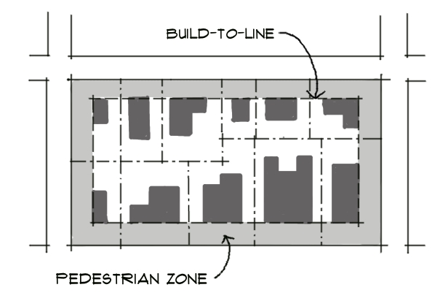
c.
Sidewalk - Sidewalks on properties classified as Commercial General (CG) and Institutional (I) are required to be a minimum of eight (8) feet wide. In all other land use classifications, sidewalks shall be a minimum of five (5) feet wide. Sidewalks shall be provided along all street rights-of-way, with the exception of alleys. Where sufficient right-of-way width does not exist to support these improvements, the developer shall construct the sidewalk within an easement approved by and dedicated to the City. Internal sidewalks to and from a development are required and need not be adjacent to, or in the vicinity of, vehicular access routes.
d.
Landscaped Buffers - Landscaped buffers are required along property lines shared with less dense or less intense character districts or FLUM classifications, as well as around the perimeter of surface parking lots. Buffers shall be located within the required side and rear setback. In accordance with Table 10-3, Type A buffers are required.
(i)
Where a higher density/intensity character district or FLUM classification is separated from a lower density/intensity district by a public street, a pedestrian zone with the required sidewalk and curbside landscaping/utilities area width shall be provided in lieu of a landscape buffer.
(ii)
Where properties are separated by an alley, a Type A buffer is required unless otherwise approved by the DCO.
(iii)
Perimeter buffers for surface parking lots are required regardless of whether the lot fronts a shared property line or a public street.
i.
If a shared parking agreement exists with an adjacent property, the DCO may waive the buffer requirement between the two sites.
e.
Parking lot landscaping - Perimeter landscaping for surface parking lots shall include a minimum of a five (5) foot wide landscape buffer with canopy trees and a wall, fence, linear evergreen hedge, or combination thereof at a minimum of three (3) feet, not to exceed four (4) feet. Interior parking lot landscaping must meet the requirements of Chapter 10 of the CDC.
f.
Sustainable street and parking lot infrastructure - "Green" street infrastructure, such as landscaped swales in the green space next to the right-of-way to improve water quality and aid in storm water management, are encouraged within the DMAC. The use of green infrastructure in parking lot design is also encouraged through the installation of ribbon curb at the edge of parking lot islands and planting areas, with the plantings installed in swales below the grade of the parking lot to encourage natural drainage and filtration before rainwater enters the conventional stormwater system. Pervious parking systems are also encouraged where appropriate.
g.
Screened service areas - All service areas, dumpsters, and loading facilities shall be located to the rear of buildings and fully screened from view from sidewalks, streets and adjacent residential developments through the use of landscaped buffers and fences or walls constructed of opaque materials.
(2)
Site design and connectivity improvements -
a.
Building design - At least one primary entrance shall be oriented to a public street and connected via a pedestrian sidewalk aligned with the primary entrance. The entrance shall be accentuated with at least three (3) of the following design features to ensure that it is clearly defined and highly visible:
-
Architectural features such as outdoor patios or plazas;
-
Display Windows;
-
Integral Planters or Wing Walls;
-
Green/Vegetated Walls or Vertical Gardens;
-
Canopies;
-
Arcades;
-
Parapets;
-
Peaked Roofs;
-
Arches; or
-
Architectural details other than those listed above such as details of building design.
b.
Connectivity - Well-defined, safe pedestrian access will be provided between building entrances and public sidewalks, transit stops, parking facilities, external sidewalks, and outparcel buildings. Pedestrian walkways shall be designed to be a minimum of five (5) feet wide and in a manner that reduces conflict between pedestrians and vehicular traffic. Public transit facilities shall be provided, when appropriate, using landscaped areas, sidewalks, and pavement markings or pavers when crossing vehicular use areas. Pedestrian walkways shall be ADA accessible, have adequate lighting for safety and security, and be distinguishable from vehicular circulation routes through the use of techniques such as painted crosswalks, raised elevation, or change in pavement material, texture, pattern, or color.
c.
Site design - Building sites shall be designed to promote connectivity to surrounding land uses and streets. Techniques may include development of internal street systems, interconnected driving aisles and shared access, pedestrian access, and siting of buildings in relationship to adjacent development.
(i)
Internal and new streets shall connect to existing streets or be designed to facilitate future connections to the maximum extent possible.
(ii)
Interconnected drive aisles and shared access shall be provided to connect with adjoining sites.
(iii)
Siting of buildings shall take into consideration the relationship of the site to adjacent buildings and internal street systems and driving aisles to promote interconnectivity between adjacent land uses. Separation of buildings by internal streets or drive aisles may be required to promote connectivity and pedestrian orientation.
(3)
Safety and lighting - Site Standards for service areas, security and crime prevention, outdoor lighting and minimum open space requirements are as follows:
a.
Safety and Crime Prevention - Site design shall incorporate Crime Prevention Through Environmental Design (CPTED) techniques.
b.
Outdoor Lighting - Outdoor accessory light fixtures which complement the design of the building or streetlights mounted on poles will be provided, where needed, particularly as recommended by the CPTED review, above. Outdoor light fixtures must light all areas adjacent to the building that are used by the public and shall be oriented away from adjacent residential areas.
(4)
Stormwater management - Developments shall comply with all stormwater management requirements in Chapter 11 as well as the standards in Section 7.2.1.C(1)f. Sustainable Street and Parking Lot Infrastructure, above.
(5)
Signs - All signage shall comply with the standards of Chapter 12 of the CDC.
(6)
Redevelopment Incentives - The following programs have been established to facilitate redevelopment in the Downtown Multimodal Activity Center:
a.
Downtown Multimodal Impact Fee Reductions - Multimodal Impact Fees within the DMAC may be subject to impact fee reductions in accordance with Chapter 150 of the Pinellas County Code of Ordinances ; and
b.
Provision of an Alternate Development Process - Within the DMAC, developers may opt for an Alternate Development Process, which provides administrative flexibility to adjust certain site layout standards while aligning with the City's overall vision. All proposed alternatives must be approved by the DCO. This process is outlined in Section 7.1.1.D.
(Ord. No. 2026-07, § 6, 5-19-2026)
7.2.2 - Community Redevelopment Districts in General
A.
Relationship to state and regional growth management requirements - Chapter 163, Part III, Florida Statutes governs community redevelopment districts (CRDs) and provides a process for their review and approval.
B.
Relationship to countywide land use planning - Both the Clearwater-Largo Road Community Redevelopment District (CLR-CRD) and West Bay Drive Community Redevelopment District (WBD-CRD) Plans have been approved under the requirements of the Special Area Plan (SAP) provisions of the Forward Pinellas Countywide Rules. The Countywide Plan and Countywide Rules provide a general land use map and a set of general land use rules common to all the local governments within Pinellas County. Both the City of Largo City Commission and the Pinellas County Board of County Commissioners (acting as the Countywide Planning Authority) must approve an SAP.
C.
Land use designations within the CRDs - In both the CLR-CRD and the WBD-CRD, overlay districts have been created as part of the land use designation of Community Redevelopment District. These are called "Character Districts" and represent areas within the Districts targeted for redevelopment opportunities. In addition, other land use designations found under Section 5.2, exist within the CRDs and represent areas which must be protected and are not currently considered as redevelopment opportunities. Character Districts and other land use designations are shown for each CRD on Map 7-3 Clearwater-Largo Road CRD Character District Map, and Map 7-4 West Bay Drive CRD Character District Map.
D.
Relationship to City of Largo land use policy
(1)
Relationship to the Comprehensive Plan - The Comprehensive Plan is the City's growth management tool which identifies the long-range goals that the City wants to achieve over the next fifteen (15) to twenty-five (25) years. The framework of the Comprehensive Plan is regulated by the State of Florida. The Comprehensive Plan is the planning and policy link between the vision and principles of the City of Largo Strategic Plan and the regulatory mechanism of the CDC. The importance of the implementation of both the Clearwater-Largo Road and West Bay Drive Community Redevelopment District Plans are specifically reflected in the goals and objectives of the City of Largo Comprehensive Plan, particularly in the Future Land Use Element.
(2)
Relationship to Strategic Plan - The City of Largo Strategic Plan provides a vision for how commercial centers and corridors within the City will redevelop, how the business community will thrive, how infrastructure assets will be maintained, how transportation choices will be expanded, how parks and open space will be cultivated, and how neighborhoods will be preserved. The Strategic Plan is used to align City programming and capital improvements with the community's goals.
(3)
Relationship to adopted mobility plans - The Downtown Largo Multimodal Plan was adopted by the City Commission in 2011. It includes the entire West Bay Drive Community Redevelopment District and a portion of the Clearwater-Largo Road Community Redevelopment District within its boundaries. Consistent with the Comprehensive Plan and the Strategic Plan, the Downtown Largo Multimodal Plan is intended to encourage development and redevelopment of the downtown, creating a community that is walkable and inviting. Implementing the Multimodal Plan for Downtown Largo will provide mobility through options other than the single occupant vehicle. The Multimodal Plan is part of the implementation program for both the Clearwater-Largo Road Community Redevelopment District and the West Bay Drive Community Redevelopment District. The boundaries of the Downtown Multimodal Activity Center are shown on Map 7-2.
Map 7-2: CRDs and DMAC Boundaries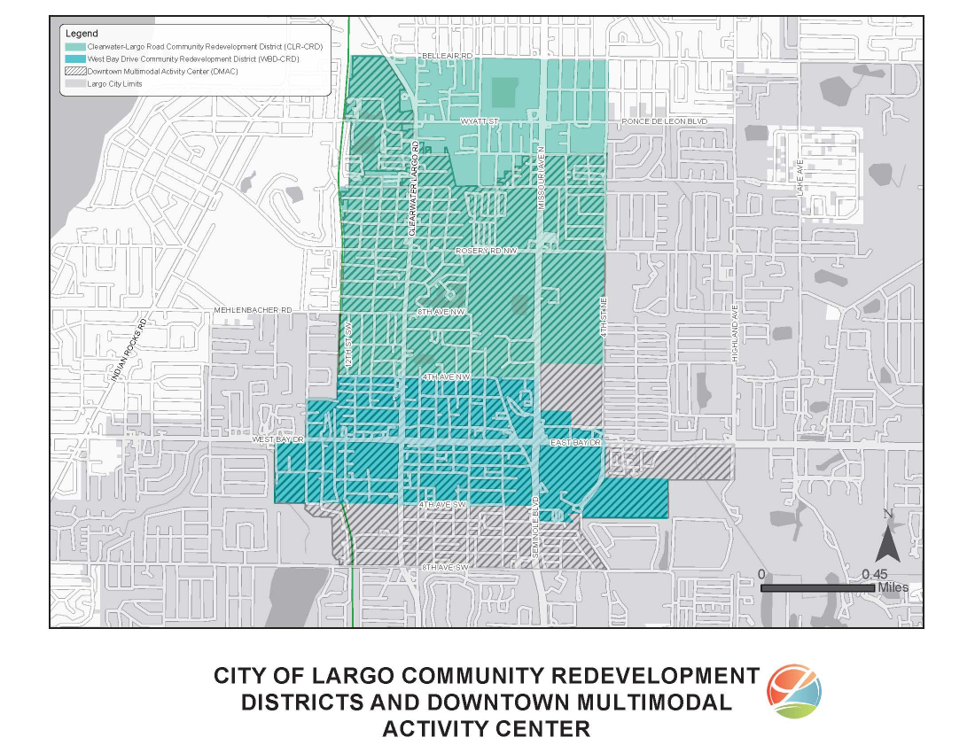
Map 7-3: Clearwater-Largo Road CRD Character District Map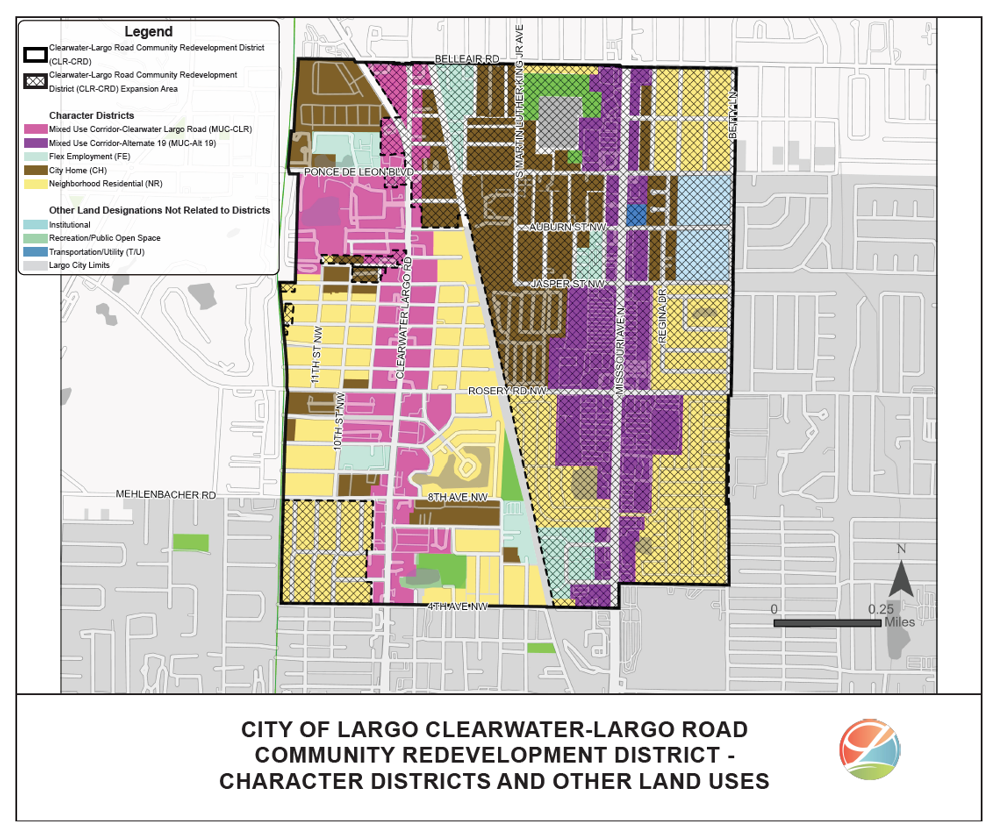
Map 7-4: West Bay Drive CRD Character District Map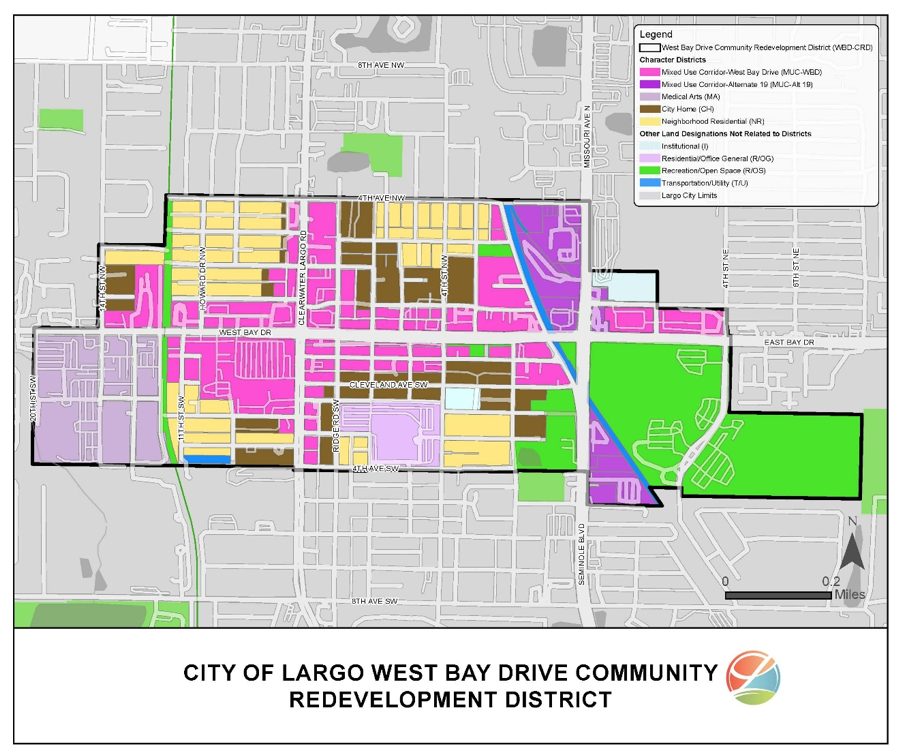
(Ord. No. 2026-07, §§ 7—10, 5-19-2026)
7.2.3 - Clearwater-Largo Road Community Redevelopment District (CLR-CRD)
If the development standards set forth in Section 7.2.3 below are more restrictive or burdensome than the regulations existing on August 1, 2024, as defined by Section 252.422, Florida Statutes, as applied to a parcel within the CLR-CRD expansion area, as shown on Map 7-3, then the regulations in effect on August 1, 2024, applicable to said parcel shall apply. This provision will be in effect until October 1, 2027. After that date, the development standards set forth in Section 7.2.3 below will apply to all parcels within the CLR-CRD expansion area.
A.
General characteristics
(1)
Objective - To implement the CLR-CRD Plan by creating standards that transform the CLR-CRD into a vibrant mixed use district. The CLR-CRD Plan is intended to serve as the guide for redevelopment of this area for thirty (30) years from the date of adoption.
(2)
Boundaries - The boundaries of the CLR-CRD are provided in Map 7-3.
(3)
Use characteristics -
a.
Allowable uses - As contained within Table 6-2 Allowable Uses within the Character Districts of the Community Redevelopment Districts.
b.
Prohibited uses - As contained within Table 6-2 of this Code. Also, uses which do not contribute to the intent of the Code for each of the respective Character Districts may be prohibited subject to a finding by the DCO.
c.
Use restrictions - Allowable and conditionally allowable uses shall comply with all applicable supplemental use provisions, as contained in Table 6-2 and Chapter 15 of the CDC.
d.
Small- and medium-type housing, where allowed per Table 6-2, shall follow all standards outlined in Section 8.6, except those listed in Table 8-4, which are superseded by the development standards in the CRD.
B.
Character District Descriptions - For Character District descriptions, see Chapter 5 of this CDC.
C.
Development Standards - The development standards contained in this Section apply to all parcels within the CLR-CRD. Standards not specifically addressed in this Section shall be governed by the applicable standards contained elsewhere in the CDC. Where a conflict exists, the provisions of this Section shall govern.
(1)
Density and Intensity of Development
a.
Exemptions from FAR limitations - In the MUC-CLR and MUC-ALT 19 districts, the following are not included in the calculation of floor areas and/or are exempt from FAR limitations:
(i)
Public open space, including interior atriums, outdoor plazas and courtyards, café seating, or other public pedestrian use areas;
(ii)
Retail sales, service establishments, museums, commercial recreation uses, studios, and indoor/outdoor eating and drinking establishments located on the ground floor in a development containing a structured parking garage; and
(iii)
Structured parking garage.
1
Maximum of 1,000 square feet for ground floor commercial/retail
2
The following uses are not considered appropriate within the CLR-CRD and are, therefore, prohibited from using the FAR bonuses outlined in Table 7-1 and 7-2: adult uses; automotive repair; car and boat sale lots using outdoor displays; car washes; convenience stores which exceed 2,700 square feet of gross floor area; ministorage facilities and warehouses; mobile homes and recreational vehicle/travel trailer parks; pawnshops.
1
Projects utilizing the affordable housing density bonus option(s) shall comply with the provisions contained within Chapter 14 of the CDC.
2
Projects utilizing the Optional Design Standards Bonus shall comply with the provisions contained in Section 7.2.3.C.(1).c.
3
The following uses are not considered appropriate within the CLR-CRD and are, therefore, prohibited from using the FAR bonuses outlined in Table 7-1 and 7-2: adult uses; automotive repair garages; car and boat sale lots using outdoor displays; car washes; convenience stores which exceed 2,700 square feet of gross floor area; ministorage facilities and warehouses; mobile homes and recreational vehicle/travel trailer parks; pawnshops.
b.
Maximum Bonus Density and Intensity - Projects in the Clearwater-Largo Road CRD may qualify for bonus density and/or intensity by providing site features and/or design elements that go beyond minimum CDC requirements, mitigate secondary impacts of the development, produce public benefit, or contribute to the intent and vision of the CLR-CRD Plan. If the DCO determines a project qualifies for bonuses, the development may utilize any combination of the options within Table 7-2; however, bonuses serving the same public purpose cannot be combined. Bonuses for density and intensity shall not exceed the maximums provided for in Table 7-1. A bonus agreement shall document the use of any of the bonus options outlined in Table 7-2 and is subject to review and approval by the DCO and City Attorney.
c.
Optional Design Standards Bonus -
(i)
Purpose - The Optional Design Standards Bonus provides property owners and developers with the opportunity to obtain bonus density and/or intensity by incorporating specific, enhanced design features into their projects. These standards are intended to promote community objectives, ensure high-quality design, and deliver measurable public benefits consistent with the CDC and applicable redevelopment plans. The options outlined below were developed using Appendix B of the WBD-CRD Plan as a guiding reference but can be utilized for both the WBD-CRD and CLR-CRD.
(ii)
Applicability - The Optional Design Standards Bonus may be applied to eligible development projects as determined by the DCO and shall be processed in conjunction with other required development approvals.
(iii)
Bonus Structure - A project may qualify for the Optional Design Standards Bonus by incorporating either:
•
One (1) approved design feature from the Top Tier list; or
•
Two (2) approved design features from the Lower Tier list.
(iv)
The Top Tier and Lower Tier lists shall consist of City-approved design standards that align with adopted redevelopment and community goals. The DCO shall have the discretion to evaluate and approve design features not specifically listed in either tier to allow the use of the Optional Design Standards Bonus, provided the proposed feature offers a public benefit above and beyond the standard CDC requirements.
(1)
Top Tier Design Standards (Select one to qualify for the bonus):
•
Construction of stormwater detention facilities serving one or more sites in addition to the subject site.
•
Certification through the LEED program at a minimum Silver level.
•
Undergrounding of utility lines to accommodate the pedestrian zone requirements on all street-sides of the project.
•
Contribution to the construction of an off-site public parking garage.
(2)
Lower Tier Design Standards (Select two to qualify for the bonus):
•
Preservation of existing mature trees on the redevelopment site.
•
Use of alternative surfaces (vegetated roofs, pervious pavement, or grid pavers) to reduce impervious areas and promote stormwater infiltration.
•
Installation of on-site renewable energy systems (e.g., solar panels) to offset building energy costs.
•
Creation of a public waiting area with pedestrian protection and appropriate street furniture at transit stops.
•
Implementation of a commuter choice program as described in Section 9.5.1.E.
•
Contribution to the construction of a public transit transfer station.
•
Provision of a buffer and/or setback to an adjacent lower-density residential neighborhood that exceeds the standards in Chapter 10.
•
A prominently located public gathering area (e.g., outdoor seating, courtyard, or plaza) accessible and visible from the public right-of-way and open to the public.
•
Dedication of property to the City for recreation and parks facilities consistent with the City of Largo Recreation, Parks and Arts Master Plan.
•
Provision of on-site public art that contributes to downtown placemaking.
•
Construction and dedication of a mid-block pedestrian walkway.
•
Electric Vehicle (EV) charging stations for 10% of the required minimum parking spaces for the project, at a minimum of 5 spaces.
(2)
Building Setbacks/Pedestrian Zones
a.
To create a pedestrian-oriented urban environment, buildings are encouraged to be pulled up to the street. Building placement is determined by the Pedestrian Zone along a site's street frontages, as well as by the front, side, and rear yard setbacks specified in Table 7-3: CLR-CRD Building Setbacks and Table 7-4: CLR-CRD Pedestrian Zone. Where a building has multiple street frontages, the front setback and Pedestrian Zone requirements shall apply along all street frontages, with the exception of alleys. This front setback shall be measured from back of curb.
1
Where a property provides a garage or accessory dwelling unit (ADU), where permitted, with alley access, the minimum rear setback is five (5) feet.
2
Awnings and balconies may project a maximum of five (5) feet into the required building setback, subject to a minimum clearance of eight (8) feet from the finished grade.
1
In all character districts, except for Neighborhood Residential (NR), benches, bike racks, landscape planters, sidewalk cafes, outdoor retail displays, and other elements that promote active street frontages, as deemed appropriate by the DCO, may be partially located in the required sidewalk/pedestrian walkway provided all requirements of Section 7.2.3.C(3)g are met. Maintenance agreements may be required when streetscaping encroaches into City rights-of-way.
b.
Curbside Landscaping/Utilities Area - The area between the back of street curb and the sidewalk shall be a minimum of five (5) feet wide and contain:
(i)
Street trees are intended to provide an urban tree canopy along each side of the street in addition to low growing landscaping, such as grass or ground cover. Street trees may be planted using a number of treatments, including the use of tree grates and pavers/bricks, or mulch beds with groundcover or grass. Street trees shall be approved canopy trees from the list maintained by the City Arborist/Landscape Planner. Where overhead utility lines or other special conditions exist, understory trees may be substituted for canopy trees subject to approval by the City Arborist/Landscape Planner. Trees shall be spaced according to the landscape standards contained within Chapter 10 of the CDC. When a property abuts an FDOT roadway, the street trees may be located between the sidewalk and building to meet FDOT visibility requirements.
(ii)
Utilities such as streetlights, fire hydrants, parking meters, and conduits serving these utilities; and
(iii)
Street furniture, where applicable and for public use, such as bus shelters, benches and trash cans.
c.
Landscaped Buffers - Landscaped buffers are required along property lines shared with less dense or less intense character districts or FLUM classifications, as well as around the perimeter of surface parking lots. Buffers shall be located within the required side and rear setbacks, as specified in Table 7-3. In accordance with Table 10-3, Type A buffers are required.
(i)
Where a higher density/intensity character district or FLUM classification is separated from a lower density/intensity district by a public street, a pedestrian zone meeting Table 7-4 standards shall be provided in lieu of a landscape buffer.
(ii)
Perimeter buffers for surface parking lots are required regardless of whether the lot fronts a shared property line or a public street.
i.
If a shared parking agreement exists with an adjacent property, the DCO may waive the buffer requirement between the two sites.
(3)
Building and Site Design.
a.
Building Placement - New developments are encouraged to promote a pedestrian-friendly atmosphere by locating buildings closer to the sidewalk, while complying with all applicable requirements.
b.
Minimum Lot Size - There are no minimum lot size requirements within the CLR-CRD.
c.
All new developments and redevelopment in the CLR-CRD shall comply with the following design requirements:
(i)
Building Height/Roof Form - All new buildings must include architectural design elements including pitched roofs, parapets, or other design treatments at the roof level.
(ii)
Flat roofs are prohibited, outside of Neighborhood Residential (NR), unless screened with a decorative architectural feature such as a parapet. Parapet treatment shall be consistent and compatible with the architectural style of the building.
(iii)
Roofing material for exposed sloped roofs shall be consistent and compatible with the architectural style of the building.
(iv)
All mechanical equipment (either ground mounted or rooftop) must be shielded from pedestrian view with materials consistent and compatible with the architectural style of the building and equal to the height of the equipment.
(v)
Neon, primary and black colors as well as checks, stripes, and other patterns are prohibited as the primary façade treatment on all buildings.
(vi)
The architecture of all accessory buildings, whether attached or freestanding, must be consistent with the principal structure.
(vii)
All balconies shall be habitable and where porches are provided, they shall be functional, with a minimum interior depth of four (4) feet.
(viii)
When buildings are proposed to exceed two (2 stories), a façade transition line must be provided at the top of the second story. The transition shall be expressed by a material change, a trim line, or a balcony. This does not apply to development within the Neighborhood Residential character district.
d.
All new developments and redevelopment in the MUC, FE, and CH character districts of the CLR-CRD shall comply with the following design requirements:
(i)
The first floor of all buildings located along Missouri Avenue or Clearwater-Largo Road shall be a minimum of twelve (12) feet in height, as measured from the finished floor to the finished ceiling.
(ii)
The first floor of all buildings located along Missouri Avenue or Clearwater-Largo Road are required to have active, pedestrian-oriented uses, such as offices, retail, sit-down restaurants, indoor recreation, entertainment uses, and microbreweries.
(iii)
The primary public entrance for new buildings shall face the right-of-way of the highest street classification and be clearly identifiable from the public sidewalk.
(iv)
Windows shall comprise no less than fifty percent (50%) of each first floor facade facing a public street. Each window will be vertically oriented and larger in area than the largest window serving floors above.
(v)
To provide shade and weather protection over sidewalks or areas directly adjacent or next to the building where the public will walk, awnings and/or recessed entrances for pedestrian weather protection and visual interest shall be installed on all new buildings. Materials must be consistent with the architectural style of the building. A minimum of eight (8) feet vertical clearance from sidewalk to the underside of any awning is required. Where appropriate, an arcade or projecting balconies may also be provided to meet this requirement.
(vi)
Blank walls shall be minimized. Facade treatments such as projections and recesses, murals, material changes, textured surfaces, and similar architectural treatments are required.
e.
Safety and Lighting - Lighting can enhance pedestrian zones in neighborhoods and other corridors that provide pedestrian routes to employment, educational, shopping, and recreational destinations. Pedestrian-scale lighting shall be implemented where appropriate.
Site Standards for service areas, security and crime prevention, and outdoor lighting requirements are as follows:
(i)
Safety and Crime Prevention - Site design shall incorporate Crime Prevention Through Environmental Design (CPTED) techniques.
(ii)
Outdoor Lighting - Outdoor accessory light fixtures which complement the design of the building or streetlights mounted on poles must be provided, where needed, particularly as recommended by the CPTED review, above. Outdoor light fixtures must light all areas adjacent to the building that are used by the public and shall be oriented away from adjacent residential areas.
f.
Parking -
(i)
Minimum parking standards for the CLR-CRD shall meet the requirements of Chapter 9 of the CDC. Alternative mixed use and shared parking scenarios may be submitted to the City for review as part of the development approval application. All technical reports supporting alternative parking scenarios shall be signed and sealed by a professional engineer registered to practice in Florida (or similar certified professional with demonstrated expertise in this area) and utilize recognized sources for alternative methodologies
g.
Connectivity improvements -
(i)
Sidewalks will be provided along all street rights-of-way, with the exception of alleys. Where sufficient right-of-way width does not exist to support these improvements, the developer will construct them within an easement approved by and dedicated to the City.
(ii)
Well-defined, safe pedestrian access will be provided between building entrances and public sidewalks, public transit stops, and parking facilities. (iii) Bicycle parking facilities shall be provided in accordance with Section 9.4.2 of this CDC.
h.
Stormwater Management - Developments shall comply with all stormwater management requirements in Chapter 11.
i.
Signs - Signage shall be built to a pedestrian scale, integrated with the associated building's architectural style, and comply with the standards of Section 12.13 Signage in the Community Redevelopment Districts (CRDs).
j.
Outdoor Displays of Merchandise - All outdoor displays, whether permanent or temporary, shall not cumulatively exceed twenty-five (25) percent of the gross floor area of the building(s) on the property. Outdoor display of vehicles, automotive supplies, appliances, machinery, and similar products are not allowed. The following restrictions shall apply:
(i)
Permanent outdoor displays of merchandise require site plan approval and shall comply with the same building setback and landscaping requirements applicable to the primary structure.
(ii)
Temporary outdoor displays of merchandise shall be limited to a representative sample of items sold within the store and shall be displayed in a compact and orderly manner. Display area(s) shall be located near the building entrance(s) and shall be parallel to, and, abutting, either the building facade or the private sidewalk/walkway leading to the entrance(s). Outdoor displays shall be brought indoors when the business is closed. Outdoor displays shall not obstruct parking spaces or handicap accessibility of public or private sidewalks or walkways.
k.
Nonconforming Structures and Uses - The following standards are established to allow nonconforming businesses the opportunity to conform to the development and design standards set forth in this Section and the vision of the CLR-CRD Plan while maintaining the economic use of the site. Nonconforming structures in the MUC, CH, FE, and NR Character Districts may be permitted to make improvements to their sites and/or structures provided they are consistent with the intent of the CLR-CRD Plan and comply with the following:
(i)
Improvements must meet the standards of Section 7.2.3.C relating to building/site design and Section 9.5.1.E relating to parking.
(ii)
Nonconforming structures are not permitted to expand their floor area greater than twenty-five percent (25%) of the current floor area.
(iii)
Single-family residential properties in the MUC and FE character districts that were conforming at the time of adoption of the CLR-CRD Plan and Section 7.2.3.C of the CDC shall remain conforming; however, these properties are encouraged to redevelop to meet the intent of the Plan provisions.
l.
Residential Infill - The standards in this section supersede the residential infill standards in Section 8.3 of this Code, including minimum lot size requirements, maximum densities, minimum lot dimensions, and minimum setbacks.
(Ord. No. 2025-01, § 12, 12-17-2024; Ord. No. 2026-07, § 11, 5-19-2026)
7.2.4 - West Bay Drive Community Redevelopment District (WBD-CRD)
A.
General characteristics
(1)
Objective - To implement the West Bay Drive Community Redevelopment District (WBD-CRD) Plan by creating standards that allow existing businesses, residents and institutions to prosper within the CRD, while also encouraging new investment at an urban scale in the City's historic downtown. These standards further the goals of the Strategic Plan, Comprehensive Plan, the Special Area Plan (SAP) provisions of the Forward Pinellas Countywide Rules, and the Downtown Multimodal Activity Center Plan.
(2)
Boundaries - The boundaries of the WBD-CRD are provided above in Map 7-4.
(3)
Use characteristics
a.
Allowable uses - As contained within Table 6-2 Allowable Uses Within the Character Districts of the Community Redevelopment Districts.
b.
Prohibited uses - As contained within Table 6-2 of this Code.
c.
Use Restrictions in Character Districts - Allowable and conditionally allowable uses shall comply with all applicable supplemental use provisions, as contained in Table 6-2 and Chapter 15 of the CDC.
d.
Small- and medium-type housing, where allowed per Table 6-2, shall follow all standards outlined in Section 8.6, except those listed in Table 8-4, which are superseded by the development standards in the CRD.
B.
Character Districts - For Character District descriptions, see Chapter 5 of the CDC.
C.
Development Standards - The development standards contained in this Section apply to all parcels within the WBD-CRD. Standards not specifically addressed in this Section shall be governed by the applicable standards contained elsewhere in the CDC. Where a conflict exists, the provisions of this Section shall govern.
(1)
Maximum density and intensity of development in the WBD-CRD by Character District - See Table 7-5: West Bay Drive Community Redevelopment District Maximum Density and Intensity.
a.
Exemptions from FAR limitations - In the MUC and MA districts, the following are not included in the calculation of floor area and/or are exempt from FAR limitations:
(i)
Public open space, including interior atriums, outdoor plazas and courtyards, café seating, or other public pedestrian use areas;
(ii)
Retail sales, service establishments, museums, commercial recreation uses, studios, and indoor/outdoor eating and drinking establishments located on the ground floor in a development containing structured parking; and
(iii)
Structured parking.
1
Projects utilizing the affordable housing density bonus option(s) shall comply with the applicable provisions contained within Chapter 14 of the CDC.
2
Projects utilizing the Optional Design Standards Bonus shall comply with the provisions contained in Section 7.2.4.C.(1).c.
b.
Maximum Bonus Density and Intensity - Projects in the West Bay Drive CRD may qualify for bonus density and/or intensity by providing site features and/or design elements that go beyond minimum CDC requirements, mitigate secondary impacts of the development, produce public benefit, or contribute to the intent and vision of the WBD-CRD Plan. If the DCO determines a project qualifies for density and/or intensity bonuses, the development may utilize any combination of the options contained within Table 7-6, not to exceed the maximum bonus allowed by Table 7-5. A bonus agreement shall document the use of any of the bonus options outlined in Table 7-6 and is subject to review and approval by the DCO and City Attorney.
c.
Optional Design Standards Bonus -
(i)
Purpose - The Optional Design Standards Bonus provides property owners and developers with the opportunity to obtain bonus density and/or intensity by incorporating specific, enhanced design features into their projects. These standards are intended to promote community objectives, ensure high-quality design, and deliver measurable public benefits consistent with the CDC and applicable redevelopment plans. The options outlined below were developed using Appendix B of the WBD-CRD Plan as a guiding reference.
(ii)
Applicability - The Optional Design Standards Bonus may be applied to eligible development projects as determined by the DCO and shall be processed in conjunction with other required development approvals.
(iii)
Bonus Structure - A project may qualify for the Optional Design Standards Bonus by incorporating either:
One (1) approved design feature from the Top Tier list; or
Two (2) approved design features from the Lower Tier list.
The Top Tier and Lower Tier lists shall consist of City-approved design standards that align with adopted redevelopment and community goals. The DCO shall have the discretion to evaluate and approve design features not specifically listed in either tier to grant the use of the Optional Design Standards Bonus, provided the proposed features offer a public benefit above and beyond the standard CDC requirements.
(A)
Top Tier Design Standards (Select one to qualify for the bonus):
•
Construction of stormwater detention facilities serving one or more sites in addition to the subject site.
•
Certification through the LEED program at a minimum Silver level.
•
Undergrounding of utility lines to accommodate the pedestrian zone requirements on all street-sides of the project.
•
Contribution to the construction of an off-site public parking garage.
(B)
Lower Tier Design Standards (Select two to qualify for the bonus):
•
Preservation of existing mature trees on the redevelopment site.
•
Use of alternative surfaces (vegetated roofs, pervious pavement, or grid pavers) to reduce impervious areas and promote stormwater infiltration.
•
Installation of on-site renewable energy systems (e.g., solar panels) to offset building energy costs.
•
Creation of a public waiting area with pedestrian protection and appropriate street furniture at transit stops.
•
Implementation of a commuter choice program as described in Section 9.5.1.E.
•
Contribution to the construction of a public transit transfer station.
•
Provision of a buffer and/or setback to an adjacent lower-density residential neighborhood that exceeds the standards in Chapter 10.
•
A prominently located public gathering area (e.g., outdoor seating, courtyard, or plaza) accessible and visible from the public right-of-way and open to the public.
•
Dedication to the City of property for recreation and parks facilities consistent with the City of Largo Recreation, Parks and Arts Master Plan.
•
Provision of on-site public art that contributes to downtown placemaking.
•
Construction and dedication of a mid-block pedestrian walkway.
•
Electric Vehicle (EV) charging stations for ten percent (10%) of the required minimum parking spaces for the project, at a minimum of 5 spaces.
(2)
Building height and setbacks/pedestrian zones
a.
Minimum building height - per Table 7-7: WBD-CRD Building Height.
1
In the MUC, MA, and CH character districts, one-story buildings may be allowed when the ground story clearance is a minimum of 16 feet and either (1) architectural elements are incorporated into the building façade to give the appearance of a two-story building or (2) the building has an outdoor rooftop space/amenity deck with permanent structures providing shade and/or shelter to at least 50% of the rooftop area.
b.
Building setbacks/pedestrian zone - In order to create a pedestrian oriented urban environment, buildings are encouraged to be pulled up to the street. Building placement is determined by the Pedestrian Zone along a site's street frontages as well as by the front, side, and rear yard setbacks specified in Table 7-8: WBD-CRD Building Setbacks and Table 7-9: WBD-CRD Pedestrian Zone. Where a building has multiple street frontages, the front setback and pedestrian zone requirements shall apply along all street frontages, with the exception of alleys.
1
Awnings and balconies may project a maximum of five (5) feet into required setbacks, subject to a minimum clearance of eight (8) feet from the finished grade.
2
Where a property provides a garage or accessory dwelling unit (ADU), where permitted, with alley access, the minimum rear setback is five (5) feet.
1
In all character districts, except for Neighborhood Residential (NR), benches, bike racks, landscape planters, sidewalk cafes, outdoor retail displays, and other elements that promote active street frontages, as deemed appropriate by the DCO, may be partially located in the required pedestrian zone provided all requirements of Section 7.2.4.C(3)g are met. Maintenance agreements may be required when streetscaping encroaches into City rights-of-way.
c.
Curbside Landscaping/Utilities Area - The area between the back of street curb and the sidewalk shall be a minimum of five (5) feet wide and contain:
(i)
Street trees are intended to provide an urban tree canopy along each side of the street in addition to low growing landscaping, such as grass or ground cover. Street trees may be planted using a number of treatments, including the use of tree grates and pavers/bricks, or mulch beds with groundcover or grass. Street trees shall be approved canopy trees from the list maintained by the City Arborist/Landscape Planner. Where overhead utility lines or other special conditions exist, understory trees may be substituted for canopy trees subject to approval by the DCO. Trees shall be spaced according to the landscape standards contained within Chapter 10 of the CDC. When a property abuts an FDOT roadway, the street trees may be located between the sidewalk and building to meet FDOT visibility requirements.
(ii)
Utilities such as streetlights, fire hydrants, parking meters, and conduits serving these utilities; and
(iii)
Street furniture, where applicable and for public use, such as bus shelters, benches and trash cans.
d.
Landscaped Buffers - Landscaped buffers are required along property lines shared with less dense or less intense character districts or FLUM classifications, as well as around the perimeter of surface parking lots. Buffers shall be located within the required side and rear setbacks, as specified in Table 7-8. In accordance with Table 10-3, Type A buffers are required.
(i)
Where a higher density/intensity character district or FLUM classification is separated from a lower density/intensity district by a public street, a pedestrian zone meeting Table 7-9 standards shall be provided in lieu of a landscape buffer.
(ii)
Perimeter buffers for surface parking lots are required regardless of whether the lot fronts a shared property line or a public street.
i.
If a shared parking agreement exists with an adjacent property, the DCO may waive the buffer requirement between the two sites.
(3)
Building and site design.
a.
Building Placement - New developments are encouraged to promote a pedestrian-friendly atmosphere by locating buildings closer to the sidewalk while complying with all applicable requirements.
b.
Minimum Lot Size - There are no minimum lot size requirements within the WBD-CRD.
c.
All new developments and redevelopment in the WBD-CRD shall comply with the following design requirements:
(i)
Building Height/Roof Form - All new buildings must include architectural design elements including pitched roofs, parapets, or other design treatments at the roof level.
(ii)
Flat roofs are prohibited, outside of Neighborhood Residential (NR), unless screened with a decorative architectural feature such as a parapet. Parapet treatment shall be consistent and compatible with the architectural style of the building.
(iii)
Roofing material for exposed sloped roofs shall be consistent and compatible with the architectural style of the building.
(iv)
All mechanical equipment (either ground mounted or rooftop) must be shielded from pedestrian view with materials consistent and compatible with the architectural style of the building and equal to the height of the equipment.
(v)
Neon, primary and black colors as well as checks, stripes, and other patterns are prohibited as the primary façade treatment on all buildings.
(vi)
The architecture of all accessory buildings, whether attached or freestanding, must be consistent with the principal structure.
(vii)
All balconies shall be habitable; where porches are provided, they shall be functional, with a minimum interior depth of four (4) feet.
(viii)
When buildings are proposed to exceed two (2 stories), a façade transition line must be provided at the top of the second story. The transition shall be expressed by a material change, a trim line, or a balcony. This does not apply to development within the Neighborhood Residential character district.
d.
All new developments and redevelopment in the MUC, MA, and CH character districts of the WBD-CRD shall comply with the following design requirements:
(i)
The first floor of all buildings located along West Bay Drive, East Bay Drive, Missouri Avenue, Seminole Boulevard, or Clearwater-Largo Road shall be a minimum of twelve (12) feet in height, as measured from the finished floor to the finished ceiling.
(ii)
The first floor of all buildings located along West Bay Drive, East Bay Drive, Missouri Avenue, Seminole Boulevard, Clearwater-Largo Road, 4th St NW, or 4th Street SW are required to have active, pedestrian-oriented uses.
(iii)
The primary public entrance for new buildings shall face the right-of-way of the highest street classification and be clearly identifiable from the public sidewalk.
(iv)
Windows shall comprise no less than fifty percent (50%) of each first floor facade facing a public street. Each window will be vertically oriented and larger in area than the largest window serving floors above.
(vi)
To provide shade and weather protection over sidewalks or areas directly adjacent or next to the building where the public will walk, awnings and/or recessed entrances for pedestrian weather protection and visual interest shall be installed on all new buildings. Materials must be consistent with the architectural style of the building. A minimum of eight (8) feet vertical clearance from sidewalk to the underside of any awning is required. Where appropriate, an arcade or projecting balconies may also be provided to meet this requirement.
(vii)
Blank walls shall be minimized. Facade treatments such as projections and recesses, murals, material changes, textured surfaces, and similar architectural treatments are required.
e.
Safety and Lighting - Lighting can enhance pedestrian zones in neighborhoods and other corridors that provide pedestrian routes to employment, educational, shopping, and recreational destinations. Pedestrian-scale lighting shall be implemented where appropriate.
Site Standards for service areas, security and crime prevention, and outdoor lighting requirements are as follows:
(i)
Safety and Crime Prevention - Site design shall incorporate Crime Prevention Through Environmental Design (CPTED) techniques.
(ii)
Outdoor Lighting - Outdoor accessory light fixtures which complement the design of the building or streetlights mounted on poles will be provided, where needed, particularly as recommended by the CPTED review, above. Outdoor light fixtures must light all areas adjacent to the building that are used by the public and shall be oriented away from adjacent residential areas.
f.
Parking
(i)
Minimum parking standards for the WBD-CRD shall meet the requirements of Chapter 9 of the CDC. Alternative mixed use and shared parking scenarios may be submitted to the City for review as part of the development approval application. All technical reports supporting alternative parking scenarios shall be signed and sealed by a professional engineer registered to practice in Florida (or similar certified professional with demonstrated expertise in this area) and utilize recognized sources for alternative methodologies.
g.
Site Design and Connectivity Improvements -
(i)
Sidewalks shall be provided along all street rights-of-way, with the exception of alleys. Where sufficient right-of-way width does not exist to support these improvements, the developer shall construct them within an easement approved by and dedicated to the City.
(ii)
Well-defined, safe pedestrian access shall be provided between building entrances and public sidewalks, public transit stops, and parking facilities.
(iii)
Bicycle parking facilities shall be provided in accordance with Section 9.4.2 of this CDC.
h.
Stormwater Management - Developments shall comply with all stormwater management requirements in Chapter 11 of this CDC.
i.
Signs - Signage shall be built to the pedestrian scale, integrated with the associated building's architectural style, and comply with Section 12.13 Signage in the Community Redevelopment Districts (CRDs).
j.
Outdoor Displays of Merchandise - Outdoor displays of vehicles, automotive supplies, appliances, machinery, and similar products are prohibited in accordance with the WBD-CRD Plan.
k.
Non-conforming Structures and Uses - The following standards are established to allow nonconforming structures businesses the opportunity to conform to the development and design standards set forth in this Section and the vision of the WBD-CRD Plan while maintaining the economic use of the site. Nonconforming structures in the MUC, MA, CH, and NR Character Districts may be permitted to make improvements to their sites and/or structures provided they are consistent with the intent of the WBD-CRD Plan and comply with the following:
(i)
Improvements must meet the standards of Section 7.2.4.C relating to building/site design and Section 9.5.1.E relating to parking.
(ii)
Nonconforming structures are not permitted to expand their floor area greater than twenty-five percent (25%) of the current floor area.
(iii)
No existing structures shall be made nonconforming by reason of height as a result of the adoption of the WBD-CRD Plan and standards contained in Table 7-7.
(iv)
Single-family residential properties in the MUC and MA character districts that were conforming at the time of adoption of the WBD-CRD Plan and Section 7.2.4.D of the CDC shall remain conforming; however, these properties are encouraged to redevelop to meet the intent of the Plan provisions.
l.
Residential Infill - The standards in this section supersede the residential infill standards in Section 8.3 of this Code, including minimum lot size requirements, maximum densities, minimum lot dimensions, and minimum setbacks.
(Ord. No. 2025-01, § 13, 12-17-2024; Ord. No. 2026-07, § 12, 5-19-2026)
7.2.5 - Largo Mall Activity Center
A.
General characteristics and purpose - The Largo Mall Activity Center (LMAC) is one of three (3) Major Activity Centers identified in the City's Strategic Plan. The LMAC is both a major activity center and an area of regional importance. The objective of the LMAC is intended to provide for a higher quality, including density and intensity, form of development that can serve multiple modes of transportation and promote compact, walkable development. The activity center overlay is intended to provide flexibility within the district to allow development to have higher densities and intensities of up to two (2) times its current allowable dwelling units per acre (du/ac) and floor area ratio (FAR), but not to exceed thirty (30) du/ac or a FAR of 1.1. Table 7-10 provides an outline of the existing and proposed allowable development thresholds per land use within the LMAC. Properties within the LMAC are not required or expected to be developed to the maximum allowable du/ac or FAR as some properties may be restricted due to site location. Properties/projects which provide design and development elements consistent with the Largo Mall Activity Center overlay standards contained within the CDC are entitled to additional density and/or intensity to the thresholds identified by Table 7-10. These standards are intended to enhance the function of new development, minimize community impacts associated with such uses, meet the mobility goals of the Special Area Plan and improve the visual appearance/cohesiveness of all new uses.
B.
Location and boundaries - The LMAC encompasses approximately 325 acres of property that is roughly bisected by Seminole Boulevard and Ulmerton Road, as indicated by Map 7-1.
C.
Streetscape within the LMAC
(1)
Applicability - Streetscape standards apply to all parcels directly abutting public streets within the LMAC.
a.
Area between the back of the street curb and the sidewalk - This area, which is a minimum of five (5) feet in width regardless of adjacent street shall provide space for a minimum of three (3) canopy trees for every one hundred (100) feet of right-of-way. Shrubs and ground cover are not required.
b.
Sidewalk width - Sidewalk widths vary between five (5) feet in width minimum along collector, local and internal streets and eight (8) feet along arterial streets.
c.
Area between the sidewalk and building - This area, which is a minimum of five (5) feet in width, provides space for additional landscaping to screen surface parking or accent building facades, seating for restaurants and paving for patios. This area shall be finished either in paving or landscaping at the option of the property owner.
d.
Sustainable street infrastructure - "Green" street infrastructure (landscaped swales in the green space next to the right-of-way to improve water quality and aid in storm water management) is encouraged. Green infrastructure is included in Appendix B., Optional Design Standards (Objective 1.2 Sustainable Downtown: "Use of Alternative Surfaces") of the WBD-CRD Plan. The provision of these measure can be used to justify density, intensity and height bonuses. The DCO may reduce required streetside landscaping (including width of buffer and amount of trees and vegetation required) in return for the installation of bioswales or other green infrastructure adjacent to the street curb as part of the streetscape.
(2)
Internal street network requirements
a.
Applicability - Major interior driveways providing access to the entire site shall be designed as primary pedestrian streets (See Figure 7-6).
b.
Pedestrian streets through parking lots - Diagonal or straight-in parking is not allowed within the primary ingress/egress drive of the primary pedestrian street. Parallel parking is allowed (See Figure 7-8).
c.
Design elements - Primary pedestrian streets shall have a sidewalk on both sides that is a minimum of five (5) feet in width and streetscaping consisting of a minimum five (5) foot wide continuous landscape strip between the street or vehicle way curb and the sidewalk. Streetscaping in this landscape strip shall consist of canopy trees and evergreen ground cover. See Table 7-11.
1
Quantities are given for every one hundred (100) feet of right-of-way. Where parking, loading or internal driveways directly about the street right-of-way and/or an internal Primary Pedestrian Street, a Type A Landscape Buffer will be required in addition to the streetscape requirements.
2
Where overhead utilities exist, understory trees may be planted as a substitute for the canopy tree requirement at a ratio of two (2) understory trees for each canopy tree. There would thus be a total of six (6) understory trees required for each one hundred (100) lineal feet of right-of-way.
3
Shrubs are to be low growing, evergreen shrubs. Alternately, a sufficient quantity of evergreen ground cover to cover an area 5 feet wide × 100 feet long (500 square feet) for each one hundred (100) lineal feet of right-of-way may be planted.
D.
Off-street parking design in activity centers
(1)
Parking sub-groups - All parking lots shall be divided into clearly defined groupings of spaces with no more than fifty (50) spaces in a group. Such groups shall be broken into individual areas and/or separated by landscaping and/or by design components of the site or buildings.
(2)
Loading and storage areas - The site plan must demonstrate that loading and storage areas are carefully screened from view by pedestrians, motorists and nearby residents and businesses.
(3)
Dumpsters - All dumpsters must have solid panels that screens the area from the view of pedestrians, motorists and nearby residents and businesses. See Figure 7-7.
Figure 7-6: Example of an Internal Street Network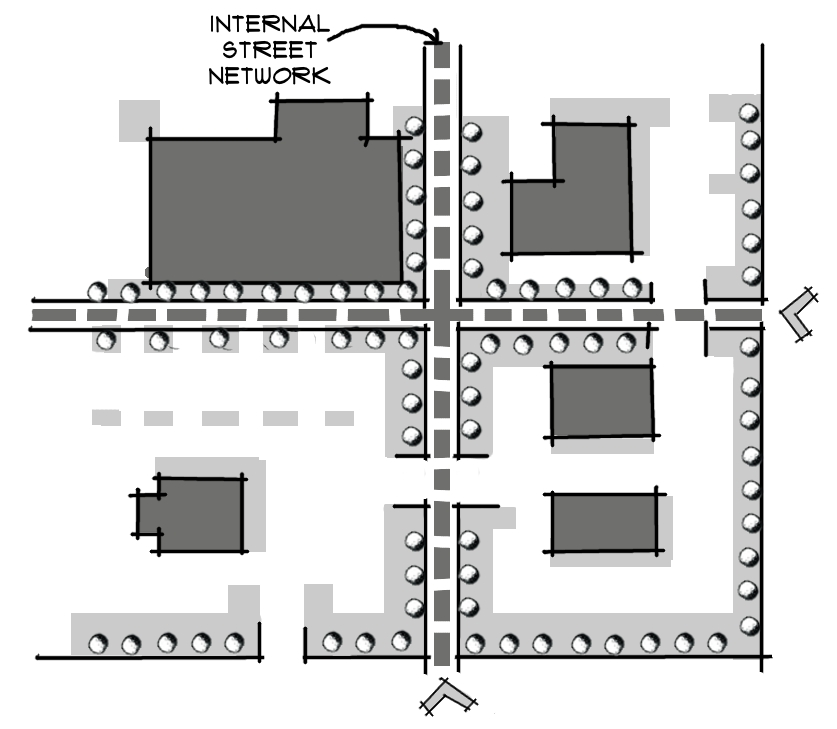
(4)
Utility equipment - Mechanical equipment or other utility hardware on roofs, ground, or buildings shall be screened from public view with architectural and/or landscape materials consistent with the building, or they shall be located so as not to be visible from any public ways. See Figure 7-9.
(5)
Sustainable Parking Lot Infrastructure - The provision of green infrastructure can be used to justify density, intensity and height bonuses. The DCO may reduce required streetside buffer landscaping (including width of buffer and amount of trees and vegetation required) as well as number of required parking spaces, in return for the installation of bioswales or other green infrastructure adjacent to the street curb as part of the streetscape. Green infrastructure is included in Appendix B., Optional Design Standards (Objective 1.2 Sustainable Downtown - "Use of Alternative Surfaces") of the WBD-CRD Plan.
Figure 7-7: Dumpster Enclosure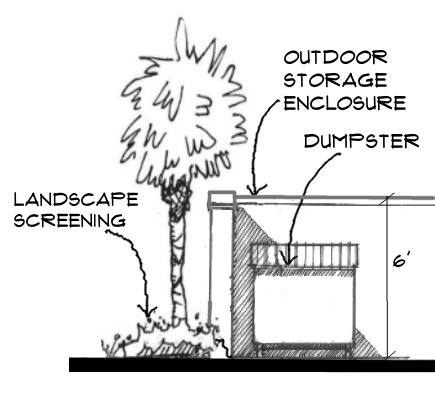
Figure 7-8: Internal Street Standard Within the Largo Mall Activity Center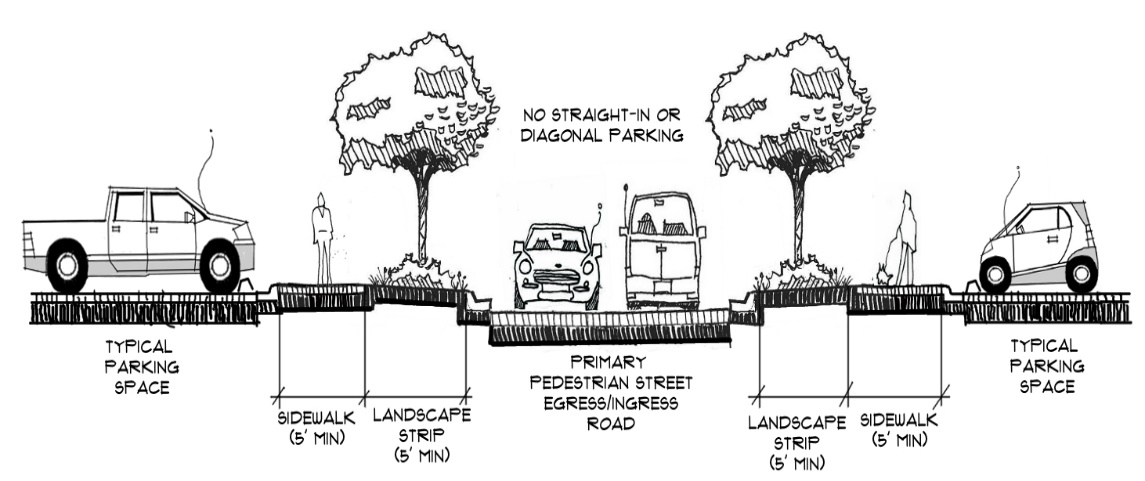
Figure 7-9: Utility Screening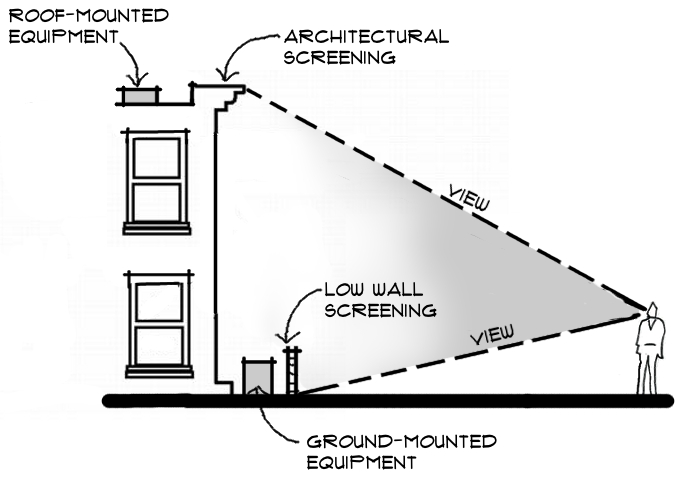
(Ord. No. 2025-08, §§ 19, 20, 6-17-2025; Ord. No. 2026-07, §§ 13—16, 5-19-2026)
7.2.6 - Largo Tri-City Activity Center
A.
General characteristics and purpose - The Largo Tri-City Activity Center (LTAC) is a Major Activity Center identified in the City's Strategic Plan. The LTAC is both a Major Activity Center and an area of regional importance included in the Pinellas County Gateway/Mid-County Master Plan. The objective of the LTAC is intended to encourage redevelopment and infill development with a mix of higher density and intensity uses and transit-oriented design that supports increased walkability and transit usage. The activity center overlays are intended to allow development to have higher densities and intensities and require additional design standards to support the vision for the activity center. These standards are intended to:
(1)
Enhance the function of new development, minimize community impacts associated with such uses;
(2)
Meet the mobility goals of the Special Area Plan; and
(3)
Improve the visual appearance/cohesiveness of all new uses.
To appropriately scale development density and intensity from the transit node at the intersection of U.S. Highway 19 and Roosevelt Boulevard out to the boundaries of the activity center two separate overlays were created: Transit Core Scale and Urban Scale. Table 7-12 provides an outline of the allowable development thresholds in each of the two activity center overlays within the LTAC. The LTAC overlays do not change the allowable use entitlements of any of the future land use designations codified in Chapter 6, Table 6-1: Allowable Uses within Land Use Classifications. Properties/projects which provide workforce/affordable housing and/or sustainable development in accordance with subsection 7.2.6.C consistent with the Largo Tri-City Special Area Plan (SAP) are entitled to additional density and/or intensity to the thresholds identified by Table 7-12.
B.
Location and boundaries - The LTAC overlays encompass approximately 379 acres (159 acres in the Transit Core overlay and 220 acres in the Urban Scale overlay) that are roughly centered around the intersection of U.S. Highway 19 and East Bay Drive/Roosevelt Boulevard, as indicated by Map 7-1.
C.
Density and intensity - Table 7-12: Largo Tri-City Special Area Plan Overlays Density and Intensity
(1)
Base Maximum Density and Intensity - The Largo Tri-City Overlays shall allow higher densities and intensities than are permitted in the underlying future land use designations. These allowable densities and intensities are shown in Table 7-12. However, properties classified as Commercial General (CG), Commercial Recreation (CR), and Residential High (RH) are permitted to use the base density afforded to them through their Future Land Use Map classification. The Major Activity Center Transit Core Scale Overlay shall allow a maximum base density of 30 units per acre and intensity of 2.0 floor area ratio. The Major Activity Center Urban Scale Overlay shall allow a maximum base density of 25 units per acre and intensity of 1.5 floor area ratio. The Multimodal Corridor Overlay shall allow a maximum base density of 20 units per acre and intensity of 1.0 floor area ratio.
(2)
Bonus Maximum Density and Intensity - Density and intensity bonuses, as shown in Table 7-12, may be achieved with the following elements incorporated into any individual development order to accomplish the Special Area Plan priorities such as promoting affordable and workforce housing, sustainable development and enhanced open/civic spaces:
a.
Affordable Housing Bonus Option 1 - Affordable housing may receive up to 20 dwelling units per acre of additional density (above the base residential density) by providing dwelling units for households with incomes at or below 80 percent of the area median income (AMI). This bonus shall comply with Sections 14.1.3.D and 14.1.4.B of the CDC and is based on the following scale:
(i)
Minimum 20% of Total Units meets one of the following:
1.
60—80% AMI + 10 Units/Acre
2.
< 60% AMI + 15 Units/Acre
(ii)
Minimum 40% of Total Units meets one of the following:
1.
60—80% AMI + 15 Units/Acre
2.
< 60% AMI + 20 Units/Acre
b.
Affordable Housing Bonus Option 2 - Alternatively, affordable housing may receive up to 10 dwelling units per acre of additional density (above the base residential density) by providing dwelling units for households with incomes between 80—120 percent of the area median income (AMI). This bonus shall comply with Sections 14.1.3.D and 14.1.4.B of the CDC and is based on the following scale:
(i)
Minimum 20% of Total Units meets the following:
1.
80—120% AMI + 5 Units/Acre
(ii)
Minimum 40% of Total Units meets the following:
1.
80—120% AMI + 10 Units/Acre
c.
Green Building Bonus Option - Developments meeting the following Leadership in Energy Efficient Design (LEED) or National Green Building Standard (NGBS) certification criteria may receive an increase of 0.5 FAR and/or 10 dwelling units per acre subject to the following scale and requirements:
(i)
Density and Intensity Bonus Scale:
1.
LEED or NGBS Platinum certification qualifies for an additional 0.5 FAR and/or 10 units per acre.
2.
LEED or NGBS Gold certification qualifies for an additional 0.25 FAR and/or 5 units per acre.
3.
LEED or NGBS Silver certification qualifies for an additional 2.5 units per acre.
(ii)
Requirements:
1.
Documentation - Applicant shall provide proof of registration of the project with the LEED or NGBS, proof of payment of all applicable fees for the rating system, a draft scorecard showing the achieved credits or points or any third-party documentation from an appropriately credentialed green building professional demonstrating how the measure is equivalent to the indicated certification level.
2.
Green Building Density Bonus Agreement - For properties receiving an intensity/density bonus pursuant to the Green Building Bonus Option, a land use restriction agreement must be entered into to ensure compliance with the requirements of this section of the CDC, prior to issuance of building permits. The land use restriction agreement will be recorded in the official records of Pinellas County, and will subject the property to covenants and restrictions running with the land for a minimum of thirty (30) years. The land use restriction agreement shall be in a form acceptable to the City Attorney.
3.
A certificate of occupancy for any building utilizing bonuses will not be issued until all incentive options are verified by documentation, as deemed necessary by the Development Controls Officer, and field inspections.
4.
If the owner cannot achieve the incentives provided in the land use restriction agreement, the owner shall be required to substitute incentive options to earn all points necessary for the Green Building Bonus Option, which must be approved by the Development Controls Officer, before a certificate of occupancy will be issued.
d.
Sustainable Development Bonus Option - [Reserved]
(3)
Floor Area Ratio Exemption - The following are not included in the calculation of floor areas and/or are exempt from FAR limitations:
•
Civic and open space, including interior atriums, outdoor plazas, courtyards and seating areas, or other public pedestrian use areas.
(4)
Density and Intensity Restrictions - The density and intensity allowed by the overlays does not apply to properties with a future land use designation of Preservation (P) or Recreation/Open Space (R/OS) or that are located within a Coastal High Hazard Area (CHHA).
D.
Development standards - Development standards apply to all parcels within the LTAC overlays in addition to all other applicable CDC standards, including but not limited to minimum lot sizes, impervious surface ratios and landscaping. Where there is a conflict between the standards of this section and other development standards in this CDC, the standards of this section shall govern.
(1)
Building Form and Placement:
a.
Minimum Street Frontage Setbacks:
(i)
East Bay Drive/Roosevelt Blvd. and U.S. 19 Frontage Road: 15 feet.
(ii)
All other roads: 0 feet.
b.
Maximum Building Height per Table 7-13: Largo Tri-City Maximum Building Height.
c.
Compatibility with Adjacent Uses:
(i)
Building height stepbacks - Buildings exceeding 3-stories adjacent to property with existing single family home uses or property with a very low density (up to 1 unit per acre) or low density (2.5 to 7.5 units per acre) residential FLUM designation shall have a building stepback to minimize impacts on adjacent properties. The building stepback shall measure a minimum of ten (10) feet deep from the lower story building facade commencing above the third story to increase light and air movement and mitigate the effect of the increased height on the adjacent properties. At the discretion of the DCO, if setbacks are proposed beyond the minimum required, stepbacks may be waived. See Figure 7-10.
(ii)
Additional setback requirements - Buildings exceeding 2-stories adjacent to property with a very low density residential FLUM designation (up to 1 unit per acre) shall have a fifty (50) foot setback in addition to the minimum required buffer for every story above the second story. For example: a 4-story building shall have a setback of at least one hundred (100) feet in addition to the minimum required buffer from adjacent property with a very low density residential FLUM designation. Buildings exceeding 2-stories adjacent to property with existing single family home uses or property with a low density residential FLUM designation (2.5 to 7.5 units per acre) shall have a twenty (20) foot setback in addition to the minimum required buffer for every story above the second story. For example: a 4 story building shall have a setback of at least forty (40) feet in addition to the minimum required buffer from adjacent property with existing single family home uses or property with a low density residential FLUM designation. See Figure 7-10.
Figure 7-10: Building Height Stepbacks & Additional Setbacks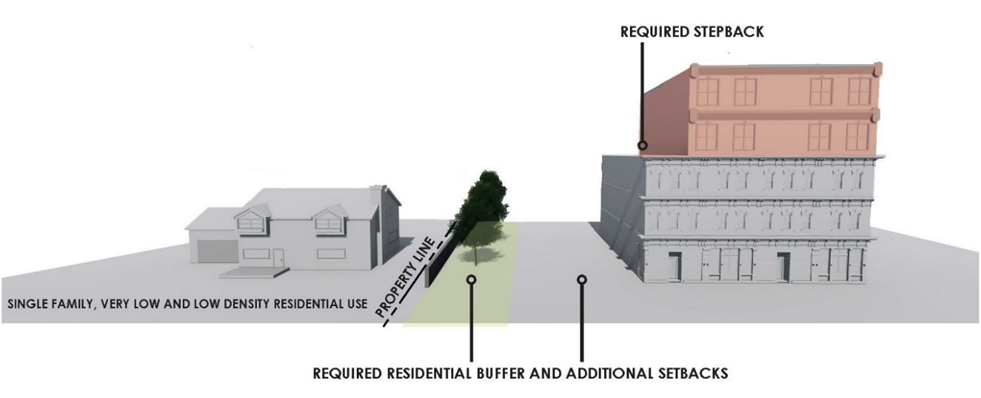
d.
Design Elements:
(i)
A façade transition line shall be provided at the top of the second story. The transition will be expressed by a material change, a trim line, or a balcony.
(ii)
Ground floors are required to have an active use with building entrances that face the pedestrian realm.
(iii)
All buildings should have their primary pedestrian entrance oriented towards the street.
(iv)
For office and retail uses, the ground floor elevation shall achieve a minimum of 60% transparency. Upper floors (high than 20 feet above grade) shall be no greater than 35% transparent.
(v)
Buildings adjacent to East Bay Drive/Roosevelt Boulevard and U.S. 19 frontage roads shall address multiple frontages and orientations.
(vi)
Structures facing East Bay Drive/Roosevelt Boulevard and U.S. 19 frontage roads may have one bay of parking in front of the building, while structures facing all other roads shall have pedestrian-oriented building design.
(vii)
Predominant exterior building materials shall be composed of high quality materials, such as architectural block, brick, concrete with an architectural finish, stucco, or glass. Exterior building materials shall not include unfinished concrete panels, pre-fabricated metal panels or smooth face concrete block.
(viii)
There shall be no expanse of blank walls greater than 20 feet. When architectural features are not an option, landscaping or murals may be allowed as an alternative.
e.
Architectural Design Review Submittal Requirements - Developers shall provide architectural elevations with sufficient detail to demonstrate the project meets the requirements of Largo Tri-City Activity Center at the time of preliminary site plan review.
(2)
Public Realm and Connectivity:
a.
Sidewalks - New development and redevelopment shall construct, reconstruct or expand frontage road sidewalks to the following minimum widths:
(i)
Activity Center Transit Scale Overlay Minimum Sidewalk Width:
•
East Bay Drive/Roosevelt Blvd. and U.S. 19 Frontage Road: 10 feet.
•
All other roads: 8 feet.
(ii)
Activity Center Urban Scale Overlay Minimum Sidewalk Width:
•
East Bay Drive/Roosevelt Blvd. and U.S. 19 Frontage Road: 8 feet.
•
All other roads: 6 feet.
b.
Internal private roads shall have sidewalks serving internal circulation.
c.
Other Pedestrian Walkways:
(i)
Pedestrian walkways shall be provided to access parking behind or to the side of buildings, connect destinations on adjacent properties, connect building frontages to adjacent sidewalks, and allow pedestrian circulation through parking lots to create a continuous pedestrian network.
(ii)
Pedestrian walkways shall be provided along individual or shared driveways connecting rights-of-way with side and rear yard parking.
(iii)
Pedestrian walkways shall be 6-foot wide minimum and free of obstructions.
(iv)
Pedestrian walkways that cross a parking area, driveway, street or other vehicular use area shall be clearly marked with striping, contrasting paving materials (e.g., light-color concrete inlay between asphalt), textured or raised pavement, or other appropriate treatment as approved by the DCO.
d.
Transit Facilities - The applicant for a development approval is responsible for coordinating with PSTA and the appropriate jurisdiction for the roadway on which development is proposed, to identify locations within and bordering the project boundary where current or planned transit stops are or will likely be located. At those locations, space shall be reserved for transit shelters and any required associated improvements, including bicycle racks.
e.
Access and Circulation:
(i)
Access and Driveway Consolidation - Curb cuts and driveways shall be consolidated where possible and located to minimize impact on pedestrian circulation along public sidewalks and front building facades.
(ii)
Cross Parcel Connections and Shared Access - To facilitate circulation and improve accessibility, vehicle and pedestrian networks on adjacent sites shall be interconnected and cross-access easements implemented. Parking lot drive aisles and pedestrian walkways shall be aligned and connected and drive aisle stub outs shall be constructed on properties abutting undeveloped sites to allow for future connections.
(iii)
Connection to Duke Energy Trail - Connections to the Duke Energy Trail shall be incorporated into site plans where property is adjacent to the Trail when feasible.
(iv)
Connective street network - Where feasible, new street network connections shall be incorporated into development sites and dead-end street and culs-de-sac shall be minimized.
f.
Reconstruction of Sidewalks and Landscaping - Reconstruction of existing sidewalks and landscape within rights-of-way shall be required. To the extent possible given right-of-way limits and utility conflicts, and with approval of the FDOT, Pinellas County, and/or the City, reconstruction shall follow the general standards for landscaping and sidewalks within the CDC and City Engineering Standards.
g.
Trash collection, mechanical equipment and loading areas:
(i)
Areas for trash collection and compaction, truck parking, loading docks, utility and other service functions shall be incorporated into the overall design of the building using decorative and durable materials consistent with the building facades.
(ii)
All containers for trash collection and compaction are required to be screened from the right-of-way and all adjacent properties. Enclosures shall be a minimum of six (6) feet in height and constructed of solid masonry walls with solid gates that totally conceal all of the contents. Where possible, they should be located behind buildings, away from streets, and obscured from public view from driveways.
(iii)
Additional landscape plantings shall be provided adjacent to truck parking, loading docks, utility and other service functions that are visible from the public right-of-way to further enhance the appearance.
(3)
Parking Regulation and Requirements - Parking shall be provided for within the LTAC consistent with Chapter 9 of the CDC and the following standards. Where there is a conflict, the standards of this section shall govern.
a.
Parking shall be placed at the rear of buildings or hidden/buffered from public right-of-way, internal private streets and open/civic spaces.
b.
Surface parking lots shall be screened with landscaping or a decorative façade structure to create an attractive public realm. Surface parking lots shall comply with the following standards:
(i)
Surface parking located along public sidewalks shall be screened from view by a low (24 to 36 inches) opaque hedge or wall.
(ii)
Alternative: Any surface parking areas fronting a street right-of-way that exceeds fifty percent (50%) of the property street frontage length shall provide a minimum five (5) feet wide landscape buffer with canopy trees and a solid three (3) feet minimum height to four (4) feet maximum height wall, decorative fence, linear evergreen hedge, or combination thereof.
c.
One bay of parking with no more than two rows of parking stalls permitted between buildings and the right-of-way along East Bay Drive/Roosevelt Boulevard and U.S. 19 Frontage Roads.
d.
On-street parking within 500 feet of the development site may be used towards meeting parking requirements.
e.
Parking in excess of maximums shall be permitted if the excess parking is shared within a 1,500 ft radius.
f.
Reduction of required minimum parking spaces by ten percent (10%) shall be permitted for development within ¼ mile of a public transit stop.
g.
Parking in excess of 90% of the maximum allowed, shall utilize reinforced grass or other permeable surface. All driveways and/or access aisles shall be improved with a permanent all-weather paving material which is graded to drain stormwater.
h.
Interior islands of parking lots in new projects shall be designed to utilize Low Impact Development techniques such as bioretention swales and native species. Where parking curbs and gutters are provided, they shall have breaks to allow water to enter the bioretention facilities within the parking landscape islands.
i.
Parking structures along street frontages shall incorporate liner buildings, active ground floor uses, or articulation of the façade (with design and materials compatible to adjacent buildings) to create a pedestrian friendly street edge.
j.
Reserved.
(4)
Open and Civic Space Requirements - The objective of this section is to ensure the provision of well-designed open and civic spaces to enhance the attractiveness, livability, and economic vitality of new development and redevelopment consistent with the Largo Tri-City Special Area Plan and the Activity Center Design Guidelines.
a.
Required area - Development projects greater than 4 acres in area, except for industrial uses or development within the Industrial Limited future land use designation, shall set aside a minimum of 5% of the total acreage of the proposed project as open and civic space.
b.
Area restrictions - The following areas may not be used in the open and civic space calculations: landscaping that is required for buffers, parking areas or screening of mechanical equipment, loading zones or other similar areas; medians; parking areas; private yards for single family developments, courtyards, or fenced areas only accessible by non-residential building occupants; and areas used for stormwater management or drainage system that are not accessible and enhanced as an open and civic space amenity. Enhanced stormwater systems must include at a minimum a hardscaped seating area and perimeter walkways. Enhanced stormwater systems larger than 3,600 square feet must also include a shade structure, water fountain, pedestrian scaled lighting, and a pet waste station.
c.
Location and use - Open and civic spaces should be visible and accessible from adjacent streets, sidewalks and buildings. Open and civic spaces should be incorporated in the development and designed for access by the general public during normal hours of operation of the principal use.
d.
Form - Open and civic spaces should generally be square or rectangular in form and located at the corner or end of a development block or surrounded on all sides by streets as long as traffic does not impede pedestrian access to and from the space. To ensure access, comfort, and adaptability, open and civic spaces are to be designed as extensions of the streetscape environment and include adequate seating, shade, landscaping, and open spaces for informal gathering and planned events. Clear lines of site are required to allow for the formal and informal surveillance of the space. The grade of hardscape areas, lawn panels, and planting beds shall generally match adjacent sidewalks.
e.
Open and Civic Space Types - Open and civic spaces should be designed as either a central space, neighborhood space, pedestrian activity zone or a combination of central or neighborhood space and pedestrian activity zone. See Figure 7-11.
(i)
Central spaces are required for development projects that are ten or more acres in area. Central spaces should be centrally-located within the project, and to be located in clear sight of key intersections. Designs elements will include hardscape area with seating, lighting, shade structures, and amenities designed to support active use and allow for the possibility of special events and activities.
(ii)
Neighborhood spaces are required for development projects that are between four and ten acres in area. Designs will include a mix of hardscape and landscape areas with seating and other amenities designed to support passive uses and limited allow for the possibility of small-scale active uses.
(iii)
Pedestrian Activity Zones - Pedestrian activity zones allow for attractive sidewalks, outdoor activities, display or dining, seating, public art and other amenities. Non-residential and mixed use buildings should include pedestrian activity zones between the building and parking lot, drive aisles, and internal streets.
(iv)
The minimum width for pedestrian activity zones is 15 feet and must include a pedestrian clear zone width of at least five feet.
f.
Amenity Requirements:
•
Placement. Furnishings must be placed at least forty-two (42) inches from the curb. Furnishings may not be placed within the pedestrian clear zone.
•
Minimum Seating and Trash Receptacles. A minimum of one trash receptacle and one seating area is required for each building frontage and for each 5,000 square feet of open and civic space.
•
Seating Requirements. Acceptable seating options include, but are not limited to benches, moveable seats, low walls, ledges, and steps. Each seating area must provide seats for at least four (4) people and meet the following minimum design standards: seating materials must be durable, weather resistant and free of any sharp edges. With the exception of individual moveable chairs, seating must be permanently anchored and immovable.
•
Seating Height and Depth. Seating surfaces shall be between 16 and 18 inches high. Seating without a back must be at least 16 inches deep. Seats with a back shall be no less than 14 inches deep.
•
Wall, Ledge, and Step Seating. Walls, ledges, and steps to be used for seating must be between 12 and 20 inches high, and at least 16 inches wide. Walls designed for seating on both sides must be at least 30 inches wide.
•
Landscaping. Three canopy trees are required within the pedestrian activity zone for each 100 lineal feet of building frontage and for each 5,000 square feet of central or neighborhood space. Understory trees may be used in place of canopy trees at a minimum rate of 2.5 to 1.
g.
Weather Protection - To enhance the pedestrian experience and architecture, buildings are required to provide protection from rain and sun. At a minimum, building facades must include weather protection along at least 75% of façade lengths fronting open and civic space. Where required, weather protection may be provided through the use of arcades, galleries, canopies, or awnings that generally meet the Activity Center Urban Design Guidelines.
h.
Lighting:
•
Pole mounted light heights may not exceed 15 feet within pedestrian activity zones or public spaces; 30 feet in driveways, or 25 feet in parking areas.
•
Light fixtures may not be placed within a pedestrian clear zone.
•
All intersections, parking areas, and perimeter public roads shall be illuminated with similar poles and fixtures.
Figure 7-11: Civic & Open Space Type Examples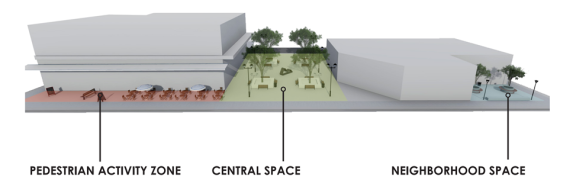
(5)
Auto-oriented and other special use restrictions:
a.
Drive-thrus, Gas Stations and Self-Storage Facilities subject to Supplemental Standards in Chapter 15.
b.
Prohibited Outdoor Uses -
(i)
Vehicular repair garages engaging in outdoor repairs or repairs visible from abutting properties or the right-of-way.
(ii)
Vehicular repair garages which have overnight, outdoor storage of vehicles.
c.
Residential development in the Residential/Office General (R/OG) and Residential/Office Limited (R/OL) future land use designations shall be limited to an area no greater than 5 acres consistent with Countywide Plan Rules, Section 2.3.3.6 - Office category.
(6)
Other Applicable Standards:
a.
Activity Center Design Guidelines - All non-industrial uses shall be designed generally in accordance with the Activity Center Guidelines (Resolution No. 2026, as amended from time to time).
b.
Large Scale Retail Development Standards - Commercial developments that meet the criteria for large scale retail development in Section 13.1 of the CDC shall comply with the requirements set forth in Chapter 14 of the CDC in addition to the requirements of this section.
(Ord. No. 2021-32, § 6, 3-2-2021; Ord. No. 2022-02, § 2, 3-15-2022; Ord. No. 2023-27, §§ 2, 3, 6-20-2023; Ord. No. 2023-52, § 2, 10-17-2023; Ord. No. 2024-18, §§ 2, 3, 3-5-2024; Ord. No. 2025-08, § 21, 6-17-2025; Ord. No. 2026-07, §§ 17—19, 5-19-2026)
7.3.1 - Neighborhood Activity Centers
A.
Location - Neighborhood Activity Centers are generally located at the intersections of arterials and community streets and encompass all sites within a one-half (½) mile radius of each intersection.
B.
Development standards - The land uses generally found within Neighborhood Activity Centers include: Commercial General, Commercial Neighborhood, Residential Office General, Residential Office Retail, Residential Office Low, Industrial Limited, Industrial General, and Institutional. Development and redevelopment within the Neighborhood Activity Centers is regulated by the standards applicable to these land use designations, and the Urban Design Guidelines for Activity Centers.
C.
Design - Bicycle, pedestrian, and public transit connections between Neighborhood Activity Centers and adjacent neighborhoods are encouraged in order to reduce reliance on automobiles. Where parcel sizes permit, residential may also be included. Neighborhood Activity Centers are not expected to result in densities/intensities above what is currently allowed by existing land use designations. However, the change toward a multimodal orientation (better pedestrian and bicycle access, the facilitation of public transit) will result in changes in the physical form of development (buildings will be closer to the street, for instance).
(Ord. No. 2026-03, § 9, 3-17-2026)
7.3.2 - Target Employment Centers (TECs)
A.
General Characteristics and Purpose - The purpose of the Target Employment Center (TEC) Overlays is to allow and encourage a variety of uses and building typologies that support and attract target employment clusters associated with the applicable TEC subdistrict, as identified in section 7.3.2.D below. The TEC Overlays allow permitted uses, densities, intensities, and development standards that differ from those typically allowed in the underlying future land use designations to incentivize and retain a mix of target employment uses by providing opportunities for additional development when certain criteria are met. These alternative development standards reinforce the employment-oriented character of the subdistricts while encouraging infill development and redevelopment. This includes an integrated mix of uses as well as public realm enhancements to support economic vitality and multimodal transportation options. These standards further the goals of the Strategic Plan, Comprehensive Plan, and the Target Employment Center provisions of the Forward Pinellas Countywide Rules. The TEC Overlays consist of two subdistricts:
(1)
TEC-Suburban Office (TEC-SO) - This designation supports the transition of suburban office, retail, and residential areas into more urban patterns that encourage a greater mix of uses over time. Developments that include Class-A office spaces, research and development facilities, professional services, and employment-supportive uses that foster a cohesive and sustainable live-work- environment are encouraged within this subdistrict.
(2)
TEC-Suburban Industrial (TEC-SI) - This designation prioritizes the preservation of industrial activities while supporting a balanced mix of industrial and commercial uses. Developments that include light manufacturing, industrial operations, research and development, and complementary commercial activities are encouraged within this subdistrict to ensure a functional and sustainable economic base.
B.
Location and Boundaries - This section applies to all properties designated under the TEC Overlays as indicated on the City of Largo Future Land Use Map. TEC classifications identify strategic employment areas that encourage (re)development that serve the needs of target industries, ensuring alignment with the goals and policies of the Comprehensive Plan and Countywide Rules. Future amendments impacting Target Employment Center Overlays are subject to the evaluation and balancing criteria set forth in Section 6.5.4.4 of the Countywide Rules.
C.
Applicability -
(1)
New developments or redevelopments within the TEC Overlay boundaries may opt in to the provisions of the overlay to access additional densities, intensities, and permitted uses. Developments seeking to utilize the provisions of the TEC overlays are subject to the regulations in this section.
(2)
New developments and redevelopments may develop as permitted under the entitlements of the respective underlying land use classifications reflected on the City's Future Land Use Map, but will not be eligible for the densities, intensities, and use permissions provided by the TEC Overlays unless all target employment use requirements, performance standards, and other criteria provided by this section are satisfied. The overlay does not amend the maximum density/intensity of the underlying future land use classifications, as codified by Table 8-1: Maximum Density and Intensity of Development by Land Use Classification of this CDC, nor does it amend the allowable use entitlements of any of the future land use classifications codified in Chapter 6, Table 6-1: Allowable Uses Within Land Use Classifications.
(3)
The Countywide Rules for land use changes shall be applied within the TEC Overlays. Development utilizing the Target Employment Center (TEC) Overlay shall comply with the traffic generation standards of the Countywide Rules, including the TEC Traffic Generation Characteristics set forth in Section 2.3.3.14, including any applicable multipliers for Office, Employment, and Industrial land use categories. Furthermore, Amendments to Target Employment Centers (TECs) located within Scenic/Noncommercial Corridors (SNCCs) are subject to the limitations of Section 6.5.4.1.4 of the Countywide Rules.
D.
Target Employment Use Requirements and Other Use Permissions -
(1)
To access the bonus densities and intensities provided in Tables 7-14 and 7-15, and to develop additional uses provided in Section 7.2.3.E, all sites opting into the TEC Overlays shall comply with the following:
i.
All sites shall incorporate one or more target employment uses, as defined for each subdistrict in Section 7.2.3.D.b and Section 7.2.3.D.c below, such that the total minimum combined floor area of all target employment uses on the site is equal to or greater than fifty (50) percent of the gross floor area of all building(s) on the site. For sites that provide one or more target employment uses in a mixed use development that is vertically-integrated (see definition for "Mixed Use, Vertically-Integrated" in Chapter 20 - Definitions and Acronyms), the total minimum combined floor area of all target employment uses shall be equal to or greater than twenty-five (25) percent of gross floor area of the development. Where multiple buildings are provided on a site, the required target employment use floor area may be provided in any of the buildings, as long as the total equates to the required floor area minimum.
ii.
Any floor area that is not used for target employment uses may be used for one or more of the additional uses provided in Section 7.2.3.E or other permitted uses for the underlying future land use classification provided in Table 6-1.
iii.
Target employment uses shall be provided concurrently with or before all other uses on a site. A certificate of occupancy for any additional use(s), as permitted by Table 6-1 and Section 7.2.3.E, will not be issued until the target employment use requirement provided in this subsection is satisfied and any other incentive options are verified by documentation, as deemed necessary by the DCO or designee.
(2)
Target employment uses in the TEC- Suburban Office (TEC-SO) subdistrict. In order to satisfy the target employment use requirement, a building or site shall include one or more of the following uses, provided the use will include space for target employment-generating activities as defined by the Countywide Plan Appendix, Appendix D: Target Employment NAICS Codes. Any additional use allowed as a target employment use in the TEC-SO subdistrict, as determined by the DCO, shall be consistent with the intent and purpose of the TEC Overlay and definition of "Target Employment" as contained in Article 8 - Terms and Definitions of the Forward Pinellas Countywide Rules.
i.
Financial Services - Banks, Credit Union
ii.
Business Services - Office (professional or business), Wholesale Business, provided it is an allowable use in the underlying future land use designation pursuant to Table 6-1
iii.
Marketing, Design, and Publishing - Office (professional or business), Wholesale Business, provided it is an allowable use in the underlying future land use designation pursuant to Table 6-1, Manufacturing - Light
iv.
Information Technology - Research and Development (R&D) - Light, Office (professional or business), Manufacturing - Light
v.
Medical Technologies/Life & Marine Sciences - Research and Development (R&D) - Light, Medical/Dental Laboratories, Office (professional or business), Manufacturing - Light
(3)
Target employment uses in the TEC- Suburban Industrial (TEC-SI) subdistrict. In order to satisfy the target employment use requirement, a building or site shall include one or more of the following uses, provided that target employment-generating activities as defined by the Countywide Plan Appendix D: Target Employment NAICS Codes will be included on the site. Any additional use allowed as a target employment use in the TEC-SI subdistrict, as determined by the DCO, shall be consistent with the intent and purpose of the TEC Overlay and definition of "Target Employment" as contained in Article 8 - Terms and Definitions of the Forward Pinellas Countywide Rules.
i.
Business Services - Wholesale Business or Office (professional or business), provided the underlying land use classification is Industrial Limited (IL) or Commercial General (CG). If the underlying future land use classification is Industrial General (IG), office uses are permitted as accessory to the principal use and will count toward fulfillment of the target employment use floor area requirement, as prescribed by Section 7.2.3.D, provided the following conditions are met:
1.
The office use is materially-related and accessory to a target employment use; and
2.
The office use is located on the same site/in the same development as the target employment use to which it is accessory; and
3.
The floor area of the office use does not exceed the floor area of the target employment use to which it is accessory.
ii.
Manufacturing - Contractor Yard (building, electrical, plumbing, roofing), Industrial Parks (provided at least one of the industrial establishments within the industrial park will be occupied by a target employment user), Manufacturing - Heavy, Manufacturing - Light, Resource Recovery Facilities
iii.
Medical Technologies/Life & Marine Sciences - Research and Development (R&D) - Light, Research and Development (R&D) - Heavy, Medical/Dental Laboratories.
iv.
Aviation/Aerospace/Defense - Manufacturing - Heavy, Research and Development (R&D) - Heavy, Industrial Parks (provided at least one of the industrial establishments within the industrial park will be occupied by a target employment user)
v.
Microelectronics - Manufacturing - Light, Research and Development (R&D) - Light, Research and Development (R&D) - Heavy
E.
Additional Permitted Uses - The TEC Overlays may permit additional uses beyond those that are allowed in the underlying future land use designation, promoting redevelopment that supports and attracts target industries while encouraging a more walkable, mixed-use environment in appropriate locations.
Within the TEC overlays, the following uses are allowed in the underlying future land use designations only when the target employment use requirements provided under section 7.3.2.D, as well as all other applicable standards contained within this section and the CDC, are met.
These uses are in addition to those allowed by Table 6-1 for the applicable underlying land use classification. If a use is typically subject to conditional use review per Table 6-1, that review is not required within the TEC Overlays when all applicable TEC provisions are satisfied. These additional use permissions do not modify use allowance for the underlying land use classification outside of the TEC Overlays.
(1)
Additional uses allowed in the Residential/Office General (ROG) land use classification within the TEC Overlays:
i.
Bars, Taverns, Lounges, and Nightclubs
ii.
Microbrewery/Micro-Distillery
iii.
Restaurants, Sit-Down
iv.
Supermarket, Deli
v.
Transfer Station, Bus, provided the transfer station is integrated with surrounding development through pedestrian walkways and public open space (plazas, courtyards, or activated greenspace)
vi.
Indoor Recreation
(2)
Additional uses allowed in the Industrial General (IG) land use classification within the TEC Overlays:
i.
Personal Service
ii.
Retail
(3)
Additional uses allowed in the Industrial Limited (IL) land use classification within the TEC Overlays:
i.
Multifamily, provided the following conditions are met:
1.
The site is located in the TEC Suburban Office subcategory; and
2.
All dwelling units shall be located outside of the Coastal High Hazard (CHHA) or Special Flood Hazard Area (SFHA); and
3.
An environmental report and/or additional mitigation measures to address the health and safety of future residents due to proximity to surrounding industrial uses shall be included in the development proposal package. At their discretion, the DCO may request other documentation or mitigation measures be reflected in the application or site plan to reduce potential conflicts between residential and industrial uses.
ii.
Bars, Taverns, Lounges, Nightclubs,
iii.
Personal Service
iv.
Retail
v.
Indoor Recreation
F.
Prohibited Uses - For development opting to utilize the TEC Overlay bonuses, the following uses are prohibited regardless of whether they are permissible under the underlying land use classification:
(1)
Principal-use surface parking lots
(2)
New single-family (detached) subdivisions
G.
Additional Use Restrictions - Proposed uses shall comply with all applicable supplemental standards and use provisions contained within Table 6-1 and Chapter 15 of the CDC in addition to the requirements of this section.
H.
Density and Intensity - In the Target Employment Center (TEC) Overlays, developments are eligible for density and intensity bonuses that surpass the standards of the underlying future land use classification. The provisions below specify the criteria for eligibility and the allowances for density and intensity bonuses within each TEC subdistrict. For vertically integrated development (see "Mixed Use, Vertically-Integrated" in Chapter 20 - Definitions and Acronyms) seeking to use any of the density and intensity bonuses listed in Table 7-14 or Table 7-15, the density and intensity can be stacked.
1
Cannot be combined with the TEC bonus provisions outlined in section 15.19 for hotels
1
Cannot be combined with the TEC bonus provisions outlined in section 15.19 for hotels
(1)
Tier 1 Bonus Density and Intensity - The Largo TEC Overlays shall allow higher densities and/or intensities than are permitted in the underlying future land use classifications provided the target employment use requirements (refer to Section 7.2.3.D) and all other relevant standards contained within this section and the CDC are satisfied. These allowable Tier 1 Bonus densities and intensities are shown in Table 7-14 and Table 7-15. The Suburban Industrial subdistrict shall allow the maximum base density prescribed by the underlying future land use category with the ability to develop additional permitted uses provided in Section 7.3.2.E. The Suburban Office subdistrict shall allow a maximum Tier 1 density of 30 dwelling units per acre (DUA) and intensity of 2.0 FAR with the ability to develop additional permitted uses provided in Section 7.3.2.E.
(2)
Calculating Maximum Density and Intensity -
a.
A proportional split between the maximum allowable bonus density and intensity shall be used for the site. For mixed use, vertically integrated developments, density and intensity can be stacked.
b.
Structured parking garages, civic and open space, including interior atriums, outdoor plazas, courtyards and seating areas, or other public pedestrian use areas will not count towards FAR.
c.
Restrictions - The density and intensity allowed by the overlays does not apply to properties with a future land use designation of Preservation (P) or Recreation/Open Space (R/OS) or for those portions of a property that are located within a Coastal High Hazard Area (CHHA) or Special Flood Hazard Area (SFHA).
(3)
Tier 2 Bonus Density and Intensity - Density and intensity bonuses, as shown in Table 7-14 and Table 7-15, may be achieved if the applicant provides clear and convincing evidence, as determined solely by the DCO, that the proposed design, density, intensity, and mix of uses will meet the requirements below, in addition to the overall intent and purpose of the TEC subdistrict. To be eligible for the bonus, the project shall comply with the minimum target employment use requirements provided in Section 7.2.3.D, as well as all applicable development and design standards contained within this section and the CDC, and shall satisfy the following requirements for the applicable TEC Overlay subdistrict:
a.
For projects in the Suburban Office subdistrict, the Tier 2 Bonus density and intensity provided in Table 7-14 may be achieved when the following criteria are met:
i.
The development shall contain two (2) or more uses, at least one of which must be a target employment use as described by Section 7.3.2.D.b.The other use(s) shall be considered secondary to the principal target employment use and shall consist of one or more of the allowable uses for the underlying future land use classification listed in Table 6-1, an additional target employment use, or one or more of the additional uses permitted for the underlying future land use classification listed in Section 7.3.2.E. The secondary use(s) must occupy a minimum of twenty-five (25) percent of the total building area. The secondary use(s) shall not be exclusively reserved for the principal target employment user, such as a gym or cafeteria reserved for employees or administrative offices for the principal user; and
ii.
The development must incorporate a structured parking garage for buildings proposed at four (4) stories or more. The structured parking must be located internal to the site, or lined with pedestrian-oriented ground floor uses along street frontages. Parcels under one acre are exempt from structured parking requirements but shall then provide surface parking internal to the site.
b.
For projects in the Suburban Industrial subdistrict, the Tier 2 Bonus density and intensity provided in Table 7-15 may be achieved when the following criteria are met:
i.
The development provides one or more target employment uses, as described in Section 7.3.2.D.c, whose combined gross floor area is equal to or greater than seventy-five (75) percent of total gross floor area of all buildings on the site; or
ii.
The development provides at least one of the following elements. The DCO may allow, at their sole discretion, other elements and improvements to fulfill this requirement provided they align with the goals and objectives of the Strategic Plan, Comprehensive Plan, and the TEC Overlays:
1.
The provision of industrial space with minimum 24-foot floor-to-ceiling clearance and load bearing floors, serviced directly by appropriate loading access (such as double wide doors, ramps, freight elevators), ventilation, and other characteristics necessary for future use consistent with industrial and target employment spaces.
2.
Construction and dedication of a new public street that connects two or more existing streets.
3.
Reduction of existing impervious surface on the site by at least ten (10) percent with the new pervious area used for stormwater detention/attenuation, green infrastructure, or landscaped greenspace.
4.
Construction of stormwater detention facilities which meet the stormwater detention requirements of one or more sites in the Suburban Industrial subdistrict in addition to the subject site.
5.
Certification through the LEED program at a minimum Silver level.
6.
In instances where a project contains a multifamily residential component, as permitted by the underlying future land use classification: Workforce housing such that at least 20% of total units provided on the site are affordable to households with incomes between 60 to 80% of the area median income (AMI) or at least 40% of total units provided on the site are affordable to households with incomes between 80 to 120 percent of the AMI with a minimum 50-year affordability period.
(4)
Development standards - The provisions listed below in Table 7-16, I.(1).c, Compatibility with Adjacent Uses, I.(4), Parking Regulation and Requirements, I.(5), Landscaping, and I.(6), Provision of an alternate development process shall apply to all properties opting into the TEC bonuses outlined in Table 7-14 or Table 7-15. Properties opting into the Tier 2 TEC-SO Overlay, or residential development utilizing a bonus within the TEC-SI Overlay, shall comply with all standards listed below, unless otherwise stated. Where there is a conflict between the standards of this section and other development standards in this CDC, the standards of this section shall govern. However, if the subject property is within the Largo Tri-City Special Area Plan boundaries, the plan standards shall govern.
I.
Development Standards for Target Employment Centers (TEC's)
(1)
Building Form and Placement -
a.
Setbacks -
i.
Minimum setbacks are established in Table 7-16.
1 Measured from back of curb.
b.
Building orientation - For TEC-SO Tier 2, or Residential within TEC-SI
i.
Buildings shall be oriented to the street(s).
ii.
Buildings on corner parcels shall be sited at the corner, with facades oriented to both streets. Where possible, buildings are encouraged to wrap the corner.
iii.
All buildings should have their primary pedestrian entrance oriented towards the street, with a six (6) foot wide walkway connecting to the public sidewalk.
c.
Compatibility with adjacent uses - For all developments utilizing a TEC bonus outlined in Table 7-14 or Table 7-15:
i.
Building height stepbacks - Buildings exceeding 3-stories that are adjacent to properties with existing single family homes, or properties with very low density (up to one (1) unit per acre) or low density (2.5 to 7.5 units per acre) residential FLUM classifications, shall include a building stepback to minimize impacts on neighboring properties. The stepback shall measure a minimum of ten (10) feet deep from the lower story building façade, commencing above the third story to increase light and air movement and reduce the impact of increased height on adjacent properties. If setbacks are proposed beyond the minimum required, stepbacks may be waived at the sole discretion of the DCO. See Figure 7-10.
ii.
Additional setback requirements - Buildings exceeding 2-stories adjacent to properties with existing single family homes or properties with a low density (2.5 to 7.5 units per acre) residential FLUM classification, shall include a twenty (20) foot setback in addition to the minimum required buffer for every story above the second story. For example: a four (4) story building shall have a setback of at least forty (40) feet in addition to the minimum required buffer from any adjacent properties with existing single family homes or properties with a low density residential FLUM classification. See Figure 7-10.
iii.
Mechanical or utility equipment (e.g. electrical conduits, meters, HVAC equipment) shall be located, screened, and/or shielded to minimize visual and noise impacts on adjacent land uses and public rights-of-way, as follows:
1.
In no instance shall mechanical or utility equipment be located within the front yard setback or within five (5) feet of any property line, unless approved by the DCO.
2.
Mechanical equipment that is visible from the right-of-way or an adjacent residential land use shall be screened from view with a material that is compatible with the architecture of the principal structure or landscaping.
3.
When feasible, roof-mounted mechanical equipment shall be incorporated into the roof design in such a way that it becomes an integral part of the architecture or is concealed from view.
4.
Noise-producing mechanical equipment on sites adjacent to properties currently developed with, or eligible for development with, residential uses shall be located and directed away from neighboring homes, and, where feasible, shielded with noise-attenuating materials.
5.
Screening or shielding shall not inhibit the proper, safe operation of the mechanical equipment, nor shall it encroach into the required clearances for service and operation, as specified by the manufacturer.
iv.
Outdoor storage or outdoor loading berths adjacent to, or directly across from, properties with a residential FLUM classification shall provide view-obscuring screening along the perimeter in the form of fences, architectural elements, and/or landscaping. At the sole discretion of the DCO, additional buffering, landscaping, or screening may be required beyond the minimum standards of this CDC to ensure compatibility with adjacent residential uses.
v.
Exterior lighting shall be shielded and directed away from lots adjacent to properties currently developed with, or eligible for development with, residential uses.
(2)
Design Elements - For TEC-SO Tier 2 or Residential within TEC-SI:
a.
Ground floors are required to have an active use with building entrances that face the pedestrian realm.
i.
Ground floors of buildings on Roosevelt Boulevard, 66th Street, Ulmerton Road, U.S. 19 frontage roads, County Road 611, and Starkey Road frontages shall be designed and built to accommodate future ground floor commercial uses within the TEC-SO overlay, unless otherwise approved by the DCO.
b.
For office and retail uses, the ground floor elevation shall achieve a minimum of sixty (60)% transparency. Upper floors (higher than twenty (20) feet above grade) shall be no greater than thirty-five (35)% transparent.
i.
Multifamily -
1.
A single, large, dominant building mass should be avoided. Multiple smaller buildings are encouraged over fewer large buildings. Changes in mass must be provided, related to entrances, the integral structure, and the organization of interior spaces and activities.
2.
Ground floor elevations shall achieve a minimum of thirty (30)% transparency. Upper floors (higher than twenty (20) feet above grade) shall be no greater than fifteen (15)% transparent.
(3)
Public Realm and Connectivity - For TEC-SO Tier 2, or Residential within TEC-SI:
a.
Access and Circulation -
i.
Access and Driveway Consolidation - Curb cuts and driveways shall be consolidated where possible and located to minimize impact on pedestrian circulation along public sidewalks and front building facades.
ii.
Connection to Duke Energy Trail - Connections to the Duke Energy Trail shall be incorporated into site plans where property is adjacent to the Trail when feasible.
iii.
Sidewalks - New development and redevelopment shall construct, reconstruct or expand frontage road sidewalks to the following minimum widths:
1.
Roosevelt Boulevard, 66th Street, Ulmerton Road, U.S. 19 frontage roads, County Road 611, and Starkey Road: Eight (8) feet.
2.
All other roads: Six (6) feet.
3.
Flexibility in the application may be granted for roadways under Florida Department of Transportation (FDOT) ownership and maintenance.
iv.
Connective street network - Where feasible, new street network connections shall be incorporated into development sites and dead-end street and cul-de-sacs shall be minimized.
b.
Parking location - For TEC-SO, or Residential in TEC-SI
i.
Parking may be located to the rear and side of the principal building, behind the plane of the front façade of the building.
ii.
Surface parking lots on sites with more than one street frontage must be hidden/buffered from public streets, internal private streets and open/civic spaces with landscaping or a decorative façade structure to create an attractive public realm along secondary or tertiary frontages.
iii.
Surface parking lots shall comply with the following standards:
1.
Surface parking located along public sidewalks shall be screened from view by a low (24 to 36 inches) opaque hedge or wall.
2.
Alternative: Any surface parking areas fronting a secondary or tertiary street right-of-way that exceeds fifty percent (50%) of the property street frontage length shall provide a minimum five (5) feet wide landscape buffer with canopy trees and a solid three (3) feet minimum height to four (4) feet maximum height wall, decorative fence, linear evergreen hedge, or combination thereof.
iv.
On-street parking along street frontages of the development may be counted toward fulfilling the parking requirements.
v.
Reduction of required minimum parking spaces by ten percent (10%) shall be permitted for development within ¼ mile of transit route.
vi.
All driveways and/or access aisles shall be improved with a permanent all-weather paving material which is graded to drain stormwater.
vii.
Parking in excess of the maximum parking permitted shall require the submission of a parking demand study. In the event the study substantiates that parking in excess of the permitted maximum is warranted for the proposed development, all parking spaces exceeding the maximum shall be provided within a structured parking facility.
viii.
Interior islands of parking lots in new projects shall be designed to utilize low impact development techniques, such as bioretention swales and native species. Where parking curbs and gutters are provided, they shall have breaks to allow water to enter the bioretention facilities within the parking landscape islands.
ix.
Parking structures along street frontages shall incorporate liner buildings, active ground floor uses, or articulation of the façade (with design and materials compatible to adjacent buildings) to create a pedestrian friendly street edge.
(4)
Parking Regulation and Requirements - All developments within the TEC Overlays are subject to:
a.
Pedestrian, Bicycle, and Transit Mobility standards of Section 9.4
b.
Vehicular Parking standards of Section 9.5
(5)
Landscaping - All developments within the TEC Overlays are subject to the Landscape Standards in Chapter 10 of this CDC.
(6)
Provision of an Alternate Development Process - For all developments within the TEC Overlays, a developer or property owner may choose the Alternate Development Process. This process is administrative and is intended to allow a project to be proposed that meets the intent of the City's vision for the overlay while providing flexibility to amend certain site layout standards. Any alternate development standards must be approved by the DCO at their sole discretion.
(Ord. No. 2026-03, § 10, 3-17-2026; Ord. No. 2026-07, §§ 20—22, 5-19-2026)
7.4.1 - Purpose
Corridors are defined as the land uses that are generally adjacent to significant roadways in the City and support the modes of transportation intended for those roadways. Within the City, there are three (3) types of corridors: Mixed-Use Corridors, Community Streets, and Scenic Non-Commercial Corridors; and a Multimodal Corridor Overlay. These corridor types are described below.
(Ord. No. 2021-32, § 7, 3-2-2021)
7.4.2 - Mixed-Use Corridors
A.
Location - The Strategic Plan identifies East/West Bay Drive, Roosevelt Boulevard, Ulmerton/Walsingham Road, Missouri/Seminole Boulevard, and 66th Street as sprawling strip commercial corridors that should be redeveloped into mixed-use corridors over time. Development along these corridors should contain a mixture of complimentary/supportive uses, such as a combination of residential, office, and commercial uses. These uses should support all modes of transportation (automobile, bicycling, walking, and mass transit).
B.
Development standards - The land uses generally found along the Mixed-Use Corridors include: Residential Urban, Residential Medium, Commercial General, Commercial Neighborhood, Residential Office General, Residential Office Retail, Residential Office Low, Industrial Limited, Industrial General, and Institutional. Development and redevelopment along Mixed-Use Corridors is regulated by the standards applicable to those land use designations. In addition, within the right-of-way of each Mixed-Use Corridor, streetscape standards of Section 7.2.1.D.(1) a. above, shall be instituted as part of the redevelopment of the sites.
C.
Incentives - [Reserved]
7.4.3 - Community Streets
A.
Purpose - The City's Community Streets form a local interconnecting street network that provides safe and attractive connections between neighborhoods, parks, community facilities, and daily commercial services. Context sensitive design is used to design these roadways to respect existing land uses along the roadways and balance options for residents of the City, as well as help reduce the number of bicycle and pedestrian accidents that occur along these streets. See Map 7-5, Community Streets.
Map 7-5: Community Streets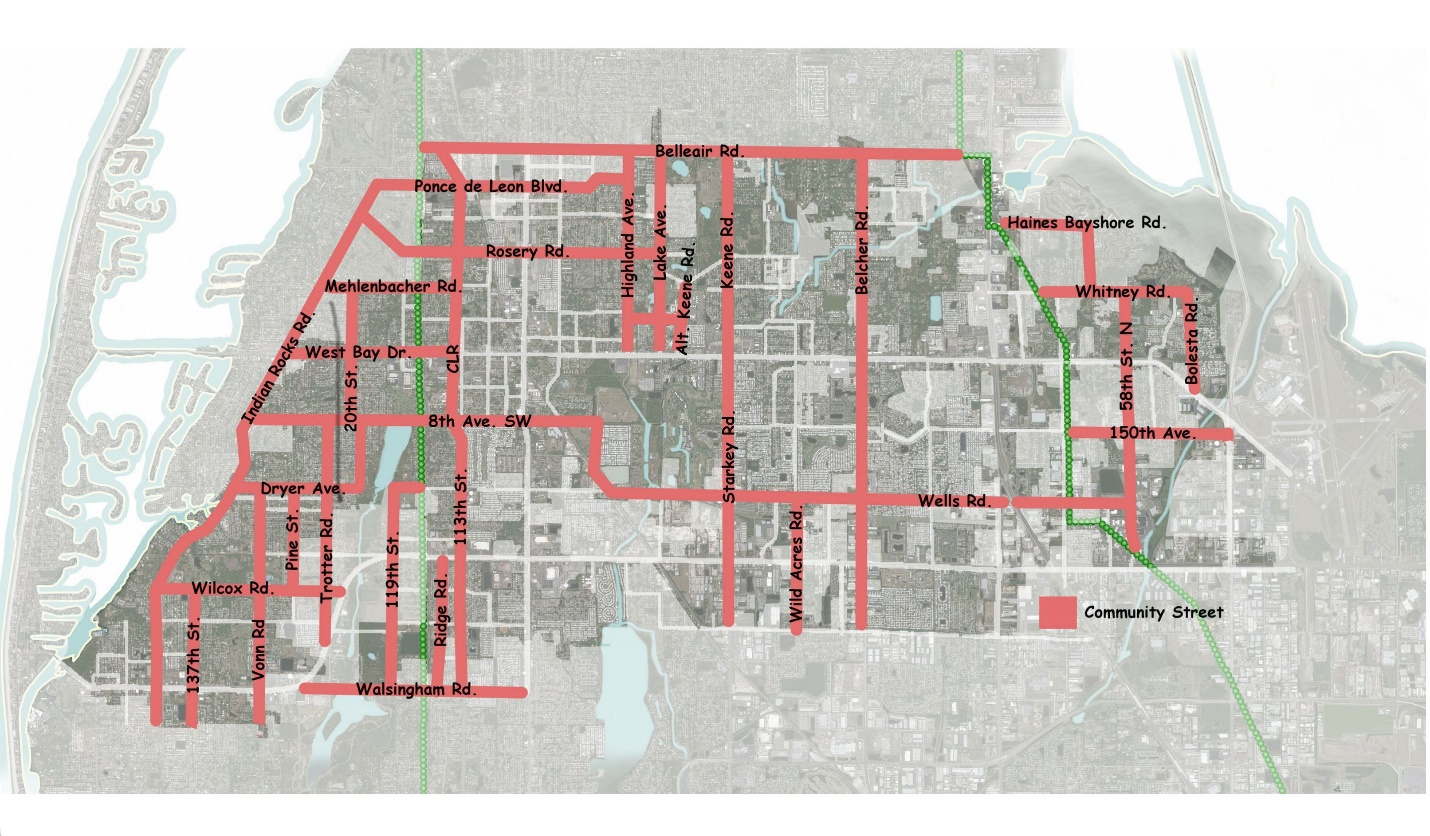
B.
Incentives - [Reserved]
(Ord. No. 2025-08, § 22, 6-17-2025)
7.4.4 - Scenic Non-Commercial Corridors
A.
Intent and purpose - The intent and purpose of the Scenic Non-Commercial Corridor designation is to guide the preservation and enhancement of scenic qualities, to ensure the integrity of the Countywide Plan Map, and to maintain and enhance the traffic operation of these especially significant roadway corridors in Pinellas County. The principal objectives of Scenic Non-Commercial Corridor designations are:
(1)
To preserve and enhance scenic qualities found along these corridors and to foster community awareness of the scenic nature of these corridors;
(2)
To encourage superior community design and enhanced landscape treatment, both outside of and within the public right-of-way;
(3)
To encourage land uses along these corridors which contribute to an integrated, well planned, and visually pleasing development pattern, while discouraging the proliferation of commercial, office, industrial, or intense residential development beyond areas specifically designated for such uses on the Countywide Plan Map;
(4)
To assist in maintaining the traffic operation of roadways within these corridors through land use type and density/intensity controls, and by conformance to access management regulations, by selective transit route location, and by the development of integrated and safe pedestrian and bicycle systems; and
(5)
To encourage design standards identified within the Pinellas Countywide Scenic Non-Commercial Corridor Master Plan, through the adoption of local ordinances and regulations consistent with those standards set forth within the Master Plan.
B.
Applicability - Countywide rules for land use changes along Scenic Non-Commercial Corridors shall be applied to those corridors identified on the Countywide Plan Map.
C.
Countywide Rules - When an application is made to amend the Countywide Plan Map on a Scenic Non-Commercial Corridor, the Forward Pinellas Board and the Countywide Planning Authority review the application according to provisions within the Countywide Rules.
(Ord. No. 2025-08, §§ 23, 24, 6-17-2025)
7.4.5 - Largo Tri-City Multimodal Corridor Overlay
A.
General characteristics and purpose - The objective of the Multimodal Corridor Overlay is intended to encourage redevelopment and infill development with a mix of higher density and intensity uses and transit-oriented design that supports increased walkability and transit usage. The overlay shall allow development to have higher densities and intensities and require additional design standards. These standards are intended to:
(1)
Enhance the function of new development, minimize community impacts associated with such uses;
(2)
Meet the mobility goals of the Largo Tri-City Special Area Plan, and;
(3)
Improve the visual appearance/cohesiveness of all new uses.
Table 7-3 identifies the allowable development density and intensity for the Multimodal Corridor Overlay. The overlay does not amend the allowable use entitlements of any of the future land use designations codified in Chapter 6, Table 6-1: Allowable Uses Within Land Use Classifications.
B.
Location and boundaries - The Multimodal Corridor Overlay encompasses approximately 355 acres generally located along certain segments of Roosevelt Boulevard and U.S. Highway 19, as depicted in Map 7-1.
C.
Density and intensity - Maximum density and intensity shall be consistent Table 7-3: Largo Tri-City Special Area Plan Overlays Density and Intensity and subsection 7.2.6.C.
D.
Development standards - Development standards apply to all parcels within the Largo Tri-City Multimodal Corridor Overlay in addition to all other applicable CDC standards, including but not limited to minimum lot sizes, impervious surface ratios and landscaping.
(1)
Building Form and Placement:
a.
Minimum Street Frontage Setbacks:
(i)
Roosevelt Blvd. and U.S. 19 Frontage Road: 15 feet.
(ii)
All other roads: 0 feet.
b.
Maximum Building Height per Table 7-4: Largo Tri-City Maximum Building Height.
c.
Compatibility with Adjacent Uses:
(i)
Building height stepbacks - Buildings exceeding 3-stories adjacent to property with existing single family home uses or property with a very low density (up to 1 unit per acre) or low density (2.5 to 7.5 units per acre) residential FLUM designation shall have a building stepback to minimize impacts on adjacent properties. The building stepback shall measure a minimum of ten (10) feet deep from the lower story building facade commencing above the third story to increase light and air movement and mitigate the effect of the increased height on the adjacent properties. At the discretion of the DCO, if setbacks are proposed beyond the minimum required, stepbacks may be waived. See Figure 7-10.
(ii)
Additional setback requirements - Buildings exceeding 2-stories adjacent to property with a very low density residential FLUM designation (up to 1 unit per acre) shall have a fifty (50) foot setback in addition to the minimum required buffer for every story above the second story. For example: a 4-story building shall have a setback of at least one hundred (100) feet in addition to the minimum required buffer from adjacent property with a very low density residential FLUM designation. Buildings exceeding 2-stories adjacent to property with existing single family home uses or property with a low density residential FLUM designation (2.5 to 7.5 units per acre) shall have a twenty (20) foot setback in addition to the minimum required buffer for every story above the second story. For example: a 4 story building shall have a setback of at least forty (40) feet in addition to the minimum required buffer from adjacent property with existing single family home uses or property with a low density residential FLUM designation. See Figure 7-10.
d.
Design Elements:
(i)
A façade transition line shall be provided at the top of the second story. The transition will be expressed by a material change, a trim line, or a balcony.
(ii)
Ground floor of buildings are required to have an active use with building entrances that face the pedestrian realm.
(iii)
All buildings should have their primary pedestrian entrance oriented towards the street.
(iv)
For office and retail uses, the ground floor elevation shall achieve a minimum of 60% transparency. Upper floors (high than 20 feet above grade) shall be no greater than 35% transparent.
(v)
Building frontage should be oriented towards the primary street.
e.
Architectural Design Review Submittal Requirements - Applicants shall provide architectural elevations with sufficient detail to demonstrate that they meet these requirements at the time of preliminary site plan review.
(2)
Public Realm and Connectivity:
a.
Minimum Sidewalk Width - New development and redevelopment shall construct, reconstruct or expand frontage road sidewalks to the following minimum widths:
•
East Bay Drive/Roosevelt Blvd. and U.S. 19 Frontage Road: 8 feet.
•
All other roads: 6 feet.
b.
Internal private roads shall have sidewalks serving internal circulation.
c.
Other Pedestrian Walkways:
(i)
Pedestrian walkways shall be provided to access parking behind or to the side of buildings, connect destinations on adjacent properties, connect building frontages to adjacent sidewalks, and allow pedestrian circulation through parking lots to create a continuous pedestrian network.
(ii)
Pedestrian walkways shall be provided along individual or shared driveways connecting rights-of-way with side and rear yard parking.
(iii)
Pedestrian walkways shall be 6-foot wide minimum and free of obstructions.
(iv)
Pedestrian walkways that cross a parking area, driveway, street or other vehicular use area shall be clearly marked with striping, contrasting paving materials (e.g., light-color concrete inlay between asphalt), textured or raised pavement, or other appropriate treatment as approved by the DCO.
d.
Transit Facilities - The applicant for a development approval is responsible for coordinating with PSTA and the appropriate jurisdiction for the roadway on which development is proposed, to identify locations within and bordering the project boundary where current transit stops are located or planned transit stops will be located. At those locations, space shall be reserved for transit shelters and any required improvements, including bicycle racks.
e.
Access and Circulation
(i)
Access and Driveway Consolidation - Curb cuts and driveways shall be consolidated where possible and located to minimize impact on pedestrian circulation along public sidewalks and front building facades.
(ii)
Cross Parcel Connections and Shared Access- To facilitate circulation and improve accessibility, vehicle and pedestrian networks on adjacent sites shall be interconnected and cross-access easements implemented. Parking lot drive aisles and pedestrian walkways shall be aligned and connected and drive aisle stub outs shall be constructed on properties abutting undeveloped sites to allow for future connections.
(iii)
Connection to Duke Energy Trail - Connections to the Duke Energy Trail shall be incorporated into site plans where the property is adjacent to the Trail when feasible.
(iv)
Connective street network - Where feasible, new street network connections shall be incorporated into development sites and dead-end street and culs-de-sac shall be minimized.
f.
Reconstruction of Sidewalks and Landscaping - Reconstruction of existing sidewalks and landscape within rights-of-way shall be required. To the extent possible given right-of-way limits and utility conflicts, and with approval of the FDOT, Pinellas County, and/or the City, reconstruction shall follow the general standards for landscaping and sidewalks within the CDC and City Engineering Standards.
(3)
Parking Regulation and Requirements. Parking shall be provided for within the Multimodal Corridor Overlay consistent with Chapter 9 of the CDC and the following standards. Where the there is a conflict, the standards of this section shall apply.
a.
Parking shall be placed at the rear of buildings or hidden/buffered from public streets, internal private streets and open/civic spaces.
b.
Surface parking lots shall be screened with landscaping or a decorative façade structure to create an attractive public realm. Surface parking lots shall comply with the following standards:
(i)
Surface parking located along public sidewalks shall be screened from view by a low (24 to 36 inches) opaque hedge or wall.
(ii)
Alternative: Any surface parking areas fronting a street right-of-way that exceeds fifty percent (50%) of the property street frontage length shall provide a minimum five (5) feet wide landscape buffer with canopy trees and a solid three (3) feet minimum height to four (4) feet maximum height wall, decorative fence, linear evergreen hedge, or combination thereof.
c.
One bay of parking with no more than two rows of parking stalls permitted between buildings and the right-of-way along East Bay Drive/Roosevelt Boulevard and U.S. 19 Frontage Roads.
d.
On-street parking within 500 feet of the development may be used to meet parking requirements.
e.
Parking in excess of maximums shall be permitted if the excess parking is shared with another property located within a 1,500 feet radius.
f.
Reduction of required minimum parking spaces by ten percent (10%) shall be permitted for development within ¼ mile of transit stop.
g.
Parking in excess of 90% of the maximum allowed, shall utilize reinforced grass or other permeable surface. All driveways and/or access aisles shall be improved with a permanent all-weather paving material which is graded to drain stormwater.
h.
Interior islands of parking lots in new projects shall be designed to utilize low impact development techniques such as bioretention swales and native species. Where parking curbs and gutters are provided, they shall have breaks to allow water to enter the bioretention facilities within the parking landscape islands.
i.
Parking structures along street frontages shall incorporate liner buildings, active ground floor uses, or articulation of the façade (with design and materials compatible to adjacent buildings) to create a pedestrian friendly street edge.
j.
Reserved.
(4)
Auto-oriented and other special use restrictions:
a.
Drive-thrus, Gas Stations and Self-Storage Facilities subject to Supplemental Standards in Chapter 15
b.
Prohibited Outdoor Uses -
(i)
Vehicular repair garages engaging in outdoor repairs or repairs visible from abutting properties or the right-of-way.
(ii)
Vehicular repair garages which have overnight, outdoor storage of vehicles.
c.
Residential development in the Residential/ Office General (R/OG) and Residential/Office Limited (R/OL) future land use designations is limited to an area of no greater than 5 acres consistent with Section 2.3.3.6 - Office category, Countywide Plan Rules.
(5)
Other Applicable Standards:
a.
Large Scale Retail Development Standards - Commercial developments that meet the criteria for large scale retail development in Section 13.1 shall comply with the requirements set forth in Chapter 14 in addition to the requirements of this section.
(Ord. No. 2021-32, § 8, 3-2-2021; Ord. No. 2022-02, § 3, 3-15-2022; Ord. No. 2023-27, § 4, 6-20-2023; Ord. No. 2023-52, § 2, 10-17-2023; Ord. No. 2024-18, § 4, 3-5-2024)
7.5.1 - Purpose
Transit Oriented Development (TOD) focuses on creating a compact development pattern with housing, jobs, shopping, community services and facilities, and recreational opportunities, all recognizes two (2) types of TOD designations: Transit Station Areas and Transit Corridors, as described below.
7.5.2 - Transit Station Areas
A.
Purpose - A designated transit station area is typically within a ¼ to ½ mile radius from a transit station, where, using Transit Oriented Development principles, the land development pattern is designed to maximize transit use by increasing density and intensity of development and requiring a mix of complementary land uses. Locational characteristics are based on the appropriate Transit Station Area Typology and density/intensity specified in the local transit station area plan and the commensurate locational characteristics found in the applicable plan categories under the Countywide Plan Rules.
B.
Location and boundaries - [Reserved]
C.
General development standards - [Reserved]
7.5.3 - Transit Corridors
A.
Location and boundaries - [Reserved]
B.
General development standards - [Reserved]
7.6.1 - Special Flood Hazard Area, Coastal High Hazard Areas and Shoreline
Properties within the Special Flood Hazard Area (SFHA) and Coastal High Hazard Area (CHHA), as defined in Chapter 20 and adopted by the City of Largo, must comply with all of the standards for the underlying Future Land Use classification and the restrictions of this Subsection and other sections of the CDC. The most current adopted SFHA and CHHA maps are available through the City of Largo's Geographic Information System (GIS) database.
A.
Use and Density Restrictions Within the CHHA and SFHA -
(1)
Residential uses
a.
Vacant parcels - Undeveloped residential land shall not be developed at densities greater than two and one-half (2.5) units per acre.
b.
Developed land - Developed residential land shall not be redeveloped at densities greater than seven and one-half (7.5) units per acre.
c.
Maximum density - Section 4.5.3 provides restrictions for Future Land Use Map Amendments that propose density increases within the CHHA or SFHA.
d.
New and expanded manufactured home developments shall not be allowed within the CHHA or SFHA. See Section 15.3 for other restrictions.
e.
No density bonuses shall be permitted in the CHHA or SFHA.
f.
No accessory dwelling units (ADUs) shall be permitted in the CHHA or SFHA.
(2)
Non-residential uses
a.
Critical facilities such as hospitals, police and fire stations, and other public facilities shall not be allowed within the CHHA or SFHA.
b.
Facilities with in-patient care or indigent residents such as clinics, care and rehabilitative facilities, nursing homes, etc., shall not be allowed within the CHHA or SFHA.
c.
Developments which pose a significant threat of releasing harmful pollutants into surface waters and groundwater during flooding and other natural events shall not be permitted within the CHHA or SFHA. This includes any development or change of use involving the production, use, or storage of volatile, explosive, or toxic materials.
d.
Facilities that house animals such as kennels, veterinarian offices, pet stores, animal shelters, etc., shall not be allowed within the CHHA or SFHA.
e.
Industrial uses shall not be allowed within the CHHA or SFHA.
f.
Maximum intensity - Section 4.5.3 provides restrictions for Future Land Use Map Amendments that propose intensity increases within the CHHA or SFHA.
B.
Shoreline - New developments along the shoreline, including at the mouths of McKay Creek, Allen's Creek, the Intracoastal Waterway, and areas containing coastal resources and estuarine environments, shall be required to provide and maintain public access to the shoreline.
(Ord. No. 2021-32, §§ 9, 10, 3-2-2021; Ord. No. 2025-01, § 14, 12-17-2024)
7.6.2 - Neighborhood Overlay Districts
Map 7-8: Yachthaven Estates Overlay Area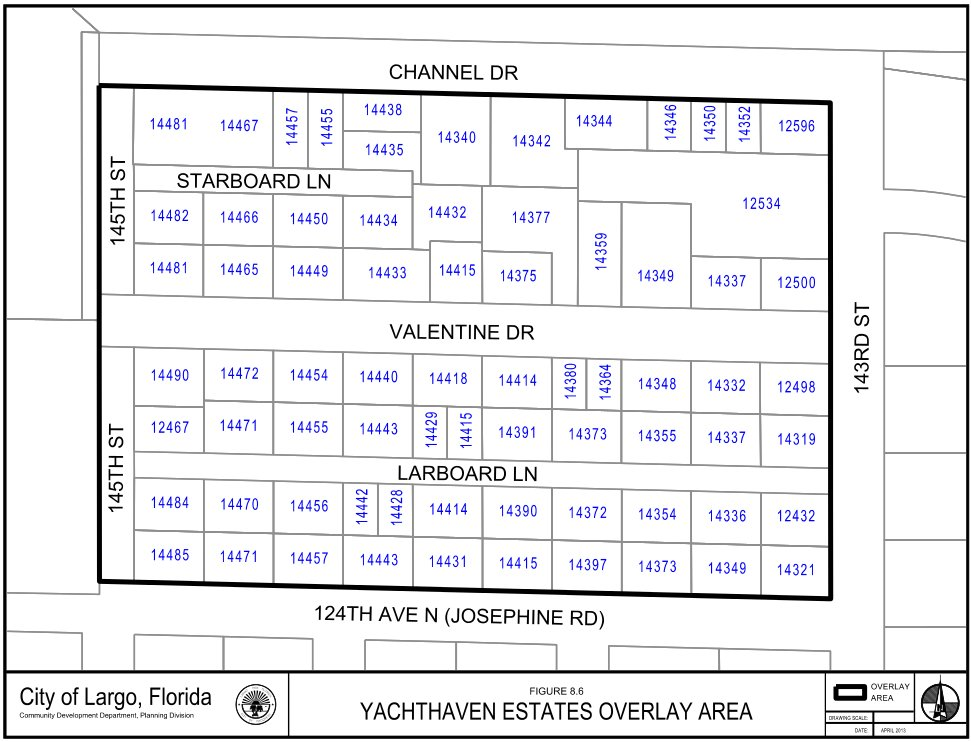
Figure 7-12: Platted Yachthaven Building Setbacks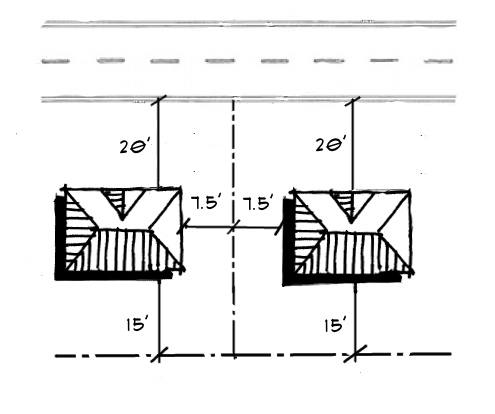
Figure 7-13: Yachthaven Building Setbacks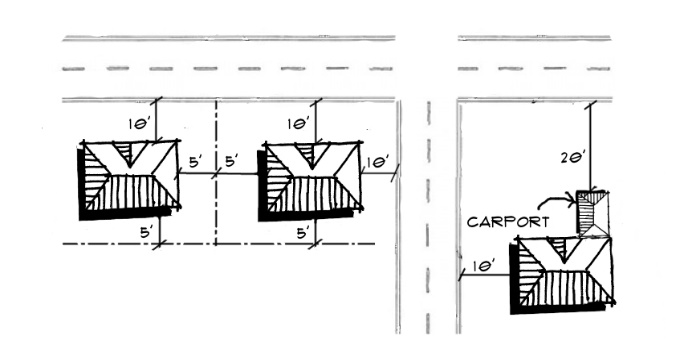
A.
Purpose - Neighborhood Overlay Districts apply supplemental standards to a specific geographic area, in order to strengthen the identity and economic viability of the area. The standards are not considered appropriate for City wide implementation. This Section provides for the implementation of supplemental residential development standards, as identified in neighborhood plans adopted by the City of Largo.
B.
Applicability - Supplemental standards shall apply to the geographical area or areas identified in each prospective subsection.
(1)
Yachthaven Estates
a.
Purpose and area - This Section implements recommendation of the Yachthaven Estates Neighborhood Plan developed through a collaborative neighborhood planning process and adopted by the City Commission on April 15, 2003. The Yachthaven Estates Neighborhood overlay area comprises all seventy-three (73) residential lots bounded to the north by Channel Drive, the south by 124th Avenue North, the west by 145th Avenue North, and the east by 143rd Avenue North. This area is shown in Map 7-8.
b.
Development standards - Establish all existing lots as legal, conforming lots, recognizing the historical evolution of the neighborhood and that the gross land area, including rights-of-way, is within the seven and one-half (7.5) units per acre density allowed by the neighborhood's Residential Urban land use designation:
(i)
Lot redevelopment - The smaller lots (e.g., forty (40) feet by sixty (60) feet and forty-five (45) feet by ninety (90) feet) are allowed to redevelop in one (1) of three (3) ways:
-
Individually as single-family residences following the same standards applied to the other lots;
-
"Together" as two (2) single-family attached (zero lot line) residences with a single-family appearance. Each unit must be maintained as a separately deeded parcel capable of being independently owned and sold; or
-
Be combined into one (1) lot (without requiring replat), allowing them to be returned to the same size as the other surrounding lots.
(ii)
Lot line adjustments - Minor lot line adjustments to the lots located between Channel Drive and Valentine Drive may be allowed when the purpose is to combine lots in a manner aesthetically consistent with the rest of the neighborhood. The proposed lot configuration requires City Commission approval (but not replat) prior to any lot line adjustments being made. The resulting lot or lots require minimum lot dimensions of sixty (60) feet by eighty (80) feet and shall not result in the creation of "flag" lots. No increase in the number of lots is allowed.
The burden of proof to establish compliance with the requirements for consideration of a proposed lot line adjustment is placed on the applicant, not the neighborhood, City staff, or City Commission.
(iii)
Mobile home replacement - Mobile homes cannot be replaced on the lots. This requirement does not preclude the maintenance and repair of existing mobile homes and additions. Modular, wood frame, masonry, or similar new construction in compliance with Florida Building Code is allowed. All structures shall meet Flood Zone, Coastal High Hazard Area, and wind load standards appropriate for the neighborhood's proximity to the Intercoastal Waterway.
(iv)
Building setback
-
Unplatted lots - Minimum building setbacks are ten (10) foot front, five (5) foot side, and five (5) foot rear. Corner lots require a ten (10) foot setback on both road frontages. The minimum garage or carport setback is twenty (20) feet, in to allow a car to be parked in the driveway and entirely on-site.
-
The maximum building height is twenty-five (25) feet above the required minimum furnished floor elevation.
-
Platted lots - Minimum building setbacks for the platted Sleepy Hallow lots are twenty (20) foot front, seven and a half (7.5) foot side, and fifteen (15) foot rear. The maximum height is twenty-five (25) feet, unless an additional five (5) foot side and rear is provided for each ten (10) feet (or one (1) story) above twenty-five (25) feet.
(v)
Parking - At least two (2) paved parking spaces (driveway, garage, and/or carport) are required. Parking on the lawn or other unpaved surfaces is prohibited. Historically established grass and mulch parking spaces shall be paved or eliminated when a new home is constructed on the lot.
(vi)
Front porches - Front porches are encouraged to improve the appearance of the home and provide a semi-private/public outdoor gathering place.
(Ord. No. 2025-01, § 14, 12-17-2024; Ord. No. 2025-08, § 25, 6-17-2025)

