
Miami City Zoning Code
ARTICLE 8
THOROUGHFARES
Amendments to Article 8
| ORDINANCE | DATE APPROVED | DESCRIPTION | LEGISLATIVE ID |
|---|---|---|---|
| 13235 | 11-18-2010 | Minor and non-substantial modifications throughout the Code | 10-00956zt |
| 14200 | 07-27-2023 | Amends Article 1, Article 4, Article 5, Article 8, and Article 9. The changes clarify and introduce new frontage-related definitions, illustrations, modify T5 and T6 height requirements and add tree placement flexibility. | 13627 |
8.1 GENERAL DESCRIPTION
This article describes the guidelines for development of Thoroughfares throughout the City. It supplements the design standards adopted in the City of Miami Manual of Engineering Standards for Design and Construction, maintained in its most current form at the City of Miami Department of Public Works. Where these guidelines conflict with the Manual, the standards of the Manual shall apply.
The urban landscape is characterized by a set of interdependent elements that create a sense of place. These include Thoroughfare type, Building type, Frontage type, and the form and disposition of landscape and lighting. Thoroughfares provide the City with both the major part of public Open Space as well as moving lanes for vehicles, bicycles and transit. A Thoroughfare is associated with a particular type of movement, and is endowed with two attributes: movement type and character. The movement type of the Thoroughfare refers to the number of vehicles that can move safely through a segment within a given time period; it is physically manifested by the number of lanes and their width, by the centerline radius, the curb radius, and the super-elevation of the pavement. The character of the Thoroughfare refers to its suitability as a setting for pedestrian activities and is physically manifested by the associated Frontage types as determined by location within the Transect.
Thoroughfares can be assigned appropriately to Transect Zones, with calibrated Right-of-Way widths, movement types, design speed, number of travel lanes, pavement width, curb radius and Verge type.
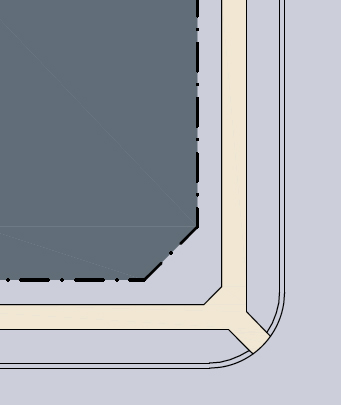
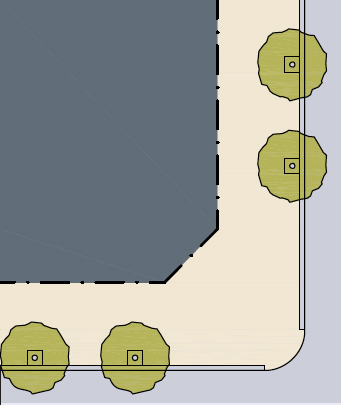
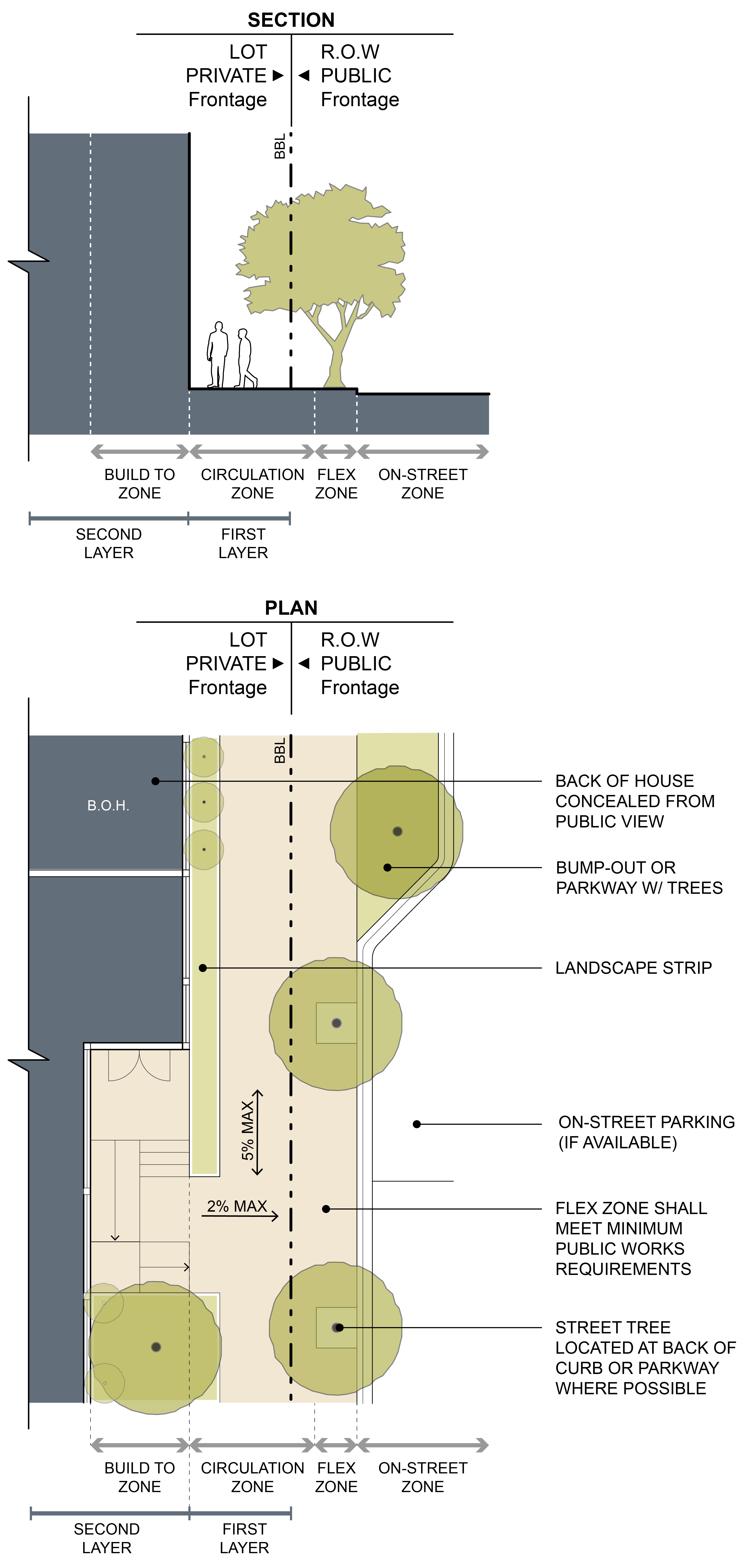
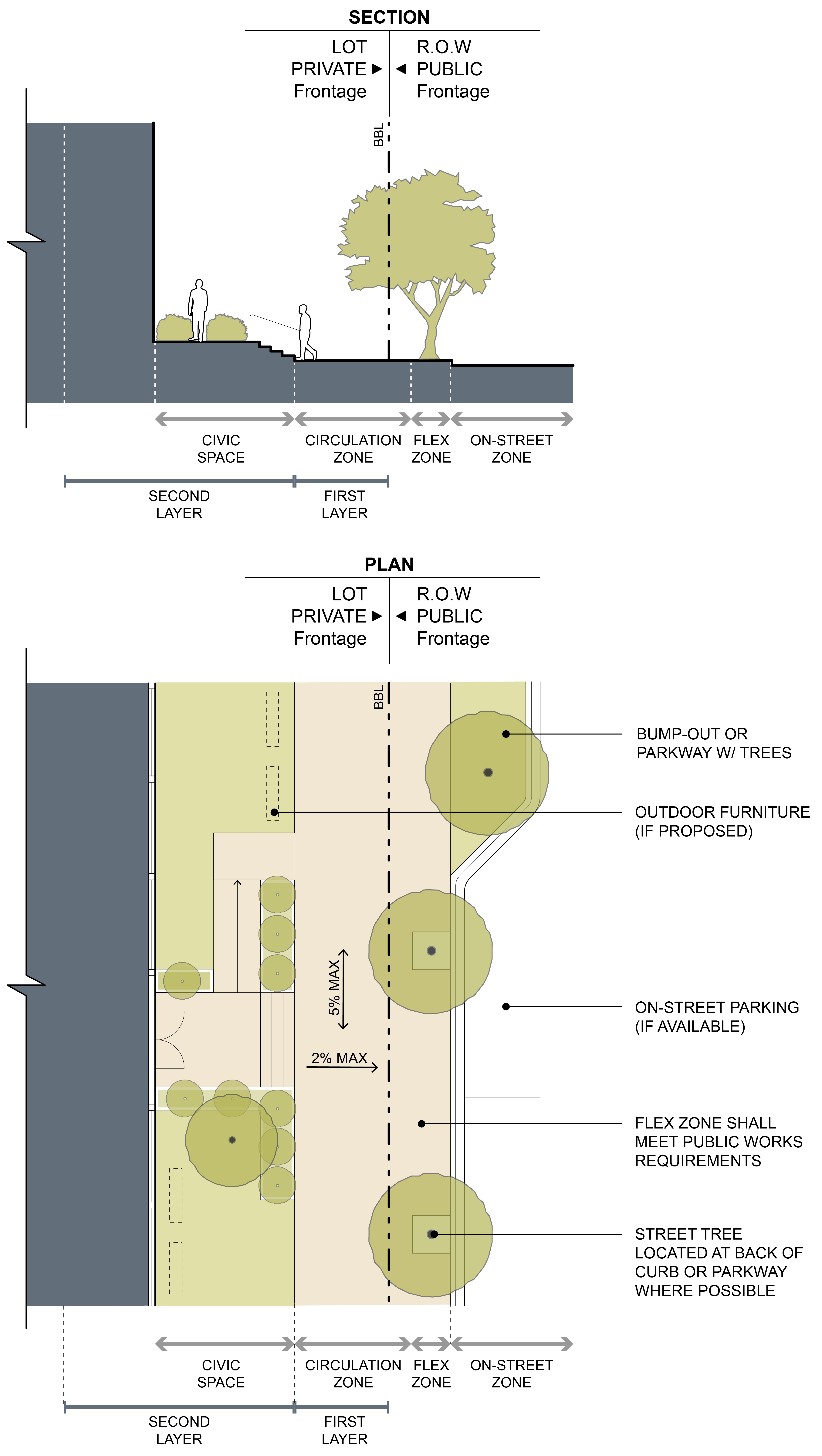
In Zones T3 and T4, D1, D2 and D3, generally sidewalks occur at the edge of the Right-of-Way. In Zones T5 and T6, sidewalks occur at the edge of the Right-of-Way and are given the additional dimensions of the 10 foot setback in the First Layer.
The following additional assumptions govern the Thoroughfares shown here:
- To clear sight lines for drivers, Visibility Triangles shall be required as described in Article 3, Section 3.8.4.1
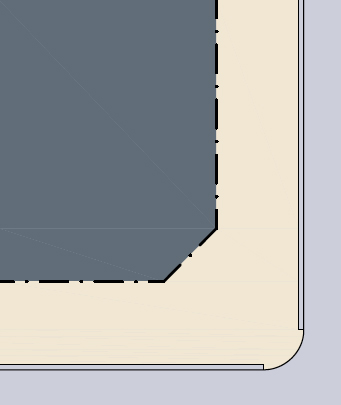
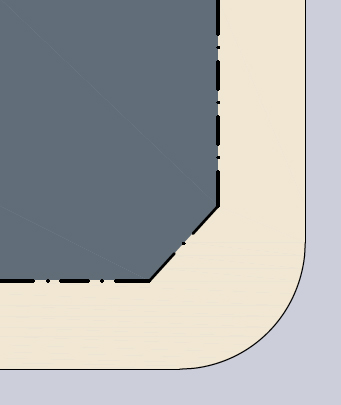
- Pavement widths are measured inside of curb to inside of curb.
- Curb and gutter may range from 1’-6” for City Thoroughfares to 2’-0” for some County Thoroughfares.
- Parking spaces range from 7’-0” to 9’-0” including pan; they should be wider on higher speed Thoroughfares but may be restricted by existing Right-of-Way dimensions.
- Right turns may be taken from the parking lane.
- Tree spacing is 22’ on center to match parallel parking or 25’ on center to match Lot Line spacing.
- Tree planters have a minimum dimension of 4’ x 4’, increased where possible to a 4’ x 8’ dimension.
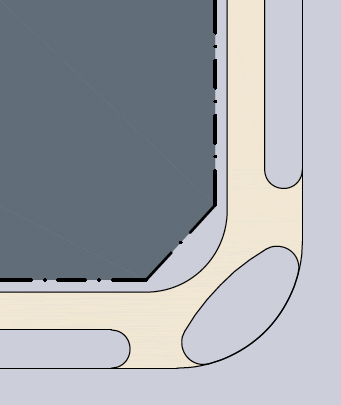
- Bulb-outs may be added where Thoroughfare widths are wide and design speed high, or where sidewalks are narrow, in order to facilitate pedestrian safety.
Thoroughfares must evolve with the needs of the City. As Miami continues to grow, a Thoroughfare may change in character reflecting new density, or conversely, a return to an historic dimension. For instance, a continuous lawn planter may be replaced with individual tree wells for additional sidewalk space, or a wide neighborhood street may be narrowed to control traffic intrusion.
The accommodation of bicycles and transit requires detailed response to the existing Thoroughfare condition and thus is not illustrated specifically here.
8.2 ILLUSTRATION: THE THOROUGHFARE ACROSS THE TRANSECT
MORE RURAL
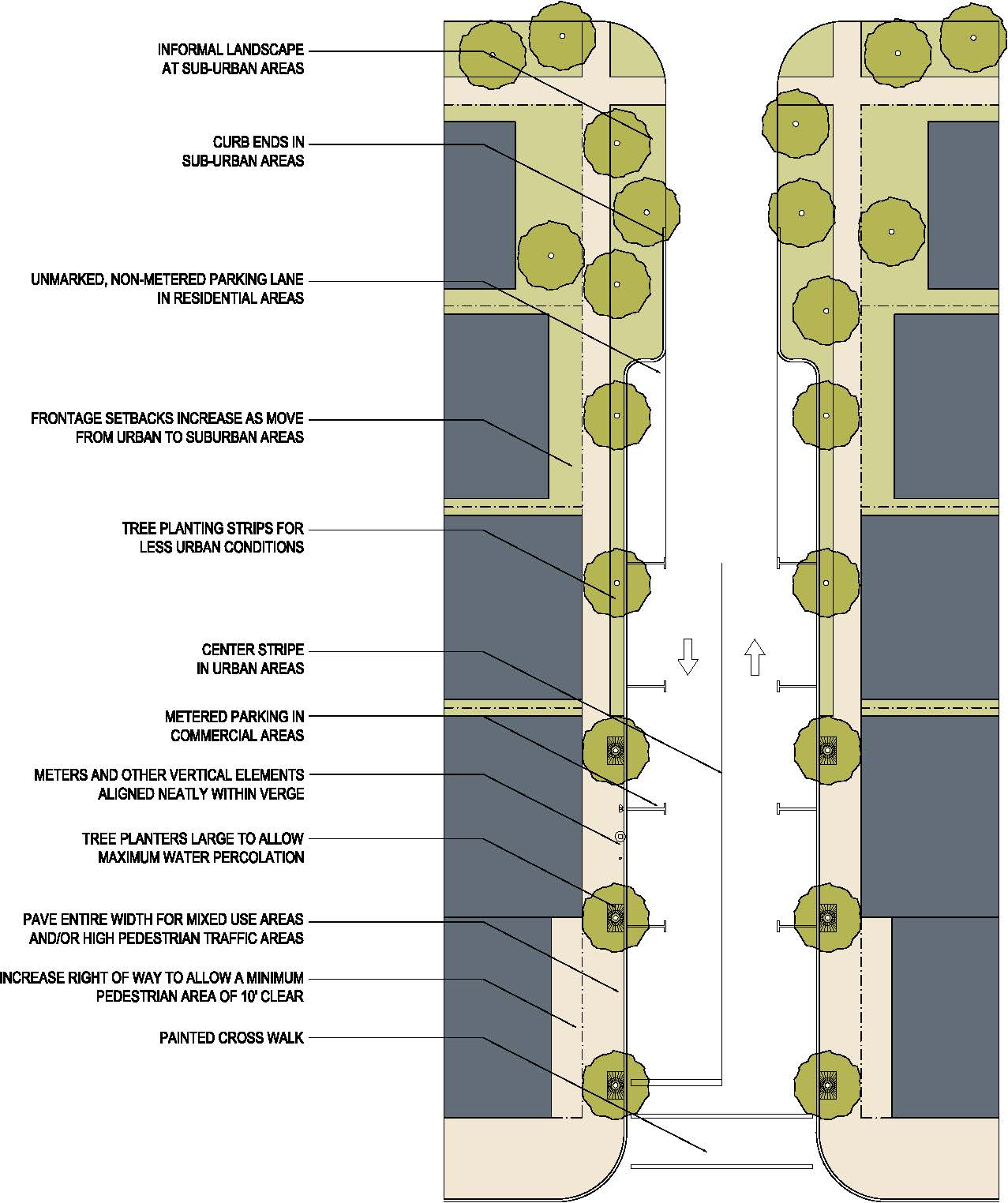
MORE URBAN
8.3 PUBLIC FRONTAGES
| RURAL | TRANSECT | URBAN | ||||
| TRANSECT ZONE Public Frontage Type | T1 T2 HW & RD | T1T3 RD & ST | T3T4 ST & DR | T3T4T5 RS-ST-AV-DR | T4 T5 T6 ST-AV-BV | T4 T5 T6 D ST-AV-BV |
| a. Assembly: The principal variables are the type and dimension of curbs, walkways, planters and landscape. |
|
|
|
|
|
|
| b. Curb: The detailing of the edge of the vehicular pavement, incorporating drainage |
|
|
|
|
|
|
| Type | Open Swale | Open Swale | Raised Curb | Raised Curb | Raised Curb | Raised Curb |
| Radius | 10-30 feet | 10-30 feet | 5-20 feet | 5-20 feet | 5-20 feet | 5-20 feet |
| c. Walkway: The pavement dedicated exclusively to pedestrian activity |
|
|
|
|
|
|
| Type | Path Optional | Path | Sidewalk | Sidewalk | Sidewalk | Sidewalk |
| d. Planter: The layer which accommodates street trees and other landscape |
|
|
|
|
|
|
| Arrangement | Clustered | Clustered | Regular | Regular | Regular | Opportunistic, Regular |
| Species | Multiple | Multiple | Alternating | Single | Single | Single |
| Planter Type | Continuous Swale | Continuous Swale | Continuous Swale | Continuous Swale | Continuous Swale | Individual Planter |
| Note: Appropriate types for Civic Zones shall be determined based on context and abutting Transect Zones. | ||||||
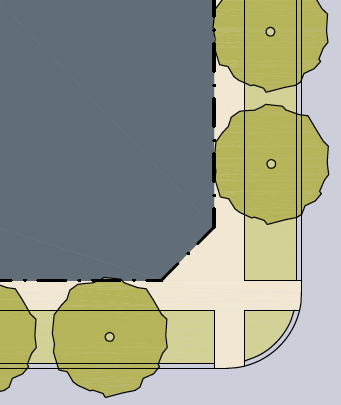
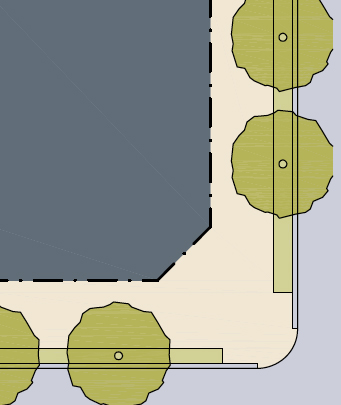
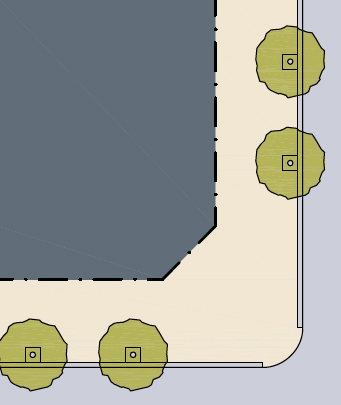
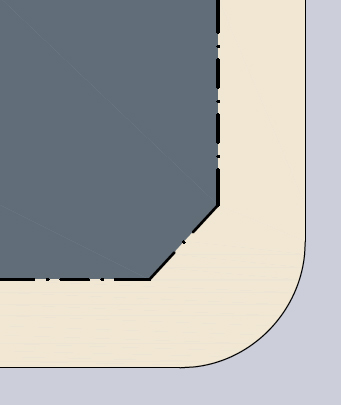
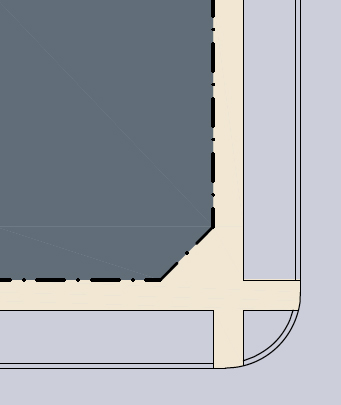
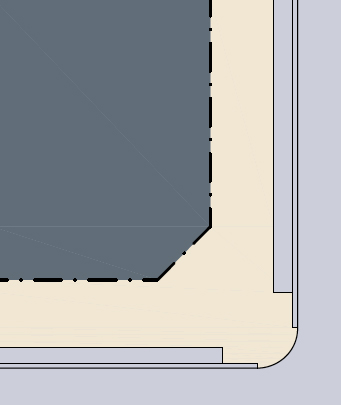
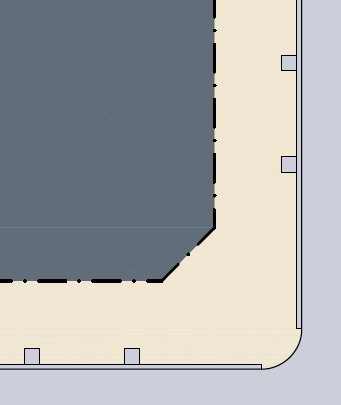
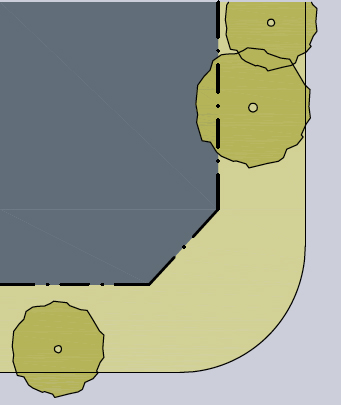
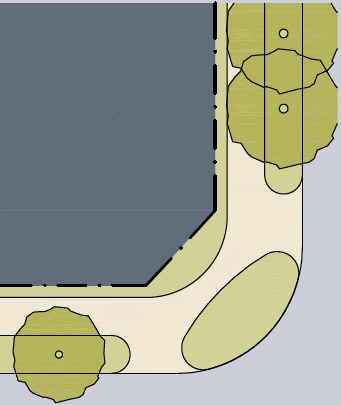
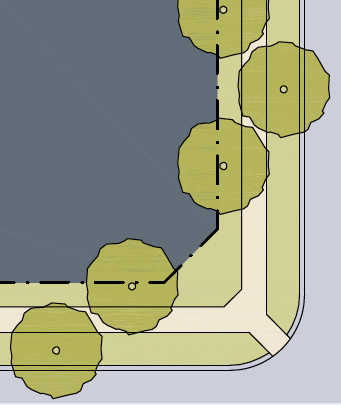
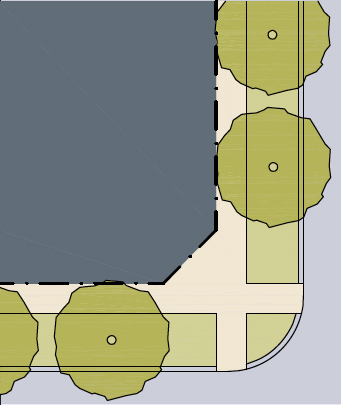
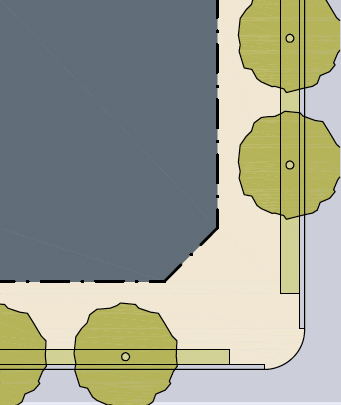
| |
| a. (HW) For Highways: This Frontage has open swales drained by percolation, bicycle trails and no parking. The landscaping consists of the natural condition or multiple species arrayed in naturalistic clusters. Buildings are buffered by distance or berms. |
|
| b. (RD) For Roads: This Frontage has open swales drained by percolation and a walking path or bicycle trail along one or both sides and yield parking. The landscaping consists of multiple species arrayed in naturalistic clusters. |
|
| c. (ST) For Street: This Frontage has raised curbs drained by inlets and sidewalks separated from the vehicular lanes by individual or continuous planters, with parking on one or both sides. The landscaping consists of street trees of a single or alternating species aligned in a regularly spaced allee. |
|
| d. (DR) For Drive: This Frontage has raised curbs drained by inlets and a wide sidewalk or paved path along one side, related to a greenway or waterfront. It is separated from the vehicular lanes by individual or continuous planters. The landscaping consists of street trees of a single or alternating species aligned in a regularly spaced allee. |
|
| e. (AV) For Avenues: This Frontage has raised curbs drained by inlets and wide sidewalks separated from the vehicular lanes by a narrow continuous planter with parking on both sides. The landscaping consists of a single tree species aligned in a regularly spaced allee. |
|
| f. (ST) (AV) For Mixed Use Streets or Avenues: This Frontage has raised curbs drained by inlets and very wide sidewalks along both sides separated from the vehicular lanes by separate tree wells with grates and parking on both sides. The landscaping consists of a single tree species aligned with regular spacing where possible. |
|
| g. (BV) For Boulevards: This Frontage has slip roads on both sides. It consists of raised curbs drained by inlets and sidewalks along both sides, separated from the vehicular lanes by planters. The landscaping consists of rows of a single tree species aligned in a regularly spaced allee. |
|
| Note: Appropriate types for Civic Zones shall be determined based on context and abutting Transect Zones. |
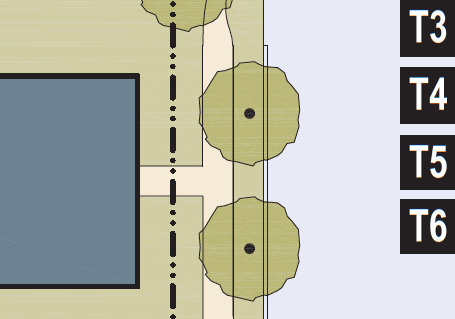
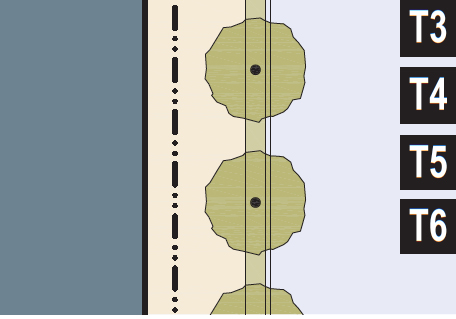
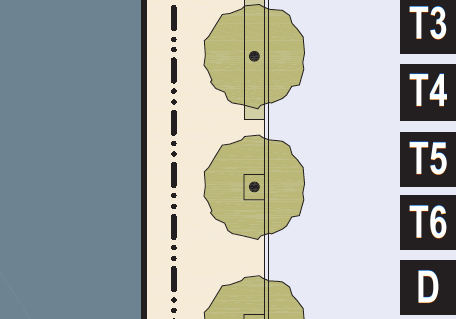
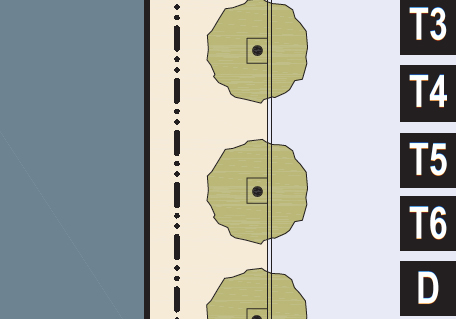
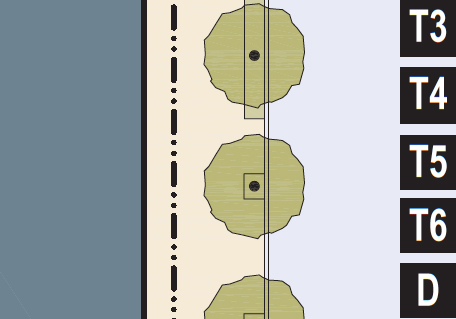
8.4 ILLUSTRATION: SIDEWALKS
Garage Entrance Spacing | |
Service Entrance Drive |
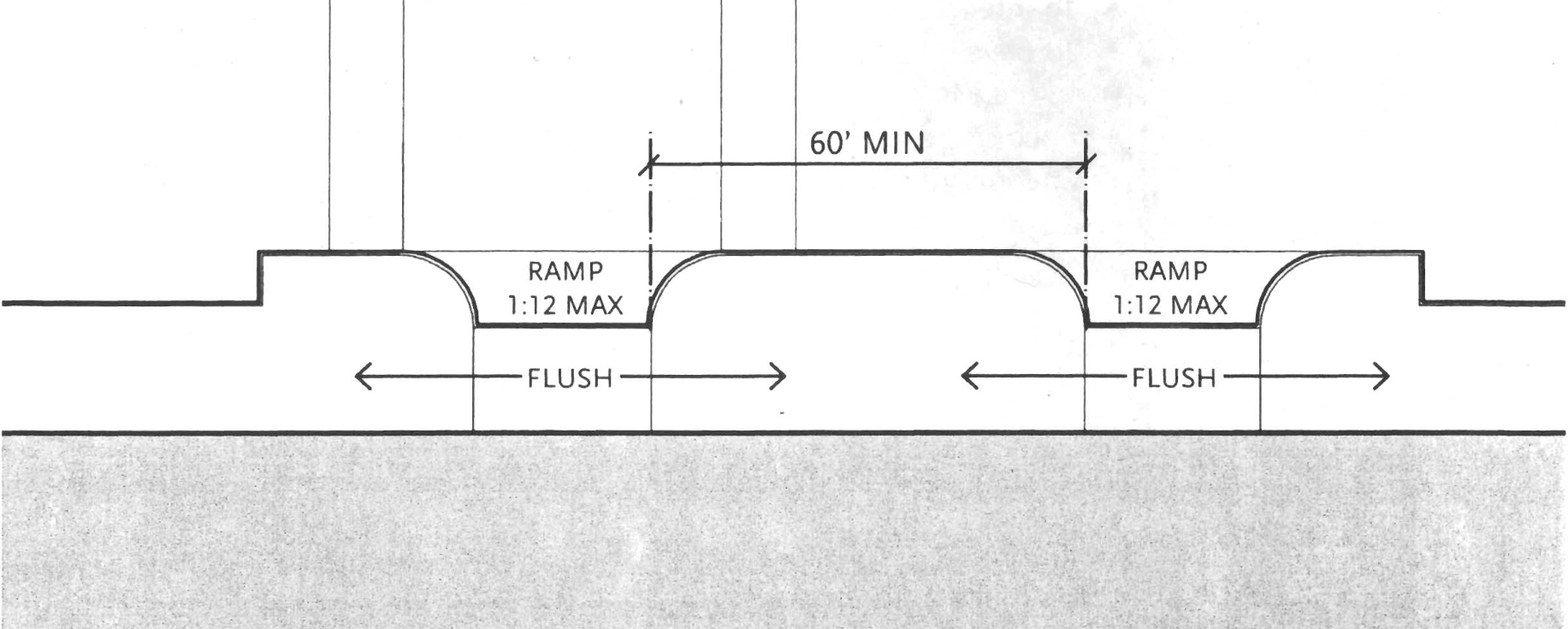
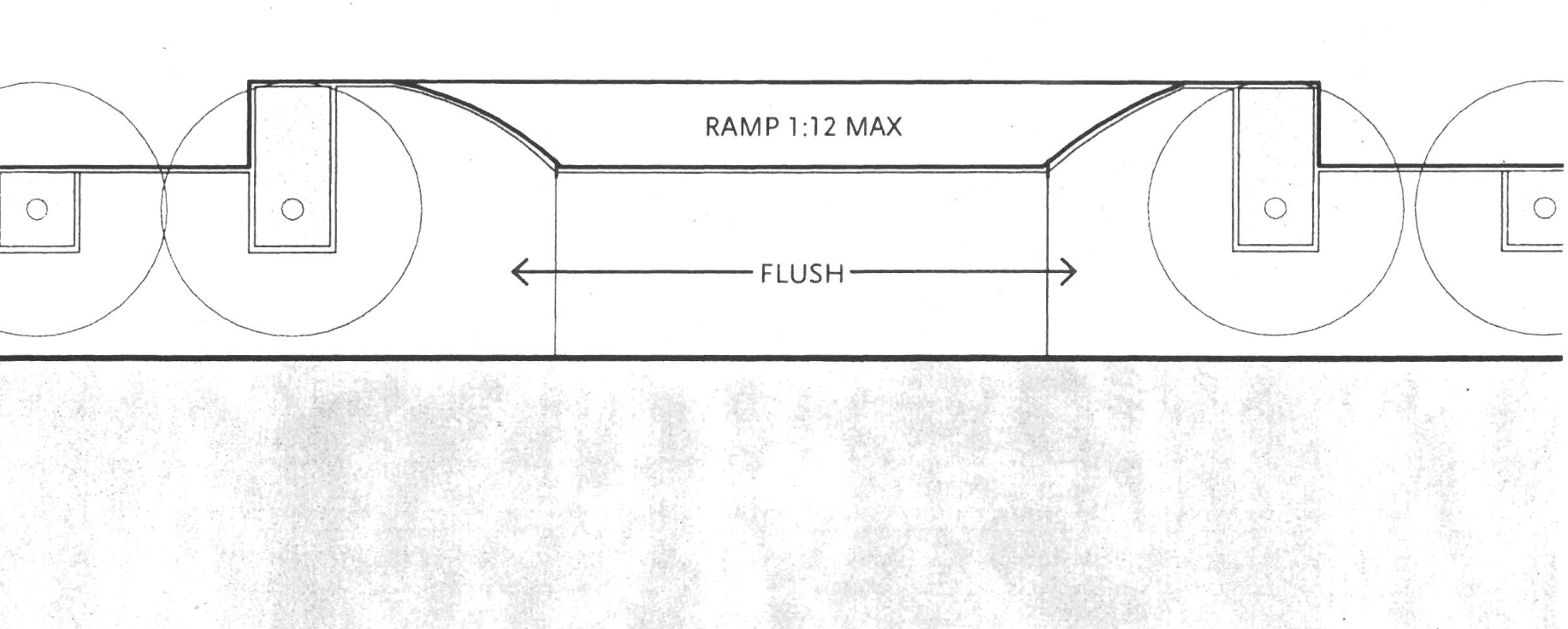
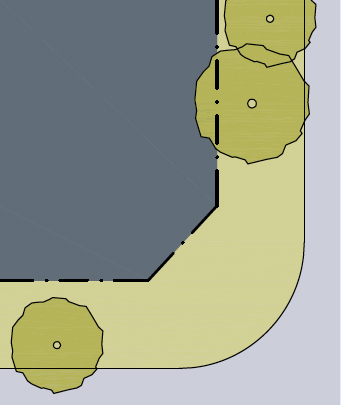
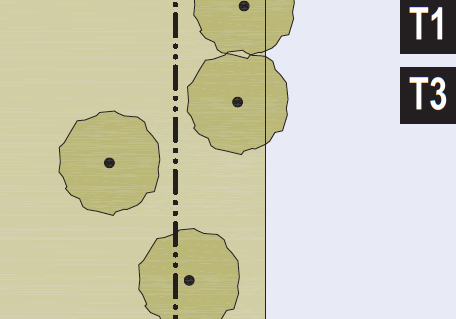
8.4.a ILLUSTRATION: FIRST LAYER DESIGN ADJACENT TO COMMERCIAL OR OFFICE FRONTAGES
| 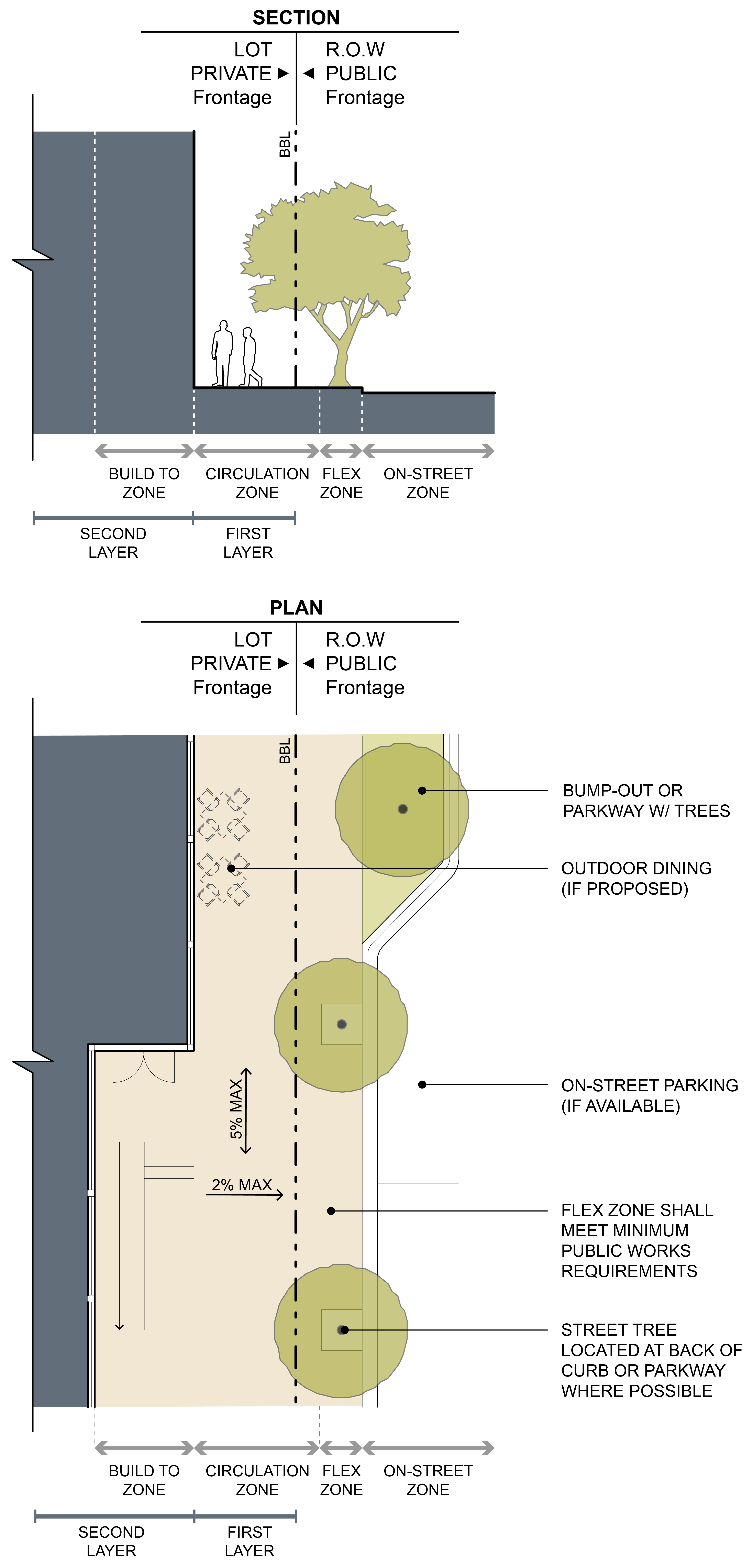 |
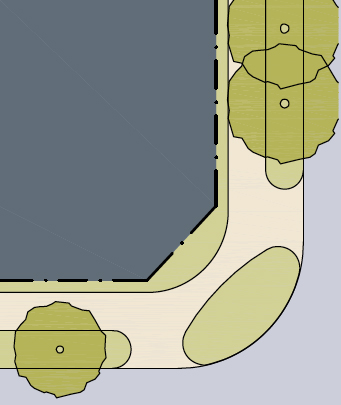
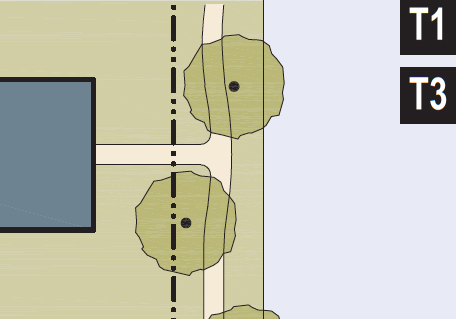
8.4.b ILLUSTRATION: FIRST LAYER DESIGN ADJACENT TO FRONTAGES THAT ARE NOT COMMERCIAL, OFFICE, OR A CIVIC SPACE TYPE
|  |
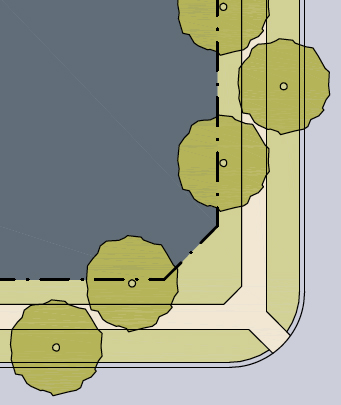
8.4.c ILLUSTRATION: FIRST LAYER DESIGN ADJACENT TO A CIVIC SPACE TYPE
|  |

