
Summit City Zoning Code
CHAPTER 20
TERMINOLOGY
11-20-1: General
Words and terms expressly defined in this zoning ordinance have the specific meanings assigned unless the context clearly indicates another meaning. Words and terms that are not expressly defined in this zoning ordinance have their ordinary dictionary meaning.
11-20-2: Abbreviations
Abbreviations used in this zoning ordinance have the following meanings:
Table 20-1: Abbreviations
| Abbreviation | Meaning |
| % | Percent |
| BTZ | Build-to zone |
| ft.(or ') | Feet (or foot) |
| max. | Maximum |
| min. | Minimum |
| no. | Number |
| na | Not applicable (no requirement) |
| sq. ft. | Square feet |
11-20-3: Use Definitions
See Chapter 7 for an explanation of the use categorization system used in this zoning ordinance and for use type definitions.
11-20-4: Measurement-Related Terms
See Chapter 19 for an explanation of various lot and building regulation terms, such as “lot area,” “building height,” “setbacks” and “build-to-zone.”
11-20-5: Definition Of Words And Terms Beginning With "A"
Abut or Abutting: To touch or share a common boundary.
Accessory Structure or Use: A structure or use that:
- Is subordinate to the principal structure or principal use served in terms of area and function;
- Contributes to the comfort, convenience, or necessity of occupants of the principal structure or principal use served; and
- Is customarily found in association with the subject principal use or principal structure.
Act of God: An event that directly and exclusively results from the occurrence of natural causes that could not have been prevented by the exercise of foresight or caution.
Adjacent: Near or in the immediate vicinity.
Agent: A person duly authorized to act on behalf of the subject property owner.
Aisle (parking or circulation): That portion of a parking lot that provides access to parking stalls.
Alley: A public or private thoroughfare that affords only a secondary means of access to abutting property.
Alteration, Structural: Any change in the supporting members of a building, such as bearing walls or partitions, columns, beams or girders, or any substantial change in the roof or in the exterior walls, except such alterations as may be required for the safety of the building.
Amateur Radio Facility: Any tower or antenna used for non-commercial radio communications (transmission and reception) maintained by an FCC-licensed amateur radio operator.
Animal, Companion: Animals that are commonly kept by persons as a pet or for companionship. Companion animals have the following characteristics: have a special and close relationship with humans; are partially or totally dependent on people; commonly live inside a residence in close proximity with humans; form bonds with people; and interact with their human companions. Dogs and cats are common companion animals.
Animal, Farm: Breeds of animals raised primarily for commercial or food production purposes in out-buildings or in open spaces away from residences. Typical examples include cattle, bison, swine, poultry, sheep, goats, donkeys and horses.
Animal Service: See 11-7-5(B).
Antenna: An exterior transmitting or receiving device mounted on the ground or on a telecommunications tower, building or structure and used in communications that radiate or capture electromagnetic waves, micro waves, digital signals, analog signals, radio frequencies (excluding radar signals), wireless telecommunications signals or other communication signals.
Antenna, Building- or Tower-mounted (Wireless Telecommunications): See 11-7-10(D)(2).
Apiary: A structure for the keeping of honeybees.
Applicant: Any authorized person, firm, corporation or agency who submits an application.
Assembly and Entertainment: See 11-7-5(C).
Attention-getting Device: A pennant, flag, valance, banner, propeller, spinner, streamer, search light, strobe light, flashing light, balloon, inflatable shape, or similar device used to draw attention to a particular place, including but not limited to the outlining of structures or premises by the use of internal or external lighting techniques.
Awning: An overhang made of cloth or similar materials attached to a structure for decoration or protection from sunlight and precipitation. See Figure 20 1.
Figure 20-1: Awning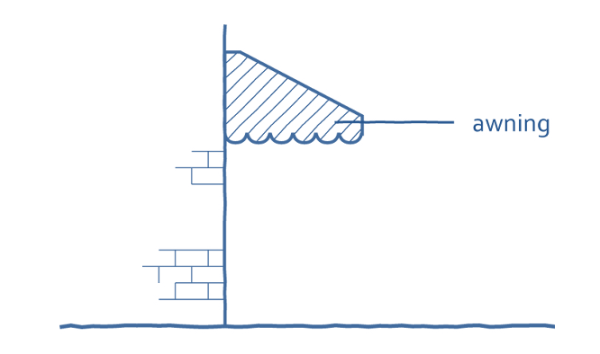
11-20-6: Definition Of Words And Terms Beginning With "B"
Banner: A temporary sign composed of lightweight material enclosed or not enclosed in a rigid frame, secured or mounted to a permanent structure.
Backhaul Network: The lines that connect a provider's telecommunications towers/cell sites to one or more cellular telephone switching offices, and/or long-distance providers, or the public switched telephone network.
Balcony: A platform, with or without a roof, that: (1) projects from the exterior wall of a structure above the ground floor, (2) is exposed to the open air, (3) has direct access to the interior of the building, and (4) is not supported by posts or columns extending to the ground.
Bare Bulb Illumination: Exposed or uncovered lighting elements.
Basement: A floor of a building having some but not more than one-half of its floor-to-ceiling height below grade. (Also see “cellar”).
Base (Zoning) District: Any zoning district that is not an “overlay” zoning district.
Battery Charging Station: An electrical component assembly or cluster of component assemblies designed specifically to charge batteries within electric vehicles.
Battery Exchange Station: A facility designed to enable an electric vehicle with a swappable battery to enter a drive lane and exchange the depleted battery for a more fully charged battery through an automated process.
Bay Window: A window that projects outward from the structure and that does not rest on a building foundation or on the ground.
Blockface: Property abutting on one side of a street between the 2 nearest intersecting streets, railroad rights of way, or other natural or human-made barriers. See Figure 20-2.
Figure 20-2: Blockface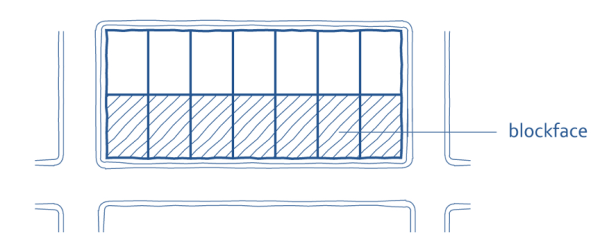
Buildable Area: The space remaining on a zoning lot after the minimum setback, landscaping and any other open space requirements of this zoning ordinance have been met. See Figure 20-3.
Figure 20-3: Buildable Area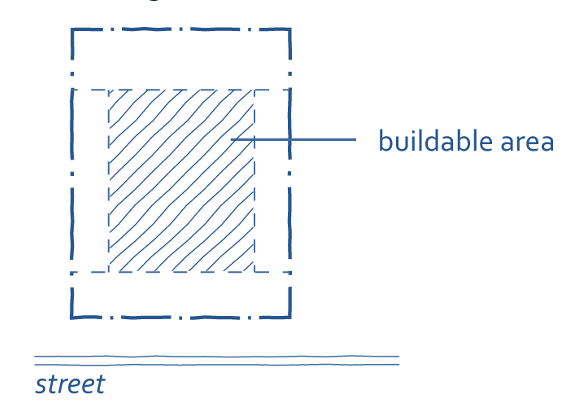
Building: Any structure permanently affixed to the land with a permanent roof, separated on all sides from adjacent open areas by walls, built for the shelter, or enclosure of persons, animals, chattels, or property. When such a structure is divided into separate parts by unpierced walls extending from the ground up, each part is deemed a separate building.
Building Coverage: See 11-19-11.
Building, Principal: A non-accessory building in which the principal use of the subject property is conducted.
Build-to Zone: See 11-19-10.
11-20-7: Definition Of Words And Terms Beginning With "C"
Caliper: A measurement of the size of a young tree, measured as the diameter of its trunk 12 inches above the root ball. See Figure 20-4.
Figure 20-4: Caliper (tree size measurement)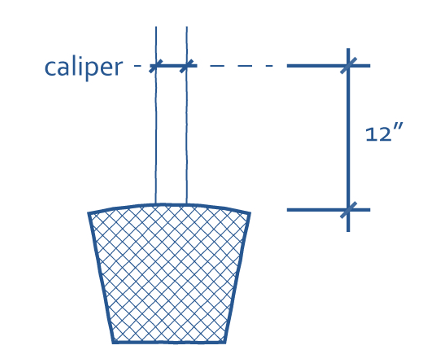
Cannabis Business Establishment: A cannabis cultivation center, craft grower, processing organization, infuser organization, dispensing organization, transporting organization, as defined herein. Cannabis Craft Grower: A facility operated by an organization or business that is licensed by the Illinois Department of Agriculture to cultivate, dry, cure and package cannabis and perform other necessary activities to make cannabis available for sale at a dispensing organization or use at a processing organization, per the Cannabis Regulation and Tax Act, 410 ILCS 705/1, et. seq., enacted by the State of Illinois, as it may be amended from time to time, and regulations promulgated thereunder. Cannabis Cultivation Center: A facility operated by an organization or business that is licensed by the Illinois department of agriculture to cultivate, process, transport and perform necessary activities to provide cannabis and cannabis-infused products to licensed cannabis business establishments, per the Cannabis Regulation and Tax Act, 410 ILCA 705/1 et. seq. and the Compassionate Use Of Medical Cannabis Program Act, 410 ILCS 130/1 et. seq, enacted by the State of Illinois, as may be amended from time to time, and regulations promulgated thereunder.
Cannabis Dispensing Organization: A facility operated by an organization or business that is licensed by the Illinois department of financial and professional regulation to acquire cannabis from licensed cannabis business establishments for the purpose of selling or dispensing cannabis, cannabis infused products, cannabis seeds, paraphernalia or related supplies to purchasers or to qualified registered medical cannabis patients and caregivers, per the Cannabis Regulation and Tax Act, 410 ILCS 705/1 et. seq. and the Compassionate Use Of Medical Cannabis Program Act, 410 ILCS 130/1 et. seq, enacted by the State of Illinois, as may be amended from time to time, and regulations promulgated thereunder. Cannabis Dispensing Organization: A facility operated by an organization or business that is licensed by the Illinois department of financial and professional regulation to acquire cannabis from licensed cannabis business establishments for the purpose of selling or dispensing cannabis, cannabis infused products, cannabis seeds, paraphernalia or related supplies to purchasers or to qualified registered medical cannabis patients and caregivers, per the Cannabis Regulation and Tax Act, 410 ILCS 705/1 et. seq. and the Compassionate Use of Medical Cannabis Program Act, 410 ILCS 130/1 et. seq., enacted by the State of Illinois, as may be amended from time to time, and regulations promulgated thereunder. Cannabis Infuser: A facility operated by an organization or business that is licensed by the Illinois Department of Agriculture to directly incorporate cannabis or cannabis concentrate into a product formulation to produce a cannabis-infused product, per the Cannabis Regulation and Tax Act, 410 ILCS 705/1, et. seq., enacted by the State of Illinois, as it may be amended from time-to-time, and regulations promulgated thereunder. Cannabis Processor: A facility operated by an organization or business that is licensed by the Illinois Department of Agriculture to either extract constituent chemicals or compounds to produce cannabis concentrate or incorporate cannabis or cannabis concentrate into a product formulation to produce a cannabis product, per the Cannabis Regulation and Tax Act, 410 ILCS 705/1, et. seq., enacted by the State of Illinois, as it may be amended from time to time, and regulations promulgated thereunder. Cannabis Transporter: An organization or business that is licensed by the Illinois Department of Agriculture to transport cannabis on behalf of a cannabis business establishment or a community college licensed under the Community College Cannabis Vocational Training Pilot Program, per the Cannabis Regulation and Tax Act 410 ILCS 705/1, et. seq., enacted by the State of Illinois as it may be amended from time-to-time, and regulations promulgated thereunder.
Canopy: A permanent structure that consists of an overhanging shelter connected to a building and constructed of materials such as wood or steel studs covered with wood or other material and that may or may not be supported by vertical columns. See Figure 20-5.
Figure 20-5: Canopy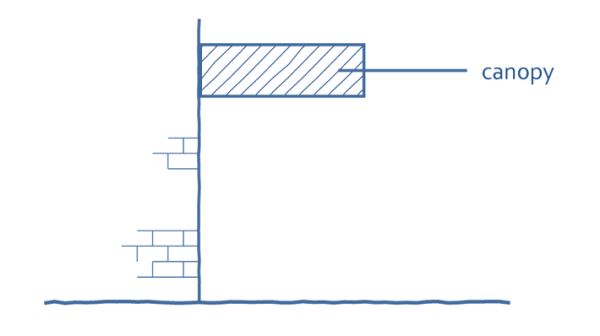
Carport: An open-sided roofed vehicle shelter, usually formed by extension of the roof from the side of a building, but which may be freestanding.
Car-share Program: A system in which a fleet of cars (or other motor vehicles) is made available for use by members of the car-share program and that exhibit all the following characteristics:
- Members are permitted to use vehicles from the car-share program fleet on an hourly or shorter basis;
- Car-share vehicles are generally available 24 hours a day and 7 days a week to members in parking spaces at dispersed locations or facilities; and
- No separate written agreement is required each time a member reserves and uses a car-share vehicle.
Car-share Vehicle: A motor vehicle that is part of a car-share program’s fleet of rental vehicles.
Cellar: A floor of a building having more than one-half of its floor-to-ceiling height below grade. (Also see “basement”)
Cemetery: See 11-7-4(A).
Certificate of Occupancy: A certification issued by the building official, as provided and required in this zoning ordinance and other part of the municipal code, authorizing a property or a structure to be used, in whole or in part, in conformance with this zoning ordinance.
Changeable Copy/Message Board: A sign on which copy is changed manually to provide a message.
Cold Frame: An unheated structure no more than 4 feet in height used for protecting seedlings and plants from the cold.
College or University: See 11-7-4(B).
Commercial Message: Any sign, wording, logo, or other representation that directly or indirectly, names, advertises, or calls attention to a business, product, service or other commercial activity.
Commercial Use Category: See 11-7-5.
Commercial Vehicle Repair and Maintenance: See 11-7-5(P)(1).
Commercial Vehicle Sales and Rentals: See 11-7-5(P)(2).
Commercial Service: See 11-7-5(D).
Community Garden: See 11-7-9(B).
Copy (sign): Written material, printed text, numbers, logos, symbols or pictures located on the copy surface for the purpose of delivering a message.
Cross-Access: A vehicular and/or pedestrian connection between abutting properties that connects the 2 sites and allows vehicles and/or pedestrians to travel between sites without the having to exist to the street.
11-20-8: Definition Of Words And Terms Beginning With "D"
Day Care: See 11-7-5(E).
dB(A): The intensity of sound expressed in decibels read from a calibrated sound level meter utilizing the A-level weighing scale and the slow-meter response, as specified by the American National Standards Institute.
Decibel (dB): The logarithmic unit of measure used to describe the amplitude of sound.
Deck: A roofless outdoor space built as an aboveground platform projecting from the wall of a structure and connected by structural supports at grade or by the structure.
Diameter-at-breast Height (DBH): The diameter of a mature tree’s trunk, measured at a height of 4.5 feet above grade level at the base of the tree. See Figure 20-6.
Figure 20-6: Diameter at Breast Height (DBH)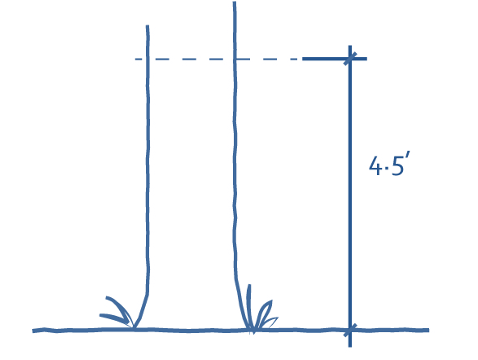
Disability: The definition of any person whose disability: a) is attributable to mental, intellectual or physical impairments or a combination of mental, intellectual or physical impairments; b) is likely to continue for a significant amount of time or indefinitely; c) results in the functional limitations in three (3) or more of the following areas of major activities: self-care; receptive or expressive language; learning; mobility; self-direction; capacity for independent living; economic self-sufficiency; or d) reflects the person's need for a combination or sequence of special interdisciplinary or generic care, treatment or other services which are of a lifelong or extended duration.
Displacement (vibration): The amount of motion involved in a vibration.
District: Zoning district.
Drive-in or Drive-through Facility: See 11-7-10(A).
Driveway: An accessway for motor vehicles from a street to a lot.
Dwelling: A building or portion of a building, but not including a mobile home or manufactured housing unit, designed or used exclusively for residential occupancy, including detached houses, attached houses, two-unit houses, and residential buildings occupied by 3 or more dwelling units, but not including group residential or lodging uses.
Dwelling Unit: One or more rooms in a dwelling designed for occupancy by a single household for living purposes and having its own permanently installed cooking and sanitary facilities.
11-20-9: Definition Of Words And Terms Beginning With "E"
Eating and Drinking Establishments: See 11-7-5(F).
Eave: The lower edge of a sloping roof surface or the top edge of a parapet or flat roof. See Figure 20-7.
Figure 20-7: Eave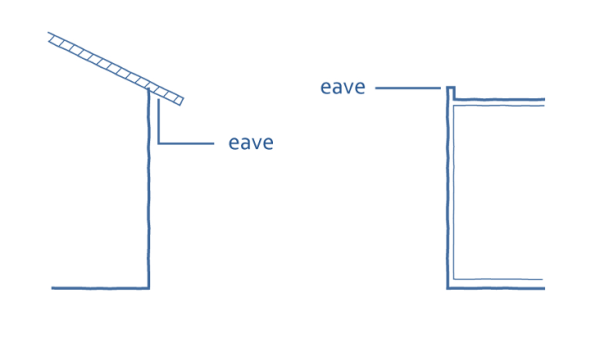
Electric Vehicle: Any vehicle that is licensed and registered for operation on public and private highways, roads, and streets; either partially or exclusively, on electrical energy from the grid or an off-board source, that is stored on-board via a battery. “Electric vehicle” includes: (1) battery electric vehicles; and (2) plug-in hybrid electric vehicles.
Electric Vehicle (EV) Charging Station: A public or private parking space that is served by battery charging station equipment.
Electric Vehicle Charging Station, Private (Restricted-Access): An EV charging station that is not available for use by the general public. Examples include electric vehicle charging stations that serve residential homeowners or renters, executive parking areas, designated employee parking areas and fleet parking areas.
Electric Vehicle Charging Station, Public: An EV charging station that is accessible to and available for use by the general public.
Electric Vehicle Parking Space: Any parking space that is clearly identified to be used exclusively for the parking of an electric vehicle.
Electronic Changeable Copy/Message Board: A sign that allows letters or characters to be placed as copy electronically in order to provide a message.
Exercise of Religion: Exercise of religion means an act or refusal to act that is substantially motivated by religious belief, whether or not the religious exercise is compulsory or central to a larger system of religious belief.
11-20-10: Definition Of Words And Terms Beginning With "F"
FAA: The Federal Aviation Administration.
FCC: The Federal Communications Commission.
Financial Service: See 11-7-5(G).
Fence: A structure that functions as a horizontal boundary or barrier consisting of a structural frame with a fabric of wood, metal or masonry.
Floor Area: See 11-19-4.
Floor Area Ratio: See 11-19-5.
Foot-Candle: A unit of illumination produced on a surface, all points of which are one foot from a uniform point source of one standard candle.
Foundation, Permanent: A closed perimeter formation consisting of materials such as concrete or concrete block that extends into the ground below the frost line.
Frequency (sound waves): The number of oscillations per second in a sound wave; an index of the pitch of the resulting sound.
Frontage, Street: See 11-19-6.
Fueling Station: See 11-7-5(P)(3).
Funeral and Mortuary Service: See 11-7-5(H).
11-20-11: Definition Of Words And Terms Beginning With "G"
Garage: A structure, either attached or detached, used for the parking and storage of vehicles as an accessory use to a dwelling unit. For the purposes of this definition, “garage” does not include a commercial parking structure.
Geothermal Energy System (Geothermal Heat Exchange): Equipment that transfers thermal energy to and/or from the ground for the purposes of heating and/or cooling a building. Geothermal energy systems consist of a closed-loop system of pipes filled with liquid, a heat exchanger and heat pump. This includes vertical closed loop, horizontal closed loop and water body closed loop systems.
Group Home: A specialized residential care home serving up to eight (8) unrelated persons with disabilities, and with resident support staff (no more than four (4) staff may reside at any one time), which is licensed, certified or accredited by appropriate local, state or national bodies. The occupancy of such group homes shall be limited to no more than two persons per bedroom, including resident support staff. Such persons are generally unable to live independently but are capable of community living if provided with an appropriate level of supervision, assistance and support services, but who do not require on-site medical or nursing facilities, with the primary goal of developing or exercising basic skills for daily living. Group homes do not include a residence which serves persons as an alternative to incarceration for a criminal offense, persons whose primary reason for placement is substance or alcohol abuse or the treatment of a communicable disease, or persons convicted of criminal offenses or declared criminally insane or dangerous. No such Group Home shall be located within 500 feet of any other Group Home, Institutional Home, or Transitional Housing, irrespective of the zoning district in which any such Group Home, Institutional Home, or Transitional Housing is located.
Group Living: See 11-7-3(B).
11-20-12: Definition Of Words And Terms Beginning With "H"
Height, Building: See 11-19-14.
Home Occupation: An accessory use of a dwelling for limited commercial purposes. Home occupations are subject to the regulations of 11-9-5.
Hoop House: A temporary or permanent structure typically made of flexible pipe or other material covered with translucent plastic, constructed in a “half-round” or “hoop” shape, for the purposes of protecting and cultivating plants. A hoop house is considered more temporary than a greenhouse. See Figure 20-8.
Figure 20-8: Hoop House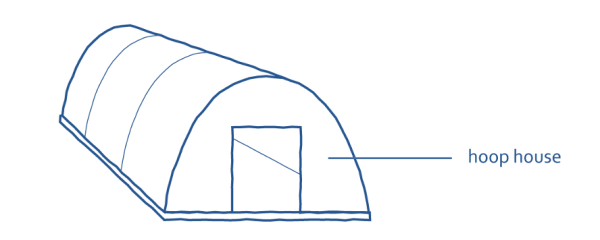
Hospital: See 11-7-4(D).
House, Attached: A principal residential building occupied by 3 or more dwelling units, each of which is located on its own lot and has one or more common or abutting walls with other dwelling units in the townhouse building. Each dwelling unit has a front and back and its own external entrance. Townhouse dwelling units do not share common floors/ceilings with other dwelling units (attached houses also known as a townhouses or rowhouses).
Figure 20-9: Attached House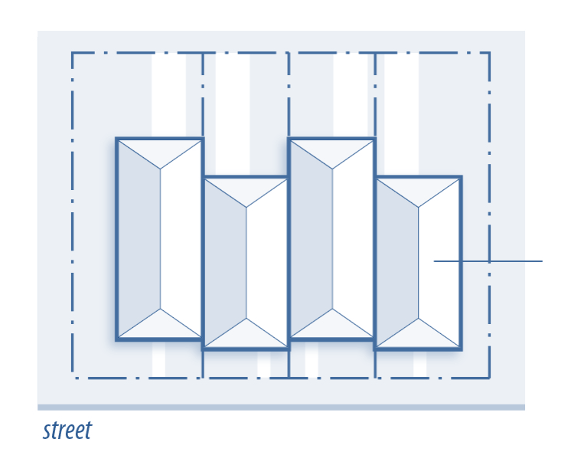
House, Detached: A principal building that contains only one principal dwelling unit and that is located on a single lot with private yards on all sides of the building.
Figure 20-10: Detached House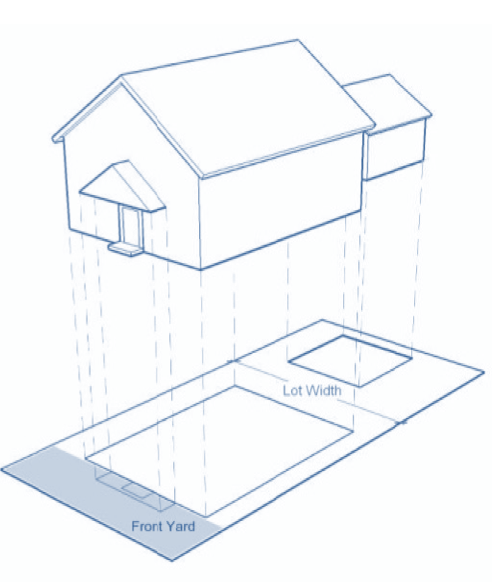
House, Two-unit: A principal residential building occupied by 2 dwelling units, both of which are located on a single lot that is not occupied by other principal residential buildings. The 2 dwelling units are attached and may be located on separate floors or side-by-side.
Figure 20-11: Two-Unit House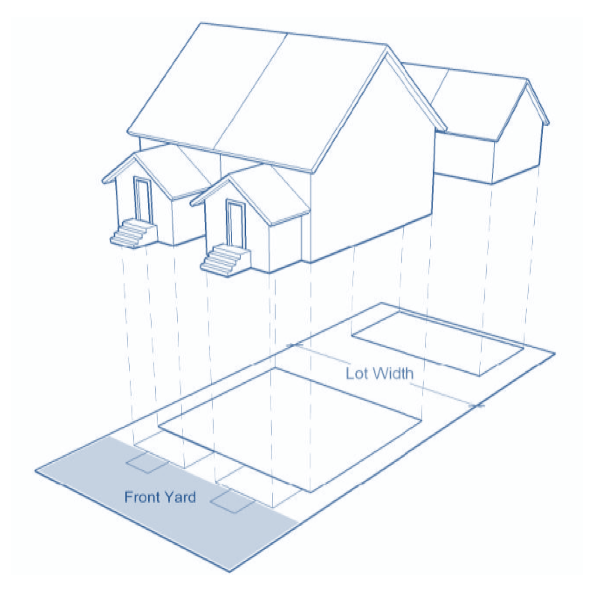
Household: One or more persons occupying premises living as a single housekeeping unit. See also the “household living” and “group living” use categories. (11-7-3(A)) and (11-7-3(B)).
Household Living: See 11-7-3(A).
11-20-13: Definition Of Words And Terms Beginning With "I"
Industry, Artisan: See 11-7-7(A).
Industry, Moderate-Impact: See 11-7-7(C).
Industry, High-Impact: See 11-7-7(D).
Industry, Low-Impact: See 11-7-7(B).
Industrial Use Category: See 11-7-7.
Institutional Home: Any residential facility located in a dwelling, under federal, state or village licensing, that is designed, used or intended to be used to provide a temporary or permanent home environment with professional services and treatment while conducting rehabilitative programs, shelter programs, or providing special housing for mentally or physically handicapped persons, where the occupants are allowed to interact with the community while in residence, which primarily serves persons as an alternative to incarceration for a criminal offense, persons whose primary reason for placement is substance or alcohol abuse or the treatment of a communicable disease, or persons convicted of criminal offenses or declared criminally insane or dangerous. The number of persons in such Institutional Home shall be limited to eight (8) unrelated persons, and no more than four (4) resident support staff at any one time. The occupancy of such institutional housing shall be limited to no more than two persons per bedroom, including resident support staff. No such Institutional Home shall be located within 500 feet of any other Institutional Home, Group Home, or Transitional Housing, irrespective of the zoning district in which anu such Institutional Home, Group Home, or Transitional Housing is located.
Invasive (Plant) Species: Any plant species, including its seeds, spores or other biological material capable of propagating that species, that is not native to that ecosystem; and whose introduction causes or is likely to cause environmental harm.
11-20-14: Definition Of Words And Terms Beginning With "J"
Junk or Salvage Yard: See 11-7-7(E).
11-20-15: Definition Of Words And Terms Beginning With "K"
(RESERVED)
11-20-16: Definition Of Words And Terms Beginning With "L"
Landscaping: Any combination of living plants (such as grass, ground cover, shrubs, vines, hedges, or trees) and nonliving landscape material (such as rocks, pebbles, sand, mulch, walls, fences, or decorative paving materials).
Lawfully Established: A use, structure, lot or sign (as the context indicates) that was established in conformance with all applicable zoning regulations in effect at the time of its establishment.
Library: See 11-7-4(E).
Lodging: See 11-7-5(I).
Logo: A design used by an organization on its letterhead, advertising material and signs as an emblem by which the organization can be easily recognized.
Lot and Building Regulations: Zoning district provisions governing such matters as required minimum lot area, minimum lot width, setbacks, maximum lot coverage and maximum building height.
Lot Area: See 11-19-2.
Lot Area per Dwelling Unit: See 11-19-3.
Lot of Record: A lot that is part of a subdivision, the plat of which has been recorded in the office of the Cook County Recorder of Deeds, pursuant to statute.
Lot, Corner: A lot located at the intersection of 2 streets or a lot bounded on 2 sides by a curving street 2 chords of which form an angle of 120 degrees or less measured on the lot side. See Figure 20-12.
Figure 20-12: Corner Lot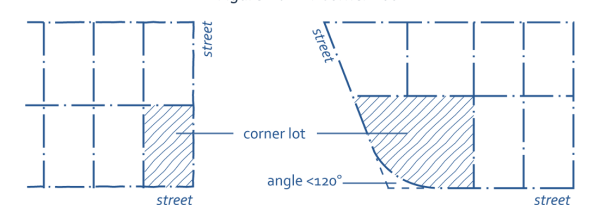 Lot, Double-frontage: A lot having frontage on 2 parallel or nonintersecting streets, as distinguished from a corner lot. See Figure 20-13.
Figure 20-13: Double-frontage Lot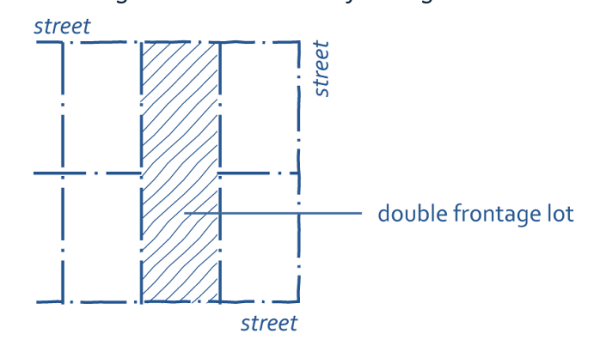 Lot Line, Front: A lot line abutting a street. On a corner lot, the shortest street lot line is the front lot line, except that if the length of the longer street lot line is not more than 10% greater than the length of the shorter street lot line the community building official, is authorized to designate the longer of street lot lines as the front lot line. See Figure 20-14.
Figure 20-14: Front Lot Line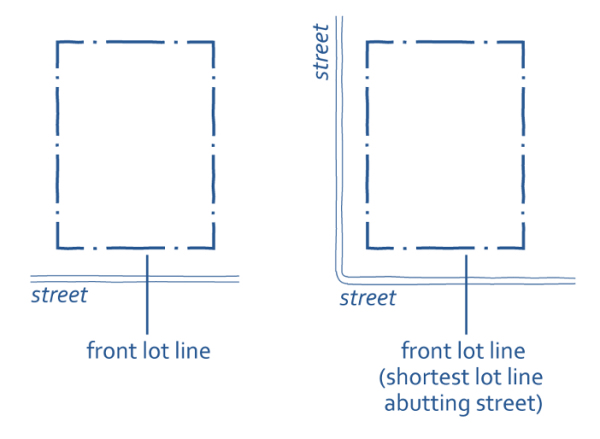 Lot Line, Rear: The lot line most nearly parallel to and located the furthest distance from the front lot line. See Figure 20-15.
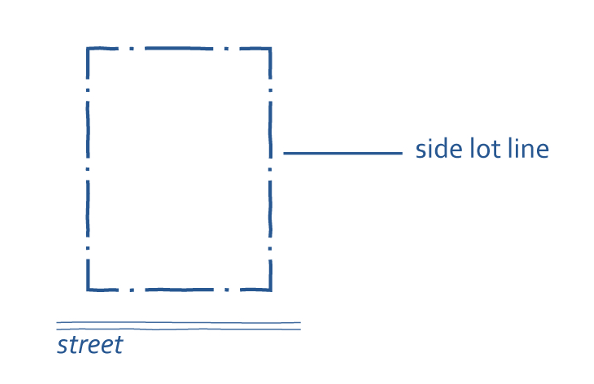
Figure 20-15: Rear Lot Line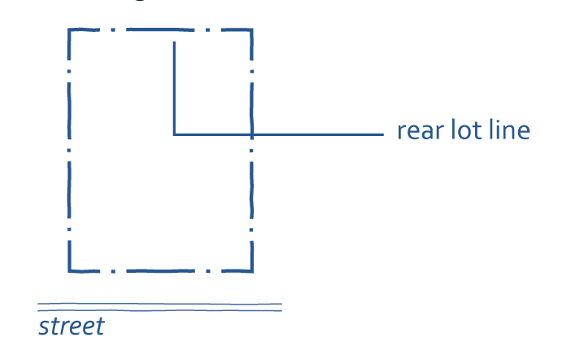 Lot Line, Side: Lot lines other than front or rear lot lines. See Figure 20-16.
Figure 20-16: Side Lot Line
Lot Width: See 11-19-7.
Lot, Zoning Lot or Parcel: See “Lot of Record.”
11-20-17: Definition Of Words And Terms Beginning With "M"
Medical, Dental and Health Practitioner: See 11-7-5(J)(2).
Mixed-use Building: A building occupied by residential uses in combination with nonresidential uses.
Module: An area of a parking lot that consists of a parking (drive) aisle with parking stalls on each side of the aisle.
11-20-18: Definition Of Words And Terms Beginning With "N"
Natural Resources Protection: See 11-7-4(F).
Nonconforming Lot: See 11-17-2.
Nonconforming Sign: See 11-13-10.
Nonconforming Structure: See 11-17-2(B)(1).
Nonconforming Use: See 11-17-3.
Nonconformity: Any nonconforming lot, nonconforming use, nonconforming structure or nonconforming sign.
Nonresidential (Zoning) District: Any base zoning district other than R (Residential) districts.
11-20-19: Definition Of Words And Terms Beginning With "O"
Occupiable Floor Area: Enclosed floor area intended for human activities, excluding those areas intended primarily for other purposes, such as storage rooms and equipment rooms, that are only intended to be occupied occasionally and for short periods of time.
Odorous Matter: Material that causes an odor sensation to a human being.
Office: See 11-7-5(J).
Open Space, Common: Property under common ownership used for parks, playgrounds, parkway medians, landscaped green space, schools, community centers or other similar areas in public ownership or common ownership and subject to the provisions of restrictive covenants, if any, required or approved by the village board. Common open space does not include space devoted to structures, public rights of way or areas improved for use as private drives or parking facilities.
Other Use Category: See 11-7-10.
Overlay (Zoning) District: A zoning district that over-lays a base zoning district and imposes supplemental regulations and standards on lands within the overlay boundaries.
Owner: The fee title holders of property.
11-20-20: Definition Of Words And Terms Beginning With "P"
Parapet or Parapet Wall: A wall-like barrier at the edge of a roof that acts as a vertical extension of an exterior building wall extending above the roof height of the building. See Figure 20-17.
Figure 20-17: Parapet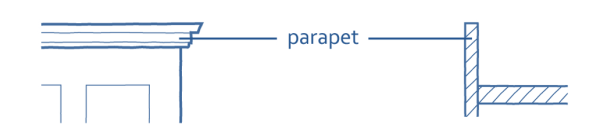
Parking, Non-Accessory: See 11-7-5(K).
Parks and Recreation: See 11-7-4(G).
Particulate Matter: Finely divided solid or liquid matter (other than water) that is released into the atmosphere.
Personal Vehicle Repair and Maintenance: See 11-7-5(P)(4).
Personal Vehicle Sales and Rentals: See 11-7-5(P)(5).
Planned Development: A development project approved in accordance with the planned development procedures in effect at the time the development was approved.
Planned Unit Development: A development project approved in accordance with the planned unit development procedures in effect at the time the development was approved.
Portable Storage Container: A purpose-built, fully enclosed, box-like container designed for temporary storage of household or commercial goods and/or equipment and for ease of loading to and from a transport vehicle. See Figure 20-18.
Figure 20-18: Portable Storage Container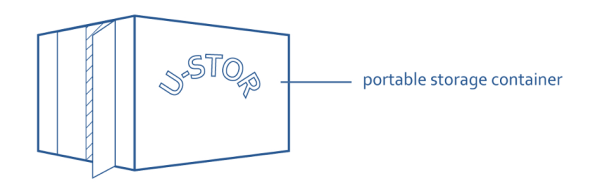
Porch: A roofed-over structure projecting out from the wall or walls of a main structure and commonly open to the weather in part.
Protest Petition: A formal written petition of opposition filed by property owners near property proposed to be rezoned. See 11-15-3(G) for additional information.
Public, Civic and Institutional Use Category: See 11-7-4.
Pump Island: A concrete structure in the immediate vicinity of and designed to support and protect gasoline and fuel pumps.
11-20-21: Definition Of Words And Terms Beginning With "Q"
(RESERVED)
11-20-22: Definition Of Words And Terms Beginning With "R"
Rainwater Collection Equipment: A rain barrel or similar container that collects and stores rainwater or other water that would otherwise be lost as runoff or diverted into a storm drain.
Recreational Equipment: Any snowmobile or all terrain vehicle (as that term is defined in the Illinois Motor Vehicle Code), and any watercraft including personal watercraft and specialty prop craft (as those terms are defined in the Illinois Boat Registration and Safety Act), and the trailers used to transport or store such equipment.
Recreational Vehicle: Any camping trailer, motor home, mini motor home, travel trailer, truck camper and van camper as those terms are defined in the Illinois Motor Vehicle Code, or any other habitable vehicle used primarily for recreational purposes.
Recycling Use Category: See 11-7-8.
Religious Assembly: See 11-7-4(H).
Residential Use Category: See 11-7-3.
Residential (Zoning) District: Any of the R districts of Chapter 2.
Restaurant: See 11-7-5(F)(2).
Retail Sales: See 11-7-5(L).
Ringelmann Chart: A chart described by the U.S. Bureau of Mines Information Circular 6888 and upon which are illustrated graduated shades of gray for use in estimating the light obscuration of smoke.
Ringelmann Number: The next lowest shade number on the Ringelmann Chart that most nearly corresponds to the light obscuration of the smoke being measured. For example, smoke capacity lying between No. 1 and No. 2 shades of gray on the Ringelmann Chart is measured as Ringelmann No. 1 smoke.
11-20-23: Definition Of Words And Terms Beginning With "S"
Safety Service: See 11-7-4(I).
School: See 11-7-4(J).
Self-service Storage Facility: See 11-7-5(M).
Service Bay: An area within an enclosed building that is used to store and service one motor vehicle.
Setback: Open space areas required between buildings and lot lines. See 11-19-8.
Setback, Contextual: See 11-19-8(E).
Shed: An accessory storage building used for the comfort, convenience or necessity of the occupants of the principal structure on the lot upon which the shed is located.
Shopping Center: A series of 3 or more commercial establishments or professional offices with individual entrances, sharing a common wall and common off-street parking.
Sign: Any object, device, structure or part thereof used to advertise, identify, display or attract attention to an object, person, institution, organization, business, product, service, event or location by any means, including words, letters, figures, designs, symbols, fixtures, colors, illumination or projected images. Signs as defined herein do not include temporary holiday decorations; or landscape features that display no words or symbols.
Sign, Animation: The presentation of pictorials and graphics on signs displayed in a progression of frames that give the illusion of motion, including but not limited to the illusion of moving objects, moving patterns or bands of light, or expanding or contracting shapes.
Sign Area: See 11-13-11(A).
(Sign) Banner: A sign composed of lightweight, flexible, non-rigid material that is mounted to a pole or a structure at one or more edges either vertically or horizontally. Flags are not considered banners.
Sign, Campaign: A temporary sign displayed on a lot during an active local, state or federal campaign for public office or ballot issue or referenda, generally intended to promote the ultimate exercise of voting by the general public.
(Sign) Commercial Message: See “Commercial Message.”
Sign, Construction: A temporary sign located on a lot upon which building or construction is actively occurring.
Sign, Drive-Through: A sign associated with an allowed drive-through use.
Sign, Driveway: A sign located near a driveway entrance from a street or near an internal site driveway or drive aisle (See also 11-13-3(A)).
(Sign) Dwell Time: The duration or interval of time during that each individual advertisement or message is displayed on any sign with a dynamic display.
Sign, Dynamic Display: Any element of a sign or sign structure capable of displaying words, symbols, figures, images or messages that can be electronically or mechanically changed by remote or automatic means. This also includes any display that incorporates rotating panels, LED lights manipulated through digital input, “digital ink” or any other method or technology that allows a sign to present a series of images, messages or displays.
(Sign) Flag: A generally rectangular or triangular sign or part of a sign made of fabric or other pliant material attached to a flagpole only along one side and which predominately displays distinctive colors, images, shapes or designs rather than legible words, letters, numbers or other linguistic characters.
Sign, Flashing (Illumination): A light source or other image that in whole or in part physically changes in light intensity or gives the appearance of such change.
Sign, Freestanding: A sign that is part of a self-supporting structure, other than a building or portion of a building. Sometimes referred to as a “ground sign.”
Figure 20-19: Freestanding Sign Sign, Height Of: See 11-13-11(B).
Sign, Illuminated: Any sign, other than a dynamic display, that is directly lighted by any constant light source, internal or external, except light sources specifically and clearly operated for the purpose of lighting the general area in which the sign is located rather than the sign itself.
Sign, Illumination and Luminance: See 11-13-11(D).
Sign, Monument: A freestanding sign where the base of the sign structure is on the ground or no more than 12 inches above the ground adjacent to the sign. Typically constructed of brick, wood, stone, or metal, monument signs have a base that is at least 75% of the width of the sign face.
(Sign) Nameplate: A sign attached flush against a building.
Sign, Off-Premise Outdoor Advertising: See 11-7-10(C).
Sign, On-Premise: A sign that directs attention to a business, commodity, service, or activity that is conducted, sold or offered upon the lot where the subject sign is located.
Sign, Projecting: A sign that is affixed to a building wall, canopy, awning or marquee and that extends horizontally more than 15 inches from the wall, canopy, awning or marquee.
Figure 20-20: Projecting Sign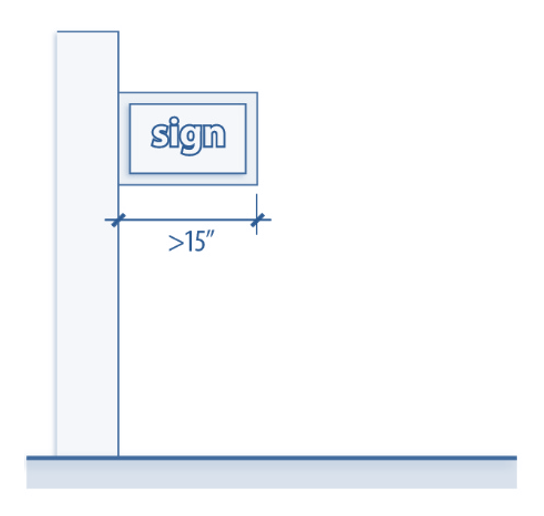 Sign, Promotional: A temporary sign that is located on a lot on which a business promotion is actively occurring and that consists of tinsel, flags, balloons, banners, wind devices, or similar attention-getting devices, whether or not the same contain any words, numbers or characters.
Sign, Real Estate: A temporary sign located on a lot or portion of a lot that is actively being marketed for sale, rental or lease.
Sign, Roof: A sign that is affixed to a roof, extended roof, pitched roof, or canopy, and that extends above the building wall or parapet wall.
(Sign) Rules of Measurement: See 11-13-11.
Sign, Special Event: A sign approved in connection with a special event permit approved by the village board (see also 11-13-3(E)(7))
(Sign) Storyboarding: The consecutive display of advertisements or messages on a sign, used to provide a continuing or evolving message, theme or story.
(Sign) Static Message: An advertisement or message that, when displayed, contains no motion, flashing, changeable copy, running lights, variances in brightness, or animation.
Sign, Wall: A sign affixed to a building wall, canopy, awning, marquee or parapet wall, or a sign displayed in or on a door that does not extend horizontally more than 15 inches from the wall, canopy, awning, marquee, parapet wall, or door, nor extend above the parapet wall.
Figure 20-21: Wall Sign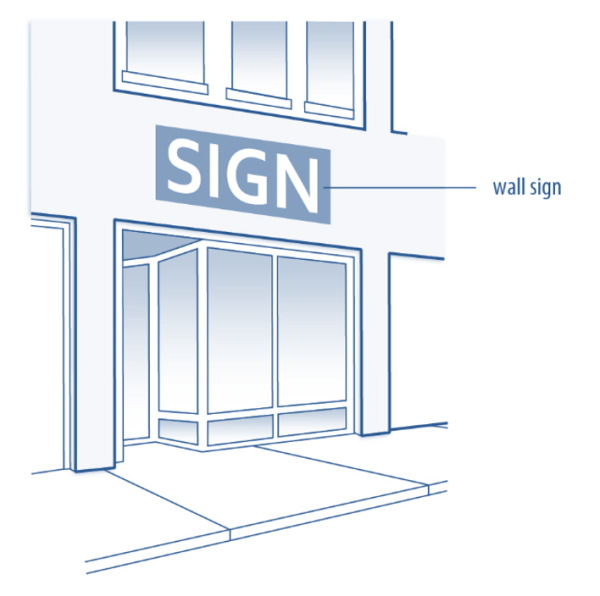 (Sign) Wind Device: Any flag, banner, pennant, streamer or similar device that moves freely in the wind.
Sign, Window: A sign attached to a window.
(Sign) Word: Any and all the following (otherwise, each separate character is considered to be a word):
- A word in any language found in any standard unabridged dictionary or dictionary of slang.
- A proper noun or any initial.
- A separate symbol or abbreviation, such as "&", "S", "%" and "INC".
- A telephone number, street number or commonly used combination of numerals and/or symbols such as "$5.00" or "50%".
- A symbol or logo that is a registered trademark, but that itself contains no word or character.
Smoke: A visible discharge from a chimney, stack, vent, exhaust or combustion process that is made up of particulate matter.
Solar Energy System: A system intended to convert solar energy into thermal, mechanical or electrical energy.
Solar Energy System, Building-Integrated: A solar energy system that is an integral part of a principal or accessory building, rather than a separate mechanical device, replacing or substituting for an architectural or structural part of the building. Building-integrated systems include, but are not limited to, photovoltaic or hot water systems that are contained within roofing materials, windows, skylights, shading devices and similar architectural components.
Solar Energy System, Structure-Mounted: A solar energy system that is mounted on the façade or roof of either a principal or accessory structure.
Solar Energy System, Flush-Mounted: A solar energy system that is mounted flush with a finished building surface, at no more than 6 inches in height above that surface.
Solar Energy System, Ground-Mounted: A solar energy system mounted on the ground and not attached to any other structure other than structural supports.
Solar Panel: A group of photovoltaic cells assembled on a panel. Panels are assembled on-site into solar arrays.
Specified Anatomical Areas: Any of the following:
- Less than completely and opaquely covered: human genitals, pubic region; buttocks; female breasts below a point immediately above the top of the areola; and
- Human male genitals in a discernibly turgid state, even if completely and opaquely covered.
Specified Sexual Activities: Any of the following:
- Human genitals in the state of sexual stimulation or arousal;
- Acts of human masturbation, sexual intercourse or sodomy; and
- The fondling or other erotic touching of human genitals, pubic region, buttocks or female breasts.
Structure: Anything constructed or erected, the use of which requires permanent location on the ground or attached to something having a permanent location on the ground. Common examples include buildings, freestanding signs, back stops for tennis courts, canopies and awnings, pump islands, at- or above- grade walkways, swimming pools, antennae, and pergolas.
Structural Alterations: Any change in the supporting members of a structure, such as bearing walls or partitions, columns, beams, or girders, excepting such alterations as may be required for the safety of the structure.
Structure, Principal: A structure, other than an accessory structure, in which the principal use of the lot is conducted.
11-20-24: Definition Of Words And Terms Beginning With "T"
Telecommunications Tower, Alternative: An artificial tree, clock tower, bell tower, steeple, light pole or similar alternative design mounting structure that helps to camouflage a telecommunications facility or conceal its presence.
Telecommunications Tower Height: The distance measured from the finished surface of the ground at the base of the tower to the highest point on the telecommunications tower or other structure supporting an antenna, including the base pad and any antenna.
Terrace, Open; Patio: A level plane or platform that, for the purpose of this zoning ordinance, is located adjacent to one or more faces of the principal structure and that is no more than 4 feet in height above grade.
Tower, Freestanding (Wireless Telecommunications): See 11-7-10(D)(1).
Toxic or Noxious Matter: Materials capable of causing injury to living organisms by chemical means when present in relatively small amounts.
Transitional Housing: A short-term residential facility serving mainly the homeless or persons temporarily without housing that provides shelter in conjunction with mental health, medical, or counseling services administered on-site by a civic, educational, religious, or charitable organization, which may be under federal, state, county, or local licensing. Because the intent of Transitional Housing is to prepare residents to transition to permanent housing, a residential stay by any individual in approved Transitional Housing is limited to twenty-four months. The authorization for Transitional Housing may include the preparation and consumption of food limited to persons residing or receiving services on-site. No such Transitional Housing shall be located within 500 feet of any other Transitional Housing, Group Home, or Institutional Home, irrespective of the zoning district in which any such Institutional Home, Group Home, or Transitional Housing is located. The Village Board may impose limits on the number of residents and occupants of a Transitional Housing facility depending on the physical size of the facility and the zoning district in which it is located.
Travel Trailer: A trailer designed to be used only as a temporary dwelling for travel, recreational and vacation use, and not exceeding 8 feet in width.
Trucking and Transportation Terminal: See 11-7-6(B).
11-20-25: Definition Of Words And Terms Beginning With "U"
Use, Permitted: A use that is expressly allowed (as of right) in the subject zoning district subject to compliance with all other applicable regulations of this zoning ordinance.
Use, Special: A use that may be allowed in the subject zoning district if approved in accordance with the special use procedures of 11-15-5, subject to compliance with all other applicable regulations of this zoning ordinance.
Utilities and Public Service Facilities: See 11-7-4(K) and 11-7-4(K)(2).
Utility-Scale Energy Production: An energy production facility that produces electric energy for widespread distribution through the electric power grid.
11-20-26: Definition Of Words And Terms Beginning With "V"
Vacant: Land on which there are no structures or only structures that are secondary to the use or maintenance of the land itself.
Vehicular Use Area: An area that is devoted to use by or for motor vehicles, including off-street parking areas (accessory or non-accessory); off-street loading areas; vehicle storage areas; fuel stations; car washes; drive-through service areas and auto sales lots. Enclosed areas and access drives used solely for access between the street and the vehicular use area are not considered part of a vehicular use area.
Vibration: A periodic displacement of the earth measured in inches.
11-20-27: Definition Of Words And Terms Beginning With "W"
Walkways, at- or Above-grade, Covered: Covered structures for pedestrian access, connecting structures on 2 adjacent lots.
Wholesale, Distribution and Storage Use Category: See 11-7-6.
Wholesale Sales and Distribution: See 11-7-6(D).
11-20-28: Definition Of Words And Terms Beginning With "X"
(RESERVED)
11-20-29: Definition Of Words And Terms Beginning With "Y"
Yard: The actual (as opposed to “required”) horizontal distance that exists between a principal building and a property line. See also “setback.”
Yard, Street: The yard that exists between a principal building and the street property line of the lot on which the building is located, extending along the full length of the street property line.
Yard, Rear: The yard that exists between a principal building and the rear property line of the lot on which the building is located, extending along the full length of the rear property line.
Yard, Side: The yard that exists between a building and the interior side property line of the lot on which the building is located, extending along a side property line.
11-20-30: Definition Of Words And Terms Beginning With "Z"
Zoning Map: The map displaying the location and boundaries of the zoning districts described in this zoning ordinance.

