
Grandview City Zoning Code
31-20
I-2, HEAVY INDUSTRIAL DISTRICT
(A)
Intent.
This district is intended to provide for a heavier type of manufacturing and industrial development as Conditional Uses which, because of physical and operational characteristics, are often objectionable to surrounding uses. The location of these uses shall be acted upon by the Planning Commission to insure compatibility with adjacent land uses.
(B)
Principal Permitted Uses.
The following uses shall be permitted in the I-2 District:
(1)
Uses permitted in I-1, Light Industrial District.
(C)
Accessory Permitted Uses.
The following uses shall be permitted as an accessory use as provided in Section 31-22 of this ordinance:
(1)
Any use customarily incidental and subordinate to the principal use it serves, including office and incidental retail sales.
(2)
Recycling collection point as outlined in Section 31-22.
(D)
Conditional Permitted Uses.
The following conditional uses may be permitted in the I-2 District, subject to the permit provisions of this Ordinance upon approval by the Board of Aldermen of a Conditional Use Permit. Additionally, each of the following conditional uses shall be approved only if the parking group requirements can be met and if such activities or operations from such use do not cause earth vibration, emit smoke, particulate matter and gases or odor, involve noise or glare in violation of City Codes and other applicable regulations beyond the lot line of the lot on which the operation is located.
(1)
Fuel dealers and manufacturing.
(2)
Grain terminal.
(3)
Halfway Houses. See section 31-27(C)
(3)
Junk yards, salvage yards.
(4)
Manufacture, storage or processing of the following products or materials: petroleum products or any flammable liquid, asphalt or concrete products, explosive materials of any type, and recognized hazardous materials.
(5)
Oil and gas wells.
(6)
Reduction plants, foundries, forges or smelters.
(7)
Residential or outpatient treatment facilities for alcohol and drug abuse.
(8)
Salvage/junk yards.
(9)
Schools of private instruction.
(10)
Solid waste transfer facility.
(E)
Temporary Uses.
The following use shall be permitted as a temporary use in the I-2 District in accordance with Section 31-5(E) of this Ordinance:
(1)
Concrete batch plants together with related accessory uses and storage.
(F)
Performance Standards.
(1)
Citywide Commercial and Industrial Building Appearance Requirements.
(a)
Site and Building Design and Compatibility with Surrounding Development:
(i)
The form and proportion of buildings shall be consistent or compatible with the scale, form and proportion of other surrounding development.
(ii)
The rhythm of structural mass to voids, such as windows and glass doors, of a front façade shall relate to the rhythms established in adjacent buildings.
(iii)
Care shall be exercised to coordinate final grades and site arrangement with those of adjoining properties and streets.
(2)
Design Focus.
(a)
Front Façade and Entrance.
The front façade of a building, as well as the main entrance(s), shall be designed as focal points to the building. The main entrances shall incorporate devices such as canopies, overhangs, arcades, raised parapets over the door, larger door openings, display windows, accent colors, and other architectural details such as moldings.
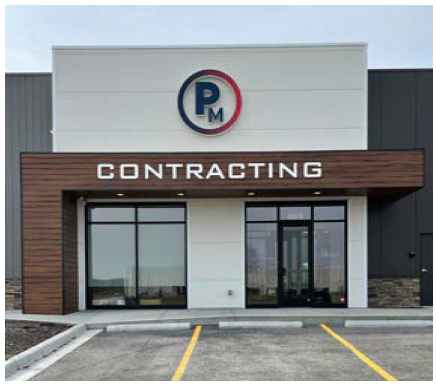
Building details shall be
incorporated to break the façade
of a structure.
(3)
Visual Interest.
(a)
Architectural Design.
Create visual interest through the use of different textures, complementary colors, shadow lines and contrasting shapes. Monotonous design shall be avoided. Variation of detail, form, and siting shall be used to provide visual interest. Façades shall be articulated with variations in the building plane and parapet height, materials and colors, entrance canopies, and landscaping. At a minimum, façades facing a public or private street shall incorporate at least two (2) of the following features along each applicable façade. These standards shall be applied to each façade individually:
(i)
Recesses and projections along at least 20 percent of the length of the building façade.
(ii)
Windows, awnings, arcades or other significant architectural features used along at least 60 percent of the front building façade.
(iii)
Materials outlined in 31-20(F)(4) covering at least 50 percent of the area when applied to the front building façade.
(iv)
Landscaping islands or planting against the building, covering at least 30 percent of the length of the building façade.
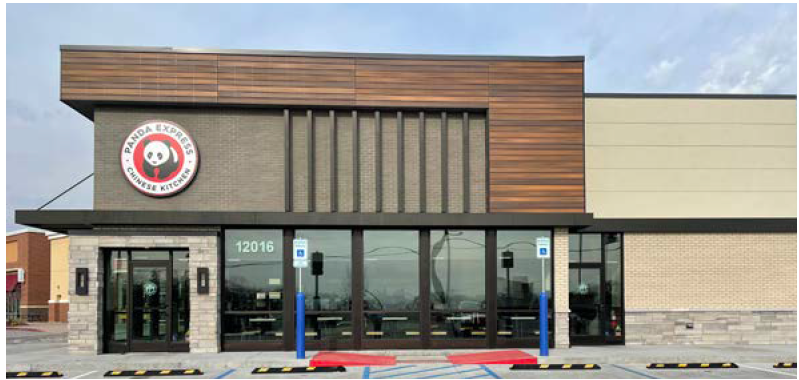
Recesses and projections along at least 20% of the length of the building façade.
(b)
Loading docks, trash enclosures, outdoor storage and similar facilities and functions shall be incorporated into the overall design of the building and the landscaping so that the visual and acoustic impacts of these functions are reduced to as great an extent as possible and are out of view from adjacent properties and public streets.
(c)
In commercial districts and or when abutting residential zones, long expanses of overhead doors shall be relieved by matching their color to the wall or trim, recessing the doors, or adding architectural details to diminish the dominance of the doors.
(d)
The use of unusual shapes, color and other characteristics that cause new buildings to call excessive attention to themselves and create disharmony should not be allowed.
(4)
Materials.
(a)
The use of high-quality materials such as brick, glass, stucco, natural and fabricated stone, treated wood or similar durable and visually pleasing material shall be used on the front façade and main entrances to the building. The remaining portions of the building shall be designed to be compatible with the front façade and building entrance features. The following construction materials shall be permitted:
(i)
Reinforced Concrete and Masonry - A concrete finish or pre-cast concrete panel (tilt-wall) must have an exposed aggregate, be hammered or sandblasted, or be covered with a cement-based acrylic coating to add visual interest. Masonry includes solid cavity faced or veneered-wall construction or materials. Brick material used for masonry should be composed of hard fire (kiln fired) all-weather common brick or other all-weather facing brick.
(ii)
Corrugated Metal or Aluminum Panels - The use of panels on front building façades or side building façades when abutting a public or private street is prohibited. Corrugated metal or aluminum façades shall be complemented with the use of masonry, whether brick, stone, stucco, split-face block, or broken up with the use of landscaping. Panels should have a depth of one (1) inch or greater and/or a thickness greater than U.S. Standard 26 gauge.
(iii)
Stucco or Gypsum Concrete/Plaster - These materials shall be complemented with the use of masonry, whether brick, stone, stucco, split-face block, or broken up with the use of landscaping.
(iv)
Treated Wood - Wood paneling or plywood shall not be used on the front building façade or side building façades when abutting a public or private street.
(v)
Structural Steel or Structural Aluminum
(vi)
Glass
(vii)
Similar materials to what has been previously listed
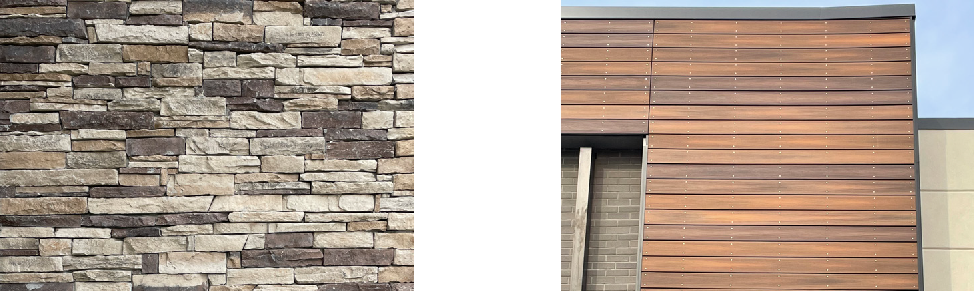
Stone and Treated Wood
(b)
All elevations of the building shall be designed in a consistent and coherent architectural manner.
(c)
Where a change in material, color, or texture along the exterior side of a building is proposed, the demarcation of the change should occur a minimum of twenty (20) feet on both adjacent sides of the building or to the natural dividing point established by the physical plan of the building.
(d)
Building materials and design shall be subject to the approval of the Director of Community Development and Building Official.
(5)
Building Color.
(a)
Building color shall be limited to light, medium, and dark shades of earth tone gold and brown colors. Approximately 90 percent of each building wall surface shall be light and medium colors. The remaining surfaces shall be restricted to a darker color. The use of walls in a single color, with little detailing or completely blank, shall not be permitted.
(i)
Alternatives to the previously mentioned color tones my be approved by the Director of Community Development.
(6)
Outside display of merchandise for sale to the public shall be permitted in the front yard only, provided it does not interfere with the area utilized for the off-street parking of vehicles. Additionally, outside display of merchandise shall not be placed upon the right-of-way.
(7)
Outside storage may be permitted in any side or rear yard only, provided it does not interfere with any area utilized for off-street parking of vehicles and it does not impede upon the right-of-way. However, if any side of an outside storage area can be viewed from any angle from:
(a)
71 Highway or its frontage roads.
(b)
Blue Ridge Boulevard Extension.
(c)
Main Street-Highgrove Road corridor.
(d)
M-150 corridor or its frontage roads.
(e)
Any abutting office or residential district.
then, said storage area shall be permanently screened from said rights-of-way or said district to 100% opacity and to a minimum of six (6) feet in height in accordance with the screening types as set forth in Section 31-25(F)(2)(d) of this Ordinance.
Said storage areas may be gravel surfaced, except that all vehicle travel areas within said storage area shall be a minimum of chip and seal. Additionally, private driveways existing directly from a public street that provide access to such storage lots/areas shall be permanently surfaced with either asphaltic concrete or Portland cement concrete.
(8)
All tow lots and salvage/junk yards, where allowed as either a permitted or conditional use in the I-1 or I-2 district, shall be permanently screened from view on all sides by a solid fence of 100% opacity to a minimum height of eight (8) feet. No salvage or junk materials shall be visible from a point outside of said fence. Said screening must be surfaced with a minimum of gravel. Additionally, private driveways exiting directly from a public street that provide access to such tow lots and salvage/junk yards shall be permanently surfaced with either asphaltic concrete or Portland cement concrete.
(9)
Exterior lighting shall be provided for sidewalks and areas of pedestrian circulation and for off-street parking areas providing space for five (5) or more vehicles which spaces are normally used during the hours of darkness after 6:00 p.m. The lighting fixtures shall provide at least an average of one-fourth (0.25) foot candle over the entire parking lot area, measured on the ground surface and shall be shaded so that no direct light is cast upon any property located in a residential district and so that no glare is visible to any traffic upon any public street.
(10)
Off-street parking areas designated for employee/visitor parking in industrial districts that abut a residential district shall provide a solid berm or graded slope of not less than six (6) feet of mean height (as measured from grade level of the parking area) along the abutting zoning district line. Such berms or graded slopes shall contain at least 50% living material and shall be constructed on a grade no greater than 2:1.
(11)
All uses established in an I-1 District shall operate in accordance with the following standards. These standards are the minimum requirements regarding vibration, smoke, odor, noise, glare, wastes, fire hazards, and hazardous materials and may be made more restrictive in the case of conditional use approved through the conditional use process:
(a)
Vibration: No activity or operation shall at any time cause earth vibration perceptible, without instruments, except that vibration caused by blasting conducted in accordance with the requirements of Article VIII, Chapter 11 (as amended) of the Grandview City Code may exceed these limitations.
(b)
Smoke, Particulate Matter and Gases: No activity or operation shall be established that fails to meet the air quality regulations of the Missouri Department of Natural Resources and the United States Environmental Protection Agency.
(c)
Odor: No activity or operation shall cause at any time the discharge of toxic or noxious odor beyond the lot line of the lot on which it is located.
(d)
Noise: No activity or operation shall be carried on that involves noise in violation of regulations as set forth in Chapter 15 (as amended) of the Grandview City Code and shall not exceed a volume of sound inherently or recurrently generated of seventy (70) decibels at the zoning district boundary line.
(e)
Glare: Glare, whether direct or reflected, such as from spot lights or high temperature processes, and as differentiated from general illumination, shall not be visible beyond the lot line on which the use is located.
(f)
Wastes:
Solid Wastes. All solid waste materials, debris, refuse or garbage shall be properly contained in a closed container designed for such purpose. No exterior incineration of trash or garbage is permissible.
Sewage and Liquid Wastes. All liquid wastes shall be discharged in full compliance with appropriate city ordinances and State and Federal laws.
(g)
Fire Hazard: No activity or operation shall be established that fails to meet the City's Fire Code.
(h)
Hazardous Materials: A new or expanding industry must present a list of hazardous materials, if any, intended to be used at the time of the site plan approval process.
(G)
Bulk Regulations.
Same as the I-1, Light Industrial District.
(H)
Parking Requirements.
See Section 31-24.
(I)
Signs.
See Section 31-26.
(J)
Landscaping and Screening Requirements.
Same as the I-1, Light Industrial District.

