
Grandview City Zoning Code
31-27
SUPPLEMENTAL REGULATIONS
(A)
Nonconformities.
(1)
Nonconformities, in General
Within the zoning districts established by this Ordinance or any subsequent amendment, there exist: a) lots; b) structures; c) uses of land; d) uses of structures; e) uses of land and structures in combination; and f) characteristics of use, which were lawful before this Ordinance was adopted or amended, but which would be prohibited, regulated or restricted under the terms of this Ordinance or its subsequent amendment. Such instances shall hereafter be considered lawful nonconformities.
The burden of proof of such claim shall be upon the property owner. Failure of the City to identify any lawful nonconformity shall not constitute evidence or be construed as an admission by the City that such property conforms to the regulations contained in this Ordinance.
(2)
Nonconformities, Intent
It is the intent of this Ordinance to recognize the legitimate interests of owners of lawful nonconformities by allowing such lawful nonconformities to continue, subject to the provisions contained herein. At the same time, it is recognized that lawful nonconformities may substantially and adversely affect the orderly development, maintenance, use and taxable value of other property in the same zoning district, property that is itself subject to the regulations and terms of this Ordinance. In order to secure eventual compliance with the City's Comprehensive Plan and with the standards of this Ordinance, it is therefore necessary to carefully regulate lawful nonconformities and to prohibit the re-establishment of such nonconformities that have been discontinued.
To avoid undue hardship, nothing in this Ordinance shall be deemed to require a change in the plans, construction, or designated use of any building on which actual construction was lawfully begun prior to the adoption or amendment of this Ordinance and upon which actual building construction has been carried on diligently. "Actual building construction" is hereby defined to include the placement of construction materials in permanent position and fastened in a permanent manner.
(3)
Nonconformities, Lawful
(a)
Lots: Any lot having insufficient area, width or depth for the zoning district in which it is located, frontage on an improved public street or an improved private street of a planned district, or any combination thereof, shall be considered a lawful nonconforming lot only if 1) it was lawfully platted and recorded and on file in the office of the Jackson County Recorder prior to the adoption of this Ordinance; 2) there has been a building permit issued on that lot; or 3) it was lawfully recognized by the City prior to January 1, 1978. On any single lawful non-conforming lot within a zoning district that permits single- family detached residential dwellings, one such dwelling may be constructed by right, provided that height, lot coverage, and off-street parking requirements of the zoning district within which the parcel is located are in compliance, and all appropriate permits are obtained prior to any construction activity. Required yard setbacks for the district may be reduced by no more than 25 percent of the requirements of the zoning district within which the parcel is located if necessary and approved by the Director of Community Development. Further, no zoning lot or portion thereof shall be used or sold in a manner that will increase its degree of non-conformity.
(b)
Structures: Structures that were lawfully constructed prior to the adoption of this Ordinance, but which could not be constructed under the terms of this Ordinance by reason of restrictions on area, lot coverage, height, setbacks (yards), location on the lot or other requirements concerning structures, shall hereafter be considered lawful non-conforming structures. As such, they may continue to exist so long as they remain otherwise lawful, provided that no reconstruction, enlargement or alteration of said structures shall occur that will increase their nonconformity except as provided for in Section 31-27(A) of this Ordinance. However, any lawful non-conforming structure or portion thereof may be altered to reduce its nonconformity.
(c)
Uses:
(i)
Uses of Land: Any use of land, or use of land that involves no individual structure with a replacement value exceeding one thousand dollars ($1,000), which would not be permitted under the terms of this Ordinance, but was lawfully existing at the time of the adoption of this Ordinance, shall hereafter be considered a lawful nonconforming use of land. As such, it may be continued so long as it remains otherwise lawful and provided that no enlargement, increase or extension of the lawful nonconforming use of land occurs so that a greater area of land is occupied than was occupied at the time of the adoption of this Ordinance, and that no additional structures or additions to structures existing at the time of the adoption of this ordinance shall be constructed on the same zoning lot.
Further, no such lawful nonconforming use of land shall be moved or relocated in whole or in part to any other portion of the zoning lot on which it is located than that portion occupied at the time of the adoption of this Ordinance. If any lawful nonconforming use of land ceases for any reason for a period of more than ninety (90) consecutive days, and subsequent use of such land shall conform to the terms of this Ordinance.
(ii)
Uses of Structures: Any use of a structure with a replacement cost of one thousand ($1,000) or more which would not be permitted under the terms of this Ordinance but was lawfully existing at the time of the adoption of this Ordinance, shall hereafter be considered a lawful nonconforming use of that structure. As such, it may be continued so long as it remains otherwise lawful and provided that the structure in which the lawful nonconforming use is located shall not be enlarged, extended, constructed, reconstructed, moved, relocated or structurally altered except in changing the use to a permitted use in the district in which it is located or as otherwise provided for in this Ordinance.
However, a lawful nonconforming use of a structure may be extended throughout any parts of the structure in which it is manifestly arranged or designed for such use at the time of the adoption of this Ordinance, but if any lawful nonconforming use of a structure is discontinued for any reason for a period of 180 days, (except when government action impedes access to the premises), such structures shall only thereafter be used in conformity with the terms of this Ordinance.
(iii)
Uses of Land and Structures in Combination: Any use of land in combination with a structure with a replacement cost of more than one thousand dollars ($1,000), which would not be permitted under the terms of this Ordinance, but was lawfully existing at the time of the adoption of this Ordinance, shall thereafter be considered a lawful nonconforming use of land and structure in combination. As such, it may continue so long as it remains otherwise lawful and provided that the provisions of Section 31-27(A)(3)(c) of this Ordinance are complied with.
(iv)
Characteristics of Use: When an otherwise lawful existing use is permitted generally in any given zoning district but where, due to the adoption of this Ordinance, required off-street parking, paving of parking area, landscaping, screening, and similar regulations are not provided, such deficiencies attributable to the use shall be considered lawful, nonconforming characteristics of such use. Said deficiencies shall be brought into conformance when the use they attribute it to is expanded, enlarged or the intensity is increased, even though the use itself is permitted generally.
(4)
Change from One Nonconforming Use to Another
One existing lawful nonconforming use of a structure may be changed to one other nonconforming use of the same structure by the Director of Community Development based upon a review of the following criteria and when he/she reasonably believes that such a change will not adversely affect the purposes and intent of this Ordinance. If any of the criteria cannot be met or are violated due to the requested change from one nonconforming use to another, then the request shall be reviewed by the Board of Adjustment in accordance with the provisions set forth in Section 31-27 of this Ordinance for their disposition.
(a)
The proposed use is no more intensive than the existing use;
(b)
The proposed use occupies no more area of the structure than the existing use;
(c)
The proposed use requires no more off-street parking than the existing use; and
(d)
Existing lawful nonconforming uses of a structure that change owners but continue the same use shall be permitted to do so provided that an agreement is signed by the new owner and kept on file in the Department of Community Development stating that the new owner agrees to all conditions placed on the previous owner and use(s) of the structure.
All signage for the existing use shall be removed and all signage for the proposed use shall conform to the underlying district in which it is located as provided in Section 31-26 of this Ordinance except that where signage is prohibited, then one (1) wall-mounted sign of a maximum area of 40 square feet shall be permitted and the proposed use otherwise complies with the terms of this Ordinance and a Conditional Use Permit has first been obtained before any change or conversion is commenced.
(5)
Lawful Nonconforming Uses Superseded
Anywhere a lawful nonconforming use is superseded by a permitted use, such lawful nonconforming use shall not thereafter be resumed.
(6)
Expansion of Certain Lawful Nonconformities
Certain lawful nonconformities may be expanded by the Director of Community Development based upon a review of the following criteria and when he/she reasonably believes that such an extension will not adversely affect the purposes and intent of the Ordinance.
If any of the following criteria cannot be met or are violated due to the expansion of the nonconformity, then the request shall be reviewed by the Board of Adjustment in accordance with the provisions set forth in Section 31-29 of this Ordinance for this disposition.
(a)
They are either a residential dwelling in a zoning district other than residential, or a commercial use allowed as a permitted or conditional use in one commercial zoning district, but located in a different commercial zoning district where such use is not provided for;
(b)
The current capital investment in buildings, structures, or other facilities of the property is enough to indicate that such use is likely to be maintained on the property for the foreseeable future;
(c)
The continuance thereof will not be contrary to the public health, safety, welfare or the spirit of this Ordinance;
(d)
The proposed expansion does not generate additional noise, vibration, odor, or is more intensive than what currently exists;
(e)
The use and its proposed expansion do not and are not likely to significantly depress the value of nearby properties;
(f)
No useful purpose would be served by strict application of the provisions or requirements of this Ordinance with which the use does not conform;
(g)
The aggregate extent of the expansion does not exceed fifteen percent (15%) of the gross floor area of the building devoted to the nonconforming use, and such expansion shall comply with the schedule of district regulations in the district in which it is located; and
(h)
The public will receive some benefit from the proposed expansion through improvement of conditions on the property including but not limited to upgrading the appearance of the premises, removal of nonconforming signs, and addition of loading facilities.
No vested interest shall arise out of the approval of a Conditional Use Permit pursuant to this Section.
(7)
Reconstruction of Certain Lawful Nonconforming Structures. Should any lawful nonconforming structure be destroyed by any means to an extent of more than seventy-five percent (75%) of its replacement cost at the time of destruction, it may only be reconstructed in conformance with the provisions of this Ordinance; except that lawful nonconforming structures that are owner-occupied, single-family detached dwellings, may be reconstructed to their former condition, dimensions and location on the lot provided that the destruction was caused by an accident or act of God occurring after the adoption of this Ordinance and such reconstruction does not increase the degree of nonconformity where permitted and must commence within twelve (12) months of destruction. In such case where reconstruction does not commence within this time limit, the nonconformity will be considered abandoned and such structure shall be permitted reconstruction only as a permitted use.
(8)
Prohibition on the Re-Establishment of Nonconforming Uses of Land and Structures in Combination
Where nonconforming status applies to a use of land and structure in combination, the removal or destruction of the structure that was caused by an accident or act of God occurring after the adoption of this Ordinance by more than seventy-five percent (75%) of its replacement cost at the time of destruction shall prohibit the re-establishment of the nonconforming use in any case. Owner-occupied single-family detached dwellings are exempt and shall comply with section 31-27(A)(7) of this Ordinance.
(B)
Home Occupations.
(1)
Intent. The intent of the home occupation provisions contained herein is to permit the use of residences as a place of livelihood or supplementing of personal and family incomes, while protecting residential areas from adverse impacts of activities associated with home occupations.
(2)
Performance Standards. Home occupations shall be permitted as accessory uses within any dwelling unit or accessory structure provided they meet the following performance standards:
(a)
The total number of employees and clients onsite at one time do not exceed the occupancy limit for the dwelling; and
(b)
The activities of the business:
(i)
Are limited to the sale of lawful goods and services;
(ii)
May involve more than one (1) client on the property at one time;
(iii)
Do not cause a substantial increase in traffic through the residential area;
(iv)
Do not violate any parking regulations established by section 31-24 of this Ordinance;
(v)
Occur inside the residential dwelling, accessory structure or in the yard of the residential dwelling;
(vi)
Are not visible from the street, including the storage of items, materials or property related to the business.
(3)
Protecting Health and Ensuring Compliance. Grandview may establish reasonable regulations for home-based business if the regulations are narrowly tailored for the purpose of:
(a)
Protecting the public health and safety, including regulations related to fire and building codes, health and sanitation, transportation or traffic control, solid or hazardous waste, pollution, and noise control; or
(b)
Ensuring that the business activity is compliant with state and federal law and paying applicable taxes.
(Ord. No. 7420, exh. A, 2-28-2023)
(C) Group Homes, Residential-Care Agency Facility for Children, Residential or Outpatient Treatment Facilities, and Halfway Houses.
(1)
Group Homes and Residential Care Agency Facility for Children.
Group homes as defined in Chapter [Section] 89.020, RSMo and residential-care agency facilities for children, as defined in Chapter [Section] 210.481, RSMo, where no more than eight unrelated mentally or physically handicapped persons, as defined by the Americans with Disabilities Act of 1990, reside and where no more than two additional persons reside acting as houseparents or guardians, who need not be related to each other or to any of the residents, shall be determined to be a permitted use in any single-family dwelling.
Such group homes and residential-care agency facilities for children as defined in Chapters [Sections] 89.020 and 210.481 RSMo, must be located at least 1,320 feet from any such other homes. Group homes and residential-care agency facilities for children where more than eight persons reside or where more than two houseparents or guardians reside shall be permitted in the following districts only:
(a)
R-3 and R-4, Multi-Family Residential District
(b)
OS Office/Service District
The exterior of all group homes and residential-care agency facilities for children shall be in reasonable conformance with the general surrounding neighborhood standards.
(2)
Residential or Outpatient Facilities for the Treatment of Alcohol and Other Drug or Substance Abuse.
Residential or outpatient facilities for the treatment of alcohol and other drug or substance abuse shall be allowed as a conditional use in OS, C-2, C-3, I-1, and I-2 districts. Other uses including halfway houses, sober-living homes, community residential facility, residential re-entry facility or Group Home-Transitional Living Center shall be allowed as a conditional use in the above specific zoning districts and shall be in conformance with Section 31-29(F) and the following standards:
(a)
A site plan has been submitted, reviewed, and approved by the City Site-Plan Review Team as to the following:
(i)
Minimum lot area shall be 20,000 square feet.
(ii)
Minimum building size shall be three hundred (300) square feet for each resident patient and resident staff.
(iii)
No more than twelve (12) residents or patients plus staff shall be occupants.
(iv)
Screening provided to buffer adjacent uses shall be in accordance with Section 31-25.
(v)
At a minimum, rear and side yards setbacks shall be 20 feet or the most restrictive required by the specific zoning district in which it is located.
(b)
The applicant shall demonstrate that there will be no negative impact upon the public.
(D)
Adult-Oriented Entertainment.
See Chapter 2A of the Grandview Code of Laws entitled "Adult-Oriented Entertainment."
(E)
Oil and Gas Well Regulations.
(1)
Intent.
These regulations are intended to promote the orderly and economic development, production, and utilization of oil and gas while protecting the health, safety and welfare of the public.
(2)
Application for Permit.
(a)
Forms: Any person(s) who propose to drill, own, operate, or maintain an oil or gas well or any appurtenances thereof, shall make written application on forms provided by the Department of Community Development. The application shall contain the well owner's and drilling operator's name, address, and telephone number, general location of subject property or lease and a certification statement by the owner or agent that they are in compliance with all applicable federal, state and local laws governing such oil and gas well production.
(b)
Location Plat: When making application for said permit, the applicant shall furnish to the Community Development Department one copy of the location plat required by the Missouri Oil and Gas Council. In addition to the information required by said Council, the following information shall be supplied:
(i)
The location of all buildings and structures on the property and the distance between buildings, wellheads, and storage tanks.
(ii)
The location of all proposed, staked wellheads.
(iii)
The location of all proposed storage tanks and separators, and all appurtenances such as dikes, sumps, basins and drainage ditches.
(iv)
The location of all landscaping, berms, and other screening as required by this Ordinance.
(v)
The location of all fencing as required by this Ordinance.
(c)
Insurance: Prior to the commencement of any oil or natural gas drilling or pumping operation, the property owner, lessor or their agent shall provide proof of liability insurance in the amounts of One Million Dollars ($1,000,000) combined single limit for bodily injury and property damage per occurrence with a Three Million Dollar ($3,000,000) aggregate limit. The Certificate of Insurance shall also state that the policy shall not be canceled nor in any manner amended, changed or altered without giving the City ten (10) days' written notice thereof. Such insurance shall be continued until such operation has ceased and all wells insured by such policy are all properly plugged in accordance with City and State standards.
(d)
Bonding: The applicant shall provide proof that a bond or other financial guarantees as required by the State of Missouri have been provided to assure the reclamation of the site in accordance with the requirements of the State.
(e)
Fees: Application for an oil or gas permit shall be accompanied by a fee of twenty dollars ($20.00) per wellhead with a maximum of one hundred dollars ($100.00) per lease.
(3)
General Provisions.
(a)
Insurance of Permit: Upon application for a permit, the Director of Community Development or his representative shall review the application for conformance with the provisions of this article. If the applicant is in compliance with this article and all the rules and regulations of the State of Missouri, the City of Grandview, and the Grandview Fire Code are met, said Director shall issue the permit.
(b)
Period of Effectiveness:
(i)
A permit to drill, own, maintain, or operate an oil or gas well shall be in effect for the life of the well, subject to revocation for noncompliance with the provisions of this Ordinance.
(ii)
A permit to drill a well shall become null and void if operations to drill said well are not commenced within one hundred and eighty (180) days after the permit's date of approval.
(iii)
Whenever operation on a well cease for a period of two (2) years or more, said well shall be considered abandoned, and any City permits issued on that well shall no longer be in effect. The site of the abandoned well shall be returned to its natural state before the two (2) year period has elapsed.
(c)
Leases Under More Than One Ownership: Oil and gas well permits may be issued for tracts of land that are under more than one ownership provided that all the provisions of this Ordinance are met.
(4)
Permits.
(a)
Valid Permits: It is unlawful for any person(s) to commence the operation of any oil or gas drilling or production without possessing a valid permit issued by the City of Grandview. A person must comply with the provisions of this article to be entitled to receive such a permit. Permits shall not be transferable. A valid permit shall be posted on the premises of such an operation at all times.
(b)
Penalties:
(i)
General Penalty: Any person(s) who owns, drills, maintains, or operates an oil or gas well or any appurtenances thereof without first obtaining a valid permit from the City of Grandview shall be subject to the penalties provided for in this Ordinance.
(ii)
Revocation of Permit: Any person(s) in possession of a valid City permit who owns, drills, maintains, or operates an oil or gas well or any appurtenances thereof in violation of the provisions of this Ordinance shall be subject to immediate revocation of said permit.
(c)
Blanket Permits: Should the applicant plan to drill more than one well on any given tract of land, application may be made for two (2) or more wells simultaneously, subject to the following conditions.
(i)
Any permit issued shall be only for the wells indicated on the application form.
(ii)
All wells indicated on said application shall be staked on the site in order that City staff may inspect the site.
(iii)
At such time that more wells are proposed on said tract that are not indicated on the previously submitted permit application form, another permit application shall be made, and another application fee shall be submitted.
(iv)
Permits shall be issued only for those wells for which state permits have been issued.
(d)
State Permits: Prior to issuance of any drilling permits, it is necessary to have applied for and received a permit from the Missouri Oil and Gas Council. Proof of the granting of a permit by the State of Missouri must be presented at the time of application for the City permit.
(e)
Fire Permits: All oil and gas wells shall be drilled, owned, operated, and maintained in compliance with the Grandview Fire Code. Prior to issuance of any oil well permits as specified in this article, a permit shall have been obtained from the Grandview Fire Department.
(5)
Restrictions.
(a)
Screening: Screening of wellheads, storage tanks, and appurtenances to a height not less than six feet (6'), 100% opacity shall be supplied within two (2) months after the installation of the pump. Screening of the storage tanks and their appurtenances must occur within two (2) months of the installation of the said tanks. Extensions of this time period may be granted by the Director of Community Development should special circumstances exist that justify the extension.
(b)
Fencing: Fencing to a height not less than six feet (6') shall be provided to protect the safety of domestic livestock and citizens, most particularly children. Fencing shall be either around the property as a whole, or around each separate well.
(c)
Drilling:
(i)
Interference with Traffic: Drilling shall not cause the obstruction of any public thoroughfare.
(ii)
Length of Drilling: Drilling operations shall cease and drilling and accessory equipment shall be removed from the site within sixty (60) days of the commencement of any one well.
(iii)
Storage Ponds: Open storage or sludge ponds, basins, or sumps used for the storage of sludge, oil, or other by-products of drilling operations shall be filled in, seeded and otherwise returned to their natural state within one hundred and twenty (120) days of the completion of the drilling operation.
(d)
Storage Tanks:
(i)
Storage Dikes: Dikes shall be provided around all storage tanks adequate to hold seventy-five percent (75%) of the maximum capacity of the tanks located within said dikes.
(ii)
Tank Maintenance: All storage tanks shall be maintained in a leakproof condition with an adequately painted, rust-free exterior surface.
(e)
Pumps:
(i)
Pumping Motors: Only electric motors shall be permitted to operate pumping equipment when such equipment is located in or within five hundred feet (500') of a residential zoning district.
(ii)
Excess Gas: Excess natural gas shall not be burned off at the wellhead.
(f)
Drainage: The drilling and operating of the oil and gas wells and the construction of any access roads, shall not alter the existing drainage pattern so that it adversely impacts surrounding property.
(g)
Setbacks:
(i)
Wellheads: Wellheads shall be located a minimum of one hundred and sixty-five feet (165') from any property or lease line and structure and shall be located not less than 1,000 feet from adjacent wells unless waived by the Oil and Gas Council of the State of Missouri.
(ii)
Storage Tanks: Storage tanks and their appurtenances, other than those containing fuels to power individual pumps, shall be located a minimum of one hundred and sixty-five feet (165') from any property or lease line and structure.
(h)
Storage of Wastes: All wastes generated from drilling or pumping shall be contained and not permitted to flow off of the site. Salt water may be returned to a salt water strata under the conditions imposed by the Oil and Gas Council of the State of Missouri.
(6)
Release from Damages
The property user or lessee shall submit a notarized statement holding and saving the City harmless from all claims, damages, expenses and losses arising out of the drilling or production of oil or gas.
(7)
Exemptions
Any oil or gas wells that are temporary in nature and existing for one week or less shall be exempt from the fencing and screening restrictions as required in Section 31-27(E)(5).
(8)
Security for Maintenance or Removal of Oil or Gas Well
In order to ensure that the owner maintains or removes any oil or gas well when and as required by the following subsections, the owner shall provide the following to the City:
(a)
Financial security in the form of a bond, letter of credit, or other financial security as required by the Director of Community Development; and
(b)
Right of access.
(9)
Oil or Gas Well Maintenance
To insure the safety and integrity of oil and gas wells, the owner of an oil or gas well shall insure that it is maintained in compliance with standards contained in the Grandview building code and all applicable local, state, and federal regulations for such wells, as they may be amended from time to time. If, upon inspection, the Building Official or other local, state, or federal official with jurisdiction, concludes that an oil or gas well fails to comply with such codes and regulations and constitutes a danger to persons or property, then upon notice being provided to the owner of the oil or gas well, the owner shall have thirty (30) days to bring such oil or gas well into compliance with such standards. If the owner fails to bring such oil or gas well into compliance within said thirty (30) days, the Director of Community Development shall report the noncompliance to the Board of Aldermen under the provisions of Chapter 6, Article V, entitled "Dangerous Buildings." The Board of Aldermen may then order the oil or gas well removed or repaired at the owner's expense under the provisions of said Chapter 6 and may draw upon the financial security to recover incurred costs.
(10)
Removal of Abandoned Oil or Gas Wells
Any oil or gas well that is not operated for a continuous period of twelve (12) months shall be considered abandoned. The owner shall be notified by the Community Development Director by certified mail, return receipt requested, of such determination and be given fifteen (15) days to respond. If the owner fails to respond or acknowledges that the oil or gas well has not operated for a continuous period of more than twelve (12) months, the owner of such oil or gas well shall remove the same within ninety (90) days of a receipt of notice from the Board of Aldermen notifying the owner of such abandonment. If such oil or gas well is not removed within said ninety (90) days, the Board of Aldermen may remove such oil or gas well at the owner's expense under the provisions of Chapter 6, Article V and may draw upon the financial security to recover incurred costs.
(F)
Removal, Fill or Storage of Soil, Sand, or Other Material.
(1)
Intent
The intent of these regulations is to allow for removal, fill, or storage of soil, sand or other material either related to or unrelated to approved on-site construction.
(2)
Permitted as a Temporary Use in any District Related to Approved Construction
The normal removal, fill, or storage of soil for the construction of an approved building, structure, or subdivision plat shall be permitted in any district as a temporary use for a period not exceeding six (6) months from the start of construction. However, residential structures of four (4) or less units per building shall be declared exempt from this provision provided any related site work is completed within a six (6) month period after the start of construction.
(3)
Permitted as a Conditional Use only in I-1 and I-2 Districts if Unrelated to Construction
Where the use of land involves the removal, addition, or regrading of soil or other acceptable materials as outlined below and is unrelated to current development for which a permit has been issued, such activity shall only be permitted under a Conditional Use Permit as authorized by Section 31-29(F) of this Ordinance and in accordance with the standards below.
(a)
A site plan drawn to scale has been submitted, reviewed, and approved by the City Site-Plan Review Team showing legal description, property boundaries, structures, existing topographic contours, finished topographic contours, existing easements, access, existing water courses, existing drainage easements, and utility easements.
For pond, dike, levee and similar construction, engineering design and construction drawings shall be required prior to review of the conditional use application.
(b)
A completed application with the required fee has been submitted with the site plan.
(c)
Demolition debris shall contain only approved building materials and soil resulting from building or site clearance, construction, and excavation, which may include concrete, asphalt, brick, stone and earth but shall not include such items as refuse, trash, garbage, trees, lumber, tree roots, drainage ditch liners, scrap iron, appliances, junk automobiles, tires, junk, ashes, slags, or any metal or structural material used for drainage structures, sanitary sewers, or sewage structures, etc.
(d)
The demolition debris landfill shall be protected from use by unauthorized persons.
(e)
The demolition landfill shall be maintained in accordance with Code of Laws of Grandview, Chapter 23.
(f)
The demolition debris landfill site shall be graded and compacted by use of machines for this purpose as the fill material is introduced into the landfill area. After compaction, landfill debris materials shall not be larger than four inches (4") in size. When the approved elevation has been achieved, the site shall be graded smooth and seeded or sodded in accordance with the specific requirements of the approved site plan.
(g)
The approval of the application and permit to allow a demolition debris landfill shall be for a time period specified by the Director of Community Development but shall not exceed five (5) years. Such landfilling shall begin within six (6) months of issuance of the Temporary Use Permit. If the activity has not commenced within this time period, the Temporary Use Permit shall become null and void.
(h)
Regulation and Inspection. The Director of the Department of Community Development or his representative shall have the right to enter upon the site to make all reasonable inspections. If the applicant is found to be in violation of the performance standards of requirements, the Temporary Use Permit shall be revoked immediately.
(4)
Not to Include Sanitary Landfills
Materials that are prohibited for storage or fill under this Section, as either temporary or conditional use, include, but are not limited to, the storage of used lumber, scrap iron, appliances, junk automobiles, tires, junk, garbage, miscellaneous debris, rubbish, refuse, ashes, slag or other industrial or construction wastes or by-products.
(G)
Flood Damage Prevention.
Chapter 11A of the Codes of Laws entitled "Flood Damage Prevention" and the P-1, Conservancy District, shall regulate development in areas identified as flood-hazard areas, including both floodways and flood fringes as defined in said Chapter 11A and in this Ordinance.
(H)
Garage Sales or Rummage Sales.
Garage sales or rummage sales may be permitted as a temporary accessory use in any zoning district with the following limitations:
(1)
A maximum of four (4) per calendar year no longer than three (3) consecutive days.
(2)
A nuisance is not created as determined by the Director of Community Development.
(I)
Communication Towers and Facilities.
The purpose of these regulations is to control the location, construction, maintenance, and removal of communications towers and facilities.
(1)
Definitions:
(a)
"Antenna" shall mean an exterior apparatus designed for transmitting or receiving television, AM/FM radio, digital, microwave, cellular, telephone, or similar forms of electronic communication.
(i)
"Communication Antenna" shall mean an antenna or array of antennas at one location intended to broadcast and receive signals as part of a wide-area, communication system such as cellular telephone systems, pager systems or wireless computer networks, but excluding short-wave radio antennas operated primarily as a hobby.
(ii)
"Directional Antenna" shall mean an antenna or array of antennas, including panels, microwave dishes and satellite dishes, designed to concentrate a radio signal in a particular direction.
(iii)
"Omni-Directional Antenna" shall mean an antenna that transmits signals in 360 degrees. Such as a whip antenna.
(iv)
"Satellite Dish Antenna" shall mean a dish-shaped antenna used to receive signals transmitted from satellites. Large satellite dish antennas are those where the maximum diameter of the dish is greater than 36 inches. Small satellite dish antennas are those where the maximum diameter of the dish is 36 inches or less in diameter.
(b)
"Architecturally Designed Tower" shall mean a tower that is designed and constructed in such a manner that the tower appears to be an integral part or element of another permitted structure on the site, such as a church tower, bell tower, etc.
(c)
"Communication Tower" shall mean a ground-mounted guyed, monopole or self-supporting tower, constructed as a freestanding structure or in association with a building, other permanent structure or equipment, containing one or more antennas intended for transmitting or receiving television, AM/FM radio, digital microwave, cellular, telephone or similar forms of electronic communication.
(d)
"Monopole Tower" shall mean a communication tower consisting of a single pole, constructed without guy wires and ground anchors.
(e)
"Lattice Tower" shall mean a guyed or self-supporting three or four sided, open, steel frame structure used to support telecommunications equipment.
(f)
"Provider" shall mean a person, business, or telecommunications firm using a communication tower.
(2)
Zoning Districts - Where Permitted.
The location of communication towers and facilities shall be determined as follows:
(a)
Permitted on buildings and structures 2 stories in height or greater. Allowed on buildings less than 2 stories in height when architecturally compatible to the building architecture. The mast supporting the antenna may extend up to ten (10) feet above the roof line. In residential districts, the existing structure must be on property developed with a non-residential use.
(b)
As a result of SB650, these applications will not be required to submit a site plan application and associated fee, as they are not subject to such a review. They are required to submit an application for a building permit and abide by that process.
*
Towers must be designed as an architecturally compatible element to an existing non-residential use such as schools, churches, etc. and communication antennas mounted on existing non-residential structures.
**
Must be approved as part of Conceptual Development Plan.
P =
Permitted by right provided the tower or antenna conforms to all city, state and federal standards.
CUP =
Conditional Use Permit
(3)
Application for Conditional Use Permit for Communication Tower. Applications for conditional use permits to construct communication towers and related facilities shall conform to Section 31-29(F) of this chapter and include, as a minimum, the following information:
(a)
Site plan.
(b)
A report from a licensed professional engineer that describes the tower's capacity, including the number and type of antennas it can accommodate.
(c)
A signed statement from the applicant indicating their intention to share space on the tower with other providers.
(d)
A copy of the lease between the applicant and the land owner. The lease is encouraged to contain the following provisions:
(i)
The landowner and the applicant shall have the ability to enter into leases with other carriers for co-location.
(4)
Development Standards.
(a)
Height - The maximum height that may be approved for a communications tower is 150 feet. However, if a tower is designed and constructed to accommodate more than one (1) provider, the height may be increased up to 200 feet. A lightning rod, not to exceed 10 feet, shall not be included within the height limitations. All new towers in excess of 100 feet shall be designed to accommodate at least 2 additional providers. The location of additional antennas or providers on a legally existing tower shall not require additional action from the Planning Commission and Board of Aldermen.
(b)
Tower color - All towers shall maintain a galvanized finish unless otherwise recommended by the Planning Commission and/or approved by the Board of Aldermen.
(c)
Tower design - All communication towers shall be encouraged to be of a monopole design unless recommended by the Planning Commission and required by the Board of Aldermen to be architecturally compatible to the surrounding development.
(d)
Setbacks - Towers shall be set back from the property line a minimum of two-thirds the height of the tower for a monopole tower and a minimum setback equal to the height of guyed or lattice towers. City-owned emergency communications towers are exempted from compliance with any minimum setback distances. Accessory buildings shall meet the setbacks of the zoning district in which they are located. The setbacks for towers locating on residentially zoned property shall be determined at the time of the Conditional Use Permit.
All towers, except city-owned emergency communications towers and those designed as an architecturally compatible element in terms of material, design and height to the existing or proposed use of the property, shall be setback 200 feet from any surrounding property which is zoned R-1A, R-1, R-2, R-3, and R-4. Provided, however, that the distance may be reduced or waived as recommended by the Planning Commission and approved by the Board of Aldermen where the residentially zoned land is designated for uses other than very low density or low-density residential.
(e)
Separation Requirements - All communication towers, except those designed as an architecturally compatible element in terms of material, design and height to the existing or proposed use of the property, shall comply with the following distance separation requirements:
The Planning Commission may recommend and the Board of Aldermen shall have the ability to grant a deviation from the separation standards.
(f)
Parking areas and drives. All parking areas and drives associated with the communications tower shall comply with Section 31-24.
(g)
Equipment storage - Mobile or immobile equipment not used in direct support of a tower facility shall not be stored or parked on the site of the communication towers unless repairs to the tower are being made.
(h)
Accessory Uses. Accessory uses shall include only such buildings and facilities necessary for transmission functions and satellite ground stations associated with them, and shall not include broadcast studios, offices, vehicle storage area, nor other similar uses not necessary for the transmission function. All accessory buildings shall be constructed of building materials consistent with the primary use of the site and shall be subject to site plan or final development plan approval. Where there is no primary use other than the tower, the building materials for the accessory building shall be subject to the review and recommendation of the Planning Commission and approval of the Board of Aldermen.
(i)
Lighting. Communication towers shall only be illuminated as required by the Federal Communications Commission and/or the Federal Aviation Administration. Security lighting around the base of a tower may be provided if the lighting is shielded so that no light is directed towards adjacent properties or rights-of-way.
(j)
Screening and Landscaping. The base of the tower shall be densely landscaped from view to a height of a minimum of six (6) feet. The materials of any security fence, including any proposed razor wire or other security wire, shall be subject to the recommendation of the Planning Commission and approval of the Board of Aldermen. A continuous landscaped area shall be provided around the perimeter of the accessory building and security fence. All plant materials are subject to Section 31-25 and shall include a mixture of deciduous and coniferous planting materials. Drought tolerant plant materials are encouraged. Where the visual impact of the equipment building would be minimal, the landscaping requirement may be reduced or waived upon recommendation by the Planning Commission and approval of the Board of Aldermen.
(5)
Tower Maintenance. To insure the structural integrity of towers, the owner of a tower shall insure that it is maintained in compliance with standards contained in the building code and the applicable standards for towers that are published by the Electronic Industries Association, as amended from time to time. If, upon inspection, the Building Official concludes that a tower fails to comply with such codes and standards and constitutes a danger to persons or property, then upon notice being provided to the owner of the tower, the owner shall have thirty (30) days to bring such tower into compliance with such standards. If the owner fails to bring such tower into compliance within said thirty (30) days, the Director of Community Development shall report the noncompliance to the Board of Aldermen under the provisions of Chapter 6, Article V, entitled "Dangerous Buildings." The Board of Aldermen may then order the tower removed or repaired at the owner's expense under the provisions of said Chapter 6 and may draw upon the financial security to recover incurred costs.
(J)
M-150 & I-49 Corridor Design Standards and Guidelines.
This Section is intended to create the highest and best uses along the two (2) most significant corridors in the City. While the character of both M-150 and I-49 vary widely, this section uses proven urban design principals for the existing built and undeveloped environments that are the "front doors" of Grandview. This section consists of two categories (Developments and Districts) that align with section 31-21, Planned Developments and Districts, through different standards and guidelines, depending on the size of project.
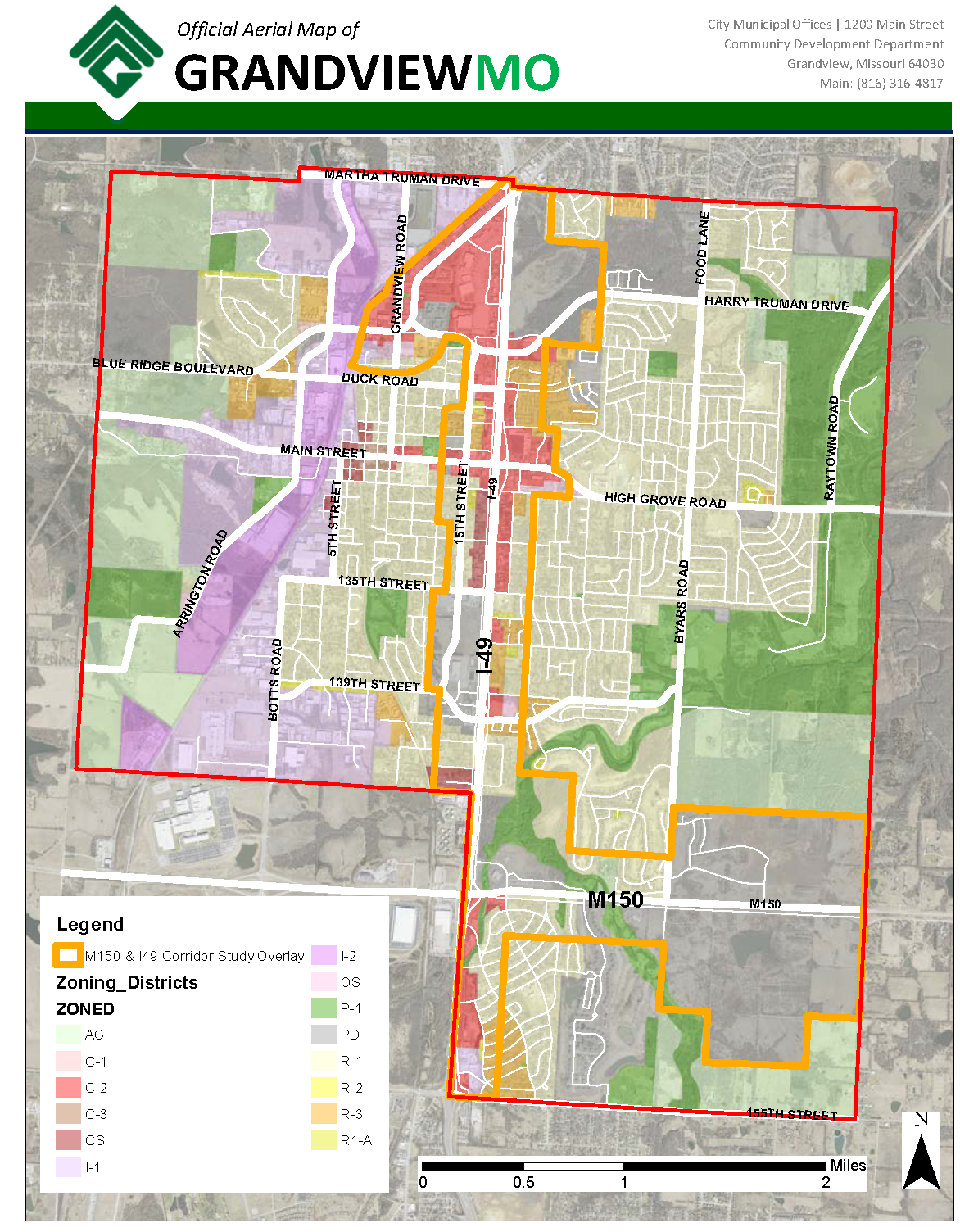
Developments along the M-150 and I-49 corridors, as outlined in this Section, that are zoned PD, Planned Development and Districts, shall follow the standards for site design. Guidelines are also provided to encourage additional urban design practices. When a new Conceptual Development Plan is being proposed, the Planning Commission and Board of Aldermen should consider adding any guidelines listed in this Section to accompany the required standards if they feel the guidelines are appropriate to success of the development. Those properties in the corridors that are not zoned PD, Planned Development or Districts, shall be exempt from this Section and the remaining Design Standards and Guidelines found in the M-150 and I-49 Corridor Study. Regardless of zoning designation, all properties in both corridors shall comply with the following:
(1)
Building Façades.
(a)
Materials.
(i)
Materials outlined in 31-14(F)(4) covering at least 50 percent of the area when applied to the front building façade or 25 percent of the area when applied to a side or rear building façade.
The M-150 and I-49 Design Standards and Guidelines, along with the overall corridor plan found in the appendix of this Ordinance, shall be referenced for further information beyond site design standards and guidelines.
Site Design.
Building Orientation.
(1)
Planned District Standards:
(a)
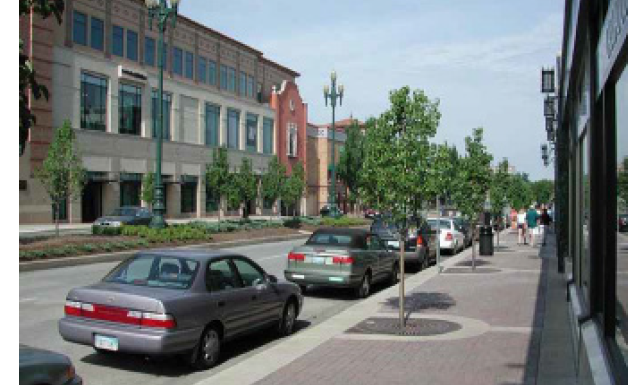
The front façades and main entries of buildings shall be oriented toward streets and plazas.
(b)
Buildings shall line a street at the right-of-way or building setback line to the greatest extent possible.
(c)
Where possible, buildings shall use the full width of the lot for the primary structure and/or active outdoor space.
(2)
Planned District Guidelines:
(a)
Building orientation should provide views of adjoining publicly accessible streets and open spaces in order to provide passive viewing for safety.
(b)
Pedestrian activity should be encouraged through the incorporation of active uses such as retail, commercial, and/or institutional uses at the ground level of buildings.
(c)
Buildings should define the street or public open space.
(d)
Buildings should be located to promote sun and sky exposure to public streets and plazas.
(e)
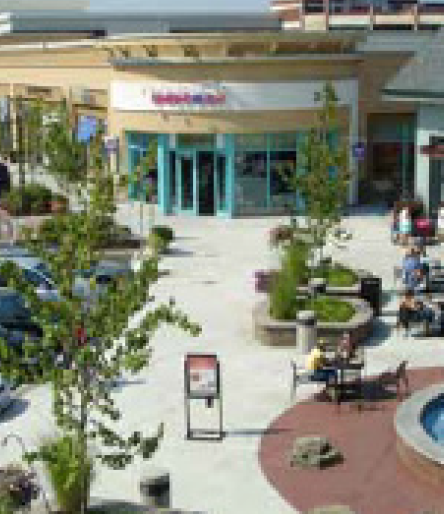
Buildings should be sited to create active outdoor spaces where possible, such as plazas or seating where appropriate.
Access and Driveways.
(1)
Planned Development and District Standards:
(a)
Access points, including alleys, and driveways shall be located to promote the safe and efficient movement of vehicles, pedestrians, and bicyclists.
(b)
The width of driveways and curb cuts shall be minimized to reduce the overall impact of vehicular access across a sidewalk.
(c)
Block frontages shall have as few curb cuts as possible.
(2)
Planned Development and District Guidelines:
(a)
Uninterrupted pedestrian-ways should be maximized in order to improve walkability.
(b)
Driveways and ramps to underground parking garages should be perpendicular or generally perpendicular to the street.
(c)
Sharing of vehicle entries between two adjacent lots is strongly encouraged.
(d)
Developments should provide access for service vehicles via alleys or parking lots.
Parking Lot and Structure Location.
(1)
Planned District Standards:
(a)
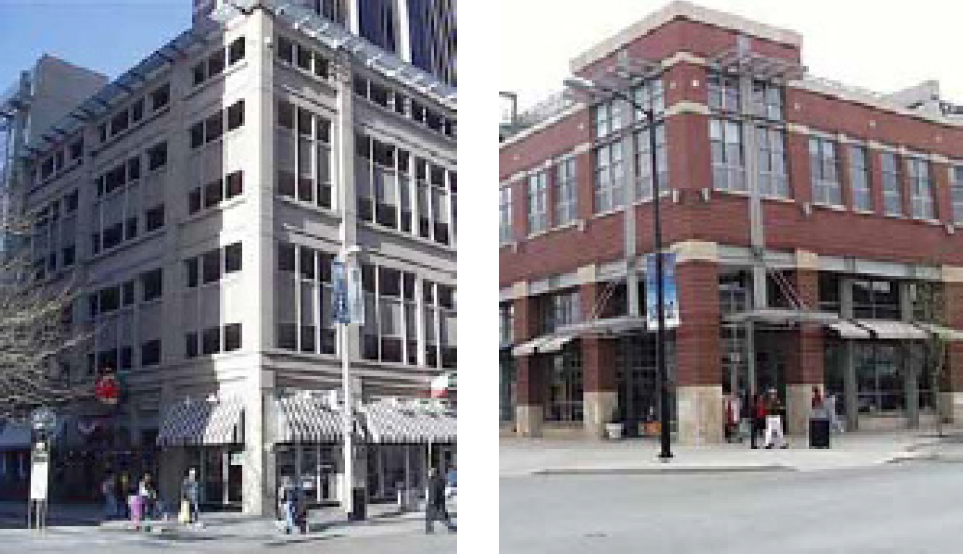
Parking structures with exposed street frontage shall have a building façade that relate to surrounding buildings.
(b)
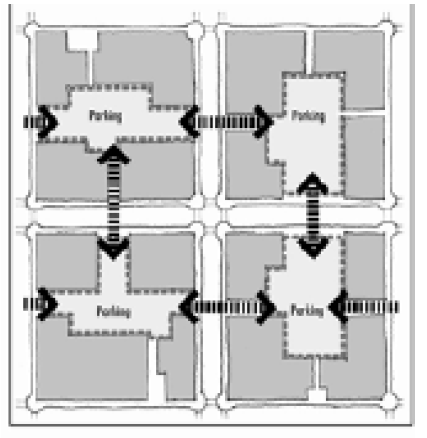
Off-street parking facilities shall not front a public street. If internal siting is not feasible, then parking facilities shall be oriented so that the shortest dimension fronts the street.
(c)
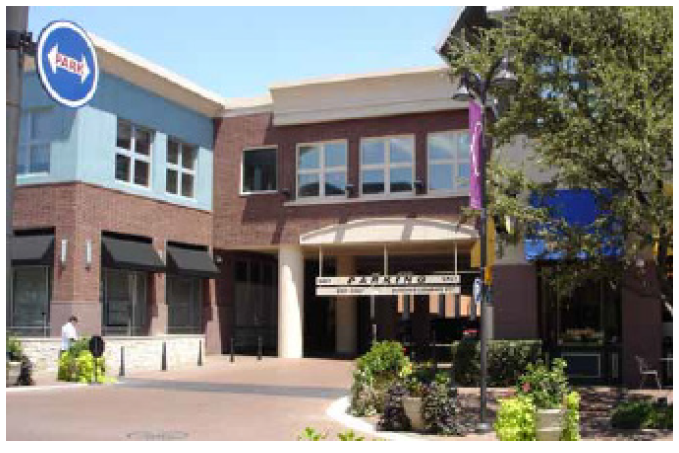
If it is only feasible to orient the long dimension of a parking facility along a street, then the facility shall provide screening in accordance with 31-25 of this Ordinance or in case of a parking structure, a façade shall be created to exhibit the same high level quality of design, detailing and using materials as is provided in adjoining or surrounding commercial or and/or mixed use buildings.
(2)
Planned Development and District Standards:
(a)
Buildings shall be located to minimize the visual impact of parked vehicles within lots and structures.
(b)
Surface parking areas shall be located at the side or rear of buildings only.
(c)
No parking facilities shall be located at the corners of an intersection. Such facilities may be located mid-block. The exception to this is if a parking structure has first floor commercial activity.
(3)
Planned Development and District Guidelines:
(a)
Parking lot location should minimize the parked vehicles along active commercial, mixed use, and/or residential frontages.
Utility Location and Screening.
(1)
Planned District Standards:
(a)
Alleys shall be constructed for all utilitarian services to buildings and structures, keeping the streetscape free of visual and physical clutter, to the extent possible.
(2)
Planned District Guidelines:
(a)
Utility appurtenances should be located behind the sidewalk and out of the streetscape, wherever possible. Where it must be in setback or landscape/screening areas, such equipment should be centered on a tree line and aligned with, but no closer than 42 inches from the face of the curb. This includes switch boxes, telephone pedestals, transformers meters, irrigation, and similar equipment.
(3)
Planned District and Development Standards:
(a)
Streetscape within the corridor area shall not be cluttered by utility elements.
(b)
Utility boxes shall be located so that they do not obstruct pedestrian traffic or block sight lines at intersections.
(c)
Service areas and refuse storage areas shall not front onto streets and public open spaces. Such areas shall be located to the rear or side of buildings, and screened from view from the street and/or public open space.
(d)
Refuse storage and pick-up areas shall be combined with other service and loading areas.
(e)
Switch boxes, transformers, electrical and gas meters, and other aboveground utility elements shall be screened or located out of view from the street.
Pedestrian Access.
(1)
Planned District Standards:
(a)
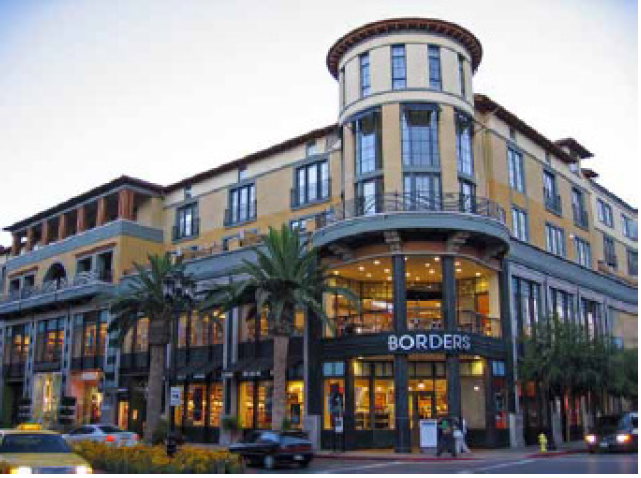
In general, ground floor uses with exterior exposure shall each have an individual public entry located directly on a public sidewalk along a street, or on a sidewalk or plaza leading directly to a street.
(b)
Each block face shall have multiple building entries. A building occupying an entire city block shall include more than one building entrance along each block face.
(2)
Planned District and Development Standards:
(a)
Primary building entrances shall be oriented toward streets, parks or pedestrian plazas.
(b)
All secondary building entries shall be well lit and directly connected to the street.
(3)
Planned Development and District Guidelines:
(a)
Pedestrian entries to buildings should promote security on a street or public open space through frequent points of access and sources of activity.
Corridor Overlay Area.
(K)
Marijuana.
(1)
Definitions.
(a)
Child Day-Care Center. A child day-care center or center, whether known or incorporated under another title or name, is a child-care program licensed by the Department of Health and Senior Services of the state of Missouri where care is provided for children not related to the child-care provider for any part of the twenty-four (24)-hour day.
(b)
Church. A Permanent building, either rented, owned, or leased space within a permanent building, primarily and regularly used as a place of religious worship and associated religious functions (education, fellow-ship, etc.).
(c)
Marijuana or Marihuana. Means Cannabis Indica, Cannabis sativa, and Cannabis ruderalis, hybrids of such species, and any other strains commonly understood within the scientific community to constitute marijuana, as well as seed thereof and resin extracted from the plant and marijuana-infused products. "Marijuana" or "Marihuana" does not include industrial hemp containing a crop-wide average tetrahydrocannabinol concentration that does not exceed three-tenths of one percent on a dry weight basis, or commodities or products manufactured from industrial hemp.
(d)
Marijuana-Infused Products. Means products that are infused with marijuana or an extract thereof and are intended for use or consumption other than by smoking, including, but not limited to, edible products, ointments, tinctures and concentrates.
(e)
Marijuana Cultivation Facility. Means an indoor or greenhouse facility licensed by the State of Missouri to acquire, cultivate, process, store, transport, and sell marijuana to a Dispensary Facility, Marijuana Testing Facility, or to a Marijuana-Infused Products Manufacturing Facility.
(f)
Marijuana Dispensary Facility. Means a facility licensed by the State of Missouri to acquire, store, sell, transport, and deliver marijuana, marijuana-infused products and drug paraphernalia used to administer marijuana as provided for in this section, to a qualifying patient, a primary caregiver, a customer, another Marijuana Dispensary Facility, a Marijuana Testing Facility, or a Marijuana-Infused Products Manufacturing Facility.
(g)
Marijuana-Infused Products Manufacturing Facility. Means a facility licensed by the State of Missouri, to acquire, process, package, store, manufacture, transport, and sell marijuana-infused products to a Marijuana Dispensary Facility, a Marijuana Test Facility, or to another Marijuana-Infused Products Manufacturing Facility.
(h)
Marijuana Testing Facility. Means a facility certified by the State of Missouri, to acquire, test, certify, and transport marijuana.
(i)
Marijuana Transportation Facility. Means a facility certified by the State of Missouri to transport marijuana to a qualifying patient, a primary caregiver, a customer, a marijuana cultivation facility, a marijuana-infused manufacturing facility, a marijuana dispensary facility, a marijuana testing facility, or another marijuana transportation facility.
(j)
Qualifying Patient. Means a Missouri resident diagnosed with at least one qualifying medical Condition.
(k)
School. Any public elementary or secondary school as defined in RSMo Section 160.011, or any private school giving instruction in a grade or grades not higher than the twelfth grade, but does not include any private school in which education is primarily conducted in private homes.
(2)
Principal Permitted Uses, Where. Notwithstanding Section 31-5(C) and other provisions of this Zoning Ordinance to the contrary, marijuana facilities shall be allowed to locate in the city as Principal Permitted Uses as follows, it being the intent of the Board of Aldermen that this Section 31-27(K) supplements the lists of Principal Permitted Uses under the District Regulations for the indicated Zoning Districts:
(a)
Marijuana Dispensary Facility. Marijuana dispensary facilities shall be a Principal Permitted Use in the following zoning districts: C-1 (Neighborhood Shopping District); C-2 (General Commercial); C-3 (Downtown Commercial); and existing PD districts established to allow permitted uses listed in C-1, C-2 and C-3 districts.
(b)
Marijuana Cultivation, Infused Products Manufacturing, Testing and Transportation Facilities. Marijuana cultivation, infused products manufacturing, testing and transportation facilities shall be Principal Permitted Uses in the following districts: I-1 (Light Industrial); I-2 (Heavy Industrial); and existing PD districts established to allow permitted uses listed in I-1 and I-2 districts.
(c)
Multiple Marijuana Facility Licenses Under One Roof. Multiple marijuana facility operations in the same building as licensed by the Missouri Department of Health and Senior Services shall be a permitted use in the following districts: I-1 (Light Industrial); I-2 (Heavy Industrial); and existing PD districts established to allow Principal Permitted Uses listed in I-1 and I-2 districts. An example would be a single licensee operating marijuana cultivation, infused products manufacturing and dispensary facilities in the same building.
(3)
Distance Requirements.
(a)
Marijuana Dispensary Facilities. No new marijuana dispensary facility, including one co-located with another type of facility, shall be sited, at the time a site plan is submitted, within one thousand (1,000) feet of any then-existing protected school, church or child day-care center.
(b)
Protected Schools, Churches and Child Day-Care Centers. The Director of Community Development shall create and use his best efforts to maintain a list of current schools, churches and child day-care centers for the purpose of imposing the distance requirements set out in subsection (3)(a). An eligible school, church or child day-care center not on the list may request to be added to the list by completing a form prepared for that purpose by the Department of Community Development. The request form must be accompanied by documentation to establish, to the satisfaction of the Director of Community Development, in his/her sole discretion, that the applying school, church or child day-care center qualifies for the protection of the distance requirement.
(c)
Distance Measurement. Measurement shall be made along the shortest path between the demarcation points that can be lawfully traveled by foot.
a.
In the case of a dispensary in a freestanding building, the distance to the school, church or child day-care center shall be measured from the external wall of the building closest in proximity to the school, church or child day-care center to the closest point of the property line of the school, church or child day-care center. If the school, church or child day-care center is part of a larger structure, such as an office, building or strip mall, the distance shall be measured to the entrance or exit of the school, church or child day-care center closest in proximity to the dispensary.
b.
In the case of a dispensary that is located in a larger structure, such as an office building or strip mall, the distance between the dispensary and the school, church or child day-care center shall be measured from the property line of the school, church or child daycare center to the facility's entrance or exit closest in proximity to the school, church or child day-care center. If the school, church or child day-care center is part of a larger structure, such as an office building or strip mall, the distance shall be measured to the entrance or exit of the school, church or child day-care center closest in proximity to the dispensary.
(d)
Other Marijuana Facilities. The distance requirements applicable to marijuana dispensary facilities shall not apply to marijuana cultivation, infused-product manufacturing and testing facilities.
(e)
Proximity to Residential Districts. No marijuana facility shall be sited, at the time a site plan is submitted, within two hundred (200) feet of any then-existing residentially zoned parcel. In the case of a marijuana facility in a freestanding building, the distance to the residentially zoned parcel shall be measured from the closest external wall of the building to closest property line of the residentially zoned parcel. In the case of a marijuana facility that is located in a larger structure, such as an office building or strip mall, the distance between the marijuana facility and the residentially zoned parcel shall be measured from the closest property line of the residentially zoned property to the closest facility entrance or exit. All measurements shall be in a straight line.
(4)
Hours of Operation.
(a)
Dispensaries. The interior premises of marijuana dispensaries shall be closed and secured to the public daily between the hours of 10:00 P.M. and 8:00 A.M. Dispensaries may sell or distribute marijuana and other products to the public by means of a drive-through window twenty-four (24) hours per day, provided such drive-through conforms to state regulations.
(b)
Other Marijuana Facilities. All other marijuana facilities shall be closed to the public between the hours of 10:00 P.M. and 8:00 A.M. No persons not employed by the facility shall be on the premises at any time without being approved for entry and logged in by building security personnel and are required to obtain a visitor pass.
(6)
Other Standards for Marijuana Facilities.
(a)
Outdoor Operations or Storage Prohibited. All operations and all storage of materials, products, or equipment shall be within a fully enclosed building. No outdoor operations, storage or cultivation shall be permitted.
(b)
Onsite Usage Prohibited. No marijuana may be smoked, ingested, or otherwise consumed on the premises of a marijuana facility.
(c)
Display of Licenses Required. The marijuana license issued by the State of Missouri shall be displayed in an open and conspicuous place on the premises of the licensed medical marijuana facility.
(d)
Ventilation Required. All marijuana facilities shall install and operate a ventilation system that will prevent any order of marijuana from leaving the premises of the facility. No odors shall be detectable by a person with a normal sense of smell outside the boundary of the parcel or leased space in which the facility is located.
(e)
Plan Review. Development plans meeting the requirements of this Section 31-27(K) and all City codes and regulations, including but not limited to the current adopted building codes and the Zoning Ordinance, shall be submitted for review and approval. The plans shall include a description of the ventilation system to be used to contain odors within the building or leased space.
(7)
Publication. Upon submittal of development plans, notice shall be published in a newspaper of general circulation in the City advising the public that a proposed medical marijuana facility submitted development plans, listing the address of the proposed location, and advising schools and churches that they have seven (7) days from the date of the publication to contact the Director of Community Development regarding imposition of the distance requirements set out in subsection 31-27(K)(3)(a).
(Ord. No. 7418, exh. A, 2-28-2023)

