
Grandview City Zoning Code
CITY OF GRANDVIEW
Design Standards & Guidelines M-150 & I-49 Corridors December 2013
This plan has been prepared by the PlaceMaking Group at Parsons Brinckerhoff and their subconsultants for the City of Grandview, Missouri.
Parsons Brinckerhoff, Inc.
16201 West 95th Street
Suite 200
Lenexa, Kanas 66219
(913) 754-5557 phone
www.pbworld.com
Project Manager:
Tom Hester (602) 418-8091
hester@pbworld.com
City of Grandview
Community Development
1200 Main Street
Grandview, Missouri
(816) 316-4800 phone
www.grandview.org
Project Manager:
Chris Chiodini
cchiodini@ci.grandview.mo.us
Project Team:
City of Grandview,
Parsons Brinckeroff, Inc
Richard Farley Urban Design, LLC
Disclaimer
The content of this document is furnished for informational use only, is subject to
change without notice, and should not be construed as a commitment by Parsons Brinckerhoff,
Inc. Every effort has been made to ensure that the information contained herein is
correct. Parsons Brinckerhoff, Inc. assumes no responsibility or liability for any
errors or inaccuracies that may appear in this document.
The suggestions and recommendations made in this report are for the purposes of discussion and debate in regard to corridor redevelopment. Some of the ideas contained herein have regard to private and public lands. These ideas have been developed as a professional service without the full consultation of property owners.
INTRODUCTION
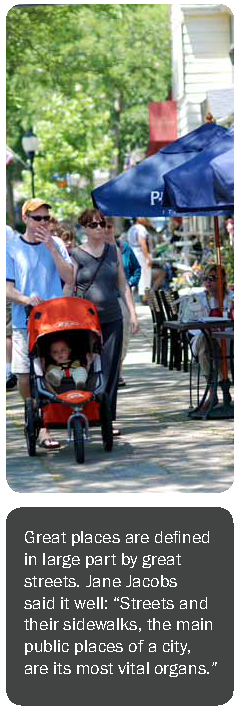
These design guidelines and standards are intended to enable the City to work together with the development and business communities in achieving the visions for M-150 and I-49 corridors. The corridor visions are presented in the M-150 Sustainable Development Corridor Plan, June 2012, and the I-49 Sustainable Development Corridor Plan, December 2013. These guidelines and standards have been designed to be consistent with those Plans.
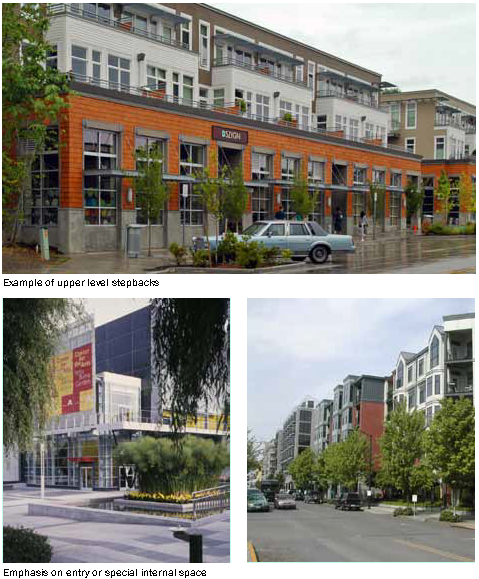
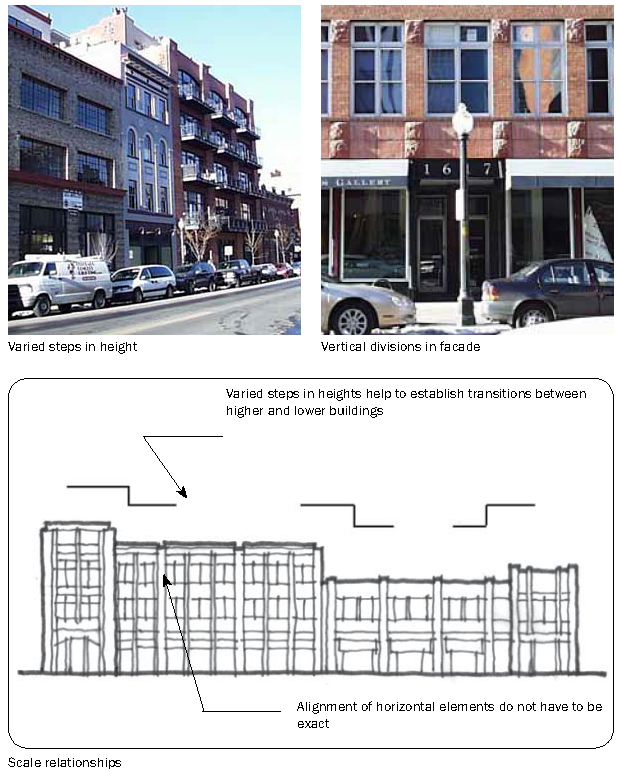
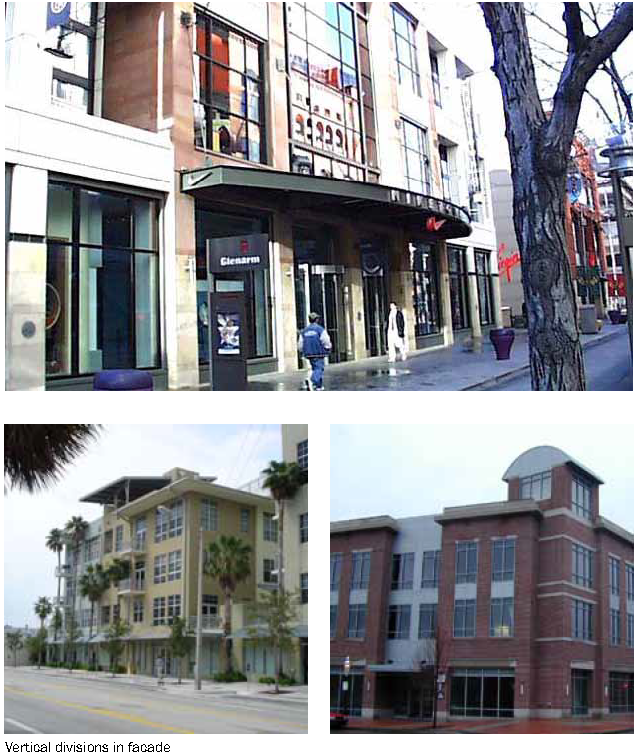
The design guidelines are divided into two types: Guidelines and Standards. The guidelines contained in this document are general statements describing ideal development along the corridor. The standards are basic requirements for any development or redevelopment along the M-150 and I-49 corridors. The use of these two types of statements is intended to give flexibility to the developer and/or applicant to respond and contribute to the corridor vision in advance of a submittal, to give the City of Grandview a basis on which to make judgments so that its determinations are not arbitrary, and to give certainty to the City of Grandview and its citizens that the corridor vision is met and that the quality described is maintained. The images in this section reflect examples from across the country, which exemplify the written standards.
As time passes and the City and its partners in the public and private sector advance in achieving the corridor vision, conditions along the corridor will change. The standards will be added to and amended over time. The guidelines and standards serve as a tool to ensure that the corridor vision and quality of corridor redevelopment remains consistently high.
Authority
These Standards and Guidelines shall be approved as part of the M-150 Corridor Redevelopment Plan and the I-49 Corridor Redevelopment Plan according to the provisions of the General Development Ordinance.
Applicability and Review
The review process follows the approved development process as stipulated in the City of Grandview's adopted Zoning Ordinance. The required standards of the corridor design guidelines and standards are in addition to the specific requirements of the Zoning Ordinance. These guidelines and standards supersede all other Grandview design guidelines except as noted.
Projects located within the boundaries of the M-150 and I-49 corridor overlays must conform to the standards and guidelines described in this document. City staff will conduct a review of submitted projects and determine whether projects conform to these standards and guidelines.
Amendments
These Guidelines may only be amended by the Board of Alderman with a recommendation from the Planning Commission.
Format
The format of the following design guidelines consists of development conditions defined by design principle statements and design standards. Development conditions are described for Site Plan (See Section 31-27(J) of the Grandview Zoning Ordinance), Architecture, Landscape, and Signage. Guidelines describe the design intent for each listed condition and should be incorporated into design treatments of each listed condition. Standards describe the specific treatments that, if incorporated, require no further review However, if standards cannot be achieved due to outstanding conditions, city staff may evaluate specific condition proposed treatments against the stated Guidelines. If city staff approves the proposed treatments no further review is required. Appeals may be made to the Planning Commission.
B. - Architecture
B1 Building Character
Guidelines
B1.g1
Building character should be creative and within a visually comfortable and familiar environment.
B1.g2
Buildings should be designed to provide human scale, interest, and variety while maintaining an overall sense of relationship with adjoining or nearby buildings.
B1.g3
Art integrated into building facades or forms, and/or specially designed architectural ornament is encouraged.
Standards
B1.s1
All buildings shall be designed specifically for the context and character of the corridor. 'Iconic' corporate standard building design is encouraged at identified gateway and landmark locations.
B1.s2
The majority of the building(s) of a development shall possess an architectural character that respects traditional design principles, such as:
•
Variation in the building form such as recessed or projecting bays;
•
Expression of architectural or structural modules and detail;
•
Diversity of window size, shape or patterns that relate to interior functions;
•
Emphasis of building entries through projecting or recessed forms, detail, color or materials;
•
Variations of material, modules, expressed joints and details, surface relief, color, and texture to scale;
•
Tighter, more frequent rhythm of column/bay spacing, subdividing the building façade into smaller, more human scaled elements.
B2 Building Form
Guidelines
B2.g1
New development should create occasional special building forms that terminate views, create a unique skyline, and aid in way-finding.
B2.g2
Building form should emphasize important components of a building, such as an entry, or a special internal space.
B2.g3
Lower building heights or upper level stepbacks are encouraged on the south or east side of the street or public open space in order to provide more sun penetration to the ground level.
B2.g4
Taller buildings adjacent to lower buildings shall establish scale relationships with lower, neighboring buildings through methods such as: compatible horizontal alignment of architectural features and fenestration, and height and form transitions from one building to another.
Standard
B2.s1
Building form shall employ a uniform level of quality on all sides of the building.
B3 Building Facade
Guidelines
B3.g1
Building facades should be designed to provide human scale and detail and to avoid large areas of undifferentiated or blank facades.
B3.g2
Each building facade oriented to the street or public space should provide architectural variety and scale through the use of such elements as: expressions of building structure; patterns of window, door or other openings that provide surface variation through change of plane, change in color; change in texture; change in material module or pattern; art or ornament integral with the building.
B3.g3
Primary building facades should include some elements that provide a change in plane that create interest through the interplay of light and shadow. Examples of such elements are:
•
recessed windows, at least 3 inches;
•
recessed entries and doors;
•
projecting sills;
•
recessed or projecting balconies;
•
projecting pilasters, columns, bays;
•
projecting cornices, roofs.
B3.g4
Each 'base' should be composed of the first floor or first two floors of the building. (see B3.S1)
B3.g5
Each 'base' in its entirety should be designed to give the appearance of greater height than any single floor of the middle. (see B3.S1)
B3.g6
Each 'base' should have a greater level of transparency than the 'middle' or 'top' along the primary facade.
B3.g7
The architectural treatment of the 'top' should be designed to create a sense of distinctly completing the dominant architectural theme of the 'middle' of the building. This architectural completion may be accomplished by such strategies as: change in the window rhythm, change in apparent floor height, setback, use of other materials, or a combination of these elements.
B3.g8
Distinctive corner, entry treatments and other architectural features designed to interact with contextual features may be designed differently than the 'base', 'middle', and 'top'. This difference would allow the addition of vertical emphasis at significant architectural points along the building facade.
B3.g9
The 'top' of buildings above four (4) stories may have a 'cap' set back above the lower stories, which is distinctive in shape and smaller than the previous floor.
Standards
B3.s1
The building facade shall generally have three vertical divisions: 'bases', 'middles', and 'tops'. In buildings of three stories or less in height, the 'top' may be comprised of an ornamental 'cap' or cornice rather than the articulation of an entire floor of habitable space.
B3.s2
The design of 'roofscape' elements of tall buildings shall relate directly to the building walls.
B3.s3
Building design shall create varied roof parapet and cornice lines in order to create interesting and human scaled skylines.
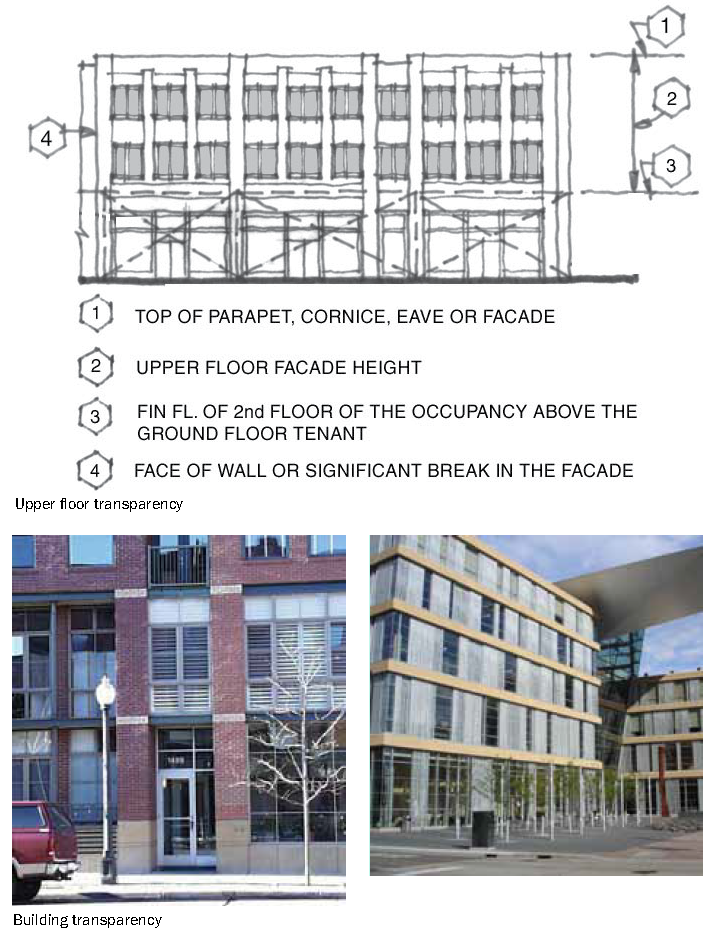
B4 Building transparency
Guidelines
B4.g1
Where functionally appropriate, the ground floor, street-facing facade shall be made of transparent materials designed to allow pedestrians to view activities inside the buildings, retail goods for sale, or display lighted windows related to these activities.
B4.g2
When transparency is not functionally appropriate, other means should be used to provide activity along the street-facing façade such as public art; architectural ornament or detailing; or material, texture, or color patterns.
B4.g3
Buildings should incorporate a window or glazing-to-wall ratio that is sufficient to establish the visual solidity of the building form.
B4.g4
Reflective glass should be used sparingly, if at all, to reduce glare, reduce the opacity or 'blankness' of the facade. Coated or tinted glass may be considered to reduce heat gain, particularly on west and south facades.
B4.g5
Windows or glazing on upper levels should be sufficiently transparent to provide an awareness of internal activities when viewed from the street or public spaces.
Standards
B4.s1
Glass without coatings or tints shall be used for all retail glazing. In no case shall highly reflective glass be used.
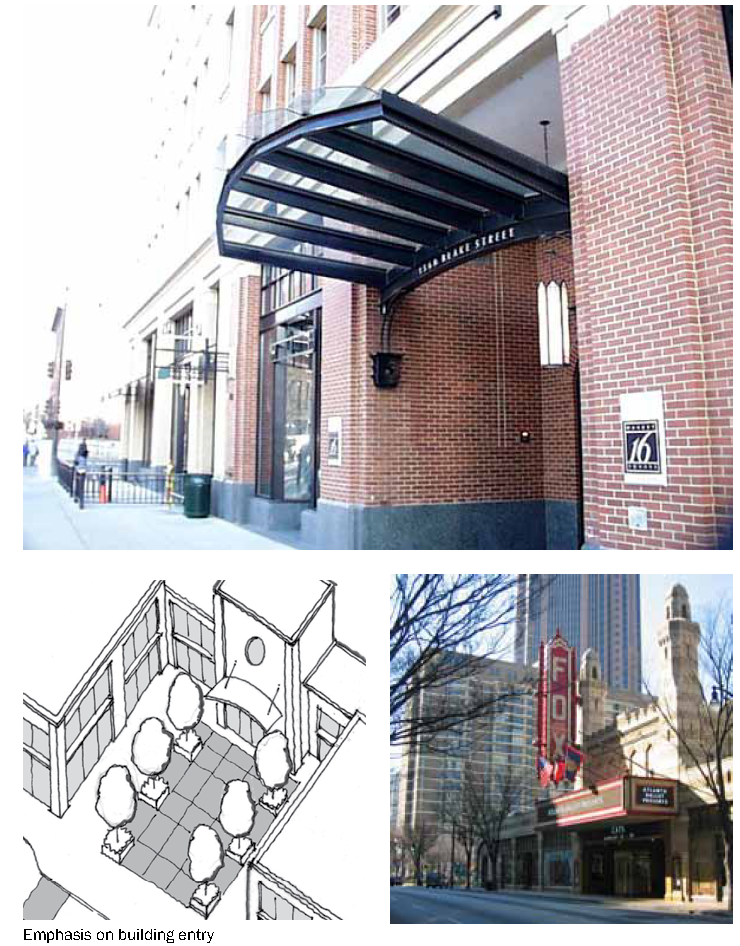
B5 Building Entries
Guidelines
B5.g1 For mixed-use buildings with residential units, one or more separate building entrances from the sidewalk should be used to provide access to the residential units.
B5.g2 Detailed and elaborate entries should be used as another way to create street level interest and architectural variety.
B5.g3 Major building entries should be emphasized through such design devices as changes in plane, differentiation in material and/or color, greater level of detail, enhanced lighting, ornament, art, and/or building graphics.
B5.g4 Primary building entries should be oversized, and generally break the storefront/ground floor façade pattern.
Standard
B5.s1
Each multi-story building shall have one clearly identifiable 'front door' that addresses the street. In addition to this 'front door,' a building occupying an entire city block shall include at least one other building entrance along each block face.
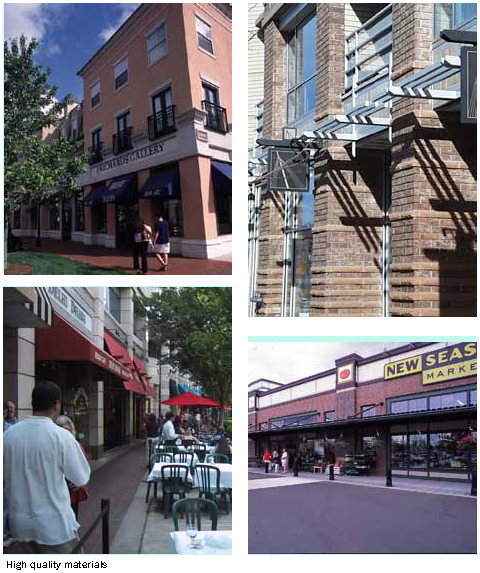
B6 Building Materials
Guidelines
B6.g1
New development should use materials and colors that possess a comfortable and familiar character, convey a sense of quality and attention to detail, and are compatible with materials of adjacent buildings.
B6.g2
New development should use lasting materials that weather well, need little maintenance, and resist vandalism.
B6.g3
Materials and/or detailing at retail frontages should distinguish between the structural parts of a building (columns, walls and beams), and the infill parts of a building (wall panels, frames, windows and doors).
B6.g4
Infill materials should have a non-structural appearance.
Standards
B6.s1
A significant portion of the facade facing a street or public open space (not including windows, doors and their framing systems), shall be composed of highly durable materials such as: brick, stone, cast stone, specially treated concrete masonry units, terra-cotta, and/or glass. All building materials shall be integrally tinted.
B6.s2
Building materials shall maintain a uniform level of quality on all sides of the building.
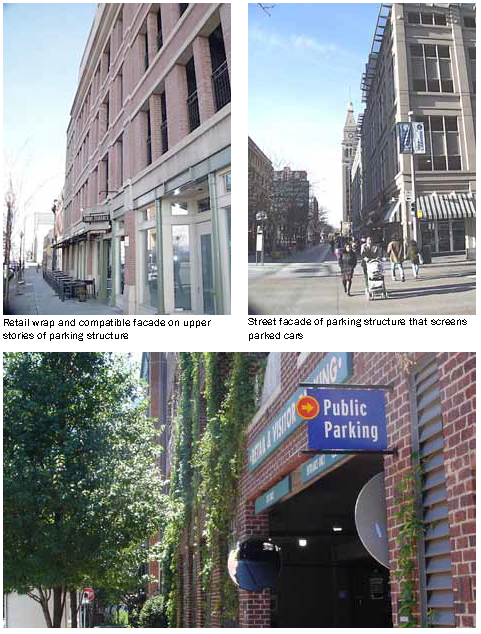
B7 Parking Structures
Guidelines
B7.g1
The exterior of parking structures should be wrapped with mixed-use space in order to minimize the visual impact of parking on the pedestrian experience, and the street environment and to increase pedestrian activity and interest along the street by locating active uses at the street level of parking garages
B7.g2
Garage facades visible from public streets and open spaces should be compatible in character and quality with adjoining buildings.
B7.g3
Parking structures should create visually interesting facades that provide human scale and detail while avoiding large areas of undifferentiated or blank facades.
B7.g4
Openings should be vertically and horizontally aligned.
Standards
B7.s1
Street oriented facades shall conceal or effectively reduce the impact of parked cars and light sources from the exterior view for the full height of the structure.
B7.s2
Multi-story parking structures (3 levels or more) with facades facing public streets shall provide commercial, live-work, residential and/or institutional space for not less than 50% of the garage's ground level street facing frontage, or the design and structure of the ground floor street frontage should be able to accommodate in the future one of the above listed uses.
B7.s3
Sloping ramps shall not be visible within the street facade of any parking structure.
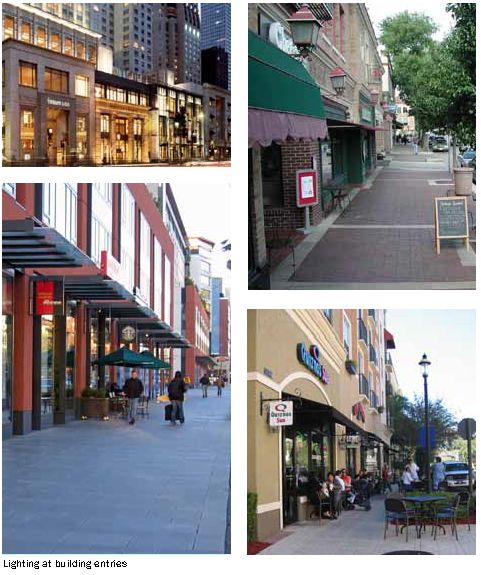
B8 Building Lighting
Guidelines
B8.g1
Building lighting should accentuate important architectural components of the building, such as entries, towers or roof elements, or repetitive columns or bays, and include decorative lighting.
B8.g2
Building lighting should provide indirect or direct lighting for adjoining sidewalks and open spaces.
B8.g3
Primary building entries should be externally lit so as to promote a more secure environment at the door, emphasize the primary point of entry into the building, and provide sufficient lighting for efficient access into the building.
B8.g4
Steps and/or ramps at or leading to a primary building entry should be illuminated sufficiently for safe access.
Standard
B8.s1
Entry lighting shall complement the building's architecture. Standard security lighting such as wallpacks shall not be allowed.
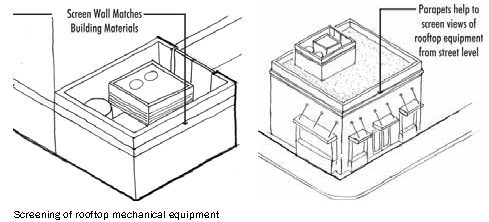
B9 Rooftop design
Guidelines
B9.g1
Rooftop design should maintain the integrity of architecturally designed building tops and help create interesting and varied skylines.
B9.g2
In mixed use development, if residential uses are located near mechanical equipment, care should be taken to mitigate the impacts of noise and odors.
B9.g3
Antennae that extend over five feet above the roof line are encouraged to have screening techniques applied such as color and material to minimize visibility.
Standards
B9.s1
All roof mounted mechanical and electrical equipment, communication antennae or dishes shall be enclosed, screened, organized, designed and/or located as part of the architectural expression and shall not be visible from the public right of way. Any equipment shall be covered or screened to its full height.
See also A4, Utility location and screening.
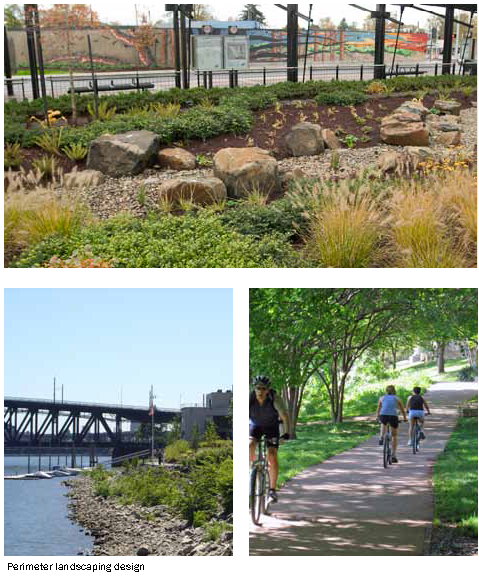
C. - Landscape
C1 Perimeter Landscaping
Guidelines
C1.g1
Perimeter landscaping design should create street and plaza spaces that join buildings, uses, pedestrian areas, and streets into a unified urban place.
C1.g2
Perimeter landscaping should reinforce the pedestrian environment established in the adjoining street right of way.
C1.g3
Perimeter landscaping should be designed to provide seamless transitions between buildings, uses, and open spaces that promote the mixing of commercial, residential, and institutional uses.
C1.g4
Where a landscape perimeter area occurs between a building frontage and a street right of way, it should be designed to extend the pedestrian amenities of the street, such as increased walkway widths, areas for outdoor café/restaurant seating, increased sidewalk widths to allow window shopping out of the stream of pedestrian traffic, and space for the temporary display of a retailer's goods.
C1.g5
Where space permits, planting in containers, raised planters, or cutouts in the paving is encouraged.
Standard
C1.s1
Where a side setback landscape perimeter area occurs, it shall be designed to contribute to a pedestrian amenity zone such as a passageway, or contribute to a paved driveway or alley.
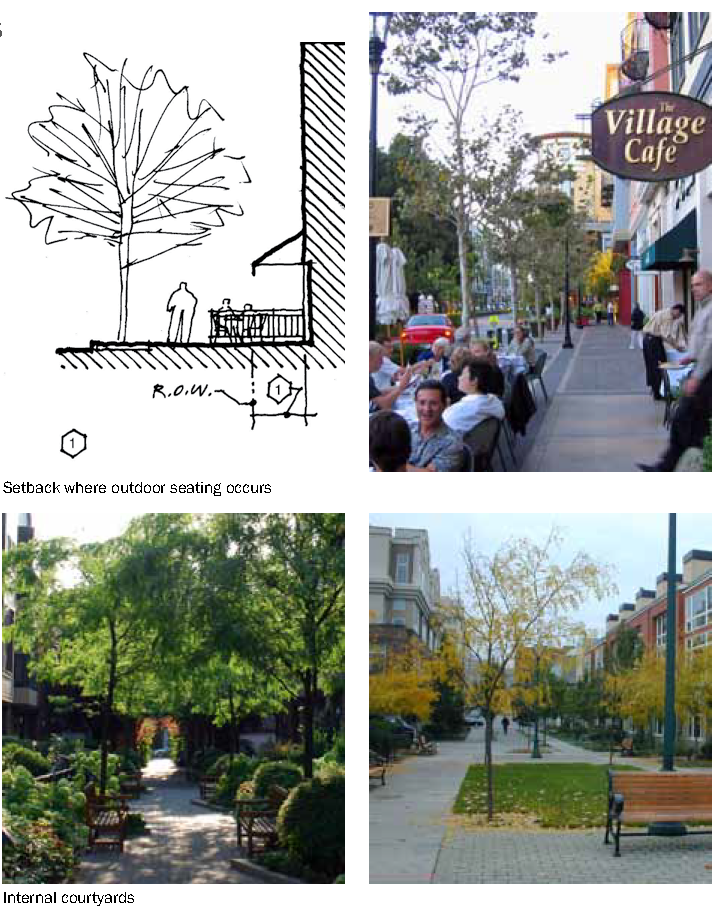
C2 Internal courtyards, plazas and open spaces
Guidelines
C2.g1
Internal courtyards, plazas, or open spaces should be designed to create useable open spaces, suitable for passive recreational activities such as informal play, reading, and sitting in the sun or shade.
C2.g2
All open spaces accessible to the general public should be open a minimum of 12 hours per day.
C2.g3
Private open space may be fenced with wrought iron, masonry or comparable decorative fencing or otherwise controlled for security.
Standard
C2.s1
All public and private open space not used for recreation shall be attractively landscaped with plant material and hard surfaces.
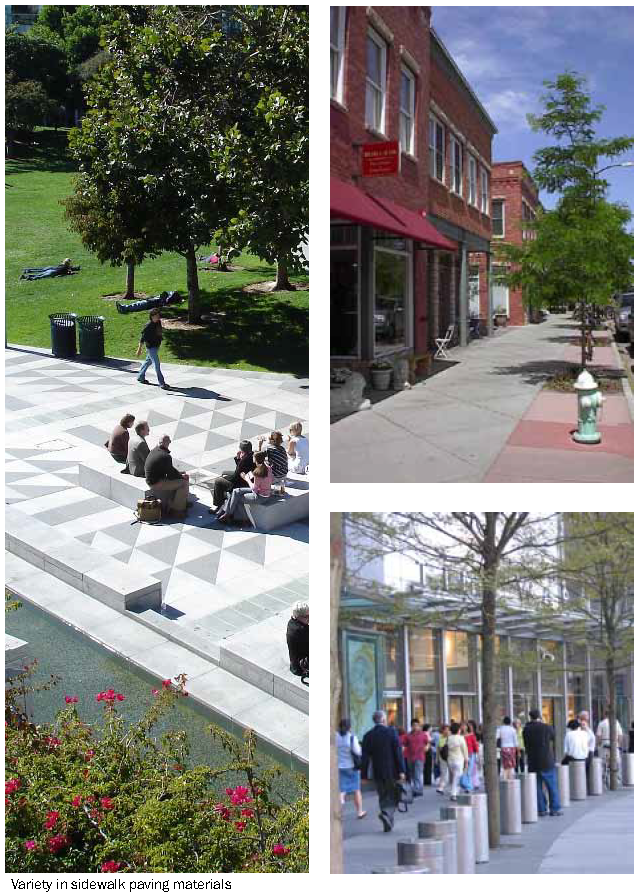
C3 Hardscape Design
Guidelines
C3.g1
Hardscape design should provide a quality of paving materials and patterns consistent with the quality of the surrounding architecture and open spaces and provide safe paving conditions for all persons.
C3.g2
Hardscape design should create interest and variation within paved surfaces that includes but is not limited to public art, coloring, or materials.
C3.g3
Special paving should be carefully chosen for structural capability and durability in the local climate. Uncolored concrete, colored concrete, brick, hydraulically pressed concrete unit pavers or stone is recommended.
C3.g4
Special paving patterns and materials should be used to emphasize important building entries, provide interest and variation, and differentiate between sidewalks, plazas, medians, and crosswalks.
Standards
C3.s1
Sidewalks shall be separated or buffered from vehicle travel lanes by street/pedestrian lights, and/or street trees in grates or in a tree lawn.
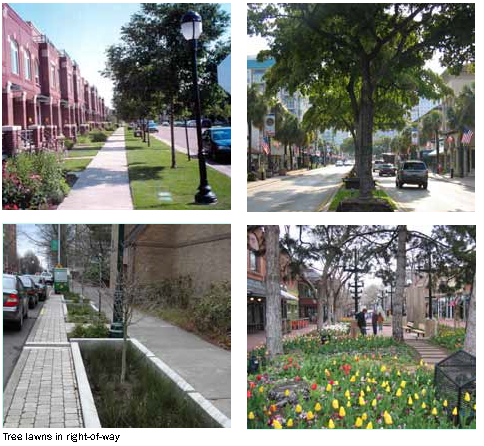
C4 Landscape: Trees and Plant Materials
Guidelines
C4.g1
Landscaping should create a strong identity for each street and use quality plant materials that are located, sized, and provided in quantities sufficient to emphasize important streets.
C4.g2
Landscaping should use plant materials that tolerate an urban condition.
C4.g3
Trees should align parallel and perpendicularly across the street with each other whenever possible.
C4.g4
Ornamental trees should not be used in a street right-of-way.
C4.g5
Tree grates or planting cut-outs should be used in paved areas to prevent excessive soil compaction.
C4.g6
Large tree pits that allow for a broader canopy are preferred over typical street trees.
C4.g7
All tree lawns and street trees in cut-outs, tree pits, and grates should be irrigated with an automatic irrigation system. Drought tolerant turf or low, continuous ground covers should be used as the primary ground cover for continuous tree lawns.
C4.g8
To the maximum extent feasible, topsoil that is removed during construction activity should be conserved for later use on areas requiring re-vegetation and landscaping.
Standards
C4.s1
No artificial trees, shrubs, turf, or plants shall be used to fulfill the minimum requirements for landscaping.
C4.s2
Tree lawns shall be a minimum of 6 feet in width, measured from the back of curb to the edge of the sidewalk.
C4.s3
Street trees shall be centered within the width of the tree lawn.
C4.s4
Street trees in tree grates shall be at least 2 feet 6 inches from the face of the curb. Tree grates shall be at least 24 sq. ft. with openings no more than 1/4 inch to 3/8 inch in width and should be designed to allow for tree trunk growth.
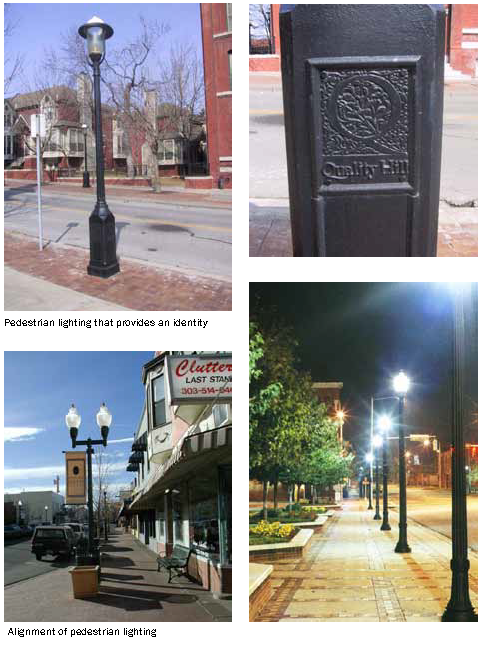
C5 Street and Pedestrian Lighting
Guidelines
C5.g1
Lighting should provide a safe and secure environment for motorists, bicyclists, and pedestrians.
C5.g2
Lighting should create an identity for the development and/or special streets.
C5.g3
Lighting should enhance the quality of streets in the commercial core through the design of the light poles, bases, fixtures, and attachments.
C5.g4
Street and/or pedestrian light poles should be aligned with and centered between street trees.
C5.g5
Where the light source is directly visible, the luminaries should be designed to incorporate elements to reduce glare, such as translucent, internal refracting surfaces to direct light down and away from adjoining private property; lower height poles; lower wattage or pole location.
Standards
none in this section
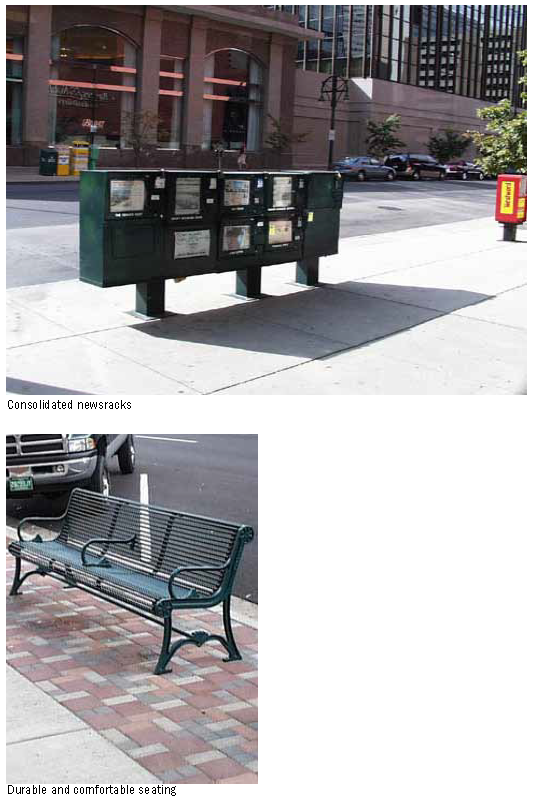
C6 Street Furniture
Guidelines
C6.g1
Seating should be durable, comfortable, attractive, securely anchored, and easy to maintain. Seating surfaces should be 16 to 18 inches high with a minimum depth of 16 inches for seats without backs and 14 inches for seats with backs.
C6.g2
Where bus stops occur within tree lawns, a minimum of one 6-foot long bench should be placed on a concrete pad. Where a bus stop occurs on a wide attached sidewalk, a 6 foot long bench should be provided within the sidewalk's amenity zone.
C6.g3
Trash receptacles should be conveniently located near benches and other activity nodes.
C6.g4
Trash receptacles should relate in appearance and color to other street furniture. They should be firmly attached to paving to avoid vandalism. Covered tops and sealed bottoms should be included to keep the contents dry and out of sight at all times.
C6.g5
Bicycle racks should be placed near entrances or gathering places, but out of pedestrian and bicycle traffic areas where they may create tripping or other safety hazards. If possible, locate racks where parked bicycles are visible from the inside of adjacent buildings.
C6.g6
Newspaper racks and trash receptacles should be located at areas where high pedestrian activity is anticipated.
C6.g7
Newspaper boxes should be clustered together and screened by specially designed railings. They should be located adjacent to pedestrian activity, but not so as to obstruct drivers' views at intersections, or car overhang/door swings at the curb.
Standards
none in this section
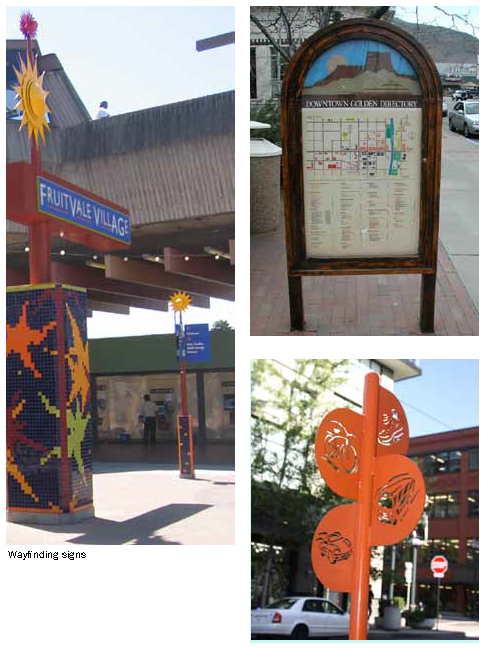
C7 Wayfinding Elements
Guidelines
C7.g1
Wayfinding should compliment and enrich the pedestrian experience and create interesting streets and spaces.
C7.g2
Wayfinding information should be conveyed clearly and efficiently with high quality sign and graphic design.
C7.g3
Information should be provided for events on-site as well as within the City.
C7.g4
To provide art, whimsy and contrast to the civic structure of the street furnishings, wayfinding elements should relate to local culture and flavor.
C7.g5
Information kiosks and wayfinding elements should be located near pedestrian origin points such as parking structure stairs and elevators, public plazas and near entrances to public buildings.
Standards
none in this section
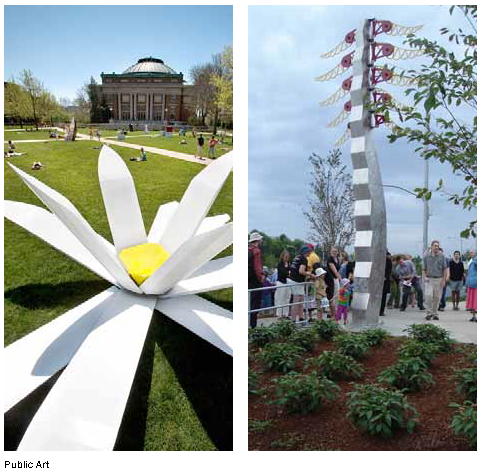
C8 Gateway Elements and Public Art
Guidelines
C8.g1
Public art should engage the community, and express community identity.
C8.g3
Art should create experiences for the senses and opportunities for surprise, wonder, interest, contemplation, reflection, humor, interaction and play.
C8.g4
Art should provide shade structures at appropriate locations, particularly on the north side of the street.
C8.g5
Commissioned works should exhibit superior craftsmanship and design, and be fabricated of durable, low maintenance materials using proven technologies. A range of signature pieces should include integrated urban design elements, architectural detailing and interactive features.
C8.g6
Art should be sited to create areas of emphasis within the urban fabric while supporting the social function of each space.
C8.g7
Selected artworks should include interactive elements allowing residents and visitors to walk through, play, sit on, and otherwise physically interact with the finished work.
C8.g8
Artwork, where appropriate, should be integrated into infrastructure and site furnishings (i.e. hardscape/landscape elements, building facades, tree grates, wayfinding devices, seating, etc.).
Standards
C8.s1
All plaza areas shall include public art.
C8.s2
Artwork shall be designed and sited to correlate with surrounding activity patterns.
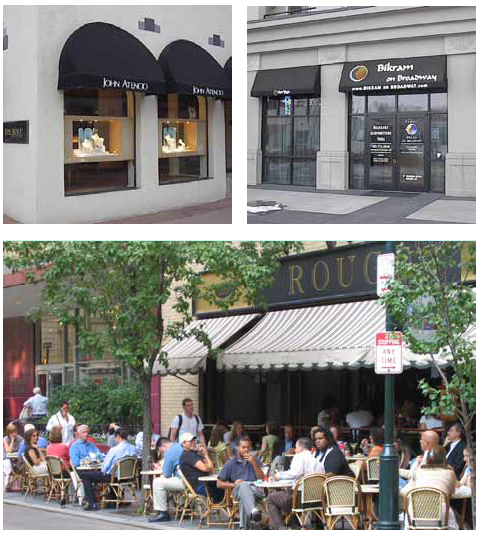
D. - Signage
D1 General Criteria
Guidelines
D1.g1
Signs should be located, sized, and designed for single or multiple uses so as to eliminate conflicts, predict the impact and effects of the signs on adjoining properties, avoid clutter and achieve the desired character of their application.
D1.g2
In an effort to limit the variety of sign types used on a single building along the corridor, the following combinations should be considered:
•
One (1) wall sign per use; window signs limited to 10 percent of any window area; one (1) monument sign per building frontage, but awning signs, pole signs, or projecting signs are discouraged in this combination.
•
Window signs limited to 20 percent of the window area, awning signs, and one (1) projecting sign per use, but wall signs, pole signs, or monument signs are discouraged in this combination.
•
One (1) wall sign per use, one (1) projecting sign per use if located or designed so as not to visually conflict, window signs limited to 10 percent of any window area, but awning signs, pole signs, or monument signs are discouraged in this combination.
Standards
D1.s1
Buildings shall provide a sign plan showing locations, sizes, heights, and probable design and illumination of all sign types to be used on the building or its site.
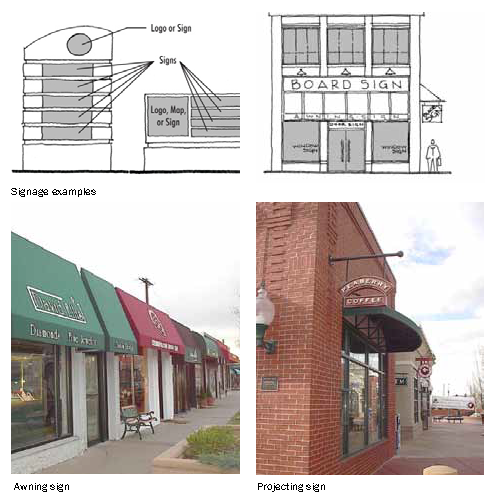
D2 General Number and Location of Signs
Guidelines
D2.g1
Signs should be limited in number commensurate with the needs of the uses in the building.
D2.g2
Signs should respect the architectural character and design of the building in their number and location.
D2.g3
Sign clutter, where the number and size of signs dominate the storefront or façade of the building, should be avoided.
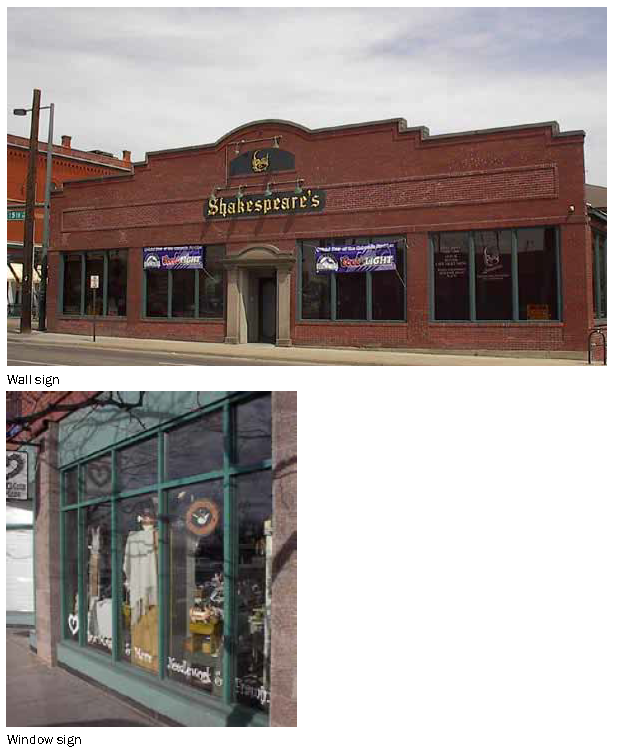
D2.s1
Wall, window, awning, and projecting signs shall not be allowed above the ground floor with the exception of the following with the discretion of the design review committee. In no case shall an internally lighted, cabinet type wall sign be allowed above the ground floor:
•
Painted, face-lit wall signs;
•
Internally lit channel letter signs and/or logos;
•
Painted wall murals with a minor component for the identification of a business;
•
One unlit window sign per business;
•
The extension of a ground floor projecting sign;
•
The name of the building integrated into the material and/or design of the facade.
D2.s2
Signs shall not be located within the residential portion of the facade of any mixed use building.
D2.s3
A maximum combination of three sign types shall be used for any building frontage. Such sign types are: wall, projecting, ground, window, awning, marquee and arcade.
D3 General Size and Height
Guidelines
D3.g1
The size of signs should be related to the location and speed of movement of the typical person viewing the sign.
Standards
none in this section
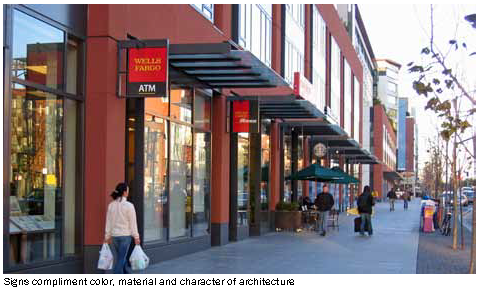
D4. General Design and Illumination
Guidelines
D4.g1
Signs should respect the architectural character and design of the building.
D4.g2
Signs should be expressive of the activity, product, or use for which they are displayed.
D3.g3
Signs should be compatible with existing residential uses.
Standards
D4.s1
Materials for signs shall compliment the color, material and overall character of the architecture.
D4.s2
Signs shall be constructed of high quality, durable materials. All materials must be finished to withstand corrosion. All mechanical fasteners shall be of hot-dipped galvanized steel, stainless steel, aluminum, brass or bronze.
D4.s3
All conduits, transformers, and other equipment shall be concealed, and shall have UL ratings.
D4.s4
Exterior lighting of signs shall be oriented down onto the face of the sign, not up from below to minimize night sky light pollution.
D4.s5
Sign illumination shall not create objectionable glare to pedestrians, motorists, and adjoining residents.
D4.s6
A business's corporate logo may be incorporated into signage when the sign complies with all applicable standards. Typical corporate sign design that does not comply with all applicable standards may be allowed by the design review committee. However, the design review committee shall retain complete control over the design, dimensions, location, number and type of the sign.
D4.s7
Hand painted signs shall not be allowed, unless painted by a sign contractor specializing in hand painted or hand crafted signs.
D4.s8
Sign illumination shall be integrated into the design of the sign. Signs may be externally lit so long as the external lighting has been conceived and controlled as part of the sign design.
D4.s9
Internally illuminated sign cabinets, either for wall or projecting signs, shall not have white or light colored back-lit translucent face panels.
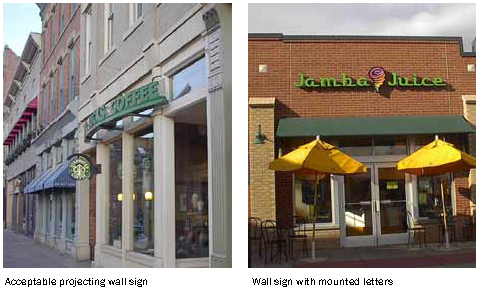
D5 Wall Signs
Guidelines
D5.g1
Wall signs should be integrated with the architecture of the building.
D5.g2
In general, wall mounted sign cabinets should be discouraged.
Standards
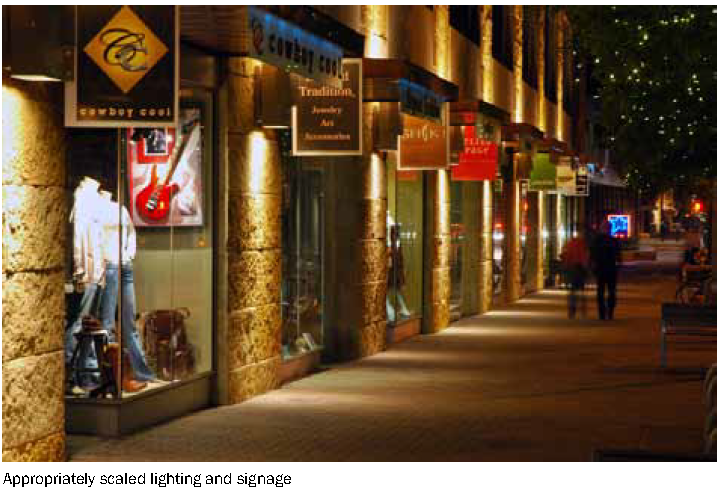
D5.s1
Wall signs shall be located within any sign areas clearly designed for signs on existing or proposed building facades.
D5.s2
Lighted wall signs shall not be located at the top of a building's facade if the facade is higher than two stories and shall not directly face a residential neighborhood.
D5.s3
Maximum wall sign size shall not be increased by an increase in sign height.
D5.s4
No more than one wall sign shall be allowed per building.
D5.s5
Wall signs shall not overlap, or generally conflict with important architectural features such as windows, cornices, belt courses, or other details.
D5.s6
Wall signs located on the side wall of a building that faces a side property line, alley, or parking area (including a side property line along a street), shall not be lighted above the ground floor.
D5.s7
Wall signs shall be composed of individually mounted letters, logos or icons without sign backing panels, or letters/logos mounted on a backing panel.
D5.s8
Phone/Fax numbers on all signs, with the exception of window signs, shall not be allowed.
D5.s9
Neon signs, except those located in a window, shall not be allowed.
D6 Projecting Signs
Guidelines
D6.g1
Projecting signs should not be closer than 50 feet apart, and no more than 3 for 300 feet of street frontage.
Standards
D6.s1
Each use by right shall be limited to one projecting sign for each of that use's street frontage.
D6.s2
Projecting signs shall not be located above the ground floor.
D6.s3
All projecting sign structures on a building shall be located at the same height as the other sign structures.
D6.s4
Projecting signs shall be located above or below non-signed awnings, but not in line with the awnings.
D6.s5
Projecting signs shall not be greater in size than 12 square feet per face or 24 square feet per sign.
D6.s6
Projecting signs shall be externally lit. Internally lit sign cabinets are generally discouraged except where the sign face is composed of metal with back lit cut out letters or logos.
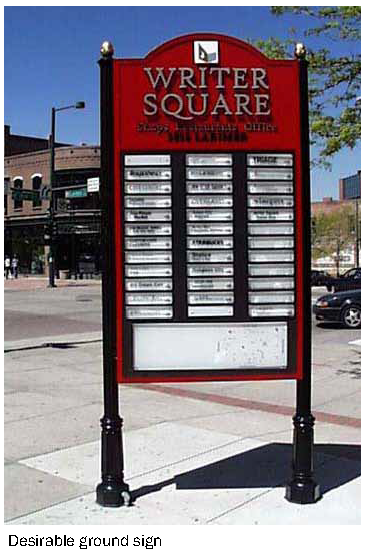
D7 Ground Signs
Guidelines
D7.g1
Ground signs are defined as monument signs, pole signs, and other signs that are attached to the ground. Ground signs should be refined, creative and unique.
D7.g2
'Designed' pole or post signs are encouraged when the vertical supports are integrated into the design of the sign.
D7.g3
The design of a joint identification sign should be unified, uncluttered, easily readable, and of high quality. Ways to avoid a cluttered appearance are:
•
The sign text for most components is composed of the same type face and size.
•
The sign structure or frame is dominant enough or simple enough to visually organize varied components.
•
The sign has a clear hierarchy or importance in its components.
Standards
D7.s1
Only one (1) monument sign shall be allowed per building per street frontage. The monument sign may also be a joint identification sign.
D7.s2
Ground signs shall have no more than one sign cabinet or backing panel.
D7.s3
If lighted, monument signs should be externally lit with a shielded or directed light source.
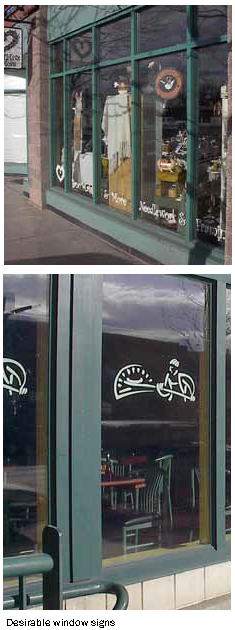
D8 Window Signs
Guidelines
D8.g1
Window signs should emphasize a window's transparency and sense of openness to the interior.
D8.g1
Window signs should avoid clutter 1) within the text and graphic components of the window signs, and 2) in combination with the objects of view through the window.
Standards
D8.s1
Window signs shall generally be located in the lower or upper 25 percent of the window area. Window signs may be located in the middle portion of the window, but should not substantially obscure the activities or displays beyond the window.
D8.s2
Window signs shall not be larger than 10 percent of each window or door area, except that window signs may be as large as 20 percent of each window area if no wall sign is provided.
D8.s3
Storefront window signs shall be limited to either the tenant's name or logo. Operating hours may be applied onto the glass, but shall be kept small, preferably on the windows next to the front door.
D8.s4
Window signs on glazing shall be either silk screened, back-painted, metal-leafed, or sand-blasted onto the glass. Vinyl letters are not allowed.
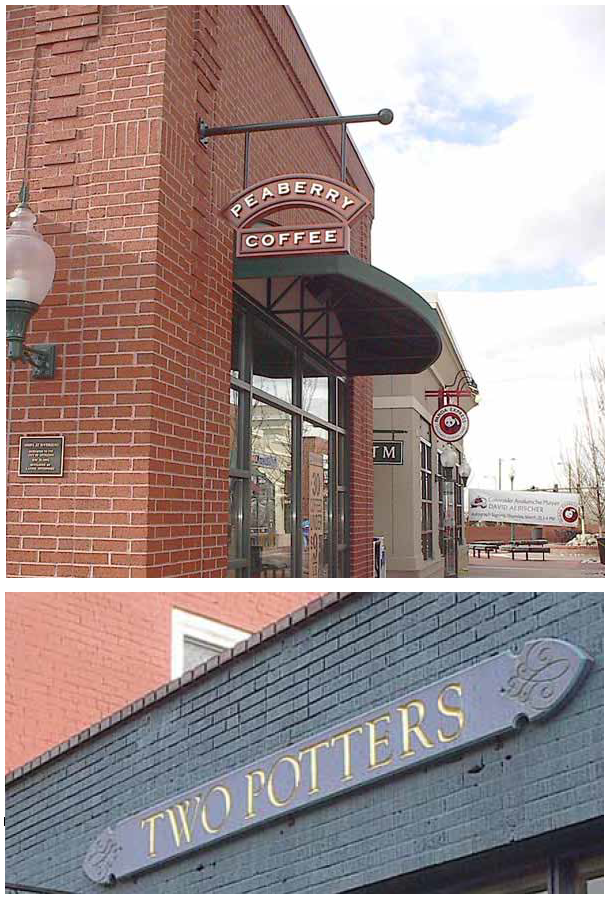
D9 Awning Signs
Guidelines
D9.g1
Awning signs should be carefully controlled so as not to become substitutes for wall signs or projecting signs
Standards
D9.s1
Awning signs shall be located primarily on the awning valence that faces the street, not on a valence that is generally perpendicular to the street.
D9.s2
Text on awning valences shall not be greater than 8 inches high. A valence drop length shall be no greater than 12 inches.
D9.s3
Awning signs shall not be allowed above the ground floor. Awnings without signs may be allowed above the ground floor if they are compatible with the architecture.
D9.s4
Each awning may have a sign printed on its valence.
D9.s5
Awnings shall be consistent in color and visually balanced over the façade of the building.
D9.s6
Standard residential type aluminum awnings shall not be used. Awnings shall be composed of non-combustible acrylic fabric.
D9.s7
Back-lit translucent awnings with or without signs shall not be allowed. Shielded down lights within an awning that light only the paving under the awning may be acceptable.
D9.s8
Entry canopies shall not be allowed if they extend more than 4 feet from the building face.
D9.s9
If side panels are provided, such panels should not carry signs greater in area than 20 percent of the area of the awning sign panel.
D9.s10
Awnings shall not extend vertically beyond a building's or storefront's individual bays.
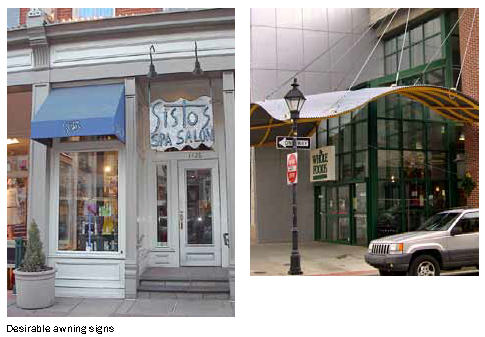
D9.s11
Awnings shall be composed of traditional forms, and compliment the window or bay within which it occurs. Straight, more steeply sloped awnings are preferred. Rounded 'barrel' awnings are discouraged. Rounded awnings designed to fit arched windows or bays are acceptable.
Typical Right-of-Way Transition Typologies
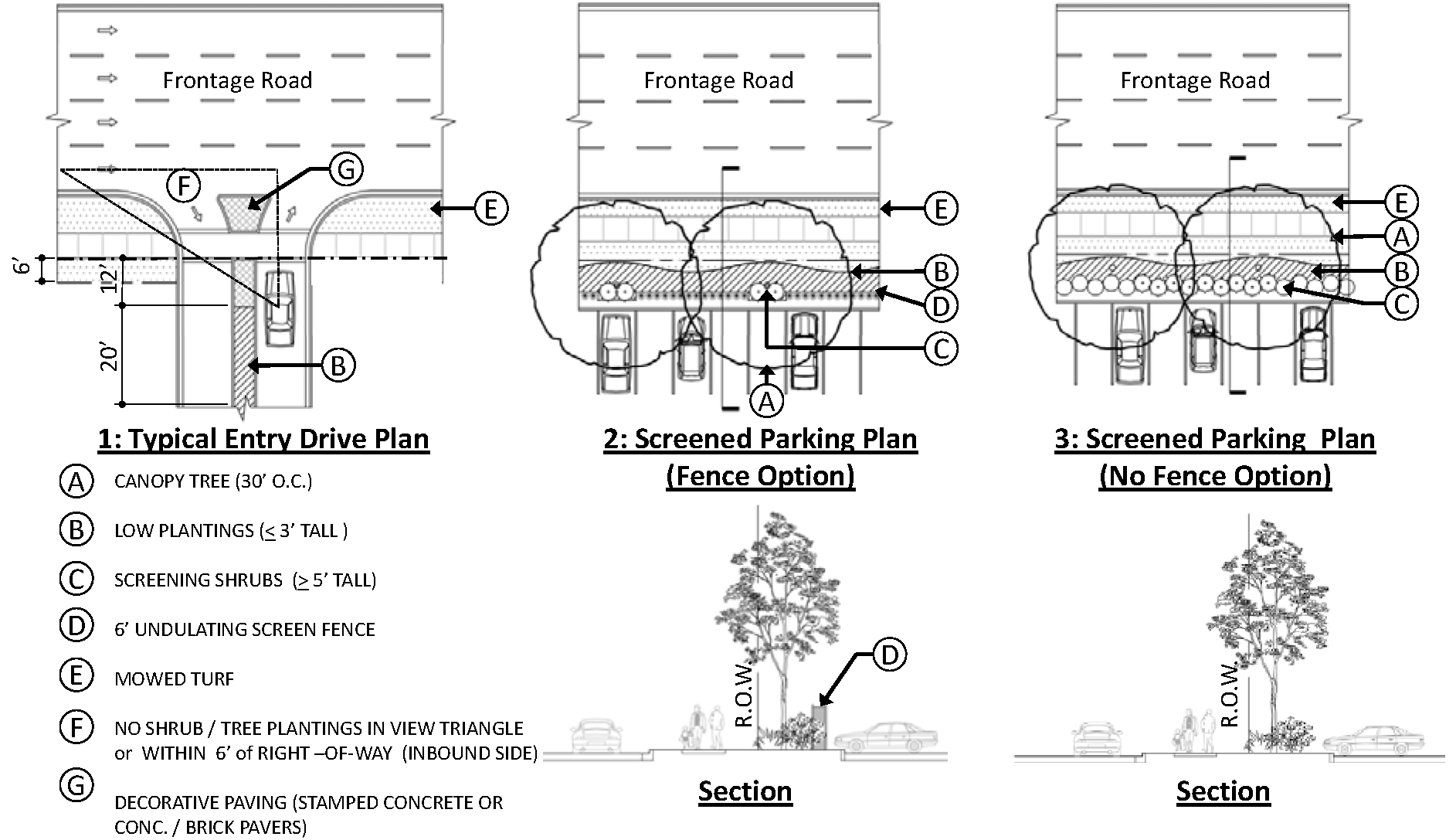
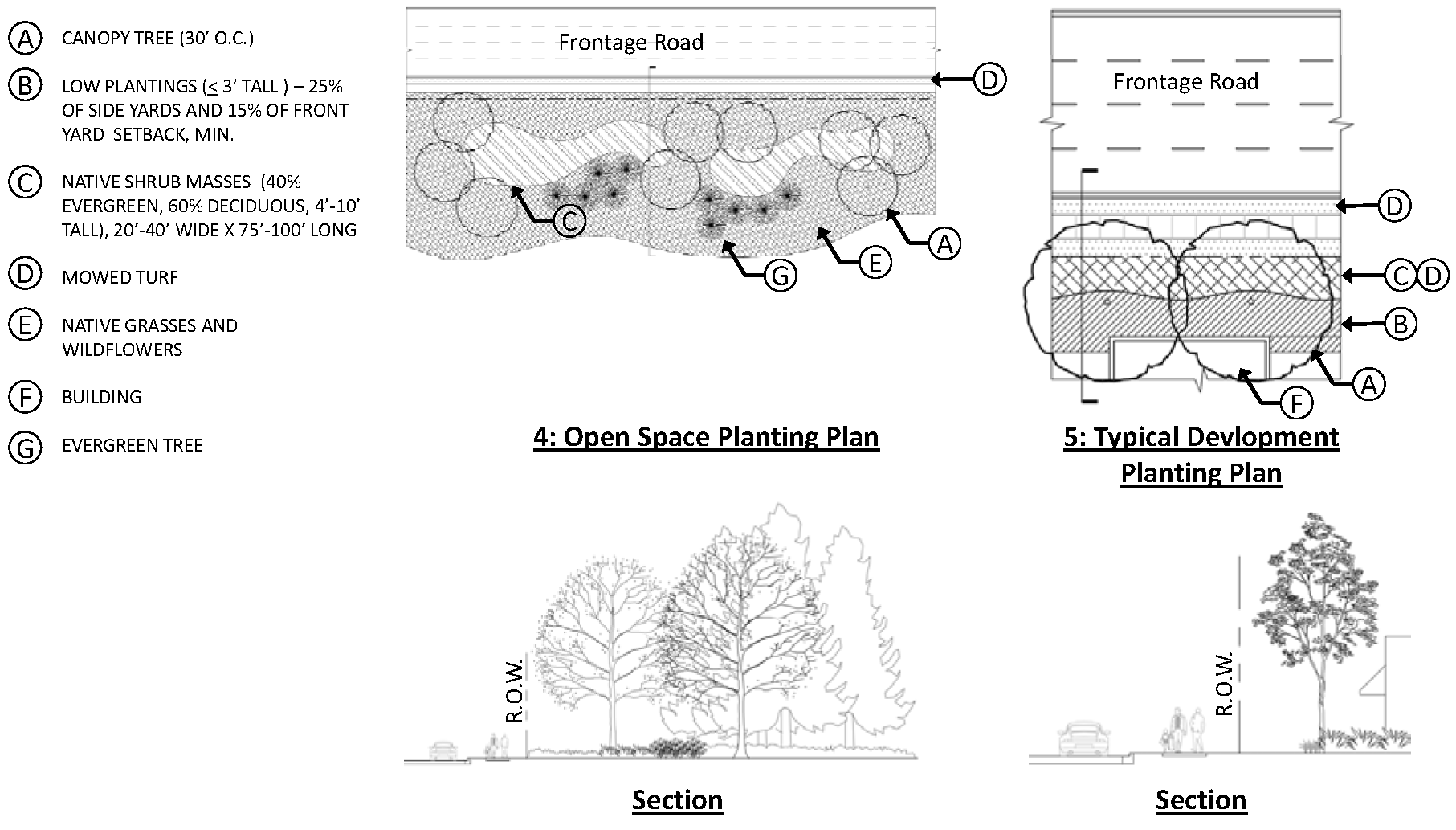
The following diagrams address the transition between the M-150 and I-49 frontage roads and adjoining land use conditions including entry drives, screened parking lots (with and without fencing), open space and private development. Specific standards are shown on the diagrams.
Design Standards & Guidelines
Trees
| Plant Image | Common Name (Botanical Name) | Install Size | Minimum Spacing | Remarks |
|---|---|---|---|---|
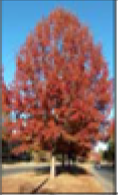 |
Shumard Oak
(Quercus shumardii) |
3" Caliper Size Minimum
30 Gallon Container or B&B 14' — 16' Height |
30' on
center |
Deciduous Tree - Full Sun, 40' — 60' height
Tolerant of heavy clay soils, drought and urban conditions Exceptional fall color |
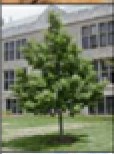 |
Bur Oak
(Quercus macrocarpa) |
3" Caliper Size Minimum
30 Gallon Container or B&B 14' — 16' Height |
30' on
center |
Deciduous Tree - Full Sun, 60' — 80' height
Drought Tolerant, adaptable to a wide range of soils |
 |
Lacebark Elm
(Ulmus parvifolia 'Drake') |
3" Caliper Size Minimum
30 Gallon Container or B&B 14' — 16' Height |
30' on
center |
Semi-evergreen Tree - Full Sun, 30' — 50' height
Tolerant of drought and urban conditions Showy exfoliating bark |
 |
Loblolly Pine
(Pinus taeda) |
6' — 8' Spread, 12' — 14' Height
30 Gallon Container or B&B |
20' on
center |
Evergreen Tree - Full Sun, 90' — 100' height
Drought Tolerant, adaptable to a wide range of soils, recommend plant be used in groupings |
Shrubs
| Plant Image | Common Name (Botanical Name) | Minimum Install Size | Minimum Spacing | Remarks |
|---|---|---|---|---|
 | Indigo Bush (Amorpha fruticosa) | 3 gallon container 18' — 24" spread, 18' — 24" height | 5' on center | Deciduous native shrub, 6' — 10' height & spread Drought Tolerant, adaptable to a wide range of soils |
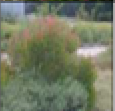 | Wright's Mexican Flame (Anisacanthus quadrifidus var. wrightii) | 3 gallon container 18" — 24" spread, 18" — 24" height | 4' on center | Deciduous shrub, Full sun - part shade, 3' — 5' height & 5' spread Drought Tolerant, adaptable to a wide range of soils Flowering (red) |
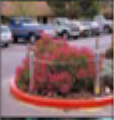 | Autumn Sage (Salvia greggii) | 3 gallon container 18" — 24" spread, 18" — 24" height | 2' on center | Simi-evergreen native shrub, full sun, 2' — 3' height & spread Drought Tolerant, does not tolerate poorly drained clay soils Flowering (red) |
 | Mountain Sage (Salvia regla) | 3 gallon container 18" — 24" spread, 18" — 24" height | 3' on center | Deciduous Shrub, Part Shade - Shade, 3' — 5' height Drought Tolerant, adaptable to a wide range of soils Flowering (red) July - October |
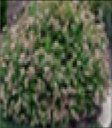 | Edward Goucher Abelia (Abelia x grandiflora 'Edward Goucher') | 3 gallon container 18" — 24" spread, 18" — 24" height | 4' on center | Deciduous shrub, full sun - part shade, 3' — 5' height & spread Medium water requirement, but drought tolerant Flowering (lavender-pink) |
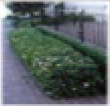 | Indian Hawthorne (Raphiolepis indica 'Snow') | 3 gallon container 18" — 24" spread, 18" — 24" height | 4' on center | Evergreen Shrub, full sun, 3' — 4' height & 5' — 6' spread Drought Tolerant Flowering (white) |
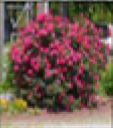 | Knock-Out Rose (Rosa sp. 'Knock-Out') | 3 gallon container 18" — 24" spread, 18" — 24" height | 3' on center | Deciduous Shrub, full sun, 3' — 4' height & spread Requires regular watering. Flowering (Pink) |
 | Texas Sage (Leucophyllum frutescens) | 3 gallon container 18" — 24" spread, 18" — 24" height | 4' on center | Deciduous shrub, 3' — 6' height, 4' — 6' spread Drought Tolerant, adaptable to a wide range of soils Flowering (lavender-pink) |
 | Possumhaw (Ilex decidua) | 3 gallon container 18" — 24" spread, 18" — 24" height | 10' on center | Deciduous shrub, full sun - part shade 7-15' height, 5' — 12'spread Provide one male plant for every 30 female plants Red berries. |
Ornamental Grasses and Groundcovers
| Plant Image | Common Name (Botanical Name) | Minimum Install Size | Minimum Spacing | Remarks |
|---|---|---|---|---|
 | Lindheirmer Muhly (Muhlenbergia lindheimeri) | 1 gallon, container | 18" on center | Native Perennial Grass, full sun, 2' — 5' tall Drought tolerant, prefers well drained soils, adaptable to a wide range of soils |
 | Indian Grass (Sorghastrum nutans) | 1 gallon, container | 18" on center | Native Perennial Grass, full sun - part shade, 3' — 8' tall Drought tolerant, prefers well drained soils, adaptable to a wide range of soils |
 | Mexican Feather Grass (Nassella tenuissima) | 1 gallon, container | 12" on center | Native perennial grass, full sun - part shade, 1' — 3' tall Drought Tolerant, adaptable to a wide range of soils |
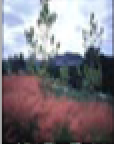 | Pink Muhly Grass (Muhlenbergia capillaris) | 1 gallon, container | 18" on center | Native Perennial Grass, full sun, 2' — 3' tall Prefers moist sandy - sandy loam soil conditions Pink flowers in fall create stunning display |
 | Lily Turf (Liriope muscari 'Silvery Sunproof') | 1 gallon, container | 18" on center | Simi-evergreen perennial, full sun - shade 12" — 18" height and spread. Drought Tolerant, adaptable to a wide range of soils Flowering (lavender), blooms mid-summer - fall |
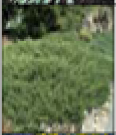 | Spreading Juniper (Juniperus horizontalis 'Youngstown') | 3 gallon container | 3' on center | Evergreen groundcover, full sun, 1' height, 6' spread Drought Tolerant, adaptable to a wide range of soils |
 | Engelmann's Daisy (Engelmannia persistenia) | 1 gallon, container | 12" on center | Native perennial, 2' tall, full sun Drought Tolerant, adaptable to a wide range of soils Flowers (Yellow), blooms well even in drought conditions. Blooms March - July |
 | Purple Coneflower (Echinacea purpurea) | 1 gallon, container | 18" on center | Native perennial, 2' — 3' tall, full sun - part shade Drought Tolerant, adaptable to a wide range of soils Long lasting flowers (Purple), Blooms April - September |
Glossary of Streetscape Terms
Awning signs Attached or printed on a canopy that protects people from the sun and the elements.
Bike Lane A portion of a roadway which has been designated by striping and pavement markings for the exclusive use of bicyclists.
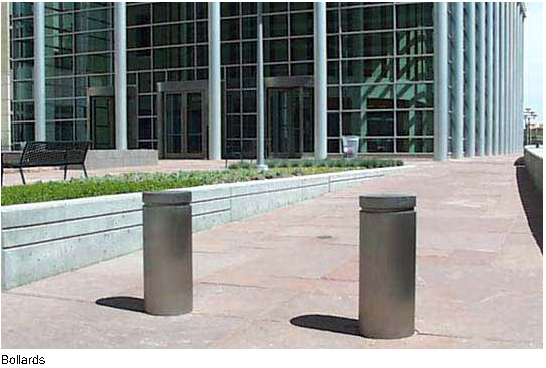
Bollards A three to four foot tall post or column constructed of concrete, stone, or metal designed to separate pedestrian and vehicular traffic, define property lines, protect a work of public art, or otherwise for property protection, traffic control and pedestrian safety.
Crosswalk Portion of a roadway designated and marked for a pedestrian crossing, typically at intersections, but potentially at designated midblock locations.
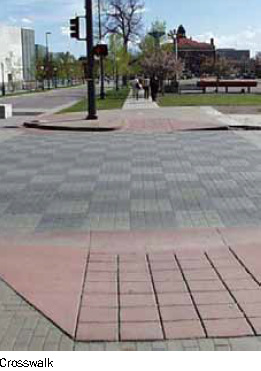
Curb cut A cut in the curb associated with a driveway to provide access for vehicles into a parking area, alley, or loading zone.
Curb zone The area from the inside of the curb to the sidewalk. This zone is where streetscape elements such as street trees, trash receptacles, bollards, news racks, benches, bike racks, and light fixtures should be located.
Gateway A distinctive element which marks the entrance of a district.
Grade Separation The vertical separation of conflicting travelways with a structure, such as a pedestrian underpass or railroad bridge over a roadway.
Ground signs Typically self supportive by a post or posts mounted into the ground.
Intersection The area where streets intersect one another that facilitates both pedestrian and vehicular movement.
Kiosks A display element for timely information to help pedestrians find their way, direction them to destinations, or provide information on activities.
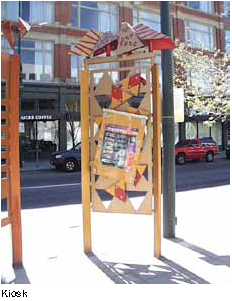
Median The portion of the roadway which separates opposing traffic streams, preferably designated with curb, gutter, and trees.
Pedestrian friendly Design qualities that make walking attractive, including places people want to go and good facilities on which to get there.
Pedestrian zone The area of the sidewalk that must be kept clear for pedestrian movement, and free of all obstacles.
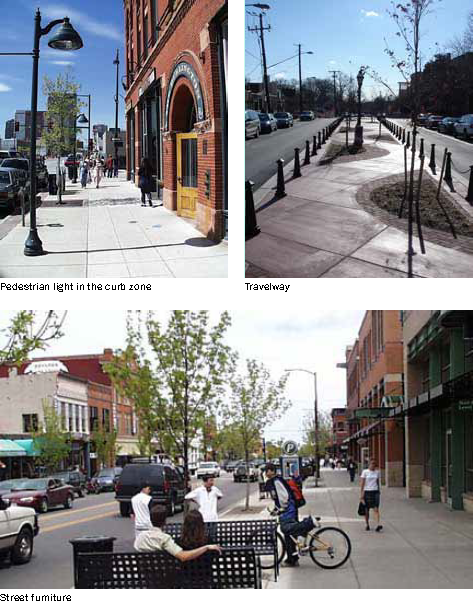
Pedestrian lighting Lighting that illuminates the sidewalk at a level that is consistent with pedestrian activities rather than vehicular activity.
Projecting signs Typically attached to a building and cantilever horizontally over the sidewalk.
Public art Art located in the public realm such as in a plaza or as a part of the streetscape.
Public right-of-way The composite public area dedicated exclusively to circulation-both physical and social-including the roadway and pedestrian area.
Refuge Island A non-traversable section of median or channelization device on which pedestrians can take refuge while crossing a street.
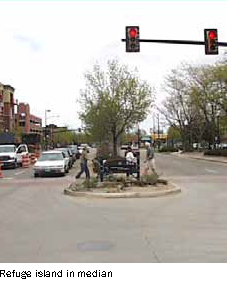
Sidewalks A walkway separated from the roadway with a curb, constructed of a durable, hard and smooth surface, designed for preferential or exclusive use by pedestrians.
Signage An informative public sign system that is incorporated into the corridor streetscape.
Street furniture Elements typically located in the public right of way for use by pedestrians such as benches, trash receptacles, and bike racks.
Street trees Trees located in a tree lawn or tree grate to provide an effective canopy over the sidewalk and portion of the street.
Streetscape The entire system of streets, sidewalks, landscaping, street furniture, and open spaces, by which people circulate through and experience the corridor.
Travelway The section of the street in which vehicles and bicycles travel. It includes bicycle lanes, vehicle lanes, turning lanes, and medians.
Tree grate A metal covering for a tree pit in the sidewalk.
Tree lawns A landscaped strip between the back of curb and sidewalk in which street trees may be located.
Wall signs Typically flat signs fixed to a building facade.
Window signs Typically silk screened, back-painted, metal-leafed, or sandblasted onto a glass window.
Wayfinding A system of directional public signs that helps lead pedestrians and vehicles to destinations.

