
Apple Valley City Zoning Code
CHAPTER 9
31 - Residential Design Standards
9.31.010 - Purpose and General Plan Consistency
A.
Purpose
1.
General. The purpose of these design standards is to complement the development standards for the various types of development found in Chapters 9.28, 9.29, and 9.30 of this Development Code with respect to the design features of a given project. In addition, the purpose of these standards is to assist the developer in understanding the Town's goals and objectives for high quality residential development, as described in the General Plan.
2.
Single Family Development. The purpose of the Residential Design Standards for single family developments is to promote the low density, large lot, high-quality rural character that the Town of Apple Valley has come to be known for and to preserve that character as the community grows.
3.
Multi-Family Development. The Town Council finds that the general quality of multi-family development throughout the Town necessitates the implementation of better development standards than currently exists. The lack of architectural articulation, landscaping, proper parking accommodations, suitable amenity packages and other design features adversely affects the quality of life for multi-family development residents and adversely affects property values in these areas. Multi-family housing design standards are necessary to improve and maintain the quality of multi-family housing for the safety and benefit of residents and for the preservation of property values in the vicinity of multi-family neighborhoods.
Further, and in general, multi-family and cluster housing, because of their higher densities, tend to generate large parking areas and a decrease in private open space. If not properly designed, parking facilities can dominate the site and relegate open spaces to left over areas not related to the structure and not useful to the residents. Multi-family developments surrounded by high walls and parking lots or rows of carports along public streets are examples of undesirable design features. These design standards are intended to mitigate these undesirable design features and promote a pleasant residential environment within the context of higher density development within the Town.
B.
Objectives. The following are objectives of the Residential Design Standards:
1.
Introduce a clear and consistent set of standards designed to assist the development community in comprehending the Town's intent in regulating design quality and ensuring that long term interests of the community are met;
2.
Create an environmentally based set of standards intended to realistically reflect natural constraints and development opportunities;
3.
To enhance and preserve neighborhoods and property values by providing good quality design;
4.
Improve site planning and appearance through the application of modern and creative solutions to commonly repeated design problems found throughout the Town;
5.
To achieve compatibility with existing adjacent subdivisions in terms of lot size and configuration;
6.
To achieve positive results in drainage solutions and avoid the aggravation of any existing flooding problems;
7.
To minimize expensive infrastructure extensions and maintenance by reducing the number of existing rights-of-way when feasible alternatives can be found with new development;
8.
To promote safe and aesthetically pleasing subdivision designs that include curvilinear streets, cul-de-sacs and street hierarchies to reduce neighborhood noise and increase safety and privacy; and
9.
To establish open areas and provide multi-use trail linkages to existing facilities.
C.
Applicability. The design standards contained in this Chapter are intended to apply generally to the development type under which they are listed. Some standards may not apply to a particular development because of insufficient size or scale. Where questions of applicability arise, the Director shall determine whether a specific provision does or does not apply.
9.31.020 - Single Family Site Planning Design Standards (Amended Ord. 272, 326, 343)
An important goal of single family site planning is to create functional and visual variety along local streets. It is the intent of these design standards to discourage subdivisions where identical homes march down long, uninterrupted straight streets, with no variation in building placement or the street scene.
A.
Siting Structures and Lot Preparation. The following standards shall be used in evaluating the site and structure design of new single-family and multi-family developments. Appropriate designs will:
1.
Protect natural slopes, contours, ridgelines and other elevations;
2.
Preserve significant landscape features and patterns;
3.
Take into account existing sites and structures and be sensitive to the preservation of established vistas and view corridors;
4.
Utilize contour grading to blend into existing landforms, rather than severe cutting, filling, padding or terracing;
5.
Avoid steep cuts and minimize soil import or export;
6.
Avoid the creation of structures out of scale with their surroundings by not building up pads on artificial platforms to create or enhance views;
7.
For in-fill and previously subdivided lots, minimize grading and site preparation to reduce erosion, soil exposure and minimize impacts on natural drainage courses. Except for activities required to extend access and infrastructure, and to provide for drainage, disturbance of a site shall be limited to thirty (30) feet surrounding the building pad;
8.
Round and contour graded slopes to blend with the existing terrain. Native vegetation shall be retained and incorporated into the project wherever possible. Grading for building pads shall be sensitively designed to reduce disturbance and visual impacts. Split pad grading shall be utilized in place of excessive soil export/import to create a building pad.
9.
Minimize the removal of native vegetation;
10.
Separate and screen structures from each other to maximize privacy; and
11.
Site single family dwellings on a lot to respond to and to respect property views, site features, existing topography, and any adjacent existing development. Dwelling units need not be sited parallel to the street if other orientations take better advantage of site features.
12.
Through lots or reverse frontage lots should be avoided. Tracts of single-family dwellings should not back onto local road rights-of-way and should front onto these local roads.
B.
In-Fill in Existing Neighborhoods. New single-family development in existing neighborhoods shall be compatible with the adjacent residences.
1.
In-Fill Setbacks. The setbacks of in-fill development shall be either:
a.
Equal to the average setback of all residences on both sides of public rights-of-way within 200 feet of the property lines of the new development; or
b.
Equal to the average of the two (2) immediately adjacent residences.
2.
Roadway Improvements. Roadway improvements on in-fill lots in existing neighborhoods shall match roadway improvements of the two adjacent lots.
C.
Driveway Entries/Garages. Where ample room exists, circular driveway entries are preferred. Such driveways allow motorists to enter and exit the property in a forward motion. Garages may be detached and connected to the residence by a breezeway. In addition:
1.
Garage doors shall be setback a minimum of twenty (20) feet to allow driveway parking clear of sidewalks and public rights-of-way.
2.
Angled garages are encouraged to improve the streetscape by breaking up the monotony of all garage doors being parallel to the street.
3.
Orientation of garage should be opposite of bedrooms on adjacent house when possible.
D.
Setbacks. The following setback requirements shall apply:
1.
Front Yard. Placement of residences and garages close to or back from the street creates different patterns of visible open space. The structures themselves, when closer to the street, add to the diversity of the view. The minimum offset of front setbacks for adjacent properties shall be five (5) feet. When located on a curvilinear street, which provides a varied street scene, the minimum variation shall be three (3) feet. When one and two-story homes are adjacent, the two-story home shall have the larger front setback.
2.
Side Yard. Varying the distance between adjacent residences, or between residences and fences, results in different types of yards and private patio areas. Within subdivisions, side yard setbacks shall be varied from each side of the lot to create unique spaces and break up visual monotony from the street.
E.
Reverse Frontage Lots/Subdivision Walls
1.
All subdivision perimeter walls parallel to major or secondary street rights-of-way shall be consistent with the design standards of subsection 9.31.030.K, Walls and Fences, of this Chapter. Subdivisions adjacent to local road rights-of-way should not have perimeter walls. Vinyl, wood and wrought iron is preferred if lots cannot be oriented toward the local road.
2.
Tract areas which back onto rights-of-way shall be landscaped as required by subsection 9.75.060.B, Landscape Improvement Requirements, of this Code.
3.
Residential tracts which back onto vacant areas that are not intended to be future local roads may be permitted to construct a wall around the perimeter of the tract adjacent to this vacant area.
4.
Provide bike paths and equestrian trails as required by the General Plan.
5.
Perpetual maintenance arrangements of these areas is subject to approval by the Town Engineer and the Director.
F.
Landscaping
1.
Xeriscape landscaping techniques shall be used in all front yards, street side yards and in all parkway areas in accordance with Chapter 9.75 "Water Conservation/Landscape Regulations" of this Code.
2.
Within parkway and common areas, in accordance with Chapter 9.75 "Water Conservation/Landscaping Regulations" of this Code, landscaping materials shall be drought resistant, native type plants, trees and groundcover.
G.
Cul-De-Sac Treatments. Cul-de-sacs are recognized as an excellent opportunity to enhance the privacy and safety of residents, especially children. Cul-de-sac designs are strongly encouraged subject to the following:
1.
Length shall not exceed 600 feet without secondary access.
2.
To avoid confusion for emergency services personnel, cul-de-sac names shall not be derived from other nearby streets.
3.
Cul-de-sacs on private streets shall include a landscape island in the center of the cul-de-sac.
4.
Driveways shall be separated by a minimum planting strip of five (5) feet.
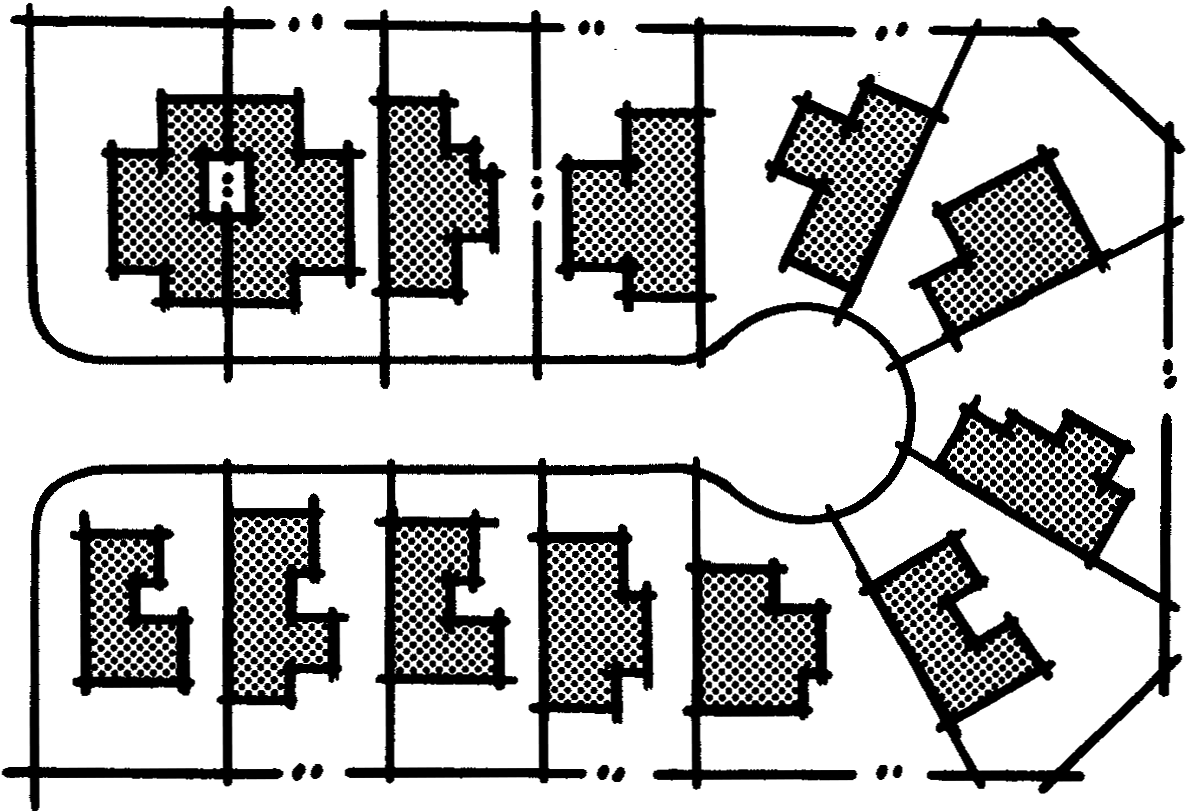
Figure 9.31.020-C Zero Lot Lines
H.
Planned Residential Developments
1.
Zero Lot Line Residences. Zero lot line residences (residence is flush to a side lot line), as allowed in Planned Residential Developments, shall provide courts and patios that conventional lots may prevent. Also, an articulated street scene shall be provided (Figure 9.31.020-C).
2.
Attached Dwellings. Attached dwellings can look like two or more separate structures or like one large custom home, depending on the articulation and treatment of the roof line and the facades. Attached dwellings shall be used to yield larger open space areas between structures (Figure 9.31.020-D).
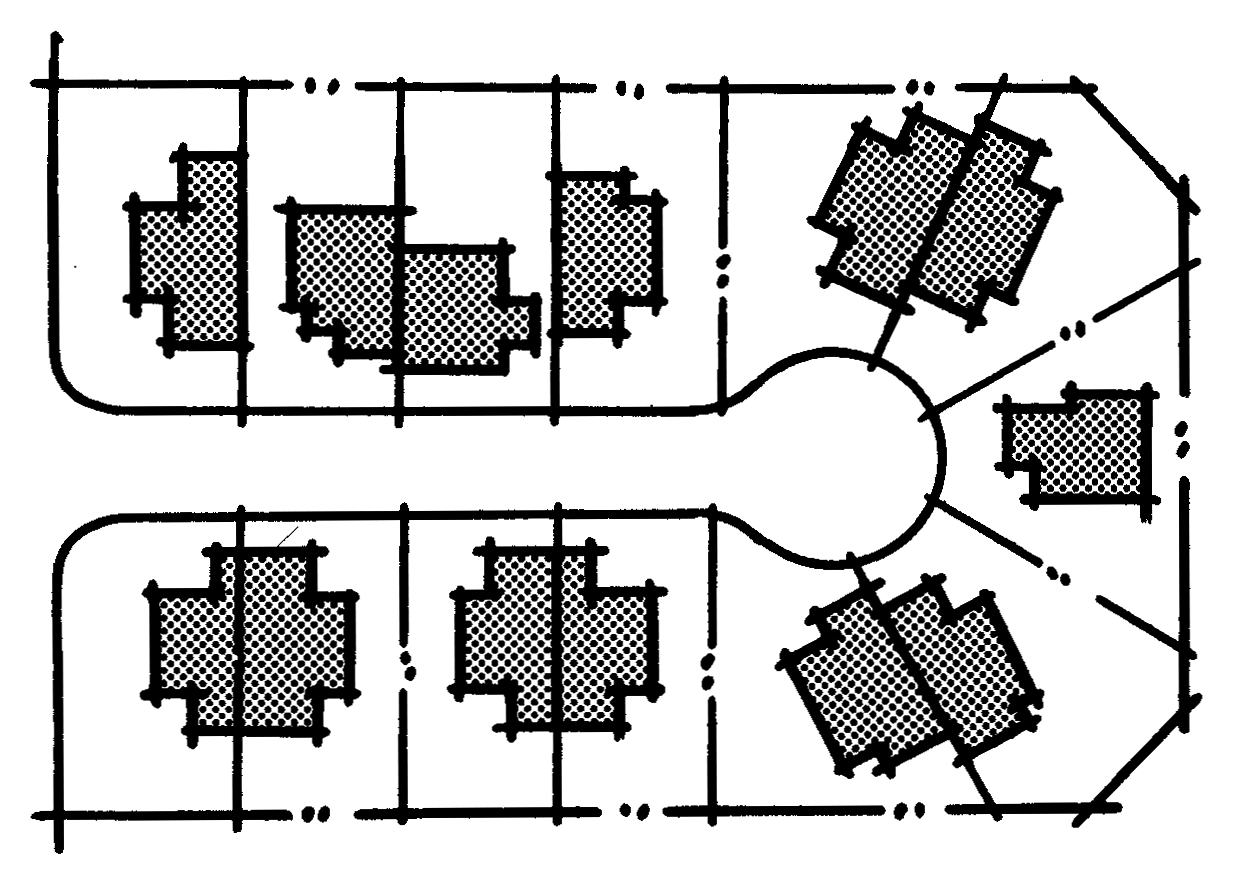
Figure 9.31.020-D Attached Dwellings
I.
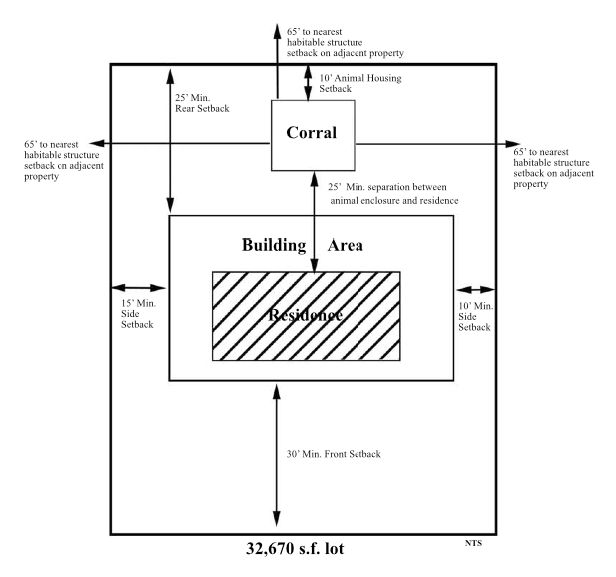
Residential Estate ¾ Site Planning for Equestrian. An important goal of site planning for equestrian purposes is to create functional and visually pleasing parameters that will serve to meet equestrian needs, discourage restrictions on equestrian accessory structures, and standardize permitted uses within equestrian districts. The following site planning standards are suggested for Residential Estate ¾ (equestrian) lots larger than 32,670 square feet.
1.
Setbacks for Equestrian Accessory Structures. The following setbacks apply:
a.
Stables and Corrals. Placement of equestrian accessory structures such as stables and corrals shall be consistent with Section 9.29.030 and should consider a minimum rear setback of ten (10) feet from the property line and be a minimum of sixty-five (65) feet from offsite habitable structures. Such buildings and roofed structures existing prior to the development of adjacent vacant property and closer than sixty-five (65) feet to new construction setbacks shall become a legal nonconforming use.
(Ord. No. 481, § 3, 2-9-2016)
9.31.030 - Single Family Architectural Design Standards (Amended Ord. 313, 315, 343, 369, 430)
A.
Architectural Style. While there is no particular architectural style required for single family residential structures, the focus shall be on the development of a high-quality residential environment. In selecting an architectural style, compatibility with the desert environment should be considered. American Desert and Ranch architectural styles that blend with the natural desert environment are encouraged. Traditional American Southwest, Spanish Revival, Pueblo, Mediterranean/Italianate or Craftsman architectural styles are also encouraged.
1.
Accessory Structures. The design of accessory structures (greater than 120 square feet) including second units, garages, guesthouses, cabanas and storage buildings shall be architecturally compatible with the primary structure through the use of compatible building materials, walls/roofs/trellises, fence/wall connections and/or landscaping. Cargo containers or prefabricated shipping containers shall be expressly prohibited with the exception of the acceptable modifications described in Section 9.29.020.
B.
Environmental Design. Desert appropriate environmental design shall respond to the environmental conditions of the high desert by responding to sun, wind, heat and cold. Building and landscaping responses to the environmental conditions of the Town's desert climate which provide shelter and relief from sun and wind, such as broad overhangs, arbors and front porches, are strongly encouraged. Building designs which reduce the need for mechanical heating and cooling are also encouraged.
C.
Architectural Diversity
1.
Single-Family In-Fill Plotting Criteria
a.
If the same floor plan is used for adjacent homes, one shall be the reverse of the other, whenever possible, and have a different elevation.
b.
No two homes using the same floor plan, elevation and/or color scheme shall be constructed on any cul-de-sac bulb.
c.
No two adjacent homes using the same floor plan shall have the same exterior color scheme/treatment.
2.
Single-Family Subdivision Plotting Criteria. All residential subdivision development (except single-family residential homes built on individual lots or tracts conditioned for custom home development) shall require the review and approval of a Development Permit by the Planning Commission subject to the provisions of Chapter 9.17 "Development Permits" of this Code and the following:
a.
In order to achieve diversity and to promote the custom home style prevalent in Apple Valley, the number of floor plans and elevations enumerated in Table 9.31.030-A shall be offered in a subdivision:
Table 9.31.030-A Floor Plans/Elevations Required
Note: Color scheme variations sensitive to the natural colors of the landscape shall be utilized.
b.
No more than twenty-five (25) percent of the homes on any block, including both sides of the street, shall have the same elevation.
c.
A floor plan shall not be used consecutively more than three times in a row (whether reversed or not).
d.
If the same floor plan is used for adjacent homes, one shall be the reverse of the other whenever possible, and have a different elevation.
e.
No more than 65% of any one floor plan shall be used on any cul-de-sac or along any street between intersecting streets.
f.
No two homes using the same floor, elevation and/or color scheme shall be constructed on any cul-de-sac bulb.
g.
No two adjacent homes using the same floor plan shall have the same exterior color scheme/treatment.
D.
Building Materials.
1.
Metal or aluminum siding, reflective materials and finishes, and unfinished concrete block shall be avoided unless they are necessary as a part of an established or common architectural style upon review and approval of the Planning Commission on a case-by-case basis.
2.
Stone, brick, masonry, stucco, adobe and smooth plasters are required when such architectural treatments are used upon the main structure on site.
3.
The use of corrugated metal on any exterior is prohibited.
4.
The use of plywood products on any exterior will require Director review and approval. Approval shall be based upon product quality and proven durability.
5.
Roofing Materials. Metal roofing materials simulating traditional "S" shaped or flat tile roofing material, simulating shake roofing material (if consistent with surrounding homes), and materials identified within the Planning Commission Metal Roof Policy Statement shall be permitted within all residential zoning districts. All other exposed metal material used for roofing may be reviewed and approved by the Planning Commission on a case-by-case basis as follows:
a.
The Planning Commission shall determine that the proposed roofing material is consistent and compatible with and complimentary to the architectural and aesthetic character of the home upon which the roofing shall be placed, and consistent and compatible with and complimentary to the architectural and aesthetic character of the surrounding residential homes. Upon such determination, the Commission may approve said roofing material.
b.
If, however, the Commission determines that the proposed roofing material is not consistent and compatible with and complimentary to the architectural and aesthetic character of the home upon which the roofing shall be placed, and consistent and compatible with and complimentary to the architectural and aesthetic character of the surrounding residential homes, the Commission shall not approve said roofing material.
c.
Roofing material giving the appearance of a flat, seamless roof is expressly prohibited within all residential zones.
E.
Building Articulation
1.
Recessed windows and doors are encouraged to add articulation to the wall surface. Particular attention should be given to the shading of windows with southern and southwestern exposure.
2.
A variety of heights, setbacks, roof shapes, trim, and sizes should be used to create visual complexity within a cohesive design.
3.
Broad roof overhangs are recommended to produce interest and to respond to climatic conditions, especially when used in combination with courtyards, porch enclosures, balconies and recesses.
4.
All street elevations shall be architecturally treated.
F.
Front Privacy Walls/Recessed Entryways. Front privacy walls finished to match the residence are encouraged. Such privacy walls can be utilized to define private space and act as a border between the natural desert landscape and intense use areas. Recessed entryways and other shade and wind mitigating devices (arbors, patio covers, courtyards, porches) which shelter the user from the natural elements are also encouraged (Figure 9.31.030-A).
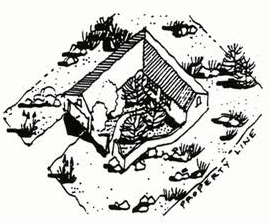
Figure 9.31.030-A Privacy Walls
G.
Single-Family In-Fill Design Criteria. All in-fill development shall be architecturally designed to project an image of a custom home. The number of custom features shall be based upon architectural style and/or overall size of home, subject to the Planning Commission Design Criteria Policy. Architectural features may include, but not be limited to the following:
1.
A variety of enhanced architectural features and materials shall be provided on every front and street side elevation. This can include, but is not limited to, porches, bay windows, pop-outs, veneers, rock, brick, wood siding, etc., or such other features.
2.
All garage doors shall be sectional or roll-up. Glass window accents and/or custom designs are encouraged.
3.
Trim, including that with a stucco covering, is encouraged to be painted in a contrasting color. The contrasting color shall be compatible with the structure's primary color.
4.
Homes with a trim (band) feature, which distinguishes the first and second floors, should have the band on the front and rear elevation of the homes. The band will only be required on the side elevation, on corner lots where the elevation is visible from the street.
5.
Two-story homes with a second story elevation facing a public right-of-way shall be provided with design features which could include pot shelves, shutters, wood siding under roof peaks, color contrasting paint under roof peaks and/or windows, etc., or such other features.
6.
Architectural treatment to chimneystacks is encouraged.
7.
A wall-mounted lighting fixture shall be provided at the front porch area, as well as one on each side of the garage door(s) for a maximum total of three lighting fixtures are required. Decorative fixtures are encouraged.
8.
Front entry doors with windows and/or decorative treatments are desirable.
9.
Architectural treatments shall wrap around to the interior side or rear elevation a minimum of three (3) feet. Treatments to each elevation are encouraged.
10.
Builders are encouraged to incorporate a custom, recognizable design feature into their stock plans.
H.
Single-Family Subdivision Development Design Criteria. All residential tract development (except single-family residential homes built on individual lots or tracts conditioned for custom home development) shall require the review and approval of a Development Permit by the Planning Commission subject to the provisions of Chapter 9.17 "Development Permits" of this Code and the following:
1.
A variety of enhanced architectural features and materials shall be provided on every front elevation. This can include, but is not limited to, porches, bay windows, pop-outs, veneers, rock, brick, wood siding, etc., or such other features approved by the Planning Commission.
2.
At least two out of every three models shall provide general architectural relief at the rear elevation of each home in order to avoid one continuous wall or flat surface on the rear of the home. Fireplaces, rear yard trellises, and media niches may be considered in this requirement.
3.
A variety of designs shall be used on garage doors, with no two adjoining homes that have the same floor plan and elevation using the same garage door pattern. In no case shall more than three homes of any floor plan or elevation have the same garage door pattern in a row. At least two out of three shall be provided with garage door windows in a variety of designs.
4.
All garage doors shall be sectional and roll-up. The applicant shall provide a color board indicating proposed garage door colors for Planning Commission approval.
5.
Trim with a stucco covering may be painted in a contrasting color. The contrasting color shall be color compatible with the structure's primary color.
6.
Homes with a trim (band) feature, which distinguishes the first and second floors, should have the band on the front and rear elevation of the homes. The band will only be required on the side elevation, on corner lots where the elevation is visible from the street.
7.
Two-story homes with a second story elevation facing a public right-of-way shall be provided with design features which could include pot shelves, shutters, wood siding under roof peaks, color contrasting paint under roof peaks and/or windows, etc., or such other features approved by the Planning Commission.
8.
The Director, or designee, shall have the authority for minor architectural changes focusing around items such as window treatments, color combinations, façade treatments, and architectural reliefs. Questions on the interpretation of this provision or changes not clearly within the scope of this provision shall be submitted to the Planning Commission for consideration under a Revision to the Design Review.
9.
Architectural treatment shall be provided on each chimneystack.
10.
When used, mullions shall be provided on first, second and third-story windows, as approved by the Planning Commission. The mullions shall be provided in a variety of shapes.
11.
A wall-mounted decorative lighting fixture shall be provided at the front porch area, as well as one on each side of the garage door(s) for a maximum total of three lighting fixtures.
12.
All front entry doors shall provide either a window or the decorative treatment approved by the Commission under the Development Permit.
13.
The electric and/or gas meter adjacent to and serving each home shall be screened from view from any public right-of-way by shrubs or other landscaping approved by Planning Division. All above ground utility boxes or pedestals located within the front or side yard setback area(s), or within the public right-of-way adjacent to such setback area(s), shall be camouflaged with shrubs or other landscaping approved by Planning Division.
14.
All block walls shall be capped or finished with a molded top.
I.
Additional Architectural Standards for Attached Units. In addition to the architectural design standards for single-family dwellings, the following design standards shall apply to attached single-family dwellings:
1.
Single-family attached dwellings shall be architecturally articulated to project an image of customized homes. Preferred configurations include architectural treatment either as a large custom single-family unit or as individually articulated dwellings such as traditional rowhouses.
2.
Adjacent driveways shall be separated by a planting strip.
3.
Dwellings with driveways less than twenty (20) feet in length shall be provided with automatic garage door openers to prevent cars parked in the driveways from obstructing pedestrian movement on sidewalks (Figure 9.31.030-B).
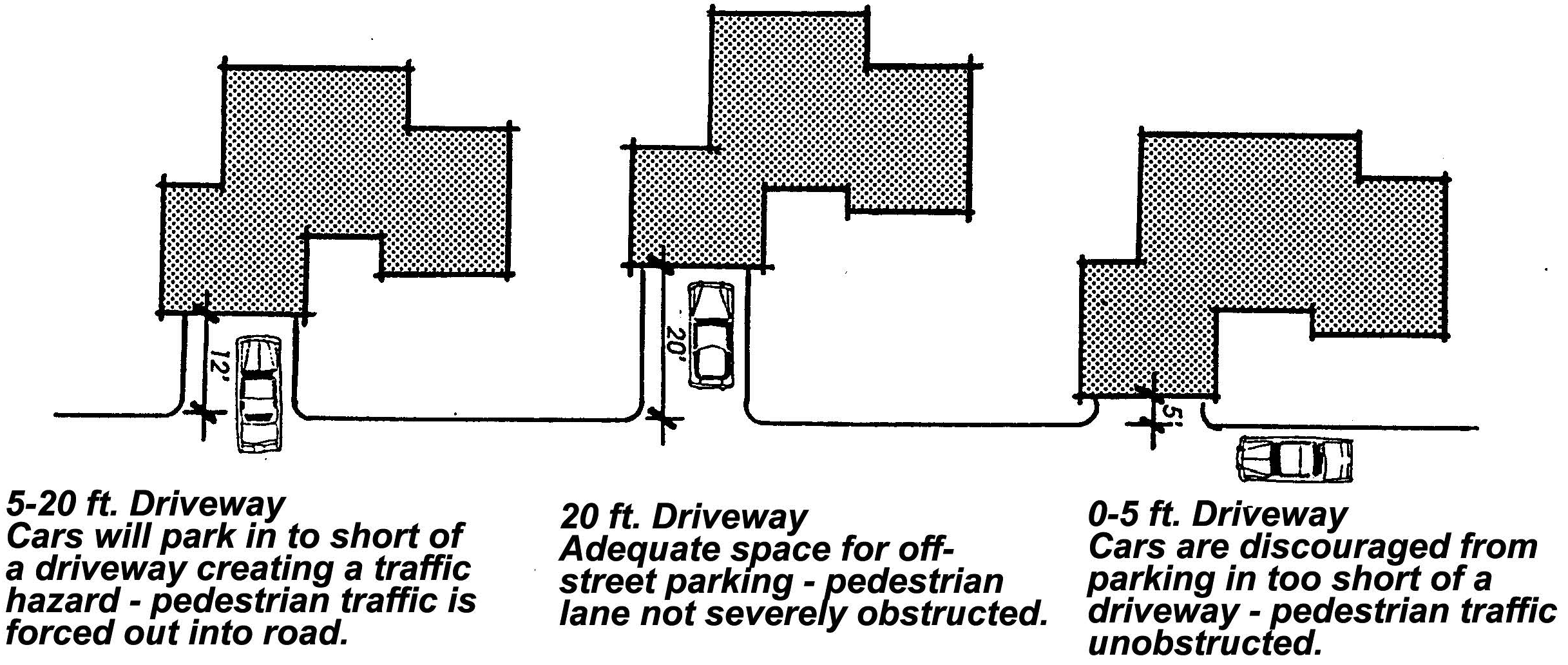
Figure 9.31.030-B Driveways
J.
Accessory Features
1.
Accessory Structures. The design of accessory structures (greater than 120 square feet) including second units, garages, guesthouses, cabanas and storage buildings shall be architecturally compatible with the primary structure through the use of compatible building materials, walls/roofs/trellises, fence/wall connections and/or landscaping.
2.
Mechanical Equipment
a.
Any equipment, whether on the roof, side of the structure or ground, shall be screened from public view from adjacent property or from a public right-of-way.
b.
In new development, the method of screening shall be integrated into the architectural design of the building and/or landscaping.
c.
In existing development which is modified pursuant to Chapter 9.07 "Nonconforming Uses and Structures" of this Code, the method of screening shall be architecturally compatible with the structure on which it occurs in terms of materials, color, shape and size.
3.
Vents, Gutters and Downspouts. Roof flashing, rain gutters, downspouts, vents, renewable energy conduit, and other roof protrusions shall be finished to match, or complement, the roof or facade materials and/or colors which provide the background.
4.
Attached and Detached Accessory Structures. Construction of any permanent or semi-permanent attached or detached accessory structure shall conform to the standards and criteria as detailed within Chapter 9.29 "Special Use Regulations for Residential Districts" of this Code.
K.
Walls and Fences. Fencing requirements shall remain flexible, but installations should take advantage of the natural features of the site like topography and vegetation.
1.
Closed privacy fencing should be limited to the immediate area around the home or outbuildings. Vinyl or wooden fencing shall be designed to withstand the frequent high desert winds. Grape stake or three (3)-inch slats are not permitted.
2.
Large courtyards created by extending building walls with architectural walls similar to building walls providing private outdoor open space are strongly encouraged.
3.
Property line walls and fences adjacent to streets shall be constructed of decorative materials such as vinyl or wood rail fencing, split face block or slumpstone. Such fencing shall incorporate appropriate decorative enhancements such as caps or pilasters. Chain link fencing in the front yard and abutting a street side yard of a corner lot are prohibited in the Residential Single-Family (R-SF) and Residential Equestrian (R-EQ) Zoning Districts, where the residence is constructed after June 7, 2007. Within the Very Low Density Residential (R-VLD), Residential Agriculture (R-A), Low Density Residential (R-LD), Estate Residential (R-E), Estate Residential ¾ (R-E ¾), Residential Equestrian (R-EQ) and Residential Single-Family (R-SF) Zoning Districts, perimeter walls for new subdivisions on local streets in existing neighborhoods are prohibited where the wall would be located opposite front yards.
4.
Subdivision Walls. Subdivision walls shall be articulated by regularly spaced pilasters or landscape insets, decorative caps and landscaping. Pilasters or insets shall be spaced a maximum of forty (40) feet on center (Figure 9.31.030-C).
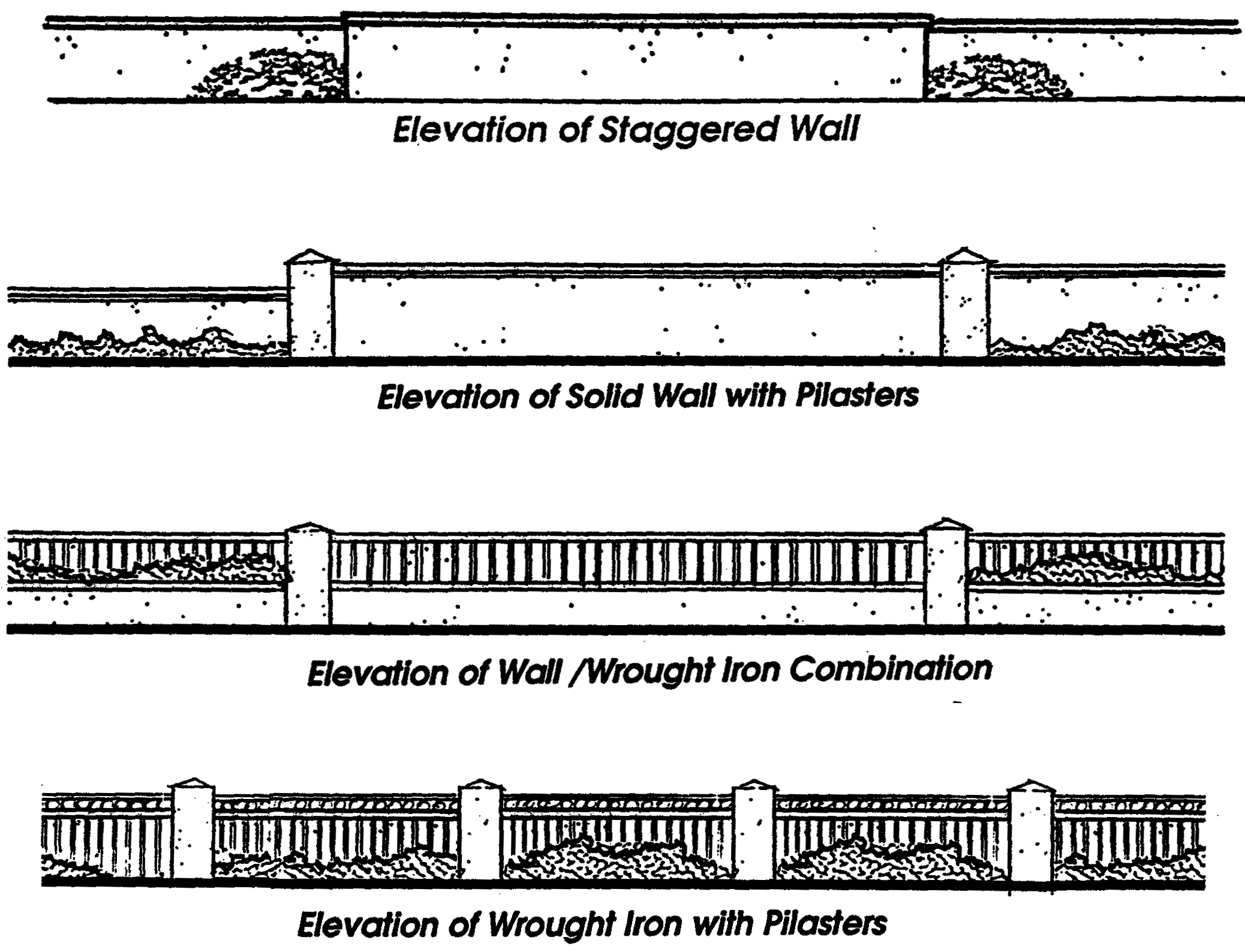
Figure 9.31.030-C
(Ord. No. 476, § 3, 10-27-2015; Ord. No. 481, § 4, 2-9-2016; Ord. No. 523, § 10, 1-14-2020)
9.31.040 - Multi-Family Site Planning Design Standards (Amended Ord. 272)
A.
Site Planning and Design. Multi-family residential developments shall be sited to respond to and respect property views, site features, existing topography, dwelling unit privacy and any adjacent existing development. The following multi-family site planning standards shall be used to create a safe, neighborhood environment in the project area.
1.
Integrate Structures into Natural Landforms
a.
Site grading shall recognize existing natural landforms and drainage patterns by providing an appropriate transition of architectural elements to grade. For example, in larger developments use the natural features as amenities by leaving natural drainage swales or rock outcroppings undisturbed and orienting buildings and open spaces around them.
b.
Building pads and vehicle circulation shall generally follow contour lines rather than cross them. When a building must cross contour lines, step building pads down the slope rather than mass grading the site.
c.
The grading plan shall direct and provide for an adequate flow of surface run-off to catch basins while contouring the land to blend with existing conditions at the boundaries of the site.
2.
Building Orientation. Orient development to create a pleasing streetscape while maximizing the livability of the dwelling units.
a.
Orient buildings to create a residential streetscape while providing access and partial views from dwelling units to natural features, landscaped open space, recreational amenities or landscaped parking areas.
b.
Living room and kitchen windows shall be located to allow views of natural features, landscaping or site amenities to the maximum extent feasible.
c.
If some windows must look out onto a wall, provide special architectural treatments to the wall, such as reveals, architectural projections, or arbors to lend human scale to the wall, or provide special landscape treatment to screen views of the wall.
3.
Neighborhood Compatibility. New multi-family residential development shall relate to adjacent single family residential districts in the following ways:
a.
By stepping down the scale, height, and density of buildings at the edges of the development when surrounding neighborhoods are of lower density or smaller scale. Step the building down at the ends or sides nearest the single family unit to a height approximately equal to that of the adjacent single family residence (or of typical single family residences in the vicinity if adjacent to an undeveloped single family zoning district).
b.
By incorporating architectural elements and materials that are similar to those used in the neighborhood.
c.
By including a front yard that is similar to a single family residence, meet multi-family residential landscaping requirements at a minimum.
d.
By locating parking areas within the project interior or at the side or back when necessary to achieve the "residential front yard" appearance.
4.
Maximize Privacy. Maximize privacy for all residents by locating general pedestrian circulation away from living room and bedroom windows.
a.
Maintain an average distance of twelve (12) feet between general pedestrian paths and dwelling unit windows.
b.
Provide a minimum twelve (12)-foot separation (measured from the face of the curb) between buildings and internal parking lots, and between buildings and private streets or drives.
c.
Where there is limited horizontal separation of windows from nearby public streets or communal space, provide decorative fencing, plantings, berms or grade differences to ensure that passers-by cannot look directly into the dwelling.
B.
Entry Drives. The principal vehicular access into a multi-family development shall be through an entry drive rather than a parking drive. Entry drives provide access to parking areas free from parking and backing out movements, parking drives lead through parking stall areas and can be interrupted by vehicles pulling into or out of parking spaces. Colored, textured paving (i.e., interlocking pavers) treatment at the entry drives is encouraged.
C.
Entry Statements
1.
Entry Statement Standards. Entry statements shall include vehicular and pedestrian entry statements which shall be consistent with the following:
a.
Provide one visually dominant entry to the development which conveys a sense of arrival;
b.
Entry statements shall provide an open view into the development with landscaping and project directories;
c.
Design the entry to provide a transition from the outside to an internal visual focus, such as landscaping, a water feature, sculpture or a building;
d.
Special attention shall be given to hardscape and landscape treatments at the entry to enhance the overall image of the development. An entry statement shall consist of at least two of the following items:
1)
Hardscape structure (trellis, decorative, low garden wall with berming, guardhouse, decorative gate);
2)
Specimen landscaping (large, distinctive vegetation, i.e., relocated Joshua trees) or mature trees, either flowering or native trees, or twenty-four (24)-inch box trees;
3)
Large boulder groupings;
4)
Water saving and easy maintenance fountains;
5)
Textured or stamped concrete;
6)
Monument signage with accompanying landscape and berming; or
7)
Other comparable installations.
D.
Clustering of Units
1.
Consistent Application in Site Plan. The clustering of multi-family units shall be a consistent site planning element. Structures composed of a series of simple yet varied planes assure compatibility and variety in overall building form.
2.
Cluster to Create Views. Building groups shall be clustered to provide views into the development from the outside and to provide views from the individual units to mountains, vistas, and adjacent neighborhoods (Figure 9.31.040-A).
3.
Perimeter Arrangement. Buildings shall be clustered to achieve a pleasing streetscape and visual variety at the perimeters of the development through variation in building siting, massing, orientation and landscaping.
4.
Connections Between Building Clusters. In multi-building developments, pedestrian paths shall be provided to connect buildings in the development with one another, on-site amenities and adjacent streets.
E.
Assemblage of Lots in the Mountain Vista Neighborhood. In the Mountain Vista neighborhood, projects proposed on assembled lots may receive a density bonus of ten (10) percent, subject to Planning Commission approval.
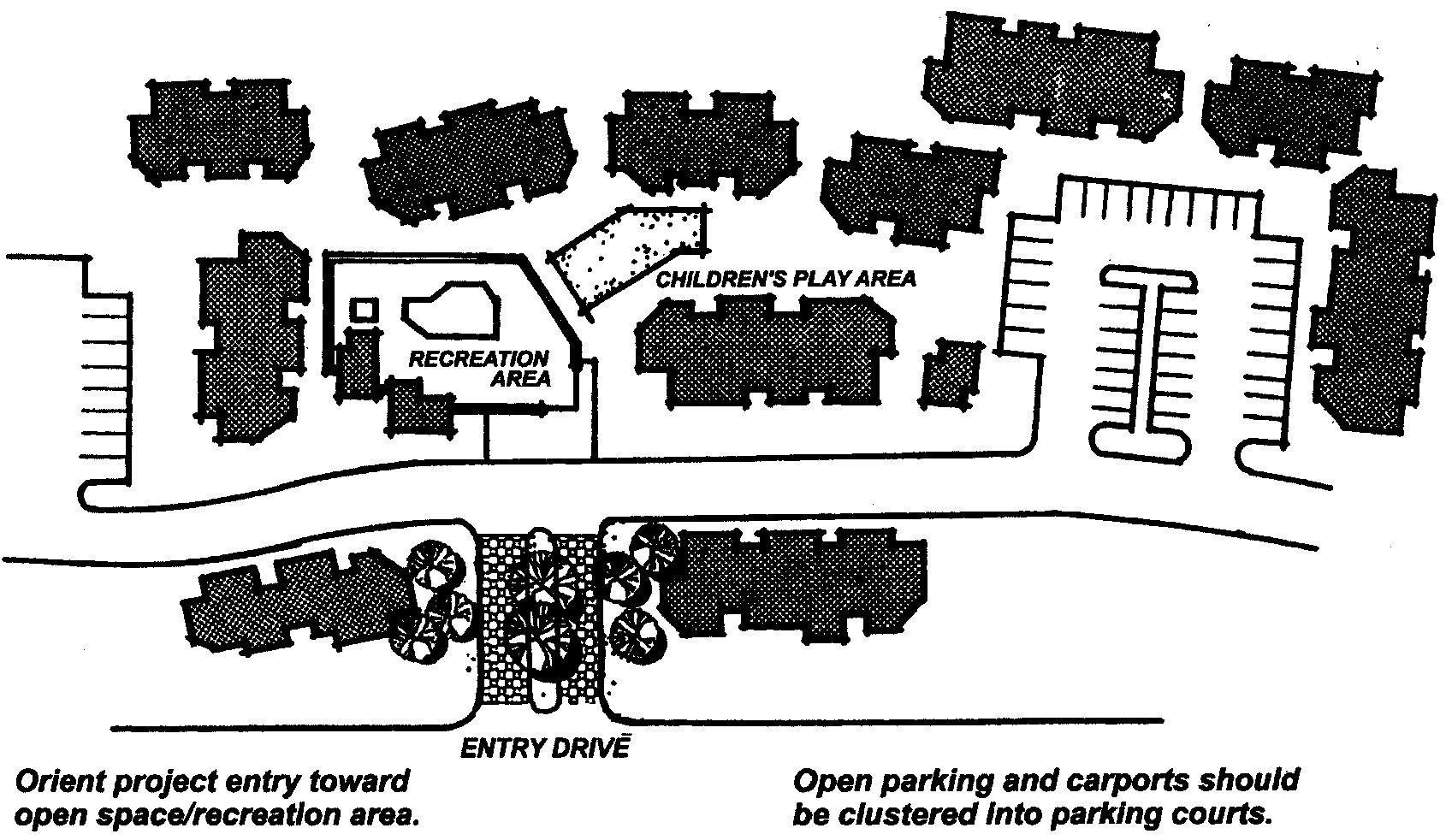
Figure 9.31.040-A Clustering of Units
F.
On-Site Parking. In multi-family developments, there are generally three ways to accommodate parking: Parking drives, parking lots/courts and garages within the residential structures. Projects with either long, monotonous parking drives or large, undivided parking lots are undesirable. The following standards shall be followed in the design of parking areas for multi-family developments.
1.
Parking Lot Layout
a.
In general, parking areas shall be visible from the residential units that utilize them.
b.
Locate required resident parking spaces convenient to the units they serve.
c.
The location of parking and drives shall minimize the points of conflict between pedestrian and vehicular traffic.
2.
Parking Area Landscaping
a.
Unless otherwise required by Section 9.29.070, at least one (1) landscape or shade tree shall be provided for every seven (7) spaces of open parking areas.
b.
Provide landscaped planters in parking areas to break up expanses of pavement.
c.
Other parking area landscaping elements shall be consistent with Chapter 9.75, Water Conservation/Landscaping Regulations, of this Code.
d.
Parking drives, when located on the periphery of a project, tend to isolate the project from its surroundings. Perimeter parking drives are not desirable and shall be minimized. Where a parking area separates a group of dwellings from the street, pedestrian or bicycle paths consisting of contrasting paving material shall provide access from groups of dwellings to the street.
3.
Parking Lots/Courts (Figure 9.31.040-B)
a.
Parking courts shall not contain more than two (2) adjacent double-loaded parking aisles.
b.
The length of parking courts shall not exceed a length greater than one half (½) the length of the lot on which they are located.
c.
Parking courts shall be separated by structures or by a landscape buffer of at least thirty (30) feet.
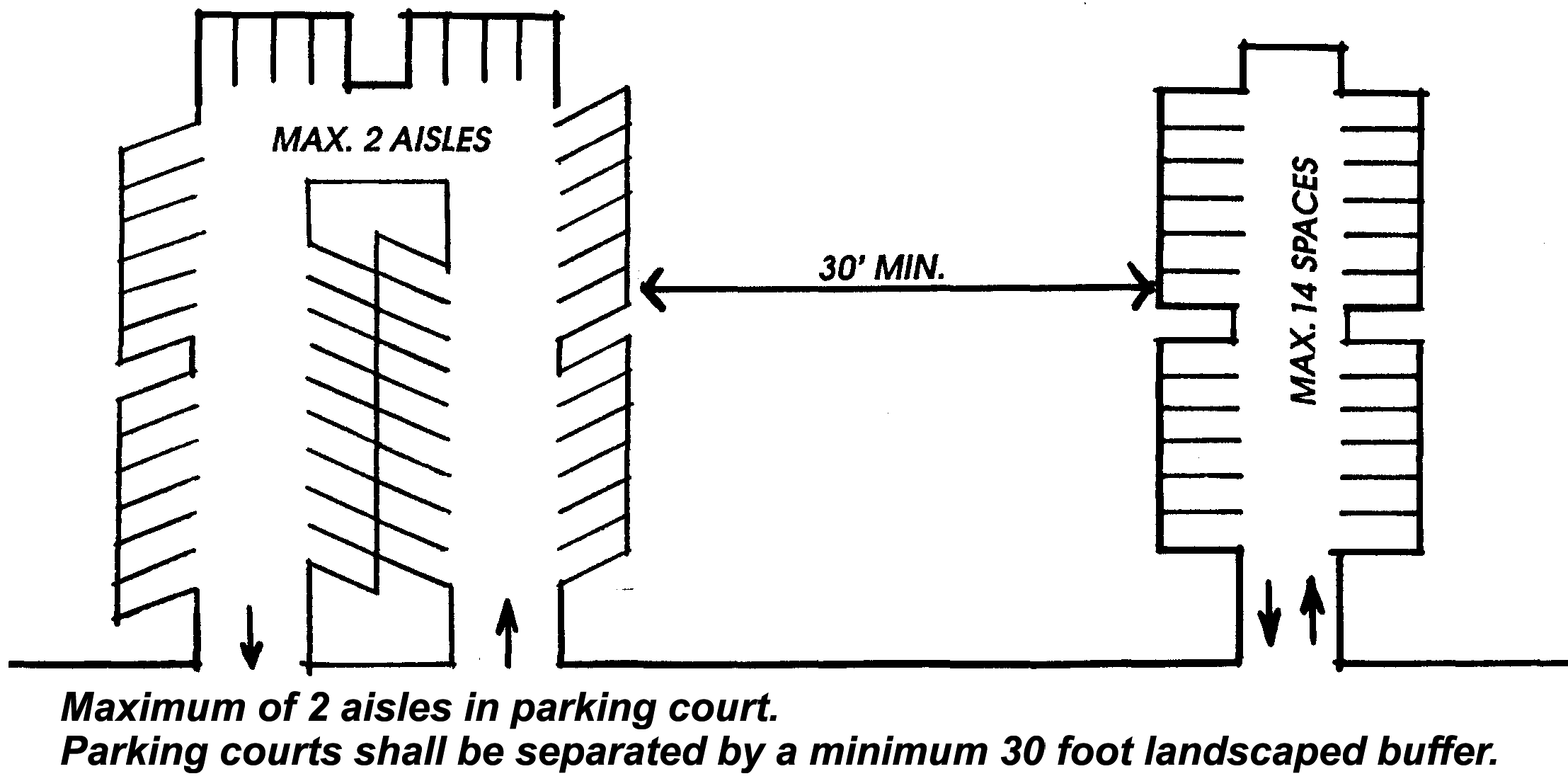
Figure 9.31.040-B Parking Lots/Courts
4.
Garages/Carports
a.
Garages with parking aprons less than twenty (20) feet in length shall have an automatic garage door opener.
b.
Incorporating carports into exterior project walls adjacent to streets is strongly discouraged.
c.
Provide a visual buffer between the fronts of carports and residential units by use of planting screens and/or architectural features.
d.
Provide landscaping on exposed sides of carport or garage structures.
5.
Parking within the Front Yard Building Setback. Parking located within the required front yard shall be completely screened from the street by either a landscaped hedge or a decorative, architectural screen wall, integrated into the architecture of the building by use of similar materials or accent treatments.
G.
Pedestrian/Bicycle Paths
1.
Connections Between Buildings. In multi-family developments with three (3) or more buildings, provide pedestrian paths to facilitate circulation between buildings shall be provided.
2.
Delineate Paths. Paths shall be clearly define paths with lighting, landscaping or contrasting paving materials.
3.
Access to Amenities. Provide a pedestrian path to facilitate access between residential units and parking areas, recreational facilities, mailboxes, common open space, and to connect the development to the Town-wide trails system where a project is adjacent to the system.
H.
Open Space. The residents of multi-family developments shall have safe and efficient access to useable common open space and private open space for recreational and social activities.
1.
Arrangement of Open Space
a.
The design and orientation of the open space areas shall take advantage of available sunlight/shade and shall be sheltered from the noise and traffic of adjacent streets or other incompatible uses.
b.
Required common open space shall be conveniently located for the majority of residents and private open spaces shall be located near the units they serve.
c.
In general, design open space within a development to follow an orderly progression from the most public spaces to semi-public space to private space. For example, a person may walk from an open parking lot through a common landscaped area, to a private yard or semi-private porch area to the front door.
2.
Visibility. Multi-family developments shall have secure open space areas and children's play areas that are visible from the units.
3.
Location of Amenities. Recreational amenities shall be located adjacent to designated open space areas wherever possible.
I.
Landscaped Areas
1.
Landscaping Considerations. Landscaping is used to frame, soften and embellish the quality of the environment, to buffer units from noise or undesirable views, to break up large expanses of parking, and to separate frontage roads within the development from public streets. To accomplish these design objectives, a landscape needs vertical elements. Trees and tall shrubs are needed in addition to groundcover and can also be used to provide shading and climatic cooling of nearby residential units.
2.
Landscape Design Standards. All areas not covered by structures, drives, parking or hardscape shall be landscaped in accordance with Chapter 9.75, Water Conservation/Landscape Regulations.
3.
Landscape for Screening and Privacy. Landscaping shall be used to maximize the privacy of adjacent single family residences. A minimum of twenty (20) percent of the trees used for screening purposes shall include be twenty-four (24)-inch box size when installed.
4.
Landscape to Enhance Amenities. Landscaping shall be planned and maintained to frame views into the open space areas.
J.
Lighting. All on-site lighting shall be designed to meet the following standards:
1.
All on-site lighting shall be stationary, directed away from adjacent properties and public rights-of-way.
2.
Lighting fixtures shall be of a type and shall be located such that no light or reflected glare is directed off-site. Lighting fixtures shall ensure that no light is directed above a horizontal plane passing through the bottom of the fixture.
3.
All garages, walkways, and driveways shall be lighted during the hours of darkness in a manner consistent with the Town Lighting Ordinance.
4.
Use low-rise, pedestrian scale lighting within common open space areas. The maximum height should be fifteen (15) feet.
5.
Lighting shall be in compliance with the Town standards.
K.
Security
1.
Maximize Security. Multi-family developments shall be designed to provide the maximum amount of security for residents and visitors.
2.
Parking and Open Space Area Security. Parking and open space and recreation areas shall be well lighted and located so as to be visible from the residential units.
L.
Mailboxes. Where mailboxes are provided, they shall be located close to the project entry near recreational facilities. The architectural character of the mailbox structure shall be the same in form, materials and color as that of the primary structures. Mailbox locations shall be approved by the U.S. Postal Service.
M.
Street Address. Street addresses shall be conspicuously displayed along the street frontage, and visible from the street, of any new construction or any development which is subject to a review and approval by the Planning Commission under a Development Permit as specified under Development Code Section 9.17.020 "Applicability". Street addresses shall be a raised placard, internally illuminated during the hours of darkness, with numbering a minimum of four (4) inches in height. Where any such structure(s) is located more than seventy-five (75) feet from the front property line, an additional placard shall be located within ten (10) feet of the property's major/main entrance.
(Ord. No. 544, §§ 11—14, 3-23-2021)
9.31.050 - Multi-Family Architectural Design Standards (Amended Ord. 313)
A.
Dwelling Unit Architecture
1.
General. New multi-family residential development shall relate to adjacent single family residential districts in the following ways:
a.
By stepping down the scale, height and density of buildings at the edges of the development when surrounding neighborhoods are of lower density or smaller scale. Step the building down at the ends or sides nearest the single family unit to a height approximately equal to that of the adjacent single family residence, or of typical single family residences in the vicinity if adjacent to an undeveloped single family zoning district.
b.
By incorporating architectural elements and materials that are similar to those used in the neighborhood.
2.
Architectural Style. While there is no particular architectural style required for multi-family residential structures, the focus shall be on the development of a high quality residential environment which provides variety and visual interest while still creating an overall unified image. Desert appropriate architectural styles shall be used to blend the development into the natural desert environment to the greatest extent possible. Desert appropriate styles will respond to desert conditions such as sun, wind, heat and cold. In selecting an architectural style, compatibility with surrounding character, including compatible building style, form, size, color, materials and roofline, shall be considered.
3.
Environmental Design. Building and landscaping features which provide shelter and relief from the sun and wind and other elements of the Town's desert climate are strongly encouraged. Such features may include broad overhangs, sheltered entry treatments, arbors and screen walls. Courtyard concepts offering shelter from wind and providing outdoor open space are strongly encouraged. Building designs which minimize the need for mechanical heating and cooling are also encouraged.
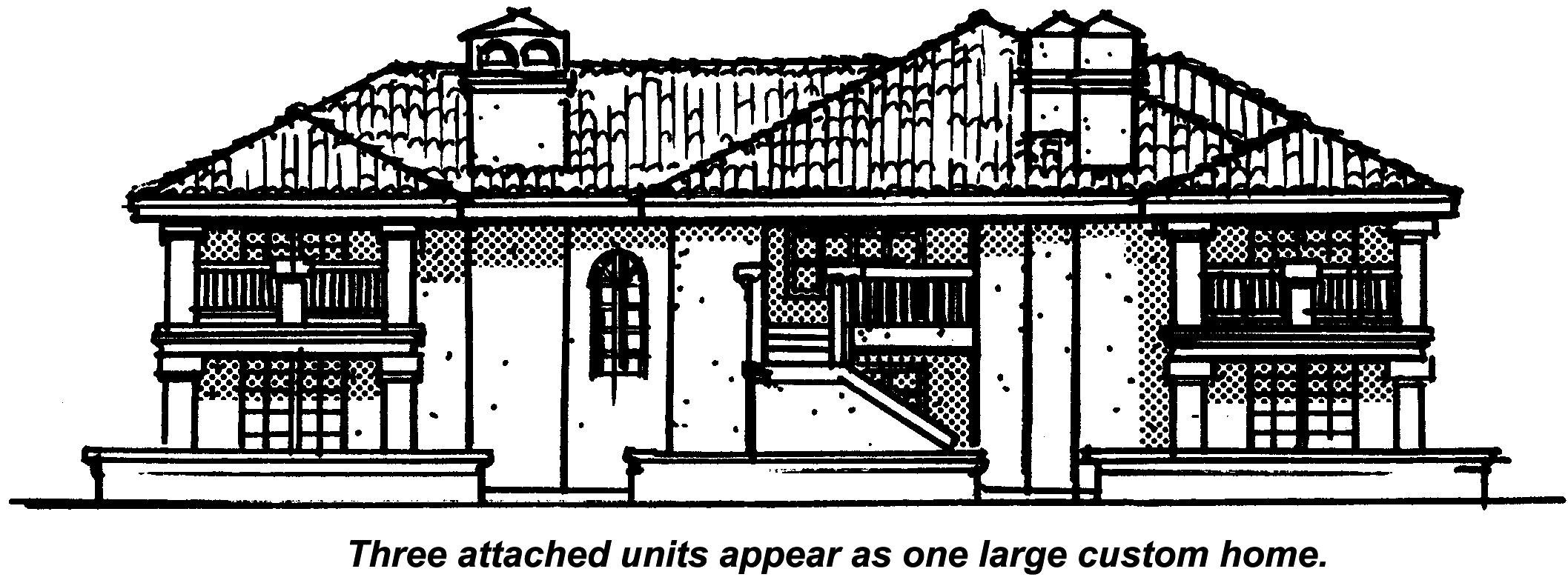
Figure 9.31.050-A Architectural Unity
B.
Architectural Unity and Variation. Within multi-family developments containing several buildings, a common architectural theme among the buildings must be evident so that a unified image is presented. Within the unified image, each building should contain some identifying feature(s) which set it apart from other buildings in the development so that occupants can readily identify their building (Figure 9.31.050-A).
1.
Unified Development Image. An overall unified image in a development with several buildings can be achieved through the use of common elements and/or materials. Multi-family buildings in such a context shall incorporate the following design principals:
a.
Building form, roofline and primary materials shall represent a common theme throughout the development;
b.
A similar architectural character shall be provided all sides of a building. Repeat details on all sides of a building, make them appear functional and real;
c.
Forms, colors, architectural details and landscape materials shall be consistent throughout the development. Variations for the purpose of establishing individuality among buildings within a group shall be consistent with an overall palette of materials and colors;
d.
Building entries shall be integrated into the building architecture. Upper decks, balconies, stair towers, utility closets and mechanical screening shall be integrated into the building architecture rather than add-on elements to a finished facade or roof;
e.
Interior and exterior storage areas shall be integrated into the building design to make them compatible with the building architecture.
2.
Variation Within the Overall Theme. Within the overall architectural theme of a development which contains several buildings, each building shall contain some identifying feature(s) which set it apart from other buildings in the complex so that occupants and emergency personnel can readily identify the building. Such identifying feature(s) may include:
a.
A different trim color;
b.
Distinctive entries;
c.
Variations in building footprints, for example, by altering the number of units provided in each structure; and
d.
Variations in building embellishments or architectural details.
C.
Massing and Scale
1.
Compatibility with Adjacent Single Family Residential Development. Because multi-family developments are frequently taller than one story, their bulk can be imposing to surrounding uses, especially single family residential uses. The scale of multi-family developments shall be considered within the context of their surroundings. This Section is not intended to limit two-story buildings but to provide transitions in rooflines and articulation of buildings and rooflines.
The scale of multi-family structures shall relate to adjacent single family residential structures in a manner consistent with paragraph 9.31.040.A.3.a of this Chapter.
2.
Mitigating Mass and Scale of Unarticulated Building Planes
a.
Blank end walls are not allowed. Instead, end walls shall be given some form of articulation or architectural treatment or be substantially screened by densely planted trees or fast growing creeping vines and espaliers (Figure 9.31.050-B).
b.
Balconies, porches, patios and chimneys shall be integrated into multi-family structures to break up large wall masses, and to offset floor setbacks (Figure 9.31.050-C).
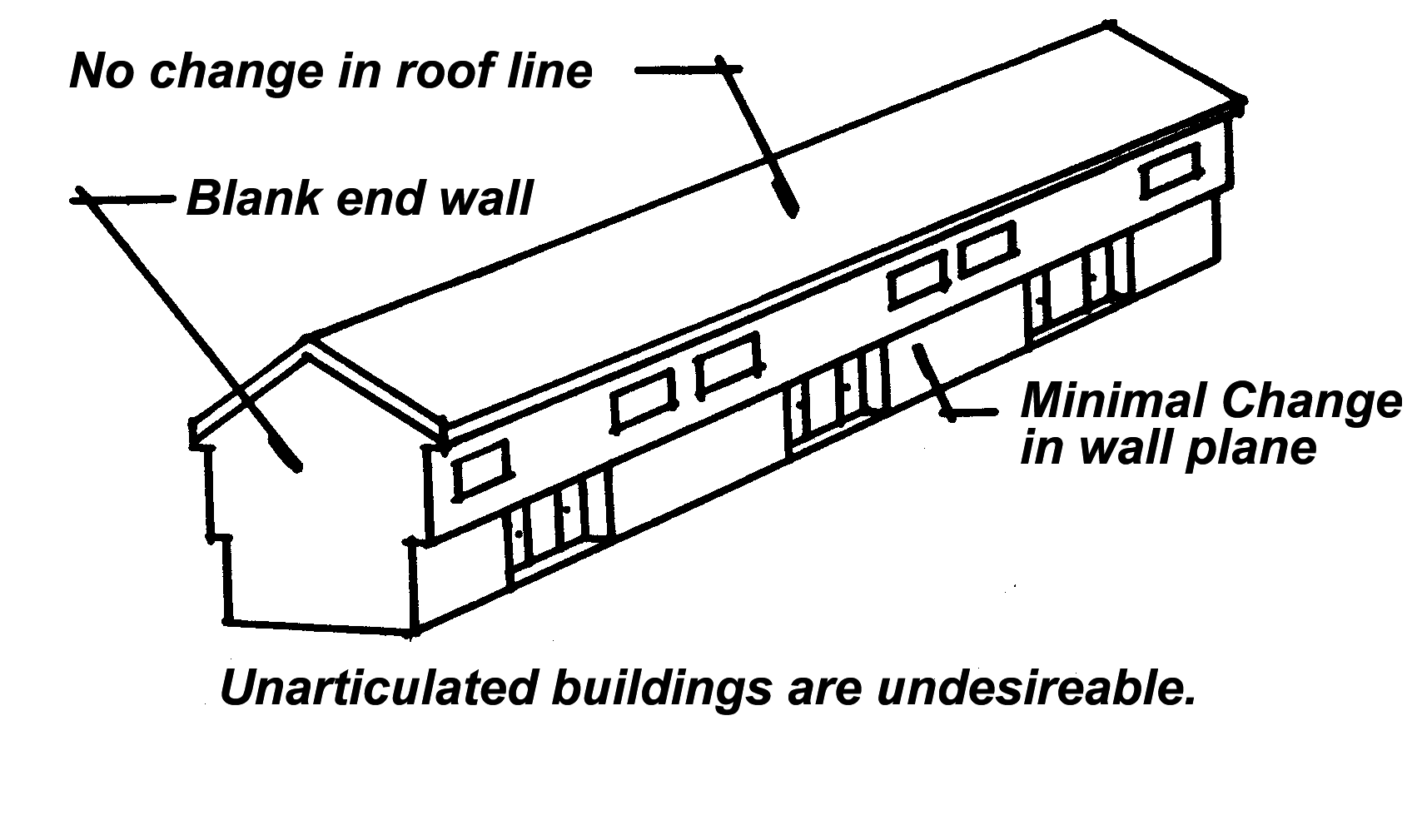
Figure 9.31.050-B Unarticulated Buildings
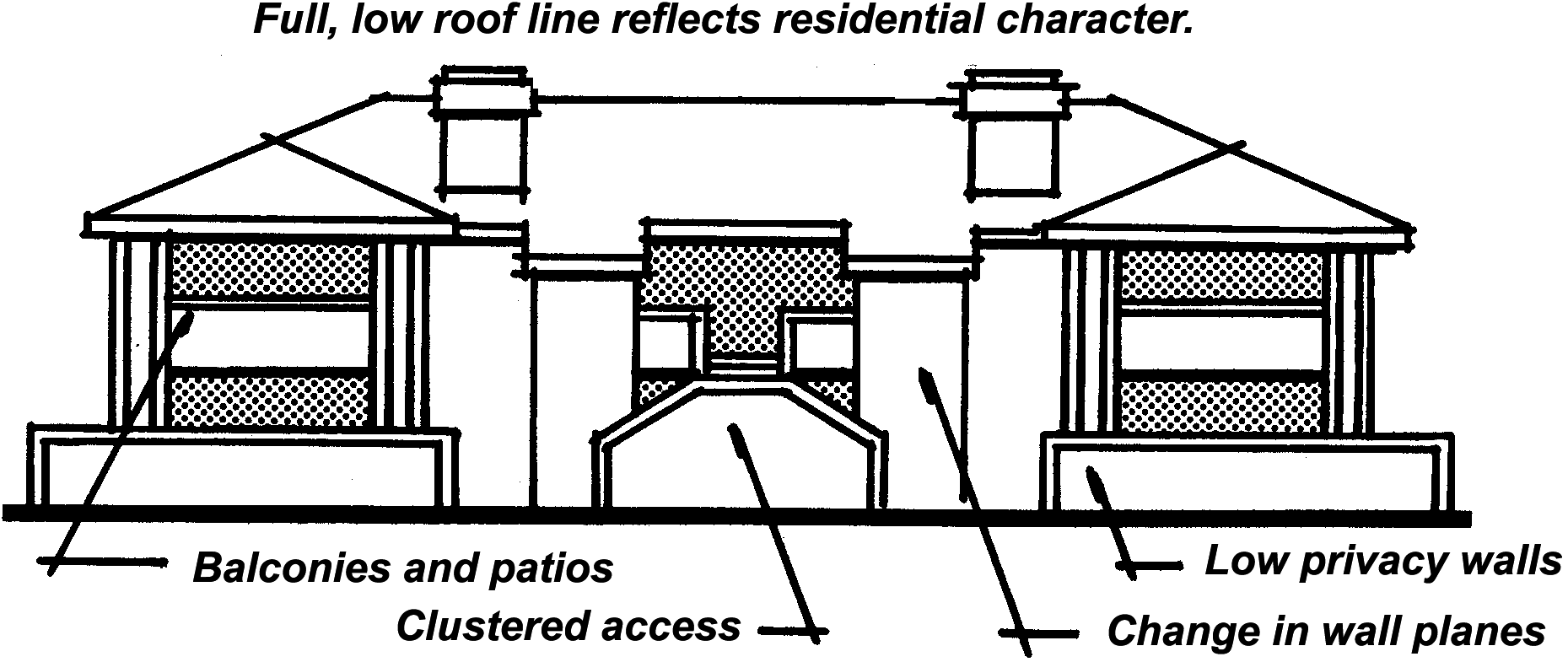
Figure 9.31.050-C Articulated Buildings
c.
Long barracks-like multi-family structures shall be avoided through the use of separations, changes in roof plane, horizontal offsets, and the inclusion of elements such as balconies, varied floor elevations, awnings, porches and patios. Extremely long structures, if properly articulated, may be acceptable; however, structures, including garage and carport structures exceeding 150 feet in length, are discouraged (Figure 9.31.050-D).
d.
Design overhangs, reveals and architectural projections to create shadows on the building facade (Figure 9.31.050-E).
e.
Create points of interest on the exteriors of buildings.
f.
Structures containing three (3) or more attached units in a row shall incorporate at least one (1) of the following:
1)
At least one (1) architectural projection not less than two (2) feet from the primary wall plane and not less than four (4) feet wide shall be provided for each residential unit. Such projections shall extend the full height of a single story building, at least one-half (½) the height of a two story building, and at least two-thirds ( 2 / 3 ) the height of a three story building (Figure 9.31.050-F).
2)
Provide a change in depth (stagger) of at least three (3) feet for each twelve (12) feet in length for each two (2) units (Figure 9.31.050-G).
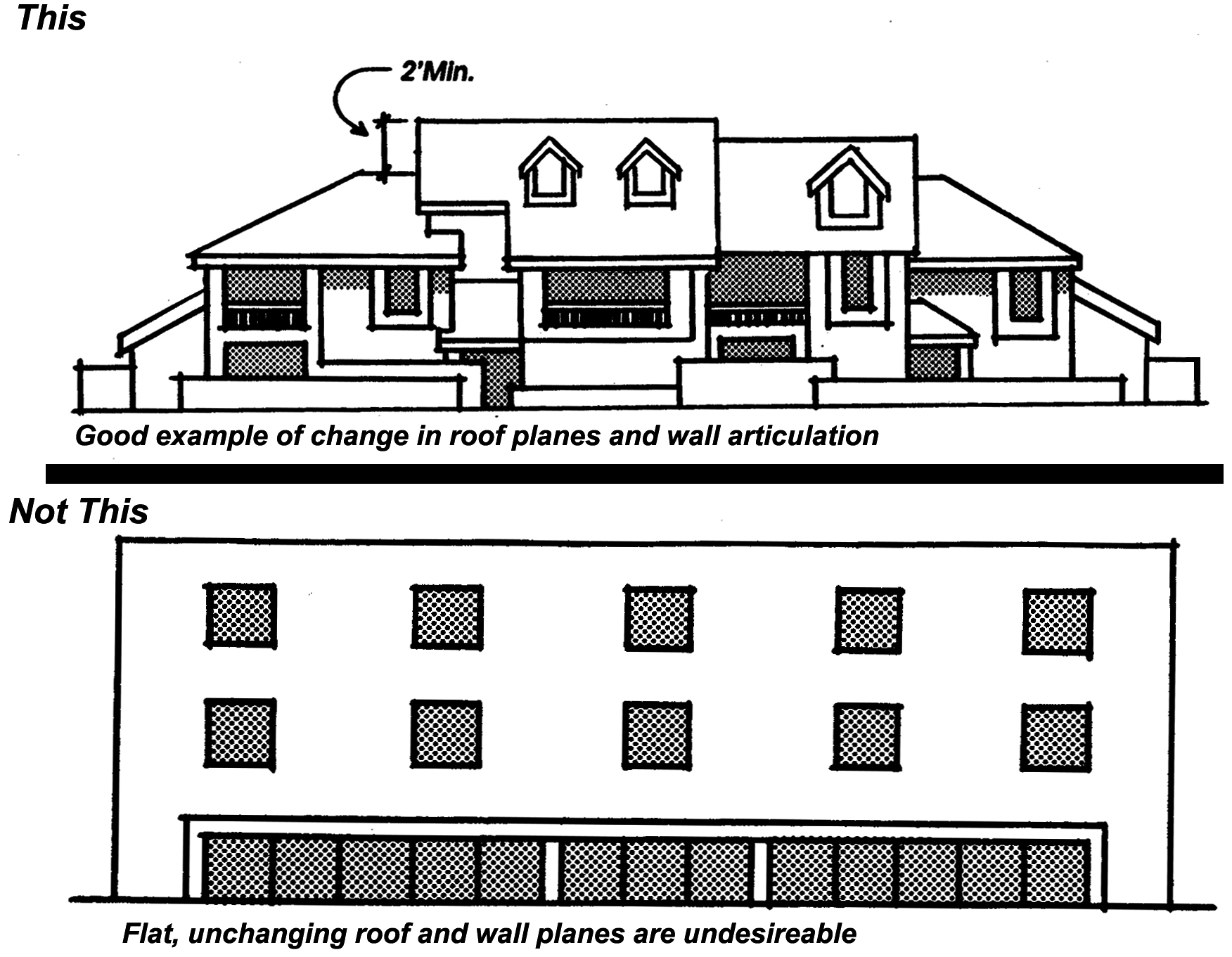
Figure 9.31.050-D Wall Planes
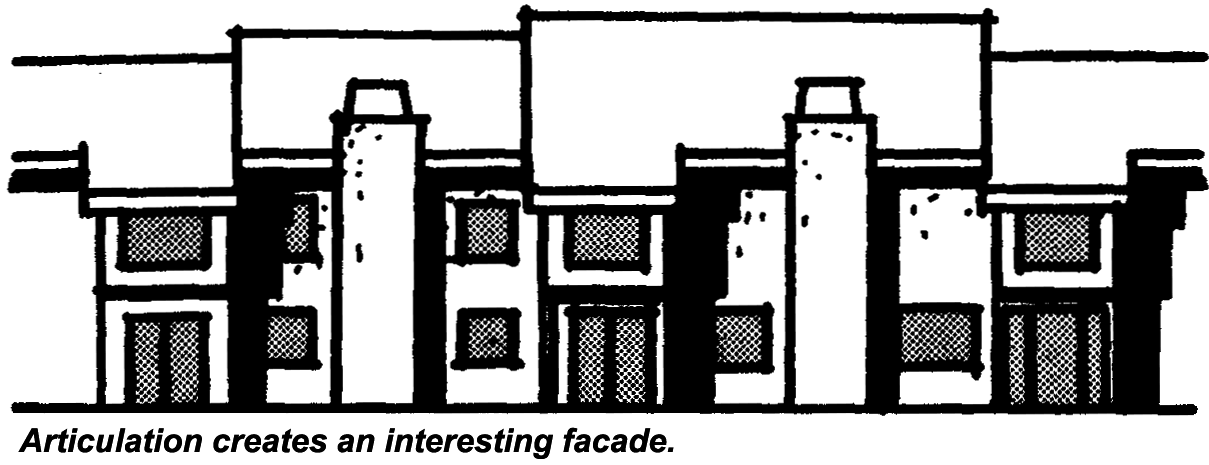
Figure 9.31.050-E Overhangs, Reveals, Projections
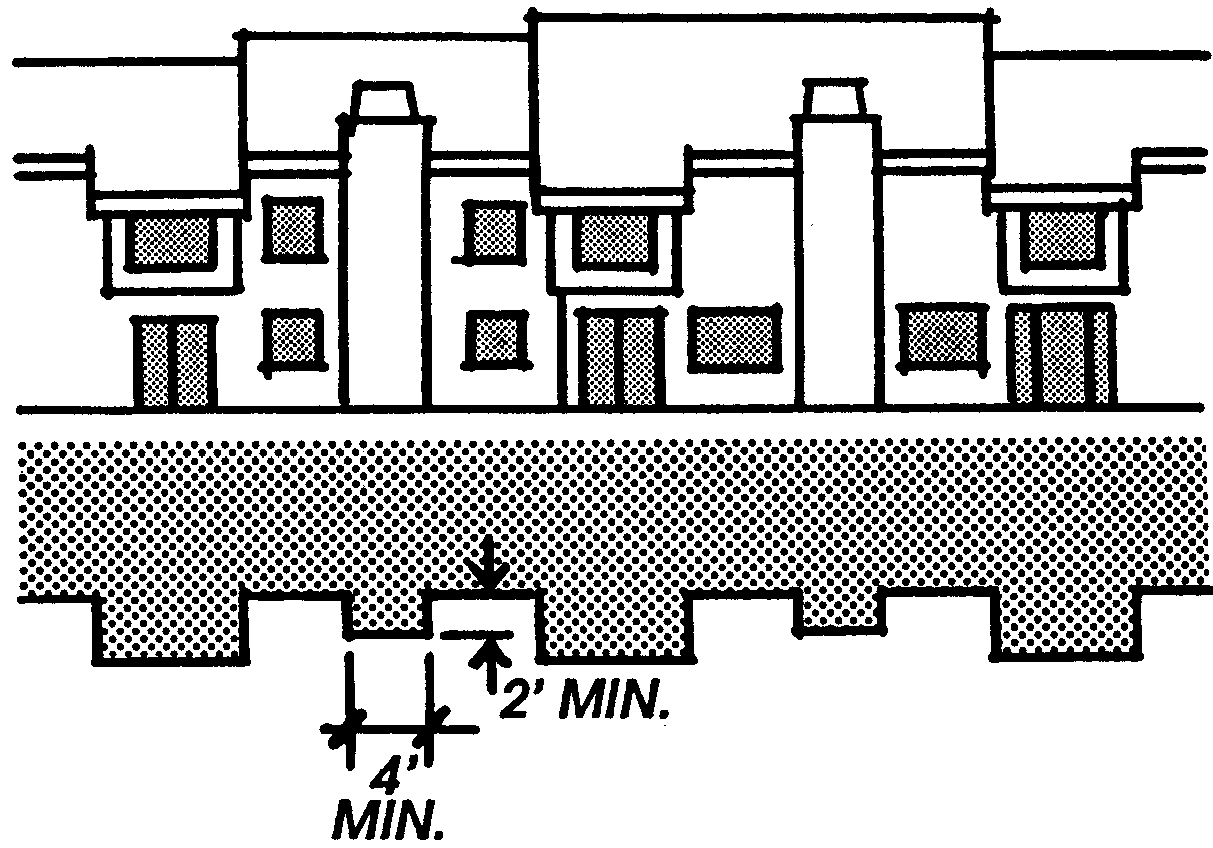
Figure 9.31.050-F Architectural
Projections
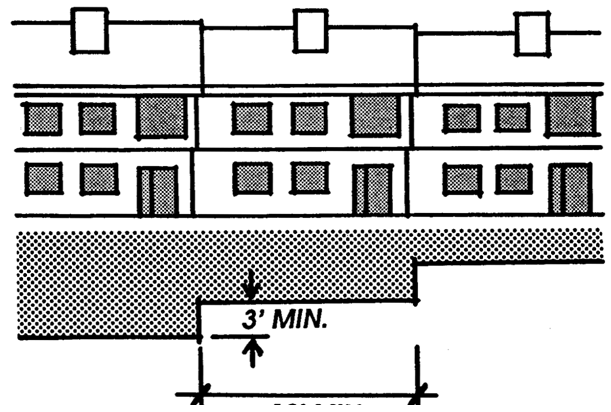
Figure 9.31.050-G Staggered Units
D.
Building Materials
1.
Building Material Selection. Building material selection shall follow the same standards for single family architecture with the following additional requirements:
a.
Materials used in multi-family developments shall be chosen for their durability and low maintenance characteristics.
b.
Make one building material dominant among the variety used on each building.
c.
Heavy materials like stone and masonry shall be located below lighter materials such as wood and stucco.
d.
Materials tend to appear more substantial and integral when changes in materials occur at changes in the building plane. Changes in materials at the outside corners give an impression of thinness and artificiality. Material and/or color changes at the outside corners of structures which shall therefore be avoided (Figure 9.31.050-H).
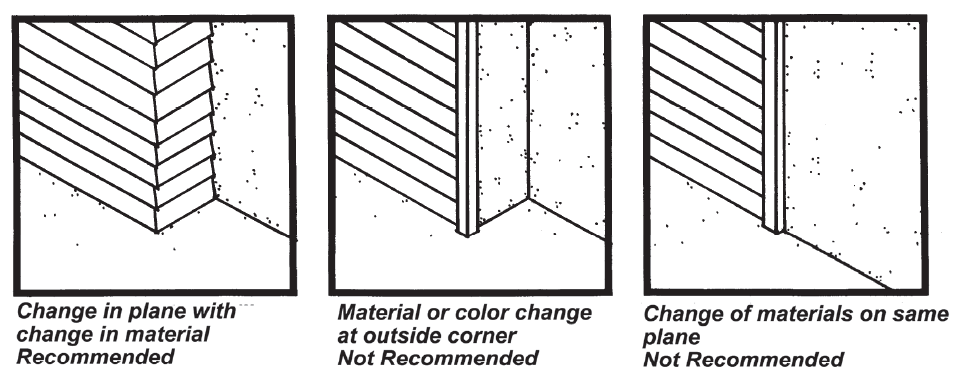
Figure 9.31.050-H Material/Color Changes
E.
Support Facilities, Compatibility with Primary Structures. Support facilities such as laundry facilities, recreation buildings, sales/lease offices or temporary sales offices within multi-family developments shall be consistent in architectural design, form, colors and materials with the residential structures.
F.
Detached Garages
1.
Compatibility with Primary Structures. Detached garages shall be designed as an integral part of the architecture of projects and shall be similar in style, form, scale, color, detailing and materials to the primary structure.
2.
Garage Doors. Where garages are utilized, the garage doors shall be made to appear to be set into rather than flush with exterior walls.
G.
Dwelling Unit Access and Entries
1.
Use in Providing Facade Articulation. Entry areas shall be utilized to articulate building faces through recesses, covered porches, or other architectural treatments in such a manner as to increase the sense of arrival.
2.
Provide Shelter. Entries shall provide shelter from natural elements such as sun, rain and wind.
3.
Shared Entries. Access points to residential units shall be clustered in groups of four (4) or less. The use of long, monotonous balconies and corridors resulting in a "motel" type of appearance is discouraged.
4.
Visibility. Whenever possible, entrances to individual residential units shall be plainly visible from the parking areas that serve them.
5.
Maximize Privacy. Entries to individual units shall be spaced as far apart as possible to maximize privacy.
H.
Roofs. The pitch and form of roofs are a visible community feature. A range of roof forms and roof pitches can add an appealing visual impact to the community steetscape.
1.
Follow Natural Landforms. The roofline, as well as the form of the structure, shall generally follow the site's landform (see paragraph 9.31.040.A.1 of this Chapter).
2.
Roof Pitch. Low pitched roofs (4:12 to 6:12) are encouraged.
3.
Roof Overhangs. Broad roof overhangs when compatible with the basic architectural theme of the structure are recommended to produce interest and to respond to climatic conditions, especially when used in combination with courtyards, porch enclosures, balconies and recesses.
4.
Roof Materials. The roofing material shall be constructed of nonreflective fire retardant materials and exhibit muted earth tones.
I.
Exterior Stairs, Integrate with Building Architecture
1.
In new buildings, simple, clean, bold projections of stairways integrated into the building architecture are encouraged to complement the architectural massing and form of the multi-family structure.
2.
Stairways integrated into the building architecture are encouraged in order to provide protection from natural elements such as sun and wind.
3.
Where modifications to existing multi-family residential structures include the addition of stairways, thin open metal or pre-fabricated metal stairways shall not be used unless reviewed and approved by the Planning Commission at the time of the Commission's review of the project's Development Permit or Conditional Use Permit. Instead, materials similar to the exterior of the building shall be used to architecturally link the stairway to the building.
J.
Mechanical and Utility Equipment
1.
Screen from Public View. Any equipment or utility service areas, whether on the roof, side of the structure or ground, shall be screened from public view from adjacent property or from a public right-of-way. The method of screening shall be architecturally integrated and compatible with the structure on which it occurs in terms of materials, color, shape and size (Figure 9.31.050-I).
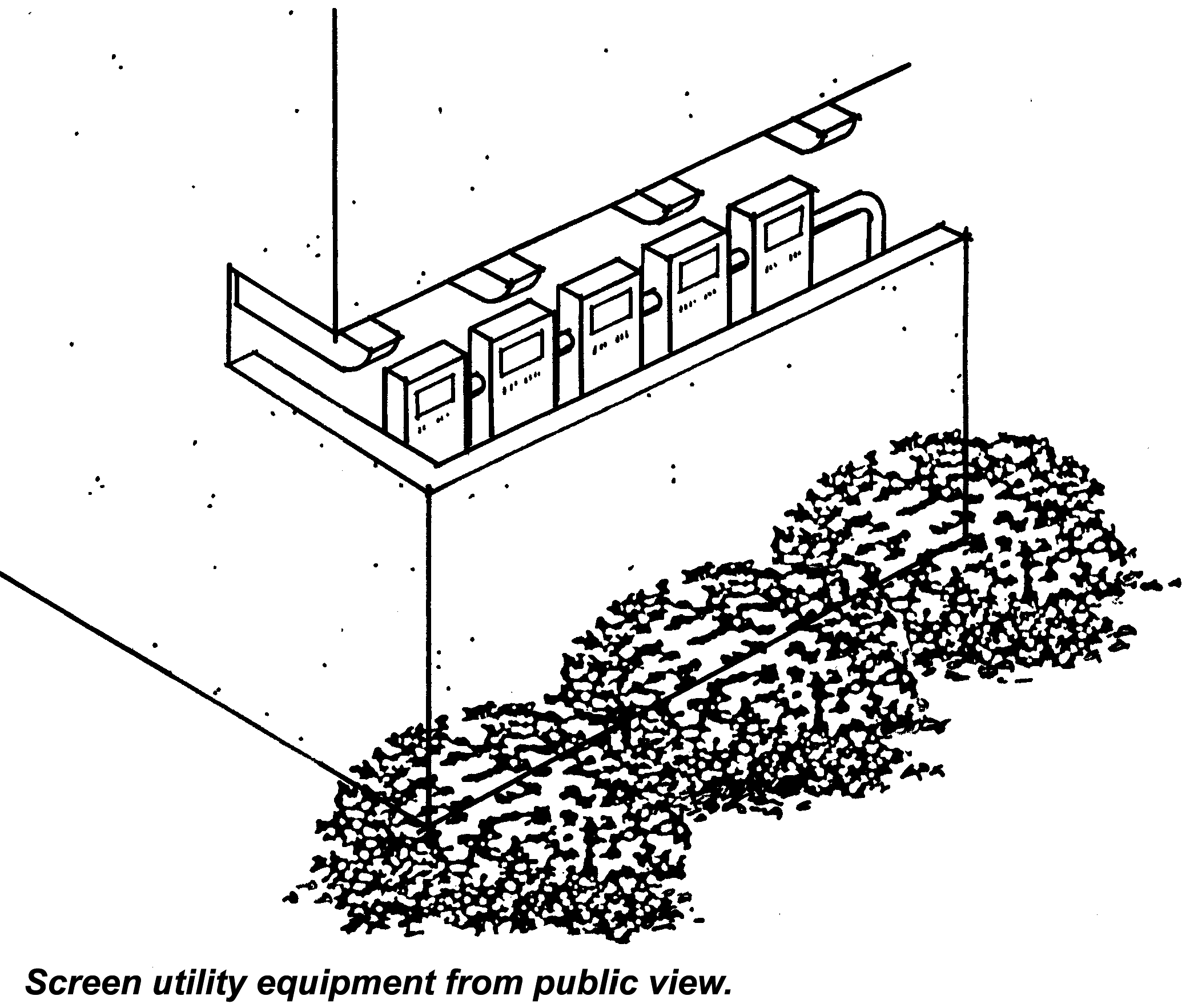
Figure 9.31.050-I Screen Utility Equipment
2.
All new developments shall be pre-wired to accommodate cable reception.
3.
Solar Panels
a.
In new multi-family developments, solar panels shall be integrated into the design of the roof, flush with the roof slope and the frames of solar panels shall be colored to match the roof materials. Any appurtenant mechanical equipment shall be enclosed and completely screened from view (see paragraph J.1 above).
b.
When adding solar collectors to an existing building, coordinate solar collectors with the building architecture to the maximum extent possible. Coordinate any new structures not located on the roof with the building architecture by using colors and materials similar to those used in the existing building. Any appurtenant mechanical equipment shall be enclosed and completely screened from view (see paragraph J.1 above).
K.
Gutters, Downspouts and Roof Vents
1.
Gutters and Downspouts. Gutters and downspouts shall be concealed unless they are designed as a continuous architectural feature. Gutters and downspouts used as architectural features shall be colored to match fascia or exterior wall material.
2.
Roof Vents. Roof vents shall be colored to match the roof materials or the dominant trim color of the structure.
L.
Lighting
1.
Enhance Security and On-Site Amenities. Select and locate on-site lighting fixtures to provide security to residents and enhance on-site amenities in a manner consistent with subsection 9.29.070.B.13, Lighting, of this Code.
2.
Open Space Area Lighting. Use low-rise, pedestrian scale lighting within common open space areas. The maximum height shall be fifteen (15) feet.
M.
Walls and Fences. Fencing requirements shall remain flexible, but installations shall take advantage of the natural features of the site like topography and vegetation.
1.
Privacy Screening. Closed privacy fencing should be limited to the immediate area around the private open space areas or outbuildings. Wooden fencing shall be designed to withstand the frequent high desert winds. Grape stake or three (3)-inch slat fencing or slats within chain link are not permitted.
2.
Private Courtyards. Private open space courtyards utilizing decorative walls providing shelter from wind are strongly encouraged.
3.
Materials Within Front and Street Side Yards. All walls and fences within the front yard or street side yard setback area shall be constructed of decorative materials such as split face or slump stone block, riverrock or other similar materials which complement the materials used on the building.
4.
Property Line Fencing. Property line walls and fences shall be constructed of decorative materials such as rail fencing or split face block or slumpstone, or incorporate decorative enhancements such as caps or pilasters. Property line fencing with unadorned solid wood or cinder block is prohibited.
5.
Articulation. Where any solid wall or fence exceeds forty (40) feet in length, the wall or fence shall be visibly articulated by pilasters or changes in the wall plane such as insets for plantings. Such articulation shall occur at a minimum of forty (40)-foot intervals. All walls shall incorporate decorative caps (Figure 9.31.050-J).
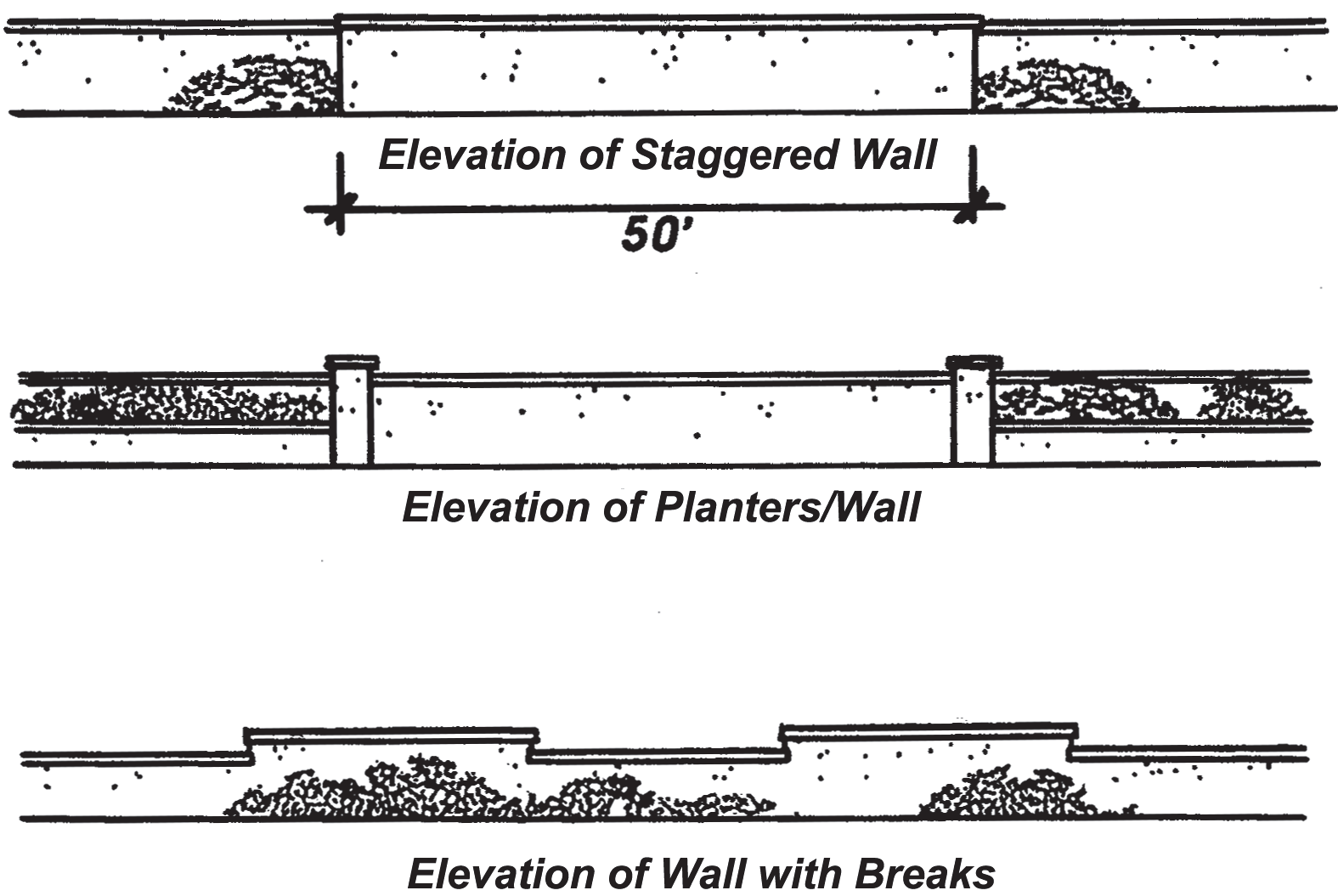
Figure 9.31.050-J Recomended Design Features
and Materials
N.
Fencing of Vacant Property. Fencing of vacant residentially zoned property is prohibited. Exceptions to this include the following:
1.
On vacant property, a fence is needed to fulfill required environmental mitigation or security requirements imposed by the Town, State and/or Federal Government. In such cases, the fence height, location and materials shall be subject to the review and approval of the Director. Organic types of barriers (i.e., boulders, logs placed horizontally, incremental placement of wood posts vertically to block vehicular movement) should be used when possible, rather than traditional fencing. If fencing is used it should be wrought iron (or equivalent). All fencing must be maintained or replaced due to dilapidation or unsightliness in accordance with Section 6.30.030.F.15 of the Town's Municipal Code.
2.
On vacant or developed property, it can be demonstrated for review and approval by the Director that a continued security problem exists which exceeds those same problems incurred by similar properties in the vicinity.
(Ord. No. 476, § 4, 10-27-2015)
9.31.060 - Multi-Family Infill in Single Family Neighborhoods
New multi-family developments shall be integrated into existing single family neighborhoods so that they are compatible with adjacent structures and fit within the context of the existing neighborhood. Below are additional standards for these developments.
A.
Architectural Compatibility. New multi-family developments in existing single family neighborhoods shall incorporate the architectural characteristics and maintain the scale of existing single family structures on the site and on adjacent property; for example, building height, window and door detailing, facade decoration, materials, color, roof style, roof pitch, porches, etc. (Figure 9.31.060-A).
B.
Front Setbacks. Front setbacks for new multi-family developments in existing single family neighborhoods shall be equal to or greater than the average front setbacks for the two adjacent properties. If one or both of the adjacent properties are vacant, then the average front setback shall be calculated on the next adjacent occupied properties.
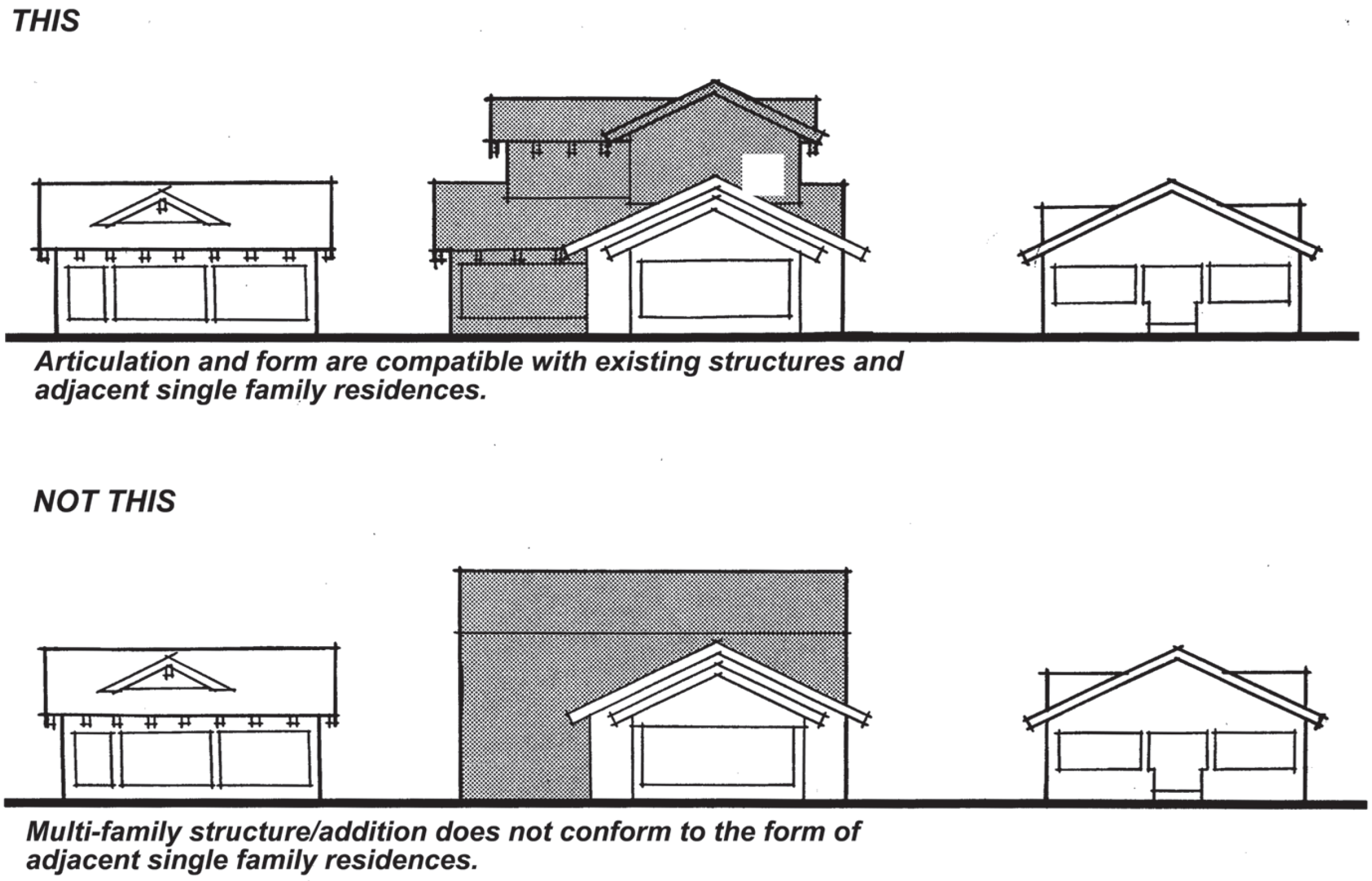
Figure 9.31.060-A Architectural Compatibility
C.
Site Design. The site design of new multi-family developments in existing single family neighborhoods shall reflect the development patterns and scale of development of the surrounding neighborhood and any existing on-site single family structures, in terms of vehicular and pedestrian circulation, access, parking and landscaping. Any substandard conditions existing on the site shall be brought up to standard with the new development (Figure 9.31.060-B).
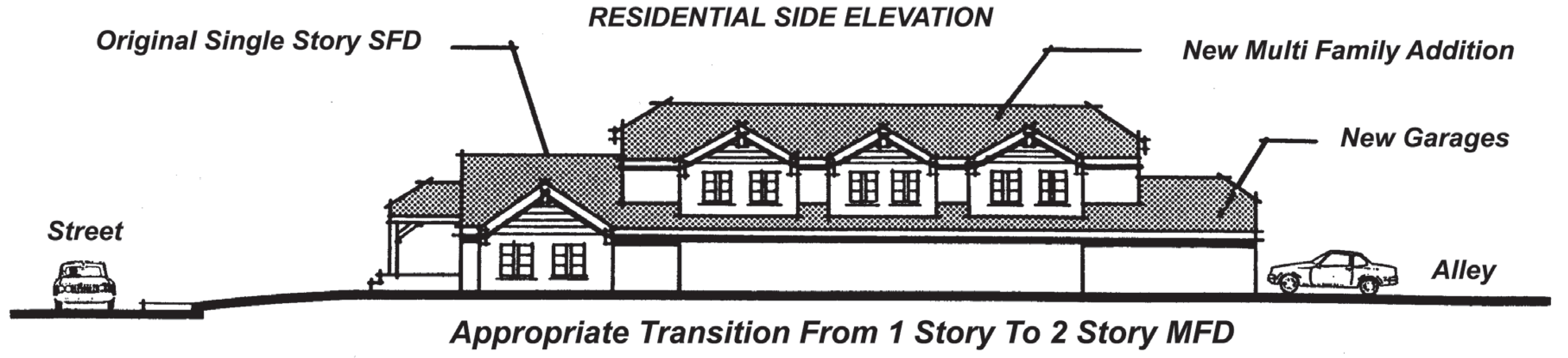
Figure 9.31.060-B Transition to Multi-Family
9.31.070 - Mixed Use Site Planning Design Standards
A.
Applicability. The following standards apply to all projects proposed in the Mixed Use district. All projects in the Mixed Use District must receive, at a minimum, approval of a Development Permit. Special Use Permits, Conditional Use Permits and other similar permits may also be required for specific uses, pursuant to Table 9.28.030-A, Permitted Uses.
B.
Development Standards. All projects developed in the Mixed Use district shall conform to the following standards.
1.
Mixed Use projects must be a minimum of one (1) acre in size, unless proposed on a lot of record of less than one acre as of the date of adoption of this Ordinance. Mixed Use projects are encouraged to be proposed on lot assemblages or lots greater than one (1) acre, however, to maximize design options.
2.
Mixed Use projects must include both a commercial and/or office component and a multi-family residential component. The two components must be fully integrated in terms of access, connectivity, and public safety. Residential development in a Mixed Use Project shall include:
a)
A minimum of 4 dwelling units per acre; or
b)
A minimum of 1 dwelling unit (only for existing lots of record of less than one acre as of the date of adoption of this Ordinance).
3.
Mixed use projects may be constructed with commercial and/or office development below residential development, or commercial and/or office development adjacent to residential development.
4.
Residential development must be constructed at a density equivalent to 4-30 units per acre.
5.
Commercial and/or office development within a Mixed Use project shall be constructed to meet or exceed the development standards contained in Sections 9.35, 9.36 and 9.37 of this Code.
6.
Residential development within a Mixed Use project shall be constructed to meet or exceed the development standards contained in Sections 9.28 and 9.29 of this Code.
7.
Commercial and/or office development may occur on the first (ground) and second story of multi-story structures. Residential development may occur on any story of a multi-story structure. Commercial and/or office development may occur above residential development with approval of a Conditional Use Permit.
8.
All Mixed Use projects shall comply with Section 9.72, Off-Street Parking and Loading Regulations, with the following exceptions:
a.
Parking standards can be modified through the preparation of a parking study, using accepted professional standards (for example, Urban Land Institute's shared parking publications). The parking study may include shared parking assumptions to reduce parking requirements within the project. The parking study must be submitted with the project application, and must be approved by the Planning Commission as a Conditional Use Permit.
b.
Guest parking for the residential units may be incorporated into the parking study. Parking required for each residential unit may not be included in a parking reduction request.
c.
Parking should be provided on the rear or side of the lot. Parking lots adjacent to the street are discouraged.
9.
Bicycle racks shall be provided for both the commercial and residential components of the project.
10.
Pedestrian connections shall be provided throughout the project. Pedestrian connection shall not include parking lot drive aisles. Sidewalks, trails and/or crosswalks shall be provided within each component of the project, between the residential and commercial and/or office components, and to adjacent streets and bus stops. Pedestrian connections must be off-street and outside vehicular travel lanes.
11.
Mixed use projects shall incorporate public amenities into their design, including but not limited to plazas, shaded benches, public art and other similar features.
12.
Landscaping shall be installed and permanently maintained in compliance with Chapter 9.75, Water Conservation/Landscaping Regulations, of this Code. Additional or enhanced landscaping may be required to reduce the impact on adjacent uses.
13.
Outdoor lighting shall comply with the provisions of Chapter 9.70, Performance Standards, of this Code.
14.
Physical barriers such as walls between commercial or office and residential components of a Mixed Use project are discouraged, and should only be included when necessary for the screening of outdoor storage areas or for public safety.
15.
Public address systems are prohibited.
C.
Site Planning and Design. Mixed-use developments shall be sited to respond to and respect property views, site features, existing topography, dwelling unit privacy and adjacent existing development. The residential component of a Mixed Use project must implement the provisions of Section 9.31.040 and 9.31.050 in their design.
The following mixed-use site planning standards shall also be used to create a safe environment in the project area.
1.
Integrate Structures into Natural Landforms
a.
Site grading shall recognize existing natural landforms and drainage patterns by providing an appropriate transition of architectural elements to grade. For example, in larger developments use the natural features as amenities by leaving natural drainage swales or rock outcroppings undisturbed and orienting buildings and open spaces around them.
b.
Building pads and vehicle circulation shall generally follow contour lines rather than cross them. When a building must cross contour lines, step building pads down the slope rather than mass grading the site.
c.
The grading plan shall direct and provide for an adequate flow of surface run-off to catch basins while contouring the land to blend with existing conditions at the boundaries of the site.
2.
Building Orientation. Orient development to create a pleasing streetscape while maximizing the livability of the dwelling units.
a.
Orient buildings to create a residential streetscape while providing access and partial views from dwelling units to natural features, landscaped open space, recreational amenities or landscaped parking areas.
b.
Living room and kitchen windows shall be located to allow views of natural features, landscaping or site amenities to the maximum extent feasible.
c.
If some windows must look out onto a wall, provide special architectural treatments to the wall, such as reveals, architectural projections, or arbors to lend human scale to the wall, or provide special landscape treatment to screen views of the wall.
3.
Neighborhood Compatibility. New Mixed Use development shall relate to adjacent single family residential districts in the following ways:
a.
By stepping down the scale, height, and density of buildings at the edges of the development when surrounding neighborhoods are of lower density or smaller scale. Step the building down at the ends or sides nearest the single family unit to a height approximately equal to that of the adjacent single family residence (or of typical single family residences in the vicinity if adjacent to an undeveloped single family zoning district).
b.
By incorporating architectural elements and materials that are similar to those used in the neighborhood.
c.
By including a front yard that is similar to a single-family residence, meet multi-family residential landscaping requirements at a minimum.
d.
By locating parking areas within the project interior or at the side or back when necessary to achieve the "residential front yard" appearance.
e.
By avoiding, wherever feasible, the construction of walls on local streets in existing neighborhoods where the wall would be located opposite front yards.
4.
Maximize Privacy. Maximize privacy for all residents by locating general pedestrian circulation away from living room and bedroom windows.
a.
Maintain an average distance of twelve (12) feet between general pedestrian paths and dwelling unit windows.
b.
Provide a minimum twelve (12)-foot separation (measured from the face of the curb) between buildings and internal parking lots, and between buildings and private streets or drives.
c.
Where there is limited horizontal separation of windows from nearby public streets or communal space, provide decorative fencing, plantings, berms or grade differences to ensure that passers-by cannot look directly into the dwelling.
D.
Entry Drives. The principal vehicular access into the residential component should be through an entry drive. Colored, textured paving (i.e., interlocking pavers) treatment to identify entry drives is encouraged.
E.
Entry Statements
1.
Entry Statement Standards. Projects with ten (10) or more units shall include vehicular and pedestrian entry statements which shall be consistent with the following:
a.
Provide one visually dominant entry to the development which conveys a sense of arrival;
b.
Entry statements shall provide an open view into the development with landscaping and project directories;
c.
Design the entry to provide a transition from the outside to an internal visual focus, such as landscaping, a water feature, sculpture or a building;
d.
Special attention shall be given to hardscape and landscape treatments at the entry to enhance the overall image of the development. An entry statement shall consist of at least two (2) of the following items:
1)
Hardscape structure (trellis, decorative, low garden wall with berming, guardhouse, decorative gate);
2)
Specimen landscaping (large, distinctive vegetation, i.e., relocated Joshua trees) or mature trees, either flowering or native trees, or twenty-four (24)-inch box trees;
3)
Large boulder groupings;
4)
Water saving and easy maintenance fountains;
5)
Textured or stamped concrete;
6)
Monument signage with accompanying landscape and berming; or
7)
Other comparable installations.
F.
Clustering of Units
1.
Consistent Application in Site Plan. The clustering of the residential component shall be a consistent site planning element. Structures composed of a series of simple yet varied planes assure compatibility and variety in overall building form.
2.
Cluster to Create Views. Building groups shall be clustered to provide views into the development from the outside and to provide views from the individual units to mountains, vistas, and adjacent neighborhoods (Figure 9.31.040-A).
3.
Perimeter Arrangement. Buildings shall be clustered to achieve a pleasing streetscape and visual variety at the perimeters of the development through variation in building siting, massing, orientation and landscaping.
4.
Connections Between Building Clusters. In multi-building developments, pedestrian paths shall be provided to connect buildings in the development with one another, on-site amenities and adjacent streets.
9.31.080 - Creative/Sustainable Design Incentives for Residential Development
Design incentives are included for new residential development using site design that is creative and incorporates sustainability principles, as described below and/or that involves the incorporation of innovative and creative architectural design as well as sustainable building materials and practices and energy-conservation measures for both exterior and interior spaces.
Incentives are also considered for existing residential development that is rehabilitated, remodeled and/or retrofitted to improve and enhance aesthetics and/or energy efficiency.
Suggested Concessions and Incentives for Qualifying Residential Developments
1.
For the purposes of development under Development Code Section 9.28 the Town shall utilize the following incentives and concessions for qualifying residential homeowners or residential project developers:
a.
Reduction in residential site development standards or a modification of Zoning Code requirements or architectural design requirements that exceed the minimum building standards approved by the California Building Standards Commission as provided in Part 2.5 of Division 13 of the Health and Safety Code, including but not limited to:
1.
A reduction of up to ten (10) percent in setback and minimum dwelling unit square footage requirements;
2.
A reduction of up to ten (10) percent in the ratio of vehicular parking spaces;
3.
Other regulatory incentives or concessions proposed by the developer or the Town that result in identifiable, financially sufficient and actual reductions in energy or water use subject to approval by the Planning Commission;
4.
Density bonus of up to fifteen (15) percent for new residential projects qualifying for LEED certification;
5.
Density bonus of up to fifteen (15) for new residential projects which provide day care, car pooling or other jobs/housing balance services and amenities.
b.
A range of financial incentives for qualifying residential homeowners or residential project developers:
1.
For individuals, a ten (10) percent reduction in plan check fees and inspection fees for including alternative energy systems, such as solar panels or skylights, installed on new homes or added onto existing homes.
2.
For project developers, a ten (10) percent reduction in plan check fees for residential development projects incorporating:
•
alternative energy systems;
•
design parameters that allow for frequent, reliable and convenient public transit;
•
use faucets, showerheads and appliances that exceed Title 20 and Title 24 water efficiency requirements;
•
utilize sustainable and energy efficient interior and exterior building materials.
3.
For individuals or project developers, as applicable, a menu of rebates and low interest loan programs for energy saving improvements on homes that may include any combination of the following:
•
Rebate of up to a specified amount to cover the cost and installation of energy-saving devices and home improvements that demonstrably increase energy efficiency and/or improve the appearance of the homes, based on specified criteria and timelines as approved by the Town.
•
Rebates of up to a specified amount to cover the cost and installation of solar photovoltaic systems in existing homes, based on specified criteria and timelines as approved by the Town.
•
Microloan and/or low and/or deferred interest loan programs for individuals who implement measures to increase energy efficiency or to enhance appearance of home based on specified criteria and timelines as approved by the Town.

