
Lafayette City Zoning Code
SECTION 26
18.1.- OLD TOWN NEIGHBORHOOD OVERLAY DISTRICT REGULATIONS
Sec. 26-18.1-1.- Purpose.
The Old Town neighborhood overlay district, and the regulations in this section, are intended to:
(a)
Promote future infill, redevelopment, and additions that are compatible with the traditional scale and massing of development traditionally found in Lafayette's Old Town residential neighborhoods;
(b)
Mitigate potential impacts associated with future infill, redevelopment, and additions on existing single-family homes; and
(c)
Encourage the preservation of historic buildings in Lafayette's Old Town residential neighborhoods.
(Ord. No. 2017-30, § 4, 9-5-17)
Sec. 26-18.1-2. - Applicability.
The "schedule of requirements" set forth in section 26-18.1-3 below shall apply to all new development, infill development, redevelopment, additions, and/or substantial improvements to buildings located on properties within the Old Town neighborhood overlay district boundary, by reference to the underlying basic zone district that would otherwise apply. Except as modified by this section 26-18.1, or a planned unit development, all other provisions of chapter 26 of the Code of Ordinance of Lafayette, Colorado, as applicable to the underlying basic zone district, shall apply to the properties in the Old Town neighborhood district.
(Ord. No. 2017-30, § 4, 9-5-17)
Sec. 26-18.1-3. - Schedule of requirements.
The following density requirements apply to properties within the Old Town neighborhood overlay district:
(a)
Unenclosed covered porches that face the primary street frontage and/or the side street frontage (corner lots only) shall not count towards lot coverage and may encroach into the front yard setback up to a distance of six (6) feet from the dwelling but in no case closer than three (3) feet from the property line.
(b)
Lot coverage may be increased as follows, provided the total lot coverage resulting from the application of one (1) or more of the following incentives does not exceed thirty-five (35) percent:
(1)
Limiting construction to one-story (sixteen (16) feet or less) for all primary and accessory structures, including accessory dwelling units: A lot coverage increase of five (5) percent;
(2)
Limiting construction to a one and a half-story (twenty (20) feet or less) primary and accessory structures, including accessory dwelling unit: A lot coverage increase of two (2) percent;
(3)
Obtaining local historic landmark status for the primary structure on the lot in conjunction with the construction of an addition or accessory dwelling unit: A lot coverage increase of five (5) percent, provided that such designation is obtained prior to granting of lot coverage increase, and all additions comply with the United States Secretary of the Interior's Standards for Historic Preservation;
(4)
Preserving historic buildings: A lot coverage increase of five (5) percent when all proposed additions or accessory dwelling units:
i.
Incorporate buildings over fifty (50) years old; and
ii.
Preserve the full width of the front street-facing façade and at least seventy-five (75) percent of the front depth of the building, including all walls, porches, windows, roof forms, and other architectural elements located within these areas.
(5)
Preservation of significant trees: A lot coverage increase of two (2) percent for projects that preserve one (1) or more significant trees in conjunction with the construction of a primary dwelling, addition, and/or accessory dwelling unit. For the purposes of this incentive, applicants must demonstrate what steps were taken as part of the site planning process to preserve the significant tree(s), and provide a letter from a certified arborist indicating that the significant tree(s) are free from disease and have an anticipated lifespan of at least ten (10) years. Significant trees shall be defined as follows:
i.
A minimum of six (6) inches in caliper measured twelve (12) inches above soil line for a deciduous tree; or
ii.
A minimum of ten (10) feet in height for a needled evergreen tree.
For the purposes of (1), (2), (3) and (4) in this subsection, the use of finished basements as a means to expand the livable area of a primary dwelling or accessory dwelling unit without expanding overall lot coverage is consistent with the intent of these incentives, as is the incorporation of a full finished basement in conjunction with the replacement of a failing foundation on a historic building.
(c)
Modifications to maximum heights established by Table 26-B of this chapter may not be granted as part of a planned unit development.
(d)
A "bulk plane" analysis shall be applied to define the three dimensional area to which development will be limited. The "bulk plane" extends twelve (12) feet up from all four lot lines and angles in at forty-five-degree angles from the side lot lines. The "buildable area", or area in which development may occur, consists of the area within the required front, side and rear yard setback and the defined bulk plane. (Figure 2 and Figure 3)
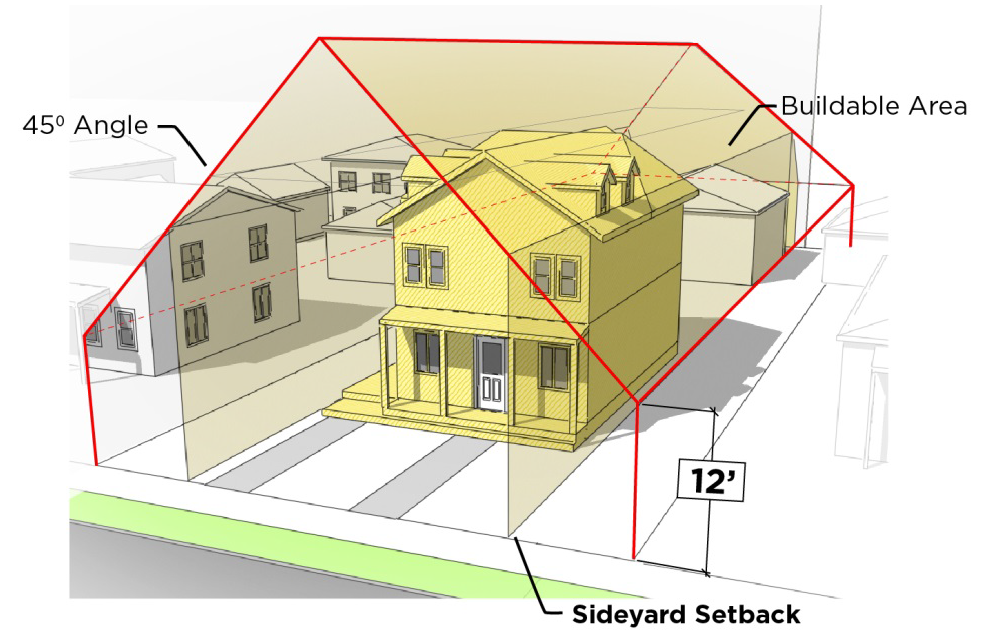
Figure 2 - Bulk Plane as viewed from primary street frontage
(1)
Individual dormers (shed or gable) may extend up to six (6) feet beyond the buildable area, with a maximum width of eight (8) feet. The portion(s) that extend beyond the buildable area shall have a combined width no greater than fifty (50) percent of the length of the roof upon which they are located. The width of the dormer shall be measured at the point that it intersects the bulk plane.
(2)
The end(s) of a side-gabled roof may extend up to five (5) feet beyond the buildable area with a maximum width of twenty (20) feet or no more than fifty (50) percent of the length of the home, whichever is less. The width of the side-gabled roof shall be measured at the point that it intersects the bulk plane.
(Ord. No. 2017-30, § 4, 9-5-17)
Sec. 26-18.1-5. - Site plan/architectural review criteria.
The following supplemental criteria shall be used in conjunction with the Old Town Lafayette Design Resource Book, dated October 2001, and is hereby adopted by city council, as guidelines, in the review of all site plans and projects located in the Old Town neighborhood overlay district pursuant to section 26-16-7:
(a)
All development.
(1)
A similar level of design treatment shall be provided on all four (4) sides of a building. Blank walls devoid of windows or other details are prohibited.
(2)
The percentage of the front façade that is occupied by window and door openings shall be between twenty-five (25) and thirty (30) percent, as is typically found on traditional homes in Old Town. A minimum of ten (10) percent of all other facades shall be occupied by window and door openings.
(3)
Within twenty (20) feet of each side property line, the cumulative length of walls that exceed twelve (12) feet in height shall be limited to thirty (30) feet. The remaining walls shall:
i.
Be set back at least four (4) feet from portions of the wall plane that exceed twelve (12) feet in height; or
ii.
Not exceed twelve (12) feet in height.
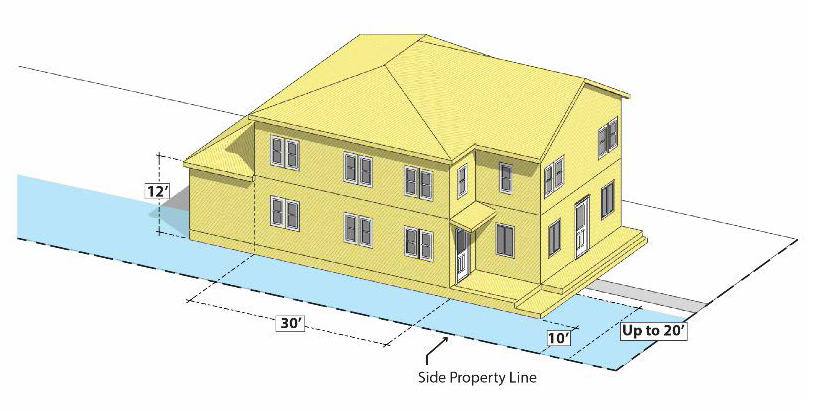
Figure 3 - Required side wall articulation through stepdown (top) or variation in
wall plane (bottom)
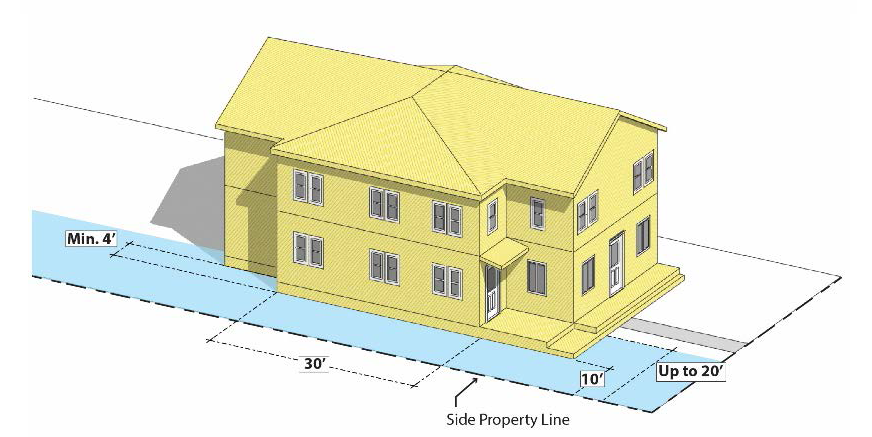
Figure 4 - Required side wall articulation through stepdown (top) or variation in
the wall plane (bottom)
(4)
Air-conditioning units or other HVAC equipment mounted at the ground level must mitigate noise and heat impacts on adjacent residents through one (1) or more of the following strategies:
i.
Locating equipment a minimum of ten (10) feet from ground level bedroom windows and unenclosed patios or porches on the adjacent home;
ii.
Locating equipment in a sound-buffering enclosure; and/or
iii.
Using equipment certified with a sound rating of the proposed equipment, not to exceed an A-weighted sound pressure level of sixty-five (65) DBA.
(5)
The primary entry of single-family homes shall face the primary street frontage.
(b)
Additions.
(1)
Additions shall incorporate roof and building forms similar to those found on the principal building.
(2)
Additions shall be designed to appear secondary to the principal building in terms of their mass and form when viewed from the public right-of-way. This standard may be accomplished through one (1) or more of the following techniques. (Figure 5 and Figure 6)
i.
Concentrating the mass and height of the addition behind and/or to the side of the principal building;
ii.
Using sloped roof forms, dormers, or other creative approaches to accommodate additional square footage on a second story without obscuring the original form and scale of the principal building;
iii.
Avoiding the use of building forms that would obscure, remove, or significantly modify the predominant roof form of the principal building, particularly those roof forms that are visible from the public right-of-way;
iv.
Incorporating a smaller scale building module or similar transition between the principal building and a larger addition to maintain the traditional form of the principal building; and/or
v.
Aligning or stepping down the height of an addition where it meets the principal building.
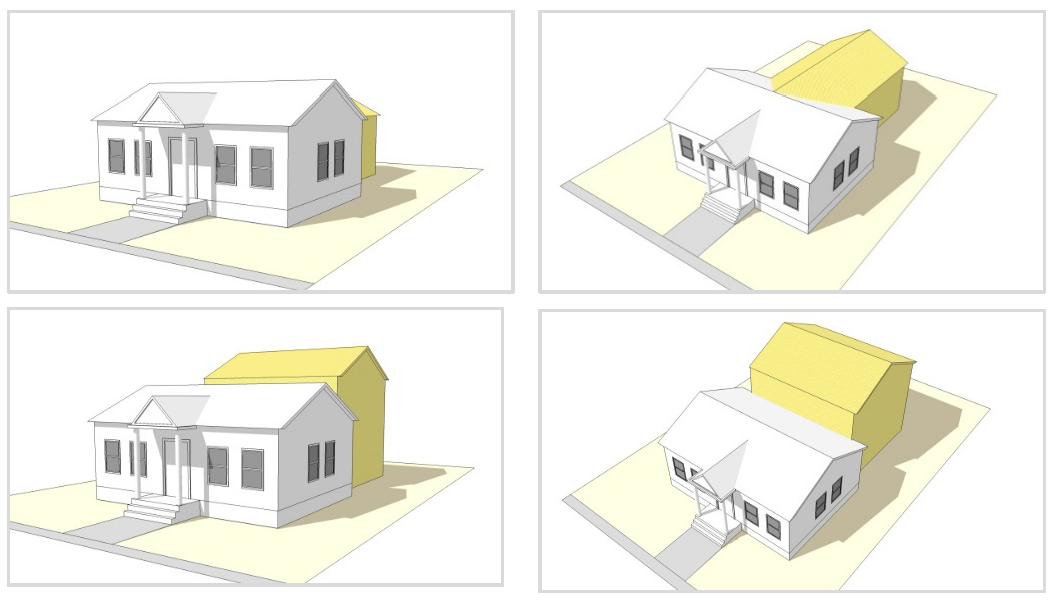
Figure 5 - Additions shall be designed to appear secondary to the principal building
in terms of their mass and form when viewed from the public right-of-way
(3)
For buildings that are greater than fifty (50) years old, a change in architectural detailing (e.g., materials, color) or offset in the building wall shall be provided where the addition meets the original building to provide a subtle distinction between old and new building forms. (Figure 6)
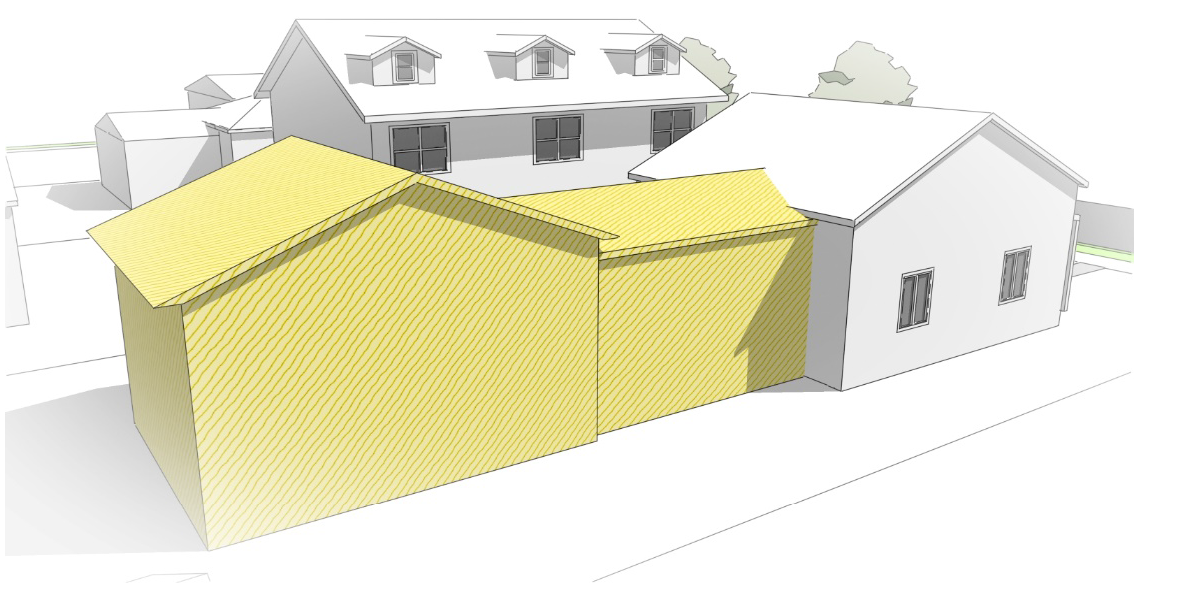
Figure 6 - Use of change in building massing to provide a subtle distinction where
an addition (shown in yellow) meets the original building form
(c)
Duplexes.
(1)
At least one (1) primary entrance shall face the primary street frontage. If both entrances face the primary street frontage, an offset in the front façade or other variation in building massing shall be provided to avoid the appearance of an identical or "mirrored" pair of units aligned at the front setback. (Figure 7)
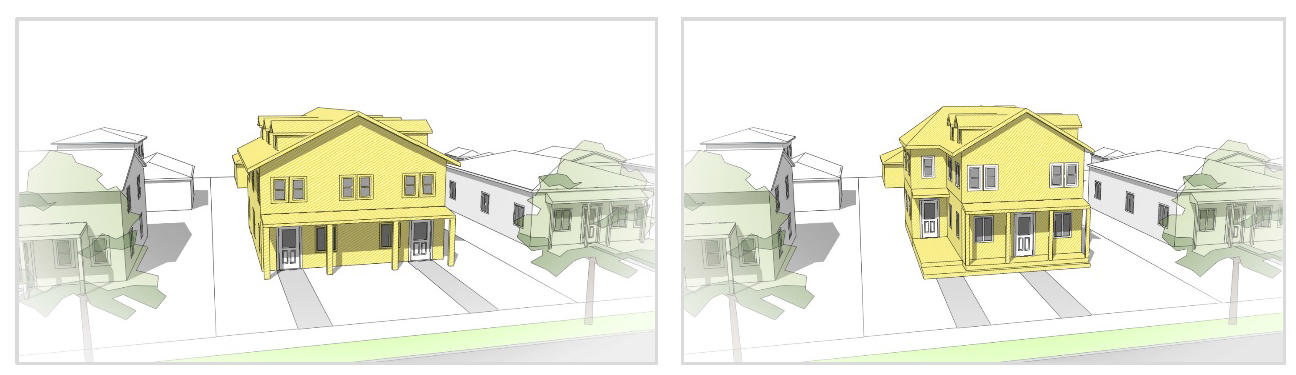
Figure 7 - Offsets and variation in building massing should be used to distinguish
between entrances in street-facing duplex units (right) to avoid the appearance of
an identical or "mirrored" pair of units aligned at the front setback (left)
(d)
Garages.
(1)
Garages shall be located at the rear of the lot and accessed from an alley where one exists.
(2)
On corner lots, garage doors may face a side street and/or toward an alley where one exists. The number of continuous garage doors facing a side street is limited to two (2) single-car garage doors, or one (1) double-car garage door; however, additional garage doors may face an alley.
(3)
Developments encompassing two (2) acres or more shall incorporate alley access to allow for alley-loaded garages when feasible and when connecting to existing alleys.
(Ord. No. 2017-30, § 4, 9-5-17)
Sec. 26-18.1-6. - Landscaping regulations and guidelines.
(a)
Tree replacement. Preservation of significant trees is encouraged. For the purposes of this standard, significant trees shall be defined as follows:
(1)
A minimum of six (6) inches in caliper measured twelve (12) inches above soil line for a deciduous tree; or
(2)
A minimum of ten (10) feet in height for a needled evergreen tree.
(b)
Each significant tree that is not preserved shall be replaced on site in a location that can accommodate the anticipated width of the tree at maturity without pruning.
(c)
Replacement deciduous trees shall be a minimum of two (2) caliper inches measured six (6) inches above soil line. Replacement evergreen tree shall be a minimum of six (6) feet in height.
(Ord. No. 2017-30, § 4, 9-5-17)

