
Redford Charter Township
City Zoning Code
City Zoning Code
ARTICLE I
CONSTRUCTION OF LANGUAGE AND DEFINITIONS
SECTION 1.01 - CONSTRUCTION OF LANGUAGE
The following rules of construction apply to the text of this Ordinance:
A.
The particular shall control the general.
B.
In case of any difference of meaning or implication between the text of this Ordinance and any caption or illustration, the text shall control.
C.
The word "shall" is always mandatory and not discretionary. The word "may" is permissive.
D.
Words used in the present tense shall include the future; and words used in the singular number shall include the plural, and the plural the singular, unless the context clearly indicates the contrary.
E.
A "building" or "structure" includes any part thereof.
F.
The phrase "used for" includes "arranged for," "designed for," "intended for," "maintained for," or "occupied for."
G.
The word "person" includes an individual, a corporation, a partnership, an incorporated association, or any similar entity.
H.
Unless the context clearly indicates the contrary, where a regulation involves two or more items, conditions, provisions, or events connected by the conjunction "and," "or," "either...or," the conjunction shall be interpreted as follows:
a.
"And" indicates that all the connected items, conditions, provisions, or events shall apply.
b.
"Or" indicates the connected items, conditions, provisions or events may apply singly or in any combination.
c.
"Either...or" indicates that the connected items. conditions, provisions or events shall apply singly but not in combination.
I.
Terms not herein defined shall have the meaning customarily assigned to them.
J.
The terms his and her shall be used interchangeably, and shall be considered to have the same meaning.
SECTION 1.02 - DEFINITIONS
For the purpose of this Ordinance, certain terms and words are herewith defined:
ACCESSORY USE, OR ACCESSORY: An "accessory use" is a use which is clearly incidental to, customarily found in connection with, serves the principal use or structure, and (except in the case of accessory off-street parking spaces or loading) located on the same zoning lot as the principal use to which it is related.
When "accessory" is used in the text, it shall have the same meaning as accessory use. An accessory use includes, but is not limited to the following:
1.
Residential accommodations for servants.
2.
Residential accommodations for caretakers.
3.
Swimming pools for the use of the occupants of a residence, or their guests.
4.
Domestic storage in a shed, or similar accessory building or structure.
5.
Home occupations, consisting of an occupation or profession carried on by not more than one (1) member of the family residing in the residence and requiring no structural change or alteration which would diminish the residential character of the dwelling and/or residence.
6.
A newsstand primarily for the convenience of the occupants of a building, which is located wholly within such building and has no exterior signs or displays.
7.
Storage of merchandise normally carried in stock in connection with a business or industrial use, unless such storage is excluded in the applicable district regulations.
8.
Storage of goods used in or produced by industrial uses or related activities, unless such storage is excluded in the applicable district regulations.
9.
Accessory off-street parking spaces, open or enclosed, subject to the accessory off-street parking regulations for the district in which the zoning lot is located.
10.
Accessory off-street loading, subject to the off-street loading regulations for the district in which the zoning lot is located.
11.
Accessory signs, subject to the sign regulations for the district in which the zoning lot is located.
Addition: An extension or increase in floor area or height of a building or structure.
Adult: A person having arrived at the legal age of adulthood defined by the laws of the state of Michigan.
Adult Foster Care Facility: A governmental or nongovernmental establishment having as its principal function the receiving of adults for foster care. It includes facilities and foster care family homes for adults who are aged, emotionally disturbed, developmentally disabled, or physically handicapped who require supervision on an ongoing basis but who do not require continuous nursing care. Adult foster care facility does not include a nursing home, a home for the aged, an alcohol or a substance abuse rehabilitation center, a hospital for the mentally ill, or similar facilities.
1.
Adult Foster Care Family Home: A private residence with the approved capacity to receive not more than six (6) adults who shall be provided foster care for five (5) or more days per week, and for two (2) or more consecutive weeks. The adult foster care family home licensee shall be a member of the household and an occupant of the residence.
2.
Adult Foster Care Large Group Home: An adult foster care facility with the approved capacity to receive at least thirteen (13), but not more than twenty (20) adults who shall be provided foster care.
3.
Adult Foster Care Small Group Home: An adult foster care facility with the approved capacity of not more than twelve (12) adults who shall be provided foster care.
ALLEY: Is a way open to public travel intended for secondary access to premises and less than thirty (30) feet wide.
ALTERATIONS: Is any change, addition or modification in construction or type of occupancy, or any change in the structural members of the building, such as bearing walls or partitions, columns, beams or girders, or any substantial change in the roof or in the interior walls.
APARTMENTS: Are the dwelling units in a multiple dwelling as defined herein:
1.
EFFICIENCY APARTMENT: Is a dwelling unit containing not over three hundred and fifty (350) square feet of residential floor area, and consisting of not more than one (l) room in addition to kitchen, dining and necessary sanitary facilities.
2.
ONE BEDROOM UNIT: Is a dwelling unit containing a minimum residential floor area of at least six hundred (600) square feet per unit, consisting of not more than two (2) rooms in addition to kitchen, dining and necessary sanitary facilities.
3.
TWO BEDROOM UNIT: Is a dwelling unit containing a minimum residential floor area of at least eight hundred (800) square feet per unit, consisting of not more than three (3) rooms in addition to kitchen, dining and necessary sanitary facilities.
4.
THREE OR MORE BEDROOM UNIT: Is a dwelling unit wherein for each room in addition to the three (3) rooms permitted in a two (2) bedroom unit, there shall be provided an additional residential floor area of two hundred (200) square feet to the minimum residential floor area of eight hundred (800) square feet.
ARCHITECTURAL FEATURES: Architectural features of a building or a structure shall include cornices, eaves, gutters, belt courses, sills, lintels, bay windows, chimneys, and decorative ornaments.
AREA DEVELOPMENT PLAN: A plan view rendering illustrating the placement of roadways, buildings, parking lots, landscaping, and other site design elements and recommendations involving, but not necessarily limited to, utilities and storm drainage, floor space density allocations, and building facade and architectural treatment, for a specified geographic area of the community, adopted and incorporated in the Township's Master Plan.
AUTO WASH: Is a washing service facility for the washing of passenger vehicles or trucks.
AUTOMOBILE REPAIR: The general repair, engine rebuilding, rebuilding or reconditioning of motor vehicles; collision service, such as body, frame, or fender straightening and repair; overall painting and undercoating of automobiles.
AUTOMOBILE TRAILER: Any house trailer, trailer home, trailer coach, or similar vehicle used, or so constructed as to permit its being used, as a conveyance upon the public streets or highways, and duly licensable as such, so designed, constructed, or added to by means of accessories in such manner, and will permit the occupancy thereof once stationed as a dwelling or sleeping place for one (1) or more persons.
AVERAGE DAY: A Tuesday, Wednesday, or Thursday for most uses. The average day may be a Saturday for uses that have higher peak-hour traffic volumes on a Saturday rather than midweek.
BASEMENT: Is that portion of a building which is partly or wholly below grade, but so located that the vertical distance from the average grade to the floor is greater than the vertical distance from the average grade to the ceiling. A basement shall not be counted as a story.
BERM, OBSCURING: Is an earthen mound of definite height and location to serve as an obscuring device in carrying out the requirements of this Ordinance.
BLOCK: Is the property abutting one side of a street and lying between the two nearest intersecting streets (crossing or terminating), or between the nearest such street and railroad right-of-way, unsubdivided acreage, or between any of the foregoing and any other barrier to the continuity of development, or corporate boundary lines of the municipality.
BOARDING OR ROOMING HOUSE: Is any dwelling occupied in such a manner that certain rooms in excess of those used by members of the immediate family and occupied as a home or family unit, are leased or rented to persons outside of the family, without any attempt to provide therein or therewith cooking or kitchen accommodations.
BUILDING: Is any structure either temporary or permanent, having a roof and used or built for the shelter or enclosure of persons, animals, chattels, or property of any kind. This shall include tents, awnings or vehicles situated on private property and used for the purpose of a building.
BUILDING HEIGHT: Is the vertical distance from grade to the top of parapet wall in the case of a flat roof, to the deck line for mansard roofs, to the mean height level between eaves and ridge for gable, hip, and gambrel roofs. The height of detached accessory structures shall be the distance from grade to the top of parapet wall in the case of a flat roof, and to the peak of the roof for mansard, gable, hip, and gambrel roofs. (Effective November 14, 1991)
BUILDING INSPECTOR (OFFICIAL): The administrative official designated by the Township Board with the responsibilities of administering and enforcing this Ordinance.
BUILDING LINE: Is a line formed by the face of the building, and for the purpose of this Ordinance, a building line is the same as a minimum front setback line.
BUILDING, PRINCIPAL: A building in which is conducted the principal use of the lot on which it is located.
CARRY-OUT RESTAURANT: Is a business establishment where general or specialized foods, desserts and beverages are sold in a ready-to-consume state for consumption by the customer while off the premises.
CERTIFICATE OF OCCUPANCY: A document issued by Redford Township allowing the occupancy or use of a building and/or land and certifying that the structure or use has been constructed and will be used in compliance with all the applicable municipal codes and ordinances. For purposes of this ordinance, a Certificate of Occupancy and Zoning Certificate shall be considered as one in the same.
CHILD CARE CENTER: Refer to definition of day care center.
CLINIC: Is a public or proprietary institution providing diagnostic, therapeutic or preventative treatment of ambulatory patients by a group of doctors, dentists or dental research technicians, acting conjointly and in the same building for the purpose aforesaid.
CLUB: Is an organization of persons for special purposes or for promulgation of sports, arts, sciences, literature, politics, or the like, but not operated for profit.
COMMUNITY PLAN: Refer to definition of master plan.
CONVALESCENT OR NURSING HOME: Is a structure with sleeping rooms where persons are housed or lodged and are furnished with meals, nursing and medical care.
COURT: Is an open unoccupied space other than a yard and bounded on at least two (2) sides by a building. A court extending to the front lot line or front yard, or to the rear lot line or rear yard, is an OUTER COURT. Any other court is an INNER COURT.
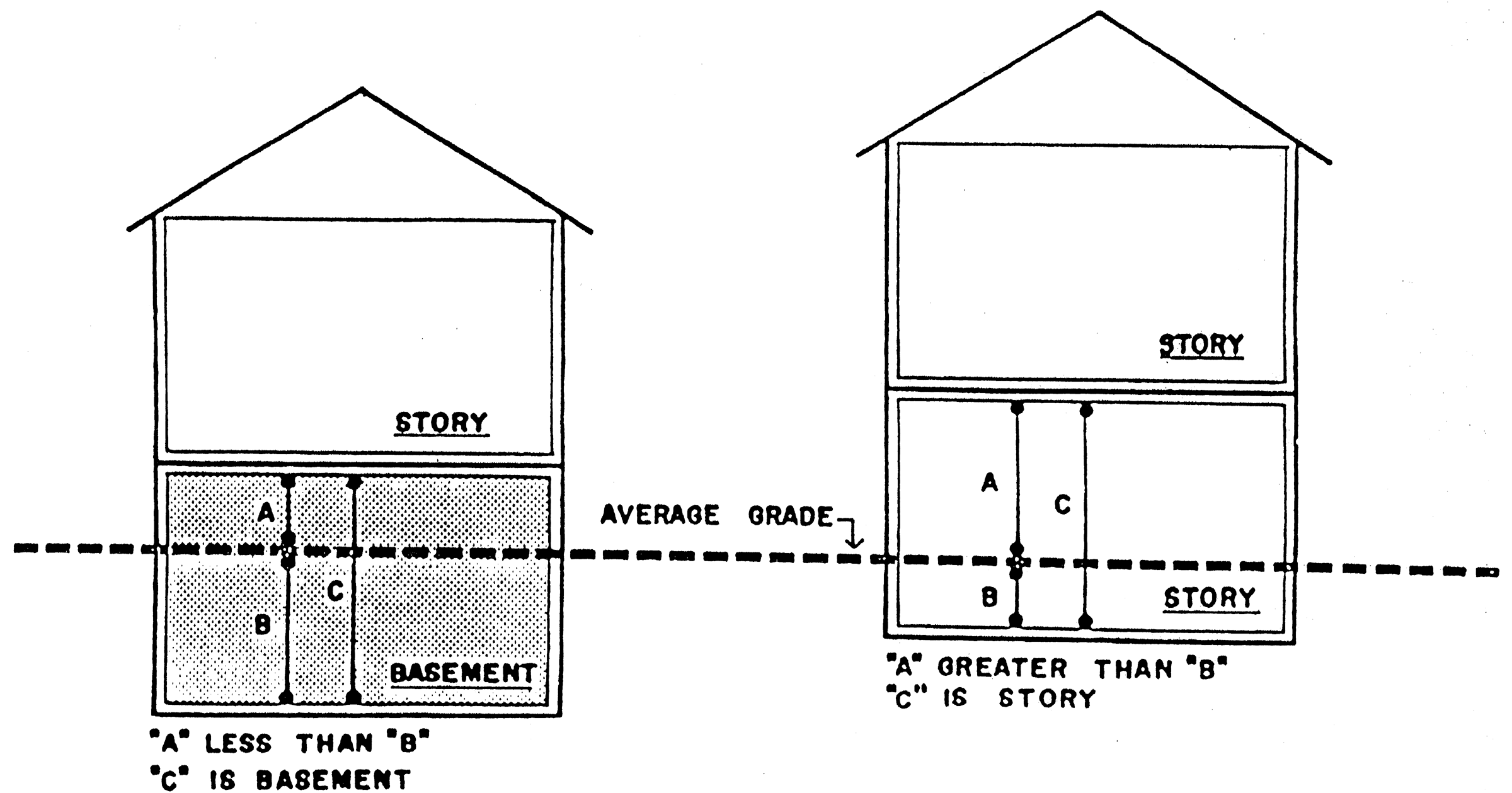
Basement and Story
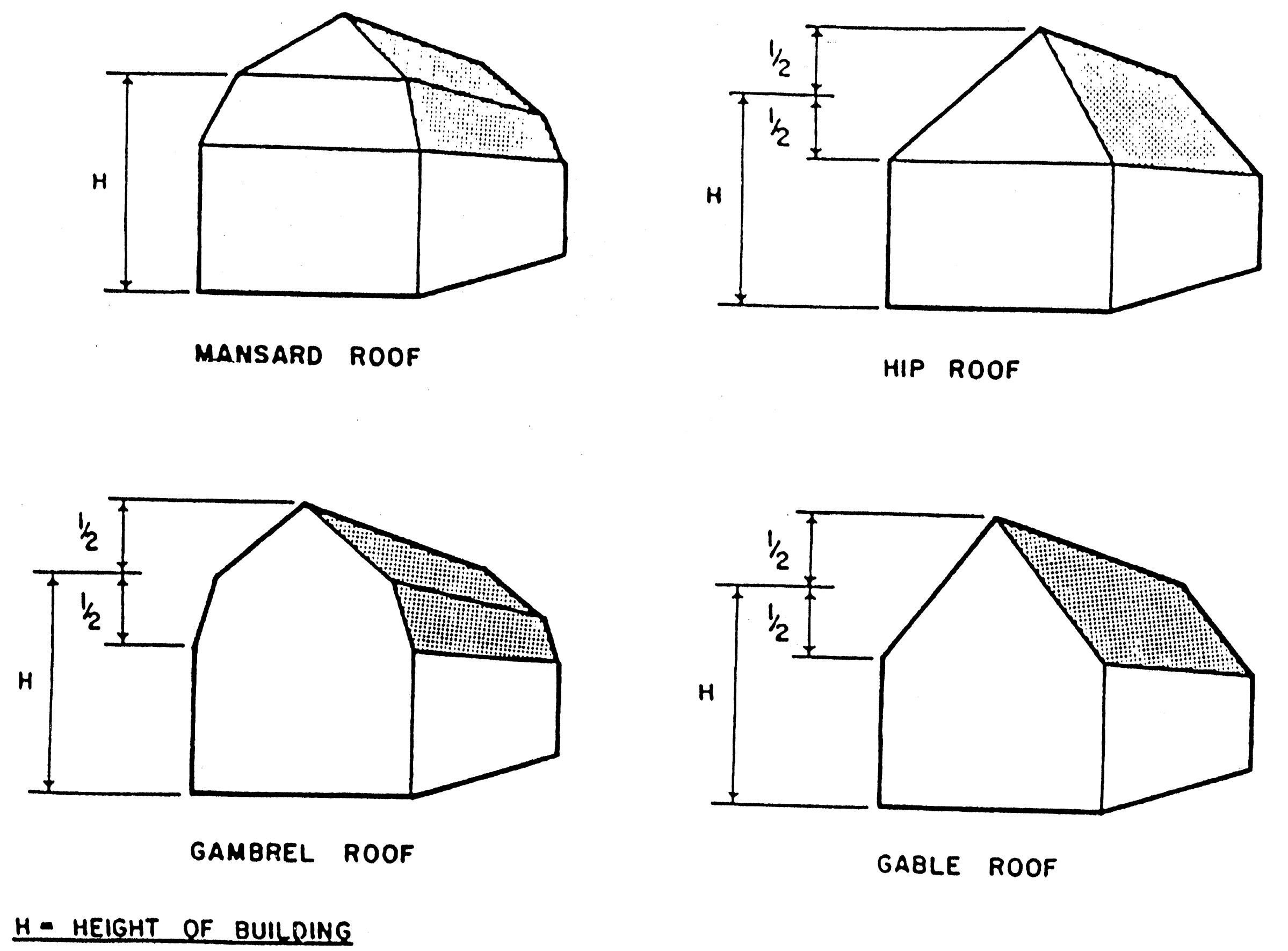
Building Height
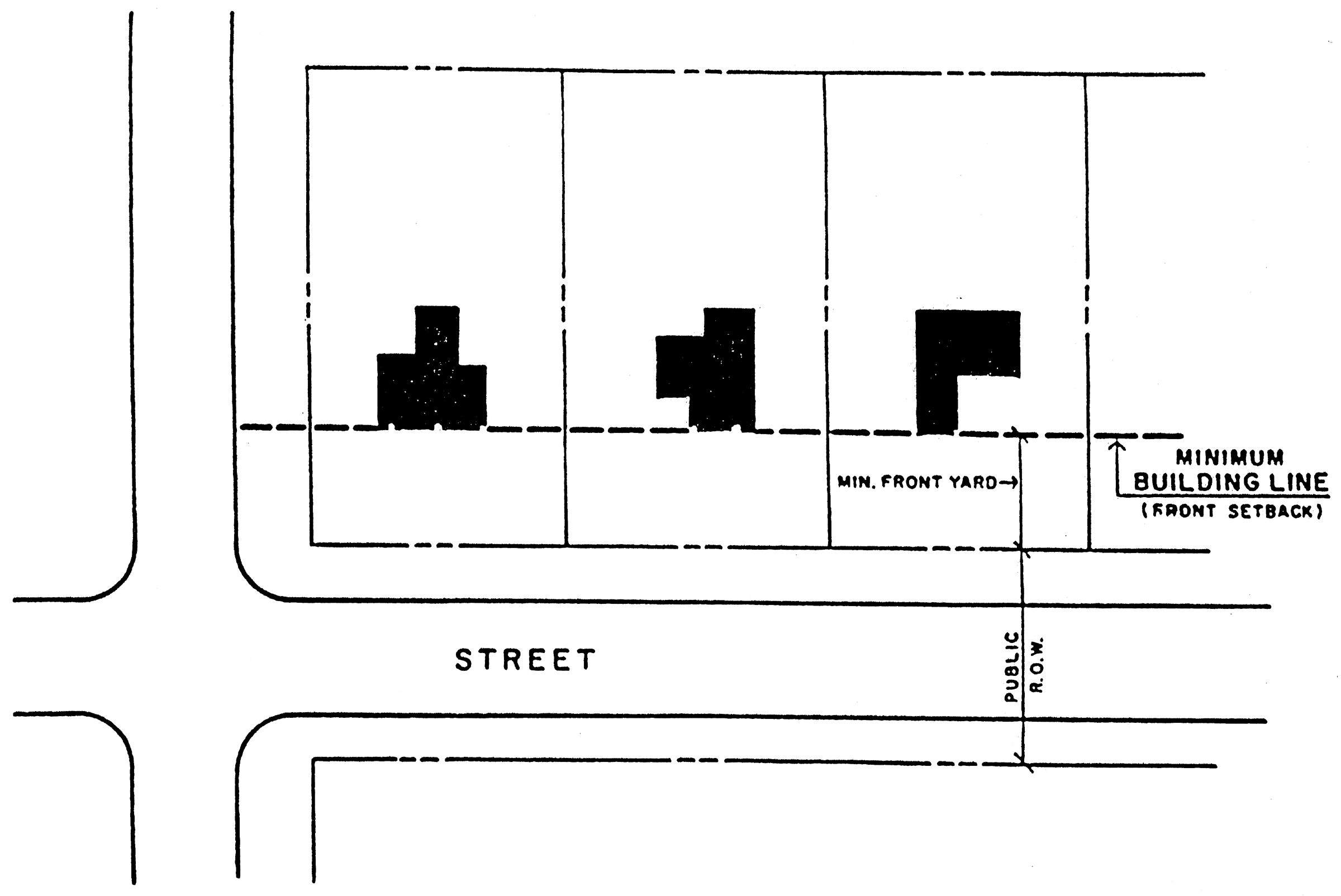
Building Line
DAY CARE CENTER: A facility, other than a private residence, receiving one or more preschool or school age children for care for periods of less than 24 hours a day, and where the parents or guardians are not immediately available to the child. Child care center or day care center includes a facility which provides care for not less than two consecutive weeks, regardless of the number of hours of care per day. The facility is generally described as a child care center, day care center, day nursery, nursery school, parent cooperative preschool, play-group, or drop in center.
DECK: A wooden platform extending horizontally from the principal dwelling, designed and intended to be used as an uncovered porch or patio. For purposes of this Ordinance, a deck shall not be defined to include balcony.
DEVELOPMENT: A site plan, subdivision tentative preliminary plat, condominium project, mobile home park, redevelopment, reuse or expansion of a use or building or the carrying out of any construction, reconstruction, alteration of surface or structure, or change of land use or intensity of land use.
DIRECT ACCESS: Access not requiring trespass over adjacent property or rights-of-way.
DISTRICT: Is a portion of the unincorporated area of the Township within which certain regulations and requirements or various combinations thereof apply under the provisions of this Ordinance.
DRIVE-IN RESTAURANT: Is a business establishment where general or specialized foods, desserts, and beverages are sold in a ready-to-consume state for consumption by the customer outside of the building and/or while in an automobile parked on the premises.
DRIVE-IN - ACCESSORY: Is a drive-up window or means of serving a patron outside of the structure, such activity being incidental to the principal permitted use whose major activity is serving persons within the building.
DRIVE-IN: Is a business establishment so developed and operated so that the majority of its retail or service business is derived from serving patrons in a motor vehicle and/or outside the walls of the building.
DWELLING - MULTIPLE FAMILY: Is a building designed exclusively for, and containing three (3) or more dwelling units.
DWELLING - ONE FAMILY: Is a detached building designed exclusively for, and containing, one (1) dwelling unit only.
DWELLING - SEMI-DETACHED: A one-family dwelling attached to one other one-family dwelling by a common vertical wall, and each dwelling located on a separate lot. The semi-detached dwelling is part of a two-family structure with the dwelling units side-by-side as opposed to one on top of the other.
DWELLING - TOWNHOUSE: A one-family dwelling in a row of two (2) but no more than four (4) such units in which each unit has its own front and rear access to the outside, no unit is located over another unit, and each unit is separated from any other unit by one or more common fire resistant walls.
DWELLING - TWO FAMILY: Is a detached building designed exclusively for, and containing two (2) dwelling units only.
DWELLING UNIT: Is a building, or portion thereof, designed for occupancy by one (1) family for residential purposes and having cooking facilities and sanitary facilities.
DWELLING UNIT - EFFICIENCY: A dwelling unit consisting of not more than one habitable room together with kitchen or kitchenette and sanitary facilities.
DWELLING UNIT, MANUFACTURED: Shall mean a dwelling unit which is substantially built, constructed, assembled, and finished off the premises upon which it is intended to be located.
DWELLING UNIT, SITE BUILT: Shall mean a dwelling unit which is substantially built, constructed, assembled, and finished on the premises which are intended to serve as its final location. Site built dwelling units shall include dwelling units constructed of pre-cut materials, and panelized wall, roof and floor sections when such sanctions require substantial assembly and finishing on the premises which are intended to serve as its final location.
EASEMENT: A grant of one (1) or more of the property rights by the property owner to and/or for the use by the public, a corporation, or another person or entity.
EMPLOYEE LOAD FACTOR: A number equal to the maximum number of employees that can be employed at any one time in a particular structure or parcel of land, and refers to the basis upon which the number of parking spaces required is determined.
ENVIRONMENTAL CONTAMINATION: The release of a hazardous substance, or the potential release of a discarded hazardous substance, in a quantity which is or may become injurious to the environment, or to the public health, safety, or welfare.
ERECTED: Is built, constructed, altered, reconstructed, moved upon, or any physical operations on the premises which is required for construction. Excavation, fill, drainage, and the like shall be considered a part of erection.
ESSENTIAL SERVICES: Is the erection, construction, alteration or maintenance by public utilities or municipal departments of underground, surface or overhead gas, electrical, steam, fuel, or water transmission or distribution systems, collection, communication, supply or disposal systems, including towers, poles, wires, mains, drains, sewers, pipes, conduits, cables, fire alarm and police call boxes, traffic signals, hydrants and similar accessories in connection therewith, which are necessary for the furnishing of adequate service by such utilities or municipal departments for the general health, safety, or welfare; such essential services, however, do not include buildings other than such buildings as are primarily enclosures or shelters of the above essential service equipment.
EXCAVATION: Premises from which any rock, gravel, sand, topsoil, or earth in excess of fifty (50) cubic yards on any calendar year is excavated or removed for the purpose of disposition away from the premises except excavation in connection with the construction of a building or within public highway rights-of-way.
FACILITY: Any building, structure, or installation from which there may be a discharge of hazardous substances.
FAMILY: Is, for purpose of the Ordinance, either a single individual doing his or her own cooking and living upon the premises as a separate housekeeping unit, one or more persons related by blood, marriage, adoption or guardianship living as a single housekeeping unit, a group of individuals not necessarily related by blood, adoption, marriage, or guardianship living together in a dwelling unit as a single housekeeping unit under a common housekeeping management plan based upon an intentionally structured relationship providing organization and stability (hereinafter referred to as a "functional family") or, a group of not more than twelve (12) unrelated persons, each of whom is handicapped within the meaning of the Fair Housing Act, 42 U.S.C. Sec. 3602(h), living together as a single housekeeping unit in an adult foster care home licensed by the state of Michigan, with such nonresident staff as may be needed to assist the residents with their daily life activities, but not receiving funding through a contract with any state or community health or social service agency. For purposes of this definition, functional family means a group of no more than six people plus their offspring. Functional family does not include any society, club, fraternity, sorority, association, lodge, organization or group of students or other individuals with a common living arrangement or whose basis for the establishment of the housekeeping unit is temporary.
FAMILY DAY CARE HOME: A private home in which one but less than seven minor children are received for care and supervision for periods of less than twenty-four (24) hours a day, unattended by a parent or legal guardian, except children related to an adult member of the family by blood, marriage, or adoption. Family day care home includes a home that gives care to an unrelated minor child for more than four weeks during a calendar year.
FENCE: Is any permanent partition, structure, or gate composed of posts carrying boards, rails, pickets, or wire or iron structures consisting of vertical or horizontal bars, which are erected for the purpose of separating, screening, enclosing or protecting property.
FENCE, DECORATIVE: Is an open or semi-open fence not exceeding three feet in height, ornamental in nature, not intended to provide a permanent barrier to passage or for screening. Decorative fencing does not include chain link fencing, but may include stone building material.
FENCE, PRIVACY: Is an obscuring partition, ornamental in nature, constructed of vinyl, cedar, redwood, or pressure-treated material acceptable to the Township Building Department, primarily erected for the purpose of screening property from the view of passersby and neighbors.
FLOODPLAIN: Is the limits of the 100 year flood as defined by the current Flood Insurance Study and accompanying Flood Boundary and Floodway Map for the Township of Redford, as published by the United States Federal Insurance Administration and as approved by the Redford Township Board.
FLOOR AREA, GROSS: Is the sum of the gross horizontal areas of the several floors or a building or buildings, measured from the exterior faces of exterior walls or from the center line of walls separating two buildings. In particular, floor area includes basement space, elevator shafts or stairwells; floor space for mechanical equipment, penthouses, balconies, mezzanines, enclosed porches, and accessory buildings; attic floor space (whether or not floor has been laid) providing structural head room of seven feet six inches (7'-6"). Floor area shall not include: elevator or stair bulkheads, accessory water tanks, or cooling towers; uncovered steps; attic space less than seven feet six inches (7'-6") and open porches, terraces or breezeways.
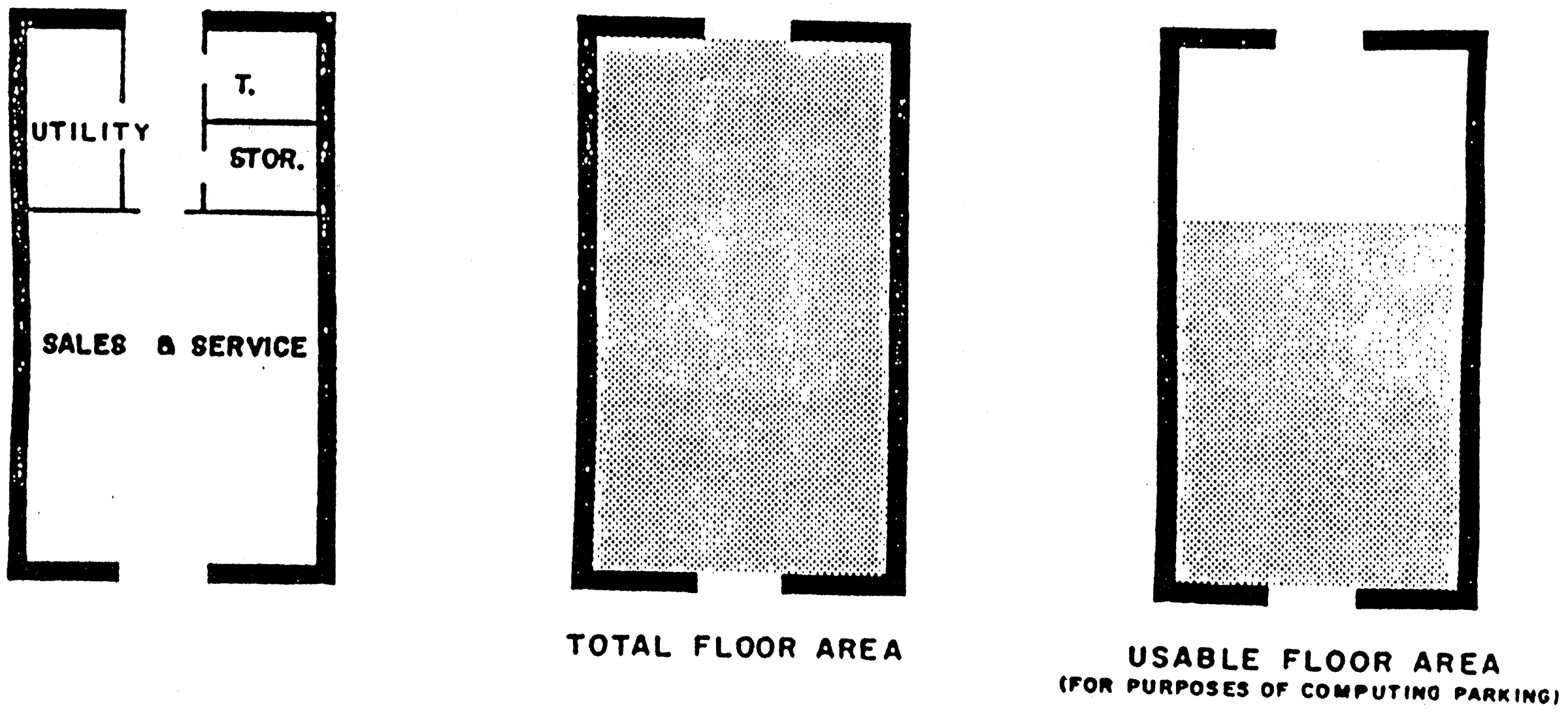
Floor Area
FLOOR AREA, RESIDENTIAL (FOR THE PURPOSES OF COMPUTING THE MINIMUM ALLOWABLE FLOOR AREA IN A RESIDENTIAL DWELLING UNIT): Is the sum of the horizontal areas of each story of the building as measured from the exterior faces of the exterior walls or from the centerline of walls separating two buildings or dwelling units. The required headroom set forth in the above definitions shall apply herein. The floor area measurement is exclusive of areas of basement, unfinished attics, attached garages, breezeways, and enclosed and unenclosed porches.
FLOOR AREA. USABLE (FOR THE PURPOSES OF COMPUTING PARKING): Is that area used for or intended to be used for the sale of merchandise or services or for use to serve patrons, clients or customers. Such floor area which is used or intended to be used principally for the storage or processing of merchandise, hallways, or for utilities or sanitary facilities, shall be excluded from this computation of "Usable Floor Area." Measurement of usable floor area shall be the sum of the horizontal areas of the several floors of the building, measured from the interior faces of the exterior walls.
FOOTCANDLE: Illumination at point "A" on a surface which is one (1) foot from and perpendicular to a uniform point source of one candela.
FRONT BUILDING FACE AREA: The facade of the building facing the front line calculated as its width multiplied by the building height.
FRONTAGE: All property fronting on one (1) side of a street between intersecting or intercepting streets, or between a street and right-of-way, water-way, end of a dead-end street, or township boundary calculated as the horizontal straight line distance between side lot lines, measured between the two (2) points where the front setback line intersects the side lot lines.
GAP: The median time headway (in seconds) between vehicles in a major traffic stream which will permit side-street vehicles at STOP or YIELD controlled approach to cross through or merge with the major traffic stream under prevailing traffic and roadway conditions.
GARAGE, PRIVATE: Is an accessory building or portion of a main building designed or used solely for the storage of motor driven vehicles, boats and similar vehicles owned and used by the occupants of the building to which it is accessory.
GASOLINE FILLING STATION: Is a place for the dispensing, sale or offering for sale of motor fuels directly to users of motor vehicles, together with the sale of minor accessories, but not including any automotive service repair.
GASOLINE SERVICE STATION: Is a place for the dispensing, sale or offering for sale of motor fuels directly to users of motor vehicles, together with the sale of minor accessories and services for motor vehicles, but not including major automotive repair.
GRADE: Is deemed to mean a ground elevation established for the purpose of regulating the number of stories and the height of the building. The building grade shall be the level of the ground adjacent to the walls of the building if the finished grade is level. If the ground is not entirely level, the grade shall be determined by averaging the ground elevation adjacent to each face of the building.
GREENBELT, OBSCURING: Is a landscaped area of definite width and location, and containing plant materials or definite height and spacing to serve as an obscuring device in carrying out the requirements of this Ordinance.
GROUP DAY CARE HOME: A private home in which more than six (6) but not more than twelve (12) minor children are given care and supervision for periods of less than twenty-four (24) hours a day unattended by a parent or legal guardian, except children related to an adult member of the family by blood, marriage, or adoption. Group day care home includes a home that gives care to an unrelated minor child for more than four weeks during a calendar year.
HAZARDOUS SUBSTANCE: A chemical or other material which is or may become injurious to the public health, safety, or welfare, or to the environment. The term includes, but is not limited to, hazardous substances as defined in the Comprehensive Environmental Response, Compensation, and Liability Act of 1980, Public Law 96-510, 94 Stat. 2767; "hazardous waste" as defined in the Hazardous Waste Management Act, Act No. 64 of the Public Acts of Michigan of 1979 (MCL 299.501 et seq., MSA 13.30(1) et seq.), as amended; "petroleum" as defined in the Leaking Underground Storage Tank Act, Act No. 478 of the Public Acts of Michigan 1988 (MCL 299.831 et seq., MSA 14.528(261) et seq.), as amended.
HEALTH CARE FACILITY: A facility or institution, whether public or private, principally engaged in providing services for health maintenance, diagnosis and treatment of disease, pain, injury, deformity or physical condition allowing overnight stay, including, but not limited to, a general hospital, special hospital, mental hospital, public health center, diagnostic center, treatment center, rehabilitation center, extended care facility, tuberculosis hospital, chronic disease hospital.
HOME FOR THE AGED (CONGREGATE CARE FACILITY): A supervised personal care facility, other than a hotel, adult foster care facility, hospital, nursing home, or county medical care facility, that provides room, board, and supervised personal care to twenty-one (21) or more unrelated, nontransient, individuals sixty (60) years of age or older. Home for the aged includes a supervised personal care facility for twenty (20) or fewer individuals sixty (60) years of age or older if the facility is operated in conjunction with and as a distinct part of a licensed nursing home.
HOME OCCUPATION: Any activity carried out for gain exclusively by the occupants of the dwelling, whether conducted within the residents dwelling unit and/or accessory structure. (Refer also to definition of Accessory Use.)
HOT TUB: A water-filled receptacle sited out of doors not intended for swimming or bathing designed to provide its occupants with hot water massage therapy through the mechanical circulation or pulsation of the water. Also commonly referred to as a Jacuzzi.
HOTEL: A building or part of a building, with a common entrance or entrances, in which the dwelling units or rooming units are used primarily for transient occupancy, and in which one (1) or more of the following services are offered: maid service, furnishing of linen, telephone, secretarial, or desk service, and bellboy service. A hotel may include a restaurant or cocktail lounge, public banquet halls, ballrooms, or meeting rooms.
HOUSEHOLD: A household includes all persons who occupy a house, an apartment, a group of rooms, or a single room occupied as separate living quarters.
HOUSING FOR THE ELDERLY: A building or group of buildings containing dwellings where the occupancy of the dwellings is restricted to persons sixty-two (62) years of age or older, or couples where either spouse is sixty-two (62) years of age or older. This does not include a foster care home, home for the aged, nursing home, or convalescent home.
JUNK YARDS: Is an open area where waste, used or secondhand materials are bought and sold, exchanged, stored, baled, packed, disassembled, or handled including, but not limited to, scrap iron and other metals, paper, rags, rubber tires and bottles. A "Junk Yard" includes automobile wrecking yards and includes any area of more than one hundred (100) square feet for storage, keeping or abandonment of junk, but does not include uses established entirely within enclosed buildings.
KENNEL, COMMERCIAL: Is any lot or premise on which three (3) or more household pets are either permanently or temporarily boarded for remuneration. Kennel shall also include any lot or premises where household pets are bred or sold.
LANDSCAPE SURFACE RATIO: The area of land devoted to pervious landscaping divided by the area of the site or lot.
LEVEL OF SERVICE: A qualitative measure describing operational conditions within a traffic stream; generally described in terms of such factors as speed and travel time, delay, freedom to maneuver, traffic interruptions, comfort and convenience, and safety.
LOADING SPACE: Is an off-street space on the same lot with a building, or group of buildings, for the temporary parking of a commercial vehicle while loading and unloading.
LOT: Is a piece or parcel of land occupied or to be occupied by a building, structure or use, or by other activity permitted thereon and including the open spaces required under this Ordinance. A lot need not be a lot of existing record.
LOT AREA: The total horizontal area within the lot lines of the lot.
LOT, CORNER: Is a lot of which at least two adjacent sides abut for their full length upon a street, provided that such sides intersect at an angle of not more than one hundred thirty-five (135) degrees. A lot abutting upon a curved street or streets shall be considered a corner lot if the tangents to the curve at its point of beginning within the lot or at the points of intersection of the side lot lines with the street line, intersect at an angle of not more than one hundred thirty-five (135) degrees. In the case of a corner lot with a curved street line, the corner shall be considered to be that point on the street and lot line nearest to the point of intersection of the tangents herein described.
LOT COVERAGE: Is the part or percent of the lot occupied by buildings including accessory buildings.
LOT DEPTH: Is the horizontal distance between the front and rear lot lines, measured along the median between the side lot lines.
LOT, DOUBLE FRONTAGE: Any lot, excluding a corner lot, which fronts on two (2) streets which do not intersect.
LOT INTERIOR: Is a lot other than a corner lot.
LOT LINES: Are the lines bounding a lot as defined herein:
1.
FRONT LOT LINE: In the case of an interior lot, is that line separating said lot from the street. In the case of a corner lot, or double frontage lot, is that line separating said lot from either street.
2.
REAR LOT LINE: Is that lot line opposite the front lot line. In the case of a lot pointed at the rear, the rear lot line shall be an imaginary line parallel to the front lot line, not less than ten (10) feet long lying farthest from the front lot line and wholly within the lot.
3.
SIDE LOT LINE: Is any lot line other than the front lot line or rear lot line. A side lot line separating a lot from a street is a side street lot line. A side lot line separating a lot from another lot or lots is an interior side lot line.
LOT, THROUGH (OR LOT, DOUBLE FRONTAGE): Is an interior lot having frontage on two more or less parallel streets as distinguished from a corner lot. All sides of said lots adjacent to streets shall be considered frontage, and front yards shall be provided as required.
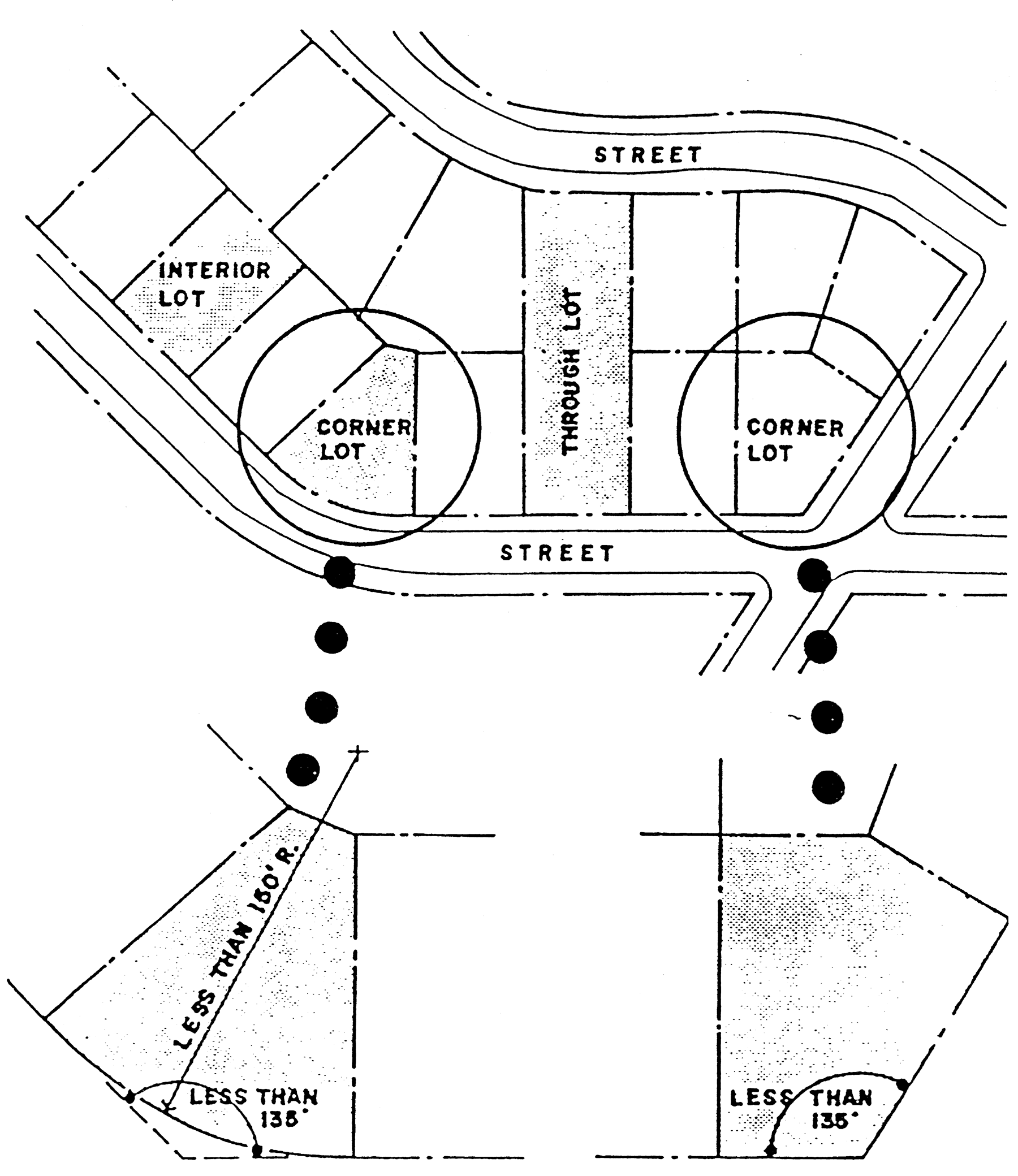
Interior, Through and Corner Lots
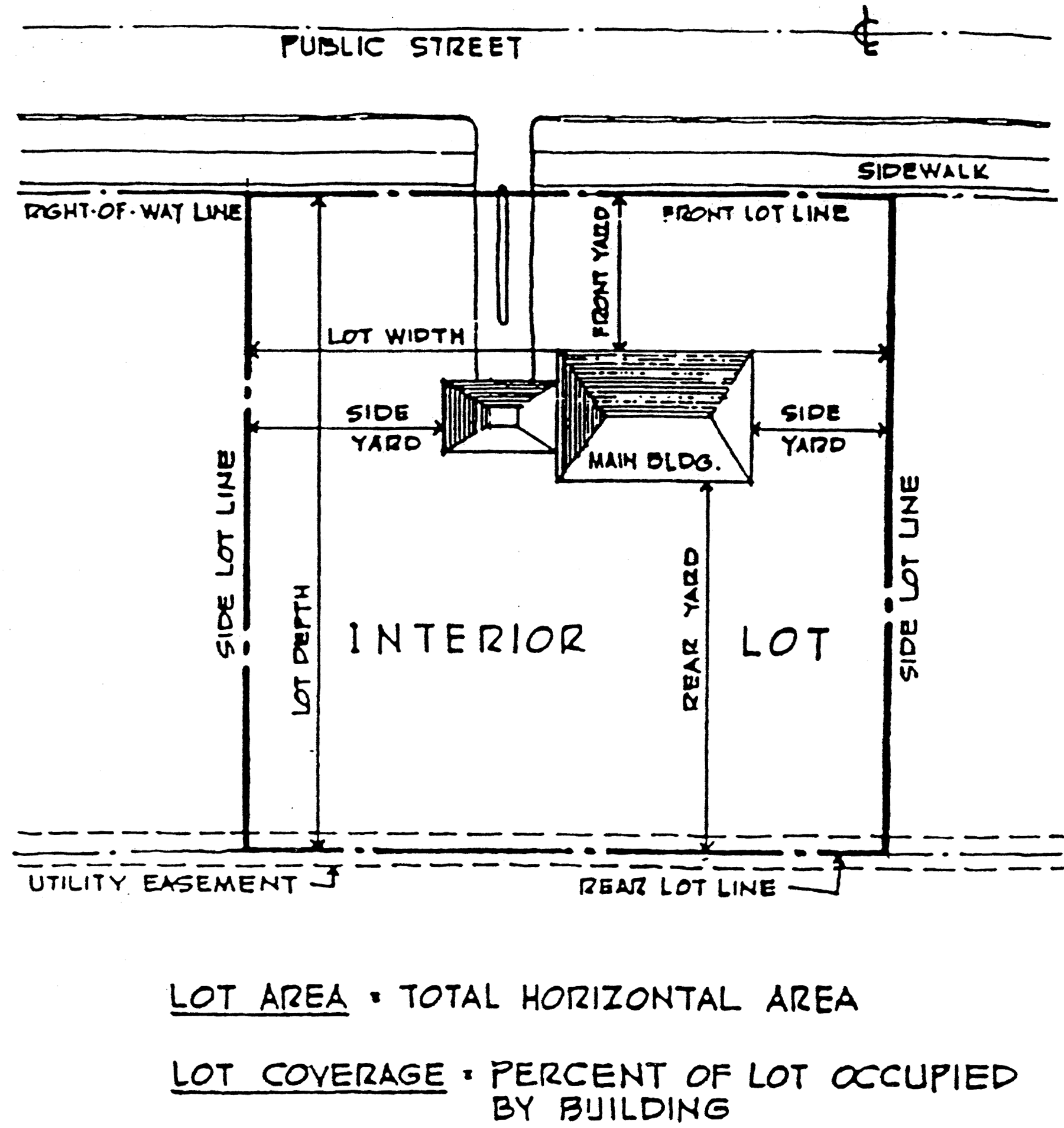
Lots and Areas
LOT WIDTH: Is the horizontal distance between the side lot lines, measured at the two points where the minimum building line intersects the side lot lines.
LOT OF RECORD: Is a lot the dimensions of which are shown on a plat recorded in the office of' the Register of Deeds and which actually exists as so shown.
LOT, ZONING: Is a single tract of land, located within a single block, which at the time of filing for a building permit, is designated by its owner or developer as a tract to be used, developed or built upon as a unit, under single ownership or control. A zoning lot shall satisfy this Ordinance with respect to area, size, dimensions, and frontage as required in the district in which the zoning lot is located. A zoning lot, therefore, may not coincide with a lot of record as filed with the County Register of Deeds, but may include it.
LUMEN: Light flux falling on a surface one (1) square foot in area, every part of which is one (1) foot from a point source having an intensity of one candela.
MAIN BUILDING: Is a building in which is conducted the principal use of the lot upon which it is situated.
MAIN USE: Is the principal use to which the premises are devoted and the principal purpose for which the premises exist.
MAJOR THOROUGHFARE: Is an arterial street which is intended to serve as a large volume trafficway for both the immediate Township area and the region beyond, and is designated as a major thorofare, parkway, freeway, expressway, or equivalent term on the Major Thorofare Plan to identify those streets comprising the basic structure of the Major Thorofare Plan.
MASTER PLAN: Is the Plan for Future Land Use including graphic and written proposals indicating the general location for streets, parks, schools, public buildings, and all physical development of the Township, and includes any unit or part of such plan, and any amendment to such plan or parts thereof.
MAJOR THOROFARE PLAN: Is the Thorofares indicated on the Future Land Use Plan for the Township.
MARGINAL ACCESS DRIVE: A street that is parallel to and adjacent to an arterial street and that is designed to provide access to abutting properties so that these properties are somewhat sheltered from the effects of the through traffic on the arterial street and so that the flow of traffic on the arterial street is not impeded by direct driveway access from a large number of abutting properties.
MEZZANINE: Is an intermediate floor in any story occupying not to exceed one-third (⅓) of the floor area of such story.
MINI-WAREHOUSE (SELF-STORAGE FACILITY): A facility consisting of a building or a group of buildings in a controlled-access compound, where individual stalls or lockers are rented out to different tenants for the dead storage of customers' goods and wares. The use of the premises shall be limited to storage only, and shall not be used for any auction, or sales, or storage and transfer business; for the servicing, repair, or fabrication of any vehicle, boat, trailer, appliance, or similar item; or for the operation of power tools, compressors, kilns, or similar equipment; except, that limited sales to tenants of products and supplies incidental to the principal use, such as packing materials, identification labels, rope, locks, tape, etc., shall be permitted on the site devoted to this use. The storage of combustible or flammable liquids, combustible fibers or explosive materials, as defined in the fire protection code, or toxic materials are expressly prohibited.
MOBILE HOME: Is a structure, transportable in one or more sections, which is built on a chassis and designed to be used as a dwelling without permanent foundation, when connected to the required utilities, and includes the plumbing, heating, air conditioning, and electrical systems contained in the structure. Mobile home does not include a recreational vehicle.
MOBILE HOME PARK: Is a parcel or tract of land under the control of a person upon which three (3) or more mobile homes are located on a continual nonrecreational basis and which is offered to the public for that purpose regardless of whether a charge is made therefore, together with any building, structure, enclosure, street, equipment or facility used or intended for use incident to the occupancy of a mobile home and which is not intended for use as a temporary trailer park.
MOTEL: Is a series of attached, semidetached or detached rental units containing a bedroom and sanitary facilities. Units shall provide for overnight lodging and are offered to the public for compensation, and shall cater primarily to the public traveling by motor vehicle.
MOTORIZED HOME: A self-propelled motor vehicle which provides the amenities of day-to-day living while used as a means of transportation for recreational or travel purposes.
NONCONFORMING BUILDINGS: Is a building or portion thereof lawfully existing at the effective date of this Ordinance, or amendments thereto, and that does not conform to the provisions of the Ordinance in the district in which it is located.
NONCONFORMING LOT: Any lot, outlot, or other parcel of land which does not meet the land area or dimension requirements of this Ordinance.
NONCONFORMING USE: Is a use which lawfully occupied a building or land at the effective date of this Ordinance, or amendments thereto, and that does not conform to the use regulations of the district in which it is located.
NUISANCE FACTORS: Is an offensive, annoying, unpleasant or obnoxious thing or practice, a cause or source of annoyance, especially a continuing or repeating invasion of any physical characteristics of activity or use across a property line which can be perceived by or affects a human being, or the generation of an excessive or concentrated movement of people or things, such as, but not limited to: (a) noise, (b) dust, (c) smoke, (d) odor, (e) glare, (f) fumes, (g) flashes, (h) vibration, (i) shock waves, (j) heat, (k) electronic or atomic radiation, (1) objectionable effluent, (m) noise of congregation of people, particularly at night, (n) passenger traffic, (o) invasion of nonabutting street frontage by traffic.
NURSERY, PLANT MATERIALS: A space, building or structure, or combination thereof, for the storage of live trees, shrubs or plants offered for sale on the premises including products used for gardening or landscaping. The definition of nursery within the meaning of this Ordinance does not include any space, building or structure used for the sale of fruits, vegetables or Christmas trees.
NURSING HOME: A nursing care facility, including a county medical care facility, but excluding a hospital or a facility created by Act No. 152 of the Public Acts of 1985 (Employee-Owned Corporation Act), as amended, being Sections 36.1 to 36.12 of the Michigan Compiled Laws, which provides organized nursing care and medical treatment to seven (7) or more unrelated individuals suffering or recovering from illness, injury, or infirmity.
OCCUPIED: The word occupied includes arranged, designed, built, altered, converted to, rented or leased, or intended to be occupied.
OFFICE: A place, such as a building, room, or suite, which services, clerical work, professional duties or the like are carried out.
OFF-STREET PARKING LOT: A facility providing vehicular parking spaces along with adequate drives and aisles, for maneuvering, so as to provide access for entrance and exit for the parking or more than three (3) vehicles.
OPEN AIR BUSINESS USE: An open air business use, as used herein, shall be deemed to include any of the following businesses when said business is not conducted from a wholly enclosed building:
1.
Bicycle, trailer, motor vehicle, boats, or home equipment sale or rental services.
2.
Outdoor display and sale of garages, swimming pools, and similar uses.
3.
Sale of trees, fruits, vegetables, shrubbery, plants, seed, topsoil, humus, fertilizer, trellis, lawn furniture, playground equipment, and other garden supplies and equipment.
4.
Tennis courts, archery courts, shuffleboard, horseshoe courts, miniature golf, golf driving range, children's amusement park, or similar recreation use.
OPEN-END TRAILER: A wheeled conveyance designed to be pulled by a car or a truck intended to transport goods, equipment, or personal effects over road.
OPEN FRONT STORE: A business establishment so developed that service to the patron may be extended beyond the walls of the structure, not requiring the patron to enter the structure. The term "Open Front Store" shall not include automobile repair or neighboring service stations.
OPEN SPACE: An parcel or area of land or water essentially unimproved and set aside, dedicated, designated, or reserved for public or private use or enjoyment, or for the use and enjoyment of owners and occupants of land adjoining or neighboring such open space.
PARKING SPACE: Is a surfaced area enclosed or unenclosed of such length, width, and area, as set forth in SEC. 3.13(12) of this Ordinance, and shall be exclusive of drives, aisles, or entrances giving access thereto, and shall be fully accessible for the storage or parking of permitted vehicles.
PATIO (DECK): An uncovered courtyard or platform extending horizontally out from the main building or structure.
PEAK HOUR: A one-hour period representing the highest hourly volume of traffic flow on the adjacent street system during the morning (a.m. peak hour), during the afternoon or evening (p.m. peak hour); or representing the hour of highest volume of traffic entering or exiting a site (peak hour of generator).
PEN: A fenced enclosure for animals.
POLLUTING MATERIAL: Any hazardous substance that can cause pollution to groundwater sources and/or become injurious to the public health, safety, or welfare of the general public or to the environment.
PORCH: A covered projection on a building or structure containing a floor, which may be either totally enclosed or open except for columns supporting the porch roof, and projects out from the main wall of said building or structure, and has a separate roof or an integral roof with the principal building or structure to which it is attached.
PRIMARY CONTAINMENT: A tank, pit, container, pipe, or vessel of first containment of a hazardous substance.
PRINCIPAL USE: Shall mean the main use to which the premises are devoted and the principal purpose for which the premises exist.
PUBLIC BUILDING: Buildings that are financed largely by public funding and are available for public use, as distinguished from buildings that are government financed, but are intended for private use; e.g., public housing.
PUBLIC UTILITY: Is any person, firm, corporation, municipal department or board duly authorized to furnish and furnishing to the public, under municipal or state regulations, electricity, gas, steam, telephone, transportation or water.
RECREATION AREA: A place designed and equipped for the conduct of sports, leisure time activities, and other customary and usual recreational activities.
RESIDENTIAL ENTRANCEWAY STRUCTURE: A building or structure placed at the principle opening(s) that afford entry into a residential development used to identify the project or to regulate access into the development. Such structures shall include, but not limited to, objects of art, gates, guard houses, signs, fencing, and similar barriers and structures.
RECREATIONAL VEHICLE OR UNIT: Is a tent or vehicular type structure designed primarily as temporary living quarters for recreational, camping or travel use, which either has its own motive power or is mounted on or drawn by another vehicle which is self-powered. Recreational units of this type shall include, but shall not be limited to, the following: travel trailers, camping trailers, tent trailers, motor homes and truck campers. Recreational units shall also include, but shall not be limited to, the following: boats, boat trailers, snowmobiles, snowmobile trailers, all terrain vehicles, dune buggies, horse trailers, and similar equipment.
RESTAURANT:
1.
STANDARD RESTAURANT: A standard restaurant is any establishment whose principal business is the sale of foods, desserts, or beverages to the customer in a ready-to-consume state, and whose design or principal method of operation includes one (1) or both of the following characteristics:
a.
Customers, normally provided with an individual menu, are served their foods, desserts, or beverages by a restaurant employee at the same table or counter at which said items are consumed.
b.
A cafeteria type of operation where foods, desserts, or beverages generally are consumed within the restaurant building.
2.
CARRY-OUT RESTAURANT: A carry-out restaurant is any establishment whose principal business is the sale of foods, desserts, or beverages to the customer in a ready-to-consume state, and whose design or method of operation includes both of the following characteristics:
a.
Foods, desserts, or beverages are usually served in edible containers, or in paper, plastic, or other disposable containers.
b.
The consumption of foods, desserts, or beverages within the restaurant building or within a motor vehicle parked upon the premises is prohibited. Food is intended primarily to be consumed off the premises.
3.
FAST-FOOD RESTAURANT: A fast-food restaurant is any establishment whose principal business is the sale of foods, desserts, or beverages to the customer in a ready-to-consume state for consumption either within the restaurant building or for carry-out with consumption off the premises, and whose design or principal method of operation includes both of the following characteristics:
a.
Foods, desserts, or beverages are usually served in edible containers or in paper, plastic, or other disposable containers.
b.
The consumption of foods, desserts, or beverages within a motor vehicle parked upon the premises is posted as being prohibited and such prohibition is strictly enforced by the restaurateur.
4.
DRIVE-IN RESTAURANT: A drive-in restaurant is any establishment whose principal business is the sale of foods, desserts, or beverages to the customer in a ready-to-consume state, and whose design, method of operation, includes one (1) or both of the following characteristics:
a.
Foods, desserts, or beverages are served directly to the customer in a motor vehicle, either by a carhop, or by other means which eliminate the need for the customer to exit the motor vehicle.
b.
The consumption of foods, frozen desserts, or beverages within a motor vehicle parked upon the premises, or at other facilities on the premises outside the restaurant building, is permitted.
ROOM: Is for the purpose of determining lot area, requirements and density in a multiple-family district, a living room, dining room, and bedroom, equal to at least eighty (80) square feet in area. A room shall not include the area in kitchen, sanitary facilities, utility provisions, corridors, hallways, and storage. Plans presented showing 1, 2, or 3 bedroom units and including a "den", "library", or other extra room shall count such extra room as a bedroom for the purpose of computing density.
SECONDARY CONTAINMENT FACILITY: A second tank, catchment, pit, pipe, or vessel that limits and contains liquid or chemical leaking or leaching from a primary containment area. Containment systems shall be constructed of materials of sufficient thickness, density and composition to prevent the discharge to land, groundwater, or surface waters, of any pollutant which may emanate from such storage containers.
SERVICE AREA: An outdoor area used, in connection with a nonresidential use, for loading and unloading operations and for the receipt and temporary storage of goods, materials, and equipment.
SETBACK: Is the distance required to obtain minimum front, side or rear yard open space provisions of this Ordinance.
SHALLOW PARCEL DEPTH: A parcel containing a depth measurement that is less than or equal to its actual width.
SHOPPING CENTER: A group or groups of three (3) or more commercial establishments developed in accordance to an overall plan and designed and built as an interrelated project.
SITE CONDOMINIUM: A condominium development used exclusively for single-family dwelling development in which each co-owner owns exclusive rights to a parcel of land defined as a condominium unit, as described in the master deed, as well as described space in a building located on a condominium unit. These developments, although physically resembling traditional subdivisions, utilize the condominium form of ownership and are regulated and controlled by Act 59 of the Public Acts of 1978, as amended.
SPORTS COMPLEX: A parcel of land occupied by athletic fields, rinks, courts, ball diamonds, and similarly organized recreational space principally developed for league play which may also include ancillary retail and/or office space, concession facilities, restrooms, and viewing stands solely necessary to support the participants or their audience. Motorized sports and shooting ranges are specifically excluded from this definition.
STATE LICENSED RESIDENTIAL FACILITY: Is a structure constructed for residential purposes that is licensed by the State of Michigan pursuant to Act No. 287 of the Public Acts of 1972, as amended, being Sections 331.681 to 331.694 of the Michigan Compiled Laws or Act No. 116 of the Public Acts of 1973, as amended, being Sections 722.111 to 722.128 of the Michigan Compiled Laws, which provides resident services for six (6) or less persons under twenty-four hour supervision or care for persons in need of that supervision or care.
STORY: Is that portion of a building included between the surface of any floor and the surface of the floor next above, or if there should be no floor above then the space between the surface of any floor and the ceiling next above. A story thus defined shall not be counted as a story when more than fifty percent (50%), by cubic content, is below grade.
STORY, HALF: Is an uppermost story lying under a sloping roof, the usable floor area of which does not exceed seventy-five percent (75%) of the floor area of the story immediately below it and which is not less in area than is required for a bedroom under statutes and ordinances applicable thereto.
STORY, ONE (ONE STORY SINGLE RESIDENCE): Is a one story building where the space between the ceiling of the first floor and the roof is insufficient for the construction of at least one (1) bedroom under statutes and ordinances applicable thereto.
STORY, TWO (TWO STORY DWELLING): Is a residence building of two (2) stories in height and having on the second floor, floor area in excess of seventy-five percent (75%) of the area of the first floor.
STREETS: A public or private thoroughfare used, or intended to be used, for passage or travel by motor vehicles. For purposes of this Ordinance, streets shall be defined to also include the term roads. Streets are further classified by the functions they perform.
1.
LOCAL (MINOR) STREETS: streets primarily designed to provide access to immediately adjacent properties. Through movement may be possible, but is not encouraged by operational controls; it may be impossible in the case of cul-de-sacs. Part of the street width is usually allocated to vehicle parking without restrictions, although special snow emergency parking prohibitions may be necessary. Each abutting property may have a driveway connection to the street.
2.
COLLECTOR (SECONDARY) STREETS: streets primarily designed to provide access to abutting land parcels, and also enable moderate quantities of traffic to move expeditiously between local streets and the major street network.
3.
MAJOR (PRIMARY) STREETS: streets primarily designed for the efficient movement of through traffic at speeds which are as high as can be reasonably allowed in view of safety considerations and the amount of access also being provided. Capacity is obtained by provision of wide street cross sections and high capacity controls at intersections, or by elimination of intersections by grade separation. Speed results from provision of good horizontal and vertical alignments and removal of potential safety hazards, especially access friction.
4.
FREEWAY (EXPRESSWAY): A limited access divided multi-lane major arterial street intended for through traffic typically designed with grade separation at major intersections. For purposes of this ordinance, freeways shall not be defined to include rights-of-way for entrance ramps, exit ramps or feeder roads supporting the freeway.
STRUCTURE: Is anything constructed or erected, the use of which requires location on the ground or attachment to something having location on the ground.
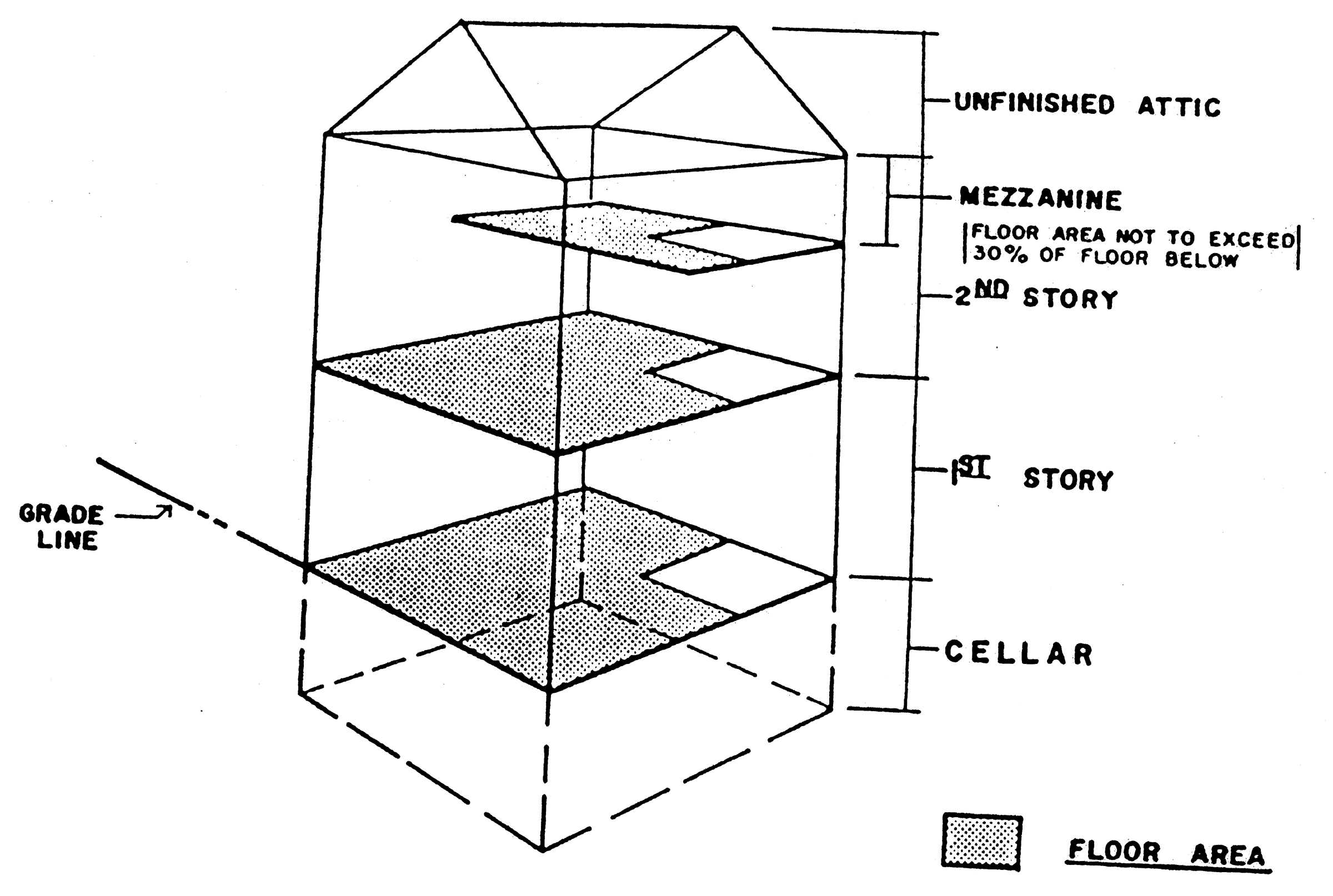
Basic Structural Terms
SWIMMING POOL: Any structure intended for swimming, recreational bathing or wading that contains water over 24 inches deep. This includes in-ground, above-ground, and on-ground pools, hot tubs, spas, and fixed-in-place wading pools.
TEMPORARY USE, BUILDING, OR STRUCTURE: Is a use, building or structure permitted by the Board of Appeals to exist for a limited duration with the intent to discontinue such use, building, or structure automatically upon the expiration of a fixed period of time.
TRAFFIC IMPACT STUDY: The analysis of the effect of site-traffic generated by a development on intersection Level of Service and the safety and operation of the public street and highway system. There are four types of traffic impact studies:
1.
Traffic Impact Rezoning Study - A traffic study which typically contrasts the traffic impact associated with uses permitted under current zoning with uses permitted under the zoning district requested.
2.
Traffic Impact Assessment - A traffic impact study for relatively low traffic generating uses which focuses on the impacts at proposed site access points.
3.
Traffic Impact Statement - A traffic impact study which evaluates the impacts on roadways adjacent to the study site and specified nearby intersections.
4.
Regional Traffic Analysis - A traffic impact study for a very high traffic-generating uses. This type of study typically covers a large geographic area and may include traffic condition projections for up to a twenty (20) year period.
TRAVEL TRAILER: A vehicular, portable structure built on a chassis, designed to be used as a temporary dwelling for travel and recreational purposes.
TRAVEL TRAILER PARK: A licensed park being designed specifically to permit the parking of travel trailers.
TRIP (i.e., DIRECTIONAL TRIP): A single or one-direction vehicle movement with either the origin or the destination (exiting or entering) inside a study site.
UNDEVELOPED STATE: A natural state preserving natural resources, natural features, or scenic or wooded conditions; agricultural use, open space; or similar use or condition. Land in an undeveloped state does not include a golf course, but may include a recreational trail, picnic area, children's play area, greenway or linear park. Land in an undeveloped state may be, but is not required to be, dedicated to the use of the public.
USE: Is the purpose for which land or buildings thereon are designed, arranged or intended to be occupied or used, or for which they are occupied or maintained.
UTILITY ROOM: Is a room, or space, located other than in the basement, specifically designed and constructed to house any home utilities such as the heating unit and laundry facilities.
VARIANCE: Permission to depart from the literal requirements of the Zoning Ordinance.
WALL: An artificially constructed upright barrier of any material or combination of materials erected to enclose, divide, screen, or protect areas of land.
WALL, OBSCURING: A structure of definite height and location to serve as an obscuring screen in carrying out the requirements of this Ordinance.
WIRELESS COMMUNICATION ANTENNA (WCA): Any antenna used for the transmission or reception of wireless communication signals excluding those used exclusively for dispatch communications by public emergency agencies, ham radio antennas, satellite antennas, those which receive video programming services via multipoint distribution services which are one meter (39 inches) or less in diameter and those which receive television broadcast signals.
WIRELESS COMMUNICATION FACILITIES (WCF): All structures and accessory facilities relating to the use of the radio frequency spectrum for the purpose of transmitting or receiving radio signals and may include, but is not limited to radio towers, television towers, telephone devices and exchanges, micro-wave relay towers, telephone transmission equipment building and commercial mobile radio service facilities. Citizen band radio facilities, short wave facilities, ham, amateur radio facilities, and satellite dishes, and governmental facilities which are subject to state or federal law or regulations which preempt municipal regulatory authority are not included in this definition.
WIRELESS COMMUNICATION SUPPORT FACILITIES (WCSF): A monopole, guyed, or lattice type tower designed for the attachment of or as support for wireless communication antennas or other antennas.
YARDS: Are the open spaces on the same lot with a main building, unoccupied and unobstructed from the ground upward except as otherwise provided in this Ordinance, and as defined herein:
1.
FRONT YARD: Is an open space extending the full width of the lot, the depth of which is the minimum horizontal distance between the front lot line and the nearest point of the main building.
2.
REAR YARD: Is an open space extending the full width of the lot, the depth of which is the minimum horizontal distance between the rear lot line and the nearest point of the main building. In the case of a corner lot, the rear yard may be opposite either street frontage.
3.
SIDE YARD: Is an open space between a main building and the side lot line, extending from the front yard to the rear yard, the width of which is the horizontal distance from the nearest point on the side lot line to the nearest point of the main building.
ZONING ENFORCEMENT OFFICER: Is the Township Director of Public Services or his duly authorized representative.
ZONING EXCEPTIONS AND VARIANCES:
1.
EXCEPTION: Is a use permitted only after review of an application by the Board of Appeals or Planning Commission other than the Zoning Enforcement Officer, such review being necessary because the provisions of this Ordinance covering conditions, precedent or subsequent, are not precise enough to all applications without interpretation, and such review is required by this Ordinance.
2.
VARIANCE: Is a modification of the literal provisions of the Zoning Ordinance granted when strict enforcement of the Zoning Ordinance would cause undue hardship owing to circumstances unique to the individual property on which the variance is granted.
The crucial points of variance are undue hardship and unique circumstances APPLYING TO THE PROPERTY. A variance is not justified unless both elements are present in the case.
The "Exception" differs from the "Variance" in several respects. An exception does not require "undue hardship" in order to be allowable. The exceptions that are found in this Ordinance appear as "special approval" by Planning Commission, Legislative Body, or Board of Appeals. These land uses could not be conveniently allocated to one zone or another, or the affects of such uses could not be definitely foreseen as of a given time.
The general characteristics of these uses include one or more of the following:
a.
They require large areas.
b.
They are infrequent.
c.
They sometimes create an unusual amount of traffic.
d.
They are sometimes obnoxious or hazardous.
e.
They are required for public safety and convenience.
(Ord. No. 338, § 1, 5-13-14)

