
St Pete Beach City Zoning Code
DIVISION 20
PAG PASS-A-GRILLE OVERLAY DISTRICT1
Editor's note— Ord. No. 2016-19, § 2(Exh. A), adopted Feb. 28, 2017, repealed Div. 20, §§ 20.1—20.14, and reenacted a new Div. 20, §§ 20.1—20.24, as set out herein. Former Div. 20 pertained to similar subject matter and derived from Ord. No. 03-7, § 3, adopted May 1, 2003; Ord. No. 2004-18, §§ 7, 8, adopted Aug. 24, 2004; Ord. No. 2008-32, § 1, adopted Aug. 26, 08; Ord. No. 2010-03, § 1(Att. A), adopted April 27, 2010; and Ord. No. 2011-03, § 3, adopted May 24, 2011.
Sec. 20.01.- Purpose and intent.
The City recognizes that the Pass-a-Grille Area was developed prior to the development of suburban zoning regulations. The (PAG) Pass-a-Grille Overlay District is intended to allow for structures that are considered contributing to the National Register Historic District to be considered conforming regarding base flood elevations and uses of property within the Pass-a-Grille area situated south of 32nd Avenue, in order to ensure that structures and uses will be compatible with the character of existing development, including the area within the designated Pass-a-Grille Historic District. Also, to recognize that the existing parcel size's, uses and overall character of the PAG shall be permitted to continue as viable uses while allowing for improvements to existing structures, additions and new development that is consistent with the existing mass and scale within the district.
(Ord. No. 2016-19, § 2(Exh. A), 2-28-17)
Sec. 20.02. - Definitions.
(a)
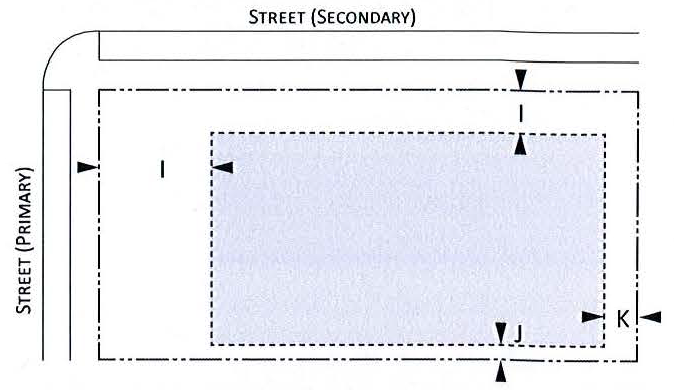
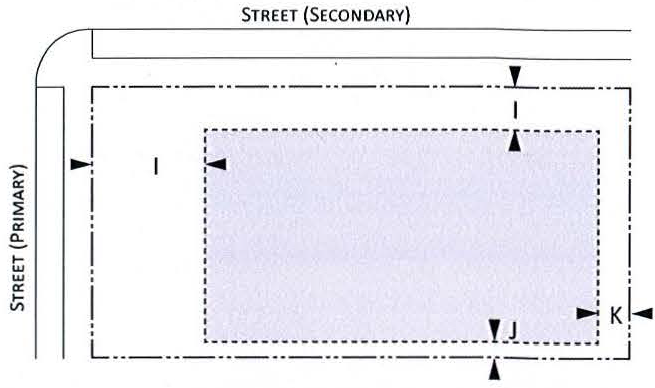
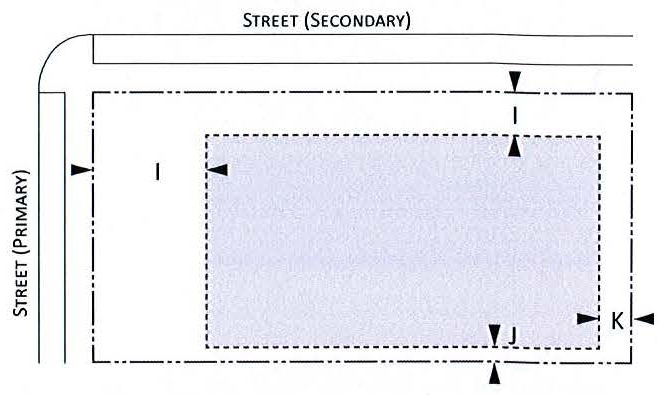
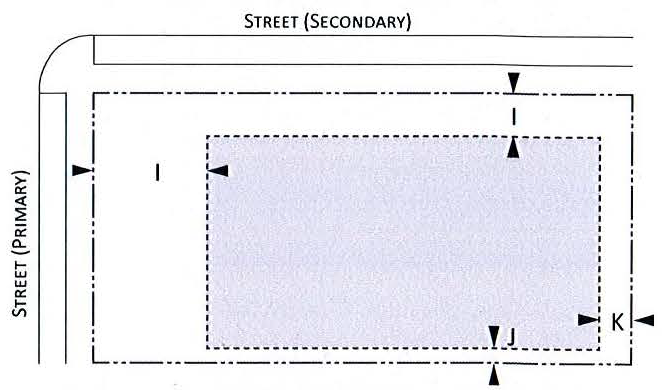
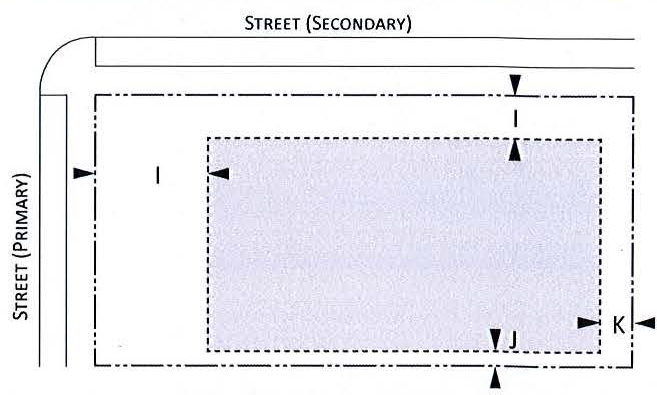
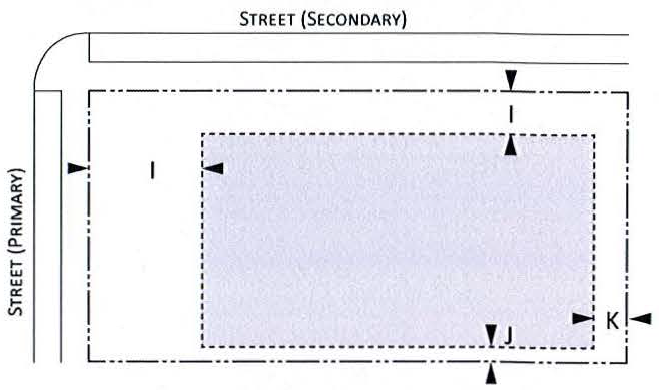
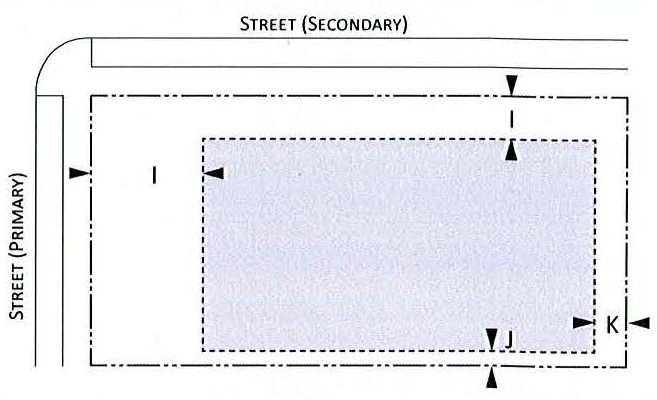
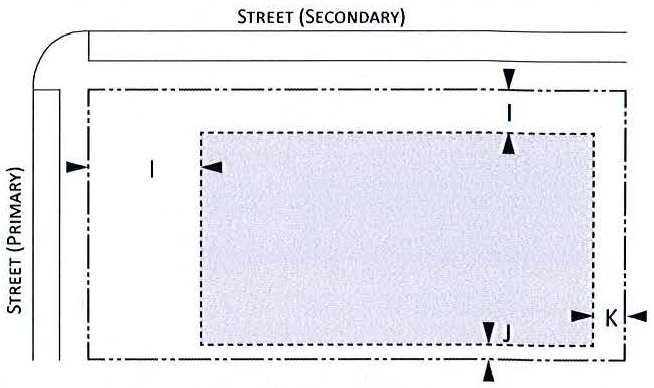
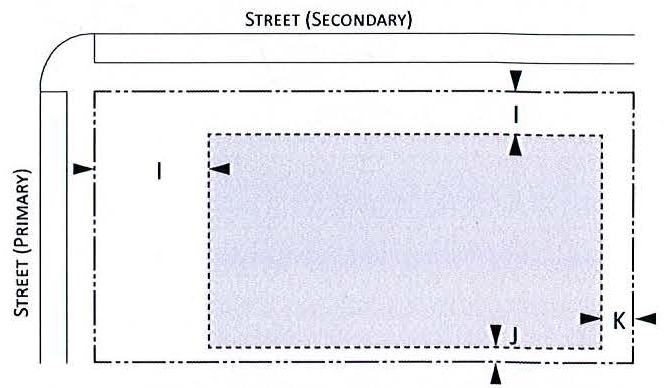
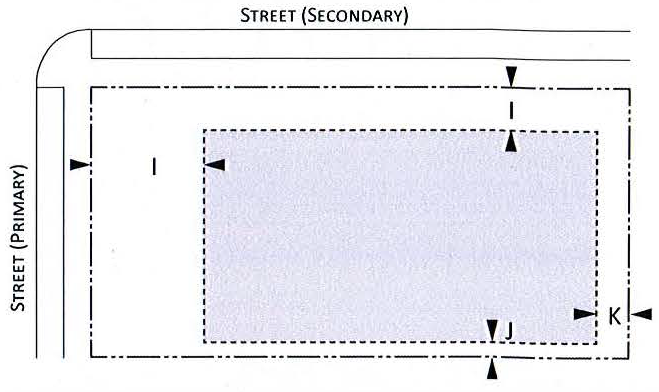
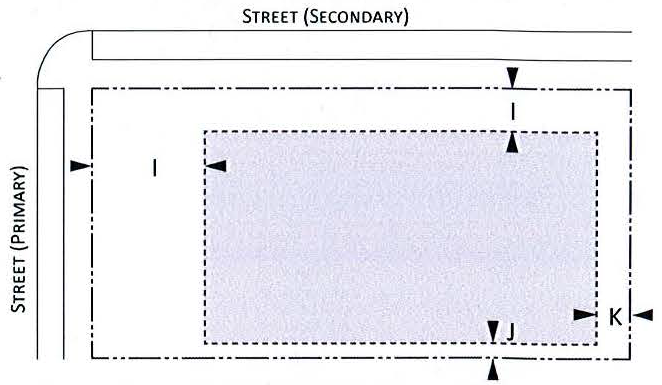
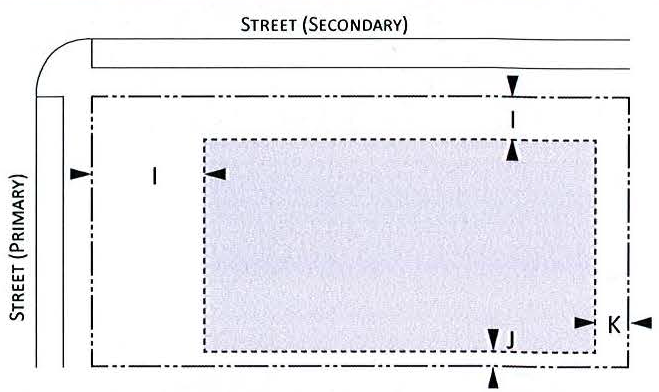
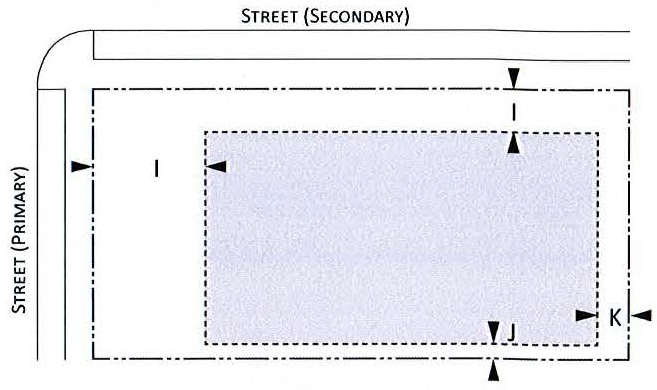
Accessory structure envelope means provisions for the setbacks and maximum building footprints permitted for accessory structures that are not specifically named and regulated under sections 6.12 or 6.13. The following is provided as a non-exhaustive list of accessory structures subject to this envelope: carriage houses, pool houses, detached living quarters, and detached storage buildings that exceed standards for residential or commercial storage buildings found in the aforementioned sections.
(b)
Balance means the relationship among the elements of a building on either side of an imaginary centerline through the middle of a building. Buildings are either symmetrically or asymmetrically balanced.
(c)
Balanced, asymmetrically means the shape(s) and design of a building may not match exactly, but instead have equal visual weight they are still visually balanced.
(d)
Balanced, symmetrically means the shapes on one side of the centerline match the shapes on the other side. The two halves are visually equally.
(e)
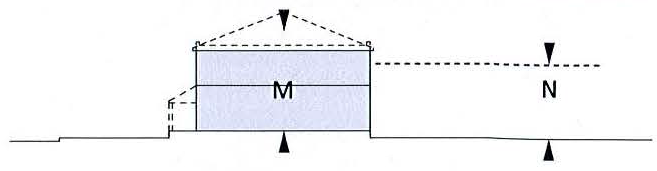
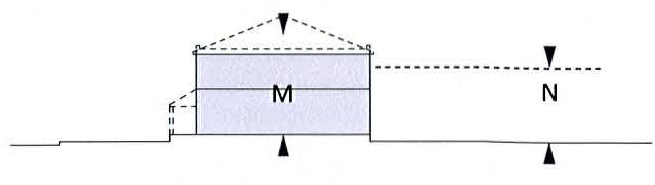
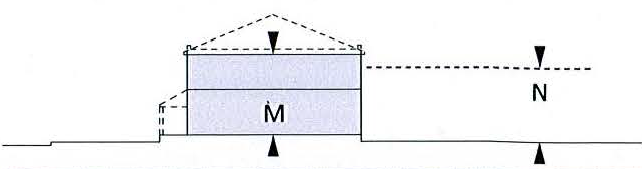
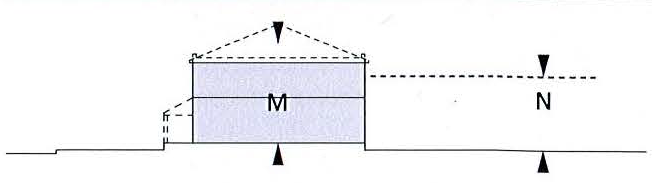
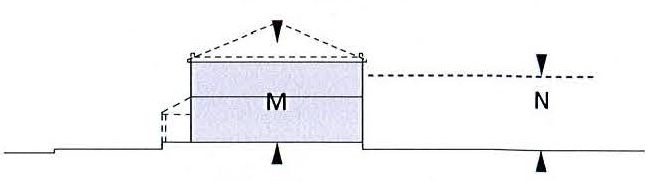
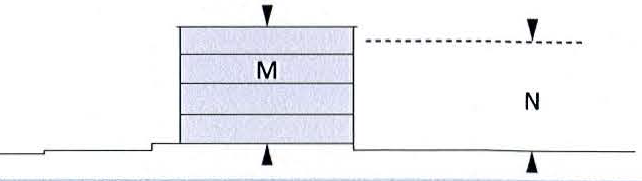
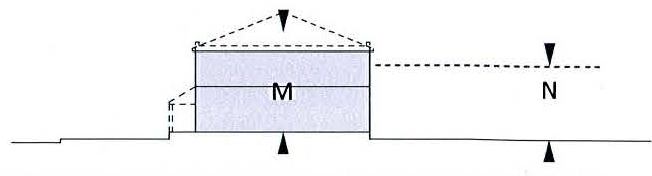
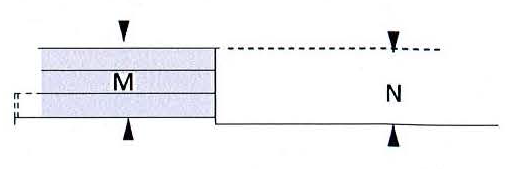
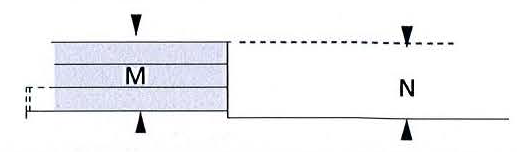
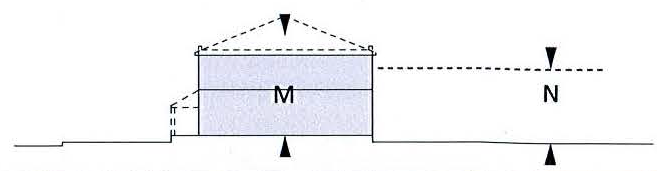
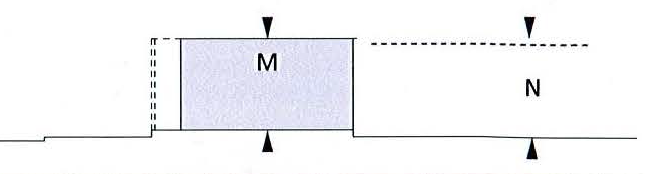
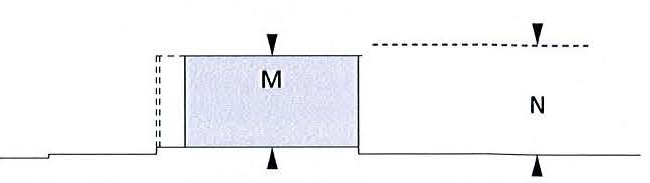
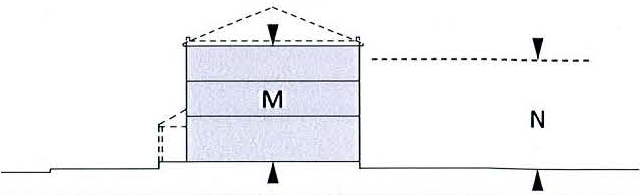
Building height: Provisions for permitted heights in feet (ft). The maximum height for first floor residential development shall be fourteen (14) feet and twenty (20) feet for non-residential. The maximum height for second story and higher shall not exceed fourteen (14) feet. Each building lot typology provides the range of height appropriate for the building type. No new or substantially improved building within the PAG Overlay District and having the underlying zoning designation of THD, RU-2 Residential, RLM-2 Residential, or RM Residential shall be constructed to exceed twenty-eight (28) feet in height to the midpoint of a sloped roof or top of the parapet of a flat or low sloped roof, or thirty-two (32) feet overall, as defined below:
a.
For any structure with habitable space located less than eight (8) feet above natural grade, height shall be measured from the property's required Design Flood Elevation.
b.
For any structure with habitable space beginning at or higher than eight (8) feet above natural grade, height shall be measured from eight (8) feet above natural grade.
Base flood elevation requirements are outlined in section 98-33 of the City's Code of Ordinances.
(f)
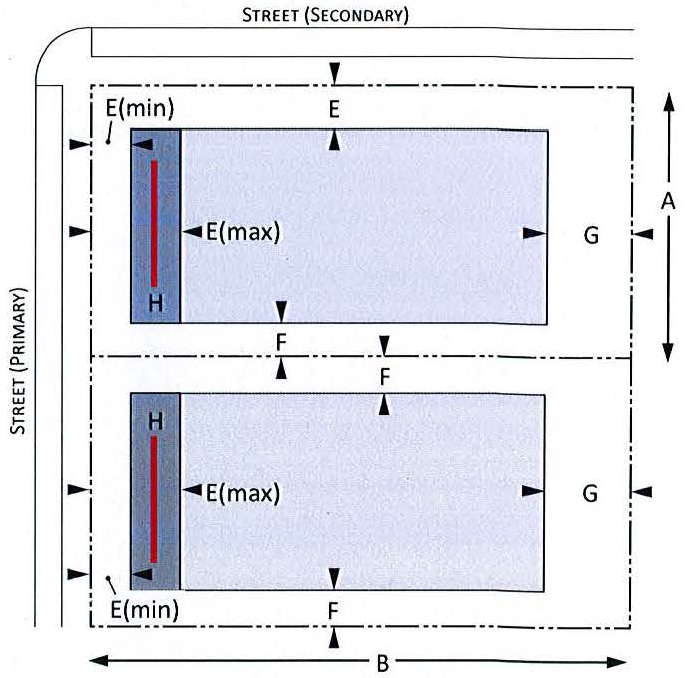
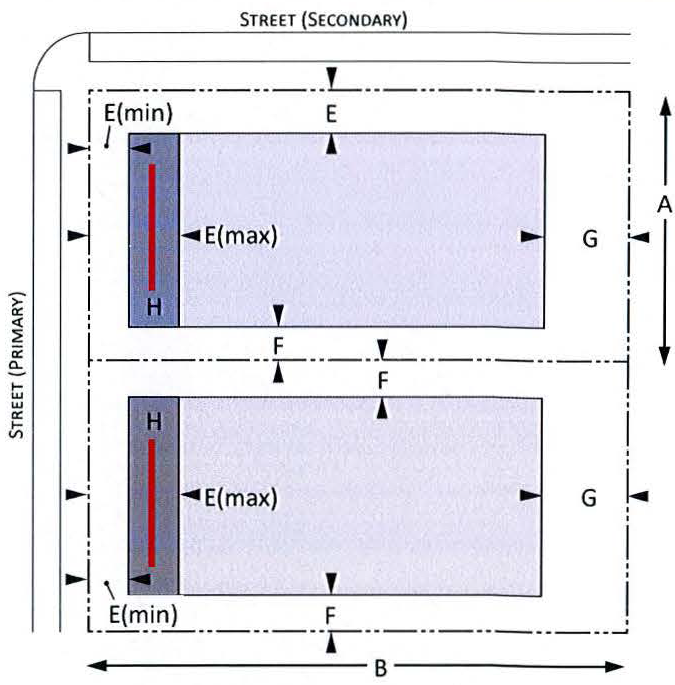
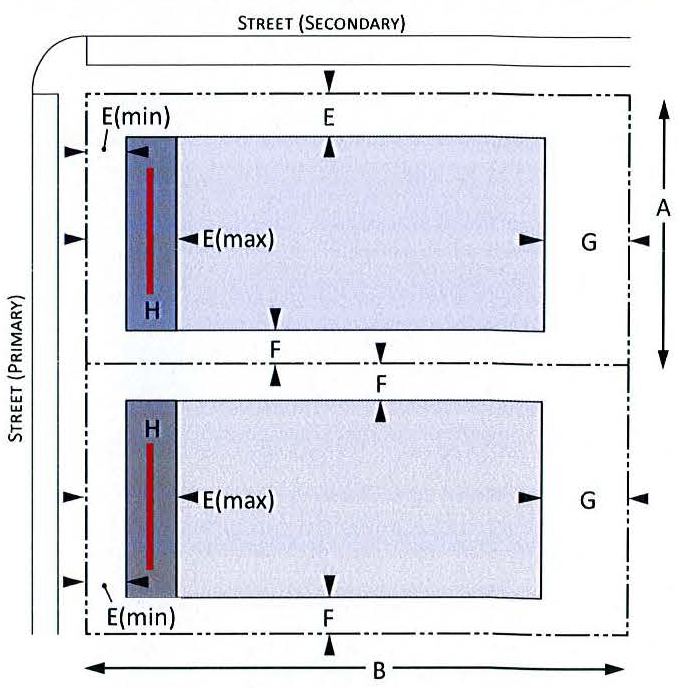
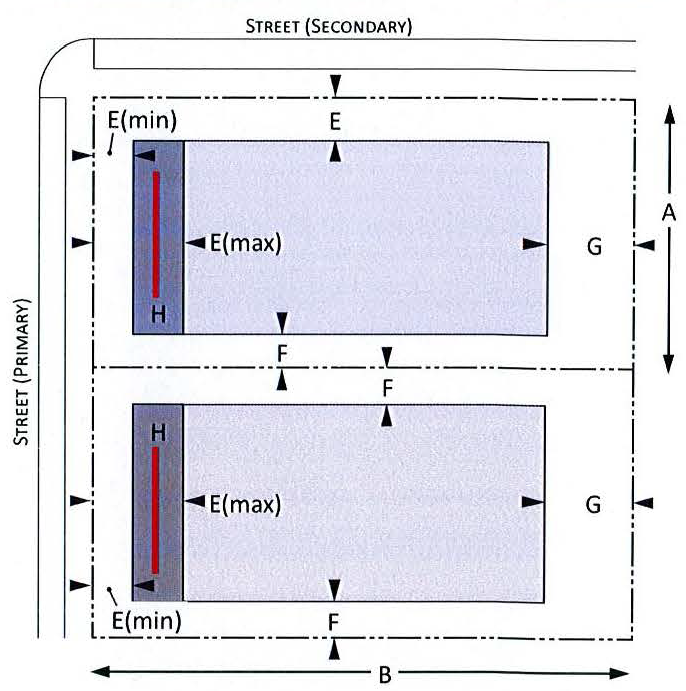
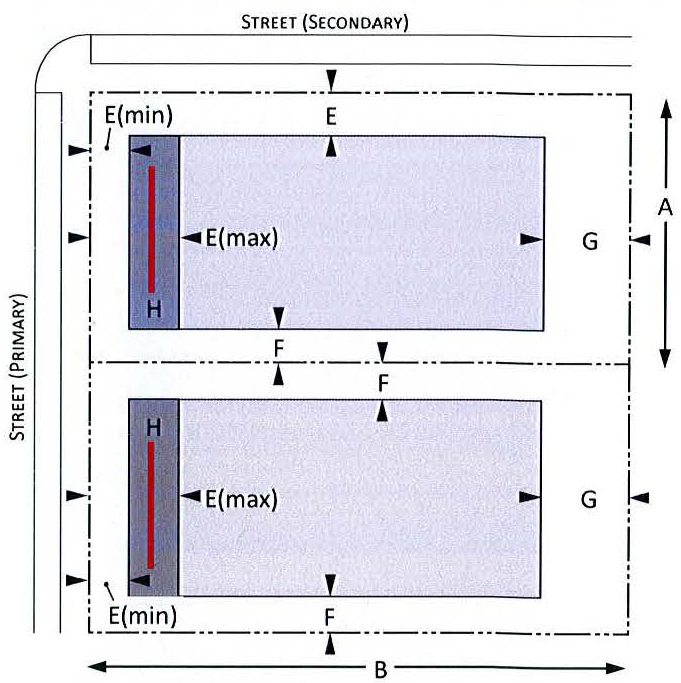
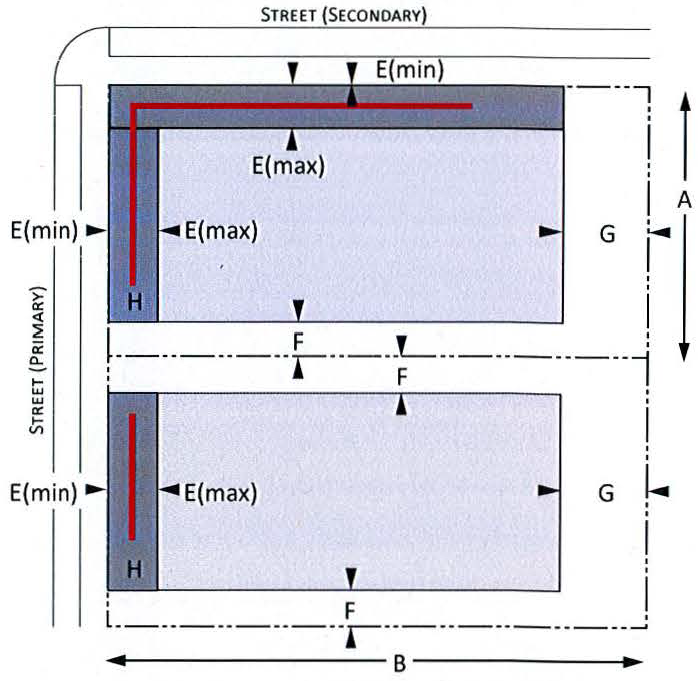
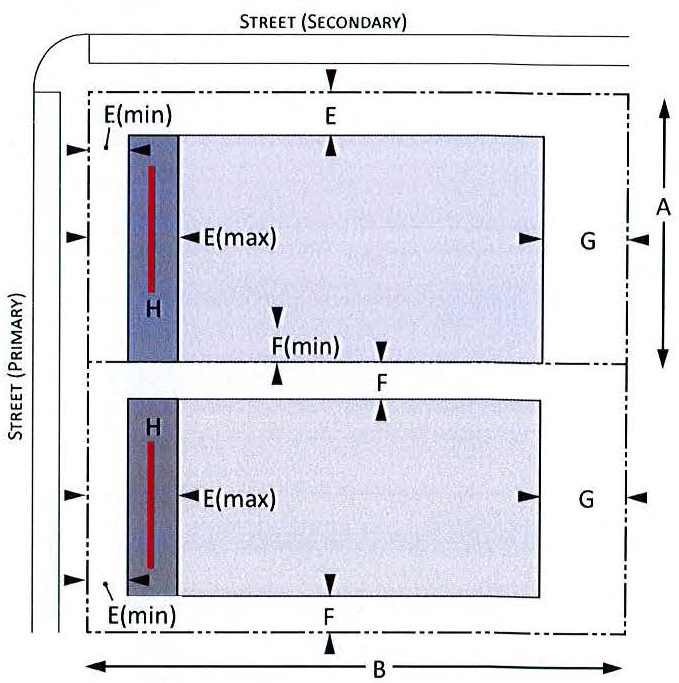
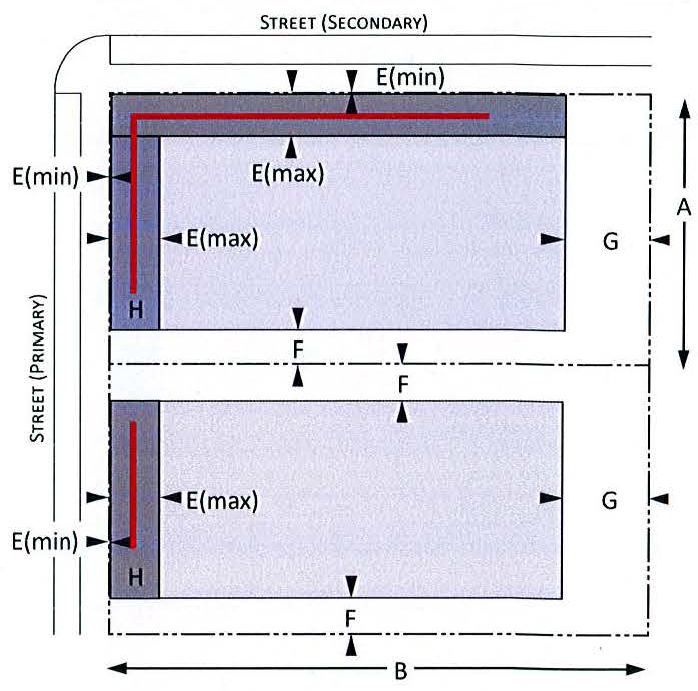
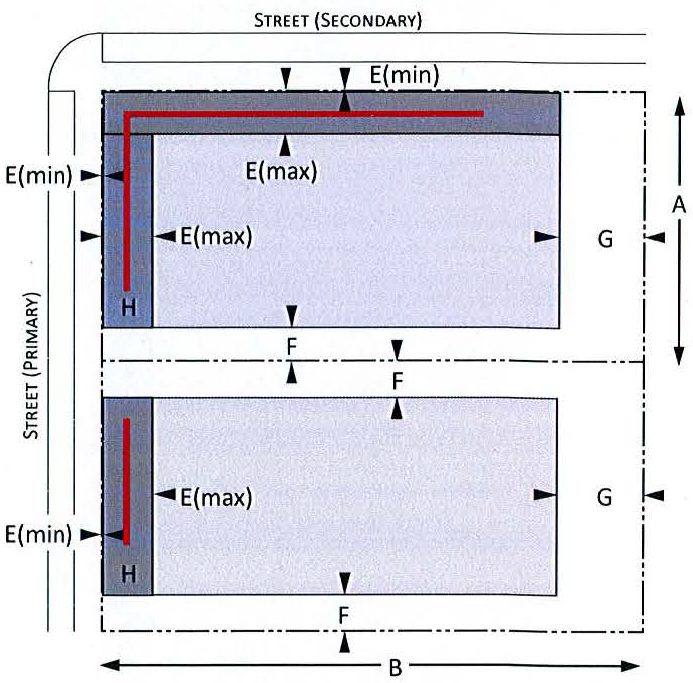
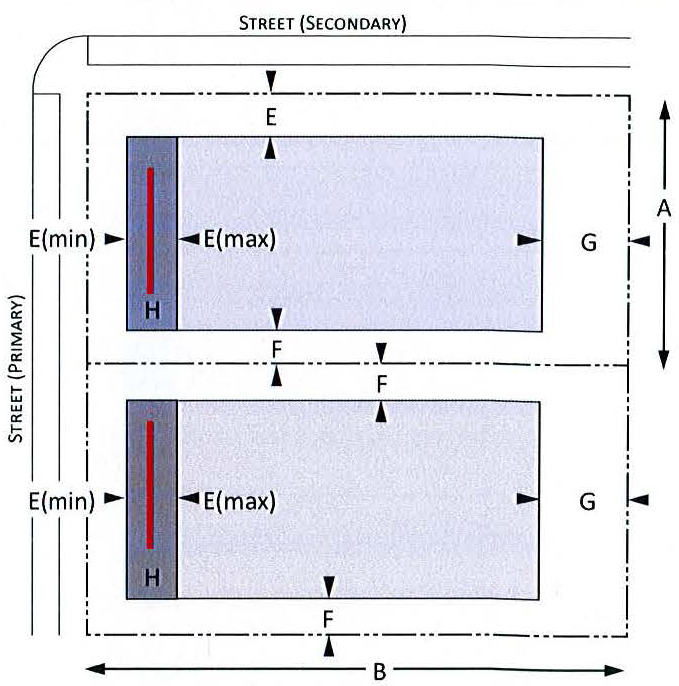
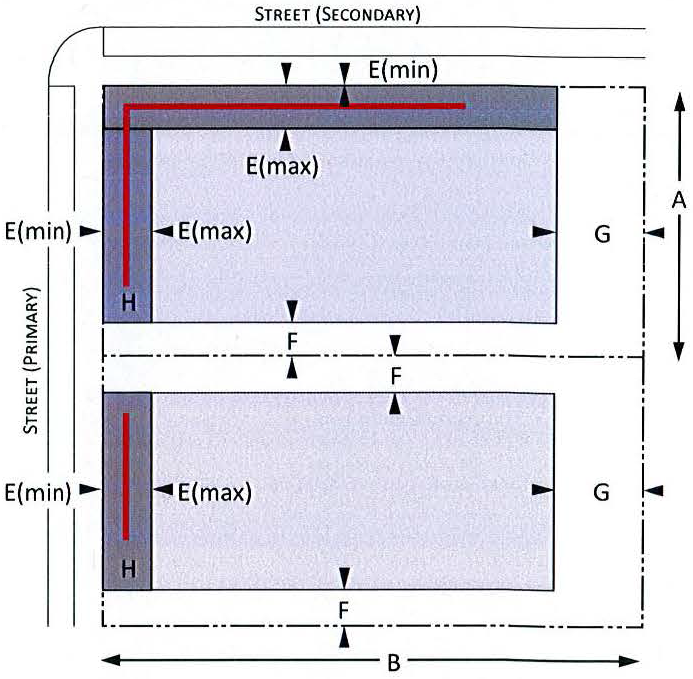
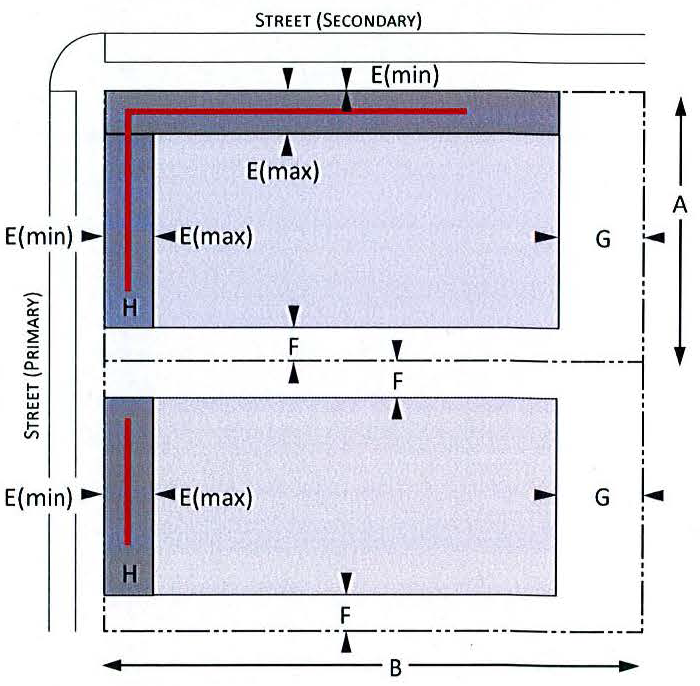
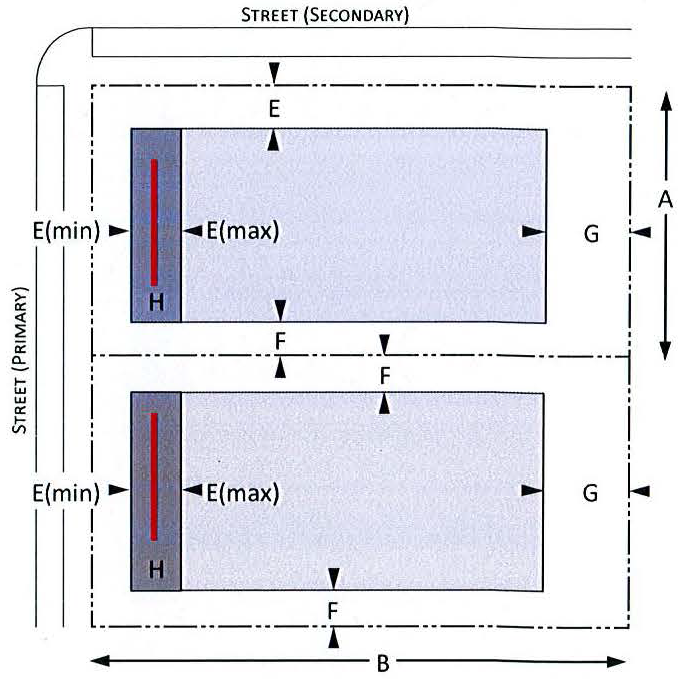
Building envelope: Provisions for the minimum and maximum setbacks permitted by front, side, and rear yards. There is a minimum and maximum setback for each lot type. The maximum and minimum frontage refers to the proportion of the lot width along which the primary building façade must be within the minimum and maximum front setback.
(g)
Compatible design means architectural design and construction that will fit harmoniously into the district based on scale, materials, and quality of construction with adjacent buildings and structures.
(h)
Lot requirements: Provisions for minimum and maximums, lot depth, lot size and the permitted lot coverage.
(i)
Lot, waterfront: A zoning lot which abuts any body of water or the beach. All lots not considered waterfront shall be considered interior for rear setback purposes.
(j)
Mass, primary: largest shape of a building.
(k)
Mass, secondary: additional shapes that form the façade of the building
(l)
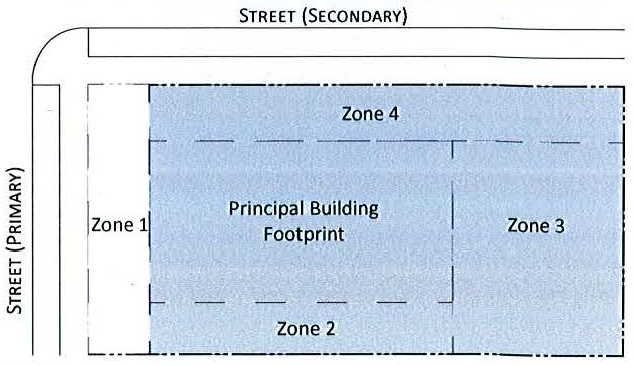
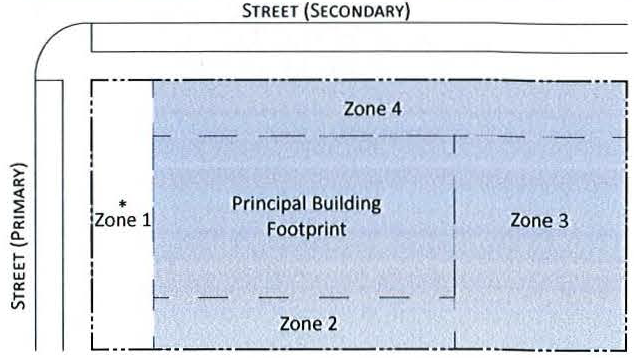
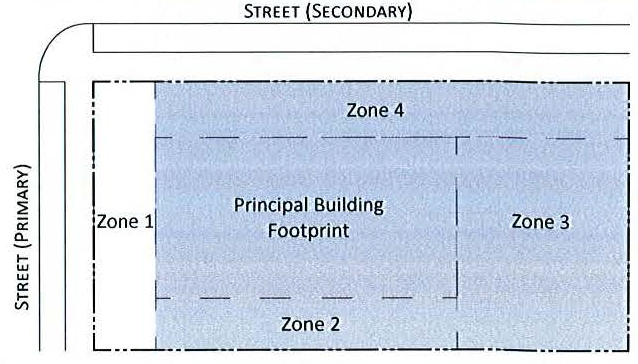
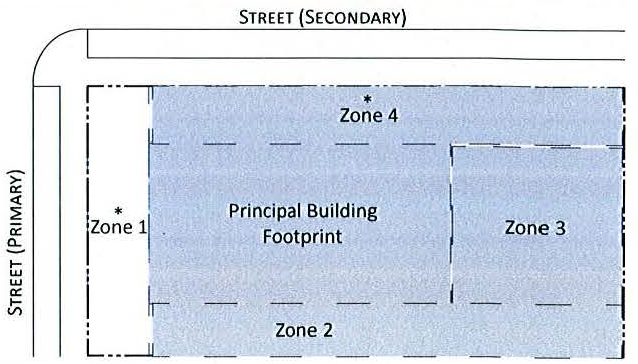
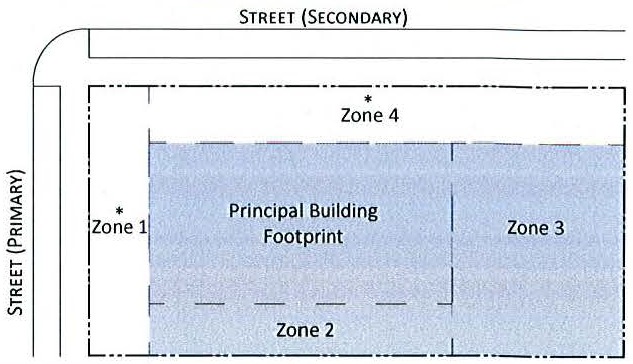
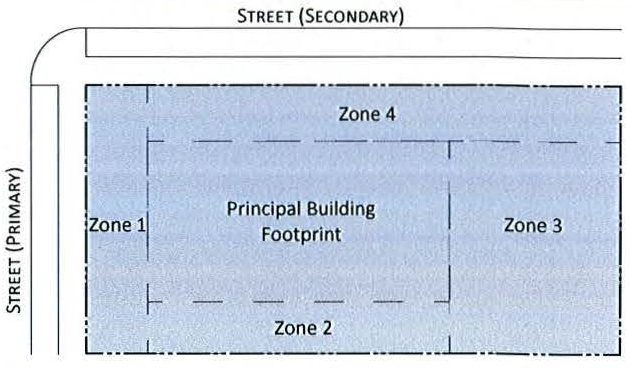
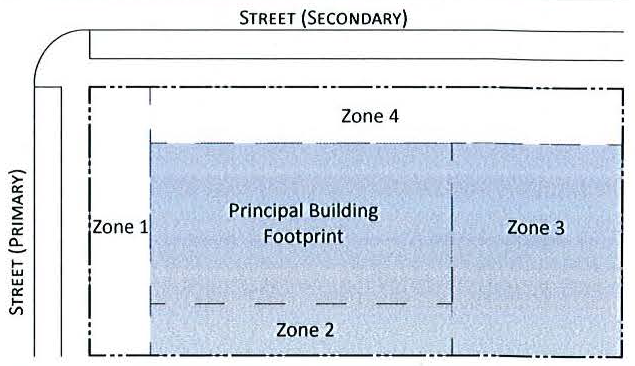
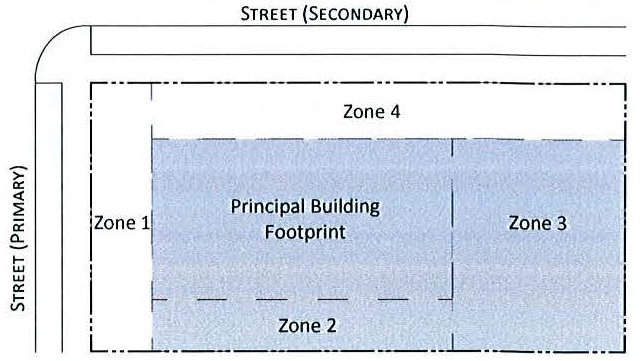
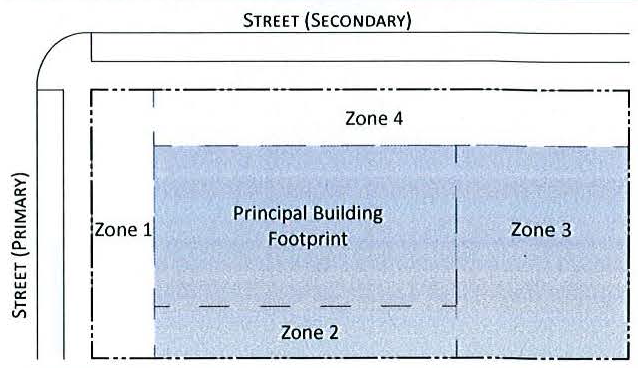
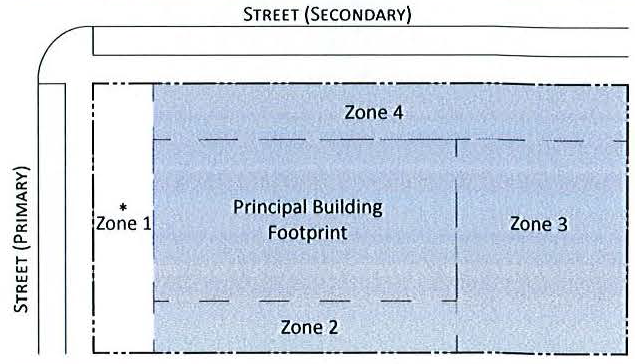
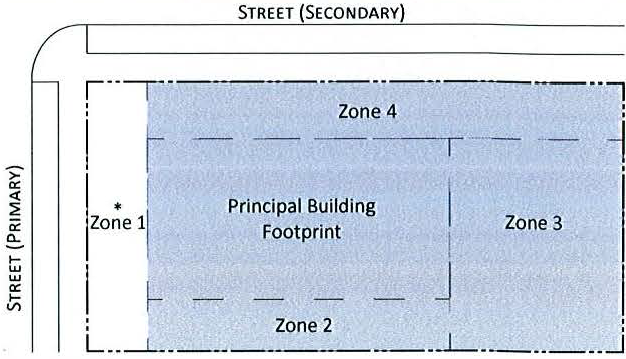
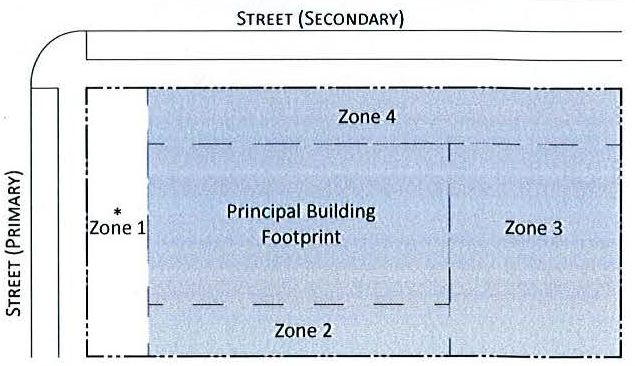
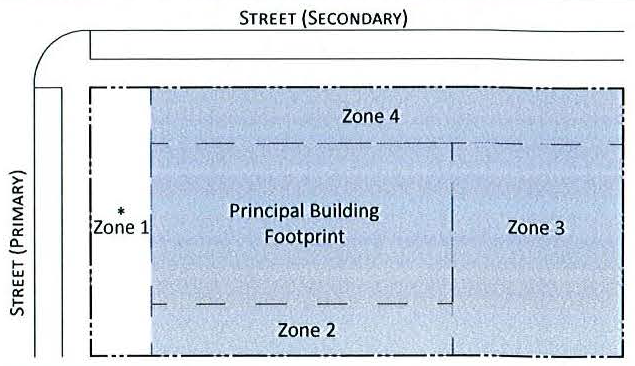
Parking provisions: The amount of parking shall be determined by Division 23 of the Land Development Code. Parking provisions provide zones where parking is permitted. The parking zone refers to any uncovered parking area located on the parcel. Driveways are permitted in any zone provided the frontage requirements have been met as required by building type. The diagram illustrates a primary and secondary street. Primary streets are streets that are addressed to the parcel of land. Secondary streets may or may not have access to the parcel. Zones are defined and illustrated by the lot area between the principal building frontage and:
| (1) Zone 1: the right-of-way of any primary street. | 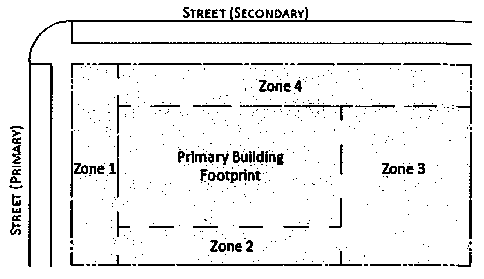 |
| (2) Zone 2: any common interior lot line. | |
| (3) Zone 3: any rear lot line. | |
| (4) Zone 4: the right-of-way of any secondary street. |
(m)
Private frontages, refers to the area that is attached or integrated into the primary building.
(n)
Proportion means the relationships of one part of a façade to the whole. A house that is correctly proportionate establishes a visual relationship between all parts of its exterior. The voids, primary, and secondary masses should all be proportional to one another in order maintain architectural harmony.
(o)
Proximity means that objects that are close together should complement each other.
(p)
Rhythm means the use of repetitive elements in order to establish architectural harmony. It is based off of three main principles: the principle of Proximity, the principle of Similarity, and the principle of Continuation. These principles are part of a larger set known as Gestalt Principles.
(q)
Similarity means how our eyes are easily able to group objects together that share common textures, colors, or features.
(r)
Voids means windows, doors, or other openings that create negative space allowing for breaks within a primary or secondary mass.
(Ord. No. 2016-19, § 2(Exh. A), 2-28-17; Ord. No. 2021-08, § 2, 6-22-2021; Ord. No. 2021-22, § 2, 10-12-21)
Sec. 20.03. - Permitted principal uses and structures.
Subject to the provisions or restrictions contained in this section and elsewhere in this Code, permitted uses and structures in the PAG Overlay District are as follows:
(a)
All uses permitted in the underlying zoning district; and
(b)
Transient occupancy in single-family or multi-family dwellings, so long as any such transient occupancy of less than thirty (30) days does not occur more than three times in any 12-month period on any parcel.
(c)
Uses that are in existence, upon date of adoption, shall be permitted as limited uses within an existing structure. Additions, improvements and renovations will be permitted, if the building meets the standards set forth in this division of the Code.
(Ord. No. 2016-19, § 2(Exh. A), 2-28-17)
Sec. 20.04. - Permitted accessory uses and structures.
(a)
Uses and structures, as regulated in sections 6.12 and 6.13, which are customarily accessory and clearly incidental and subordinate to permitted or permissible uses and structures, and are not of a nature prohibited under section 20.5.
(b)
Home occupations, subject to the conditions set forth in section 6.5 of this Code.
(c)
Residential docks, including tie poles, shall be in conformance with the provisions of section 6.23 and other applicable codes and ordinances of the city, county or state.
(d)
Temporary structures shall follow the provisions of section 6.11.
(Ord. No. 2016-19, § 2(Exh. A), 2-28-17)
Sec. 20.05. - Allowable conditional use.
Subject to the provisions or restrictions contained in this section and elsewhere in this Code, allowable conditional uses in the PAG Overlay District are as follows:
(a)
All permitted conditional uses allowed for in the underlying zoning district.
(Ord. No. 2016-19, § 2(Exh. A), 2-28-17)
Sec. 20.06. - Prohibited uses and structures.
All uses and structures not of a nature specifically or provisionally permitted herein or within the underlying zoning district are hereby prohibited in the PAG Overlay District.
Any use which the City Commission, upon appeal, and after investigating similar uses elsewhere, shall determine to be potentially noxious, dangerous or offensive to residents of the PAG Overlay District or to those who pass by on public roadways, by reason of odor, smoke, noise, glare, fumes, gas, fire, explosion or emission of particulate matter or likely for other reasons to be incompatible with the character of the PAG area, is hereby prohibited in the PAG Overlay District.
(Ord. No. 2016-19, § 2(Exh. A), 2-28-17)
Sec. 20.07. - Density, intensity and assembly of parcels.
(a)
The maximum residential density permitted in the PAG Overlay District shall not exceed the number of units per acre permitted by the underlying Future Land Use map for undeveloped parcels of land.
(b)
The existing residential density, exceeding one density unit, of an existing residential structure shall be permitted to rebuild on the existing parcel of land, with the same density as the existing structure(s) has, if the building was constructed prior to (insert adoption date) and can meet the lot requirements, by building type, in section 20.15 of this Division. In addition, any new construction cannot exceed the existing developed square footage and must match the existing form and mass as defined in section 20.22 herein.
(c)
The existing hotel/motel units shall be permitted to rebuild on the existing parcel of land, with the same number of units that already exist as a rental/leasable room within the existing built hotel if the building was constructed prior to (insert adoption date) and can meet the lot requirements of a Boutique Hotel Building Type as provided in section 20.15 of this Division.
(d)
No more than two lots of record may be combined to accommodate additions to existing structures.
(Ord. No. 2016-19, § 2(Exh. A), 2-28-17)
Sec. 20.08. - Maximum floor area ratio.
Maximum floor area ratio (FAR) for non-residential uses: Underlying Zoning District requirements.
(Ord. No. 2016-19, § 2(Exh. A), 2-28-17)
Sec. 20.09. - Maximum impervious surface ratio.
If a parcel opts for new construction or addition to a single family home using the underlying zoning district standards, the ISR shall be determined by the underlying zoning district. The ratio's listed below are subject to any of the building types, defined in section 20.15 that are used.
Maximum impervious surface ratio (ISR) for residential and transient accommodation uses: 0.70.
Maximum impervious surface ratio (ISR) for non-residential uses: Underlying Zoning District requirements or existing building footprint.
(Ord. No. 2016-19, § 2(Exh. A), 2-28-17)
Sec. 20.10. - Reduced setbacks for contributing structures granted a certificate of appropriateness.
Proposed additions to contributing structures may be eligible for a reduction in setback requirements if the proposed plans have been reviewed, approved, and issued a certificate of appropriateness by the Historic Preservation Board pursuant to Division 28. The purpose of this regulation is to ensure the design is compatible design with neighboring structures.
Design review shall be based on the requirements set forth in the underlying zoning district and the PAG Overlay District herein and for consistency with the Secretary of Interior's Standards for Rehabilitation. If the Historic Preservation Board finds that an addition is consistent with the Secretary of the Interior's Standards and that the addition would not preclude the structure's continued designation as a contributing structure, and approves a certificate of appropriateness for the plans, then the applicant can request a reduction to any and all of the setbacks, provided the setbacks are consistent within the same block of the proposed addition by providing the historical setback data for the street block (both faces) the parcel is on and the historical setbacks along that particular street that will be evaluated by the Historic Board. The following setbacks shall be considered:
The addition must still meet impervious surface, floor area, height, herein and the landscaping, and buffering standards as identified in this division. The reductions in setbacks do not abrogate the responsibility of the designer or homeowner to incorporate these requirements into the plan.
(Ord. No. 2016-19, § 2(Exh. A), 2-28-17)
Sec. 20.11. - Minimum building type requirements.
Lots of record within the PAG Overlay District shall be deemed conforming despite the width and size regulations in the building types, so long as the lots are not further subdivided, and the condition existed prior to the adoption of the Division. No more than two lots of record may be combined to accommodate additions to existing structures.
(Ord. No. 2016-19, § 2(Exh. A), 2-28-17)
Sec. 20.12. - Subdivision of lots.
Lots within the PAG Overlay District shall not be subdivided to a size smaller than the platted lot of record and/or building lot types in this division. Existing structures that are listed as contributing structures in the most recent Historic Resources Survey or that are locally designated historic structures are exempt from the setbacks imposed by this division; however, additions and accessory structures shall comply with the standards in section 20.15, by building type. All other structures shall also comply with the setbacks and required yards imposed by the building types in this Division, section 20.15.
(Ord. No. 2016-19, § 2(Exh. A), 2-28-17)
Sec. 20.13. - Residential development option for single-family homes.
Any parcel within the PAG Overlay District with a Residential Zoning District designation of RU-2, RLM-2, or RM may develop a single family residential house using the underlying residential zoning standards for additions or new construction: If an applicant uses the underlying residential zoning district standards, for new construction or additions the following standards shall be met:
(a)
Underlying Zoning Districts minimum lot requirements,
(b)
Underlying Zoning Districts Minimum yard requirements,
(c)
Underlying Zoning Districts Maximum floor area ratio standards; and
(d)
Height shall not exceed twenty-eight (28) feet in height to the midpoint of a sloped roof or top of the parapet of a flat or low sloped roof, and measured from the base flood elevation determined under the most restrictive applicable standard the building side, further provided that the overall roof height shall not exceed thirty-two (32) feet.
Any other applicable standards within this division, not expressly stated in this section, shall apply to new development and redevelopment as outlined in this division.
(Ord. No. 2016-19, § 2(Exh. A), 2-28-17)
Sec. 20.14. - Vacant parcels.
The following procedures shall be followed
(a)
For parcels of land within a residential zoning district and:
Any parcel of land that is vacant, at the time of adoption, shall only be permitted either:
(1)
A residential building type found in section 20.15 that is consistent with the underlying uses permitted in the Zoning District and section 20.07. The parcel of land shall meet the lot width and lot depth as identified, by building type found in section 20.15, to determine the appropriate standards to apply to that parcel, or
(2)
Provisions listed in section 20.13 of this division.
(b)
Parcels of land within non-residential land use districts:
Any parcel of land that is vacant, at the time of adoption of the PAG Overlay District, shall be permitted any of the non-residential building types found in section 20.15 that are consistent with the existing lot width/depth of the parcel of land.
(c)
Assembly or parcel splits shall only be permitted through the City Commission, to determine the compatibility and respect for the existing character of the PAG Overlay District.
(Ord. No. 2016-19, § 2(Exh. A), 2-28-17)
Sec. 20.15. - Permitted building types.
Building types are permitted by the following criteria:
(a)
Existing Parcel Size, and
(b)
Existing Density, Units and Rooms
An applicant must provide a survey of the parcel to verify the actual parcel size (lot width/lot depth) or use the City's parcel data information. If the applicant believes the lot width and depth are different that the City's records, the applicant will be required to have a survey of the lot for verification.
 | HOUSE-LARGE | |
|
A building lot located and designed to accommodate a detached building with large
side, rear and front yards.
| ||
(1) a lot that is adjacent to the bay or beach is permitted to exceed the maximum setback requirements.
| LOT REQUIREMENTS AND BUILDING ENVELOPE |
 |
| ACCESSORY STRUCTURE ENVELOPE |
 |
| BUILDING HEIGHT |
 |
| PARKING LOCATION |
 |
 | HOUSE-MEDIUM | |
| A building lot located and designed to accommodate a detached building with small side yards and a large front yard. | ||
(1) a lot that is adjacent to the bay or beach is permitted to exceed the maximum setback requirements.
| LOT REQUIREMENTS AND BUILDING ENVELOPE |
 |
| ACCESSORY STRUCTURE ENVELOPE |
 |
| BUILDING HEIGHT |
 |
| PARKING LOCATION |
 |
 | HOUSE-SMALL | |
| A building lot located and designed to accommodate a small detached building with small side and front yards. A maximum of one dwelling unit is permitted. | ||
| LOT REQUIREMENTS AND BUILDING ENVELOPE |
 |
| ACCESSORY STRUCTURE ENVELOPE |
 |
| BUILDING HEIGHT |
 |
| PARKING LOCATION |
 |
 | APARTMENT HOUSE | |
| A building lot located and designed to accommodate a detached building which resembles a large house but which contains multiple dwellings above and beside each other. A maximum of 4 units are permitted in this building lot. (The units have to be existing prior to redevelopment as stated in section 20.07 Density, intensity and assembly of parcels). | ||
| LOT REQUIREMENTS AND BUILDING ENVELOPE |
 |
| ACCESSORY STRUCTURE ENVELOPE |
 |
| BUILDING HEIGHT |
 |
| PARKING LOCATION |
 |
 |
APARTMENT
BUILDING-SMALL | |
| A building lot located and designed to accommodate multiple dwellings above or beside each other in a building that occupies most of its building lot width and is placed close to the sidewalk. (The units have to be existing prior to redevelopment as stated in section 20.07 Density, intensity and assembly of parcels). | ||
| LOT REQUIREMENTS AND BUILDING ENVELOPE |
 |
| ACCESSORY STRUCTURE ENVELOPE |
 |
| BUILDING HEIGHT |
 |
| PARKING LOCATION |
 |
 |
APARTMENT
BUILDING-MEDIUM | |
| A building lot located and designed to accommodate multiple dwellings above or beside each other in a building that occupies most of its building lot width and is placed close to the sidewalk. (The units have to be existing prior to redevelopment as stated in section 20.07 Density, intensity and assembly of parcels). | ||
| LOT REQUIREMENTS AND BUILDING ENVELOPE |
 |
| ACCESSORY STRUCTURE ENVELOPE |
 |
| BUILDING HEIGHT |
 |
| PARKING LOCATION |
 |
 |
COURTYARD
APARTMENT | |
| A building lot located and designed to accommodate multiple dwellings arranged around and fronting on a central garden or courtyard that may be partially or wholly open to a street and/or alleyway. (The units have to be existing prior to redevelopment as stated in section 20.07 Density, intensity and assembly of parcels). | ||
| LOT REQUIREMENTS AND BUILDING ENVELOPE |
 |
| ACCESSORY STRUCTURE ENVELOPE |
 |
| BUILDING HEIGHT |
 |
| PARKING LOCATION |
 |
 |
COMMERCIAL /
MIXED-USE - SMALL | |
| A building lot located and designed to accommodate a multi story building with commercial, office and/or multiple dwellings in any story that is designed for smaller lot sizes. | ||
| LOT REQUIREMENTS AND BUILDING ENVELOPE |
 |
| ACCESSORY STRUCTURE ENVELOPE |
 |
| BUILDING HEIGHT |
 |
| PARKING LOCATION |
 |
 |
COMMERCIAL /
MIXED-USE - MEDIUM | |
| A building lot located and designed to accommodate a multi story building with commercial, office and/or multiple dwellings in any story that is designed for average lot sizes. | ||
| LOT REQUIREMENTS AND BUILDING ENVELOPE |
 |
| ACCESSORY STRUCTURE ENVELOPE |
 |
| BUILDING HEIGHT |
 |
| PARKING LOCATION |
 |
 | BOUTIQUE HOTEL | |
| A building lot located and designed to accommodate lodging. The number of rooms will be confirmed by existing operating hotel rooms. (The units have to be existing prior to redevelopment as stated in section 20.07 Density, intensity and assembly of parcels). | ||
(1) may exceed the height up to 35' as outlined by the code if the property is along Gulf Way and that portion of the building that exceeds the 32' in height shall be set back an additional one foot from the front setback line for every foot in height increase.
| LOT REQUIREMENTS AND BUILDING ENVELOPE |
 |
| ACCESSORY STRUCTURE ENVELOPE |
 |
| BUILDING HEIGHT |
 |
| PARKING LOCATION |
 |
 |
SINGLE STORY
COMMERCIAL BUILDING-SMALL | |
| A building lot located and designed to accommodate single use office and retail. | ||
| LOT REQUIREMENTS AND BUILDING ENVELOPE |
 |
| ACCESSORY STRUCTURE ENVELOPE |
 |
| BUILDING HEIGHT |
 |
| PARKING LOCATION |
 |
 |
SINGLE STORY
COMMERCIAL BUILDING-MEDIUM | |
| A building lot located and designed to accommodate single use office and retail. | ||
| LOT REQUIREMENTS AND BUILDING ENVELOPE |
 |
| ACCESSORY STRUCTURE ENVELOPE |
 |
| BUILDING HEIGHT |
 |
| PARKING LOCATION |
 |
 |
INSTITUTION
BUILDING | |
| A building lot located and designed to accommodate a building containing public or civic uses such as community services, day care, education, government, places of worship, or social services. This typology is only for permitted and exiting institutional buildings. | ||
| LOT REQUIREMENTS AND BUILDING ENVELOPE |
 |
| ACCESSORY STRUCTURE ENVELOPE |
 |
| BUILDING HEIGHT |
 |
| PARKING LOCATION |
 |
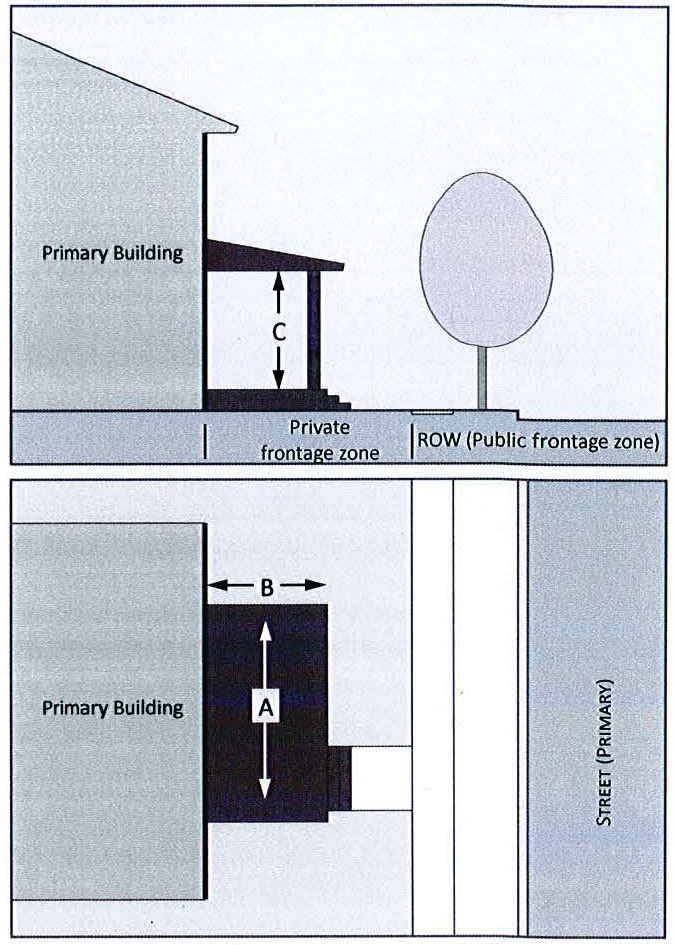
 | PORCH |
| The façade is setback from the front lot line per applicable street setback requirements. The façade includes an attached front porch structure. A wide variety of porch designs are possible. | |
| FRONTAGE ZONE AND INTERFACE ZONE DIMENSIONS |
 |
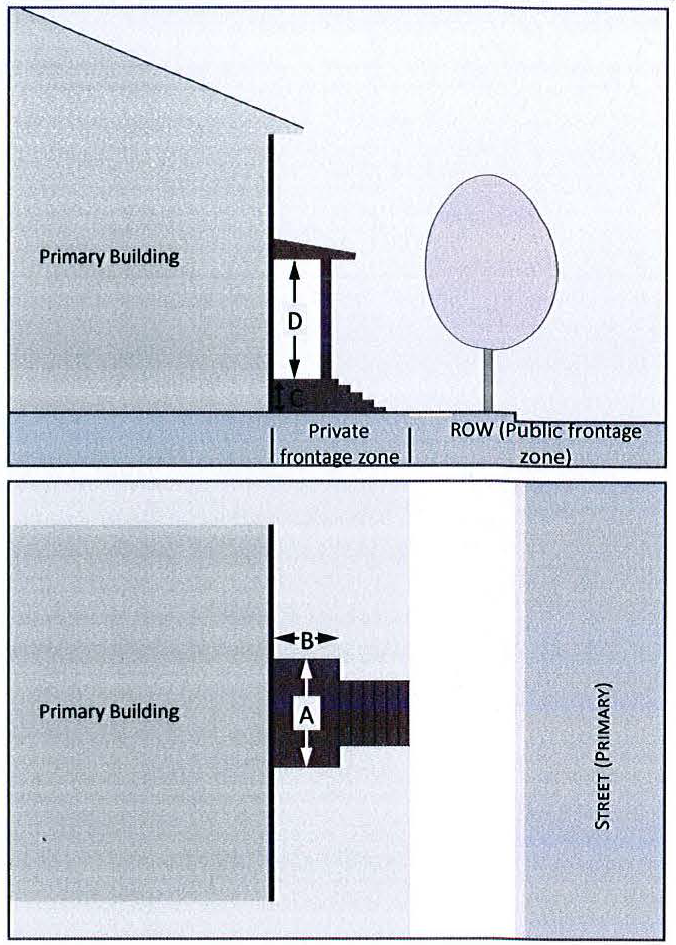
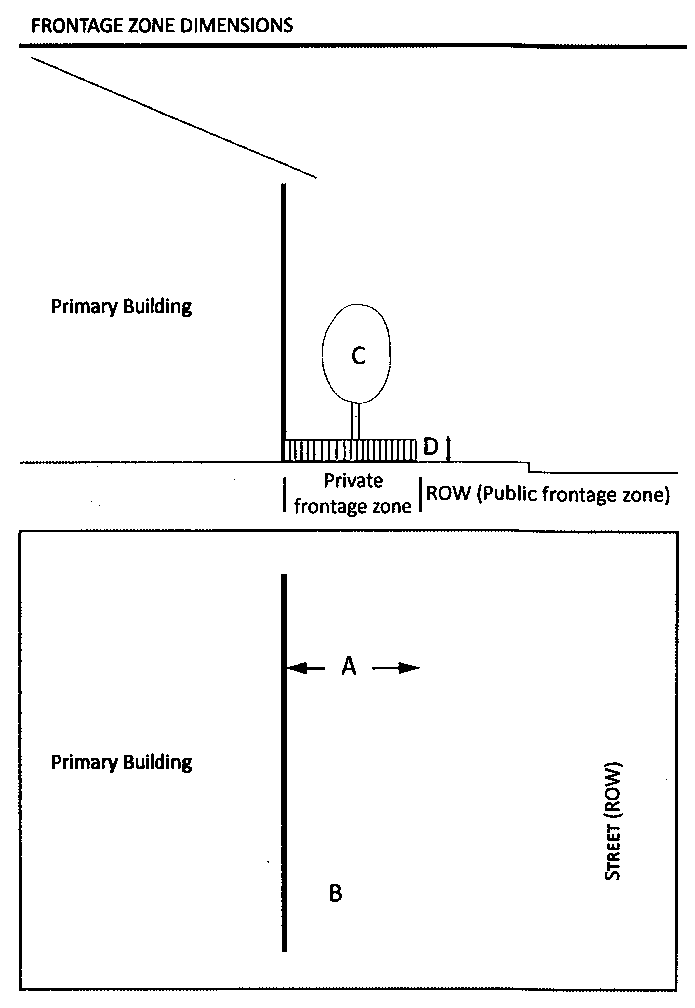
 | STOOP |
| The façade is set back from the front lot line per applicable street setback requirements. The façade includes an attached entry stoop (an elevated landing with stairs) that is placed at or near the front lot line. The ground floor is elevated to provide privacy. The stoop may include a roof, however it is not required. | |
| FRONTAGE ZONE DIMENSIONS |
 |
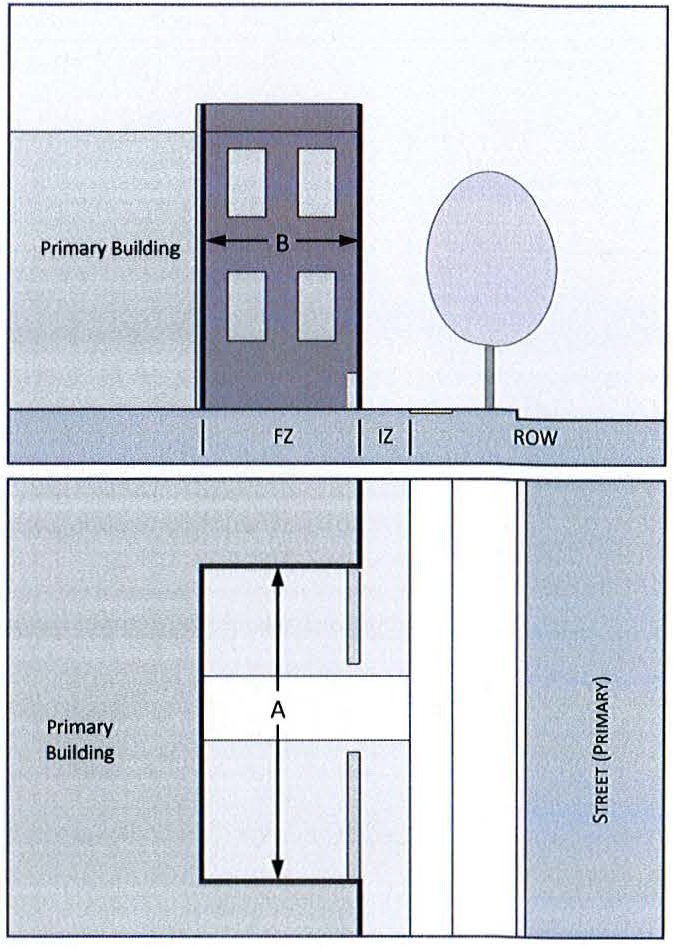
 | FORECOURT |
| The façade is set back from the front lot line per applicable street setback requirements. A portion of the façade is recessed to form an uncovered court. The court is suitable for outdoor dining, gardens, vehicle drop-offs, formal entries etc. A fence or wall may be used to define the private space of the court. The court may be elevated behind a retaining wall at or near the front lot line with entry steps to the court. The forecourt area may not have a permanent roof structure. Cafe's, seating area's may provide shade, umbrella's or any temporary shelter(s) that provide shade. | |
| FRONTAGE ZONE AND INTERFACE ZONE DIMENSIONS |
 |
| FRONTAGE ZONE DIMENSIONS |
 |
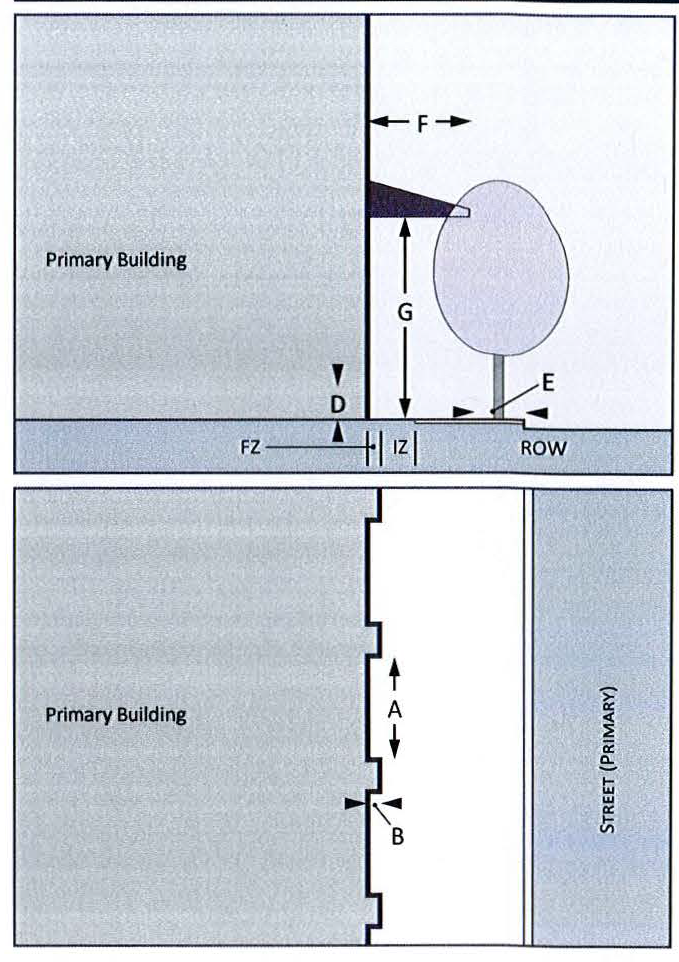
 | COMMERCIAL |
| The façade is setback from the front lot line per applicable street setback requirements, typically at or near the front lot line with the entrance at sidewalk grade. The façade may include an awning, shed roof, or gallery (a lightweight colonnade with no habitable building space above it) that covers the sidewalk and may extend into the right-of-way. The facade has a substantial amount of glazing at the sidewalk level. Recessed entrances are acceptable. | |
| FRONTAGE ZONE AND INTERFACE ZONE DIMENSIONS |
 |
(Ord. No. 2016-19, § 2(Exh. A), 2-28-17; Ord. No. 2021-08, § 2, 6-22-2021; Ord. No. 2021-22, § 2, 10-12-21)
Sec. 20.16. - Private frontage.
The building types in section 20.15 provide the acceptable private frontages (i.e. porches, stoops, etc.) for that building type. If there are multiple frontages provided in the table, the applicant may choose what private frontage to provide per building. A minimum of one frontage will be required for new construction when listed on the chart, by Building Type. The private frontage area may count towards the calculation of the frontage build out requirement under the "Building Envelope" category, by building type, in section 20.15.
(Ord. No. 2016-19, § 2(Exh. A), 2-28-17)
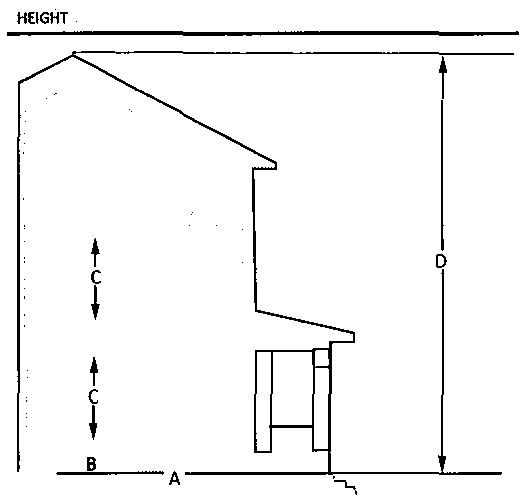
Sec. 20.17. - Building height.
Each building lot typology in section 20.15 provides the range of height appropriate for the building type. No new or substantially improved building within the PAG Overlay District and having the underlying zoning designation of THD, RU-2 Residential, RLM-2 Residential, or RM Residential shall be constructed to exceed twenty-eight (28) feet in height to the midpoint of a sloped roof or top of the parapet of a flat or low sloped roof, or thirty-two (32) feet overall, as defined below:
a.
For any structure with habitable space located less than eight feet above natural grade, height shall be measured from the property's required Design Flood Elevation.
b.
For any structure with habitable space beginning at or higher than eight feet above natural grade, height shall be measured from eight feet above natural grade.
Base flood elevation requirements are outlined in section 98-33 of the City's Code of Ordinances.
| HEIGHT |
 |
(Ord. No. 2016-19, § 2(Exh. A), 2-28-17; Ord. No. 2021-08, § 2, 6-22-2021)
Sec. 20.18. - Minimum off-street parking requirements.
(a)
Residential: Shall be in accordance with the requirements of Division 23 of the Land Development Code, Off Street Parking and Loading.
(b)
Nonresidential: may reduce the number of spaces, if on-street parking is available, then an applicant can count any on-street parking within 500 feet of the parcel.
(Ord. No. 2016-19, § 2(Exh. A), 2-28-17)
Sec. 20.19. - Alleyways.
(a)
The PAG Overlay District has existing alleyways that shall be maintained as an alleyway.
(b)
Under no circumstance shall an existing alley be reduced in the width and length.
(c)
Parking is permitted adjacent to an alleyway or where the City has identified, through signage, that vehicles may park within the alleyway. Under no circumstance shall a parked vehicle impede the vehicular movement.
(d)
Alleyways shall not be permanently closed or vacated.
(Ord. No. 2016-19, § 2(Exh. A), 2-28-17)
Sec. 20.20. - Landscaping standards.
(a)
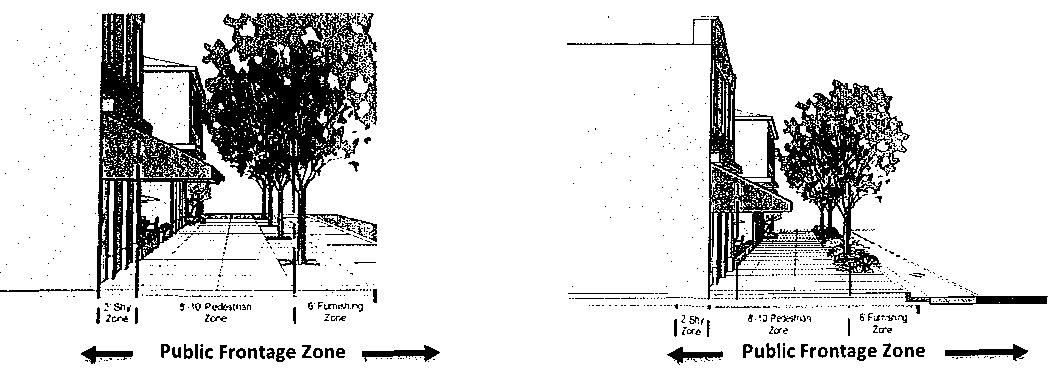
Streetscape standards. When the City requires improvements to the "Public Frontage" Zone which includes: Furnishing zones, pedestrian zones and a shy zone, the following standards shall apply.
(1)
Furnishing Zone that is a minimum of six feet in depth and may include street lights, benches and canopy trees. A furnishing zone shall include one of the following: Tree Grate Standards. One canopy tree per 30 feet in lineal building shall be provided the entire length of the parcel the building is fronting.
(2)
Planter Beds. A minimum width of 6 feet with a maximum length of 25 feet that contains 1 canopy tree per bed and 100 percent ground cover.
(3)
Pedestrian Zone. 8—10 feet of unobstructed sidewalk
(4)
Shy zone. Comprised of 12 inches to 2 feet that includes the area from the edge of the building to the edge of the pedestrian zone.
(b)
Landscape Buffers may be required between any uses within the PAG Overlay District.
(c)
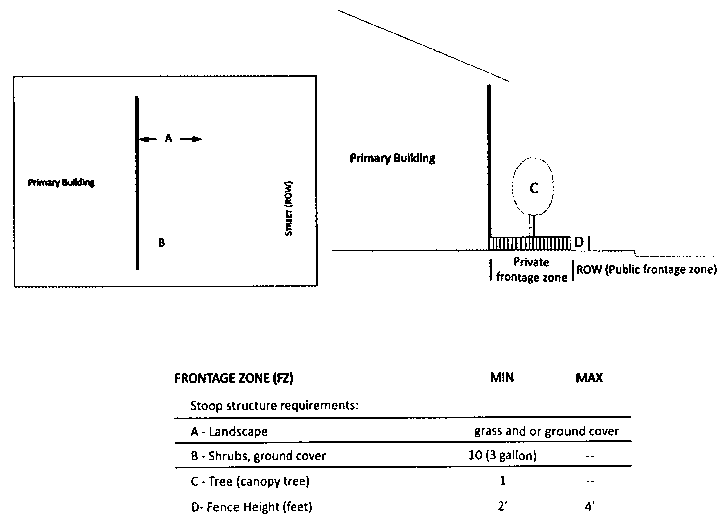
Front Buffers for all residential building types, excluding the Apartment Building, shall provide the following:
(1)
Front fence or landscape buffer shall be provided and include the following:
a.
An opaque hedge, height not to exceed 3 feet when fully matured and/or
b.
Knee wall and/or fence. Permitted materials are wood, shell or concrete material consistent with the overall architecture and design of the primary residence.
(Ord. No. 2016-19, § 2(Exh. A), 2-28-17)
Sec. 20.21. - Screening of elevated buildings.
A building required by section 98-33 of the City's Code of Ordinances, to be elevated more than three feet above grade shall mask the fact that it is elevated through the use of appropriate architectural screening so that the building, when viewed from public rights-of-way, appears to have been constructed at, or near, natural grade as follows:
(a)
Architectural screening shall:
(1)
Create a visual continuity that is integrated with the overall design and architecture of the home using doors, garage doors, entryways, staircase and/or archways.
(2)
No more than 20 percent of the area being screened can be transparent.
(b)
Landscape screening shall be installed:
(1)
A minimum 3-foot-wide landscape area.
(2)
One understory tree per 20 lineal feet (or portion thereof) of the elevated building length/width viewed from public rights-of way.
(3)
Planted with shrubs, ornamental grasses and groundcovers to provide 100 percent coverage of the landscape area within one growing season. The landscape design shall (unless spatially impractical) provide layering of plant materials that includes larger background shrubs and low foreground groundcovers. All plant material should be Florida friendly plantings as defined and identified by University of Florida/IFS horticulture experts.
(4)
Permanent mulch materials, such as organic mulches, stones, and recycled inorganic groundcover materials are not permitted in lieu of vegetation, unless they are provided as accent or focal points that enhance the landscape design.
(c)
Apartment building types (apartment house, apartment building small and apartment building medium shall also meet the following standards:
(1)
Parking may only be accessed from the side or rear of the building.
(2)
No portion of the primary building shall have garage doors facing any street.
(3)
Parking may be located within the BFE provided the primary face of the building is architecturally designed to be consistent with front entryways of homes that are integrated and not visually seen from any street.
(Ord. No. 2016-19, § 2(Exh. A), 2-28-17)
Sec. 20.22. - General building design (residential).
In addition to the required private frontages and the standards provided in each frontage, the following standards shall be applied to all residential building types (house and apartment building types) in order to maintain the overall mass and scale, of the PAG community's existing housing stock.
The following standards are included to provide a minimum criteria needed to review the overall design, mass and scale as outlined below while allowing an applicant flexibility in the design of the building. The design criteria are typical design elements used by architects to ensure a higher quality development.
Any single family or attached residential structure that follows the criteria outlined in section 20.15 must design the building with the following architectural elements:
(a)
The mass of a building must include:
(1)
Primary mass. The building shall have a distinct primary mass.
(2)
Secondary mass. A building should also include secondary mass (private frontage requirements) that form the façade of the building.
(3)
Voids that allow for natural breaks in the mass.
(b)
Proportional design elements shall include:
(1)
Windows in varying, yet similar arrangements.
(2)
Appropriate vertical visual consistency at the centerline of the façade.
(3)
Appropriate ratios of visual width between top and bottom halves of the elevation (bottom ½ clearly supports the top).
(4)
Overall design shall be symmetrically or asymmetrically balanced.
(c)
Design must include the following rhythms:
(1)
Proximity (objects close together complement each other).
(2)
Similarity- common textures, colors or features.
(Ord. No. 2016-19, § 2(Exh. A), 2-28-17)
Sec. 20.23. - General building design (non-residential).
In addition to the required private frontages and the standards provided in each frontage, the following standards shall be applied to non-residential building types only.
(a)
Public entrance. Buildings that are open to the public shall have an entrance for pedestrians from the street to the building interior. This entrance shall be designed to be a distinctive and prominent element of the architectural design, and shall be open to the public during business hours. Buildings shall incorporate lighting and changes in mass, surface or finish which places an emphasis to the entrance.
(b)
Building orientation. The primary building entrances shall be visible and directly accessible from a street or park space that has a sidewalk or pedestrian path.
(c)
Storefront character. Buildings shall express a "storefront character". This guideline is met by providing all of the following features along the building frontage as applicable.
(1)
Regularly spaced and similar-shaped windows with window hoods or trim (all building stories).
(2)
Large display windows on the ground floor. All street-facing, park-facing and plaza-facing structures shall have windows covering a minimum of 40 percent and a maximum 80 percent of the ground floor of each storefront's linear frontage. Blank walls shall not occupy over 50 percent of a street-facing frontage and shall not exceed 20 linear feet without being interrupted by a window or entry. Mirrored glass, obscured glass and glass block cannot be used in meeting this requirement. Display windows may be used to meet this requirement if the first floor has not been design as a flood proof first floor.
(d)
Building façade. A clear visual division shall be maintained between the ground level floor and upper floors with either a cornice line or awning from 12 feet to 16 feet above grade, whichever applies to the proposed development. No more than 20 feet of horizontal distance of wall shall be provided without architectural relief for building walls and frontage walls facing the street. All buildings excluding single family detached homes shall utilize at least three of the following design features to provide visual relief along all elevations of the building:
(1)
Divisions or change in materials (materials should be drawn from a common palette).
(2)
Window bays.
(3)
Separate entrances and entry treatments, porticoes extending at least five (5) feet.
(4)
Variation in roof lines.
(5)
Balconies: 6 feet maximum may project into the front or side street setbacks.
(6)
Dormers.
(7)
Canopies, extending at least five (5) feet.
(8)
Gables.
(9)
Overhang extending at least five (5) feet.
(10)
Recessed entries (at least three [3] feet from the primary façade).
(11)
Protruding entries (at least three [3] from the primary façade).
(12)
Covered porch entries.
(13)
Cupolas shall be permitted on sloped roofs and are exempt from the height limitations up to twelve feet above the roof line.
(14)
Buildings shall provide a foundation or base, typically from ground to bottom of the lower windowsills, with changes in volume or material.
(Ord. No. 2016-19, § 2(Exh. A), 2-28-17)
Sec. 20.24. - Design review and required drawings.
An applicant shall be subject to the City's permit process. In addition, any development within the PAG Overlay District using the building types, as provided in this division, shall submit architectural elevations of all facades of all structures subject to this division and shall be a required exhibit for plan approval which does not subrogate any requirements outlined in Division 5, Site plan approval procedures, and building permit process. Such exhibits shall include colors, materials, building dimensions, mass and scale proportions, location of service areas and mechanical equipment, screening devices, parking, site furnishings, lighting fixtures, all signage, and any other information as determined necessary to ensure consistency with the intent of this division. All elevations and overall design must be signed and sealed by a licensed architect registered in the State of Florida and must provide a summary and illustrations that identify each standard listed in section 20.22 or 20.23 of this division. The City may request review by the Historic Preservation Board to ensure compatibility of new construction or additions within the PAG overlay district.
(Ord. No. 2016-19, § 2(Exh. A), 2-28-17)

