
Missoula City Zoning Code
CHAPTER 20
75 - Signs
20.75.010 - Purpose
The sign regulations of this chapter are intended to protect the health, safety and general welfare by establishing standards for the design, construction, location, illumination, and maintenance of all signs and sign structures. The City Council declares that such regulations are necessary and desirable for the following reasons:
A.
To protect the public safety by ensuring that traffic signs and devices are easily visible and free from obstruction or other distraction caused by improper use and placement of signs;
B.
To reduce the distractions, obstructions and hazards to pedestrians, bicyclists, and motorists caused by the inappropriate means of illumination or movement, improper placement, or overconcentration of signs;
C.
To ensure that signs are designed, constructed, installed and maintained in a way that protects life, health, property, and the public welfare, especially during periods of high winds;
D.
To support the desired character of Missoula, as expressed in adopted city plans and policies;
E.
To promote an attractive visual environment;
F.
To control the size, placement, and use of signs and other attention-gathering paraphernalia in order to preserve the right of citizens to enjoy Missoula's natural scenic beauty;
G.
To address the ongoing technological advancements in the sign industry that continue to result in new sign types;
H.
To ensure fair and equitable treatment of sign users; and
I.
To ensure that the right to free speech is protected.
(Ord. 3600, 2017; Ord. 3439, 2010; Ord. 3410, 2009)
20.75.020 - General Sign Regulations
The general sign regulations of this section are applicable to all allowed signs unless otherwise expressly stated.
A.
Property Owner's Responsibility
Each property owner is responsible for proper permitting, installation, and maintenance
of all signs on their property.
Commentary: Boulevard maintenance must comply with Chapter 12.32 and Chapter 12.48 of the Municipal Code which requires consultation and permits from the Parks Department for tree trimming or removal.
B.
Noncommercial Messages
Any sign allowed under this chapter may contain, in lieu of any other message or copy, any lawful noncommercial message that does not direct attention to a business operated
for profit, or to a product, commodity or service for sale or lease, or to any other
commercial interest or activity, so long as the sign complies with the size, height, area and other requirements of this chapter. Authorized
decision-making bodies may not consider the content of speech or the viewpoint of
the speaker when taking action to approve or deny sign permits or other application
for signs.
C.
Placement of Allowed Signs
1.
Except as otherwise expressly stated, wall signs allowed on a parcel may be placed on building frontage and ground signs may be placed along any frontage upon which the parcel has frontage.
2.
No sign, including temporary signs, or supporting structure may extend beyond the property except as otherwise expressly stated.
3.
Allowed signs above sidewalks and other pedestrian areas must maintain a vertical clearance from the ground of at least nine feet.
4.
Signs and supporting structures that overhang or extend within vehicle traffic lanes or parking spaces must have a minimum vertical clearance of 14 feet.
5.
Signage placed in the public right-of-way in accordance with the City's comprehensive Wayfinding Plan are not subject to this ordinance, but are subject to other City and State requirements, including encroachment permits.
6.
Except as otherwise expressly stated, temporary signs allowed on a parcel may be placed on the ground, on a building, structure or fence. Banners may only be placed on a wall or fence.
D.
Construction
Construction and erection of all signs and supporting structures must comply with the International Building Code (commercial), as adopted by the
City Council. Building permits are required for all ground signs over seven feet in height.
(Ord. 3600, 2017; Ord. 3549, 2015; Ord. 3439, 2010; Ord. 3410, 2009)
20.75.030 - Prohibited Signs and Sign Characteristics
The following signs are expressly prohibited in all zoning districts unless expressly allowed by other provisions of this zoning ordinance:
A.
Signs that simulate or which are likely to be confused with traffic control signs commonly used by agencies of government and construction contractors to draw attention to traffic or roadway hazards;
B.
Searchlights;
C.
Animated, flashing, blinking or scintillating signs;
D.
Roof signs;
E.
Signs that are located so as to obstruct the view of traffic-control devices or vehicles at intersections or pedestrians at marked crosswalks, as determined by the city engineer;
F.
Dynamic display billboards;
G.
Mobile billboards;
H.
Vehicle signs are not permitted in public rights-of-way, on public property or on private property where such objects are visible from the public right-of-way;
I.
Temporary (portable) changeable copy signs;
J.
Inflatable signs, any sign that moves or gives the appearance of moving, and any sign which flutters, undulates, swings, rotates, oscillates or otherwise moves by natural or artificial means, including balloons, flags, pennants, streamers, spinners or other types of wind signs, except national and governmental subdivision flags as noted in 20.75.040.G;
K.
Human signs, human directional signs, and sign walkers that display, advertise, or promote commercial activity or provide direction to commercial activity;
L.
Signs not expressly allowed by the regulations of this chapter.
(Ord. 3769, 2025; Ord. 3733, 2024; Ord. 3723, 2023; Ord. 3609, 2018; Ord. 3600, 2017; Ord. 3549, 2015; Ord. 3469, 2011; Ord. 3439, 2010; Ord. 3410, 2009)
Note— 20.75.030—Interim provision, expires March 24, 2026.
20.75.040 - Signs Allowed Without a Sign Permit
The following signs are allowed without a permit and are not counted toward the applicable limits on the number or area of signs allowed, unless otherwise noted. In order to be exempt from sign permit requirements, such signs may not be internally illuminated, cause glare, or cast light onto adjacent property:
A.
Minor signs up to six signs per business with none exceeding six square feet in area. Commercial messages may comprise no more than 50% of the area of any minor sign;
B.
Incidental signs not exceeding two square feet in area;
C.
Signs posted by or required to be posted by any government or governmental agency;
D.
Signs located on private property that are not visible from a public right-of-way or public lands;
E.
Barber-pole signs not exceeding four feet in height, attached to a building;
F.
National register district identification signs;
G.
Ideological signs;
H.
Flags, emblems, crests or insignia of any nation, or governmental subdivision located on a pole a minimum of 20 feet from the property line. A maximum of three poles will be permitted, the United States flag shall be flown in accordance with Federal Law (Title 4 U.S.C.); and
I.
The following temporary signs, provided they are removed upon completion of the activity (in real estate, "completion" means closing) or activity identified on the sign:
1.
Notices posted by public agencies (i.e., notice of proposed rezoning);
2.
Temporary signs protecting private property or identifying property hazards;
3.
Seasonal signs and holiday decorations erected for periods of time not exceeding the customary duration of general celebration;
4.
Temporary signs as allowed by each zoning district; and
5.
Temporary window signs displayed in ground level windows only, with no more than 25% of the window area covered by temporary signs at any one time.
(Ord. 3600, 2017; Ord. 3469, 2011; Ord. 3439, 2010; Ord. 3410, 2009)
20.75.050 - Signs in Residential and Open Space/Public Districts
A.
The regulations of 20.75.040 and the temporary sign regulations found in Table 20.75-1, apply to detached houses, lot line houses, townhouses, and two-unit houses in R and OP districts.
B.
Signs for other uses allowed in R and OP districts are subject to the following standards:
Table 20.75-1 Signs in Residential and Open Space/Public Districts
;sz=8q; [1] ;hg;Where a parcel contains nonintersecting street frontage on two or more streets, a sign is permitted on each nonintersecting street. The formula for each sign is the same as the formula used to determine the maximum allowable for one ground sign.
[2] Wall sign height limit also applies to signs on canopystructures, such as porte-cocheres and all other structures. Such signs are subject to all other wall sign regulations of this chapter.
(Ord. 3600, 2017; Ord. 3439, 2010; Ord. 3410, 2009)
20.75.060 - Signs in Nonresidential Districts
A.
B1, B2, and B3 Districts
1.
Applicability
The sign regulations of this subsection (20.75.060.A) apply in B1, B2, and B3 districts.
2.
Signs Permitted
a.
The regulations of 20.75.040, and the temporary sign regulations found in Table 20.75-2, apply to detached houses, lot line houses, townhouses and two-unit houses, in B1, B2, and B3 districts.
b.
All other uses allowed in B1 and B2 districts are subject to the following standards:
Table 20.75-2 Signs in Nonresidential Districts, B1, B2, and B3 Districts
;sz=8q; [1] Where a parcel contains nonintersecting street frontage on two or more streets, a sign is permitted on each nonintersecting street. The formula for each sign is the same as the formula used to determine the maximum allowable for one ground sign.
B.
Commercial and Industrial
1.
Applicability
The regulations of this subsection apply in C1, C2, M1R, M1 and M2 zoning districts.
2.
Regulations
Any sign located within 100 feet of a residential zoning district that is visible from that
residential zoning district, is subject to the regulations of 20.75.060.A. Other signs are subject to the following standards:
Table 20.75-3 Signs in Nonresidential Districts, Commercial and Industrial
[1] Where a parcel contains nonintersecting street frontage on two or more streets, a sign is permitted on each nonintersecting street. The formula for each sign is the same as the formula used to determine the maximum allowable for one ground sign.
[2] When the permitted size of a ground sign includes a bonus derived from street frontages on intersecting streets (i.e., a corner parcel), the location of the sign must be as close as practicable to the corner of the parcel at the street intersection.
[3] A projecting sign may be used instead, but not in addition to, a ground sign; projecting signs are not permitted on any building frontage that also contains a wall sign associated with the same business or entity. Projecting signs may have copy on only two sides.
C.
Central Business District
1.
Applicability
The provisions of this subsection (20.75.060.C) apply in the CBD district.
2.
Standards for Individual Sign Types
Any sign located within 100 feet of a residential zoning district that is visible from that
residential zoning district, is subject to the regulations of 20.75.060.A.
In addition to the locational criteria in 20.75.060C.2, individual signs in the CBD district are subject to the following standards:
Table 20.75-4 Signs in Nonresidential Districts, Central Business District
;sz=8q; [1] Where a parcel contains nonintersecting street frontage on two or more streets, a sign is permitted on each non-intersecting street.
[2] A projecting sign may be used instead, but not in addition to, a ground sign; projecting signs are not permitted on any building frontage that also contains a wall sign associated with the same business or entity. Projecting signs may have copy on only two sides.
D.
/NC-SR District
Signs in the /NC-SR overlay district may be subject to special regulations. See 20.25.060.I.
(Ord. 3600, 2017; Ord. 3469, 2011; Ord. 3439, 2010; Ord. 3410, 2009)
20.75.070 - Regulations of Specific Types of Signs
A.
Awning Signs
1.
When a wall sign and an awning sign are installed on the same building frontage, up to six square feet of sign (copy) area may be displayed on the border (valance) or end panels of the awning. This sign (copy) area does not count against the maximum wall sign allowance. Other awning signs do count against the maximum wall sign allowance.
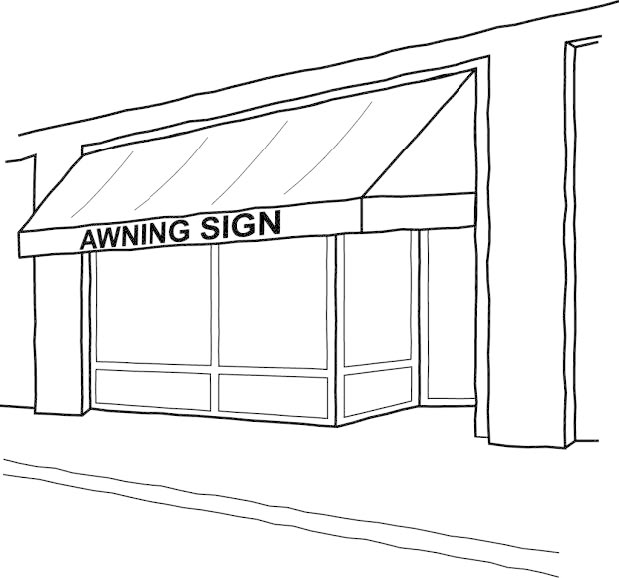
Figure 20.75-1 Awning Signs
2.
Letters, logos and symbols on awning signs are limited to a maximum area of one square foot per one foot of awning length. The total combined length of letters, logos, and symbols may not exceed 70% of awning length. In calculating the length and area of an awning or canopy only the single longest plane of the awning or canopy may be counted. This generally means that the valance and sides (ends) of the awning or canopy are not counted for purposes of measuring length or area.
B.
Canopyand MarqueeSignsCanopy and marqueesigns must comply with the standards of this subsection. They are allowed in addition to other signs allowed by this chapter, and they do not count against the maximum wall sign allowance.
1.
Hanging Signs
a.
One hanging sign is allowed per public entrance.
b.
Hanging signs may be constructed of rigid material.
c.
Hanging signs must be suspended below the under-side of the structure, such as a marquee or canopy.
d.
The lowest point of hanging signs must be at least nine feet above the sidewalk, driveway or grade line beneath the sign.
e.
Hanging signs may not exceed ten square feet in area, and may not have more than two sign faces.
2.
Above Canopyand MarqueeSigns:
a.
Must be channel letters mounted flush on top of a canopy or marquee,
b.
May not exceed a maximum of ten square feet in area,
c.
May have up to two sign faces,
d.
Cannot be placed on freestanding canopies.
C.
Window Signs
Window signs must comply with the standards of this subsection. Window signs are allowed in addition to other signs allowed by this chapter.
1.
Permanent Window Signs
a.
Permanent window signs affixed to a ground floor exterior window are permitted. Not more than 30% of a window area may be covered.
b.
Permanent window signs for businesses that are not located on the ground floor are permitted (see also 20.75.080). Such window signs are permitted only for businesses located within the room situated behind the window on which such signs are located. Not more than 30% of a window area may be covered.
2.
Temporary Window Signs
a.
Temporary window signs may be displayed without a permit in ground level windows only, and may include but are not limited to: public notices concerning off-premises special events or public meetings, announcements of on-premises special events, and announcements of sales and specials.
b.
Temporary window signs must be removed on the day following the event as advertised, and at no time may more than 25% of the window area be covered by temporary signs.
D.
Multi-tenant Signs
In addition to other allowed signs, multi-tenant developments may have up to one multi-tenant sign per building entrance that is open to the general public. Multi-tenant signs may not exceed 16 square feet in area and, if freestanding, may not exceed six feet
in height.
E.
Manual Changeable-Copy Signs
One manual changeable copy sign is allowed per parcel for public and civic uses in R and OP districts and all allowed uses in other districts.
Unless otherwise expressly stated, such signs are subject to the sign regulations of the subject zoning district and the following:
1.
The changeable-copy portion of the sign must be contained within the border of the allowed primary wall or ground sign.
2.
The changeable-copy portion of the sign may not exceed 40 square feet or 50% of the total area of the sign, whichever is less, and must be computed as part of the sign's total area.
F.
Dynamic Displays
Dynamic displays on signs are allowed subject to the following regulations:
1.
Where Allowed
Dynamic displays are permitted for all allowed uses in B1, B2, B3, C1, C2, M1 and M2 zoning districts.
Signs must be located on parcels with frontage on principal arterials not in an historic district, and are subject to the dynamic
display regulations of this subsection.
2.
Maximum Dynamic Display Area
The dynamic display portion of the sign may not exceed 40 square feet or 50% of the total area of the sign, whichever is less, and must be computed as part of the sign's total area. The remainder
of the sign may not have the capability to have dynamic displays even if not used. Only one, contiguous dynamic display area is allowed on a sign
face.
3.
Orientation
The sign face must be oriented away from adjacent residential uses and zoning districts.
4.
Hold Time
Dynamic displays may not change or move more often than once every second.
5.
Transitions
The transition from one image or display to the next must be accomplished in one second
or less. Fading, scaling, scrolling, and dissolving effects may be used as part of
the transition.
6.
Display Malfunctions
The sign owner must stop the dynamic display within 24 hours of receiving notice from the city that it is malfunctioning or otherwise
not complying with the standards of this zoning ordinance.
7.
Brightness
Dynamic displays may not exceed a maximum illumination of 5,000 nits (candelas per square meter) during
daylight hours or more than 500 nits during nighttime hours (between dusk and dawn),
as measured from the sign's face at maximum brightness. Dynamic displays must be equipped with automatic dimming technology that automatically adjusts the
display's brightness based on ambient light conditions.
8.
Prohibited Display Types
Dynamic displays may not use blinking, bursting, distorting, flashing, oscillating, rotating, shimmering, sparkling, streaming, tracing, traveling text
or twinkling effects. Audio or pyrotechnic elements are also prohibited.
9.
Nonconformities
Dynamic displays existing on November 4, 2009 must comply with all the operational standards of this
subsection. An existing dynamic display that does not meet the structural requirements of 20.75.070.F.2 may continue as a
nonconforming sign subject to the nonconforming sign regulations of 20.75.120.
G.
Changeable Copy Signsfor Specific Uses
1.
Theaters
a.
Each indoor cinema or theater is allowed two changeable-copy signs affixed to the building or marquee, so that it may be visible from the street from both directions of approach;
b.
Signs may be illuminated; and
c.
Changeable-copy signs for theaters may include up to 60 square feet per theater screen or auditorium up to a maximum 180 square feet total sign area.
2.
Service Stations
a.
One changeable copy (wall or ground) sign as allowed by 20.75.070.E or 20.75.070.F; and
b.
One changeable copy sign per street frontage on which the station gains access, subject to the following:
1.
Signs may not be larger than 15 square feet in area; and
2.
Signs may be double-faced and illuminated; and
3.
Signs shall contain static messages only.
H.
Pump Top Unit, Service Stations
1.
The intent of this section is to reduce the impact of pump top units to the point of contact with the direct user of that device.
2.
The audio component of this device must comply with the City of Missoula's Noise Ordinance.
3.
A sign permit is required in compliance with the ground sign standards of the district in which the unit is located when a pump top unit exceeds any of the following visual display criteria:
a.
Screen of 21.5" (measured on the diagonal);
b.
Illumination of 1,000 nits (candelas per square meter);
c.
70 degree (from horizontal) viewing angle;
d.
A display that turns off two minutes after customer leaves.
I.
Sidewalk Signs
1.
Sidewalk signs must comply with all applicable standards regarding total square footage allowances.
2.
Sidewalk signs are permitted with the following conditions:
a.
No Ground Signs
sidewalks signs are allowed only on parcels that have no ground signs.
b.
Number
Each business may have one sidewalk sign, regardless of frontage.
c.
Size and Height
Sidewalk signs may have no more than two faces and are limited to five feet in height and three
feet in width.
d.
Detectability
Each sidewalk sign shall have a solid surface within two inches of the ground along both faces of the
sign.
e.
Location
(1)
Sidewalk signs must be placed immediately in front of the building being occupied by the advertiser on the sign.
(2)
Sidewalk signs must be placed to accommodate a minimum six-foot pedestrian clear zone on the sidewalk. Sidewalk signs are not permitted if there is no sidewalk, or not a wide enough sidewalk to accommodate the minimum six-foot pedestrian clear zone in front of the building being occupied by the advertiser on the sign.
(3)
The placement of sidewalk signs must not create a traffic hazard as determined by the city engineer and may not be placed in state highway right-of-way without permission of the State Highway Department.
(4)
Sidewalk signs may be displayed during business hours only.
3.
Exceptions
Within the Business Improvement District (BID) the following exceptions will apply.
Any business taking advantage of the exception will be required to come into immediate
compliance with all other portions of Section 20.75.070.I.
a.
Number
Each business may have two sidewalk signs, regardless of frontage.
b.
Location
(1)
If a business has only one sidewalk sign it may be placed on the sidewalk on the same side of the street, and within three blocks, of the building being occupied by the advertiser on the sign.
(2)
If a business has two sidewalk signs one of the signs must be placed immediately in front of the building occupied by the advertiser on the sign. The second sign may be placed on the sidewalk on the same side of the street, and within three blocks, of the building being occupied by the advertiser on the sign.
c.
Other Requirements
All other requirements of 20.75.070.I apply to a second sidewalk sign.
J.
Stacking Lane Signs
Stacking lane signs accessory to allowed drive-through uses are permitted in addition to other allowed
signs, as follows:
1.
Number and Dimensions
a.
Primary Sign
One primary sign not to exceed 36 square feet in area or eight feet in height is allowed per order
station, up to a maximum of two primary menu boards per parcel.
b.
Secondary Sign
One secondary sign not to exceed 16 square feet in area or six feet in height is allowed per parcel.
2.
Visibility
Stacking lane signs are intended to convey information to vehicles within the boundaries of the development
site and therefore may not be located or oriented to be legible from off-site.
K.
Bus Stops
Signs on bus stop benches and transit shelters are allowed in any zoning district subject
to the following standards:
1.
This allowance extends only to those benches and shelters placed under agreement with the City of Missoula at locations specified by the Missoula Urban Transit District.
2.
Signs on bus stop benches and transit shelters are subject to all the traffic safety and maintenance-related provisions of this chapter.
3.
For the purpose of enforcing traffic safety and maintenance requirements, benches and shelters are considered part of the sign.
4.
Signs are restricted to the side of the bench backrest or shelter that faces the public right-of-way and may not extend above or beyond the bench or the top of the shelter.
5.
Signs may not be illuminated, and signs on shelters may not exceed 32 square feet in area. Off-premises signs are allowed.
L.
Banner Signs
Banners are allowed for two consecutive weeks, three times a year. One banner is allowed on each building frontage and each must receive a permit. Banners can be a maximum of 32 square feet, or 20% of the total wall sign allowance permitted
by the zoning district, whichever is greater.
(Ord. 3769, 2025; Ord. 3733, 2024; Ord. 3723, 2023; Ord. 3669, 2020; Ord. 3600, 2017; Ord. 3549, 2015; Ord. 3539, 2015; Ord. 3511, 2013; Ord. 3469, 2011; Ord. 3439, 2010; Ord. 3410, 2009)
Note— 20.75.070.B.1.b and G.2—Interim provision, expires March 24, 2026.
20.75.080 - Signs for Businesses that Lack Street Frontage
Businesses that do not have ground floorbuilding frontage or that are not visible from a public street may erect and use the following sign types:
A.
Window signs as allowed by 20.75.070.C and 20.75.040.H.5;
B.
Sidewalk signs as allowed by 20.75.070.I;
C.
One wall-mounted sign that is not directly illuminated and that does not exceed four square feet in area; or
D.
One multi-tenant sign per public building entrance. Such signs may not be directly illuminated and may not exceed eight square feet in area.
(Ord. 3600, 2017; Ord. 3439, 2010; Ord. 3410, 2009)
20.75.090 - Off-Premises Sign Options
Off-premises signs may be permitted on some parcels to compensate for certain locational problems that create severe practical difficulties with adherence to this chapter.
A.
Special Exception
The Board of Adjustment must grant a special exception for an off-premises ground sign prior to a permit being issued. The Board of Adjustment may grant a special exception
if all of the following conditions apply:
1.
The location of the business precludes the placement of a sign that is visible from a street or the business is located on a parcel that does not abut a public street; and
2.
The use for which a special exception for an off-premises sign is requested is not in a residential zoning district.
B.
Standards
1.
Off-premises signs must comply with the strictest ground sign regulations of the district in which they are located.
2.
If a business that qualifies for an off-premises sign elects to combine its sign with an on-premises sign of another business, the total square footage of the resulting ground sign identifying two businesses may equal the combined maximum ground sign for each business.
3.
An off-premises sign that in part identifies a private business as a donor of the sign constitutes an off-premises sign of the business donor.
(Ord. 3600, 2017; Ord. 3439, 2010; Ord. 3410, 2009)
20.75.100 - Special Signs
A.
Purpose and Applicability
Signs that do not lend themselves to the measurement provisions of this chapter or signs designed for a special and unique purpose, may only be permitted in any zoning district
when, following Design Review as outlined in 20.85.080, the zoning officer finds such signs in conformance with the overall purpose and intent of this chapter and appropriate
to the type of development or structure to which they are related.
B.
Special Sign Classes
1.
Comprehensive Sign Package
Signs that are not in strict compliance with the regulations of this chapter may be approved
when the zoning officer determines that the signs are part of a comprehensive design plan that meets the overall intent and purposes of this chapter. To qualify for zoning
officer review as a comprehensive sign package, the applicant must address the complete
system of signage for the site along with proposed lighting and architectural detailing
that may be considered to support the sign.
2.
Special Districts
The zoning officer must review signs in /PUD, NC-B (Boulevard), H (Historic), or Special Districts. The zoning officer
will determine if the signs meet the overall intent and purposes of this chapter and the requirements of this
section.
3.
Heritage Signs
a.
New Heritage Signs may only be approved when the zoning officer finds that the granting of approval would result in superior design for the overall site, is in conformance with the overall purpose and intent of this chapter, and reflects a historically-accurate sign that was on site previously.
Commentary: In addition to other required submittal information, the applicant must submit photographic documentation of the past sign, design of the new sign showing the historically-accurate relationship to the past sign, and proof of consultation with the Historic Preservation Officer.
b.
The zoning officer may declare that an existing sign makes a significant artistic or historic contribution to the community or neighborhood in which the sign is currently located. This declaration, which may be made only at the request of the owner or lessee of the sign, entitles its owner or lessee to continue using the sign subject to the maintenance requirements of 20.75.110.
Commentary: In addition to other required submittal information, the applicant must submit proof of consultation with the Historic Preservation Officer.
4.
Building Graphics
Building Graphics may only be approved when the zoning officer determines that the building graphic will make a positive contribution to the building and surrounding area's appearance and will otherwise be in keeping with the intent
of this zoning ordinance.
a.
Building Graphics are exempt from the requirement for Design Review (20.85.080) approval for the following reasons:
1.
The Building Graphic is already approved by the Public Art Committee.
2.
The Building Graphic is included with a project within the Design Excellence Overlay, and is being reviewed as part of a Design Excellence Review as described in 20.25.080.B.4.
(Ord. 3769, 2025; Ord. 3733, 2024; Ord. 3723, 2023; Ord. 3669, 2020; Ord. 3609, 2018; Ord. 3469, 2011; Ord. 3439, 2010; Ord. 3410, 2009)
Note— 20.75.100—Interim provision, expires March 24, 2026.
20.75.110 - Maintenance and Removal
A.
Maintenance
All signs and their identification tags, supports, braces, guys, anchors, and electrical equipment
must be kept fully operable and maintained in a safe, neat, clean, and attractive
condition or the signs must be removed. Failure to comply with the maintenance provisions of this chapter
constitutes a violation and is subject to enforcement proceedings under 20.75.140.
B.
Unsafe, Inadequately Maintained and Abandoned Signs
1.
The zoning officer is authorized to require the removal of any sign found to be unsafe or not as required by this chapter. Before bringing such action to require removal of an unsafe or inadequately maintained sign, the zoning officer must provide written notice to the owner of the sign or the owner of the premises on which the sign is located. The notice must specify that within 30 days the illegal sign must be removed or brought into compliance with this section. The notice must state the reasons for removal, specifying the deficiencies and violations; and such notice must specify what repairs, if any, will make the sign and its support conform to the construction and maintenance requirements of this chapter. Notice must be given in person to the sign owner or lessee, or given to the owner or lessee by certified mail. The zoning officer is not authorized to require removal of a sign designated as a historic, artistic or landmark sign in accordance with 20.75.100.B.3.
2.
If the owner or lessee of the sign fails to remove the sign within the allowed time after receiving written notice, the building inspector is authorized to remove the sign at the owner's expense.
C.
DangerousSigns
If the zoning officer finds that any sign or sign support is in violation of this section or 20.75.110 of this chapter and that by reason of its condition it presents an immediate danger
to the public, they must order either immediate repair or immediate removal. The zoning
officer is authorized to remove the sign if the person responsible cannot be found or refuses to repair or remove the sign within ten days.
D.
Abandoned Signs
Any person who owns or leases a sign must remove the sign within 30 days after it becomes an abandoned sign as defined by this chapter. If the owner or lessee cannot be located, the city zoning
officer is authorized to remove the sign. The cost of removal must be borne by the owner of the sign. In the event that the sign structure complies with the regulations of this chapter, the zoning officer may approve a sign
permit to install a blank insert for the structure.
(Ord. 3769, 2025; Ord. 3733, 2024; Ord. 3723, 2023; Ord. 3669, 2020; Ord. 3483, 2012; Ord. 3439, 2010; Ord. 3410, 2009)
Note— 20.75.110.B—Interim provision, expires March 24, 2026.
20.75.120 - Nonconforming Signs
A.
Description
A nonconforming sign is any sign or sign structure that was lawfully established but no longer complies with the sign regulations of this zoning ordinance.
B.
General
Nonconforming signs may remain, subject to the regulations of this section. Nonconforming signs must be maintained in sound condition and appearance.
C.
Alterations
1.
Change of copy or the substitution of panels or faces on nonconforming signs is permitted without affecting the legal status of a sign as a nonconforming sign, subject to applicable permit requirements. No other alterations are allowed, except for routine maintenance and repair.
2.
Any nonconforming sign that is structurally altered, relocated on the same or another parcel or that is replaced must immediately comply with all provisions of this zoning ordinance.
3.
Any sign, however, that is accidentally damaged or destroyed may be repaired or replaced within 90 days to the sign's original condition subject to the permit requirement of this chapter.
(Ord. 3439, 2010; Ord. 3410, 2009)
20.75.130 - Sign Variances
A.
The Board of Adjustment is authorized to grant variances from the sign regulations of this Chapter 20.75 in accordance with the variance procedures of 20.85.090.
B.
An "unnecessary hardship" related to a sign may result from the size, shape, location or dimensions of a site, or the existing structures located on the site, or from geographic, topographic or other physical conditions on the site or in the immediate (adjacent) vicinity that are unique to the applicant's site. The Board of Adjustment is authorized to allow only the minimum variance necessary to overcome the unnecessary hardship, in keeping with the intent and purposes of this chapter.
C.
The Board may not base variance decisions on problems or requirements unique to a particular industry or business of which the applicant may be a member.
(Ord. 3600, 2017; Ord. 3439, 2010; Ord. 3410, 2009)
20.75.140 - Administration and Enforcement
A.
Permits Required
No sign may be erected, constructed, affixed, painted, changed in copy, altered, or relocated unless a sign permit authorizing such work has been issued
by the zoning officer. No permit is valid for any sign covered by this chapter unless the sign and its location are in compliance with the provisions of this chapter. No permit
issued for a sign may be transferred to another property.
B.
Permit Submittal Requirements
Application for a sign permit must be made in writing on forms provided by the zoning
officer and include all information required by the zoning officer.
C.
Permit Fees
A sign permit fee for all signs is established by resolution of the City Council. This fee must be paid prior to
the issuance of any permit to allow the construction of a sign. Failure to obtain a permit as required by this section prior to the performance
of the work will result in a double fee.
D.
Lapse of Sign Permit Approval
If a sign authorized by a sign permit issued pursuant to this section is not installed within
180 days after the date of issue, such permit is void.
E.
Inspections
The zoning officer may conduct inspections to determine that signs were erected in compliance with the permit issued. The zoning officer is authorized to require
the permit holder to dismantle and remove any signerected in violation of this chapter, or in any way varying from the sign approved prior to the permit being issued.
(Ord. 3439, 2010; Ord. 3410, 2009)
20.75.150 - Violations, Penalties and Enforcement
See Chapter 20.01.
(Ord. 3439, 2010; Ord. 3410, 2009)
20.75.160 - Billboards
A.
Purpose
The billboards regulations of this section chapter are intended to protect the health,
safety, and general welfare of the people residing in and visiting the city and to
protect property values, enhance the appearance of the city and promote the tourist
industry by limiting the locations at which billboard signs may be allowed to exist within Missoula.
B.
Prohibited Locations
Billboards may not be installed or enlarged after February 14, 1985 within any zoning district
in the City of Missoula.
C.
Nonconforming Billboardsin R, OP, B and CBD Districts
1.
All billboards in place within any OP, B, CBD or any R zoning district must be removed by February 14, 1985.
2.
Whenever a parcel containing any lawfully establishedbillboard is rezoned or annexed and zoned to an R, OP, B or CBD zoning classification the billboard must be removed.
D.
Nonconforming Billboardsin C and M Districts
All lawfully establishedbillboards in place within any C or M zoning districts may remain in place.
E.
Enforcement Adjacent to Highways
Unless the City Council directs otherwise, the provisions of 20.75.160.C may not be
enforced within 660 feet of Federal-aid NHS Primary or Interstate Highway Systems
in the city if, as of the date at which enforcement is begun, federal law provides
for the automatic imposition of penalties against the city or the state upon the uncompensated
abatement of billboards and off-premises signs located within the 660-foot strip of land on either side of such highways.
F.
Time Extensions for Removal
The Board of Adjustment is authorized to grant an extension of required timeframe
for removal of nonconforming billboards referred to in 20.75.160.C to any owner or lessee of a billboard. The maximum extension the Board may grant is three years. In determining whether
to grant an extension, and the duration of any extension granted, the Board of Adjustment
must consider:
1.
The number of billboards belonging to the applicant that are affected by the removal requirement;
2.
The ability and cost to the applicant of relocating affected billboards;
3.
Depreciation of billboards for tax purposes;
4.
The nature of the applicant's business and the impact thereon of loss of affected billboards;
5.
The character of the neighborhood in which affected billboards are situated; and
6.
The monopoly or advantage, if any, occurring to the applicant as a result of the imposition of nonconforming use status on the land in which affected billboards are situated.
G.
Violations and Penalties
Any person who violates or fails to comply with the provisions of this chapter is
guilty of a misdemeanor and is punishable, by fine only, as provided in Chapter 1.20
of the Municipal Code. Each day a violation exists constitutes a separate offense. In addition to criminal penalties,
the city attorney may file an appropriate civil action to prevent any violation from
being allowed to continue.
(Ord. 3600, 2017; Ord. 3439, 2010; Ord. 3410, 2009)
20.75.170 - Measurement Rules
This section sets forth rules for measuring sign area and other regulated dimensional features.
A.
Box Signs
The area of a box sign (also referred to as a "cabinet sign") is determined based on the outer dimensions of the cabinet. Signs with more than one plane, such as boxes, balls, cylinders, etc., must be computed
by determining the total surface area of the box required to enclose the sign divided by two.
B.
Panel Signs
The area of a panel sign is the outer dimensions of the panel.
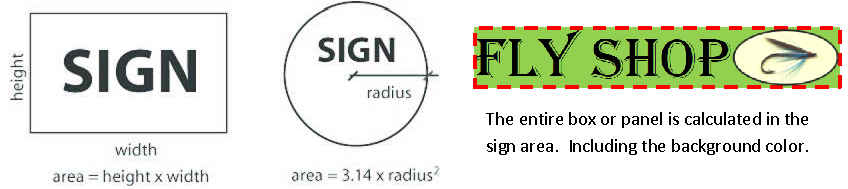
Figure 20.75-2 Signs, Measurement Rules, Box and Panel Signs
C.
Channel (individual) Letter Signs
The area of a sign comprised of individual letters or elements to a building wall is determined by calculating the area of the smallest geometric figure (e.g.,
square, rectangle, circle, polygon, etc.) that can be drawn around the letters and/or
elements, including any material or corporate color (unless muted) used on the wall of a building to form a background for the sign or to differentiate the sign from the surface against which it is to be placed. When the background of the building wall is not differentiated from the sign and appears to function as part of the sign, that area shall be included. Signs consisting of individual letters and/or elements will be measured as one sign when the distance between the letters and/or elements is less than the largest dimension
of the largest sign letter.
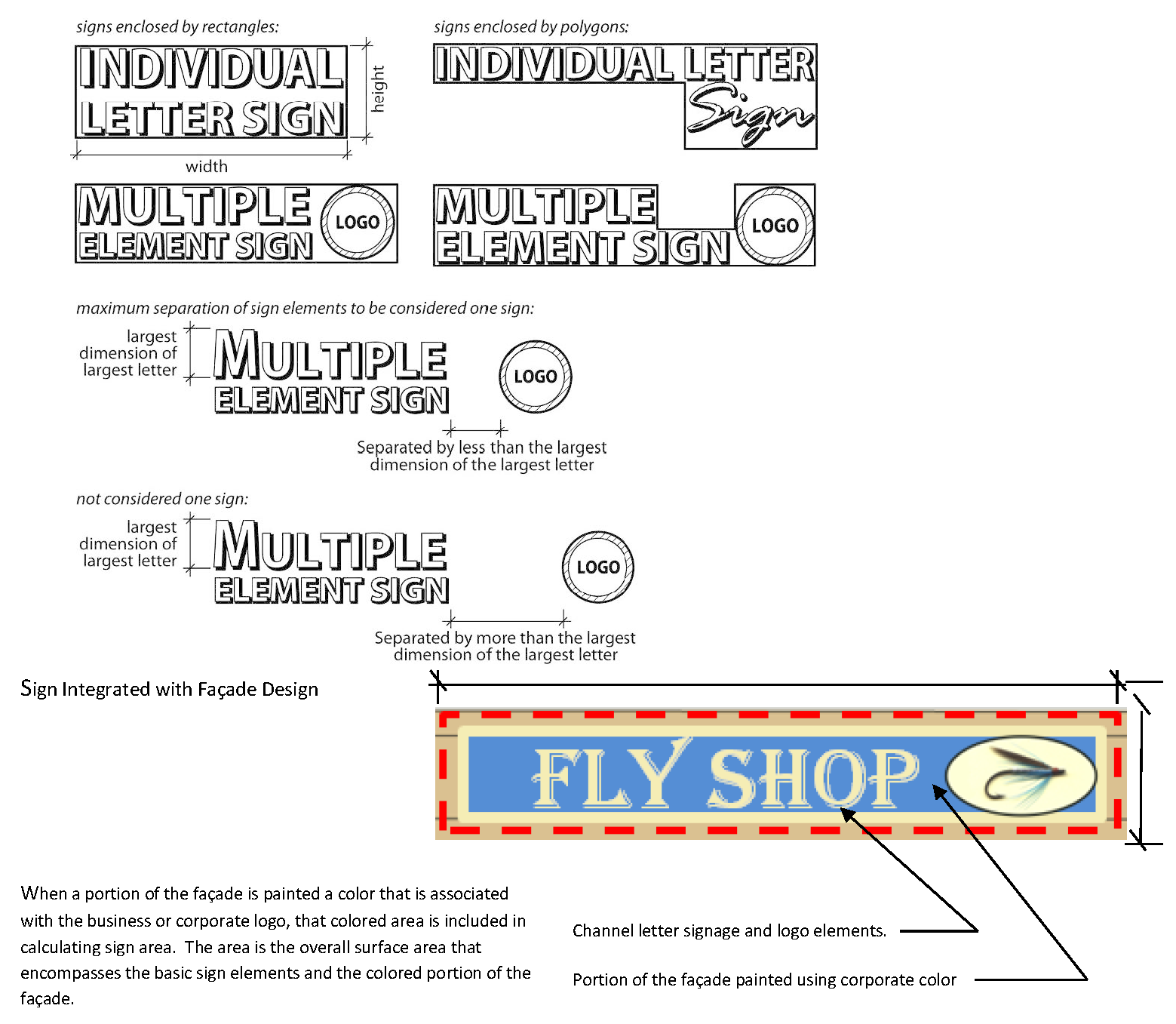
Figure 20.75-3 Signs, Measurement Rules, Channel (individual) Letter Signs
D.
Signs Applied to the Façade
The following three options are examples of how to measure signs applied to the façade, with background corporate color as a factor in Options B and C.
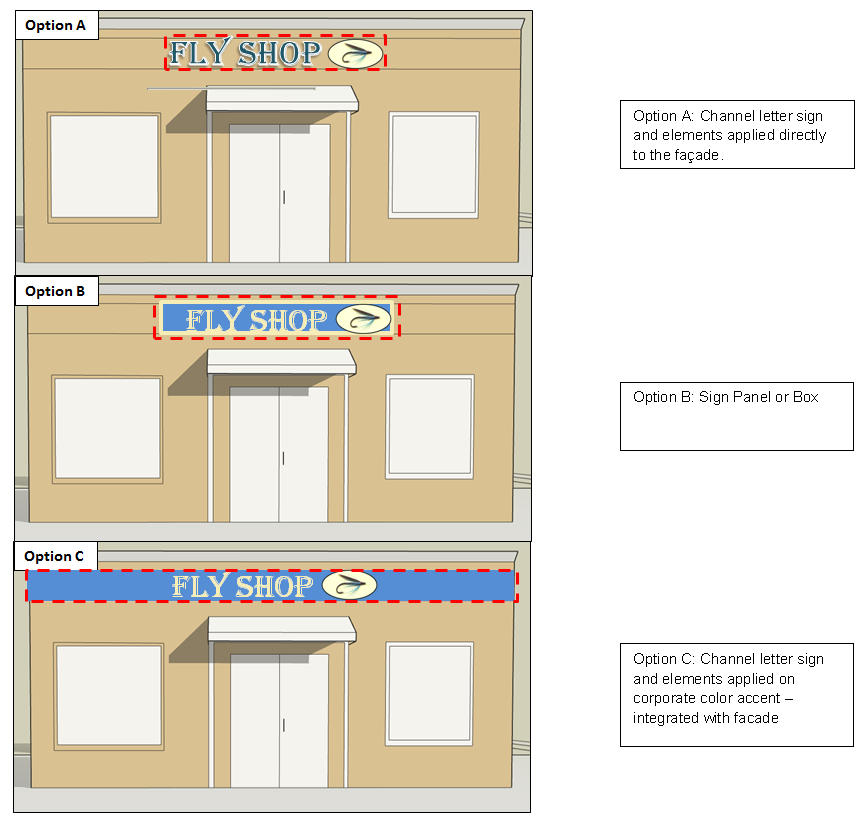
Figure 20.75-4 Examples of Signs Applied to the Facade
E.
Multi-Sided Signs
When the sign faces of a multi-sided sign are parallel or within 30 degrees of parallel, only the largest single side is counted.
If the sign faces are not parallel or within 30 degrees of parallel, all sign faces are counted.
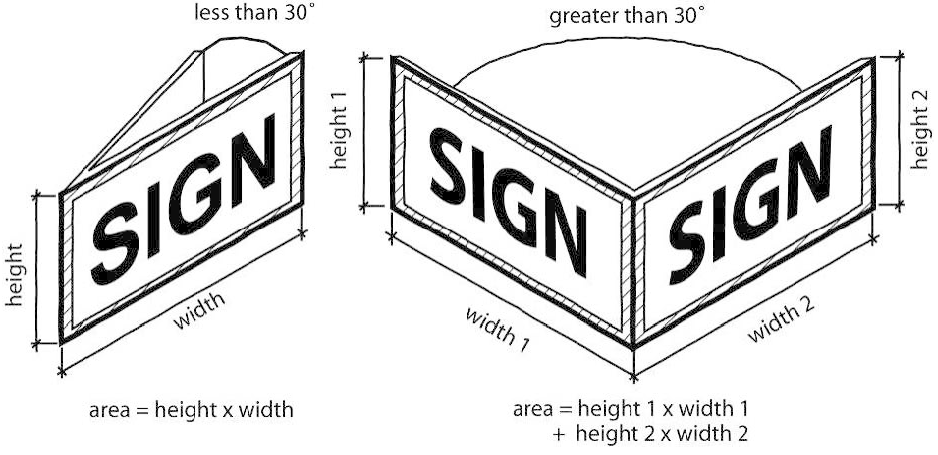
Figure 20.75-5 Signs, Measurement Rules, Multi-Sided Signs
F.
Building Frontage
Many of the wall sign regulations of this chapter are based on "building frontage ." The following rules govern the measurement of building frontage:
1.
For buildings occupied by a single tenant or multiple tenants that access the building via a common entrance, building frontage is the exterior building wall (or walls) that faces a public right-of-way and (on-site) off-street parking area or that contains a customer building entrance. Allowed wall sign area for a building that has two or more building frontages must be calculated on the basis of each individual building frontage.
2.
On buildings housing more than one tenant where each tenant has their own exterior entrance, a tenant's building frontage is the exterior building wall (or walls) that directly abut the tenant's interior floor space and that faces a public right-of-way or (on-site) off-street parking area or contains a customer building entrance. A tenant that has two or more building frontages must calculate the permitted sign area on the basis of each individual building frontage.
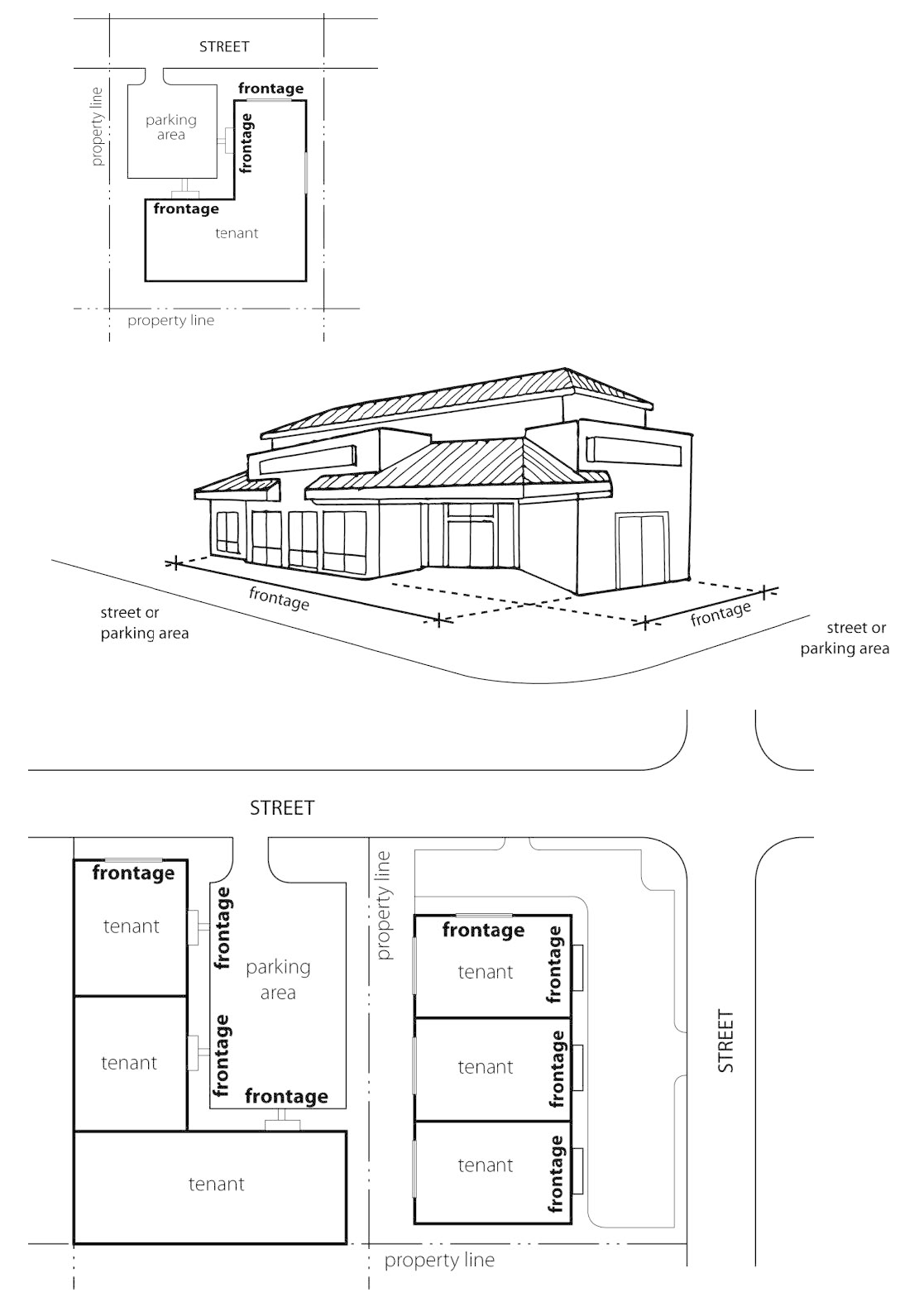
Figure 20.75-6 Signs, Measurement Rules, Building Frontage for Buildings With More
Than One Tenant
G.
Window Area
The area of a window includes only the glass or glazed elements of the window. Frames,
mullions and similar features are not counted as part of the window area.
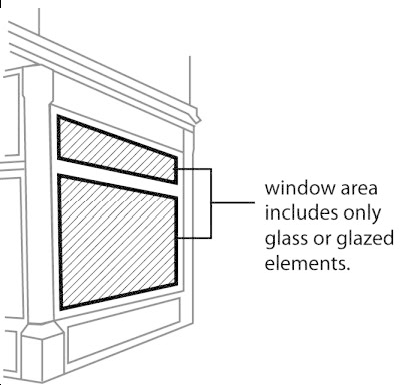
Figure 20.75-7 Signs, Measurement Rules, Window Area
(Ord. 3769, 2025; Ord. 3733, 2024; Ord. 3723, 2023; Ord. 3609, 2018; Ord. 3549, 2015; Ord. 3469, 2011; Ord. 3439, 2010; Ord. 3410, 2009)

