
Missoula City Zoning Code
CHAPTER 20
45 - Accessory Uses and Structures
20.45.010 - General Regulations
A.
Accessory UsesAllowed
Accessory uses and structures are permitted in connection with lawfully establishedprincipal uses unless otherwise expressly stated.
B.
Applicable Regulations and Standards
Unless otherwise expressly stated, accessory uses and structures are subject to the same regulations and standards as apply to principal uses and structures on the subject parcel.
C.
Incidental and Subordinate Nature
The zoning officer is authorized to determine when a use, building or structure meets the definition of an accessory use or accessory structure. In order to classify a use or structure as "accessory," the zoning officer must determine that the use or structure:
1.
Is subordinate to the principal building or principal use in terms of area and/or function;
2.
Contributes to the comfort, convenience or necessity of occupants of the principal building or principal use served; or contributes to the comfort, convenience or necessity of occupants of the principal building or principal use served; or
3.
Is customarily found in association with the subject principal use or principal building.
D.
Time of Constructionand Establishment
1.
Accessory buildings must be constructed in conjunction with or after the principal building. They may not be built before the principal building.
2.
Accessory uses may be established only after the principal use of the property is established.
E.
Location
Accessory uses and structures must be located on the same parcel as the principal use to which they are accessory, except as otherwise expressly stated.
(Ord. 3439, 2010; Ord. 3410, 2009)
20.45.020 - Parcel and Building Standards in Residential Districts
A.
General
1.
The parcel and building standards of the base zoning district apply to accessory structures in residential districts unless otherwise expressly stated.
2.
A zoning compliance permit is not required if the accessory structure does not exceed 120 square feet in area or 12 feet in height but is subject to buildingsetbacks as provided in 20.45.020.B and C, and Table 20.45-1.
3.
The total combined building coverage of all detached accessory buildings may not exceed 50% of the actual rear yard area.
4.
Stables and other accessory buildings housing farm animals or livestock must be set back at least 100 feet from residential buildings under separate ownership and 100 feet from all water courses.
5.
Accessory buildings may not exceed 22 feet in height, unless otherwise noted.
B.
Front Yard and Street Side Yard Setbacks
1.
Accessory buildings and structures are prohibited in front and street side yards (i.e., they may not be closer to the street than the principal building), except for structures that are customarily found in front or street yards, such as flag poles and minor landscape structures.
2.
Detached accessory structures may be placed in the front yard of a through lot, subject to the zoning district's front yard setback requirements.
C.
Side and Rear Setbacks
The side and rear setbacks for accessory buildings and structures in Residential Districts are shown below in Table 20.45-1.
Table 20.45-1 Minimum Side and Rear Setbacks for Accessory Buildings and Structures
[1] Accessory structures not requiring a zoning compliance permit and not exceeding 8'6" in height are exempt from side setbacks. No part of the accessory structure may extend beyond the property line.
[2] Accessory structures not requiring a zoning compliance permit and not exceeding 12' in height are exempt from rear setbacks.
Commentary: Accessory structures also need to comply with sight visibility, drainage, and easement requirements administered through City Engineering.
(Ord. 3735, 2024; Ord. 3609, 2018; Ord. 3586, 2016; Ord. 3511, 2013; Ord. 3473, 2011; Ord. 3439, 2010; Ord. 3410, 2009)
20.45.030 - Parcel and Building Standards in Nonresidential Districts
A.
General
The parcel and building standards of the base zoning district apply to accessory structures in nonresidential districts unless otherwise expressly stated.
B.
Setbacks
1.
Accessory buildings and structures are prohibited in front yards (i.e., they may not be closer to the street than the principal building), except for structures that are customarily found in front yards, such as flag poles and minor landscape structures.
2.
Detached accessory structures may be placed in the front yard of a through lot, subject to the zoning district's front yard setback requirements.
3.
Accessory buildings and structures on parcels abutting R districts must be set back in accordance with the accessory structure setback standards that apply in residential districts (see 20.45.020)
C.
Separation
Accessory buildings must be separated by a minimum distance of ten feet from all other accessory and principal buildings.
D.
Height
Accessory buildings may not exceed 30 feet in height, or the height of the principal building on the same parcel, whichever is less.
(Ord. 3586, 2016; Ord. 3439, 2010; Ord. 3410, 2009)
20.45.040 - Accessory Structures for Livestock or Fowl
Accessory buildings and grazing areas for livestock or fowl must be set back at least 100 feet from any dwelling of human habitation under separate ownership or on a separate parcel, 100 feet from any watercourse and 50 feet from any property line. This provision does not apply to facilities for the keeping of up to six female chickens, in accordance with Chapter 6.12 of the Municipal Code.
(Ord. 3439, 2010; Ord. 3410, 2009)
20.45.050 - Home Occupations
A.
General
Home occupations are considered accessory to residential dwelling units within any Title 20 zoning district, Planned Unit Development (PUD) or Special District (SD) in compliance
with these standards.
B.
Purpose
The regulations of this section are primarily intended to ensure that home occupations will not adversely affect the character and livability of the surrounding neighborhood.
The regulations are also intended to ensure that the home occupation remains subordinate to the residential use, and that the residential viability of
the dwelling is maintained. The regulations recognize that many types of work can
be done in a home with little or no effect on the surrounding neighborhood.
C.
Applicability
Home occupations must comply with all of the standards of this section.
D.
Exemptions
1.
Residential Day Care
Residential day care facilities are not regulated as home occupations and are exempt from the regulations of this section.
2.
Bed and Breakfast
Bed and breakfast uses are not regulated as home occupations and are exempt from the regulations of this section.
E.
Standards
A dwelling unit may be used for one or more home occupations subject to compliance with all of the following minimum standards:
1.
The home occupation must be accessory and secondary to the use of a dwelling unit for residential purposes, and the home occupation must not change the residential character of the residential building or adversely affect the character of the surrounding neighborhood. Home occupations may not, for example, produce light, noise, vibration, odor, parking demand, traffic or any exterior activity that is inconsistent with the character of a residential area.
2.
There may be no external structural alterations or construction that would change the residential character of the property upon which the home occupation is located. Examples of such prohibited alterations include construction of parking lots, paving of required setbacks, and the addition of commercial-like exterior lighting.
3.
No separate entrance from the outside of the building may be added to the residential building for the sole use of the home occupation.
4.
The home occupation and all related activities, including storage (other than the lawful parking or storage of vehicles), must be conducted entirely within a completely enclosed building, either the principal residential building or an allowed accessory building (e.g., detached garage).
5.
Residential accessory uses conducted within garages may not take up space that provides space for meeting minimum off-street parking requirements.
6.
No window display or other public display of any material or merchandise is allowed.
7.
The owner of the home occupation must reside in the dwelling unit in which the home occupation is located.
8.
In addition to the resident business owner, up to three nonresident persons, including employees, associates and customers may be present on the property at any time. This three-person maximum limit per property applies regardless of the number of home occupations being conducted on the property. In order to accommodate occasional larger gatherings, the three-person limit may be exceeded on up to two days each calendar month.
9.
The home occupation is limited to one non-illuminated, building-mounted sign, not exceeding one square foot (144 square inches) in area.
10.
Truck deliveries or pick-ups of supplies or products, associated with the home occupation, are allowed at the site of the home occupation only between 8:00 a.m. and 7:00 p.m. Vehicles used for delivery and pick-up may not include semi-tractor trailers.
11.
The following uses are expressly prohibited as home occupations:
a.
Any type of repair or assembly of vehicles or equipment with internal combustion engines (such as autos, motorcycles, scooters, snowmobiles, outboard marine engines, lawn mowers, chain saws, and other small engines) or of large appliances (such as washing machines, dryers, and refrigerators) or any other work related to automobiles and their parts;
b.
Dispatch centers or other businesses where employees come to the site and are dispatched to other locations;
c.
Rental businesses;
d.
Tow truck services;
e.
Material or equipment storage businesses;
f.
Restaurants;
g.
Funeral or interment services;
h.
Animal boarding businesses; and
i.
Commercial cannabis cultivationcannabis cultivation or manufacturingmanufacturing.
(Ord. 3735, 2024; Ord. 3689, 2021; Ord. 3609, 2018; Ord. 3439, 2010; Ord. 3410, 2009)
20.45.060 - Accessory Dwelling Units
A.
Purpose
1.
Accessory dwelling units help advance the city's growth and planning policies by:
a.
Accommodating new housing units;
2.
The accessory dwelling unit regulations of this section are intended to help promote the benefits of accessory dwelling units, while also promoting predictability and certainty for established neighborhoods.
3.
The accessory dwelling unit regulations are not intended to interfere with, abrogate, or annul any current applicable private homeowner association covenants that are in effect in any specific subdivision in accordance with 20.01.080.C.
B.
Regulations for all Accessory Dwelling Units
All accessory dwelling units must comply with the regulations of this subsection.
1.
General Standards
Accessory dwelling units are subject to all applicable regulations of the zoning district in which they are
located, except as otherwise expressly stated in this section. Lots that are nonconforming as to minimum parcel area are not eligible. Accessory dwelling units are not permitted on TED Ownership Units (TOUs).
2.
Where Allowed
Accessory dwelling units are allowed only on parcels occupied by a single detached house or lot line house.
a.
Internal accessory dwelling units, detached accessory dwelling units, and internal addition accessory dwelling units are allowed in all Residential, B, C, and M1R districts.
b.
After an ADU permit has been issued by the City, a follow up letter shall be sent by the City to the adjacent parcels, residents and owners, confirming that the ADU has been permitted.
c.
For an accessory dwelling unit in zoning districts (R215, R80, R40, R20, RT10, R8, and R5.4), at the time of application submittal the applicant must provide evidence in the form of a notary statement that the proposal complies with current (latest version filed with the County Clerk and Recorder) applicable private covenants adopted prior to June 5, 2013 or that no such private covenants exist that restrict the proposed use.
d.
Accessory dwelling units are not allowed in Special Districts or Planned Unit Developments (PUDs) unless explicitly regulated within the Special District or PUD.
3.
Number
No more than one accessory dwelling unit is allowed per parcel.
4.
Methods of Creation
An accessory dwelling unit may be created only through the following methods:
a.
Converting existing living area within a detached house (e.g., attic or basement);
b.
Adding floor area to an existing detached house;
c.
Constructing a detached accessory dwelling unit on a parcel with an existing detached house;
d.
Converting space within detached accessory buildings; or
e.
Constructing a new detached house with an internal or detached accessory dwelling unit.
5.
Density(Minimum Parcel Area per Unit)
Accessory dwelling units are not included in minimum parcel area per unit calculations, meaning no additional
land area is required for the accessory dwelling unit beyond the minimum parcel size required for a detached house in the subject zoning district.
6.
Wastewater Service
Accessory dwelling units are allowed only if the principal dwelling unit and accessory dwelling unit are connected to city sewer.
7.
Parking
No additional parking space is required for an accessory dwelling unit.
8.
Size
a.
Detached ADU
(1)
The floor area of a new detached accessory dwelling unit may not exceed the maximum of 1,200 square feet.
(2)
When a new detached accessory dwelling unit is created within an existing detached accessory structure that was built after (adoption date of these amendments), the maximum size of the accessory dwelling unit may not exceed the square footage stated in Section 20.45.060.B.8.a(1).
(3)
When a new detached accessory dwelling unit is created within an existing detached accessory structure that was built prior to (adoption date of these amendments) there is no limit to the floor area unless the conversion adds to the floor area of the existing detached accessory structure in which case the maximum size cannot exceed the square footage stated in Section 20.45.060.B.8.a(1).
b.
Internal ADU
The floor area of an internal accessory dwelling unit that does not increase the floor area or footprint of the primary dwelling unit may not be more than 1,200 square feet.
c.
Internal addition ADU
When an internal addition accessory dwelling unit increases the footprint or floor area of the existing primary dwelling unit, the ADU shall not exceed 1,200 square feet.
d.
Floor Area calculation
For the purposes of calculating the size of an ADU, floor area is defined as interior habitable space solely attributed to the ADU, including interior
entry, stairs, and access.
9.
Building Approval
Before the issuance of a building permit for the construction of a new accessory dwelling unit, plans must be reviewed and approved by the building inspector to determine compliance
with applicable building and fire codes.
10.
Address identification
Every accessory dwelling unit shall be addressed according [to] Section 505.1 of the International Fire Code and
as administered by the Missoula Fire Department.
C.
Special Regulations for Detached Accessory Dwelling Units
Detached accessory dwelling units must comply with the regulations of this subsection.
1.
Setbacks
A detached accessory dwelling unit must be located at least ten feet from the detached
house. This required ten-foot separation distance must be open from the ground to
the sky except that it may include walkways, patios, decks and similar structures
that do not exceed 30 inches in height above finished grade.
2.
Height
The maximum height of a detached accessory dwelling unit may not exceed the maximum height of the base zoning district.
3.
Building Coverage
The building coverage for the detached accessory dwelling unit may not exceed the building coverage of the detached house. The combined building coverage of all detached accessory buildings may not exceed 50% of the actual rear yard area.
4.
Conversion of Existing Detached Accessory Structures
a.
Existing Detached Accessory Structure May Not Be Altered
An existing detached accessory structure that complies with any of the standards of 20.45.060.C.3 through 20.45.060.C.4 may
not be altered in a way that will move the structure out of conformance with the standards that are met.
(Ord. 3769, 2025; Ord. 3735, 2024; Ord. 3733, 2024; Ord. 3723, 2023; Ord. 3669, 2020; Ord. 3648, 2019; Ord. 3609, 2018; Ord. 3549, 2015; Ord. 3493, 2013; Ord. 3439, 2010; Ord. 3410, 2009)
20.45.070 - Satellite Dish Antennas
A.
Satellite dish antennas up to one meter (39.4 inches) in diameter are permitted as accessory uses in all districts. They are subject to accessory structure setback standards.
B.
Satellite dish antennas over one meter in diameter, up to three meters (118.2 inches) in diameter, are permitted as accessory uses in all nonresidential districts, subject to accessory structure setback standards.
C.
Satellite dish antennas may be erected on the roof or attached to a principal building, provided the maximum height of the installation does not exceed the maximum allowable height of the subject district or more than 15 feet above the top of the building on which it is to be located, whichever is less.
D.
Satellite dish antennas not expressly allowed under this section must be approved as a conditional use in accordance with the conditional use procedures of 20.85.070.
(Ord. 3439, 2010; Ord. 3410, 2009)
20.45.080 - Wind Energy Conversion Systems
A.
Applicability
Unless otherwise expressly stated, the regulations of this section apply to all ground-mounted
small wind energy conversion systems.
B.
Definition
A WECS as defined in 20.100.010 with a power-related capacity of no more than 25 kW that
is primarily intended to produce power for on-site consumption, as a supplement to
utility power or in lieu of utility power. Small wind energy conversion systems may also be connected to the electric utility for the purpose of "net metering."
C.
Where Allowed
1.
Small wind energy conversion systems are allowed as-of-right as an accessory use in all zoning districts except as otherwise expressly stated.
2.
Only one small wind energy conversion system is allowed per parcel, provided that up to three small wind energy conversion systems may be allowed on a single parcel if approved through the conditional use process. Multiple small wind energy systems may not be approved on R-zoned parcels of less than 80,000 square feet in area.
D.
Location, Setbacksand Height
1.
Unless otherwise expressly stated, all small wind energy conversion systems shall be set back from all property lines by a distance at least equal to 1.1 times the overall height of the system, measured from existing grade to the highest point of the system structure, which includes the tip of the top blade when the blade is in its highest position.
2.
Small wind energy conversion systems may not be located within drainage, utility or other established easements.
3.
No portion of a system may extend on or over a property line. Blades may not extend over driveways, parking areas, sidewalks or trails.
4.
The lowest point of any moving elements, such as blades or vanes, must be at least 20 feet above the ground beneath such feature for horizontal axis wind energy conversion systems and at least ten feet above the ground beneath such feature for vertical axis wind energy conversion systems.
5.
All power transmission and telemetry lines from the tower to any building or other structure must be placed underground.
6.
Small wind energy conversion systems must comply with the height limits of the subject zoning district. Systems may exceed zoning district height limits by up to 33% if the system is setback from all property lines by a distance at least equal to 1.5 times the overall height of the system, measured from existing grade to the highest point of the system structure, which includes the tip of the top blade when the blade is in its highest position. A small wind energy conversion system that exceeds the maximum height allowed in the subject zoning district shall only be approved through the conditional use procedure of 20.85.070.
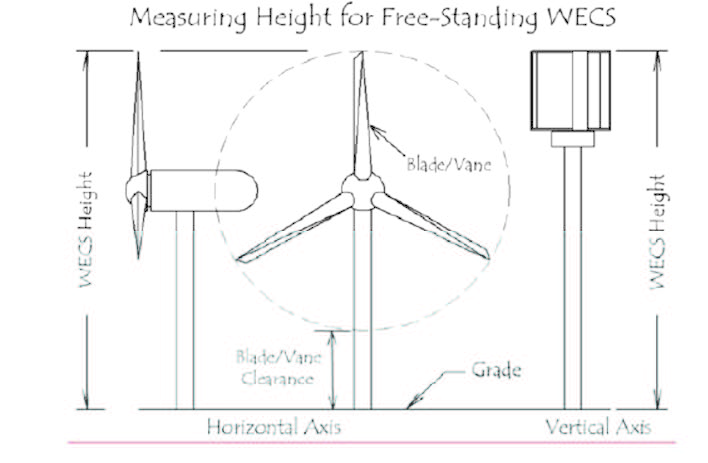
Figure 20.45-2 Measuring Height for Freestanding WECS
E.
Operational and Performance Standards
1.
Operational noise may not exceed 55dB at the property line except during short-term high wind speed events such as storms.
2.
All systems must be equipped with manual and automatic (mechanical or electrical) over-speed controls to limit the blade rotation speed to within the design limits of the system.
3.
Towers, rotors and turbines may not be illuminated unless required by a state or federal agency, such as the FAA.
F.
Design
1.
Lattice type towers and towers using guy wires are prohibited.
2.
All structures and equipment must maintain factory colors or be finished in a non-reflective, matte finished, neutral color.
3.
No commercial messages may be placed or painted on the tower, rotor, turbine, generator or tail vane that is legible from off-site. This provision is not intended to prohibit warning signs or manufacturer's logos.
4.
For horizontal axis wind energy conversion systems, all climbing pegs, ladders and similar apparatus on freestanding towers must be located at least 12 feet above the ground at the base of the structure.
G.
Building and Electrical Codes
Small wind energy conversion systems are subject to Missoula building and electrical codes.
H.
Required Information
The following information must be submitted with a zoning compliance permit (or conditional use) application for a wind energy conversion system:
1.
A description of the system, including its maximum power-rated output capacity.
2.
The make, model, an illustrative photograph or brochure, manufacturer's specifications including noise data (decibels) for the proposed wind energy conversion system, the support structure, and method of attachment to the ground and/or structure.
3.
Elevation drawing of the wind energy conversion system showing total height, turbine dimensions, tower and turbine colors, distance between ground and lowest point of any blade, and if proposed, the location of climbing apparatus.
4.
Site plan illustrating the property upon which the wind energy conversion system is proposed for construction, including the parcel dimensions, any existing structures, any required system or buildingsetbacks, and any existing and/or proposed easements and/or rights-of-way encumbering the property.
5.
If the wind energy conversion system is not certified as meeting the IEEE 1547 standards (Institute of Electrical and Electronic Engineers), then an assessment of potential electromagnetic interference with microwave, radio, television, personal communication systems and other wireless communication is required (from an electrical engineer).
I.
Maintenance and Abandonment
1.
Identification Tag: Any wind energy conversion system must have permanently affixed to it a permit identification tag. This tag must consist of such material that the tag itself and the identifying copy on it must remain permanent and legible. The tag must be of such size and affixed in such a location on the wind energy conversion system so as to allow inspection of the tag from the ground by the Building Official. The owner of the system is responsible for acquiring the ID tag and attaching it to the apparatus, as well as maintaining the tag as stated in 20.45.080.I.2.
2.
Maintenance: All wind energy conversion systems and their identification tags, supports, braces, mechanical and electrical equipment, and associated apparatus must be kept fully operable and maintained in a safe, neat and clean condition. Any wind energy conversion system that is in a state of disrepair and a threat to public safety must be dismantled by the property owner at the discretion of the Building Official. Failure to comply with the maintenance provisions of this section constitutes a violation and is subject to enforcement proceedings under Chapter 20.01.
3.
Abandonment: Any wind energy conversion system that is not operated within a continuous period of 12 months or more must be dismantled by the property owner at the discretion of the Building Official.
(Ord. 3669, 2020; Ord. 3609, 2018; Ord. 3483, 2012; Ord. 3443, 2010; Ord. 3439, 2010; Ord. 3410, 2009)
20.45.090 - Solar Energy Conversion Systems
A.
Purpose
This section permits, as an accessory use, solar energy conversion systems, while protecting the safety and welfare of adjacent and surrounding land uses through
appropriate zoning and land use controls. Solar Energy Conversion System (SECS) as defined in 20.100.010 are intended to produce power for the principal use and/or accessory use on-site, as a supplement to utility power or in lieu of utility power. SECS may also be connected to the electric utility for the purpose of "net metering."
B.
Applicability
The requirements of this section shall apply to all solar energy conversion systems modified or installed after (the effective date of this Ordinance), however; modifications
to an existing accessory SECS that increases the SECS area by less than ten percent of the original footprint shall not be subjected to
this ordinance.
Commentary: Like-kind replacements of SECS or systems that change type (photovoltaic to thermal or vice versa) and do not change size, are not subject to zoning compliance, but will require review by the City Building Division.
C.
Where Allowed
1.
Solar energy conversion systems are permitted as accessory uses in all districts.
2.
Building-integrated systems, as defined in Chapter 20.100 are not considered an accessory use and are not subject to the requirements of this section.
D.
Location, Setbacksand Height
1.
Solar energy conversion systems are subject to accessory structure setback standards.
2.
Solar energy conversion systems may not be located within drainage, utility or other established easements.
3.
All power transmission and telemetry lines from the SECS to any building or structure must be placed underground.
4.
Roof-mounted solar panels are allowed to exceed the maximum building height as noted in 20.110.060.B.1.h.
5.
Additional requirements for Ground-Mounted SECS
a.
Ground-mounted SECS may not extend into any required setback when oriented at minimum design tilt.
b.
The height of ground-mounted solar collector and any mounts shall not exceed 22 feet when oriented at maximum tilt.
c.
Ground-mounted SECS must not impair sight distance for safe access to or from the property or other properties in the vicinity.
d.
Medium and large scale SECS projects shall provide proof of soil stabilization to be approved by Development Services.
e.
For medium and large scale SECS a stormwater management plan showing existing and proposed grading and drainage demonstrating no net increase in runoff shall be provided subject to approval by Development Services.
E.
Building, Electrical, Plumbing and Fire Codes
Solar energy conversion systems are subject to Missoula building, electrical, plumbing and fire codes.
(Ord. 3549, 2015)

