
Missoula City Zoning Code
CHAPTER 20
110 - Measurements and Exceptions
20.110.010 - Parcel Area
A.
Parcel area includes the total land area contained within the property lines of a parcel. The zoning officer is authorized to approve an administrative adjustment to permit the construction of a detached house on a parcel that would otherwise be prohibited solely because the parcel does not comply with the minimum parcel area standards of the subject zoning district. Such administrative adjustments are subject to the procedures and criteria of 20.85.110.
B.
The minimum parcel area requirement does not apply to lots created in subdivisions, approved under MCA § 76-3, chapters 5 and 6, after May 6, 2019.
C.
The minimum parcel area requirement does not apply to TED Ownership Units (TOU's).
(Ord. 3648, 2019; Ord. 3439, 2010; Ord. 3410, 2009)
20.110.020 - Parcel Area per Unit
Parcel area per unit refers to the amount of parcel area required for each dwelling unit on the subject parcel. For example, if a minimum parcel area per unit standard of 1,000 square feet is applied to a 5,450 square foot parcel, a maximum of five dwelling units would be allowed on that parcel.
(Ord. 3439, 2010; Ord. 3410, 2009)
20.110.030 - Parcel Width
Parcel width is the horizontal distance between the side property lines of a parcel measured at the point of the minimum front setback.
(Ord. 3439, 2010; Ord. 3410, 2009)
20.110.040 - Building Coverage
Building coverage is the area of a parcel covered by principal and accessory buildings, as measured along the building line. Only building areas beneath a roof are counted for purposes of measuring building coverage. A porch with a roof, for example, is counted, but an uncovered deck structure is not considered building coverage.
(Ord. 3439, 2010; Ord. 3410, 2009)
20.110.050 - Setbacks
A.
Front Setbacks
1.
Measurement
Front setbacks are measured from the front property line to the closest point of the building or structure. Through parcels must have a front setback on both opposing sides of the parcel. For purpose of this provision, the front property line is the property line that "faces" and is adjacent to the street. On corner parcels, the front property line is the property line that is parallel to the alley that serves the parcel. The street side property line is the property line that is perpendicular to the alley. When no alley exists, the zoning officer is authorized to establish the front property line and the street side property line.
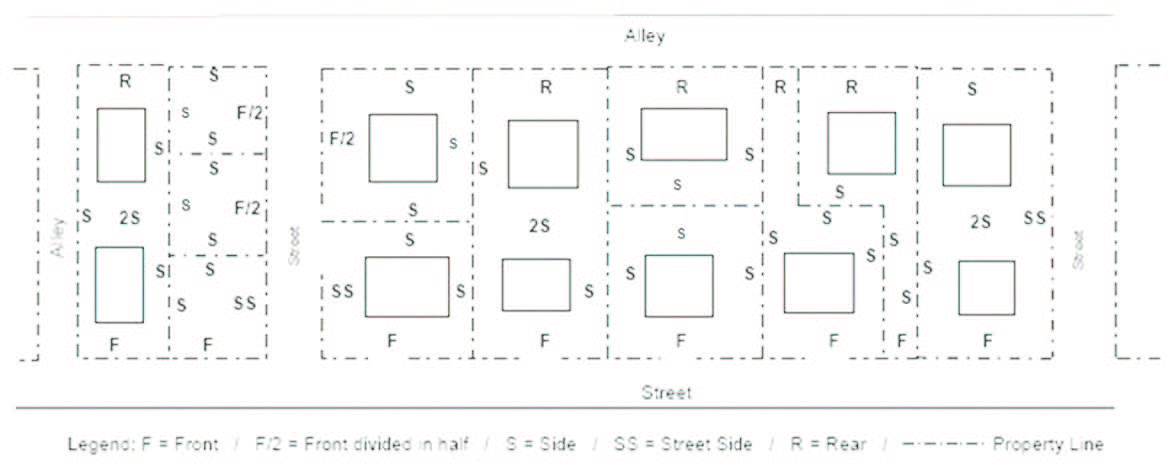
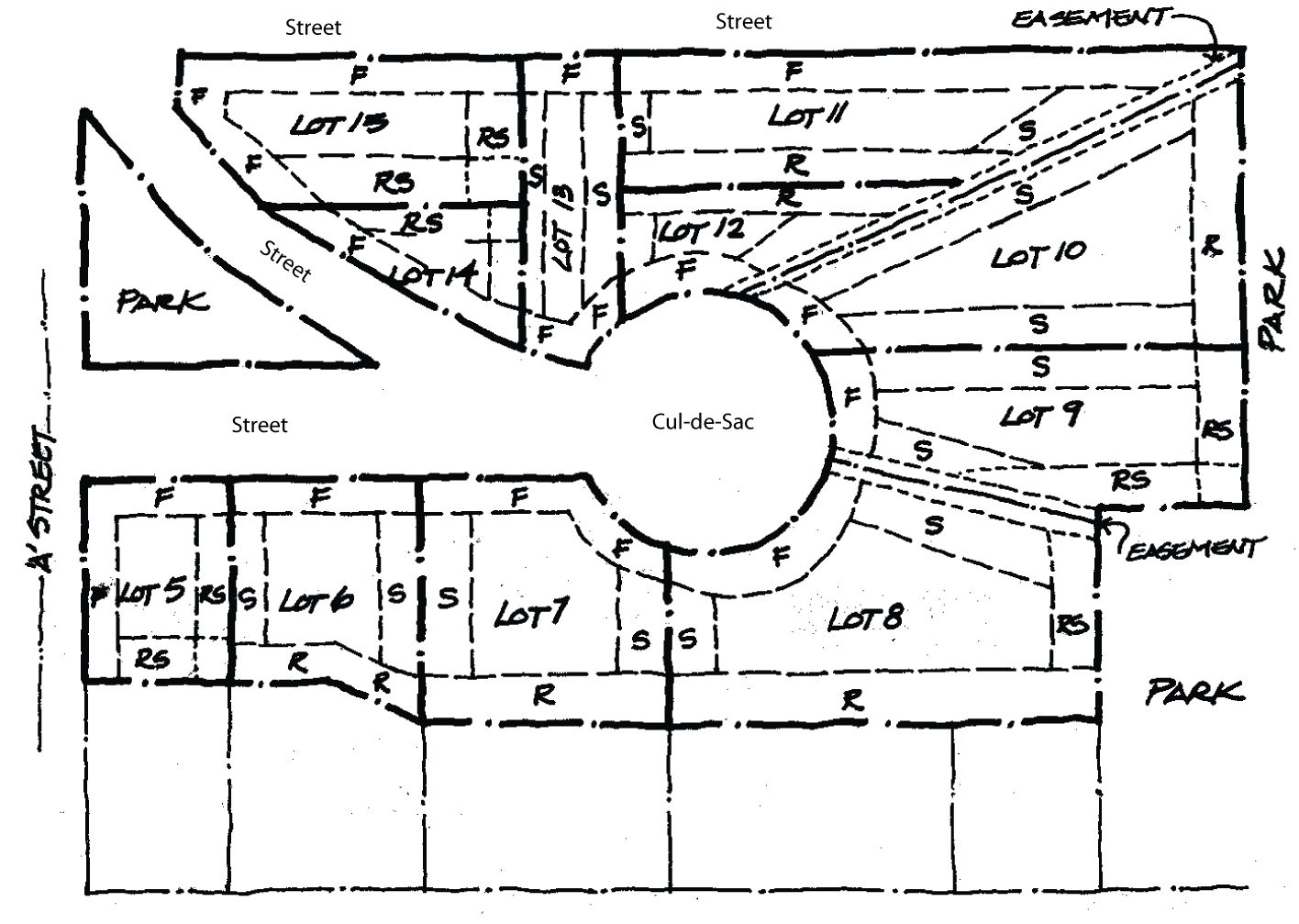
Figure 20.110-1 Measurement, Setbacks, Front
2.
Exceptions
When existing lawfully establishedresidential buildings on one or more abutting parcels are closer to the front property line than the otherwise required front setback, additions to existing residential buildings or construction of new residential buildings on the subject parcel may comply with the average front yard depth that exists on the nearest two parcels on either side of the subject parcel instead of complying with the zoning district's minimum front setback requirement.
a.
If one or more of the parcels required to be included in the averaging calculation is vacant, the vacant parcel will be deemed to have a front yard depth equal to the minimum front setback requirement of the underlying zoning district.
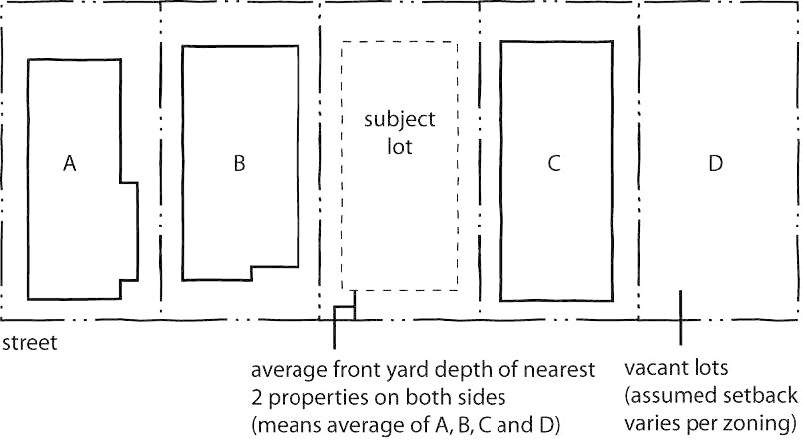
Figure 20.110-2 Setbacks, Front Setbacks, Exceptions, Averaging Calculation Scenario
a.
b.
Parcels that front on a different street than the subject parcel or that are separated from the subject parcel by a street or alley may not be used in computing the average.
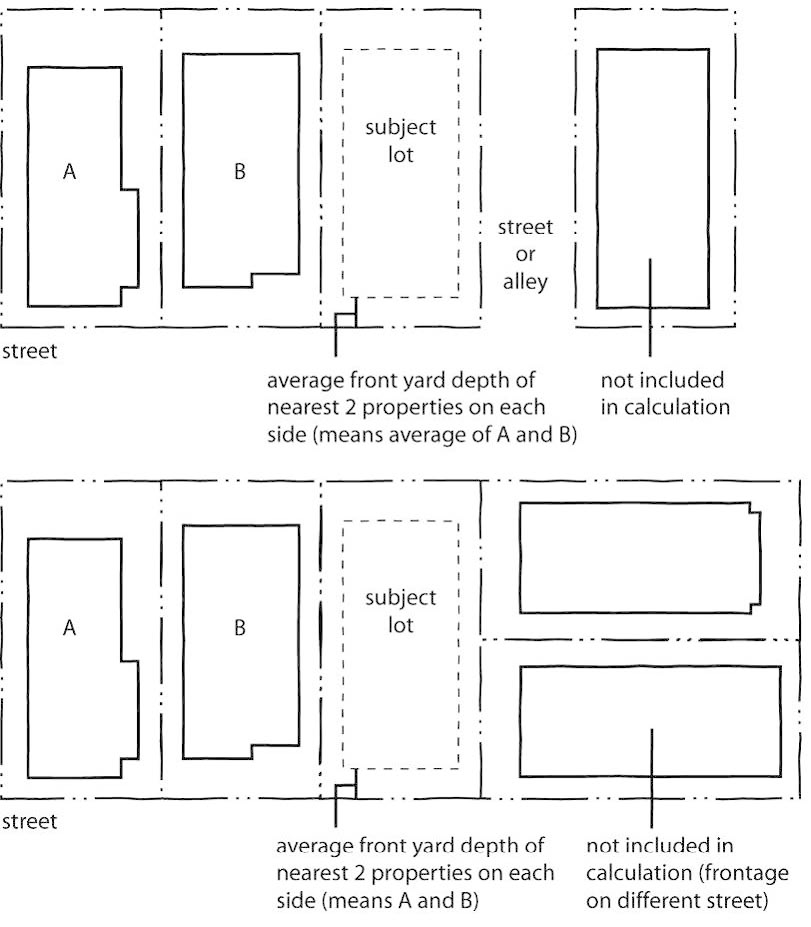
Figure 20.110-3 Setbacks, Front Setbacks, Exceptions, Averaging Calculation Scenario
b.
c.
When the subject parcel is a corner parcel, the average front yard depth will be computed on the basis of the nearest two parcels that front on the same street as the subject parcel.
d.
When the subject parcel abuts a corner parcel fronting on the same street, the average front yard depth will be computed on the basis of the abutting corner parcel and the nearest two parcels that front on the same street as the subject parcel.
e.
All residential garages that are accessed from the street must be set back at least 20 feet and may not be located closer to the street than the front façade of the residential building.
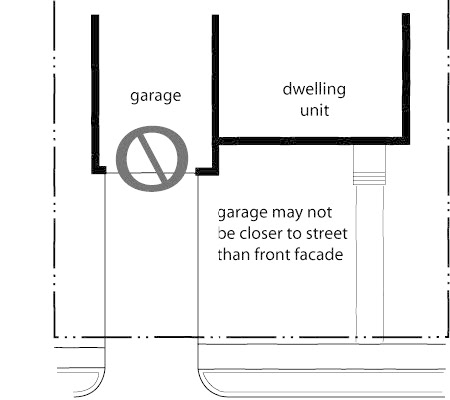
Figure 20.110-4 Setbacks, Front Setbacks, Exceptions, Garages
3.
GarageSetbacks
All residential garages that are accessed from the street must be set back at least 20 feet.
4.
Permitted Obstructions/Encroachments
Front setbacks must be unobstructed and unoccupied from the ground to the sky except as expressly
allowed in 20.110.050.E.
B.
Rear Setbacks
1.
Measurement
Rear setbacks are measured from the rear property line to the closest point of the building.
2.
Permitted Obstructions/Encroachments
Rear setbacks must be unobstructed and unoccupied from the ground to the sky except as expressly
allowed in 20.110.050.D or 20.80.030.
3.
Through Parcels
On through parcels both (opposing) street lines are considered front property lines and front setback standards apply. Rear setback standards do not apply.
C.
Side Setbacks
1.
Measurement
Side setbacks are measured from the side property line to the closest point of the building.
2.
Permitted Obstructions/Encroachments
Side setbacks must be unobstructed and unoccupied from the ground to the sky except as expressly
allowed in 20.110.050.D or 20.80.030.
D.
Features Allowed to Encroach in Required Setbacks
Required setbacks must be unobstructed and unoccupied from the ground to the sky except that features
are allowed to encroach into required setbacks to the extent indicated in the following table:
Table 20.110-1 Setbacks, Features Allowed to Encroach in Required Setbacks
1.
Open porches or decks, excluding steps, may project into the front setback by up to eight feet. The porch, deck, and steps must be set back at least four feet from all property lines.
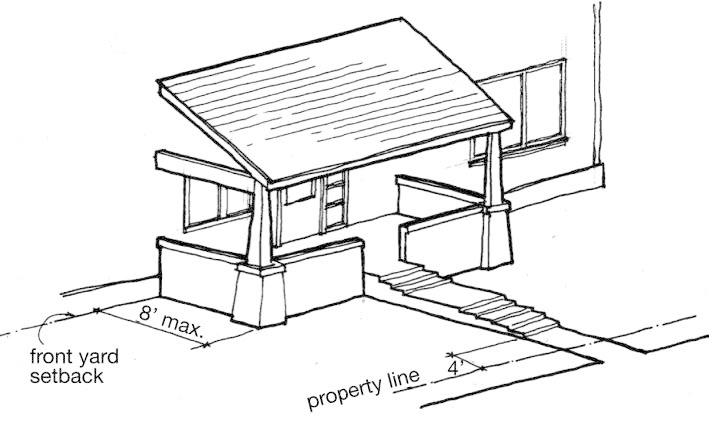
Figure 20.110-5 Setbacks, Encroachments, Open Porches or Decks
E.
Separation of Residential Buildingson Same Parcel
If two or more principal residential buildings are located on the same parcel, setbacks must be provided as if the principal buildings were on separate parcels except that if a principal residential building is constructed behind or in front of an another principal residential building, the minimum separation distance required between the two principal buildings must be at least equal to the sum of the two required side setbacks of the subject zoning district.
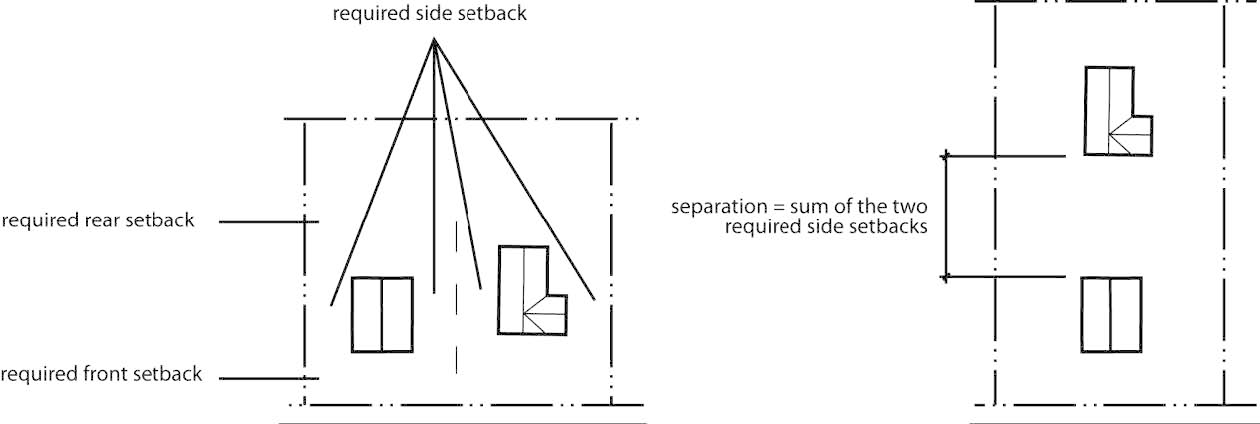
Figure 20.110-6 Setbacks, Separation of Residential Buildings on Same Parcel
F.
Setbacksand Separation of Residential Buildingson TED Parcels
The following applies to buildings on TED Ownership Units (TOUs) created through the Townhome Exemption Development (TED) process after November 5, 2019.
1.
Structures in TED projects (20.40.180) are required to meet setback standards for the underlying zoning district as described in Table 20.05-3, unless otherwise noted below.
a.
Setbacks apply to the entire TED parcel used for a TED project as described in 20.110.050.
b.
Setbacks for buildings within a TED parcel are measured to the nearest adjacent property line. A TOU separation line is not considered an adjacent property line. Depending on the design of the TED project, not every setback will apply to every TOU. (See 20.110.050.F.2 for information on TED building separation requirements.)
c.
Structures in TED projects located in residential zoning districts that exceed 22 feet in height shall provide a side setback of no less than 7.5 feet.
2.
Building separation
a.
Building separation requirements apply on TED projects for structures on TOUs as described in 20.110.050.E. Minimum distance between buildings is the equivalent of two side setbacks.
b.
A minimum building separation of six feet is allowed for zoning districts which require a side yard setback distance of seven and one-half feet or less.
(Ord. 3648, 2019; Ord. 3549, 2015; Ord. 3511, 2013; Ord. 3481, 2012; Ord. 3471, 2011; Ord. 3439, 2010; Ord. 3435, 2010, Ord. 3410, 2009)
20.110.060 - Building Height
A.
Measurement
Building height is measured as the vertical distance from the lowest point where the building line meets existing grade to the highest point of the subject building. The highest point of the building is the coping of a flat roof, the top of a mansard roof or shed roof, or the peak of the highest gable of a gambrel or hip roof.
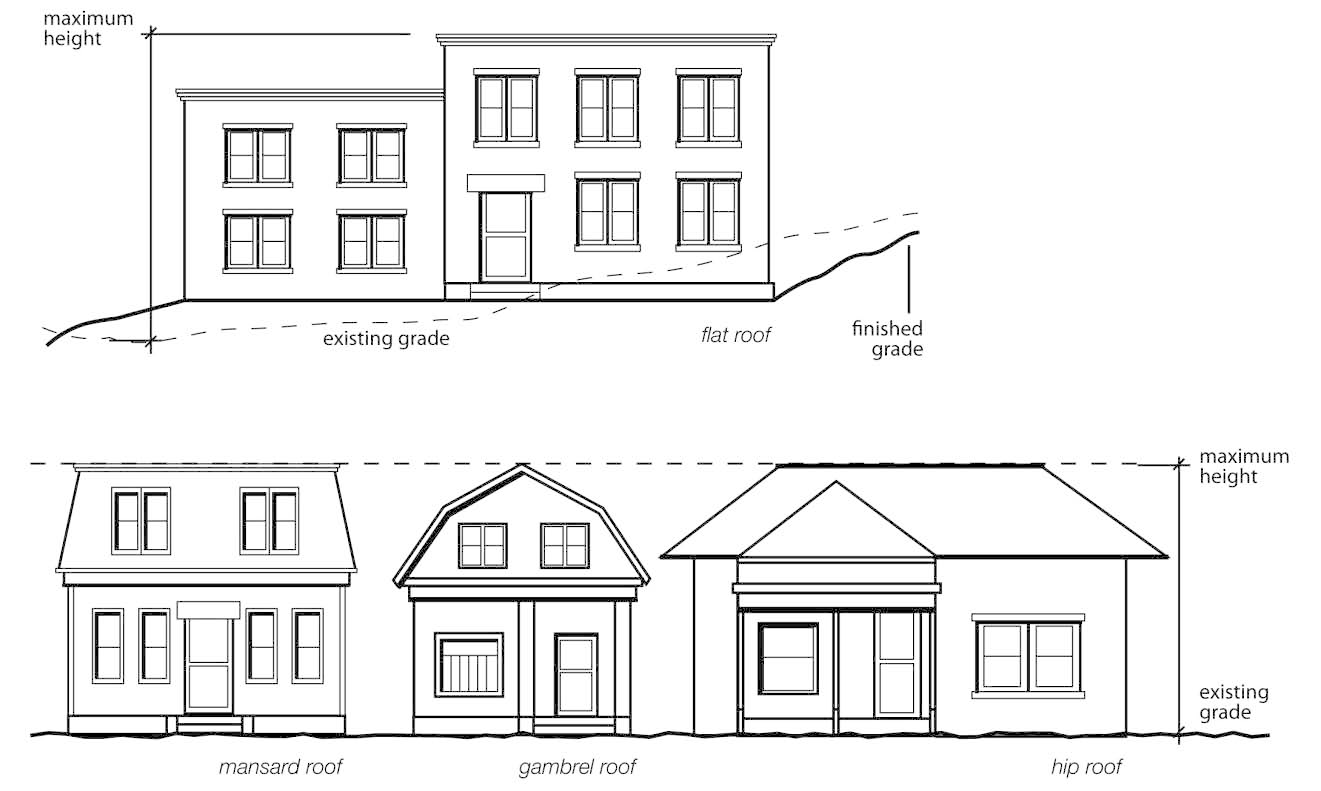
Figure 20.110-7 Building Height, Measurement
B.
Exceptions
1.
General
The following features are not counted in the measurement of building height:
a.
Chimneys and antennas;
b.
Vents and ventilation stacks;
c.
Wireless communication facility antenna arrays;
d.
Steeples;
e.
Belfries;
f.
Grain elevators;
g.
Skylights;
h.
Solar panels;
i.
Clock towers;
j.
Water towers;
k.
Flag poles;
l.
Stair and elevator penthouses, (applicable to non-residential and multi-dwelling);
m.
Egress window wells;
n.
Basement stairwells not exceeding five feet in width;
o.
Open guard rails and mechanical equipment, including any required screening; and
p.
Similar elements that do not add habitable floor area to a building.
2.
Public and Civic Buildings
Churches and public and civic buildings (e.g., hospitals and schools) may exceed the building height limits of the subject
zoning district if side setbacks exceed the required side setbacks by at least one foot for each five feet of height by which the building exceeds the maximum height limit of the subject district.
3.
Building Additions
When a lawfully establishedresidential building exceeds the height limit of the subject zoning district, additions to that building may also extend beyond the height limit, but no further than the existing building
height.
4.
New Structuresin the Floodplain
The lowest point for measuring the height of any new structure built in the floodplain, designated by any "A" zone or "X protected by levy", is
two feet above base flood elevation, or existing grade, whichever is higher.
(Ord. 3586, 2016; Ord. 3439, 2010; Ord. 3410, 2009)
20.110.070 - District Area
District area per unit refers to the amount of contiguous land area classified in the subject zoning district, excluding public rights-of-way.
(Ord. 3439, 2010; Ord. 3410, 2009)

